

Connect with us
DAPA Banner

NewsBeat

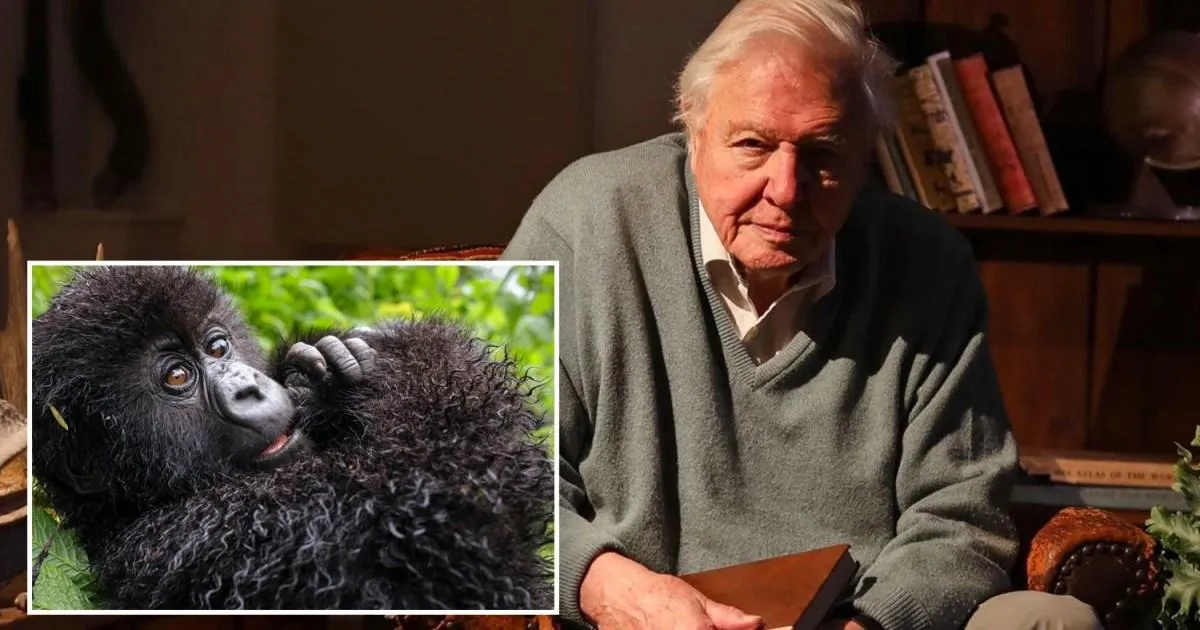
Netflix quietly drops ‘unmissable’ Sir David Attenborough documentary ahead of his 100th birthday

Published

on

Netflix quietly drops ‘unmissable’ Sir David Attenborough documentary ahead of his 100th birthday
A new David Attenborough documentary is now streaming on Netflix (Picture: Netflix)

Nearly 50 years ago Sir David Attenborough was making what would become his breakthrough TV series Life on Earth when he met a gorilla called Pablo.

By 1978 the broadcaster and natural historian had already presented a range of programmes, however the series Life on Earth would establish him as the foremost TV naturalist and kickstart his profile as a national treasure.

Released in 1979, the series had taken three years to film and had cost over £1million.  Shot in 100 locations around the world, one of those was in the Volcanoes National Park in the Virunga mountains of Rwanda.

When he was aged three, Pablo came across David filming his TV show, deciding the presenter would make for the perfect place to soak up the sun and used him as a personal lounger in scenes that are still remembered by many today.

Advertisement

As Sir David said at the time: ‘There is more meaning and mutual understanding in exchanging a glance with a gorilla than with any other animal I know.’

Get personalised updates on all things Netflix

Wake up to find news on your TV shows in your inbox every morning with Metro’s TV Newsletter.

Sign up to our newsletter and then select your show in the link we’ll send you so we can get TV news tailored to you.

Advertisement

‘It seems very unfair that man should have chosen the gorilla as a symbol of all that is violent and fearsome, when in fact, it is a peaceable and gentle creature.’

David Attenborough during the filming of the orginal Gorilla story documentary on bbc
A Gorilla Story: Told by David Attenborough sees Sir David reflect on his meeting with a gorilla called Pablo nearly 50 years ago (Picture: BBC)

To view this video please enable JavaScript, and consider upgrading to a web
browser that
supports HTML5
video

Advertisement

Decades later, and not long before his 100th birthday, Sir David has reflected on his relationship with Pablo and the long-lasting effect their encounter had on him.

These are detailed in the new Netflix documentary A Gorilla Story: Told by David Attenborough, which has been billed as an ‘intimate documentary’ on the ‘remarkable story of his first encounter with the baby gorilla Pablo, how that gorilla grew up to be a top Silverback and how Pablo’s direct descendants are doing today’.

Directed by James Reed (who won an Oscar for My Octopus Teacher) and with Leonardo DiCaprio as an executive producer, it’s also been teased of the release that it is: ‘Packed with extraordinary gorilla behaviour never filmed before, this is a story of hope and joy.’

Since quietly being released in the past few days, the documentary has soared up the Netflix charts and is now one of the most-watched films in the UK.

Advertisement

Reviews have already called it ‘unmissable’ and told viewers they will be ‘overcome with awe’.

A Gorilla Story: Told by David Attenborough. Cr. John Sparks / Nature Picture Library
It also follows his direct descendants (Picture: John Sparks/ Nature Picture Lib)

‘The actual plot of the film – and though I know it’s not a scripted drama, it almost feels like it – is so utterly engrossing…there are staggering character arcs and scenes that are both heart-warmingly tender and gut-wrenchingly tragic, including one of the most devastating betrayals you’ll see,’ Esquire wrote in its review, adding that it ‘packs an almighty punch’.

‘Attenborough’s tone is more upbeat than in some of his documentaries because the gorillas’ population has more than doubled in recent decades after poachers demolished their numbers. It is a conservation success story and a love letter to the gorilla, told beautifully by the undisputed silverback of natural history broadcasting,’ The Times declared.

‘Clearly Attenborough has no truck with nostalgia. This is the second new project he’s released in the space of a fortnight, which hints at a preference for forward momentum. But for those of us who grew up with him – which is to say all of us – this feels like one of the last chances we’ll get to sit at the feet of an adored relative,’ The Guardian added.

A Gorilla Story: Told by David Attenborough. Cr. Ben Cherry / Silverback Films / Netflix
One review has said it ‘packs an almighty punch’ (Picture: Ben Cherry/ Silverback Films)

Meanwhile fans of Sir David shared their excitement ahead of tuning in.

‘This is going to be the best documentary of 2026,’ charleswingfield380 posted on YouTube.

Advertisement

‘David Attenborough is a legend. And his non-ceasing love and advocacy for our natural world should serve as an example for action and change,’ LadyDi_ATX shared.

‘I just finished watching Gorilla Story on Netflix and it is an outstanding documentary I highly recommend it. I love those powerful majestic creatures and the family dynamics they portray. Very well done David Attenborough!’ moester75 added.

In an interview with CN Traveler ahead of the documentary’s release, executive producer Alastair Fothergill reflected on how the scenes of Sir David with Pablo in Life on Earth, which he said was ‘arguably the most famous sequence in wildlife filmmaking’.

David Attenborough during the filming of the orginal Gorilla story documentary on bbc
Sir David believes the original encounter with the gorillas in Life on Earth was the ‘most important sequence he has ever done’ (Picture: BBC)

‘David believes it’s the most important sequence he has ever done. Pablo grew up to be the most successful gorilla ever in Rwanda. He died about 10 years ago, but the group that we went to film for this documentary were all his direct descendants. Once we were there, we knew we’d filmed some pretty amazing behaviour – we’ve essentially found the parallel story of the original Pablo, told by David Attenborough, nearly 50 years later,’ he shared.

When asked what he hoped viewers would take away from the film, he replied: ‘I want them to take away a real respect for an animal that most people don’t really know. And I want them to recognise that there are positive conservation stories.

Advertisement

‘We’re living in a world where the news is not good, particularly for the environment and the natural world. And what’s happened in Rwanda is this amazing collaboration between scientists and the government. If you’re looking at a good example of ecotourism that really has helped the animals, but also really helps the people, it’s a perfect example.’

At the time that Sir David first visited Rwanda in the 1970s, gorillas were being poached to the point of extinction, but the population has now almost fully recovered.

A Gorilla Story: Told by David Attenborough is streaming on Netflix.

Got a story?

Advertisement

If you’ve got a celebrity story, video or pictures get in touch with the Metro.co.uk entertainment team by emailing us celebtips@metro.co.uk, calling 020 3615 2145 or by visiting our Submit Stuff page – we’d love to hear from you.

Advertisement
Advertisement

Source link

Continue Reading
Click to comment

You must be logged in to post a comment Login

Leave a Reply

NewsBeat

Colm Cavanagh: GAA’s No.1 kicker could have made it in the NFL, he just needed the opportunity

Published

on

Belfast Live

The game in Clones was a typical ‘new-rules’ game with a characteristic I highlighted a few weeks back

Advertisement

In a sport of fine margins, Rory Beggan is one of the great outliers in Gaelic football. I have no doubt the big Scotstown man would have been a success in the NFL – if he had been given the chance.

Monaghan beat Cavan by seven points last weekend in the Ulster SFC quarter-final. Goalkeeper Beggan scored three 45s and a two-point free. He also saved a penalty and made a massive one-on-one stop in the second half.

Gabriel Bannigan’s men would rightly point to being the stronger team in play, but the figures above show they owe their goalkeeper for getting the win.

The scores he chalks up are not stat-padders, they are the hardest dead ball conversions in the game. There are plenty of teams, including a few at the top table, who do not have a reliable 45-taker.

Advertisement

Beggan has never been one to get ruffled, and even after a miss, you would always back him with complete confidence to convert his next kick. He proved that with two 45s at the end of the game to help kill Cavan off in Clones.

Supporters unrealistically expect kickers to be automatic, but as can be seen from Wicklow’s Mark Jackson missing six kicks against Dublin, and Ethan Jordan’s dead-ball struggles against Armagh last week, it’s just not that easy.

To nobody’s surprise, I’m not a voice of authority on NFL Special Teams requirements. But my gut-feeling, having watched the sport frequently over the last decade or so (and having seen quite a few bad kickers), is that Rory had the technical and mental capabilities to make it in the US. He really just needed the opportunity to prove himself over a few months within a team’s practice squad.

I’m sure there were many in Monaghan who were gutted that he didn’t get that chance, but they will no doubt be thanking the heavens that he continues to tog out for the Farney.

Last Sunday’s game in Clones was a typical ‘new-rules’ game with a characteristic I highlighted in my column a few weeks back. The stronger team, aided by the availability of more space due to the three-up rule, races into a heavy lead and essentially kills the atmosphere. The foot is taken-off the pedal and eventually the opponent finds their way back into the game via goals and/or two pointers.

Dessie Ward kicking four points from centre back may now direct Derry manager Ciaran Meenagh and his team back to the drawing board.

Ward’s two-pointer in the first half should be studied by many playing the game, especially those players who look to get themselves two-point opportunities. He receives the ball seven or eight yards from the arc, he then moves with intent to his left side, taking a solo with his weaker left foot. Then, once the defender does commit, he jinks inside on his right.

Advertisement

Ward is running on his right and, while still three or four yards behind the arc, takes his shot when he’s at the most comfortable part of his stride – rather than trying to get as close to the arc as possible.

That means he gets the best possible contact with the ball, and is not under pressure from an opponent. It shows great technical quality, but also real in-game intelligence.

I notice too many players hanging right on the edge of the arc waiting for the ball to be circulated and it’s the most obvious tell sign for a defender to be alert.

Derry dealt with Antrim as expected, and whilst there was an obvious tactical surprise from Meenagh in selecting Eoin McEvoy at midfield and pushing Conor Glass to 11, I refuse to read anything into it as far as trying to work out what they are planning for Monaghan.

Advertisement

Ward’s performance will be central to their thinking now. It wasn’t the most high profile weekend of football, but there was a lot to chew the fat about. Wspecially when you’re a pundit who recently tipped Meath to win the Leinster title.

To be fair, I was far from the only one, and while I didn’t feel Westmeath would be a walk-in-the-park, I was fully sold on the idea that Meath were on their way to being a top-eight team.

Make no mistake about it, this could be a serious setback for the Royal project. When I think of two Ulster teams who have been in similar paths over the last half-decade, Armagh and Derry – both had a number of disappointing defeats.

But falling short to a Galway or Kerry, in the manner those teams did, will not cause a panel to lose faith in itself in the way that losing a Championship game to Westmeath would.

Advertisement

I really hope that this Meath team can bounce back in the All-Ireland series as there were signs that they could not only build an All-Ireland contending team, but a team that would excite neutrals up and down the country.

Crucial weekend ahead

Looking forward to this weekend’s game, whilst Armagh will have always been approaching the clash with Fermanagh with confidence, the results of the weekend past will perhaps give them some positive reinforcement, should it be needed, on where they are.

In the context of Meath’s shock defeat and Dublin’s narrow win against a Division 4 side, there’s no need for Armagh to be harbouring pessimism about their prospects. I expect McGeeney will take the opportunity to give some of those who missed out in the prior game a chance to put themselves in contention to start the semi-final.

Advertisement

This will be in no-way disrespectful to Fermanagh, as out of all of the contenders for Sam, Armagh is probably the team with which there is the least public consensus as to what their strongest 15 is.

It is difficult to put forward any plausible scenario in which Fermanagh can pose them any problems. They have shown in the past that they can be troublesome underdogs in Ulster but having finished bottom of Division 3 there is little the panel can grasp to that can give them belief and I feel the best they can ask for here is a reasonable performance that gives them a platform to attack the Tailteann Cup with confidence.

Whilst Down finished at the opposite end of the Division 3 table to Fermanagh I am almost as pessimistic about their chances. Jim McGuinness’s team look as ruthless as they’ve ever been.

They lost to Cork in an All-Ireland group stage game in 2024, which was not a do-or-die scenario, but that result aside their championship defeats in both McGuinness’s tenures have been exclusively inflicted by the top-tier teams.

Advertisement

They are the most reliable team in the country to hit the required standards of a championship game and that falls to the manager. Kerry may still have the highest ceiling, but Donegal have the highest floor, and for that reason I don’t see Down tripping them up.

Want to see more of the stories you love from Belfast Live? Making us your preferred source on Google means you’ll get more of our exclusives, top stories and must-read content straight away. To add Belfast Live as a preferred source, simply click here.
Click here to sign up to our sport newsletter, bringing you the latest sports news, headlines and top stories

Source link

Advertisement
Continue Reading

NewsBeat

What a ‘post-antibiotic era’ could mean for modern medicine

Published

on

What a ‘post-antibiotic era’ could mean for modern medicine

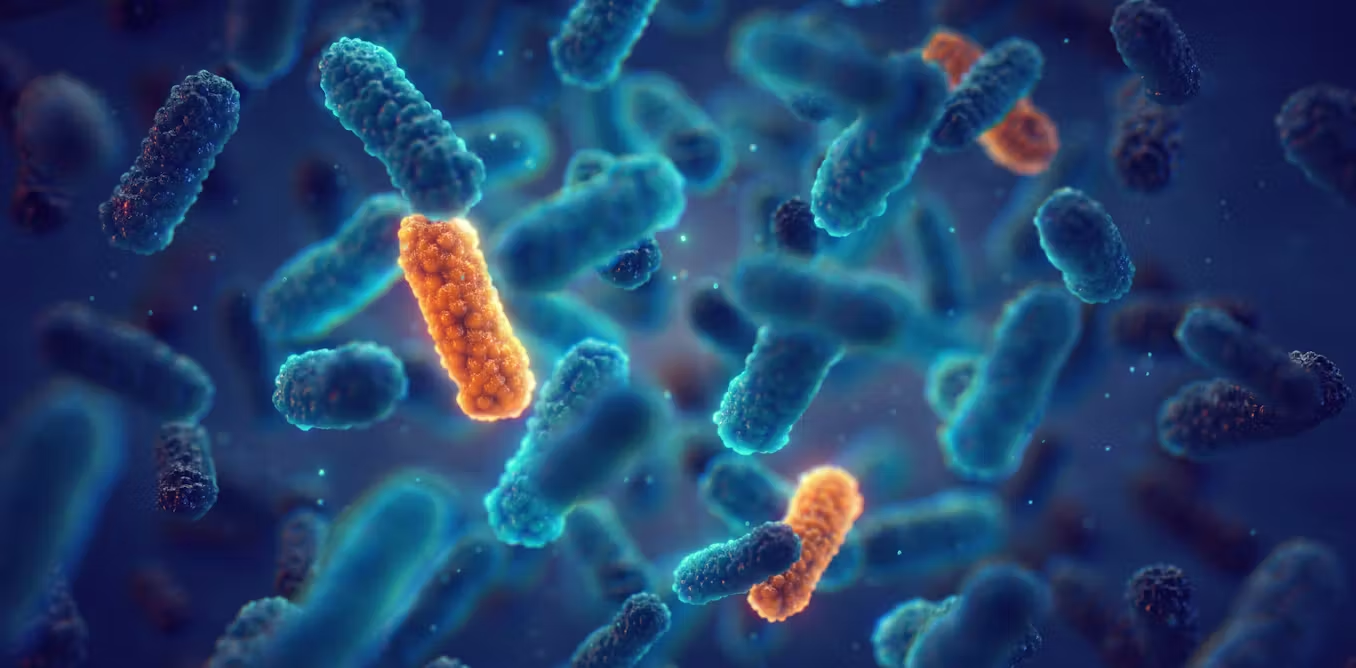
Antibiotics are one of the greatest breakthroughs in medical history. They turned once-deadly infections into treatable illnesses and made modern healthcare possible. But bacteria are changing, and some of the drugs we have depended on for decades are becoming less effective.

Around the world, infections are becoming harder to treat. This problem is known as antimicrobial resistance. It happens when bacteria evolve ways to survive medicines designed to kill them. It is estimated that drug-resistant infections already cause about 1.27 million deaths every year worldwide.

The World Health Organization has warned that we may be moving towards a “post-antibiotic era” in which common infections once again become dangerous, and even routine injuries or procedures carry serious risk.

A century ago, that was normal. A cut from gardening, a sore throat or childbirth could turn into a life-threatening infection. Doctors had few effective treatments, and infectious diseases such as pneumonia, tuberculosis and diarrhoea disease were among the leading causes of death. The arrival of antibiotics changed that dramatically.

Advertisement

Penicillin, discovered by Alexander Fleming in 1928, marked the beginning of one of the most important revolutions in medicine. Before antibiotics, tuberculosis was one of the world’s deadliest infectious diseases. In 1882, it killed one in seven people living in the US and Europe. Once antibiotics became available, many bacterial infections that had once been deadly could be treated effectively.

Antibiotics not only cured infections, but also made modern medicine far safer. Many procedures rely on them to prevent or treat infection, including caesarean sections, organ transplants, joint replacements and cancer chemotherapy.

Without effective antibiotics, these treatments would become much more dangerous. Fleming himself recognised that risk. When he accepted the Nobel Prize in 1945, he warned that misuse of penicillin could lead to resistance.

Living in a microbial world

The human body contains about 30 trillion human cells, but it also carries tens of trillions of bacteria on the skin and inside the body. Together, these communities form the microbiome, the vast collection of microbes that live in and on us. Many of them are not harmful. In fact, they help digest food, produce vitamins and support the immune system, the body’s defence system against disease.

Advertisement

So life is a finely balanced relationship between humans and the microbial world. But bacteria are ancient and extraordinarily adaptable. They have existed on earth for more than 3.5 billion years and survive in some of the harshest places imaginable, from deep-sea vents to polar ice.

Bacteria multiply very quickly and can also swap genetic material, meaning they can share useful survival traits with one another. Some produce substances that break down antibiotics before the drugs can do any damage. Others alter the parts of their cells that antibiotics are designed to attack.

Some develop tiny molecular pumps that push antibiotics back out of the bacterial cell. Others find alternative ways to carry out the jobs that the drug was meant to block.


À lire aussi :
Bacteria ‘shuffle’ their genetics around to develop antibiotic resistance on demand

Advertisement

These changes happen through random genetic variation, which means natural differences arise as bacteria reproduce. But heavy antibiotic use creates strong evolutionary pressure. When antibiotics kill bacteria that are vulnerable to them, the resistant bacteria are left behind to survive and multiply.

Conditions for resistance

Antibiotics are among the most commonly prescribed medicines in the world, and they are often used when they are not needed. In some countries, they are still prescribed for illnesses such as colds and flu, even though antibiotics do not work against viruses. In the UK, prescribing is more tightly controlled, but inappropriate use and public misunderstanding remain a concern.

Large amounts are also used in agriculture and livestock production. This can further encourage resistant bacteria to emerge and spread.

Across Europe, antimicrobial resistance is now recognised as a major public health threat. The European Centre for Disease Prevention and Control estimates that antibiotic-resistant infections cause more than 35,000 deaths each year across the EU and European Economic Area.

Advertisement

Doctors are now seeing infections that are difficult, and sometimes impossible, to treat. Some of the most worrying include methicillin-resistant staphylococcus aureus (MRSA), vancomycin-resistant enterococci (VRE) and carbapenem-resistant enterobacterales (CRE). MRSA can resist several commonly used antibiotics. VRE no longer responds to vancomycin, while CRE can withstand carbapenems, some of the most powerful antibiotics available.

What a post-antibiotic world could look like

If antibiotic resistance continues to rise, the consequences for healthcare could be severe. Many routine medical procedures depend on antibiotics to prevent infection. Without them, surgeries such as hip replacements, organ transplants and some cancer treatments may become too risky to perform.

Even common infections could once again become life-threatening. A simple urinary tract infection could spread into the bloodstream. A skin wound could develop into a severe invasive infection, meaning an infection that spreads deep into the body.

Advertisement

One of the greatest concerns is sepsis, a life-threatening condition in which the body overreacts to an infection and begins damaging its own tissues and organs. Early treatment with antibiotics saves many lives. But when bacteria are resistant, those treatments may fail. That makes sepsis much harder to treat, and in severe cases doctors may have very few options left.


À lire aussi :
Why sepsis is becoming harder to treat in Europe


Healthcare could begin to resemble the pre-antibiotic era, when infection was one of the biggest dangers of everyday life.

Reasons for hope

The situation is serious, but it is not hopeless. Scientists are developing new ways to fight infection. Some researchers are exploring bacteriophages, often shortened to phages, which are viruses that infect and kill bacteria.

Advertisement

Others are working on anti-virulence drugs. Rather than killing bacteria outright, these drugs aim to disarm them by blocking the tools they use to cause disease. The hope is that this may place less evolutionary pressure on bacteria to develop resistance.

Another promising approach is host-targeted therapy. This means boosting the body’s own ability to fight infection, rather than attacking the bacteria directly.

Better diagnostic tests, stronger infection prevention and more careful use of antibiotics could also help preserve the drugs we still have. Antibiotics transformed medicine in the 20th century and saved countless lives. But they were never a permanent victory over microbes.

The challenge now is not just to develop new treatments, but to protect the antibiotics that still work. If we can do that, the post-antibiotic future many scientists warn about may never arrive.

Advertisement


À lire aussi :
Antibiotic resistance could undo a century of medical progress – but four advances are changing the story


Source link

Continue Reading

NewsBeat

President Trump praises ‘fantastic’ King Charles who can mend relationship with UK

Published

on

Daily Record

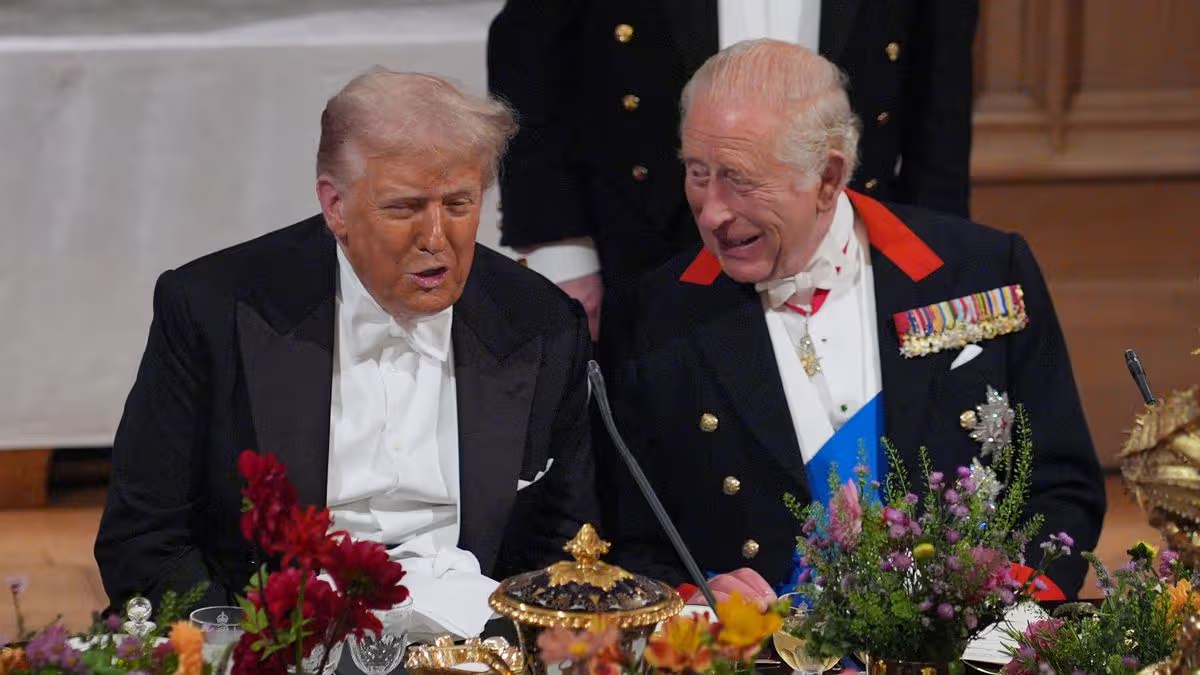
King Charles and Queen Camilla begin a four-day US state visit next week

US President Donald Trump believes King Charles could help mend the strained relationship between the US and UK. The President called the royal ‘fantastic’ and ‘brave’ ahead of a state visit next week, which will include Queen Camilla.

When quizzed during a phone interview with the BBC on whether the visit could help patch things up, Trump said: “Absolutely. He’s fantastic. He’s a fantastic man. Absolutely the answer is yes.

Advertisement

“I know him well, I’ve known him for years,” he added. “He’s a brave man, and he’s a great man. They would absolutely be a positive.”

The president also touched on his relationship with Prime Minister Keir Starmer, suggesting he could only “recover” by changing tack on immigration. The King and Queen will head to the US for a four-day visit kicking off on Monday, where they will meet Trump at the White House, reports The Mirror.

The King will hold a private meeting with the president and deliver a speech to Congress. Following two days in Washington DC, the royal couple will head to New York, Virginia and Bermuda before making their return to the UK.

The Foreign Office confirmed the trip will mark the 250th anniversary of US independence, celebrating a partnership of “shared prosperity, security and history”. During Thursday’s interview, Trump was also pressed on his relationship with Sir Keir.

The two leaders have appeared to be at loggerheads over the war in Iran, with Sir Keir also facing growing scrutiny over his decision to appoint Lord Mandelson as UK ambassador to the US. Taking to Truth Social on Monday, Trump described Lord Mandelson as “a really bad pick” while suggesting the prime minister had “plenty of time to recover”.

When pressed on the meaning behind the post, Trump said: “If he opened the North Sea and if his immigration policies became strong, which right now they’re not, he can recover, but if he doesn’t, I don’t think he has a chance.”

The US president has repeatedly urged Britain to ramp up oil and gas drilling in the North Sea, while also hitting out at the UK government and other allies over their handling of the Iran conflict. Trump has made clear he is “not happy” with the level of backing offered by Britain, while Sir Keir has consistently insisted the country will not be dragged into a “wider war”.

Advertisement

When quizzed by the BBC on why he needed allies like the UK to step up, Trump replied: “I didn’t need them at all but they should’ve been there. I didn’t need them, obviously.

“We’ve wiped Iran’s military out, I didn’t need anybody.”

Trump went on to reveal his calls for support amounted to “more of a test”, saying: “I wanted to see whether or not they would be involved.”

The president was also challenged over his earlier threat this month that “a whole civilisation will die tonight” unless Iran struck a deal – a remark roundly condemned by figures including the Pope and the UN chief.

Advertisement

“The other side is dying to make a deal,” he responded. “So whatever I’m saying or whatever I’m doing, it seems to be working very well.”

Ensure our latest stories always appear at the top of your Google Search by making us a Preferred Source. Click here to activate or add us as your Preferred Source in your Google search settings.

Source link

Advertisement
Continue Reading

NewsBeat

Ministers urged to stick to ticket tout ban amid fears of delay

Published

on

Ministers urged to stick to ticket tout ban amid fears of delay

“These are widely supported, pro-growth measures that will deliver tangible benefits to the British public. However, if ticket resale legislation is not presented in the King’s Speech, it will have the opposite effect and continue to cost those constituents hundreds of millions of pounds a year.

Source link

Continue Reading

NewsBeat

Fire destroys roof of home in Newlands Drive, Acomb

Published

on

Sheriff Hutton shed set alight after hedge fire spreads

Three fire crews were called to the dormer bungalow in Newlands Drive, Acomb, shortly after 2.40pm on Thursday (April 23).

North Yorkshire Fire and Rescue Service said its crews extinguished the fire in the roof space of the home.

A service spokesperson said the blaze caused “100 per cent fire damage the roof”, “50 per cent fire damage to the upstairs property and 10 per cent fire damage to the rest of the property”.

Advertisement

“Crews dampened down [the area] and checked for hotspots. Advice was given to a responsible person,” they said.

Source link

Advertisement
Continue Reading

NewsBeat

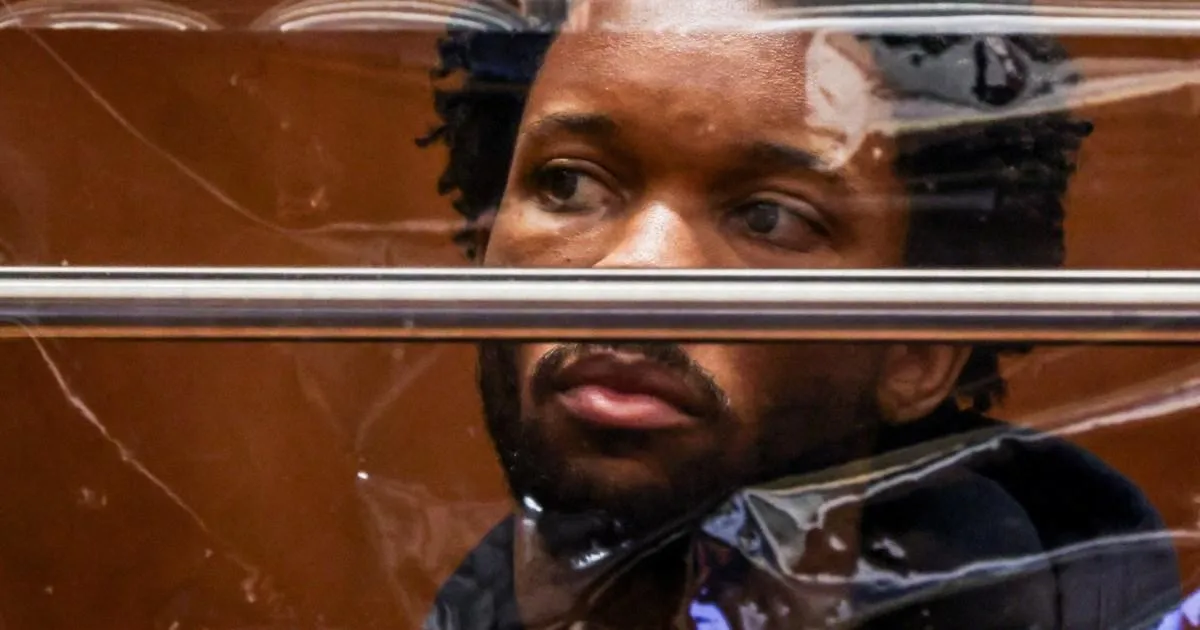
D4vd ‘possessed significant amount of child pornography’ prosecutors allege in murder trial

Published

on

D4vd ‘possessed significant amount of child pornography’ prosecutors allege in murder trial
Rapper D4vd has been accused of having child pornography on his phone (Picture: EPA)

Prosecutors have alleged that D4vd’s phone was full of images of child sexual abuse.

After being under investigation for several months, the 21-year-old rapper was arrested earlier this week and charged with the murder of 14-year-old Celeste Rivas Hernandez.

In September last year the remains of the teenager were found in a Tesla registered to the musician – real name David Anthony Burke.

On Monday Los Angeles County prosecutors formally charged the singer, with LA district attorney Nathan Hochman alleging during a press conference that Burke had engaged in a sexual relationship with the teenager.

Advertisement

He has been charged with lewd and lascivious acts with an individual under 14 and mutilating a body in the killing of Hernandez.

Although he went on to plead not guilty during his first court appearance, prosecutors have since levelled more claims against him.

During a hearing on Thursday at a court in LA, prosecutors claimed D4vd possessed a ‘significant amount’ of child pornography on his phone, as per Rolling Stone.

It is not clear if any of these are of Hernandez.

Advertisement

Prosecutors explained to the court that they have a computer in the DA’s office that will handle the sensitive evidence, but that they cannot turn over the materials.

Appearing in court today – where he was shackled to a chair and wearing an orange prison jumpsuit – D4vd only spoke when asking if he approved that the judge handling his preliminary hearing at the same time as other cases.

‘Yes, ma’am,’ he uttered.

The court appearance comes a day after the Los Angeles Medical Examiner released the autopsy report for Hernandez, which had previously been sealed for months during the investigation.

Advertisement

The report lists the cause of death as ‘multiple penetrating injuries caused by object(s)’ and rules the manner of death a homicide.

Got a story?

If you’ve got a celebrity story, video or pictures get in touch with the Metro.co.uk entertainment team by emailing us celebtips@metro.co.uk, calling 020 3615 2145 or by visiting our Submit Stuff page – we’d love to hear from you.

Advertisement

Source link

Advertisement
Continue Reading

NewsBeat

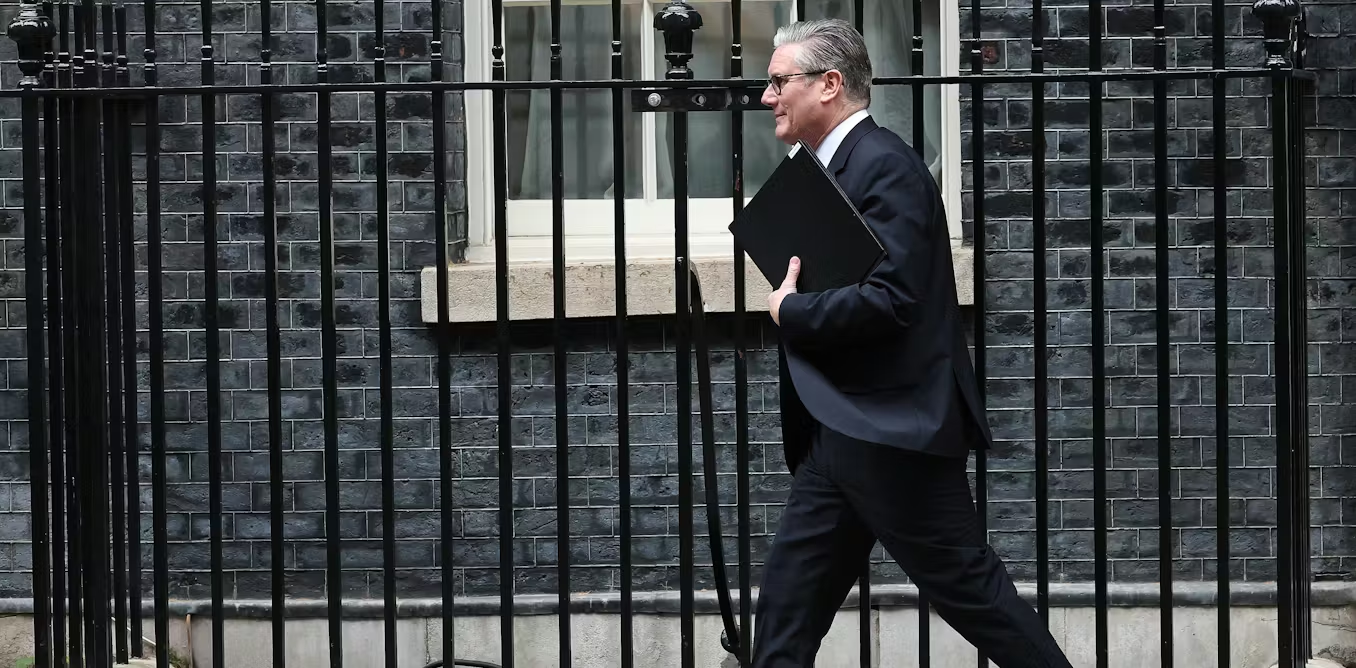
Starmer’s reluctance to engage with the details shows a lack of political leadership

Published

on

Starmer’s reluctance to engage with the details shows a lack of political leadership

For all of Keir Starmer’s undoubted abilities, steady nerve and top-level experience in the legal profession, his tenure as prime minister has been fraught with difficulty. This is no doubt partly due to his limited enthusiasm for the (at times banal) realities of political leadership.

It is also due to his reluctance to engage sufficiently with the details of important decisions. At key moments, he has chosen to look the other way and defer to others to execute.

The most recent and consequential example of this is the appointment of Peter Mandelson as ambassador to Washington DC, which we now know was driven primarily by former chief of staff Morgan McSweeney. A quick refresh on recent Labour party history should have been enough to deter this decision. Instead, Starmer outsourced political judgment to others. Now that it has backfired, he is attempting to deflect the blame for his own misjudgments, perhaps not realising – or not accepting – that the buck ultimately stops with him.

He has lost goodwill by removing a range of colleagues, including two cabinet secretaries, two chiefs of staff, and now a top civil servant. He has not focused enough on the detail of policy, but has rather made broad and vague calls for change and asked others to deliver it. Good leaders delegate with clear instructions to people who are capable of fulfilling specific tasks.

Advertisement

A strong sense of leadership from the centre is needed to make the UK government system work. This was understood by the last Labour government with the introduction of the Delivery Unit, a mechanism to provide performance management across key departments.

The Starmer government got off to a false start in the summer of 2024 and has never really recovered. There was misalignment, to put it mildly, between Starmer’s original (and short-lived) chief of staff, Sue Gray, and other colleagues. A clumsily introduced cut to winter fuel allowance had to be reversed, raising no extra revenue but costing a good deal of political goodwill.

There have been other missteps. Starmer sparked anger among some MPs with his speech warning about the UK becoming “an island of strangers”, only to concede subsequently that he was uneasy with that phrase. He was opposed to his own speech.

Welfare reform was necessary until backbenchers rebelled. A harsher line on immigration did nothing to halt Reform’s rise. A seeming reluctance to criticise Israel’s assault on Gaza cost the Labour party support and helped drive the Green party’s new popularity.

Advertisement

And while Starmer did not know and had no particular fondness for Mandelson, he was persuaded McSweeney that he would be the right person to send to Washington DC as a new ambassador. Hence the rushed process to appoint him, and the subsequent political mess that afflicts Starmer now.

All of these suggest a disengagement with the nitty gritty of politics, the consequences of which are now being made clear.

Understanding the job

Amanda Goodall, a professor of leadership at Bayes Business School, has long argued that “domain knowledge” (or professional expertise) is a vital requirement for those in a leadership position. It pays to have someone in charge who understands and has a profound feel for the world in which they are operating.

Credibility among colleagues is established by being good at the core elements of a job and having proven experience. This was always going to be difficult to achieve for a latecomer to politics like Starmer.

Advertisement

In Westminster, Starmer has always been a fish out of water. He has only been a member of parliament since 2015. He emerged as a viable leadership candidate in the aftermath of Labour’s 2019 election defeat. He succeeded as a figure with calm authority, in contrast to the uncertainty created by Boris Johnson and Liz Truss.

Even under the steadier figure of Rishi Sunak, and undermined by the rise of Reform, the Conservative government was doomed to defeat. In July 2024, the quirks of the UK’s voting system gifted Labour a massive 170-seat majority on a vote share of 34% – a “loveless landslide”. The government was never really all that popular even at the outset. A more politically savvy prime minister might have recognised this and led the new government differently.

Starmer became prime minister without ever having established a distinct political identity or programme. He proudly said that there was no such thing as Starmerism, and never would be. That sort of modesty may have been authentic and appealingly British, in a way. But it left the new government without a song to sing.

Advertisement

Politics, it has been said, is “show business for ugly people”. Charisma is overrated, and after Boris Johnson I suspect the country has had enough of performative prime ministers. The PM does not have to be a stand-up comedian or a “celebrity”. But there should be a purpose to what he or she is doing. A more politically engaged prime minister would have weighed up the risks in appointing Mandelson more carefully, and been aware of warnings that the appointment was being “weirdly rushed”.

Effective political leaders have a coherent and compelling story to tell. They strengthen and give credibility to this story when they make important political decisions with conviction and a sense of ownership. This is what Starmer has lacked all along, and it will be his undoing.

Source link

Advertisement
Continue Reading

NewsBeat

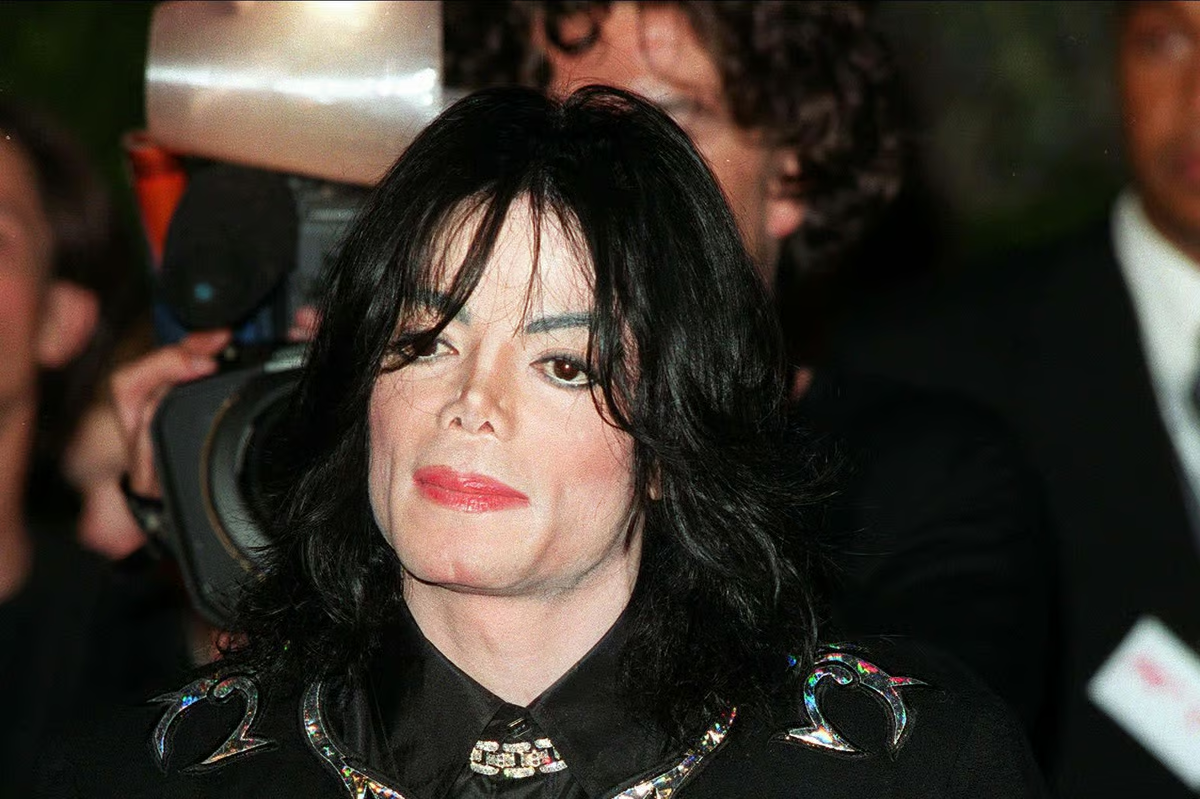
Everything you need to know about the Michael Jackson biopic

Published

on

Everything you need to know about the Michael Jackson biopic

The film traces the pop star’s journey during the early days of his career as part of the Jackson 5, the family band which originally consisted of Jackie, Tito, Jermaine, Marlon and Michael, with Randy later replacing Jermaine, who were behind the hit songs I Want You Back and ABC, through to his career as a solo artist.

Source link

Continue Reading

NewsBeat

Chainsaw thrown at cops from speeding truck during high speed chase | News

Published

on

Video Player Placeholder

Police say a passenger threw a chainsaw out of a car window at pursuing officers during a late-night chase in Pierce County, Washington.

Pierce County Sheriff’s Office (PCSO) said a caller reported her vehicle was stolen from an apartment complex in Parkland on 19 April.

An officer reported that he saw the vehicle attempting to leave the area. An attempted traffic stop then led to a pursuit.

Advertisement

A passenger then threw out a chainsaw and other rope-type items out of a window in an attempt to disable or crash the police vehicles behind them, PCSO officials said. Officers later apprehended the passenger and driver.

The 31-year-old passenger will be charged with possessing motor vehicle theft tools, eluding, and assault 1st degree towards the deputies due to throwing the chainsaw and ropes gear out the window to potentially disable or crash the deputies’ vehicles.

The 28-year-old driver was booked for felony eluding and theft of a motor vehicle.

Source link

Advertisement
Continue Reading

NewsBeat

Knife-wielding yob frightened fellow train passenger on station platform in Coatbridge

Published

on

Daily Record

James Dickov, 24, admitted carrying a blade without reasonable excuse and acting in a threatening or abusive manner on October 9, 2024.

A knife-wielding yob frightened a fellow passenger on a train station platform in Coatbridge.

Advertisement

James Dickov, 24, admitted carrying a blade without reasonable excuse and acting in a threatening or abusive manner on October 9, 2024.

Airdrie Sheriff Court heard he was seen pacing up and down the platform at Whifflet station in Coatbridge shortly before 2pm.

Jack Lindsay, prosecuting, said Dickov was shouting and appeared to be drunk.

He asked a man if he was on the right platform for a Glasgow train and was told he was.

Advertisement

Dickov told the man he had been going about with his brother and they had been “stabbing each other”.

He showed him a Stanley knife before pressing it against the startled man who left the station and contacted the police.

READ MORE: Serial domestic abuser is jailed for breaching non-harassment orders

Dickov then boarded a train. A ticket examiner asked him to turn down his music before spotting the blade in his pocket.

Advertisement

The accused told him he didn’t mean any harm and tried to hug the ScotRail employee who brushed him off and contacted the cops.

Officers found the knife when they searched Dickov as he got off the train at Glasgow Central.

When arrested, Dickov became aggressive and told the officers he would “punch f**k out of you”.

He kicked and spat in the police vehicle.

Advertisement

He also said: “Watch your b***s, boys. I’ve got steel toe caps on. I’m going to end up attacking somebody.”

READ MORE: Teenage lorry driver caused death of dad of three in horror crash

Sentence was deferred until next month for background reports and an electronic tagging assessment.

Sheriff Paul Haran continued bail but warned Dickov, of Pollokshaws, Glasgow: “These are serious matters and all options are being considered.”

Advertisement

*Don’t miss the latest headlines from around Lanarkshire. Sign up to our newsletters here.

And did you know Lanarkshire Live had its own app? Download yours for free here.

Source link

Advertisement
Continue Reading

Trending

Copyright © 2025