
Crypto World
Ethereum Bounces Above $2,300 on Bitcoin Rally



Ethereum opened at $2,375.12 on Thursday April 23, 2026, rising 2% from Wednesday’s open as Bitcoin led a broad morning rally past $78,000, though ETH pulled back to $2,316.88 by 7:10 a.m. ET as traders remained cautious over the lack of progress in Iran peace talks and continued US naval activity near the Strait of Hormuz.
Summary
- Ethereum opened at $2,375.12 on April 23, 2026, up approximately 2% from Wednesday’s opening price, tracking Bitcoin’s move above $78,000 for the first time since early February.
- ETH pulled back to $2,316.88 by 7:10 a.m. ET as traders weighed stalled Iran ceasefire talks and ongoing naval blockade activity against improved macro sentiment.
- Spot Ethereum ETFs logged a ninth straight day of net inflows totaling over $530 million, providing institutional support beneath the price action.
Ethereum opened at $2,375.12 on Thursday and quickly retraced, settling near $2,316.88 by early morning as Bitcoin’s own rally above $78,000 proved difficult to sustain. Yahoo Finance confirmed ETH was up 2% from Wednesday’s opening price, though the reversal pattern was consistent with the cautious risk environment that has defined markets since the Iran ceasefire extended without progress toward a formal peace agreement.
Ethereum Price April 2026 Rally Tracks Bitcoin but Traders Hold Back
Thursday’s morning move followed Bitcoin’s strongest open since early February, with BTC briefly clearing $78,000 before giving back gains as rising oil prices introduced fresh inflation concerns. As crypto.news reported, ETH rose nearly 5% on Wednesday to $2,402, with spot Ethereum ETFs recording a ninth consecutive day of net inflows totaling over $530 million, the open interest in ETH futures climbing to $32.7 billion, and a bullish crossover forming between the 20-day and 50-day exponential moving averages on the daily chart. Thursday’s price action is being watched closely for whether that institutional inflow momentum can hold the $2,300 level as a support floor, with $2,574 identified as the next meaningful resistance aligned with the 50% Fibonacci retracement level.
The Geopolitical Ceiling Keeping ETH Range-Bound
The broader pattern for Ethereum in April 2026 has been one of sharp macro-driven rallies followed by partial retracements, all within a narrowing range anchored by the Iran conflict. As crypto.news documented, ETH surged more than 9% on April 14 to a 10-week high of $2,393 as ceasefire diplomacy briefly lifted risk sentiment, with $123.5 million in short liquidations accelerating the move. That rally also stalled near the same $2,400 zone ETH is testing again this week, reinforcing it as a key resistance ceiling the asset has not been able to close above convincingly since the war with Iran began in February. Iran fired on three ships near the Strait of Hormuz on April 22, and while the US extended the ceasefire indefinitely, the naval blockade remains in place, sustaining the geopolitical risk premium that has kept crypto and risk assets broadly range-bound.
What Would Change the Ethereum Outlook
A sustained close above $2,500 would be the first meaningful structural signal that Ethereum’s rally has shifted from macro relief trading to a genuine trend. As crypto.news tracked, ETH has held its multi-year ascending support trendline that connects bear market lows going back to 2019, with the April monthly low of $2,017 testing and holding that level. The monthly MACD histogram has turned positive at 129.89, the first constructive macro momentum signal since the late 2025 decline from the $4,800 peak. Ethereum’s Glamsterdam upgrade, expected in the first half of 2026, targets significant gas limit increases, parallel transaction execution, and lower Layer-2 transaction costs, providing a fundamental catalyst that could eventually support price independent of the macro environment.
ETH remains approximately 53% below its August 2025 all-time high of $4,953.73, and traders are watching whether the combination of institutional ETF inflows, smart contract network growth, and improving technical structure can produce a sustainable recovery above the $2,500 resistance zone.



Coinbase has filed documentation with the CFTC confirming it will activate Trade at Settlement functionality for XRP futures on May 1, 2026, giving institutional traders a regulated mechanism to execute large block orders at the official closing price rather than against live, intraday market prices.
Summary
- Coinbase will launch Trade at Settlement for XRP futures on May 1, 2026, applying to both nano XRP and full-sized XRP futures contracts.
- TAS lets institutional block traders execute at the official settlement price, eliminating intraday price exposure on large positions.
- The move places XRP on the same footing as Bitcoin, Ethereum, gold, and crude oil futures on Coinbase, all of which already support TAS execution.
Coinbase filed documentation with the US Commodity Futures Trading Commission confirming it will activate Trade at Settlement for XRP futures on May 1, 2026. The CFTC filing outlines how the mechanism will support block trades and structured execution under the Commodity Exchange Act, with Coinbase’s Market Regulation team overseeing all TAS activity to ensure market fairness and prevent manipulation.
Coinbase XRP Futures TAS Launch Targets Institutional Block Traders
The TAS feature will apply to both nano XRP and standard full-sized XRP futures contracts on Coinbase Derivatives. Under the structure, large market participants can execute block orders at the day’s official closing settlement price, removing the execution risk that comes from placing high-volume orders against live, fluctuating bids. For funds and professional trading desks, TAS is about execution efficiency rather than market access. Intraday price swings in digital assets can distort total execution costs significantly when handling large positions, and the ability to lock in the settlement price removes that variable entirely. As crypto.news reported, XRP was simultaneously classified as a digital commodity in a joint SEC-CFTC framework in March 2026, a regulatory shift that has been progressively expanding the institutional derivatives infrastructure available for the asset.
Why This Move Matters for XRP’s Institutional Standing
Placing XRP alongside Bitcoin, Ethereum, gold, and crude oil under the same TAS execution framework on Coinbase is a structural signal as much as a product update. TAS has long been standard in traditional futures markets precisely because institutional participants require it to manage large positions efficiently without moving the market against themselves. As crypto.news documented, XRP’s derivatives market has been undergoing a structural shift in 2026, with futures volume rising significantly relative to spot trading as institutional positioning grows. Adding TAS to that environment gives institutional participants a tool that matches the operational standards of traditional commodity markets, reducing one of the remaining friction points between regulated crypto derivatives and legacy finance workflows.
XRP Derivatives and ETF Infrastructure Expanding in Parallel
The TAS launch arrives as XRP’s institutional infrastructure expands simultaneously across spot and derivatives channels. A Coinbase and EY-Parthenon survey cited in market commentary found that institutional investors plan to increase XRP portfolio exposure from 18% to 25% in 2026, with 65% citing regulatory clarity as the primary condition holding them back. As crypto.news tracked, the CFTC’s posture under newly confirmed Chairman Brian Quintenz has shifted toward a pro-innovation stance, with Ripple CEO Brad Garlinghouse having joined the agency’s Innovation Advisory Committee earlier this year. That regulatory relationship gives Ripple and the broader XRP ecosystem a direct line into the policy conversations shaping how digital asset derivatives are governed going forward.
Coinbase has not disclosed which institutional counterparties have been engaged ahead of the May 1 TAS launch, but the CFTC filing confirms the feature will go live on schedule barring any regulatory objection.
Crypto World
Bittensor Price Prediction: BitGo Opens TAO Staking as Worldcoin Hits Zoom. Pepeto at $9.45M
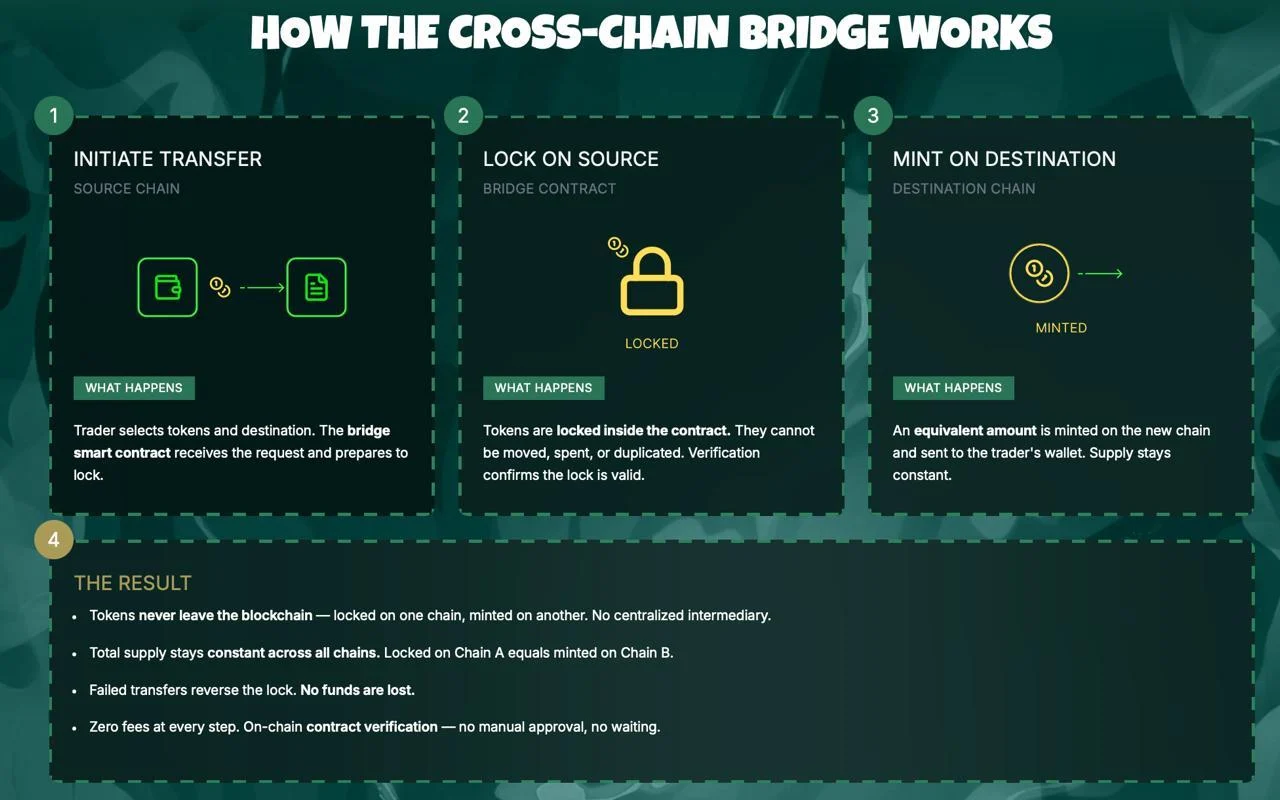
The Bittensor price prediction gained fresh weight on April 20 when BitGo launched institutional custody and staking for TAO subnet tokens through a partnership with Yuma, per CoinMarketCap. Bittensor (TAO) trades at $243 with 70% of supply locked in staking. Three days earlier, Worldcoin (WLD) shipped World ID 4.0 with live integrations into Tinder, Zoom, and DocuSign, per CoinDesk.
Both tokens carry real adoption signals, but market caps of $2.6 billion and $865 million leave limited room for portfolio-changing returns. That math is why capital keeps flowing into the Pepeto presale at $0.0000001866, where $9.45 million has entered and the Binance listing draws closer every day.
BitGo Custody Deal and World ID 4.0 Launch Reshape AI Crypto in April
BitGo now offers institutional staking and trading for Bittensor subnet tokens through Yuma’s validator, giving regulated funds a direct route into TAO for the first time, per BitGo. This Bittensor price prediction catalyst arrived alongside the first TAO halving from December 2025, which cut daily emissions from 7,200 to 3,600 TAO.
World ID 4.0 introduced iris verification to Tinder, Zoom for deepfake protection, and DocuSign for identity checks, per TechCrunch. The network now supports 18 million verified humans across 160 countries. Institutional access to TAO and mainstream adoption of WLD both point to the same conclusion, that capital is looking for early entries with real upside before the larger wave arrives.
Bittensor Price Prediction Compared: TAO, WLD, and the Presale Opportunity Pepeto
Pepeto: The Presale Running Ahead of Schedule While Institutional Money Arrives Late
The Pepe co-creator leads Pepeto alongside an exchange architect who spent years inside Binance shipping trading infrastructure. SolidProof reviewed every contract before the first dollar entered, and more than $9.45 million followed during a quarter where most projects struggled to raise at all.
PepetoSwap lets traders swap across Ethereum, BNB Chain, and Solana without paying fees on any leg. An AI-driven security layer checks each contract a wallet interacts with and warns users before funds commit. Because both products settle in the native Pepeto token, every transaction adds buying pressure the same way Ethereum’s fee burn shrinks ETH supply after each block.
The current round is filling at the same speed that closed the last one early. At $0.0000001866 buyers secure a cost basis that the upcoming Binance debut will replace with a market-set price, and 178% APY staking grows every position daily until that day arrives. Each new Bittensor price prediction headline brings fresh eyes into crypto, and those eyes land on presale entries where the math still points to life-changing returns.
Bittensor (TAO) Price at $243 as BitGo Opens Institutional Staking
Bittensor (TAO) trades at $243 per CoinMarketCap, down 1.76% on the day and 23% on the week after the Covenant AI exit triggered a sell-off.
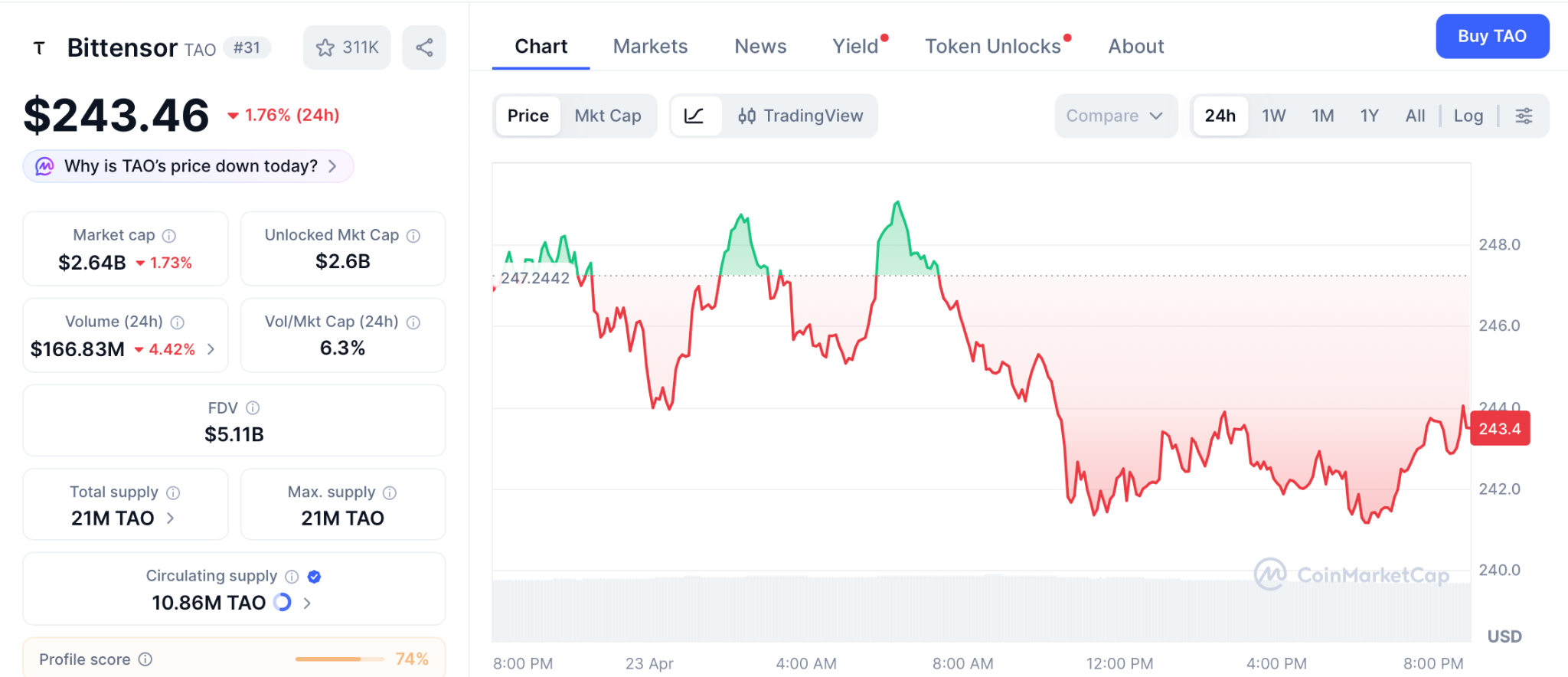
Support holds near $230 with resistance at $260. The all-time high of $757 from April 2024 sits 211% above, strong for a large cap but a fraction of what a presale entry at $0.0000001866 delivers in one listing event.
Worldcoin (WLD) Price at $0.26 as World ID 4.0 Reaches Tinder and Zoom
Worldcoin (WLD) trades at $0.26 per CoinDesk, recovering from its all-time low of $0.24 set earlier in April. The Lift Off event brought partnerships with Tinder, Zoom, and DocuSign, but WLD dropped 13% as token unlocks totaling $330 million added supply pressure.
Even a full recovery to the $11.74 all-time high prints roughly 44x, while the Pepeto presale targets 267x from a single Binance listing.
Conclusion:
The Bittensor price prediction strengthened this week after BitGo opened institutional TAO staking and Worldcoin shipped World ID 4.0 to Tinder and Zoom. TAO at $243 and WLD at $0.26 both carry real upside, but neither can match what happens when a presale token at $0.0000001866 meets a Binance listing for the first time.
The wallets loading Pepeto right now chose the entry that still has real distance ahead, and 178% APY staking adds to every position quietly while the Binance debut approaches. Once this round sells out, the cost basis resets higher and never returns to current levels. Securing the presale price today is how accounts end up holding the kind of gains that everyone else spends the next year regretting they missed.
Visit the Pepeto Website to Enter the Presale

FAQs
What does the Bittensor price prediction target for 2026 after the BitGo deal?
Bittensor (TAO) at $243 holds 211% upside to its $757 all-time high, and the BitGo-Yuma staking partnership removes a major barrier for institutional capital. Pepeto at presale pricing targets 267x from a single Binance listing event.
Is Pepeto a better entry than Worldcoin right now?
Pepeto offers presale access at $0.0000001866 with $9.45 million raised and 178% APY staking before an upcoming Binance listing. Worldcoin (WLD) at $0.26 and an $865 million market cap cannot match that presale-to-exchange return.
Disclaimer: This is a Press Release provided by a third party who is responsible for the content. Please conduct your own research before taking any action based on the content.



Ripple has partnered with Kyobo Life Insurance, one of South Korea’s three largest life insurers with over $92 billion in assets, to pilot Korea’s first blockchain-based tokenized government bond settlement, targeting a compression of the standard two-day settlement cycle to near real-time execution using Ripple Custody.
Summary
- Ripple and Kyobo Life Insurance announced on April 15 a strategic pilot to settle Korean government bonds on blockchain using the Ripple Custody platform, marking Ripple’s first deal with a Korean insurance institution.
- The partnership will also explore stablecoin-based payment rails using Ripple’s RLUSD stablecoin, which is already listed on Korean exchange Coinone.
- The deal arrives as XRP’s April momentum hits its strongest level since September 2025, though the Kyobo deal uses Ripple Custody rather than On-Demand Liquidity and does not create direct XRP purchase demand today.
Ripple announced on April 15 a strategic partnership with Kyobo Life Insurance, the first Tier-1 Korean insurer to adopt on-chain bond infrastructure, to pilot the tokenization and settlement of South Korean government bonds using the Ripple Custody platform. The arrangement targets a compression of Korea’s standard T+2 bond settlement cycle into near real-time execution, simultaneously settling both the bond and the payment leg on a single on-chain ledger.
Ripple Kyobo Life Korea Partnership Targets Government Bond Settlement
As crypto.news reported, the deal uses Ripple Custody rather than Ripple’s On-Demand Liquidity product, meaning it does not create direct XRP purchase demand today. Despite that distinction, XRP rallied 6% to $1.42 on the day the announcement dropped, reclaiming fourth place by market capitalization. The partnership is structured explicitly as a pilot and feasibility study. No transaction sizes, go-live dates, or specific bond series have been disclosed, as Korean regulators have not yet established a complete legal framework for tokenized securities. Fiona Murray, Managing Director for Asia Pacific at Ripple, said the move signals that institutional-grade digital asset infrastructure in Korea is “no longer a future aspiration,” and described the Kyobo deal as “the beginning of a broad and enduring partnership, not only with Kyobo, but with the Korean institutional financial market as a whole.”
Stablecoin Payment Rails Add a Second Layer to the Deal
Beyond bond settlement, the partnership includes an exploration of stablecoin-based payment rails that would allow Kyobo Life to process transactions 24 hours a day, seven days a week, outside normal banking hours. Ripple’s RLUSD stablecoin is already listed on Korean exchange Coinone, giving the stablecoin component a live domestic distribution channel. As crypto.news documented, SBI Holdings, Ripple’s long-term Japanese institutional partner, is also an investor in Kyobo Life, connecting Ripple’s Japan and Korea institutional strategies through the same financial network and reinforcing that the deal is part of a deliberate regional build rather than a standalone partnership. Jin Ho Park, Senior Executive Vice President at Kyobo Life, said the collaboration is “not simply about digital assets, it is about validating how traditional financial instruments can operate securely and efficiently on blockchain.”
Where the Kyobo Deal Fits in Ripple’s Asia-Pacific Strategy
Ripple has been building its Korean institutional presence methodically over 14 months, partnering with local custodian BDACS in February 2025 for institutional XRP and RLUSD storage, and achieving live exchange listings across Upbit, Coinone, and Korbit by August 2025. The Kyobo partnership is the first to bring Ripple into the Korean insurance sector, which holds some of the largest concentrations of long-duration government debt in the country. As crypto.news tracked, Ripple’s Asia-Pacific push has been advancing on multiple fronts simultaneously, including a trade finance pilot with Singapore’s Monetary Authority through the BLOOM sandbox and an Australian Financial Services License acquisition. The Kyobo deal adds Korea’s sovereign debt market to that regional footprint, positioning Ripple Custody as the settlement layer across a growing number of regulated Asian financial institutions.
The partnership’s roadmap anticipates integration with payments, liquidity services, and treasury management over time, though Ripple and Kyobo have not committed to a specific timeline for moving beyond the pilot and feasibility phase.
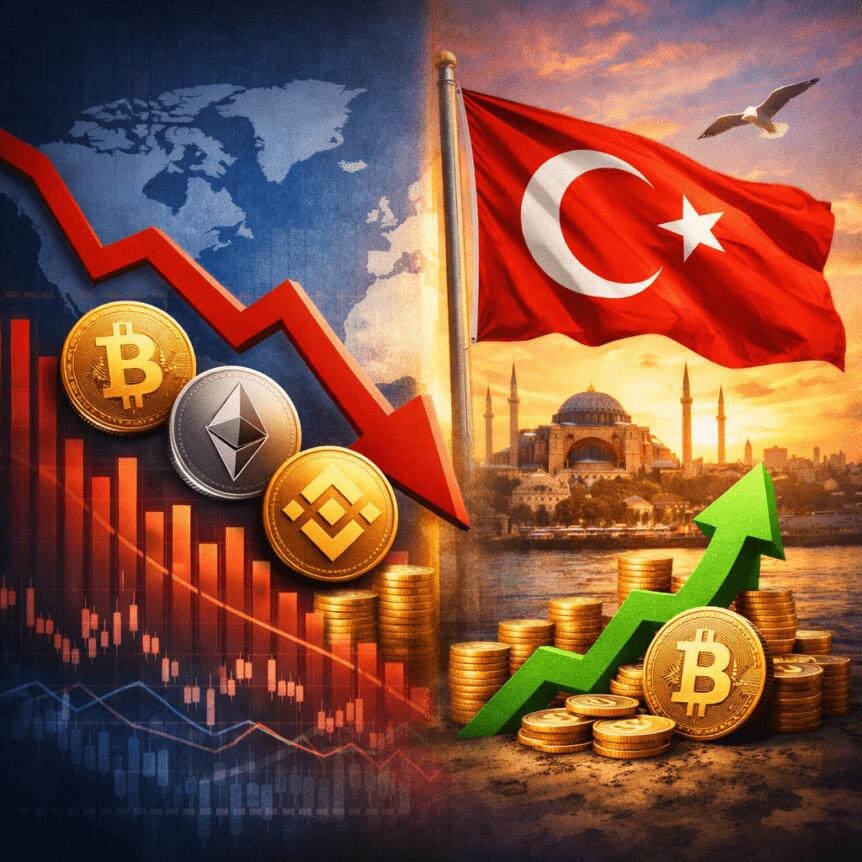
Global crypto adoption cooled in the first quarter as retail activity faced headwinds from a stronger dollar, higher interest rates and a broader risk-off environment. TRM Labs’ Q1 Global Crypto Adoption Index recorded an 11% year-over-year drop in retail volumes to $979 billion, marking a second consecutive quarterly contraction and the sharpest pullback since the 2022 bear market. Bitcoin’s price also slid, falling about 22% in the quarter after a late-2025 rally that topped above $126,000.
“This downturn underscores the sector’s sensitivity to macro conditions,” TRM Labs noted, highlighting how shifts in global liquidity and risk appetite translate into thinner retail participation across markets.
Key takeaways
- Retail volumes declined 11% year over year to $979 billion in Q1, the second straight quarterly contraction.
- Bitcoin prices dropped roughly 22% during the quarter, continuing a broader price correction after a late-2025 peak.
- Advanced economies—led by the United States, South Korea, the United Kingdom, and Germany—saw the steepest declines in crypto trading activity, reflecting a higher opportunity cost for speculative exposure.
- Turkey bucked the trend with a 7% year-over-year increase in volumes, while Latin America and South Asia held relatively stable performance.
- Venezuela emerged as a notable growth market in crypto adoption, underscoring the role of crypto as a store of value in sanctioned or constrained economies.
Diverging regional dynamics reshape the global picture
The quarterly data drew a clear line between regions where crypto serves primarily as a speculative asset and those where it fulfills a more functional role—payments, savings, and value transfer. In mature markets such as the United States, South Korea, the United Kingdom and Germany, traders faced elevated opportunity costs and a tighter risk-on environment, contributing to the steepest declines in trading volume observed in the index.
TRM Labs attributed part of the shift to a tightening macro backdrop, noting that higher interest rates and a stronger U.S. dollar compressed retail appetite for risk assets. The dynamics appeared to run counter to regions where crypto has become a more practical tool for daily use or capital preservation, where activity remained comparatively steadier.
Bitcoin price action and the broader market mood
The quarter’s macro backdrop helped push Bitcoin lower in tandem with the broader pullback across digital asset markets. After peaking near $126,000 in late 2025, BTC’s price drifted down through Q1 as investors reassessed risk against rising yields and slower economic momentum. The price trajectory underscored the link between macro conditions and demand for crypto exposure, particularly in markets with high speculative activity.
Beyond price, the index’s segmentation hints at where crypto demand may rebound. In regions where the asset is used as a hedge or store of value, activity can prove more resilient even amid volatility. The contrast between these dynamics was most evident in the regional split described by TRM Labs, suggesting that the sector’s path forward will depend on both macro stabilization and the evolution of on-chain use cases.
Geopolitics, policy and the evolving role of crypto
Geopolitical developments continued to color crypto adoption patterns in Q1. The report notes that the late-February onset of regional tensions, including the Iran conflict, intensified market sensitivity to energy flows and global risk factors, complicating the macro and liquidity environment for crypto markets.
Among the outliers, Turkey recorded a 7% year-over-year rise in volumes, signaling a more practical reliance on crypto within the local economy. Latin America and South Asia also demonstrated relative stability, suggesting a continued, if uneven, adoption trajectory across diverse regulatory and monetary contexts.
TRM Labs highlighted a broader implication: “This divergence reflects a fundamental difference in demand: where domestic monetary policy is constrained or capital controls limit alternatives, crypto functions as a store of value and shadow dollar system.” The statement captures how crypto’s role shifts with local policy regimes and macro stress, potentially offering a hedge where traditional instruments are less accessible or trusted.
Implications for investors, users and builders
The Q1 findings illuminate a nuanced landscape for different crypto actors. For investors and traders, the persistence of a bifurcated market—softening retail participation in advanced economies alongside more resilient activity in specific regions—adds a layer of complexity to risk assessment. The decline in retail volumes amid a stronger dollar and higher rates could sap near-term liquidity, particularly in assets with high speculative demand.
Platform operators, wallets and payment-focused projects may see varied exposure as consumer demand reorients around cost of capital and cross-border usage. In economies where crypto remains a practical alternative to restricted or unstable local currencies, the asset may continue to fulfill its traditional functions even in downturns, potentially stabilizing demand in those pockets of the market.
Regulators and policymakers will likely monitor how macro shifts influence crypto activity, especially in jurisdictions where crypto serves as a quasi-official channel for value retention or as a substitute for capital controls. The Venezuela case, highlighted by TRM as a growth market, exemplifies how sanctions and monetary constraints can shape on-chain usage patterns and adoption trajectories.
What to watch next
As the year resumes, watchers should keep an eye on several developing threads: whether macro conditions ease sufficiently to rekindle retail appetite in advanced economies, how stablecoins and on-chain payments ecosystems influence adoption in constrained markets, and how geopolitical tensions or policy shifts affect cross-border flows and liquidity. The evolving balance between speculative demand and functional use will likely continue to define the pace and geography of crypto adoption in 2026.
Readers should monitor TRM Labs’ ongoing analyses for updates on regional momentum and the intersection of macro factors with on-chain activity, as this dynamic will shape strategic decisions for traders, builders and institutions navigating a still-maturing crypto landscape.
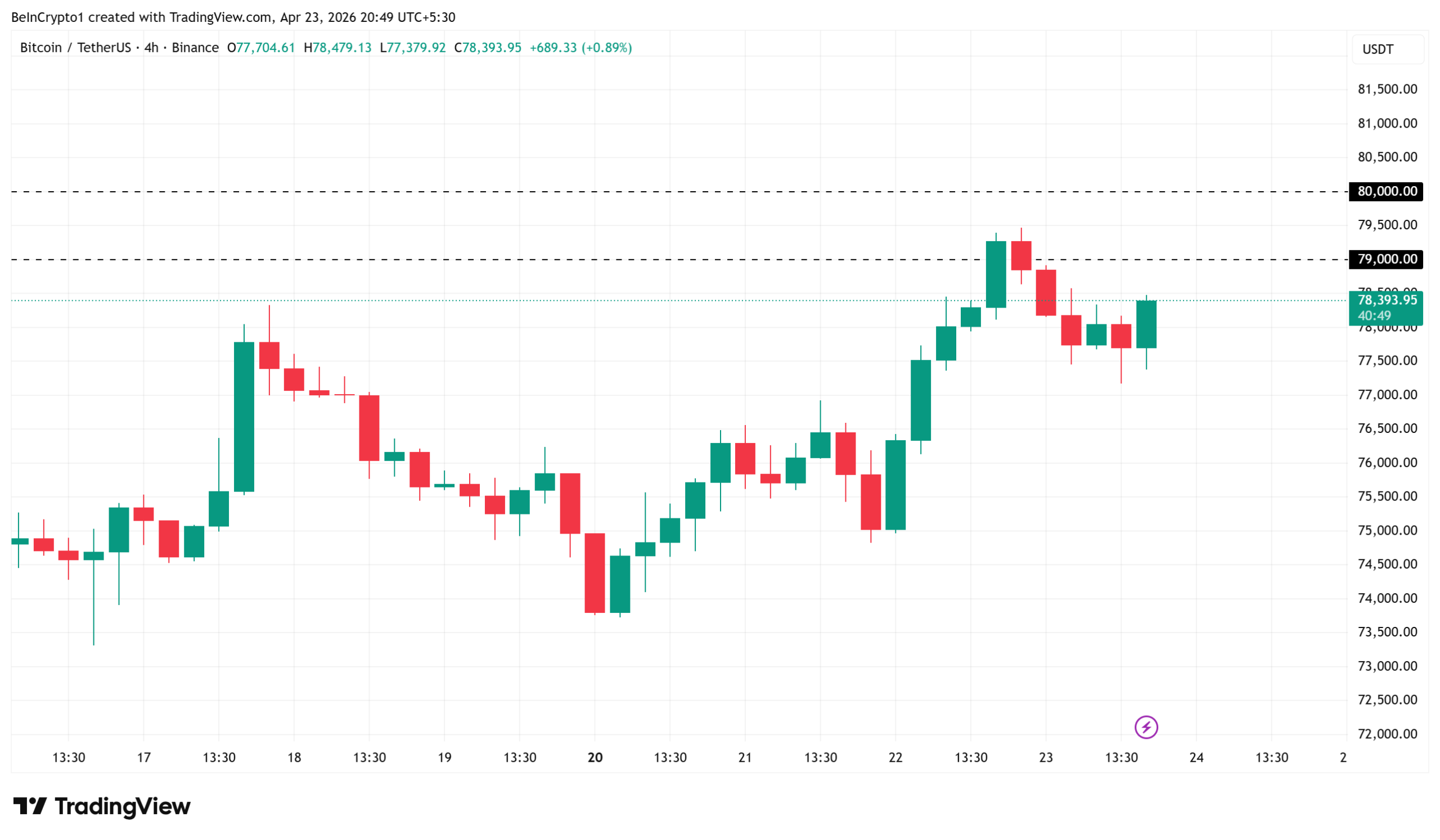
Bitcoin (BTC) traded near $78,000 on Thursday but continued to face resistance at the $80,000 level as fresh US-China friction weighed on risk sentiment.
The White House accused Chinese entities of running deliberate campaigns to steal American AI technology, adding to geopolitical uncertainty weeks before a planned Trump-Xi summit.
White House Escalates AI Dispute With China
In a Thursday memo Michael Kratsios, Director of the White House Office of Science and Technology Policy, said foreign entities based in China are conducting “industrial-scale campaigns to distil US frontier AI systems.”
The campaigns allegedly use tens of thousands of proxy accounts and jailbreaking techniques to extract proprietary data from American AI models.
The administration said it would share intelligence with US AI firms and explore measures to hold foreign actors accountable.
This announcement arrives weeks before President Trump’s scheduled visit to China in mid-May for talks with President Xi Jinping.
Bitcoin Faces $80,000 Resistance
BTC opened at $78,193 on Thursday before retreating to roughly $77,465 by early morning trading. The $80,000 to $80,600 band has acted as a consistent ceiling throughout April.
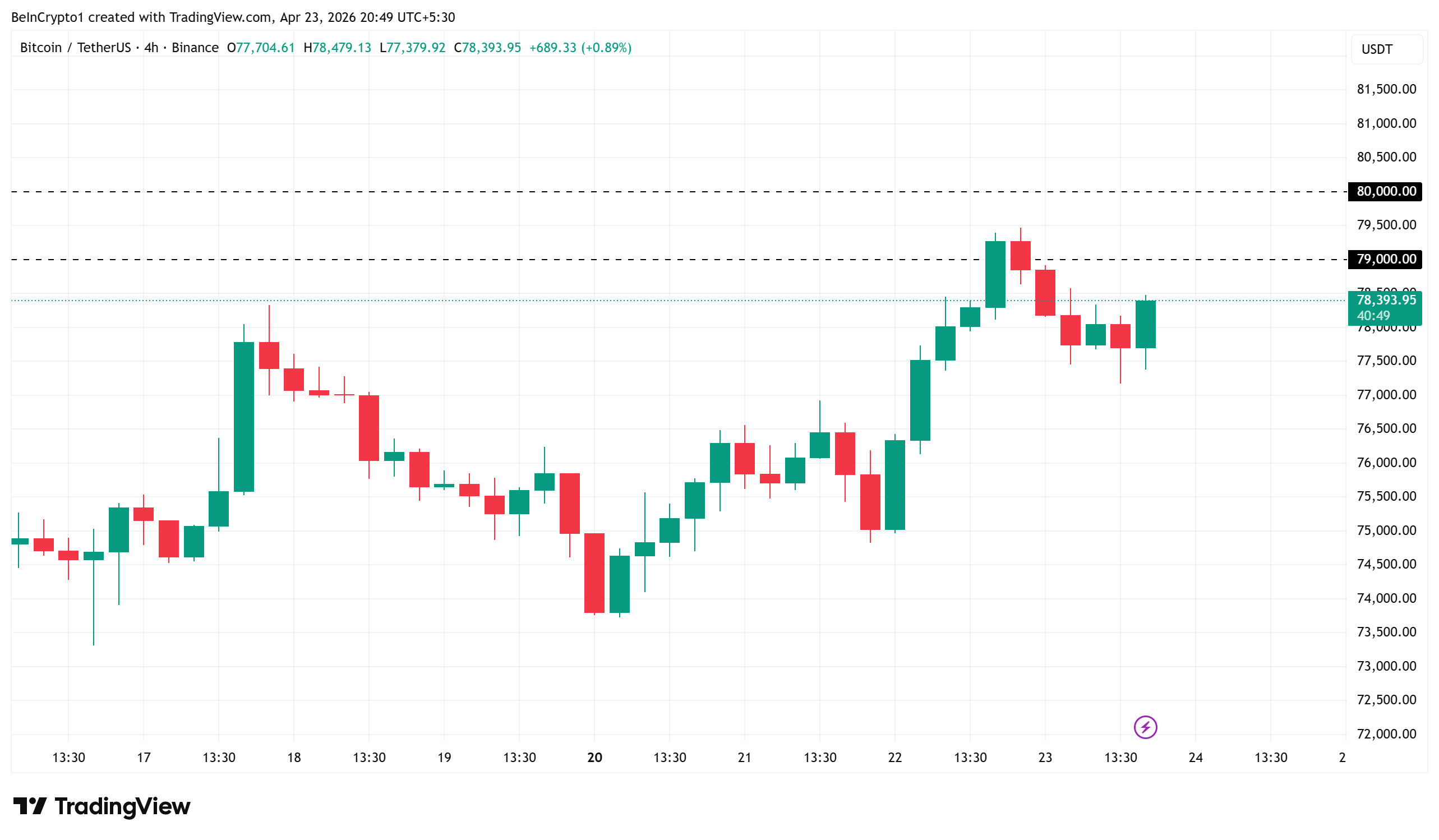
On-chain data shows the Traders’ On-Chain Realized Price at $76,800 has capped recent relief rallies. On Deribit, the $80,000 call has become the most popular options trade, recording a notional value of $1.78 billion.
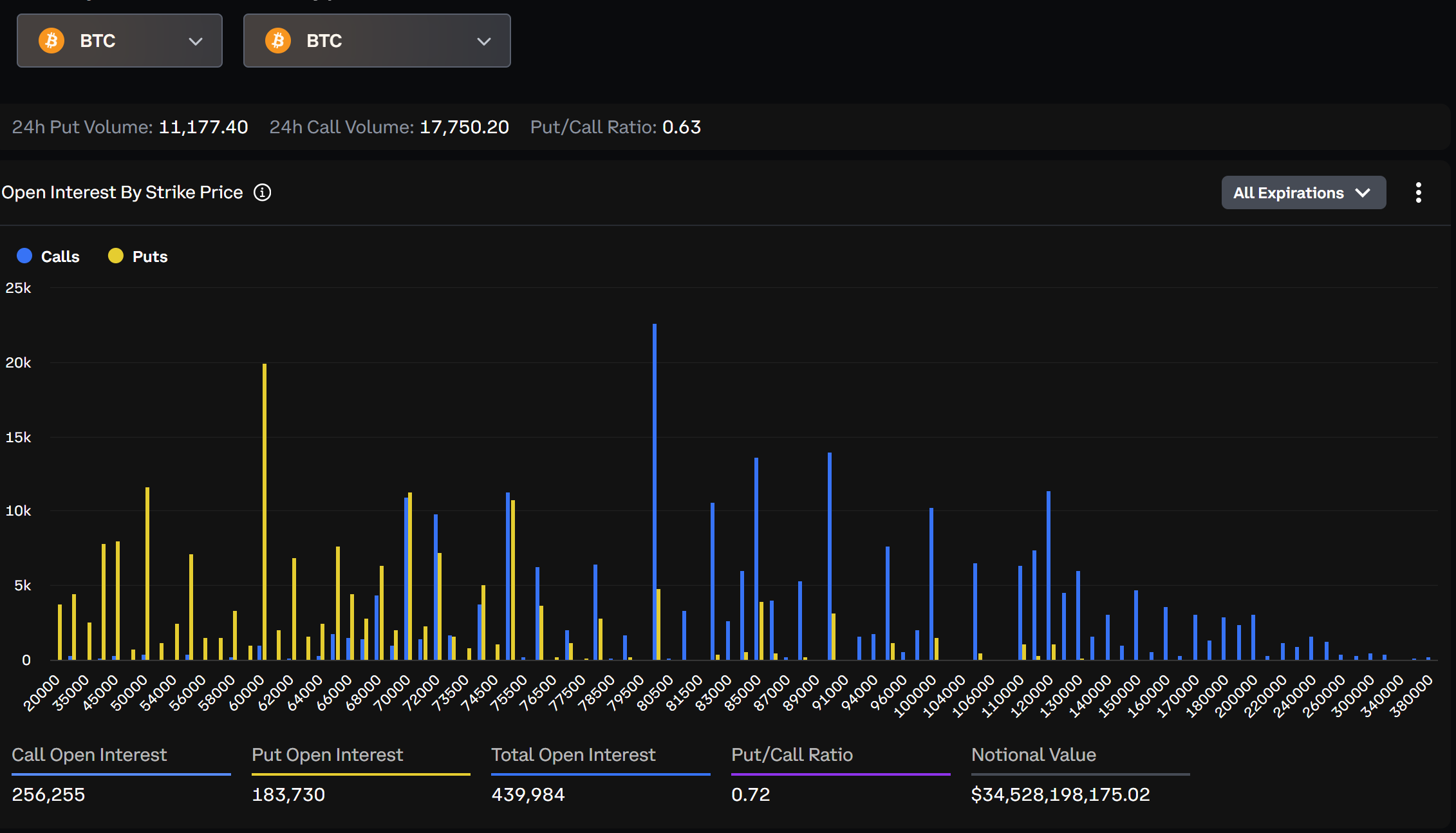
This suggests traders are positioning for a breakout that has yet to materialize, with call options (buy orders) exceeding put options (sale orders) highlighting higher investor optimism.
While the AI dispute carries no direct technical link to Bitcoin, escalating US-China friction has historically dampened risk appetite across crypto markets.
The Bitcoin price being able to reclaim the $80,000 psychological level,. last tested in February, may hinge on broader sentiment heading into the Trump-Xi meeting.
The post Bitcoin’s $80,000 Target Remains Elusive Amid New US-China Tensions appeared first on BeInCrypto.
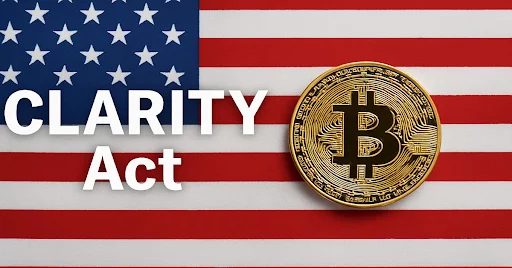
More than 120 crypto organizations, led by the Crypto Council for Innovation and the Blockchain Association, sent a joint letter to the Senate Banking Committee on April 23 demanding an immediate markup of the CLARITY Act, warning that continued congressional inaction risks a dangerous regulatory deadlock that could drive investment and jobs offshore.
Summary
- A coalition of over 120 crypto organizations sent an emergency letter to the Senate Banking Committee on April 23 demanding an immediate CLARITY Act markup.
- The letter warns that delay risks pushing crypto investment, jobs, and technological development offshore and cedes the regulatory standard-setting role to other jurisdictions.
- The push comes as Senator Bernie Moreno has warned that missing the May window could shelve the bill indefinitely, and Galaxy Research puts 2026 passage odds at roughly 50-50.
More than 120 crypto organizations from across the digital asset ecosystem, including Ripple, have jointly urged the Senate Banking Committee to move forward with a markup on the CLARITY Act, in the most coordinated industry lobbying push the bill has seen since clearing the House 294 to 134 in July 2025. The letter, led by the Crypto Council for Innovation and the Blockchain Association, was submitted on April 23 and warns that failure to act risks pushing digital asset investment and jobs offshore while ceding America’s chance to set the global standard for crypto market regulation.
CLARITY Act Crypto Letter Delivers Clearest Industry Ultimatum Yet
The letter’s core argument is that years of bipartisan work have produced a bill that is ready to move, and that further delay is no longer a negotiating posture but a threat to the legislation’s survival. As crypto.news reported, the CLARITY Act’s April Banking Committee markup was derailed by renewed bank lobbying over stablecoin yield provisions, with the North Carolina Bankers Association urging members to call Senator Thom Tillis’s office directly to demand changes to a compromise that had already been negotiated with crypto firms. The White House Council of Economic Advisers responded by publishing a 21-page analysis concluding that banning stablecoin yield would increase bank lending by just 0.02% while imposing an $800 million welfare cost on consumers, but the pushback from banking groups nonetheless delayed the committee calendar. Anil Oncu, CEO of Bitpace, told Disruption Banking that the greatest danger is now prolonged congressional inaction: “The greatest danger now is that the current deadlock continues to push the global standard-setting role away from Washington and toward other jurisdictions.”
What the Letter Is Asking the Senate to Do
The coalition’s priorities include drawing clear lines between SEC and CFTC oversight roles, protecting non-custodial software developers from broker registration requirements, simplifying disclosure rules for digital asset issuers, and avoiding the regulatory fragmentation that would result from a patchwork of state-by-state laws filling the federal vacuum. As crypto.news has tracked, the bill faces a four-way standoff among crypto firms, banks, the SEC, and structural critics over stablecoin yield, DeFi oversight, and ethics provisions barring government officials from profiting from crypto. Ripple CEO Brad Garlinghouse has publicly projected the bill will pass by end of May, while Coinbase CEO Brian Armstrong backed the latest version after reversing the company’s earlier opposition in January.
Why the May Deadline Is Now Non-Negotiable for the Industry
Senator Bernie Moreno has stated explicitly that if the bill does not reach the full Senate floor by May, digital asset legislation may not advance before the midterm election cycle closes the window. Senator Cynthia Lummis has gone further, warning publicly that this is “our last chance” and that missing the May window means waiting until at least 2030. As crypto.news documented, the bill must still clear the Senate Banking Committee, pass a full Senate floor vote requiring 60 votes, be reconciled between the Agriculture and Banking Committee versions, and then be reconciled with the House-passed text before reaching President Trump’s desk. Each of those steps is a potential delay point, and the midterm campaign calendar leaves only weeks of operational legislative time before Congress shifts its focus entirely.
The Senate Banking Committee has not yet scheduled a markup date as of publication, with Chairman Tim Scott yet to formally notice the bill for action.
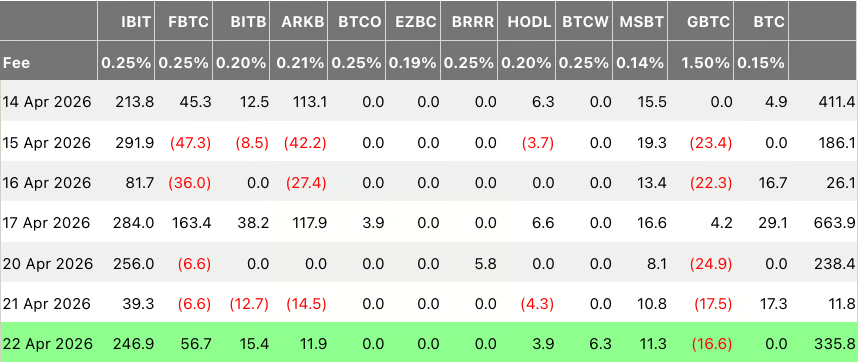
US-listed spot Bitcoin exchange-traded funds (ETFs) have been gaining momentum amid Bitcoin’s price recovery, showing steady inflows since mid-April.
Spot Bitcoin (BTC) ETFs logged $335.8 million in inflows on Wednesday, marking the seventh consecutive day of inflows, according to Farside data.
During the inflow streak, the ETFs drew around $1.9 billion in total inflows, surpassing the previous seven-day inflow streak in March, which totaled $1.2 billion.
According to Wallet Pilot data, Bitcoin ETFs hold a combined 1.3 million Bitcoin in assets under management, worth around $103 billion.
The steady inflows to Bitcoin ETFs were accompanied by a rising BTC price, which has surged 11% over the past 30 days. BTC briefly rose above $79,000 on Wednesday, its first time reaching that level since late January, according to CoinGecko.
BlackRock leads inflows at $1.4 billion as Morgan Stanley fund adds to streak
Out of $1.9 billion in the latest inflow streak, BlackRock’s iShares Bitcoin Trust ETF (IBIT) accounted for more than 73% of all the inflows at $1.4 billion. The fund holds 809,870 Bitcoin, accounting for 62% of total AUM in US-listed spot Bitcoin ETFs.
The Morgan Stanley Bitcoin Trust (MSBT) strongly contributed to the momentum, posting $95 million within the total streak. Notably, the fund itself has not yet seen a single day of outflows, generating $163 million since launch on April 8.
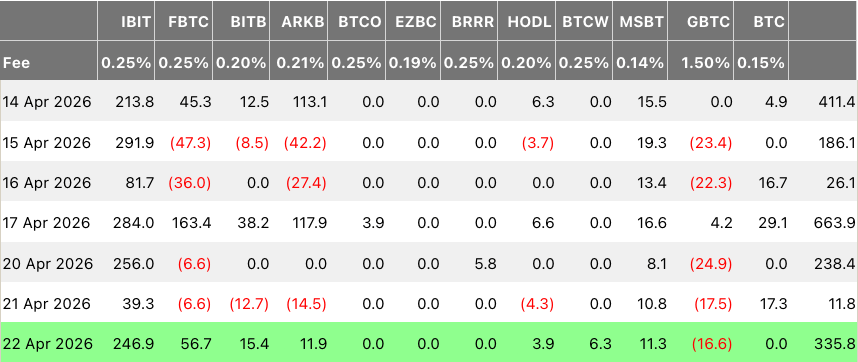
Daily spot Bitcoin ETF inflows since April 14. Source: Farside.co.uk
Still, several funds have clocked losses during the past seven trading sessions. The Grayscale Bitcoin Trust ETF (GBTC) led redemptions during the period, with net outflows of around $100 million.
Ether (ETH), the second-largest crypto asset by market capitalization, has also been gaining traction in US-listed spot ETFs, with these funds posting a 10-day inflow streak totaling $633.6 million, according to Farside.
Related: Market maker GSR launches first ETF tracking Bitcoin, Ether and Solana
Last week, broader ETH investment products recorded their strongest week since January, finally flipping to positive flows year-to-date, according to CoinShares.
The ongoing recovery in spot markets came as the Crypto Fear & Greed Index surged to 46 for the first time since late January. Still, the index remains in “fear” territory, as Bitcoin remains down about 11% year-to-date
Magazine: Adam Back says current demand is ‘almost’ enough to send Bitcoin to $1M


The UAE announced a directive to transition 50% of federal government sectors, services, and operations to Agentic AI within two years, positioning itself as the first nation to deploy autonomous systems at that scale.
Sheikh Mohammed bin Rashid Al Maktoum, Vice President and Prime Minister, revealed the framework during a Cabinet meeting on April 23 under directives from President Sheikh Mohamed bin Zayed Al Nahyan.
What the UAE’s Agentic AI Plan Involves
Unlike conventional digital tools, Agentic AI systems independently analyze data, make decisions, execute multi-step processes, and improve without constant human input.
Follow us on X to get the latest news as it happens
The UAE plans to embed these as operational partners across federal workflows, with Sheikh Mohammed describing the shift as a fundamental change in how government works.
“AI will be our government executive partner to support decisions, enhance services, boost the efficiency of operations, and even evaluate results and introduce improvements in real time,” read an excerpt in the announcement citing the Vice President and Prime Minister, Sheikh Mohammed.
The directive includes mandatory AI training for all federal employees. Ministers and directors-general will face performance evaluations based on adoption speed, implementation quality, and how effectively they redesign operations around AI.
Sheikh Mansour bin Zayed Al Nahyan will oversee execution, with a dedicated taskforce chaired by Mohammad Al Gergawi, Minister of Cabinet Affairs.
A Decade of AI Groundwork
The announcement builds on the UAE’s existing infrastructure. In 2017, the country became the first to appoint a Minister of State for Artificial Intelligence and launched its AI Strategy 2031.
The appointment built on the belief that AI would be the next major revolution, with the UAE leveraging the first-mover advantage.
“Artificial Intelligence is the next major revolution of our times – our goal is to be one of the most advanced countries in this regard,” Sheikh Mohammed said at the time.
It later established a dedicated ministry for AI, digital economy, and remote work in 2020.
Other nations are pursuing similar goals. Estonia’s KrattAI network and Singapore’s Smart Nation initiative both integrate autonomous agents into public services.
However, no government has set a comparable scope or deadline for deploying Agentic AI across half its federal operations.
Subscribe to our YouTube channel to watch leaders and journalists provide expert insights
The post UAE Orders 50% of Government Operations to Run on Agentic AI by 2028 appeared first on BeInCrypto.


JPMorgan says repeated DeFi hacks, a $20B TVL drop after Kelp’s rsETH exploit, and flat ETH‑denominated TVL are souring institutional appetite for onchain lending and yield.
Summary
- JPMorgan says repeated DeFi exploits and flat ETH-denominated TVL are curbing institutional interest.
- A recent rsETH bridge exploit tied to Kelp DAO wiped roughly $20 billion from DeFi TVL in days.
- Attackers minted around $292 million of unsecured rsETH, leaving about $230 million in bad debt on Aave and pushing investors toward USDT.
JPMorgan analysts told The Block that “frequent security incidents in DeFi and the stagnation of total locked value (TVL) in ETH terms continue to limit institutional interest in DeFi,” highlighting how repeated exploits are eroding confidence at scale.
JPMorgan flags DeFi security drag on institutions
Citing the latest cross-chain bridge incident involving Kelp DAO’s rsETH, the bank said the episode “led to a loss of approximately $20 billion in DeFi TVL within a few days,” underscoring just how quickly nominal liquidity can evaporate when trust breaks.
In their note, the analysts described how attackers “minted about $292 million in unsecured rsETH and borrowed real ETH on Aave using it as collateral, resulting in approximately $230 million in bad debt,” turning what began as a smart contract loophole into a systemic hit across blue-chip lending markets.
Flight to USDT and stalled growth
JPMorgan also argued that these blow‑ups are changing user behavior, writing that “after security incidents, users tend to turn to Tether’s USDT for safety,” as capital rotates from riskier protocol-native assets and yield strategies into perceived stable harbors.
The bank pointed to the stagnation of DeFi TVL when measured in ether, rather than in dollar terms, as another structural warning sign, noting that flat or declining ETH-denominated TVL suggests “underlying activity is not growing even when token prices rise.”
According to The Block, the analysts concluded that until DeFi can demonstrate “sustained improvements in security, risk management, and insurance mechanisms,” large institutions will remain cautious about allocating more capital to on-chain lending, derivatives, and cross-chain infrastructure.

MN Trading Capital founder Michael van de Poppe doesn’t expect Bitcoin to drop below $75,000 in the near term, even as Polymarket traders price in a different outcome.

20 Best SEO Tools Every Digital Marketer Must Use in 2026

Coinbase Sets XRP TAS Futures for May 1

Disney’s Cancelled 8-Part Star Wars Series Officially Becomes a Late-Night Sleeper Hit

Manchester United reach agreement with Casemiro over contract clause amid transfer speculation

US brings back mandatory military draft registration

Steven Gerrard disagrees with Gary Neville over ‘shock’ Chelsea and Arsenal claim | Football


-

 Sports7 days ago
NWFL Suspends Two Players Over Post-Match Clash in Ado-Ekiti
-

 Fashion6 days ago
Weekend Open Thread: Theodora Dress
-

 Politics6 days ago
Palestine barred from entering Canada for FIFA Congress
-
Entertainment4 days ago
NBA Analyst Charles Barkley Chimes in on Ice Spice McDonald’s Fiasco
-

 Tech5 days ago
Auto Enthusiast Scores Running Tesla Model 3 for Two Grand and Turns It Into Bare-Bones Go-Kart
-

 Business5 days ago
Powerball Result April 18, 2026: No Jackpot Winner in Powerball Draw: $75 Million Rolls Over
-

 Politics5 days ago
Zack Polanski demands ‘council homes not luxury flats for foreign investors’
-

 Crypto World6 days ago
Russia Pushes Bill to Criminalize Unregistered Crypto Services
-

 Politics3 days ago
Gary Stevenson delivers timely reminder to register to vote as deadline TODAY
-

 Business2 days ago
Rolls-Royce Voted UK’s Most Iconic Trade Mark as IPO Register Hits 150
-

 Politics1 day ago
Disabled people challenge government SEND proposals over segregation concerns
-

 Politics1 day ago
Making troops accountable for war crimes threatens US alliance, ex-SAS colonel warns
-

 Crypto World6 days ago
Russia Introduces Bill To Criminalize Unregistered Crypto Services
-

 Politics1 day ago
Starmer handler McSweeney to be dragged from shadows by Foreign Affairs Committee
-
Politics1 day ago
Wings Over Scotland | How To Get Away With Crimes
-

 Politics1 day ago
Zack Polanski responds to home secretary’s taser threat
-
 Crypto World5 days ago
Kelp DAO rsETH Bridge Hack Drains $292M as DeFi Losses Top $600M in Two Weeks
-

 Politics1 day ago
‘Iran is still a nuclear threat’
-

 Crypto World2 days ago
New York sues Coinbase, Gemini over prediction market offerings
-
 Sports7 days ago
Kevin Kisner apologizes for Masters criticism: ‘I crossed the line’
You must be logged in to post a comment Login