
Business
Shelton Powell and Cart Capital: Building Systems That Scale


How Shelton Powell Turned an Idea Into a Scalable eCommerce Model
Shelton Powell did not enter eCommerce chasing trends. He entered it trying to solve a problem he kept seeing.
Too many people wanted to build online businesses. Few had the structure to do it well.
That gap became the starting point for Cart Capital.
“The company was built to solve a real problem,” Powell says. “Most people fail in eCommerce not because the model doesn’t work, but because they try to build alone.”
What followed was not a quick rise. It was a process shaped by trial, setbacks, and gradual improvement.
Early Career Lessons in eCommerce Operations
Powell’s background as an eCommerce operator goes back to 2017. Like many early builders, he learned by doing.
The first phase was not smooth.
There were issues with payment processing. Systems broke. Operations slowed down.
These were not small problems. They affected how fast the business could grow.
But Powell did not treat them as temporary setbacks. He treated them as signals.
“Success comes down to how good you are at solving problems,” he says. “We had to get better at it.”
That mindset pushed him to move beyond surface-level fixes. Instead, he focused on building stronger systems behind the business.
What Cart Capital Does in the eCommerce Industry
Cart Capital was built around one core idea. Most people should not have to build everything alone.
The company manages the full operational side of eCommerce brands. This includes product research, store development, supplier relationships, marketing, fulfillment, and retention.
“We own and operate the infrastructure behind eCommerce brands,” Powell explains.
Instead of offering isolated services, the company runs the entire system.
This approach helped Cart Capital scale. Today, the company has managed over 150 eCommerce brands and contributed to more than $50 million in revenue.
Still, Powell does not frame that as the end goal.
“Hitting the target outcome we set at the start is one thing,” he says. “Success is delivery plus improvement.”
Why Not Every Partner Is the Right Fit
One of the biggest turning points in Powell’s career came from a hard lesson.
Not every partnership works.
“Early on we learned that the wrong person in an engagement can be more detrimental than no engagement at all,” he says.
That realization changed how Cart Capital operates.
The company introduced a more structured onboarding process. It began filtering for mindset, readiness, and alignment.
“We don’t let just anyone in,” Powell says. “It takes the right person on the other end to build something successful together.”
This shift improved consistency. It also allowed the company to focus more deeply on each engagement.
The Role of Data and Feedback in Business Growth
As the company grew, Powell leaned heavily into measurement.
He believes that growth should be tracked clearly and consistently.
“Everything gets measured,” he says. “If it isn’t tracked, it doesn’t exist.”
Revenue, campaign performance, and operational benchmarks are reviewed regularly. But Powell does not rely on numbers alone.
“The numbers tell you what happened,” he explains. “The feedback tells you if it mattered.”
This combination of data and real-world input helps guide decisions. It also keeps the business focused on outcomes that go beyond short-term gains.
Adapting in a Fast-Moving Industry
ECommerce changes quickly. What works one year may not work the next.
For Powell, staying relevant comes down to adaptability.
“Problem solving and open-mindedness are not optional,” he says. “It’s the job.”
This mindset has shaped how Cart Capital approaches strategy. The team tests new ideas, adjusts campaigns, and looks for ways to improve systems over time.
At the same time, Powell emphasizes discipline.
“We promote execution over promises and long-term brand building over quick wins,” he says.
This balance between flexibility and structure has become a defining part of the company’s approach.
The Personal Drive Behind the Business
Behind the systems and strategy, Powell’s motivation is personal.
He often reflects on his father’s influence.
“My father was a Jamaican immigrant who built a life from nothing,” he says. “When he passed, I made a decision. He didn’t make those sacrifices for me to amount to nothing.”
That perspective shapes how he responds to challenges.
“When your back is against the wall, quitting isn’t a real option,” Powell says. “You ask yourself what you still have left to work with and you get back to work.”
Faith and purpose also play a role in how he stays grounded.
“I pray for strength, clarity, and confidence to keep moving,” he adds.
How Shelton Powell Defines Long-Term Success
As Cart Capital has grown, Powell’s view of success has evolved.
In the early stages, growth and performance metrics were the main focus. Over time, the definition became broader.
“At a certain point, money stops being the main motivator,” he says. “What drives me now is the depth of the system I’m building and the impact it can create.”
That shift reflects a larger theme in his career.
The goal is not just to build businesses. It is to build systems that can sustain them.
A Career Built on Execution and Improvement
Shelton Powell’s path in eCommerce is not defined by one breakthrough moment. It is defined by consistent refinement.
He identified a gap. He built around it. He improved through experience.
Cart Capital is a result of that process.
It represents a structured approach to an industry often driven by speed and change.
And for Powell, the work continues.
Because in his view, success is not static. It is something that evolves with every system built and every problem solved.


Dr Reddy’s Laboratories soared 9.4% – the highest single-day gains since September 2017. Piramal Pharma and Cipla jumped 6.5% and 5.6%, respectively.
The Nifty Pharma Index gained 2.4% while the benchmark Nifty declined 0.8% on Thursday. Out of the 20 stocks in the Nifty Pharma Index, 16 advanced and four declined.
“The target action date for Dr Reddy’s Semaglutide generic filing in Canada is around the corner (May), and positive expectation around a successful approval may have triggered a rally in the stock,” said Vishal Manchanda, Senior VP – Institutional Research, Systematix Group. The company has yet to make any official disclosure.
Two other companies in the Semaglutide value chain – OneSource Specialty Pharma and Shaily Engineering Plastics also surged, said Manchanda. OneSource jumped 10.8% while Shaily Engineering Plastics soared 14.1% on Thursday.

Pharma shares are gaining popularity because of their defensive positioning, as the broad market outlook remains uncertain. “Fund managers would have rebalanced their portfolios towards a more defensive stance, given that the geopolitical situation remains fragile as reflected in oil prices, a day after the ceasefire between the US and Iran ended,” said Gaurav Sharma, head of research, Globe Capital.

NEW YORK — The New York Times Connections puzzle for Friday, April 24, 2026, delivered a clever mix of everyday items and tricky wordplay as puzzle #1048 challenged solvers with categories ranging from pizza ingredients to surprising octopus associations, leaving many players debating the purple group well into the day.
The 16-word grid featured a satisfying blend of accessible and head-scratching connections. Players who nailed the yellow category early gained momentum, while the purple group’s clever wordplay on “cab” proved the toughest hurdle for many attempting a perfect solve.
**Yellow Category (Easiest): Pizza Ingredients**
**CHEESE, DOUGH, PEPPERONI, TOMATO SAUCE**
This straightforward food-themed group rewarded players who spotted the classic pizza toppings right away. Many solvers started here, using common culinary knowledge to secure an early win and build confidence for the remaining categories.
**Green Category: Associated With Octopuses**
**ARMS, INK, INTELLIGENCE, SUCTION CUPS**
The clever marine biology theme caught some off guard at first. Octopuses are famous for their eight arms, defensive ink clouds, high intelligence among invertebrates, and powerful suction cups on their tentacles. This group highlighted the NYT’s love for educational twists that blend science with wordplay.
**Blue Category: They Have Blades**
**GRASS, HELICOPTER, ICE SKATES, LAWN MOWER**
This category mixed literal and mechanical interpretations. Grass has blades, helicopters have rotor blades, ice skates feature sharp blades, and lawn mowers have cutting blades. The connection delighted solvers who appreciated the multi-meaning approach once the pattern clicked.
**Purple Category (Hardest): What “Cab” Might Refer To**
**CABIN, CALLOWAY, RED WINE, TAXI**
The trickiest group played on different meanings of “cab.” Cabin (as in cab of a truck), Cab Calloway (the legendary jazz singer), cab (as in Cabernet, a red wine), and taxi cab. This pun-heavy category generated the most social media discussion, with many praising its creativity while others admitted needing hints.
The puzzle’s balance — one very accessible group, two medium challenges, and one brain-teaser — earned solid reviews from the Connections community. Average solve times hovered around 4-5 guesses for experienced players, with the purple group often requiring the final revelation.
Connections, created by Josh Wardle (the same mind behind Wordle), has become a daily staple alongside the crossword and Wordle. The game presents 16 words that must be sorted into four groups of four, each sharing a common theme. Difficulty levels are color-coded: yellow (easiest), green, blue, and purple (most difficult).
Social media platforms lit up Friday morning with shared grids and reactions. On X and Reddit’s r/NYTConnections, users celebrated rainbow solves while others vented about overthinking the octopus category or missing the “cab” pun. Hashtags like #Connections and #NYTConnections trended as players compared strategies and starting words.
Strategy tips for this puzzle included scanning for obvious categories first, such as food-related words, then looking for scientific or mechanical themes. Strong openers often involved grouping high-frequency associations before tackling punny or obscure links. The pizza group served as an ideal entry point for many.
The April 24 puzzle continued a strong week for Connections, following several well-received entries that balanced fun and challenge. NYT editors carefully curate the word list to avoid overly obscure terms while maintaining replay value and educational appeal.
For those who missed today’s solution, the official New York Times Connections Companion page offers post-solve discussion and hints without spoiling future puzzles. The game resets daily at midnight, ensuring fresh challenges for millions of global players.
Connections’ popularity stems from its perfect mix of accessibility and depth. Casual solvers enjoy the dopamine hit of cracking categories, while competitive players track statistics like perfect solves and streak lengths. The shareable grid format turns individual victories into social conversations.
Educational benefits abound. Regular play expands vocabulary, sharpens pattern recognition, and encourages lateral thinking. Teachers have incorporated it into classrooms, and families report solving together as a morning or evening ritual.
Looking ahead, tomorrow’s puzzle promises another engaging round. While specific words remain secret until release, players can expect the usual mix of pop culture, science, wordplay, and everyday objects that has kept Connections thriving since its launch.
Whether you solved #1048 in three guesses or needed every attempt, today’s pizza-to-octopus journey exemplified why Connections remains a beloved daily habit. The satisfaction of linking seemingly random words into coherent themes keeps millions returning, one colorful category at a time.
For anyone still stuck or wanting to relive the solve, the categories above provide the complete April 24, 2026, solution. Share your grid, celebrate your rainbow, or commiserate with fellow players — the Connections community thrives on both triumphs and near-misses.
OutKick founder Clay Travis joins ‘Varney & Co.’ to comment on sports streaming and a report about the Justice Department probing the NFL over streaming deals.
Boxing’s future as both a sport and a business was front and center on Capitol Hill this week, where lawmakers and industry leaders discussed whether a fragmented system that has governed the sport for decades can still compete in today’s media landscape.
At issue is a proposed overhaul that would allow for the creation of a “new, centralized, alternative professional boxing system called Unified Boxing Organizations (UBO).”
The entities would be capable of controlling promotion, rankings and championships under one system.
Senate Commerce Committee Chairman Ted Cruz, R-Texas, framed the moment as a turning point for the sport’s business model.
DANA WHITE’S BOXING ORGANIZATION MAKES SPLASH CONOR BENN SIGNING IN LAS VEGAS AMID WRESTLEMANIA WEEK
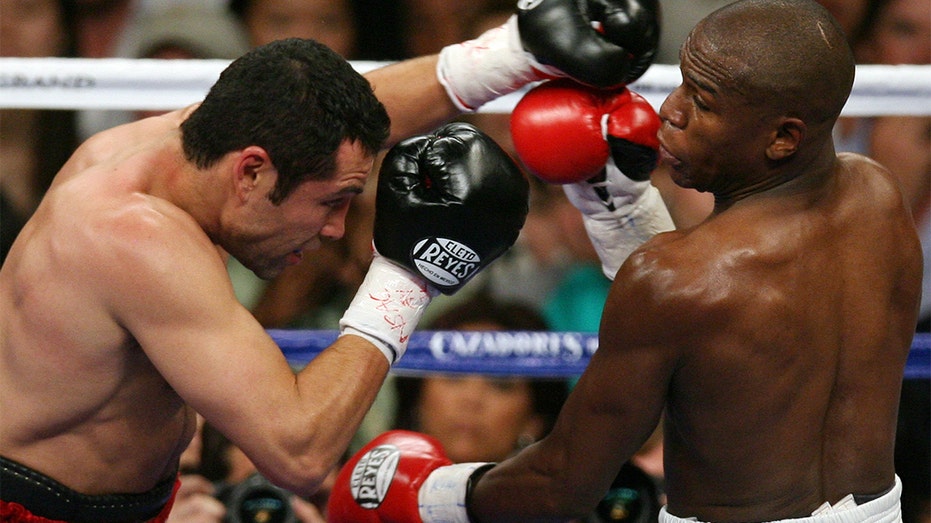
Oscar De La Hoya, left, fights Floyd Mayweather for the WBC super welterweight world championship in Las Vegas May 5, 2007. (Gabriel Bouys/AFP via Getty Images)
“Thirty, forty years ago, boxing was a dominant sport in America,” Cruz said in an interview with FOX Business. “Now there’s chaos and division: fractured belts, disputed titles.”
He added that the goal of the proposed reforms is “to make boxing great again” by increasing compensation, improving safety and rebuilding the sport’s pipeline of talent.
The legislation under consideration, the Muhammad Ali American Boxing Revival Act of 2026, and already passed by the House of Representatives, would not eliminate the current system outright.
TED CRUZ SLAMS TRUMP’S PROPOSED SPIRIT AIRLINES GOVERNMENT BAILOUT PLAN
Instead, it would create what Cruz described as “a second alternative path,” allowing fighters to choose between the existing system and the more centralized model designed to generate larger media deals and new revenue streams.
That dual-track approach has done little to resolve a deeper divide within the sport, however.
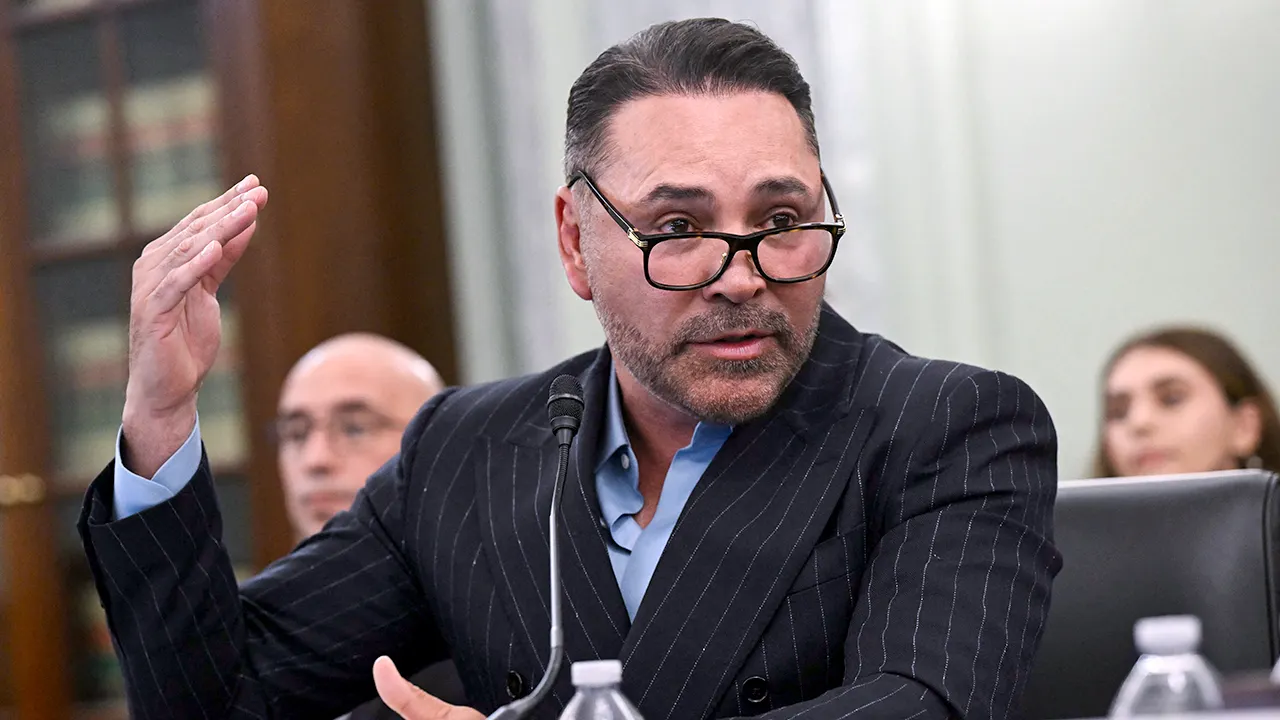
Former champion and Olympic gold medalist Oscar De La Hoya, who testified before the committee, argued the current framework remains essential to protecting fighters, particularly those early in their careers.
“We’re here to make sure we protect the fighters’ rights,” De La Hoya said in an interview with FOX Business after the hearing.
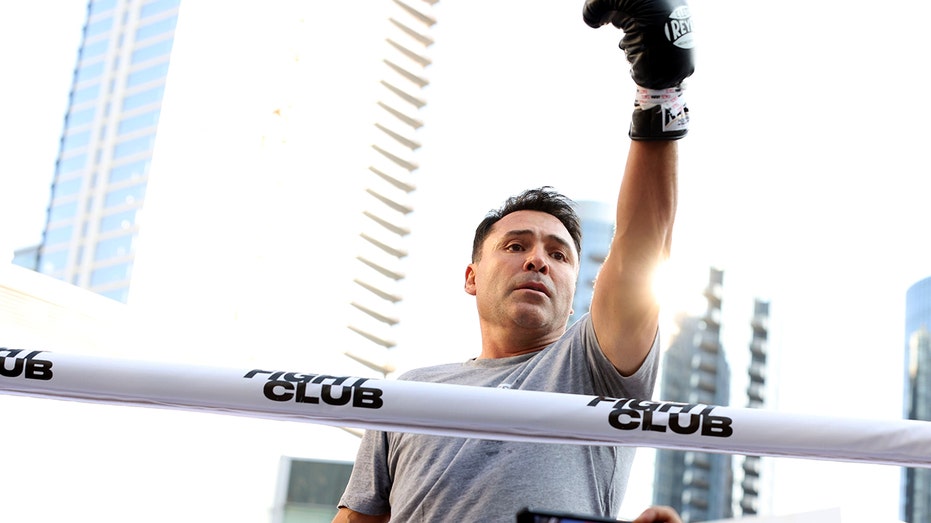
Oscar De La Hoya testified before a Senate committee this week. (Amy Sussman/Getty Images)
Drawing on his own experience, he pointed to a famous 1998 fight against Félix Trinidad, when he signed a lucrative deal with promoter Bob Arum but was unaware of the full financial windfall from the event.
At the time, De La Hoya said, fighters were not given clear disclosures about how much revenue their bouts generated, leaving them at a disadvantage in negotiations.
De La Hoya also argued that boxing’s decentralized system helps protect fighters by preventing too much power from being controlled by a single group.
“The fighters are making the majority of the money,” he added. “We don’t have to answer to corporate America. We don’t have to answer to shareholders. … We answer to the fighters.”
BOXER TYSON FURY’S DAD, JOHN FURY, REVEALS THEIR RELATIONSHIP ‘IS DESTROYED’
But proponents of reform argue that fragmentation has become boxing’s biggest commercial obstacle.
WWE President Nick Khan, who also testified at the hearing, said boxing lacks the centralized infrastructure that has helped leagues like the NFL and UFC grow into global media titans.
“Boxing — especially in the United States — is dying. … It’s a sport that needs to be revived,” Khan, who was representing TKO and Zuffa Boxing at the hearing, told FOX Business, pointing to limited media integration, weak merchandising and inconsistent event quality.
“When boxing is great, there might not be anything better,” he said. “The issue is it’s just not great often enough.”
Khan and other supporters envision a system that could standardize competition and deliver more consistent, marketable events that could potentially unlock larger broadcast deals and sponsorship opportunities.
NFL LAUNCHES LOBBYING BLITZ AT FCC TO DEFEND ITS MEDIA MODEL AS STREAMING SCRUTINY INTENSIFIES
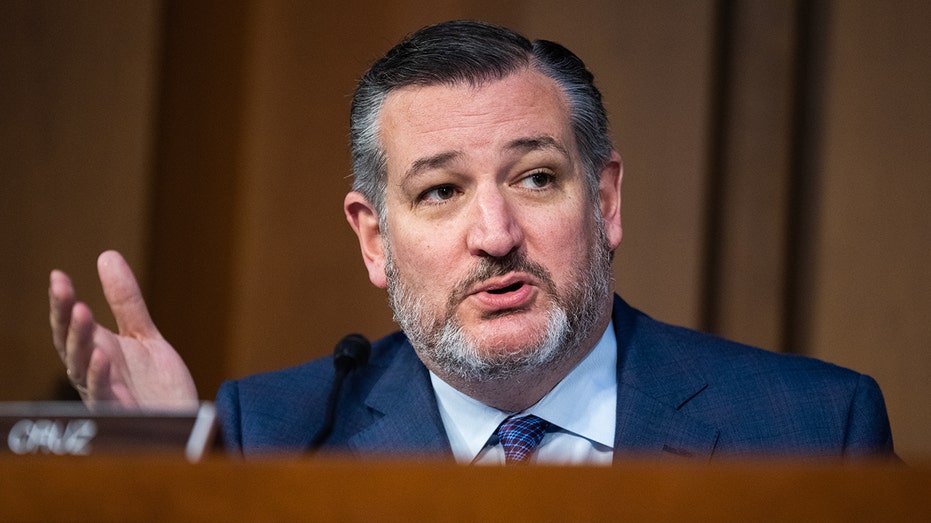
Sen. Ted Cruz, R-Texas, said the goal of the proposed reforms is “to make boxing great again” by increasing compensation, improving safety and rebuilding the sport’s pipeline of talent. (Tom Williams/CQ-Roll Call, Inc via Getty Images)
“There’s some central body” behind the growth of other major sports leagues, Khan said, suggesting boxing has struggled in part because it lacks that structure.
For now, Cruz emphasized flexibility, arguing that giving fighters a choice between systems could allow the market to decide what works.
“If they choose not to take the new option, that’s their choice,” he said.
“But if it results in higher compensation … I think that improves the outcome for everyone.”
CLICK HERE TO READ MORE ON FOX BUSINESS
Khan echoed that view, pointing to boxing’s decline in cultural and commercial relevance.
“In 1976, [boxing] was the most culturally dominant sport of (the) bicentennial year a mere 50 years ago. Now, if you look at the current state of boxing, not one major media conglomerate is in the boxing space outside [one] deal,” Khan said.
“Our hope and plan is to change all of that. That will benefit the fighter.”
PITTSBURGH — The 2026 NFL Draft opened with a bang Thursday night at Acrisure Stadium as the Las Vegas Raiders selected Indiana quarterback Fernando Mendoza with the No. 1 overall pick, kicking off a first round heavy on skill-position talent and defensive playmakers.
Mendoza, the 2025 Heisman Trophy winner, stood as the clear consensus top prospect in a class defined by quarterback upside and explosive offensive weapons. At 6-foot-4 and 236 pounds, the athletic signal-caller brings arm talent, mobility and leadership that Raiders brass hope will finally stabilize the franchise’s long-troubled quarterback position.
New York Jets general manager took the edge with the second pick, selecting Texas Tech standout David Bailey, a versatile EDGE rusher praised for his explosiveness and run-stopping ability. The Arizona Cardinals made history of sorts at No. 3 by grabbing Notre Dame running back Jeremiyah Love — the highest drafted running back since Saquon Barkley — signaling a commitment to revitalizing their ground game.
The surprises continued at No. 4 when the Tennessee Titans selected Ohio State wide receiver Carnell Tate, a polished route-runner with elite hands and contested-catch ability. The New York Giants followed by taking Ohio State linebacker Arvell Reese, bolstering their front seven.
Trades spiced up the evening. The Kansas City Chiefs moved up to No. 6 to snag LSU cornerback Mansoor Delane, a shutdown talent who immediately upgrades their secondary. Multiple deals involving the Giants, Cowboys and Dolphins reshuffled the board, underscoring aggressive maneuvering for premium talent.
The draft, hosted in Pittsburgh for the first time since 1948, drew massive crowds to Point State Park and Acrisure Stadium. Fans packed the North Shore as Commissioner Roger Goodell announced picks amid roaring cheers and occasional boos for certain selections. The shortened 8-minute clock between first-round picks kept the pace brisk compared to previous years.
Analysts praised several teams for addressing core needs. The Raiders, coming off another losing season, landed their franchise quarterback. Mendoza’s selection marks a bold reset in Las Vegas, where new coaching staff and front office personnel are under pressure to deliver results quickly.
The running back surge stood out as a defining theme. Love’s selection at No. 3 broke a long-standing trend of devaluing the position early. Later in the round, additional backs and skill players heard their names called, reflecting a class rich in offensive firepower. Notre Dame’s Jadarian Price also went in the first round, giving the Fighting Irish two early selections at the position.
Defensive talent flowed steadily. Bailey’s selection by the Jets addressed pass-rush concerns, while several linebackers and cornerbacks found homes in the top 15. The draft’s depth at EDGE and secondary positions allowed teams to fill immediate holes without reaching.
Quarterback movement extended beyond the top spot. The Los Angeles Rams selected Alabama’s Ty Simpson at No. 13, adding a developmental prospect to compete and learn behind Matthew Stafford under Sean McVay’s tutelage. Other teams addressed the position later as the board unfolded.
Team grades poured in quickly from analysts. The Baltimore Ravens earned high marks for smart value picks, including interior offensive lineman Olaivavega Ioane from Penn State. The Carolina Panthers and Chicago Bears also drew positive reviews for addressing key roster gaps efficiently.
Off-field storylines added intrigue. Several top prospects brought compelling personal narratives, from Mendoza’s rise through the Big Ten to Love’s work ethic at Notre Dame. The event’s Pittsburgh setting amplified local pride, with Steelers fans turning out in force despite their team picking later.
As Round 1 wrapped, attention shifted to Friday’s Rounds 2 and 3, where depth at wide receiver, offensive line and defensive tackle should produce strong value. Teams with multiple early selections, including the Jets and Giants, positioned themselves well to build around their top picks.
The 2026 class is projected as one of the stronger groups in recent memory, particularly on offense. Mendoza’s leadership qualities and arm strength drew comparisons to established NFL starters, while skill-position talent across positions offered immediate contributors for contending teams.
General managers emphasized fit and character in post-pick interviews. Many highlighted how selected players aligned with scheme needs and locker room culture. The draft’s three-day format allows continued action Friday evening and Saturday, culminating with Mr. Irrelevant on the final day.
Broader NFL context frames the event’s importance. Several franchises, including the Raiders, Giants and Titans, view this draft as pivotal for their rebuild timelines. Veteran free agency moves earlier in the offseason created specific holes that Thursday’s selections aimed to fill.
Fans and analysts will debate value for weeks. Early consensus suggests the top of the board played out largely as anticipated, with some reaches and steals emerging as the round progressed. The inclusion of multiple Ohio State and Notre Dame products underscored the strength of those programs’ recent cycles.
Pittsburgh’s vibrant atmosphere enhanced the spectacle. From riverside fan zones to stadium energy, the host city delivered a memorable experience, boosting local economy and NFL visibility in the region. Organizers reported strong turnout for the free NFL Draft Experience at Point State Park.
As the league moves into Day 2, expectations remain high for continued impactful selections. Teams still seeking quarterbacks, edge rushers and offensive linemen will find options in the middle rounds, while depth charts across the league begin taking shape for the 2026 season.
The 2026 NFL Draft has already delivered drama, star power and strategic maneuvering. With Fernando Mendoza leading the way as the Raiders’ new hope and dynamic talents like Jeremiyah Love and Carnell Tate joining NFL rosters, the class promises to influence the league for years to come. Rounds 2 and 3 on Friday will determine which teams maximized their opportunities in this talent-rich draft.

Indian stock markets declined nearly 1% on Thursday, mirroring losses in Asian benchmarks as Brent oil prices surpassed $100, fueling cautious sentiment. Analysts anticipate range-bound trading until strong market triggers emerge, with the Nifty closing at 24,173.05 and Sensex at 77,664.
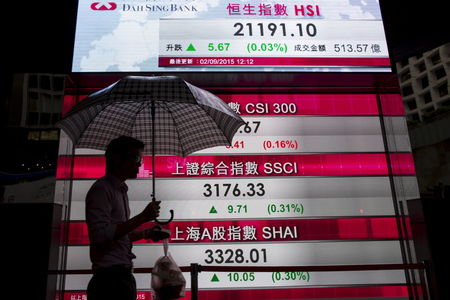
Asia stocks fall as tech losses, oil surge weigh; Japan CPI in focus

Gannon Ken Van Dyke allegedly made trades on Polymarket on the basis of classified information, the justice department says.

Marvell: The AI Opportunity Is Massive


Mercedes steels itself for ’roller coaster’ competition in Chinese market

Check out what’s clicking on FoxBusiness.com.
Harley-Davidson is recalling nearly 17,000 motorcycles over a potential brake failure issue that could heighten the risk of a crash, according to federal regulators.
The recalled motorcycles include 2025 and 2026 models.
Affected motorcycles include the Harley-Davidson FXLRS with a production date from Dec. 5, 2024, to March 16, 2026; Harley-Davidson FXLRST with a production date from Oct. 3, 2024, to March 16, 2026; Harley-Davidson FXBB with a production date from Oct. 3. 2024, to March 16, 2026; and Harley-Davidson FLHC with a production date from Oct. 3, 2024, to March 12, 2026.
The company was first flagged in March regarding a claim of inoperable brakes on a 2025 FXLRST model motorcycle, the National Highway Traffic Safety Administration said in a report.
FORD RECALLS OVER 140,000 PICKUP TRUCKS OVER WIRING FIRE RISK

Harley-Davidson is recalling nearly 17,000 motorcycles over a potential brake failure issue. (Getty Images / Getty Images)
Three other claims of brake fluid loss or inoperable rear brakes were identified after a review of warranty and service records, the report states.
Upon further investigation, Harley-Davidson discovered that the affected models lacked enough clearance between the rear brake line and the body control module (BCM).
| Ticker | Security | Last | Change | Change % |
|---|---|---|---|---|
| HOG | HARLEY-DAVIDSON INC. | 23.38 | +0.45 | +1.96% |
“Contact between the brake line and the BCM, over time, could lead to a hole in the brake line and a loss of brake fluid. If brake fluid loss remains undetected, rear braking may be compromised, increasing the risk of a crash,” the NHTSA said in its report.

Harley-Davidson discovered the affected models lacked enough clearance between the rear brake line and the body control module. (iStock / iStock)
“The operator may note the presence of brake fluid underneath the motorcycle. In addition, the rider may note a decrease in rear brake performance,” the report says.
No accidents or injuries have been reported with the motorcycles included in the recall.
TOYOTA RECALLS 73K HYBRID VEHICLES OVER PEDESTRIAN WARNING SOUND ISSUE

No accidents or injuries have been reported. (Jakub Porzycki/NurPhoto via Getty Images / Getty Images)
Harley-Davidson will notify all dealers about the recall effort by Monday, and owners are expected to receive notification letters by May 25, according to the recall notice.
CLICK HERE TO GET FOX BUSINESS ON THE GO
“The BCM caddy and associated hardware will be replaced on all affected vehicles. In addition, the rear brake line will be inspected and, if damaged, will be replaced along with associated parts,” the notice states.
Harley-Davidson did not immediately respond to FOX Business’ request for comment.

Speeding business boss Tristan Hulbert escapes driving ban
Pharma stocks buck market weakness as Dr Reddy’s gains

Passive income from crypto mining without investment (2026 guide to free Bitcoin mining)

Manchester United reach agreement with Casemiro over contract clause amid transfer speculation

US brings back mandatory military draft registration

Steven Gerrard disagrees with Gary Neville over ‘shock’ Chelsea and Arsenal claim | Football


-

 Sports7 days ago
NWFL Suspends Two Players Over Post-Match Clash in Ado-Ekiti
-

 Fashion6 days ago
Weekend Open Thread: Theodora Dress
-

 Politics6 days ago
Palestine barred from entering Canada for FIFA Congress
-
Entertainment4 days ago
NBA Analyst Charles Barkley Chimes in on Ice Spice McDonald’s Fiasco
-

 Tech5 days ago
Auto Enthusiast Scores Running Tesla Model 3 for Two Grand and Turns It Into Bare-Bones Go-Kart
-

 Business5 days ago
Powerball Result April 18, 2026: No Jackpot Winner in Powerball Draw: $75 Million Rolls Over
-

 Politics5 days ago
Zack Polanski demands ‘council homes not luxury flats for foreign investors’
-

 Crypto World6 days ago
Russia Pushes Bill to Criminalize Unregistered Crypto Services
-

 Politics3 days ago
Gary Stevenson delivers timely reminder to register to vote as deadline TODAY
-

 Business2 days ago
Rolls-Royce Voted UK’s Most Iconic Trade Mark as IPO Register Hits 150
-

 Politics1 day ago
Disabled people challenge government SEND proposals over segregation concerns
-

 Politics1 day ago
Making troops accountable for war crimes threatens US alliance, ex-SAS colonel warns
-

 Crypto World6 days ago
Russia Introduces Bill To Criminalize Unregistered Crypto Services
-

 Politics1 day ago
Starmer handler McSweeney to be dragged from shadows by Foreign Affairs Committee
-
Politics1 day ago
Wings Over Scotland | How To Get Away With Crimes
-

 Politics1 day ago
Zack Polanski responds to home secretary’s taser threat
-
 Crypto World5 days ago
Kelp DAO rsETH Bridge Hack Drains $292M as DeFi Losses Top $600M in Two Weeks
-

 Politics1 day ago
‘Iran is still a nuclear threat’
-

 Crypto World2 days ago
New York sues Coinbase, Gemini over prediction market offerings
-
 Sports7 days ago
Kevin Kisner apologizes for Masters criticism: ‘I crossed the line’
You must be logged in to post a comment Login