
Crypto World
Senator Lummis Backs Bitcoin for US Cyber Defense After Admiral Paparo Testimony



Senator Cynthia Lummis endorsed Admiral Samuel Paparo’s case for Bitcoin (BTC) as a national security tool, calling on Congress to pass the Clarity Act.
Lummis responded to Paparo’s April 21 Senate Armed Services Committee testimony, where the Indo-Pacific Command chief described proof-of-work as a means of American power projection.
Lummis Calls for Clarity Act After Paparo Hearing
In a post on X (Twitter), the Wyoming senator said she was “incredibly impressed” by Paparo’s foresight and his use of BTC for national security.
“We’re watching digital assets integrate into global power infrastructure. It’s time we welcome them back on our soil. Pass the Clarity Act, secure America’s future,” wrote Lummis in the post.
Her remarks arrive as the Clarity Act faces a critical deadline. Lummis previously warned that the Senate Banking Committee must advance the bill by April 25 or risk losing it until 2030.
Proof-of-Work as a Cyber Defense Layer
During his testimony, Paparo told senators that INDOPACOM runs a live Bitcoin node and is actively testing the protocol for military network security.
He stated that proof-of-work protocols “impose more cost” on adversaries than traditional algorithmic network defenses alone.
The testimony aligns with a broader push from military and policy figures who view BTC’s energy-intensive mining process as a deterrent against cyberattacks.
Treasury Secretary Scott Bessent has separately framed the Clarity Act as a national security priority.
Meanwhile, the crypto industry continues to ramp up pressure on the US Senate Banking Committee, urging them to move forward with a Clarity Act markup.
Today, the Blockchain Association and the Crypto Council for Innovation, alongside a broad coalition of over 120 organizations from across the digital asset ecosystem, urged the Senate Banking Committee to move forward with a markup on market structure legislation.
“Years of bipartisan work have brought Congress to an important moment. The U.S. needs clear, durable rules that protect consumers, provide certainty, and reinforce American leadership in digital asset innovation,” the Blockchain Association shared in a post.
Subscribe to our YouTube channel to watch leaders and journalists provide expert insights
The post Senator Lummis Backs Bitcoin for US Cyber Defense After Admiral Paparo Testimony appeared first on BeInCrypto.


MetaMask co-founder Dan Finlay is stepping down from ConsenSys citing burnout, as long-time crypto figures such as Bitcoin advocate Preston Pysh also pull back from public roles.
Crypto World
Wisconsin joins prediction market fight, suing Kalshi, Coinbase, Polymarket, Robinhood and Crypto.com


Prediction markets have a consistent line: their products are financial instruments, not bets. Wisconsin isn’t buying it, and in a new complaint targeting Kalshi, Coinbase, Polymarket, Robinhood and Crypto.com, the state is citing the companies’ own marketing to call them unlicensed gambling venues.
“Thinly disguising unlawful conduct doesn’t make it lawful,” Attorney General Josh Kaul said in a press release announcing the complaints on Thursday.
The question underneath the lawsuits is straightforward: are these contracts financial instruments under the Commodity Futures Trading Commission (CFTC), or bets under state gambling law? The answer determines whether a fast-growing market operates under a single federal rulebook or is carved up across 50 states under the jurisdiction of local gaming regulators. And it’s almost certainly headed to the Supreme Court.
Wisconsin’s complaints, filed in Dane County, target three parallel ecosystems.
One names Crypto.com and its derivatives arm. Another goes after Polymarket and affiliated entities. A third pulls in Kalshi alongside distribution partners Robinhood and Coinbase (both Robinhood and Coinbase route prediction market orders to Kalshi), arguing the platforms together facilitate sports betting for state residents.
Across all three, the legal theory is that so-called “event contracts” are wagers: users pay money to take a position on a real-world outcome and receive a fixed payout if they are correct.
In one example cited in the filings, traders could buy contracts tied to NCAA tournament games at prices that reflect implied probabilities, with winning positions paying out $1 and losing ones returning nothing.
State prosecutors also cite Kalshi’s own Instagram ads, which claim the platform is “The First Nationwide Legal Sports Betting Platform,” and Polymarket’s, which calls itself “a platform where people can bet on the outcome of future events.”
The state argued that the structure of prediction markets falls squarely within its statutory definition of a bet, regardless of how the products are labeled or who takes the other side of the trade.
The complaints also emphasize that platforms generate revenue by charging transaction fees on each contract, likening the model to a casino taking a cut of wagers placed on its floor.
Setting up a federalism fight
The industry’s defense rests on federal preemption. Kalshi, in particular, has argued that its contracts are swaps listed on a regulated exchange and therefore fall under the CFTC’s exclusive jurisdiction.
That position received a boost earlier this month when the Third Circuit sided with the company, treating the regulator’s decision not to block the contracts as effectively settling the jurisdictional question.
Across the U.S., state courts are consistent in taking a different position.
Nevada called the contracts “indistinguishable” from gambling. New York AG Letitia James said “each contract is a bet.”.
For now, Wisconsin’s suits add to a growing list of state challenges, each building a record that could ultimately force the Supreme Court of the United States to decide whether calling something a financial contract is enough to keep it from being treated as a bet.


Lido says only about 9% of EarnETH’s TVL is tied to hacked rsETH, roughly $70M has been recovered, and a $3M DAO first‑loss buffer stands between users and any final hit.
Summary
- Lido says roughly 9% of its EarnETH vault’s TVL is exposed to hacked rsETH, but its core staking protocol remains unaffected.
- Around $70 million in ETH has been recovered so far, and a $3 million DAO-funded first-loss buffer is available if users ultimately face losses.
- Other Earn vaults are operating normally, though one sub‑vault is under pressure from circular staking strategies and higher lending rates.
Lido has outlined the fallout from the KelpDAO rsETH exploit, stressing that the incident is contained to its leveraged Earn vaults and that its flagship staking products stETH and wstETH “remain unaffected” and “safe and stable.” The Kelp cross‑chain bridge hack on April 18 drained about 116,500 rsETH — roughly $292 million — and forced multiple DeFi protocols to freeze rsETH markets, including Lido’s EarnETH product.
According to Lido, only the EarnETH vault has direct rsETH exposure, representing around 9% of its total value locked — approximately $21.6 million via a leveraged rsETH/ETH position on Aave. Deposits and withdrawals for EarnETH have been paused by the vault’s managers while they work with Kelp, LayerZero, and lending protocols to determine how any losses or bad debt will be allocated.
9% rsETH hit, $70M recovered, first-loss buffer
The team said that about $70 million worth of ETH linked to the broader exploit has already been recovered, with additional asset recovery and loss-distribution talks still in progress. In parallel, EarnETH managers have “reduced leverage and optimized the position structure,” significantly cutting the vault’s wETH debt exposure to ease liquidity pressure in stressed lending markets.
If there is a residual loss once recovery efforts are complete, EarnETH can tap a $3 million “first-loss protection mechanism” funded by the Lido DAO treasury. That buffer, part of a $5 million DAO allocation approved in March, is designed so that DAO-owned vault shares absorb losses before they hit other depositors, effectively putting LDO governance capital in front of users in a downside scenario.
Other vaults steady, GGV under pressure
Lido added that its DVV and EarnUSD vaults are not exposed to rsETH and continue to operate normally. A GGV sub‑vault, however, is currently showing negative returns because it combined circular staking strategies with rising on‑chain lending rates, a mix that has become more expensive and less sustainable in the current environment.
Managers say they are actively rebalancing GGV’s positions and adjusting strategy parameters, while withdrawal requests across the Earn suite will be processed using valuations from before the Kelp incident to keep treatment consistent during the review period. Lido reiterated that the rsETH issue “does not involve the Lido staking protocol itself,” underscoring the separation between its experimental Earn products and the core liquid staking infrastructure that underpins stETH and wstETH across DeFi.

US prosecutors alleged that Gannon Ken Van Dyke asked Polymarket to delete his account after profiting from trades tied to the military operation in Venezuela.

TLDR
- Coinbase, Ripple, Kraken, and more than 100 crypto firms urged the Senate to advance the markup of the CLARITY Act.
- The industry groups warned that continued delays could push digital asset investment and jobs overseas.
- The Crypto Council for Innovation and the Blockchain Association led the joint letter to lawmakers.
- Lawmakers postponed the January markup after disputes over stablecoin reward provisions.
- The CLARITY Act passed the House in July 2025 with a 294-134 vote.
Coinbase, Ripple, Kraken, and over 100 crypto firms asked the Senate Banking Committee to move forward with the CLARITY Act markup. The companies sent a joint letter urging lawmakers to establish a federal market structure framework. They warned that delays could push investment, jobs, and innovation outside the United States.
Industry coalition calls for progress on Clarity Act
The Crypto Council for Innovation and the Blockchain Association led the letter to Senate leaders. The groups stated that Congress must create a comprehensive federal framework for digital assets. They wrote that regulators alone cannot provide durable legal clarity.
The letter stressed that lawmakers should act without further delay. It argued that a predictable baseline would preserve US leadership in digital asset innovation. The signatories included Coinbase, Ripple, Kraken, and more than 100 industry organizations.
The coalition urged the Senate Banking Committee to schedule a markup soon. They pointed to months of stalled negotiations on the legislation. They said, “Congress must move quickly to establish a predictable federal baseline.”
The industry groups also outlined core priorities in the bill. They called for keeping activity-based consumer rewards tied to payment stablecoins. They also sought clear disclosure rules and token certification standards.
They emphasized a clear division of authority between the SEC and the CFTC. They also requested protections for developers and service providers working on decentralized technologies. The letter addressed concerns about illicit finance safeguards.
Senate negotiations stall as stablecoin debate continues
Senate Banking Republicans released fact sheets on the CLARITY Act in January. They described the bill as a framework clarifying oversight between the SEC and the CFTC. The committee expected to hold a markup soon after that release.
However, Coinbase CEO Brian Armstrong publicly opposed parts of the draft. He argued that some provisions would weaken the CFTC’s role. He also said the draft would “effectively kill stablecoin rewards.”
Lawmakers and industry participants disagreed over stablecoin reward provisions. Those disputes forced the committee to postpone its planned January debate. The legislation then remained under negotiation through March.
The bill passed the House in July 2025 by a 294-134 vote. Galaxy reported that the Senate has held intensive negotiations since January. The firm said lawmakers had expected a markup in late April.
That timetable began slipping after Senator Thom Tillis suggested waiting until May. As a result, the Senate Banking Committee did not confirm a markup date. The industry letter now urges the committee to move forward without further postponement.



Galaxy’s Alex Thorn says Strategy now holds more Bitcoin than BlackRock’s IBIT and, if its pace holds, could match Satoshi’s estimated 1.1m BTC stash within two years.
Summary
- Galaxy’s Alex Thorn says Strategy now holds more Bitcoin than BlackRock’s IBIT, the largest spot BTC ETF.
- At current accumulation rates, he believes the entity could surpass Satoshi Nakamoto’s estimated 1.1 million BTC within two years.
- The move would make Strategy one of the single largest Bitcoin holders globally, alongside ETFs and long-dormant early-mined coins.
Galaxy Digital head of research Alex Thorn has flagged that Strategy’s Bitcoin holdings have now overtaken those of BlackRock’s iShares Bitcoin Trust (IBIT), the world’s biggest spot Bitcoin ETF by assets. In a post on X, Thorn wrote that on-chain and treasury-tracking data show Strategy has become the “largest single BTC‑holding entity,” beating IBIT’s stash and continuing to add coins on dips.
Thorn added that, if current accumulation trends continue, Strategy is on pace to catch or even surpass the legendary hoard attributed to Bitcoin’s (BTC) pseudonymous creator Satoshi Nakamoto within roughly two years. Satoshi’s cache is widely estimated at around 1.1 million BTC — roughly 5.5% of total supply — and has remained untouched since 2010, a fact that has long shaped market psychology around Bitcoin’s scarcity and “diamond hands” culture.
Bigger than the biggest ETF
BlackRock’s IBIT has dominated the U.S. spot Bitcoin ETF landscape since launching in January 2024, amassing more than 700,000 BTC in under 18 months and at times holding over 56% of all spot ETF Bitcoin. Recent data put IBIT’s BTC exposure north of 800,000 coins, worth more than $50 billion at prevailing prices.
By contrast, Strategy’s treasury now holds an estimated 760,000 BTC or more after adding roughly 80,000 BTC year‑to‑date, according to figures cited by market analysts and recent research notes. One Binance‑hosted update earlier this month highlighted that Strategy still controls around 762,000 BTC even after pausing new purchases, underscoring its role as the largest corporate Bitcoin holder.
March to Satoshi‑scale holdings
The comparison with Satoshi is more than symbolism. Analysts point out that if Strategy’s buying pace remains anywhere near recent levels, its stack could cross the 1 million BTC mark within the next couple of years, placing it in the same league as the dormant founder coins that have never moved.
Such concentration raises both bullish and structural questions: bulls argue that deep‑pocketed, long‑term holders reduce available float and support price, while critics warn that megatreasuries and ETFs introduce corporate and regulatory chokepoints into what was designed as a decentralized asset. For now, Thorn’s takeaway is simple: in the competition to own the scarcest large‑cap asset in crypto, one aggressive buyer is closing in on the mythic benchmark set by Bitcoin’s creator.
TLDR
- Girin Labs integrated Girin Wallet with Doppler Finance to enable active XRP payments in daily transactions.
- The update allows users to spend XRP and RLUSD directly at checkout without giving up self-custody.
- Girin Wallet now supports near-instant settlement on the XRP Ledger for faster payment processing.
- The company launched the Girin Card waitlist to expand XRP payments into card-based retail use.
- The XRP Ledger expanded access through integration with the non-custodial LOBSTR wallet.
Girin Labs has advanced practical blockchain adoption through a new wallet integration focused on everyday payments. The company connected Girin Wallet with Doppler Finance to enable active asset use. The update supports XRP and RLUSD for secure, spendable, and productive transactions.
XRP Payments Move From Storage to Daily Transactions
Girin Labs integrated Girin Wallet with Doppler Finance’s yield infrastructure to activate XRP payments for real-world use. The company shifted focus from passive holding to functional spending. It stated that the goal is to make digital assets usable without surrendering control.
The integration connects users to an institutional-grade yield layer within the wallet. As a result, holders can access yield while keeping self-custody. Girin Labs said the structure supports sustainable utility and ongoing network participation.
The company confirmed that users retain direct control over private keys. However, they can still spend XRP and RLUSD at checkout. This structure aligns spending convenience with asset security.
Girin Labs stated, “Users should not choose between control and usability.” The firm added that the wallet keeps transactions direct and transparent. It also confirmed that settlement occurs on the XRP Ledger.
The update removes backend reconciliation delays common in card processing. Therefore, transactions finalize without extended confirmation times. The checkout process mirrors traditional card payments.
Girin Wallet now supports seamless point-of-sale transactions using XRP and RLUSD. The company reported that the experience feels familiar to standard debit usage. However, it runs entirely on blockchain infrastructure.
XRPL Ecosystem Growth Strengthens Everyday Access
Girin Labs opened the Girin Card waitlist through its latest wallet update. The release signals expansion into card-based XRP payments. The company confirmed that users can join directly within the app.
The firm described the Girin Card as a bridge between digital assets and retail spending. It said the card will allow payments wherever cards operate. The rollout marks a shift toward physical and digital payment access.
Beyond Girin Wallet, the XRP Ledger continues ecosystem expansion. The network recently connected with the non-custodial LOBSTR wallet. This integration broadens user access to XRPL-based assets.
LOBSTR allows users to manage assets without custodial intermediaries. Therefore, holders can control funds directly while accessing XRPL services. The connection improves wallet compatibility across platforms.
The XRP Ledger also supports near-instant settlement across borders. Ripple-enabled infrastructure processes transfer end-to-end without manual reconciliation. This structure reduces processing delays in international payments.
Traditional systems such as SWIFT often face last-mile settlement delays. In contrast, XRP Ledger transactions finalize rapidly across networks. The ledger records each transaction in real time.
As more applications integrate with XRPL, access continues to expand. Girin Wallet and LOBSTR now operate within the same network framework. The Girin Card waitlist remains active in the latest wallet release.

Anchorage Digital has integrated Marinade Finance to let institutional clients stake Solana (SOL) directly through Anchorage’s custody and wallet infrastructure. The move brings Marinade’s automated validator strategies into Anchorage’s platform, enabling stake deployment and yield generation without relinquishing asset control or leaving the custody environment.
In its Thursday announcement, Anchorage explained that the integration provides clients with access to Marinade’s staking capabilities within Anchorage’s custody stack and its Porto self-custody wallet. The arrangement is designed to keep staking and withdrawal rights distinct, allowing institutions to influence validator selection and earn staking rewards while retaining custody of their assets.
Institutions can choose between two distinct staking paths: a curated strategy that allocates SOL across roughly 30 KYC-verified validators for compliance-centric use cases (including regulated products like ETFs), and a dynamic strategy that spreads stake across hundreds of operators to optimize yield. The two options sit inside Anchorage’s unified interface for staking, custody, and asset management via the Porto wallet.
Key takeaways
- Institutions can stake Solana through Anchorage’s custody platform with Marinade’s automated strategies, without moving assets out of custody.
- Two distinct staking approaches are offered: a compliance-focused, curated validator set (~30 validators) and a broader, yield-driven set across hundreds of operators.
- The integration consolidates staking, custody, and asset management in a single interface via Anchorage’s Porto wallet.
- This move is part of a broader pattern of custodial yield strategies, as institutions seek crypto yields while keeping assets under professional custody.
Anchorage’s Marinade integration explained
Anchorage Digital, a San Francisco-based custodian that operates what is described as the first federally chartered crypto bank in the United States, is extending its custody capabilities to Solana staking through Marinade Finance. The arrangement lets institutional clients delegate stake and earn rewards through Marinade’s governance-enabled validators while Anchorage maintains control over private keys and custody arrangements. The setup explicitly separates the act of staking delegation from withdrawal rights, a distinction designed to reduce operational friction for institutions while preserving asset security.
The Marinade integration sits inside Anchorage’s existing platform and Porto wallet, where staking, custody, and asset management are unified. This reduces the need for clients to juggle multiple apps or custodial interfaces and aligns staking activity with traditional custody workflows.
Anchorage’s public filing notes that the bank has been exploring strategic options, including a potential fundraising round of $200 million to $400 million as it considers a broader path toward an initial public offering in the coming year. This context underscores the growing interest from institutional players in custody-first solutions that enable yield generation without compromising control over digital assets.
A broader trend: custody-led yield across assets
The Marinade move reflects a wider industry push to offer yield-generating capabilities on crypto holdings without moving assets out of custody. Recent months have seen several similar evolutions in the space.
Ripple expanded its institutional custody stack by integrating with Securosys and Figment, enabling banks and custodians to offer staking without managing validators or keys directly. The integration supports on-premises and cloud deployments with built-in compliance checks, illustrating how custody platforms are shifting toward more automated staking workflows.
Meanwhile, Anchorage itself expanded into restaking on Ethereum through a partnership with Puffer Finance, enabling institutions to stake ETH and receive pufETH—a transferable token representing a restaked position that continues earning rewards. These developments point to a broader appetite among asset managers and product issuers for yield strategies tied to proof-of-stake ecosystems, while keeping assets securely within established custody rails.
The momentum extends to Bitcoin-focused offerings as well. Lombard, in collaboration with Bitwise Asset Management, sought to bring Bitcoin yield and lending to institutional custody by pairing DeFi lending with tokenized real-world asset structures via Morpho. Fireblocks has also integrated with Stacks to provide institutional access to Bitcoin-based DeFi lending and yield, leveraging faster settlement cycles while preserving Bitcoin’s finality.
Taken together, the series of integrations signals a fast-growing ecosystem where custodians and treasury managers can access staking and DeFi-like yield without surrendering control of the underlying assets. The trend could redefine how institutions hedge, earn yield, and manage risk across multiple crypto ecosystems while staying within regulated custody environments.
For readers, the key question is how these custody-led yield options will balance risk, regulatory compliance, and long-term asset security as they scale. With a suite of compatible products expanding across Solana, Ethereum restaking, and Bitcoin-related DeFi yields, institutional participants now have a more cohesive, multi-chain toolkit to pursue yield without abandoning custody principles.
Crypto World
Passive income from crypto mining without investment (2026 guide to free Bitcoin mining)


Disclosure: This article does not represent investment advice. The content and materials featured on this page are for educational purposes only.
Summary
- AngelBTC offers fully managed crypto mining with no hardware, setup, or technical experience required.
- With daily payouts and a beginner-friendly dashboard, AngelBTC makes Bitcoin mining simple and accessible in 2026.
- AngelBTC uses green energy infrastructure and structured plans for transparent, low-barrier passive income.
Passive income from crypto mining without investment has become one of the fastest-growing search trends in 2026. As Bitcoin continues to attract global attention, more users are looking for ways to participate in mining without purchasing expensive hardware or managing complex setups.
For most beginners, the goal is simple: earn Bitcoin in a low-risk, accessible way. This is where modern cloud mining platforms — especially beginner-focused services like AngelBTC — are reshaping the entry point into the crypto mining ecosystem.
Why “free Bitcoin mining” is trending in 2026
Traditional Bitcoin mining is no longer beginner-friendly. The barriers are clear:
- High hardware costs (ASIC miners)
- Expensive electricity consumption
- Technical setup and maintenance
- Heat, noise, and operational complexity
In contrast, crypto cloud mining platforms remove these obstacles by offering:
- No equipment required
- Fully managed infrastructure
- Automated reward distribution
- Easy onboarding from any device
This shift is why keywords like “free crypto mining,” “cloud mining without investment,” and “passive Bitcoin income” are dominating search traffic in 2026.
What “without investment” really means
“Free mining” does not mean unlimited Bitcoin with zero cost.
In most legitimate cases, it refers to:
- Registration bonuses
- Trial mining power
- Promotional credits
- Low-entry participation models
This approach allows users to test mining platforms before committing capital, which significantly reduces risk, especially for beginners.
AngelBTC: A smarter entry into crypto cloud mining
Among the platforms gaining traction in 2026, AngelBTC stands out for its simplified and structured approach to crypto mining.
Unlike traditional mining setups, AngelBTC provides a fully managed cloud mining system where users can participate without technical knowledge.
Key advantages of AngelBTC
- No hardware required – mining is hosted in professional data centers
- Daily payouts – rewards are automatically settled and visible
- Beginner-friendly dashboard – easy to track mining performance
- Green energy infrastructure – supports sustainable mining operations
- Structured mining plans – clear duration and return expectations
The platform is operated by BTC North Corp and positions itself around compliance, transparency, and scalable mining access.
For new users, the biggest appeal is the low barrier to entry. They don’t need to configure wallets, manage mining software, or connect to mining pools. Everything is handled on the backend.
FOr more information, visit the official website.
Claim a free mining bonus and explore the dashboard in minutes.
How cloud mining works (step-by-step)
Understanding crypto mining helps improve trust and SEO depth:
- Mining Infrastructure
Large-scale data centers run mining machines continuously. - Hash Power Allocation
Users purchase or receive mining power (hash rate) through the platform. - Block Validation
The system contributes computing power to blockchain networks like Bitcoin. - Reward Distribution
Mining rewards (block rewards + transaction fees) are shared proportionally. - Daily Settlement
Earnings are automatically credited to user accounts.
AngelBTC simplifies all these steps into a single dashboard experience, making it ideal for beginners.
Other crypto mining platforms in 2026 (brief comparison)
While AngelBTC is designed for accessibility, it’s useful to understand the broader landscape:
- NiceHash – hash power marketplace, more flexible but less passive
- BitFuFu – industrial-style mining access with larger-scale operations
- GoMining – consumer-friendly approach with simplified onboarding
- Kryptex – software-based mining, better for users who want control
Each platform serves different user types. However, for beginners looking for passive income with minimal complexity, managed cloud mining platforms like AngelBTC remain the most practical choice.
How to choose a legit crypto cloud mining platform
To avoid common pitfalls, always evaluate:
- Transparency of returns
- Clear contract or earning structure
- Visible payout system (daily/periodic)
- Operational clarity (how mining works)
- Realistic marketing (no exaggerated promises)
AngelBTC performs well in these areas by presenting a structured and understandable mining model, rather than vague profit claims.
2026 trends in crypto cloud mining
The industry is evolving fast. Key trends include:
1. AI-Optimized Mining
Platforms are integrating AI to improve efficiency and predict mining performance.
2. Renewable Energy Mining
Green energy (hydro, wind, solar) is becoming a standard for sustainable mining.
3. Beginner-Focused UX
Simplified dashboards and mobile-first experiences are dominating.
4. Compliance & Regulation
Platforms are increasingly operating within regulated frameworks to build trust.
AngelBTC aligns strongly with these trends, especially in automation, usability, and infrastructure transparency.
The real opportunity: Passive crypto income
The real value of crypto mining in 2026 is not “free money.” It’s:
- Accessibility
- Automation
- Long-term participation in blockchain economies
Platforms that simplify complexity — without hiding how they work — are the ones that will dominate.
AngelBTC fits this model by offering a clear, beginner-oriented entry into Bitcoin mining, backed by structured systems and daily visibility.
Conclusion
Passive income from crypto mining without investment continues to attract global interest in 2026. While completely free, unlimited earnings remain unrealistic, low-barrier entry through cloud mining platforms is very real.
AngelBTC stands out as a practical solution by combining:
- Easy onboarding
- Managed infrastructure
- Daily rewards
- Transparent structure
For anyone exploring crypto mining for the first time, the smartest move is not chasing hype — but choosing a platform that makes the process clear and accessible.
Visit AngelBTC and start the mining journey today!
Disclosure: This content is provided by a third party. Neither crypto.news nor the author of this article endorses any product mentioned on this page. Users should conduct their own research before taking any action related to the company.
Crypto World
Dogecoin Price Prediction: DOGE Hits $0.096 After Trump Ceasefire Rally. Is Pepeto the Better 100x Play?
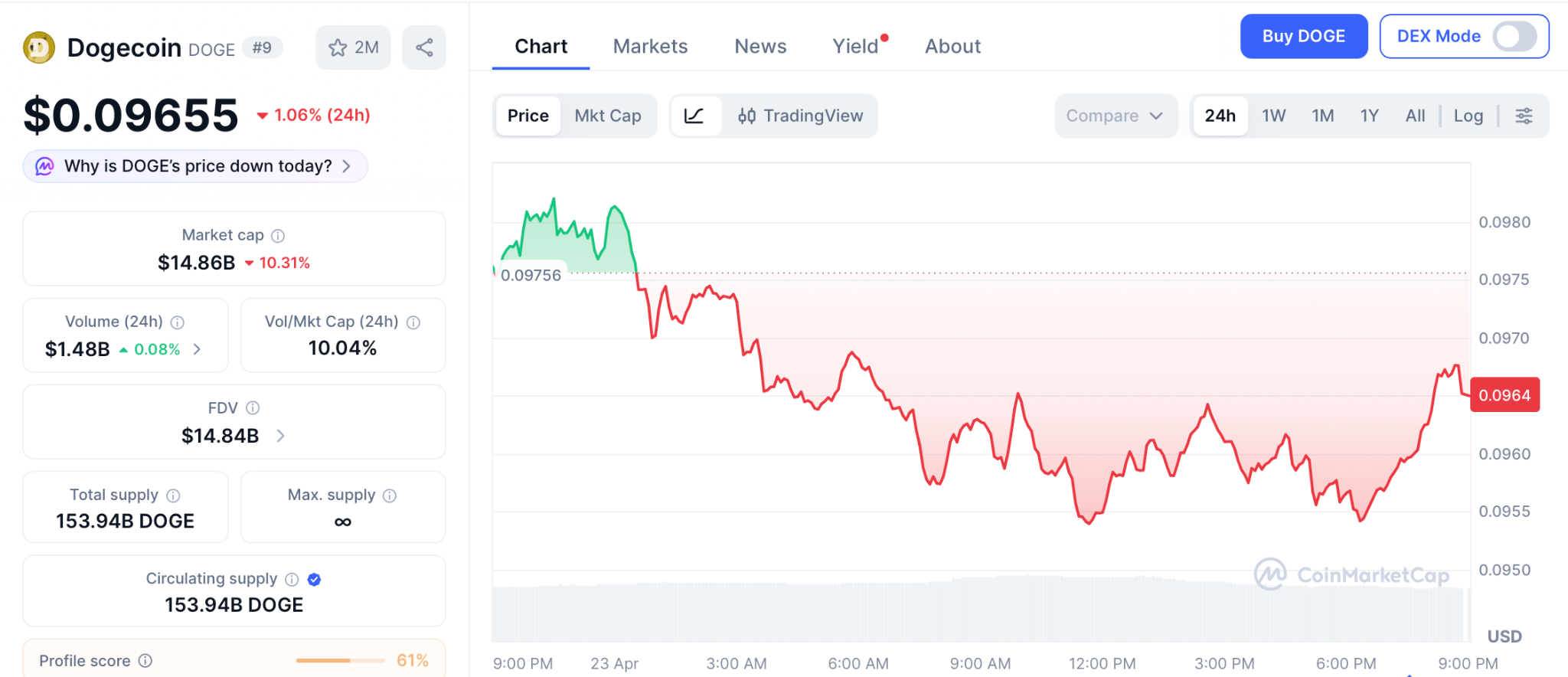
The Dogecoin price prediction turned bullish on April 22 after Bitcoin broke $78,000 and DOGE jumped 2.5% to reclaim its 50-day moving average at $0.096 according to TradingView. President Trump extended the Iran ceasefire on the same day, and the entire crypto market responded with $2.62 trillion in total market cap, a 2.35% gain in 24 hours.
Capital is flowing back into meme coins, and the infrastructure that keeps those wallets safe during a rebound matters as much as timing the entry. The exchange created by the Pepe cofounder delivers that layer of safety, and the Binance listing now approaches with $9.45 million already committed.
Dogecoin Price Prediction Gains After Trump Ceasefire Sends BTC Past $78K and Meme Sector Rebounds
Meme coins bottomed at $34 billion total market cap after a 75% decline from the $150 billion November 2024 high, but on-chain data from CoinMarketCap now shows buying activity across DOGE, SHIB, and PEPE picking up again.
Dogecoin (DOGE) trades at $0.096 per CoinMarketCap, after testing the $0.09 floor and bouncing for the fourth time since February. The SEC gave DOGE a digital commodity label in late 2025, and that classification removed the legal barrier that kept institutional funds away.
The Dogecoin price prediction benefits from a setup where whales add positions while fear dominates the retail side, and that kind of split is exactly when early-stage presale entries draw the heaviest capital inflows.
DOGE, Pepeto, and Why the Strongest Meme Rebounds Begin in Fear
The Presale That Dogecoin Holders See as Their Next Early Entry
Most meme tokens collapsed 75% because they offer nothing beyond a logo and a ticker. No trading platform, no token scanner, no way to move across chains. That gap between hype and utility is exactly what the Pepe cofounder’s new exchange fills during this rebound.
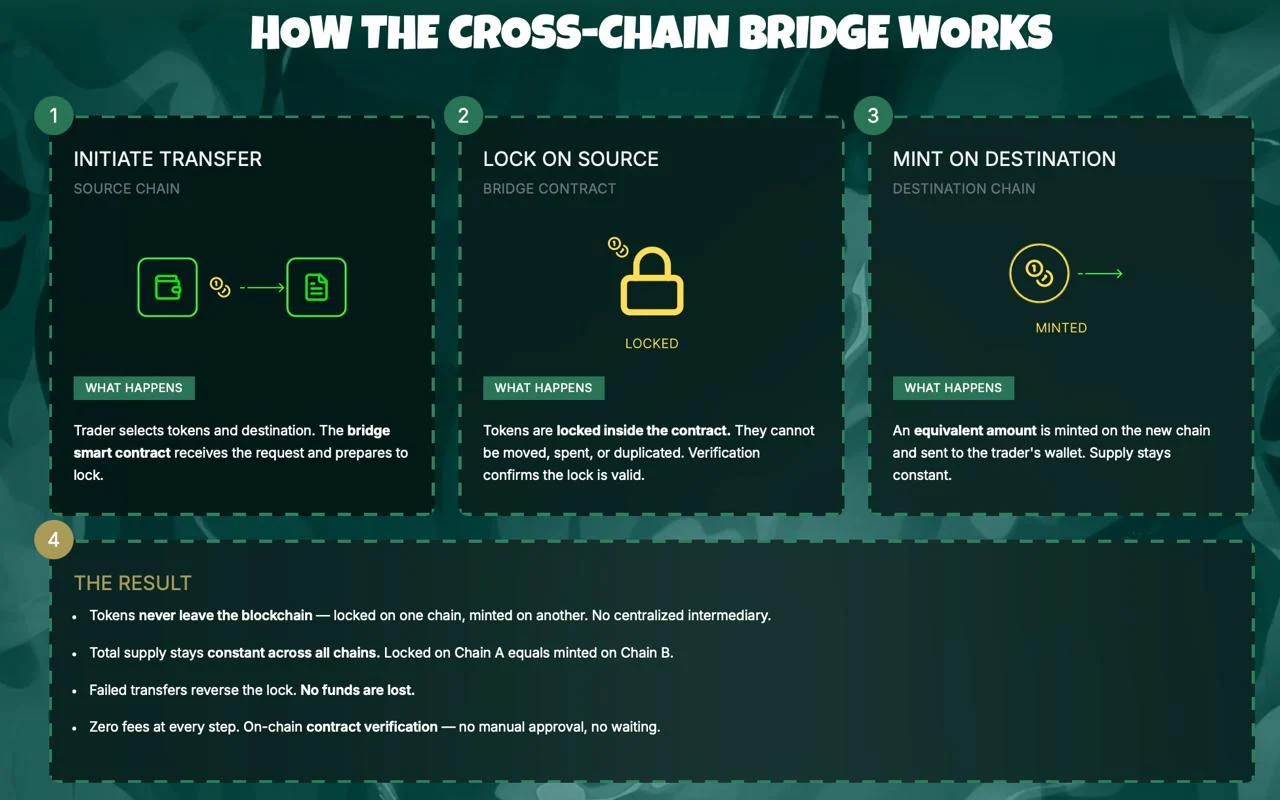
Pepeto screens every token for scams, insider wallets, and contract risks before a buyer commits a single dollar. PepetoSwap executes orders with zero fees, which means the full purchase amount stays in the wallet. The scanner reads smart contract code and shows risk levels in plain language. And the bridge connects Ethereum, BNB, and Solana without gas charges.
With $9.45 million raised at $0.0000001866 and Fear and Greed sitting at 29, the presale is heading toward its Binance listing on schedule. SolidProof completed a full audit with zero issues found. A former Binance listing specialist designed the launch path. And 178% APY staking adds to every position while the exchange grows.
Dogecoin holders who bought at $0.002 in early 2021 turned small bets into generational wealth, and not one of them thinks they bought enough. Pepeto is at that same early stage today, and the wallets entering before the Binance listing date are locking in the kind of entry that everyone else will look back on for the rest of the year.
Dogecoin (DOGE) Price at $0.096 as Ceasefire Rally Lifts Meme Coins and DOGE Reclaims 50-Day Moving Average
Dogecoin (DOGE) trades at $0.096 April 23 when the Iran ceasefire extension and Bitcoin’s push above $78,000 lifted the full crypto market per CoinMarketCap. DOGE sits 86% below its $0.73 all-time high but the $0.09 floor has held through every correction since February.
Analyst targets range from $0.20 to $0.47 depending on catalysts, and reaching $0.20 gives about 106% over months. The Dogecoin price prediction hinges on Bitcoin holding $78,000 and whether X Money confirms DOGE payments. But waiting months for those catalysts competes with a presale where one confirmed listing event delivers the full return.
Conclusion:
The Dogecoin price prediction shows buyers stepping in hard while fear still dominates the market. DOGE trades at $0.096, and reaching $0.20 offers 106% over months of patience.
Dogecoin holders who got in before the world knew the name built wealth that rewrote their financial future. Pepeto is at that identical early stage right now, backed by a live exchange, the Pepe cofounder, and a Binance listing that gets closer every day.
Every presale round closes quicker than the last, and each round that closes raises the floor. The wallets entering now are securing the positions this cycle will celebrate, while everyone who sees Pepeto today and does not act will spend 2026 calculating what that hesitation cost them.
Click To Visit Pepeto Website To Enter The Presale

FAQs
What is the Dogecoin price prediction after the Trump ceasefire rally on April 23?
Analysts target $0.20 to $0.47 for DOGE in 2026, with the recovery depending on sustained accumulation and catalyst confirmation. The April 23 ceasefire rally pushed DOGE to $0.096 with the 50-day moving average reclaimed for the first time in weeks.
What is Pepeto and why are Dogecoin holders watching it closely?
Pepeto is a zero-fee meme coin exchange built by the developer behind the original Pepe token, featuring a contract risk scanner, cross-chain bridge, and 178% APY staking at $0.0000001866 with $9.45 million raised. The confirmed Binance listing gives this entry the kind of pre-listing upside that DOGE at $14 billion market cap no longer has room to deliver.
Disclaimer: This is a Press Release provided by a third party who is responsible for the content. Please conduct your own research before taking any action based on the content.

Nike lays off 1,400 workers in global operations division
MetaMask co-founder Dan Finlay leaves Consensys after 10 years
“Matlock” season 2 ending explained: Are we done with Wellbrexa yet?

Manchester United reach agreement with Casemiro over contract clause amid transfer speculation

US brings back mandatory military draft registration

Steven Gerrard disagrees with Gary Neville over ‘shock’ Chelsea and Arsenal claim | Football


-

 Sports7 days ago
NWFL Suspends Two Players Over Post-Match Clash in Ado-Ekiti
-

 Fashion6 days ago
Weekend Open Thread: Theodora Dress
-

 Politics6 days ago
Palestine barred from entering Canada for FIFA Congress
-
Entertainment4 days ago
NBA Analyst Charles Barkley Chimes in on Ice Spice McDonald’s Fiasco
-

 Tech5 days ago
Auto Enthusiast Scores Running Tesla Model 3 for Two Grand and Turns It Into Bare-Bones Go-Kart
-

 Business5 days ago
Powerball Result April 18, 2026: No Jackpot Winner in Powerball Draw: $75 Million Rolls Over
-

 Politics5 days ago
Zack Polanski demands ‘council homes not luxury flats for foreign investors’
-

 Crypto World6 days ago
Russia Pushes Bill to Criminalize Unregistered Crypto Services
-

 Politics3 days ago
Gary Stevenson delivers timely reminder to register to vote as deadline TODAY
-

 Business2 days ago
Rolls-Royce Voted UK’s Most Iconic Trade Mark as IPO Register Hits 150
-

 Politics1 day ago
Disabled people challenge government SEND proposals over segregation concerns
-

 Politics1 day ago
Making troops accountable for war crimes threatens US alliance, ex-SAS colonel warns
-

 Crypto World6 days ago
Russia Introduces Bill To Criminalize Unregistered Crypto Services
-

 Politics1 day ago
Starmer handler McSweeney to be dragged from shadows by Foreign Affairs Committee
-
Politics1 day ago
Wings Over Scotland | How To Get Away With Crimes
-

 Politics1 day ago
Zack Polanski responds to home secretary’s taser threat
-
Crypto World5 days ago
Kelp DAO rsETH Bridge Hack Drains $292M as DeFi Losses Top $600M in Two Weeks
-

 Politics1 day ago
‘Iran is still a nuclear threat’
-

 Crypto World2 days ago
New York sues Coinbase, Gemini over prediction market offerings
-
 Sports7 days ago
Kevin Kisner apologizes for Masters criticism: ‘I crossed the line’
You must be logged in to post a comment Login