
Business
Dow Jones Smashes 49,000 Milestone as Stocks Open Strong on April 23


NEW YORK — The Dow Jones Industrial Average climbed above the historic 49,000 mark for the first time in early trading Thursday, reaching 49,284.85 by 9:30 a.m. EDT on April 23 as strong corporate earnings, cooling inflation signals and resilient consumer spending fueled fresh optimism on Wall Street.
The blue-chip index opened at its highest level ever, extending a powerful rally that has defined much of 2026 so far. Investors appeared to shrug off earlier concerns about geopolitical tensions in the Middle East and focused instead on solid first-quarter results from major companies and expectations of steady economic growth.
At 9:30 a.m., the Dow stood at 49,284.85, up more than 300 points in the opening minutes of trading. The gain pushed the index comfortably past the symbolic 49,000 barrier, a level many analysts had expected it would eventually reach but few predicted would come this quickly amid periodic market volatility.
The broader market also showed strength in early trading. The S&P 500 rose roughly 0.6% while the Nasdaq Composite gained about 0.8%, reflecting broad participation across sectors. Technology, financial and industrial stocks led the advance, while energy shares lagged slightly due to fluctuating oil prices tied to ongoing developments in the Strait of Hormuz.
Market strategists pointed to several positive drivers. Major banks and industrial giants reported better-than-expected earnings this week, easing fears of a slowdown. Inflation data released earlier in the month showed continued moderation, raising hopes that the Federal Reserve might maintain a supportive policy stance without aggressive rate hikes.
“Crossing 49,000 is a psychological milestone that reflects genuine underlying strength in the economy,” said one senior market analyst at a major investment bank. “Corporate America is delivering, consumers are spending, and the labor market remains solid. That combination is hard for bears to fight.”
The Dow’s rapid ascent this year has been remarkable. From levels around 42,000 at the start of 2026, the index has climbed more than 17% in just under four months, marking one of its strongest starts to a year in recent memory. Technology-heavy gains, combined with strong performance in financials and healthcare, have powered the advance.
Yet not all voices on Wall Street are uniformly bullish. Some analysts warn that valuations have become stretched, particularly in the technology sector, and that any surprise resurgence in inflation or escalation in global tensions could trigger a sharp pullback. Others note that while the Dow’s rise is impressive, market breadth has occasionally narrowed, with gains concentrated in a relatively small number of large-cap names.
For individual investors, the milestone offers a moment of celebration but also a reminder of the market’s unpredictable nature. Financial advisors recommend maintaining diversified portfolios and avoiding emotional decisions based solely on headline numbers.
Looking ahead, investors will watch several key developments in the coming days. More earnings reports from major companies are due later this week, along with fresh economic data on consumer confidence and housing. Any signals from the Federal Reserve regarding future policy moves will also be closely scrutinized.
The Dow Jones Industrial Average, which tracks 30 large publicly traded companies, serves as one of the most widely watched barometers of U.S. economic health. Its components include household names such as Apple, Goldman Sachs, Boeing, Microsoft and Coca-Cola, giving it broad representation across key sectors of the economy.
Thursday’s early trading surge added to a string of record-setting sessions in recent weeks. The index first closed above 48,000 earlier this month and has shown remarkable resilience despite occasional volatility tied to geopolitical headlines and shifting interest rate expectations.
Market participants also noted strong flows into equity funds and continued retail investor participation. Many Americans have benefited from rising stock portfolios and home values, supporting consumer spending that has helped sustain economic growth.
As trading continued past the opening bell, volume remained solid but not extreme, suggesting steady buying interest rather than frantic speculation. Options activity showed a mix of bullish bets and some protective hedging ahead of more earnings releases and economic reports.
For long-term investors, the Dow’s climb past 49,000 reinforces confidence in the durability of American enterprise. Despite periodic concerns about debt levels, political uncertainty and global risks, the underlying economy has demonstrated remarkable adaptability and strength.
The milestone also highlights the transformative impact of technology and innovation across traditional industries. Companies within the Dow have embraced artificial intelligence, digital transformation and sustainable practices, helping drive efficiency gains and new revenue streams.
As the trading day progressed, analysts expected some consolidation after the initial surge, with traders locking in profits at the psychologically important level. However, the overall tone remained positive, with many forecasting further gains if upcoming data continues to support a soft-landing economic scenario.
The Dow’s performance stands in contrast to occasional weakness in other global markets, underscoring the relative strength of the U.S. economy and corporate sector in the current environment. International investors continue to view American equities as a safe haven amid uncertainties elsewhere.
For those watching from home or tracking portfolios on mobile devices, the 49,000 mark offers a tangible sign of progress and wealth creation for millions of Americans with retirement accounts and investment portfolios tied to the stock market.
While no one can predict the market’s short-term direction with certainty, the Dow’s ability to reach new heights in 2026 reflects underlying optimism about America’s economic future. As earnings season continues and the Federal Reserve provides more clarity on monetary policy, investors will look for confirmation that this bull run has further room to run.
For now, Wall Street is celebrating a significant milestone. The Dow Jones Industrial Average trading above 49,000 at the open on April 23 marks another chapter in the remarkable story of American markets in an era of rapid technological change and economic resilience.

Business
IT sector faces short-term disappointment, but long-term outlook remains stable: Sandip Agarwal

Speaking to ET Now, market expert Sandip Agarwal from Sowilo Investment Managers acknowledged the short-term disappointment but urged investors to take a more measured view.
“So, as you rightly mentioned, there was some underperformance versus whatever was the street estimate. But let me give you a little more perspective.”
Agarwal emphasized that company guidance must be viewed in the context of recent volatility in the IT services space. Over the past few months, the industry has faced significant disruption, largely driven by fears surrounding artificial intelligence.
“You all know that the last three to six months have been very, very disrupting for the IT services space because there was a point of time where every day there were articles coming and saying that 70%, 80%, 90%, or even 100% of the IT services will not be required.”

According to him, sentiment has since stabilized, with extreme predictions giving way to more realistic expectations of gradual efficiency gains rather than outright disruption.
“At least people are saying there will be deflation, and I agree… 20% to 30% effort reduction because of AI spread over four to five years means 4–5% annual deflation.”Growth Guidance: Conservative but Not Weak
The industry’s projected growth range of 1.5% to 3.5% has been seen as underwhelming by the market. However, Agarwal argues that when adjusted for AI-led efficiency gains, the outlook appears more reasonable.
“If you take the upper end of the guidance, then it means like 8–9% kind of dollar growth… and if you take the lower end, we are talking about 5–6% growth.”
He added that such growth levels are sustainable and realistic for the sector over the next few years, especially for large companies.
“This is not an industry where you should look at double-digit growth… 6–7% growth for large companies and 8–10% for mid-sized companies is what you should build in.”
Currency Volatility and Margin Pressure
Another key concern has been the limited benefit from currency depreciation, particularly in companies like Infosys, where forex tailwinds failed to significantly boost margins.
Agarwal attributed this to the nature of hedging strategies and sudden currency movements.
“Whenever such sharp changes have happened in the currency, that quarter they have not been able to get much benefit because it is sudden.”
He explained that currency gains typically take time to reflect in financials and are often offset by short-term disruptions and increased costs.
“So, we should not expect magic in margins due to currency in one quarter. It takes time to flow.”
Additionally, seasonal factors such as furloughs and fewer working days also played a role in dampening performance.
“December quarter has a huge furlough impact and March quarter has a lesser number of working days… so that also has an impact.”
Sector Outlook: Patience Required
Despite near-term challenges, Agarwal remains optimistic about the sector’s medium-term trajectory.
“In my opinion, the sector should see 13–14% EPS growth for the next two years at least.” He also pointed out that IT companies historically tend to meet or exceed their guidance, barring major crises.
“Generally, they have always made their guidance at the upper end and sometimes have beaten guidance.”
However, he cautioned that investors should avoid overanalyzing short-term fluctuations in a business that is inherently complex and client-driven.
“In B2B business, things change so fast… your top client contributes 4–5% sometimes, and they can have a decision delay.”
Valuations and Investment Strategy
On valuations, Agarwal noted that much of the excess optimism has already been corrected, making the sector more attractive now than in recent months.
“A lot of froth is behind… we are maybe at the bottom of the prices of the stock.” He advised investors to focus on the broader sector rather than individual stock picks.
“Money is made when your call on the sector goes right rather than on the micro.” That said, he expressed some caution regarding the ER&D (Engineering Research & Development) segment, citing concerns around valuation excess.
The Bottom Line
While the IT sector may face short-term pressure from margin compression, currency volatility, and cautious client spending, the long-term fundamentals remain intact. Stable growth expectations, improving efficiency, and reasonable valuations suggest that patient investors could still find meaningful opportunities.
As Agarwal summed it up: “At the sector level, prices are good, things have corrected, and they are looking much more reasonable… the sector call is looking good right now.”

OPINION: The impact on those who keep the home fires burning is often neglected in conversations around the FIFO lifestyle.
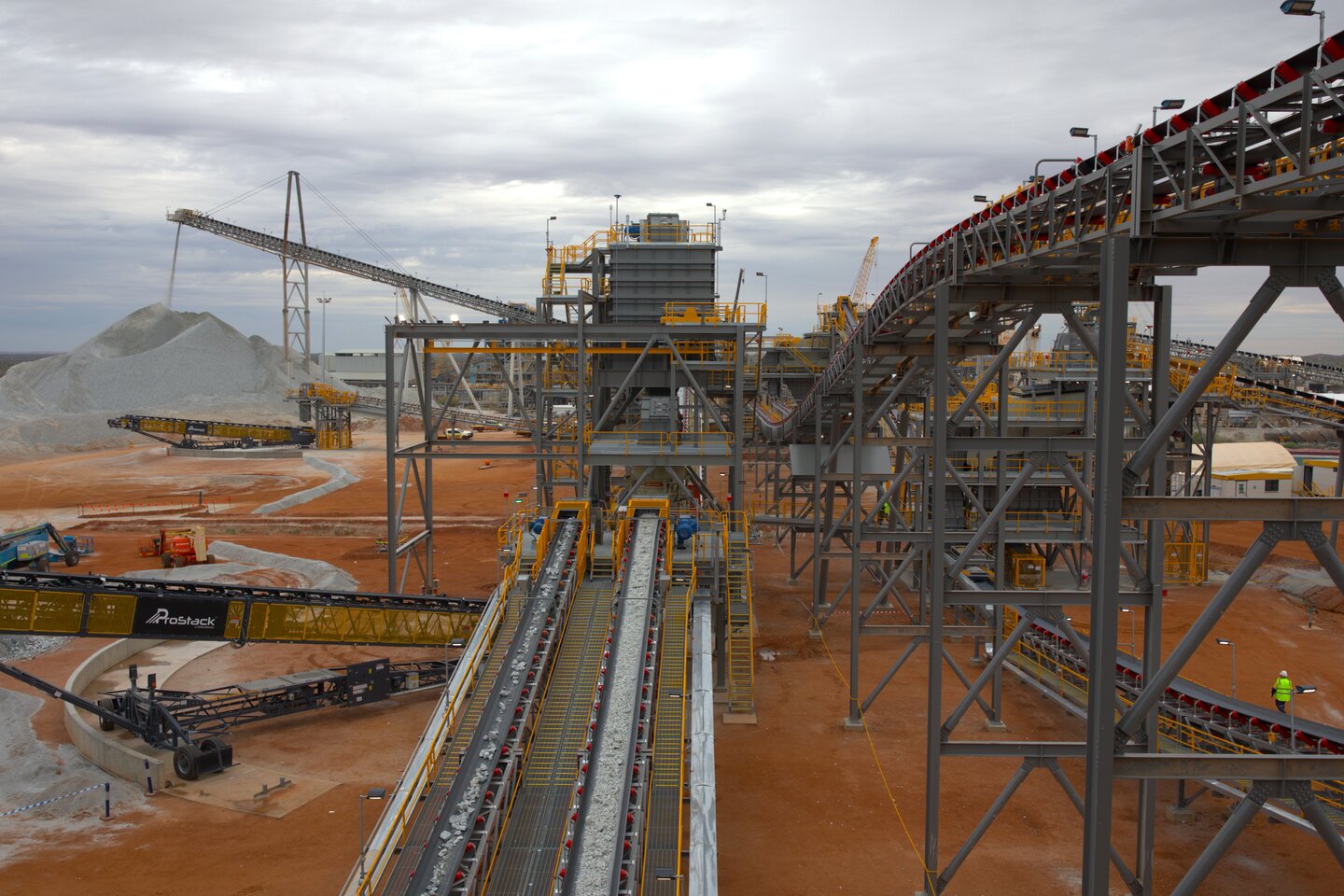
Pilbara lithium miner PLS Group has grown its cash coffers to $1.5 billion amid a record production result and improved pricing, as it progresses its production expansion plans.

OPINION: Regional Australia could face price increases in the high single digits or double digits, particularly for essential goods.

PERTH — Western Australia is finally set to join the digital age for driver identification, with the Cook Labor Government announcing Thursday it will introduce optional digital driver’s licences by late 2027 after allocating $28.2 million in the upcoming state budget.
The initiative, unveiled in Perth, includes a trial beginning mid-2027 and full rollout by the end of that year. Digital licences will initially live in the ServiceWA app’s digital wallet, with plans to expand compatibility to Apple Wallet and Google Wallet for broader convenience.
Science and Innovation Minister Stephen Dawson described the move as a significant step toward modern, secure government services. “These changes are designed around how people live and work today,” Dawson said. “Having key credentials available digitally means less paperwork, fewer delays, and greater convenience.”

Assistant Transport Minister Jessica Stojkovski emphasized that the digital licence would remain optional. Physical cards will stay available “for the foreseeable future,” addressing concerns from residents wary of fully digitizing sensitive documents.
“You can choose to have a digital driver’s licence if that suits your circumstances and lifestyle, but equally if you like having a physical driver’s licence, you can do that as well,” Stojkovski said.
The funding comes from the Digital Capability Fund and will support not only driver’s licences but also a broader State Digital Identity system. This will enable Western Australians to access more online services and secure transactions while maintaining control over their personal data.
Security has been a key focus during development. WA deliberately took longer than eastern states to ensure the system meets top national and international standards. Stojkovski highlighted enhanced safety features, particularly for proof-of-age scenarios at licensed venues.
When scanned for age verification, the digital licence will share only necessary confirmation — such as “over 18” — without revealing full personal details. This contrasts with current physical cards, where venues may capture and store complete information with uncertain data practices.
Transport Minister Rita Saffioti noted most Western Australians already carry their phones daily, making the digital option a natural extension of modern life. The system builds on recent innovations like phone-based SmartRider public transport tagging.
WA has lagged behind other Australian jurisdictions. New South Wales, South Australia, Victoria and others rolled out digital licences years ago, while Tasmania and the Northern Territory advanced plans for 2026 launches. The state’s cautious approach prioritized robust cybersecurity to protect the personal data of roughly 2.2 million licence holders.
The digital credential will allow near real-time verification, ensuring information stays current and accurate. This promises faster licence issuance and replacements, reducing visits to physical service centres. Upgrades to the WA Relationship Authorisation Manager will also improve business-government interactions.
For everyday users, the benefits are clear. Forgot your physical licence? Pull out your phone. Need to prove age quickly? A secure scan does the job with minimal data exposure. The system aligns with national efforts to harmonize digital identities across Australia.
Privacy advocates and older residents have raised questions about digital access and data security. The government has stressed inclusivity, with physical options remaining and strong safeguards against theft or fraud. Dawson noted the project lowers chances of identity theft through better-controlled sharing.
The ServiceWA app already supports Digital ID setup for those over 15 with compatible smartphones. Users link documents like driver’s licences, birth certificates or passports through the myID platform (formerly myGovID) for stronger verification.
Implementation will involve collaboration with licensed venues, police and other stakeholders to ensure smooth acceptance. The pilot phase mid-2027 will test functionality, user experience and verification processes before wider availability.
This rollout forms part of a broader digital transformation under the Cook Government. It complements other initiatives aimed at making services smarter, more efficient and user-friendly while supporting economic growth through reduced administrative burdens.
Industry groups have welcomed the news. Road safety organizations see potential for better compliance checks, while tech sectors view it as boosting WA’s digital credentials. For businesses, real-time verification could streamline hiring, age-restricted sales and insurance processes.
Challenges remain. Not everyone owns a compatible smartphone, and network coverage in regional WA could affect reliability. The government has committed to addressing these through the trial phase and ongoing consultation.
As WA catches up, the digital licence represents more than convenience — it signals a shift toward secure, privacy-focused identity management. With $28.2 million committed, the state aims to deliver one of the strongest systems nationally.
Motorists are encouraged to stay informed via the ServiceWA app and Department of Transport channels. While physical licences continue unchanged for now, the optional digital version promises to make carrying identification simpler and safer for those who choose it.
The announcement comes as Australia moves toward greater digital integration. With most states already offering or planning mobile licences, WA’s entry completes the national picture and positions the state for future interoperable systems.
For millions of Western Australian drivers, the phone in their pocket could soon serve as their official licence — a practical evolution in how identity travels in the 21st century. The mid-2027 trial will provide the first real test of this long-awaited technology.

Check out what’s clicking on FoxBusiness.com.
Ford is recalling more than 140,000 Ranger trucks in the U.S. after federal safety regulators warned a wiring issue could elevate the risk of fire, as well as potential crashes or injuries.
The recall affects 140,201 vehicles spanning the 2024 through 2026 model years, according to the National Highway Traffic Safety Administration (NHTSA).
The agency said the problem is linked to wiring associated with the sun visor and headliner that may be routed incorrectly or wrapped with too much tape, conditions that can cause the wires to degrade and potentially trigger an electrical short near the A-pillar.
HOW CUTTING ONE COSTLY HABIT COULD SAVE SMALL BUSINESSES THOUSANDS ON FUEL: EXPERT

The 2024 Ford F-150 Raptor. (Courtesy of Ford)
To address the issue, Ford dealers will examine the wiring and update the vehicle’s body control module software. Harnesses showing signs of damage will be replaced at no cost to owners, the agency said.
FORD RECALLS NEARLY 1.4 MILLION F-150 PICKUP TRUCKS OVER GEARSHIFT ISSUE

The 2024 Ford Ranger Raptor. (Courtesy of Ford)
The recall is being rolled out in phases, beginning with certain 2025 model-year trucks. Owner notification letters are scheduled to start the week of May 31, followed by additional rounds in late June for 2026 models and late July for 2024 models.
FORD RECALLS OVER 422,000 VEHICLES OVER WINDSHIELD WIPER ISSUE

The 2024 Ford Ranger XLT. (Courtesy of Ford)
CLICK HERE TO GET FOX BUSINESS ON THE GO
Regulators said interim notices alerting drivers to the safety risk are expected to be mailed April 27, with a final repair solution anticipated later in the summer. The campaign is identified as 26S29, and affected VINs have been searchable on NHTSA’s website since mid-April.
Reuters contributed to this report.
Business
Silver dips Rs 2,300, gold at Rs 1.51 lakh as oil surge, Iran war uncertainty raise inflation worries. What’s next?

Tensions escalated further after Iran released footage of commandos boarding a cargo vessel in the Strait of Hormuz, along with reports that its air defence systems had engaged what were described as “hostile targets.”
In the domestic market, MCX silver futures for May 2026 delivery fell Rs 2,300 or 1%, to Rs 2,39,200 per kg. Gold futures for June 2026 delivery declined Rs 600 or 0.4% to 1,51,159 per 10 grams. In the previous session, silver and gold ended higher by 0.25% each.
Rising crude oil prices tend to fuel inflation by increasing transportation and production costs, which in turn raises the likelihood of higher interest rates. Although gold is traditionally seen as a hedge against inflation, higher interest rates reduce its appeal by making yield-bearing assets more attractive.
Globally, yellow metal was little changed on Friday but remained on course for a weekly decline. Spot gold edged up 0.1% to $4,697 per ounce as of 0105 GMT, though it has fallen 2.6% so far this week, snapping a four-week winning streak. U.S. gold futures for June delivery slipped 0.2% to $4,712.50. Spot silver also eased 0.1% to $75.36 per ounce.
How should you trade gold?
Manoj Kumar Jain of Prithvi Finmart said gold and silver are likely to remain volatile in today’s session due to fluctuations in the dollar index, swings in crude oil prices and uncertainty around the US-Iran peace deal.
He sees gold support at $4,681–4,640 and resistance at $4,755–4,790 per troy ounce. Silver has support at $72–68 and resistance at $78–80.40 per troy ounce for the day.
On MCX, gold has support at Rs 1,55,000–1,49,800 and resistance at Rs 1,52,350–1,53,100, while silver has support at Rs 2,38,800–2,34,000 and resistance at Rs 2,45,000–2,48,500.
He advises waiting for stability in bullion markets before taking fresh positions.
Gold rates in physical markets
Gold Price today in Delhi
Standard gold (22 carat) prices in Delhi stand at Rs 1,12,712/8 grams while pure gold (24 carat) prices stand at Rs 1,22,952/8 grams.
Gold Price today in Mumbai
Standard gold (22 carat) prices in Mumbai stand at Rs 1,12,592/8 grams while pure gold (24 carat) prices stand at Rs 1,22,832/8 grams.
Gold Price today in Chennai
Standard gold (22 carat) prices in Chennai stand at Rs 1,13,272/8 grams while pure gold (24carat) prices stand at Rs 1,23,576/8 grams.
Gold Price today in Hyderabad
Standard gold (22 carat) prices in Hyderabad stand at Rs 1,12,592/8 grams while pure gold (24 carat) prices stand at Rs 1,22,832/8 grams.
(Disclaimer: Recommendations, suggestions, views and opinions given by the experts are their own. These do not represent the views of The Economic Times)

Volatility ETF Guide: Why Interest Rate Volatility Matters (Not Just The VIX)

Panelists Josh Schafer, Elizabeth O’Brien and Al Root discuss top stock picks for 2026 on ‘Barron’s Roundtable.’
Roughly 1,400 people across Nike’s Global Operations team will be laid off, the company announced Thursday.
In a memo to employees, Chief Operating Officer Venkatesh Alagirisamy said the cuts will primarily affect Nike’s technology division and span North America, Asia and Europe, representing just under 2% of the company’s global workforce.
“This is not a new direction,” Alagirisamy wrote. “It is the next phase of the work already underway.”
The announcement follows a series of recent job cuts as Nike restructures its operations.
NIKE’S DIVERSITY INITIATIVES UNDER EEOC SCRUTINY FOR ALLEGED DISCRIMINATION AGAINST WHITE WORKERS

Nike announced layoffs affecting about 1,400 employees as part of a broader restructuring effort, the company said. (iStock / iStock)
In January, the company said it would cut 775 jobs as part of an automation push at distribution centers.
In February 2024, Nike announced plans to reduce its workforce by about 2%, or more than 1,600 employees, and a few months later, in August, said it would cut less than 1% of corporate staff as part of a broader turnaround effort under CEO Elliott Hill.
Shares rose about 0.5% in after-hours trading, though Nike stock has lost more than half its value over the past three years.
According to Alagirisamy’s memo, the layoffs are aimed at streamlining supply chains for materials, footwear and apparel, and centralizing technology operations in two hubs: Beaverton, Oregon, and the Nike India Technology Center.
BEER GIANT POURS $600M INTO US PRODUCTION IN MAJOR BET ON AMERICAN GROWTH

The logo of Nike is pictured in a store in Manhattan on March 30, 2026 in New York City. (Zamek/VIEWpress / Getty Images)
Nike also plans to move some Converse manufacturing and engineering operations closer to factory partners.
“These changes are meant to make the company less complex and more responsive,” Alagirisamy said. “As we look ahead, that means simplifying parts of how we operate, using more advanced automation where it helps us work better, and building an even stronger end-to-end foundation for future growth.”
| Ticker | Security | Last | Change | Change % |
|---|---|---|---|---|
| NKE | NIKE INC. | 44.78 | -0.90 | -1.97% |
Hill, who became CEO in 2024, has pledged to refocus the Nike brand on core sports, such as running and soccer, while accelerating new product launches.
GET FOX BUSINESS ON THE GO BY CLICKING HERE
Nike plans to lay off about 1,400 workers as it streamlines operations and invests in automation, the company said. (REUTERS/Anton Vaganov / Reuters)
Nike forecast a 2% to 4% drop in sales this quarter, with China, a key market, expected to decline about 20%, the company said.
Nike referred FOX Business to Alagirisamy’s memo when asked for comment.
FOX Business’ Eric Revell and Reuters contributed to this report.

Operator
Good day, and welcome to the Enova International First Quarter 2026 Earnings Conference Call. [Operator Instructions] Please note, this event is being recorded.
I would now like to turn the conference over to Lindsay Savarese, Investor Relations for Enova. Please go ahead.
Lindsay Savarese
Investor Relations
Thank you, operator, and good afternoon, everyone. Enova released results for the first quarter 2026 ended March 31, 2026, this afternoon after market close. If you did not receive a copy of our earnings press release, you may obtain it from the Investor Relations section of our website at ir.enova.com.
With me on today’s call are Steve Cunningham, Chief Executive Officer; and Scott Cornelis, Chief Financial Officer. This call is being webcast and will be archived on the Investor Relations section of our website.
Before I turn the call over to Steve, I’d like to note that today’s discussion will contain forward-looking statements, and as such, is subject to risks and uncertainties. Actual results may differ materially as a result from various important risk factors, including those discussed in our earnings press release and in our annual report on Form 10-K, quarterly reports on Form 10-Q and current reports on Forms 8-K. Please note that any forward-looking statements that are made on this call are based on assumptions as of today, and we undertake no obligation to update these statements as a result of new information

Hackers exploit file upload bug in Breeze Cache WordPress plugin

$5,000,000 in prop money!

Slovenia refuses to air Eurovision song contest after pulling out of event

Manchester United reach agreement with Casemiro over contract clause amid transfer speculation

US brings back mandatory military draft registration

Steven Gerrard disagrees with Gary Neville over ‘shock’ Chelsea and Arsenal claim | Football


-

 Sports7 days ago
NWFL Suspends Two Players Over Post-Match Clash in Ado-Ekiti
-

 Fashion6 days ago
Weekend Open Thread: Theodora Dress
-

 Politics6 days ago
Palestine barred from entering Canada for FIFA Congress
-
Entertainment4 days ago
NBA Analyst Charles Barkley Chimes in on Ice Spice McDonald’s Fiasco
-

 Tech5 days ago
Auto Enthusiast Scores Running Tesla Model 3 for Two Grand and Turns It Into Bare-Bones Go-Kart
-

 Business5 days ago
Powerball Result April 18, 2026: No Jackpot Winner in Powerball Draw: $75 Million Rolls Over
-

 Politics5 days ago
Zack Polanski demands ‘council homes not luxury flats for foreign investors’
-

 Crypto World6 days ago
Russia Pushes Bill to Criminalize Unregistered Crypto Services
-

 Politics3 days ago
Gary Stevenson delivers timely reminder to register to vote as deadline TODAY
-

 Business2 days ago
Rolls-Royce Voted UK’s Most Iconic Trade Mark as IPO Register Hits 150
-

 Politics1 day ago
Disabled people challenge government SEND proposals over segregation concerns
-

 Politics1 day ago
Making troops accountable for war crimes threatens US alliance, ex-SAS colonel warns
-

 Crypto World6 days ago
Russia Introduces Bill To Criminalize Unregistered Crypto Services
-

 Politics2 days ago
Starmer handler McSweeney to be dragged from shadows by Foreign Affairs Committee
-
Politics2 days ago
Wings Over Scotland | How To Get Away With Crimes
-

 Politics2 days ago
Zack Polanski responds to home secretary’s taser threat
-
 Crypto World5 days ago
Kelp DAO rsETH Bridge Hack Drains $292M as DeFi Losses Top $600M in Two Weeks
-

 Politics1 day ago
‘Iran is still a nuclear threat’
-

 Crypto World2 days ago
New York sues Coinbase, Gemini over prediction market offerings
-
 Sports7 days ago
Kevin Kisner apologizes for Masters criticism: ‘I crossed the line’
You must be logged in to post a comment Login