Connect with us
DAPA Banner

Business

5 Best Software Development Companies in Switzerland for 2026: Detailed Look

Published

on

AI is everywhere – powering chatbots, automating reports, predicting market trends. But hiring AI developers isn’t always the right move.

Choosing the wrong software partner can slow delivery, inflate costs, and leave your business tied to systems that become hard to maintain. Switzerland is a demanding market where companies expect technical precision, clear accountability, and solutions that support long-term growth rather than quick fixes.

That is why vendor selection deserves more than a surface-level review of portfolios and sales claims. The best partnerships usually come from firms that combine engineering depth, business understanding, and a delivery model that fits the client’s stage, risk profile, and internal capacity.

This article examines the top software development companies in Switzerland through a practical lens. You will see what each company is best suited for, what services they cover, and where their strengths are most likely to matter.

Main Benefits of Cooperating with Top Software Development Companies in Switzerland

The right software development partner helps reduce delivery risk, sharpen product decisions, and build software that remains useful as the business evolves. In a market like Switzerland, where quality expectations are high, those advantages have a direct commercial impact.

Access to high-level engineering expertise

Top software development companies in Switzerland usually bring multidisciplinary teams that cover architecture, development, design, testing, and delivery management in one model. That matters because software problems rarely stay within one function for long. A product issue may begin as a UX flaw, expose a backend limitation, and eventually require infrastructure changes. Strong vendors can address those dependencies without forcing the client to coordinate multiple disconnected specialists.

Advertisement

Faster and more predictable delivery

A capable vendor shortens the path from idea to working software because the team already has proven workflows, reusable patterns, and delivery discipline. That means reducing avoidable friction, such as unclear requirements, poor sprint planning, weak QA coverage, or repeated rework. In practice, speed becomes credible only when it is supported by process maturity.

Better alignment between technology and business goals

Not every software company understands the commercial logic behind the product it is building. The stronger firms do. They ask how the platform creates value, what user behavior matters most, where operational bottlenecks sit, and which features actually affect revenue, retention, or efficiency. That changes the quality of the work because the conversation moves beyond tasks and tickets.

Stronger product quality and lower operational risk

High-quality software is about resilience, test coverage, system stability, documentation, deployment practices, and the ability to support the product after release. Leading software development firms tend to treat these areas as part of delivery. That mindset lowers operational risk for the client.

Flexibility for different stages of company growth

The best software partners can support companies at very different points in their development:

Advertisement
  • Startups may need product discovery and MVP execution
  • Mid-sized firms may need a team that can improve internal systems
  • Larger organizations may need long-term engineering support

That flexibility matters because business needs rarely stay static. A company might begin with one narrow project and later require ongoing development, AI integration, cloud optimization, or product expansion. Firms that can adapt their role over time tend to create more durable partnerships. The relationship becomes less transactional and more strategic, which usually leads to better outcomes on both sides.

5 Best Software Development Companies in Switzerland for 2026: The List

Switzerland offers access to both locally rooted engineering firms and international development partners serving the Swiss market. That creates a healthy range of options, but it also makes evaluation harder because the best choice depends heavily on delivery priorities, budget structure, and the complexity of the product.

These five companies below stand out for different reasons, and each serves a different type of client need.

Company Services Covered Best Fit
HBM.ai Custom software development, AI solutions, Startup Studio, integrations, UI/UX design, QA, cloud services, IT consulting, product management Startups, innovation-driven businesses, and companies seeking a strategic technology partner
Selleo Full-cycle custom software development, web and mobile apps, SaaS development, UX/UI design, QA, DevOps Startups and mid-sized companies building SaaS products and custom digital platforms
SoftKraft Bespoke software development, web and mobile apps, AI integration, full-stack engineering, digital product development Companies needing tailored software with strong communication and delivery transparency
Soxes AG Custom software engineering, legacy modernization, secure development, cloud solutions, enterprise software Swiss companies in regulated or complex operating environments
DBB Software Bespoke software development, MVP development, AI and ML, IoT, DevOps, AWS-based cloud services, and architecture Businesses that need accelerated product delivery and scalable engineering support

HBM.ai

HBM.ai

is a top software development company in Switzerland for startups, SMBs and enterprises that need more than a coding vendor. It is especially relevant in a market where senior hiring is slow, AI specialists are expensive, and local delivery costs remain very high. With 90 percent of its engineers operating at a senior level, HBM.ai offers the kind of experienced delivery capacity that is difficult and time-consuming to build locally.

Advertisement

They act as a European technology partner that helps businesses strengthen internal teams, fill critical expertise gaps, and scale delivery capacity without the long delays and fixed costs of local hiring. Though, in addition to classical team extension, they can also take full responsibility for the project implementation and drive end-to-end product development. As a nearshore partner, HBM.ai gives Swiss companies access to skilled engineering talent in the same time zone, which supports easier communication, faster feedback loops, and closer day-to-day collaboration.

HBM.ai supports companies in custom software development, integrations, migrating to cloud and modern technologies, AI/ML consulting and implementation, cloud managed services, QA&Testing, UX/Product design, penetration testing – offering one partner across the full delivery cycle.

Key benefits

  • Premium service available even for smaller businesses
  • 30 to 40% lower delivery cost compared with equivalent local hiring in Switzerland
  • Ramping-up senior team within 4-6 weeks and bringing value from day 1 because of proven delivery framework
  • Up to 50% lower cost pressure than hiring local AI specialists at Swiss salary premiums
  • Same time zone for easier communication and faster coordination, local top management

Selleo

Selleo is a custom software development company with a strong full-cycle delivery model and a clear focus on building web, mobile, and SaaS products. They are a long-term software partner, with services spanning product work, UX and UI design, QA, DevOps, and software outsourcing, which gives them a broad enough offer for companies that want one team across the delivery lifecycle.

For businesses evaluating vendors for the Swiss market, Selleo’s strongest appeal is reliability with product focus. It appears well-suited to startups and mid-sized companies that need more than isolated development capacity, but do not want the weight of a large consulting firm.

They emphasize SaaS delivery, Agile collaboration, and cross-functional teams makes it especially relevant for product companies that need steady execution, transparent communication, and a partner that can support both initial development and later platform growth.

Advertisement

Key benefits

  • Full-cycle custom software support across product, design, QA, DevOps, and delivery
  • Strong fit for SaaS platforms, web applications, and mobile products
  • Good option for startups and mid-sized businesses that want a long-term product partner
  • Positive reputation for communication, reliability, and project management in verified client reviews
  • Suitable for companies that want Agile execution without enterprise-scale overhead

SoftKraft

SoftKraft is a software development company that has built a strong reputation for bespoke software delivery, transparent communication, and reliable execution. It is often recognized among leading custom software providers serving Switzerland, and its profile suits businesses that want tailored product development without the heaviness of a large enterprise integrator.

The company focuses on full-stack engineering, AI integration, and web and mobile application development. Its appeal lies in combining technical capability with a delivery style that clients can follow and trust.

One of SoftKraft’s strengths is clarity. Many software projects fail because communication breaks down and expectations drift. SoftKraft is known for maintaining strong client collaboration throughout the delivery process, which tends to improve scope control and reduce avoidable misunderstandings. That becomes especially valuable when the software is business-critical or when internal stakeholders need visibility into progress and trade-offs.

Key benefits

  • Strong bespoke software expertise for tailored digital products
  • Transparent communication and collaborative delivery process
  • Good fit for Swiss and European companies needing reliable execution
  • Covering full-stack development with AI, web, and mobile capabilities
  • A consistent high performer in Clutch Switzerland leaderboards

Soxes AG

Soxes AG is a Swiss software engineering company with a profile that aligns particularly well with enterprise-grade and compliance-sensitive work. As a local firm, it offers the kind of proximity, contextual understanding, and trust that many Swiss businesses still value, especially in regulated industries or high-stakes internal systems.

Their core strengths include custom software engineering, legacy system modernization, secure development, and cloud solutions. That makes it a strong candidate for organizations that need precision, maintainability, and confidence in long-term software quality.

One of the clearest reasons to consider Soxes AG is its focus on secure and dependable engineering. Companies operating in finance, healthcare, infrastructure, or other tightly managed environments don’t just need software that works. They need software that supports governance, data protection, and operational stability.

Advertisement

Key benefits

  • Swiss-based delivery model with strong local market relevance
  • Well-suited to regulated and compliance-sensitive environments
  • Strength in secure engineering and legacy modernization
  • Good choice for enterprise software and cloud transformation work

DBB Software

DBB Software is a bespoke software development company known for its accelerated delivery model and practical approach to building scalable digital products. It serves international clients, including businesses connected to Switzerland and the wider DACH region, and is frequently mentioned among top software firms active in the Swiss market.

Their service offering includes custom software development, MVP creation, AI and machine learning integration, IoT solutions, DevOps, cloud migration, and system architecture. The company is particularly attractive to organizations that need speed without giving up technical quality.

A core part of DBB Software’s value proposition is efficiency. They emphasize faster delivery through pre-built components, reusable modules, and proven technical accelerators that reduce unnecessary development time.

Key benefits

  • Accelerated development model supported by reusable components
  • Strong fit for MVPs, product launches, and fast-scaling platforms
  • Covers architecture, DevOps, cloud, AI, and custom engineering
  • Balances delivery speed with long-term technical structure

Steps to Choose the Right Software Development Companies in Switzerland

Choosing among software development companies in Switzerland requires more than comparing service lists or hourly rates. The right decision comes from understanding how well a vendor aligns with your business goals, operating model, communication needs, and long-term roadmap.

Here are steps that help narrow the field in a more disciplined way, so you can choose a partner that supports both immediate delivery and future growth.

Step 1. Define the real business objective

Many vendor selection processes begin with a list of requested features, but that is often the wrong starting point. The better question is what the business needs the software to achieve. That could be faster operations, better customer experience, a new revenue stream, lower support costs, or improved data visibility. Once the objective is clear, it becomes easier to judge whether a vendor understands the problem behind the specification.

Advertisement

Step 2. Evaluate the company’s fit for your stage of growth

A startup usually needs a different kind of software partner than an established enterprise. Early-stage companies often need product thinking, rapid iteration, and flexibility around changing priorities. Larger firms may need governance, documentation, process maturity, and the ability to work across departments with more structure.

This matters because delivery problems often come from a mismatch rather than incompetence. A company built for enterprise transformation may be too heavy for a startup. A highly agile boutique team may struggle in a regulated, multi-stakeholder corporate environment. You need a partner whose model fits the way your business actually works today.

Step 3. Look beyond technical skills and assess communication quality

Engineering quality matters, but software projects also depend heavily on communication. Poor updates, unclear ownership, and vague risk reporting can derail even technically competent teams. That is why it is important to assess how the company explains trade-offs, manages expectations, and responds to ambiguity. The way a vendor communicates during evaluation is often the clearest preview of how they will behave during delivery.

Strong communication creates operational trust. It helps internal stakeholders stay aligned and prevents small issues from turning into expensive delays. In practice, many successful software partnerships are built on disciplined communication as much as on technical expertise. Teams that ignore this factor usually pay for it later.

Advertisement

Step 4. Review service range with future needs in mind

It is sensible to choose a vendor based on the current project, but it is shortsighted to ignore what may come next. A company may initially need a web platform, then later require mobile development, cloud optimization, AI integration, or ongoing maintenance. If the vendor can support those adjacent needs, the relationship becomes more efficient and easier to scale. If not, the client may face a fragmented ecosystem of providers.

This means understanding whether the company can reasonably grow with your roadmap. A narrow technical fit can work for a one-off task. For strategic products or internal platforms, broader capability often creates more long-term value.

Step 5. Test whether the vendor thinks like a partner or a contractor

This is one of the clearest dividing lines in the market. Some software companies wait for instructions and execute them literally. Others challenge assumptions, surface risks early, and contribute to better decisions. The latter group is usually more valuable, especially when the project involves uncertainty, innovation, or evolving product direction. They do more than produce code. They help shape outcomes.

You can often detect this in early conversations. A true partner asks better questions, cares about business context, and doesn’t pretend every idea is equally good. That can be uncomfortable for teams expecting passive compliance, but it is usually a sign of stronger delivery. The right software partner should improve your thinking.

Advertisement

Wrapping Up

The best software development companies in Switzerland aren’t interchangeable, and that is precisely why careful evaluation matters. Some firms are better suited to startup innovation and product discovery, while others are stronger in enterprise modernization, secure engineering, or accelerated product delivery. The right choice depends on your business model, project complexity, internal capabilities, and appetite for strategic collaboration.

Advertisement
Continue Reading
Click to comment

You must be logged in to post a comment Login

Leave a Reply

Business

China car giant BYD says it can thrive without US

Published

on

China car giant BYD says it can thrive without US

With the price of fuel rising China’s BYD says it is positioning itself to benefit from the global shift away from fossil fuels.

Continue Reading

Business

Hundreds of homes and commercial space planned near Greater Manchester village

Published

on

Business Live

Walmersley project also set to include retail and public open space

Masterplan of the proposed Walmersley development. Beige shows areas of housing, red the local centre, blue employment space and yellow the proposed mobility hub.

The masterplan for the proposed Walmersley development. Beige shows areas of housing, red the local centre, blue employment space and yellow the proposed mobility hub(Image: Hollins Strategic Land, Moldune Ltd and Belbeck Investments Ltd)

Hundreds of homes could be built on fields at the edge of a village near Bury, new plans reveal.

Advertisement

Developers are eyeing up green space on the outskirts of Walmersley for the project. Some 350 homes are proposed there, 40 per cent of which would be classed as ‘affordable’.

The development would also include employment and commercial buildings. A local retail centre would be built, as would a mobility hub, plans show.

A public open space would be delivered through the scheme too, with plans stating this is ‘subject to’ a change of use application being approved for part of the site.

Documents show the development would be located over an expanse of fields off Walmersley Road, to the north of the village. It would stretch from the recreation ground at the edge of Walmersley to the M66 exit road.

Advertisement

Multiple points of access would be created off Walmersley Road itself, with another two proposed off Walmersley Old Road.

The plan is in its early stages, with developers Hollins Strategic Land, Moldune Ltd and Belbeck Investments Ltd having only submitted an Environmental Impact Assessment (EIA) screening request to Bury council to date.

This asks the local authority whether an EIA is needed as part of the formal planning process and, if it is, what the scope of that assessment should be.

More details on the scheme are expected to be submitted in due course. Documents suggest plans will be considered in two parts, with an outline application seeking approval for the scheme in principle coming first.

Advertisement

To find all the planning applications, traffic diversions, road layout changes, alcohol licence applications and more in your community, visit the Public Notices Portal.

Continue Reading

Business

Federal Reserve Watch: Inflation Coming?

Published

on

Federal Reserve Watch: Inflation Coming?

This article was written by

John M. Mason writes on current monetary and financial events. He is the founder and CEO of New Finance, LLC. Dr. Mason has been President and CEO of two publicly traded financial institutions and the executive vice president and CFO of a third. He has also served as a special assistant to the secretary of the Department of Housing and Urban Development in Washington, D. C. and as a senior economist within the Federal Reserve System. He formerly was on the faculty of the Finance Department, Wharton School, the University of Pennsylvania and was a professor at Penn State University and taught in both the Management Division and the Engineering Division. Dr. Mason has served on the boards of venture capital funds and other private equity funds. He has worked with young entrepreneurs, especially within the urban environment, starting or running companies primarily connected with Information Technology.

Analyst’s Disclosure: I/we have no stock, option or similar derivative position in any of the companies mentioned, and no plans to initiate any such positions within the next 72 hours. I wrote this article myself, and it expresses my own opinions. I am not receiving compensation for it (other than from Seeking Alpha). I have no business relationship with any company whose stock is mentioned in this article.

Seeking Alpha’s Disclosure: Past performance is no guarantee of future results. No recommendation or advice is being given as to whether any investment is suitable for a particular investor. Any views or opinions expressed above may not reflect those of Seeking Alpha as a whole. Seeking Alpha is not a licensed securities dealer, broker or US investment adviser or investment bank. Our analysts are third party authors that include both professional investors and individual investors who may not be licensed or certified by any institute or regulatory body.

Advertisement
Continue Reading

Business

Procter & Gamble (PG) Q3 2026 earnings

Published

on

Procter & Gamble (PG) Q3 2026 earnings

Procter & Gamble on Friday reported quarterly earnings and revenue that topped analysts’ expectations, as volume for its products grew for the first time in a year.

But looking ahead, executives warned about uncertainty caused by the war with Iran, like the effects on the company’s input costs and consumer spending. P&G will not provide a forecast for fiscal 2027 until its next earnings report in July.

“I’m very happy that I don’t have to give guidance today [for fiscal 2027],” CFO Andre Schulten said on the company’s earnings conference call Friday. “Because what do we know what the world looks like three months from now, with what we know today?”

Despite that haziness, shares of the company rose more than 3% in morning trading.

Advertisement

Here’s what the company reported compared with what Wall Street was expecting, based on a survey of analysts by LSEG:

  • Earnings per share: $1.59 adjusted vs. $1.56 expected
  • Revenue: $21.24 billion vs. $20.5 billion expected

P&G reported fiscal third-quarter net income attributable to the company of $3.93 billion, or $1.63 per share, up from $3.78 billion, or $1.54 per share, a year earlier. Excluding restructuring costs and other items, the company earned $1.59 per share.

Net sales rose 7% to $21.24 billion. Organic sales, which strip out acquisitions, divestitures and currency, increased 3%.

P&G’s volume increased 2%, marking the first time in a year that it reported growing volume across the company. The metric excludes pricing, which makes it a more accurate reflection of demand than sales. Like many consumer companies, P&G has seen demand for its products shrink as shoppers try to spend less and stretch their laundry detergent and shampoo further.

“I would say, right now, the consumer in the U.S. is stable,” Schulten said on a call with media. “We see the bifurcation of the consumer segments continuing.”

Advertisement

Despite inflation fears, consumers haven’t started pantry loading toilet paper or paper towels yet, P&G said.

P&G’s beauty division, which includes Olay, Head & Shoulders and Pantene, was the star of the quarter, with 5% volume growth. P&G said it saw volume increases across its personal care, skin care and hair care categories.

The baby, feminine and family care segment saw volume increase 3%. The company saw higher demand for its diapers and family care products, which includes Bounty paper towels and Charmin toilet paper.

P&G’s fabric and home care division reported that volume rose 2% in the quarter, fueled by higher North American demand for its Tide detergent.

Advertisement

Grooming and health care were the two laggards of the portfolio. The grooming segment, which includes Gillette and Venus products, saw volume fall 2%. Health care, which houses Oral-B and Vicks, also reported that volume declined 2%.

The company reiterated its full-year forecast of sales growth between 1% and 5% and net earnings per share growth in the range of 1% to 6%.

“However, where we will land within those ranges has become more uncertain given the geopolitical dynamics in the Middle East,” Schulten said on the earnings call.

In the fiscal fourth quarter, P&G is projecting a $150 million hit from increased costs, largely driven by increased transportation costs stemming from higher fuel prices, Schulten said.

Advertisement

However, Schulten did say that if oil prices stay high, it would weigh on P&G’s profits. He told analysts that if the price of Brent crude oil stays around $100 per barrel, the company is projecting an annual after-tax headwind of $1 billion.

That increase in costs could lead to higher prices for consumers. However, P&G said it would likely avoid a straight price hike across its portfolio and instead focus those increases on premium products, mitigating any volume declines by leaning into the current K-shaped economy in which higher-spending consumers are doing better.

Plus, higher fuel prices would likely mean more budget-conscious shoppers.

“It’s unclear how much higher gasoline and energy costs will costs will impact near-term consumer spending in our categories,” Schulten said.

Advertisement

Correction: P&G reported adjusted EPS of $1.59. An earlier version of this story misstated the figure.

Continue Reading

Business

‘Don’t bank only on price-to-earning ratio’

Published

on

ET Search
Mumbai: Valuations have been the big buzzword on Dalal Street for a while now but its suddenly gaining momentum. These days every conversation begins with the P/E ratio (price to earning ratio, which compares the current price of the share with its per share earnings) and ends with a loud proclamation that the valuations look ‘a bit stretched.’

However, many experts believe that looking at a ratio in isolation won’t help investors grasp the realities of the market and a higher valuation may not be the only deciding factor driving the market.

‘‘Valuations matter in the long run, but it need not have an impact in the short run. This is because there is never a right valuation for a stock, as it is a highly individual call,’’ says Mukesh Dedhia, director, Ghalla & Bhansali Securities.

‘‘For example, a stock with a higher P/E may be moving ahead further as there is greater demand for the stock because of its higher earnings possibility. So, there is always a bit of confusion about the right valuation,’’ he adds.

Advertisement

‘‘If you look at the broader market, it is difficult to get a value pick. But if you are doing a bottom up method, you would still find many stocks in the market with the right valuation,’’ says Rajiv Thakkar, CEO, Parag Parikh Financial Advisory Services. Though he is a firm believer of value investing, he says looking at a ratio alone won’t be the right way to investing in a stock.


‘‘There are many things you have to consider. For example, you have to find out whether the growth rate is sustainable or how much capital is required to keep the growth. Sometimes, there would be volume growth, but the margins could be under pressure. There are a host of issues to consider, just looking at a ratio is not enough,’’ he adds.
Some experts also believe that the higher valuations could be justified if foreign investors continue to pump money into the stock market with the hope of better performance by Indian companies.

‘‘The current valuations doesn’t justify the long term growth potential of India. The market is trading 17 times the earnings potential in 2011 and around 13.8 times the earnings forecast for 2012. It even carry a premium of around 50% to other emerging markets and around 25% premium to other global markets,’’ says Devendra Nevgi, Founder & Principal Partner, Delta Global Partners. He believes that the premium can be justified if the foreign investors continue to bet on Indian stocks.

Add ET Logo as a Reliable and Trusted News Source


Continue Reading

Business

Nifty may find support at 5300 level

Published

on

ET Search
The Nifty started Wednesday’s trade on a rather timid note. As the underlying index was quietly drifting downwards, the futures started trading at a deeper discount of nearly 10 points.

It was the last hour of trade that saw better volumes and a sharp movement. The fall amid global uncertainties has brought the Nifty once again to the level of 5400. Even the participation seems to be a little scared, as Nifty futures ended the day’s trade with an addition of over a million shares in open interest indicating creation of hedges.

As far as stock futures are concerned, we are very near to the highest-ever open interest with 195 crore shares in open interest. With nearly 70% of the stocks still trading with a premium, the bias among participants seems to be upwards. This would create a bit of pressure on the market in case of any macro uncertainty.

As we are almost half way through to expiry, it makes sense to continue with long positions, but along with long puts simultaneously so that losses are capped, still keeping all the upside open.

Advertisement

On the options side, Nifty August series open interest put-call ratio is at 1:58, indicating a moderately bullish composition. Even the implied volatilities element of the options which indicate the assumption of the risk remains very low. This indicates we may not see a huge downside as far as the August expiry is concerned. With over 10 million shares in 5300 August Put, the Nifty may find support around the level of 5300.


We feel one can do a Nifty bear ratio spread to hedge trading longs, by buying 1 lot Nifty August 5400 PE & selling 2 lots of Nifty August 5300 PE.
This strategy accrues profit within the 5200 & 5400 range in case the Nifty ends up in this range on expiry. On the event the Nifty heads upwards to close above 5400, one can still have a cash inflow and no cost of hedging. The strategy does incur loss below 5200, which we feel shall hold good for the August expiry.

(Bhavin Desai is Manager (derivatives), Motilal Oswal Securities )

Add ET Logo as a Reliable and Trusted News Source



Continue Reading

Business

Seven out of top 10 Asian small-cap funds are Indian

Published

on

ET Search
Indian funds have grabbed seven out of the top 10 spots in the league table of leading small-cap funds across Asia, thanks to some canny stock-picking amid growing investor appetite for cheap stocks with potential to deliver multi-bagger returns.

An analysis of nearly 300 Asian small-cap schemes shows DSP BlackRock Micro Cap Fund leading the charge, delivering an 82% return over the past year. Managed by Vinit Sambre, who has been with DSP BlackRock for a little over three years, this fund has also soundly beaten the 58% rise of BSE’s Small-Cap Index since August 2009. The 30-share benchmark Sensex has gained 20% during this period while the wider BSE 500 Index is up 27%.

The other six schemes — Sundaram BNP Paribas Select Small Cap, HSBC Small Cap, JPMorgan Smaller Companies, Franklin India Prima, Franklin India Smaller Companies and ING Vysya CUB — have given investors returns between 44% and 57% on a trailing 12-month basis. These schemes manage anywhere between `46 crore and `954 crore.

Four of these funds were launched during the peak of the previous bull run between January 2007 and March 2008, and investors in them have also had to endure a massive erosion in their initial investment in the downturn that followed.

Advertisement

Mutual fund tracking firm Value Research called the DSP fund as an impressive product in the entire “small-cap universe”, noting that the stocks held by it were “credible, known names and there is a marked absence of momentum in the portfolio”. The fund’s holding includes companies with a high return on equity and strong leadership niches in their industries.


Value Research CEO Dhirendra Kumar said the closed-ended nature of some of these funds helped them weather the market turbulence. “These funds did not face redemption pressures through the declining phase. This, in turn helped them invest for the longer term,” he said.The DSP fund became open-ended in June this year and fund manager Mr Sambre has kept nearly 10% of his `311-crore corpus in cash to meet potential redemptions and to latch onto any opportunity in the market.

There are 10 small-cap funds in India, which manage roughly `3,450 crore in stocks. These account for just 2% of the total AUM under equity schemes.

Market experts say that as many large-cap stocks became fully priced and relatively unattractive over the past year, the rally shifted to small caps. Stocks such as cooler maker Symphony and luggage maker VIP Industries have led the small-cap charge in the market. Ahmedabad-based Symphony has surged 830% while VIP has risen 548% in the past 12 months. In comparison, top two gainers on the Sensex — Tata Motors and Tata Consultancy Services — are up 135% and 61%, respectively.

“Many small caps with excellent businesses were trading at a pathetically low valuations — many were trading below book value and at dividend yields of 5-7%,” says Deven Choksey, chief executive officer at KR Choksey Shares & Securities. “They just got purchased heavily.”

Advertisement

Even though small-cap funds have delivered solid returns in the past one year, experts say that investors must be cautious and have just 10-15% of their equity exposure in such funds or companies. This is largely because of the volatile nature of their stock performance.

“Investors should have a strong stomach and the ability to

withstand substantial declines in such funds,” says Mr Kumar at Value Research.

Advertisement
Add ET Logo as a Reliable and Trusted News Source


Continue Reading

Business

What Has Changed and How to Communicate with a High-End Audience

Published

on

Do you wish to work in a place that also makes you feel like you're always on holiday? Your desire has a name: workation.

The luxury market in Italy continues to serve as a global benchmark, thanks to a unique combination of tradition, craftsmanship, and innovation.

However, the sector is currently undergoing a period of significant transformation, driven by a profound shift in the purchasing habits of high-end customers. Communicating with this audience now requires a more sophisticated approach: it is no longer enough to simply highlight the product; brands must build experiences, meanings, and relationships.

In this article, we will explore the evolution of the luxury market and the modern marketing strategies for engaging with this new audience.

How has the luxury consumer changed?

According to recent analyses of high-net-worth individuals

(HNWIs)—those in the highest income brackets globally—the concept of luxury is gradually evolving toward more fluid forms that are less tied to traditional channels. This approach, often referred to as “non-linear luxury,” reflects a growing search for meaning, authenticity, and emotion. In fact, the contemporary consumer is no longer limited to purchasing exclusive goods but tends to prioritize intense and engaging experiences, both in the physical and digital worlds.

Advertisement

The focus is shifting increasingly toward sensations, the experiential dimension, and a brand’s ability to create deep, personalized connections. Simply highlighting a product’s features is no longer enough to attract consumers: it has become essential to build a value ecosystem that integrates storytelling, experience, and innovation.

New Generations and New Values

Purchasing decisions are increasingly driven by emotional factors. Luxury is becoming a means of self-expression rather than a status symbol. Brands must therefore craft authentic and relevant narratives. This concept is being driven primarily by Millennials and Gen Z, who are redefining the market by bringing new demands to the table:

  • sustainability and social responsibility
  • authenticity and transparency
  • personalized experience

At the same time, the modern consumer is more aware and selective, and expects tailor-made products and services.

Omnichannel as the standard

Integration across channels has therefore become essential. Omnichannel enables a seamless and consistent experience, where digital and physical reinforce each other. In luxury, this means:

  • continuity between boutiques and digital channels
  • personalization across all touchpoints
  • brand consistency in every interaction

Why Are Luxury Brands Focusing on Digital Marketing?

Even the biggest names in luxury—both Italian and international—with decades of history behind them, have realized that relying solely on brand reputation is no longer enough. The market is changing, customers are evolving, and digital has become an essential tool for staying connected with the public and offering something truly memorable. Thanks to websites crafted with meticulous attention to detail, dedicated apps, or customizable online experiences, brands can convey their identity in an authentic and unique way. It’s not just about selling a product, but about building a genuine connection with the customer, making the brand feel like a complete experience capable of conveying values, style, and personality. This is why many companies in the sector turn to expert digital marketing agencies in Italy, capable of combining creativity, technical expertise, and knowledge of the local market.

Communication Strategies for the High-End Audience

Communicating with a high-end audience today goes beyond simple product promotion. Luxury customers seek experiences, stories that engage them, and interactions that align with the brand’s values and identity. All of this can be summarized as follows: every touchpoint becomes an opportunity to strengthen the bond with the consumer and bring luxury to life in a memorable way. Below, we describe the main touchpoints in luxury marketing.

Advertisement

Advanced Storytelling and Contemporary Values

The brand narrative remains at the heart of every luxury marketing strategy, but historical storytelling alone is no longer enough. Brands must incorporate contemporary values, create content that resonates emotionally, and establish an authentic connection with the customer. In addition to telling the story of who you are, you must make the consumer feel like part of your world, offering an experience that aligns with your brand identity.

Immersive and interactive experiences

Exclusive events and in-person moments remain important, but digital offers unique opportunities: from websites that act as immersive digital “business cards”, as in the case of the Venetian brand Barovier&Toso, to interactive content that conveys the craftsmanship, tradition, and magic of the product through simple cursor interactions. Even big names like Aston Martin manage to convey sensations and historical values through images and website design, integrating innovation with classic storytelling. Beyond websites, virtual reality and interactive experiences further expand the possibilities: Gucci, Rolls-Royce, and Jaguar, for example, have experimented with immersive campaigns that transport the consumer directly into the brand’s world, transforming the online experience into something more than a simple digital visit.

Among these, Gucci’s “La Famiglia” campaign, developed in collaboration with Google Gemini, has transformed the brand’s traditional e-commerce site into a true narrative playground. Users can interact with symbolic stories and unique characters, experiencing the narrative firsthand and discovering the brand’s identity in an original, engaging, and surprising way.

Selective and high-quality digital marketing

In the luxury sector, it’s not about reaching as many people as possible, but about deeply engaging the right ones. Brands focus on top-tier editorial content, curated platforms, and collaborations with influencers who are truly aligned with their identity. Digital thus becomes a tool for reinforcing the brand’s uniqueness and building lasting connections, without ever compromising the exclusivity and sense of premium quality that defines luxury.

Advertisement

In conclusion, digital enables brands to reach new audience segments and manage targeted campaigns, without ever losing that sense of exclusivity that lies at the heart of luxury. For high-end brands, the goal goes beyond the use of standard tools like chatbots or generic influencers: the focus is on creating personalized and memorable experiences that strengthen the relationship with those who already know the brand and win over new customers in a natural and distinctive way.

Advertisement
Continue Reading

Business

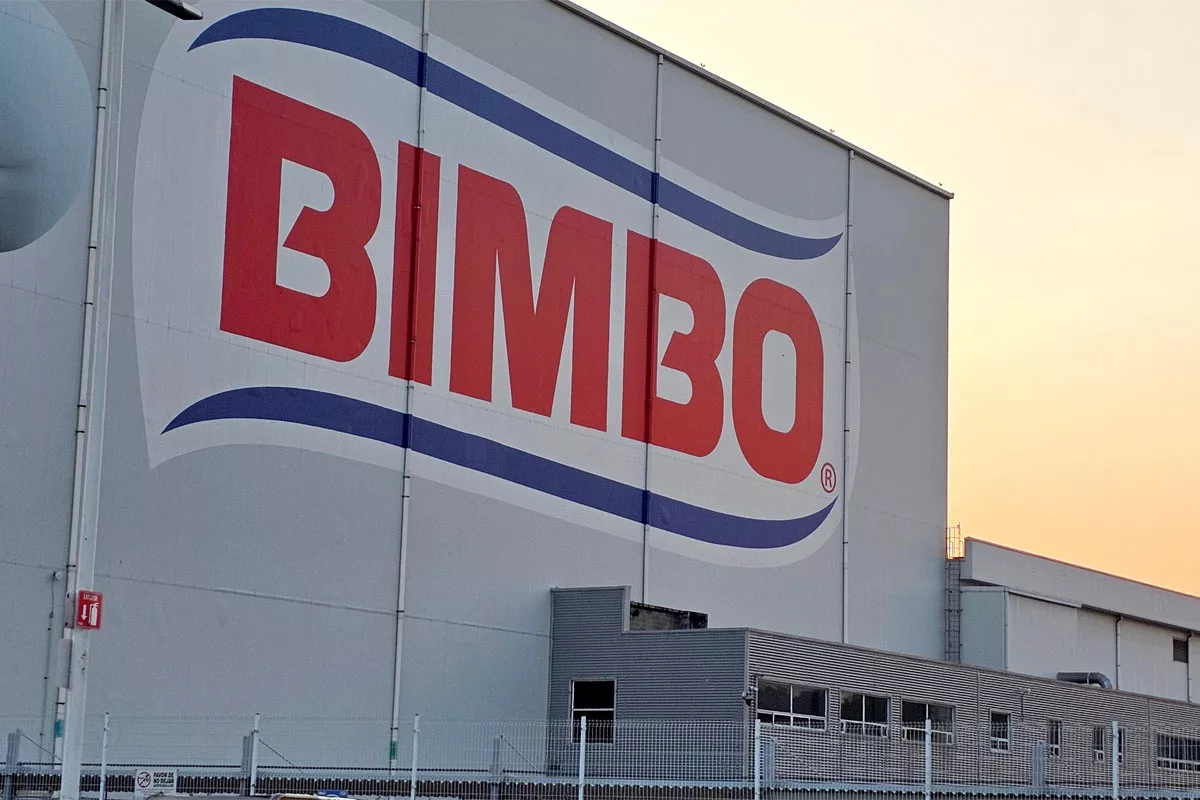
Bimbo Bakeries moves to Dallas

Published

on

Bimbo Bakeries moves to Dallas

Company relocates headquarters from Horsham, Pa.

Continue Reading

Business

Patriot National Bancorp director buys common stock

Published

on


Patriot National Bancorp director buys common stock

Continue Reading

Trending

Copyright © 2025