Connect with us
DAPA Banner

Business

SLB N.V. (SLB) Q1 2026 Earnings Call Transcript

Published

on

OneWater Marine Inc. (ONEW) Q1 2026 Earnings Call Transcript

Q1: 2026-04-24 Earnings Summary

EPS of $0.52 beats by $0.00

 | Revenue of $8.72B (2.72% Y/Y) beats by $64.04M

SLB N.V. (SLB) Q1 2026 Earnings Call April 24, 2026 11:00 AM EDT

Company Participants

James McDonald – Senior Vice President of Investor Relations & Industry Affairs
Olivier Le Peuch – CEO & Director
Stephane Biguet – Executive VP & CFO

Advertisement

Conference Call Participants

John Anderson – Barclays Bank PLC, Research Division
James West – Melius Research LLC
Stephen Richardson – Evercore ISI Institutional Equities, Research Division
Arun Jayaram – JPMorgan Chase & Co, Research Division
Scott Gruber – Citigroup Inc., Research Division
Sebastian Erskine – Rothschild & Co Redburn, Research Division
Marc Bianchi – TD Cowen, Research Division
Neil Mehta – Goldman Sachs Group, Inc., Research Division

Advertisement

Presentation

Operator

Good morning. My name is Megan, and I will be your conference operator today, and I would like to welcome everyone to the First Quarter SLB Earnings Call. [Operator Instructions]. As a reminder, this call is being recorded. I will now turn the call over to James R. McDonald, Senior Vice President of Investor Relations and Industry Affairs. Please go ahead.

Advertisement

James McDonald
Senior Vice President of Investor Relations & Industry Affairs

Thank you, Megan. Good morning, and welcome to the SLB First Quarter 2026 Earnings Conference Call. Today’s call is being hosted from Houston, following our Board meeting held earlier this week in Midland, Texas. Joining us on the call are Olivier Le Peuch, Chief Executive Officer; and Stephane Biguet, Chief Financial Officer.

Before we begin, I would like to remind all participants that some of the statements we’ll be making today are forward-looking. These matters involve risks and uncertainties that could cause our results to differ materially from those projected in these statements. For more information, please refer to our latest 10-K filing and other SEC filings, which can be found on our website.

Our comments today also include non-GAAP financial measures. Additional details and reconciliations

Advertisement
Continue Reading
Click to comment

You must be logged in to post a comment Login

Leave a Reply

Business

What is happening with Cavern Walks Hilton hotel plans?

Published

on

Business Live

Hotel was approved in 2024 but new plans for building now lodged

The original plans for the Cavern Walks hotel showed it would have a Beatles theme running throughout

The original plans for the Cavern Walks hotel showed it would have a Beatles theme running throughout(Image: Greenwood Developments/Reflected Reality)

Plans for a new Hilton Hotel in Liverpool’s famous Mathew Street look to have been scrapped. In October 2024, the city council’s planning committee signed off on an expanded proposal for a 283-room hotel within the Cavern Walks shopping centre.

Advertisement

It was expected that through an agreement between JSM Company Group and entrepreneur Craig Greenwood, Hilton would bring its new line Motto by Hilton to the city. Plans for the venue also included a cinema room, function room and a bar.

However, new documents have been lodged with Liverpool City Council planners, solely by JSM, seeking to carry out internal change of use to install 85 serviced apartments on the first to seventh floors. Mr Greenwood had acquired Cavern Walks in a £7m joint venture with JSM in October 2022.

Two years later, the local authority gave its approval for the hotel plans to almost double, having already said yes to a 150-room set up previously. According to planning records, this was the subject of an article 40 disposal in February this year, meaning it was no longer held on file by the city council.

Initial plans sought to provide multi-bedded rooms, ranging from six to one within each room, to accommodate groups as well as individuals and couples. Speaking previously, Mr Greenwood, managing director of Greenwood Developments, said: “We are grateful to Liverpool City Council for their support as we progress with the development.

Advertisement

“The brand is a natural fit for the Cavern Quarter, and with its exceptional location in the heart of the action, the hotel will perfectly complement the area’s vibrant tourism scene.” The new proposal submitted by JSM in March said it would look to redevelop the site with a change of use from the previously approved hotel scheme to 85 serviced apartments located on the first to seventh floors, along with a gym and spa area located within the mezzanine floor.

The existing lower and upper ground floors will be refurbished, continuing their use of retail units. There are to be no external alterations to the property.

A design and access statement said the apartments will consist of a mixture of one and two beds, “providing luxury accommodation for visitors to Liverpool city centre. Each apartment has a large open plan kitchen/living/dining, along with spacious bedrooms and a bathroom.”

It added: “With the increase of visitors to the city centre, new serviced apartments in this significant, lively area will be a positive impact to Liverpool’s tourism. The application supports the need for varying developments to sustain population levels and to address the issues of urban density.

Advertisement

“The development can contribute to the identified regeneration programmes of the area and reduce the worsening decay of historic buildings within Liverpool city centre.” The LDRS attempted to contact JSM Company Group, Greenwood Developments and Hilton for comment.

To find all the planning applications, traffic diversions, road layout changes, alcohol licence applications and more in your community, visit the Public Notices Portal.

Continue Reading

Business

Michael Sealy Dallas on Understanding the Business from the Ground Up

Published

on

Michael Sealy Dallas on Understanding the Business from the Ground Up

Michael P. Sealy is a Dallas-based real estate executive and Director of Corporate Strategy at Sealy & Company. He is known for his broad experience across the commercial real estate sector and his long-term, systems-based approach to business.

Sealy grew up in Shreveport, Louisiana, in a family closely tied to the industry. His father spent more than six decades in commercial real estate, which shaped his early understanding of the business. He attended Loyola College Prep, where he played competitive sports and reached the state football final in his senior year. That experience helped build his discipline and focus.

He later graduated from Southern Methodist University with a degree in economics and a minor in anthropology. He began his career at Colliers International as a leasing broker. There, he developed a strong foundation in deal execution, market analysis, and client relationships.

In 2000, Sealy joined Sealy & Company. Over time, he worked across construction, development, capital markets, and investment analysis. He held several senior roles, including Chief Capital Markets Officer, before moving into corporate strategy.

Today, he focuses on long-term planning, cross-functional alignment, and strategic growth. His leadership style is shaped by hands-on experience across the full business.

Advertisement

Outside of work, Sealy is active in community and conservation efforts. He supports organizations such as the Momentous Institute, Habitat for Humanity, and United Way. He also spends time on wildlife conservation and land management, reflecting his interest in long-term stewardship.

Michael Sealy Dallas on Strategy, Experience, and Long-Term Thinking

Q: Let’s start at the beginning. How did your early life shape your career path?

I grew up in Shreveport, Louisiana, in a family that was already in the real estate business. My father spent more than 60 years in the industry, following in the footsteps of his father and grandfather, so I was exposed to it early on. It was not just about business, though. It was about work ethic, accountability, and being consistent. That had a big impact on me.

I was also very involved in sports. I played football in high school, and we made it to the state final my senior year. That experience stayed with me. It teaches you discipline and how to work as part of a team.

Q: What did you take from your time at Southern Methodist University?

At SMU, I studied economics with a minor in anthropology. That combination was useful. Economics gives you a framework for understanding markets. Anthropology helps you understand people and behavior. In real estate, you need both.

Advertisement

It also gave me time to think about what I wanted to do in the long term. I knew I wanted to be in business, but I did not want to rush into one narrow role.

Q: Your first role was at Colliers International. What did that experience teach you?

I started as a leasing broker. It was a good place to begin because you learn quickly how deals actually happen. You deal with clients, you look at market data, and you have to execute.

It also teaches you that relationships matter. You can have all the data in the world, but if you cannot build trust, it is hard to move forward.

Q: You joined Sealy & Company in 2000. What was your approach to growing within the firm?

I did not want to stay in one area. I wanted to understand the full business. So I worked across different departments. Construction, development, capital markets, investment analysis.

Advertisement

Each role gave me a different view. Over time, that builds a more complete picture. It also helps when you make decisions later because you understand how those decisions affect different teams.

Q: How did those roles prepare you for your current position in corporate strategy?

My current role is about connecting the dots. Strategy is not just one thing. It is how everything works together.

Because I have worked in different parts of the business, I can look at opportunities from multiple angles. I can think about execution, capital, and long-term impact simultaneously.

That kind of perspective only comes from experience.

Advertisement

Q: What does your day-to-day work look like now?

Much of it focuses on evaluating opportunities and supporting long-term planning. I work with different teams across the company to align strategy and execution.

It is less about individual deals and more about the broader direction of the business. You are looking at how decisions today affect the company over time.

Q: How would you describe your leadership style?

It is shaped by experience. When you have worked in different roles, you understand the details. You know what teams are dealing with.

That makes you more collaborative. You listen more. You try to understand before making decisions.

Advertisement

I also think consistency matters. You cannot just react to short-term changes. You need to stay focused on long-term goals.

Q: Outside of work, you are involved in conservation and community efforts. Why is that important to you?

I spend a lot of time outdoors. Hunting, fishing, and managing land for wildlife. It is something I care about.

Conservation is a long-term effort. You are thinking about how to preserve something over time. That mindset is similar to business in some ways.

I am also involved with organizations like the Salesmanship Club of Dallas and the Momentous Institute. Giving back is important. It keeps you connected to the community.

Advertisement

Q: What lessons have stayed with you throughout your career?

Experience matters. The more you understand, the better decisions you can make.

I also think it is important to stay patient. Not everything happens quickly. Building knowledge over time is what makes a difference.

And finally, you need to stay adaptable. Markets change. Industries change. You have to be able to adjust while staying grounded in what you know.

Advertisement

Continue Reading

Business

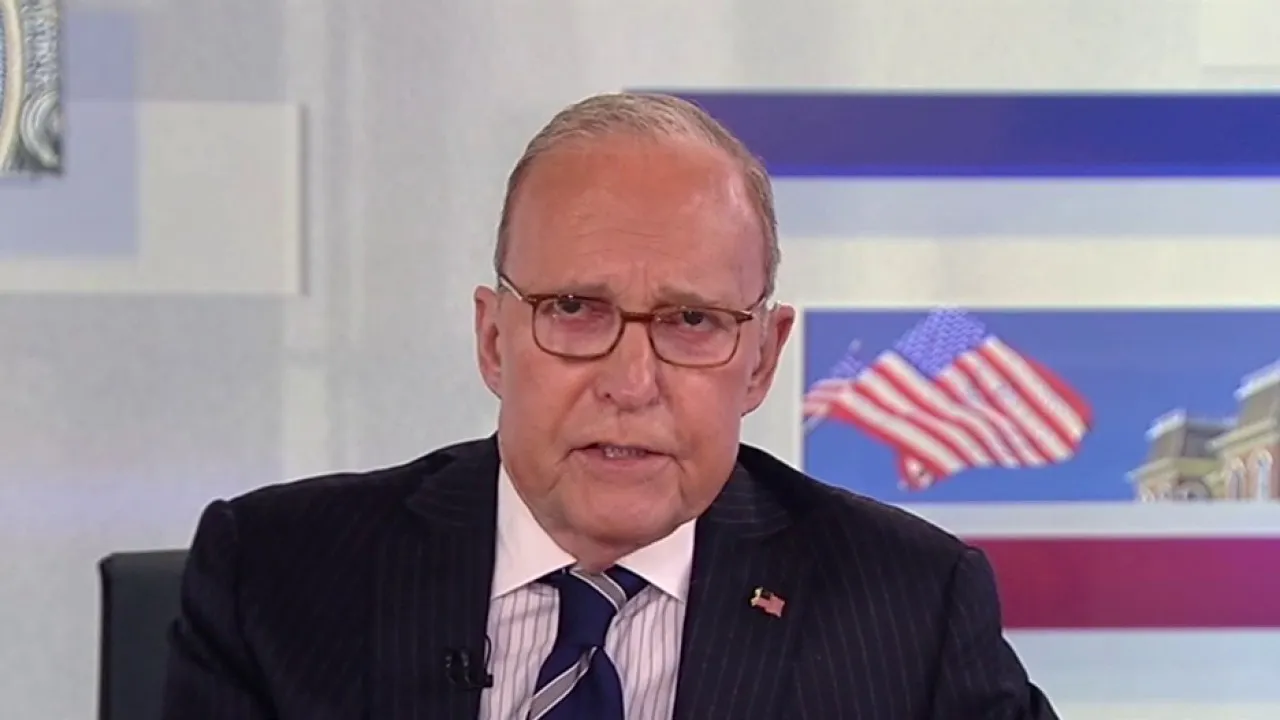
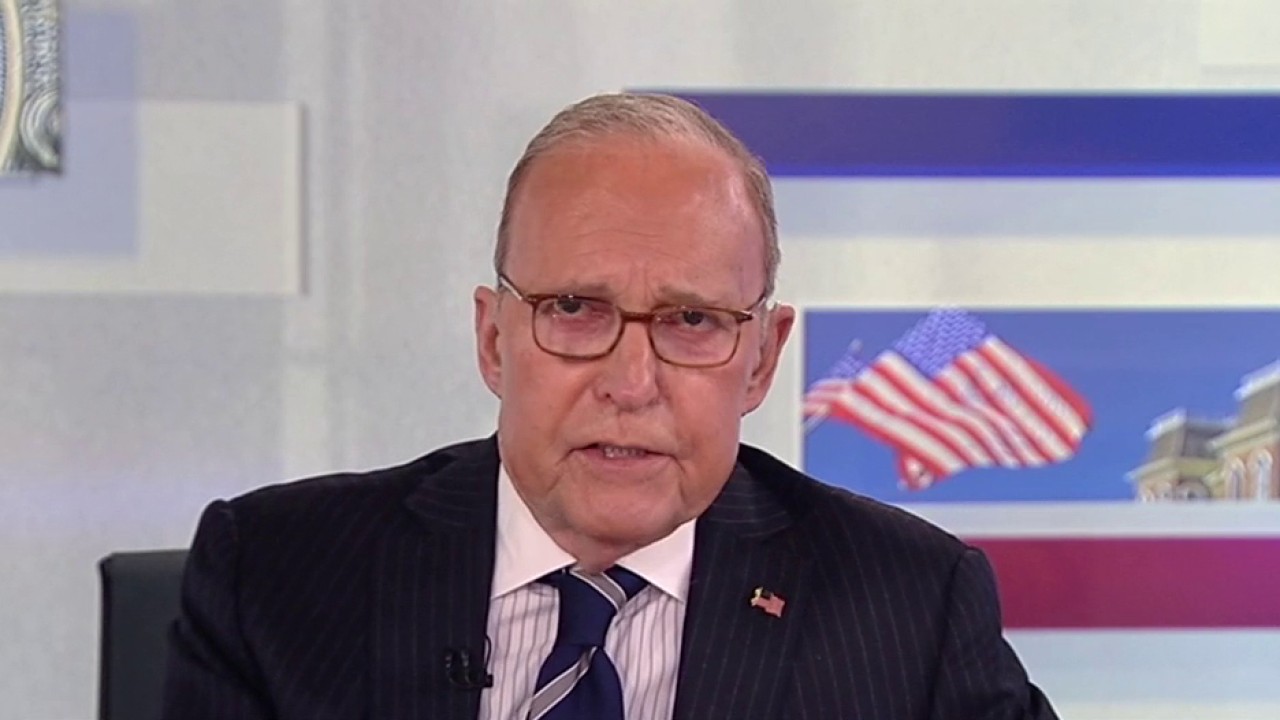
LARRY KUDLOW: We need a big, ambitious, pro-growth budget bill

Published

on

LARRY KUDLOW: Hormuz will not stop history

When Republicans go for tax cuts and economic growth, they win elections. When they ignore the growth message, and especially when they ignore the growth message and spend more and more taxpayer money, they lose elections. It’s a simple formula, and I am worried that they are about to make a big mistake.

It’s not that our economy is collapsing, it is most certainly holding up very well during wartime. But there is $4 gas and a lot of prices are still rising. And affordability is important. And even the dependable TIPP poll shows that four out of 10 voters think their taxes are higher this year, and only one out of 10 think they’re lower. This despite the numerous tax cuts in the One, Big, Beautiful Bill, which regrettably was never properly sold to American voters.

Advertisement

Last night, I respectfully suggested this to a Senate leadership Republican, Shelley Moore Capito. “I don’t understand what you all are doing with these bills. You’re not going to re-fund” the Department of Homeland Security, I said. “No tax cuts, no inflation indexing for capital gains, no Pentagon military supplement, no voting rights bill, no waste, fraud, and abuse.” 

I added: “Senator Capito, you have to help me because I don’t understand. I think you are all going down the wrong road, ma’am” And she defended the narrow bill.

Yet I think there’s only going to be room for one big budget bill that could pass with 50 votes plus the vice president. This is the reconciliation process. The way matters stand now, the Senate is pushing a so-called “skinny” bill that just finances ICE and CBP for 3.5 years, for about $70 billion. 

Now I’m all for border security and ICE and the Customs bureau. Oddly enough, though, the rest of DHS, Coast Guard, the Federal Emergency Management Agency, and the Transportation Security Administration is not even included in this bill. Then again, the whole world wants voting rights reform to require photo identification and citizenship proof. But the GOP is ignoring that. Go figure. With $4 gas, a necessary casualty of destroying Iran, which I fully support, it’s a small price to pay. nonetheless working folks could use some more money in their pockets with more tax cuts.

Going back to President Reagan, supply-side tax cuts have always resonated positively with voters. President George W. Bush won the midterms by defending America against jihadists and by across-the-board tax cuts. That was back in 2002. Inflation index capital gains might perk up home sales to help the housing slump. Lowering marginal tax rates at least for the middle incomes. And what about waste, fraud, and abuse?

The Medicare administrator, Mehmet Oz, has already found $100 billion worth at Los Angeles alone. Where’s that in this budget? What about filling out the DOGE waste, fraud, and abuse? Hundreds of billions of dollars multiplied over 10 years would be phenomenal deficit reduction, on top of a growthier economy.

So far, we’re not hearing anything about these crucial policies. And they are popular policies. And my best guess is there’s only going to be one bite out of the fiscal apple, just like last year when I made the exact same argument. Let’s have popular policies that will attract all of the Republicans to a more ambitious budget bill that will show real leadership and accomplishment going into the midterm elections.

Advertisement

Please stop telling me what you can’t do and instead start telling working folks everywhere what can be done to help them out and make America growthier again. That’s a midterm victory.

Continue Reading

Business

China car giant BYD says it can thrive without US

Published

on

China car giant BYD says it can thrive without US

With the price of fuel rising China’s BYD says it is positioning itself to benefit from the global shift away from fossil fuels.

Continue Reading

Business

Hundreds of homes and commercial space planned near Greater Manchester village

Published

on

Business Live

Walmersley project also set to include retail and public open space

Masterplan of the proposed Walmersley development. Beige shows areas of housing, red the local centre, blue employment space and yellow the proposed mobility hub.

The masterplan for the proposed Walmersley development. Beige shows areas of housing, red the local centre, blue employment space and yellow the proposed mobility hub(Image: Hollins Strategic Land, Moldune Ltd and Belbeck Investments Ltd)

Hundreds of homes could be built on fields at the edge of a village near Bury, new plans reveal.

Advertisement

Developers are eyeing up green space on the outskirts of Walmersley for the project. Some 350 homes are proposed there, 40 per cent of which would be classed as ‘affordable’.

The development would also include employment and commercial buildings. A local retail centre would be built, as would a mobility hub, plans show.

A public open space would be delivered through the scheme too, with plans stating this is ‘subject to’ a change of use application being approved for part of the site.

Documents show the development would be located over an expanse of fields off Walmersley Road, to the north of the village. It would stretch from the recreation ground at the edge of Walmersley to the M66 exit road.

Advertisement

Multiple points of access would be created off Walmersley Road itself, with another two proposed off Walmersley Old Road.

The plan is in its early stages, with developers Hollins Strategic Land, Moldune Ltd and Belbeck Investments Ltd having only submitted an Environmental Impact Assessment (EIA) screening request to Bury council to date.

This asks the local authority whether an EIA is needed as part of the formal planning process and, if it is, what the scope of that assessment should be.

More details on the scheme are expected to be submitted in due course. Documents suggest plans will be considered in two parts, with an outline application seeking approval for the scheme in principle coming first.

Advertisement

To find all the planning applications, traffic diversions, road layout changes, alcohol licence applications and more in your community, visit the Public Notices Portal.

Continue Reading

Business

Federal Reserve Watch: Inflation Coming?

Published

on

Federal Reserve Watch: Inflation Coming?

This article was written by

John M. Mason writes on current monetary and financial events. He is the founder and CEO of New Finance, LLC. Dr. Mason has been President and CEO of two publicly traded financial institutions and the executive vice president and CFO of a third. He has also served as a special assistant to the secretary of the Department of Housing and Urban Development in Washington, D. C. and as a senior economist within the Federal Reserve System. He formerly was on the faculty of the Finance Department, Wharton School, the University of Pennsylvania and was a professor at Penn State University and taught in both the Management Division and the Engineering Division. Dr. Mason has served on the boards of venture capital funds and other private equity funds. He has worked with young entrepreneurs, especially within the urban environment, starting or running companies primarily connected with Information Technology.

Analyst’s Disclosure: I/we have no stock, option or similar derivative position in any of the companies mentioned, and no plans to initiate any such positions within the next 72 hours. I wrote this article myself, and it expresses my own opinions. I am not receiving compensation for it (other than from Seeking Alpha). I have no business relationship with any company whose stock is mentioned in this article.

Seeking Alpha’s Disclosure: Past performance is no guarantee of future results. No recommendation or advice is being given as to whether any investment is suitable for a particular investor. Any views or opinions expressed above may not reflect those of Seeking Alpha as a whole. Seeking Alpha is not a licensed securities dealer, broker or US investment adviser or investment bank. Our analysts are third party authors that include both professional investors and individual investors who may not be licensed or certified by any institute or regulatory body.

Advertisement
Continue Reading

Business

Procter & Gamble (PG) Q3 2026 earnings

Published

on

Procter & Gamble (PG) Q3 2026 earnings

Procter & Gamble on Friday reported quarterly earnings and revenue that topped analysts’ expectations, as volume for its products grew for the first time in a year.

But looking ahead, executives warned about uncertainty caused by the war with Iran, like the effects on the company’s input costs and consumer spending. P&G will not provide a forecast for fiscal 2027 until its next earnings report in July.

“I’m very happy that I don’t have to give guidance today [for fiscal 2027],” CFO Andre Schulten said on the company’s earnings conference call Friday. “Because what do we know what the world looks like three months from now, with what we know today?”

Despite that haziness, shares of the company rose more than 3% in morning trading.

Advertisement

Here’s what the company reported compared with what Wall Street was expecting, based on a survey of analysts by LSEG:

  • Earnings per share: $1.59 adjusted vs. $1.56 expected
  • Revenue: $21.24 billion vs. $20.5 billion expected

P&G reported fiscal third-quarter net income attributable to the company of $3.93 billion, or $1.63 per share, up from $3.78 billion, or $1.54 per share, a year earlier. Excluding restructuring costs and other items, the company earned $1.59 per share.

Net sales rose 7% to $21.24 billion. Organic sales, which strip out acquisitions, divestitures and currency, increased 3%.

P&G’s volume increased 2%, marking the first time in a year that it reported growing volume across the company. The metric excludes pricing, which makes it a more accurate reflection of demand than sales. Like many consumer companies, P&G has seen demand for its products shrink as shoppers try to spend less and stretch their laundry detergent and shampoo further.

“I would say, right now, the consumer in the U.S. is stable,” Schulten said on a call with media. “We see the bifurcation of the consumer segments continuing.”

Advertisement

Despite inflation fears, consumers haven’t started pantry loading toilet paper or paper towels yet, P&G said.

P&G’s beauty division, which includes Olay, Head & Shoulders and Pantene, was the star of the quarter, with 5% volume growth. P&G said it saw volume increases across its personal care, skin care and hair care categories.

The baby, feminine and family care segment saw volume increase 3%. The company saw higher demand for its diapers and family care products, which includes Bounty paper towels and Charmin toilet paper.

P&G’s fabric and home care division reported that volume rose 2% in the quarter, fueled by higher North American demand for its Tide detergent.

Advertisement

Grooming and health care were the two laggards of the portfolio. The grooming segment, which includes Gillette and Venus products, saw volume fall 2%. Health care, which houses Oral-B and Vicks, also reported that volume declined 2%.

The company reiterated its full-year forecast of sales growth between 1% and 5% and net earnings per share growth in the range of 1% to 6%.

“However, where we will land within those ranges has become more uncertain given the geopolitical dynamics in the Middle East,” Schulten said on the earnings call.

In the fiscal fourth quarter, P&G is projecting a $150 million hit from increased costs, largely driven by increased transportation costs stemming from higher fuel prices, Schulten said.

Advertisement

However, Schulten did say that if oil prices stay high, it would weigh on P&G’s profits. He told analysts that if the price of Brent crude oil stays around $100 per barrel, the company is projecting an annual after-tax headwind of $1 billion.

That increase in costs could lead to higher prices for consumers. However, P&G said it would likely avoid a straight price hike across its portfolio and instead focus those increases on premium products, mitigating any volume declines by leaning into the current K-shaped economy in which higher-spending consumers are doing better.

Plus, higher fuel prices would likely mean more budget-conscious shoppers.

“It’s unclear how much higher gasoline and energy costs will costs will impact near-term consumer spending in our categories,” Schulten said.

Advertisement

Correction: P&G reported adjusted EPS of $1.59. An earlier version of this story misstated the figure.

Continue Reading

Business

‘Don’t bank only on price-to-earning ratio’

Published

on

ET Search
Mumbai: Valuations have been the big buzzword on Dalal Street for a while now but its suddenly gaining momentum. These days every conversation begins with the P/E ratio (price to earning ratio, which compares the current price of the share with its per share earnings) and ends with a loud proclamation that the valuations look ‘a bit stretched.’

However, many experts believe that looking at a ratio in isolation won’t help investors grasp the realities of the market and a higher valuation may not be the only deciding factor driving the market.

‘‘Valuations matter in the long run, but it need not have an impact in the short run. This is because there is never a right valuation for a stock, as it is a highly individual call,’’ says Mukesh Dedhia, director, Ghalla & Bhansali Securities.

‘‘For example, a stock with a higher P/E may be moving ahead further as there is greater demand for the stock because of its higher earnings possibility. So, there is always a bit of confusion about the right valuation,’’ he adds.

Advertisement

‘‘If you look at the broader market, it is difficult to get a value pick. But if you are doing a bottom up method, you would still find many stocks in the market with the right valuation,’’ says Rajiv Thakkar, CEO, Parag Parikh Financial Advisory Services. Though he is a firm believer of value investing, he says looking at a ratio alone won’t be the right way to investing in a stock.


‘‘There are many things you have to consider. For example, you have to find out whether the growth rate is sustainable or how much capital is required to keep the growth. Sometimes, there would be volume growth, but the margins could be under pressure. There are a host of issues to consider, just looking at a ratio is not enough,’’ he adds.
Some experts also believe that the higher valuations could be justified if foreign investors continue to pump money into the stock market with the hope of better performance by Indian companies.

‘‘The current valuations doesn’t justify the long term growth potential of India. The market is trading 17 times the earnings potential in 2011 and around 13.8 times the earnings forecast for 2012. It even carry a premium of around 50% to other emerging markets and around 25% premium to other global markets,’’ says Devendra Nevgi, Founder & Principal Partner, Delta Global Partners. He believes that the premium can be justified if the foreign investors continue to bet on Indian stocks.

Add ET Logo as a Reliable and Trusted News Source



Continue Reading

Business

Nifty may find support at 5300 level

Published

on

ET Search
The Nifty started Wednesday’s trade on a rather timid note. As the underlying index was quietly drifting downwards, the futures started trading at a deeper discount of nearly 10 points.

It was the last hour of trade that saw better volumes and a sharp movement. The fall amid global uncertainties has brought the Nifty once again to the level of 5400. Even the participation seems to be a little scared, as Nifty futures ended the day’s trade with an addition of over a million shares in open interest indicating creation of hedges.

As far as stock futures are concerned, we are very near to the highest-ever open interest with 195 crore shares in open interest. With nearly 70% of the stocks still trading with a premium, the bias among participants seems to be upwards. This would create a bit of pressure on the market in case of any macro uncertainty.

As we are almost half way through to expiry, it makes sense to continue with long positions, but along with long puts simultaneously so that losses are capped, still keeping all the upside open.

Advertisement

On the options side, Nifty August series open interest put-call ratio is at 1:58, indicating a moderately bullish composition. Even the implied volatilities element of the options which indicate the assumption of the risk remains very low. This indicates we may not see a huge downside as far as the August expiry is concerned. With over 10 million shares in 5300 August Put, the Nifty may find support around the level of 5300.


We feel one can do a Nifty bear ratio spread to hedge trading longs, by buying 1 lot Nifty August 5400 PE & selling 2 lots of Nifty August 5300 PE.
This strategy accrues profit within the 5200 & 5400 range in case the Nifty ends up in this range on expiry. On the event the Nifty heads upwards to close above 5400, one can still have a cash inflow and no cost of hedging. The strategy does incur loss below 5200, which we feel shall hold good for the August expiry.

(Bhavin Desai is Manager (derivatives), Motilal Oswal Securities )

Add ET Logo as a Reliable and Trusted News Source



Continue Reading

Business

Seven out of top 10 Asian small-cap funds are Indian

Published

on

ET Search
Indian funds have grabbed seven out of the top 10 spots in the league table of leading small-cap funds across Asia, thanks to some canny stock-picking amid growing investor appetite for cheap stocks with potential to deliver multi-bagger returns.

An analysis of nearly 300 Asian small-cap schemes shows DSP BlackRock Micro Cap Fund leading the charge, delivering an 82% return over the past year. Managed by Vinit Sambre, who has been with DSP BlackRock for a little over three years, this fund has also soundly beaten the 58% rise of BSE’s Small-Cap Index since August 2009. The 30-share benchmark Sensex has gained 20% during this period while the wider BSE 500 Index is up 27%.

The other six schemes — Sundaram BNP Paribas Select Small Cap, HSBC Small Cap, JPMorgan Smaller Companies, Franklin India Prima, Franklin India Smaller Companies and ING Vysya CUB — have given investors returns between 44% and 57% on a trailing 12-month basis. These schemes manage anywhere between `46 crore and `954 crore.

Four of these funds were launched during the peak of the previous bull run between January 2007 and March 2008, and investors in them have also had to endure a massive erosion in their initial investment in the downturn that followed.

Advertisement

Mutual fund tracking firm Value Research called the DSP fund as an impressive product in the entire “small-cap universe”, noting that the stocks held by it were “credible, known names and there is a marked absence of momentum in the portfolio”. The fund’s holding includes companies with a high return on equity and strong leadership niches in their industries.


Value Research CEO Dhirendra Kumar said the closed-ended nature of some of these funds helped them weather the market turbulence. “These funds did not face redemption pressures through the declining phase. This, in turn helped them invest for the longer term,” he said.The DSP fund became open-ended in June this year and fund manager Mr Sambre has kept nearly 10% of his `311-crore corpus in cash to meet potential redemptions and to latch onto any opportunity in the market.

There are 10 small-cap funds in India, which manage roughly `3,450 crore in stocks. These account for just 2% of the total AUM under equity schemes.

Market experts say that as many large-cap stocks became fully priced and relatively unattractive over the past year, the rally shifted to small caps. Stocks such as cooler maker Symphony and luggage maker VIP Industries have led the small-cap charge in the market. Ahmedabad-based Symphony has surged 830% while VIP has risen 548% in the past 12 months. In comparison, top two gainers on the Sensex — Tata Motors and Tata Consultancy Services — are up 135% and 61%, respectively.

“Many small caps with excellent businesses were trading at a pathetically low valuations — many were trading below book value and at dividend yields of 5-7%,” says Deven Choksey, chief executive officer at KR Choksey Shares & Securities. “They just got purchased heavily.”

Advertisement

Even though small-cap funds have delivered solid returns in the past one year, experts say that investors must be cautious and have just 10-15% of their equity exposure in such funds or companies. This is largely because of the volatile nature of their stock performance.

“Investors should have a strong stomach and the ability to

withstand substantial declines in such funds,” says Mr Kumar at Value Research.

Advertisement
Add ET Logo as a Reliable and Trusted News Source


Continue Reading

Trending

Copyright © 2025