| Revenue of $279.98M (27.13% Y/Y) beats by $2.48M
Calix, Inc. (CALX) Analyst/Investor Day April 22, 2026 10:00 AM EDT
Company Participants
Michael Weening – CEO, President & Director Shane Eleniak – Chief Product Officer John Durocher – Chief Operations Officer Gavin Keirans Brad Moline Cory Sindelar – Chief Financial Officer
Advertisement
Conference Call Participants
Scott Hendrix Bradley Moline – Allo Communications, LLC Brian Stading Gavin Keirans – Blue Stream Communications, LLC Michael Genovese – Rosenblatt Securities Inc., Research Division
Advertisement
Conversation
Michael Weening CEO, President & Director
Good morning. Thanks, everyone, for coming. We really appreciate you joining us here on Investor Day 2026 at this incredible time in our company and also in the industry.
So that was a video that we showed at Connexions back in October when we were actually on this path to where do we go from a company and how do we actually transform our customers’ business. And that’s what we’re going to talk about today because now it’s real and it was accomplished on — in the end of March. So for today, what we’re going to walk through is a number things. First, we’re going to walk through our mission in the future. Where is Calix going to go and what’s the opportunity ahead? Then we’re going to go through that opportunity and identify what do we see here as the advantage for our company? What’s the platform innovation that we can deliver to the industry? And then John he’s going to come up and he’s going to talk about how do we accelerate customer success. Because as we said to our investors day in, day out, our success is predicated on the success of our customers. When they add a subscriber, we win. When they reduce churn, we win. And it’s all about how do we invest to help them do that at a faster pace.
HOUSTON — Houston Texans defensive end Will Anderson Jr. became the highest-paid non-quarterback in NFL history Thursday with a three-year, $150 million contract extension, then opened his news conference with a heartfelt prayer giving all glory to Jesus Christ and emphasizing that the massive payday was never about the money.
Will Anderson Jr.
The 24-year-old All-Pro, the No. 3 overall pick in the 2023 draft, secured $134 million in guarantees in the deal that keeps him under team control through 2030. His new average annual value of $50 million tops the previous mark held by edge rusher Micah Parsons. The contract includes a rare no-trade clause for a non-quarterback and a $32 million signing bonus.
Moments after the agreement was finalized, Anderson took the podium and immediately bowed his head in prayer. “Thank You, Jesus — Jesus, I owe all I am to You,” he said. “Thank You for blessing me and keeping me and holding me together all these years. Without Jesus I am nothing.” The powerful opening set the tone for an emotional press conference focused on faith, family and gratitude rather than dollars.
Tears flowed as Anderson described the moment his agent called with the news. “I literally just started crying,” he said. “We FaceTimed my parents… my whole family just went crazy. It was a big moment for us. It was bigger than me. I think about my family, everything we’ve been through, to be able to bless them just as much as they’ve blessed me.”
Anderson, a devout Christian who has spoken openly about his faith throughout his career, credited God for the journey from Alabama standout to NFL superstar. He referenced a recent visit to a prison ministry that deepened his walk with Christ. “Walking into that prison and seeing how strong their faith was — these guys facing life sentences, don’t get to see their kids — but their faith in Jesus Christ was so strong. It literally changed my life,” he said.
Advertisement
The extension rewards Anderson’s rapid rise. In just three seasons, he has established himself as one of the league’s most dominant pass rushers, earning Defensive Player of the Year consideration and helping transform the Texans into contenders. His combination of speed, power and relentless motor has drawn comparisons to some of the game’s all-time great edge defenders.
Texans general manager Nick Caserio praised Anderson’s character as much as his on-field production. “Will is not only an elite player but an elite person,” Caserio said. “He leads by example, he’s humble, and his faith is at the center of everything he does. We’re thrilled to have him locked up long term.”
The deal comes after the Texans exercised Anderson’s fifth-year option earlier in April, setting the stage for the extension. With the new contract, Anderson is now tied to Houston through the 2030 season at a total potential value of $177 million when including previous rookie deal earnings.
Financially, the extension resets the market for elite pass rushers. Anderson’s $50 million AAV surpasses Parsons’ previous benchmark and reflects the rising value of defensive stars in today’s pass-heavy NFL. The massive guarantee provides security while giving the Texans flexibility in future salary cap planning.
Advertisement
Anderson’s teammates and coaches expressed excitement. Quarterback C.J. Stroud called him “the heart and soul of our defense” and praised his leadership. Head coach DeMeco Ryans highlighted Anderson’s work ethic and commitment to excellence both on and off the field.
Beyond football, Anderson has used his platform for faith-based initiatives. His recent prison visit with agent Nicole Lynn was part of broader efforts to share his testimony. In the press conference, he encouraged young athletes to keep God first. “Put Him at the center of everything,” Anderson said. “Success means more when your foundation is built on faith.”
The contract news spread rapidly across social media, with many praising Anderson’s humility and faith-first approach in a league often defined by flash and materialism. Hashtags like #GloryToGod and #WillAnderson trended as fans and fellow players shared clips of his prayer.
Analysts view the deal as a win-win. The Texans lock in a cornerstone defender during his prime years, while Anderson gains financial security to support his family and pursue off-field passions. His emphasis on gratitude and faith resonated deeply in a sports culture hungry for authentic voices.
Advertisement
As training camp approaches, Anderson will report as one of the league’s highest-paid players with expectations to continue his ascent. The Texans, fresh off strong recent seasons, see him as central to their Super Bowl aspirations.
For Anderson, the moment was never just about the money. “This is about family, about faith, about what God has done in my life,” he said. “I’m just trying to walk in my purpose and glorify Him every step of the way.”
The record-breaking extension and faith-centered celebration mark another chapter in Will Anderson Jr.’s remarkable journey — from Alabama recruit to NFL superstar — all while keeping his eyes fixed on what he believes matters most.
SANTA CLARA, Calif. — Intel Corp. delivered a blockbuster first-quarter 2026 earnings report that sent shares soaring more than 22% on Friday, reigniting the long-running debate over whether the chipmaker represents a compelling buy for investors or remains a risky turnaround story best approached with caution.
Intel Stock Buy or Sell in 2026: Strong Q1 Beat Fuels Debate After 23% Surge
The semiconductor giant reported revenue of $13.6 billion, topping Wall Street expectations of around $12.4 billion, and adjusted earnings per share of 29 cents versus forecasts near 1-2 cents. Data Center and AI revenue jumped 22% to $5.1 billion, driven by strong demand for Xeon processors in AI infrastructure. The company also raised its second-quarter guidance, projecting revenue between $13.8 billion and $14.8 billion.
The massive post-earnings rally pushed Intel shares toward $82, extending a strong recovery that has seen the stock more than double year-to-date in 2026. Yet Wall Street’s consensus rating remains a Hold, with an average 12-month price target around $50-$70 — well below current levels after Friday’s surge.
Bullish analysts argue Intel is finally hitting an inflection point. CEO Lip-Bu Tan’s leadership has stabilized operations, improved yields on the critical 18A manufacturing node, and secured partnerships with hyperscalers. The foundry business is gaining traction with external customers, and AI tailwinds provide a clear growth runway. Several firms raised price targets post-earnings, with some seeing upside to $90-$110 if execution continues.
“Intel is no longer just surviving — it’s showing real signs of thriving in the AI era,” one analyst noted after the report. The company’s U.S.-based manufacturing push, supported by CHIPS Act incentives, also aligns with national security priorities and could drive long-term contracts.
Advertisement
Bears, however, point to persistent challenges. Intel still reports GAAP losses, high capital expenditures, and intense competition from AMD, Nvidia, and TSMC. Valuation multiples have expanded rapidly, leaving limited room for error. Some forecasts see the stock struggling to hold recent gains if AI spending moderates or foundry losses persist.
Consensus among roughly 40 analysts leans Hold, with a mix of Buy, Hold, and Sell ratings. The wide dispersion in targets — from lows near $30 to highs above $100 — reflects deep uncertainty about Intel’s ability to sustain momentum.
For investors considering a position in 2026, the case for buying rests on several factors. Intel’s Data Center and AI segment shows genuine acceleration, custom ASIC opportunities are expanding, and the 18A node is in high-volume manufacturing with improving yields. The balance sheet provides flexibility, and geopolitical support for domestic semiconductor production remains strong.
Risks include execution on foundry external customers, margin pressure from competition, and potential macro slowdowns affecting broader chip demand. Short-term volatility remains high, as evidenced by Friday’s dramatic move.
Advertisement
Longer-term bulls see a path to $100+ if Intel captures even modest share in AI infrastructure and foundry markets. Bears warn that history is littered with turnaround stories that faltered after early promise. Most advisors recommend sizing positions carefully and maintaining diversification.
Intel’s transformation under Tan represents one of the most watched corporate turnarounds in tech. The company has delivered six consecutive earnings beats, rebuilt credibility with investors, and positioned itself at the center of AI infrastructure and sovereign manufacturing trends. Yet the stock’s rapid run-up means new buyers are paying a premium for future success.
Institutional ownership has increased, and retail interest remains elevated following the earnings reaction. Options activity shows bullish sentiment, though implied volatility remains elevated.
Ultimately, whether to buy, sell, or hold Intel in 2026 depends on individual risk tolerance, time horizon, and conviction in the company’s ability to execute. The latest results provide encouraging evidence of progress, but sustained delivery across multiple quarters will be required to justify current valuations.
Advertisement
As the semiconductor cycle evolves and AI spending patterns clarify, Intel stands at a critical juncture. For patient investors comfortable with volatility, the company offers exposure to multiple secular growth trends. For those seeking stability, other names in the sector may present lower-risk opportunities.
Friday’s surge serves as a powerful reminder of the market’s willingness to reward positive surprises. Intel has momentum, but turning that into sustained outperformance remains the central challenge — and opportunity — for the rest of 2026 and beyond.
MILWAUKEE — Sensient Technologies Corp. shares skyrocketed more than 15% in morning trading Friday, climbing to around $114.75 after the specialty ingredients maker posted a strong first-quarter 2026 earnings beat, highlighted by robust growth in its natural colors business and upbeat commentary on full-year momentum.
Sensient Technologies Stock Surges 16% on Q1 Earnings Beat and Strong Natural Colors Demand
The stock (NYSE: SXT) opened sharply higher and held strong gains on April 24, with trading volume well above average. The move reflects investor enthusiasm for Sensient’s execution on its strategic shift toward higher-margin natural ingredients, particularly colors used in food and beverages amid growing consumer demand for clean-label products.
Sensient reported first-quarter revenue of $435.83 million, beating analyst expectations of about $411.39 million. Non-GAAP earnings per share reached $1.04, significantly topping consensus estimates around $0.80 to $0.83. The results marked a solid rebound from the previous quarter’s miss and demonstrated improving profitability despite ongoing cost pressures.
CEO Paul Manning highlighted strength across segments, with particular emphasis on the Color Group. “We continue to see accelerating conversion to natural colors, and our capacity expansion projects are progressing well,” he said during the earnings call. The company’s $250 million investment in natural color production capacity is beginning to yield returns as food and beverage manufacturers shift away from synthetic alternatives.
The Flavor & Fragrances segment also contributed positively, benefiting from pricing actions and volume recovery in key markets. Operating income growth outpaced revenue, signaling improved efficiency and margin expansion that impressed investors.
Advertisement
Sensient reaffirmed its full-year 2026 guidance, projecting mid-single to double-digit local currency revenue growth and adjusted EPS in the range of $3.60 to $3.80. Management expressed confidence in sustained momentum from natural color trends and operational improvements.
Wall Street responded positively. Several analysts raised price targets following the report, with consensus moving toward $118–$125. The strong beat helped alleviate concerns lingering from the Q4 2025 miss and validated the company’s long-term strategy in premium, natural ingredients.
Sensient Technologies, a global leader in colors, flavors and fragrances used in food, beverages, pharmaceuticals and personal care, has positioned itself as a key beneficiary of the clean-label movement. Consumer preference for natural ingredients has driven steady demand, and the company’s investments in capacity and innovation are paying off.
The surge marks a significant rebound from earlier 2026 levels, pushing shares toward multi-year highs. Year-to-date performance had been choppy amid broader market volatility, but Friday’s reaction underscores renewed investor confidence in Sensient’s growth trajectory.
Advertisement
Financially, the company maintains a solid balance sheet with manageable debt levels. It recently declared a quarterly dividend of $0.41 per share, payable June 1, reinforcing its commitment to returning capital to shareholders while funding growth initiatives.
Challenges remain. Input cost inflation, currency fluctuations and competitive pressures in certain markets continue to require careful management. However, pricing discipline and operational efficiencies helped offset these headwinds in the first quarter.
Analysts view Sensient as well-positioned for sustained mid-single-digit growth. The natural colors expansion project, expected to add meaningful capacity over the next few years, should support further market share gains as regulatory and consumer trends favor cleaner formulations.
For investors, Friday’s move highlights the market’s reward for earnings surprises in the specialty chemicals space. While valuation multiples have expanded, many see justification given the company’s defensive characteristics, consistent dividend and exposure to secular consumer trends.
Advertisement
As trading continued Friday morning, SXT shares consolidated some gains but remained sharply higher. The reaction stands out in an otherwise mixed market session, drawing attention to smaller-cap names delivering strong results amid broader economic uncertainty.
Looking ahead, Sensient will focus on executing its capacity expansions and capitalizing on natural ingredient demand. The second half of 2026 will be critical as new production lines come online and the company navigates any potential softening in consumer spending.
The impressive intraday surge caps a positive earnings season chapter for Sensient and reinforces its reputation as a reliable performer in the ingredients space. With a strong balance sheet, strategic investments and favorable industry tailwinds, the company appears poised for continued progress through the remainder of the year.
This refers to your edit ‘India needs new banks’ (ET, Mar 4). Financial inclusion and financial literacy will be the paramount objective while implementing reforms along with UID project to protect the interests of poor. Modern banking system has lost apersonal touch. Even citizens from semi-urban areas are reluctant to use ATMs. NextGen banking may fail in rural areas. It’s true we need more banks and innovative way of thinking, competition will drive away inefficient players.
ET has also suggested the perfect solution to the problem in the same edition, ‘Before they compete, let banks consolidate’. Narasimhan panel too has suggested to have less number of banks with more branches at the national level. The author has pointed out that of 9,000 private bank branches, just 1,138 are located in rural areas. This means they are not keen to go rural.
SAN ANTONIO — Victor Wembanyama remains in the NBA’s concussion protocol and is listed as questionable for Friday’s Game 3 against the Portland Trail Blazers, though the Spurs phenom traveled with the team to Portland as he continues progressing through league-mandated steps following a scary head injury in Game 2.
Victor Wembanyama
The 22-year-old Defensive Player of the Year suffered the concussion in Tuesday’s 106-103 loss when he was fouled by Jrue Holiday, tripped while driving to the basket and fell hard, hitting his jaw and face on the court. He appeared dazed, left the game early in the second quarter and did not return as the series evened at 1-1. Spurs coach Mitch Johnson confirmed the diagnosis immediately after the game.
Wembanyama reported to the Spurs’ practice facility Wednesday for light cardio work without worsening symptoms and returned Thursday for further evaluation. He was cleared to travel with the team for Games 3 and 4 this weekend in Portland, a positive development that signals stabilization. However, he cannot engage in unrestricted basketball activity until he completes multiple cognitive, neurological and exertion tests under medical supervision.
NBA concussion protocol requires a minimum 48-hour period before full participation can be considered, along with a graduated return-to-play process monitored by team doctors and league specialists. The median absence for concussions in the NBA is approximately seven to nine days, though some players recover faster and others take longer to ensure full safety.
Coach Mitch Johnson described Wembanyama as “progressing” on Thursday but stopped short of confirming availability for Game 3. “We’ll see how he feels and continue to follow the protocol,” Johnson said. The team is preparing as if he may not play, leaning on its young core including De’Aaron Fox, Keldon Johnson and Stephon Castle to compete on the road.
Advertisement
Wembanyama’s absence was noticeable in Game 2. He had dominated Game 1 with a franchise playoff debut record of 35 points, showcasing the length, shot-blocking and perimeter skills that make him a generational talent. Without him, Portland exploited interior gaps and rallied late behind Scoot Henderson’s strong performance.
Medical experts emphasize caution with young stars. A second concussion in quick succession carries amplified risks, and studies show elevated chance of musculoskeletal injuries in the 90 days following a head injury. The Spurs, known for conservative player management, are prioritizing long-term health over short-term playoff urgency.
Game 3 tips off Friday night at Moda Center in Portland. Even if Wembanyama is cleared, many insiders view participation as unlikely given the timeline and the organization’s approach. A return for Game 4 on Sunday or Game 5 back in San Antonio appears more realistic if symptoms continue to improve.
The series backdrop adds pressure. The Spurs earned the No. 2 seed in the West and returned to the playoffs for the first time since 2019 largely thanks to Wembanyama’s meteoric rise. His playoff debut already created franchise lore, but the injury tests San Antonio’s depth and resilience in what many viewed as a winnable first-round matchup.
Advertisement
Portland senses an opening. With home-court energy and experience, the Trail Blazers will look to capitalize on the Spurs’ temporary vulnerability. A win in Game 3 could shift momentum dramatically toward an upset.
Fan reaction has been overwhelmingly supportive, with calls for caution dominating social media. Supporters emphasize protecting the franchise cornerstone over rushing him back. The organization has echoed that sentiment, stressing that Wembanyama’s long-term health remains the priority.
Wembanyama has shown eagerness throughout the process, reporting to the facility daily and pushing to travel. His competitive drive is well-documented, but medical staff hold final say. Further evaluations in Portland will determine the next steps in his recovery.
Broader NBA concussion management has evolved with greater emphasis on safety. The league’s protocol includes baseline testing, independent neurological oversight and a step-by-step return process. Teams increasingly err on the side of caution with young stars, understanding the risks of repeated head trauma.
Advertisement
For the Spurs, navigating the series without their best player tests coaching ingenuity and depth. Home-court advantage from the regular season provides a cushion, but extending the series without Wembanyama would strain resources ahead of a potential second-round matchup.
As Game 3 approaches, pregame updates will provide the latest clarity. Whether Wembanyama suits up or watches from the sideline, his presence looms large over the series. The basketball world watches closely as the Spurs push forward in what promises to be a memorable postseason.
Wembanyama’s rapid ascent since being drafted No. 1 overall in 2023 has captivated fans globally. This early playoff injury tests both his resilience and the Spurs’ ability to compete at the highest level without their transcendent talent. For now, cautious optimism prevails as the organization balances competitiveness with care for its cornerstone.
TORONTO — POET Technologies Inc. shares surged more than 30% in midday trading Friday, climbing to around $15.33 as investors piled into the photonics innovator amid accelerating AI-driven demand for its optical interconnect technology and positive updates on financing and strategic positioning.
POET Technologies Stock Rockets 31% on AI Optics Momentum and Strategic Funding Wins
The stock (NASDAQ: POET) opened sharply higher and sustained strong gains on April 24, with trading volume exploding well above average. The dramatic move extends a powerful rally that has seen shares more than double in recent weeks, driven by growing excitement around POET’s role in solving critical data transfer challenges in next-generation AI systems.
POET Technologies develops photonic integrated circuits and optical engines designed to move data at dramatically higher speeds and lower power consumption than traditional copper-based solutions. Its technology is particularly relevant for AI infrastructure, where hyperscale data centers require ultra-fast, energy-efficient optical connections between chips and servers.
Recent catalysts have fueled the surge. The company has secured significant orders linked to major players, including connections through Marvell Technology following its acquisition of Celestial AI. POET’s chief financial officer Thomas Mika confirmed progress on these fronts in recent interviews, noting strong customer validation and production ramps.
POET also raised substantial capital recently — more than $225 million in Q4 2025 plus an additional $150 million in early 2026 — building a robust war chest of approximately $430 million. This financial strength positions the company to scale manufacturing and pursue commercial opportunities aggressively.
Advertisement
The company is advancing plans to redomicile its headquarters to the United States, a move intended to simplify tax structures for American investors and mitigate Passive Foreign Investment Company (PFIC) concerns raised in a recent short-seller report. POET’s management responded forcefully to the report, providing clarity on QEF elections and calling many allegations a “nothing burger.”
Analysts and retail investors have embraced the AI optics narrative. POET’s hybrid integrated photonics platform aims to address the “laser problem” in AI hardware by enabling more efficient light-based data transmission. As AI models grow larger and data center power demands escalate, optical solutions like POET’s are gaining traction as a potential differentiator.
The stock’s momentum has been amplified by heavy options activity, with call volumes far outpacing puts in recent sessions. This speculative fervor echoes earlier meme-like runs but is increasingly underpinned by tangible business progress, including design wins and partnerships in the optical communications space.
POET reported its Q4 2025 results in early April, showing a narrower net loss and progress on commercialization. While revenue remains modest as the company transitions from development to execution, management expressed confidence in scaling production and securing additional hyperscaler customers.
Advertisement
Challenges persist. POET is still pre-revenue at meaningful scale, faces execution risks in ramping manufacturing, and operates in a highly competitive sector dominated by larger players. Short-seller scrutiny highlighted governance and tax issues, though the company’s proactive responses appear to have reassured many investors.
Wall Street coverage remains limited but generally constructive on the long-term opportunity. Price targets vary widely, reflecting the speculative nature of the stock, but recent momentum has pushed sentiment higher. The company’s market capitalization has grown rapidly but remains modest relative to the potential addressable market in AI infrastructure.
For investors, POET represents a high-risk, high-reward bet on the optical revolution in AI. Supporters point to the technology’s differentiation, strong balance sheet and timing with massive data center buildouts. Skeptics caution about dilution risks, execution hurdles and the company’s history of volatility.
As trading continued Friday afternoon, POET shares held most of their gains amid elevated volume. The surge stands out even in a broader semiconductor rally, highlighting investor appetite for pure-play AI infrastructure stories.
Advertisement
Looking ahead, key milestones include production ramps, additional customer announcements and progress on the U.S. redomicile. The company’s next earnings report in May will be closely watched for updates on commercialization timelines and cash utilization.
POET Technologies’ rapid rise underscores the market’s fascination with innovative solutions to AI’s physical constraints. Whether the company can translate technological promise into sustained commercial success remains the central question, but Friday’s move shows investors are increasingly willing to bet on that potential.
Good afternoon. Thank you for joining the webcast of our Interim Results for the 6 months ended 28th February 2026. I’m Bertina Engelbrecht, Chief Executive Officer of the Clicks Group. I am joined by Gordon Traill, our Chief Financial Officer, who is in a completely different time zone. Gordon and I will take you through the presentation of our interim results, and we’ll respond to any questions you may have after the conclusion of our presentation.
This slide sets out the outline of our presentation. I will, as usual, kick off with a review of our performance of the past 6 months. Gordon will then present an overview of the financial results. I will walk you through the trading performances of our operating business units, starting with Clicks, followed by UPD. And I will then close with the outlook for the group.
Please feel free to submit any questions you may have via the webcast platform during or after the conclusion of our presentation. Sue Hemp will read out your questions to which Gordon and I will respond.
Advertisement
I will now take you through the review of the period. It has been a tough 6 months. Despite some interest rate relief and signs of a slow recovery in the economic environment, trading conditions remain constrained, especially for middle-income households. Competition intensified as new players entered the market. Traditional players extended into health and beauty categories, giving rise to heightened levels of promotions aimed at capturing a greater share of the consumer’s wallet.
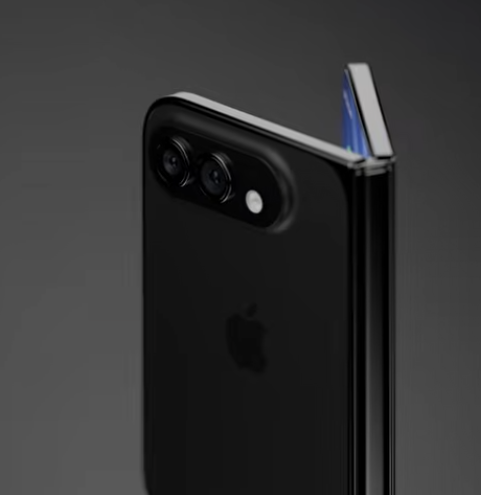
CUPERTINO, Calif. — Apple is closing in on its long-awaited entry into the foldable smartphone market, with the latest rumors pointing to a September 2026 launch for the iPhone Fold alongside the iPhone 18 Pro models and a revolutionary crease-free design that could set a new standard for the category.
Foldable iPhone 2026 Rumors Heat Up: September Launch, Crease-Free Design and $2,000 Price Tag
After years of speculation and multiple delays, credible reports now suggest Apple’s first foldable device is firmly on track for a fall 2026 debut. Trial production has reportedly begun at Foxconn, with mass production potentially starting as early as July, putting the device on a timeline similar to previous Pro models. While some earlier concerns about manufacturing snags had raised questions about a possible slip into 2027, recent updates from Bloomberg’s Mark Gurman and Chinese leakers indicate the project remains on schedule.
The device, widely referred to in leaks as the iPhone Fold (though Apple is unlikely to use that exact name), is expected to feature a book-style folding mechanism rather than a clamshell flip design. When closed, it will sport a compact approximately 5.5-inch outer display, making it one of Apple’s smallest modern iPhones. When unfolded, it opens into a tablet-like 7.8-inch inner screen with a wider 4:3 aspect ratio reminiscent of the iPad mini.
One of the most exciting rumored features is Apple’s aggressive approach to the infamous foldable crease. Multiple sources claim the iPhone Fold will feature a nearly invisible or dramatically reduced crease — potentially as shallow as 0.15mm — thanks to advanced hinge technology using liquid metal alloys and specialized display layers. This would represent a significant leap over current competitors like Samsung’s Galaxy Z Fold series.
Design leaks and alleged dummy models shared by reliable sources in recent weeks show a sleek, premium build with a titanium frame for durability and strength at thin dimensions. The device is expected to measure roughly 9.5mm thick when folded and an ultra-slim 4.5mm when opened. Apple is reportedly prioritizing a premium feel, with potential color options in black and white and a focus on minimal bezels.
Advertisement
Camera expectations are more conservative than current iPhone Pro models. Rumors point to a dual 48-megapixel rear setup and dual front cameras (one for each display orientation), with some reports suggesting an under-display selfie camera on the inner screen. Face ID may be replaced by a side-mounted Touch ID button to help maintain the slim profile.
Power and performance details remain sparse but promising. The iPhone Fold is tipped to feature Apple’s A20 Pro chip built on a 2nm process, paired with up to 12GB of RAM. Battery capacity rumors range from 5,088mAh to as high as 5,800mAh — potentially the largest ever in an iPhone — to support the dual displays and power-hungry multitasking features expected in a future iOS version optimized for foldables.
Pricing speculation centers around a premium positioning. Analysts expect the iPhone Fold to start at $2,000 or higher, significantly above even the iPhone 18 Pro Max. This ultra-premium tag could limit initial volumes but would boost Apple’s average selling price and help justify the heavy investment in foldable technology.
The software experience will be critical. iOS 27 is expected to bring enhanced multitasking, split-screen capabilities, and app continuity features tailored for the larger inner display. Developers are already preparing for the new form factor, though full optimization may take time after launch.
Advertisement
Supply chain reports indicate Samsung Display is providing the foldable panels, with trial production underway. Any last-minute issues could still push shipments into October or December, following a September announcement alongside the standard iPhone 18 lineup. Apple has used staggered release strategies before, such as with the original iPhone X.
The foldable iPhone represents a major evolution for Apple after more than a decade dominating the traditional slab smartphone market. It would directly challenge Samsung’s dominance in foldables while opening new use cases for productivity, media consumption and creative work on iOS. Success could expand Apple’s addressable market significantly, though high pricing and the learning curve for foldable usage remain potential hurdles.
Industry observers are watching closely as Apple’s entry could validate and accelerate the entire foldable category. Competitors are already ramping up their own efforts in anticipation. For consumers, the iPhone Fold could finally deliver the seamless blend of phone and mini-tablet that many have been waiting for.
As development continues through the summer, more concrete details and potentially official teaser imagery could emerge. For now, the latest rumors paint an exciting picture of Apple’s most ambitious iPhone yet — one that could redefine the company’s flagship lineup for years to come. Whether the crease-free promise holds up in real-world use will be one of the biggest questions when the device finally arrives.










 as a Reliable and Trusted News Source











































You must be logged in to post a comment Login