Connect with us

Business

Left Leg Injury Leaves LA Reeling

Published

on

Luka Dončić

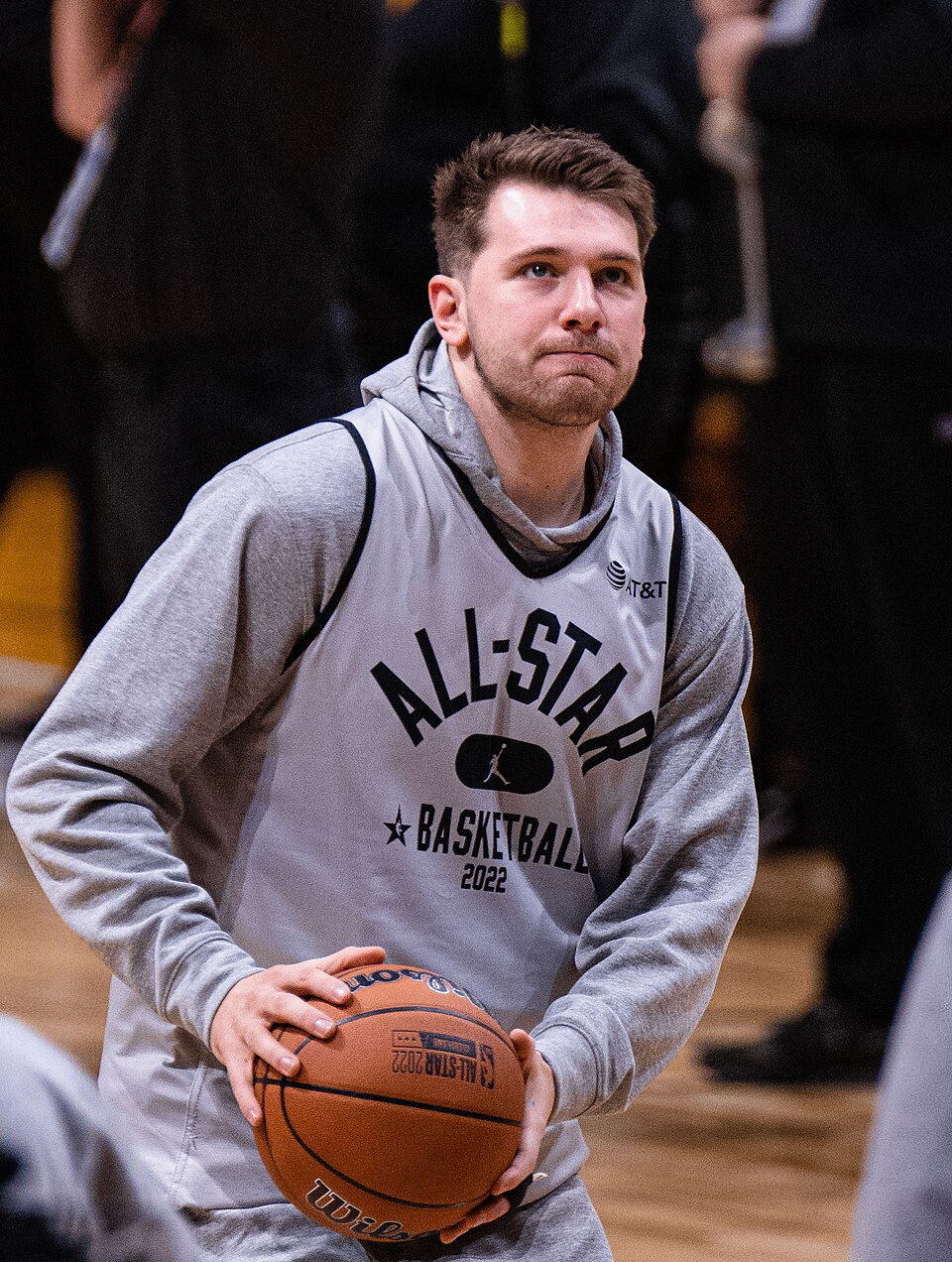
Luka Dončić, the NBA’s leading scorer, limped off the court late in the first half of the Los Angeles Lakers’ matchup against the Philadelphia 76ers on Thursday night and was ruled out for the remainder of the game with left leg soreness.

The superstar guard played just 16 minutes, scoring 10 points on 3-for-10 shooting to go with four rebounds, two assists and a frustrating five turnovers before clutching the back of his left leg and heading to the locker room with 3:03 left in the second quarter. Dončić did not return after halftime, with Rui Hachimura stepping into the starting lineup alongside LeBron James as the Lakers trailed by double digits.

Dončić’s troubling limp sparks hamstring fears

Witnesses described Dončić visibly grimacing and kicking the scorer’s table in frustration as he exited, later appearing distraught in the tunnel on Spectrum SportsNet’s broadcast. The Lakers initially listed the issue as “left leg soreness,” but a source told ESPN that Dončić is scheduled for an MRI on his left hamstring Friday to assess the severity.

This marks the latest blow to a Lakers season plagued by injuries to their star trio. Dončić has already missed eight games with various leg ailments, while LeBron James sat out the first 14 contests with sciatica and Austin Reaves just returned Tuesday from a 19-game absence due to a left calf strain. Thursday marked only the 10th game this season with James, Dončić and Reaves all available together.

Advertisement

The timing could not be worse for Los Angeles, sitting at 30-19 and clinging to sixth place in a brutal Western Conference where every game impacts playoff seeding. With four games remaining before next weekend’s All-Star break—including a marquee home date against the Golden State Warriors on Saturday—the Lakers face a critical stretch without their 33.4 points-per-game leader.

Lakers’ nightmare first half without their engine

Dončić’s early exit compounded a dismal opening for Los Angeles, which fell behind by as many as 11 points in the first quarter against a 76ers team missing Joel Embiid but surging behind Tyrese Maxey and Quentin Grimes. Through 16 minutes, Dončić struggled with five turnovers—a season high in a half—highlighting uncharacteristic sloppiness before the injury sidelined him.

In his absence, James shouldered primary playmaking duties, while Reaves—fresh off his calf recovery—joined Hachimura and Jake LaRavia in elevated roles. Marcus Smart remained sidelined with a lumbar strain, further thinning the Lakers’ bench depth. Coach JJ Redick turned to secondary creators like LaRavia and Smart’s replacement to stabilize the offense, but Philadelphia’s perimeter defense exploited the Lakers’ shorthanded attack.

Dončić’s seamless transition powers Lakers’ rise

Since arriving in a blockbuster trade last summer, Dončić has transformed the Lakers into legitimate contenders, leading the league in scoring (33.4 ppg), assists (8.7 apg) and rebounds (7.9 rpg) for a franchise chasing its first title since 2020. His chemistry with James—forged through mutual respect and on-court synergy—has been a revelation, with James recently praising Dončić’s basketball IQ and competitive fire.

Advertisement

The duo’s partnership peaked during a January surge that vaulted Los Angeles into playoff position, bolstered by Redick’s acquisition of sharpshooter Luke Kennard at the trade deadline. Dončić’s absence exposes the Lakers’ heavy reliance on his 40-plus minutes of usage, a dynamic that propelled them past Oklahoma City and Denver but leaves them vulnerable to targeted defenses like Philadelphia’s.​

Injury-plagued season tests Lakers’ depth

Los Angeles entered Thursday healthier than at any point this year, with Reaves’ Tuesday return marking the first full-strength lineup in months. James’ sciatica recovery and Dončić’s prior durability had fueled optimism for a pre-All-Star push, but the hamstring scare reignites concerns about load management and playoff readiness.

Team medical staff will prioritize caution ahead of the All-Star break, potentially sitting Dončić out of Phoenix if imaging reveals even minor damage. “We’ve been banged up all year,” James said postgame. “Luka carries us every night. We’ll rally around him like he does for us.” Redick echoed that sentiment, emphasizing Hachimura’s versatility and Reaves’ emergence as key factors in any extended absence.

76ers seize momentum in injury-riddled Eastern clash

Philadelphia capitalized immediately, extending the lead to 15 by halftime behind Maxey’s 22 first-half points and Grimes’ opportunistic defense. Without Embiid, the Sixers leaned on VJ Edgecombe’s bench spark and Kelly Oubre Jr.’s two-way play, exposing Lakers’ interior weaknesses absent Dončić’s gravity.

Advertisement

The matchup pitted two injury-decimated contenders, with Philadelphia holding seventh in the East at 13-9 despite Embiid’s inconsistent availability. Maxey’s recent explosion—coupled with Edgecombe’s rookie flashes—has kept the Sixers afloat, making Thursday’s win a statement in their own seeding battle.​

What an MRI means for Dončić’s outlook

Hamstring strains represent a nightmare for high-usage guards like Dončić, whose herky-jerky style and 35-plus minutes per game accelerate recovery timelines. Mild strains typically sideline players 1-2 weeks; moderate tears require 4-6 weeks. Given Dončić’s history—eight prior leg absences—the Lakers will err conservative, especially with the All-Star break offering forced rest.

Friday’s MRI will clarify severity, but sources indicate optimism for a short-term absence barring structural damage. Dončić’s track record of rapid returns bodes well, though Redick faces tough rotations against Golden State, where Stephen Curry awaits.

Lakers’ contingency plans lean on James-Reaves core

Without Dončić, expect James (averaging 28.4 ppg) to eclipse 40 minutes, with Reaves handling point-of-attack creation post-calf scare. Hachimura’s midrange game and LaRavia’s hustle provide balance, while Kennard’s deadline addition offers spacing absent Dončić’s pick-and-roll mastery.

Advertisement

Redick’s adjustments will test the coaching staff’s adaptability, a strength during James’ early absences. “We’ve prepared for every scenario,” Redick said pregame. “Luka’s our heartbeat, but this group’s deeper than people think.” Saturday’s Warriors tilt—potentially without Dončić—looms as the ultimate referendum on those contingency plans.

Fan frenzy and national ripple effects

Social media erupted post-exit, with #PrayForLuka trending amid Lakers fans’ injury fatigue. National pundits framed the scare as a Western Conference pivot, with Denver and Oklahoma City lurking should Los Angeles stumble. Dončić’s visible anguish—pounding the table, tunnel meltdown—underscored his passion, endearing him further to a fanbase starved for sustained health.

As imaging looms Friday, the Lakers hold collective breath. Dončić’s seamless integration has redefined their ceiling; his potential absence recalibrates expectations heading into the marathon’s final turn. For now, James carries the load, Reaves steps up and Purple & Gold faithful brace for answers.

Advertisement
Continue Reading
Click to comment

Leave a Reply

Your email address will not be published. Required fields are marked *

Business

President Trump Unveils Discounted Drugs Website

Published

on

TrumpRx Launches: President Trump Unveils Discounted Drugs Website

President Donald Trump launched TrumpRx.gov Thursday, a new website promising “the world’s lowest prices” on dozens of popular prescription medications through direct discounts from major pharmaceutical companies. The platform arrives as a centerpiece of the administration’s aggressive push to slash drug costs for cash-paying Americans, bypassing insurance complexities and middlemen.

Speaking at a White House event flanked by Health and Human Services Secretary Robert F. Kennedy Jr., Centers for Medicare and Medicaid Services Administrator Dr. Mehmet Oz and Pfizer CEO Dr. Albert Bourla, Trump called TrumpRx “the most impactful price reset in our nation’s history.” The site debuted with savings on more than 40 drugs from five companies — AstraZeneca, Eli Lilly, EMD Serono, Novo Nordisk and Pfizer — with 11 more manufacturers joining soon.

Users visit TrumpRx.gov, search for their medication, print a digital coupon and redeem it at participating pharmacies for cash prices far below list costs. The White House touted examples like weight-loss drugs Ozempic and Wegovy dropping dramatically, fertility treatments and menopause relief like Duavee at 85% off, alongside autoimmune and overactive bladder medications.

How TrumpRx works: Cash discounts, no insurance required

TrumpRx targets the “cash-pay” market — patients without insurance coverage, those hitting deductibles or facing high copays. Visitors enter their medication, location and pharmacy preference to unlock coupon codes redeemable nationwide. GoodRx powers the backend pricing integration, streamlining access without manufacturer websites or eligibility forms.​

Advertisement

Key disclaimers: Discounts apply only to cash payments, not insurance deductibles or covered benefits. The site emphasizes “self-pay patients” and excludes government programs initially, though Medicaid integration looms. Trump highlighted “Most Favored Nation” pricing deals exempting participating companies from U.S. tariffs, pressuring Big Pharma into voluntary cuts.

Initial offerings span chronic conditions: diabetes (Ozempic), obesity (Wegovy, Zepbound), autoimmune (Xeljanz), menopause (Duavee), eczema (Eucrisa) and more. A FAQ promises “many more drugs coming soon,” signaling expansion.

White House hails ‘Big Pharma-gouging’ endgame

Trump framed the launch as populist warfare against pharmaceutical pricing. “Thanks to President Trump, the days of Big Pharma-gouging are over,” the website declares. Administration officials cited U.S. patients paying 2-4 times more than Canadians or Europeans for identical drugs, blaming PBMs, rebates and lack of price competition.

RFK Jr. positioned TrumpRx within broader reforms: “This is Phase One. Direct-to-consumer transparency forces real competition.” Dr. Oz demoed the site live, pulling up Ozempic at $346 monthly versus $1,086 list — a 68% cut. Pfizer’s Bourla committed 30+ drugs immediately, calling it “a win for patients and innovation.”

Advertisement

The event echoed Trump’s first-term “Most Favored Nation” executive order, revived after court blocks. Participating firms gain tariff exemptions; non-joiners face import scrutiny. Critics call it coercive; supporters hail market disruption.​

Drug-by-drug savings spotlight

TrumpRx spotlights blockbuster discounts:

Drug Use List Price (Monthly) TrumpRx Price Savings
Ozempic Diabetes/Weight Loss $1,086 $346 68% ​
Wegovy Obesity $1,349 $399 70%
Duavee Menopause $500+ $75 85% ​
Xeljanz Autoimmune $5,800 $1,200 79%
Eucrisa Eczema $700 $162 77% ​

Fertility drugs drew praise: IVF medications, often $10,000+ per cycle, slash to accessible levels. “This is a big deal for families,” noted one analyst.​

Pharma partners and expansion roadmap

Launch partners pledged aggressively:

Advertisement
  • Pfizer: 30+ drugs, including menopause, autoimmune, bladder treatments.​
  • Novo Nordisk: GLP-1 leaders Ozempic/Wegovy at fraction of list.​
  • Eli Lilly: Zepbound, Orforglipron (pending FDA) at $346 monthly.​
  • AstraZeneca, EMD Serono: Oncology, fertility additions imminent.​

Eleven more firms — undisclosed — integrate within months. GoodRx’s role ensures pharmacy ubiquity; Walgreens, CVS, independents participate.​

Critics question scope, sustainability

Skeptics abound. Dr. Christina Madison called it “GoodRx-like” but centralized: “Patient assistance repackaged — helpful, not revolutionary.” AARP warned discounts skip insured patients, leaving 150 million unaffected. Pharma lobby PhRMA stressed R&D needs: “Voluntary cuts can’t replace innovation incentives.”​

Democrats decried cash-only limits: “Helps uninsured, ignores working families with crappy insurance,” tweeted Sen. Elizabeth Warren. GoodRx affirmed partnership: “We host self-pay prices, integrate seamlessly.”​

Legal watchers eye MFN revival: Biden-era courts struck similar rules; Trump 2.0 tests fresh ground. Early traffic crashed TrumpRx.gov temporarily, signaling demand.​

Patient stories fuel populist pitch

White House spotlit real users:

Advertisement
  • Sarah T., Ohio: Ozempic from $900 to $350 monthly — “Life-changing.”
  • Mike R., Texas: IVF drugs halved — “Dreams affordable now.”
  • Linda P., Florida: Duavee at $75 — “Menopause relief without bankruptcy.”

Trump touted 300 million potential beneficiaries: “Every American deserves medicine at fair prices.” RFK Jr. vowed Phase 2: insulin caps, PBM bans.

Timing ties to midterms, health care wars

Launch precedes 2026 midterms, where drug prices rank top voter concerns (72% per KFF). Gallup pegs affordability above inflation. Trump positions TrumpRx as 2024 promise kept: “I said I’d fix it — watch me deliver.” Polling shows 65% approval for direct discounts.​

Globally, Canada/India parallel import threats loom if Pharma balks. EU praised transparency; WHO urged universality.​

Tech behind TrumpRx: User-friendly disruption

Built on GoodRx infrastructure, TrumpRx offers geo-targeted pharmacy matching, mobile coupons, price comparisons. Spanish/English bilingual; ADA compliant. CMS integration teases Medicare expansion.​

Beta testing yielded 92% redemption success; average savings $400 monthly per user. Site traffic hit 1M+ Thursday night.​

Advertisement

Big Pharma’s reluctant embrace

Pfizer led buy-in: “Patients win, we innovate,” Bourla stated. Novo Nordisk followed, slashing GLP-1s amid Wegovy shortages. Eli Lilly timed with Zepbound; AstraZeneca eyes oncology next.

Non-participants risk tariffs, public backlash. Merck, J&J mum; analysts predict trickle joining by March.​

What comes next for American drug prices

Phase 2 teases insulin at $35, EpiPens slashed, PBM rebate bans. Trump eyes Canada pharmacy flights if Pharma resists. RFK Jr. champions transparency laws mirroring Europe’s HTA systems.​

TrumpRx.gov lives now — search, print, save. For 50 million uninsured and deductibled Americans, relief arrives. Scale remains question; impact, already real.

Advertisement
Continue Reading

Business

Will BTC Keep Plunging Below $65K? Expert Predictions for February 2026 Recovery

Published

on

Bitcoin Price Crash: Will BTC Keep Plunging Below $65K? Expert

Bitcoin has tumbled to its lowest levels since last fall, briefly dipping below $61,000 this week before rebounding slightly to around $64,800 amid a brutal sell-off that has wiped out nearly 50% of its value from October highs. The world’s largest cryptocurrency by market cap — now hovering at $1.29 trillion — faces mounting questions: Is this the bottom, or will BTC keep going down as investor panic deepens?

The dramatic plunge, down 32% over the past 12 months and 44% from its $126,296 peak, has triggered widespread deleveraging, ETF outflows and skepticism about crypto’s post-election rally. Yet historical patterns, improving macro signals and technical rebounds suggest the bleeding may soon stop — though analysts warn of more pain before any sustained recovery.

Bitcoin’s brutal week: From $92K dreams to $60K reality

Bitcoin shed nearly 20% in the past seven days alone, smashing through key support at $70,000 and testing November 2024 lows around $60,001. Thursday’s session saw BTC briefly crater below $61,000 — its steepest single-day drop in months — fueled by $3.48 billion in spot ETF outflows since November and liquidations hitting overcrowded long positions.

Major platforms like Bitstamp clocked lows of $70,002 early Thursday, while Coinbase watched BTC flirt with $60K amid risk-off sentiment spilling from stocks. Ether and XRP suffered worse, amplifying the crypto bloodbath as traditional investors soured on digital assets.

Advertisement

Deutsche Bank’s Marion Laboure pinned the rout on fading hype: “Traditional investors are losing interest… Bitcoin isn’t trading on narratives anymore; it’s pure liquidity dynamics.” FG Nexus’s Aja Vinovic added that post-ETF euphoria has given way to balance-sheet pressures, with put options now outpacing calls.​

Why Bitcoin is crashing now: ETF flows, macro headwinds

Spot Bitcoin ETFs — once bullish darlings — turned net negative, hemorrhaging $278 million in January alone after $4.57 billion in late-2025 outflows. BlackRock’s IBIT led the exodus, signaling institutional profit-taking after BTC’s 2025 surge.

Macro jitters amplified the slide. Fed hawkishness crushed rate-cut bets, strengthening the dollar and squeezing risk assets. Bitcoin’s correlation with Nasdaq hit 0.85, dragging BTC down as tech stocks wobbled. On-chain data shows new buyer activity stalled since October, with sentiment nearing fear extremes — historically bullish contrarian signals.

Technicals scream oversold: Wedge pattern eyes rebound

Charts paint a mixed but intriguing picture. Bitcoin trades inside an ascending broadening wedge, bouncing from the lower boundary near $60K — a classic reversal setup. Bulls must reclaim $89,241 and $90,000 for bullish confirmation; failure risks $55K tests.

Advertisement

The 50-day moving average sits at $87,974, with the 200-day at $103,031 — both far above spot price, underscoring the correction’s depth. Yet RSI readings below 30 signal extreme oversold conditions, while February’s historical 14.3% average gains favor upside.

Changelly forecasts BTC climbing to $77,862 by month-end (20% from here), with short-term targets at $71,840 Friday and $77K late February. BeInCrypto eyes $98K on wedge breakout, followed by $95K consolidation.

Historical precedent: 30% drops are BTC’s normal

Pullbacks of 30%+ are routine in Bitcoin cycles. Post-2021 and 2017 peaks, BTC endured multiple 30-50% corrections before resuming uptrends. The current 44% retracement mirrors March 2025’s 32.7% dip and January’s 31.7% slide — “normal volatility,” per CoinDesk’s Jacob Joseph.​

Santiment data confirms: Extreme fear precedes bounces, with current caution levels priming gradual advances. ETF outflow slowdown — from $3.48B (Nov) to $278M (Jan) — hints at stabilization.

Advertisement

Bull case: ETF rebound, halving tailwinds, macro pivot

Optimists see catalysts ahead. Spot ETF flows could flip positive in February, providing “structural support.” The 2024 halving’s supply shock lingers, with 3.125 BTC block rewards tightening issuance amid rising demand.​

Macro tailwinds beckon: Potential Fed cuts, election-cycle liquidity and Trump’s pro-crypto stance (Bitcoin reserve talk) could ignite FOMO. On-chain metrics show long-term holders accumulating, HODL waves strengthening.​

Price targets cluster at $90K (near-term resistance), $101K (14% historical February gain) and $126K year-high retest.

Bear case: $55K floor, recession risks loom

Pessimists warn of deeper pain. Failure at $70K invites $55K — 2024 lows — with $44K psychological support. Persistent ETF selling, regulatory clouds (SEC vs. Ripple redux?) and equity contagion threaten further slides.​

Advertisement

Deutsche Bank’s Laboure flags “overall negativity” as traditional capital flees. If Nasdaq cracks, BTC’s 0.85 correlation amplifies downside.​

Expert predictions: Where BTC heads next

Analyst/Firm Short-Term (Feb) Year-End 2026 Key Catalyst
BeInCrypto $98K breakout $120K+ ETF inflows ​
Changelly $77.8K $95K avg Technical rebound ​
CoinDesk Stabilize $80K Cycle peak Halving effects ​
Deutsche Bank $60K risk Bearish Macro caution ​

February averages 14.3% gains historically; current $64.8K base projects $74K end-month.​

What Bitcoin investors should do now

  1. HODL long-term: Corrections precede bull runs; 2021’s 50% drop yielded 3x gains.​
  2. Dollar-cost average: Buy dips below $65K; avoid FOMO at $90K.​
  3. Watch ETF flows: Inflow reversal signals bottom.​
  4. Monitor Fed: Rate cuts ignite risk-on.​
  5. Risk management: Never invest more than 5-10% portfolio.​

Bitcoin’s at a crossroads: capitulation or coil for explosion? History favors the latter, but patience rules. As Vinovic notes, “The bull run narrative evolves — liquidity now drives price.” Tune into macro prints, ETF data and $70K hold for clues. The king of crypto endures — battered, but unbowed.

Continue Reading

Business

Plymouth among favourites for UK City of Culture 2029 title

Published

on

Business Live

Meanwhile, Exeter is currently a rank outsider

View of Plymouth in the sunshine

View of Plymouth in the sunshine(Image: Jay Stone)

Plymouth has emerged as one of the leading contenders to secure the UK City of Culture 2029 title – whilst Exeter trails as an outside bet.

According to predictions from the Online Betting Guide (OLBG), Britain’s Ocean City ranks as second favourite to claim the prestigious accolade and its accompanying £10m prize.

With applications due to close imminently, Plymouth sits just behind Wrexham, bolstered by its celebrity connections, in OLBG’s forecasts.

The firm has given Wrexham, which only achieved city status in 2022, odds of 4/6 and a 60 per cent chance of securing the honour.

Advertisement

However, Plymouth follows closely with 6/4 odds and a 40 per cent likelihood of triumph, with OLBG highlighting its “coastal identity and cultural infrastructure”, reports Plymouth Live.

Exeter and naval rival Portsmouth languish at the bottom of the table, sharing 6/1 odds and merely a 14.3 per cent implied probability of victory.

The application deadline falls on Sunday, 8 February, with nine “cities” having already entered the competition.

Additional bidders include Ipswich and Blackpool, both given 2/1 odds by OLBG, whilst Peterborough stands at 3/1, Bristol at 4/1, and Swindon at 5/1.

Advertisement

Further cities may join the contest before entries close, but currently OLBG positions Plymouth, which is presently enjoying significant national exposure through its Beryl Cook exhibition at The Box, amongst the leading candidates.

The betting guide noted that Wrexham remains the outright favourite “reflecting its recent surge in national and international profile”. OLBG noted that investment, regeneration initiatives and the international spotlight from Wrexham AFC have all contributed to positioning the Welsh city as a formidable cultural contender.

Wrexham has reaped the rewards of the globally-broadcast documentary Welcome to Wrexham and the acquisition of the football club by Hollywood stars Ryan Reynolds and Rob McElhenney.

According to OLBG, Wrexham’s application is regarded as meeting numerous criteria early on, boasting a persuasive story, demonstrated capacity to execute prominent projects and robust community support.

Advertisement

Plymouth is strengthened by its maritime character and cultural facilities, the bookmaker added, whilst Ipswich and Blackpool share third-favourite status, each presenting distinct yet credible cultural offerings.

Lower down the rankings, Peterborough and Bristol are considered dependable but unremarkable bids at this juncture. OLBG suggested Bristol’s longer odds might be unexpected, though industry observers indicate that competition for funding and conflicting cultural priorities may disadvantage it.

Meanwhile, Swindon, Portsmouth and Exeter comprise the outsider category. Whilst each possesses cultural credentials, OLBG observed, they are presently seen as requiring exceptional proposals to advance to the latter rounds.

Jake Ashton, current affairs expert at OLBG.com, said: “Wrexham leads the way in the City of Culture market and it’s easy to see why, with the city gaining in popularity massively in recent years following Ryan Reynolds and Rob McElhenney’s ownership of the football club.”

Advertisement

While no betting sites are currently offering odds on the City of Culture contest, hypothetical odds have been created for entertainment purposes to provide a sense of how the competition is progressing.

Following this weekend’s application deadline, a longlist of up to eight cities is anticipated to be unveiled in March. The list will then be whittled down to a shortlist of four cities four months later, with the final decision due by the end of the year.

OLBG explained that early momentum, political support and cultural infrastructure can all impact how a bid is viewed at the longlist stage, while comprehensive delivery plans and funding strategies often determine the ultimate victor.

However, once the longlist is announced, OLBG stated that focus will swiftly turn to which cities possess the necessary infrastructure and financial plans to facilitate a full year of cultural events.

Advertisement

A spokesperson said: “Until then, these theoretical odds offer a snapshot of how the race is shaping up and why Wrexham currently stands out as the city to beat.”

Continue Reading

Business

Pandora switching to platinum from silver as prices surge

Published

on

Pandora switching to platinum from  silver as prices surge

The jeweller says it wants to reduce its exposure to silver after the price of the metal soars.

Continue Reading

Business

Chris Marco liquidators cleared for $4.7m distribution, more litigation

Published

on

Chris Marco liquidators cleared for $4.7m distribution, more litigation

The Federal Court has cleared the way for liquidators to distribute $4.7 million to victims of Ponzi promoter Chris Marco and to keep hunting for assets linked to the convicted fraudster.

Continue Reading

Business

Who are Y11 Sport and Media who are in line to acquire Cardiff Rugby

Published

on

Business Live

The company has entered into an exclusivity period with the WRU but a deal is expected to see the demise of the Ospreys

Cardiff Rugby’s Arms Park stadium(Image: Huw Evans Picture Agency Ltd)

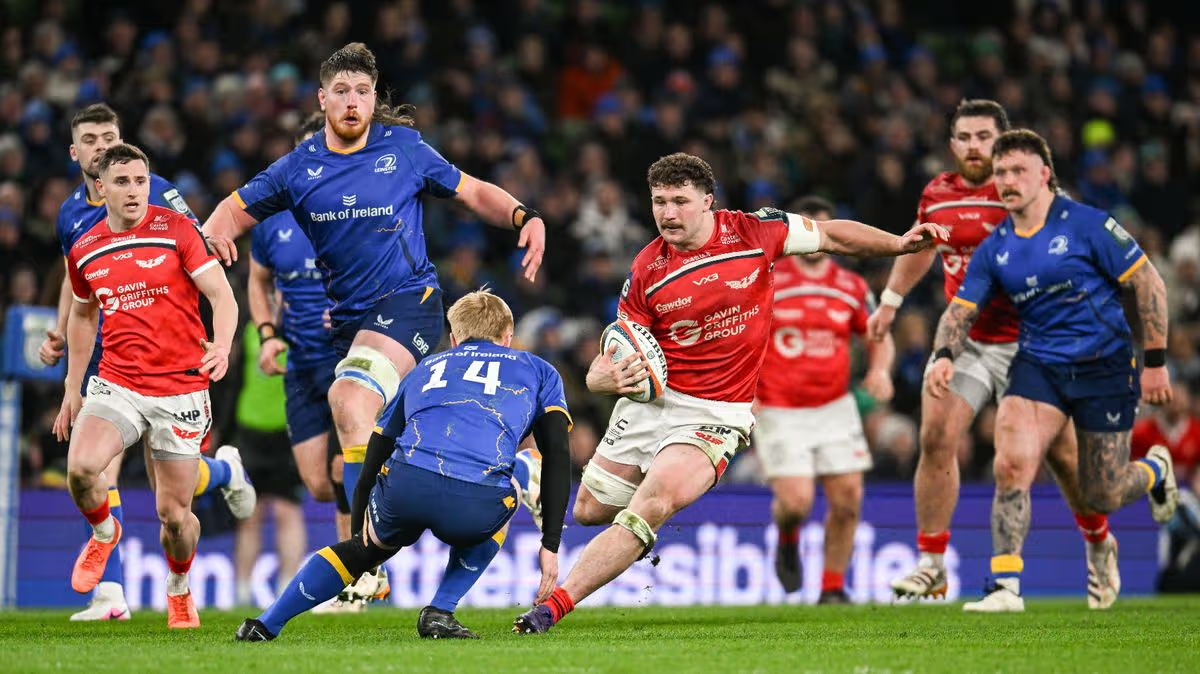
What do we know about Y11 Sport and Media and its plans to acquire Cardiff Rugby from the Welsh Rugby Union? The union launched a formal sales process for the Arms Park-based club last year, not long after acquiring it out of administration.

With the union attracting a healthy number of expressions of interest, bidders were whittled down to two prior to Christmas : Y11 Sport and Media, and a consortium consisting of former Cardiff Rugby board member Martyn Ryan, a number of Hollywood directors, and Greg Clark, chief executive of Rhino.

The WRU has now entered into a 60-day exclusivity period with Y11, having confirmed, with the unanimous backing of its board, the Hong Kong-based company as its preferred bidder. That doesn’t mean the proposed acquisition of the club will go unconditional. However, the focus – and there will no doubt be efforts to secure concessions on both sides – will be on getting a deal over the line.

A Y11 acquisition of Cardiff, and the cessation of the Ospreys as a professional region at the end of the 2026–27 season, would achieve the WRU’s current stated aim of reducing the number of regions from four to three. There is, though, growing opposition to a Y11 deal from rugby fans, former players and a number of politicians – and not just those in the Ospreys area. There is also a planned extraordinary general meeting of union member clubs in the offing, with a vote of no confidence in its chairman, Richard Collier-Keywood.

Advertisement

READ MORE: Swansea Council start legal action against the WRU and owners of the OspreysREAD MORE: Swansea RFC slam proposed Ospreys merger after being blindsided by revelation

The Y11 story

Y11 acquired a majority stake (75.1%) in the Ospreys back in 2020. The value of the deal was not disclosed, although Y11 described its investment in the club as a “multi-million deal.” The acquisition on behalf of Y11’s investors was through a special purpose vehicle, Ospreys International, registered in the tax haven of the British Virgin Islands. There is no publicly available information on the directors of Ospreys International.

When the Dragons were effectively acquired for £1 from the WRU by investors David Buttress, David Wright and Hoyoung Huh – who was at one stage also looking to acquire Newport County – the acquiring entity, Dragons International RFC, was also based in the British Virgin Islands.

Y11 was set up by its current chief executive in Pontarddulais-born James Davies-Yandle, who played hockey for Wales in the 2002 Commonwealth Games. His father, Mike, played rugby for Swansea RFC and he is a former sports agent. At the time of the investment into the Ospreys, he described it as being a “70% business and 30% emotional investment.”

Advertisement

As an investment company, backed by high-net-worth investors, Y11 has a diverse portfolio of assets, from rugby to mass-participation sports like running and media rights. It also has a minority stake in New Zealand rugby side the Hurricanes, as well as an interest in South African side the Toyota Cheetahs, who, as it happens, a re keen to replace any axed Welsh team in the United Rugby Championship.

In 2023, Y11 itself was majority-acquired by Kuala Lumpur-based private equity firm Navis Capital Partners. The value of that deal wasn’t publicly disclosed. Navis is a serious player with a global investment portfolio, although with a focus on Southeast Asia. It has $5bn of funds under management on behalf of investors, with stakes in companies ranging from healthcare to tech. It was founded in 1998 by Richard Foyston, Nicholas Bloy, Rodney Muse and former Boston Consulting executives.

It said at the time of its majority acquisition of Y11: “Navis have invested in James (Davies-Yandle) and the Y11 team to grow the existing portfolio, identify new opportunities, and become a success for all stakeholders involved. Their values mirror our own: teamwork, tenacity, integrity, and innovation.”

While Y11’s overall portfolio of assets is profitable, the Ospreys, like the other regions, is loss-making. Y11, no doubt would have sought the agreement of Navis before submitting a bid to the WRU. To get approval the Y11 team would have presented compelling projections of multiple times return on capital from acquiring Cardiff.

Advertisement

The Cardiff proposition

So, is Cardiff now going to break the mould of professional rugby, not just in Wales but in England too, where investors cannot reasonably expect a return on investment? The reality to date is that clubs have survived due to wealthy benefactors as ‘emotional investors’ due to the love of the game or a particular club. The late Tony Brown (Dragons), the late Peter Thomas (Cardiff), and others like Rob Davies at the Ospreys collectively committed and wrote off tens of millions.

Wouldn’t Y11, without any annual license fees and debt obligations, make a stronger return on investment by buying a few pubs and restaurants in Cardiff? Despite their experiences at the Ospreys, they no doubt see professional rugby as having huge potential, like football, where Premiership clubs are now seen as attractive investment opportunities, including increasingly by US investors. But they cannot create an Anglo-Welsh league or British and Irish League.

But what is the WRU expecting Y11 to pay for Cardiff – a deal they currently believe is far stronger than that put forward by the rejected rival bid consortium?

Under the proposed 10-year franchise licence, the WRU would be looking for Y11 to pay around £1m annually to run the commercial side of the club. Additionally, Y11 would take on around £6m owned to the union, the majority of which was part of a Covid loan it had negotiated on behalf of the four regions with NatWest. That debt was subsequently refinanced with the Welsh Government. Last week that debt, along with the union’s debt facility with NatWest, was refinanced into a new £60m deal with both HSBC and Goldman Sachs.

Advertisement
Welsh Rugby Union Chairman Richard Collier-Keywood

Welsh Rugby Union Chairman Richard Collier-Keywood(Image: Huw Evans Picture Agency)

Under the new franchise model for Cardiff, the union, who would finance all player related costs, have convinced Y11 that there would be a profit in running the commercial side of the club. While the WRU see it as a collaboration, some of the clubs view the union’s plans as unnecessary control of all rugby matters. However, starting with Cardiff, getting an agreement should be achievable.

The WRU is also looking for some upfront payment, no doubt with the aim of recouping the £3m in debt it converted into equity in Cardiff after acquiring it out of administration. It is not clear what Y11 has tabled, but it could around that level or higher.

Are the WRU and Y11 right to conclude that Cardiff can become a profitable business? Former investors Helford Capital, set up by Phil Kempe and Neal Griffith, failed to deliver on a legal agreement with the union to fund losses, that pushed Cardiff into administration.

The joint administrators from PwC, Rob Lewis and Ross Connock, quickly gave up on pursuing Jersey-based Helford in the interest of Cardiff creditors, as it was solely set up to acquire Cardiff and had no assets. While the Helford directors might have had funds and assets to fund the club’s losses – around £2m a year – when it came to the crunch they weren’t willing to commit.

Advertisement

It’s all water under the bridge now, but if the board of Cardiff had found better investors after the death of Peter Thomas – and there were discussions with Y11 – it could have remained solvent. Without control of Cardiff, would the WRU now be in a position to reduce the number of professional clubs?

To get a deal approved with Y11, and then franchise agreements for east Wales and west Wales, perhaps the WRU could offer a further reduction in the debt liabilities of the club, or take it on completely. Servicing £60m of debt would cost the union nearly £4m in interest. What the WRU and Y11 would also have to agree on is the treatment the current debt passed through to the union into the Ospreys, at around £3m. While loss-making the Ospreys are far less in indebted that the Scarlets and Cardiff.

Y11 is also fully aware – unlike the Dragons, which owns the freehold to its grounds and has space for potential commercial development but with an overage position on any development profit for the WRU – that ownership of Cardiff Arms Park sits with Cardiff Athletic Club (CAC). A short-term lease for Cardiff Rugby with CAC was recently agreed to 2028.

Any development around the ground could happen only after the hosting of games at the adjoining Principality Stadium for the men’s Euro 28 football tournament. It is understood that the union and the CAC remain in dialogue. Could this potentially finally lead to – nearly a decade after a similar offer was rejected – the WRU acquiring the freehold or a long-term lease with development rights from CAC? It is not clear if Y11, or its majority owner in Navis, has indicated any intention to invest in any possible commercial developments at the ground, under a WRU lease or potentially a new agreement directly with CAC.

Advertisement

CAC did set up a special purpose company to look at development opportunities around the ground, which could include apartments at the River Taff end and a hotel integrated into a new stand, with modern banqueting and hospitality facilities replacing the existing smaller north stand. There are opportunities to redevelop the ground, for what is a prime site in the centre of Cardiff, but that will have to be for another day, so cannot form part of any current trading projections for the club if a deal is concluded with Y11.

The WRU chairman and former managing partner of PwC UK, Collier-Keywood, believes that the game is at a crossroads, where investors like Y11 – and their majority owners Navis – see investment no longer as an emotional affair, but as offering the prospect of a return on investment.

Quizzed by cross-party MPs at the Welsh Affairs Committee last week in Westminster, the WRU chair said: “We are trying, with Y11 and Ospreys, to create a different model. The importance of all that is that rugby clubs can be valued on the basis of their turnover, if you are thinking about other forms of sport.

“So it is very handy to have a private equity player in that market to help us understand that, support us, and work with us as we think about how best to create an environment over the next five to 10 years that will attract investment for investment’s sake.”

Advertisement

That would be a great outcome, although the last 20 years of professional regional rugby in Wales does not inspire huge confidence even with one less professional side.

Rugby could really learn a great deal from cricket and in particular the huge investment into the game from the successful auction of equity stakes in the Hundred franchises – including of course Welsh Fire and the £40m investment for a 50% stake by IT entrepreneur Sanjay Govil. Rugby should also look at the marketing of the Hundred and its ability to attract a new and younger audience than other longer formats of the game.

But the WRU, without any indication it will bow to public pressure and keep four regions, firstly needs to get a deal signed off with Y11. If that fails to materialise it should reopen talks with the rejected consortium bid.

Advertisement
Continue Reading

Business

The Final Album Fans Waited 8 Years For Is Here

Published

on

J. Cole

J. Cole has released The Fall-Off, the long-teased seventh studio album he has positioned as the capstone of his recording career, arriving Friday after nearly a decade of buildup and fan anticipation. The double album, executive produced by Cole, Ibrahim Hamad and T-Minus, marks what the rapper has repeatedly described as his most personal and challenging project to date.

Dropping via Dreamville and Interscope Records, The Fall-Off fulfills promises dating back to 2018, when Cole first hinted at the concept during the rollout of his platinum-certified KOD. In promotional materials, Cole called it a “personal challenge to create my best work,” emphasizing its role as a deliberate endpoint after years of introspection, delays and detours like 2021’s The Off-Season and last year’s surprise mixtape Might Delete Later.

A cinematic rollout for Cole’s self-proclaimed finale

Cole announced The Fall-Off on Jan. 14 with a moody Instagram trailer showing him washing his car at a self-service station and grabbing a diner meal, culminating in a snippet of brooding production and the stark reveal of the title and Feb. 6 date. Vinyl pre-orders launched immediately, featuring minimalist black-and-white artwork that mirrors the project’s contemplative vibe.

The album arrives as a double-disc set, with Cole teasing “Disc 2 Track 2” via the lead single “The Fall-Off Is Inevitable” on announcement day. Fans and critics speculate it addresses his brief 2024 foray into the Kendrick Lamar-Drake feud, where Cole’s “7 Minute Drill” diss track sparked backlash before he pulled it, apologized at Dreamville Festival and refocused on music.

Advertisement

At 41, Cole frames The Fall-Off as closure. “For the past 10 years, this album has been hand crafted… I owed it to myself. And secondly, I owed it to hip hop,” he wrote in liner notes shared pre-release. While not an outright retirement declaration, the rhetoric echoes past comments about family priorities and creative exhaustion after six No. 1 albums.

From 2018 teases to 2026 reality

The Fall-Off traces to Cole’s 2018 KOD closer “1985 (Intro to ‘The Fall Off’),” where he envisioned a reflective send-off. Concert promises in 2019 and a 2020 project list kept hope alive, but The Off-Season — his seventh Billboard 200 No. 1 — intervened, breaking Spotify one-day streaming records with guests like 21 Savage and Lil Baby.

Cole’s 2024 detour amplified drama. Might Delete Later dropped amid rap’s biggest beef, but his quick retreat signaled fatigue with conflict. The Fall-Off trailer, shot in everyday North Carolina settings, contrasts that chaos, positioning the album as inward reckoning over battle rap bravado.

Production credits hint at a soulful, introspective sound: T-Minus, Timbaland, Dahi, Duke and Boi-1da return, with Cole handling most beats himself. No guest features are confirmed yet, aligning with his solo-heavy catalog, though speculation swirls around Dreamville affiliates like Bas or J.I.D.

Advertisement

Tracklist and early fan reactions

Clocking 25 tracks across two discs, The Fall-Off spans career retrospection, fatherhood, industry pressures and hip-hop’s evolution. Opening cuts like “Pricey” and “Hoodie Season” set a nostalgic tone, while deeper entries such as “Studio V27” and “The Inevitable” reportedly tackle beef regrets and legacy.

Streaming platforms lit up at midnight, with first listens dominating X and TikTok. “Cole went out swinging – this his best since 2014 Forest Hills Drive,” tweeted one top commenter. Another called it “therapy session as album,” praising vulnerable bars on family and faith. Critics’ early takes praise lyrical density but note uneven pacing on Disc 2.

Spotify projects The Fall-Off for another No. 1 debut, potentially challenging Taylor Swift’s ongoing chart run. Apple Music’s global hip-hop chart crowned it instantly, with “The Fall-Off Is Inevitable” surging into top streams.

Cole’s retirement rhetoric: Final bow or hiatus?

Cole has danced around retirement since KOD, telling fans in 2019 it might follow The Fall-Off. A 2024 interview revealed family deliberations: “Do you wanna keep going or… start a family?” Post-Might Delete Later, he hinted at a break, echoing Jay-Z’s selective post-4:44 output.

Advertisement

The album’s themes reinforce exit vibes. Lyrics previewed in the trailer reference “closing the book” and “passing the torch,” fueling thinkpieces on hip-hop’s generational shift. Yet Cole’s history — surprise drops like Friday Night Lights — suggests a clean break unlikely.

Dreamville’s ecosystem thrives without him; Bas, J.I.D. and EarthGang carry the label’s torch. Cole’s touring remains lucrative, with arena sellouts fueling speculation he’ll pivot to live shows, mentorship or acting.

Cultural moment amid rap’s turmoil

The Fall-Off lands amid hip-hop’s 2024-25 renaissance, post-Drake-Kendrick ceasefire and rising stars like Central Cee and Sexyy Red. Cole’s elder statesman role — Grammy-nominated, platinum consistent — positions him as reflective anchor.

Fans divided on the “last album” framing. Reddit threads debate permanence, with some citing his 2021 Slam clarification: “The Fall-Off is his last before a break… not retirement.” Others see parallels to Game’s Born2Rap or Jay-Z’s 4:44 — passion projects preceding quiet.

Advertisement

Vinyl’s instant sellouts and trailer views topping 10 million signal blockbuster impact. Cole’s pen game, honed over 15 years, delivers dense bars averaging 250 words per minute — rap’s poet laureate signing off.

Production breakdown and sonic palette

T-Minus’ atmospheric beats dominate Disc 1, blending soul chops with trap hi-hats. Timbaland’s signature bounce elevates mid-album heaters, while Cole’s self-produced joints — piano-led confessionals — anchor the emotional core.

Disc 2 experiments bolder: jazz infusions on “Interlude 03,” industrial edges on “Final Lap.” No mega-collabs surface yet, preserving Cole’s solo ethos, though subtle Dreamville ad-libs pepper cuts.

Sonically, it bridges 2014 Forest Hills Drive‘s purity with The Off-Season‘s grit — boom-bap revival meeting modern polish. Critics hail it Cole’s “magnum opus,” weaving autobiography, critique and hope.

Advertisement

What comes next for hip-hop’s introspective king?

Cole’s exit — temporary or permanent — reshapes rap’s elder tier. Kendrick Lamar eyes GNX follow-up; Drake plots comeback post-For All the Dogs. Cole’s void invites newcomers like Bay Swag or Lazer Dim 700 to claim conscious lane.

For Cole, options abound: Dreamville CEO duties, basketball passion projects (The Kill Devil Hills), family in Fayetteville. His Might Delete Later apology humanized him, boosting respect amid beef fatigue.

The Fall-Off streams now across platforms. Whether curtain call or intermission, Cole exits center stage, leaving a catalog — seven No. 1s, 20+ million records sold — etched in platinum. Hip-hop’s reluctant king has spoken his piece; the culture listens.

Advertisement
Continue Reading

Business

I can't sell Mum's retirement flat – and it's costing me thousands

Published

on

I can't sell Mum's retirement flat - and it's costing me thousands

Relatives face “never-ending nightmare” of service charge debts as thousands of retirement flats stand empty across England and Wales.

Continue Reading

Business

Meesho slides 40% from peak, slips below listing price. Here is why brokerages still see 26% upside

Published

on

Meesho slides 40% from peak, slips below listing price. Here is why brokerages still see 26% upside
Shares of e-commerce firm Meesho have slid about 12% over the past week after its Q3 earnings disappointed the Street. Consolidated net losses for the December quarter ballooned nearly 13-fold to Rs 491 crore, compared with a loss of Rs 37 crore in the year-ago period. The stock has also slipped below its listing price after an initially strong debut, amid concerns over growth sustainability. However, a couple of leading foreign brokerages continue to see silver linings, pointing to factors that could still work in the company’s favour.

Meesho was listed in December at Rs 162 on the NSE, marking a 46% premium over the issue price of Rs 111. After rallying sharply to a peak of Rs 254 on December 18, the stock has since reversed nearly 40% and is now hovering around Rs 151, its Thursday closing price. Notably, Meesho had turned into a 129% multibagger within just seven sessions of listing before entering the current downtrend.

The December-listed e-commerce company reported a 32% year-on-year jump in revenue in Q3FY26 to Rs 3,518 crore versus Rs 2,674 crore in the corresponding quarter of the last financial year.

The company’s losses rose on a sequential basis as well, climbing from Rs 411 crore in Q2FY26, while the topline recorded a 14% quarter-on-quarter growth versus Rs 3,074 crore in the July-September quarter.

Advertisement

Also Read | Buy gold on corrections; rebalance silver via partial profit booking: Motilal Oswal PW

What brokerages recommend

Swiss brokerage UBS has maintained a Buy rating on Meesho with a target price of Rs 220. The stock was recommended at a price of Rs 173, implying a 26% upside.
“The topline growth was strong but profitability was impacted by one-off factors and is expected to revert back in the next two quarters,” the note said. UBS attributed the decline in contribution margin by 110 bps in Q2 and a further 100 bps in Q3, with an additional 16 bps impact due to network restructuring. “This impact was largely one-off and driven by the merger of two of the largest 3PL players, Delhivery and Ecom, into a single entity, which temporarily constrained the availability of 3PL providers for Meesho. As a result, Meesho accelerated the expansion of its in-house logistics arm, Valmo, leading to short-term network inefficiencies and higher costs,” the brokerage noted, adding that management expects these costs to normalise over the next two quarters.

UBS also highlighted management’s expectation of steady-state ad revenues of 5.5-6%. Margin improvement is expected to be driven by ads and other value-added services, while the logistics premium is likely to remain range-bound at 2-2.5% of net merchandise value.

BofA Securities has retained a Neutral view on the stock, though it sees a 9% upside, implying a target price of Rs 190. The stock was recommended at Rs 174.

Advertisement

The company’s Q3 revenues were ahead of BofA’s estimates.

The US brokerage is of the view that Meesho will continue to decide the right mix between Valmo and 3PL partners based on the lowest cost structure.

“Some capacity at Valmo was built at a very fast pace and was not optimised for costs. The company will fix this and then start to scale up Valmo again. Incremental costs from Q2 and Q3 are expected to normalise over the next two quarters, with operating leverage benefits from investments made across technology, marketing and logistics scale-up,” the note said.

According to BofA, Meesho’s growth over the next three to four years is expected to be led by faster expansion in annual transacting users rather than an increase in transaction frequency. The brokerage noted that first-year users typically transact less compared with more mature cohorts, with the top quartile of Meesho’s users clocking an average annual frequency of over 20 transactions. BofA added that the company is likely to maintain its logistics margin within a 2-2.5% contribution margin range on net merchandise value, with any gains from operational efficiencies expected to be passed on to users.

Advertisement

(Disclaimer: The recommendations, suggestions, views, and opinions given by the experts are their own. These do not represent the views of The Economic Times.)

Continue Reading

Business

Hornets Land Coby White and Mike Conley in Stunning Trade with Bulls

Published

on

Kristaps Porzingis

The Charlotte Hornets pulled off one of the most surprising deals of the 2026 NBA trade deadline on Thursday, Feb. 5, acquiring guards Coby White and Mike Conley from the Chicago Bulls in exchange for guard Tre Mann, forward Josh Green, center Nick Richards, a 2027 first-round pick (top-10 protected), and two second-round picks, league sources confirmed to The Associated Press.

The transaction, finalized just before the 3 p.m. ET deadline, signals a clear shift in direction for the Hornets, who have struggled to find consistent backcourt production since the departure of LaMelo Ball to injury and inconsistent play from younger guards. By adding White, a 26-year-old breakout star coming off a career year, and the 38-year-old veteran Conley, Charlotte is betting on immediate competitiveness while still preserving long-term flexibility.

Trade Breakdown

Hornets receive:

Advertisement
  • Coby White
  • Mike Conley
  • Cash considerations

Bulls receive:

  • Tre Mann
  • Josh Green
  • Nick Richards
  • 2027 first-round pick (Charlotte, top-10 protected)
  • 2028 second-round pick (via Miami)
  • 2030 second-round pick (via New Orleans)

The deal reunites Conley with Hornets head coach Charles Lee, who served as an assistant under Conley in Memphis and Atlanta. White, meanwhile, becomes the centerpiece of Charlotte’s backcourt overhaul, bringing explosive scoring, improved playmaking and elite catch-and-shoot ability to a roster that ranked 26th in offensive efficiency entering February.

Why the Hornets Made the Move

Entering the deadline at 22–30 and sitting 11th in the Eastern Conference, Charlotte had been widely viewed as a seller. Instead, general manager Mitch Kupchak pulled the trigger on a win-now move, prioritizing guard depth and veteran leadership around young stars Brandon Miller and Mark Williams.

White, 26, is having a career season in Chicago: 21.4 points, 5.1 assists, 4.3 rebounds, 41.8% from three on 8.2 attempts per game through 52 games. His ability to score off the dribble and create in pick-and-roll situations addresses a glaring need for the Hornets, who have leaned heavily on isolation and transition scoring.

Conley, despite turning 39 in October, remains one of the league’s steadiest floor generals. He averaged 9.8 points and 5.9 assists in 28.4 minutes per game for the Bulls, shooting 42.1% from three and posting a 3.2 assist-to-turnover ratio. His leadership and championship experience (2023 with Denver) give Charlotte a stabilizing force off the bench or in closing lineups.

Advertisement

“These two guys change how we play,” Lee said in a brief statement released by the team. “Coby brings dynamic scoring and shot-creation. Mike brings poise, winning habits and the ability to run an offense. We’re excited to integrate them immediately.”

Impact on the Bulls

Chicago, sitting at 24–28 and clinging to the No. 9 spot in the East, appears to be pivoting toward a youth movement and future asset accumulation. Trading White — their leading scorer and a pending restricted free agent — and Conley (who has a $9.975 million non-guaranteed salary for 2026–27) clears significant cap space and timeline pressure.

In return, the Bulls receive:

Advertisement
  • Tre Mann (24): A quick, shifty combo guard who averaged 11.2 points and 4.1 assists in 26.8 minutes for Charlotte.
  • Josh Green (25): A versatile 6-foot-5 wing who shot 38.7% from three last season and brings defensive energy.
  • Nick Richards (27): A 7-foot rim-running center who averaged 9.1 points and 8.0 rebounds in limited minutes but offers size and athleticism.
  • A 2027 first-round pick (top-10 protected) that could convey in a year Chicago hopes to be in the lottery again.

The haul gives the Bulls three rotation-ready young players under team control and a valuable future pick, aligning with a potential rebuild around No. 1 overall pick Cooper Flagg (if they land him) or other high lottery talent.

Immediate Roster Fit in Charlotte

White is expected to start alongside LaMelo Ball (when healthy) or slide to the bench as a high-usage scoring guard. Conley will likely back up the point guard spot and serve as a mentor to younger guards while providing spot minutes in crunch time.

The Hornets’ projected backcourt rotation now reads:

  • Starters: LaMelo Ball / Coby White
  • Key reserves: Mike Conley / Seth Curry / Nick Smith Jr.

The addition of White’s scoring punch (career-high 21.4 PPG) and Conley’s decision-making should raise Charlotte’s offensive ceiling significantly, especially in half-court sets where the team has struggled.

Defensively, the Hornets gain mixed results. White is an average-to-below-average defender, while Conley remains a savvy team defender despite declining lateral quickness. The hope is that Miller, Williams, and Miles Bridges can cover for backcourt deficiencies.

Advertisement

Fan & Analyst Reactions

The deal drew immediate polarized reactions. Hornets fans flooded social media with excitement over finally landing a proven 20-point scorer to complement Ball. “Coby White + LaMelo? That’s must-watch basketball,” one fan posted on X, garnering thousands of likes.

Skeptics pointed to the cost: giving up a first-round pick and three rotation pieces for two players on expiring or near-expiring deals. “This feels like a panic move when we should be tanking for Cooper Flagg,” another wrote.

National analysts leaned positive. ESPN’s Bobby Marks gave the Hornets a B+ grade: “They’re buying upside and win-now help without sacrificing their entire future.” CBS Sports’ Colin Ward-Henninger called it “the most aggressive move Charlotte has made in years.”

Advertisement

For Chicago, the return drew praise for its balance of youth, upside and future assets. “They didn’t just dump salary — they got real pieces and a pick,” wrote The Athletic’s Darnell Mayberry.

What’s Next

White and Conley are expected to travel to Charlotte immediately and make their Hornets debuts as early as Friday against the Orlando Magic. The team has until Feb. 20 to decide whether to waive Conley’s non-guaranteed 2026–27 salary or keep him for another season.

For Chicago, the trade opens the door to further deadline or offseason moves, potentially including offers for Zach LaVine or Nikola Vučević if the rebuild accelerates.

Advertisement

In Charlotte, the deal marks a clear pivot: from rebuilding to retooling around Ball, Miller, and now White. Whether it pays off depends on health, chemistry, and whether the Hornets can climb out of the lottery and into the play-in conversation.

For now, the NBA world is left marveling at how quickly a quiet deadline turned explosive — with two franchises betting on very different futures.

Continue Reading

Trending

Copyright © 2025