Pharma thinks it’s found the next frontier in preventing heart attacks.
Novartis, Amgen and Eli Lilly are among the drugmakers betting that slashing levels of a particularly bad form of cholesterol could deliver the next blockbusters in cardiology. All three of the pharmaceutical giants are in late-stage trials to test whether drugs that cut Lp(a) can protect people from heart attacks.
If they can, the opportunity could be massive: an estimated one in five people worldwide have elevated Lp(a), and there’s not much they can do to lower it. Evidence from human genetics suggests the idea could work, but drugmakers don’t know for sure. That makes the first late-stage trial results from Novartis, expected later this year, important for the entire pipeline.
“History has taught us you can’t make assumptions,” said Dr. Steve Nissen, chief academic officer of the Heart, Vascular & Thoracic Institute at Cleveland Clinic who is the principal investigator of Novartis’ Phase 3 Horizon trial of pelacarsen, the company’s experimental drug to lower Lp(a). “We thought raising HDL would be beneficial and that didn’t work, so I think we have to keep an open mind.”
Advertisement
Lp(a), or lipoprotein(a), was first discovered in 1963. It’s a more dangerous cousin to the well-known LDL cholesterol because it simultaneously clogs arteries and promotes blood clots, posing two risks with just one particle. Almost 50 years after Lp(a) was discovered, researchers found that people who have high levels of it had a more than twofold higher risk of heart attack than those who don’t.
How much Lp(a) a person has circulating in their body is almost entirely determined by their genes. Lifestyle factors like diet and exercise don’t influence Lp(a) levels like they do LDL levels, leaving people with few good options to reduce it.
Currently, doctors encourage people to focus on the factors they can change, such as lowering their LDL cholesterol, decreasing blood pressure, treating obesity and diabetes and exercising. Those strategies can help protect people from high Lp(a) for some time, Nissen said. New medicines could treat people for a longer time.
Novartis, Amgen and Lilly have already proven their experimental drugs slash levels of Lp(a) by more than 80%. Now, they will need to show that translates into tangible benefits. If that happens, the drugs could reach annual sales of $5.6 billion by 2032, according to consensus estimates from Evaluate, a pharmaceutical commercial intelligence firm.
Advertisement
“We don’t know how much you have to lower levels,” Nissen said. “We don’t know how high you have to be to benefit from getting your level lowered. Estimates of how much you have to lower levels to prevent events based upon genetic studies are highly variable, so we don’t have an answer, and we won’t have an answer until on the date that we unblind the trial.”
That should happen around the middle of the year, Novartis CEO Vas Narasimhan said on the company’s fourth-quarter earnings call in February. The trial is studying whether Novartis and its partner Ionis’ drug pelacarsen prevents outcomes like heart attacks and strokes in people with elevated levels of Lp(a) who already have cardiovascular disease. Novartis delayed the readout by a year because people weren’t experiencing events as quickly as the company expected in the yearslong trial.
Narasimhan has said that might have to do with the fact that researchers were managing participants’ other risk factors. He said Novartis is still excited to see the data and to potentially create “an entire new class of medicines that can help a whole group of patients that have no other option.”
Novartis’ drug uses a different mechanism than its next closest competitors from Amgen and Lilly. Those drugs, Amgen’s olpasiran and Lilly’s lepodisiran, looked more potent in mid-stage trials, leading to larger Lp(a) reductions.
Advertisement
Amgen’s pivotal trial results were expected later this year or early next before the company also pushed back the timeline. The company now says it plans to provide an update on timing in early 2027.
Jay Bradner, Amgen’s executive vice president of research and development, said it’s impossible to say why it’s taking longer for enough people to have heart attacks to analyze the results without seeing the data.
“The clarity of the signal from population genetics and the encouraging signs from [earlier trials] render this a very smart bet,” said Bradner. The forthcoming results from Novartis will provide direction on how Lp(a)-targeting drugs can affect clinical outcomes, he said, adding that he’s “very bullish about the hypothesis.”
Lilly expects to share data from its Phase 3 trial of lepodisiran in 2029. All of the trials are designed slightly differently, which could create variation in the results, said Dr. Michelle O’Donoghue, a cardiologist at the Mass General Brigham Heart & Vascular Institute and the principal investigator of Amgen’s Ocean(a) trial of olpasiran.
Advertisement
“So there’s reason to think that the magnitude of the benefit might be different across the different programs,” she said.
Despite the focus from drugmakers, few doctors test their patients’ Lp(a) levels. Less than 1% of adults were tested for it in the U.S. in 2024, and testing was concentrated in a handful of states, according to one study of electronic health records.
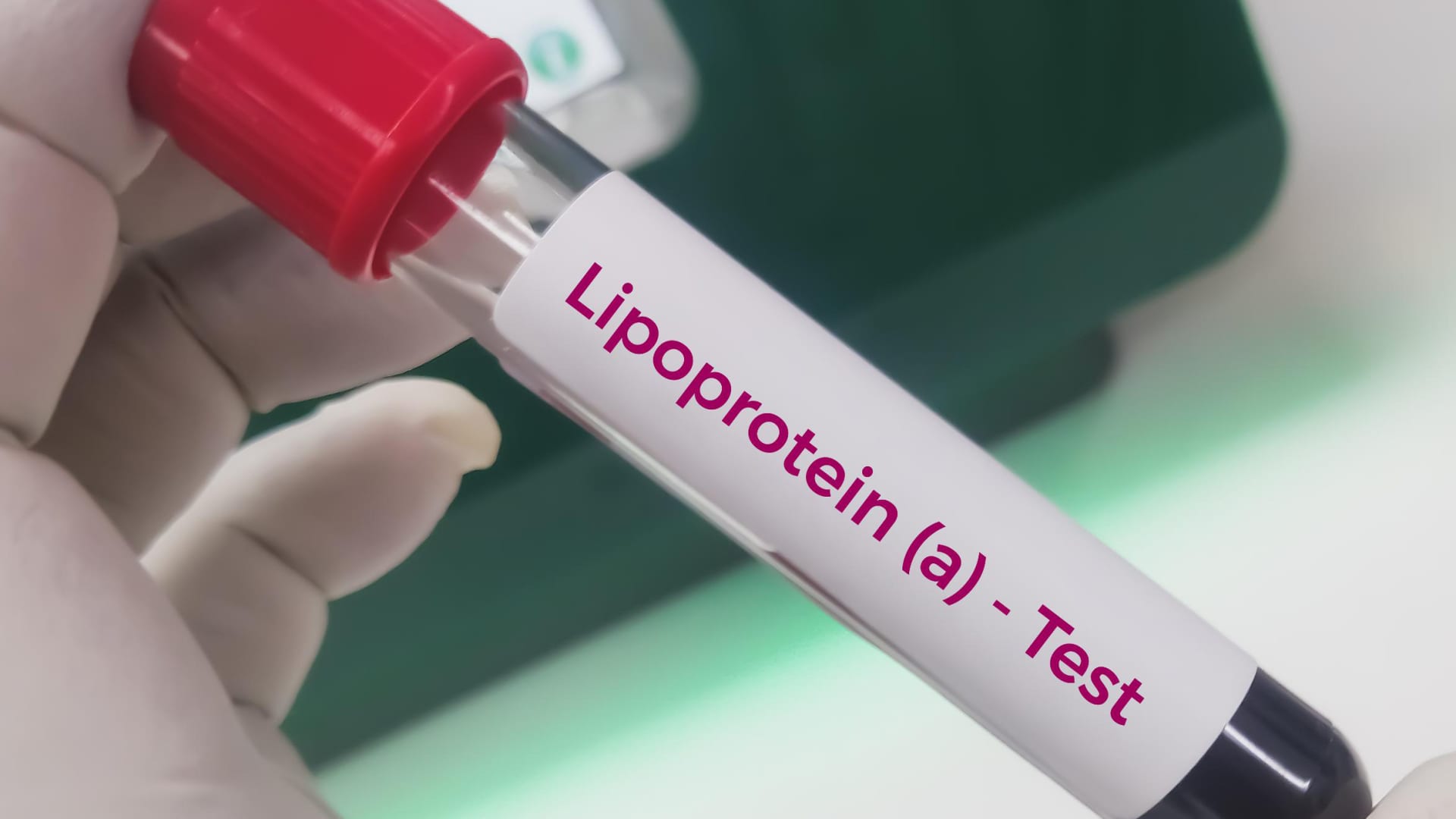
Screening involves a routine blood draw like what’s used to measure other types of cholesterol. Leading cardiology organizations recently started recommending every adult be tested for Lp(a) at least once in their life. Currently, some doctors are reluctant to screen people for a problem when they don’t have any medicines to offer them to treat it, Nissen and O’Donoghue said.
The Family Heart Foundation plans to advocate for adding Lp(a) to the standard lipid test that measures other types of cholesterol like LDL, said the organization’s CEO, Katherine Wilemon. Living with elevated Lp(a) and another genetic heart condition herself, Wilemon has pushed for more screening since experiencing a heart attack at 38 and founding the organization in 2011.
Advertisement
She said the Lp(a) drugs have already helped raise awareness about testing. If the treatments succeed in clinical trials, more screening could follow. Morningstar analyst Jay Lee thinks it could take time to build the market, especially since Novartis’ pelacarsen would initially be used for people with high Lp(a) levels and a history of cardiovascular events.
Amgen and Lilly are already testing whether drugs could protect people with elevated Lp(a) from having that first event. Those results are still years away, with Lilly’s trial expected to read out in 2029.
In the meantime, Lilly isn’t waiting to make more bets. The company is testing a daily pill, and it acquired a company that wants to use gene editing to slash Lp(a) levels with a one-time treatment.
“We’ve got a bunch of shots on goal,” Cleveland Clinic’s Nissen said. “We hope at least one of them ends up in the back of the net.”
Advertisement
Investors are skeptical, said Goldman Sachs analyst Asad Haider. They’re nervous what the delay in Novartis’ trial means for the drugs, and they’re concerned that even if the drugs work, it could take years for them to become mega-blockbusters, he said.
“That’s why this Novartis trial is going to be so important in how people think about the unlock,” Haider said.
Wilemon from the Family Heart Foundation thinks the market for the drugs is there. She sees screening as the most important issue and access as the second one. She points to PCSK9 inhibitors, powerful drugs that slash levels of LDL cholesterol, which struggled for years to gain traction until drugmakers lowered their prices.
But before uptake comes the data — and she said she and the whole Lp(a) community are crossing their fingers Novartis’ drug works.
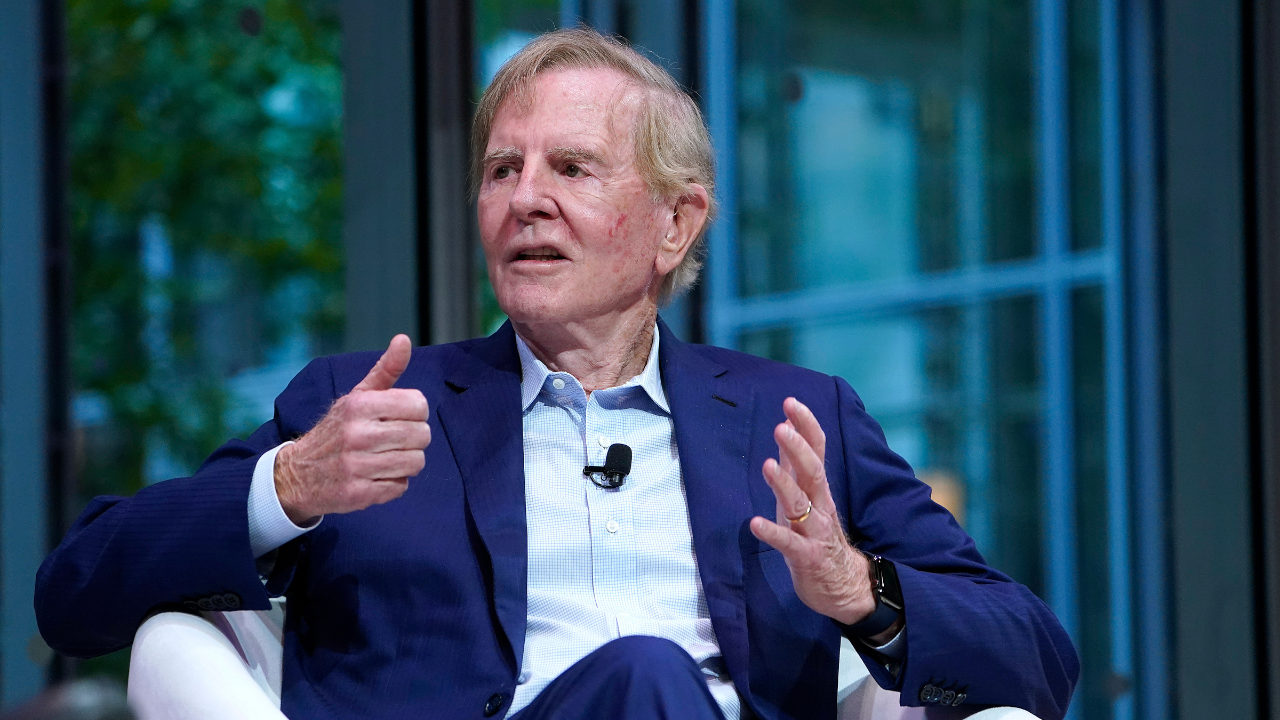
Former Apple CEO John Sculley discusses the future of the technology company amid leadership changes and the rise of artificial intelligence on ‘The Claman Countdown.’
Former Apple CEO John Sculley identified OpenAI as the largest competitive threat facing Apple in years, marking a potential shift after decades of dominance by the iPhone maker in the technology industry.
“This is the biggest thing I think that’s happened since Tim Cook took over from Steve Jobs 15 years ago,” he told “The Claman Countdown” Monday.
Advertisement
Sculley’s comments come one week after it was announced that Tim Cook is stepping down as Apple’s CEO and will become its executive chairman, and as both Apple and OpenAI are reportedly exploring the development of similar next-generation AI products.
Apple is reportedly set to launch a wearable AI pin, Sculley said, while former Apple designer Jony Ive, credited for helping transform the company’s product vision, is partnering up with OpenAI to create its own AI-powered hardware.
Open AI CEO Sam Altman speaks during a talk session with SoftBank Group CEO Masayoshi Son at an event titled “Transforming Business through AI” in Tokyo, Japan, on Feb. 3. (Tomohiro Ohsumi/Getty Images / Getty Images)
“It’s one that may have a camera in it. It won’t have a screen. And it’s going to be able to have what’s called ambient awareness, meaning it’s always on, it’s listening, and you get it through an ear pod,” he explained. “And that would be an entirely new user experience for people in the Apple ecosystem.”
Advertisement
Sculley said each company’s interpretation of the device will be different, but warned the competition poses a threat to Apple’s longstanding tech dominance.
He signaled that consumer loyalty may vary, as buyers will gravitate toward their preferred product, rather than defaulting to Apple’s ecosystem.
“I expect that they’re going to be taking very different ways of interpreting it in terms of a product,” the former Apple CEO said.
“Some are going to become loyal to one version and some are gonna become loyal to another.”
The emergence of OpenAI as a dominant force in the tech world is part of what Sculley described as a “weather system” that is constantly shifting the industry.
Tim Cook to become Apple Executive chairman and John Ternus to become Apple CEO on September 1, 2026. (Reuters / Reuters)
Sculley affirmed that amid the AI storm, Apple’s leadership remains strong, even amid concerns surrounding Cook’s transition.
Advertisement
“Tim Cook did a spectacular job as CEO,” Sculley told FOX Business. “And the incoming CEO, John Ternus, looks incredibly qualified to be the next leader. So, from that standpoint, Apple’s in a very good position.”
Sculley went on to share advice for Apple as it rings in its 50th year in operation and as the race for AI dominance only intensifies.
“Stay true to the values Apple has been so successful at: beautiful products, no compromises,” he said.
‘Barron’s Roundtable’ panelists discuss investment opportunities among airline stocks.
A group of budget airlines is reportedly seeking financial assistance from the federal government that could convert to an equity stake in the air carriers.
The Wall Street Journal reported on Sunday that the group of budget airlines, including Frontier and Avelo, is seeking $2.5 billion in federal assistance through stock warrants that could convert into equity stakes in the airlines, according to people familiar with the matter.
Advertisement
Some of the Journal’s sources told the outlet that the group’s $2.5 billion figure was derived from an estimate of how much they expect to spend on jet fuel this year compared with earlier forecasts, with the estimate assuming jet fuel prices will remain above an average of $4 a gallon for the rest of the year.
A Frontier Airlines plane approaches Ronald Reagan Washington National Airport. (Ken Cedeno/Reuters)
Conversations about a possible relief package for budget airlines are reportedly expected to continue in the coming days, according to the Journal’s report. The news follows a reported meeting between the leaders of several budget carriers with Transportation Secretary Sean Duffy and Federal Aviation Administration chief Bryan Bedford last week.
“As the smallest and newest airline in the country, Avelo competes against significantly larger airlines who have unprecedented market dominance,” Avelo Airlines said in a statement to FOX Business. “Our focus on unserved and underserved airports gives millions of U.S. consumers low fare nonstop air service options they otherwise would not have. We have no specific comment on the report, but we emphatically agree that a healthy airline industry with strong competition is important to the U.S. economy, especially during this period of high fuel prices.”
FOX Business reached out to Frontier Airlines for comment.
Last week, leading budget carriers requested that Congress pass a bill to suspend the 7.5% federal excise tax on airline tickets and the $5.30 per segment tax, which the Association of Value Airlines estimated would offset about one-third of the increased fuel costs.
The group represents Spirit Airlines, Frontier Airlines, Allegiant Air, Sun Country and Avelo.
The budget airlines’ pursuit of federal aid comes as the Trump administration is weighing a separate proposal to provide relief for Spirit Airlines in the form of a $500 million loan that would give the federal government the ability to convert warrants into equity stakes in the airlines.
The deal would see the federal government receive warrants equal to about 90% of Spirit’s equity in exchange for the funding.
The Trump administration is weighing a separate proposal to provide relief for Spirit Airlines. (AaronP/Bauer-Griffin/GC Images)
Rising jet fuel costs have complicated Spirit’s plan to exit bankruptcy this summer, after the budget carrier entered Chapter 11 bankruptcy proceedings for the second time last year.
During the COVID-19 pandemic, the Treasury Department received warrants in major airlines after a roughly $54 billion support package to prevent mass layoffs during the pandemic.
More than 300 pubs, bars and restaurants have served their last pint and plated their last cover since the start of the year, as Britain’s licensed trade groans under the combined weight of higher wage bills, stubborn energy costs and customers who are quietly drinking and dining at home.
Fresh analysis from CGA by NIQ, the market research group, shows the number of licensed premises across the UK slipped to 98,609 by the end of March, a net loss of 305 venues since December, or rather more than three closures every single day. Coming on top of the 382 sites lost between September and December, the figures mean the country has shed 0.7 per cent of its licensed estate in just six months.
It is a slow-motion contraction that is now accelerating. Casual dining has been hit hardest, with the number of restaurants in that bracket falling by 0.9 per cent in the first quarter alone. Bars, nightclubs, traditional pubs and social clubs have also gone to the wall as households defer the small discretionary treats, a Friday curry, a midweek pint, a birthday dinner, that have long propped up neighbourhood operators.
Behind the headline numbers sits a familiar but increasingly toxic mix of cost pressures. April’s rise in employers’ national insurance contributions, the upward ratchet on business rates and persistently elevated food prices have eaten into already wafer-thin margins. Energy bills, which many operators had hoped would ease this year, have instead been pushed higher by the war in the Gulf, with wholesale gas and fuel prices feeding through to suppliers and threatening another round of menu price rises that publicans are reluctant to pass on to bruised customers.
Karl Chessell, director of hospitality operators and food at NIQ, said confidence among both businesses and consumers remained stubbornly low and warned that “geopolitical crises are likely to cause more damage in the months ahead”. While many operators had “shown remarkable resilience”, he said, “thousands are now nearing breaking point”.
Advertisement
“Soaring costs have taken a heavy toll on hospitality in the first quarter,” Chessell added. “Without targeted support, more closures can be expected over the rest of 2026.”
The trade is now lobbying ministers in earnest for a sector-specific package, a permanent reduction in business rates for hospitality, a lower rate of VAT on food and drink in line with much of continental Europe, and a softening of the national insurance changes for smaller employers. Operators argue that the alternative is the slow hollowing-out of the British high street, with independents and chains alike disappearing from market towns and city centres at a rate not seen since the depths of the pandemic.
For now, the maths is brutally simple. Wages, energy and tax are all rising; footfall and spend per head are not. Until that equation shifts, through policy, peace or a meaningful rebound in consumer confidence, the country’s pubs, bars and restaurants will keep going dark, three a day, one local at a time.
Jamie Young
Jamie is Senior Reporter at Business Matters, bringing over a decade of experience in UK SME business reporting.
Jamie holds a degree in Business Administration and regularly participates in industry conferences and workshops.
When not reporting on the latest business developments, Jamie is passionate about mentoring up-and-coming journalists and entrepreneurs to inspire the next generation of business leaders.
Elixirr International plc (ELXXF) Q4 2025 Earnings Call April 21, 2026 8:00 AM EDT
Company Participants
Stephen Newton – Founder, CEO & Director Nicholas Willott – CFO, Partner, Finance Director, Company Secretary & Director Emiko Smith – Partner Graham Busby – Co-Founder, Partner, Deputy CEO & Director
Advertisement
Presentation
Operator
Good afternoon and welcome to the Elixirr International plc Investor Presentation. [Operator Instructions] Before we begin, I’d like to submit the following poll.
I’d now like to hand you over to Stephen Newton, CEO. Good afternoon.
Advertisement
Stephen Newton Founder, CEO & Director
For those of you who have not met me, I’m Steve Newton, Founder and CEO, co-founded it with Graham. And Nick is our CFO; and Em is our Investor Relations lead.
So you’ll hear from all 4 of us in this presentation. But let’s start off with where we are as a business and how we feel about it. I was reflecting over the weekend on the 17 years that we’ve been building this company. And I actually can’t believe we — I almost feel like we’ve been founded for this moment. If I think back to the dot-com time, there was this whole story about the high street was dead and there were so many technology was going to change the way business had operated and there’ll be so many different people being out of business. Yes, retail stuff suffered but it’s had to adjust itself and use different channels and different levers. And people are saying this about AI to consultancies. And to be honest, it creates a massive opportunity for us. Just like the digital revolution is still ongoing. We’re still helping clients to use the Internet technologies to be able to access their client bases and increase their revenue.
Sir Keir Starmer is facing fresh calls to spearhead a new cabinet committee charged with shielding British businesses from the mounting cost of global economic shocks, after one of the country’s most influential lobby groups warned that the UK remains dangerously exposed to disruption.
In a report published on Sunday night, the British Chambers of Commerce (BCC) said a decade marked by Brexit, the Covid-19 pandemic and Russia’s invasion of Ukraine had laid bare the absence of meaningful contingency planning to insulate the UK economy when global supply chains seize up.
The intervention lands at a pointed moment. The closure of the Strait of Hormuz for two months in the wake of the Middle East war is expected to push British inflation higher in the coming quarter and is already squeezing supplies of components used across the food and heavy industry sectors.
Shevaun Haviland, director-general of the BCC, said small and mid-sized firms had been “permanently bruised” by the procession of global shocks and could no longer be left to absorb the consequences alone.
“The UK’s inadequate economic security has become a drag on growth, competitiveness and national strength; yet it is still not given the focus and urgency it demands. The wars in Ukraine and Iran have demonstrated how supply chains can be disrupted overnight. We now live in a world where trade interests may be weaponised and where failing to secure key raw materials means failing to grow.”
Advertisement
At the heart of the BCC’s recommendations is the creation of an economic security cabinet committee, chaired by the prime minister of the day, that would coordinate Whitehall’s response to trade disputes, retaliatory tariffs and attempts to lock British exporters out of foreign markets.
The proposal arrives in the wake of the US Supreme Court’s decision in February to strike down President Donald Trump’s so-called “liberation day” tariffs, a ruling that has done little to soften the chilling effect his protectionist agenda has had on free-trading economies, many of which have been forced to design emergency retaliatory measures of their own.
The lobby group is also urging ministers to follow Brussels’s lead and forge a UK version of the EU’s “anti-coercion instrument”, introduced in 2023 and dubbed by some officials a “trade bazooka”. The mechanism would empower the government to impose import charges, and other punitive trade restrictions, on companies based in jurisdictions judged to be in breach of international trade commitments.
The numbers underline the case. The BCC estimates that more than 75 per cent of British manufactured goods sold overseas begin life with imported components, while imports and exports together account for around 60 per cent of UK gross domestic product. Few advanced economies, the report argues, are quite so reliant on the smooth running of someone else’s logistics.
Advertisement
Diversifying that supply chain, so that Britain is less dependent on a narrow band of suppliers for the raw materials underpinning the industries of the future, must become a strategic priority, the BCC says. Demand for lithium, copper and aluminium, the building blocks of electric vehicles, batteries and renewable infrastructure, is forecast to surge over the next decade as consumers and businesses move to greener products.
China’s near monopoly over the refining and processing of many of those critical minerals is, in the BCC’s view, the clearest illustration of why ministers should accelerate domestic production where possible and steer supply chains towards “friendlier” trading partners.
For Britain’s small and medium-sized exporters — many still nursing the scars of Brexit-related red tape and pandemic-era cost spikes, the message from Westminster’s business community is becoming impossible to ignore: in an era of weaponised trade, economic security is no longer the preserve of the Foreign Office. It is, increasingly, a board-level concern.
Jamie Young
Jamie is Senior Reporter at Business Matters, bringing over a decade of experience in UK SME business reporting.
Jamie holds a degree in Business Administration and regularly participates in industry conferences and workshops.
When not reporting on the latest business developments, Jamie is passionate about mentoring up-and-coming journalists and entrepreneurs to inspire the next generation of business leaders.






















































You must be logged in to post a comment Login