
Business
Chocolate recall over hidden allergen risk hits nationwide sales


Check out what’s clicking on FoxBusiness.com.
A gourmet chocolate maker is recalling select bonbon collections sold nationwide after a labeling error failed to disclose the presence of walnuts, posing a potentially life-threatening risk to some consumers.
French Broad Chocolates PBC is recalling its Bette’s Bake Sale Bonbon Collection in six-piece, 12-piece and 24-piece boxes due to the potential presence of undeclared walnuts, according to a company announcement published by the Food and Drug Administration.
The recall applies to products with batch numbers 260414 and 260417.
DOZENS OF ICE CREAM PRODUCTS RECALLED OVER UNDECLARED ALLERGENS POSING ‘LIFE-THREATENING’ RISK
“People who have an allergy or severe sensitivity to walnuts run the risk of serious or life-threatening allergic reaction if they consume these products,” the company said.

Correct tasting notes insert for French Broad Chocolates’ Bette’s Bake Sale Bonbon Collection, as provided in the company’s recall notice posted by the FDA. (FDA)
The products were distributed between April 14, 2026, and April 20, 2026, and were sold in French Broad Chocolates retail stores in Asheville, North Carolina, and online to customers in multiple states.
CANTALOUPES RECALLED NATIONWIDE OVER SALMONELLA FEARS — WHAT SHOPPERS NEED TO KNOW

Packaging for French Broad Chocolates’ Bette’s Bake Sale Bonbon Collection, which is subject to a recall due to undeclared walnuts. (FDA)
Affected products include Bette’s Bake Sale Bonbon Collection in six-piece (2.5 oz.), 12-piece (5 oz.) and 24-piece (10 oz.) boxes, with “best by” dates ranging from June 22, 2026, to June 30, 2026, depending on the batch.
According to the company, the issue stems from a labeling error in the tasting notes insert that failed to identify walnuts as a tree nut allergen. The Walnut Fudge bonbon, which contains walnuts, was incorrectly identified in the printed tasting notes and was switched with the Peach Cobbler bonbon in the guide.
GENERAC RECALLS PORTABLE GENERATORS SOLD AT COSTCO OVER FIRE RISK

Incorrect tasting notes insert showing the labeling error that misidentified bonbons containing walnuts, according to the FDA-posted recall notice. (FDA)
The company said it was notified of the issue on April 20, 2026, by a team member. No illnesses have been reported to date, according to the company.
CLICK HERE TO GET FOX BUSINESS ON THE GO
Consumers with a tree nut allergy who purchased the products are urged to return them to the place of purchase for a full refund or discard them. Customers with questions can contact French Broad Chocolates customer service.


Malaysian and ASEAN+3 companies should strategically invest across the region to strengthen trade and FDI linkages. Despite global geopolitical risks, the region grew 4.3% in 2025, with ASEAN+3 now accounting for 28% of global final demand, emerging as the world’s largest market.
Key Points
• ASEAN+3 now accounts for 28% of global final demand, surpassing the United States
• Region has evolved beyond manufacturing into a major consumer market
• Supply chains have shifted from China-centric to broader ASEAN+3 collaboration involving Japan and South Korea• ASEAN poised to lead in a emerging multipolar world order
• Securities Commission chairman calls for deeper, agile capital markets aligned with regional sustainability and innovation standards to drive future growth
Strategic Regional Investment and Economic Resilience
Domestic companies must adopt a more deliberate, strategic approach to cross-regional investment. According to Allen Ng of AMRO, when local firms invest in foreign-owned groups, they generate foreign direct investment flows that strengthen trade linkages and deepen regional integration. Ng emphasized that Malaysia is actively developing policies to foster a more integrated capital market. Despite significant geopolitical risks, including conflicts in the Middle East, the Asean+3 region demonstrated resilience, expanding by 4.3% in 2025, with growth forecasted at 4% for both 2026 and 2027, even after absorbing two major economic shocks within 12 months.
Structural Shifts Redefining Asean+3’s Global Role
Asean+3 has undergone transformative structural shifts that have redefined its position in the global economy. Supply chains, once centered predominantly on China, have evolved into a highly integrated network involving China, Japan, and South Korea. More significantly, the Asean region has emerged as a final consumption market, not merely a manufacturing hub. The bloc now accounts for 28% of global final demand, surpassing the United States, signaling a fundamental change in its economic identity. Central banks and policymakers face the critical challenge of managing both supply and demand shocks through carefully targeted fiscal and monetary policies.
Malaysia’s Opportunity in a Multipolar World
Malaysia is well-positioned amid the global shift toward multipolar power dynamics. Deputy Finance Minister Liew Chin Tong highlighted that as US influence declines, Asean nations must unite strategically, noting that “no country is too small when operating within the Asean context.” He suggested Kuala Lumpur could emerge as a major regional hub, drawing parallels to how Petronas was born from the 1974 oil crisis, turning adversity into opportunity. Securities Commission chairman Mohammad Faiz Azmi reinforced this vision, urging capital markets to be deep, agile, and aligned across borders through harmonized sustainability and cross-border standards, ultimately creating a common capital market greater than the sum of its parts.
Other People are Reading
Greggs is removing display cabinets in London stores that have been most severely hit by shoplifters.
Business
'My husband might give up work to care for our kids' – nursery bills in Wales highest in Britain

Parents in Wales say the cost of childcare is one of their biggest worries ahead of the election.
It took 14 years for the exchange to reach its first crore of registered investors after commencing operations, and another 11 years to add the next three crore. Since then, growth has accelerated sharply, with an additional crore investors being added every 6–8 months on average. Over the past five years (FY21–FY26), the investor base has expanded at a CAGR of 26.4%, significantly outpacing the 15.2% CAGR recorded in the preceding five-year period (FY16–FY21).
The investor base has expanded at a markedly faster pace in recent years, signalling deeper retail participation in capital markets. This growth has been driven by wider digital access, improving financial awareness, and sustained efforts by regulators, market infrastructure institutions (MIIs), and the government to enhance inclusivity.
Over the five-year period ended April 24, 2026, the benchmark Nifty 50 and Nifty 500 delivered annualised returns of 10.8% and 13.3%, respectively, according to an NSE release. During the same period, the market capitalisation of NSE-listed companies grew at a CAGR of 18% to Rs 460.6 lakh crore.
Individual investors owned 18.6% of the market (NSE listed companies) as of December 31, 2025 directly and indirectly via mutual funds.

The expansion of the investor base has also been geographically broad-based, now extending across 99.85% of pin codes in the country. As of March 31, 2026, three states had more than one crore unique registered investors each, with Maharashtra leading the pack with 2 crore, followed by Uttar
Pradesh at 1.5 crore and Gujarat at 1.1 crore investors.
Investor participation is increasingly spreading beyond traditional hubs, with states outside the top 10 now accounting for 27% of the base. Smaller and northeastern states have seen multi-fold growth since FY21, highlighting deeper penetration into Tier 2–4 cities.
Indirect participation has also surged, with 7.2 crore new SIP accounts added in FY26 and monthly inflows rising eight-fold over the past decade, reflecting strong retail discipline. This broad-based expansion, driven by digital platforms and a younger investor base, has increased the need for financial education, with NSE ramping up awareness programs and strengthening investor protection measures.
NSE’s Chief Business Development Officer Sriram Krishnan said crossing the 13-crore investor mark underscores the strong and resilient participation in Indian capital markets, with one crore investors added in just seven months despite global uncertainties. He attributed this growth to rising mobile-based trading, simplified KYC processes and sustained investor awareness efforts.
He added that participation is expanding beyond metro cities into Tier 2–4 regions, with investors increasingly diversifying across instruments such as equities, ETFs, REITs, InvITs and bonds, reflecting a more inclusive and broad-based market ecosystem.
(Disclaimer: The recommendations, suggestions, views, and opinions given by the experts are their own. These do not represent the views of The Economic Times.)


Trapping Value is a team of analysts with over 40 years of combined experience generating options income while also focusing on capital preservation. They run the investing group Conservative Income Portfolio in partnership with Preferred Stock Trader. The investing group features two income-generating portfolios and a bond ladder.
Trapping Value provides Covered Calls, and Preferred Stock Trader covers Fixed Income. The Covered Calls Portfolio is designed to provide lower volatility income investing with a focus on capital preservation. The fixed income portfolio focuses on buying securities with high income potential and heavy undervaluation relative to comparatives. Learn more.
Analyst’s Disclosure: I/we have a beneficial long position in the shares of LANDP either through stock ownership, options, or other derivatives. I wrote this article myself, and it expresses my own opinions. I am not receiving compensation for it (other than from Seeking Alpha). I have no business relationship with any company whose stock is mentioned in this article.
Seeking Alpha’s Disclosure: Past performance is no guarantee of future results. No recommendation or advice is being given as to whether any investment is suitable for a particular investor. Any views or opinions expressed above may not reflect those of Seeking Alpha as a whole. Seeking Alpha is not a licensed securities dealer, broker or US investment adviser or investment bank. Our analysts are third party authors that include both professional investors and individual investors who may not be licensed or certified by any institute or regulatory body.

Expanding a young tech company into a new region is rarely a snap decision. For Nikesh Panchal, founder and chief executive of Wavee Ai, the choice to bet on Asia Pacific as the next chapter for its residential platform has been a slow build rather than a sudden leap.
Wavee Ai, born in London to tidy up chaotic building group chats and parcel rooms, is now preparing to bring its verified, community-first model to cities across the region, from Singapore to Australia. Panchal has already grown Wavee Ai to a £10 million valuation with its continuous push into one of the world’s most dynamic sectors.
After raising more than £1 million to fund international rollout, its expansion is framed as a response to growing demand for safer, more organised digital communities, supported by a strategy that leans on partnerships, localisation, and brand trust.
Lessons From London for a Region on the Move
Alongside running Wavee Ai, Panchal sits on the board of London Tech Equity Ltd, where he has seen early-stage companies stall after chasing quick wins without the proper governance or metrics in place. That experience has reinforced his preference for a founder-led, long-term strategy over rapid, scattershot expansion and informs how he thinks about entering new markets.
Wavee Ai’s story began in London, where Panchal spent time watching the small frictions that define life in managed buildings: missed deliveries, noisy group chats, anonymous neighbours, and concierge desks buried in paper logs. Wavee Ai was built as a direct response to that jumble, replacing scattered tools with a single, verified platform. Residents use one app, concierges work from one portal, and local businesses connect through one controlled channel into a defined community.
Those early years in London gave Panchal lessons he now intends to carry into Asia, while adapting them to local realities. He stresses the importance of staying small in scope even when ambitions are big. Rather than trying to run every aspect of a building’s operations, the platform focuses on a narrow band: communication, community, and local commerce.
It offers a small set of features, such as parcel tracking, visitor management, a private neighbour feed, and curated local offers. That restraint has helped the company avoid being pulled into custom projects that dilute its core product and has become a cornerstone of its quality-over-speed approach.
Those results underpin another lesson: residents will embrace a new app only if it clearly replaces pain points rather than adding to them. In buildings where Wavee Ai was implemented, concierge staff reported time saved on manual logging, and residents valued having one trusted place for updates instead of chasing information across group chats and noticeboards. Local businesses that aligned their offers with building rhythms found steadier engagement.
Panchal says, “London taught us patterns. We know what tends to work for concierges, what residents respond to, and how local businesses like to plug in. But each city and each building has its own personality. Our job in Asia Pacific is to listen first, then apply what we’ve learned.”
A Founder’s Long-View Strategy
The concrete success of Wavee Ai in London is what Panchal plans to bring into the room with Asia-based stakeholders. In practice, that means entering the region through pilot projects and portfolio-level experiments, listening to how each city and building works, then applying London’s patterns in ways that can be localised and refined on the ground. The basic idea remains straightforward: the app connects residents, concierge teams, and local businesses inside a private, building-verified network, where parcel arrivals, visitor notifications, building announcements, and neighbourhood offers land in one feed, and every resident is authenticated through their building rather than signing up anonymously.
This business model is what Panchal now wants to adopt in apartment-heavy markets across Asia Pacific, where dense living, rising rents, and a growing class of professionally managed buildings are pushing community management to the top of the priority list for owners and residents alike.
These conditions, he believes, echo the pressures that helped Wavee Ai gain traction in London, but on a larger, faster-moving scale. He frames Asia Pacific not only as a growth market, but as a proving ground for how verified, community-first platforms can become part of the fabric of urban living.
Panchal also sees the expansion as an opportunity to bring local shops closer to the people who live above and around them, turning independent cafés, gyms, studios, and specialty retailers into trusted, visible partners in residents’ daily routines.
For residents, that means having reliable options for everyday needs and passions without searching across multiple platforms or travelling far—often just by looking at what is available on the ground floor or around the corner. For local businesses, it offers a direct, accountable route into the vertical communities they have always served but rarely reached in such a focused, building-by-building way.
“I see a win-win opportunity,” Panchal mentions. “We designed Wavee Ai to be scalable so that it can adapt to the needs of different residential communities.”
A Founder’s Bet on How Cities Will Feel
The story of Wavee Ai’s Asia Pacific expansion is, at its core, about how one founder imagines cities will feel in the coming decade. Panchal is betting that verified, community-first platforms will become the norm in dense urban living, and that residents from London to Singapore will increasingly expect their buildings to provide safe, organised digital spaces, just as they provide clean lobbies and working lifts.
In his view, the cultural shift toward secure, accountable online communities aligns closely with how many Asian cities already think about shared living, security, and neighbourhood identity.
In the Asia Pacific, where the living sector is attracting serious investment and attention, Wavee Ai’s arrival is another sign of how quickly expectations are changing. Buildings are no longer just assets; they are communities that need tools to match their complexity.
Panchal’s insistence on partnerships, brand trust, and a measured, quality-first rollout reflects a belief that residential technology should behave more like infrastructure than like a passing trend. If the platform can quietly become part of residents’ routines in Sydney, Singapore, or Tokyo the way it has in parts of London, his bet will look less like a gamble and more like a blueprint for how cities everywhere might choose to live together.
Hamborner REIT: Don't Be Fooled By A High Yield – It Is Not Sustainable

Further, the Board has declared final dividend for FY26 at Rs 5.25 per share. Payment of final dividend for FY26 will be made subject to approval of shareholders in the ensuing AGM.
Profit before tax for the quarter stood at Rs 14,627 crore, also up 12% from Rs 13,070 crore a year ago, reflecting stable operating performance despite cost pressures. Total income rose 8% to Rs 51,618 crore during the quarter.
The company’s EBITDA grew 12% to Rs 17,917 crore, with margins expanding to 39% from 36% in the year-ago period, indicating improved operating leverage.
Revenue growth was driven largely by higher realizations, even as overall sales volumes remained largely flat. Average realization per tonne increased 6% year-on-year to Rs 2,290, while total sales volume declined marginally by about 1% to 198.83 million tonnes.
On the operational side, coal production for the quarter rose slightly to 239 million tonnes compared to 238 million tonnes last year, while offtake declined 2% to 199 million tonnes, reflecting softer dispatches. Overburden removal remained largely flat at 577 million cubic metres.
Expenses increased 6% to Rs 37,107 crore during the quarter, driven by a sharp rise in other expenses and finance costs. Other expenses surged 18% YoY due to higher levies, particularly the increase in Jharkhand mineral-bearing land cess, while finance costs jumped 42%, indicating higher borrowing and cost of funds.Segment-wise, performance remained mixed across subsidiaries. Key profit contributors such as Northern Coalfields (NCL) and Mahanadi Coalfields (MCL) delivered strong growth, while Western Coalfields (WCL) and Bharat Coking Coal (BCCL) saw a decline in profitability, highlighting regional variability in operations.
For the full year FY26, Coal India reported a 12% decline in profit after tax to Rs 31,071 crore, even as revenue from operations remained broadly flat at Rs 1.68 lakh crore. The decline in annual profitability was attributed to higher expenses, including a one-time provision related to executive pay revision and increased statutory levies.

Opus Genetics president Benjamin Yerxa sells $39,121 in stock
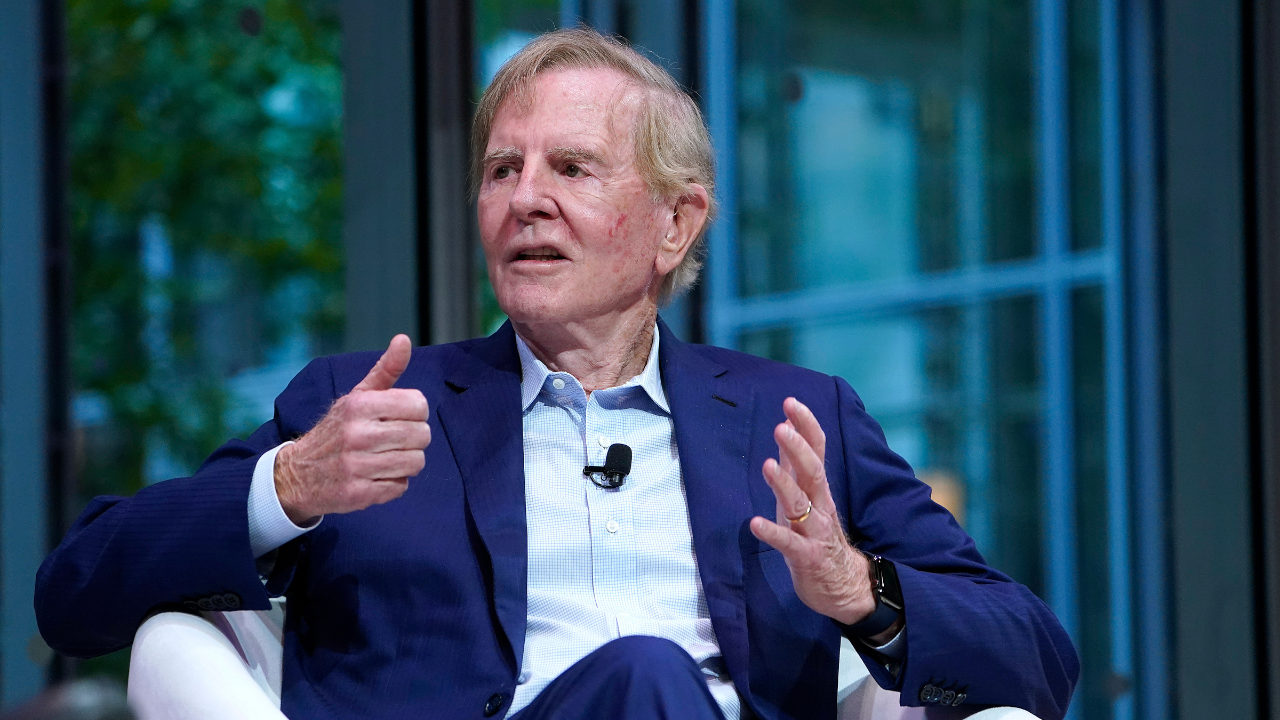
Former Apple CEO John Sculley discusses the future of the technology company amid leadership changes and the rise of artificial intelligence on ‘The Claman Countdown.’
Former Apple CEO John Sculley identified OpenAI as the largest competitive threat facing Apple in years, marking a potential shift after decades of dominance by the iPhone maker in the technology industry.
“This is the biggest thing I think that’s happened since Tim Cook took over from Steve Jobs 15 years ago,” he told “The Claman Countdown” Monday.
Sculley’s comments come one week after it was announced that Tim Cook is stepping down as Apple’s CEO and will become its executive chairman, and as both Apple and OpenAI are reportedly exploring the development of similar next-generation AI products.
Apple is reportedly set to launch a wearable AI pin, Sculley said, while former Apple designer Jony Ive, credited for helping transform the company’s product vision, is partnering up with OpenAI to create its own AI-powered hardware.
TECH TITANS ELON MUSK AND SAM ALTMAN HEAD TO COURT IN TRIAL OVER OPENAI: WHAT TO KNOW

Open AI CEO Sam Altman speaks during a talk session with SoftBank Group CEO Masayoshi Son at an event titled “Transforming Business through AI” in Tokyo, Japan, on Feb. 3. (Tomohiro Ohsumi/Getty Images / Getty Images)
“It’s one that may have a camera in it. It won’t have a screen. And it’s going to be able to have what’s called ambient awareness, meaning it’s always on, it’s listening, and you get it through an ear pod,” he explained. “And that would be an entirely new user experience for people in the Apple ecosystem.”
Sculley said each company’s interpretation of the device will be different, but warned the competition poses a threat to Apple’s longstanding tech dominance.
He signaled that consumer loyalty may vary, as buyers will gravitate toward their preferred product, rather than defaulting to Apple’s ecosystem.
“I expect that they’re going to be taking very different ways of interpreting it in terms of a product,” the former Apple CEO said.
WHO IS JOHN TERNUS, SET TO SUCCEED TIM TOOK AS APPLE’S CEO?
“Some are going to become loyal to one version and some are gonna become loyal to another.”
The emergence of OpenAI as a dominant force in the tech world is part of what Sculley described as a “weather system” that is constantly shifting the industry.

Tim Cook to become Apple Executive chairman and John Ternus to become Apple CEO on September 1, 2026. (Reuters / Reuters)
CLICK HERE TO DOWNLOAD THE FOX NEWS APP
Sculley affirmed that amid the AI storm, Apple’s leadership remains strong, even amid concerns surrounding Cook’s transition.
“Tim Cook did a spectacular job as CEO,” Sculley told FOX Business. “And the incoming CEO, John Ternus, looks incredibly qualified to be the next leader. So, from that standpoint, Apple’s in a very good position.”
Sculley went on to share advice for Apple as it rings in its 50th year in operation and as the race for AI dominance only intensifies.
“Stay true to the values Apple has been so successful at: beautiful products, no compromises,” he said.

ZetaChain Pauses Mainnet After Hack Hits Team Wallets

Allyson Felix: US great targets 2028 LA Olympic games in comeback

Govee Launches Wild, Colorful and Pixel-Dense Ceiling Light Ultra

Manchester United reach agreement with Casemiro over contract clause amid transfer speculation

US brings back mandatory military draft registration

Steven Gerrard disagrees with Gary Neville over ‘shock’ Chelsea and Arsenal claim | Football

Hearing about XRP was like Moses Coming Down. #xrp #crypto #bitcoin #ethereum @digitalassetinvestor

Paisa kamane wala app 2026 || NEW UPI MONEY EARNING APP | New Earning App Today | Ajio App Shein App

Crypto Gold Live Trading 27 APRIL – stock_learners
-

 Fashion3 days ago
Weekend Open Thread – Corporette.com
-
 Crypto World2 days ago
Hyperliquid $HYPE Rally Builds Momentum as AI Sector Enters Prove-It Phase
-

 Tech5 hours ago
Register Renaming | Hackaday
-

 Politics5 days ago
Making troops accountable for war crimes threatens US alliance, ex-SAS colonel warns
-

 Politics5 days ago
Disabled people challenge government SEND proposals over segregation concerns
-

 Business4 days ago
Patterson-UTI Energy, Inc. (PTEN) Q1 2026 Earnings Call Transcript
-

 Business6 days ago
Rolls-Royce Voted UK’s Most Iconic Trade Mark as IPO Register Hits 150
-
 Crypto World6 days ago
Five Value Stocks with Recovery Potential in 2026: PayPal (PYPL), Nike (NKE), and More
-
 Sports1 day ago
IPL 2026: Ruturaj Gaikwad registers slowest fifty of the season, enters all-time unwanted list | Cricket News
-

 Politics5 days ago
Starmer handler McSweeney to be dragged from shadows by Foreign Affairs Committee
-

 Politics5 days ago
Zack Polanski responds to home secretary’s taser threat
-
Politics5 days ago
Wings Over Scotland | How To Get Away With Crimes
-

 Crypto World6 days ago
New York sues Coinbase, Gemini over prediction market offerings
-
Entertainment6 days ago
Sydney Sweeney cameo cut from “The Devil Wears Prada 2”, source explains why (exclusive)
-
 Business6 days ago
HCL Tech share price tank over 9% after weak Q4. JPMorgan, HSBC & 3 others cut target price
-

 Politics5 days ago
‘Iran is still a nuclear threat’
-

 Crypto World6 days ago
Crypto’s great hope in Senate’s Clarity Act still has a path to survive tight calendar
-
 Sports5 days ago
Tim Bradley names the current best in the world: “Better than Inoue and Usyk”
-

 Fashion6 days ago
Kilkenny Design New Beauty Arrivals for Spring 2026
-

 NewsBeat2 days ago
LK Bennett closes all stores after entering administration
You must be logged in to post a comment Login