
Business
Budget carriers including Frontier, Avelo reportedly seek $2.5B in federal aid


‘Barron’s Roundtable’ panelists discuss investment opportunities among airline stocks.
A group of budget airlines is reportedly seeking financial assistance from the federal government that could convert to an equity stake in the air carriers.
The Wall Street Journal reported on Sunday that the group of budget airlines, including Frontier and Avelo, is seeking $2.5 billion in federal assistance through stock warrants that could convert into equity stakes in the airlines, according to people familiar with the matter.
Some of the Journal’s sources told the outlet that the group’s $2.5 billion figure was derived from an estimate of how much they expect to spend on jet fuel this year compared with earlier forecasts, with the estimate assuming jet fuel prices will remain above an average of $4 a gallon for the rest of the year.

A Frontier Airlines plane approaches Ronald Reagan Washington National Airport. (Ken Cedeno/Reuters)
Conversations about a possible relief package for budget airlines are reportedly expected to continue in the coming days, according to the Journal’s report. The news follows a reported meeting between the leaders of several budget carriers with Transportation Secretary Sean Duffy and Federal Aviation Administration chief Bryan Bedford last week.
“As the smallest and newest airline in the country, Avelo competes against significantly larger airlines who have unprecedented market dominance,” Avelo Airlines said in a statement to FOX Business. “Our focus on unserved and underserved airports gives millions of U.S. consumers low fare nonstop air service options they otherwise would not have. We have no specific comment on the report, but we emphatically agree that a healthy airline industry with strong competition is important to the U.S. economy, especially during this period of high fuel prices.”
FOX Business reached out to Frontier Airlines for comment.
WHAT A GOVERNMENT STAKE IN SPIRIT AIRLINES COULD MEAN FOR PASSENGERS AND THE INDUSTRY
Rising jet fuel prices amid the war in Iran have strained the outlooks for air carriers, who face higher costs than anticipated.
Some air carriers, including larger rivals like United and American, have responded by raising fares and checked baggage fees on consumers.

United Airlines recently raised passenger fares, citing the rising cost of jet fuel. (Tayfun Coskun/Anadolu Agency via Getty Images)
TRUMP SIGNALS INTEREST IN BUYING SPIRIT AIRLINES WITH TAXPAYER BACKING, AIMS TO RESELL FOR PROFIT
Last week, leading budget carriers requested that Congress pass a bill to suspend the 7.5% federal excise tax on airline tickets and the $5.30 per segment tax, which the Association of Value Airlines estimated would offset about one-third of the increased fuel costs.
The group represents Spirit Airlines, Frontier Airlines, Allegiant Air, Sun Country and Avelo.
The budget airlines’ pursuit of federal aid comes as the Trump administration is weighing a separate proposal to provide relief for Spirit Airlines in the form of a $500 million loan that would give the federal government the ability to convert warrants into equity stakes in the airlines.
CHEVRON CEO WARNS AVIATION STRAIN COULD WORSEN AS JET FUEL CRUNCH DEEPENS
The deal would see the federal government receive warrants equal to about 90% of Spirit’s equity in exchange for the funding.

The Trump administration is weighing a separate proposal to provide relief for Spirit Airlines. (AaronP/Bauer-Griffin/GC Images)
Rising jet fuel costs have complicated Spirit’s plan to exit bankruptcy this summer, after the budget carrier entered Chapter 11 bankruptcy proceedings for the second time last year.
During the COVID-19 pandemic, the Treasury Department received warrants in major airlines after a roughly $54 billion support package to prevent mass layoffs during the pandemic.
GET FOX BUSINESS ON THE GO BY CLICKING HERE
The federal government ultimately opted against exercising the warrants it acquired and instead sold them in actions that yielded over $550 million.
Reuters contributed to this report.

Business
Is Microsoft Outlook Down Now? Largely Operational Despite Scattered Login and Performance Glitches

SAN FRANCISCO — Microsoft Outlook is not experiencing a widespread outage on April 27, 2026, with core email, calendar and Teams integration services operating normally for the vast majority of users despite scattered reports of slow loading, sign-in delays and minor disruptions that have frustrated some during peak business hours.

Microsoft’s official service health dashboard and independent monitors like Downdetector show no major global incidents as of late Monday. While some users reported temporary issues with the new Outlook for Windows and classic desktop version — particularly after recent Windows updates — the problems appear localized and tied to individual network conditions, cached credentials or ongoing post-update adjustments rather than a platform-wide failure.
The latest wave of complaints began surfacing earlier in April following the rollout of Windows 11 25H2 updates, with some users experiencing freezing when new emails arrive or difficulties launching the app. Microsoft has acknowledged these issues in support documentation and is actively rolling out fixes.
Current Status Breakdown
As of Monday afternoon, Microsoft 365 service health indicators for Outlook.com, Exchange Online and the Outlook desktop client are green across most regions. The company’s status page reports no active incidents affecting email delivery, calendar syncing or basic functionality. However, a small percentage of users continue to encounter:
- Intermittent sign-in prompts or authentication delays.
- Slow performance when opening large mailboxes or shared folders.
- Freezing in the new Outlook app after receiving new messages.
These issues have been most commonly reported by enterprise users on Windows 11 who recently applied the April 2026 security updates. Microsoft has advised affected users to run the built-in repair tool or temporarily switch back to the classic Outlook view while patches are deployed.
Recent History of Outlook Stability
Outlook and broader Microsoft 365 services experienced a notable but short-lived outage earlier in April 2026 that affected sign-ins and Teams integration. That incident was quickly resolved, and the company has since focused on stability improvements. The current scattered reports are significantly smaller in scale and do not appear to stem from the same root cause.
Microsoft has postponed the full forced migration to the new Outlook for enterprise users until March 2027, giving organizations more time to prepare and reducing pressure on the system during the transition.
Troubleshooting Guidance
Users facing problems today can try these proven steps while Microsoft continues backend optimizations:
- Restart the Outlook app completely or reboot the device.
- Clear the app cache through settings or by running the repair tool in Windows.
- Switch between the new Outlook and classic view if both are installed.
- Check internet connection stability and try disabling VPNs temporarily.
- Ensure Windows and Outlook are fully updated, as recent patches have addressed many reported issues.
For enterprise administrators, Microsoft recommends monitoring the Microsoft 365 admin center for tenant-specific alerts and applying any pending updates.
Impact on Users and Businesses
Even minor disruptions can significantly affect productivity for the hundreds of millions who rely on Outlook daily for email, scheduling and collaboration. Sales teams, customer service departments and remote workers have reported delays in responding to clients, while some organizations shifted temporarily to web-based alternatives or mobile apps during peak glitch periods.
Small businesses and individual users appear less affected than large enterprises with complex shared mailbox setups. Microsoft has emphasized that the vast majority of users worldwide are experiencing normal service.
Microsoft’s Response and Ongoing Improvements
Microsoft has been proactive in addressing feedback from the April Windows updates. The company continues to refine both the classic and new Outlook experiences, with a focus on performance, reliability and user interface consistency. Regular updates are being pushed to mitigate the freezing issues reported by some users.
The delay in forcing the new Outlook migration reflects the company’s recognition that many organizations still prefer the familiar desktop client and need more time for testing and training. This measured approach has been welcomed by IT professionals managing large deployments.
Broader Context in 2026
As Microsoft continues evolving its productivity suite, Outlook remains central to the Microsoft 365 ecosystem. The company faces ongoing pressure to balance innovation with stability, especially as competition from Google Workspace and other platforms intensifies. Reliability during peak business hours is critical for maintaining user trust.
While today’s scattered issues have caused frustration for some, they do not represent a systemic failure. Most users checking service status reports will find Outlook fully operational. Those still experiencing problems are encouraged to use the official troubleshooting tools or contact Microsoft support for personalized assistance.
As the workday continues, Microsoft engineers are actively monitoring telemetry and deploying targeted fixes where needed. For the overwhelming majority of users, email, calendar and collaboration tools are functioning normally on April 27. The company remains committed to delivering a reliable experience as it refines Outlook for the future.

O’Leary Ventures Chairman Kevin O’Leary weighs in on the dispute between New York City Mayor Zohran Mamdani and Citadel CEO Ken Griffin on ‘Varney & Co.’
Google co-founder Sergey Brin slammed the proposed billionaire tax in California, likening it to the socialism that he fled with his family from the former Soviet Union.
Brin is one of the billionaires who relocated out of the Golden State to avoid the potential wealth tax that’s expected to appear on California voters’ ballots this fall. The proposal would impose a one-time 5% tax on residents whose net worth exceeds $1 billion.
Assets covered by the tax may include businesses, securities, art, collectibles, and intellectual property – though real property, pensions and certain retirement accounts would be exempt.
“I fled socialism with my family in 1979 and know the devastating, oppressive society it created in the Soviet Union. I don’t want California to end up in the same place,” Brin said in a statement to The New York Times regarding a story by the outlet that discussed his move.
CALIFORNIA BILLIONAIRE TAX NEARS BALLOT AFTER UNION COLLECTS NEARLY DOUBLE REQUIRED SIGNATURES

Google co-founder Sergey Brin said that he’s concerned about California’s drift toward socialism. (Jamie McCarthy/WireImage via Getty Images)
The proposed wealth tax applies retroactively to Californians who were residents of the state at the start of 2026, which prompted Brin to move out of the state late last year.
The Times reported, citing a person familiar with the arrangement, that Brin moved to the Nevada side of Lake Tahoe and is spending every other week at Google’s headquarters in California.
THE $1,600 LETTUCE: CALIFORNIA GROWERS WARN OF ‘MASTER PLAN’ STRANGLING FAMILY FARMS
| Ticker | Security | Last | Change | Change % |
|---|---|---|---|---|
| GOOGL | ALPHABET INC. | 350.34 | +5.94 | +1.72% |
The outlet previously reported that in December, an entity connected to Brin terminated or relocated 15 California limited liability companies (LLCs) out of the state, while several were converted into Nevada entities.
Advocates argue it would bring in significant funding for public services, while critics have warned it could drive job creators out of the state. If enacted, the tax bill would be due in 2027, with taxpayers having the option of spreading payments over five years.
OIL PRODUCER ORG SHREDS CALIFORNIA DEM FOR BLAMING IRAN WAR FOR HIS DISTRICT’S GAS PRICES

Brin relocated assets and moved out of California in advance of the cut-off date for the proposed wealth tax. (Lionel Hahn/Getty Images)
Brin’s opposition to the wealth tax on billionaires prompted him to work with other like-minded Californians and build support for an effort to defeat the measure.
The Times reported that Brin formed a pair of nonprofit groups as part of his political engagement around the wealth tax proposal, putting $57 million into Building a Better California over the last four months.

CAIRO — Iran has proposed ending its chokehold on the Strait of Hormuz in exchange for the United States lifting its naval blockade and agreeing to a permanent end to the ongoing war, two regional officials with knowledge of the offer said Monday, as Tehran’s foreign minister visited Moscow amid stalled peace efforts.

The new proposal, conveyed to the White House through Pakistani mediators, would delay talks on Iran’s nuclear program until after a ceasefire is solidified and the critical waterway is reopened to international shipping, the officials told The Associated Press on condition of anonymity because the negotiations are private.
The Strait of Hormuz, a narrow chokepoint at the mouth of the Persian Gulf, handles about one-fifth of the world’s traded oil and liquefied natural gas. Iran’s restrictions on the waterway, combined with the U.S. blockade of Iranian ports, have severely disrupted global energy markets and driven oil prices higher since the conflict escalated earlier this year.
Iranian Foreign Minister Abbas Araghchi, who was in Russia on Monday for consultations, described the visit as an opportunity to coordinate with Moscow on ending the war with Israel and the United States. Iranian officials have repeatedly said the strait will remain closed as long as the U.S. maintains its blockade, calling it a violation of the fragile ceasefire.
U.S. Position Remains Firm
President Donald Trump has insisted that any deal to reopen the strait must include concrete steps to dismantle Iran’s nuclear program. In recent statements, Trump has described the current situation as unsustainable and warned that prolonged closure of the strait would have devastating economic consequences worldwide.
White House officials familiar with the proposal expressed skepticism that the U.S. would accept terms that defer nuclear discussions. Trump has repeatedly said Iran will not be allowed to develop nuclear weapons and has highlighted the success of U.S. sanctions, which he claims are costing Iran hundreds of millions of dollars daily.
The proposal comes as Pakistan-mediated talks between Washington and Tehran have stalled. A temporary ceasefire in Lebanon provided a brief window for diplomacy, but deep disagreements over the nuclear issue and the blockade have prevented a broader agreement.
Economic Toll Mounts
The dual restrictions on the strait have created a maritime standoff that has reduced oil flows and driven up global energy prices. Shipping companies have largely avoided the area due to insurance risks, drone threats and Iranian toll demands on passing vessels. Some Iranian oil has continued to move through shadow fleet operations, but overall volumes are significantly lower.
Oil prices rose modestly Monday on the news of the Iranian proposal but remain volatile. Energy analysts warn that a prolonged closure could push crude above $120 per barrel, triggering broader inflation and economic pain worldwide.
Human and Regional Impact
The standoff has affected millions beyond energy markets. Fishermen in the Persian Gulf have seen their livelihoods disrupted, while countries dependent on Gulf oil imports — including major Asian economies — face higher costs and supply uncertainty. Regional allies on both sides have expressed concern about escalation.
Iranian officials have accused the U.S. of “piracy” through its blockade, while Washington maintains it is a necessary response to Iranian aggression and attempts to control the vital waterway. Both sides have seized vessels in recent weeks, raising fears of miscalculation leading to direct naval confrontation.
Path Forward Unclear
The latest Iranian offer separates the immediate humanitarian and economic issue of reopening the strait from the long-term security question of its nuclear program. Pakistani diplomats, who have served as intermediaries, are expected to continue shuttling proposals between the two sides in the coming days.
U.S. officials have not publicly responded to the specific terms but have reiterated Trump’s demand for a comprehensive deal that addresses Tehran’s nuclear ambitions, regional proxies and ballistic missile program.
Analysts say the proposal reflects Iran’s growing economic pressure from sanctions and the blockade, while also testing the Trump administration’s willingness to prioritize energy market stability over its maximum-pressure strategy.
As talks continue behind the scenes, the world watches the narrow 21-mile-wide strait — one of the most strategically vital waterways on the planet — where any misstep could send shockwaves through the global economy. For now, the dual blockade remains in place, ships stay away, and diplomats search for a breakthrough that could ease one of the most dangerous standoffs in recent memory.

Music streamer Deezer allows users to filter out AI music, so why does Spotify not offer the same?

NEW YORK — The Dow Jones Industrial Average opened modestly lower Monday, slipping 5.35 points or 0.011% to 49,225.36 in early trading as investors weighed mixed economic signals, persistent geopolitical tensions and anticipation of key inflation data later this week.
The blue-chip index showed limited movement in the first hours of the session, reflecting a wait-and-see approach on Wall Street. The S&P 500 and Nasdaq Composite also traded in narrow ranges, with technology shares providing some support while energy and financial stocks lagged.

Monday’s subdued open comes after a strong April for U.S. equities, with the Dow recently hovering near all-time highs. However, traders appeared cautious amid ongoing uncertainty over Federal Reserve policy, Middle East developments and the pace of economic growth.
Market Drivers on Monday
Several factors contributed to the cautious tone. Investors are looking ahead to Wednesday’s release of the Federal Reserve’s preferred inflation gauge, the Personal Consumption Expenditures (PCE) price index. Any surprises in the data could influence expectations for interest rate cuts later this year.
Geopolitical risks also weighed on sentiment. Tensions in the Middle East continue to support oil prices, benefiting energy companies but raising concerns about broader inflation. Meanwhile, corporate earnings season enters its final stages, with several major companies set to report this week.
Sector performance was mixed in early trading. Technology stocks edged higher on continued optimism around artificial intelligence, while defensive sectors like utilities and consumer staples showed resilience. Energy shares faced pressure as oil prices pulled back slightly from recent gains.
Broader Economic Context
The U.S. economy has shown remarkable resilience despite higher interest rates, but cracks are beginning to appear in some areas. Consumer spending remains solid but is showing signs of moderation, while business investment has cooled. The labor market continues to add jobs but at a slower pace than in previous years.
Analysts say the Federal Reserve is likely to hold rates steady at its next meeting but could signal openness to cuts if inflation continues trending toward the 2% target. Markets are currently pricing in roughly two rate cuts by the end of 2026.
Global markets offered little clear direction overnight. European stocks traded mixed, while Asian markets closed mostly lower. China’s economic data continued to show a gradual recovery but with persistent challenges in the property sector.
Investor Sentiment and Strategy
Many portfolio managers are adopting a selective approach. Quality stocks with strong balance sheets and consistent earnings growth are favored, while highly valued technology names face increased scrutiny. Dividend-paying stocks and those with exposure to domestic consumption are also attracting interest as hedges against uncertainty.
Volatility remains relatively low, with the VIX — often called Wall Street’s fear gauge — hovering near recent averages. This suggests investors are not overly alarmed but are proceeding with caution.
Corporate News in Focus
Several companies are in the spotlight Monday. Earnings reports from major firms later this week could set the tone for the remainder of the earnings season. Analysts expect overall corporate profits to show moderate growth, though guidance and outlooks will be closely watched.
Merger and acquisition activity also remains a theme, with several large deals rumored in the technology and healthcare sectors. Any breakthroughs could provide a lift to sentiment.
Technical Outlook
From a technical perspective, the Dow Jones remains in a well-established uptrend but is approaching resistance levels near its recent highs. A decisive break above 49,500 could signal further upside, while a drop below recent support around 48,800 might open the door to more significant pullbacks.
Analysts say the index is likely to trade in a range until clearer signals emerge from economic data and corporate earnings.
What to Watch This Week
Beyond Wednesday’s PCE data, investors will also monitor new home sales figures and consumer confidence readings. Any signs of economic softening could boost expectations for Federal Reserve action, while stronger data might reinforce a more patient approach from policymakers.
Earnings from major banks and industrial companies later in the week will provide further insight into the health of the corporate sector.
Longer-Term Perspective
Despite Monday’s modest dip, the Dow Jones Industrial Average remains up significantly year-to-date, reflecting optimism about artificial intelligence, corporate earnings resilience and eventual monetary easing. However, risks remain, including geopolitical flashpoints, persistent inflation in certain sectors and the potential for policy shifts.
For individual investors, financial advisers recommend maintaining diversified portfolios and avoiding reactive decisions based on daily market movements. Long-term fundamentals, rather than short-term noise, should guide investment strategy.
As trading continues Monday, all eyes remain on incoming economic data and corporate developments that could influence the market’s direction in the weeks ahead. The Dow’s slight opening decline reflects caution rather than alarm, with investors carefully positioning themselves ahead of potentially market-moving events later this week.
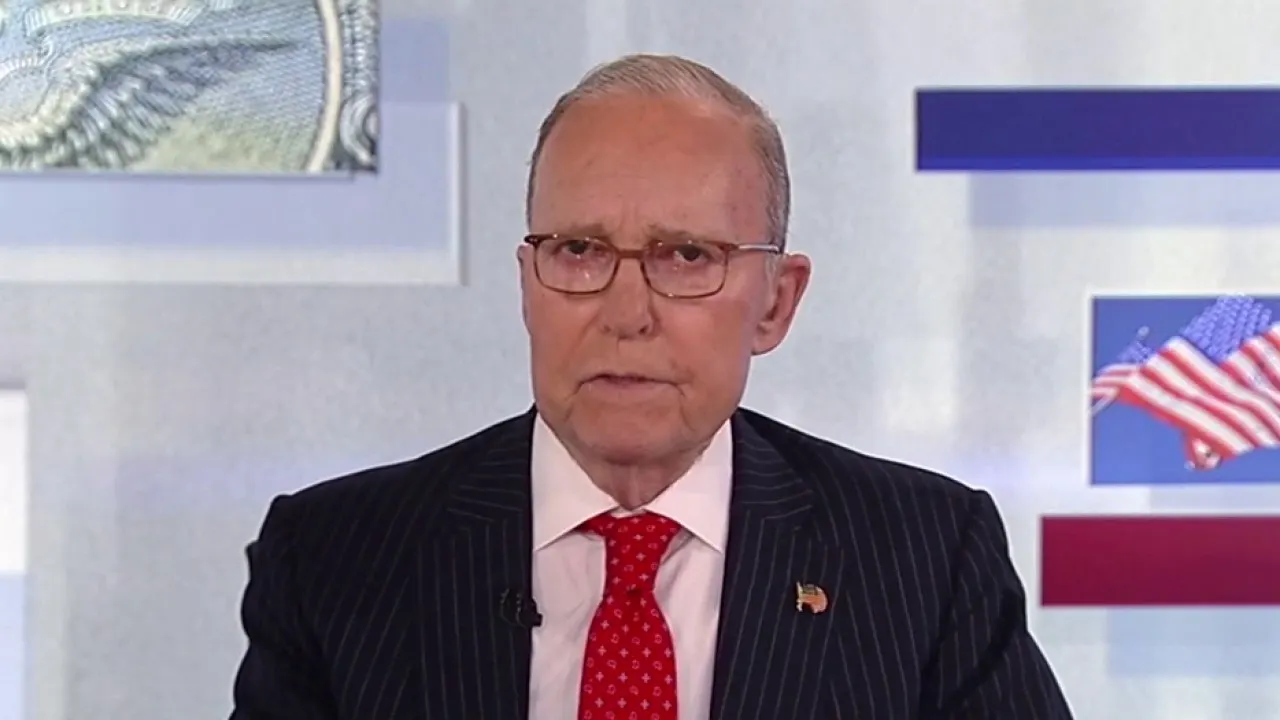
FOX Business host Larry Kudlow discusses the WHCA Dinner shooting and its aftermath on ‘Kudlow.’
Even President Trump’s toughest critics should acknowledge his grace and courage under fire. He showed it once again in his presser Saturday night after the shooting at the White House Correspondents Association Dinner.
If I can borrow from my friend Miranda Devine, he praised the Chairman of the Correspondents Association, who has been a severe Trump critic. He was magnanimous about the Secret Service, though they’re going to have to answer some tough questions in the weeks ahead. And he was self-effacing about the likelihood that the shooter was gonna go for him. He said: “it’s always shocking when something like this happens. It’s happened to me a little bit. And, that never changes the fact we’re sitting right next to each other.” Mr. Trump added that “if you take presidents, it’s 5.8 percent and about 8 percent are shot at. So nobody told me this was such a dangerous profession.” He concluded: “It’s dangerous. It’s dangerous stuff, whether it’s here or someplace else. No country is immune.”
That’s grace under fire. Standing in his formal attire, with his bow tie in place, the president holds an extraordinary news conference. Hat tip to my friends at The New York Sun for pointing this out.
It appeared to be the third assassination attempt in two years. No president has faced that. My former boss, President Reagan was nearly killed by an assassin’s bullet in 1981. And far as I know, there have been no other assassination attempts until Butler, Pennsylvania in 2024.
Rep. Jim Jordan, R-Ohio, discusses rising concerns over political violence following a shooting at the White House Correspondents’ Association Dinner on ‘Kudlow.’
Mr. Trump had a thought on this as well. Take a listen: “Well, you know, I’ve studied assassinations, and I must tell you, the most impactful people, the people that do the most. You take a look at the people. Abraham Lincoln.” Yet, he added, “the people that do the most, the people that make the biggest impact, they’re the ones that they go after.”
Faith Bottum of the Wall Street Journal’s editorial page notes that 8.5 percent of Presidents have died by assassination. Mr. Trump, though, has said time and again, including during his presser Saturday night, that he’s not worried about assassination and in fact wanted the dinner to continue that night before the Secret Service ruled it out. Yet that president has also said many times that he cannot let the criminal class or the political crazies shut down freedom of speech, or any political rallies for that matter. And of course he wanted a redo of the correspondents dinner in 30 days, or whenever it’s possible.
By the way, hat tip to Ms. Bottum for calling Mr. Trump brave and courageous. The Journal’s vaunted editorial page has been especially tough and critical of Mr. Trump. The president called for unity and it’s a great thought, but somehow in this period of our history it just doesn’t seem realistic.
In my lifetime I witnessed the assassination of JFK and then Martin Luther King and then Senator Robert F. Kennedy. These were great national tragedies. There was an assassination attempt against President Ford in 1975. Then the Reagan attempt in 1981 and then the multiple attempts on Mr. Trump. I don’t know what’s happened to the country that I love. I know America can do better. Let us hope that somehow it will.
The profit after tax (PAT) grew 6% on a sequential basis versus Rs 159 crore posted in Q3FY26 while the topline grew 3.4% quarter-on-quarter against Rs 1,639 crore in the October-December quarter of FY26.
On a standalone basis, PAT grew 4% in the quarter under review to Rs 156 crore versus Rs 149 crore in the year ago period. The standalone revenue in the January-March quarter of FY26 stood at Rs 1,696 crore, recording a 16% growth over Rs 1,457 crore reported in Q4FY25.
The Earnings Before Interest, Taxes, Depreciation and Amortisation (EBITDA) stood at Rs 310 crore in Q4FY26 versus Rs 274 crore in Q4FY25, implying a 13% rise.
The company said the rise in revenue was due to higher volume.

The cost of natural gas increased 18% YoY to Rs 1,199 crore in the quarter under review versus Rs 1,015 in the year ago period as lower allocation of APM gas to CNG segment, higher HH prices, higher spot prices due to geopolitical tension were major culprits.
During the quarter, APM allocation for the CNG segment reduced to 36% from 41% from last quarter, the balance was met with existing contracts and Spot procurement.ATGL said it took a calibrated approach in passing the higher gas cost to ensure volume growth does not get impacted.
The profit before tax (PBT)increased by 8% to Rs 214 crore.
Management commentary
CEO & Executive Director Suresh P. Manglani said ATGL delivered strong double-digit growth in volumes and revenues, supported by steady EBITDA expansion aided by “resilient execution, underpinned by operational excellence and digital enablement”.
“Despite geopolitical disruptions from West Asia, elevated LNG prices, and currency volatility, our nimble and diversified sourcing strategy ensured uninterrupted gas supply. ATGL’s focus remained on system stability, calibrated expansion with financial prudence, and long‑term sustainability, strengthening consumer confidence and ensuring operational excellence. We continued to scale our clean energy infrastructure across CNG, PNG, and e-mobility, with EV charge points crossed the 5,100 mark. During the period, we strengthened our ESG performance through improved sustainability ratings, reinforcing ATGL’s position among leading ESG performers in its peer group,” Manglani said.
(Disclaimer: The recommendations, suggestions, views, and opinions given by the experts are their own. These do not represent the views of The Economic Times.)

Malaysian and ASEAN+3 companies should strategically invest across the region to strengthen trade and FDI linkages. Despite global geopolitical risks, the region grew 4.3% in 2025, with ASEAN+3 now accounting for 28% of global final demand, emerging as the world’s largest market.
Key Points
• ASEAN+3 now accounts for 28% of global final demand, surpassing the United States
• Region has evolved beyond manufacturing into a major consumer market
• Supply chains have shifted from China-centric to broader ASEAN+3 collaboration involving Japan and South Korea• ASEAN poised to lead in a emerging multipolar world order
• Securities Commission chairman calls for deeper, agile capital markets aligned with regional sustainability and innovation standards to drive future growth
Strategic Regional Investment and Economic Resilience
Domestic companies must adopt a more deliberate, strategic approach to cross-regional investment. According to Allen Ng of AMRO, when local firms invest in foreign-owned groups, they generate foreign direct investment flows that strengthen trade linkages and deepen regional integration. Ng emphasized that Malaysia is actively developing policies to foster a more integrated capital market. Despite significant geopolitical risks, including conflicts in the Middle East, the Asean+3 region demonstrated resilience, expanding by 4.3% in 2025, with growth forecasted at 4% for both 2026 and 2027, even after absorbing two major economic shocks within 12 months.
Structural Shifts Redefining Asean+3’s Global Role
Asean+3 has undergone transformative structural shifts that have redefined its position in the global economy. Supply chains, once centered predominantly on China, have evolved into a highly integrated network involving China, Japan, and South Korea. More significantly, the Asean region has emerged as a final consumption market, not merely a manufacturing hub. The bloc now accounts for 28% of global final demand, surpassing the United States, signaling a fundamental change in its economic identity. Central banks and policymakers face the critical challenge of managing both supply and demand shocks through carefully targeted fiscal and monetary policies.
Malaysia’s Opportunity in a Multipolar World
Malaysia is well-positioned amid the global shift toward multipolar power dynamics. Deputy Finance Minister Liew Chin Tong highlighted that as US influence declines, Asean nations must unite strategically, noting that “no country is too small when operating within the Asean context.” He suggested Kuala Lumpur could emerge as a major regional hub, drawing parallels to how Petronas was born from the 1974 oil crisis, turning adversity into opportunity. Securities Commission chairman Mohammad Faiz Azmi reinforced this vision, urging capital markets to be deep, agile, and aligned across borders through harmonized sustainability and cross-border standards, ultimately creating a common capital market greater than the sum of its parts.
Other People are Reading
Greggs is removing display cabinets in London stores that have been most severely hit by shoplifters.
Business
'My husband might give up work to care for our kids' – nursery bills in Wales highest in Britain

Parents in Wales say the cost of childcare is one of their biggest worries ahead of the election.

Rhea Ripley Reunites With Popular WWE Star Following SmackDown

Monitor Audio Creator Series Expands with C2L-A Angled In-Ceiling Speaker for Improved Home Theater Sound
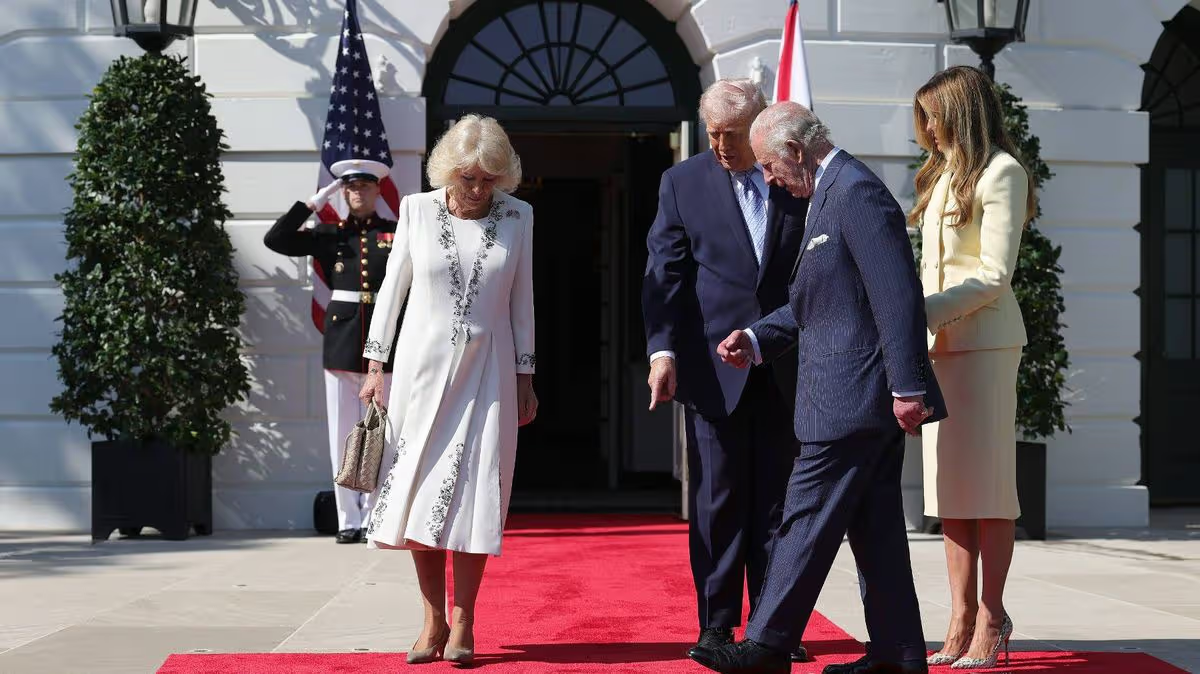
Humiliating sticker tells Donald Trump where to stand as he meets King Charles at White House

Manchester United reach agreement with Casemiro over contract clause amid transfer speculation

US brings back mandatory military draft registration

Steven Gerrard disagrees with Gary Neville over ‘shock’ Chelsea and Arsenal claim | Football


-

 Fashion3 days ago
Weekend Open Thread – Corporette.com
-
 Crypto World2 days ago
Hyperliquid $HYPE Rally Builds Momentum as AI Sector Enters Prove-It Phase
-

 Tech6 hours ago
Register Renaming | Hackaday
-

 Politics5 days ago
Making troops accountable for war crimes threatens US alliance, ex-SAS colonel warns
-

 Politics5 days ago
Disabled people challenge government SEND proposals over segregation concerns
-

 Business4 days ago
Patterson-UTI Energy, Inc. (PTEN) Q1 2026 Earnings Call Transcript
-

 Business6 days ago
Rolls-Royce Voted UK’s Most Iconic Trade Mark as IPO Register Hits 150
-
 Crypto World6 days ago
Five Value Stocks with Recovery Potential in 2026: PayPal (PYPL), Nike (NKE), and More
-
 Sports1 day ago
IPL 2026: Ruturaj Gaikwad registers slowest fifty of the season, enters all-time unwanted list | Cricket News
-

 Politics5 days ago
Starmer handler McSweeney to be dragged from shadows by Foreign Affairs Committee
-

 Politics5 days ago
Zack Polanski responds to home secretary’s taser threat
-
Politics5 days ago
Wings Over Scotland | How To Get Away With Crimes
-

 Crypto World6 days ago
New York sues Coinbase, Gemini over prediction market offerings
-
Entertainment6 days ago
Sydney Sweeney cameo cut from “The Devil Wears Prada 2”, source explains why (exclusive)
-
 Business6 days ago
HCL Tech share price tank over 9% after weak Q4. JPMorgan, HSBC & 3 others cut target price
-

 Politics5 days ago
‘Iran is still a nuclear threat’
-
 Crypto World6 days ago
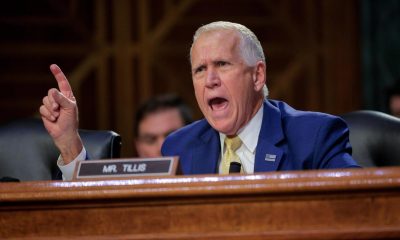
Crypto’s great hope in Senate’s Clarity Act still has a path to survive tight calendar
-
 Sports5 days ago
Tim Bradley names the current best in the world: “Better than Inoue and Usyk”
-

 Fashion6 days ago
Kilkenny Design New Beauty Arrivals for Spring 2026
-

 NewsBeat2 days ago
LK Bennett closes all stores after entering administration
You must be logged in to post a comment Login