
Tech
Some Musk v. Altman Jurors Don’t Like Elon Musk


A jury was selected on Monday during the first day of trial for Musk v. Altman in a federal court in Oakland, California. Some of the jurors that were ultimately selected voiced concerns over Musk himself, as well as the AI technology at the core of the case, but assured the court they would put these concerns aside for the trial. The kick off also catalyzed an array of shenanigans outside the courtroom.
OpenAI CEO Sam Altman and president Greg Brockman were spotted in the security line inside the courthouse this morning, but Elon Musk was nowhere to be found. A few dozen journalists crammed into an overflow room to listen to an audio stream of the proceedings.
The goal today was to select nine jurors who could be fair and impartial in this case—an especially difficult challenge considering the main characters are some of the most high-profile tech executives in the world. Several potential jurors said they had negative opinions about Musk when questioned by Judge Yvonne Gonzalez Rogers and attorneys. But that didn’t necessarily disqualify them; only one juror was ultimately excused on the basis of their strong negative opinions regarding Musk.
“The reality is that many people don’t like him,” Gonzalez Rogers told the courtroom. She added that she believed Americans with negative feelings about Musk could still have integrity for the judicial process and decide the case fairly. The jury will help establish the core facts regarding whether Sam Altman and other defendants improperly steered OpenAI’s nonprofit venture away from its original mission, potentially violating the law in the process. But their verdict will be advisory—Gonzalez Rogers will have the final call.
The nine jurors that were ultimately selected represent quite a diverse group, including a painter, a former Lockheed Martin employee, and a psychiatrist. Some of them said they had negative opinions about artificial intelligence technology more broadly. In the end, however, all of the people selected assured the court that their outside opinions about Musk and AI shouldn’t interfere with their ability to determine the facts of the case.
OpenAI’s attorney William Savitt said at a press briefing afterward that he was satisfied with the jury the court settled on.
“Mr. Altman, Mr. Brockman, and OpenAI are looking forward to presenting their case to that jury. They’re confident in their position and are looking forward to the facts being known,” Savitt told reporters. “The hurdle we think we need to get over is just to present the truth here. We’ve got a story about what happened that is consistent with the facts, it’s consistent with the documents, and we just want the jury to see that.”
Musk is already trying to win his case in the court of public opinion. On Monday morning, the billionaire used his social media platform X to boost a recent New Yorker investigation into Altman’s alleged deceptive business conduct. The story is weeks old, and the fact that Musk promoted it on the first day of the trial is no coincidence. Earlier this morning, OpenAI’s official newsroom account published a post on X calling Musk’s lawsuit an “attempt to undermine our work to ensure that artificial general intelligence benefits all of humanity.” Meanwhile, demonstrators were outside the court protesting the AI race altogether and calling for a pause on further development.
On Tuesday, lawyers for OpenAI and Elon Musk will deliver opening statements, and the first witness in the case will be called to the stand.
This is an edition of Maxwell Zeff’s Model Behavior newsletter. Read previous newsletters here.

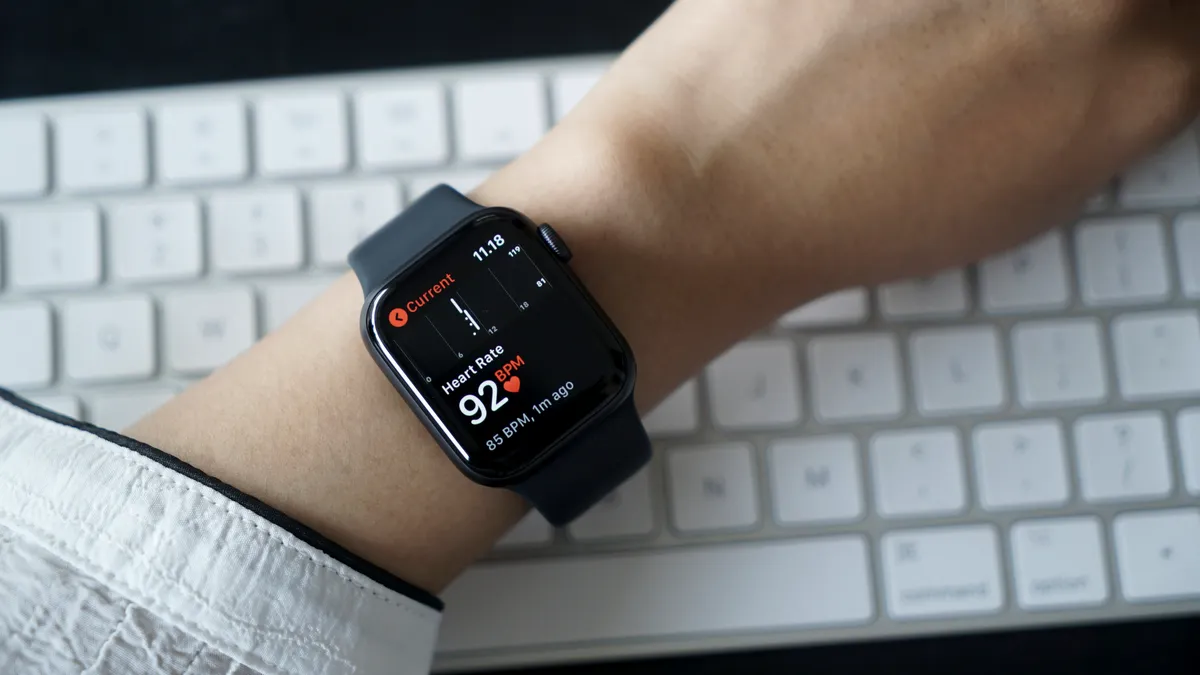
If you regularly wear an Apple Watch, you’ve probably discovered the apps most useful to your daily life, like responding to emails and texts, checking the weather and using Apple Pay for contactless payments. But there are host of health apps and features that might not currently be on your radar, and they have the potential to be life-saving.
I spoke with Dr. Lauren Cheung, a doctor at Apple, who reviewed the hidden health features on the Apple Watch and why they were created.
1. The Vitals app for sleep and more
Using overnight health metrics, the Vitals app can reveal much about your health and how it changes day to day. From heart rate and wrist temperature (available on Apple Watch Series 8 or later and any Apple Watch Ultra model) to respiratory rate and sleep duration, you can get a thorough picture of your health from just one glance at your watch.
“When two or more of your metrics are out of range, we will notify you with information about why that might be,” Cheung explained. “How it works is just after you wake up, you might see a notification from the Vitals app. For example, maybe your heart rate and wrist temperature were high — this could be due to illness or alcohol consumption.”
With the health information from the Vitals app, you can make informed decisions about your health. If specific metrics are outside your normal range, you can choose to get extra rest that day or visit your doctor if you have particular symptoms.
How to set up the Vitals app
To set up your typical range, you must wear your Apple Watch for at least seven days. Ensure your watch is not loose on your wrist; otherwise, it might not capture accurate readings.
To set up notifications, go to Settings on your Apple Watch, tap Vitals and turn on notifications.
For sleep specifically, make sure Track Sleep with Apple Watch is set up and Sleep Focus is enabled. To do so, open your iPhone’s Health app, tap Get Started under Set Up Sleep, tap Next and then follow the on-screen prompts. You can also use your Apple Watch’s Sleep app and follow the on-screen instructions.
2. Noise notifications
Your Apple Watch can measure the noise around you and let you know if it’s too loud.
You can use the Noise app on your Apple Watch to measure the sound levels in your environment. You can also enable noise notifications, so your watch can tell you when you’re exposed to dangerously loud sounds.
When asked why noise notifications were added to the Apple Watch, Cheung said, “The world can be loud, and we believe it’s important for you to be educated and empowered about how your environment, and the noise around you, can impact your hearing health over time. That way, you can take action; whether that’s moving to a quieter space or popping in AirPods Pro 2 with Hearing Protection.”
With the AirPods Pro 2 or 3, Apple also offers a Hearing Test that can give you a baseline for your hearing health and help you adjust accordingly. Or you can even use your AirPods Pro 2 as a hearing aid.
How to set up Noise notifications
Simply go to the Watch app on your iPhone, tap My Watch, tap Noise, tap Noise Threshold and then pick a decibel level. Different limits are listed based on World Health Organization recommendations.
3. Ovulation estimates
“The technology is pretty remarkable,” Cheung said. “We created new temperature-sensing capabilities on Apple Watch that help you understand nightly changes from your baseline temperature, which can be caused by exercise, jet lag or even illness. The unique two-sensor design improves accuracy by reducing bias from the outside environment, detecting changes as small as 0.1 degrees Celsius.”
With the Apple Watch Series 8 or later and all Apple Watch Ultra models, this technology allows the Cycle Tracking app to estimate when ovulation occurs. “The reason we can do that is because after you ovulate, there is a biphasic shift, or in other words, an increase in temperature in response to changing hormones,” Cheung said. This can also help improve the Cycle Tracking app’s period predictions.
How to set up ovulation estimates
First, set up Cycle Tracking with fertility predictions enabled and no ongoing cycle factors logged. To do so, open your iPhone or iPad’s Health app, tap Browse on the iPhone or open the iPad’s sidebar, tap Cycle Tracking, tap Get Started and follow the on-screen instructions.
You will also want to ensure you set up Track Sleep with your Apple Watch and have Sleep Focus enabled for at least 4 hours per night for five nights. To set up Sleep, follow the instructions in your Apple Watch’s Sleep app.
4. Fall detection
If you’ve taken a fall and need help, your Apple Watch can help you contact emergency services.
Many Apple Watch users have reported the benefits of fall detection, said Cheung. “For those who have an active lifestyle, they can choose to enable it during workouts — the feature is able to recognize the unique motion and impact of falls from a bike and other workout types,” she said.
If your watch detects a hard fall, it will sound an alarm, display an alert and tap you on the wrist. With the alert, you can either dismiss it by tapping “I’m OK” or contact emergency services. The watch automatically calls if you’ve been immobile for around a minute. After, it will message your emergency contacts with your location. If you don’t have cellular or Wi-Fi coverage, Fall Detection may reach emergency services via the Emergency SOS via satellite system (if available).
Note that Apple Watch can’t detect all falls and may mistake a high-impact activity as a fall.
How to set up fall detection
To enable it, on your iPhone, open the Watch app, tap My Watch, tap Emergency SOS and turn Fall Detection on or off. If enabled, you can choose whether you want it to always be on or only during workouts. This works for Apple Watch SE, Apple Watch Series 4 or later and Apple Watch Ultra or later, and if you inputted your age when you set up your Apple Watch or in the Health app, the Fall Detection feature turns on automatically if you’re 55 or older.
5. Heart health notifications for atrial fibrillation
For those with Apple Watch Series 1 or later and people aged 13 and over, you can have your Apple Watch alert you if your heart rate is high or low, or if it has an irregular rhythm.
“For the most part, you don’t have to do anything besides turn them on,” Cheung said. “They work passively in the background as you live your day. If your heart rate is unusually high or low, you can get a notification, so you can take action. And if your heart rhythm shows signs of atrial fibrillation — an irregular heart rhythm — you’ll receive a notification.”
Cheung said atrial fibrillation as the most common type of arrhythmia among adults, which can have serious side effects on your health if not treated. “For instance, it’s the leading cause of stroke,” she said. “And some people with AFib can have little to no symptoms, so they may not even realize they’re experiencing episodes and ultimately may not seek attention.”
If you get an irregular rhythm notification, you can speak with your doctor and even share a PDF that includes information about your heart health notifications and, if you take one, your electrocardiogram. Available on Apple Watch Series 4 or later and all Apple Watch Ultra models, the ECG app allows you to take a test that records the timing and strength of the electrical signals that make your heartbeat.
How to set up heart health notifications
To set up heart rate notifications, go to the Apple Watch app on your iPhone, tap My Watch, tap Heart, tap High Heart Rate and choose Beats Per Minute, tap Low Heart Rate and choose a BPM. For irregular rhythm notifications, open your iPhone’s Health app, tap Browse, tap Heart, tap Irregular Rhythm Notifications and enable them.
6. Time in daylight
Spending time outside in daylight is important for both your physical and mental health.
Your Apple Watch’s ambient light sensor can automatically estimate your time in daylight. If you manage a family member’s Apple Watch, you can also see how much time they spend in daylight.
“There are a few reasons it’s important to be aware of how much time in daylight you’re getting,” Cheung said. “For adults, research shows that spending around 20 minutes outdoors every day has both physical and mental health benefits, including providing essential vitamin D and even boosting your mood.”
Time in daylight is crucial for kids’ vision health. “The International Myopia Institute recommends children spend 80-120 minutes outside each day to help lower their risk of myopia, or nearsightedness,” she said.
How to set up time in daylight
Start by making sure that Motion Calibration & Distance is turned on. You can do so in the iPhone’s Settings app. Tap Privacy & Security, tap Location Services, turn on Location Services, tap System Services and ensure that Motion Calibration & Distance is on.
To view your time in daylight, go to your iPhone’s Health app, tap Browse, tap Other Data and then tap Time in Daylight.
7. State of mind to log your mood
You can log your emotions and daily moods in the Mindfulness app on your Apple Watch, which can help you identify your feelings and notice patterns in your mental health. From the app, you can also take time for a Reflect or Breathe session, which can tell you more about your heart rate once complete.
“Emotional awareness and regulation is an important element of mental health and we’re happy to be introducing tools and resources for our users across the world,” Cheung said. “One of the tools we introduced is State of Mind, which can help tremendously in a few ways. First, the act of using it can create benefits for your mental well-being in and of itself. Second, it can help you identify important insights and trends on what might be contributing to your state of mind so you can take action. And third, it can encourage you to check in with yourself using depression or anxiety assessments in the Health app.”
Cheung added that taking the time to identify our feelings can help us control how we respond to our moods and emotions. This can positively affect our health and, over time, allow us to build resilience.
How to set up State of Mind
In your Apple Watch’s Mindfulness app, tap State of Mind and then tap Get Started if it’s your first time using it. From here, you can log how you feel in the moment or how you’ve felt overall that day. To see your history and patterns over time, open your iPhone’s Health app, tap Browse, tap Mental Wellbeing, tap State of Mind and tap Show in Charts. From there, you can also view how your State of Mind relates to your sleep, exercise, time spent in daylight and mindful minutes.
8. Sleep apnea notifications
Your Apple Watch can let you know if it detects potential sleep apnea, a disorder that can be deadly if not properly treated.
“Sleep apnea is a prevalent disorder where breathing momentarily stops during sleep, preventing the body from getting enough oxygen,” Cheung said. “It’s estimated that sleep apnea impacts more than 1 billion people worldwide and, in most cases, goes undiagnosed. If left untreated, it can have important health consequences over time, including increased risk of hypertension, type 2 diabetes and cardiac issues.”
If your Apple Watch detects elevated breathing disturbances while you sleep for over 30 days, you will receive a sleep apnea notification. From there, you can create a PDF that shows when sleep apnea may have occurred, along with three months of breathing disturbance data and more, which you can then share with your doctor to discuss the next steps.
This feature is available on the Apple Watch Series 9 or later or Apple Watch Ultra 2 or later. Just make sure you have the latest version of WatchOS and iOS. Note that this feature is intended for people aged 18 or older who have not already been diagnosed with sleep apnea.
How to set up sleep apnea notifications
Make sure Sleep is set up. On your iPhone, open the Health app, tap Get Started under Set Up Sleep, tap Next and follow the on-screen steps. Then, wear your Apple Watch to bed for at least 10 nights over 30 days.
To turn on sleep apnea notifications, open the Health app on your iPhone, tap Browse, tap Respiratory, tap Set Up under Sleep Apnea Notifications, tap Next and then follow the on-screen instructions. Under Respiratory, you can also view your sleep apnea notifications and breathing disturbances.
9. Handwashing
With Handwashing, the Apple Watch Series 4 and later can detect when you begin washing your hands and time you until you reach the recommended 20-second duration. The US Centers for Disease Control and Prevention also recommends this as the minimum amount of time. If you stop washing your hands before 20 seconds, your watch will encourage you to keep going. It can even remind you to wash your hands whenever you return home.
“We wanted to find a way to help our users of all ages track their time spent washing their hands, especially during a time when it was particularly important early in the pandemic, so we introduced the feature in 2020,” Cheung said. “The approach uses machine learning models to determine motion which appears to be handwashing, and then uses audio to confirm the sound of running water or squishing soap on your hands.”
How to set up handwashing
On your Apple Watch, open Settings, tap Handwashing and turn on the Handwashing Timer. You can do the same on a managed Apple Watch and set up handwashing reminders.
I won’t pretend I’m above it — I watch Instagram Reels and YouTube Shorts like everyone else, and it usually starts small. A notification pops up, I unlock my phone, and I tell myself I’ll just check one thing. The next moment, I’m deep into a stream of random videos, with no idea how I got there or how much time has quietly slipped away. I’ve genuinely tried to fix it — I set app timers and convinced myself I’d follow them. I even removed Shorts from my YouTube feed, thinking that would finally solve it. I tried apps that promise to limit usage and keep you in check. For a day or two, it felt like I had things under control. Then slowly, almost without noticing, I’d fall right back into the same loop. This habit creeps in during moments of boredom, and suddenly I’m scrolling again.
At some point, I had to admit it — doomscrolling was no longer something I occasionally did; it was something I kept returning to without even thinking about it. Then, almost by accident, I found an app that actually made a difference. It didn’t completely fix everything overnight, but it did something more important. It made me pause and be aware of what I was doing in that moment. And that small interruption was enough to help me pull back before I went too far. It just gave me a bit of control, which was exactly what I needed.
This tiny drawing habit is my new escape route
I’ve been using Dudel Draw on my iPhone for the past few days, and it’s been a surprisingly refreshing change from how I usually spend time on my phone. The idea is simple, but it works — every day, the app gives you a new abstract shape to start with. It could be a random blob, a few odd lines, or something that makes no sense at first glance. And then it’s up to you to turn that into literally anything.

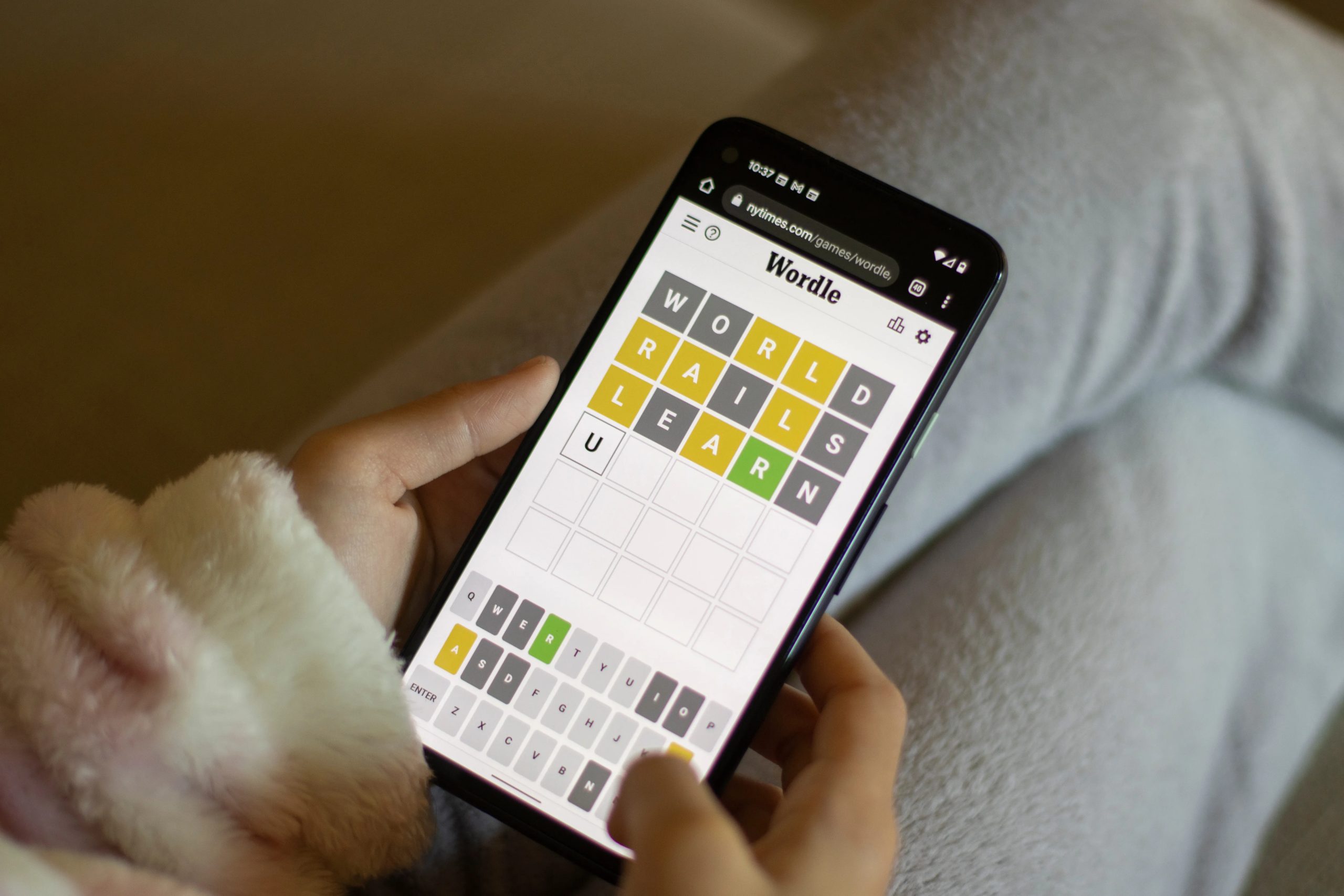
The closest way to describe it is that it feels like a drawing version of Wordle. You show up, you get your daily prompt, and you just go with it. Some days I turn those shapes into objects, other days into characters, and sometimes it’s just chaotic lines that somehow make sense by the end. It usually takes me five minutes, maybe a little more if I get carried away, but that short burst feels oddly satisfying.

What I like most is how effortless it is. There’s no pressure to be good at drawing, no right or wrong outcome. You can either pick the “shape of the day” challenge or just play around with random shapes whenever you feel like it. It doesn’t feel like a task or something you need to be consistent with. It just quietly fits into your day.
For me, it’s become a small ritual, especially when I hit a creative block while writing. Instead of staring at a blank screen, I open the app and start doodling whatever comes to mind. Half the time, I’m just sketching nonsense and humming songs in the background, but it helps clear the noise in my head. Somewhere in that process, ideas start to come back. And almost without trying, it’s also helped me cut down on doomscrolling. I still reach for my phone out of habit, but now there’s an alternative that doesn’t leave me feeling drained. If anything, I come out of it feeling a little more creative, a little more present, and, surprisingly, a lot less stuck.
My daily scroll finally has an exit door
I’m not going to claim that I’ve completely quit Instagram Reels or YouTube Shorts — that would be unrealistic. The habit is still there, and I still fall into it sometimes. But what’s changed is this — I now have something that gently interrupts that loop before it goes too far. Dudel Draw doesn’t demand discipline or punish me for slipping. It simply gives me an alternative that feels much lighter.

And that’s really the difference. I’m not replacing one rigid rule with another. I’m just choosing, more often than before, to spend those few idle minutes creating something. Because for the first time in a while, reaching for my phone doesn’t always end with me feeling like I lost time.
We may receive a commission on purchases made from links.
The National Park Service recently released the results of a study conducted in 2024, intended to gauge the level of preparedness of day hikers and trail runners in Rocky Mountain National Park. This study, summarized here, surveyed hikers and runners about the gear they carried with them, along with personal data and their own opinions about their level of wilderness-readiness. Results showed that most of those surveyed didn’t bring several items from the National Park Service’s 10 Essentials — a list of emergency items posted at most trailheads in national parks, including Rocky Mountain National Park, that includes first aid, navigation, shelter, and hydration.
As a Colorado resident, very amateur hiker, and husband to an impressive person that completed the Colorado Trail by herself, I can attest to a lot of the findings of the field survey. My partner is absolutely capable and incredibly wilderness-prepared on her longer hikes, and often talks about people she’s met on the trail that were woefully underprepared for weather or accidents. While she’s always happy to help, the very nature of, well, nature, means you may not encounter another person if an emergency strikes.
With that in mind, SlashGear has compiled five helpful tools and gadgets campers and hikers tend to forget. These items represent the most-forgotten categories on the survey we mentioned previously — hydration, tools/knife, fire starter, navigation, and emergency shelter — and are products my wife and I have experience with. Hopefully they’ll help readers be prepared for anything on their next trip into the great outdoors.
LifeStraw Peak Squeeze
While the study we’re referencing indicates that most outdoorspeople carry extra water, it also shows that most forget to bring some form of water treatment along for the journey. To some degree, that makes sense — say you’re on a short hike and you’ve brought a big, heavy water bottle (like Shark Tank’s LARQ Water Bottle) in your pack — why waste the space? However, that’s when emergencies happen. One minute you’re wandering off trail to inspect a neat tree. The next, you’re propped up against that tree with a broken ankle, no passersby, and a rapidly depleting water supply. In that instance, the ability to filter water for safe drinking is paramount.
One of the best known brands in water treatment is LifeStraw, the company that makes the popular personal water filter that allows users to drink from questionable sources without worry. While that’s a great gadget to have in a pinch, a better option for most folks is the LifeStraw Peak Squeeze. It combines a lightweight pouch with a removable microfilter, meaning you can use the filter as a straw, or threaded onto another bottle. The pouch and filter are also incredibly pack-friendly, rolling up to about the size of a Twinkie. It’s a logical evolution of the popular straw, allowing you to dip the bag in a stream or pond and filter out almost everything that could leave you regretting that decision.
You can order a LifeStraw Peak Squeeze for around $40 on Amazon.
Ontario RAT 2
Purists will tell you a fixed-blade knife is the way to go when choosing an outdoor knife. They’re correct in that a fixed blade is often stronger and more useful for the tasks you’ll be performing when backcountry camping or in survival situations. For a day hike or overnight camping, something that’s strong and durable, but perhaps easier to pack and carry is a folding knife. While it may not be as sturdy as a fixed-blade knife, that trade off comes with a little more safety and portability. If you’re looking to carry something a little more versatile on your outdoor adventures, check out SlashGear’s guide to multitool alternatives to Leatherman.
A knife I purchased last year after reading multiple positive reviews is the Ontario RAT 2. This is one of the best pocket knives out there. It’s incredibly durable, comfortable in hand, small enough to comfortably carry in a pocket, and super affordable. The RAT 2 features a three-inch blade, a nylon handle, and a little lanyard hole. It’s a no-frills tool, but sometimes that’s what you want in a knife. Mine has kept its edge after a few hikes and several hundred boxes that needed breaking down at work, which is a testament to the quality AUS-8 steel used in the blade.
The Ontario RAT 2 can be ordered from Amazon for about $40; for a more robust selection of handle and blade colors, order direct from Ontario Knife Company’s website.
Pyro Putty Elite Rechargeable Dual Arc Lighter
Fire starters aren’t necessarily something you’d think about while packing a light bag for a day trip, but it never hurts to be prepared. You could bring a lighter and hope for the best with whatever tinder you can find, but if you’re caught by a storm or forced to make camp, having something like Pyro Putty could be a life saver. These little bundles are waterproof, quick to light, and keep burning even in high winds. They’re sticky, allowing you to attach them directly to wood, and even come in special formulas for the season and temperatures in which you’ll be using them.
You’ll still need a fire source to ignite Pyro Putty, like a lighter, match, or ferro rod. You could also invest in the handy Pyro Putty Elite Rechargeable Dual Arc Lighter, a gadget that features a little waterproof storage compartment in its base for a bit of Pyro Putty. It’s rechargeable via mini-USB, glows in the dark, and Phoneskope claims you’ll get 300 arcs out of a single charge. While I’d still suggest keeping a few waterproof matches in your pack just in case, this is a great starter kit for the outdoorsperson or campfire enthusiast in your life. The Pyro Putty Elite Rechargeable Dual Arc Lighter comes with a single pouch of Pyro Putty (which the manufacturer claims can start up to 30 fires) and can be purchased from Amazon for about $30.
McMurdo FAST FIND 220 & Spot X
Most of us consider our cell phones to be our link to the rest of the world, but what happens when you’re outside of cell service range? While that’s not as common an occurrence as it once was, areas where service is still lacking also happen to be some of the most popular areas for hiking and camping — they call it “going off grid” for a reason, after all.
For emergency situations where a phone can’t get a signal, a Personal Locator Beacon is a life-saving last resort. Personal Locator Devices, or PLBs, are devices that send a one-way signal to search and rescue. The McMurdo FAST FIND 220 is among the most popular due to its relatively low price and a lack of subscription fees. It’s waterproof, has a battery life of over six years, and produces a signal to rescue services for a minimum of 24 hours. The Fast Find also includes an LED flashlight programmed for SOS morse code, and can be ordered from Amazon for $275.
There are also two-way satellite messengers like the Spot X, off-grid tech essentials which trade off the super-powerful beacon of a PLB for the ability to send messages and location data to friends. There’s still emergency functionality along with text messaging, but these devices typically require a subscription for service. The Spot X is available on Amazon for $250.
SOL Emergency Bivvy
The most commonly forgotten piece of gear from the National Park Service survey we’re referencing for this article was some form of emergency shelter. Campers or thru-hikers often carry tents for overnight stops, but anyone venturing out into the wilderness, including trail runners, cyclists, and day hikers, should have some kind of shelter on hand, even if it’s just an ultralight space blanket or a tarp they picked up at Harbor Freight.
Bivy sacks, like the SOL Emergency Bivvy, are kind of like an emergency sleeping bag. They’re lightweight, easy to pack, and waterproof, windproof, and heat-reflective. Anyone with a backpack can easily fit this pop-can-sized emergency bag into the bottom of their pack, and at less than four ounces, you probably won’t even notice it’s in there. The bivvy is reusable, and the manufacturer says it reflects up to 90% of the user’s body heat, making it a valuable resource if caught by harsh weather. The SOL Emergency Bivvy includes a rescue whistle and a paracord drawstring that doubles as tinder for starting a fire, comes in safety orange or green, and can be delivered via Amazon for about $25.
We may receive a commission on purchases made from links.
Your Chromebook has an expiration date known as Auto Update Expiry Date (AUE). Essentially, this is the best-by date for Google’s official support, and after that point, your laptop will no longer receive automatic security and software updates. With luck, you may be able to keep using your Chromebook even after that cut-off date, but the lack of updates might become a problem over time. Some apps may no longer work smoothly, and the device may become more vulnerable to security threats.
Once your Chromebook approaches that end-of-life stage, you’ll probably put it in storage and upgrade to one of the best laptops you can buy right now. However, before you put it away or take it to a recycling facility, keep in mind that even an aging Chromebook is not necessarily useless.
You can keep your Chromebook useful by turning it into a digital photo frame, a security camera, and much more. This way, you’ll give your old Chromebook a new lease on life, save money, and even cut back on e-waste.
Use your old Chromebook as a home security camera
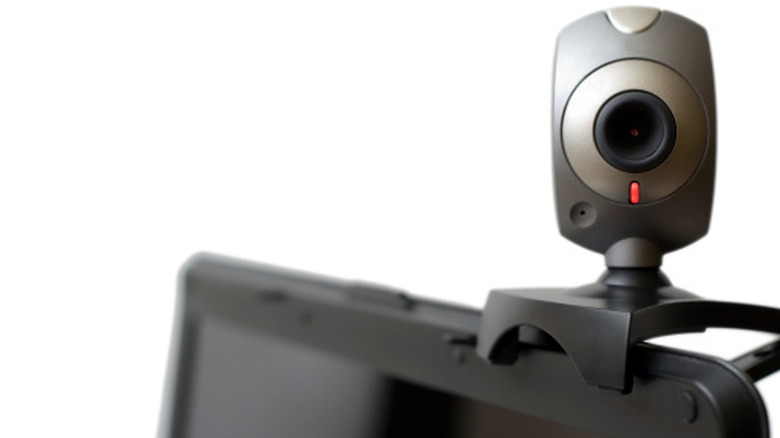
There are many ways to make your home more secure, and one of the best is investing in a video surveillance system. The downside is that some of the best smart security cameras for your home and garage can be expensive to install, especially if you want to cover every inch of your house.
Luckily, if you have an old Chromebook, you can just build your own home security camera. Key features of most smart security systems include a camera, a storage system (often with backups being sent to the cloud), a companion app, and a wireless connection. These are capabilities you’ll likely find in your Chromebook. You’ll just need to buy a standalone webcam if your Chromebook’s built-in camera is of low quality.
Your best bet is to look into using a web-based security service that works in Google Chrome, as that’s the most universal and stable way to set this up on a Chromebook. Certain Android apps, such as Camy, may also work. Keep in mind that this can’t replace a full-blown home security system, but it can still be useful if you want to see what’s going on at home when you’re away. Smart cameras come with motion sensors, superior video quality, and night vision.
Turn your old Chromebook into a digital photo frame
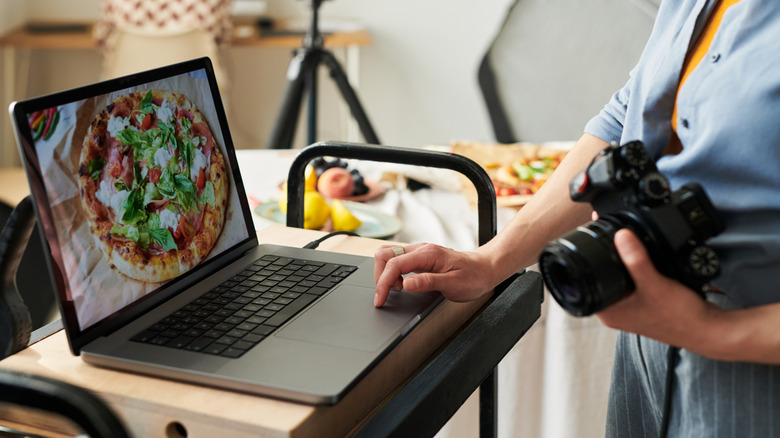
You probably have hundreds, if not thousands, of photos that you rarely look at because they often get buried in albums and folders. One way to display them is to put them in a digital photo frame, but unfortunately, high-quality digital photo frames are not cheap. Larger, premium frames like the Skylight Frame can run anywhere between $134 and $300.
If you don’t want to spend that much, you can always go the DIY route, as old Chromebooks can serve the same purpose, too. If you have saved your videos and images on Google Photos, all you need to do is create specific albums and run them as a slideshow in full-screen mode.
To make the experience as smooth as it can be, you’ll want to make your Chromebook run faster. This includes uninstalling unnecessary apps or simply closing the ones you don’t need to run in the background, and then rebooting your laptop. If the photos are in cloud storage, remember that you’ll need consistent internet access to display them.
Replace ChromeOS with Linux

Even after your Chromebook officially hits its AUE date, the hardware should remain functional, but your software options change. Since your browser will no longer receive security patches, it may eventually struggle to load modern websites and web apps. If you notice the system is underperforming, you can reboot the machine, clear the storage, remove unused extensions, or initiate a Powerwash, which is essentially a factory reset that deletes all of your user data except operational or diagnostic information.
You can also consider switching from ChromeOS to a different operating system, such as a lightweight Linux distribution like Lubuntu. This way, you’ll squeeze more life out of your old Chromebook and get access to a decent operating system and new updates. This process often isn’t easy, and we don’t recommend doing it if you’re not comfortable with every step. However, doing this can give you access to a potentially more secure, up-to-date operating system than a post-AUE Chromebook.

Cole Tomas Allen of Torrance, California, appeared Monday in the US District Court for the District of Columbia to face federal charges stemming from Saturday night’s armed assault on a security checkpoint at the White House Correspondents’ Dinner.
Magistrate Judge Matthew Sharbaugh ordered Allen held pending a detention hearing Thursday. The suspect, who appeared on a criminal complaint rather than an indictment, was not asked to enter a plea. He faces three federal counts: attempting to assassinate the president, transportation of a firearm in interstate commerce, and discharge of a firearm during a crime of violence.
Allen, 31, is a Caltech-trained mechanical engineer with a recent master’s degree in computer science from California State University, Dominguez Hills who tutored part-time at a Torrance test-prep company and built indie video games on the side, according to a WIRED review of public databases, which revealed a minimal online presence.
The Metropolitan Police Department claims that the suspect approached a Secret Service checkpoint at the Hilton on Saturday night armed with a shotgun, a handgun, and multiple knives. Agents intercepted the suspect before he could reach the ballroom, where President Donald Trump was preparing to speak.
Witnesses reported hearing several shots outside the room, and agents quickly moved Trump and Vice President JD Vance off the stage. One agent was hit but was protected by his bulletproof vest. Trump later told reporters the agent was unharmed.
MPD interim chief Jeffery Carroll characterized the suspect as a “lone actor” and said he was taken to a hospital for evaluation following his arrest.
Roughly 10 minutes before the shooting, the suspect allegedly emailed his family a “manifesto,” according to the New York Post, which cited two US officials and a copy of the document. In it, the author states they are “no longer willing to permit a pedophile, rapist, and traitor to coat my hands with his crimes”—language the Post read as a reference to Trump.
The writer reportedly said he planned to use buckshot rather than slugs to “minimize casualties” but would “go through most everyone here to get to the targets if it were absolutely necessary,” reasoning that guests who chose to attend were “complicit.” The document also mocks the Hilton hotel’s security: “I walk in with multiple weapons and not a single person there considers the possibility that I could be a threat.”
Within hours of the attack, Trump and a chorus of administration officials, GOP lawmakers, and right-wing influencers seized on the shooting to demand construction proceed unimpeded on a $400-million, 90,000-square-foot White House ballroom Trump is building on the demolished East Wing—a project mired in litigation from the National Trust for Historic Preservation, which argues he sidestepped Congress.
“This event would never have happened with the Militarily Top Secret Ballroom currently under construction at the White House,” Trump posted to Truth Social Sunday morning.
The White House Correspondents’ Association, which hosts the dinner, is not a White House organization—it is an independent nonprofit of journalists who cover the administration—and there’s no indication it would agree to hold the event, which is billed as a celebration of press freedom, inside the executive mansion.

Americans lost $2.1 billion to social media scams in 2025, an eightfold increase since 2020, according to a report released Monday by the Federal Trade Commission.
Nearly 30% of Americans who reported being a victim of a scam last year said the scam originated on social media, with Facebook most frequently being identified as the social media platform where the scam originated, according to the report. Fellow Meta-owned platforms WhatsApp and Instagram were ranked a distant second and third, the FTC said.
“In 2025, people reported losing far more money to scams on Facebook alone than they reported losing to text or email scams,” the commission said.
Scams originating on Facebook cost users $794 million in 2025, while WhatsApp and Instagram combined for $659 million in losses.
Representatives for Meta didn’t immediately respond to a request for comment.
Read more: Crypto Scams and Senior Fraud Drive $21 Billion in 2025 Cyber Theft, FBI Reports
The FTC said social media scams largely fall into three categories: investment, shopping and romance. The greatest amount of money — $1.1 billion — was lost to investment scams often rooted in ads or posts offering a program to teach investment techniques.
Shopping scams were the most reported social media scam in 2025, with more than 40% of social media scam victims reporting they got ripped off by ordering something they saw in a social media ad — “everything from clothes and makeup to car parts and even puppies,” the agency said.
Romance scams are also popular on social media. Nearly 60% of people who were victimized by a romance scam in 2025 said it originated on a social media platform. “Scammers often tailored their pitch based on people’s profiles, later inventing a crisis requiring money or casually offering investment advice to draw them onto a fake investment platform,” the FTC said.
All age groups, except those 80 or older, reported losing more money to scams that began on social media than to any other method of contact.
To avoid being a victim of social media scams, the FTC advises consumers to limit who can see their posts and contacts on social media. Also, never let someone you have met only on social media make your investment decisions.
And before buying something you’ve seen advertised on social media, do research on the company at the FTC.
If you suspect you have been a victim of a scam attempt, report it to authorities, such as the FTC’s website.
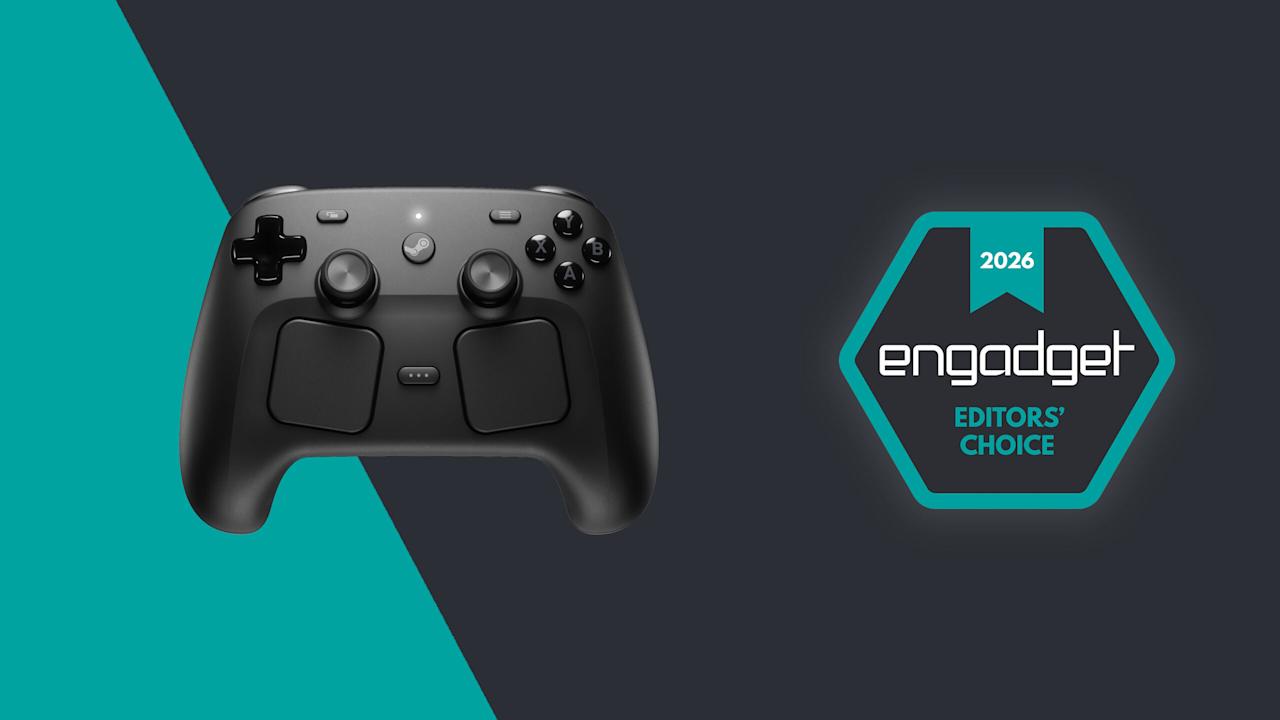
Don’t mistake the Steam Controller for a PC controller. Even though its main function is to play PC games, Valve’s new gamepad communicates with Steam, and only Steam. This is not a general controller for your PC, Android or iOS devices, and it’s certainly not compatible with any console on the market today, unless you count the handheld Steam Deck. In order to play a game with the Steam Controller, you have to boot it up through Steam. (More on this later).
Valve’s end goal for the Steam Controller is compatibility with the Steam Machine, a console that doesn’t yet have a public release date or price point. The Steam Machine will support 4K gaming at 60 fps with FSR, it’ll come with 512GB or 2TB of SSD storage, and it’ll work with the Steam Frame VR headset, as will the Controller. The new Steam Machine was supposed to drop early this year, fulfilling a long-promised dream of PC gaming by moving your entire Steam library to the couch in a compact but powerful box. Due to the memory shortages plaguing the tech industry, the Machine and Frame aren’t here yet, so the Steam Controller is the first step in Valve’s hardware takeover of living room territory. It’s due to come out on May 4, priced at $99.
The Steam Controller represents roughly 13 years of R&D, from its first iteration announced in 2013 to the debut of the Steam Deck in 2022, and the refinement period clearly paid off.
Valve
The Steam Controller is a sturdy and sleek gamepad that stands up to the competition. It’s for Valve diehards, trackpad fanatics and anyone whose main gaming hub is Steam.
- Well-balanced and solidly built
- Precise TMR thumbsticks
- Trackpads and Gyros add flexibility
- Long battery life
- It’s built for Steam, for better or worse
- Some features won’t be useful until the Steam Frame is out
The Steam Controller is a tidy chonker of a gamepad with a broad, Duke-like face holding two square trackpads beneath the standard analog sticks and face buttons. Despite its extra girth, the Steam Controller feels light, slim and balanced, even in my smaller-than-average hands. The grips are slender and have four circular rear buttons, two per side, that are super satisfying to click even when they don’t do anything in-game. The bumpers, triggers, D-pad and face buttons are shiny black plastic, and all of the controller’s edges are rounded, allowing for a smooth glide between the bumpers and triggers especially. The trackpads don’t get in the way when you don’t need them, but in-use, they’re incredibly sensitive and kind of mesmerizing. They look and feel just like the trackpads on the Steam Deck, following the trails of your thumbs with miniature popping bubbles.
The Steam Controller uses tunnel magnetoresistance (TMR) joysticks, which are a leveled-up version of Hall effect sticks, offering ultimate precision and long-term stability with no chance of drift. After a few days of use across a range of game genres, including competitive first-person shooters, they’ve proven to be reliable and accurate. In terms of stick precision and feel, I find the Steam Controller is comparable to the Razer Wolverine V3 Pro, my PC gamepad of choice. I otherwise much prefer the swappability, rubberized microswitches and crisp clickiness of Razer’s gamepad — but the Wolverine also costs about $100 more and doesn’t come with trackpad capabilities, so we’ll call it a wash.
Sam Rutherford for Engadget
One of the neatest aspects of the Steam Controller is its charging and connection puck, which plugs into your PC or Steam Deck through a USB cable and enables stable wireless play. The puck snaps onto the belly of the controller for charging, and when you hover the gamepad’s connection point over it, it jumps up and latches on like a cute little sucker fish. I don’t know if this behavior is an intentional selling point, but it certainly is for me. The Steam Controller also connects to devices via Bluetooth or with a cable, and in all configurations it’s performed without issue for me. Of course, Bluetooth mode has the highest latency, so that’s mainly for phones and Steam Link play. The puck can support two Steam Controllers at once. Swapping between Puck and Bluetooth mode is a simple matter of holding the right bumper and A or B, respectively, when you turn the controller on.
Pressing the power button with the Steam logo wakes up the gamepad, and pressing it twice when you’re connected to a PC launches Steam in Big Picture mode. The Steam Controller feels like a natural extension of Valve’s storefront, and with its matte black finish and bubbled edges, it’ll be familiar to anyone who’s fallen in love with a Steam Deck these past few years.
I tested out the controller on my PC with Steam games and non-Steam games (added to my Steam library first, of course — seriously, more on that later), and in my living room with my Steam Deck acting as a makeshift, low-powered Steam Machine. On PC I played The Seance of Blake Manor, Creature Kitchen and Overwatch, and on Steam Deck I played Blake Manor, Demonschool and Balatro. Whether connected with Bluetooth, the puck or USB, the Steam Controller provided seamless play and no noticeable latency. The distance from my couch to the puck nestled behind my Steam Deck is about eight feet, and I didn’t feel a frame drop while cosplaying as a Steam Machine owner. I also never ran into battery issues, but that’s not shocking considering Valve’s claim that the gamepad has more than 35 hours on a single charge. In my testing, the battery barely registered a drop after multiple hours of playtime, and I was happy to snap on the charging puck whenever I wanted to set the controller down.
Sam Rutherford for Engadget
Valve notes the battery life may be lower if playing with the Steam Frame. The Steam Controller has infrared LEDs for tracking, which will obviously drain the battery a little faster. Some VR games may have you waving your controller, as there are gyroscopic sensors in there as well. As the Steam Frame isn’t out, I wasn’t able to test some of the controller’s more interesting features.
Even against players using a keyboard and mouse in competitive Overwatch matches, I won games and earned awards, passing my personal ultimate test of a controller’s capabilities. When it comes to Overwatch, I’m mostly comparing the Steam Controller to Sony’s DualSense, and it feels surprisingly similar. I enjoy the Steam Controller’s smooth slide between the bumpers and triggers, though its haptic feedback is more subtle than the DualSense’s, lacking in the analog sticks particularly. Much like with the Steam Deck, I haven’t found a consistent use case for the trackpads on the Steam Controller, but I appreciate their inclusion, the accessibility factor, and the fact that they aren’t otherwise intrusive. Now, just add a Playdate crank and I’m really sold.
The Steam Controller is a clear and unmistakable signal that Valve is joining the console wars, and perhaps by patient and diligent design, it’s appearing at a vulnerable time. Xbox is fumbling the current generation and attempting to redefine its place in the console market amid a significant leadership shakeup, while Sony and Nintendo are carrying on with standard hardware upgrade cycles in a landscape that’s based less on platform exclusivity every day. Right now there’s room for a robust PC-based storefront to stake its claim on couch gaming, and voila, here’s Valve with the Steam Machine and Steam Controller.
Sam Rutherford for Engadget
Similarly to the way Valve used Half-Life 2 to get people to download Steam in 2004, the Steam Controller pushes players to fully consolidate their PC libraries in its own ecosystem. You’ll have to add games with their own launchers like Overwatch, Valorant, Minecraft and Fortnite to your Steam library before you can play them using Valve’s controller. This is a small inconvenience, since it takes just a few clicks to add a non-Steam game to your profile.
(Welcome to later). However, I don’t enjoy doing it. As I was browsing through files to add Overwatch to my Steam library, I couldn’t help thinking that it would have been pretty easy for Valve to add a switch that would let the Steam Controller communicate with any PC game. Maybe it’s a touch of oppositional defiant disorder, but I despise being coerced into behaviors that are designed to serve a corporation’s market control over my own workflow, especially in my personal spaces.
Now more than ever, I value my ability to choose — which businesses I work with, where I store my software, how I play — and the Steam launcher requirement is another small expansion of Valve’s incredible power in the PC games industry. It’s too easy to say, most of my games are already on Steam, no big deal, and use the Controller as an excuse to consolidate them all on Valve’s launcher. Suddenly, Steam is where you begin and end every gaming session, rather than just most. Obviously and especially with the coming rollout of the Steam Machine, this is the reality that Valve wants: a rich industry utterly reliant on its platform of DRM, shitty revenue splits and random opaque censorship. It’s the situation that Microsoft, Apple or Epic also want for themselves, but the main difference is that this future is actually in reach for Valve, and the Steam Controller is a tiny part of the plan. If willing and unforced support of a monopoly makes you bristle as well, feel free to stick with 8BitDo.
Sam Rutherford for Engadget
Truly though, I get it. The Steam Controller doesn’t come with a PC switch because it’s not a PC controller. It’s for controlling Steam, a service that’s become synonymous with PC and handheld gaming, and is now creeping onto the living-room scene. The Steam Controller is designed to follow you everywhere Steam is, for all your gaming needs across every screen forever and always — and there is something soothing about that idea in a Brave New World Soma kind of way. A PC controller? That’s far too limited, from Valve’s perspective.
Encroaching corporate dystopia aside, the Steam Controller is a sturdy and sleek gamepad that stands up to the competition. It’s for Valve diehards, trackpad fanatics and anyone whose main gaming hub is Steam. Which, to be clear, is a massive market that’s only poised to grow.
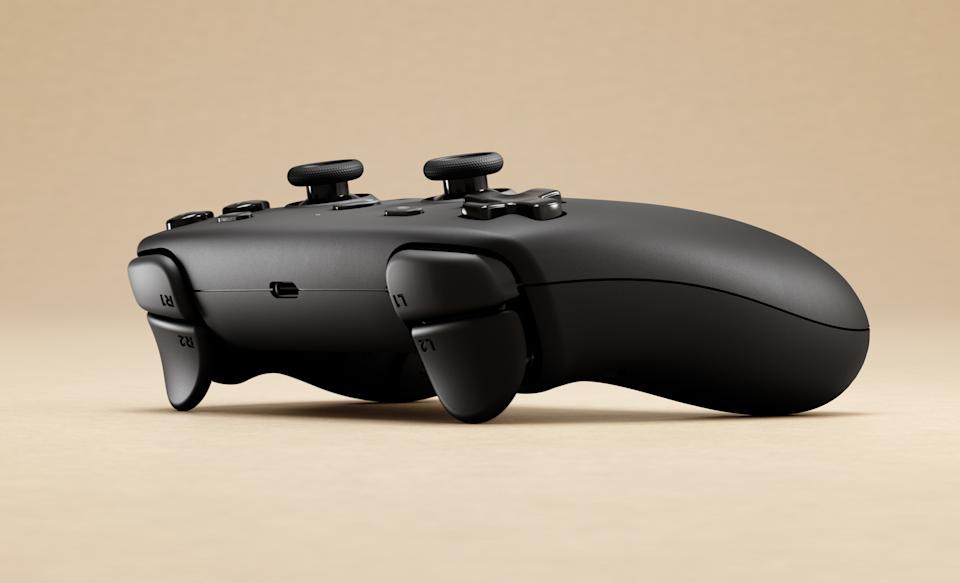
Valve’s Steam Controller will hit the market on Monday, May 4, for a going price of $99 in the United States. The Steam Controller does precisely what it says: It communicates with anything running Steam or the Steam Link app, so this includes PCs, Macs, mobile devices and the Steam Deck.
Eventually, the Steam Controller will connect to the new Steam Machine console and Steam Frame VR headset, but neither of these products have solid release dates just yet. They were originally slated to come out in early 2026 alongside the Steam Controller, but we’re nearly five months into the year and only a third of that promise is poised to be fulfilled. Valve in March said it hopes to ship in 2026, dropping the “early” bit.
As noted in our review, the Steam Controller is a solid gamepad, especially for the price. It feels and looks a lot like a Steam Deck, complete with two trackpads beneath a pair of TMR thumbsticks and a standard face array. It’s reactive, ergonomic, and comes with a cute little charging and connection puck that snaps onto the bottom of the gamepad. Just note that the Steam Controller is not a PC controller: It works with Steam, and only Steam. You’ll have to add games with their own launchers like Overwatch, Valorant, Minecraft or Fortnite to your Steam library before playing them with Valve’s proprietary controller. How convenient — for Valve, at least.
Valve
Worldwide, Steam Controller prices are as follows:


Jimmy Kimmel was riffing on presidential social media habits last week when he offered a suggestion that doubled as an unscripted product endorsement.
“I wonder if they’ve considered getting him one of those Tin Can phones like the kids have that are not on the internet,” the late-night host said of President Trump during his monologue.
For Seattle startup Tin Can, it was a sign that the company’s screenless, Wi-Fi-enabled landline phone for kids has crossed over from niche parenting product to cultural reference point
“Jimmy Kimmel organically dropping Tin Can in his monologue like it’s a product that everybody is obviously familiar with,” founder and CEO Chet Kittleson wrote on LinkedIn. “What a week!”
It was the second big recent media moment for the startup, coming on the heels of a positive review from the New York Times’ Wirecutter that praised Tin Can as the leader in a growing pack of modern landlines aimed at giving kids independence without a smartphone.
We’ve been covering Tin Can since before it was a trend, so we took the opportunity to check in for an update. The company has grown to 30 employees and sold hundreds of thousands of phones since launching its flagship product in 2025. Tin Can is now on its sixth production batch, with orders shipping in June, according to the company.
Kittleson co-founded Tin Can in 2024 with Max Blumen and Graeme Davies, all veterans of Seattle real estate startup Far Homes. He dreamed up the idea in his daughter’s school pickup line, tired of playing go-between to arrange playdates.
The company raised $3.5 million from PSL Ventures, Newfund Capital, and others before landing a $12 million seed round led by Greylock Partners in December.
GeekWire recognized Kittleson as one of our 2025 Uncommon Thinkers, and Tin Can’s momentum has only accelerated since then, fueled by a broader backlash against screen time.
The $100 Tin Can phone connects to home Wi-Fi to let kids make and receive calls from contacts approved by parents through a companion app. Calling between Tin Can devices is free, and an optional $9.99/month plan lets kids call regular phone numbers.
The phone comes in four colors with names like “Landline Lemon” and “Later Alligator Lilac.” There are no screens, and no apps, but enough cultural cachet to land in a late-night monologue.


Amazon has landed talk show queen Oprah Winfrey and her video podcasts for its suite of streaming services.
“Long before the term ‘creator’ existed, Oprah was building a direct and deeply personal connection with audiences across generations — and that bond continues to grow. Creators are reshaping entertainment, and Oprah continues to pave the way. We couldn’t be more excited to partner with her on what’s ahead,” said Matt Sandler, general manager of Amazon Creator Services, in a statement.
The multi-year deal gives the tech giant distribution and advertising rights to “The Oprah Podcast” on audio and video. As part of the arrangement, Winfrey will expand her production to two new episodes per week starting this summer. The partnership also includes rights to the 25-year library of her former talk show and her “Oprah’s Book Club” and “Oprah’s Favorite Things” franchises.
The New York Times first reported the deal on Monday. The deal underscores how Amazon is betting on established names to anchor its creator strategy.
“This is the ultimate validation of where the world is going,” Steve Boom, an Amazon vice president, told the Times. “You have the most influential talk show host in history, by orders of magnitude, leaning heavily into this new world.”
Amazon purchased Wondery, a Los Angeles-based podcast studio known for producing several hit shows, in late 2020, aiming to strengthen its original audio offerings against competitors like Spotify. Last August, the company cut around 110 positions at Wondery as part of an effort to fold some of its operations into Audible and roll out its new Creator Services division.
“The podcast landscape has evolved significantly in the past few years, particularly with the rise of video-forward, creator-led content,” an Amazon spokesperson said in an August statement.
“By making these changes, we can better support creators in monetizing their content across multiple channels, help them expand their brand IP, and simplify the process for advertisers while making content more accessible to audiences wherever they prefer to consume it,” the company added.
The Winfrey deal is one of several high-profile moves in that effort. Another is the Kelce Clubhouse — a dedicated Amazon hub featuring brothers Jason and Travis Kelce, the football stars whose profiles soared after Travis’s engagement to Taylor Swift. The site brings together their video podcast, merchandise, a documentary about the duo, and promoted Audible content.
While Winfrey’s content will be available across Prime Video, Amazon Music, Fire TV Channels and Audible, her shows will also stream on YouTube and other podcast platforms.
“Expanding our reach globally is an opportunity I embrace, as we continue to connect through stories that invite new ways of seeing, and hopefully deepen, understanding,” Winfrey said in a statement.

9 Apple Watch Health Features That Fly Under the Radar, According to a Doctor at Apple

The Most INSANE Financial Audit Ever

Step back to 1940s at Yorkshire Air Museum wartime weekend

Manchester United reach agreement with Casemiro over contract clause amid transfer speculation

US brings back mandatory military draft registration

Steven Gerrard disagrees with Gary Neville over ‘shock’ Chelsea and Arsenal claim | Football


-

 Fashion3 days ago
Weekend Open Thread – Corporette.com
-

 Tech10 hours ago
Register Renaming | Hackaday
-
 Crypto World2 days ago
Hyperliquid $HYPE Rally Builds Momentum as AI Sector Enters Prove-It Phase
-

 Politics5 days ago
Making troops accountable for war crimes threatens US alliance, ex-SAS colonel warns
-

 Politics5 days ago
Disabled people challenge government SEND proposals over segregation concerns
-

 Business4 days ago
Patterson-UTI Energy, Inc. (PTEN) Q1 2026 Earnings Call Transcript
-

 Business6 days ago
Rolls-Royce Voted UK’s Most Iconic Trade Mark as IPO Register Hits 150
-
 Crypto World7 days ago
Five Value Stocks with Recovery Potential in 2026: PayPal (PYPL), Nike (NKE), and More
-
 Sports2 days ago
IPL 2026: Ruturaj Gaikwad registers slowest fifty of the season, enters all-time unwanted list | Cricket News
-

 Politics5 days ago
Starmer handler McSweeney to be dragged from shadows by Foreign Affairs Committee
-

 Politics5 days ago
Zack Polanski responds to home secretary’s taser threat
-
Politics5 days ago
Wings Over Scotland | How To Get Away With Crimes
-

 Crypto World6 days ago
New York sues Coinbase, Gemini over prediction market offerings
-
Entertainment7 days ago
Sydney Sweeney cameo cut from “The Devil Wears Prada 2”, source explains why (exclusive)
-
 Business6 days ago
HCL Tech share price tank over 9% after weak Q4. JPMorgan, HSBC & 3 others cut target price
-

 Crypto World6 days ago
Crypto’s great hope in Senate’s Clarity Act still has a path to survive tight calendar
-

 Politics6 hours ago
Drax board avoid their own AGM, accused of greenwashing & environmental racism
-

 Fashion7 days ago
Kilkenny Design New Beauty Arrivals for Spring 2026
-

 Politics5 days ago
‘Iran is still a nuclear threat’
-
 Sports5 days ago
Tim Bradley names the current best in the world: “Better than Inoue and Usyk”
You must be logged in to post a comment Login