OpenAI is developing a smartphone where AI agents replace apps, with Qualcomm and MediaTek jointly designing the custom processor and Luxshare exclusively manufacturing, according to Ming-Chi Kuo. The analyst projects 300-400 million annual shipments, targeting mass production in 2028. Qualcomm surged 13% on the report. The supply chain is credible, Luxshare builds AirPods, Qualcomm powers 75% of Galaxy S26, but OpenAI has never shipped hardware, and every previous AI device (Humane Pin, Rabbit R1) has failed. This is OpenAI’s second hardware track alongside the Jony Ive project.
OpenAI is developing a smartphone built around AI agents rather than apps, with Qualcomm and MediaTek jointly designing the custom processor and Luxshare Precision Industry co-designing and exclusively manufacturing the device, according to Ming-Chi Kuo, the TF International Securities analyst whose Apple supply-chain intelligence has made him the most closely followed hardware analyst in the industry. Kuo projects 300 to 400 million annual shipments if the device succeeds, a figure that would exceed Apple’s iPhone volumes and place the phone in direct competition with the two companies that control roughly 40% of the global smartphone market. Specifications and the supplier list are expected to be finalised by late 2026 or the first quarter of 2027, with mass production targeted for 2028. Qualcomm’s shares surged as much as 13% in premarket trading on the report. None of the three companies, Qualcomm, OpenAI, or MediaTek, confirmed the partnership. This is an analyst report, not an announcement, but the supply chain Kuo describes is not speculative. It is the supply chain that already builds the devices you own.
Advertisement
The concept
The phone Kuo describes is not a smartphone with an AI assistant. It is a device where the AI agent is the interface and the app is obsolete. Instead of downloading applications and navigating screens, users would interact with agents that handle tasks directly: ordering transport, booking restaurants, managing email, conducting research, writing messages. The architecture would process lighter tasks on-device, including context awareness, memory management, and smaller AI models, while offloading complex inference to the cloud. The device would maintain what Kuo calls “full real-time state,” continuously capturing a user’s location, activity, communication, and environmental context to feed the agents. This is the vision Qualcomm CEO Cristiano Amon has been articulating throughout 2026: that AI agents will replace the mobile operating system and apps as the primary interaction layer, and that the hardware must be designed from scratch to support continuous, power-efficient AI inference rather than retrofitting existing chipsets with neural processing units bolted on.
The concept is separate from OpenAI’s other hardware project with Jony Ive, the former Apple design chief whose company io is developing a non-phone device, reportedly a smart speaker with a camera first, then glasses, a lamp, and earbuds, with the first product expected in early 2027. OpenAI is pursuing two parallel hardware strategies: a device that reimagines what a personal computer looks like without a screen, and a device that keeps the phone form factor but replaces everything that runs on it.Apple is testing AI smart glasseswith a custom chip, cameras, and Siri powered by a Gemini model, targeting 2027. The question of whether AI lives in your phone, on your face, or in a speaker on your counter is being answered simultaneously by every major technology company, each with a different bet. OpenAI is betting on all of them at once.
The credibility of the report rests on the supply chain, not the concept. Luxshare Precision Industry is a major Apple supplier that assembles AirPods, Apple Watch components, and an increasing share of iPhones. Qualcomm’s Snapdragon 8 Elite Gen 5 powers 75% of Samsung’s Galaxy S26 series and has, for the first time, overtaken Apple in raw multi-core and GPU performance. MediaTek’s Dimensity 9500 matches Qualcomm and Apple in CPU performance at lower cost with better efficiency. These are not the suppliers of a concept phone. They are the suppliers of phones that ship in the hundreds of millions.Qualcomm’s acquisition of Edge Impulse, an edge AI developer platform, in 2025 signalled the company’s strategic commitment to on-device AI inference across device categories. The Snapdragon 8 Elite Gen 5’s Hexagon NPU delivers 37% faster AI processing than its predecessor, supports agentic AI that learns from user behaviour, and includes a personal knowledge graph and continuous context awareness through an upgraded sensing hub. Qualcomm is also reportedly building custom 3D DRAM specifically optimised for AI workloads on mobile devices. The silicon for the phone Kuo describes does not need to be invented. The components exist. The question is whether the software paradigm works.
The financial context matters. Qualcomm’s stock was trading at $149.84 before the report, down from a 52-week high of $205.95, with earnings growth declining 46.9% and gross margins down to 55.1%. The company reports earnings on April 29, two days after the Kuo report. In February, Bloomberg reported that Qualcomm gave a “tepid forecast in sign of shaky phone market.” An OpenAI partnership would represent a new revenue stream in a market where Qualcomm’s traditional business, supplying modems and processors to phone manufacturers, is under pressure from Apple’s efforts to develop its own modem chips and MediaTek’s encroachment on the premium Android segment. Qualcomm would be helping build a device designed to challenge the iPhone while continuing to supply Apple with modem chips through at least 2027, a business relationship that embodies the contradictions of the semiconductor supply chain.
The graveyard
The AI device category has produced more failures than products. The Humane AI Pin, a $699 wearable with a laser projector that beamed information onto the user’s palm, was permanently bricked on February 28, 2025, when HP acquired Humane’s remnants for $116 million and shut down the servers. The Rabbit R1, a $199 “large action model” device, attracted 100,000 pre-orders but retained only 5,000 active users after five months, a 95% abandonment rate. Its founder admitted the device launched too early. Both failed for the same reason: they created new form factors that solved no problem the smartphone did not already solve, at price points that demanded the user carry a second device. The OpenAI phone takes a fundamentally different approach. It is not an additional device. It is a replacement for the device 4.7 billion people already carry, in the same form factor, with the same basic capabilities, but with a radically different interaction model. Whether that is enough to avoid the graveyard depends on whether agents can do what apps do, better, faster, and without the friction of learning a new paradigm.
Advertisement
AI is already reshaping the mobile app ecosystem, with “vibe-coded” applications flooding the App Store in such volume that Apple has had to crack down on submissions.The EU is preparing to force Google to open Android to rival AI assistantsincluding ChatGPT and Claude under the Digital Markets Act, requiring equal system-level access for voice activation and deep integration. The smartphone’s software layer is already in flux. Samsung’s Galaxy S26 runs a triple AI engine with Gemini, Perplexity, and Bixby. Google’s Pixel 10 hands off multi-step tasks to background AI agents. Apple Intelligence processes queries on-device with an emphasis on privacy. Every major phone manufacturer is moving toward AI-first experiences, but all of them are constrained by backward compatibility with billions of existing apps and the operating systems that run them. OpenAI’s advantage, if the phone materialises, is that it has no legacy. It can design a clean-slate interaction model without worrying about whether Instagram’s notification system works or whether the banking app renders correctly. The disadvantage is that users may not want a clean slate. They may want their apps and an AI assistant that works around them, which is what Samsung, Google, and Apple already offer.
The question
Kuo’s projection of 300 to 400 million annual shipments would make the OpenAI phone one of the most successful consumer electronics products in history. For context, Apple ships roughly 230 million iPhones per year. Samsung ships approximately 220 million Galaxy phones. A new entrant reaching those volumes has no precedent in the smartphone era. The projection reflects the scale of OpenAI’s ambition, not a reasonable base case for a first-generation device from a company that has never manufactured hardware, sold through carriers, managed warranty claims, or operated a supply chain at consumer scale. The Jony Ive device carries the same risk: a company whose expertise is in large language models attempting to become a consumer electronics manufacturer, a transition that requires competencies in industrial design, supply chain management, retail distribution, and after-sales service that OpenAI does not have and cannot acquire by hiring one designer, however talented.
The 2028 timeline gives OpenAI two years to finalise specifications, secure component supply, build manufacturing capacity, develop the agent-first software platform, negotiate carrier partnerships, establish retail distribution, and convince hundreds of millions of consumers to abandon their iPhones and Galaxy phones for a device built by a company that has never shipped hardware. The Humane AI Pin took longer than that and shipped a device that lasted nine months before being permanently disabled. The ambition is extraordinary. The supply chain is credible. The concept addresses a genuine architectural limitation of current smartphones, which were designed around apps in 2007 and have not fundamentally changed since. But the distance between a credible supply chain report and a shipping product that displaces the iPhone is the distance between a thesis and a business, and every company in the AI device graveyard had a thesis too.
The decline of the sedan is well known. Beginning in the late 2010s, many automakers left the sedan and small-car market behind entirely, with companies like Ford discontinuing once-popular sedan models like the Fusion to focus on more profitable SUVs and crossovers. The mid-size sedan, once the default vehicle for American families, has been replaced by the crossover SUV — but that doesn’t mean that all sedans are dead.
Toyota’s venerable Camry, which for many years sat at the top of America’s sales charts, has endured the SUV revolution and, even if the Camry’s current annual sales figures aren’t what they were 20 years ago, the automaker still sells hundreds of thousands of them in America each year. Thanks to its fuel efficiency, reliability, and affordable price tag, demand for this trusted sedan remains strong, and that extends to the used market as well.
Advertisement
The 2021 Camry shows strong resale value across the board, although exact depreciation will vary depending on trim and powertrain. According to iSeeCars, the 2021 Camry ranks near the top of its class in resale value, with an average value of 68.9% of its original price as of mid-2026. Kelley Blue Book, meanwhile, has the fuel-sipping ’21 Camry Hybrid in the top 10% of all sedans for resale value. Then there’s the 2021 Camry TRD, which is actually worth nearly the same today — or possibly even more — than it was when new.
Advertisement
Pick your powertrain
The Camry is one of Toyota’s longest-running models, with nine generations since its 1983 debut. The 2021 model year falls right in the middle of the car’s eighth generation, which was sold between 2018 and 2024. Unlike the latest Camry, which has moved to a hybrid-only drivetrain, the 2021 Camry was available with three engine options across its various trims.
The base cars had a 2.5-liter naturally aspirated four-cylinder engine, while the Camry Hybrid had a more fuel-efficient (and more powerful) 2.5-liter engine with electric assistance. Finally, there was the 3.5-liter naturally aspirated V6, which made an impressive 301 hp and was a fairly rare option, aimed at those seeking extra performance from their family sedan. Another thing that set the ’21 Camry apart from much of its mid-sized sedan competition was the availability of all-wheel drive.
As you’d expect with today’s high gas prices, the hybrid version of the 2021 Camry holds its value quite well. Depreciation data from iSeeCars shows a five-year-old Camry Hybrid losing around 34% of its original value, compared to 38.5% for the average mid-size hybrid and 38.9% for the average sedan in general. Looking at current used prices, a 2021 Camry Hybrid typically carries a slight premium over a comparable non-hybrid, reflecting the original price difference between the two when new.
Advertisement
Is the Camry TRD a future classic?
While all models of the 2021 Camry generally have strong resale value, the version that holds its value best isn’t the fuel-sipping hybrid. Instead, it’s the performance-focused 2021 Camry TRD, which in some cases actually sells for more today than it did when new. While the Camry TRD was basically just a V6 Camry with some modest suspension and appearance tweaks, this unique sedan has remained quite popular on the used market.
Back in 2021, the Camry TRD had an MSRP of $33,285. In mid-2026, five-year-old examples with low mileage can fetch an impressive $34,000 at used car retailers like CarMax, and it’ll likely continue to hold its value well, too. That’s not just because it’s a unique performance sedan backed by Toyota reliability, but because the company dropped the V6 engine option from the Camry completely when it redesigned the car for the 2025 model year.
Advertisement
If we look at it from that perspective, it seems this now-discontinued performance family sedan is well on its way to becoming a modern classic. That’s probably something no one ever expected to say about any Toyota Camry, let alone one that’s only five years old.
After addressing a widespread outage that affected Outlook.com users worldwide on Monday, Microsoft has asked iPhone users to re-enter their credentials to regain access to their Outlook and Hotmail accounts via the default Mail app.
Microsoft confirmed the incident yesterday morning, saying that customers were experiencing intermittent sign-in issues that prevented them from accessing their mailboxes via Outlook.com.
In a later update, it added that some of the affected users were also being signed out of their accounts and seeing “too many requests’ errors.
Before mitigating the outage, roughly 10 hours after the first user reports, Microsoft blamed the Outlook.com sign-in issues on a “recently introduced change” but didn’t share any further details.
On Monday evening, around 7 PM UTC, the company said the service health had returned to normal, but added that iOS users “must” manually re-enter their credentials to access their accounts via the default Mail app by going through the following step-by-step procedure:
Advertisement
Open the Settings app on your iPhone.
Scroll down and tap on Mail.
Select Accounts under the Mail settings.
Tap on the email account for which you need to re-enter the password.
Tap Account Settings or the Password field directly (depending on your iOS version).
Enter the updated or correct password in the Password field.
Tap Done to save the changes.
Open the Mail app to confirm that the account is syncing properly and emails are being sent/received.
Microsoft hasn’t shared more information about the outage’s root cause and hasn’t disclosed which regions or how many users were affected.
However, the incident was flagged as causing “service degradation,” a label typically used for incidents with noticeable user impact that don’t take the service offline for everyone.
In March, Microsoft also addressed an Exchange Online outage that blocked customers’ access to mailboxes and calendars via Outlook on the web, Outlook desktop, Exchange ActiveSync, and other Exchange Online connection protocols.
The same day, it resolved a separate issue that caused Microsoft 365 Copilot and Office.com sign‑in problems impacting the Microsoft Copilot desktop app, Copilot in Microsoft Teams, and Copilot in Office apps.
AI chained four zero-days into one exploit that bypassed both renderer and OS sandboxes. A wave of new exploits is coming.
At the Autonomous Validation Summit (May 12 & 14), see how autonomous, context-rich validation finds what’s exploitable, proves controls hold, and closes the remediation loop.
Watch Champions League 2025/26 semi-final live streams as four European titans meet over what are guaranteed to be red-hot two-legged matches to decide who will contest the final in Hungary later this month. First up on Tuesday is PSG vs Bayern Munich, followed by Atlético Madrid vs Arsenal on Wednesday.
It’s taken PSG a while to catch light in their title defense but they’re firing now. The French champions dispatched Liverpool over two legs in the last eight, with Khvicha Kvaratskhelia and Ousmane Dembélé providing the attacking gloss. Bayern, who won the league phase match between the teams 2-1, have already won the Bundesliga but will have coach Vincent Kompany suspended for picking up a third yellow card during the quarter-final defeat of Real Madrid. Harry Kane seeks a goal in a sixth Champions League game in a row.
Having lost the Copa del Rey final earlier in April, Atlético finally ended a four-game losing run in La Liga at the weekend with a 3-2 win against Athletic Bilbao but Diego Simeone’s side love this competition. Los Colchoneros beat Barcelona in the last eight thanks to the superb Julián Álvarez and still boast arguably the best set of spoiling tactics in Europe. Arsenal ended their own winless in the Premier League with a 1-0 against Newcastle thanks to Eberechi Eze’s fine curler. The Gunners have had a kind draw in the knockouts, and struggled for fluency against Sporting, and Mikel Arteta knows his side must be on it from the off.
Advertisement
Some of these games are even free to view, so find out how you can watch them below.
You aren’t going to want to miss a minute of the action so here’s how to watch 2025/26 Champions League Semi-Final live streams online from anywhere.
How to watch 2025/26 Champions League Semi-Final for free
RTE will be streaming UCL action for free to Irish residents, with Atlético Madrid vs Arsenal shown without cost on Wednesday.
Advertisement
Free streaming of both semi-finals will also be available via TRT1/Tabii in Turkey, and in Belgium through RTL Play and VTM Go.
OUTSIDE your usual country at the moment? You’ll need this ace VPNto unlock your usual free streams when abroad.
Champions League Semi-Final First Leg fixtures & free streams
Tuesday (April 28): PSG vs Bayern Munich (8pm) – RTL Play (BEL)
Advertisement
Wednesday (April 28): Atlético Madrid vs Arsenal (8pm) – RTÉ Player(IRL) / Tabii (TUR)
* All times BST
Watch Champions League Semi-Finals from anywhere in the world
Away from home at the moment and blocked from watching the Champions League on your usual subscription?
Advertisement
You can still watch the 2025-26 Champions League live thanks to the wonders of a VPN (Virtual Private Network). The software allows your devices to appear to be back in your home country, regardless of where in the world you are, making it ideal for viewers away on vacation or on business. Our favorite is NordVPN. It’s the best on the market:
How to watch Champions League Semi-Finals live streams in the US
Paramount+ is the go-to for US soccer fans wanting to watch the 2025/26 Champions League Semi-Finals.
You need only the Essential plan for live soccer – and you can get Paramount Plus for free when you take out the Walmart Plus 30-day trial.
How to watch Champions League Semi-Final live streams in the UK
In the UK, TNT Sports and Amazon Prime are the go-to streaming services, with TNT showing PSG vs Bayern in the first leg, while Amazon have Atlético vs Arsenal.
Advertisement
You can add TNT Sports to your EE, BT or Sky broadband deal for £16 per month. Or for on-the-move streaming, fans can pay from £25.99/month for HBO Max, which includes TNT Sports.
Amazon Prime costs £8.99 per month or £95 per year, but new customers can get a 30-day free trial before committing. Students or people aged 18‑22 pay £4.49/month or £47.49/year.
Official Champions League Semi-Final broadcasters by region
Africa
Click to see more Champions League streams▼
The Champions League 2025/26 broadcast rights for Africa are largely split between beIN Sports and SuperSport.
Residents of the following African countries can watch Champions League 2025/26 live streams with a beIN Sports subscription:
Advertisement
Algeria, Chad, Djibouti, Egypt, Libya, Mauritania, Morocco, Republic of the Sudan, Republic of South Sudan, Somalia and Tunisia.
Satellite TV provider SuperSport has the Champions League 2025/26 TV rights across these regions in Africa:
Angola, Benin, Botswana, Burkina Faso, Burundi, Cameroon, Cape Verde, Central African Republic, Chad, Comoros, Congo, Democratic Republic of Congo, Equatorial Guinea, Eritrea, Eswatini, Ethiopia, Gabon, Gambia, Ghana, Guinea, Guinea-Bissau, Ivory Coast, Kenya, Lesotho, Liberia, Madagascar, Malawi, Mali, Mauritius, Mozambique, Namibia, Niger, Nigeria, Rwanda, São Tomé and Príncipe, Senegal, Seychelles, Sierra Leone, St Helena and Ascension, South Africa, United Republic of Tanzania, Togo, Uganda, Zambia and Zimbabwe.
SuperSport will host the Champions League 2025/26 on its satellite channels.
Advertisement
Americas
Click to see more Champions League streams▼
DAZN has the rights to broadcast the Champions League 2025/26. You can also watch the Europa League and EFL Championship soccer, the Bundesliga, Nations League, rugby and tennis.
The broadcast rights to the Champions League 2025/26 in Latin America are exclusive to Disney+.
Advertisement
Get a subscription and if you live in one of the following countries, you won’t miss a second of the action.
Argentina, Bolivia, Brazil, Chile, Colombia, Costa Rica, Dominican Republic, Ecuador, El Salvador, Guatemala, Honduras, Nicaragua, Panama, Paraguay, Peru, Uruguay, Venezuela.
Europe
Click to see more Champions League streams▼
Advertisement
The Champions League 2025/26 season will be shown by various broadcasters and streaming services throughout Europe.
Sky Sport in Austria will show the Champions League 2025/26.
Play Sports will be showing all the action from the Champions League 2025/26.
Bosnia & Herzegovina, Croatia, Montenegro, North Macedonia and Serbia
Fans in the following countries can watch the Champions League 2025/26 on Arena Sport:
Bosnia & Herzegovina, Croatia, Montenegro, North Macedonia and Serbia.
Advertisement
Voyo Sport has the rights to show Champions League 2025/26 live broadcasts.
You can view the Champions League 2025/26 on Cytavision in Cyprus.
The Champions League 2025/26 will be shown on Nova Sport in Czechia.
Denmark, Iceland and Sweden
Fans in the following countries can watch the Champions League 2025/26 on Viaplay:
Denmark and Sweden.
Advertisement
In Iceland, the majority of games are also on Viaplay.
Estonia, Latvia and Lithuania
Fans in the following countries can watch the Champions League 2025/26 on Go3 Sport:
Estonia, Latvia and Lithuania.
There will be coverage of the Champions League 2025/26 in Finland on MTV Katsomo.
There will be coverage of the Champions League 2025/26 in France on CANAL+.
Advertisement
In Germany, the Champions League 2025/26 rights are shared between DAZN Germany and Amazon Prime (one fixture per matchday).
Greeks should head to Cosmote Sport for the Champions League 2025/26.
RTL and Sport TV will share Champions League 2025/26 broadcast duties in Hungary.
RTE (free-to-air), Premier Sports, TNT Sports and Amazon Prime will share broadcast coverage of the Champions League 2025/26 in Ireland.
Advertisement
Viewers in Italy can watch the Champions League 2025/26 on Sky Italia and a handful of matches on Amazon Prime
Viewers in the Netherlands should tune into Ziggo Sport for the Champions League 2025/26.
TV2 Play is the home of the Champions League 2025/26 in Norway.
DAZN and Sport TV have the rights to air the Champions League 2025/26 in Portugal.
Advertisement
TVP has the rights to air the Champions League 2025/26 in Poland.
Fans in Switzerland can watch the Champions League 2025/26 on SRG SSR and Blue Sport.
Tabii in Turkey will host coverage of the Champions League 2025/26.
Megogo will show the Champions League 2025/26 in Ukraine.
Advertisement
Asia
Click to see more Champions League streams▼
In China, the Champions League 2025/26 will be shown by iQIYI.
Hong Kong, Indonesia, Philippines, Singapore and Thailand
The following countries will be able to watch the Champions League 2025/26 on beIN Sports.
Hong Kong, Indonesia, Philippines, Singapore and Thailand.
Advertisement
India, Bangladesh, Bhutan, Maldives, Nepal, Pakistan and Sri Lanka
Sony LIV is the Champions League 2025/26 broadcaster for India plus Bangladesh, Bhutan, Maldives, Nepal, Pakistan and Sri Lanka.
Wowow will show the Champions League 2025/26 in Japan.
Kazakhstan and Kyrgyzstan
The Champions League 2025/26 rights for the following Central Asian countries are held by Q Sports:
Kazakhstan and Kyrgyzstan.
iQiyi is what you need to watch the Champions League 2025/26 in Macau.
Premier Sports will show the coverage of the Champions League 2025/26 in Mongolia.
Advertisement
Coverage of the Champions League 2025/26 in South Korea can be found at SPOTV.
Oceania
Click to see more Champions League streams▼
Stan Sport has the rights to the Champions League 2025/26 in Australia. Prices start from $20 per month (on top of a regular $12 Stan sub).
Advertisement
New Zealand & Pacific Islands
DAZN is the Champions League 2025/26 TV rights holder in New Zealand and across the Pacific Islands, including: Cook Islands, Micronesia, Fiji, Kiribati, Marshall Islands, Nauru, Niue, Palau, Samoa, Solomon Islands, Tonga, Tuvalu and Vanuatu.
Middle East
Click to see more Champions League streams▼
beIN Sports MENA is the Champions League 2025/26 broadcaster across the Middle East.
You can watch the Champions League 2025/26 live streams with a subscription to beIN Sports in the following Middle East countries:
Advertisement
Bahrain, Iraq, Jordan, Kuwait, Lebanon, Oman, Palestine, Qatar, Saudi Arabia, Syria, United Arab Emirates and Yemen.
Can I watch Champions League games on my mobile?
Of course, most broadcasters have streaming services that you can access through mobile apps or via your phone’s browser.
You can also stay up-to-date with all 2025/26 Champions League key moments on the official social media channels on X/Twitter (@ChampionsLeague), Instagram (@ChampionsLeague), TikTok (@ChampionsLeague) and UEFA’s YouTube (@UEFA).
We test and review VPN services in the context of legal recreational uses. For example: 1. Accessing a service from another country (subject to the terms and conditions of that service). 2. Protecting your online security and strengthening your online privacy when abroad. We do not support or condone the illegal or malicious use of VPN services. Consuming pirated content that is paid-for is neither endorsed nor approved by Future Publishing.
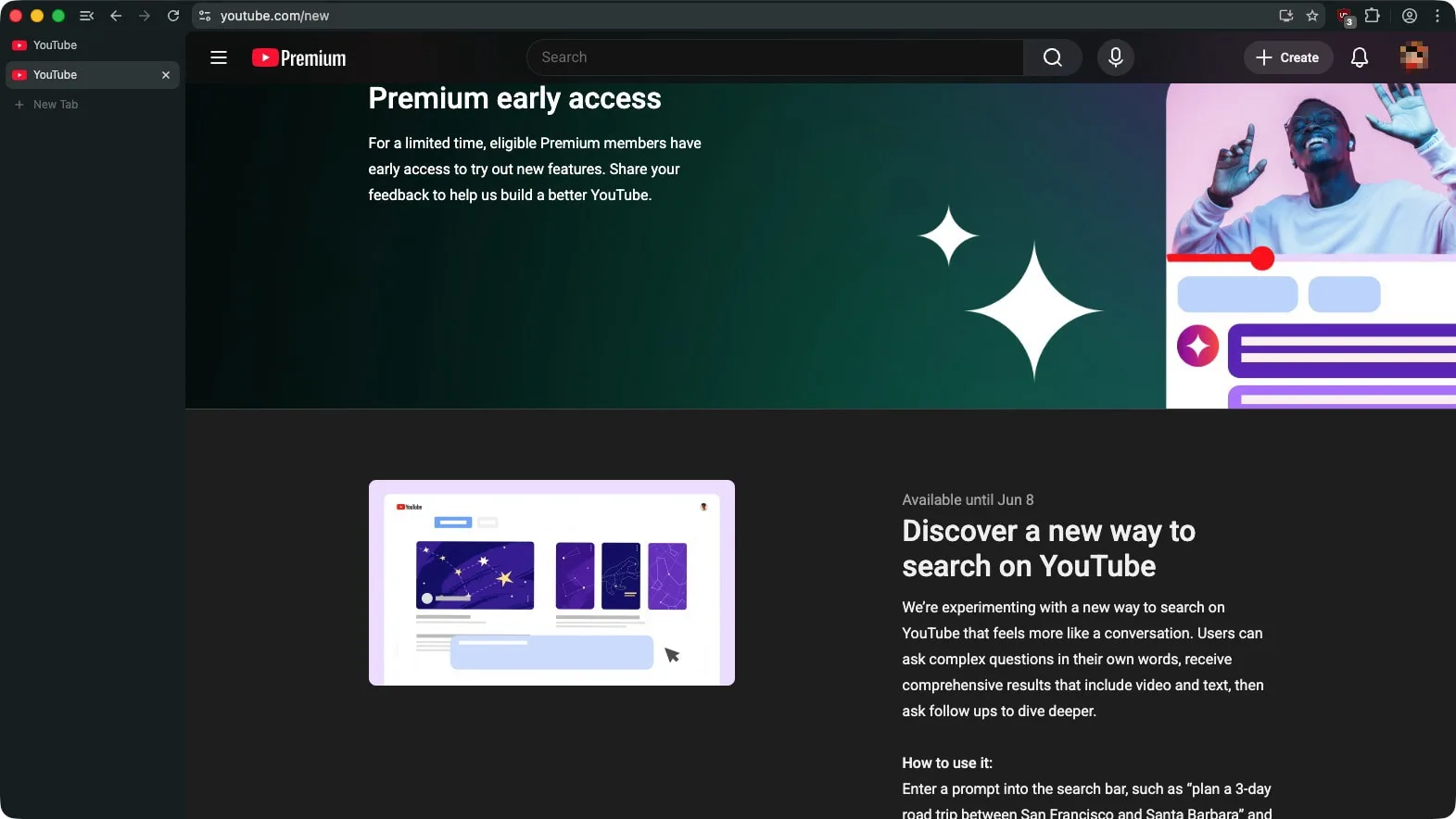
Google is determined to impose AI search onto as many of its products as possible, and the latest, er, victim is YouTube. A new feature called “Ask YouTube” will let you pose complex questions and receive “comprehensive results that include video and text, then ask follow ups to dive deeper,” Google explained on its YouTube Labs page. The experimental feature is available starting today until June 8 for Premium US subscribers 18 and older.
To use it, first, enable the feature in your account. Then, click on the new “Ask YouTube” button in the search bar and you’ll see prompt suggestions, or you can enter your own, like “plan a 3-day road trip between San Francisco and Santa Barbara.” After getting the results, you can try follow-up questions or choose from suggested prompts to explore in more detail.
As shown in The Verge‘s quick test, the prompt “short history of Apollo 11 moon landing” brought up a summary of the mission, along with videos and time stamps for relevant information. Follow-up questions yielded similar results, but some queries just showed a list of videos like you’d see in a classic YouTube search. As happens with AI, one of the searches (around a Steam Controller) yielded factually inaccurate information, according to The Verge‘s Jay Peters.
Tech companies love AI a lot more than the public, and YouTube users are particularly passionate about hating AI-generated slop. YouTube’s AI search function may fare better with subscribers, but only if it helps them find quality content more quickly.
Squarespace helps small businesses and regular Joe Schmoes to get software help to build their own websites (for both personal and business), even including the commerce side of things with point of sale, inventory, and customer data features (both online or in person). In the age where literally everything is digitized and accessed through the World Wide Web, having an online presence is the most important thing you can do for your business or brand’s growth. Creating a website can be difficult, with the HTMLs and coding and what not—that’s where Squarespace comes in. And we’ve found some of the best Squarespace promo codes and coupons to help you save 10% on new websites, 20% on yearly plans, and up to 50%, while growing your business.
Get 10% Off With This WIRED Exclusive Squarespace Promo Code
One of the best things about Squarespace is the versatility of it—compared to other website builders, it’s hard to beat in terms of the large number of layout options, user-friendly interface, and the various features available. Some of those features include built-in ecommerce capabilities (for those hoping to sell their work), promotion marketing tools, and booking and appointment handling. WIRED even named Squarespace one of the best websites to show off your portfolio of work. Right now, first-time users can get 10% off any website or domain plan, plus a 2 week free trial period. All you need to do is click the coupon above and enter the Squarespace promo code WIRED10 into the box at checkout to see the savings roll in.
Unlock a Free Trial and 36% Off When You Choose a Squarespace Annual Plans
Squarespace continues to reign at the top of our list of the best website builders, with features and customizable templates that help any skill level design like a pro. But don’t just take our word, users can start with a free 14-day trial and then make a decision on which plan best suits their personal or business’ needs. Squarespace frequently releases discount codes for 20% off new websites, but forget needing one–the easiest way to save up to 36% is by locking in an annual price rather than a pay-as-you-go model with the monthly plan. You’ll need your business to have a website for longevity, so I’d recommend buying long term and saving big.
Prices per plan range, with the yearly plan discounts of up to $1,520, depending on the plan you choose. With the basic plan, you’ll pay $16 per month, but save 30% when you buy annually. For Core, the midrange tier, you’ll pay $23 per month, billed at $276 annually. Meaning that if you opt for the annual plan, you’ll save over $84 over a year, and over $1,520 with an Advanced annual plan. Plus, if you aren’t sure which service is right for you, Squarespace asks a series of questions to figure out which features you actually need and then it’ll recommend a plan based on your feedback. Additionally, all plans allow you to publish your website on your terms, and come with a free custom domain.
Advertisement
Students Get a 50% Off Squarespace Discount Code
Like Millennials and Gen Z-ers, Squarespace knows just how important our digital footprint is in this day and age. That’s why Squarespace is offering a student discount, where students can get 50% off annual plans to help launch their burgeoning business. All you need to do to get the Squarespace coupon code is verify your student status with Student Beans. Once you’ve verified using the free service, just input the offer code during checkout. Note: authorized students can obtain only one code every 12 months, whether the offer code is redeemed or not.
Join Squarespace Circle for 20% Off and 40% Off Referral Discounts
Squarespace Circle perks is how people can get rewarded for using the platform. While you previously had to launch three websites to be eligible for Squarespace Circle, now any creative professionals can join (for free).
There are a few subscription tiers to choose from. There’s the free tier, where you’ll get 10% off new annual subscriptions, along with 3 month-extended free website trials. Next is gold, where you can get 20% off annual subscriptions and a six-month free trial. The highest tier is platinum, which gets you 25% off annual subscriptions and a one year website trial.
Plus, there’s a referral discount for Circle members, where you can earn money for bringing your clients to Squarespace with Circle referral payments, including up to 40% off plans. There are tons of perks for any small biz owner using Squarespace Circle, including: 20% off with promo code CIRCLE20, commission for bringing new folks to Squarespace, a 25% discount on new website subscriptions when you reach Platinum status. 20% off new annual email campaigns and scheduling subscriptions, a six-month free trial, priority customer support, educational resources and more. Although the benefits are tiered based on the number of websites you publish, the free option of Circle offers a 10% discount on annual plans, 3 month free trials, and early access to news on product launches. Check out the links above to see if Squarespace Circle would be a good fit for you (or your business).
Advertisement
Get 20% Off Squarespace Acuity Scheduling (Or Try it for Free)
Squarespace Acuity Scheduling is an online scheduling solution for your business that completes annoying (but necessary) administrative tasks like calendar syncing, automated email and text message reminders, payment processor integrations, and more. Read our review here to learn about our experience using the online scheduling service firsthand.
Plus, you don’t even need a Squarespace website to use Acuity. It includes a separate scheduling page clients can visit to book appointments, and you can embed your Acuity scheduler in almost any website. Then, if you decide to add a website from Squarespace, it’s super easy to use Squarespace’s tools and pre-designed templates. They make it easy, with a free trial option that requires no website or credit card. If you decide on a plan, you’ll save 20% annually on Starter and Standard, and 19% off Premium.
Launch Your Business Today With Squarespace Business
Knowing where to begin when starting a small business can be super daunting. Squarespace wants to make that easier, by providing an inclusive, all-in-one platform to help you run your entire business more efficiently. Squarespace has a whole suite of tools to manage and grow the business, with design-forward website templates to get started and customization options to make sure it fits with your business. Plus, there’s AI help available when needed to streamline the entire process.
Squarespace has basically everything you need to grow your online business: you can sell products, offer services, and book appointments, and Squarespace’s client management systems make booking seamless. You’ll be able to manage inventory, shipping, POS, and more from one convenient dashboard, making all of the moving parts of your small business a whole lot more manageable.
Advertisement
Create Your Squarespace Portfolio
Along with this job, I also have a personal writing career, which focuses on creative nonfiction memoir-style writing. Now that I’ve gotten about half a dozen essays published, I’ve been wanting to make a website so people can more easily find my work online. I’ve never designed a website before, but Squarespace portfolio makes it easier than ever to showcase my work with professionally designed, mobile-friendly layouts.
Check Out the New Squarespace AI Website Builder
AI is everywhere, and here at WIRED, we know it all too well. Squarespace is jumping on the AI bandwagon, with its new Blueprint AI service, which helps you smartly build your website. It’s free to use, although you need a paid Squarespace account to publish any website you create with Blueprint AI. If that’s not your jam and you prefer to go a little more old school, you can browse pre-built website templates, including specific designs optimized for various business focuses and needs.
Squarespace recently announced their partnership with perplexity for AI optimization (AIO) tools. This basically means that Squarespace will serve as the website building and hosting partner for Perplexity’s browser, Comet, in an effort to build a seamless transition from AI-powered research to professional business building for users. Customers will be able to get fast guidance on domain registration, brand development, and design recommendations through the Comet AI chatbot.
Buy Your Dream Domain
If you’re looking for a place to showcase your work or launch your small business publicly, a Squarespace domain is an easy one-stop-shop for all your business’s online needs. For one price, your personalized domain comes with everything you need, including design features, tools, and even taxes and fees are accounted for. Plus, if you need inspiration, you can even generate a domain name using AI.
Microsoft and OpenAI on Monday announced a sweeping overhaul of the partnership that has defined the commercial AI era, dismantling key pillars of exclusivity and revenue-sharing that bound the two companies together for years and replacing them with a looser, time-limited arrangement that gives both sides far more freedom to pursue rival relationships.
The amended agreement, disclosed simultaneously in blog posts from bothcompanies, marks the most significant restructuring since Microsoft first invested $1 billion in OpenAI in 2019 — and it transforms what was once the most consequential exclusive technology alliance in a generation into something that more closely resembles a strategic but arm’s-length commercial relationship.
Under the new terms, Microsoft will no longer pay any revenue share to OpenAI when customers access OpenAI models through Azure. OpenAI, meanwhile, will continue paying a revenue share to Microsoft through 2030 — at the same 20 percent rate — but that obligation is now subject to a total cap. Microsoft retains a license to OpenAI’s intellectual property for models and products through 2032, but that license is now explicitly non-exclusive. And OpenAI, critically, can now serve all of its products to customers on any cloud provider — including Amazon Web Services and Google Cloud — ending the exclusivity that had been a cornerstone of the original deal.
“The rapid pace of innovation requires us to continue to evolve our partnership to benefit our customers and both companies,” Microsoft wrote in its blog post Monday. OpenAI echoed the framing, calling the amended agreement a move “grounded in flexibility, certainty, and a focus on delivering the benefits of AI broadly.”
Advertisement
The diplomatic language belies the drama that led to this moment — months of behind-the-scenes tension, competing deal announcements, public contradictions, and even the specter of litigation between two companies whose fates have been intertwined since the earliest days of the generative AI revolution.
How a billion-dollar bet on AI created the most powerful exclusive partnership in tech
To understand why Monday’s announcement matters so much, it helps to understand what came before it. When Microsoft poured its initial $1 billion into OpenAI in 2019, and then followed with a cumulative investment exceeding $13 billion, it secured something extraordinary: exclusive commercial access to OpenAI’s models and intellectual property. Azure became the sole cloud provider for OpenAI’s API products. Microsoft integrated OpenAI’s GPT models into everything from Bing to Office to GitHub Copilot. The arrangement was, by any measure, one of the most lopsided technology licensing deals in modern history — Microsoft got privileged access to the most capable AI models on the planet, and OpenAI got the capital and infrastructure it needed to scale.
The deal even contained an unusual provision: Microsoft’s exclusive rights would remain in force until OpenAI achieved artificial general intelligence, or AGI — a loosely defined milestone referring to AI systems that rival or exceed human intelligence across a broad range of tasks. OpenAI’s board retained the authority to declare when AGI had been reached, at which point certain commercial terms would change. It was, in effect, a philosophical tripwire embedded in a business contract.
That structure worked well enough when OpenAI was a research lab with a modest commercial footprint. But as ChatGPT exploded into the mainstream in late 2022 and OpenAI’s annualized revenue rocketed into the billions, the constraints began to chafe. OpenAI found itself locked into a single cloud ecosystem at precisely the moment when enterprises — its fastest-growing customer segment — were demanding multi-cloud flexibility. In an internal memo earlier this month, OpenAI’s revenue chief Denise Dresser put it bluntly, telling staff that the Microsoft partnership had “limited our ability to meet enterprises where they are,” according to a report from The Verge.
Advertisement
Amazon’s $50 billion OpenAI investment created a legal crisis that forced the restructuring
The proximate cause of Monday’s restructuring was not a philosophical disagreement about AI safety or corporate governance. It was a $50 billion check from Amazon. In February, OpenAI announced that Amazon would invest up to $50 billion in the company — $15 billion upfront, with another $35 billion to follow when certain unspecified conditions were met. In exchange, OpenAI agreed to expand its existing cloud agreement with AWS by $100 billion over eight years and, most controversially, committed to making AWS the exclusive third-party distribution provider for Frontier, its new enterprise agent-building platform. OpenAI also agreed to co-develop “stateful runtime technology” on AWS Bedrock, the infrastructure layer that allows AI agents to maintain memory and context over extended tasks.
The problem was that OpenAI’s existing contract with Microsoft almost certainly prohibited these arrangements. Microsoft held exclusive rights to any OpenAI product accessed through an API — a category that plainly included Frontier. On the very day OpenAI announced the Amazon deal, Microsoft issued a pointed public statement insisting that “Azure remains the exclusive cloud provider of stateless OpenAI APIs” and that “OpenAI’s first party products, including Frontier, will continue to be hosted on Azure.” The contradiction between the two announcements was stark, and it created immediate legal exposure. The Financial Times reported in March that Microsoft was actively considering legal action to enforce its contractual rights. The situation placed OpenAI in an impossible position: it had made promises to Amazon that it seemingly could not keep under the terms of its Microsoft agreement.
Monday’s deal resolves that impasse entirely. By converting Microsoft’s license from exclusive to non-exclusive and explicitly granting OpenAI the right to serve products on any cloud, the new terms retroactively validate the Amazon arrangement and eliminate the legal overhang. Amazon CEO Andy Jassy wasted no time celebrating. “We’re excited to make OpenAI’s models available directly to customers on Bedrock in the coming weeks, alongside the upcoming Stateful Runtime Environment,” he wrote on X, adding that the company would share more details at an event in San Francisco on Tuesday.
Inside the new financial terms that shift billions of dollars between the two AI giants
The financial mechanics of the new deal deserve careful parsing, because they reveal which side gave up what — and who came out ahead. Under the old arrangement, money flowed in both directions. When customers bought ChatGPT subscriptions or accessed OpenAI models through their own applications, OpenAI paid Microsoft a cut — reportedly 20 percent. Conversely, when enterprise customers accessed OpenAI models through Azure’s API, Microsoft paid OpenAI a share of that revenue. This bilateral structure reflected the deep integration between the two companies: Microsoft was simultaneously OpenAI’s investor, cloud provider, distribution partner, and largest customer.
Advertisement
The new deal makes the cash flow one-directional. Microsoft stops paying OpenAI entirely. OpenAI continues paying Microsoft its 20 percent share, but only through 2030, and now subject to a total cap whose precise dollar figure has not been disclosed. Given that OpenAI’s revenue is growing rapidly — the company was reportedly on pace to generate tens of billions annually — that cap could become material relatively quickly.
For Microsoft, the trade-off is straightforward: it sacrifices the exclusivity that made Azure the only gateway to OpenAI’s models, but it gains immediate financial relief by eliminating its outbound revenue-share payments while continuing to collect inbound payments for several more years. And it retains approximately 27 percent ownership of OpenAI’s for-profit entity, meaning it participates in the company’s growth regardless of which cloud serves the workloads. Last quarter alone, Microsoft reported $7.5 billion in revenue from its OpenAI investment in a single quarter, according to TechCrunch’s reporting. For OpenAI, the calculus is different. It accepts a continued obligation to pay Microsoft through 2030, but it gains the commercial freedom to sell everywhere — a freedom that is arguably worth far more than the revenue-share savings. Enterprise customers overwhelmingly operate in multi-cloud environments. Being locked into Azure was not just a technical constraint; it was a sales objection that OpenAI’s competitors, particularly Anthropic and Google, exploited relentlessly.
Why the disappearance of the AGI clause signals a new era for AI governance
One of the more philosophically intriguing aspects of Monday’s announcement is what it does to the AGI provision that once governed the partnership. Under the original agreement, Microsoft’s exclusive commercial rights were tied to a trigger: if OpenAI’s board determined that the company had achieved AGI, certain terms — including Microsoft’s access to the most advanced models — would change. The provision was meant to ensure that a truly superintelligent system would remain under the nonprofit board’s control rather than being commercially exploited. In practice, it created perverse incentives: OpenAI had a financial reason to never declare AGI, and Microsoft had a financial reason to argue that AGI had not been reached regardless of what the technology could actually do.
The new deal sidesteps this entirely. Microsoft’s license now runs through a fixed calendar date — 2032 — “independent of OpenAI’s technology progress,” as the companies put it. The AGI trigger, a concept that once sat at the philosophical heart of the partnership, has been replaced by a spreadsheet. Andrew Curran, a close observer of OpenAI’s governance, noted on X that language defining AGI had been removed from OpenAI’s website, sharing a screenshot showing the change. The move drew sharp reactions. One commenter observed that “removing the definition = removing the accountability. whoever controls when AGI is declared controls a lot of commercial terms.”
Advertisement
The shift reflects a broader maturation — or perhaps disillusionment — within the AI industry regarding AGI as a meaningful commercial or governance concept. When the original deal was struck, AGI felt like a distant, almost mythical threshold. Now, with models like GPT-5.5 demonstrating increasingly general capabilities, the term has become more of a marketing slogan than a technical benchmark. Replacing it with fixed dates and dollar caps is, in some sense, an admission that the industry has moved beyond the framework that once defined this partnership.
Multi-cloud AI competition intensifies as enterprises gain the power to choose
The most immediate beneficiary of the new arrangement is the enterprise customer. For years, organizations that wanted access to OpenAI’s models had essentially one option: Azure. That constraint is now gone. Within weeks, according to Jassy, OpenAI’s models will be available on AWS Bedrock alongside the stateful runtime environment that powers long-running AI agents. Google Cloud is presumably not far behind.
This multi-cloud availability arrives at a moment when the AI infrastructure market is undergoing rapid consolidation and expansion simultaneously. Meta recently committed $48 billion to cloud providers CoreWeave and Nebius. Amazon’s investment in OpenAI, combined with its existing relationship with Anthropic — in which Amazon has invested up to $4 billion — positions AWS as a model-agnostic platform where enterprises can mix and match AI capabilities. Microsoft, meanwhile, has developed its own relationship with Anthropic, using Claude to power agentic products — a hedge against the very OpenAI dependency it spent billions creating.
The competitive dynamics are now genuinely complex. Microsoft competes with OpenAI in AI products (Copilot vs. ChatGPT), partners with OpenAI’s rival Anthropic, and remains OpenAI’s largest shareholder. OpenAI sells on Azure, AWS, and soon everywhere else, while building its own data centers. Amazon invests in both OpenAI and Anthropic. Google builds its own models while also hosting competitors on Vertex AI. Jehangeer Hasan, a technology commentator, captured the mood on X, calling the announcement a “notable shift in the cloud AI landscape” that signals “intensifying multi-cloud competition and a push toward giving developers more flexibility instead of locking them into a single ecosystem.” Chris Alexander, an engineer, offered a more candid assessment: “honestly Azure’s OpenAI endpoints are so unreliable, we mostly just hit you all directly,” adding that “it would be nice to have options in AWS or GCP for sure.”
Advertisement
What the restructured deal means for the future of AI’s biggest partnership
Several open questions remain. The precise dollar amount of the revenue-share cap has not been disclosed, and it will matter enormously as OpenAI’s revenue scales. The meaning of “first on Azure” — whether it implies a meaningful exclusivity window or merely simultaneous availability — remains deliberately ambiguous. And OpenAI’s own infrastructure ambitions, including plans to build proprietary data centers, could eventually reduce its dependence on any third-party cloud, including Azure.
Microsoft’s position, while less dominant than before, is not as diminished as some early commentary suggested. It remains OpenAI’s primary cloud provider, its largest shareholder, and a licensee of its technology through the end of the decade. It has diversified its own AI strategy with investments in Anthropic, its own Phi and MAI model families, and deep integration of AI across its product portfolio. The company reported $7.5 billion in OpenAI-related revenue last quarter — a figure that demonstrates the sheer financial scale of the relationship even in its loosened form.
For OpenAI, the new agreement is a coming-of-age moment. The company that once depended on Microsoft for everything — capital, compute, distribution, and credibility — now operates as an independent force capable of striking multi-billion-dollar deals with Microsoft’s biggest rivals. Sam Altman announced the changes on X with characteristic brevity: “We have updated our partnership with Microsoft.”
Seven years ago, when Microsoft CEO Satya Nadella and Altman first shook hands on a deal to commercialize artificial intelligence, the arrangement rested on the assumption that OpenAI needed Microsoft more than Microsoft needed OpenAI. Every clause — the exclusivity, the AGI trigger, the revenue share — reflected that original imbalance. Monday’s restructuring is proof that the assumption no longer holds. The partnership that launched the generative AI revolution has survived, but the power dynamics that created it have not. In the AI industry, it turns out, the only thing that moves faster than the technology is the leverage.
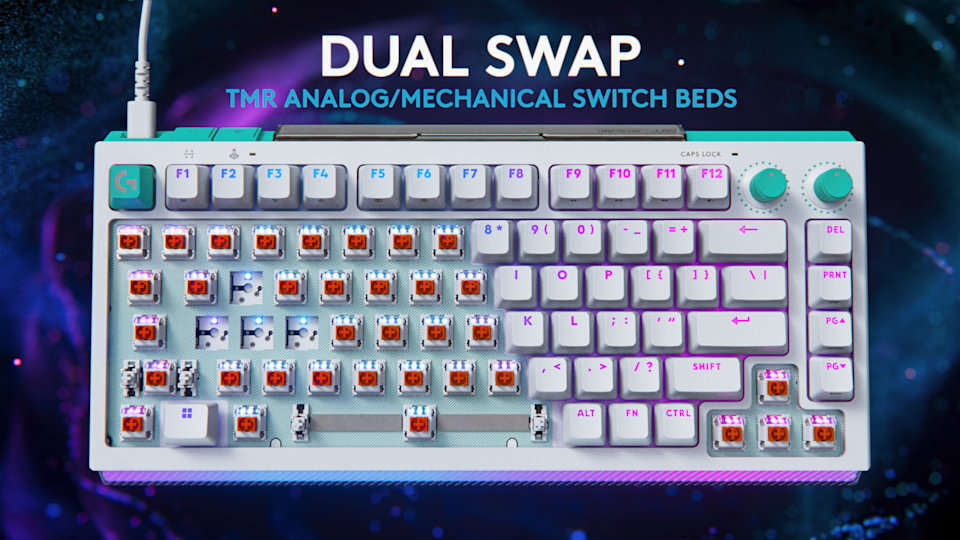
Thanks to the adoption of features like rapid triggers, analog switches and TMR sensors, the tech in fancy gaming keyboards has changed surprisingly quickly in the past few years. So to keep up with the pace of development, Logitech is putting a bunch of advanced components in its latest flagship offering — the G512 X — to create what may be its most configurable keyboard to date.
Available in both 75 and 98 percent layouts, the G512 X is based on a novel design that supports both mechanical and analog switches. Out of the box, every key features PBT keycaps and uses one of Logitech’s MX mechanical switches. However, for important buttons like WASD, users can swap in up to nine bundled Gateron KS-20 magnetic analog switches. This means that when combined with the keyboard’s 39 tunneling magnetoresistance (TMR) switch beds, users can enable support for customizable rapid triggers and multipoint actuation, complete with five bundled second actuation pressure point (SAPP) rings in case you need even more control over every keystroke. The one potential downside is that Logitech only added TMR switch beds to the left side of the keyboard, so if you prefer more unusual keybinds, you won’t have quite as many configuration options.
The 39 TMR sensors on the left of the keyboard are the ones that support the included TMR switches. (Logitech)
Meanwhile, to meet the demands of competitive gamers who need lightning-fast response times, Logitech added an 8K polling rate. This includes both 8K reporting and processing to deliver input times of just 0.125 milliseconds. Elsewhere, the G512 X comes with dual dials, a large RGB lightbar and game mode presets — all of which can be tweaked in Logitech’s G Hub app.
However, the coolest thing about the G512 X might be all the handy little details scattered across the keyboard. For example, its adjustable feet serve double duty as keycap and switch pullers, so when you want to adjust your layout, you won’t need to go searching elsewhere for the right tool. On top of that, there is built-in storage for the nine included magnetic analog switches and five SAPP rings, so you’ll always have them on hand if you want to make changes. Finally, while it is an optional accessory, Logitech created a transparent palm rest with a laser-etched surface that will enhance the G512 X’s onboard RGB lighting.
Advertisement
Logitech’s optional palm rest really boosts the output of the Logitech G512 X’s front-mounted RGB lightbar. (Logitech)
Unfortunately, at $180 for the 75 percent layout or $200 for the 98 percent model, the G512 X is a bit pricey. And unlike some other members of Logitech’s G5 family, there’s no option for a wireless variant. But if you want a keyboard with practically all the latest tech and a ton of customizability (including the ability to select linear, tactile or clicky switches), the G512 X is a very intriguing option for demanding gamers.
The G512 X is available directly from Logitech today, with wider availability slated for May 2.
Buying new tires is rarely fun, but it feels a little better when you know you’re getting something extra with your purchase. Any time a tire retailer throws in some perks, you can rest easier knowing you got more value out of that new set you bought. While most focus on pricing or brand, the real value shopper keeps an eye out for who has the best incentives, as well. Sam’s Club is one such place. If you’re a member, your tire purchase comes bundled with several benefits you might not even know about.
Like all the best warehouse clubs, Sam’s Club wants to make the shopping experience feel more elevated for tis members. This is especially true of its Tire & Battery Center. Members get a whole range of tire perks, and that’s in addition to the discount you get from simply being a part of the warehouse. These benefits are automatically included with your tire purchase, too, so you don’t even have to do (or pay for) anything extra to enjoy them.
Advertisement
Free lifetime tire maintenance
Parilov/Shutterstock
You get free lifetime tire maintenance when you buy tires at Sam’s Club. It’s a standing benefit that lasts for the usable life of the tires (defined as when tread depth reaches 2/32 of an inch). This maintenance package includes free tire rotations, balancing, tire pressure top-offs, tread depth checks, and flat repairs, all at no additional cost to you.
These no-cost maintenance tasks add up fast. Rotations alone are recommended every six months or 6,000 miles, and the average cost of a rotation and balance can be over $130 on average. Over the life of the tires, that could add up to over a thousand extra bucks in your pocket. As long as you buy and install them through the Tire & Battery Center, you’re covered for the life of the tire. Add in the free flat repairs, which are over $50 on average, and that’s even more cash you don’t have to spend.
Advertisement
Road hazard protection
PeopleImages/Shutterstock
Potholes, nails, broken glass, even ladders… you’re bound to encounter at least one out there. Road hazards are simply a part of life as a driver, and there’s no way to predict when or where you might encounter one. But encounter one you surely will. That’s why Sam’s Club’s road hazard protection is such a nice advantage. They go beyond the manufacturer’s standard warranty to cover any damage caused by these everyday driving hazards. If one of your Sam’s club tires gets punctured out on the road and can’t be safely patched, Sam’s Club gives you a replacement credit pro-rated based on the remaining tread.
Essentially, Sam’s Club makes it so that you’re only responsible for the portion of the tire you used. That’s so nice, especially if the tire’s on the newer side. That pro-rated coverage will shave a ton off the cost of replacing the tire replacement. No separate package purchase or special enrollment required, either. It’s automatically included as part of the installation package.
Advertisement
Emergency roadside assistance
Daniel Tadevosyan/Shutterstock
At Sam’s Club, every qualifying tire purchase comes with up to four years of 24/7 emergency roadside assistance. Starting from from the date of purchase, you’re covered for a wide range of common roadside issues. This includes towing, flat tire assistance, jump-starts, fuel delivery, and lockout service. You won’t find that in a Costco tire package.
To use it, all you have to do is call the toll-free number they give you at purchase. As long as your membership’s active, you can call and request assistance at any time, day or night. It’s kind of like their own version of AAA’s roadside assistance, in a way. Whether it’s a dead battery in a parking lot or a flat tire on the highway, knowing you have help available saves you the headache of paying for a separate subscription service… or, worse, wishing you had. By bundling it into tire purchases, Sam’s Club saves you hundreds you would have had to spend on something like AAA.
Advertisement
Discounted installation
Jetcityimage/Getty Images
All Sam’s Club members, regardless of tier, get competitive pricing on all their major tire brands. But Plus members get another perk: a 50% discount on tire installation when purchasing a set of four tires. Given that installation typically costs $20 per tire, this discount translates to an immediate savings of $40 per set. Costco doesn’t charge installation fees, but Sam’s Club tends to have cheaper tires. With the Plus discount on those installation fees, Sam’s tires look like the better deal.
The installation package includes mounting, balancing, valve stem installation, tire pressure monitoring system (TPMS) reset, and environmentally responsible disposal of old tires. That last one often shows up on your receipt as a hidden fee at other places, so it’s really good to know you’re getting a discount on it as a Plus member. Even if you’re just a base-tier Sam’s Club member, don’t be dismayed: you still get all the other perks listed above.
Instead of typing keywords into a search bar and hoping for the best, you can now ask YouTube a full question and get a response that feels more like a conversation. You can enable this feature using YouTube’s experimental feature.
Rachit Agarwal / Digital Trends
Once you do, you will notice an Ask YouTube button built into the YouTube search bar. When you click the search bar, YouTube surfaces suggested prompts like “What caused the 2008 financial crisis?” or “How to fix a stripped screw.” These might be trending searches or based on your own YouTube history.
Rachit Agarwal / Digital Trends
You can either search for these trending search terms or enter your own search term and hit the Ask YouTube button to perform the search. When I searched for “prisoners’ dilemma”, YouTube gave me a text overview followed by a featured video.
Then there were additional videos under different subheadings, including “step-by-step logic of the dilemma” and “real-world applications,” followed by quick concept overviews using shorts.
Rachit Agarwal / Digital Trends
I performed multiple searches and found that the search results are a mix of text summaries, long-form videos timestamped to relevant sections, and galleries of YouTube Shorts organized under themed headers. It is a genuinely different experience from the standard search results page.
Does it actually work?
In my limited testing, the AI search worked really well. Not only did it give me an overview of the topic and relevant videos, but I also liked that it sorted them into different categories, giving me an idea of their content.
Advertisement
Whether it’s better or worse than the normal YouTube search, I cannot comment. I will need to use it for longer to make any such assessment.
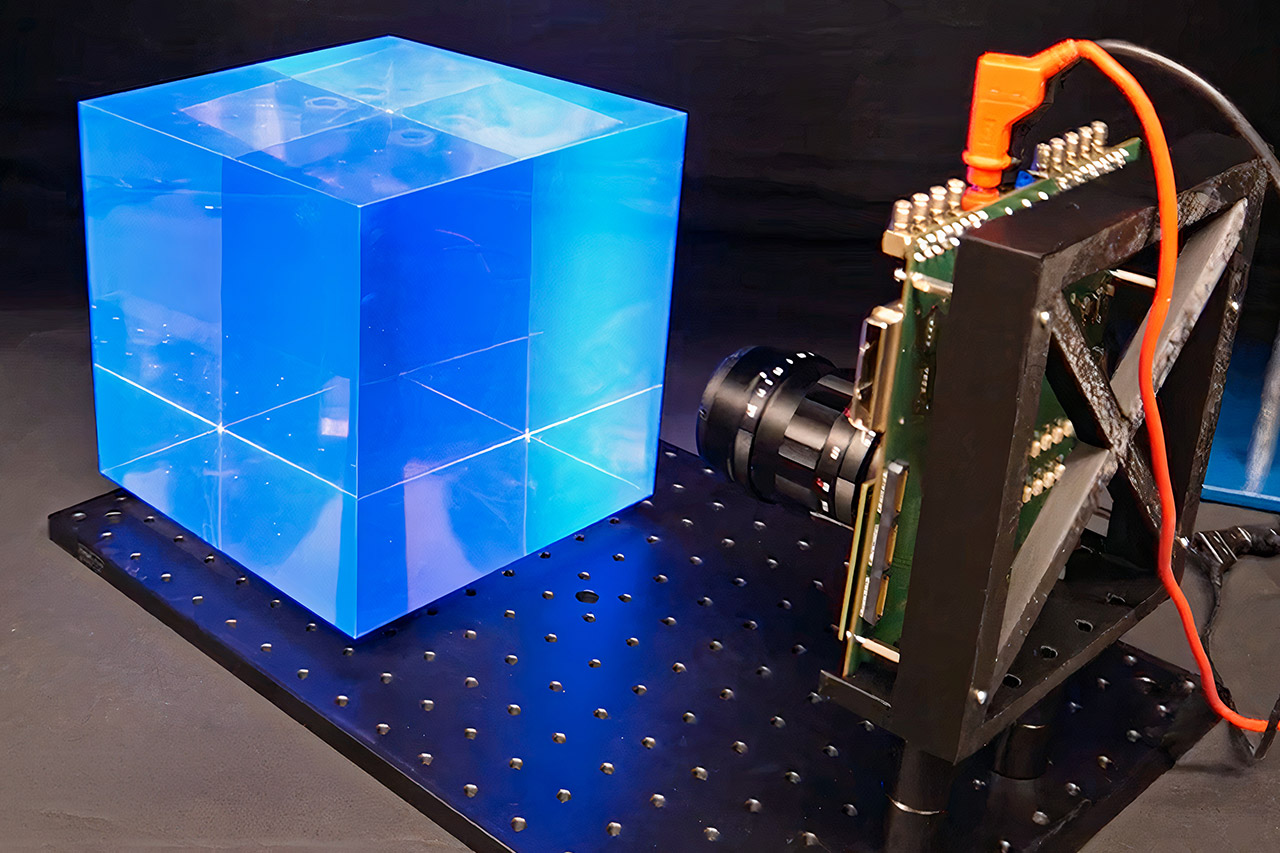
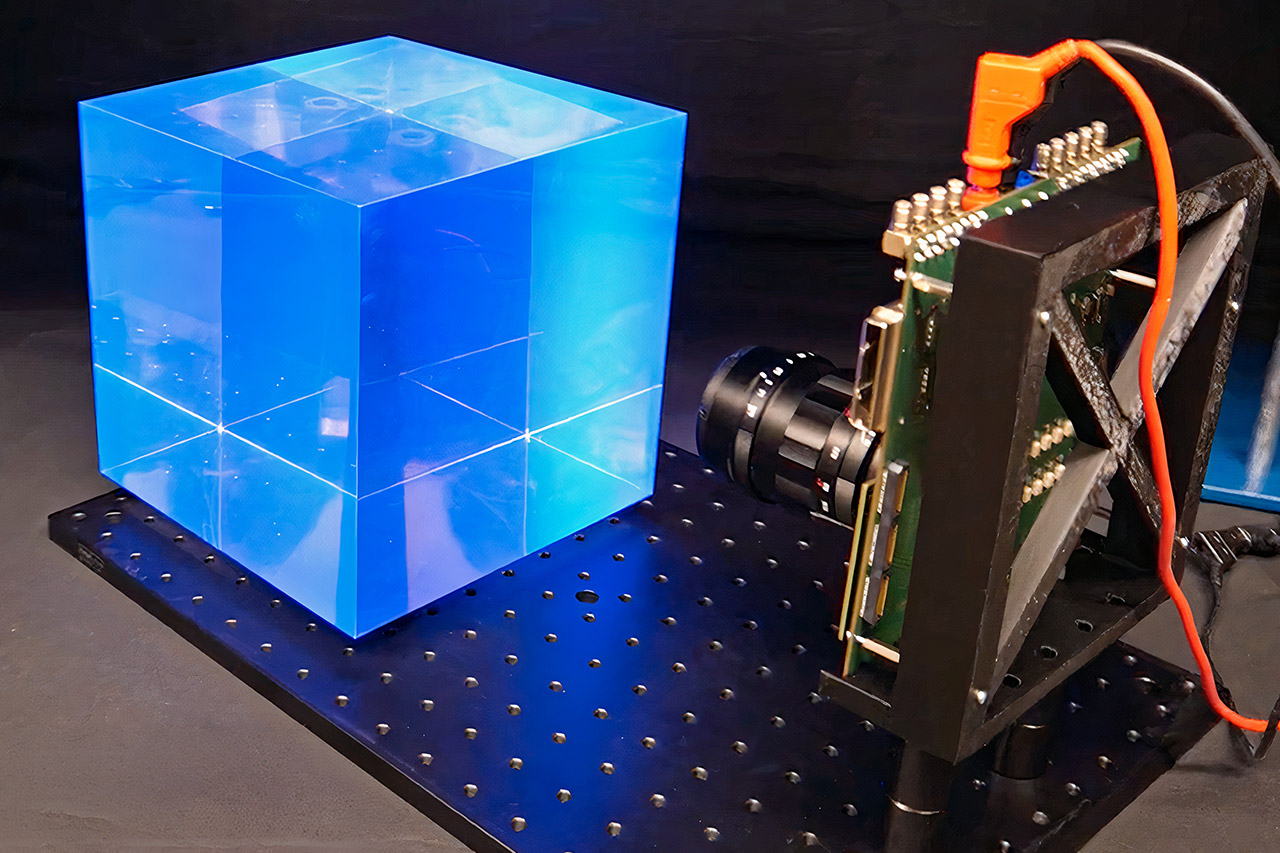
Scientists in Switzerland have developed a prototype camera capable of capturing clear three-dimensional images of neutrinos, particles so elusive they often earn the label ghost particles. Neutrinos come in huge numbers from the sun and other sources throughout space, yet they interact so rarely with ordinary matter that trillions pass through a person every second without any effect
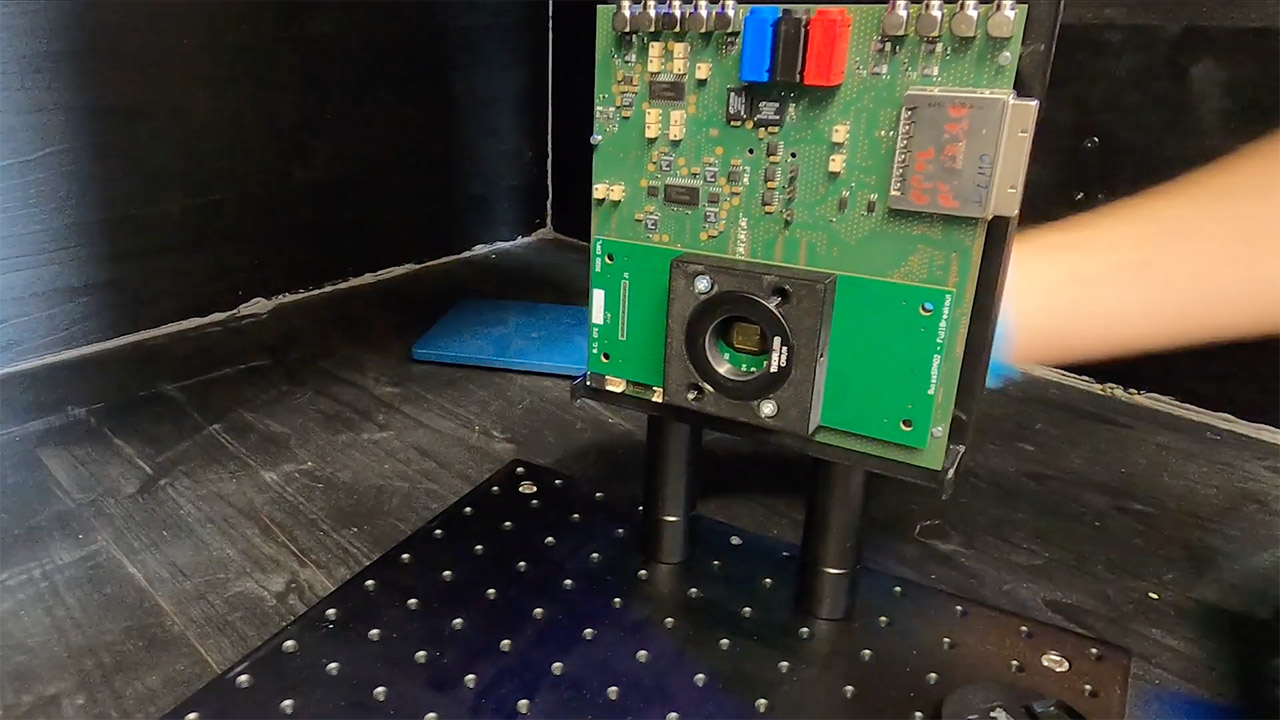
For years, detecting them needed large subterranean containers filled with specific liquids or massive arrays of sensors buried deep in the ground to capture the exceedingly rare occasions when one collides with an atom. That works, but it’s a bit pricey and doesn’t allow scientists to track the particles’ travels very well. However, a team of researchers from ETH Zurich and EPFL has recently developed a new device called PLATON, which is a far easier way of doing things.
Cinematic-Style Footage – Experience the power of Xtra Muse’s 1-inch CMOS sensor, capable of recording breathtaking 4K resolution videos at 120fps…
Ultra-Steady Shooting – No more shaky videos! Xtra Muse’s advanced 3-axis gimbal camera stabilizer ensures exceptional smoothness. Enjoy smooth…
Effortless Framing – Enjoy Xtra Muse’s expansive 2-inch touch screen, and switch between horizontal and vertical shooting effortlessly.
The idea is to use a solid block of a special material called a scintillator, which emits tiny flashes of light whenever a particle passes through it, and to that block is attached a specially designed camera with a grid of tiny lenses and a sensor that can pick up individual photons of light, as well as the exact time they hit it.
Advertisement
When a neutrino interacts with the block, it produces a brief burst of energy that is converted into light, and the camera captures the pattern of light flashes from a variety of angles at the same time. The data is then processed by some sophisticated software, which uses timing information and complex pattern recognition to create a comprehensive 3D representation of the particle’s route. Previous detectors would slice the scintillator into thousands of small bits and connect them with fibers to determine where the particles were, but this made them all large, expensive, and completely unworkable. PLATON does all of the heavy lifting with the camera.
In laboratory experiments, the new device performed admirably, reconstructing tracks from electrons emitted by a known radioactive source. Simulations based on genuine neutrino interactions indicated that it could pinpoint sites with an accuracy of roughly a fifth of a millimeter. According to team member Davide Sgalaberna, this simplifies the process of creating particle detectors while also providing a high level of 3D precision.
This technology opens a host of new possibilities for future studies that will enable researchers to investigate neutrinos more efficiently, and it could be valuable in a variety of other areas as well. Medical imaging is another area where accurate readings inside materials are critical. Of course, there is still a lot of work to be done before it can be scaled up to the size required for large science projects, but for now, this prototype looks promising. As technology advances and becomes more accessible, it has the potential to reveal a great deal more about these fundamental particles and how they help form the cosmos. [Source]






























![You Keep Doubting This Bitcoin Rally [That's Why It Keeps Pumping]](https://wordupnews.com/wp-content/uploads/2026/04/1777366129_maxresdefault-80x80.jpg)































You must be logged in to post a comment Login