Connect with us
DAPA Banner

Business

Legacy ETL Is the Hidden Constraint on AI Execution

Published

on

Christina Georgaki is the Founder and Managing Partner of Georgaki and Partners Law Firm based in Athens and Thessaloniki. With over 17 years of experience, she specialises in Foreign Direct Investments and investment Migration. Christina is also a Teaching Fellow at the Alba Graduate Business School and a member of the Political Committee of New Democracy, the governing party of Greece.

AI isn’t failing because models or platforms fall short. It’s failing because legacy ETL cannot support continuous, reliable execution at scale.

As enterprises move from analytics to AI-driven workflows, the constraint shifts from building systems to trusting them to run.

Through Maia, AI Data Automation is emerging as a new architectural layer, embedding pipeline logic directly into the data environment and eliminating external dependencies.

Why AI systems fail in execution: not development

Enterprises have invested heavily in AI, 77% of CEOs now say it will have the single most significant impact on their industry by 2028.

The platforms are in place. The mandate is clear.

Advertisement

But many organizations are beginning to face a harder question: not whether they can build AI, but whether they can operate it reliably enough to trust it with real business processes.

AI models are built. Pilots succeed. And then progress slows, sometimes quietly, sometimes all at once.

Not because the models don’t work. And not because the platforms aren’t capable.

Because the data layer underneath them, often built on legacy ETL pipelines, cannot sustain continuous execution.

Advertisement

The constraint isn’t new. The stakes are.

Most enterprise data environments were designed for analytics.

Pipelines run on schedules. Data moves in batches, often across separate systems that must extract, move, and rebuild data before it can be used. When something breaks, an engineer investigates.

That model worked when workflows moved at human speed.

AI changes the equation.

Advertisement

Now, systems depend on continuous data pipelines and reliable operational signals.
When those systems fail, the impact is immediate, models stop retraining, applications lose context, and decisions become unreliable.

In some cases, the failure is even more visible: an automated workflow halts mid-process because an upstream pipeline didn’t complete, or worse, completes with stale data no one realizes is wrong.

This is the same pattern many teams are now recognizing as the Velocity Gap, the growing distance between AI ambition and production reality.

At its core, the issue isn’t a lack of tooling or investment.
It’s that the data layer required to support continuous execution was never designed for it.

Advertisement

As the stack moves up, the foundation matters more

The industry is moving beyond analytics.

New execution layers, workflow engines, agentic platforms, and emerging capabilities like Snowflake’s SnowWork, promise to automate business processes end to end.

The architects building these platforms are clear-eyed about it: autonomous execution agents are only as reliable as the data they operate on. A flawed upstream pipeline doesn’t just break a report, it generates a confident, wrong answer at machine speed.

But these systems operate on top of the data layer. And in most enterprises, that layer is still governed by legacy ETL.

Advertisement

These platforms assume data is continuously available, governed, and production-ready.

In reality, it is often manually maintained, fragmented across tools, and dependent on human intervention to recover when something breaks.

Execution doesn’t scale, it becomes inconsistent.

And at that point, the risk isn’t delay. A single pipeline failure in a production AI system can stall downstream inference across every workflow it feeds, often requiring hours of manual intervention. It resets confidence for every business stakeholder watching the rollout.

Advertisement

It’s that the system cannot be trusted to run.

The real gap is data readiness for AI

This is why so many AI initiatives fail to move beyond pilot.

Not because the models aren’t effective, but because the data required to sustain them across AI systems cannot be delivered reliably, continuously, and at scale.

And even when organizations attempt to modernize, the challenge often persists, because execution still depends on systems operating outside the core data environment, introducing latency, fragmentation, and control gaps.

Advertisement

As AI systems move from analytics to execution, the limitations of analytics-era data architecture become harder to ignore.

A data layer that depends on external engines to move, transform, or repair data before it can be used cannot support continuous model retraining, real-time decisioning, or autonomous business workflows.

Until that changes, AI remains constrained, not by innovation, but by execution.

A new layer is emerging

This is why a new layer is taking shape: AI Data Automation.

Advertisement

Not as another tool in the stack, but as a new layer for AI Data Automation: a fundamentally different operating model for how data work gets done.

The shift is away from human-managed pipelines and reactive maintenance toward continuous execution, where pipelines are created, maintained, and governed automatically, without external dependency, handling schema drift, quality issues, and optimization autonomously.

Maia, the AI Data Automation platform, is where this shift becomes operational, removing the need for external systems to build, maintain, and repair pipelines, and embedding that logic directly into the data environment itself.

The goal isn’t faster development. It’s something more fundamental.

Advertisement

A data layer that can support the continuous execution of AI systems, without depending on humans to keep it running.

Execution is the real measure of AI

AI doesn’t fail because the platforms aren’t capable.

It fails because the data layer cannot reliably support, or be trusted to sustain, the systems built on top of it.

Until that changes, every new layer of innovation will inherit the same constraint.

Advertisement

And the gap between ambition and outcome will continue to grow, the very definition of the Velocity Gap.

Book a Maia demo to see how AI Data Automation changes the equation.

Advertisement
Continue Reading
Click to comment

You must be logged in to post a comment Login

Leave a Reply

Business

Wiltshire farmers planning to open rare micro tannery

Published

on

Business Live

James and Katie Allen want to open the heritage tannery at Great Cotmarsh Farm near Broad Town

Cows in a field

Cows in a field(Image: DC Media)

Plans to establish the UK’s first micro-scale vegetable tannery for cattle hides at a farm in the Wiltshire countryside have been revealed. James and Katie Allen are seeking to launch the heritage tannery at Great Cotmarsh Farm near Broad Town.

Advertisement

The pair acquired the farm in 2023 and began developing a varied portfolio of business ventures, including a glamping site featuring a shepherd’s hut, and a farm classroom for fashion students teaching sustainable production techniques such as wool-weaving and natural dye-making.

They now intend to add leather production to their offering, through the establishment of a heritage tannery – and have lodged a planning application for change of use to an existing farm building which they reconstructed in 2024.

Their agent, agricultural consultant Woolley & Wallis, has informed the council: “The use of the building for leather tanning of their own hides from the herd established on the farm is still considered agricultural.

“The use as a tannery is ancillary to their agricultural enterprise, much like a farm shop selling their own produce or a farmer producing wine from his grapes on site.

Advertisement

“The tannery produces, sustainable, high-quality, vegetable-tanned cow leather that the applicant can trace back to the exact animal reared on the land.”

The UK was formerly a global leader in leather production for everything from footwear to saddles, with every market town boasting a tanner. However, tanning is a declining craft, and the tanneries still operating rely on dangerous chemicals to speed up the procedure.

“Traditional oak bark tanning is now classified as critically endangered on the Heritage Crafts red list,” said James.

“We are in danger of losing the knowledge from the country completely as the last tanning experts retire.

Advertisement

“Our leather will be made to produce our own leather goods, but also to supply brands looking for hero collections that want true transparency along the leather supply chain, and for artisan leather workers and makers.

“In the future, we’d like to be able to offer farmer returns, enabling farmers to generate another income stream from their cattle enterprise.”

Our micro-scale tannery is an important part of the field-to-fibre story and knowledge exchange we are building on the farm, and we hope to support the creation of other micro tanneries to help reinvigorate a heritage craft that once was a burgeoning part of British enterprise.

A ruling from Wiltshire Council is expected by mid-June.

Advertisement
Continue Reading

Business

Elon Musk Blasts ‘Scam Altman’ for Looting OpenAI Charity as Landmark Trial Begins

Published

on

Elon Musk and Sam Altman were among the 11-person team that founded OpenAI in 2015

OAKLAND, Calif. — Elon Musk unleashed a blistering attack on OpenAI CEO Sam Altman on Monday, labeling him “Scam Altman” and accusing him along with President Greg Brockman of stealing a charity in a viral X post that landed squarely on the first day of jury selection in Musk’s high-stakes lawsuit against the artificial intelligence company.

Elon Musk and Sam Altman were among the 11-person team that founded OpenAI in 2015
Elon Musk and Sam Altman
AFP

The post, which amassed more than 22 million views within hours, revived Musk’s long-standing grievances over OpenAI’s transformation from a nonprofit he helped found in 2015 into a for-profit powerhouse now valued in the hundreds of billions. “Scam Altman and Greg Stockman stole a charity. Full stop,” Musk wrote, deliberately misspelling Brockman’s surname as “Stockman” in apparent mockery.

Musk detailed what he called a profound betrayal: “Greg got tens of billions of stock for himself and Scam got dozens of OpenAI side deals with a piece of the action for himself, Y Combinator style. After this lawsuit, Scam will also be awarded tens of billions in stock directly.” He framed the legal fight in stark moral terms for the American public: “Do you want to set legal precedent in the United States that it is ok to loot a charity? If so, you undermine all charitable giving in the United States forever.”

Advertisement

The timing was no coincidence. Jury selection opened Monday in Alameda County Superior Court here for Musk’s civil case, which centers on allegations that OpenAI breached its original charitable trust by shifting to a capped-profit model and striking massive commercial deals, most notably with Microsoft. Musk has dropped earlier fraud claims but is pressing forward with breach-of-charitable-trust arguments. He has repeatedly stated that any damages awarded would return to the nonprofit mission rather than lining his pockets.

Musk reminded followers of his foundational role: “I could have started OpenAI as a for-profit corporation. Instead, I started it, funded it, recruited critical talent and taught them everything I know about how to make a startup successful FOR THE PUBLIC GOOD. Then they stole the charity.” The post quoted at length a detailed thread from user @XFreeze recounting how Musk put up his own money, assembled top AI talent and launched the organization explicitly as a pure nonprofit with zero profit motive and open research.

OpenAI was established in late 2015 as a nonprofit research lab with Musk, Altman, Brockman and others as co-founders. Musk stepped down from the board in 2018 amid disagreements, including concerns about Tesla’s competing AI work. The company later created a for-profit subsidiary in 2019 to raise the enormous capital needed for cutting-edge AI development, a move it has defended as necessary and fully disclosed.

OpenAI has called Musk’s lawsuit meritless, arguing he was aware of and initially supportive of the hybrid structure that enabled breakthroughs like ChatGPT. The company maintains it remains committed to its mission of developing safe artificial general intelligence that benefits all of humanity.

Advertisement

Legal observers said Musk’s public broadside could color potential jurors’ views even as the courtroom process unfolds. The case is expected to examine internal documents, emails and founding agreements that detail the 2019 restructuring. Witnesses will likely include early employees, board members and AI ethicists. The trial could last weeks or months, with appeals almost certain.

Public reaction on X was swift and polarized. Supporters praised Musk for defending charitable principles, with one reply stating, “If the courts let Sam Altman and Greg Brockman loot a nonprofit they turned into their personal multi-billion-dollar piggy bank, then every charity in America just became fair game for grifters in Silicon Valley.” Others mocked the dispute, with critics accusing Musk of sour grapes after walking away from OpenAI and launching rival xAI.

The feud has thrust into the spotlight broader questions about governance of nonprofits in the tech sector, where enormous capital requirements often clash with original humanitarian missions. Charitable-giving experts warn that a ruling perceived as endorsing the conversion of nonprofits into personal windfalls could deter future philanthropy, particularly in high-stakes fields like AI.

OpenAI continues to dominate the AI landscape, with its models powering consumer chatbots, enterprise tools and research worldwide. Revenue has soared into the billions annually. Altman has testified that the for-profit structure was essential to scaling responsibly rather than ceding ground to less-regulated competitors.

Advertisement

Musk has used his ownership of X to amplify warnings about AI safety, positioning xAI as a “maximum truth-seeking” alternative. The OpenAI lawsuit, however, focuses narrowly on contractual and fiduciary duties tied to the nonprofit origins rather than philosophical differences over AI alignment.

For Silicon Valley, the trial represents more than a personal clash between two titans. It could reshape how future AI ventures structure themselves and how courts interpret founding charters in rapidly evolving industries. Investors are monitoring closely; a Musk victory might open the door to similar challenges against other hybrid models.

As jury selection continued into Tuesday, April 28, Musk showed no signs of backing down. His Monday post echoed arguments his legal team has made in court filings, emphasizing that he recruited key talent and poured resources into OpenAI specifically because it was structured as a charity. “Then they stole the charity,” he concluded.

OpenAI has not commented directly on the latest post but has previously described Musk’s claims as revisionist history. The company notes that Musk proposed merging OpenAI with Tesla in 2018 — a move the board rejected — before departing. It says it has honored its mission by releasing research, building safety systems and pursuing AGI for humanity’s benefit.

Advertisement

The broader AI race has intensified since OpenAI’s founding. What began as a small research collective has become a global competition involving governments, tech giants and startups. Musk’s xAI, Anthropic, Google DeepMind and others now vie fiercely, raising questions about whether any single entity can serve as a neutral steward of humanity’s most powerful technology.

Whatever the jury decides, the Musk-Altman dispute has already highlighted critical issues of trust, governance and the public good in the AI era. With billions in potential value and humanity’s technological future on the line, Monday’s explosive post served as a vivid reminder that the courtroom battle is as much about narrative as it is about law.

As the trial advances, both sides will present evidence that could reshape not only their corporate futures but also precedents for charitable organizations in the innovation economy. For now, Musk’s viral message ensures the public debate over OpenAI’s origins and direction remains front and center.

Advertisement
Continue Reading

Business

Velo3D: Metal Additive Manufacturing Platform Targeting High-End Applications

Published

on

Velo3D: Metal Additive Manufacturing Platform Targeting High-End Applications

Velo3D: Metal Additive Manufacturing Platform Targeting High-End Applications

Continue Reading

Business

Stock picking key as auto, banks face near-term headwinds: Sandip Sabharwal

Published

on

Stock picking key as auto, banks face near-term headwinds: Sandip Sabharwal
Indian equity markets continue to reflect a mix of strong sectoral growth and emerging near-term risks, particularly around input costs, competition, and valuations. In a conversation with ET Now, market expert Sandip Sabharwal maintained a broadly constructive long-term stance but emphasised the importance of selectivity in the current environment.

On the auto sector, including names like Maruti Suzuki, Sabharwal remained positive over the long term but flagged short-term pressure from rising costs.

“Long term I am bullish and we hold M&M, Maruti and Bajaj Auto, but near-term issues remain due to input costs, especially steel.” He added that while valuations are not stretched, cost pressures and sentiment around fuel prices could weigh on demand in the near term. “Fuel price changes may not matter long term, but they impact sentiment. Near-term concerns are there,” he said.

Turning to small finance banks and NBFCs, Sabharwal adopted a more cautious tone, pointing to aggressive guidance and potential stress in lending pockets. “Guidance does not look conservative; it appears aggressive given possible stress pockets.” He stressed that in financials, asset quality is more important than headline profitability. “Profits matter less; asset quality is what drives long-term wealth creation.” He also indicated a preference for more conservative lenders in a potentially slowing economic environment.

Advertisement

On market structure, Sabharwal highlighted a shift in opportunity towards midcaps following a recent correction.


“Midcaps saw a sharp correction since September 2024. This creates stock-picking opportunities.” He suggested that investors should avoid broad-based bets and instead focus on selective opportunities in mid and smallcap segments. “It is better to cherry-pick midcaps and selective smallcaps now.”
On sectoral themes, he preferred consumer durables as a play on seasonal demand rather than Coal India. “ACs, fans and cooler companies should do well this summer.” While acknowledging Coal India’s valuation comfort, he remained unconvinced on its medium-term appeal. “It is not expensive, but I am not a big fan of Coal India.”In the quick commerce space, Sabharwal flagged rising competitive intensity as a key concern for players like Eternal and Swiggy. “Amazon entering quick commerce could cap upside for these stocks.” He noted that profitability remains under pressure and increasing competition could limit near-term upside. “Upside looks capped for now given competition and cost pressures.”

On Sun Pharma’s recent acquisition, Sabharwal said the initial market reaction has been positive, but cautioned that large deals in the pharma sector typically take time to integrate. “The deal looks like a good strategic fit.” However, he added, “Large pharma acquisitions are rarely easy; integration takes time.” He also pointed out that the acquisition price is on the higher side, suggesting investors should adopt a wait-and-watch approach.

Overall, Sabharwal’s view suggests a market environment where macro and sectoral tailwinds remain supportive, but returns are increasingly likely to be driven by disciplined stock selection rather than broad-based rallies.

Advertisement
Continue Reading

Business

Retirement Business Ideas For Parents In 2026

Published

on

Retirement Business Ideas for Parents

Retirement doesn’t have to mean the end of earning income. For many parents, it’s actually the perfect time to explore small business opportunities that are less stressful, more flexible, and personally fulfilling. After years of working hard and raising a family, retirement opens the door to turning hobbies, skills, and life experience into something profitable.

Whether your goal is to supplement your pension, stay mentally active, or simply enjoy a meaningful routine, starting a small business can be one of the best decisions you make. In this article, we’ll explore practical and realistic business ideas that parents can start during retirement.

Retirement Business Ideas for Parents

Why Start a Business During Retirement?

Before diving into the ideas, it’s important to understand why many retirees choose to start a business:

Advertisement
  • Extra Income: Helps cover daily expenses or unexpected costs.
  • Flexibility: You control your schedule and workload.
  • Purpose: Staying productive can improve mental and emotional health.
  • Legacy: You can build something to pass on to your children.

The key is to choose a business that matches your energy level, interests, and financial capacity.

If you love cooking, this is one of the most practical businesses you can start. Many parents already have years of experience preparing meals, making this a natural transition.

You can sell:

  • Home-cooked meals
  • Baked goods
  • Snacks or local delicacies

Start small by selling to neighbors, friends, or through social media. This business requires minimal investment and can be done right from your kitchen.

A small neighborhood store is a classic retirement business. It’s simple to manage and provides steady daily income.

Advantages include:

Advertisement
  • Consistent demand
  • Easy to operate
  • Community interaction

You can expand over time by adding mobile load, bills payment services, or even frozen goods.

With the rise of e-commerce, parents can now run a business without leaving home. Online selling is perfect for retirees who want flexibility.

Popular items to sell include:

  • Clothing and accessories
  • Household items
  • Health products

Platforms like Facebook Marketplace or online shopping apps make it easy to connect with customers.

4. Rental Business

If you have extra space or assets, renting them out can provide passive income.

Examples:

Advertisement
  • Room or apartment rental
  • Vehicle rental
  • Event equipment rental (chairs, tents, etc.)

This type of business requires less daily effort once set up properly.

5. Gardening and Plant Selling

For parents who enjoy gardening, this can be both relaxing and profitable.

You can sell:

  • Ornamental plants
  • Herbs and vegetables
  • Landscaping services

With the growing interest in home gardening, this business has strong potential.

Laundry services are always in demand, especially in busy communities.

You can start with:

Advertisement
  • Wash-and-dry services
  • Ironing services
  • Pickup and delivery options

This business can be scaled gradually depending on your capacity.

7. Tutoring or Coaching

Parents with professional or academic experience can share their knowledge through tutoring.

Opportunities include:

  • Academic tutoring (Math, English, etc.)
  • Music lessons
  • Life skills coaching

This is a low-cost business that allows you to make a meaningful impact.

8. Handicrafts and DIY Products

If you enjoy creating things, you can turn your hobby into a source of income.

Examples:

Advertisement
  • Handmade bags
  • Decorations
  • Personalized gifts

These can be sold online or at local markets.

9. Small Farming or Livestock

If you have access to land, small-scale farming can be a rewarding retirement business.

You can raise:

Or grow crops such as vegetables and fruits. This can also reduce your household expenses while generating income.

10. Boarding House or Bed-and-Breakfast

If you have extra rooms, converting them into a rental space is a great long-term business.

Advertisement

This is ideal for areas near:

  • Schools
  • Offices
  • Tourist spots

It provides steady monthly income and can be managed with minimal effort.

Tips for Choosing the Right Retirement Business

Not all businesses are suitable for everyone. Here are some important tips:

  • Start Small: Avoid large investments at the beginning.
  • Choose What You Enjoy: Passion makes the work easier.
  • Consider Your Health: Pick a business that matches your physical ability.
  • Manage Time Wisely: Retirement should still feel relaxed.
  • Involve Family: This can strengthen relationships and share responsibilities.

Retirement is not the end of productivity—it’s a new beginning. For many parents, starting a small business provides financial security, personal fulfillment, and a renewed sense of purpose.

The best business is not necessarily the biggest or most profitable one, but the one that fits your lifestyle and brings you joy. Whether it’s cooking, selling, teaching, or growing plants, there are countless opportunities waiting to be explored.

Take the first step, start small, and enjoy the journey. After all, retirement should not just be about resting—it should also be about living fully and meaningfully.

Advertisement

Disclaimer: Before starting any business, it is recommended to check local regulations, permits, and requirements in your area to ensure compliance with the law.

BN Philippines
Latest posts by BN Philippines (see all)
Continue Reading

Business

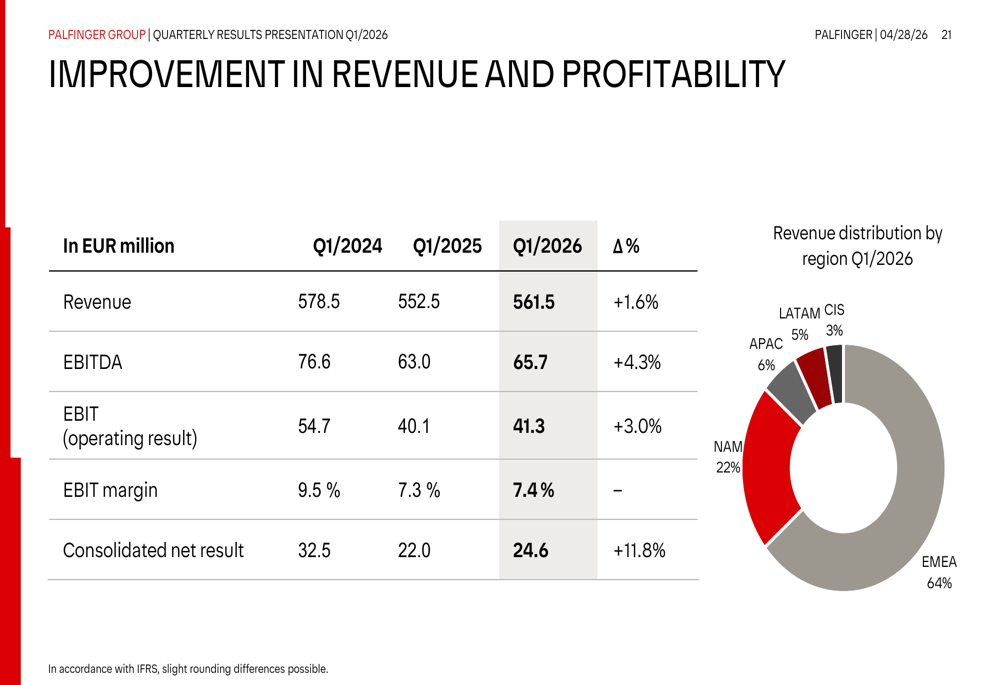
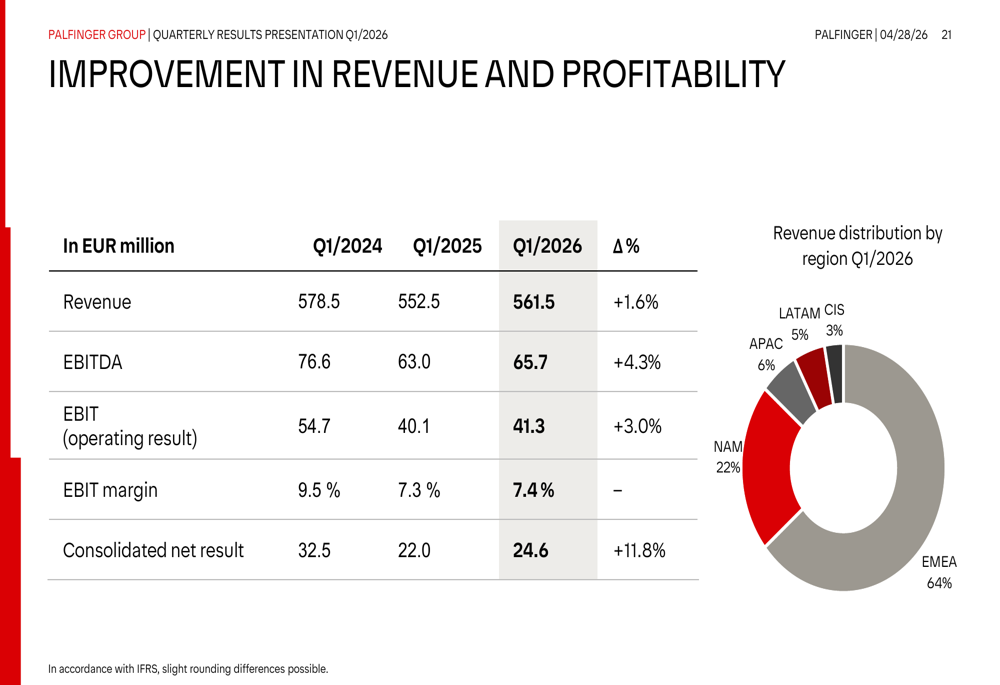
Palfinger Q1 2026 slides: margins expand despite revenue headwinds

Published

on

Palfinger Q1 2026 slides: margins expand despite revenue headwinds


Palfinger Q1 2026 slides: margins expand despite revenue headwinds

Continue Reading

Business

NYT Connections Answers April 28 2026 Revealed for Puzzle 1052

Published

on

Nancy Guthrie

NEW YORK — The New York Times Connections puzzle for Tuesday, April 28, 2026 — Game No. 1,052 — challenged players with clever word groupings that blended everyday actions, polite requests and clever wordplay, delivering a satisfying solve for many while stumping others until the final attempts.

The 16 words presented were: APPEAL, BID, CALL, REQUEST, DRY, FOLD, SORT, WASH, CHECK, COUPON, MATCH, STAMP, DIAL, FLOWER, SCREEN, TAN. Players needed to sort them into four thematic groups of four, with difficulty increasing from yellow (easiest) to purple (hardest).

Yellow Category (Easiest): Entreaty APPEAL, BID, CALL, REQUEST This straightforward group captured synonyms for making a polite or formal plea. Many solvers identified it quickly as words associated with asking or soliciting something.

Green Category: Laundry Day Verbs DRY, FOLD, SORT, WASH A highly relatable household theme, these verbs describe the typical steps in doing laundry. This category proved accessible for players familiar with domestic routines, often solved early in the game.

Advertisement

Blue Category: Things That Come in “Books” CHECK, COUPON, MATCH, STAMP This trickier group referred to items commonly found in bound collections: checkbooks, coupon books, matchbooks and stamp books. The quotation marks around “books” provided the crucial hint that helped distinguish it from other possibilities.

Purple Category (Hardest): Sun___ DIAL, FLOWER, SCREEN, TAN The most challenging set completed common phrases or compound words beginning with “sun”: sundial, sunflower, sunscreen and suntan. This category rewarded lateral thinking and familiarity with compound nouns.

Many players reported solving the puzzle in three to five attempts, praising the balance between obvious connections and more obscure ones. Social media lit up with victory grids showing perfect scores or near-misses, with users celebrating the laundry theme as particularly intuitive.

Connections, created by Josh Wardle (the same mind behind Wordle) and acquired by The New York Times, has become a staple of daily digital puzzles since its debut. The game presents 16 words in a 4×4 grid, and solvers must identify the shared themes without explicit clues. Players have four mistakes before the game ends, encouraging careful deduction rather than random guessing.

Advertisement

Tuesday’s puzzle continued April’s trend of mixing practical, everyday language with clever misdirection. The laundry verbs provided an easy entry point, while the “books” and “sun” categories tested players’ ability to think beyond literal meanings. Early hints shared on forums suggested focusing first on action words and then on compound phrases.

For strategy enthusiasts, starting with obvious clusters like household chores often unlocks momentum. On April 28, identifying WASH, DRY, FOLD and SORT accelerated progress for thousands. Those who struggled with the purple category frequently mistook SUN-related words for tech or nature themes before the compound pattern emerged.

The New York Times has expanded its puzzle offerings significantly, with Connections sitting alongside Wordle, Spelling Bee, Strands and the traditional crossword. On April 28, players juggling multiple games found the Connections solution complemented the day’s other challenges, creating a complete morning mental workout.

Community engagement remains strong. Reddit’s r/NYTConnections subreddit featured hundreds of posts discussing Tuesday’s puzzle, with users sharing solve streaks and debating category difficulty. Many noted the puzzle felt slightly easier than Monday’s but still offered satisfying “aha” moments.

Advertisement

Beyond entertainment, Connections serves as a cognitive exercise. Linguists and educators highlight its benefits for pattern recognition, vocabulary expansion and flexible thinking. The game’s shareable results format fosters friendly competition among friends, families and online communities without spoiling the solution for others.

Looking ahead, April 2026 has delivered a varied slate of Connections puzzles, keeping solvers engaged with themes ranging from pop culture to household tasks. Tuesday’s edition stood out for its clean, thematic separation once the connections clicked. For those who missed it, the archive allows replaying past games, though daily freshness remains part of the appeal.

The New York Times continues refining the game based on player feedback while preserving its core charm: no ads, simple interface and universal accessibility. Whether solved perfectly or with a few mistakes, April 28’s puzzle reinforced why millions return daily — the joy of discovery through language.

As the week progresses, expect more inventive groupings. For now, Tuesday’s solution — entreaty pleas, laundry chores, book collections and sun compounds — provided another successful chapter in the Connections phenomenon. Players can look forward to Wednesday’s fresh challenge, continuing the streak of brain-teasing fun that has made the game a modern classic.

Advertisement
Continue Reading

Business

West Australian Opera in $1.6m surplus

Published

on

West Australian Opera in $1.6m surplus

New financials from the West Australian Opera have shown a dramatic increase in operating surplus from $299,588 in 2024 to $1.6 million in 2025.

Continue Reading

Business

Whitehaven Coal Limited (WHITF) Q3 2026 Earnings Call Transcript

Published

on

OneWater Marine Inc. (ONEW) Q1 2026 Earnings Call Transcript

Paul Flynn
MD, CEO & Director

Morning, everybody. Thanks very much for dialing in to our March 2026 quarterly production report. I’m joined here today, as usual with Kevin Ball, our CFO, and Ian Humphris, our COO. I’ll go through the highlights as usual, and try and get to the Q&A section, which I’m sure will be the more interesting part of the discussion today. Broadly, look, we’ve had a pretty solid third quarter, which we’re pleased with to be able to round that out in a way which sets us up well for the fourth quarter. Solid, and I’ll go through the New South Wales and Queensland dimensions of that through the highlights section in particular. Look, our safety record continues to be very good. We’re tracking well.

Our TRIFRA at 3.2 certainly is a continuation of the momentum we’ve shown to improving our safety, period on period, so very positive. Managed ROM at 9.5% reflects the seasonal nature of Q3. I’m sure everyone’s come to expect that a little bit now with us, but now being a couple of years into our ownership in Queensland in particular. Export coal sales have been pretty good at 6.8 million tonnes for the second quarter. Met coal prices have improved across both fronts, and we’ll get to that in a little bit more detail, for

Advertisement
Continue Reading

Business

At Close of Business podcast April 28 2026

Published

on

At Close of Business podcast April 28 2026

Jack McGinn and Nadia Budihardjo discuss how some gold producers are using nickel infrastructure.

Continue Reading

Trending

Copyright © 2025