
Politics
McSweeney claims Mandelson disapproved of ‘Labour Together’, yet he helped set it up

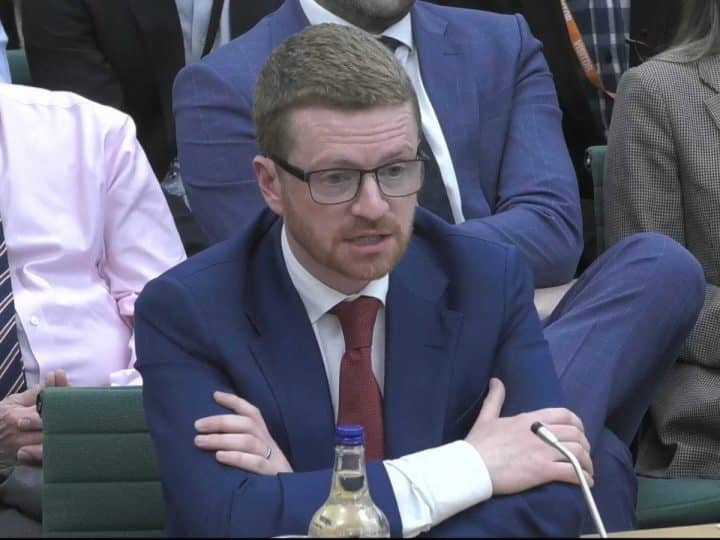

Disgraced right-wing Labour saboteur Morgan McSweeney testified to MPs of the Foreign Affairs Select Committee (FAC) today. Presumably by design, it was mostly like watching paint dry. McSweeney justified himself and MPs failed to really press Keir Starmer’s ‘shadow man’. An opportunity squandered.
But an apparently emboldened McSweeney went a bit too far.
McSweeney: nothing to see with Mandelson and Labour Together
To distance himself and his sabotage and spying outfit from the scandal-riddled Blairite peer and child-rapist fan, he claimed that Peter Mandelson had not liked McSweeney’s Labour Together “at all”. Mandelson was “not a fan” of McSweeney’s project to destroy the left of the party and its leader, Jeremy Corbyn. That would be the same Mandelson who said he worked every day to undermine Corbyn.
Right.
But according to the unchallenged parliamentary record, as well as Mandelson’s own history, Mandelson was very much for Labour Together – and even helped McSweeney set it up:
Peter Mandelson had advised Morgan McSweeney on the establishment of that organisation, which had been responsible for breaking electoral law so that it could hide the sources of its funds from the public and from the Labour party. Labour Together then sought to intimidate and smear journalists who revealed that wrongdoing
This eagerness to distance himself and Labour Together from Mandelson isn’t new. The Canary covered it as a broad phenomenon a month ago, in March 2026. And as that coverage identified, Mandelson not only attended Labour Together events, but spoke at them. Yet Labour Together has been deleting the evidence:
Isn’t this strange… Labour Together deleted this post from X showing an LT event at 2023 Labour conference, addressed by Peter Mandelson, @jreynoldsMP and hosted by Josh Simons. This screengrab was taken two weeks ago, so only deleted since then. Would be a shame if it was… pic.twitter.com/PsgwzVF9eH
— The Fraud (@StarmertheFraud) March 25, 2026
Whyever would McSweeney and his sabotage crew caught spying on journalists and spreading totally false antisemitism smears want to distance itself from the Labour-right saboteur who couldn’t stop himself gushing about Jeffrey Epstein even after that monstrous Israeli spy was convicted for the first time of raping a child? What a conundrum – and what a pity (yet not at all surprising) that none of the MPs on the FAC thought to ask.
Featured image via the Canary
By Skwawkbox



The International Centre of Justice for Palestinians (ICJP) has submitted its recommendations for sanctions against sixty-two Israeli parliamentarians and lawmakers. It’s because of their responsibility for passing and adopting the death penalty bill. The ICJP has sent its list to the foreign secretary.
Pursuant to the Sanctions and Anti-Money Laundering Act 2018 and the Global Human Rights Sanctions Regulations 2020, the recommendation proposes that the individuals named are responsible for or engaging in serious violations of the rights of Palestinians in the West Bank, most notably the right to life, and the right not to be subjected to torture or cruel, inhuman or degrading treatment or punishment. They should therefore be sanctioned in accordance with the current UK legislation.
The new penal law which exclusively and purposefully targets Palestinians, marks an extreme escalation in Israel’s genocidal policies against Palestinians and consolidates Israel’s apartheid judicial system, embedding racist discrimination against Palestinians into law and once again allowing Israel to violate international norms.
ICJP proposals
If the Foreign Office adopted ICJP’s sanctions recommendations, it would send a clear message to the Israeli government that the UK will not tolerate Israel’s apartheid regime and systematic discrimination of Palestinians within its legal system.
In doing so, the government would be sending a strong message that lawmakers using the law to veil illegal practices and crimes committed against a protected population including the accelerated practice of killing Palestinians, will not be tolerated.
By adopting such sanctions, the UK would be affirming its strong condemnation of Israel’s use of the death penalty against Palestinians and ensuring its commitment to the UK’s obligations under international law, particularly positive obligations towards preventing practices amounting to torture or cruel treatment.
The submission argues that the UK government should take a leading stance and sanction the proposed individuals to set a precedent in tackling grave violations of human rights. The government should not wait for evidence of the application of the death penalty bill, but should take a preventative measure towards attempting to pressure the Israeli government into repealing this law.
The expressions of concern from many Western governments since the passing of the death penalty bill is a futile response and remains, at best, perfunctory. An urgent and comprehensive sanctions package is needed to combat the growing discrimination and violation of the right to life for Palestinians by Israel.
The UK must make clear its opposition to Israel’s intentional and targeted killing of Palestinians, and its explicit apartheid legal system, that is further compounded by this death penalty law.
Órlaith Roe, ICJP’s public affairs and communications officer, said:
In apartheid South Africa, 95% of people sentenced to death were Black. Thanks to this law, in apartheid Israel, 100% of people who will be sentenced to death will be Palestinians.
Our recommendations for sanctions to the Foreign Office are crucial for the UK government to adopt if it wants to stand on the side of human rights, international norms, and equality before the law, as these are the priorities the UK government claims to care for.
The UK has both the responsibility and the leverage to act – sanctions can still serve as a preventative tool, applying real pressure before irreversible harm is done. The cost of inaction will, once again, be measured in Palestinian lives.
Featured image via
By The Canary


Dubai might be famous for its towering skyscrapers and massive shopping malls, but the city’s stunning beaches are equally impressive and often become the highlight of many visitors’ experiences. The Arabian Gulf’s warm, turquoise waters combined with year-round sunshine make Dubai a beach lover’s paradise where relaxation and swimming can happen practically any day of the year.
From public beaches with free access to luxurious private beach clubs offering five-star amenities, the city caters to every type of beachgoer and budget. Many Trips to Dubai now prioritise beach time alongside traditional tourist attractions, as visitors discover that lounging on pristine white sand with the dramatic city skyline as a backdrop creates unforgettable moments.
Jumeirah Beach: The Classic Dubai Beach Experience
Jumeirah Beach stands as Dubai’s most iconic stretch of coastline, offering stunning views of the Burj Al Arab, the world’s most luxurious hotel that rises from the sea like a giant sail. This public beach provides free access to soft white sand and calm, clean waters perfect for swimming, making it incredibly popular with both tourists and residents.
The beach features shower facilities, changing rooms, and lifeguards on duty, ensuring a safe and comfortable experience for families with children. Food trucks and cafes dot the area, serving everything from fresh juice to full meals, so spending an entire day here is completely feasible. The only downside is that Jumeirah Beach can get quite crowded, especially on weekends and holidays, but arriving early in the morning guarantees a good spot.
La Mer: The Trendy Beach Destination
La Mer represents Dubai’s newer, trendier approach to beach development, combining a beautiful waterfront with vibrant dining, shopping, and entertainment options all in one location. The beach itself features crystal-clear waters and clean sand regularly maintained to ensure pristine conditions for swimmers and sunbathers.
What sets La Mer apart is the surrounding infrastructure, with colorful shipping containers transformed into boutique shops, restaurants, and cafes creating an Instagram-worthy backdrop. Inflatable water parks float just offshore, providing hours of entertainment for kids and adventurous adults.
Kite Beach: Water Sports and Active Fun
Kite Beach earns its name from the constant presence of colorful kites soaring above the water, pulled by kitesurfers riding the waves and wind. This beach caters specifically to active beachgoers who want more than just lying in the sun, though there’s plenty of space for traditional beach relaxation too.
The consistent winds and waves make it Dubai’s premier spot for kitesurfing, paddleboarding, and kayaking, with rental shops and schools offering equipment and lessons for beginners. Many visitors book Dubai Travel Packages specifically to seek out Kite Beach for its combination of water sports, beach volleyball, outdoor gym equipment, and healthy food options from the beachfront food trucks that line the sand.
The Beach at JBR: Urban Beach Vibes
The Beach at Jumeirah Beach Residence, commonly called JBR Beach, combines beachfront relaxation with urban convenience in Dubai Marina’s bustling neighborhood. This stretch of sand sits directly in front of high-rise residential towers and The Walk at JBR, a popular promenade filled with restaurants, shops, and entertainment venues. The beach offers free public access with clean facilities, lifeguards, and calm waters suitable for swimming at any skill level.
What makes JBR Beach special is the convenience factor, beachgoers can easily grab breakfast, spend hours on the beach, shower off, then walk directly to lunch or shopping without needing transportation. The sunset views from JBR Beach are spectacular, with the sun sinking behind the Palm Jumeirah while the Marina skyline lights up for the evening.
Al Mamzar Beach Park: Family-Friendly Paradise
Al Mamzar Beach Park offers a more traditional park-and-beach combination that families with children particularly love. This expansive area features five separate beaches, each with its own character and amenities, plus swimming pools, barbecue areas, and extensive green spaces with playgrounds. The park charges a small entrance fee, which helps keep crowds manageable and maintains pristine conditions throughout the grounds.
Shaded picnic areas with tables make it easy to spend the entire day without needing to leave for meals. The beaches have gentle waves and gradual depths perfect for young children learning to swim, with lifeguards stationed at each beach area. The combination of beaches, pools, parks, and facilities makes Al Mamzar the ultimate destination for families wanting variety and convenience in one location.
Conclusion
Dubai’s beaches prove that the city offers much more than just shopping and skyscrapers, providing world-class coastal experiences that rival any beach destination globally. From free public beaches to exclusive beach clubs, the variety ensures every visitor finds their perfect spot for swimming, relaxing, or playing.
The combination of excellent facilities, clean water, beautiful scenery, and year-round sunshine makes Dubai’s beaches a major draw that keeps travelers returning. Whether seeking adventure through water sports or pure relaxation under an umbrella, Dubai’s coastline delivers memorable beach experiences against the backdrop of one of the world’s most impressive cities.


In spite of the US-Israel war on Iran and the virtual closure of the Strait of Hormuz, oil supermajor BP reports that its profits have more than doubled in the first quarter of 2026. Funny how that can happen, isn’t it?
Trump and Netanyahu first launched their illegal strikes against Iran on 28 February. In retaliation, Iran, and later the US, virtually closed the Strait of Hormuz to shipping traffic. Under usual circumstances, around 20% of the world’s oil and 33% of its liquid natural gas would pass through the Strait.
Unsurprisingly, the closure of the Strait sent oil prices spiralling. Brent crude — which acts as the global benchmark for oil pricing — cost around $73 a barrel before the war. Now, that price has shot up to roughly $110 a barrel.
BP’s Q1 profits include March, the first month of the blockade. Over the first 3 months of 2026, the oil giant recorded almost $3.2bn in profits. More specifically, these profits are measured according to underlying replacement costs (RC), which takes into account the cost of obtaining more oil.
For comparison, BP made $1.54bn replacement cost profit in the last quarter of 2025, immediately before the war. Likewise, it also made $1.38bn in Q1 last year — the same time of year it made more than double that year — exceeding analysts’ expectations.
‘Helping minimise disruption’ are you?
The oil giant’s newly appointed CEO, Meg O’Neill, stated that:
It’s a privilege and an honour to serve as BP’s CEO. I join at a time when our industry is operating in an environment of conflict and complexity, playing a vital role in keeping energy flowing.
BP’s team has been working relentlessly to keep our assets producing safely, reliably and efficiently. We are working with customers and governments to get fuel where it’s needed, helping minimize disruption and the impact it can have on people’s lives.
Well that’s nice, isn’t it? If you ask us, refraining from profiteering from a global crisis would be an even better way of minimising disruption – but that’s why we’re not oil barons, we suppose.
O’Neill joined BP as its CEO less than a month ago, on 1 April, after working at ExxonMobil. She receives a base salary of £1.6m.
‘Fossil fuel giants are quids-in’
Both environmental and consumer groups have expressed outrage at BP’s blatant profiteering. Head of science, policy and research at Friends of the Earth, Mike Childs, stated that:
Just as we saw in 2022 following Russia’s invasion of Ukraine, fossil fuel giants are quids-in when global instability drastically inflates fuel prices.
But again, it’s ordinary people who pay the price when soaring energy prices threaten to plunge the UK into an even deeper cost of living crisis.
Analysis from Global Witness recorded profit spikes for BP, Shell, Chevron, ExxonMobil and TotalEnergies in the year following the dawn of Putin’s war on Ukraine. Over the 4 years of the Russia-Ukraine conflict, the five companies have raked in $467bn (almost half a trillion) in profits.
Likewise, analysis from 350.org has shown that oil and gas companies have siphoned $100bn from ordinary people over the first month of the war on Iran.
UK households are currently shielded from the worst of the impacts of the fuel profiteering by the energy price cap. However, estimates predict that the cap may rise by as much as £200 following its July revision.
Taxation isn’t enough
Caitlin Boswell, deputy director at Tax Justice UK, urged the UK government to tax the excess earnings of war profiteers:
It is outrageous that households are getting hammered on all sides from rising bills and prices of essentials, while companies like BP are doubling their profits, all from the same crisis. The government needs to get a grip on the situation to stop companies from callous profiteering, whether in the energy sector, banking or defense.
We need the government to remain steadfast in maintaining the windfall tax on oil and gas companies, and apply additional excess profits taxes on those profiting from the crisis. That way, the government can recoup all unearned profits to help people get through the affordability crisis and make the UK more resilient to future shocks.
Right on cue, around noon on 28 April, energy secretary Ed Miliband announced:
It would be completely wrong for a Government to stand by and allow companies to make excess profits from a war.
That’s why we’re taxing these windfall profits to help with the cost of living.
And why the Tories, Reform and the SNP are utterly wrong to oppose the windfall tax.
However, rather than a new tax, Miliband is likely referring to the existing energy profits levy. The government imposed this windfall tax in the wake of Putin’s attacks on Ukraine.
BP profits show that, as prices surge for ordinary people worldwide, big oil shows no shame in profiteering from war and ruin. What’s more, even the windfall tax is failing to make an appreciable dent in the company’s profits — and it’s certainly not stopping the oil major’s amoral practices.
When a handful of companies have a stranglehold on daily life for people the world over, taxation isn’t enough.
Featured image via the Canary


Prime Minister Keir Starmer avoided a parliamentary inquiry on Tuesday evening over whether he misled the House of Commons. (Alamy)

2 min read
Keir Starmer will not face an investigation into whether he misled Parliament over the appointment of Lord Mandelson after MPs voted down a Conservative Party motion to refer the matter to the Privileges Committee.
The House of Commons voted against the move by 335 to 223 on Tuesday night, with a majority of Labour MPs rowing in behind the Prime Minister.
Tory leader Kemi Badenoch has accused Starmer of misleading Parliament in his claim that due process was fully followed in the appointment of Mandelson as UK ambassador to the US.
The PM has apologised for his decision to appoint the former Labour cabinet minister, but insisted that due process was followed throughout.
Starmer said the vote, which was granted by House of Commons Speaker Lindsay Hoyle, was a “political stunt” by rival parties ahead of next week’s local elections.
While the majority of Labour MPs sided with the government, a small number on the left of the party voted to refer Starmer to a Privileges Committee investigation.
15 Labour MPs voted for the motion, including former shadow chancellor John McDonnell and former Labour leadership candidate Rebecca Long-Bailey.
Another rebel was Emma Lewell, MP for South Shields, who, speaking in the debate before the vote, said it was wrong that government whips had ordered Labour MPs to oppose the motion.
“I have watched this whole sorry saga play out for weeks now,” said Lewell.
“Like the public, I feel let down and disappointed. I am angry. Peter Mandelson should never have been appointed. This was a fundamental failure of judgment.”
Over 50 Labour MPs did not take part in the vote, though some of those will have been granted permission by the government to be elsewhere.
Starmer’s original decision to appoint Mandelson to the senior diplomatic role has put intense pressure on his leadership and resulted in the resignation of Morgan McSweeney as his chief of staff earlier this year.
Appearing before the Foreign Affairs Select Committee earlier on Tuesday, McSweeney said Mandelson had withheld information about the true extent of his friendship with Jeffrey Epstein before being appointed to Washington, adding that he regrets not asking Whitehall ethics officials to carry out more scrutiny of his appointment.
“How I understood it at the time was a passing acquaintance that he regretted having, and that he apologised for,” he told MPs.
“What has emerged since then was way, way, way worse than I had expected at the time.
“And it was when I saw the pictures, when I saw the [Bloomberg revelations] in September 2025, I have to say it was like a knife through my soul.”
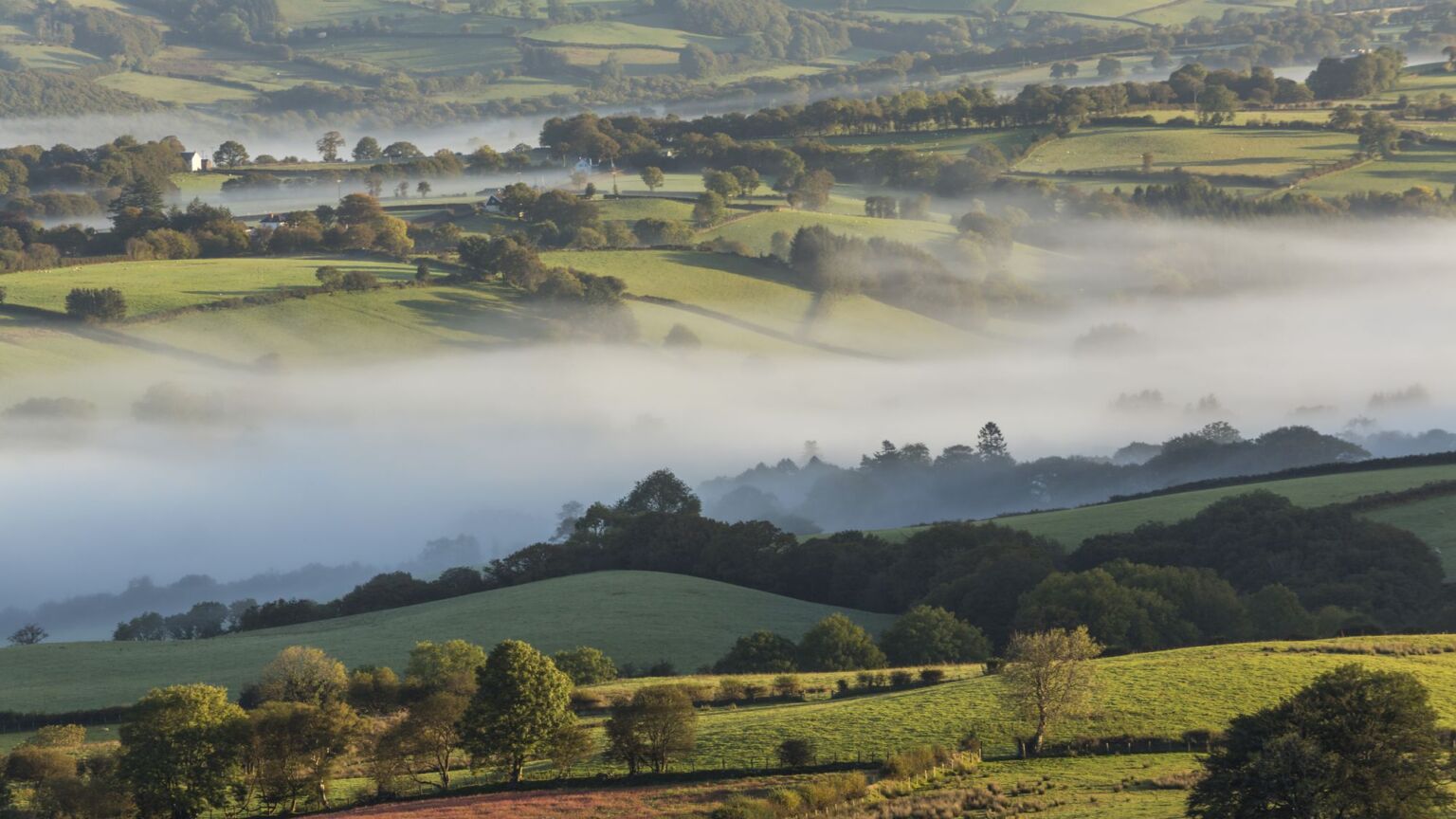
Wales is preparing for the end of more than a century of total dominance by the Labour Party, and specifically for the end of Labour rule in Cardiff Bay, which has been undisputed since devolution in 1999. It was taken for granted that, whatever happened in the UK as a whole, Labour could always rely on a power base in Wales, where it had won a majority of seats in every UK parliamentary election since 1922.
Labour’s dominance will end next week, when the party is predicted to come a poor third to Reform UK and Plaid Cymru in the elections for the Welsh parliament or Senedd. It is at least conceivable, if unlikely, that Labour might even drop to fourth or fifth.
This has been coming for some time, and Labour’s attempt to mitigate it with some fairly cynical gerrymandering will probably make things worse. For this May’s elections, it has divided Wales into 16 new super-constituencies, most of them notably artificial, each electing no less than six members on a party-list basis.
Since Labour’s support was the most widespread of the main parties across Wales, the assumption was that it would always be able to stack up three or perhaps four assembly members out of six in its strongholds, while picking up one or two wins in all the other constituencies. Although other parties might do well in different parts of Wales, none looked likely to be consistently second elsewhere.
What was not foreseen, and was in fact unimaginable only a few years ago, was a collapse in the Labour vote across Wales so catastrophic that the party of Keir Hardie and Aneurin Bevan would be replaced as the standard bearers of the left by the Welsh nationalists of Plaid Cymru.
Yet that is what is happening. The latest opinion poll by YouGov, which tends to be better in Wales than most pollsters, with a large sample of more than 3,000 voters, puts Labour on a mere 13 per cent, compared with more than 40 per cent in the last Welsh elections in 2021. If these polls are borne out on election day, Labour will struggle to win a single seat in some super-constituencies.
The party was in long term decline in Wales even before its recent woes at the Westminster level. In the 27 years Labour has run Cardiff Bay since devolution, Wales has fallen further and further behind England in terms of education, healthcare and economic development. There is no longer any excuse for voting Labour here unless one is on the public payroll or close to a Labour candidate, or both – since the two categories tend to overlap.
It might get even worse for Labour, as Plaid has been capitalising on this collapse in the polls. Much of Plaid’s messaging relies on the strategy that proved successful in the crucial Caerphilly by-election last October – namely, urging all left-leaning voters to back Plaid to ‘keep Reform out’.
That by-election was in fact a huge triumph for Reform, which achieved a stunning 36 per cent swing in its favour, despite having little organisation on the ground. However, it was Plaid that still won the actual vote, and the mainstream media spun Reform candidate Llyr Powell’s extraordinary second-place finish into a humiliating defeat for his party.
This gave Plaid the momentum and helped it to take a decisive lead over Reform in the polls – until now. That latest YouGov poll puts Plaid and Reform sharing the lead with 29 per cent of the vote apiece.
Neither party is likely to win an absolute majority. It is possible that Reform might win a plurality of popular votes or the most seats, or both. But even if it does, becoming the leading party in Wales, it will still be excluded from power. Plaid, Labour, the Greens and the Liberal Democrats have all pledged not to make any sort of deal with Nigel Farage’s insurgent party.
This actually is to Reform’s advantage. Apart from looking a bit childish, the unity of the four parties of the left in opposition to Reform sets up a clear dichotomy, a straight choice between Reform and the existing Welsh political establishment.
Indeed, anyone paying attention can see that it is highly probable that Labour will be rejected decisively by the electorate, only to sneak back into power as part of a coalition with Plaid. The two have been in coalition together before, as well as making less formal deals to keep Labour in power when it lacked a working majority in Cardiff Bay.
This is because Labour and Plaid have more in common with each other than either likes to admit. There are no real major policy differences between them, except nominally over Plaid’s signature commitment to Welsh independence, which it has been downplaying furiously in order not to scare the voters now that it is finally in sight of power.
So, for all the talk of a historic shift, little will change for Wales and most Welsh people when a Plaid-Labour government takes over from what has effectively long been a Labour-Plaid administration.
The constant refrain of ‘keep Reform out’ is therefore an attempt to distract attention from the reality that it is only one faction of the discredited and unpopular Welsh establishment taking over from another. Yet if any engaged but uncommitted voters can be found in Wales, they will be asking why Plaid, which has been working towards this moment for 27 years, has nothing to offer but attacks on Reform, a party that has not been in power for one second of that time.
This means Reform has already won, in one sense. Welsh politics now revolves around a party that came from nowhere. This is a revolutionary moment.
John Winterson Richards is a writer on Welsh affairs and author of The Xenophobe’s Guide to the Welsh.


Barnsley Greens have told us that “a collapse in the Labour vote” is likely, and that some voters are choosing between the Green Party and Reform.
Reform using misdirection to try and win Barnsley
For 50 years, Labour has run the council, with one man leading it for 30 years. As a former mining area, it played a key role in fuelling the Industrial Revolution. But Margaret Thatcher decimated these working-class areas, setting off an elite offensive that has served the rich at ordinary people’s expense ever since.
Barnsley North MP Dan Jarvis, who has received the backing of dodgy right-wing group Labour Together, is a good example of how the Thatcher era sucked Labour into the elite offensive too. Labour today is fully aware that it’s losing power in Barnsley and similar areas, but it seems to be offering too little too late.
The Thatcherites at Reform UK, meanwhile, have been targeting Barnsley. But as Greens in Barnsley told us, some Reform campaign material has been focusing on racist leader Nigel Farage and divisive national issues rather than on the local concerns that people in Barnsley have.
Barnsley Greens treasurer Tom Heyes said:
Most of the things that they are offering to do aren’t within the scope of the council anyway.
Sophie Parkinson is standing as a candidate in the Darton West ward – where the Greens hope to do well. And she added:
Barnsley Council are never going to, you know, affect the border controls.
She also showed us a Reform leaflet and stressed that:
This has got none of the candidates on it. It’s coming from Nigel Farage.
Most potential Reform voters Heyes has spoken to, he said, seem to be doing so as a “protest vote” against Labour rather than having a firm reason for doing so.
Greens or Reform?
Heyes, meanwhile, explained that on the doorstep:
We’re getting quite a lot of people saying, ‘I don’t want to vote Labour – we want to get this Labour lot out’. Some people even say their vote is between Green or Reform, which I find surprising because of the polar difference between those policies and approaches, but they’re that concerned to change things. They feel like things need to be changed.
Neither the Greens nor Reform have councillors in Barnsley right now. But funding from super-wealthy individuals means Reform may soon change that. With this in mind, Heyes would ask voters:
Why do you think a crypto billionaire based in Thailand gives £9m to Nigel Farage? What’s he going to get in return for that? And if they give that much money, then who is the party working for? Are they working for them or for you?
The Greens, on the other hand, don’t have that billionaire backing. And they’re very much focusing on listening to local people. As Heyes insisted:
When we’re going around to people’s homes, we’re asking them what their concerns and issues are, and we’ve tried to base our campaign around the stuff that people have told us. Obviously, we have our agenda as the Green Party, and we will use those values when we get into power, but in a way that respects the needs and wishes of our local communities.
And he said one common issue for people is “road safety and traffic” because:
There have been a number of serious and fatal accidents in our area in the last few years.
That will be a priority for the Greens, he stressed.
Trevor Mayne is also running in Darton West, and is leading on the party’s road safety policy. Barnsley Greens said this will be:
prioritising stronger pedestrian safety, reducing critical accidents, supporting a new cycling route and promoting a 20-mph speed limit in selected residential areas.
Kabir Nepal, meanwhile, is the final candidate for this ward. And he told us Greens:
will continue to push the council for new equipment where it is needed, in order to ensure that Darton West’s public spaces and parks are usable for our children.

Labour’s impending collapse in Barnsley
Heyes asserted that:
There definitely will be a collapse in the Labour vote…
One of the biggest criticisms is about the amount of debt and the amount of debt interest that the Labour council is having to pay now, because of the money that they’ve borrowed…
He described how Barnsley Council has “spent a lot of money” in Barnsley’s town centre to make it look prettier, with a “new public square” and “some fancy illuminated sculptures”. But away from this focus on image, he said:
a lot of people are feeling that their peripheral areas in the town are not getting a fair crack at the whip.
Industrial decline had a deep impact on Barnsley. Almost a quarter of its areas are “highly deprived“. And it has high levels of people out of work, experiencing poor health, and waiting for social housing. In many ways, Westminster and Labour have left the town behind.
The sleaze and immorality of Keir Starmer‘s government, meanwhile, seems to have tipped things over the edge. As Heyes said:
You can tell from our own membership that a lot of people have left the Labour Party and come and joined the Green Party. That’s probably the biggest chunk of our new members, who have left Labour because Labour has gone so far to the right and has abandoned its historic mission.
Greens in Darton West and beyond are looking to present a hopeful, inclusive alternative to Labour that listens to local people’s concerns. But they will need as much support as they can get to compete with the vast resources of far-right Reform.
Featured image via the Canary
By Ed Sykes


Donald Trump’s administration has hired 140 new immigration judges to replace the 100 he previously fired. However, many of them have “no relevant experience.”
The Justice Department sought to replace many of the judges hired under Joe Biden with a more “malleable workforce” that will “do what they want without question.”
In total, around 700 immigration judges are handling over three million cases across the US. They work for Trump’s Justice Department — not part of the judicial branch.
They are ultimately responsible for deciding whether undocumented migrants are granted asylum or face deportation.
According to Kristi Noem, the homeland security secretary, the Justice Department pays the recruits between USD 159,951 and USD 207,500 per year. However, two-thirds list “no relevant legal immigration experience” in their biographies.
Only 24% of them have worked for ICE, the immigration courts or for the Department of Homeland Security.
Firing high-ranking officials
It has been reported that when Trump returned to the White House for his second term, many immigration judges quit or retired. This was in addition to more than 100 that the Justice Department fired.
Some of the first to be fired were the Executive Office for Immigration Review’s (EOIR’s) chief judge and three other high-ranking officials. Then, in Hartford, Connecticut, Chicago, San Francisco, New York and other cities, dozens of other judges were fired.
According to the Washington Post, the firings by Trump emerge at a time when the administration is implementing policies making it difficult for immigrants to succeed in court.
It reported that:
Under new orders from the Justice Department’s Board of Immigration Appeals, judges have been refusing to grant bond hearings and are dismissing cases at the government’s request so that defendants can be arrested. They are also being advised to grant asylum more sparingly.
In the last financial year, asylum rejections more than doubled to 82,371. In February 2025, asylum cases granted by judges plummeted to less than 5%, compared to 48% in the same month in 2024 under Biden.
Sketchy characters
The Washington Post reported that Trump’s new hires include:
A divorce lawyer who has vowed to “fight exclusively for the rights of men.” A Minnesota attorney who championed Immigration and Customs Enforcement during the Trump administration’s raids in Minneapolis. And a judge who was once lambasted by an appeals court for denying humanitarian protection to a Serbian man because he didn’t look “overtly gay.”
To make matters worse, one of the recruits is Melissa Isaak, a devout anti-feminist.
She alleged in a 2021 speech at an anti-feminist convention that accusations of domestic abuse by men against women and children are “one of the most abused allegations in family court.”
Obviously, domestic violence can come up in immigration court as victims often cite their experience as grounds for seeking asylum.
Isaak was also a defence attorney for three of the 6 January rioters at the US Capitol after Trump lost the election. She later withdrew from two of those cases, federal court records show.
She has also:
represented Alabama Republican Roy Moore in a defamation case after he denied sexual misconduct allegations that derailed his campaign for the Senate. In 2024, Isaak’s law firm posted on Facebook that an $83.3 million jury award to a writer who alleged Trump sexually assaulted her decades earlier was a “travesty of justice.”
Another recruit, Nathan M. Hansen, a Minnesota lawyer, shared a social media post about the “Haitian invasion of Ohio” and promoted far-right conspiracy theories. After Trump’s immigration raids triggered protests in Minneapolis, Hansen asked his social media:
Is there anything we can do to help ICE if we want to?
Muzaffar A. Chishti, a senior fellow at the nonpartisan Migration Policy Institute, told the Washington Post:
It sends a message that: Don’t trust these courts
That is not good for the immigrants, it’s not good for the rule of law, and it’s not good for the ultimate integrity and reputation of our court system.
Feature image via 60 Minutes/YouTube
By HG
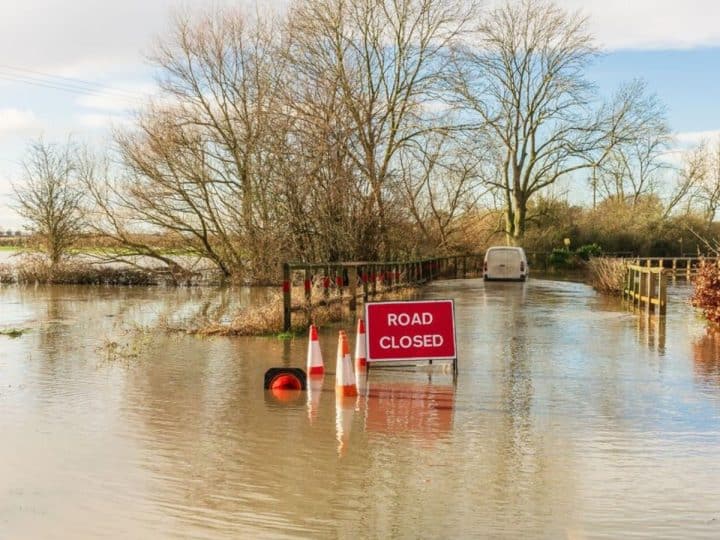

VoteClimate is a project that aims to inform voters about the climate policies of political parties and encourage votes for the most climate-friendly candidates. At the upcoming local elections, it’s predicting huge gains for the Greens and Liberal Democrats, winning in around 1,200 constituencies.
VoteClimate claims its research shows an historic opportunity to elect record numbers of climate-friendly representatives and administrations on 7 May. The Green Party is on the rise and Labour and the Tories are in the polling doldrums. Also, proportional representation can strengthen the climate vote in the Scottish and Welsh elections.
VoteClimate is forecasting huge gains for the Greens and Liberal Democrats, which it rates as the most pro-climate parties. It says tactical votes based on the VoteClimate website’s recommendations will lead to further pro-climate gains.
And this, the organisation believes, will send the strongest possible signal to the main parties that voters want urgent action on climate and nature.
VoteClimate crunches the numbers
The non-profit organisation has reviewed the parties’ climate policies and combined this with opinion polls to provide a pro-climate tactical voting recommendation in every individual election on 7 May.
Based on this analysis, VoteClimate is backing the Greens, the party with the strongest position on climate and nature, in 1,800 seats where they have the best chance of winning.
In a further 800 contests, VoteClimate recommends the Lib Dems, the next-best party for climate, in the seats where they have a better chance of winning than the Greens.
In the proportional representation elections in Scotland and Wales, where every vote counts, VoteClimate urges the largest possible vote for the respective Green parties.
Even more critically, in 240 ‘climate supermarginals’, the Greens or Lib Dems are forecast to win or lose by a majority of fewer than 50 votes. On Hounslow Council, there are nine such supermarginal elections where, in some cases, a handful of votes could make the difference. Similar opportunities exist nationwide, with six supermarginals on the Isle of Wight, five in Suffolk and five in Manchester.
VoteClimate director Ben Horton said:
The climate emergency is accelerating and it’s time our politicians acted like it. At VoteClimate, we offer voters the tools to take action by electing representatives who will make climate a top priority – and to tell the government that climate change is a major election issue for many voters.
We urge anyone who is concerned about climate and nature to use the VoteClimate.uk website to cast the strongest vote in the upcoming election – and to inform their friends and family too.
Voters can type in their postcode to VoteClimate’s local elections hub to see the strongest pro-climate choice for the May elections. And they can hit ‘Join now’ to receive pro-climate voting recommendations by email for future local, devolved and general elections.
Featured image via the Canary
By The Canary

spiked is funded by readers like you. Only 0.1% of regular readers currently support us. If just 1% did, we could grow our team and step up the fight for free speech and democracy.
Become a spiked supporter and enjoy unlimited, ad-free access, bonus content and exclusive events – while helping to keep independent journalism alive.


Defence minister Luke Pollard decided to patronise the British public on his visit to the UK’s colonial bases in Cyprus. Cyprus is part of a network of British bases being used as a node in the UK’s role in the attack on Iran.
Minister for the Arms Trade in Cyprus
The Minister for Defence Readiness and Industry (pronounced: Minister for the Arms Trade) posted on X on 28 April during a visit to Cyprus:
Good to speak to our forces in the Sovereign Base Areas in Cyprus today.
The Iran war is not our war but I’m very proud of the way our UK forces have protected British bases, British citizens and British allies and partners.
Good to speak to our forces in the Sovereign Base Areas in Cyprus today.
The Iran war is not our war but I’m very proud of the way our UK forces have protected British bases, British citizens and British allies and partners — Luke Pollard MP (@LukePollard) April 27, 2026
 pic.twitter.com/KnUbj3umvN
Pollard was echoing the official, ridiculous and widely debunked British position that the UK was only involved in ‘defensive action’.
Here is the truth of it…
Basing agreements with the US
US bombers are attacking Iran from British bases. Pollard’s claim even contradicted his boss at the Ministry of Defence (MOD), defence secretary John Healey. Healey said on 11 April:
Even in this current conflict, the basing permissions that we in the UK have agreed with the US have been invaluable to their military operations.
The key phrase here being “invaluable to their military operations”. The UK is at war with Iran, whether Luke Pollard likes it or not.
Ditto the rubbernecking public who’ve watched Iran-bound bombers leaving RAF Fairford. We corrected the Guardian’s whimsical reporting on that bleak phenomenon here.
RAF Mildenhall and Lakenheath – like Fairford, these are US bases pretending to be British – have also hosted American war machines hitting Iran.
Iran itself also rejects the UK claim it is carrying out ‘defensive’ actions. On 9 April, even the legacy press reported this:
Iran certainly doesn’t agree with the British government’s position that UK bases were only used by the US for defensive rather than offensive missions. Iran’s deputy foreign minister @SKhatibzadeh says some of the bombers which left from UK bases were on missions which led to… pic.twitter.com/paychYXf80
— Emma Murphy (@emmamurphyitv) April 9, 2026
You can read our analysis here. And here is the BBC saying the same:
UK agrees to let US use British bases to strike Iranian sites targeting Strait of Hormuz
Follow live: https://t.co/XUqp5AHwcs
— BBC Breaking News (@BBCBreaking) March 20, 2026
Moreover, a former RAF officer and a former senior British diplomat have stated that Iran would correctly view the UK as a belligerent in the US-Israel war against it.
The RAF officer told Declassified UK on 7 April:
Keir Starmer’s insistence that the UK is not involved in the war, and that US aircraft at RAF Fairford are only carrying out defensive missions, is becoming increasingly unsustainable.
You can listen to former UK ambassador to Iran Sir Richard Dalton’s analysis here:
But this is the cut-and-thrust of it.
The reality of the UK’s role in the unprovoked and illegal US/Israel attack on Iran doesn’t change based on what Luke-bloody-Pollard thinks. The obligation of an aggressor in these situations is to stop what they are doing. And if the Starmer government won’t do so, it ought to feel it at the polls at the very least.
Featured image via screengrab
By Joe Glenton

‘The House of the Spirits’: When to Watch the New TV Adaptation on Prime Video

Rep. Ilhan Omar’s CORRECTED financial filings now show she’s NOT a millionaire

Samuel West opens up on ‘tough year’ as he’s ‘worried about saying goodbye’

Manchester United reach agreement with Casemiro over contract clause amid transfer speculation

US brings back mandatory military draft registration

Steven Gerrard disagrees with Gary Neville over ‘shock’ Chelsea and Arsenal claim | Football
Rep. Ilhan Omar’s CORRECTED financial filings now show she’s NOT a millionaire

FINANCIAL RATIOS: How to Analyze Financial Statements

money money green green #shorts #ibispaintx #capcut #kinitopet #trend #moneymoneygreengreen #art
-

 Tech1 day ago
Register Renaming | Hackaday
-

 Fashion4 days ago
Weekend Open Thread – Corporette.com
-
 Crypto World3 days ago
Hyperliquid $HYPE Rally Builds Momentum as AI Sector Enters Prove-It Phase
-

 Politics6 days ago
Making troops accountable for war crimes threatens US alliance, ex-SAS colonel warns
-

 Politics6 days ago
Disabled people challenge government SEND proposals over segregation concerns
-

 Business5 days ago
Patterson-UTI Energy, Inc. (PTEN) Q1 2026 Earnings Call Transcript
-

 Business6 days ago
Rolls-Royce Voted UK’s Most Iconic Trade Mark as IPO Register Hits 150
-
 Sports2 days ago
IPL 2026: Ruturaj Gaikwad registers slowest fifty of the season, enters all-time unwanted list | Cricket News
-

 Politics21 hours ago
Drax board avoid their own AGM, accused of greenwashing & environmental racism
-

 Crypto World7 days ago
New York sues Coinbase, Gemini over prediction market offerings
-

 Politics6 days ago
Starmer handler McSweeney to be dragged from shadows by Foreign Affairs Committee
-
Politics6 days ago
Wings Over Scotland | How To Get Away With Crimes
-

 Politics6 days ago
Zack Polanski responds to home secretary’s taser threat
-
 Business7 days ago
HCL Tech share price tank over 9% after weak Q4. JPMorgan, HSBC & 3 others cut target price
-

 Politics6 days ago
‘Iran is still a nuclear threat’
-
 Crypto World7 days ago
Crypto’s great hope in Senate’s Clarity Act still has a path to survive tight calendar
-

 NewsBeat2 days ago
LK Bennett closes all stores after entering administration
-
 Sports6 days ago
Tim Bradley names the current best in the world: “Better than Inoue and Usyk”
-

 Crypto World4 days ago
Michael Saylor says BTC winter is over. Market analyst disagrees, says bitcoin was in a pullback
-
 Crypto World7 days ago
Ethereum Price News: ETH Flashes a Bullish Setup No Holder Should Miss While Pepeto Nears Its Binance Listing
You must be logged in to post a comment Login