

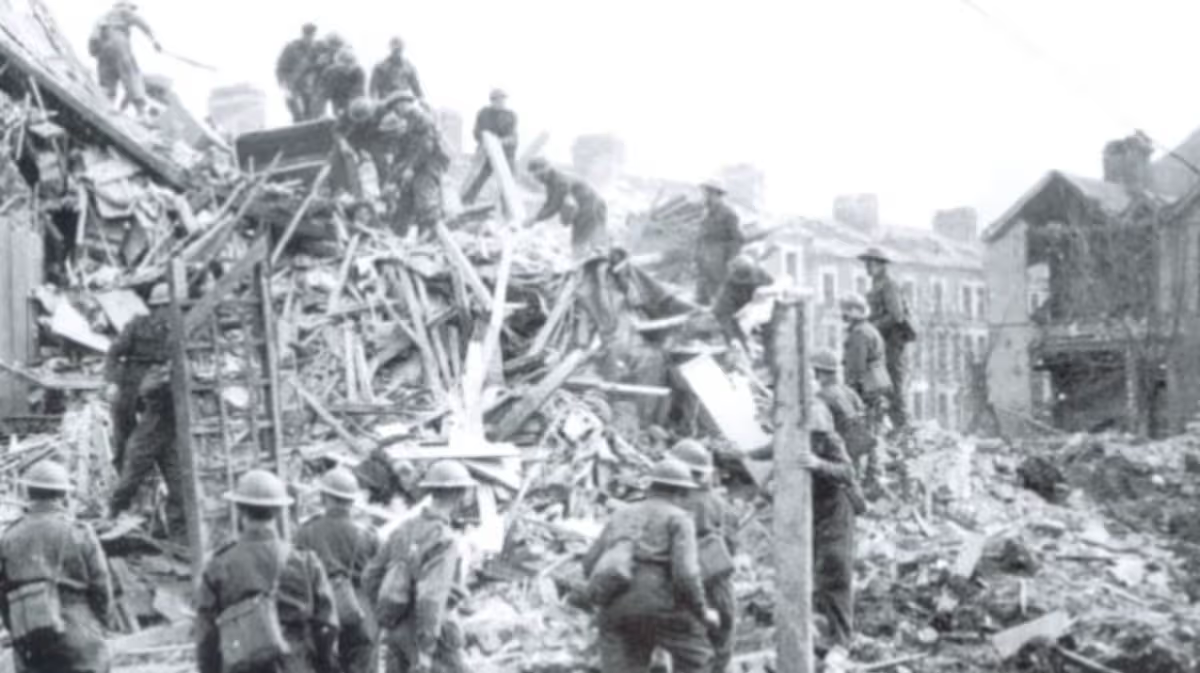
Nearly 1,000 people died during the four raids with the highest fatalities in North Belfast, around the Antrim Road, Crumlin Road and New Lodge
A new Belfast Blitz memorial sculpture has been approved for East Belfast.
A blitz memorial sculpture, made from concrete and set on a plinth, will be erected within the grounds of Westbourne Presbyterian Church, Newtownards Road BT4.
The applicant is Mervyn Gibson, Minister at Westbourne Presbyterian Church. He is also the grand secretary of the Orange Order.
READ MORE: Lisburn Road property acting as illegal HMO for over two years
READ MORE: Women paid more than men at Belfast Council after internal figures revealed for first time
The sculpture will be positioned on the hardstanding area to the front of Westbourne Presbyterian Church adjacent to the pedestrian footpath. Following advertisement in the local press and neighbour notification, no representations were received by the council. None of the Stormont departments or any other statutory consultees objected.
The council planning officer recommended the application for approval. The planning report states: “The scale, design and materials of the proposal will not detract from the appearance and character of the surrounding area. The proposal is considered to comply with relevant planning policy and guidance.”
The sculpture will measure approximately 2.4 metres by 0.5 metres. It will be cast in glass reinforced concrete with a dark charcoal finish and set on a masonry pier with red brick. It depicts a male rescue worker and a woman in front of the destroyed facade of a house.
Earlier this month, designs for the city centre Belfast Blitz Memorial were revealed by acclaimed Berlin-born artist Ralf Sander, and his daughter Naomi Sander, ahead of the 85th anniversary of the tragic events.
The result of a partnership between Belfast Council and The Northern Ireland War Memorial Museum, the planned memorial will be located in Cathedral Gardens, an area between St Anne’s Cathedral and the Ulster University Belfast campus.
It is anticipated that the memorial will be unveiled in spring 2027, when the revamped Cathedral Gardens open, featuring a large multi-use events space, a play area inspired by nature, and a kids’ interactive digital play zone.
Belfast suffered four bombing raids from the Luftwaffe in 1941, now known as the Dockside Raid on April 7 and 8, the Easter Tuesday Raid on April 15 and 16, the Fire Raid on May 4 and 5 and the Final Raid on May 5 and 6.
Nearly 1,000 people died during the Belfast Blitz, with the highest fatalities occurring in North Belfast, around the Antrim Road, Crumlin Road, and New Lodge areas. 1,500 people were injured, 400 of them seriously.
50,000 houses, more than half the houses in the city, were damaged. 11 churches, two hospitals and two schools were destroyed. Densely populated residential streets, such as Hogarth Street, were devastated, while industrial areas like York Street Mill, Harland and Wolff, and the docks were also hit.
The devastation caused roughly 100,000 people to become homeless. Due to the destruction, makeshift morgues were established at locations like St George’s Market and Falls Road Baths.
In the east of the city, Westbourne and Newcastle Streets on the Newtownards Road, Thorndyke Street off the Albertbridge Road and Ravenscroft Avenue were destroyed or damaged.
For all the latest news, visit the Belfast Live homepage here and sign up to our daily newsletter here.


















































You must be logged in to post a comment Login