

Connect with us
DAPA Banner

NewsBeat

The work of the dispatch operators helping to coordinate response

Published

on

The work of the dispatch operators helping to coordinate response

And the force’s dispatch operators are said to play a critical role by co-ordinating the response to the most serious incidents in Bolton, and across the city region.

They are responsible for managing resources and ensuring incidents are responded to quickly and safely, for response officers on patrol.

In the past year the police were called to 141,000 grade one incidents – where an emergency risk to life has been identified – with an average attendance time of seven minutes and 49 seconds.

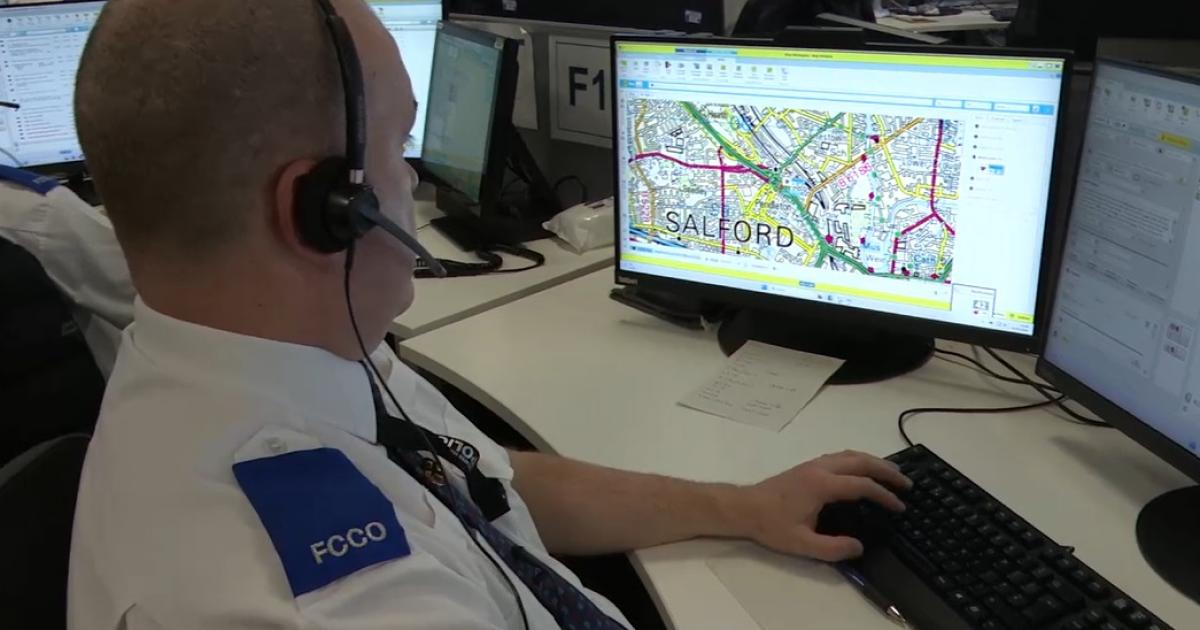
Dispatch officer (Image: GMP)

Every call is first assessed by highly trained call handlers, who gather vital information, assess risk and prioritise incidents in the Force Contact, Crime and Operations Branch (FCCO).

Advertisement

Once assessed, incidents are passed to dispatch operators, the unseen co-ordinators who ensure officers are deployed and respond where they are needed most across the force area.

In a 24 hour period, dispatch operators can deal with up to 500 grade one emergency incidents and around 350 grade two priority incidents, highlighting the pace and responsibility carried by the role.

From routine deployments to major, fast moving incidents, dispatch operators maintain oversight of what is happening on the ground across the region.

They monitor live incidents, update officers with new information as it becomes available, and continually assess risk as situations develop.

Advertisement

Working under pressure, dispatch operators make time critical decisions and provide vital support to frontline officers, helping to ensure the public receives the right response at the right time.

Dispatch officer (Image: GMP)

Where an incident response time is likely not to be met, the dispatch operators have key responsibility for re-assessing the incident, performing service calls to members of the public to ensure they are safe, and to establish if there are any further notable updates that may exacerbate the risk – all with the public in mind to ensure they are safe.

They also play a critical role in looking after the welfare of officers on the frontline, ensuring we know where our officers are, that they have enough officers at scene on an incident to safely deal, and securing them emergency back-up from other officers nearby.

The dispatch team also have a key responsibility for liaising with partner agencies such as control room operators at North West Ambulance Service, Greater Manchester Fire and Rescue Service, local authorities, social services and partner forces to ensure that incidents are effectively responded to if it requires a multi-agency approach.

Advertisement

For those who do the job, the role is demanding but deeply rewarding.

Andy Martin, a dispatch operator with more than 21 years’ experience in FCCO, said: “I’ve seen the role evolve massively over the years, but the heart of it has always stayed the same – supporting officers and keeping the public safe.

“What I love most is seeing new people come in, find their confidence and grow into the role.

“Knowing you’ve played a part in helping someone develop, while also making a real difference to incidents happening in real time, is something you never lose sight of. It still feels like a privilege to do this job.”

Advertisement

Behind every response, every deployment and every officer sent to an incident, FCCO dispatch operators are working tirelessly to keep Greater Manchester moving safely, proving that while they may not always be seen, their impact is felt across the force every single day.

Another operator, Tom McNish, who is three years into his policing career, highlighted the pace and sense of purpose that comes with the role:

He said: “Every shift is different. You’re right in the middle of the action, assisting officers, solving problems and making sure the right decisions are taken quickly.

“It’s intense, but that’s what I love, you feel part of the response. Working in FCCO has given me a real understanding of policing, and my ambition to one day become a police officer has grown so much within this role.”

Advertisement

Source link

Continue Reading
Click to comment

You must be logged in to post a comment Login

Leave a Reply

NewsBeat

Latest Arsenal injury news for Atletico Madrid clash as Mikel Arteta confirms blow

Published

on

Daily Mirror

Mikel Arteta has provided the latest Arsenal team news ahead of the Champions League semi-final first leg against Atletico Madrid

Arsenal boss Mikel Arteta has revealed that Kai Havertz will miss the Champions League semi-final first leg against Atletico Madrid with injury. However, a double boost has been confirmed with Eberechi Eze and Riccardo Calafiori set feature in the matchday squad.

Mikel Arteta’s men are set to lock horns with the La Liga giants in the first leg of their Champions League semi-final tonight, with a number of crucial players having been touch-and-go for the fixture.

The Gunners were dealt three injury concerns during their victory over Newcastle, with Havertz, Eze and Martin Zubimendi all being substituted off. The stakes couldn’t be higher for Arsenal as the victors of the tie will face either Paris Saint-Germain or Bayern Munich in the final, with the two sides playing out a nine-goal thriller on Tuesday.

Advertisement

READ MORE: Thierry Henry picks out two Arsenal concerns ahead of Atletico Madrid Champions League clashREAD MORE: Mikel Arteta ‘upset Arsenal coaches’ by cutting ties with £27million Gunners signing

With all of that being said, Mirror Sport has taken a look at the latest updates on Arsenal’s injured stars and when they might return to action.

Eberechi Eze

Eberechi Eze scored the decisive goal against Newcastle and claimed the Player of the Match award, but was hauled off after sustaining a knock just 10 minutes into the second half.

Although fans may have been concerned the versatile attacking midfielder was facing time on the sidelines, Eze was quick to put minds at rest when speaking to Sky Sports after the final whistle.

Advertisement

FOLLOW OUR ARSENAL FB PAGE! Latest Gunners news and more on our dedicated Facebook page

He said: “Yeah, I’m alright. I’m all good,” before adding: “Just precaution, didn’t want to do anything. Yeah, I’ll be okay.”

Arteta has since confirmed he will be available for selection for tonight’s match.

Potential return date: Wednesday, April 29 vs Atletico Madrid (A).

Advertisement

Kai Havertz

Havertz was replaced by Viktor Gyokeres just 35 minutes into the encounter with Newcastle United, requiring treatment on the pitch before being substituted by Arteta and heading straight down the tunnel for further assessment.

Speaking afterwards, Arteta said of Havertz and Eze: “Lets see, at the moment they have to be looked after but hopefully they’re going to be okay.”

Yet during his pre-match press conference ahead of Atletico, Arteta confirmed: “Kai is out.”

Advertisement

Potential return date: Sunday, May 10 vs West Ham (A).

Riccardo Calafiori

The Italian was omitted from the squad to face Newcastle United, with Arteta acknowledging the defender was nearing a comeback.

The Gunners manager explained: “He was very close. But we have certain players that are coming back from injuries and can play certain moments as well, and we need to be balanced in what we need to.”

In encouraging news for Arsenal, Arteta confirmed he would be available to face Atletico Madrid.

Advertisement

Potential return date: Wednesday, April 29 vs Atletico Madrid (A).

Jurrien Timber

Despite some uncertainty in the pre-match press conference, Arteta confirmed Jurrien Timber would be missing from the squad in Madrid.

“Jurrien is not in the squad,” Arteta stated, before being pressed on a potential return timeframe. He added: “We don’t know yet, he is doing some stuff on the pitch at the moment. He needs to do some more things before he can compete with us.”

Advertisement

Potential return date: Unknown.

Mikel Merino

Although the Spaniard could yet make an appearance before the season draws to a close, Arteta has remained tight-lipped over any timeframe for Merino’s recovery.

Arteta recently said: “It’s a bit premature to say that [he will play again this season]. He’s evolving really well he’s really pushing every boundary that he possibly can but it’s a bit early to answer that question.”

Potential return date: Unknown.

Advertisement

Source link

Continue Reading

NewsBeat

Lidl reveals plans for new stores and relocations across Bolton

Published

on

Lidl begins building its first-ever pub at a site in the UK

Lidl is looking for new sites across Bolton to build new stores and the relocation several existing sites as part of what is describes as its “nationwide growth strategy”.

The discount supermarket, which recently reached 1,000 stores across Great Britain, has identified Bolton as a key area for investment in its latest plans.

Lidl has outlined hundreds of target locations for potential new stores, across the country including one in Breightmet and Horwich.

Advertisement

Alongside these proposals, Lidl has also earmarked a number of existing Bolton branches for relocation.

Stores in Astley Bridge, Central Bolton, Farnworth, Halliwell, and Westhoughton are all listed as requiring new sites, the most out of all the Greater Manchester boroughs. Bosses are also looking for a site in Atherton.

New sites are often larger, more modern and better connected, offering increased parking and improved access for customers.

Richard Taylor, Chief Real Estate Officer at Lidl GB, said the company remains committed to rapid expansion across the country.

Advertisement

He said: “We currently have one of the most ambitious store opening programmes of any supermarket and we are more committed than ever to bringing our high quality and low priced products to even more communities across the country.”

Mr Taylor added: “”All of our stores deliver more than just affordable products.

“Each one also brings quality jobs and opportunities for British suppliers to showcase the best home grown produce and support local good causes in the communities each one serves.

“In uncertain times, shoppers and communities can count on us.”

Advertisement

The expansion forms part of a £600 million investment programme, with Lidl planning to open more than 50 new stores in the next 12 months.

The retailer has also reported a 33-month streak as the fastest-growing bricks-and-mortar supermarket in the UK.

As part of its growth, Lidl is actively seeking freehold, leasehold or long-leasehold sites in prominent locations with strong footfall.

The company is also offering a finder’s fee to individuals who identify suitable sites that lead to a new store being developed.

Advertisement

Source link

Continue Reading

NewsBeat

Scientists have found a safer way to hunt for the next pandemic virus

Published

on

Scientists have found a safer way to hunt for the next pandemic virus

The world is full of animal viruses, and we’re pretty sure that one of them will cause the next pandemic. To prevent pandemics, we need to predict which of the vast number of animal viruses are most likely to infect humans. A new study, published in Nature, sets out an elegant and powerful way for scientists to sift through the enormous diversity of animal viruses without risking being infected by them in the process.

In this study, a team of researchers in the UK used cutting-edge lab techniques to track down a previously obscure virus infecting bats in Kenya. Here’s what they did, and how they may have helped us to get ahead of the next pandemic.

Fortunately, most animal viruses will never cause pandemics because when they try to infect human cells, they fail at the first step.

To infect a cell, the first thing a virus has to do is to bind to an “entry receptor”. This is a specific molecule on the cell’s surface that the virus attaches to so it can enter the cell.

Advertisement

When a virus infects a new host species, it has a problem. The cells will be coated with different molecules from the ones the virus is used to, and often the virus has nothing to grab hold of. Viruses are adept at all the stages of cellular breaking and entering, but none of them matters if they can’t even get hold of the door handle.

If we could predict which viruses could use the entry receptors found on human cells, we would know which viruses we needed to take special care around to reduce the risk of pandemics. However, for most viruses, we don’t know what their entry receptors are, let alone if human cells carry them.

Finding the door handle

In this new study, the researchers set out on a hunt for viruses that could bind to human entry receptors. They chose the alphacoronavirus family. This group of viruses includes two common cold viruses, so clearly some of them can infect humans. They also include many viruses that infect other animals, particularly bats.

Alphacoronaviruses are distant cousins of the betacoronaviruses and hence of SARS-CoV-2, which famously jumped from bats to humans to cause the COVID pandemic. Could an alphacoronavirus do something similar?

Advertisement

The entry receptors of almost all alphacoronaviruses, like those of the vast majority of viruses, are not known. What we do have is the virus’s genome sequences. From these, the team identified the genes of the spike proteins. If you picture a virus, such as SARS-CoV-2, the spike proteins are the bits that stick out from the surface of the virus. Their job is to bind to entry receptors.

Not unreasonably, the scientists wanted to study viral receptor binding without spending any time in the presence of potentially dangerous pathogens. They did this by creating particles called “pseudotyped viruses”: dummy virus particles that carry the spike proteins of a real virus on their surface.

Pseudotyped viruses can bind to cells but cannot replicate. As a result, they are entirely safe to work with.

Heart-nosed bat.
Wildscope/Wikimedia Commons, CC BY

As expected, pseudotypes of the two common cold viruses grabbed firmly on to human cells. Comfortingly, most of the other alphacoronaviruses could not. But there was one exception. The coronavirus KY43, a rather obscure virus previously identified in heart-nosed bats in Kenya, bound very well to a protein found on human cells.

Advertisement

How worried should we be about KY43? Related viruses are found in bats around the world, but, fortunately, most of them are not very good at binding to the human version of their entry receptor. The ones that can bind to human proteins are found in a relatively small region of east Africa, and people living in the part of Kenya where the virus was first identified don’t seem to show any evidence of infection.

This is reassuring, though not surprising. There are multiple steps needed for a virus to break into a human cell, after all, and binding was just the first of them. But this work marks KY43 as a virus to keep an eye on.

More generally, this paper is a powerful proof of concept for how we could carry out pre-pandemic risk assessment. Screens like this can be safely applied to any virus that we have a genome sequence for. More broadly, it should be possible to design similar screens for many of the other things a virus needs to do in order to pose a threat to humans.

The world is overflowing with animal viruses, most of which will never hurt us. But some of them could. Work like this will help us spot the ones we need to take more care of.

Advertisement

Source link

Continue Reading

NewsBeat

Woman on her feet all day hails Skechers D’Lites for making life ‘more comfortable’

Published

on

Wales Online

‘Excellent for long hospitality shifts being on your feet for 8 or 9 hours,’ said one fan of the discounted Skechers trainers

Advertisement

Shoppers are singing the praises of a pair of Skechers trainers they describe as ‘super comfy’ even after prolonged wear — and to top it off, they are currently reduced by 43%. The Skechers Women’s D’Lites Biggest Fan Trainers are now on offer at £39, slashed from £69, but time is running out to get the deal.

The discount applies to the stylish yet practical Black Trubuck White Mesh Silver Trim colourway, which is available in sizes UK 2 to 9. The trainers boast a padded tongue and collar, along with a soft fabric lining for extra comfort.

The Skechers trainers also feature contrast colour mesh fabric panels designed for a ‘cooling effect’, as well as a hardwearing rubber sole. Amazon reports that more than 50 pairs have already been purchased in the past month alone, underlining their growing popularity.

One fan said: “Great comfort. Bought these for work, being on my feet all day and having back issues, these have made my day a bit more comfortable with the support they give.”

Advertisement

Another shopper agreed, saying: “Excellent for long hospitality shifts being on your feet for 8-9 hours!”

The Skechers Women’s D’Lites Biggest Fan Trainers are £30 off

Skechers Women's D'Lites Biggest Fan Trainers

£69.00

£39.00

Skechers and Amazon

Advertisement

SHOP THE DEAL

Shoppers can save money on Skechers trainers that have impressed fans with their levels of comfort.

For those seeking an alternative, the M&S Knitted Slip On Trainers are available for £40. Offered in three colours and sizes 3 to 8, they feature a contemporary knitted upper and a convenient slip-on fastening.

Meanwhile, over at Next, the Neutral Chunky Mesh Detail Trainers are currently on sale for £19, reduced from £49. Available in sizes 3 to 9 — though some sizes are currently out of stock — they come with lace-up fastenings, mesh detailing, and Forever Comfort insoles for additional cushioning, reports the Liverpool Echo.

“Amazon customers have awarded the Skechers Women’s D’Lites Biggest Fan Trainers an average rating of 4.6 out of five stars, based on over 34,000 reviews. One purchaser commented: “Bought for two days at Disney. No foot aches or pain at all, super comfy even after 15 hours!”,

Advertisement

Another reviewer wrote: “I have been wearing these for nearly six months now and they are still very comfortable. I use them for daily walking. They are quite durable and still look good after regular use. The design is stylish and easy to match with different outfits.”

Meanwhile, another shopper took issue with the laces, observing: “Bought for my wife. She comments that they are nice and comfortable but the laces are poor and we have already had to replace both because of fraying.”

By contrast, an enthusiastic five-star review for the Skechers Women’s D’Lites Biggest Fan Trainers states: “I couldn’t be happier with my purchase! The design is super cute, and the black colour makes them so easy to pair with any outfit – versatility at its best. One of the things I really love is the sole; it’s rough, giving me excellent grip, especially on slippery snow days.

“They’re true to size and have that perfect chunky look I was going for. They are also lightweight…. Overall, I’m absolutely in love with them. They’ve definitely ticked all the boxes for me – no regrets at all!”

Advertisement

Another satisfied customer simply stated: “Fantastic trainers, comfortable, great quality, and a true size.” Some buyers offered constructive criticism, with one explaining: “They look amazing and feel amazing. The only reason they don’t get five stars from me is that, sometimes, they get uncomfortable in the toe area. I appreciate the fact that they come with spare laces though; that is amazing!”

One Amazon customer was so taken with the trainers that they returned to buy additional pairs, commenting: “I have bought these trainers before. I love them. Thank you for a perfect purchase with speedy delivery.”

Source link

Advertisement
Continue Reading

NewsBeat

Dad punched unconscious through car window in front of children in horror road rage attack

Published

on

Manchester Evening News

John Lee, 37, attacked the dad in front of his horrified family

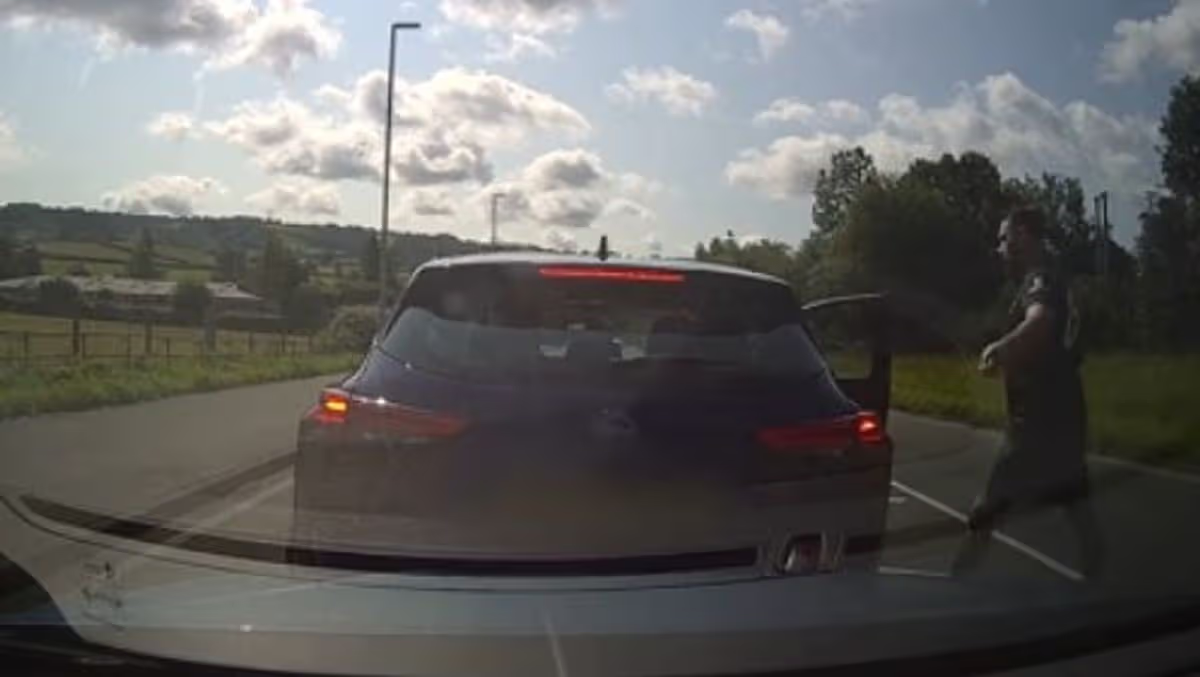
A motorist was knocked unconscious in an assault in a Welsh town. John Lee attacked his victim while he sat in his car in the Llanrwst area of Conwy on June 15, 2025.

Lee, 37, of Cae Tyddyn, Llanrwst, pleaded guilty to one count of assault occasioning actual bodily harm and was sentenced at Caernarfon Crown Court on Tuesday, April 21.

Prosecuting, Rabia Tariq said the victim was travelling with his wife and parents near Llanrwst when he pulled over to pick up some eggs from a shop before setting off again.

Advertisement

Click here to hear the latest from Manchester’s courts in our newsletter

However, he heard a loud beep and slammed on his brakes, believing something was wrong with his vehicle. Lee was in a car behind him, the court heard.

Lee then flung open his car door and shouted: “What are you doing?” before striking the victim, who lost consciousness. The victim’s wife also stated that Lee grabbed him and shook him, reports Wales Online.

She then stepped out of the car, and dashcam footage captured Lee arguing with her during the incident. The victim sustained a bruised eye socket, a grazed eyelid and “loss of consciousness”, Ms Tariq told the court.

Advertisement

It was “deeply concerning to him”, the victim said in a statement, adding the incident was “extremely aggressive and shocking”. He also said he has become more forgetful since the attack.

Driver punched unconscious in a “road rage” attack in Conwy

The court heard how the defendant’s children also witnessed the whole incident.

The court heard Lee had one conviction in 2005 for common assault for which he received a referral. In mitigation Richard Edwards said Lee had pleaded guilty at the earliest opportunity and “bitterly regrets his actions”.

It was a “single, isolated, impulsive” incident, Mr Edwards said, adding that his client was in a stable family unit. He had been in the military, which was cut short due to injury and was now self-employed, working for a building firm in carpentry and joinery.

Lee had struggled with mental health and had set up a mental health football team to help others and himself, Mr Edwards said.

Sentencing Lee, Judge Nicola Jones said: “You put your head in the car door and punched him once rendering him unconscious. He had swelling and bruising and his family were present in the car, his parents were in the back seat.

“His wife was in the front seat. She got out and you didn’t just walk away, you started having a go at her, being verbally aggressive.”

Advertisement

Judge Jones sentenced Lee to eight months in prison suspended for 12 months. He must undertake 10 rehabilitation activity requirement days and he must also pay £500 compensation and a statutory surcharge.

Source link

Continue Reading

NewsBeat

Down for the battle: Armagh’s Paddy Burns braced to face Burren teammates in Ulster semi-final

Published

on

Belfast Live

The Armagh defender plays his club football in Burren and was hoping to face Down in the Ulster SFC semi-final. Now he has his wish

In the space of a few days, Paddy Burns has gone from cheering on Down to plotting their demise.

Advertisement

The Armagh defender lives in Burren and plays his club football for St Mary’s after transferring from his native Forkhill in 2022.

After the Orchard County defeated Fermanagh by 11 points in Brewster Park, Burns admitted he’d rather face Down than Donegal in the Ulster semi-final. The following afternoon, after a seismic shock in Letterkenny, he got his wish.

“Listen, I’d love to see them win,” Burns said when asked if he’d be cheering on his Burren colleagues against Donegal.

“Last time we played down in Ulster a couple of years ago, it definitely got feisty between us. “So it would be a bit of craic and it would be a good laugh around the locality during the week but I’d be flying low.

Advertisement

“Living in Burren, it’s funny. I do say that to the boys sometimes that they hear plenty of chat about Armagh football and they’re going to the shop. It’s all talk about Armagh.

“I’m sort of sheltered away from it out there but when we play Down, it’s a different story. Everybody wants to talk about it. I’d be hoping that they win.”

Burns may feel differently after last weekend’s display by Conor Laverty’s men, especially as Down might need to reach the Ulster final to avoid a return to the Tailteann Cup.

The Orchard County have plenty to work on too, according to Burns, despite their relatively comfortable win over the Ernemen with Darragh McGurn’s brilliant 1-12 haul taking the gloss of Armagh’s victory.

Advertisement

However, as one of six survivors from the Armagh team that suffered a shock loss to Fermanagh in 2018, Burns was happy to get the job done.

“We will not get away with that – I can guarantee that it is not going to be a happy changing room,” said Burns.

“A win is a win, away from home, I was one of the players in 2018 who was shocked and laughed out the gate when we were beaten. So, coming to Brewster Park and winning is always nice after something like that.

“It will be good for the boys up there and their confidence that they got plenty of scores on the board, a couple of goals too, it always helps but I would say there will be a bit of focus on where we will need to improve.”

Advertisement

Kieran McGeeney revealed after the game that five players were ruled out on the eve of the Fermanagh game with Ben Crealey (broken ankle) and Callum O’Neill (shoulder) picking up serious injuries while Greg McCabe, Joe McElroy and Gareth Murphy all picked up knocks. With Rian O’Neill and Niall Grimley unavailable, Armagh’s resources around the middle third have been stretched.

On the plus side for McGeeney, Ciaran Mackin returned to action after recovering from a second ACL injury in two seasons.

“It has been a tough week in many ways with the injuries but the silver lining is to have those big names, who have been big players for us over the years, coming in,” added Burns.

“Even the likes of Daniel Magee, he played a lot of the McKenna Cup and he was a shoo-in for the League and he was training fantastically and he got a couple of bad injuries at a bad time and that is the difficulty of high level sport.

Advertisement

“When you get hurt someone is chomping at the bit to take advantage of it. It is not that anybody is wishing their teammates to get injured but as we said during the week, whenever it happens you will have to be ready and grab the opportunity, that is how ruthless it is and Ben Crealy would be the first man to say it. He would want somebody to step up.”

Want to see more of the stories you love from Belfast Live? Making us your preferred source on Google means you’ll get more of our exclusives, top stories and must-read content straight away. To add Belfast Live as a preferred source, simply click here.

Click here to sign up to our sport newsletter, bringing you the latest sports news, headlines and top stories

Source link

Advertisement
Continue Reading

NewsBeat

Social media age restrictions for under-16s welcomed by MP

Published

on

Social media age restrictions for under-16s welcomed by MP

Sir Julian Smith, MP for Skipton and Ripon, praised the Government’s decision to introduce either an age limit or functionality restrictions for users under 16, following long-running public and political debate.

A public consultation was also held, with views from parents, schools, young people, and child safety campaigners.

Sir Julian said: “I want to thank everyone who contacted me and supported efforts to push the government on protecting children from harmful social media.

Advertisement

“Ministers have now agreed to introduce restrictions for under-16s, which is a significant step forward.

“It is welcome news for children and parents alike, and the next challenge will be ensuring the measures are robust and effective.”

This approach will focus on limiting harmful features or raising the minimum age to protect children from online risks.

Sir Julian has continued to support stronger online protections for children, including backing a legal ban on phones in schools and supporting the proposal to raise the social media age to 16.

Advertisement

Concerns have repeatedly been raised about social media’s effects on mental health, wellbeing, attention, and exposure to harmful content, particularly among younger users.

The restrictions are expected to be implemented through new regulations once the consultation has concluded.

Source link

Advertisement
Continue Reading

NewsBeat

The PSG and Bayern Munich lesson that the Premier League must take

Published

on

The PSG and Bayern Munich lesson that the Premier League must take

Having put out a team to do that, Luis Enrique perhaps put it best.

“You have to congratulate the opponents, the players,” the Paris Saint-Germain coach said after his side’s raucous 5-4 win over Bayern Munich. “I’ve never seen a game with that rhythm before.”

You could say this first leg was unique, given how it set a record for a Champions League semi-final, but there’s somehow more to come. There was even the promise of more to come, as befitting the attacking attitudes that drove this entire spectacle.

“Now we’ll go to Munich to try to win and qualify,” Ousmane Dembele said. “We’re going to attack and Bayern are going to attack.”

Advertisement

Vincent Kompany agreed. “We could have scored more, and that has to give us belief.”

So many others were left with a renewed belief in the sport as it is played.

“Every football fan loves a game like that,” Marquinhos said. That feeling might be all the deeper given the debate about set-pieces and structure that has defined so much of the season, especially in England.

There are some lessons there for the Premier League – but only some.

Advertisement
Harry Kane of FC Bayern Munich celebrates scoring
Harry Kane of FC Bayern Munich celebrates scoring (Getty)

This was indeed like watching a different sport, as was previewed in these very pages on the morning of the game; There were moments when it certainly didn’t feel like watching 11-a-side football at all, such was that scoreline and also just the general chaos of play.

One of the most captivating elements of the game was how often one of the electric attackers just seemed to be aggressively running straight at goal. It was the source of at least three of the goals, most notably Khvicha Kvaratskhelia’s brilliant initial equaliser, as well as Luis Diaz’s run to win the Harry Kane penalty to set it off.

Luis Diaz’s own eventual goal, a luscious strike to make it 5-4, was supremely supplied by Kane’s delightful ball, also had touches of Dennis Bergkamp against Argentina. That’s the level we are talking about in terms of attacking.

One of many other talking points is meanwhile how Liverpool let this Luis Diaz go.

Aleksandar Pavlovic of FC Bayern Munich is challenged by Khvicha Kvaratskhelia of Paris Saint-Germain
Aleksandar Pavlovic of FC Bayern Munich is challenged by Khvicha Kvaratskhelia of Paris Saint-Germain (Getty)

Would he have been able to do this in the more restrained Premier League?

And yet, partly because there were so many goals, there were also so many more debates.

Advertisement

One was shaped by Clarence Seedorf and Wayne Rooney, who lamented the defending. Some of it was pitiful. Manuel Neuer didn’t even make a save, and one of his attempted kick-outs did lead to a PSG goal.

If it seems churlish to discuss that amid so much fun, so much entertainment, one obvious inference from their commentary was to ask how “serious” this game actually was.

There was almost a sense of the very scale of the scoreline removing some of the credibility, as if this wasn’t “real football”.

There is a gloriously simple answer to that. It’s as “serious” as the end result of the Champions League final. The point of all this is to become European champions, after all. It doesn’t get more real than that in club football.

Advertisement
PSG’s Ousmane Dembele celebrates scoring against Bayern Munich
PSG’s Ousmane Dembele celebrates scoring against Bayern Munich (AP)

The ends would justify the means, a sentence that feels odd to even say here given that it is more often used about the more pragmatic football anticipated in the other semi-final.

It currently looks like either Bayern or PSG would just blow Arsenal and Atletico Madrid away, but it rarely works out like that in reality. Maybe the real difference, however, is as Kompany said. Both sides believe. They trust in their approach, even with all of the risks.

This is just their way, as so many figures on both sides enthused.

And yet, for all that this will provoke predictions about the future of football, there are fair questions over whether this way is possible in any other setting.

If this 5-4 reminded you of what the game could be, you can’t escape the reality that it partly came out of what the game shouldn’t be.

Advertisement

It was also said here before the game that both Bayern and PSG greatly benefit from their immense financial superiority over their domestic leagues, with one of them a Qatari sportswashing project. There’s always another side to this in the modern game.

That allows them this physical and psychological freshness, as well as the space to commit to this.

Some of it is of course ideological, yes. Luis Enrique has been open about that. Kompany was similarly trying this at Burnley.

Luis Enrique’s ideology has been helped by PSG’s superiority in Ligue 1
Luis Enrique’s ideology has been helped by PSG’s superiority in Ligue 1 (AP)

Some of it is also circumstance. The Independent understands Premier League coach privately said after the game, it’s a lot more difficult to commit to this when your exhausted players are again playing an expensively assembled defence at the weekend.

And that may have led to another side in this game.

Advertisement

As sensational as the attacking was, it was partly allowed from that dismal defending. It was like these team structures just weren’t prepared for this level of attacking quality. Who would be prepared, you might ask, but it did seem more pronounced.

It was like both sides had forgotten how to defend because they don’t usually have to do it.

That’s why it only offers some lessons for the Premier League.

Dayot Upamencano and Luis Diaz scored late for Bayern to keep this Champions League tie in the balance for the second leg
Dayot Upamencano and Luis Diaz scored late for Bayern to keep this Champions League tie in the balance for the second leg (Reuters)

Still, it would be encouraging for clubs to take the mindset on board. You can see why Sir Jim Ratcliffe would love Luis Enrique at United. Who else might come calling now? Chelsea?

And yet such questions, such technical caveats, feel a little out of step with a game that was mostly about abandon; about going for it.

Advertisement

And they’ve promised to do it all again.

As to who wins at the end of it, PSG feel like they should have killed the tie at 5-2. Luis Diaz’s goal feels like it could be very significant.

A little like one of Kvaratskhelia’s runs, though, it’s almost impossible to know which way this is going to turn.

Source link

Advertisement
Continue Reading

NewsBeat

St William’s College beside York Minster set for revival

Published

on

St William’s College beside York Minster set for revival

BACK in the early years of this century, I used to enjoy popping into the St William’s College restaurant now and again to sample its celebrated wild mushroom and asparagus risotto.

But in December 2014 this Grade-I-listed building closed its doors as a wedding and conference venue with a view to major refurbishment, repairs and to the development of a sustainability strategy for the site.

St William’s College has an interesting history.

On May 11, 1461 it was founded as a residence for 23 chantry priests and a provost.

Advertisement

Chantry priests were employed at the pre-Reformation Minster exclusively to pray for the souls of the dead at the 60 or so chantries inside the cathedral.

In The History of York Minster, GE Aylmer and Reginald Cant state that this was “the most important college of cathedral chantry priests ever to be founded in England”.

It was dedicated to the memory of York’s native saint, William Fitzherbert, who eventually became archbishop in 1154, and was credited with miracles at his shrine in the Minster.

St William’s College

Another historical source of information about the college is the 1994 booklet The History of St William’s College by PR Newman, historian to the Dean and Chapter of York.

Advertisement

He claims that there is evidence to suggest that the chantry priests were themselves sub-letting rooms to laymen before 1547.

Anyone who has joined one of York’s famous ghost trails will have heard about the two brothers who lived there and murdered one of the chantry priest residents. The elder brother is said to have betrayed his younger sibling to the authorities and supposedly spends eternity pacing up and down the upper floor of the college.

In 1547, the chantries and chantry foundations were abolished by an Act of Parliament. The college building was either granted or sold to one of the Crown commissioners responsible for its suppression, Sir Michael Stanhope.

Throughout much of the 17th century, the building was held by the staunchly royalist Jenkyns family of Grimston Bar. In 1642, King Charles I came to York and it’s known that the King’s printer set up his presses in the college which was then known as the Parsonage.

Advertisement

View of the historic gateway from Goodramgate

A century later, the building was divided up into eight dwellings. A notable feature of the history of St William’s College is that the residents seem to have been tenants rather than owners of the building, and short-term tenancies at that.

In 1719, John Ouram, a cook, and John Barber, an upholsterer, sold their lease to Charles Howard, 6th Earl of Carlisle, the celebrated builder of Castle Howard. The college continued to be divided up into smaller units with no fewer than 13 families living there.

One of the college’s more irascible tenants was a certain William Jameson. Between 1809 and 1816, he brought private prosecutions in the church court against eight neighbours.

Jameson had been declared bankrupt and had been ejected from the college, moving to smaller quarters in the neighbouring Vicars Choral property in Bedern.

Advertisement

Entrance to St William’s College showing the coats of arms of William Fitzherbert and York Minster

Once installed there, he’s said to have waged a pitiful and sustained campaign against the college and the tenants who had replaced him. He was even said to have broken into the eastern wing of the college and removed the doors and panelling from the rooms.


Recommended reading:


In 1826, Jameson was writing letters publicly haranguing the Dean and Chapter. He harped on about the avoidable problems in the vicinity of the college. College Street was at that time a narrow thoroughfare with houses either side and traffic passing through. Fortunately, by 1827, no more was heard of Jameson.

In 1854, College Street was home to some 34 families in cramped living conditions.

Advertisement

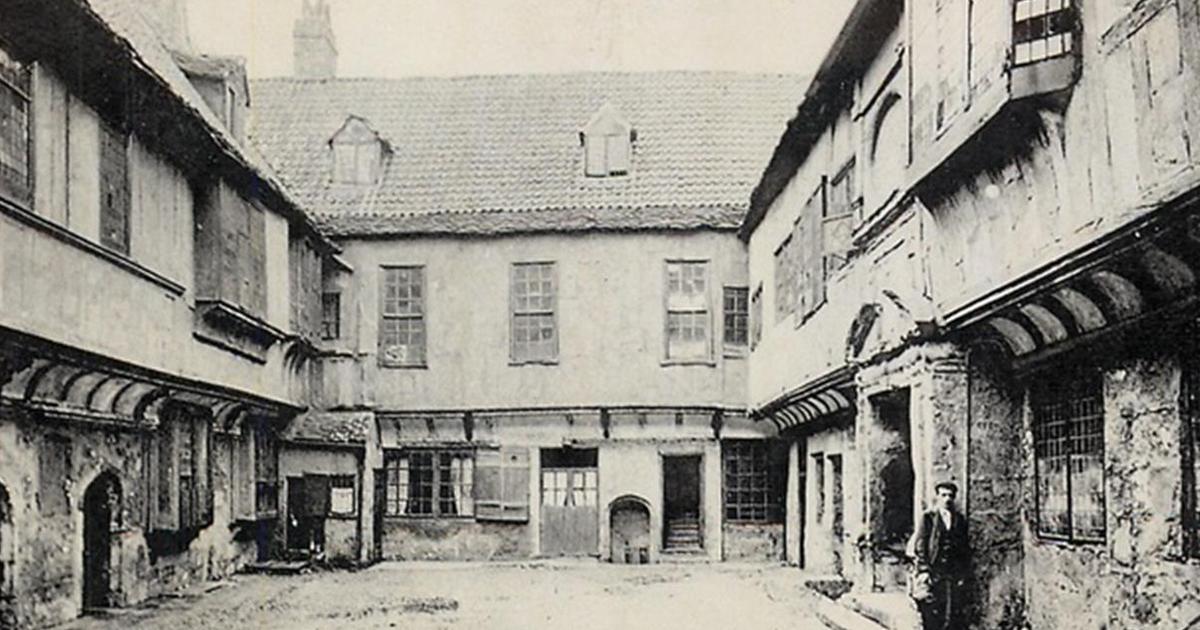
College Street, formerly open to horse-drawn traffic

It was Frank Green, the wealthy industrialist and philanthropist who rescued St William’s College, as he’d done with the Treasurer’s House. Green was also anxious to save the historic gateway at the end of College Street.

By 1901, The York Corporation had resolved to demolish the street and its houses to make way for the new road, Deangate. Green bought St William’s College and offered it for sale to the York Diocesan Trust as a venue for meetings of the Convocation of the Northern Province.


(Image: NQ)


He agreed to sell the college for the price he’d paid for it provided that the Trust undertook appropriate restoration, and accepted his nomination of the celebrated architect Temple Moore, for the work.

Green also made it a condition that he would be given first option to buy the college, if the Dean and Chapter decided to sell it. After a public campaign between conservationists, led by Frank Green, and progressives, the conservationists won; York Corporation backed down and decided to re-route Deangate. The restoration work on the college took place in 1902.

Advertisement

St Williams College, York, in 2014 when it was undergoing restoration work. Picture David Harrison

The Dean and Chapter of York Minster became trustees of St William’s College in 1972, and further restoration work took place in the 1980s. In the next two decades, the building thrived as a conference and exhibition centre.

Rosalind Kelly, marketing and communications manager to the Chapter of York, told me that Listed Building consent and all planning permissions have now been obtained to restore the building as part of the Neighbourhood Plan. An update on the project is expected later in May.

David Wilson is a community writer with The Press

Advertisement

Source link

Continue Reading

NewsBeat

Peatlands are vital for tackling climate change, yet scientists still haven’t found them all

Published

on

Peatlands are vital for tackling climate change, yet scientists still haven’t found them all

Push a metal corer into a peatland and you pull up something remarkable: a dark, dense, sponge-like material made of partly decomposed plants. This peat is rich in carbon. In some places, that peat has been building up for thousands of years. Peatlands are the ecosystems where this happens.

Peat is often associated with the bogs of Scotland or Ireland, but peatlands occur on every continent, from the Arctic to the tropics. They can sit beneath open moorland, under swamp forest or in remote floodplains. What links them is water: in wet, oxygen-poor ground, dead plant material does not fully rot away, so carbon accumulates over centuries and millennia.

That makes peatlands globally important. Although they cover only about 3–4% of Earth’s land surface, they store nearly a third of the world’s soil carbon. When they remain intact, they can keep locking away carbon over very long timescales. But when they are drained or converted for agriculture, forestry or development, that stored carbon is exposed to air and released back into the atmosphere as greenhouse gases, including carbon dioxide. Thus, peatlands can become major sources of greenhouse gas emissions when degraded. Globally, peatland degradation is estimated to account for around 5–10% of annual human-caused carbon dioxide emissions.

For ecosystems so important to the global carbon cycle, we still know surprisingly little about some basic things.

Advertisement


À lire aussi :
How we discovered the world’s largest tropical peatland, deep in the jungles of Congo


One of the biggest questions is simply: where are all the world’s peatlands? That may sound like a question scientists should already have answered. But many peatlands are hard to detect from the surface, difficult to access, or lie beneath dense forest. Large areas of the tropics remain poorly mapped.

What may be the world’s largest tropical peatland complex, in the Congo Basin, was only formally confirmed to science in 2017. That discovery was astonishing not just because of its size, but because it showed that globally important carbon stores can still remain effectively hidden in plain sight.

This uncertainty matters. If countries do not know where their peatlands are, they cannot fully account for them in climate plans, biodiversity strategies or national greenhouse gas inventories. And if we are still refining estimates of peatland extent, we are also still refining estimates of how much carbon they store.

Advertisement

That gap was one reason behind a new study I co-authored. Rather than trying to answer a single peatland question, we asked a broader one: what does the peatland community think science most urgently needs to resolve?

Working with a global network of more than 100 co-authors, my team ran an open survey in 21 languages and received responses from over 450 people across 54 countries. Participants included researchers, policymakers and practitioners. An independent panel then prioritised the responses, producing 50 questions for peatland science over the next decade. What emerged was not just a set of narrow technical questions. It showed a discipline that is changing fast.

The peat swamp forest in Sebangau national park in Indonesia.
RidhamSupriyanto/Shutterstock

Some priorities were surprisingly fundamental. Participants highlighted the need to map peatlands better, especially in poorly surveyed tropical regions (the Congo peatland is an excellent illustration of this point), and to improve estimates of global carbon storage and greenhouse gas emissions. Others focused on how peatlands will respond to climate change: whether drought, fire and warming could push some peatlands past tipping points where they release more carbon than they store.

Advertisement

Restoration was another major concern. There is already broad agreement that conserving intact peatlands and rewetting drained ones are essential for climate and biodiversity goals: at least 30 million hectares of degraded peatland need to be rewetted by 2030 as a first step towards meeting climate change targets. But restoration is not one simple recipe. A damaged upland bog in Britain is different to a drained tropical peat swamp forest in Indonesia or a permafrost peatland in the Arctic. What works in one place may not translate neatly to another.

Peat, power and people

Just as striking was how often people raised questions about communities, livelihoods, power and fairness. Peatlands are not empty landscapes waiting to be fixed.

In many places they are lived in, worked and culturally significant. Participants asked how local and Indigenous knowledge can shape restoration, how wet agriculture “paludiculture” (farming crops on rewetted peatlands or wetlands) and other peatland livelihoods might work in practice, and whether the benefits of carbon finance and conservation will actually reach local communities.


À lire aussi :
Your next puffer jacket could be made from bulrushes, as carbon-storing peat farming takes off

Advertisement

So peatland science is no longer just about describing these ecosystems. It is increasingly about decisions: which peatlands are protected, which are restored, how land is used, who bears the costs and who benefits.

Our study has limits. Most respondents were researchers, and some peatland-rich regions and perspectives were less well represented than others. So this is not a final blueprint for what peatland science should look like everywhere. But it does offer a community-informed snapshot of where the biggest gaps now lie.

For a long time, peatlands were treated as marginal, soggy places at the edge of more useful land. Peatlands are now becoming central to climate regulation, water security, biodiversity and the livelihoods of many people who live on and around them.

Pulling peat from the ground means touching material that has been building up for millennia. It is a reminder that these landscapes work on timescales much longer than our own. But the decisions that will shape their future are being made now, and they will help decide not only whether peatlands remain a climate buffer or become another source of instability, but also who gets to benefit from their protection and restoration in the future.

Advertisement

Source link

Continue Reading

Trending

Copyright © 2025