Jan3 CEO Samson Mow has declared that the Bitcoin price prediction for the four-year halving cycle is dead. Mow is replacing it with something far more explosive: an “Omega candle” targeting $1 million.
In a recent interview, Mow argued that available BTC supply is dramatically lower than the market recognizes, making any price below $120,000 structurally undervalued.
“Everything is up in the air now,” he said. “An Omega candle and $1 million Bitcoin is just around the corner, especially with all the buy pressure that is flooding the market now with Saylor through STRC and other Bitcoin treasury company players all coming in.”
JUST IN: SAMSON MOW JUST SAID THE 4-YEAR CYCLE IS DEAD AND #BITCOIN IS HEADING TO $1,000,000 SAYLOR IS FLOODING THE MARKET WITH BUY PRESSURE "THERE IS NOT ENOUGH SUPPLY" BREAKOUT SOON pic.twitter.com/a93eJcmFHI
Bitwise CIO Matt Hougan independently models a $1 million base case within a decade, requiring only 17% share of a projected $121 trillion global store-of-value market. Hougan also added that the Fed’s impact on the Bitcoin price is also fading. Ark Invest’s Cathie Wood and MicroStrategy’s Michael Saylor echo seven-figure targets across separate frameworks.
Advertisement
Bitwise CIO Matt Hougan says the Fed's impact on $BTC is fading. Hougan adds, "We're in an environment where we're feathering rates 25, 50 basis points…The Fed will matter, but on the edges and less than it has in #Bitcoin's history." pic.twitter.com/tglexpGBZa
In the short to mid-term, ETF inflows and evolving regulatory clarity around Bitcoin ETF structures remain macro catalysts to monitor as institutional accumulation accelerates.
Bitcoin Price Prediction: The 1 Million Dollar Question
Advertisement
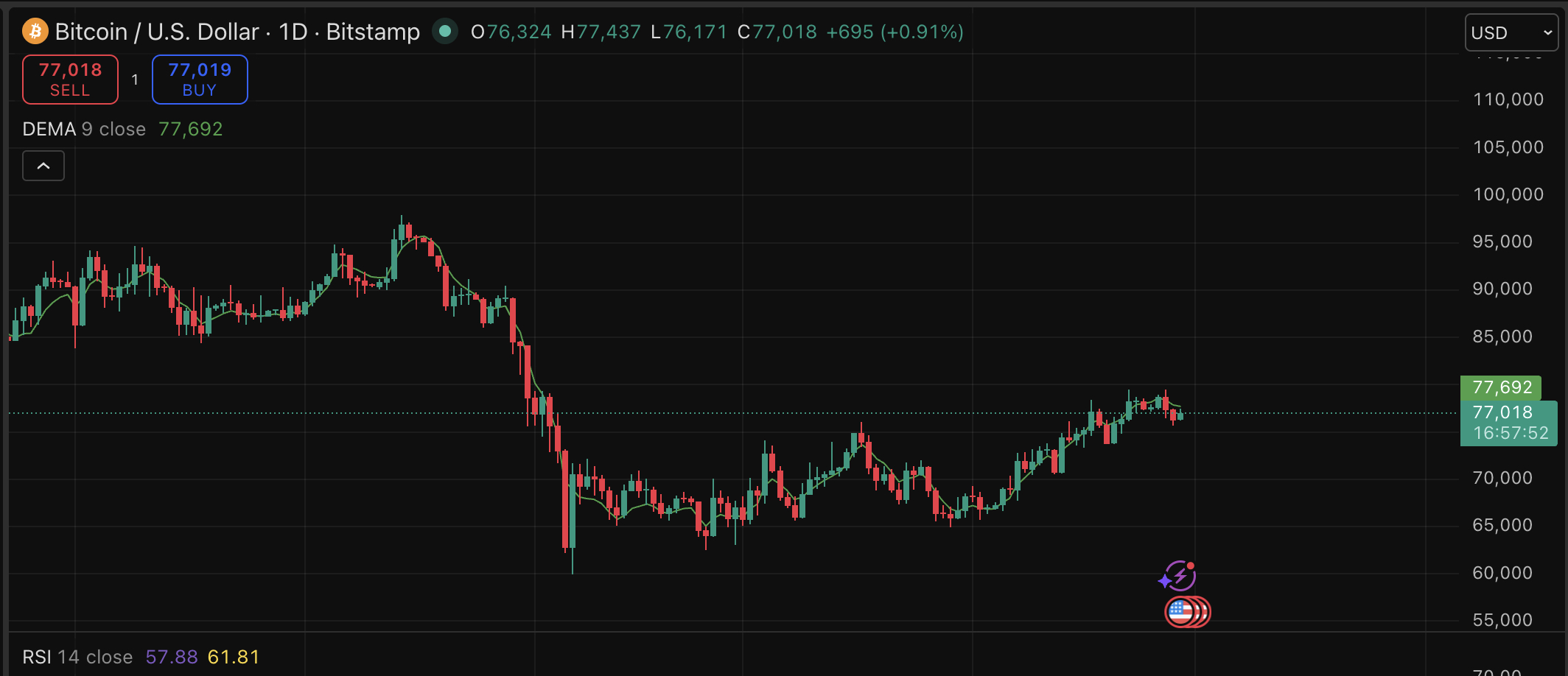
At today’s price of $77,000, Bitcoin sits 40% below its October 2025 record high, a gap that frames two very different narratives simultaneously. The Mow thesis demands ignoring that gap entirely. The counter-thesis reads it as a classic post-euphoria distribution phase.
BTC USD, TradingView
Technically, momentum favors the bulls in the near term. Bitcoin has pushed steadily higher on a store-of-value narrative, with price action showing consolidation.
Hougan’s math is worth internalizing, especially from what we saw with gold. The precious metal’s addressable market grew from $2.5 trillion in 2004 to $40 trillion today in a 16x expansion that no one predicted. If the store-of-value market reaches $121 trillion on a similar trajectory, Bitcoin’s 21 million coin hard cap does the rest of the arithmetic.
With the supply shock driven by treasury accumulation. Saylor’s STRC vehicle alone represents sustained institutional bid pressure that could trigger the Omega candle. A near-vertical price surge compresses months of price discovery into days, targeting $1 million.
The critical variable is timing. Mow offered none. That ambiguity may actually be the honest answer.
Bitcoin Hyper Targets Early-Mover Upside as BTC Eyes Historic Levels
Bitcoin is a good investment, but $1 million might be too far-fetched. For us who missed the early BTC entry, that math stings. The question becomes where comparable asymmetry still exists in the Bitcoin ecosystem.
Bitcoin Hyper ($HYPER) is one answer drawing significant presale capital. The project is positioning itself as the first-ever Bitcoin Layer 2 with Solana Virtual Machine (SVM) integration that delivers faster performance than Solana, while inheriting Bitcoin’s security and trust layer.
Advertisement
Hyper directly addresses Bitcoin’s three structural constraints: slow transactions, high fees, and the absence of programmable smart contracts.
The presale has raised more than $32.5 million at a current token price of $0.0136793, with 36% APY staking rewards available only to early participants.
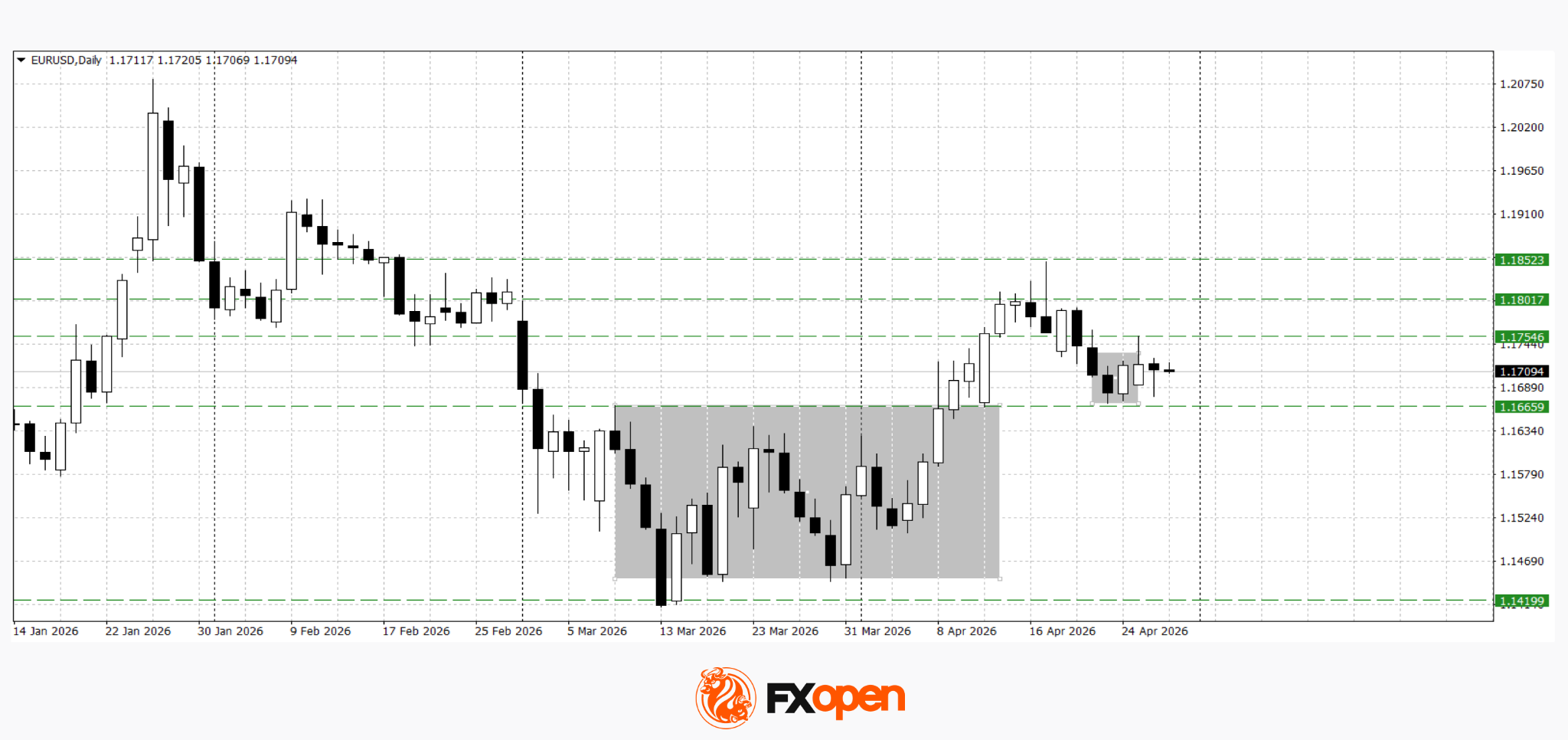
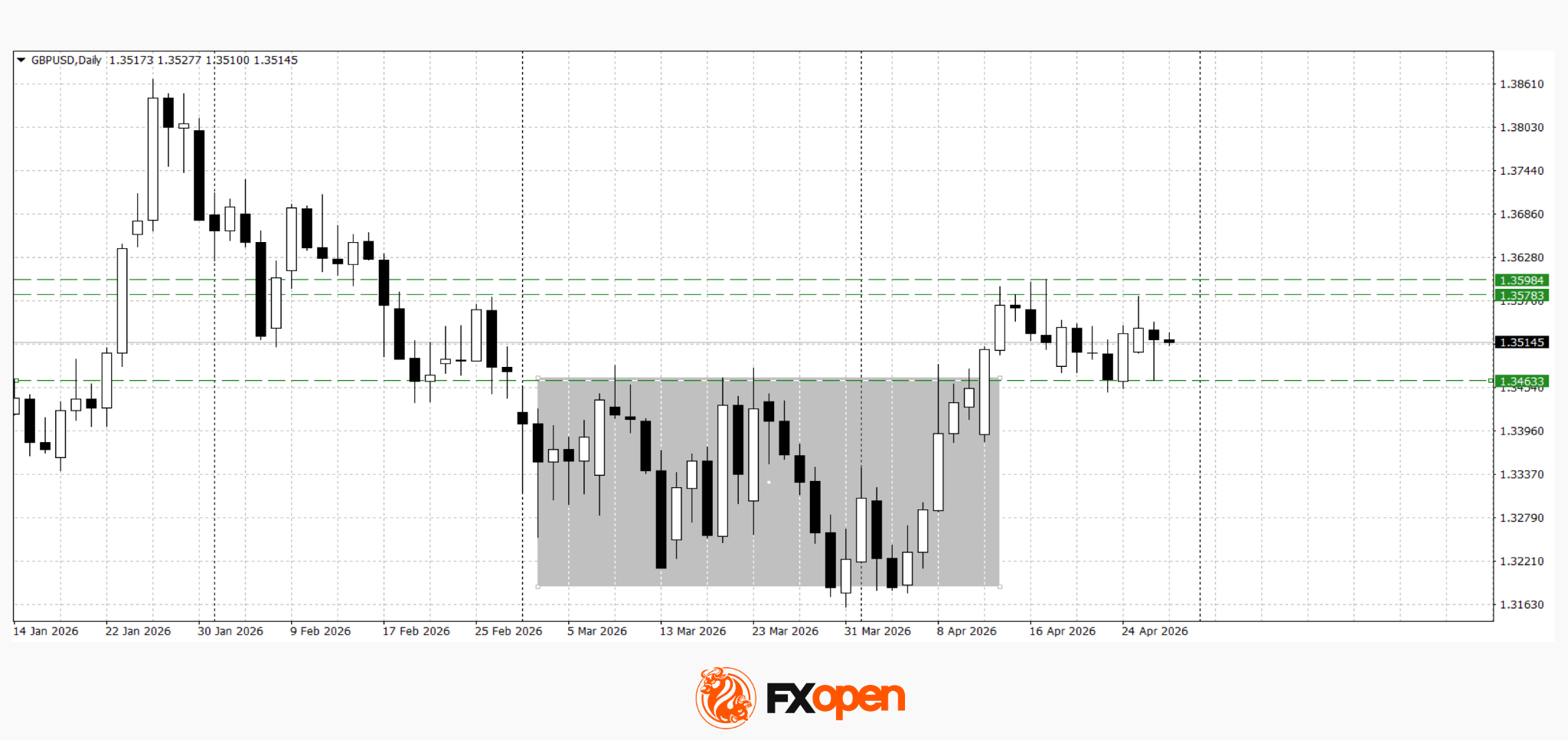
European currencies are showing subdued dynamics, entering a consolidation phase following their previous advance. Earlier, EUR/USD and GBP/USD broke out of their ranges and strengthened; however, the subsequent correction has led both pairs to retest the previously breached upper boundaries of their sideways channels. The current stabilisation near these levels reflects a balance of forces in the market and a wait-and-see stance among participants ahead of the key decision by the Federal Reserve.
The main focus is on the Federal Reserve meeting, including the interest rate decision, the accompanying statement, and the press conference. The market is assessing potential signals regarding the future trajectory of monetary policy, which is limiting activity and restraining the formation of a directional move. Additional influence may come from macroeconomic data from the US, the euro area, and the United Kingdom.
EUR/USD
The EUR/USD pair is consolidating near the previously broken range, holding above key levels. This dynamic preserves a structure favourable for further gains; however, the lack of new drivers is restraining the development of upward momentum. The reaction to the Fed decision may provide the impulse for a breakout from the current range.
Technical analysis of EUR/USD suggests the possibility of a retest of 1.1750, as a bullish engulfing pattern has formed on the daily timeframe. A firm move below 1.1650 could lead to the pair returning to the previously broken range.
Advertisement
Key events for EUR/USD:
today at 09:00 (GMT+3): speech by Bundesbank’s B. Balz;
today at 18:30 (GMT+3): speech by Bundesbank Vice President Buch;
tomorrow at 11:00 (GMT+3): Germany’s gross domestic product.
GBP/USD
The GBP/USD pair is showing a similar structure, holding near its levels after a corrective pullback. The current consolidation reflects market uncertainty and expectations of signals from the Federal Reserve and the outlook for Bank of England policy. Depending on the regulators’ rhetoric, the pair may either resume its advance and firmly establish itself above 1.3600, or deepen the correction and fall below 1.3460.
Key events for GBP/USD:
today at 17:00 (GMT+3): Atlanta Fed GDPNow indicator;
today at 21:00 (GMT+3): US Federal Reserve interest rate decision;
today at 21:30 (GMT+3): FOMC press conference.
Overall, the market is at a point of equilibrium, where previously broken levels act as a key decision zone. The outcome of the Federal Reserve meeting may serve as the main driver: a more dovish tone could support a continuation of the upward momentum in European currencies, while more hawkish signals may increase pressure and lead to a deeper correction.
Trade over 50 forex markets 24 hours a day with FXOpen. Take advantage of low commissions, deep liquidity, and spreads from 0.0 pips (additional fees may apply). Open your FXOpen account now or learn more about trading forex with FXOpen.
This article represents the opinion of the Companies operating under the FXOpen brand only. It is not to be construed as an offer, solicitation, or recommendation with respect to products and services provided by the Companies operating under the FXOpen brand, nor is it to be considered financial advice.
U.S. crypto lobbying group Blockchain Association has urged the Federal Reserve to formalise the removal of “reputation risk” from bank supervision rules, warning that the concept has been used to restrict access to financial services.
Summary
Blockchain Association has urged the Federal Reserve to formalise the removal of reputation risk from bank supervision rules.
The group said reputation risk has enabled the debanking of crypto firms and called for clear, consistent regulatory standards.
The Cato Institute found most debanking cases in the U.S. were driven by government pressure rather than independent bank decisions.
In a comment letter submitted Monday, Blockchain Association executive vice president of legal and government relations Ashok Pinto said the Federal Reserve should turn its June 2025 policy change into a binding rule to prevent future misuse.
Pinto wrote that regulated institutions require “objective, consistent standards,” adding that reputation risk fails to meet that threshold.
Advertisement
Pinto argued that regulatory frameworks must protect the integrity of the financial system without allowing subjective assessments to influence access to banking services.
He wrote that “regulation is meant to uphold the integrity of our financial system, not to pick winners and losers based on the political winds of the day,” while warning that reliance on reputation risk introduces inconsistency into supervisory practices.
Concerns over future policy reversals
Citing past enforcement patterns, Pinto said the use of reputation risk has contributed to debanking actions targeting crypto firms, often described by industry participants as “Operation Chokepoint 2.0.”
Advertisement
He noted that while the Donald Trump administration has rolled back several policies linked to crypto debanking, long-term safeguards remain necessary.
Pinto wrote that future administrations could reintroduce similar measures without clear regulatory limits, stating that “reputation risk is only as neutral as the administration wielding it.”
He added that removing it through formal rulemaking would create a stable standard applicable across political cycles.
Supporting this concern, the Cato Institute reported in January that most debanking cases in the U.S. stemmed from government pressure rather than independent decisions by financial institutions, reinforcing calls for clearer supervisory boundaries.
Advertisement
Push for regulatory alignment
Addressing implementation, Pinto said the Federal Reserve should coordinate its final rule with steps already taken by other banking regulators. He pointed to recent actions by the Office of the Comptroller of the Currency and the Federal Deposit Insurance Corporation, which issued a joint rule on April 7 removing reputation risk from their supervisory frameworks.
Pinto wrote that aligning standards across agencies would improve predictability for regulated entities, adding that consistent rules grounded in measurable criteria are necessary to maintain trust in the regulatory process and ensure the safety of the financial system.
The White House has signaled that a new step toward operationalizing the U.S. strategic Bitcoin reserve has been prepared, with an announcement expected within weeks.
Summary
White House adviser Patrick Witt said a major announcement on the U.S. Bitcoin reserve is expected within weeks, pointing to progress on legal and operational structure.
Lawmakers including Cynthia Lummis and Nick Begich are working to pass legislation that would formalise the reserve and allow up to 1 million Bitcoin to be acquired over time.
Speaking at the Bitcoin 2026 conference in Las Vegas, Patrick Witt said officials have been working through the legal structure needed to secure and manage Bitcoin already held by the government.
He said the administration is close to finalizing key interpretations required to “solidify that and protect the digital assets, specifically bitcoin that we have on the government balance sheet.”
Advertisement
During the panel, Witt confirmed that internal work has focused on translating last year’s executive order into a functioning framework, with further action from the executive branch expected shortly.
He said a “big announcement” would outline the next phase, while adding that legislative backing would still be required to give the reserve long-term footing.
Lawmakers move to anchor reserve into statute
Alongside executive action, lawmakers have continued efforts to formalize the reserve through legislation. Nick Begich said the bill previously introduced as the BITCOIN Act is being renamed the American Reserves Modernization Act, or ARMA, as part of that process.
Advertisement
The proposal builds on the executive order signed by Donald Trump, which created a strategic Bitcoin reserve primarily funded through assets seized in criminal and civil cases, along with a separate digital asset stockpile. Lawmakers have argued that codifying the reserve into law would prevent policy reversals that could occur under future administrations.
Earlier legislative drafts led by Cynthia Lummis outlined plans to acquire up to 1 million Bitcoin over five years using budget-neutral methods.
According to Lummis, writing in October 2025, the government could begin funding the reserve “anytime,” even as Congress continues to debate the bill’s passage.
Her comments followed discussions around alternative funding strategies, including proposals highlighted by ProCap BTC chief investment officer Jeff Park, who pointed to roughly $1 trillion in unrealized gains from U.S. gold reserves as a potential source for long-term Bitcoin allocation.
Advertisement
Structure still taking shape as timeline tightens
While the executive order has already established the reserve framework, details on how additional Bitcoin would be acquired have not been publicly disclosed. Government-held Bitcoin currently comes from forfeitures, with policymakers weighing options to expand holdings without drawing on taxpayer funds.
Witt said the upcoming announcement would represent a “breakthrough” in advancing the reserve from a policy concept to an operational system, though he noted that follow-up legislation remains necessary to secure its permanence.
The White House has not issued further details on the planned announcement or its scope.
An Ethereum (ETH) ICO participant with the wallet address 0xCD59 has transferred all its ETH holdings to a fresh wallet after 10.8 years of dormancy.
On-chain analysts noted that the dormant wallet acquired its 10,000 ETH during Ethereum’s ICO at $0.311 per token.
Decade-Old Ethereum Whale Returns to Life
At ETH’s current price, the whale’s holdings are worth $22.88 million. This marks a 7,381x return on the $3,100 original stake, Lookonchain added.
While the intent behind the transfer remains unclear and there is no confirmed evidence of a sale, similar movements have historically preceded a range of outcomes. Some early Ethereum ICO participants have opted to liquidate portions of their holdings, while others have chosen to stake or simply reposition assets without selling.
Advertisement
For instance, last month, address 0xd64A sold 11,552 ETH for $23.42 million at $2,027 per token. That wallet had originally bought 38,800 ETH for $12,000 during the ICO.
An #Ethereum ICO participant who bought 100K $ETH(costing $31K) sold 4,283 $ETH($18.97M) again recently. He has sold 44,284 $ETH($105M) at an average price of $2,378 since 2021, leaving 55,716 $ETH($261.6M). The total profit is ~$366.8M, an 11,835x return!… pic.twitter.com/C7xwhHh4Nn
However, not all early holders choose to sell. In December 2025, a dormant Ethereum ICO wallet (0x2dCA), holding 40,000 ETH, reactivated after more than a decade and opted to stake the assets rather than liquidate them.
Advertisement
Similarly, in September 2025, an ICO whale holding 1million ETH resurfaced after 8 years. The whale moved 150,000 ETH to a new wallet for staking.
The reactivation of long-dormant wallets continues to draw market attention, but such movements do not point to a single outcome. With no confirmed sale, the transfer leaves open multiple possibilities, reflecting the diverse approaches of early holders.
A U.S. Army master sergeant appeared in a Manhattan federal court and pleaded not guilty to charges alleging he used nonpublic information about a classified January raid in Venezuela to place bets on Polymarket, the crypto-backed prediction market. Gannon Ken Van Dyke faces five counts, including three that violate federal commodities laws, one wire fraud count and one unlawful monetary transaction. The case could carry a maximum sentence of up to 60 years in prison if convicted. He was released on a $250,000 bond, surrendered his passport, and must adhere to travel restrictions. His next court date is scheduled for June 8.
According to prosecutors, Van Dyke, a master sergeant in the U.S. Army, was involved in planning and execution of “Operation Absolute Resolve,” a special-forces raid in Caracas that allegedly led to the capture of Nicolás Maduro. They contend he used information about the raid to buy “yes” shares in Polymarket contracts, placing about 13 bets on markets tied to Maduro and Venezuela.
The specific markets cited by prosecutors include bets on: “US Forces in Venezuela by January 31,” “Maduro out by January 31,” “Will the U.S. invade Venezuela by January 31,” and “Trump invokes War Powers against Venezuela by January 31.” DOJ prosecutors said Van Dyke wagered more than $33,000 across these markets and others. They also asserted that he profited nearly $410,000 as some bets resolved in the affirmative for the “yes” outcomes.
For context, Polymarket is a decentralized-style platform that allows users to trade on event outcomes using cryptocurrency or fiat-pegged tokens. The government’s filing notes that reports of unusual trading activity in Maduro-related contracts on Polymarket had appeared in the press and on social media prior to the charges.
Advertisement
The Department of Justice’s case is complemented by a separate action from the U.S. Commodity Futures Trading Commission, which has brought parallel insider-trading allegations against Van Dyke tied to Polymarket activities. The overlapping actions illustrate the regulatory sensitivity around prediction markets and the potential misuse of nonpublic information.
Cointelegraph reported on the charges, citing the DOJ’s indictment. For reference, the original coverage can be found here: Cointelegraph.
Key takeaways
One active-duty U.S. Army master sergeant stands accused of using classified information from a Venezuela raid to place bets on Polymarket, facing five counts including three federal commodities-law violations, wire fraud, and unlawful monetary transaction.
The alleged operation, described as “Operation Absolute Resolve,” is claimed to have involved a raid in Caracas that prosecutors say led to Maduro’s capture, with the soldier allegedly leveraging nonpublic information for trading advantage.
Daunting penalties are on the table—up to 60 years in prison if convicted on all counts—coupled with a $250,000 bond, passport surrender, and travel restrictions.
Prosecutors say Van Dyke’s Polymarket activity totaled more than $33,000 across multiple Maduro- and Venezuela-related markets, with reported profits near $410,000 as some bets resolved in the affirmative.
In parallel, the Commodity Futures Trading Commission has pursued a separate insider-trading action, underscoring renewed regulatory scrutiny of prediction markets and the risk of nonpublic information leaking into wagering contracts.
Indictment details and what comes next
The charges against Van Dyke enumerate three counts of violating federal commodities laws, one count of wire fraud and one count of unlawful monetary transaction. If found guilty on all counts, he could face a combination of prison time and financial penalties. The defense will have the opportunity to challenge the government’s characterization of the trading activity, the chain of information, and the attribution of intent. The judge also imposed travel restrictions while the case proceeds.
The government’s narrative centers on Van Dyke’s access to sensitive information about a planned operation and his subsequent use of that information to place “yes” bets on various Polymarket contracts. The markets cited by prosecutors were explicitly tied to timelines around January 31, including potential scenarios involving U.S. forces in Venezuela and actions by Maduro or the U.S. government. The prosecution argues that the bets and the timing indicate an attempt to monetize privileged information.
The regulatory overlay adds a further dimension to the case. The CFTC’s parallel action highlights how authorities are treating prediction-market platforms as potential conduits for insider trading, especially when nonpublic information intersects with market activity. Observers will be watching how this case interacts with broader policy discussions about the permissible boundaries of prediction markets and the safeguards needed to prevent misuse of sensitive military information.
Advertisement
The next court appearance for Van Dyke is scheduled for June 8, when the proceedings will advance toward trial on the charges as outlined by federal prosecutors. In the meantime, investors and users of prediction markets will be paying attention to how regulators weigh the linkage between classified information, military operations, and finance in a rapidly evolving digital-asset landscape.
Readers tracking this case should watch for updates on both the criminal proceedings and the CFTC action, as outcomes could influence how prediction markets are perceived and regulated moving forward.
Risk & affiliate notice: Crypto assets are volatile and capital is at risk. This article may contain affiliate links. Read full disclosure
Tether has introduced a Bitcoin faucet inside its self-custody wallet, offering small BTC payouts through the Lightning Network to bring new users into its ecosystem.
Summary
Tether has launched a Bitcoin faucet within its self-custody wallet, distributing small BTC amounts through the Lightning Network.
Users must link their tether.me usernames and interact with official posts to receive instant payouts.
According to Paolo Ardoino, who announced the feature at Bitcoin 2026 in Lugano, the faucet forms part of the newly launched tether.wallet application, where users can claim Bitcoin by interacting with the firm’s official social channels and linking their tether.me usernames.
A verified response tagged with @btc triggers an instant Lightning Network transfer to the user’s wallet, delivering funds without on-chain delays.
Advertisement
Lightning payouts positioned as entry point
Using the Lightning Network for distribution, Tether has tied the faucet directly to low-cost, near-instant transactions, allowing users to test Bitcoin transfers without handling traditional network fees or wait times.
The company has framed this approach as a practical introduction for users already familiar with stablecoin transactions but new to Bitcoin’s scaling layers.
Details shared at the event indicate that the faucet also highlights the wallet’s use of human-readable identifiers, where funds are sent to usernames instead of long wallet addresses, reducing friction during onboarding.
Advertisement
Tether has connected the rollout to its push for self-custody adoption, placing Bitcoin, USDT, and XAUT within a single wallet interface. The faucet serves as an initial incentive, giving users a small balance that can be managed alongside other assets without relying on third-party custodians.
Revival of an early Bitcoin distribution model
Earlier industry developments show similar attempts to revive faucet-based onboarding. On April 19, 2026, Jack Dorsey said Block planned to relaunch a Bitcoin faucet through btc.day, revisiting a concept first introduced in 2010 by Gavin Andresen, who distributed 5 BTC to users completing simple verification steps.
While Block has not yet disclosed how its new faucet will operate or how much BTC it will distribute, both initiatives draw from the same early model that helped users test wallets and understand Bitcoin transactions when the network was still in its early stages.
Canada has moved to tighten oversight of cryptocurrency use by proposing a nationwide ban on crypto ATMs while advancing legislation to block digital asset donations in federal elections.
Summary
Canada has proposed a nationwide ban on crypto ATMs, with CBC News reporting they are widely used in fraud schemes.
FINTRAC has identified crypto ATMs as a recurring channel in suspicious transaction reports linked to scams.
Lawmakers have advanced Bill C-25 to prohibit crypto donations in elections, citing challenges in verifying donor identities.
According to CBC News, the federal government has outlined plans in its Spring Economic Update 2026 to ban crypto ATMs, describing them as a key tool used by scammers to extract funds from victims and process illicit cash.
The report notes that officials have linked the machines to fraud activity across the country, with investigations identifying them as a primary channel through which victims are instructed to transfer money.
Advertisement
A months-long investigation by CBC News, which included input from law enforcement agencies, financial regulators, industry participants, and fraud victims, found that crypto ATMs have become a central mechanism in scam operations. Financial Transactions and Reports Analysis Centre of Canada reached a similar conclusion in a February 2023 analysis of suspicious transaction reports, identifying these machines as a recurring route used in fraud schemes.
Across Canada, nearly 4,000 crypto ATMs are currently in operation, the highest number per capita globally, according to CBC News.
These machines allow users to deposit cash and convert it into cryptocurrencies such as Bitcoin, which can then be sent to digital wallets with limited identity verification.
Advertisement
Transactions under $1,000 often require only a phone number, while the absence of in-person oversight removes the chance for intervention during suspected fraud attempts.
Although crypto ATMs are regulated as money services businesses, CBC News reports that Canada does not yet have industry-specific rules governing their operation. Officials have pointed to this gap while outlining the proposed ban as part of a wider effort to address fraud risks tied to digital asset access points.
Lawmakers push ahead with crypto donation ban
Separately, lawmakers have continued to advance restrictions on the use of cryptocurrency in political financing through Bill C-25, known as the Strong and Free Elections Act. The proposed legislation has passed second reading in the House of Commons and would prohibit political parties, candidates, and associated entities from accepting crypto donations.
The bill extends the restriction to leadership campaigns, nomination contests, riding associations, and third-party advertisers, requiring any prohibited contributions to be returned or transferred to the Receiver General within 30 days. According to statements from government officials, the proposal addresses concerns over verifying donor identities and tracing the origin of funds when digital assets are used.
Aptos Labs founding engineer Sherry Xiao said Aptos’ newly introduced privacy coin could fix a long-standing trade-off between protecting user privacy and preserving transparency for compliance.
“Confidential APT” launched on the Aptos mainnet on Friday after a governance proposal to integrate the privacy feature passed in a near-unanimous vote. It uses zero-knowledge proofs to conceal token balances and transfer amounts while still enabling transactions to be verified.
While blockchains offer a level of transparency that most traditional ledgers do not, the lack of privacy has slowed individual and enterprise adoption due to the risk of exposing financially sensitive information.
In an interview with Cointelegraph, Xiao said Confidential APT — which is pegged 1:1 to Aptos (APT) — reduces the risks of users being subjected to wallet profiling or targeted scams:
Advertisement
“Portfolio sniping, social pressure from visible holdings, personal safety — these are pain points people feel today.”
Confidential APT can conceal salaries, business strategies
Xiao said the Confidential APT token solves an active problem in the workplace, too.
“If a company runs payroll on-chain with visible amounts, every employee’s salary is permanently public — to coworkers, competitors, recruiters, everyone,” she said.
“Same with treasury moves, settlement flows, trading strategies,” Xiao said, noting that blockchain’s lack of privacy is an “operational dealbreaker” for many businesses.
Auditor keys may only be authorized following a successful onchain governance vote, she noted:
“This approach allows relevant parties to access information like transfer amounts for investigations, while preserving privacy as the default for users.”
While Confidential APT conceals token balances and transfer amounts, the wallet addresses involved and transaction verification remain visible, distinguishing it from other privacy-focused cryptocurrencies like Monero (XMR).
Advertisement
Xiao said she expects individuals to adopt Confidential APT faster than businesses, noting that integrating the privacy coin into the tax reporting pipeline and compliance will take some time.
That said, “If Confidential APT runs on mainnet for six months with solid volume and no issues, that’s the proof point that shortens the enterprise sales cycle,” Xiao added.
Cointelegraph is committed to independent, transparent journalism. This news article is produced in accordance with Cointelegraph’s Editorial Policy and aims to provide accurate and timely information. Readers are encouraged to verify information independently.
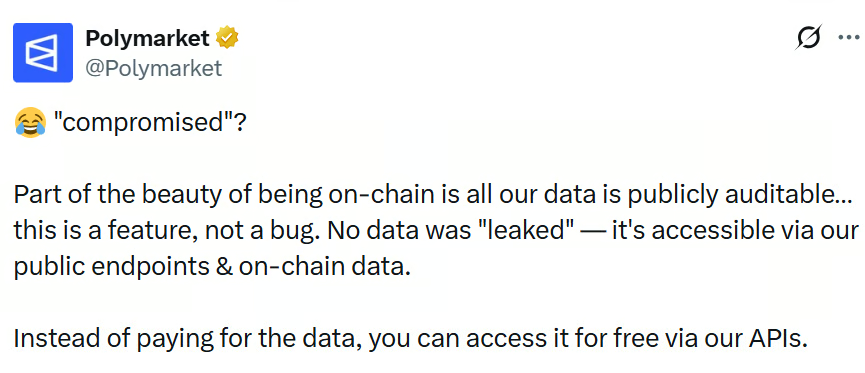
Prediction markets platform Polymarket has denied recent reports that its customer data was breached after a hacker on the dark web posted what the person claimed was a trove of private user details.
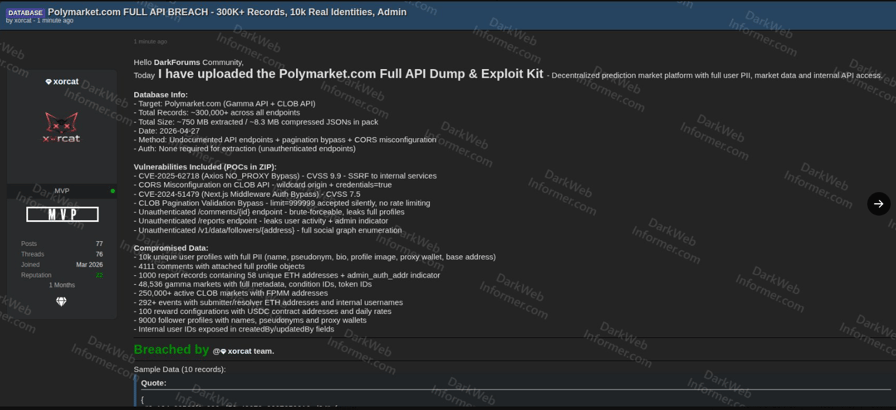
Cybersecurity company Vecert Analyzer and several other X accounts that track dark web activity shared screenshots from DarkForums on Tuesday showing a hacker using the pseudonym “xorcat” claiming to have breached Polymarket.
In the post, xorcat said they had stolen over 300,000 records, including 10,000 unique user profiles with full names, profile images, proxy wallets and base addresses.
Polymarket called the claims of a data breach “complete and utter nonsense” and said the information the hacker posted is already available online.
Advertisement
The crypto industry saw a sudden surge in crypto-related hacks and exploits in April, putting many in the space on high alert. Blockchain security company Hacken reported earlier this month that Web3 projects lost $482 million to hacks and scams in the first quarter of 2026 across 44 incidents.
“You compromised our platform by accessing publicly accessible API endpoints & on-chain data and *checks notes* are trying to sell the data we offer developers for free? Which VC paid you to post this?” Polymarket said.
In another post, the prediction market said: “Part of the beauty of being on chain is all our data is publicly auditable, this is a feature, not a bug. No data was leaked, it’s accessible via our public endpoints & on-chain data. Instead of paying for the data, you can access it for free via our APIs.”
Xorcat also said data was pulled via undocumented API endpoints, pagination bypass and CORS misconfiguration on Polymarket’s Gamma and CLOB APIs. The hacker claimed to have breached other prediction markets and planned to release the data over the next few days.
Several security experts have expressed doubt. Vladimir S, a threat researcher and chief security officer at Legalblock, said it appears “someone parsed data and is trying to present it as a [DB] leak. It does not seem probable to me.”
Cointelegraph is committed to independent, transparent journalism. This news article is produced in accordance with Cointelegraph’s Editorial Policy and aims to provide accurate and timely information. Readers are encouraged to verify information independently.
Canada has proposed banning crypto ATMs nationwide as part of measures unveiled in the federal Spring Economic Update 2026.
The government described the machines as a key tool used by scammers to defraud victims and launder illicit cash proceeds.
“To protect Canadians by shutting down a primary method for scammers to defraud victims and for criminals to place their cash proceeds of crime, the Spring Economic Update 2026 proposes to ban crypto ATMs,” the text reads.
There are nearly 4,000 cryptocurrency ATMs operating in Canada, according to figures cited in CBC. That gives the country the highest concentration of crypto ATMs per capita worldwide.
The proposed ATM ban is positioned as a public safety measure. Canadians would still be able to access services through money services businesses (MSBs), including purchasing digital assets at physical locations, while reducing the sector’s exposure to illicit activity.
Canada’s parliament advanced Bill C-25, which would ban crypto donations to federal political campaigns. The bill passed second reading with cross-party support and heads to committee review.
Meanwhile, the United States is grappling with similar fraud patterns. Americans lost more than $333 million through scams routed via Bitcoin ATM machines in 2025.
It marked a sharp jump from roughly $250 million the year before. Older Americans accounted for the majority of reported victims.



pic.twitter.com/a93eJcmFHI
Bitwise CIO Matt Hougan says the Fed's impact on $BTC is fading.






















 Tech2 days ago
 Fashion5 days ago

 Politics7 days ago
 Politics7 days ago
 Business5 days ago
 Business7 days ago

 Politics1 day ago
 Politics7 days ago
 Politics7 days ago
 Politics7 days ago
 NewsBeat3 days ago

 Crypto World5 days ago
You must be logged in to post a comment Login