
Business
In five charts – How UAE's exit could affect Opec's influence over the oil price



Amazon shares lower as record AI investment offsets cloud acceleration

Donald Deibler did not set out to chase trends. He focused on people, hard work, and steady growth. Today, he stands out as a local business leader who helps turn small ideas into real community staples.
His story starts in a small Pennsylvania town and grows into something much bigger.
From Small-Town Roots to Business Mindset
grew up in Donaldson, Pennsylvania, in a large family with five siblings. Life was simple, but it was full. Sports, family time, and shared responsibilities shaped his early years.
“I grew up around people who worked hard and showed up for each other,” he says. “That sticks with you.”
He carried that mindset into school. After graduating from Pine Grove Area High School in 2011, he attended Albright College. There, he studied Music Business and graduated in 2015.
At first glance, music business may not seem like a direct path to food service. But for Donald, it built a foundation.
“It taught me how to think about operations, branding, and how people connect with a product,” he explains.
How Donald Deibler Built His Business Career
After college, Donald stepped into the world of small business. He became the Business Manager of All Stars Ice Cream and Café Bakery.
This role gave him hands-on experience. He learned how to manage day-to-day operations, handle customer expectations, and keep a business running smoothly.
“You learn fast in a small business,” he says. “Every decision matters, and you see the results right away.”
But his biggest impact came through another venture closer to home.
The Vision Behind Dead Horse Beer & Burritos
Dead Horse Beer & Burritos is owned by Donald’s wife. But Donald plays a key role behind the scenes. He describes himself as “the man behind the vision,” helping bring the idea to life.
“I’ve always believed in what we’re building,” he says. “It’s not just a business. It’s something for the community.”
From planning to execution, Donald has been involved in shaping the direction of the restaurant. He supports operations, helps solve problems, and even steps into the kitchen when needed.
“I like being hands-on,” he says. “If something needs to get done, I’ll jump in.”
That mindset reflects his leadership style. He does not lead from a distance. He works alongside his team.
Leadership Style: Hands-On and Community Focused
Donald’s approach to leadership is simple. Show up. Do the work. Support your team.
He often works directly with staff and stays close to the customer experience. Whether it is helping in the kitchen or managing operations, he focuses on consistency.
“If customers aren’t happy, nothing else matters,” he says. “You have to earn that trust every day.”
His leadership also extends beyond the business walls. He believes local businesses should support the communities they serve.
Why Community Involvement Matters in Business
Donald makes sure his businesses give back. He supports donations to local youth sports, including Tri Valley Little League. He also volunteers at St. Peter’s UCC and coaches youth sports.
“Kids need support and structure,” he says. “If we can help with that, we should.”
For him, community involvement is not a side effort. It is part of the business model.
“Being part of a town means showing up, not just selling something,” he adds.
Life Outside Work: Staying Grounded
Outside of business, Donald stays active and connected to his roots. He enjoys riding dirt bikes and ATVs at places like Rauch Creek Trail and The Flying Dutchman.
He also spends time hunting, fishing, and traveling. Another passion is renovating houses, which reflects his interest in building and improving things over time.
“I like projects where you can see progress,” he says. “You start with something rough and turn it into something better.”
That same mindset shows up in his business work.
Lessons from Donald Deibler’s Journey
Donald’s career is not built on big headlines. It is built on steady effort and clear priorities.
He focuses on people. He stays involved. And he keeps things practical.
“Success isn’t complicated,” he says. “It’s about doing the basics right, over and over.”
His journey shows how local leadership can have real impact. By staying close to the work and the community, he has helped build businesses that last.
For readers interested in entrepreneurship, his story offers a clear takeaway. Growth does not always come from big moves. Often, it comes from small, consistent actions done well.
And for Donald Deibler, that approach continues to guide everything he does.

NEW YORK — Vita Coco Company Inc. shares skyrocketed more than 22% on Wednesday, April 29, 2026, trading around $63 in morning action after the coconut water and functional beverage maker delivered a strong first-quarter earnings beat and raised its full-year guidance, signaling robust consumer demand for healthier drink options.

The company reported net sales of $128.4 million for the quarter ended March 31, up 18% from the year-ago period and comfortably ahead of analyst expectations. Gross margin expanded to 42.3% from 38.7% a year earlier, driven by favorable product mix, pricing actions and supply chain efficiencies. Adjusted EBITDA reached $18.2 million, significantly beating consensus forecasts.
CEO Martin Roper highlighted the strength of the core Vita Coco coconut water brand and continued momentum in the company’s emerging functional beverage portfolio. “Consumers are increasingly seeking better-for-you beverages, and our brands are perfectly positioned to meet that demand,” Roper said in the earnings release. “We are seeing broad-based growth across channels and geographies, with particularly strong performance in the U.S. and Europe.”
The upbeat results and raised full-year outlook triggered enthusiastic buying. Volume surged dramatically in early trading, with the stock ranking among the top percentage gainers on Nasdaq. The move reflects renewed investor confidence in Vita Coco’s ability to sustain growth in the competitive premium beverage category.
Vita Coco has successfully evolved from a niche coconut water brand into a diversified better-for-you beverage platform. The company has expanded its offerings to include sparkling coconut water, energy drinks, protein-infused beverages and functional shots. This diversification strategy has helped reduce seasonality and broadened appeal across different consumer demographics.
Analysts reacted positively to the report. Several firms raised price targets following the earnings release, citing improved visibility into 2026, margin expansion and market share gains. The results validate management’s strategy of investing in brand building, innovation and distribution while maintaining disciplined cost control.
For investors, today’s surge underscores the market’s appetite for companies benefiting from long-term consumer trends toward health and wellness. Vita Coco’s products align with growing demand for natural, low-sugar, hydrating beverages. The company has built a strong presence in both retail and foodservice channels, with expanding international operations providing additional growth levers.
The company also reported progress on its sustainability initiatives, including responsible sourcing of coconuts and reduction of plastic usage in packaging. These efforts resonate with younger consumers who prioritize environmental and social responsibility when making purchasing decisions.
Broader beverage industry trends have been mixed in 2026. While traditional soda and sugary drink sales have faced pressure, premium non-alcoholic and functional beverages have continued to show resilience. Vita Coco has benefited from this shift, capturing market share from both traditional soft drinks and emerging competitors.
As trading continued Wednesday morning, shares held near session highs with strong volume. Technical analysts noted the breakout above recent resistance levels, with potential near-term targets in the $70 range if momentum persists. Options activity showed aggressive call buying, suggesting traders anticipate further upside following the positive earnings momentum.
The day’s performance caps a strong period for Vita Coco. The stock has delivered impressive returns for investors who recognized its potential in the health and wellness beverage space. With solid results and positive guidance, many expect continued strength through the remainder of 2026.
For long-term investors, Vita Coco offers exposure to secular consumer trends including health consciousness, premiumization and functional beverages. Its strong brand equity, innovative product pipeline and disciplined execution provide a compelling investment case even in a competitive category.
Near-term risks include commodity price volatility for coconut raw materials, increasing competition in the functional beverage space and potential economic pressures on consumer spending. However, management’s track record of navigating these challenges and delivering consistent growth supports optimism.
Vita Coco’s journey from a startup importing coconut water from Sri Lanka and the Philippines to a publicly traded company with a market capitalization exceeding $2 billion demonstrates the power of aligning with major consumer trends. The company has successfully built a portfolio that spans hydration, energy and wellness, positioning it well for continued expansion.
As the market digests today’s move, Vita Coco stands out as a standout performer in the consumer staples space. The strong Q1 results and raised outlook suggest the company is executing effectively on its growth strategy and remains well-positioned to capitalize on favorable industry tailwinds.
The coming quarters will be important as Vita Coco continues to invest in marketing, innovation and distribution. Investors will watch closely for sustained same-store sales growth, margin stability and progress on international expansion. For now, today’s sharp rally reflects confidence that Vita Coco has momentum on its side in the evolving beverage landscape.


The functional, first-to-market soda is available in four flavors.

Everforth director Joseph Dyer acquires $24,991 in company stock

A few years ago, the idea that individual content creators could command genuine leverage over technology giants would have seemed fanciful.
Today, it is simply a business reality. The creator economy has matured to the point where platforms that fail to offer competitive terms risk watching their most valuable users walk out the door, often taking large and loyal audiences with them. That shift has made creators central to platform strategy rather than just another group of users to attract.
The increasing numbers make this clear
While estimates vary, most experts say the global creator economy is worth over 100 billion pounds each year and continues to grow. Millions of people now earn a significant part of their income from content, through subscriptions, brand deals, merchandise, or live events. For the platforms, these creators are more than just users. They are the product, the marketers, and the community builders all at once. Their ability to attract attention and sustain engagement gives them unusual influence in a crowded digital market.
This change in the business model has completely changed how creators and platforms negotiate. Creators who used to accept any revenue share are now able to compare offers, make demands, and switch platforms with less hesitation. Many have already moved their audiences to newer platforms with better deals or more helpful algorithms. The power has shifted in ways few in Silicon Valley expected.
Competition for creators is heating up
Big platforms have responded quickly, though not always smoothly. YouTube has added more ways for creators to make money. Spotify now lets podcasters get paid directly. Meta has launched creator funds on its platforms. At the same time, new challenger platforms are focusing on specific areas such as short-form videos, competitive gaming, and interactive entertainment. This has created a more aggressive market in which retaining top talent is now a constant priority.
The gaming and interactive entertainment space offers particularly sharp examples of this broader trend. Platforms serving competitive audiences, from those featuring formats such as Acebet p2p slot battles to dedicated esports streaming services, have shown that users will move to wherever they feel most valued and most fairly noticed for their engagement. Big Tech is watching these moves carefully and, in some cases, learning from them.
What’s next for platforms and creators?
This competition will likely lead to a more divided, but possibly healthier, ecosystem. Creators will have more real choices. Audiences will follow creators rather than stick to platforms. Big companies will have to innovate more than they have since social media first took off. In the long run, that could benefit both creators and consumers if better tools and fairer terms emerge.
The risk, of course, is fragmentation taken too far. Audiences can only maintain so many subscriptions and follow so many platforms before fatigue sets in. The winners of the next phase are likely to be those that make the overall experience seamless, whether through smart aggregation, thoughtful curation, or simply a more intuitive understanding of what their communities actually want daily. Simplicity may become just as important as scale.
Right now, the balance of power is changing in ways that would have been hard to imagine five years ago. The creator economy is not just a trend. It is a real change in how attention, content, and money move online, and any platform with big goals needs to take it seriously. The companies that adapt fastest are likely to be the ones that stay relevant.

Tesla Officially Registers Elon Musk’s Stock: What Investors Need to Know
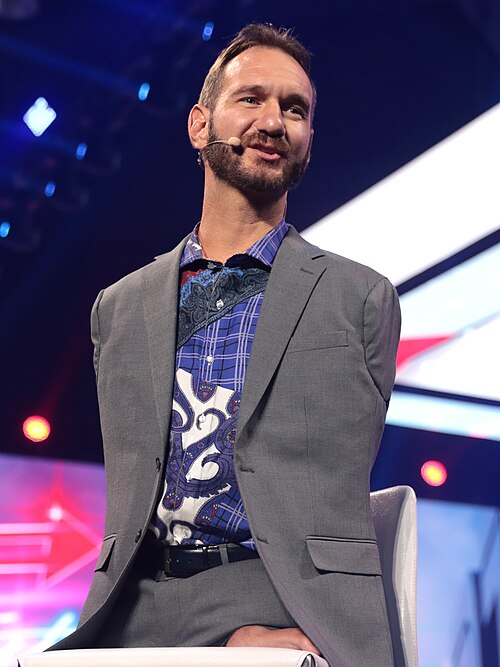
LOS ANGELES — Motivational speaker and evangelist Nick Vujicic has directly addressed and debunked widespread online rumors claiming he is battling terminal cancer or has died, issuing a clear and uplifting message that he remains in excellent health and continues his global ministry work.

In a heartfelt video update posted to his official social media channels and YouTube in late April 2026, the 43-year-old Australian-born speaker, born without arms and legs due to tetra-amelia syndrome, looked directly into the camera with his characteristic warmth and humor. “I am healthy. I’m strong,” Vujicic said. “Just had a wonderful time of ministry and family. The news about me being dead is slightly exaggerated.”
The statement came after a surge of false posts, AI-generated images and chain messages flooded platforms like Instagram, Facebook and TikTok claiming Vujicic was in critical condition with stage IV cancer or had already passed away. Several of the hoax posts used emotional language asking for prayers and linked to suspicious websites, a tactic commonly seen in celebrity death hoaxes designed to drive clicks and engagement.
Vujicic’s team and multiple Christian news outlets quickly pushed back against the misinformation. Sources close to his ministry confirmed he has been actively traveling, speaking at events and spending time with his wife Kanae and their four children. He is scheduled to appear at major gatherings including REACH 2026 and continues recording episodes for his “No Limbs, No Limits” podcast.
The rumors appear to be part of a recurring pattern. Vujicic has faced similar false death reports in previous years, a phenomenon that has become increasingly common for high-profile figures in the digital age. This latest wave gained traction in early April when fabricated stories began circulating alongside AI-manipulated images showing him in hospital settings.
In his video response, Vujicic used the moment to turn the negative attention into a positive message of faith and resilience. He encouraged his millions of followers worldwide not to believe everything they read online and to focus instead on truth, gratitude and living with purpose. “We all face challenges,” he said, “but God is faithful. I’m here, I’m grateful, and I’m excited about what’s ahead.”
Vujicic’s story has inspired tens of millions since he first began sharing his journey as a teenager. Born in Melbourne in 1982, he overcame severe bullying, depression and suicidal thoughts to become one of the world’s most sought-after motivational speakers. His books, including “Life Without Limits” and “Unstoppable,” have sold millions of copies, and his TED Talk-style presentations have been viewed hundreds of millions of times.
Despite having no limbs, Vujicic swims, surfs, plays golf and travels extensively to deliver messages of hope, faith and overcoming adversity. His nonprofit organization, Life Without Limbs, and Nick V Ministries focus on evangelism, disability advocacy and helping people discover their God-given potential.
The latest rumors surfaced amid a broader wave of celebrity health misinformation. Similar false reports have targeted other public figures, highlighting the speed and reach of social media hoaxes. Fact-checking organizations and Vujicic’s team urged people to verify information through official channels before sharing.
Vujicic’s wife, Kanae, also addressed the rumors briefly on social media, posting a recent family photo with the caption “We are all doing great, thank you for your prayers and love.” The couple, married since 2012, frequently share glimpses of their family life, which includes sons Kiyoshi and Dejan and twin daughters Ellie and Olivia.
Christian leaders and fellow speakers have rallied around Vujicic. Many used the moment to warn about the dangers of spreading unverified information, especially regarding someone whose ministry centers on hope and encouragement. “Nick has turned his limitations into a powerful platform for good,” one prominent pastor wrote. “Let’s honor that by speaking truth and praying for him rather than amplifying falsehoods.”
Vujicic has long been open about his physical challenges and the daily realities of living without limbs. In recent interviews, he has discussed the emotional and practical aspects of his condition while emphasizing gratitude and faith. His transparency has endeared him to audiences across cultures and faiths.
The motivational icon continues to maintain a busy schedule. Upcoming appearances include large youth events, corporate leadership conferences and international ministry trips. His team confirmed that no health issues are impacting his commitments and that he remains as active as ever.
For his global community of supporters, the false rumors provided an opportunity to reaffirm their connection with Vujicic. Thousands of encouraging messages poured in after his video response, with many sharing personal stories of how his testimony impacted their lives during difficult times.
As misinformation continues to challenge public figures, Vujicic’s calm and faith-filled response serves as a model. Rather than expressing frustration, he redirected the conversation toward hope, gratitude and the importance of discernment in the digital age.
Vujicic’s message remains consistent: limitations do not define a person. His life stands as living proof that purpose, joy and impact are possible regardless of circumstances. The latest episode of debunked rumors only reinforces the power of his story and the enduring strength of his platform.
While the internet may continue to circulate falsehoods, Nick Vujicic is alive, healthy and more committed than ever to inspiring others. His words offer comfort not just to his supporters but to anyone facing their own battles: the news of hardship or death is often greatly exaggerated, but hope and faith are very much alive.

‘The Big Money Show’ panelists comment on the financial impact on Iran as the U.S. tightens the blockade, the U.A.E. departing from OPEC and more.
The United Arab Emirates (UAE) announced Tuesday it would quit membership in the Organization of Petroleum Exporting Countries (OPEC) and OPEC+. It comes after 59 years at the club. But it could be good news for the world in the long run, experts say.
To understand what happened, it’s important to know that OPEC, which is dominated by Saudi Arabia, is all about restricting crude oil output via quotas to raise energy prices, Marc Chandler, chief market strategist at Bannockburn Capital Markets and an expert on geopolitics, told FOX Business, “The cartel producers discipline the member countries to produce only what the quotas allow and try to get a higher oil price for all.”
Soon after the news from the UAE, some media outlets were calling the change a win for President Donald Trump, who has long opposed OPEC’s efforts to keep energy prices high. Quitting OPEC could also be beneficial for the UAE, also known as the Emirates.
UAE EXITS OPEC AND OPEC+, SEEKING OUTPUT FLEXIBILITY AS GLOBAL ENERGY MARKETS TIGHTEN

The Emirati flag flutters in Abu Dhabi on Jan. 23, 2026. (Giuseppe Cacace/AFP via Getty Images)
“Outside of the cartel, the Emirates will be able to produce more oil,” Max Pyziur, research director at Energy Policy Research Foundation, told FOX Business. “It makes sense that they would want to break away.”
Specifically, the UAE can now increase its daily oil output. Before the war between the U.S. and Israel against Iran, the Emirates produced 3.6 million barrels of oil a day, according to recent data from the International Energy Agency. But it now plans to increase output to as much as 5 million barrels a day in 2027.
Another part of the UAE leaving the cartel is that the country has been using its own 249-mile-long pipeline to bypass the Strait of Hormuz, which has been difficult to pass since the war began. The pipeline gets the oil to the Gulf of Oman, Chandler says. “If the strait is reopened and the UAE has a lot to rebuild, it will sell more oil and not linger under the thumb of OPEC.”
Another reason for the Emirates leaving OPEC is the tension between Saudi Arabia, which dominates the oil quota system, and the UAE. “The two have been at loggerheads for a while,” Chandler says. Notably, the two countries have widely differing views about Yemen. On the Saudi view, Yemen is a possible threat as well as a potential buffer, while the UAE seeks to influence Yemen using proxies.
LARRY KUDLOW: UNCONDITIONAL DICTATION

President Donald Trump attends a business forum at Qasr Al Watan during the final stop of his Gulf visit in Abu Dhabi, United Arab Emirates, on May 16, 2025. (Amr Alfiky/Reuters)
On Tuesday, Brent Crude Oil was trading at $111 per barrel. That means the extra 1.4 million barrels the UAE is planning could provide much-needed cash to help repair the damage from the recent Iranian attacks. “The repair bill could be large for the UAE,” Clayton Seigle, senior fellow in the CSIS Energy Security and Climate Change Program, told FOX Business.
Iran has had a big impact on the oil-rich countries in the Middle East. “We can assume that until the war began in late February, many countries thought that the U.S. bases were protective, as you had a U.S. presence,” Chandler says. The evidence is that while Iran did bomb countries such as the UAE, Saudi Arabia, Bahrain, Kuwait and Oman, it also hit U.S. bases across the region. “Now Iran has shown the U.S. bases are a sign of vulnerability,” he said.
The UAE wasn’t the first to quit OPEC. Qatar did the same in 2019. But this change could lead more oil-rich OPEC members to leave the organization. So, who’s next?

OPEC logo is pictured ahead of an informal meeting between members of the Organization of the Petroleum Exporting Countries in Algiers, Algeria, Sept. 28, 2016. (Ramzi Boudina/Reuters)
CLICK HERE TO GET FOX BUSINESS ON THE GO
“Iraq will probably be thinking that if rich UAE is quitting, then why should we be left holding the bag,” Seigle says. “The big risk is the domino effect with more countries following the UAE out the door, and that would weigh on medium-term oil prices.
Ultimately, analysts say a collapse of OPEC could lead to far lower oil prices worldwide.
Manhattan Institute senior fellow Chris Rufo joins ‘Varney & Co.’ to discuss the investigative findings alleging California lost at least $180 billion to fraud under Gov. Gavin Newsom, raising questions about oversight and accountability.
California lawmakers are calling for the state’s high-speed rail project to be scrapped after projected costs have ballooned by more than 700%.
“This is a project that will never be built, and everybody in this building knows this project will never be built for the people of California and we keep wasting billions of dollars at a time where we have budget deficits,” state Sen. Tony Strickland, vice chair of the state’s Senate Transportation Committee, told Fox News Digital.
Strickland is calling for the project to be abandoned completely.
“I’ve been saying this for years now, but this is the most wasteful government project in probably world history,” he told the New York Post.
BLUE STATE’S BILLIONAIRE EXODUS ABOUT TO GET MUCH WORSE IN 2026, INSIDER WARNS
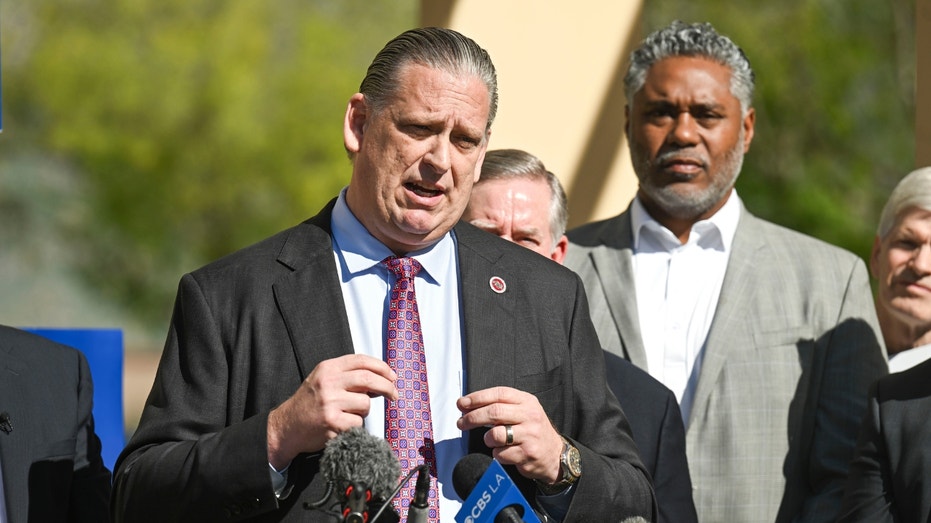
State Sen. Tony Strickland speaks at the Riverside County Registrar of Voters on March 2, 2026, at a press conference. (Anjali Sharif-Paul/MediaNews Group/The Sun via Getty Images)
The project received its first bond funding in 2008 and was originally slated for completion in 2020. Initial estimates also pegged its cost at between $33 billion and $45 billion.
But the California High-Speed Rail Authority (CHSRA), the body in charge of the project, recently estimated that the first phase won’t be finished until 2032 in its 2026 business plan. And costs are now predicted to be in excess of $230 billion.
“It goes from a $33 billion projected estimate to the voters to go from LA to San Francisco. Now it’s $231 billion and climbing,” Strickland told the Post.
TRUMP ADMIN SUED BY NEW YORK, NEW JERSEY OVER HUDSON RIVER TUNNEL FUNDING FREEZE: ‘SEE YOU IN COURT’
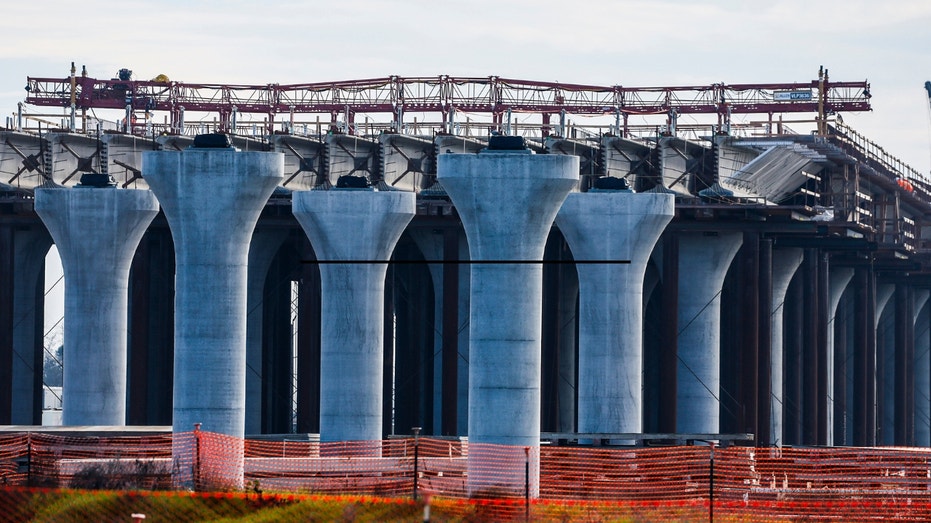
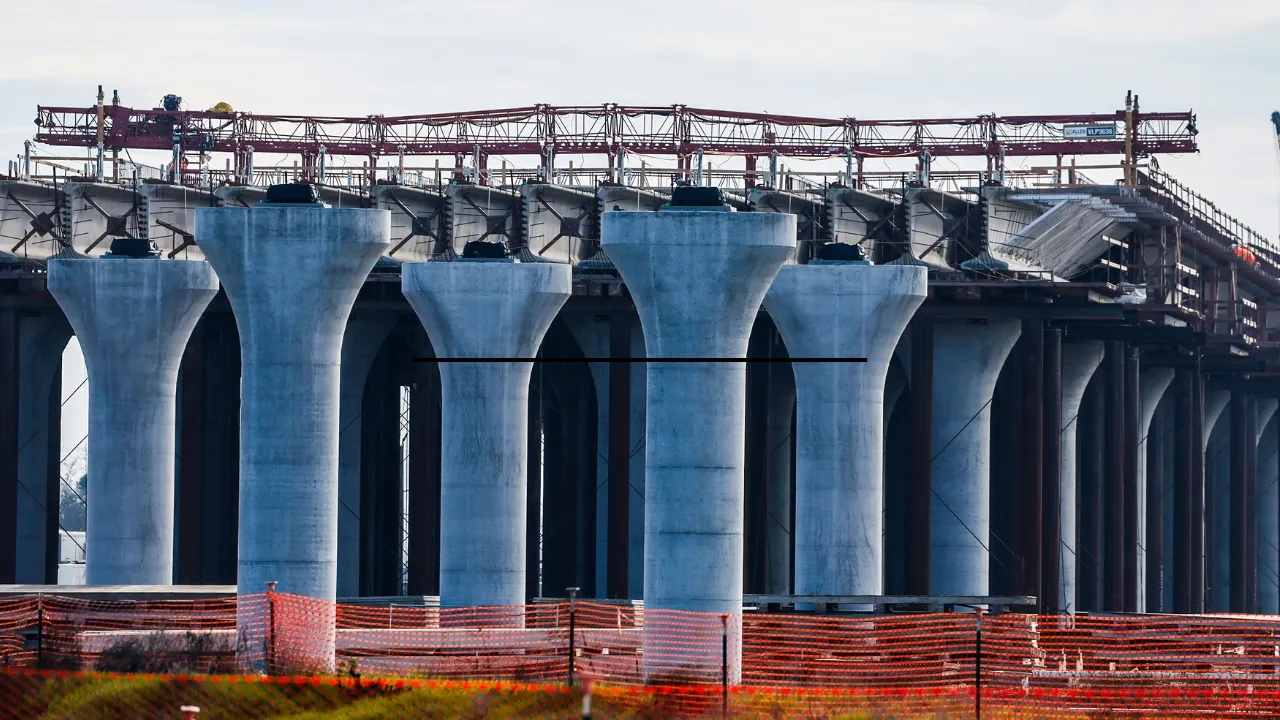
Work continues on the California High Speed Rail, Hanford Viaduct. (Robert Gauthier/Los Angeles Times via Getty Images)
The program was originally slated to connect San Francisco and Los Angeles, but in 2019, Gov. Gavin Newsom scrapped those plans, citing a lack of transparency.
“Right now, there simply isn’t a path to get from Sacramento to San Diego, let alone from San Francisco to L.A. I wish there were,” Newsom said in his 2019 state of the state speech.
Now, the efforts focus on a Central Valley transport corridor between Merced and Bakersfield.
Strickland, for his part, doesn’t believe the next Governor will continue the plan.
“Whoever the next governor is, Republican or Democrat, is going to face a multi-year budget deficit and to continue to dedicate this kind of money… when you’re talking about $231 billion that’s almost the cost of our entire state budget. Is one project worth that?” he asked Fox News Digital.
“Whoever the next governor is is going to face a multi, you know, multi-billion dollar deficit in the years to come, and uh, to be physically responsible, would be to scrap this and pull a plug on this. I firmly believe whoever the next governor is, no matter Republican or Democrat, will scrap this plan,” Strickland concluded.
TRUMP ADMIN UNCOVERS ‘STAGGERING’ $8.6 BILLION IN SUSPECTED CALIFORNIA SMALL BUSINESS FRAUD
Lou Thompson, who chaired a state legislative peer review group responsible for reporting issues to CHSRA, called the project a “dead end” in a March letter to state leaders.
“The project began as a promise of service from San Francisco to Los Angeles… Now, in the Draft 2026 Business Plan, even the 171-mile Merced to Bakersfield cannot be completed by the end of 2032 without access to more funding,” Thompson wrote.
He also said CHSRA and the California legislature’s “state of denial should end.”
ROTTEN REGULATIONS: EVEN YOUR TRASH CAN’T ESCAPE CALIFORNIA’S RED TAPE
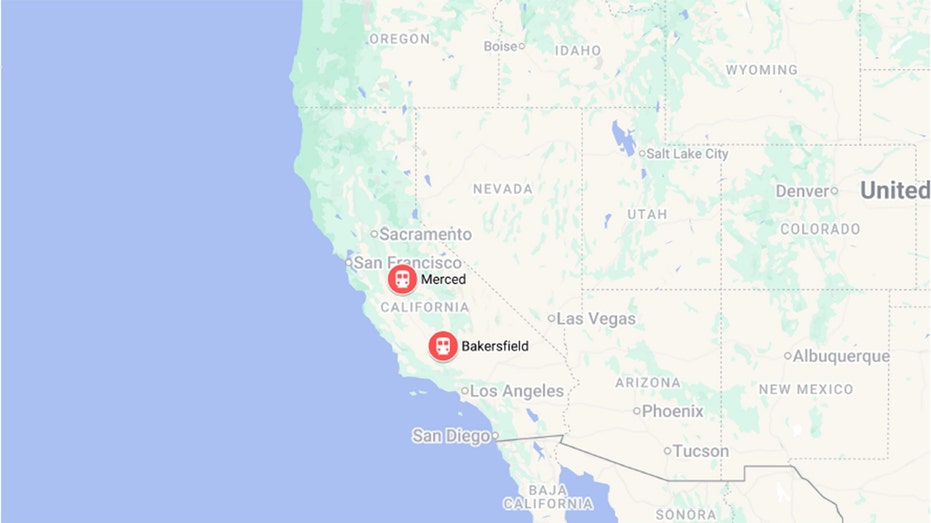
Google Maps’ view of the distance between Bakersfield and Merced, California. (Google Maps)
In July, President Donald Trump’s Federal Railroad Administration (FRA) pulled $4 billion in federal funding from CHSRA, citing the Golden State’s lack of cooperation on a previous agreement with FRA.
“To be clear, the mere promise of delivering the EOS someday and at some cost was not the bargain struck between FRA and CHSRA,” acting FRA Administrator Drew Feeley wrote in a letter to CHSRA at the time.
California initially sued the Trump administration for the move, but Attorney General Rob Bonta dropped the suit in December.
CLIMATE EXECUTIVE WARNS CALIFORNIA ‘FUNCTIONALLY BANKRUPT,’ $1T SHORTFALL COULD SHAKE NATION
California is now seeking private investment for the project, though skepticism still abounds.
“They’re talking about raising money from private capital, and I’ll tell you right now. I said it in the committee hearing. I wouldn’t invest. Would anybody invest in a project that started out as $33 billion, and now it’s $231 billion, and it was supposed to be done in 2020 and hasn’t even started and we’re in 2026?” Strickland asked.
CLICK HERE TO DOWNLOAD THE FOX NEWS APP
“Our country has never seen a fiscal disaster of this magnitude,” Rep. Kevin Kiley, R-Calif., also said in an X post. Additionally, Kiley told the Post the project was the “worst public infrastructure failure in U.S. history.”
Fox News Digital contacted Newsom’s office and Kiley for comment but did not immediately receive a response.

Body of missing Thornaby teen Joseph Porch found in River Tees
Amazon shares lower as record AI investment offsets cloud acceleration

LINK Outflow Hits 2026 High at 970,000 Tokens

Manchester United reach agreement with Casemiro over contract clause amid transfer speculation

US brings back mandatory military draft registration

Steven Gerrard disagrees with Gary Neville over ‘shock’ Chelsea and Arsenal claim | Football


-

 Tech2 days ago
Register Renaming | Hackaday
-

 Fashion5 days ago
Weekend Open Thread – Corporette.com
-
 Crypto World4 days ago
Hyperliquid $HYPE Rally Builds Momentum as AI Sector Enters Prove-It Phase
-

 Business6 days ago
Patterson-UTI Energy, Inc. (PTEN) Q1 2026 Earnings Call Transcript
-
 Sports3 days ago
IPL 2026: Ruturaj Gaikwad registers slowest fifty of the season, enters all-time unwanted list | Cricket News
-

 Politics2 days ago
Drax board avoid their own AGM, accused of greenwashing & environmental racism
-

 NewsBeat4 days ago
LK Bennett closes all stores after entering administration
-

 Crypto World5 days ago
Michael Saylor says BTC winter is over. Market analyst disagrees, says bitcoin was in a pullback
-
 Sports7 days ago
Tim Bradley names the current best in the world: “Better than Inoue and Usyk”
-

 Fashion22 hours ago
Kylie Jenner’s KHY Enters a New Era with ‘Born in LA’
-
Entertainment6 days ago
Michael B. Jordan and Austin Butler's “Miami Vice” movie will bring the action back to the '80s
-
 Entertainment4 days ago
Mariah Carey Slams Deposition Claims In Brother’s Lawsuit
-
Business7 days ago
Altimmune prices $225 million public offering at $3 per share
-
Entertainment6 days ago
Russell Brand Had Sex With 16 Year Old When He Was 30
-

 Business23 hours ago
Most Commercial Energy Audits Miss the Real Losses
-
Crypto World6 days ago
Is Algorand One of the Few Quantum-Resistant Blockchains? Here’s What the Data Shows
-
 NewsBeat6 days ago
Trump threatens to review UK’s claim to Falkland Islands and punish Nato allies over Iran war disagreement
-

 Business7 days ago
SL Green Realty: Dividend Cut And Record Leasing Fuel Their Potential Recovery
-

 Sports6 days ago
2026 NFL Draft tonight: Time, TV channel, where to watch, order
-

 Tech2 days ago
Images of Samsung’s rumored smart glasses have leaked
You must be logged in to post a comment Login