Netflix fans have been treated to a “superb” crime thriller that’s perfect for Betrayal fans.
Hayley Anderson Screen Time TV Reporter
20:28, 29 Apr 2026
Teaser trailer for ITV’s Betrayal
Netflix has released a “breathtaking” period drama film that’s been labelled as a “little gem”.
Advertisement
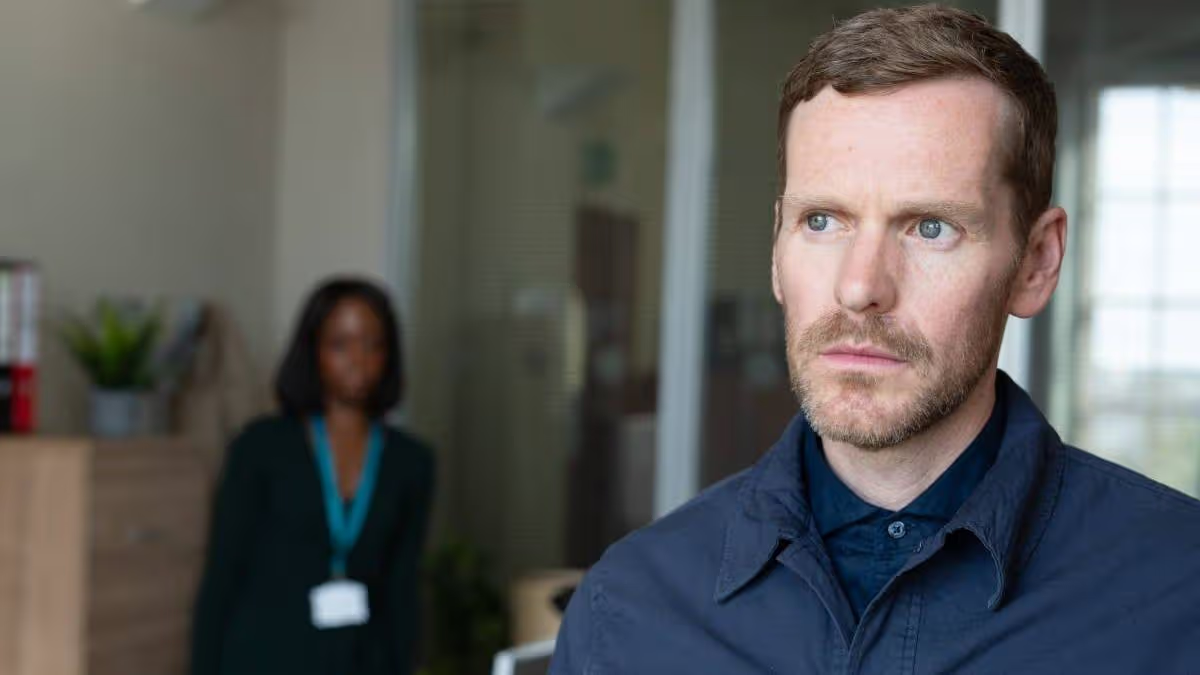
British espionage thriller Betrayal made its ITV debut earlier this year with the cast headed up by Endeavour legend Shaun Evans.
He is joined by stars such as Beyond Paradise‘s Zahra Ahmadi and Vigil actress Romola Garai who stars in 2023 crime thriller The Critic, which is now available to stream on Netflix.
While Garai plays a character called Cora Wyley, James Bond legend Gemma Arterton portrays young actress Nina Land, who becomes entangled in a blackmail plot orchestrated by “vicious feared” theatre critic Jimmy Erskine (played by Ian McKellen).
Set during the 1930s, The Critic is billed as a “story of blackmail, murder and high-stakes manipulation in the theatre world”.
Advertisement
Before the film’s premiere three years ago, The Critic had already attracted a devoted following, given its adaptation from Anthony Quinn’s 2015 novel Curtain Call.
It’s unsurprising, then, that audiences have been effusive in their praise for the period drama.
Advertisement
“This movie hits harder than it had any right to! How can these little gems sneak under the radar?”, questioned one viewer.
A second posted on IMdB: “A most colourful, but also dark and foggy production about success, secrets and death, it delivers far more than I’d expected.”
Another described it as a “breathtaking piece of filmmaking”, while someone else praised its “superb casting and a devilish plot”.
Advertisement
A fellow fan remarked: “It is a beautifully crafted film, full of nuances and subtleties that combine with a good script and technical finesse to offer a quietly compelling film.
“Suspend your expectations of what a film should be, sit back and relish one of the finest films of recent years. It is joy. Be entertained.”
Playing opposite Artherton in the role of critic Jimmy Erskine is the legendary Ian McKellen, renowned for his performances in X-Men, Lord of the Rings, Richard III, and The Da Vinci Code, amongst others.
The cast also features Harry Potter and Netflix’s Run Away star Alfred Enoch, Shadow and Bone’s Ben Barnes and The Crown actress Lesley Manville.
“He still wanted to be here, meeting people. It gave him an immense sense of pride and purpose.”
The team at a Belfast shopping centre are taking on the Belfast City Marathon in memory of a much-loved tour guide. Gerry Blain began working at Victoria Square when it opened in 2008, starting out as a customer service supervisor, before becoming the centre’s tour guide.
Advertisement
Calling the shopping centre’s iconic dome his ‘office’ for all those years, the Belfast man took immense pride in welcoming visitors and sharing stories about the city. Gerry was known for his warm, humour, and ability to connect with people from all walks of life.
He passed away last year following a two-year battle with cancer and to honour his life and legacy, Victoria Square has launched a new charity partnership with Friends of the Cancer Centre.
Gerry was a keen runner and ran many marathons over the years. In a fitting tribute, five of his former colleagues will run the relay at the Belfast City Marathon this weekend as part of the shopping centre’s fundraising efforts for the charity.
Advertisement
A Tap to Donate station will also be installed on the mall, with donations also encouraged during the centre’s flagship events throughout the year.
Reflecting on what his role as a tour guide meant to him, Gerry’s wife Lynn Blain said: “Victoria Square meant so much to Gerry. He loved being here, meeting people, sharing stories about Belfast and spending time with everyone who worked here.”
Despite planning to retire, Gerry chose to continue working following his diagnosis, returning to the centre for a few days each week.
“Even after his diagnosis, he was determined to come back,” explains Lynn. “We would bring him in in his wheelchair; he still wanted to be here, meeting people. It gave him an immense sense of pride and purpose.”
Advertisement
In October 2024, Gerry became the first ever recipient of Spirit of Belfast Award at the Belfast Chamber Awards in honour of his long and committed service to the role.
Speaking to Belfast Live about his award win, Gerry said: “It’s a reminder that making people laugh and feel welcome is a gift in itself.
“I love meeting people and having craic—I can genuinely say my day feels complete when I’ve made someone smile! It’s the little moments, like sharing a laugh or enjoying a friendly chat, that make my work so fulfilling.”
Gerry’s legacy lives on through the countless people he met and the joy he brought to visitors from all around the world. Through this new partnership, Victoria Square aims to ensure his kindness continues to make a difference in the lives of others.
For 40 years, Friends of the Cancer Centre has been dedicated to making a real and meaningful difference to cancer patients and their families across Northern Ireland.
The charity enhances the quality of patient care and support through its life-changing and life-saving work, which includes funding additional nurses, supporting local research and providing practical support, such as financial grants, which help families through the most difficult times.
From something as simple as a cup of tea while waiting for an appointment, to comfortable day rooms that offer patients space away from busy wards, everything is focused on making an incredibly difficult time a little easier.
Advertisement
Ana Wilkinson, chief executive of Friends of the Cancer Centre said: “Everything we do to support local families relies on our wonderful friends who raise vital funds for the charity. We are delighted to have the support of the team at Victoria Square, especially as it’s in memory of such a dear friend and colleague.
“We look forward to working with Victoria Square throughout the year ahead to raise both funds and awareness for Friends of the Cancer Centre, helping the charity continue its vital work supporting local patients and families across Northern Ireland.”
Gerry’s wife Lynn added: “T he support we received from Friends of the Cancer Centre was incredible. From the moment you walk through the door, every single person is so kind and caring. I’m very proud that this partnership will help support other families like ours.”
Commenting on the partnership, Michelle Greeves, centre manager at Victoria Square, said: “Gerry was truly one of a kind and an integral part of the Victoria Square family for nearly two decades. His warmth, humour and genuine love for people made him incredibly special, and he is deeply missed by colleagues and visitors alike.
Advertisement
“We are honoured to launch this partnership in his memory. It is a fitting tribute to Gerry and will allow us to support Friends of the Cancer Centre in the vital work they do for patients and families across Northern Ireland.”
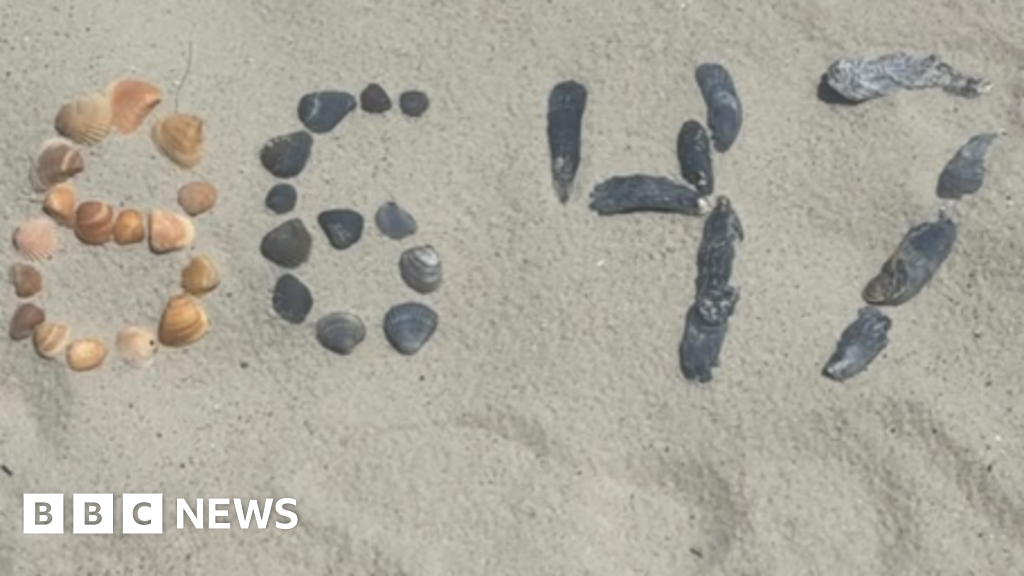
“Of course, it’s serious when you threaten the president of the United States,” Blanche told CBS News, BBC’s US partner. “Anybody that tries to put forward some narrative that this is just about seashells, or something to the contrary is missing the point. You cannot threaten the president of the United States.”
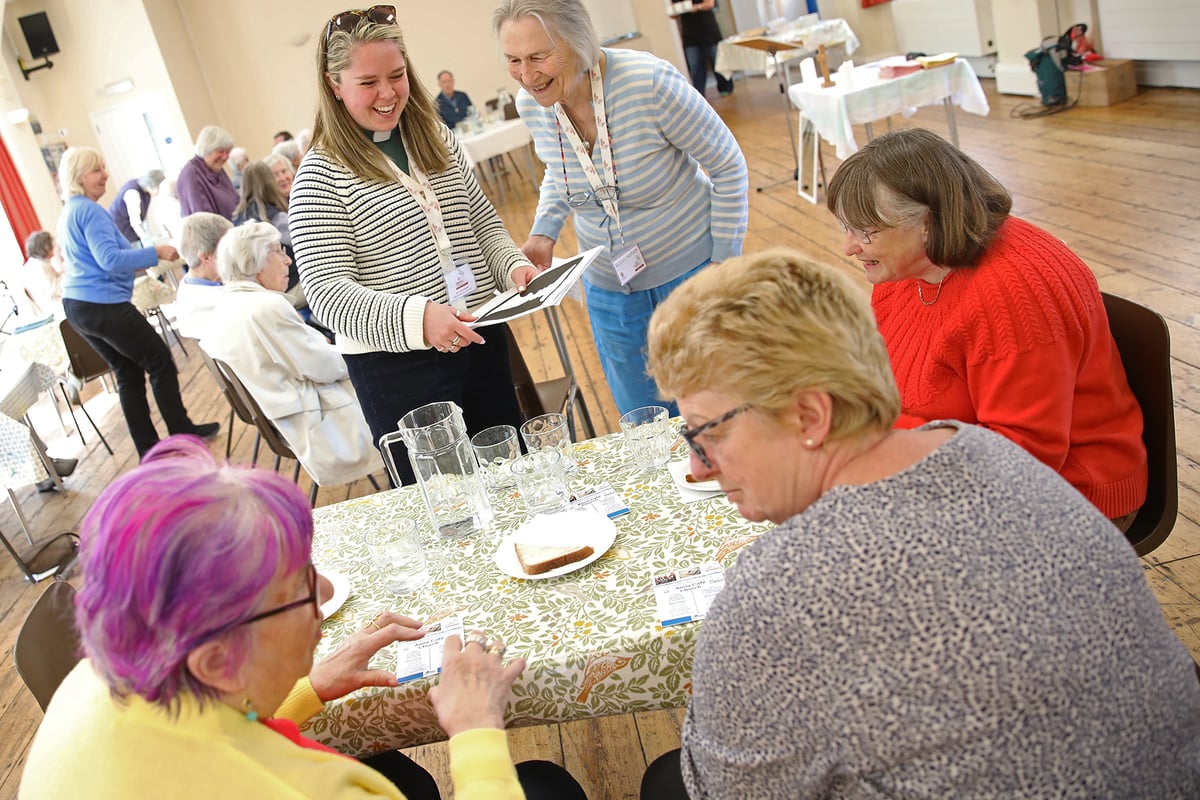
WE run a monthly café in the church hall of St James, Emsworth, which includes an act of worship. It’s designed for those who are elderly and therefore can’t always get to our Sunday services. It’s a brief half-an-hour act of worship, with familiar hymns, some prayers and a short talk. We call it our ‘Anna Café Church’ because it is organised by our team of Anna Chaplains. These are people who offer spiritual ministry to the elderly, supporting people who may be housebound or who are in care homes. Our parish’s team of five Anna Chaplains and four Anna Friends do visit the elderly in their homes and in care homes. But the monthly café is an extra thing we do, which feels really appreciated. The service includes a ‘personal blessing’ which involves the chaplains holding the hands of each individual and praying for them personally, with appropriate permissions given. Some people end up in tears, because they may lack genuine physical or emotional contact at home. We then share lunch together, perhaps some bread and soup made by volunteers, and some cake. People often stay behind after lunch and continue chatting. For many of them, this is their ‘church’. Sometimes people focus on how many people are at church on a Sunday, but one of the things we’ve discovered is that ‘church’ can happen at any time and in any place. It’s more about what is going on in people’s hearts as they meet. Having led the Anna Café Church for the past 18 months, I can vouch for the fact that people are engaging with God there, and that God is helping these older people to develop spiritually. They are reading their Bibles, praying, and still learning more about the amazing God we serve. Too often we write off those who are housebound or in care homes. Or we may employ carers to look after their physical needs, but ignore the fact that they have emotional and spiritual needs. And there is honestly nothing more touching than seeing someone who perhaps has dementia suddenly starting to mouth the words of the Lord’s Prayer or a favourite hymn. It can mean they are reconnecting with their faith in a God who suddenly seems very real. It’s a real privilege to be involved. To find out more, see: www.portsmouth.anglican.org/anna
Filming is now well underway in Belfast ahead of the show’s highly anticipated return.
Filming is now well underway in Belfast ahead of Line of Duty ‘s highly anticipated return.
Advertisement
Cast members old and new are back in the city for the hit BBC police drama, which last aired in 2021, with Martin Compston, Vicky McClure and Adrian Dunbar all reprising their roles.
Line of Duty series 7 will see AC-12 disbanded and rebranded as the Inspectorate of Police Standards.
Anti-corruption work has never been more difficult and in this challenging climate Steve Arnott, Kate Fleming, and Ted Hastings are assigned their most sensitive case so far.
Advertisement
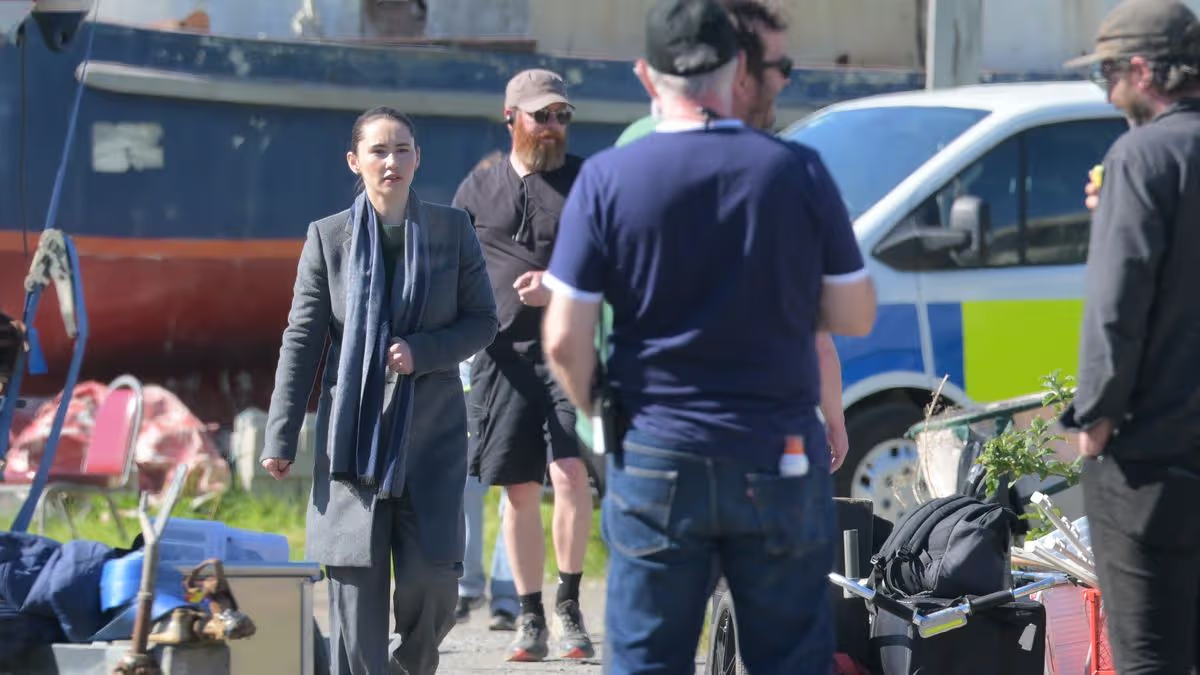
On Wednesday, filming took place at East Belfast Yacht Club, beside George Best Belfast City Airport. Actress Christina Chong who plays DI Nicky Rogerson was among those spotted filming scenes at the site.
Last month, show creator Jed Mercurio offered a first look glimpse as he took to Instagram and shared a photo of actor Robert Carlyle, who is set to join the cast and take on the role as Detective Constable Shaun Massie, a Specialist Rifle Officer (SRO) operating with the Tactical Operations Unit 7 (TO-7) to take down organised crime groups.
A gruff loner, Massie keeps himself to himself, but when his boss, TO-7’s commanding officer DI Dominic Gough, is accused of being a sexual predator, Massie’s otherwise detached demeanour changes drastically.
Advertisement
Speaking about series 7, Jed said: “Everyone involved in Line of Duty feels enormous gratitude to the show’s fans.
“We’re privileged to have had so many of you follow the ups and downs of AC-12 over six previous seasons, and we couldn’t be more delighted to be returning for a seventh. Corruption in this country is supposed to have come to an end while Line of Duty was off air, so I’ve been forced to use my imagination.”
Series 1-6 of Line of Duty are available to stream now on BBC iPlayer. Line of Duty series seven is coming to BBC iPlayer and BBC One next year.
“His sadism showed through. There was horrible, physical violence that included sexual attacks.”
Marcello Mega
22:01, 29 Apr 2026Updated 22:03, 29 Apr 2026
A teacher branded Scotland’s Jimmy Savile racially abused a pupil while carrying out brutal attacks. Iain Wares faces dozens of charges, including rape, against 68 boys aged between eight and 13 from 1968-79 when he taught at Edinburgh Academy and Fettes College.
The pensioner, 86, is fighting a legal battle to halt his extradition from South Africa to Scotland to face the charges. Now, one of those alleged victims, Roy Hurhangee, 63, has bravely spoken out about the his ordeal while being taught by Wares.
He claims Wares muttered evil racial slurs while abusing him. He hopes to see him back in Scotland soon to face justice and hopes his age will be no barrier to serving jail time.
Advertisement
Roy, whose roots are Mauritian-Indian, said: “Abuse as a child never leaves you. It has had a massive impact on my life.” He was sent to Fettes by his father, a dentist and successful businessman, as his way of giving him the first-class education he never had.
But the effects of the horrendous abuse took a terrible toll on Roy. Wares singled him out for sexual and racist abuse. Roy said: “He was South African and they practised apartheid there. He would tell me to go back to the jungle and climb some trees as that was where I belonged.
“He asked me how an ape like my father could afford to send monkeys to a school like this, and that his children should not be at that school. We should all be up a tree eating bananas. We didn’t deserve the privilege.”
Recalling the abuse by Wares, Roy said it started when he was 10. He said: “His sadism showed through. There was horrible, physical violence that included sexual attacks.
Advertisement
“There is no history of baldness in my family but I have hardly any hair in places at the back of my head and I believe it’s because he used to rip the hair out of my head. The racist abuse was always there as well. He would never say it out loud, but he whispered in my ear.”
By the time he was 12, Roy could stand the abuse no more and begged his mother to take him out of the school, which she did. He never told her why he was so unhappy there.
He said: “The culture then was that you didn’t talk about these things, not even brother-to-brother, as I learned. I have never wanted to dwell on it, but it has always been there and has affected every part of my life.
“I married twice, once when I was 20, and then again nine years later. Neither marriage lasted long and I’ve lived alone since 1992. I believe my wives both left me because I couldn’t show love.
Advertisement
“I did love them and I could declare it, but I couldn’t show it, and I lost heart and gave up. That’s down to what I went through as a child and I still have the same problems so it’s better to live alone.
“I don’t want to hurt anyone else. As a child, of course I didn’t want to be touched intimately and it destroyed my ability to be intimate as an adult.”
Roy finally told his father about the abuse in 2009, seven years before his death. He said: “I couldn’t tell my mother as she died young but I felt I should tell my father.
“I’ll never forget the look on his face. He asked why I didn’t tell and I told him I believed he would have said it was a lame excuse for my poor performance.”
Advertisement
A former training officer at Aberdeen Airport, Roy met broadcaster Nicky Campbell, a former pupil at Edinburgh Academy at the Scottish Child Abuse Inquiry. Campbell was abused at the school and has spoken movingly of his own quest for justice.
It was Campbell who declared Wares to be “Jimmy Savile Mark2” due to the large number of victims he abused and his ability to operate without punishment for decades. It was Nicky who encouraged Roy to tell his story and demand justice for Wares in the Scottish courts. Roy has also made a gruelling 12-hour statement to Police Scotland.
Justice campaigners are in South Africa for the extradition hearing and intend to see him sentenced for a case of abuse in South Africa. But they hope their last sight of him will be leaving the dock of a Scottish court in handcuffs.
Roy said: “Wares has had a massive impact on my life and the lives of countless others. Those who have come forward sound like a big number but they will be a tiny minority of his victims.
Advertisement
“If he goes to jail at 86, it will be tough and unpleasant but he should have gone to jail 50 years or more earlier, so he’s been allowed to live – his life and in a sense he’s got away with it. But many of us, and other survivors of historic sexual crimes will have more faith in justice if he is sent to jail.”
Wares is living in a comfortable retirement village near Cape Town, in his native South Africa. He remains on bail and is forbidden to leave the Cape Town area without police permission.
Developer Caddick has submitted updated planning documents for the proposed Maltkiln Village development, which would be built around Cattal railway station, between Harrogate and York.
The paperwork includes an infrastructure delivery plan, setting out how infrastructure and highways improvements will be delivered in step with the development of the new village.
The work includes a new roundabout on the A59 to increase safety and improve access for motorists.
The documents also include more information on proposed building designs, street layouts, green spaces and materials.
Advertisement
Caddick says it has undertaken further public consultation since North Yorkshire Council approved the development framework for the scheme last month,
Speaking about the proposals, Chris Procter, director at Caddick, said: “We are pleased to have reached this important milestone with the submission of an updated suite of planning application documents to North Yorkshire Council for Maltkiln Village.
“A significant amount of work has gone into shaping a proposal that delivers a new settlement built on the core principles of sustainability, connectivity and community.”
But North Yorkshire councillor, Arnold Warneken, who represents the Ouseburn division, which includes the proposed development site, said he continues to have “major concerns” about the scheme.
Advertisement
Councillor Arnold Warneken.
The Green Party councillor says schools, GP services and the sewage system in the surrounding villages were already under intense pressure with the existing number of residents and new housing already in the planning system.
The councillor is worried that house building will take place on the Maltkiln scheme without sufficient infrastructure in place for the occupants.
He added: “On paper, the phasing contained in the delivery plan looks reasonable.
“But I do think if we’re not careful, we’re just going to put extreme pressures on aspects of the infrastructure and the facilities on site.
Advertisement
“I’m worried it will get to the point where it might be all singing all dancing, ecological and climate friendly, but it’s going to be a hell of a place to live, because you won’t have a doctor and the local primary school will be bursting at the seams because a new one hasn’t been built.”
The councillor said he was also concerned that planning permission had not yet been agreed for a new site for the Johnsons of Whixley wholesale nursery, which is due to move to make way for the new community.
“There are all these things that still haven’t been resolved,” he added
For more information on the Maltkiln scheme, visit: https://maltkilnvillage.co.uk/index.php
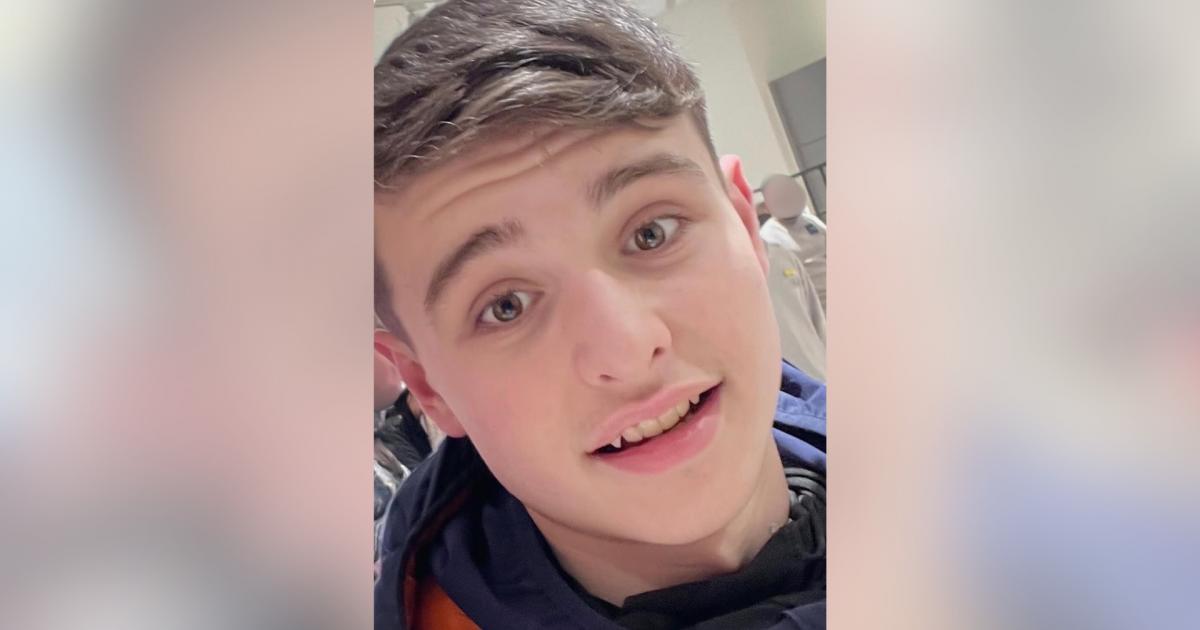
Joseph Porch from Thornaby was last seen on CCTV in the Scotswood House area close to the River Tees at around 4am on Wednesday, April 22.
An extensive search was launched for Joseph, also known as Joey, with police and rescue teams searching the river.
On Wednesday (April 29) morning, a body was found in the water and later identified as Joseph.
Advertisement
His parents said in a statement: “We are devastated at the loss of our beautiful son.
“We will forever love him and be proud of him.
“We’d like to thank our family and friends for their support and would now ask for some time for our family to take in this tragedy and remember our son at this difficult time.”
They also thanked police, divers, and river rescue teams who worked on the search.
Advertisement
A Cleveland Police spokesperson added: “Our thoughts remain with Joseph’s family and friends at this extremely difficult time.
“The death is not being treated as suspicious, and a file will be prepared for the Coroner.”
At the time of the dinosaurs, the oceans were teeming with life. Below the waves, giant marine reptiles, such as the fearsome 4m (13ft) long mosasaurs, were the undisputed apex predators.
In artistic reconstructions of these ancient oceans, cephalopods – the animal group that includes squid, cuttlefish, octopuses, and their ancestors – are almost always portrayed as prey, often seen desperately swimming away from the jaws of a marine reptile to avoid becoming lunch.
However, a remarkable new fossil suggests our view of the ancient oceans is incomplete, and that giant octopuses, perhaps reaching as long as 19m (62ft), may have been the ones doing the hunting.
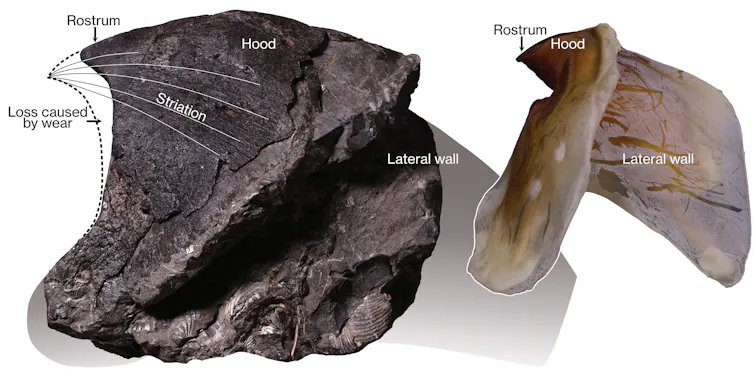
The fossil in question is a giant octopus jaw, belonging to a new species called Nanaimoteuthis haggarti. It is found in Late Cretaceous rocks of Japan, making it between 100 million and 72 million years old.
Advertisement
Like other cephalopods, octopuses have a hard beak that looks like a parrot’s bill, used to bite and tear prey, and this fossil example is enormous – larger than that of the famous giant squid Architeuthis.
Based on the shape and size of the beak, Shin Ikegami, from Hokkaido University, Japan, and colleagues, identify it as belonging to the Cirrata, a group of finned octopuses still found today in the deepest oceans. They estimate that the animal may have reached between seven and 19 metres in length. Details have been published in the journal Science.
Shin Ikegami et al./Science, Author provided (no reuse)
If that upper estimate is even close to correct, Nanaimoteuthis, would represent the largest invertebrate yet described from the fossil record — an animal rivalling the largest marine reptiles in scale.
The authors also use the wear and damage on the octopus beak as indicators of ancient behaviour. Scratches and pits on the surface point to an animal hunting and crushing prey with bones or shells, not scavenging or feeding on soft-bodied organisms.
Advertisement
Additionally, the wear pattern is asymmetric, interpreted by the authors as evidence of a preference for chewing on one side over the other, a trait associated with higher cognitive function.
Far from being food, Nanaimoteuthis may have been one of the most formidable predators in its ecosystem, in an era we have long assumed was defined by vertebrate dominance.
That such a claim can be made at all is remarkable, because cephalopods almost never leave any trace in the fossil record. Unlike fish, marine reptiles, or even ammonites, most cephalopods have no hard parts like bones.
Octopuses, in particular, are almost entirely “skin bags” filled with water. When they die, they rot quickly, and even the few hard parts, such as the beak, are seldom preserved.
Advertisement
This creates a systematic bias that skews our understanding of ancient ecosystems: animals that preserve well dominate our reconstructions, and the animals that don’t, even if they were common among certain ancient ecosystems, are largely invisible to us.
Every fossil cephalopod, therefore, represents a vital piece of palaeontological information, giving us a fleeting glimpse into a lost world of squishy invertebrates.
Left: the fossil jaw from Nanaimoteuthis haggarti. Right: a jaw from the giant squid, Architeuthis, for comparison. Science, Author provided (no reuse)
But not all cephalopodologists are convinced by the size estimate, with the potential length of 19m in particular drawing scrutiny on social media.
Scaling cephalopod body sizes from beaks is not straightforward. The relationship between jaw dimensions and total body size varies considerably across cephalopod species, a problem compounded by the patchy data available for rarely caught deep-water cirrate octopuses.
Other researchers have also questioned the behavioural inferences drawn from the wear patterns, arguing that bite asymmetry can be caused by many factors, and that drawing conclusions about animal intelligence from a single specimen is premature.
Advertisement
It is also important to put this finding into context of the living relatives of Nanaimoteuthis. Modern cirrate octopuses are not known to swim after prey, typically hunting small invertebrates on the seafloor, raising questions about whether their giant ancient cousins would ever have encountered, let alone challenged, the formidable marine reptiles.
But step back from the debate over metres and scaling equations, and something fundamental comes into view. Our reconstructions of ancient ecosystems are shaped by what preserves (bones, shells, teeth) and often systematically blind to what doesn’t.
While future investigations may test the size estimate or refine behavioural interpretations, this remarkable fossil shows that there may have been giants lurking in the vast, deep, and dark waters of the ancient oceans. We just couldn’t see them until now.
A 16-year-old, named locally as Callum Hutchinson from Co Tipperary, is the youngest victim from the weekend following a collision on Sunday, April 26 on the Belfast Road at Nutts Corner.
On the same evening, Emmet Potter from Carrickmore died after a crash involving a van in the Derrycourtney Road area of Caledon in Co Tyrone.
Patrick Deery from the Dungannon area died following a collision involving a motorcycle in the Omagh area at around 11am on Sunday, April 26.
Their deaths brought the toll for the year so far to 29. This is more than double the number of road deaths for the same period last year in Northern Ireland when there were 14 road deaths.
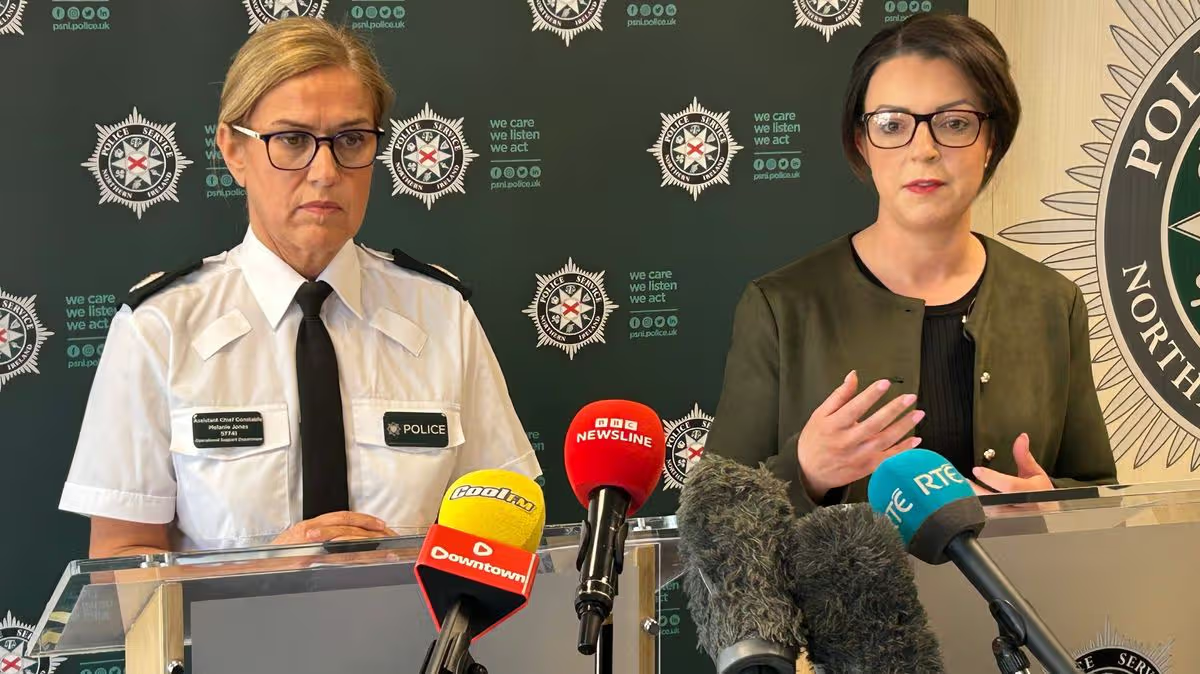
Speaking ahead of the bank holiday weekend, Infrastructure Minister Liz Kimmins and Assistant Chief Constable Melanie Jones issued the joint safety appeal “in the wake of what has been a horrendous weekend on our roads”.
Advertisement
ACC Jones said: “The past weekend has been catastrophic on our roads. Within 24 hours, between Saturday 25 April and Sunday 26 April, five people lost their lives as a result of road traffic collisions. “The thoughts and sympathies of the Police Service of Northern Ireland are with the families and the loved ones of those who have died, and those who were injured.” She added: “These deaths are a stark and cruel reminder of the very real dangers that exist on our roads. Twenty nine people have lost their lives on roads in Northern Ireland so far this year – what we might think of traditionally as the size of a school class. “This is 29 families whose lives have been changed in an instant and forever – friends and communities left devastated.” Minister Kimmins said: “We are just four months into 2026 and so far, 29 people have died on our roads. That means, on average, a life has been lost every four days. They set off on what was to be an everyday journey, but it turned out to be their last day.
“The loss occurs in an instant, but the devastation it causes lasts a lifetime for those left behind and I send my heartfelt condolences to everyone who is grieving today. “As we head into the bank holiday weekend, my appeal is for everyone using the roads to take extra care. Control your speed, put your phone away, never drink or drug drive, don’t get distracted and always wear your seatbelt. “We all want to get out and about to enjoy the good weather with our friends and family. We’ve all got plans, places to be. Let’s make sure we all get there – and get home – safely.”
ACC Jones noted that we’re heading into another busy period on our roads with the first of the May bank holidays and the North West 200 in Portrush next week.
She said: “Lots of people will be socialising, travelling to meet family and friends and our appeal is please be careful on our roads. The Police Service will have a visible enforcement presence on the roads across Northern Ireland, working to prevent and detect Fatal Five offences, including drink/drug driving and excess speed.
Advertisement
“Remember the Fatal Five – control your speed, put down your phone, never drink or drug drive, don’t get distracted and always wear your seatbelt. I do not want to have our officers knocking on anyone’s door to hear the life-shattering news their loved one has been injured, or has died as a result of a collision. “I am appealing to everyone to help ensure everyone makes it home safely to their families.”
The US and Israel’s conflict with Iran has drained munitions at an astonishing rate. This is placing pressure on the supply of a crucial metal: tungsten.
Tungsten is used in armour piercing munitions, in components that need to withstand high levels of heat and is an important additive in steel. Militaries around the world would grind to a halt without this strategically important element.
In addition, most of the world’s tungsten comes from China, which has recently placed restrictions on supplies. For some countries, including the UK, the push to secure new tungsten resources has never been more vital.
Advertisement
The English name for tungsten, comes from the Swedish “tung sten”, meaning heavy stone. Tungsten’s extreme hardness and resistance to thermal shock are what make it sought after for military technology.
In armour piercing munitions, dense tungsten alloy rods use the sheer velocity of their impact to tear through the armour on fighting vehicles and other hardened targets.
Tungsten’s properties mean it is widely used in munitions. US Navy
When purified, tungsten has the highest melting point of all metals: 3,422°C (6,192°F). Unsurprisingly, it is used in components that need to withstand high temperatures, such as those inside aircraft engines.
Tungsten, along with other metals such as molybdenum, is added to steel to improve its “hot hardness”. Where normal steel would deform at high temperatures, adding the other metals improve steel’s resistance to deformation at high temperatures.
Advertisement
They form carbides with the carbon in steel, making it more resistant to wear, and resisting “creep”, where steel deforms in response to constant stress at high temperatures. Because the tungsten and molybdenum atoms are significantly larger than iron atoms, they improve the “yield strength” of steel, preventing defects in the metal lattice from spreading. Steel is used to make lots of military hardware so tungsten is vitally important.
Limited availability
Having said all that, the global tungsten market is small, tungsten is what is known as a “minor metal”, because it isn’t traded openly on exchanges like the London Metal Exchange. This makes pricing data opaque. While mining operations around the world produce around 2.6 billion tonnes of iron ore every year they only produce around 84,000 tonnes of tungsten.
Tungsten is also considered (alongside tin, tantalum and gold – a group often known as 3TG metals) as a conflict mineral. A significant quantity is mined in regions plagued by violence, forced labour and human rights abuses.
China produces around 80% of global tungsten – and does it so cheaply that it is hard for western firms to compete. In the US, commercial tungsten mining ceased in 2015.
Advertisement
Beijing is leveraging its dominant position to control tungsten supply through a sophisticated state trading and licensing regime. Exports of critical derivatives are restricted to a “whitelist” of authorised state owned firms.
This funnels a huge supply of the metal through a government monitored pipeline. In February 2026, China imposed export controls and reduced mining quotas, limiting tungsten availability. Beijing’s actions have introduced significant friction into western supply chains for military and aerospace applications of tungsten.
Draining stockpiles
Amid the geopolitical turmoil that is unfolding in the Middle East, there is a newfound gargantuan appetite for tungsten, with every bomb, missile and kinetic interceptor further draining stockpiles.
This presents an intractable problem for the defence industry. There has been a 12% increase in the use of military tungsten this year alone – in helicopters, fighter jets and munitions. This is hard to accommodate in a market with no availability.
Advertisement
Global logistics are further complicated by the challenges to global shipping created by the war. This puts a strain on the movement of mining equipment and supplies for processing by the handful of mines outside of China.
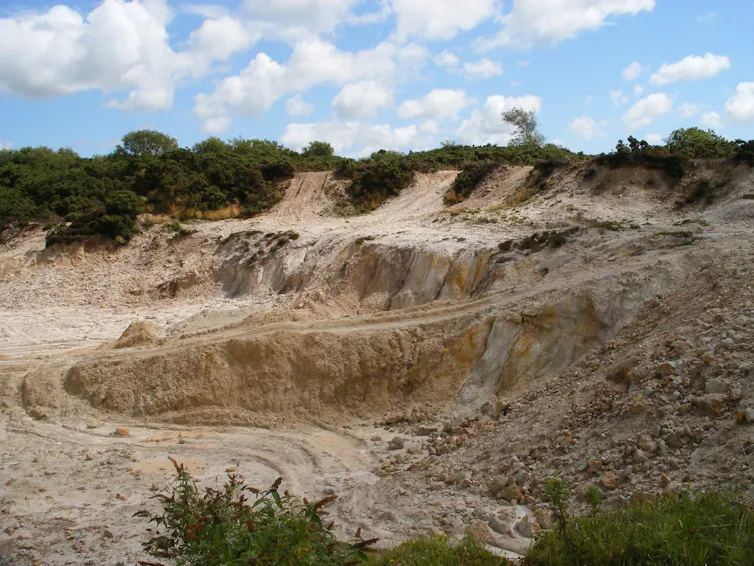
The Hemerdon Mine in Devon hosts the fourth-largest tin-tungsten deposit in the world. Southwesterner / Wikimedia
Today, there is an economic and strategic opportunity for the UK. The Hemerdon mine in Devon hosts the fourth-largest tin-tungsten deposit in the world, and is a “shovel ready” project being revived by Tungsten West, a mining development company.
Further south, Cornwall Resources’ Redmoor site has revealed high-grade tungsten, tin and copper deposits. This could give the UK a competitive edge in mining and primary extraction, given the current market conditions.
Tungsten also has a recycling rate of 42%, which is higher than for many other critical materials. The recycling rate is the proportion of end-of-life tungsten that is diverted from landfill and made available for reuse. Around 30-35% of the global tungsten supply is derived from scrap (which is to say the proportion of new material made from recycled content).
How the British military dealt with a molybdenum shortage in second world war.
However, supply shortages can often be a catalyst for innovation. In the second world war, metallurgists faced a critical shortage of molybdenum. German U-boat attacks on shipping convoys stymied supplies of this material. This forced metallurgists at UK engineering company Vickers to innovate, and recycle molybdenum from mining drill bits.
In the past, war has forced innovation to ensure the flow of critical materials – We can learn lessons from Britain’s response to molybdenum shortage in the second world war.
The limited global tungsten supply continues to present significant challenges for many countries. One factor that limits stocks is deteriorating ore grades from primary supply (which is to say the concentration of valuable metal inside mined rock is dropping over time). Another is the restrictive export licensing from China.
Advertisement
The current situation has pushed prices to historic highs and challenges the just-in-time nature of many supply chains.








































You must be logged in to post a comment Login