
Crypto World
BeInCrypto 100 Institutional Awards Nomination: Franklin Templeton for Best Digital Asset Manager

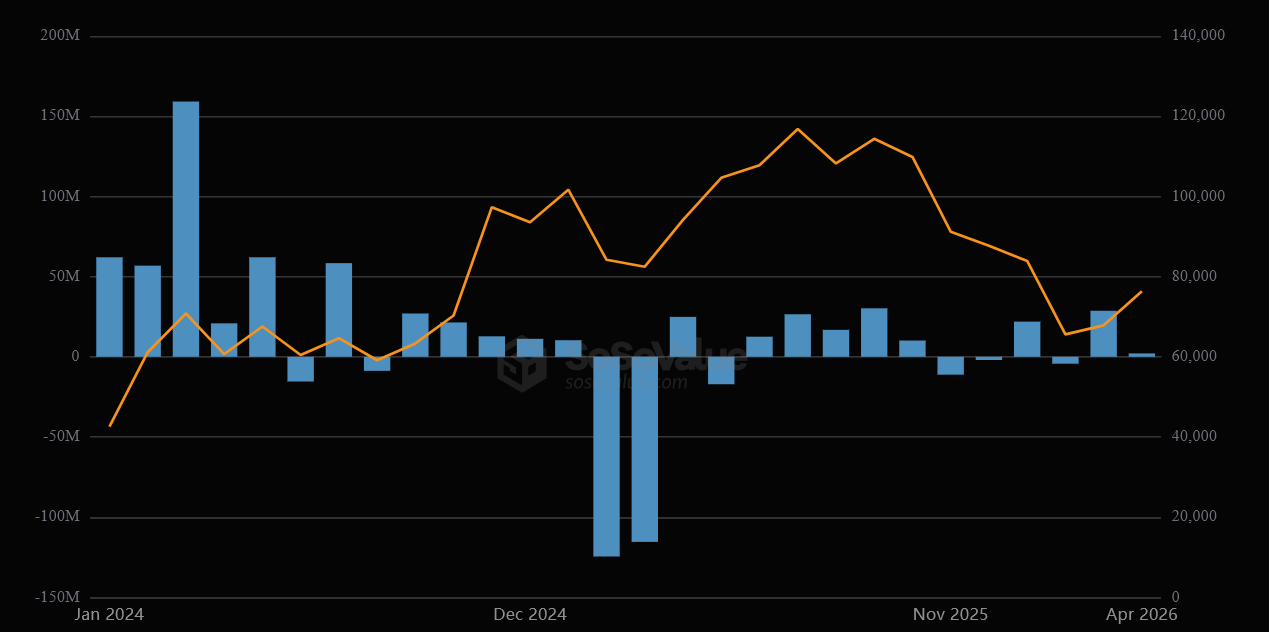
Digital asset management is moving beyond simple Bitcoin exposure. The first wave was about giving institutions regulated access to crypto. The next phase is about building full digital asset platforms inside major asset managers.
Franklin Templeton has been building toward that shift for years. The firm is nominated for Best Digital Asset Manager at the BeInCrypto Institutional 100 Awards 2026.
Founded
Firm AUM
Digital Assets AUM
Tokenized Funds AUM
Crypto ETFs AUM
Blockchains
1947
$1.7T+
$2.1B
$1.4B
$0.7B
9+
Franklin Templeton Digital Asset Management Snapshot
The nomination centers on the launch of Franklin Crypto, a dedicated cryptocurrency division announced on April 1, 2026.
Franklin Templeton created the unit through its planned acquisition of 250 Digital, an active cryptocurrency investment management firm spun out of CoinFund. The acquisition includes the 250 Digital investment team and liquid crypto strategies previously run by CoinFund.
Franklin Crypto gives the firm a dedicated active management arm for digital assets. It moves the business beyond passive ETF exposure and tokenized money market products into professionally managed liquid crypto strategies.
Franklin Templeton said its Digital Assets business managed approximately $1.8 billion in global assets as of December 31, 2025.
Its latest Q2 2026 investor update puts digital assets AUM at $2.1 billion, including $1.4 billion in tokenized funds and $0.7 billion in crypto ETFs.
From Bitcoin ETFs to Active Crypto Management
Franklin Templeton was already part of the first US spot Bitcoin ETF cohort. It’s the Franklin Bitcoin ETF, EZBC, launched on January 11, 2024, and seeks to reflect the performance of Bitcoin before fund expenses. The ETF trades on Cboe and carries a 0.19% sponsor fee.
But the Franklin Crypto launch adds a different layer. The company is no longer only offering investors access to Bitcoin through an ETF wrapper. It is adding active liquid crypto strategies, crypto-native portfolio talent, and a dedicated internal division.
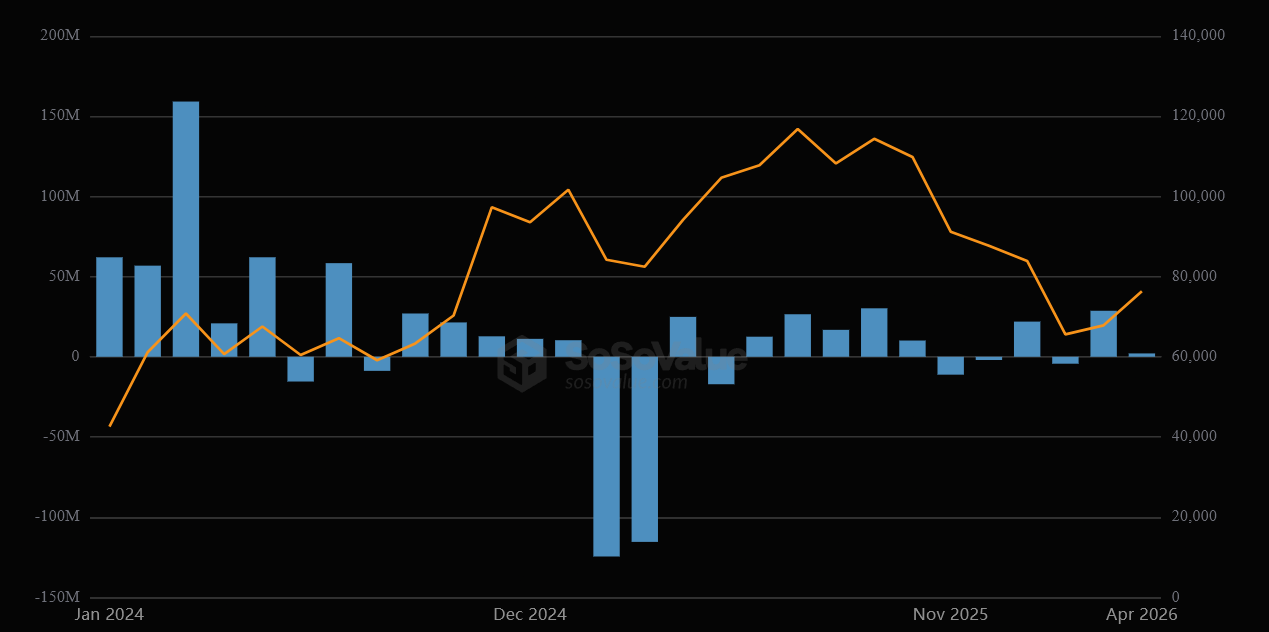
That is the more important institutional shift. Pension funds, sovereign wealth funds, and large allocators often need more than spot exposure. They need portfolio construction, risk management, liquidity management, and managers who can evaluate crypto markets with the same discipline used in other asset classes.
Franklin Templeton has also been building internal crypto capability since 2018. The company says its digital asset work combines tokenomics research, data science, and technical expertise. The firm has also built a team that includes blockchain-focused investment professionals, node operators, and digital asset specialists.
BENJI Becomes Core Infrastructure
The second pillar of Franklin Templeton’s nomination is BENJI.
The Franklin OnChain US Government Money Fund, or FOBXX, launched in 2021. Each share is represented by one BENJI token, and the fund’s transfer agent maintains the official share ownership record through Franklin Templeton’s blockchain-integrated Benji platform.
FOBXX was the first US-registered mutual fund to use blockchain-integrated technology to process transactions and record share ownership. Franklin Templeton’s own fund page states that FOBXX invests at least 99.5% of its assets in US government securities, cash, and repurchase agreements collateralized by US government securities or cash. The fund reported $843.74 million in total net assets as of March 31, 2026.
The platform has continued to expand across public chains. Franklin Templeton’s filings list support across networks including Stellar, Aptos, Base, Solana, Polygon, Arbitrum, Avalanche, and Ethereum. In September 2025, BNB Chain announced that Franklin Templeton’s Benji Technology Platform had also integrated with BNB Chain.
Tokenized Funds Move Into Institutional Workflows
Franklin Templeton has also pushed BENJI into trading and lending use cases.
In September 2025, DBS, Franklin Templeton, and Ripple announced plans to launch trading and lending solutions using tokenized money market funds and Ripple’s RLUSD stablecoin.
The arrangement allows eligible investors to acquire Franklin Templeton’s sgBENJI token on DBS Digital Exchange using RLUSD. DBS also said it would explore enabling sgBENJI tokens to be used as collateral for credit from the bank or third-party platforms.
That makes the Franklin Templeton story broader than asset gathering. The firm is building across several layers of digital asset management: passive ETFs, tokenized funds, blockchain recordkeeping, collateral use cases, stablecoin-linked trading, and now active crypto strategies.
This is why Franklin Templeton stands out in the category. It has treated digital assets as an operating business, not a narrow product line.
The BeInCrypto Institutional 100 Awards recognize firms building the systems that could define the next phase of finance. Franklin Templeton’s nomination reflects its role in turning digital assets into a full asset management platform, spanning ETFs, tokenized securities, blockchain infrastructure, and active crypto investment strategies.
The post BeInCrypto 100 Institutional Awards Nomination: Franklin Templeton for Best Digital Asset Manager appeared first on BeInCrypto.



Ouch.
That is how Holger Zschaeptiz, one of the most widely followed macro commentators on X, reacted after the yield on the 30-year U.S. Treasury note (government bond) rose to 5% early today, hitting the highest since July 2025. This level has been tested only twice over the past two decades.
His reaction also sums up the mood of several crypto analysts who see rising yields as a headwind for bitcoin , the world’s biggest cryptocurrency by market value and a macro asset.
“At this point, the dynamic is simple. As long as yields remain attractive and [Fed’s monetary policy] stays tight, capital has a real alternative to risk. This continues to pressure assets like crypto, depending on liquidity and momentum,” Diana Pires, chief business officer at sFOX, said in an email to CoinDesk. sFOX is a San Francisco-based cryptocurrency prime dealer and trading platform designed for institutional investors, hedge funds, and businesses.
Bitcoin is already under pressure alongside an uptick in the Dollar Index (DXY). As of writing, BTC traded at $75,670, down 2% over 24 hours, and the DXY hovered above 99, looking to extend Wednesday’s 0.5% gain.
Here’s why rising bond yields typically hurt BTC and other risk assets. When the U.S. government needs to borrow money, it issues bonds, and the yield on those bonds is the annual return the bond investors earn. So, when yields rise, bonds become more attractive. A 30-year Treasury yielding 5% is an almost risk-free return.
Therefore, every dollar sitting in bitcoin is a dollar not earning that 5% yield. That tradeoff typically leads to capital rotation out of non-yielding risk assets, such as bitcoin and other risky assets like technology stocks. Rising yields also typically weigh on gold, which fell over 1% to a one-month low of $4,540 on Wednesday and last changed hands near $4,564.
“Rising Treasury yields and a stronger dollar [have] historically pressured crypto valuations by tightening financial conditions,” Vikram Subburaj, CEO of India-based FIU-registered Giottus exchange, said.
Note that the 30-year yield is not the only one rising. The 10-year yield, which serves as a benchmark for borrowing costs across the economy, is also elevated. Together, they point to financial tightening, a situation where borrowing gets costly, disincentivizing risk-taking in both financial markets and the economy.
Bond yields are also rising in the U.K. and other parts of the world.
Fed dissenters push back against easing
The central bank left rates unchanged between 3.5% and 3.75%, as expected. What was not expected was the internal dissent. Three out of 12 voting officials pushed back against easing language in the statement, a development that has caught markets off guard.
That’s pushed up expectations for higher-for-longer interest rates, which is showing up in bond yields.
“The Fed’s decision to keep rates steady wasn’t the shocker, but those three dissenters calling for a strike on any easing guidance threw a bucket of ice on the market’s pivot party. It’s a classic hawkish signal, and as Bitcoin is usually an indicator of risk, Bitcoin is feeling it,” Matt Mena, senior crypto research strategist at 21shares, said in an email.
ING characterized the so-called hawkish dissent by three officials as a warning shot aimed at incoming Fed Chair Kevin Warsh, Donald Trump’s pick to replace outgoing Chairman Jerome Powell. “They perhaps want to make it clear that they will not be easily swayed to his way of thinking that rates in time can be lowered,” ING analysts said.
Interestingly, the policy statement released Wednesday contained no clear bias toward easing, reinforcing the message that the Fed is in no hurry to pivot.
Oil rally is lifting inflation expectations
The bond yield surge is not just about the Fed. Early Thursday, oil prices surged to their highest since 2022, with Brent briefly topping $125 per barrel, after Trump mulled extending the blockade of Iranian ports. Moreover, oil prices have been elevated, hovering largely between $80 to $120 since the Iran war began in late February.
As a result, energy prices at gas stations are surging, pushing long-term inflation expectations higher, as CoinDesk noted early this week.
All of that is pushing yields higher.
“Inflation is not convincingly back to target, and the Fed is not signaling a near-term shift. Markets may want clarity on cuts, but the Fed is not giving yet. Until that changes, flows will keep favoring yield and safety over volatility. For crypto, that means the macro backdrop remains a headwind, not a tailwind,” Pires said.
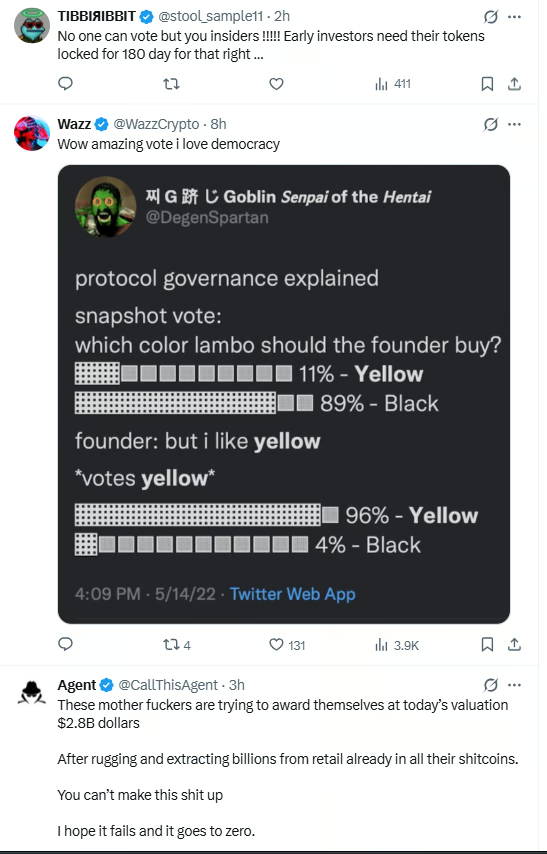
The native token of Trump-family-linked World Liberty Financial dropped nearly 14% on Wednesday as a controversial governance proposal that would place over 62 billion WLFI tokens under new multiyear vesting schedules went to a community vote.
The proposal was first submitted to the World Liberty governance community on April 15 and officially went live for voting on Wednesday. It proposes locking more than 62 billion WLFI tokens held by early investors and insiders for two years before gradually being released over a span of two to three years.
Voting runs until May 7. At the time of writing, 99.95% of votes are in favor of the proposal, and the quorum requirement of 1 billion WLFI tokens has already been met, with 6 billion tokens in favor and 3.2 million against.
“This is one of the most significant governance proposals in WLFI history,” World Liberty Financial said in an X post on Wednesday, adding: “62,282,252,205 locked WLFI tokens [are] subject to this proposal. None of it touches the market for a minimum of 2 years if passed.”
Despite nearly 100% of voting power being allocated to the “yes” vote, the proposal has been met with strong criticism from some members of the community.
Cointelegraph previously reported that figures such as Moonrock Capital founder Simon Dedic likened the proposal to a rug pull and questioned the two-year unlocks coinciding with the remainder of Donald Trump’s term as US president. Tron founder Justin Sun, who holds a significant amount of WLFI, also labeled the proposal one of the “most absurd” he’s ever seen.
In the replies to World Liberty’s latest X post announcing that the vote had gone live, the majority of comments were critical of the proposal.

Source: World Liberty Financial
The unlocking schedule for early investors involves a two-year cliff followed by a two-year linear vest, while insiders such as founders, team members and advisers have a two-year cliff and three-year linear vest.
The proposed schedule has faced backlash for its length, while the voting process has also been criticized because those who don’t vote will have their tokens locked up indefinitely.
Related: Visa adds Polygon, Base support as stablecoin settlement run rate hits $7B
The World Liberty Financial team said this structure was designed to give a “more clear, bounded picture of governance preferences” and to keep tokens in the hands of those who are “genuinely committed” to the future of the project.
According to data from CoinGecko, WLFI was priced at $0.06367 at the time of writing, down 13.6% over the past 24 hours. Overall, it is down 72.8% since hitting the open market.
Cointelegraph has reached out to World Liberty Financial for comment.

A three‑way merger proposal from Tether sent shares of Twenty One Capital climbing in after‑hours trading on Wednesday, as the Bitcoin‑focused firm eyes a strategic consolidation with Strike and Elektron Energy. Tether said it intends to vote in favor of a plan that would first merge Twenty One Capital with Strike, a Bitcoin payments company, and then combine the resulting entity with Elektron Energy, a Bitcoin mining operation.
Tether described the aim as building a vertically integrated platform that blends financial services, Bitcoin mining, and capital markets execution. Strike would bring a profitable financial services platform, broad distribution, and regulatory infrastructure, while Elektron would supply large‑scale Bitcoin mining capacity, operational depth, and proven execution capabilities. The terms of the merger and the timeline for completion were not disclosed in the statement.
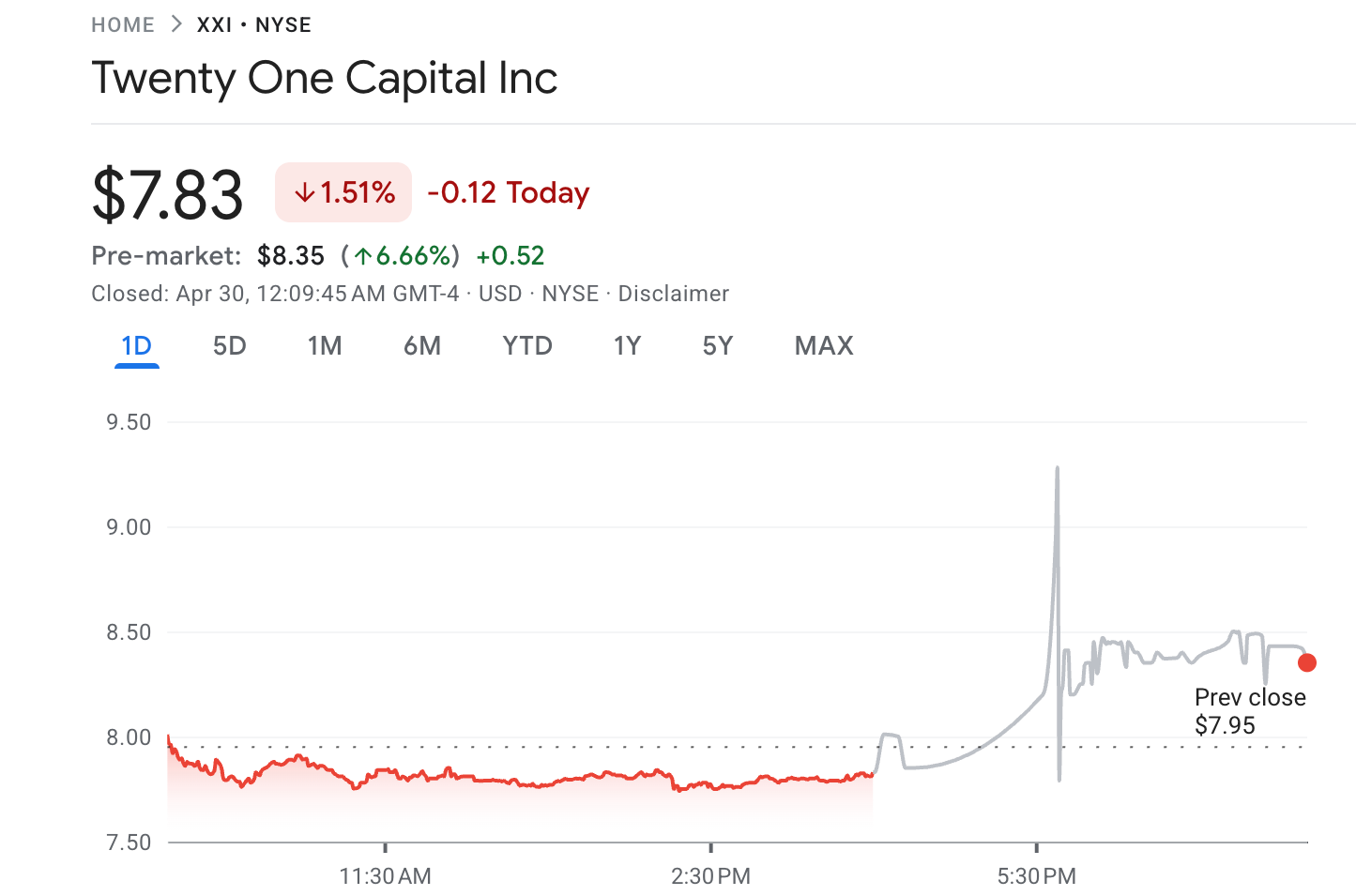
In after‑hours trading, Twenty One Capital’s stock dipped 1.7% to $7.83 in regular session trading, but rallied after the bell, hitting as high as $9.28 before settling around $8.35, a gain of about 6.6% for the session’s close.
Twenty One Capital sits high among public companies for Bitcoin holdings, with about 43,514 coins. That places it behind Strategy, Inc., which holds the largest publicly disclosed bitcoin treasury with 818,334 coins. Twenty One Capital publicly listed in December following a merger with Cantor Equity Partners and started with a notable Bitcoin position, aiming to grow its Bitcoin per share through ongoing accumulation.
Tether did not release the terms of the proposed mergers or a precise timetable. The plan includes leadership assignments: Elektron Energy founder and CEO Raphael Zagury would serve as president of the new, merged company, while Jack Mallers—founder and CEO of Strike and co‑founder and CEO of Twenty One Capital—would also hold an executive role. Tether framed the leadership alignment as designed to fuse Mallers’ product, brand, and consumer Bitcoin leadership with Zagury’s capital markets, operating, and execution experience.
Key takeaways
- Tether proposes a staged three‑way merger: Twenty One Capital → Strike → Elektron Energy, aiming to integrate payments, mining, and Bitcoin treasury management.
- Strike would contribute a regulated financial services platform with global distribution; Elektron Energy would add large‑scale mining infrastructure and execution depth.
- Terms and closing timetable remain undisclosed, creating a wait‑and‑watch period for investors and observers.
- Twenty One Capital holds about 43,514 Bitcoin, ranking it among the top public holders, though it trails Strategy, Inc.’s 818,334 coins.
- Leadership for the merged entity would feature Raphael Zagury as president and Jack Mallers in an executive role, signaling a blend of capital markets experience with consumer‑facing Bitcoin leadership.
What the merger could unlock—and what it might test
The proposal signals an attempt to move Twenty One Capital beyond a pure treasury play toward an operating platform with recurring revenue opportunities tied to Bitcoin infrastructure. By combining with Strike, the venture gains a payments and financial services backbone that already operates in the Bitcoin ecosystem, potentially expanding access to users and merchants who want integrated on‑ramps for Bitcoin payments and related services. The addition of Elektron Energy would bring mining scale, which could help the merged entity pursue a more dynamic Bitcoin accumulation strategy, leveraging mining operations as a strategic asset rather than a mere balance‑sheet hedge.
From an investor perspective, the move could diversify exposure within a single platform: users gain access to payments, mining, and capital markets execution under a unified brand. Yet the structure remains uncertain, as the terms are not disclosed and regulatory approvals would be required. In an environment where regulatory clarity around crypto‑native consolidations remains variable across jurisdictions, the speed and likelihood of a successful integration will hinge on governance, anti‑trust considerations, and how the new entity would align with existing compliance frameworks for payments and mining operations.
Leadership, governance, and strategic implications
The leadership plan frames a clear mandate: leverage Zagury’s capital markets and execution track record to steer the combined group, while Mallers anchors product strategy, brand power, and consumer Bitcoin leadership. This pairing could, in theory, yield a platform that is more than the sum of its parts—melding consumer‑facing Bitcoin services with heavy‑duty mining operations and sophisticated financial infrastructure. Still, leadership transitions in cross‑industry mergers can introduce execution risk if cultural and operational priorities diverge. Stakeholders will want to see how governance would be structured, how conflicts of interest would be managed, and what milestones would indicate progress toward integration.
For Strike and Strike’s ecosystem, the deal could extend strategic reach beyond payments into a broader Bitcoin stack, potentially enhancing user adoption and cross‑selling opportunities. Elektron Energy, meanwhile, would gain access to a wider corporate platform that could help monetize mining through financial products, services, and partnerships that leverage the company’s mining capacity. The eventual alignment of these diverse activities will be a focal point for investors watching the path to a closing date—and possible synergies—across the three businesses.
Market backdrop and what to watch next
Public market participants have already been in a mood to evaluate Bitcoin‑centric strategies that combine treasury management with operational capability. Twenty One Capital’s Bitcoin holdings—already among the largest among publicly traded crypto‑related entities—offer a strategic asset that could be amplified by a unified platform that also addresses payments and mining. The success of such a three‑way merger would depend on the terms, financing structure, regulatory approvals, and the speed with which the combined organization can integrate disparate functions from consumer product design to large‑scale mining operations.
As with any proposed consolidation in the crypto space, the next steps will hinge on formal filings, board approvals, and any potential antitrust or securities oversight reviews. Investors should monitor updates from Twenty One Capital, Strike, Elektron Energy, and, crucially, any statements from Tether detailing conditions or contingencies tied to the merger. The broader market will also be watching for how this strategy aligns with evolving regulatory environments and whether it signals a trend toward more vertically integrated, crypto‑native platforms rather than dispersed, standalone businesses.
Earlier coverage around Tether’s broader infrastructure initiatives—such as open‑source mining frameworks designed to unify Bitcoin infrastructure—helps contextualize the current proposal as part of a wider push to knit together Bitcoin’s core pillars: payments, mining, and treasury management. Whether this three‑way plan materializes into a lasting, value‑creating enterprise remains to be seen, but it underscores the industry’s ongoing interest in material, multi‑faceted approaches to Bitcoin exposure and ecosystem development.
Readers should watch official updates from the involved companies for terms, timing, and governance details, as well as any regulatory commentary that could influence a potential close. In the near term, the market’s reaction to any new disclosures will shed light on whether investors view this as a meaningful structural shift or a speculative move tied to leadership talent and branding growth within the Bitcoin sector.
Twenty One Capital, Strike, and Elektron Energy have not disclosed a timeline for closing the merger or the precise financial mechanics, but the plan signals a willingness to pursue a high‑impact, cross‑vertical Bitcoin platform if approved.
—


Twenty One Capital shares rose after hours after Tether backed a proposed merger with Strike and Elektron Energy.
Summary
- Twenty One Capital shares gained after hours after Tether backed a three-way Bitcoin merger plan.
- Strike would add payments and financial services, while Elektron would bring Bitcoin mining infrastructure.
- Tether said the deal could move Twenty One beyond Bitcoin treasury exposure alone.
The plan could move the Bitcoin-buying company beyond treasury holdings and into payments, mining, and financial services.
Tether said it intends to vote in favor of merging Twenty One Capital with Strike. The combined company would then merge with Bitcoin mining firm Elektron Energy.
The proposal would bring together three parts of the Bitcoin market. Strike would add payments, distribution, and regulatory infrastructure. Elektron would add mining operations and execution capacity.
Twenty One Capital shares climb after hours
Twenty One Capital shares closed Wednesday down 1.7% at $7.83. However, the stock later rose to $9.28 in after-hours trading.
The shares settled at $8.35 after the bell, marking a 6.6% gain. The move came as investors reacted to Tether’s merger proposal.
Moreover, Tether proposed Elektron founder and CEO Raphael Zagury as president of the merged company. Strike founder Jack Mallers would also hold an executive role.
Tether said the proposed structure would combine “Mallers’ product, brand, and consumer Bitcoin leadership” with “Zagury’s capital markets, operating, and execution experience.”
Bitcoin strategy could expand
Twenty One Capital went public in December through a merger with Cantor Equity Partners. It launched with 43,500 Bitcoin and aimed to grow Bitcoin per share.
The company now holds 43,514 Bitcoin. It ranks second among public companies, behind Strategy, Inc., which holds 818,334 Bitcoin.
Tether said the deal could move Twenty One beyond treasury exposure alone. It added that the company could build operating businesses, recurring revenue, and long-term Bitcoin accumulation capacity.


The Iran war premium is back, and crypto is paying for it.
Bitcoin slid 2.1% over the past 24 hours to $75,633 in Asian hours Thursday, down 3% on the week, as Brent crude jumped 7.1% to $126.41 a barrel — the highest intraday level in four years — on an Axios report that President Donald Trump is set to receive a briefing on new military options against Iran.
The report added U.S. Central Command has asked for hypersonic missiles to be deployed to the Middle East, which would mark the first time American forces have used those weapons in combat. The Strait of Hormuz has been effectively shut since the war began in late February, choking flows of crude, natural gas, and oil products.
Such activity leads to a war premium, which refers to the portion of an asset’s price driven by conflict risk rather than supply-demand fundamentals. Brent has been carrying a heavy one all year, with prices up over 100% year-to-date.
The global benchmark is now riding a nine-day winning streak, the longest since May 2022, and is up over 100% year-to-date.
Ether dropped 3.4% to $2,244 and is down 4.4% on the week. XRP fell 2.1% to $1.37, off 3.7% over seven days. Solana lost 2.6% to $82.62. BNB shed 1.9% to $615. The only green print in the top 10 outside stablecoins is dogecoin, up 3.8% on the day and 10.1% on the week to $0.10.
Risk assets are giving back gains across the board. Nasdaq 100 futures erased an earlier 1.1% rally fueled by strong Alphabet and Amazon earnings, MSCI’s Asia Pacific share index fell 1.4%, and European equities were primed to drop 1% at the open.
The dollar gained and bonds slid as the surge in oil and a hawkish Fed hold sapped demand for fixed income. Treasury 10-year yields held near the highest since July, and Japan’s 10-year notes hit the highest level since 1997, per Bloomberg.
Bitcoin’s resilience through the early stages of the war is being tested. The asset has held a tight band between $74,000 and $78,000 through April even as oil ran from $98 to $126 and the conflict entered its third month. Each escalation headline has produced a sharper drawdown, and the cumulative damage is starting to show.
BTC is now $50,000 below its October 2025 all-time high of $126,000.
Fernando Lillo, director at exchange Zoomex, said in a note that any break above $80,000 requires the war premium to unwind.
“Bitcoin is trying to break the key $80,000 level, which would require a resolution to the Middle East conflict and, as a result, a drop in Brent crude oil prices below $100 per barrel,” he said. “One is impossible without the other, and the USA administration’s plans for a prolonged naval blockade of Iran are becoming a real obstacle.”
Lillo flagged a possible scenario where the Trump administration lifts the blockade in coming days and frames it as a response to “positive steps by Iran” to engineer a relief rally.
“A potential lifting of restrictions in the region and lower oil prices could trigger an accelerated influx of capital into risk assets, paving the way for Bitcoin to consolidate above $80,000 and move toward $85,000.”
Tether Investments, the investment arm of stablecoin issuer Tether and a majority shareholder of Twenty-One Capital (XXI), has unveiled a plan aimed at turning XXI into the “premier listed Bitcoin company in the world.”
In a recent announcement, the firm said it plans to vote to merge Twenty-One Capital with Bitcoin financial services firm Strike and miner Elektron Energy.
Tether to Vote for Twenty One Capital Merger With Strike, Elektron
Under the proposal, Twenty-One Capital would first merge with Strike, Jack Mallers’ Bitcoin financial services firm operating in more than 100 countries. The combined entity would then merge with Elektron Energy, a large-scale Bitcoin mining platform.
The merger would transform XXI into a firm that combines treasury, mining, financial services, lending, and capital markets under a single public platform.
“If consummated, the transactions would allow the combined entity to leverage a strong balance sheet, a large-scale profitable operating business, and a financial services division built to spearhead Bitcoin adoption,” Tether Investments noted.
Follow us on X to get the latest news as it happens
The firm also stated that it will recommend Elektron CEO Raphael Zagury to serve as president of the merged company. The structure would pair Mallers’ consumer leadership with Zagury’s background in mining operations and capital markets.
Tether Investments has not disclosed transaction terms, timelines, or governance details. The firm said further information will follow as discussions progress.
Twenty-One Capital ranks as the second-largest public holder of Bitcoin. The firm holds over 43,500 BTC on its balance sheet, according to BitcoinTreasuries.
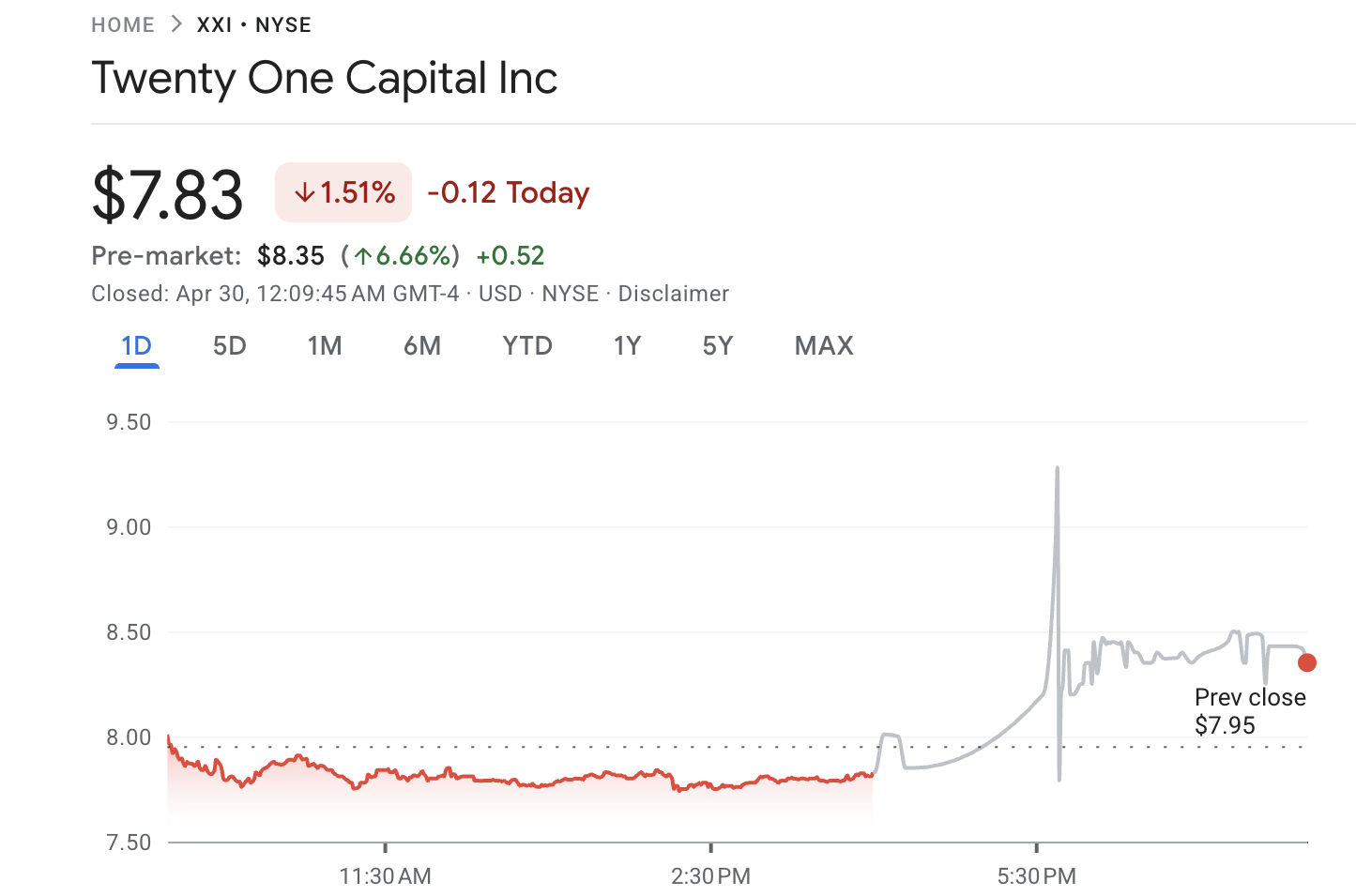
Its stock, XXI, was listed on the New York Stock Exchange (NYSE) in December 2025. The stock has declined over 10% in 2026 so far.
Nonetheless, it responded positively to Wednesday’s announcement. XXI jumped more than 6.6% in after-hours trading to $8.35.
Subscribe to our YouTube channel to watch leaders and journalists provide expert insights
The post Tether Proposes Plan to Make Twenty One Capital “Premier Bitcoin Company” appeared first on BeInCrypto.
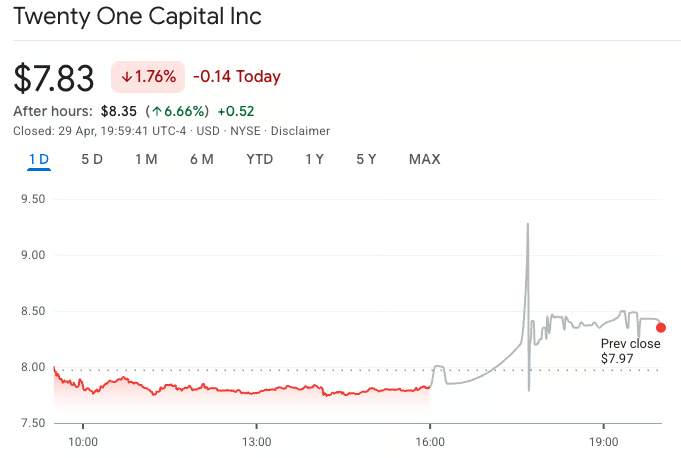
Shares in the Bitcoin-buying company Twenty One Capital climbed in after-hours trading on Wednesday after its majority shareholder, Tether, proposed a three-way merger with two other crypto companies.
Tether said Wednesday that it intends to vote in favor of a proposed merger between Twenty One Capital and Bitcoin payments company Strike, followed by a proposed merger of the combined company with Bitcoin mining firm Elektron Energy.
Tether added that if the mergers go through, “Strike would be contributing a profitable financial services platform, global distribution and regulatory infrastructure and Elektron would be adding large-scale Bitcoin mining infrastructure, operational depth and proven execution capabilities.”
Shares in Twenty One Capital (XXI) ended trading on Wednesday down 1.7% at $7.83, but jumped to a high of $9.28 after hours before settling at $8.35 for a gain of 6.6% after the bell.
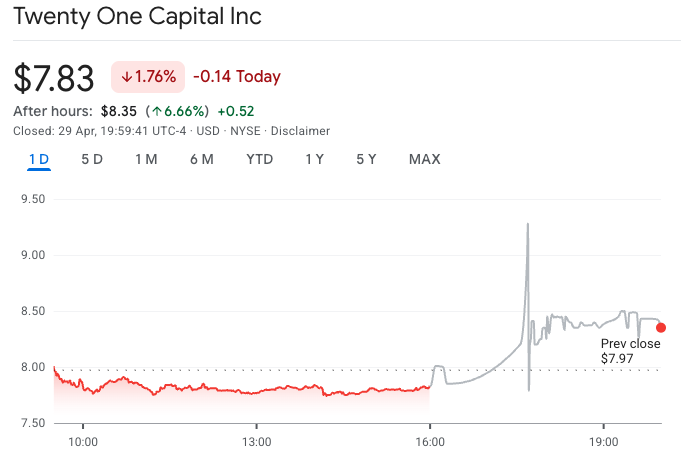
Shares in Twenty One Capital on Wednesday surged after hours. Source: Google Finance
The company has the second-largest Bitcoin holdings among public companies and its share price has slid over 10.5% so far this year alongside Bitcoin’s decline.
Tether did not share the terms of the mergers or a timeline for their completion, but proposed that Elektron founder and CEO Raphael Zagury serve as president of the new company.
It added that Jack Mallers, the founder and CEO of Strike and co-founder and CEO of Twenty One Capital, would also serve in an executive role.
“The proposed leadership structure is intended to combine Mallers’ product, brand, and consumer Bitcoin leadership with Zagury’s capital markets, operating, and execution experience,” Tether said.
Related: Tether launches open-source mining framework to unify Bitcoin infrastructure
Twenty One Capital went public in December through a merger with Cantor Equity Partners and came to market with holdings of 43,500 Bitcoin and an aim of increasing its Bitcoin per share.
Tether said if the mergers are successful, Twenty One would move “beyond treasury exposure alone and toward a platform with operating businesses, recurring revenue opportunities, and long-term Bitcoin accumulation capabilities.”
Twenty One Capital currently holds 43,514 Bitcoin and is behind only Strategy, Inc. in terms of public company Bitcoin holdings, which holds 818,334 Bitcoin.
Magazine: Adam Back says current demand is ‘almost’ enough to send Bitcoin to $1M
Peter Schiff renewed his attack on Strategy’s Bitcoin accumulation playbook. He argued the firm’s growing share of the supply has done nothing to support the BTC price.
The longtime gold advocate posted from outside the Bitcoin 2026 conference in Las Vegas. He claimed his sell warning from last year had been validated by a sharp price drop.
A Year of Buying, A Year of Falling Prices
Schiff highlighted a stark contrast between Strategy’s accumulation pace and Bitcoin’s price action over the past 12 months. The firm controlled 2.76% of total Bitcoin (BTC) supply at last year’s Vegas conference. It now holds 3.9%, a 40% increase in market share.
That growing dominance failed to put a floor under the market. Bitcoin traded near $110,000 when Schiff spoke at the 2025 event. The asset has since fallen to about $76,000, a 30% slide. The drop has reignited debate over the death spiral thesis Schiff has pushed for months.
Schiff Watches the Bitcoin Conference From Home
Notably, economist Peter Schiff skipped this year’s gathering following his 2025 sell call and has continued to criticize Strategy’s corporate treasury model, which has played a key role in driving the company’s record Bitcoin accumulation.
Meanwhile, Bitwise CIO Matt Hougan maintains that Strategy remains the single most important driver behind Bitcoin’s recent rally, pointing to its aggressive, debt-fueled accumulation strategy.
Schiff also pointed to a shift in conference narratives. Last April, Bitcoin treasury vehicles dominated the discussion as the price approached its peak. This year, the spotlight has moved to digital credit, which Schiff predicted would also collapse.
The accumulation race between Strategy and rivals such as Bitmine has not translated into a price floor. Bitcoin’s slide has dragged the broader market lower. Analysts have trimmed their Q2 outlook for the asset.
From Treasury Critic to Ponzi Allegations
Schiff has gone beyond skepticism in recent weeks. He labeled Strategy’s STRC preferred share product the largest Ponzi in the world. He also challenged Michael Saylor to debate after calling Bitcoin a “shitcoin” on social media.
He posed a direct question to Bitcoin holders ahead of next year’s gathering.
“If MSTR gets to 5% of supply by next year’s conference, why should Bitcoin stop falling?”
Schiff framed the question as a test of the accumulation thesis. The next 12 months may settle the argument. Strategy is expected to keep buying.
A deeper drawdown could pressure its leverage and the wider treasury company model that has shaped this cycle.
The post Peter Schiff Continues to Go After MicroStrategy, But Is He Right This Time? appeared first on BeInCrypto.

TLDR
- Visa expanded its stablecoin settlement pilot to five additional blockchain networks.
- The program now operates across nine networks and reports a $7 billion annualized run rate.
- Visa recorded a 50% increase in settlement volume compared to the previous quarter.
- The newly added networks include Base, Polygon, Canton Network, Circle’s Arc, and Tempo.
- Visa said the multichain approach allows partners to settle transactions in near real time using stablecoins.
Visa expanded its stablecoin settlement pilot to five new blockchains as annualized volume reached $7 billion. The payments company reported a 50% increase from the previous quarter and confirmed broader multichain coverage. The program allows issuers and acquirers to settle transactions using stablecoins instead of traditional banking systems.
Visa Adds Five Blockchains to Stablecoin Pilot
Visa confirmed that its settlement pilot now operates across nine blockchain networks. The newly supported networks include Coinbase’s Base, Polygon, Canton Network, Circle’s Arc, and Stripe-backed Tempo. These platforms join Ethereum, Solana, Avalanche, and Stellar, which Visa integrated earlier.
The company said the pilot enables partners to complete settlements with stablecoins rather than bank transfers. As a result, participants can move funds using blockchain-based dollars in near real time. Visa stated that this structure reduces delays linked to traditional cross-border banking systems.
Visa reported that the program’s annualized run rate reached $7 billion. The company said this figure marks a 50% increase compared to the prior quarter. It confirmed that issuers and acquirers use the pilot for live settlement activity.
Multichain Strategy Supports Global Stablecoin Payments
Visa said it adopted a multichain approach to meet partner demand. The company explained that partners operate across several blockchain ecosystems. Therefore, Visa aims to provide a unified settlement layer across supported networks.
“Our partners are building in a multi-chain world, and they expect their options to reflect that reality,” said Rubail Birwadker. He serves as Visa’s global head of growth products and strategic partnerships. He said expanding to more blockchains allows partners to choose networks that match their needs.
Birwadker added that Visa will maintain a common settlement layer across all integrated networks. He said this structure gives partners access to different liquidity pools without added complexity. Visa stated that the expansion aligns with growing stablecoin adoption in global payments.
The company said stablecoins, which track fiat currencies, now play a larger role in cross-border transfers. Visa has tested stablecoin settlements tied to card programs in more than 50 countries. These pilots include USDC-linked transactions for select partners.
Visa explained that blockchain-based settlement reduces the time required to move funds. Instead of waiting days for banking processes, partners can settle transactions almost instantly. The company confirmed it will continue expanding its stablecoin settlement pilot as partners adopt more blockchain networks.

TLDR
- Nigel Farage faces a parliamentary standards probe over a $6.7 million gift from Christopher Harborne.
- The Conservatives asked the Parliamentary Standards Commissioner to review the source and use of the funds.
- Labour also questioned whether Farage properly declared the payment under House of Commons rules.
- Farage said the gift was personal and intended to keep him safe and secure after past attacks.
- Reform UK stated that the payment was declared and fell under the exemption for personal gifts.
Nigel Farage faces a parliamentary standards review over a $6.7 million gift from crypto investor Christopher Harborne. The Conservatives asked the Parliamentary Standards Commissioner to assess whether the payment breached Commons rules. Labour also questioned the timing of the funds before Farage announced his Clacton candidacy.
Nigel Farage Questioned Over Pre-election Payment Disclosure
The Guardian reported that Harborne transferred about £5 million to Farage in 2024. The payment occurred before Farage declared his candidacy for the Clacton seat. He won the constituency in July after announcing his run in early June.
Farage confirmed the gift in an interview with the Daily Telegraph. He said the funds aimed to keep him “safe and secure for the rest of my life.” He linked the payment to a 2019 milkshake incident and a firebomb attack last year.
A Reform UK spokesman described the transfer as a “personal unconditional gift.” The spokesman said Farage made his decision to stand as an MP independently. He also stated, “We are confident everything has been declared in accordance with the rules.”
The Commons code requires new MPs to register benefits received within 12 months before election. It also states members should register any benefit if doubt exists. Reform UK argues that the payment qualifies for the exemption covering purely personal gifts.
The Conservative Party wrote to Commissioner Daniel Greenberg requesting an inquiry. It asked whether any funds supported political activity rather than security. Labour chair Anna Turley said Farage “appears to have broken the rules again.”
Crypto Donations and Investment Links Draw Attention
Harborne previously donated £9 million to Reform UK in late 2023. Records describe it as the largest single donation from a living person to a U.K. party. Harborne holds a 12% stake in stablecoin issuer Tether.
BitMEX co-founder Ben Delo also backed Reform UK with £4 million this year. He disclosed the contribution in a published opinion piece. The combined crypto-linked donations placed Reform under scrutiny.
The U.K. government imposed an immediate moratorium on crypto political donations in March. Officials cited the Rycroft review, which warned digital assets could channel foreign funds into politics. The ban covers donations of any size and includes criminal penalties.
Lawmakers plan to embed the restriction within the Representation of the People Bill. Authorities said they acted to protect electoral integrity. The rules apply to all parties and all digital asset contributions.
In the same month, Farage invested £215,000 in Stack BTC. The London-listed bitcoin treasury company counts former Chancellor Kwasi Kwarteng as chair. Farage acquired a 6.31% stake through his vehicle, Thorn In The Side.

Ant and Dec break silence on I’m A Celebrity final and what really happened with Jimmy Bullard in car park

Vedanta’s historic year, strong margins and deleveraging path: Management on post-demerger strategy, listing timeline and capital allocation

Crash risk rises as bond yields surge

Manchester United reach agreement with Casemiro over contract clause amid transfer speculation

US brings back mandatory military draft registration

Steven Gerrard disagrees with Gary Neville over ‘shock’ Chelsea and Arsenal claim | Football


-

 Tech3 days ago
Register Renaming | Hackaday
-

 Fashion6 days ago
Weekend Open Thread – Corporette.com
-
Crypto World4 days ago
Hyperliquid $HYPE Rally Builds Momentum as AI Sector Enters Prove-It Phase
-

 Business6 days ago
Patterson-UTI Energy, Inc. (PTEN) Q1 2026 Earnings Call Transcript
-
 Sports4 days ago
IPL 2026: Ruturaj Gaikwad registers slowest fifty of the season, enters all-time unwanted list | Cricket News
-

 Politics2 days ago
Drax board avoid their own AGM, accused of greenwashing & environmental racism
-

 NewsBeat4 days ago
LK Bennett closes all stores after entering administration
-

 Crypto World6 days ago
Michael Saylor says BTC winter is over. Market analyst disagrees, says bitcoin was in a pullback
-

 Fashion1 day ago
Kylie Jenner’s KHY Enters a New Era with ‘Born in LA’
-

 Tech2 days ago
Images of Samsung’s rumored smart glasses have leaked
-
Entertainment7 days ago
Michael B. Jordan and Austin Butler's “Miami Vice” movie will bring the action back to the '80s
-
 Entertainment5 days ago
Mariah Carey Slams Deposition Claims In Brother’s Lawsuit
-

 Business1 day ago
Most Commercial Energy Audits Miss the Real Losses
-
Entertainment7 days ago
Russell Brand Had Sex With 16 Year Old When He Was 30
-
Crypto World6 days ago
Is Algorand One of the Few Quantum-Resistant Blockchains? Here’s What the Data Shows
-
 NewsBeat6 days ago
Trump threatens to review UK’s claim to Falkland Islands and punish Nato allies over Iran war disagreement
-

 Sports7 days ago
2026 NFL Draft tonight: Time, TV channel, where to watch, order
-

 Sports7 days ago
Bayern Munich on the brink of historic ‘double treble’
-

 Business6 days ago
Jeanine Pirro announces closure of Federal Reserve building cost probe
-

 Business3 days ago
(VIDEO) Charlize Theron Climbs Times Square Billboard to Promote New Netflix Thriller ‘Apex’
You must be logged in to post a comment Login