
Crypto World
BeInCrypto 100 Institutional Awards Nomination: Franklin Templeton for Best Digital Asset Manager

Digital asset management is moving beyond simple Bitcoin exposure. The first wave was about giving institutions regulated access to crypto. The next phase is about building full digital asset platforms inside major asset managers.
Franklin Templeton has been building toward that shift for years. The firm is nominated for Best Digital Asset Manager at the BeInCrypto Institutional 100 Awards 2026.
Founded
Firm AUM
Digital Assets AUM
Tokenized Funds AUM
Crypto ETFs AUM
Blockchains
1947
$1.7T+
$2.1B
$1.4B
$0.7B
9+
Franklin Templeton Digital Asset Management Snapshot
The nomination centers on the launch of Franklin Crypto, a dedicated cryptocurrency division announced on April 1, 2026.
Franklin Templeton created the unit through its planned acquisition of 250 Digital, an active cryptocurrency investment management firm spun out of CoinFund. The acquisition includes the 250 Digital investment team and liquid crypto strategies previously run by CoinFund.
Franklin Crypto gives the firm a dedicated active management arm for digital assets. It moves the business beyond passive ETF exposure and tokenized money market products into professionally managed liquid crypto strategies.
Franklin Templeton said its Digital Assets business managed approximately $1.8 billion in global assets as of December 31, 2025.
Its latest Q2 2026 investor update puts digital assets AUM at $2.1 billion, including $1.4 billion in tokenized funds and $0.7 billion in crypto ETFs.
From Bitcoin ETFs to Active Crypto Management
Franklin Templeton was already part of the first US spot Bitcoin ETF cohort. It’s the Franklin Bitcoin ETF, EZBC, launched on January 11, 2024, and seeks to reflect the performance of Bitcoin before fund expenses. The ETF trades on Cboe and carries a 0.19% sponsor fee.
But the Franklin Crypto launch adds a different layer. The company is no longer only offering investors access to Bitcoin through an ETF wrapper. It is adding active liquid crypto strategies, crypto-native portfolio talent, and a dedicated internal division.
That is the more important institutional shift. Pension funds, sovereign wealth funds, and large allocators often need more than spot exposure. They need portfolio construction, risk management, liquidity management, and managers who can evaluate crypto markets with the same discipline used in other asset classes.
Franklin Templeton has also been building internal crypto capability since 2018. The company says its digital asset work combines tokenomics research, data science, and technical expertise. The firm has also built a team that includes blockchain-focused investment professionals, node operators, and digital asset specialists.
BENJI Becomes Core Infrastructure
The second pillar of Franklin Templeton’s nomination is BENJI.
The Franklin OnChain US Government Money Fund, or FOBXX, launched in 2021. Each share is represented by one BENJI token, and the fund’s transfer agent maintains the official share ownership record through Franklin Templeton’s blockchain-integrated Benji platform.
FOBXX was the first US-registered mutual fund to use blockchain-integrated technology to process transactions and record share ownership. Franklin Templeton’s own fund page states that FOBXX invests at least 99.5% of its assets in US government securities, cash, and repurchase agreements collateralized by US government securities or cash. The fund reported $843.74 million in total net assets as of March 31, 2026.
The platform has continued to expand across public chains. Franklin Templeton’s filings list support across networks including Stellar, Aptos, Base, Solana, Polygon, Arbitrum, Avalanche, and Ethereum. In September 2025, BNB Chain announced that Franklin Templeton’s Benji Technology Platform had also integrated with BNB Chain.
Tokenized Funds Move Into Institutional Workflows
Franklin Templeton has also pushed BENJI into trading and lending use cases.
In September 2025, DBS, Franklin Templeton, and Ripple announced plans to launch trading and lending solutions using tokenized money market funds and Ripple’s RLUSD stablecoin.
The arrangement allows eligible investors to acquire Franklin Templeton’s sgBENJI token on DBS Digital Exchange using RLUSD. DBS also said it would explore enabling sgBENJI tokens to be used as collateral for credit from the bank or third-party platforms.
That makes the Franklin Templeton story broader than asset gathering. The firm is building across several layers of digital asset management: passive ETFs, tokenized funds, blockchain recordkeeping, collateral use cases, stablecoin-linked trading, and now active crypto strategies.
This is why Franklin Templeton stands out in the category. It has treated digital assets as an operating business, not a narrow product line.
The BeInCrypto Institutional 100 Awards recognize firms building the systems that could define the next phase of finance. Franklin Templeton’s nomination reflects its role in turning digital assets into a full asset management platform, spanning ETFs, tokenized securities, blockchain infrastructure, and active crypto investment strategies.
The post BeInCrypto 100 Institutional Awards Nomination: Franklin Templeton for Best Digital Asset Manager appeared first on BeInCrypto.

Gibraltar has introduced legislation that would legally recognize tokenized fund shares and allow certain regulated funds to issue shares on distributed ledger systems, granting investors the same rights as traditional shareholdings.
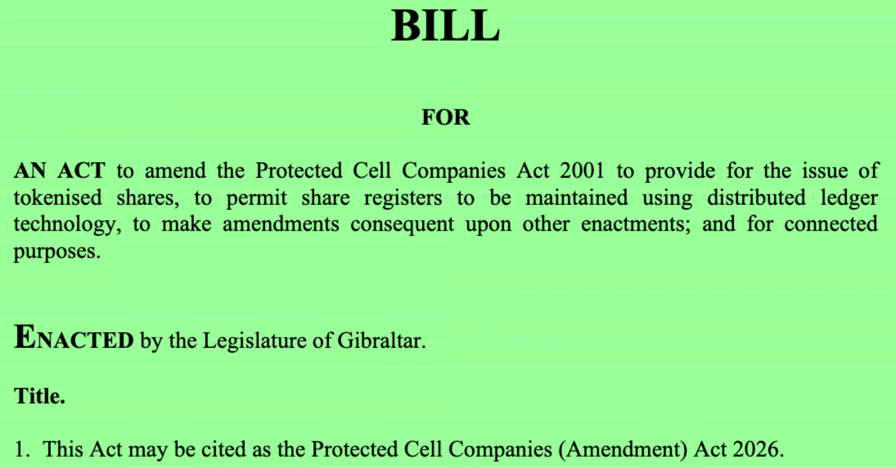
The Protected Cell Companies (Amendment) Bill 2026 states that “the holder of a share token is a shareholder with the same rights and obligations as any other holder of cell shares,” referring to shares linked to specific asset pools within a protected cell company.
Protected cell companies, typically insurance or financial entities, have a core organization that is linked to several independent cells, each with its own balance sheet.
The proposal, which requires approval from the Gibraltar Financial Services Commission, applies to protected cell companies operating as experienced investor funds. Ownership records must be maintained on blockchain-based share registers, with tokenized shares legally equivalent to traditional certificates.
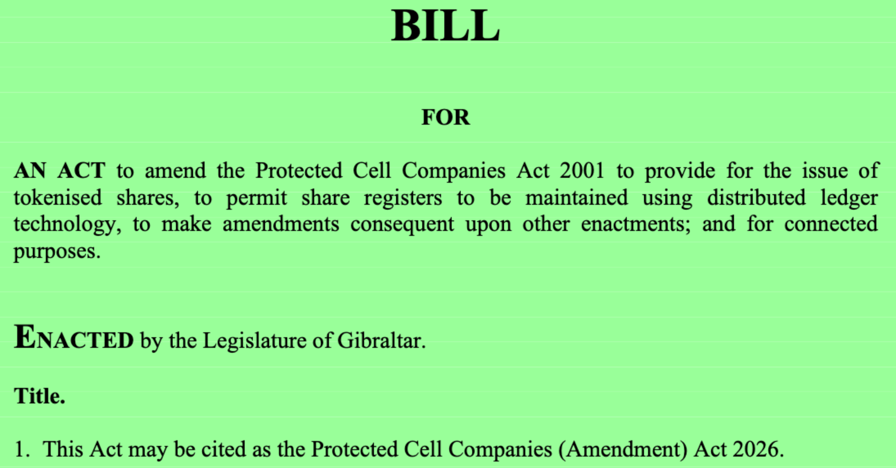
Source: Gibraltarlaws.gov.gi
The framework sets strict rules for custody and transfers, limiting access to verified investors and allow-listed wallet addresses while requiring disclosures on technology risks, cybersecurity and recovery procedures.
Companies must retain control over the underlying infrastructure, keeping the system within a regulated environment rather than an open, permissionless market.
Under the proposal, tokenized shares can be issued and transferred using smart contracts and cryptographic signatures, with blockchain records recognized as valid instruments for ownership, transfer and recordkeeping under existing company law.
The bill must now proceed through Gibraltar’s legislative process before taking effect.
Related: ECB backs tokenized EU capital markets with strict guardrails
Tokenized assets move from pilots to regulated markets
Governments and financial institutions are integrating tokenized assets into regulated financial systems, developing legal frameworks and market infrastructure for blockchain-based securities.
Switzerland was among the earliest jurisdictions to bring tokenized assets under existing financial law, with its regulator approving a crypto fund in 2021 for qualified investors. In 2025, the country expanded that framework by licensing its first distributed ledger technologies (DLT) trading facility, enabling tokenized securities to be traded and settled on regulated infrastructure.
In 2022, Singapore launched Project Guardian to test tokenized assets in wholesale markets, while Hong Kong has issued and expanded a program of tokenized government bonds since 2023.
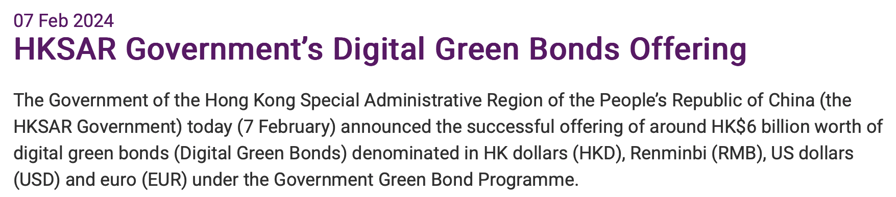
Source: www.hkma.gov
In 2024, the World Bank issued a Swiss franc digital bond on Switzerland’s SIX Digital Exchange with settlement using central bank digital currency.
Most recently, in March, Canada completed a pilot that issued and settled its first tokenized bond on distributed ledger infrastructure.
Magazine: Singapore isn’t a ‘crypto hub’ — it’s something better: StraitsX CEO
Crypto exchange Bullish has expanded its integration with Ripple Prime to give institutional clients direct access to Bitcoin options trading, adding to existing spot, perpetual and futures connectivity through the platform’s prime brokerage network.
The integration connects Ripple Prime users to Bullish’s regulated Bitcoin (BTC) options markets, allowing trades to be funded through existing sub-accounts without additional onboarding, with stablecoins such as Ripple USD (RLUSD) supported as collateral.
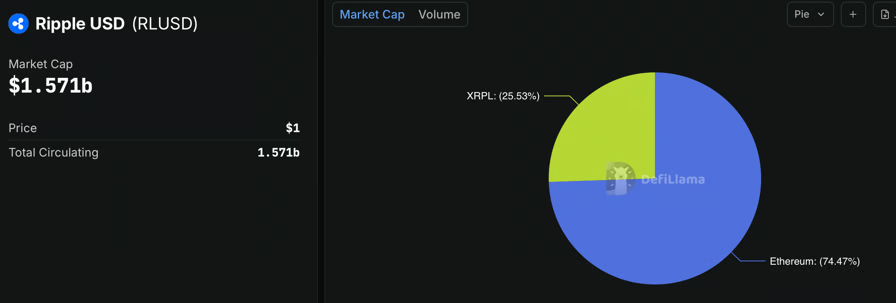
RLUSD is a US dollar-pegged stablecoin designed for payments, settlement and use as collateral in digital asset markets. It has a market capitalization of about $1.57 billion, according to DeFiLlama data.
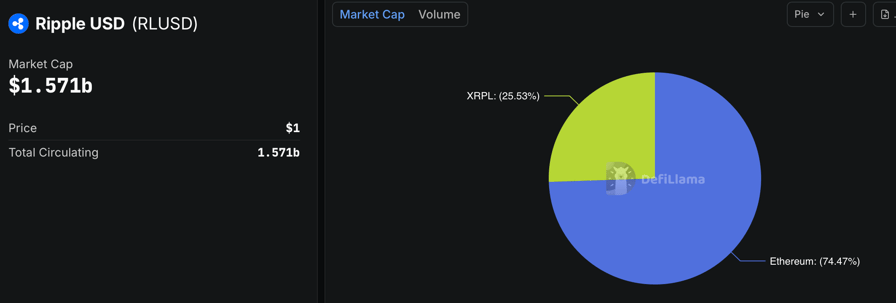
Ripple USD market cap. Source: DefiLlama
The companies said they plan to support cross-venue margin access, which would allow institutions to manage collateral across exchanges and OTC desks from a single account to improve capital efficiency.
Ripple Prime is the company’s institutional prime brokerage platform, formed after its $1.25 billion acquisition of crypto prime broker Hidden Road in 2025. It offers multi-asset brokerage, clearing and financing services and cleared more than $3 trillion in volume in 2025, according to the announcement.
Bullish said its Bitcoin (BTC) options venue ranks among the largest by open interest for crypto-settled contracts. The integration is now live, allowing Ripple Prime clients to begin accessing options markets immediately.
Shares of Bullish have declined sharply over the past year, falling more than 60% from their peak in September and trading around $36.58 at the time of writing. The stock was down roughly 8% in early trading on the day, per Yahoo Finance data.
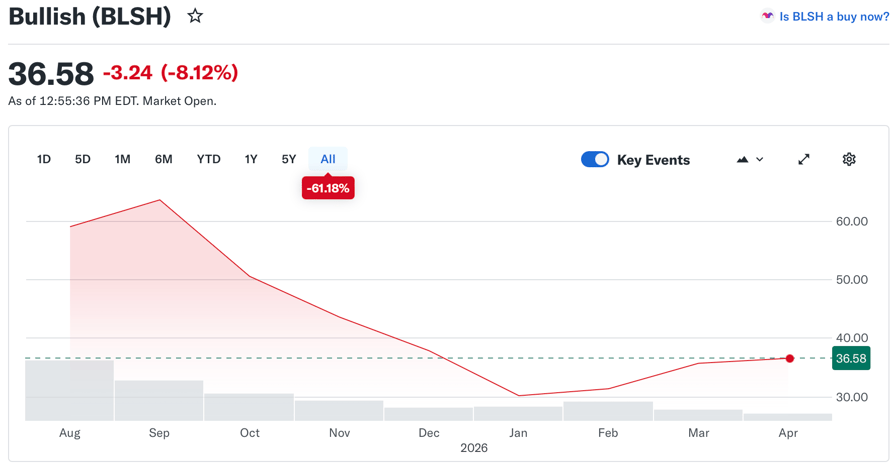
Source: Yahoo Finance
Related: Bitcoin rally falters as AI industry weakens and CLARITY Act approval odds fall
Bitcoin options gain traction as institutions seek risk management tools
Bitcoin’s volatility has made options, which give traders the right to buy or sell an asset at a set price, an increasingly important tool for hedging and trading price swings.
In August 2025, Coinbase finalized its acquisition of Deribit, bringing the largest crypto options venue under its umbrella as part of a broader push to offer spot, futures and options trading on a single platform.
Some corporate Bitcoin holders are also beginning to move beyond passive exposure toward more active risk management using derivatives.
Last week, Nakamoto, a Nasdaq-listed company focused on building a Bitcoin treasury strategy, said it has been running an actively managed derivatives program since early 2026, using BTC as collateral for options-based strategies designed to generate income from volatility while hedging downside risk.
Over the past year, Bitcoin options markets have remained consistently large, with total open interest standing at about $32.8 billion as of late April 2026, up slightly from roughly $30.8 billion a year earlier and peaking above $50 billion during periods of heightened activity, according to CoinGlass data.
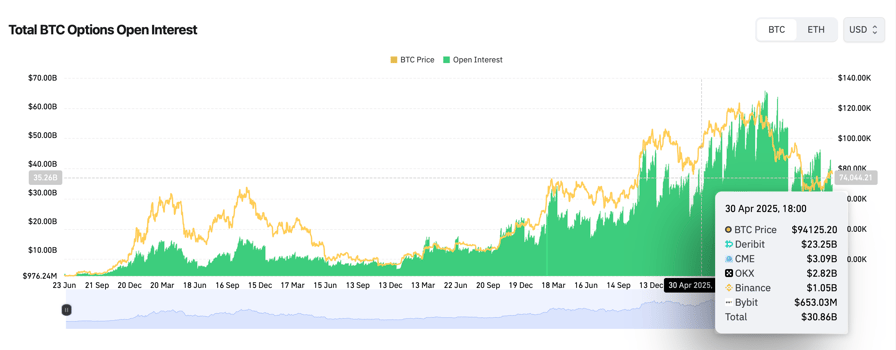
Total Bitcoin options open interest. Source: CoinGlass
Trading is heavily concentrated on Deribit, which accounts for the majority of Bitcoin options open interest, while smaller shares are distributed across venues including CME Group, OKX, Binance and Bybit.
Magazine: How to fix suspected insider trading on Polymarket and Kalshi
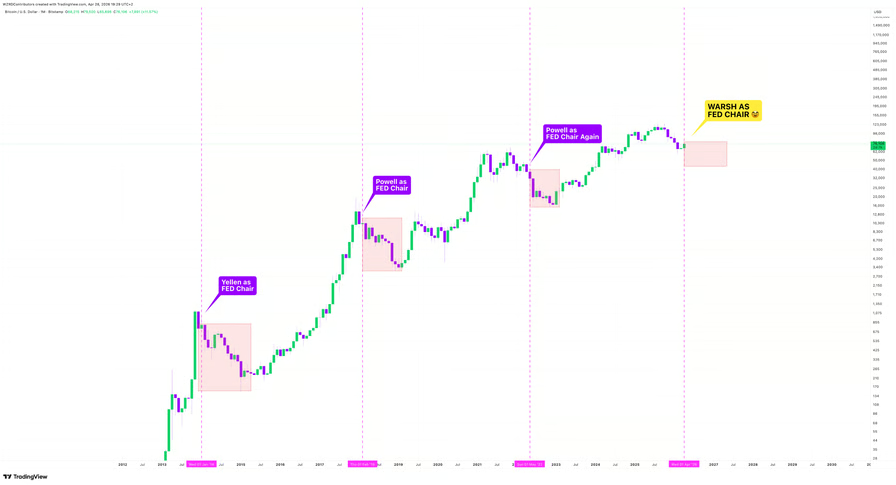
Bitcoin (BTC) may face “a few months” of downside as the new US Federal Reserve chair takes over next month.
Key points:
- Bitcoin may follow risk assets downhill after Kevin Warsh takes over as chair of the US Federal Reserve.
- President Donald Trump has said that he “would” be disappointed if an interest-rate cut did not occur in June.
- Wednesday marks current Chair Jerome Powell’s last rate decision.
Bitcoin price tends to fall after new Fed chair enters
In its latest market coverage on X, crypto trading account CRYPTOWZRD warned that fresh downward BTC price pressure could return in June.
The Fed’s new chair, Kevin Warsh, is due to take over from Jerome Powell — and the stakes are high when it comes to crypto and risk-asset performance.
“Every time a new FED Chair takes over $BTC has corrected for a few months before the real fun began,” CRYPTOWZRD noted.
“Can it break the curse or a final dip?”
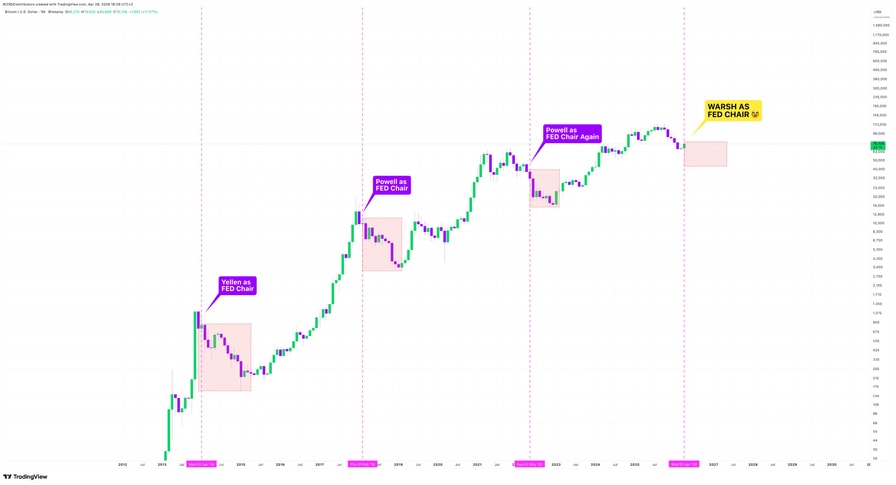
BTC/USD one-month chart with Fed chair appointments. Source: CRYPTOWZRD/X
History shows that a change of management at the Fed pressures stocks as well — but this year, the S&P 500 is at all-time highs as it happens.
The picture is complicated by politics. Powell avoided cutting interest rates — a would-be bullish catalyst for crypto — even as US President Donald Trump publicly shamed him for not doing so.
In an interview with CNBC last week, Trump said that he “would” be disappointed if Warsh did not cut rates at his first Federal Open Market Committee (FOMC) meeting in June.
Powell’s last FOMC meeting is due on Wednesday, with markets unanimously seeing rates being held at current levels, per data from CME Group’s FedWatch Tool.
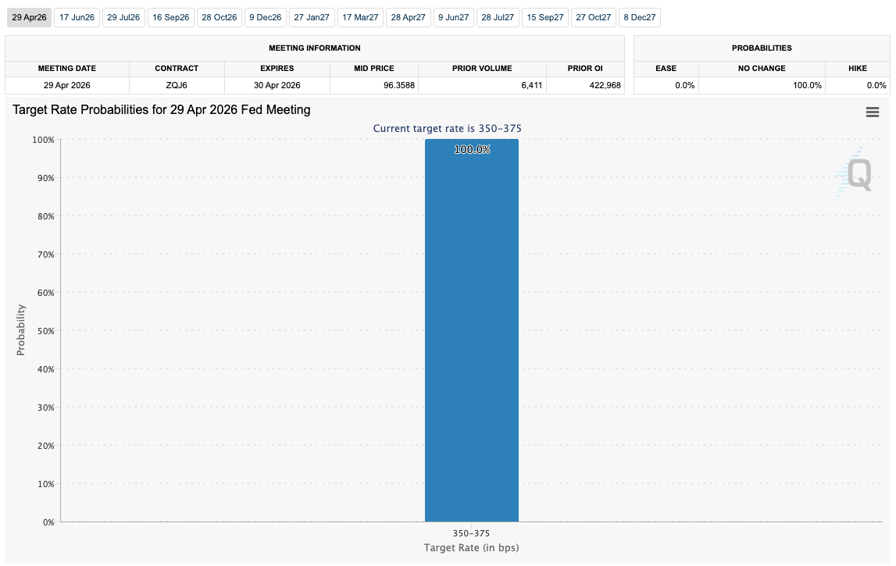
Fed target rate probabilities for April 29 FOMC meeting (screenshot). Source: CME Group
Warsh gives traders mixed signals on policy
Continuing, crypto market participants see potential tailwinds for Bitcoin and altcoins thanks to US macro trends.
Related: Bitcoin Bull Score hits six-month high as 2022 bear-market fears linger
The Fed has begun adding to its balance sheet this year — a form of liquidity catalyst that traditionally benefits markets.
“That’s right, the Fed has added ~$200B of US Treasuries back onto its balance sheet in the last few months,” Bitcoin Opportunity Fund partner James Lavish wrote on the day.
“So much for tightening the money supply. QT is officially over. QE-light is in the house.”
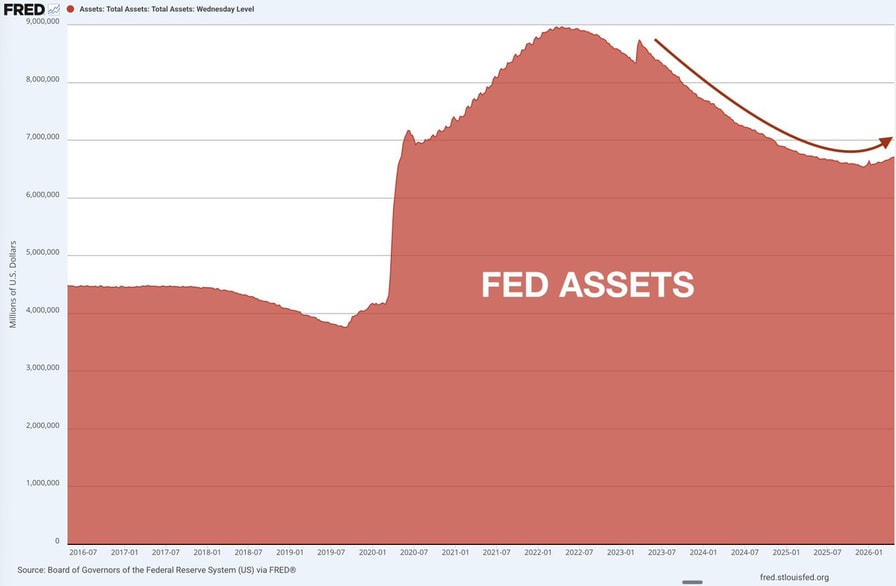
Fed balance-sheet data. Source: James Lavish/X
In recent YouTube content, meanwhile, Charlie Bilello, chief market strategist at wealth manager Creative Planning, revealed what he called a “contradiction” in Warsh’s plans.
While “building the case” for rate cuts, he said, Warsh has been critical of the Fed keeping rates low during the post-COVID-19 inflation surge in 2021 and 2022.
“It was a ‘fatal policy error’ that was what he was saying back then, and I would agree with that,” Bilello said.
Warsh has also criticized balance-sheet expansion, raising questions over the fate of the 2026 uptrend.
The vulnerability that led to ZetaChain’s recent exploit had been flagged through its bug bounty program before the attack, but was dismissed as intended behavior.
In a post-mortem published Wednesday, the team said the incident has prompted a review of how it handles bug bounty submissions, particularly reports involving chained attack vectors that may appear harmless in isolation but are dangerous in combination.
“This bug was reported and they simply ignored it,” one user wrote on X. “That’s how bug bounty programs work with these protocols currently; they incentivize losses for the protocol, the TVL, and the user’s balance instead of paying the researcher for discovering and fixing the bug,” they added.
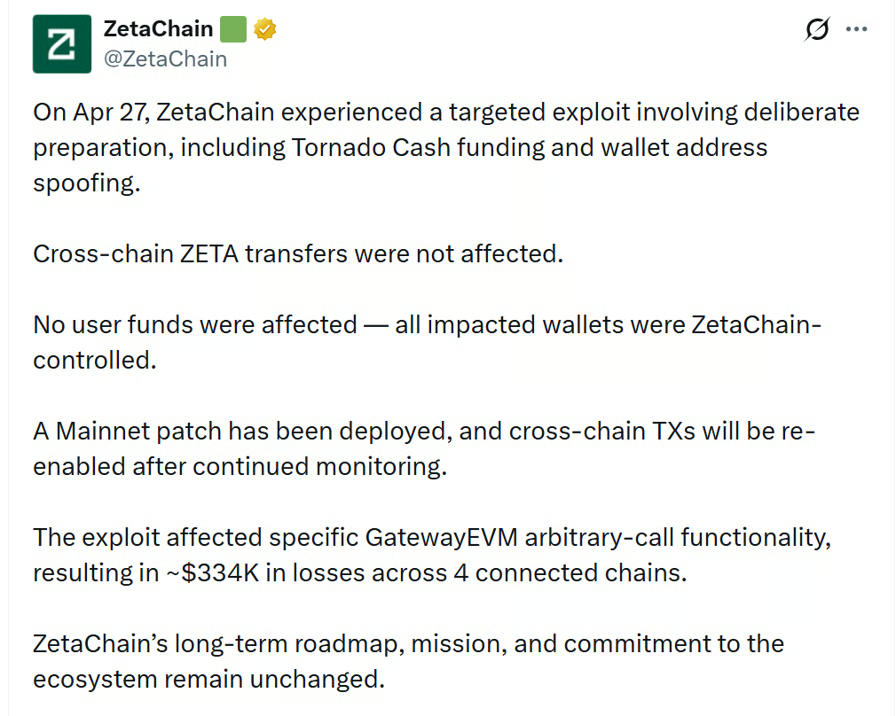
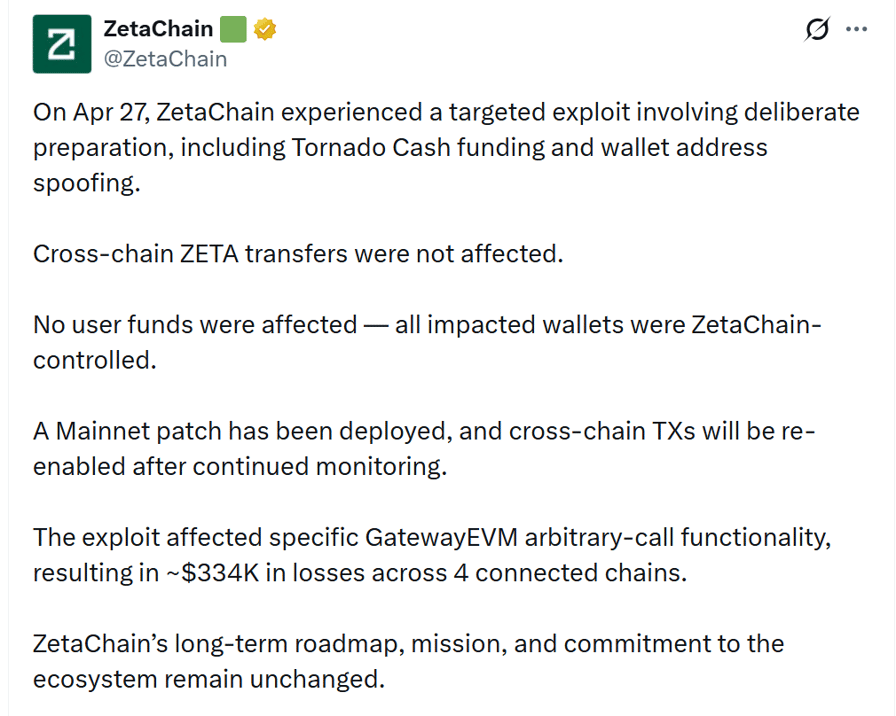
ZetaChain lost approximately $334,000 to a premeditated exploit on Sunday that targeted its cross-chain gateway contract. The exploit drained funds across nine transactions on four chains, including Ethereum, Arbitrum, Base and BSC, all from ZetaChain-controlled wallets. No user funds were affected.
Related: Crypto hackers stole $17B over past 10 years: DefiLlama
Attacker exploits small design flaws
ZetaChain said in its post-mortem that the attacker exploited three design flaws that, individually, might have seemed minor, but together opened the door to a full drain. First, the gateway allowed anyone to send arbitrary cross-chain instructions with no restrictions. Second, on the receiving end, it would execute almost any command on any contract, with a blocklist so narrow it missed basic token transfer functions.
Third, wallets that had previously used the gateway had left unlimited spending permissions in place that were never cleaned up. By combining all three, the attacker simply told the gateway to transfer tokens from victim wallets to their own, and the gateway complied.
Source: ZetaChain
“This was not an opportunistic attack,” ZetaChain said in its post-mortem. The attacker funded their wallet through Tornado Cash three days before the exploit, deployed a purpose-built drainer contract on ZetaChain and ran an address poisoning campaign before seeding it into their transaction history via dust transfers.
ZetaChain added that a patch permanently disabling the arbitrary call functionality is being rolled out to mainnet nodes. The platform also removed unlimited token approvals from its deposit flow, replacing them with exact-amount approvals going forward.
Related: Ethical hacker intercepts $2.6M in Morpho Labs exploit
AI DeFi exploit success rate increases
A new study by a16z tested whether an off-the-shelf AI agent could go beyond identifying DeFi vulnerabilities and actually produce working exploits. Using OpenAI’s Codex against a dataset of 20 real Ethereum price manipulation incidents, researchers ran the agent in a sandboxed environment with no access to future transaction data and no guidance on how the attacks worked. The agent succeeded in just 10% of cases.
However, when researchers fed the agent structured knowledge about common attack patterns and exploit workflows, the success rate jumped to 70%.
Magazine: How to fix suspected insider trading on Polymarket and Kalshi


Leading decentralized exchange Hyperliquid’s push into prediction markets is about who captures the upside, not just cheaper trading, according to Arthur Hayes, co-founder of BitMEX exchange and CIO of Maelstrom fund.
CoinDesk reported earlier that Hyperliquid is preparing a zero-fee-to-open model for event trading under HIP-4. The Hyperliquid Improvement Proposal (HIP)-4 is a proposal that introduces event trading on Hyperliquid.
Hayes said that structure is only the first layer. In a note to CoinDesk, he argued that the real differentiator is HYPE, Hyperliquid’s exchange token, which he said allows users to benefit from platform activity in a way Polymarket and Kalshi currently do not.
“HIP-4 will quickly become a dominate prediction market because of Hyperliquid’s large user base, much cheaper trading fees, and very robust tech infrastructure,” Hayes told CoinDesk. “Users who own the $HYPE token can directly profit from their usage of HIP-4.”
Polymarket is expected to launch a token, often referred to as $POLY.
On Gate, premarket perpetual contracts tied to a potential $POLY token are trading around $14, implying a fully-diluted valuation of roughly $14 billion. HYPE, by comparison, has an FDV of about $38 billion, according to CoinGecko data.
Pre-listing markets are often highly speculative and can be thinly traded, meaning any implied valuation should be treated with caution and may not reliably reflect actual market demand.
The argument also comes down to geography. Polymarket registered with the CFTC last July and is rebuilding its U.S. business, putting compliance at the center of its strategy.
However, in Asia, it is still grappling with how regulators classify its product. It is geoblocked in Singapore, Thailand, and Taiwan, partially restricted in Japan. Meanwhile, in Hong Kong, prediction markets more broadly are on the radar of gambling regulators
Hyperliquid faces no equivalent constraint, and its user base skews toward Asia, where crypto-native trading is already deep.
The contrast is clearest with Kalshi.
As a CFTC-regulated exchange, Kalshi’s model is built around compliance and licensing, not token incentives, which likely rules out the kind of value-accrual layer Hayes is pointing to.
That makes it the most direct test of his thesis. Users can trade event outcomes on Kalshi, but they have no path to the upside of the platform itself. In traditional markets, that kind of upside is typically accessed via equity, such as an IPO, though for now, Kalshi users’ participation is limited to trading on the platform.
Across the three platforms, the split is structural: Hyperliquid already ties usage to a token, Polymarket appears to be moving in that direction, and Kalshi’s model likely prevents it altogether.
Hyperliquid has published a fee model for outcome tokens on its testnet. The disclosure follows HyperCore’s backing of HIP-4.
The proposal brings outcome trading to the venue and sets up a challenge to leading prediction market players, Kalshi and Polymarket.
Hyperliquid Reveals Six Fee Scenarios for Outcome Token Trading
According to the updated documentation, the framework, currently live on testnet, applies fees only when traders close or settle outcome positions, not when opening them.
The outcome token fee logic covers six specific scenarios. Minting incurs no fees and does not contribute to trading volume. Normal trades may charge only the maker, or no one at all.
Burning trades may incur fees on both sides or only on the taker. Settlement distributes payouts proportionally based on the settlement fraction. The overall design lowers entry costs for traders while still capturing revenue at exit.
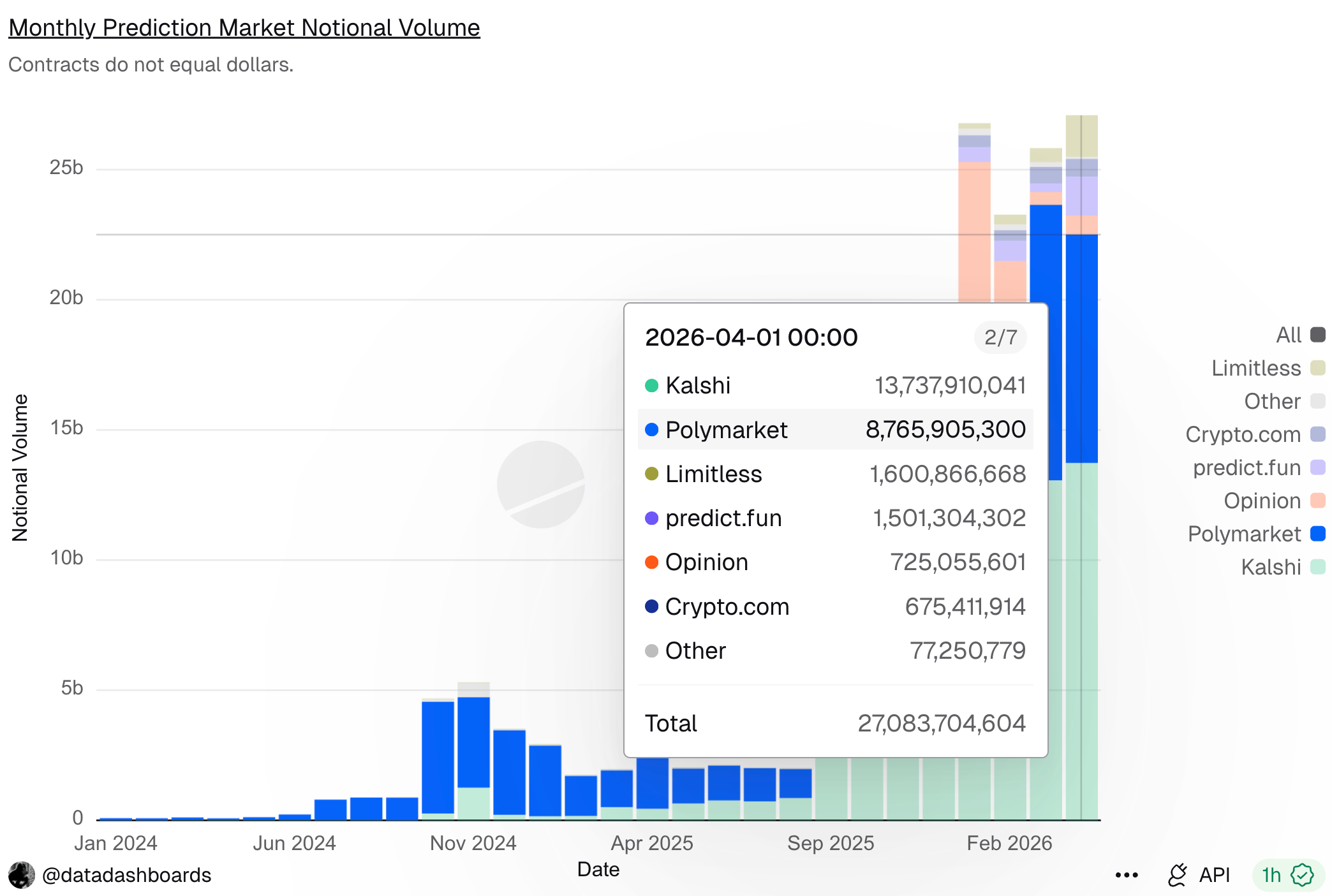
The fee disclosure positions Hyperliquid as a serious entrant in one of the fastest-expanding sectors. Monthly notional trading volume in prediction markets surged more than 520% to an all-time high of $27 billion in April. Kalshi and Polymarket account for the bulk of that activity.
Follow us on X to get the latest news as it happens
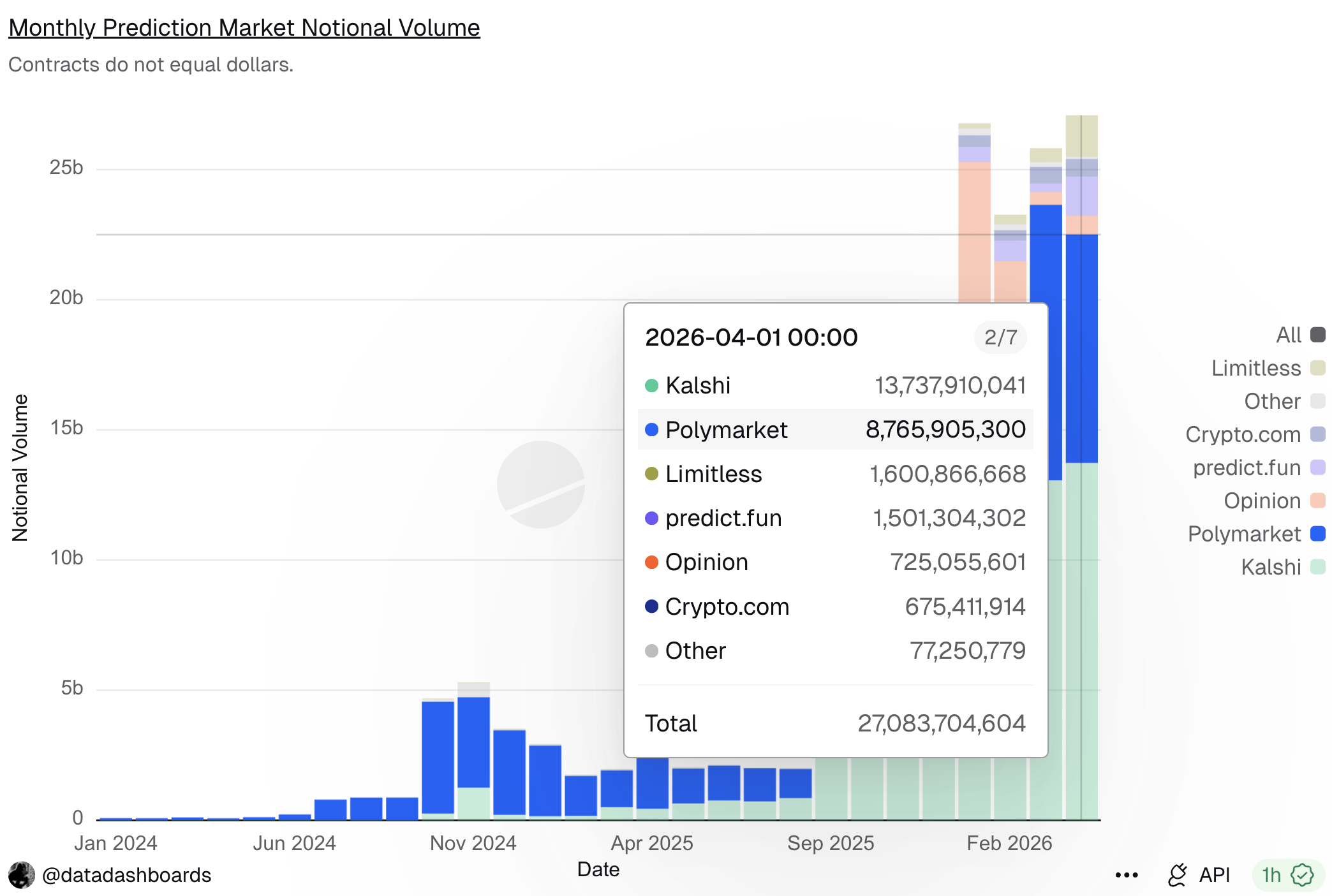
At the same time, competitive pressure is building. Coinbase entered the space by launching prediction markets for US users in partnership with Kalshi, while Polymarket has indicated plans to introduce perpetual trading products.
Taken together, these developments signal that platforms are increasingly expanding their product suites and integrating diverse trading features to attract and retain users.
Subscribe to our YouTube channel to watch leaders and journalists provide expert insights
The post Hyperliquid Sets Outcome Token Fees as Prediction Market Race Heats Up appeared first on BeInCrypto.
Crypto World
Prediction Markets Hit $25.7B Monthly Volume as Retail Traders Take the Lead in Q1 2026

TLDR:
- 82.3% of Polymarket users traded under $10,000 in Q1 2026, confirming strong retail market dominance.
- Sports generated $10.1B in Q1 volume, with the NBA leading at $3.11B across 300,000 active users.
- Esports titles produced $1.47B in Q1, with median bets between $6–$9, surpassing traditional sports
- Monthly prediction market volume surged from $1.2B in 2025 to $25.7B by March 2026, per Polymarket data.
Prediction markets recorded explosive growth in Q1 2026, backed almost entirely by retail traders. Bitget Wallet partnered with Polymarket and Dune Analytics to analyze behavior across 1.29 million wallets during the quarter.
The data covered who was trading, what they were trading, and what brought them back. Monthly volume climbed from roughly $1.2 billion in 2025 to $25.7 billion by March 2026.
Bernstein projects the category could reach $240 billion in annual volume this year.
Retail Behavior Shapes the Prediction Markets’ Landscape
In Q1 2026, 82.3% of Polymarket users traded under $10,000 across the entire quarter. Only 2.5% of users crossed the $100,000 mark during that period.
The average micro user traded just $35, and the average light user reached $392. These numbers confirm that small traders, not institutions, are currently defining this market.
Crypto served as the primary entry point for new users entering the space. It accounted for 39.6% of activity among the smallest traders on Polymarket.
Bitcoin alone drew 593,000 users and $5.42 billion in trading volume in Q1. The median Bitcoin trade stood at just $3.16, placing the barrier to entry at nearly zero.
As users became more active, their behavior shifted notably. They did not increase individual trade sizes; instead, they traded across more categories.
Micro users averaged 2.5 active days and 1.45 categories, while mid-tier users reached 9.9 active days and over 2.3 categories. Broader exploration, not bigger bets, drove deeper engagement throughout the quarter.
Bitget Wallet shared these findings in a post on X, noting that prediction markets now resemble a consumer app more than a financial product.
The firm also noted that crypto’s share of activity gradually fell to 36.8% among mid-tier traders. It remains the most effective onboarding tool in the category. However, it is not what retains users over the long term.
Sports and Category Frequency Fuel Long-Term Engagement
Sports emerged as the largest category on Polymarket in Q1, generating $10.1 billion in volume. Participation in sports markets rose from 22.7% among micro users to 29.2% among mid-tier users.
A 45% surge in March was driven by the NBA season and NCAA March Madness. The NBA alone attracted 300,000 users and $3.11 billion in trading volume.
European football leagues also drew substantial international participation during the quarter. The English Premier League generated $540 million, the Champions League contributed $448 million, and La Liga added $368 million.
NCAA Basketball produced $900 million in volume. These figures show that sports markets have a truly global audience.
Esports performed well above expectations within the sports category. League of Legends generated $657 million, CS2 added $536 million, and Dota 2 contributed $209 million.
Together, those three titles produced roughly $1.47 billion in Q1. Median bet sizes in esports ran between $6 and $9, higher than in most traditional sports.
Frequency of engagement proved to be a key retention driver across all categories. Weather markets surged 263% in March, led by daily temperature forecast predictions.
Crypto markets generated $7.3 billion in Q1, rising 55% as an always-on trading environment. Categories with built-in recurrence consistently showed stronger user return rates across the quarter.


XRP (XRP) price was up 1.2% over the last 24 hours to trade at $1.40 on Wednesday. Several market and technical factors suggest that the XRP/USD pair may climb further as long as key support levels hold.
Key takeaways:
- Spot XRP ETFs are set to record their strongest monthly inflows since December 2025, signaling renewed institutional demand.
- A symmetrical triangle setup sees XRP price rising roughly 53% as long as support at $1.40 holds.
Ripple CEO on XRP: “Lock in”
Ripple CEO Brad Garlinghouse is urging the XRP community to “lock in” as massive marketing campaigns take over the Las Vegas Strip ahead of the XRP Las Vegas 2026 (XRPLV26) conference.
Related: Bitcoin, stocks risk ‘months’ of losses as Kevin Warsh Becomes Fed chair
The event, which is scheduled for Thursday and Friday will focus on the expanding XRP ecosystem, next-generation applications on the XRP Ledger and community building.
On Tuesday, OKX, a major crypto exchange, posted an image of the Las Vegas Sphere lit with the XRP logo, which Ripple CEO Brad Garlinghouse reposted with a simple directive to his followers: “Lock in.”

Source: X/OKX/Brad Garlinghouse
Ripple has heavily promoted the event with massive “Raise the Standard” XRP billboards across the Las Vegas Strip, timed with the ongoing Bitcoin 2026 conference. This has sparked renewed hype and social media buzz around the event.
However, historical patterns show Ripple/XRP events rarely trigger sustained price rallies. For instance, XRP price gained 16% over the week following Ripple’s Swell 2025. But this was followed by a 30% drop from $2.56 to $1.81 between Nov. 11 and Nov. 21 of that year.
Therefore, without major concrete announcements emerging from the stage, any upside may quickly fade amid broader market forces.
XRP ETF demand is “still alive”
XRP spot ETFs are gaining steady momentum again, with the latest inflows showing that investor demand is not just returning but holding firm at elevated levels.
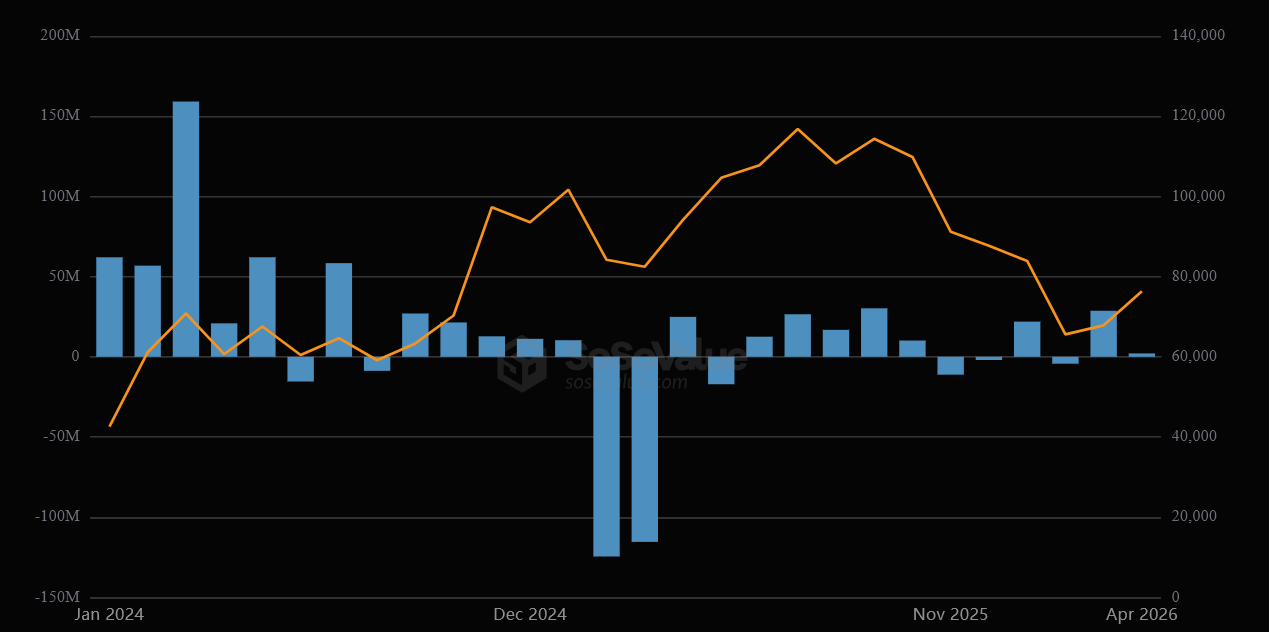
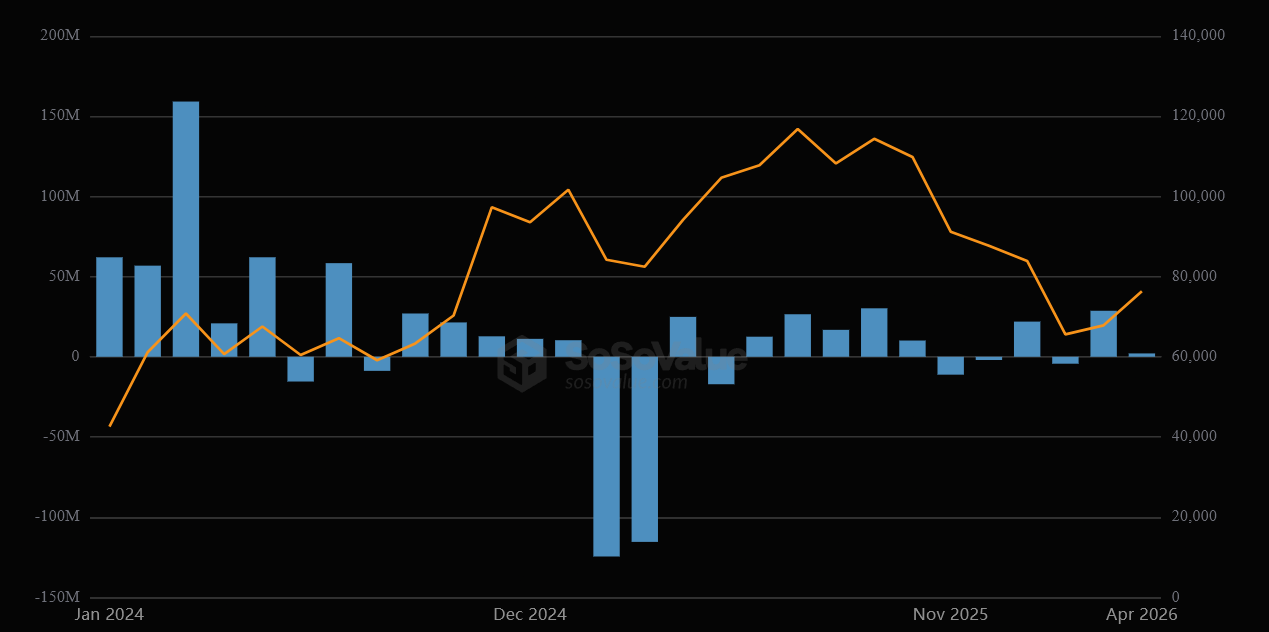
These investment products posted inflows in 11 of the last 13 days, totaling $82.42 million, according to data from SoSoValue.
XRP ETFs have already pulled in $83.9 million in net inflows in April, marking a strong rebound from March’s $31.16 million outflow.
This reversal makes April the “strongest monthly inflow since December 2025,” signaling a notable shift in momentum, analyst Xfinancebull said in a Monday post on X, adding:
“That does not guarantee instant price fireworks, but it absolutely tells me the bid for regulated $XRP exposure is still alive and building.”
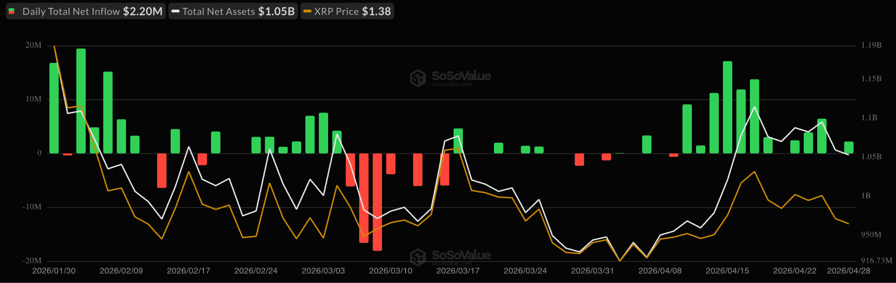
Spot XRP ETF flows chart. Source: SoSoValue
Meanwhile, global XRP exchange-traded products (ETPs) posted inflows totaling $25 million during the week ending Friday. XRP ETPs have now recorded $148 million in net inflows so far in 2026, bringing the total assets under management (AUM) to roughly $2.6 billion.
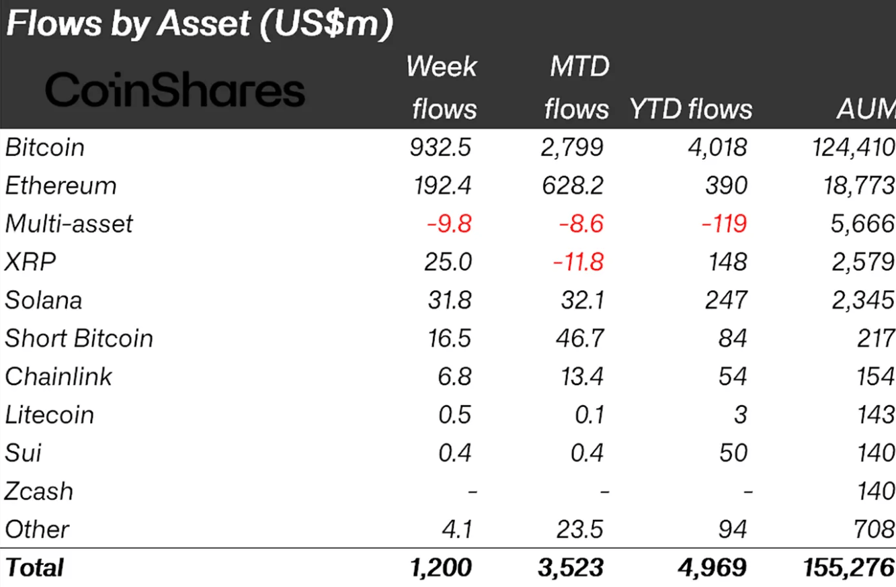
Crypto funds net flows data. Source: CoinShares
This indicates a sustained institutional appetite for XRP products, adding to XRP’s tailwinds.
As Cointelegraph reported, exchange outflows, positive flows into whale addresses and strong ETF demand improve XRP’s chances of a sustained price recovery.
XRP price technicals put 50% rally in play
The XRP/USD pair has spent nearly three months inside a symmetrical triangle, defined by two converging trend lines. Its rebound from the lower trend line support on Wednesday now raises the odds of a move toward the upper boundary.
A daily candlestick close above the upper line of the triangle at $1.45 would open the way for a rally toward its measured target at $2.15, about 53% above the current price.
However, bulls must overcome resistance from the 100-day exponential moving average (EMA) at $1.52 and the 200-day EMA at $1.75, before reaching this target.
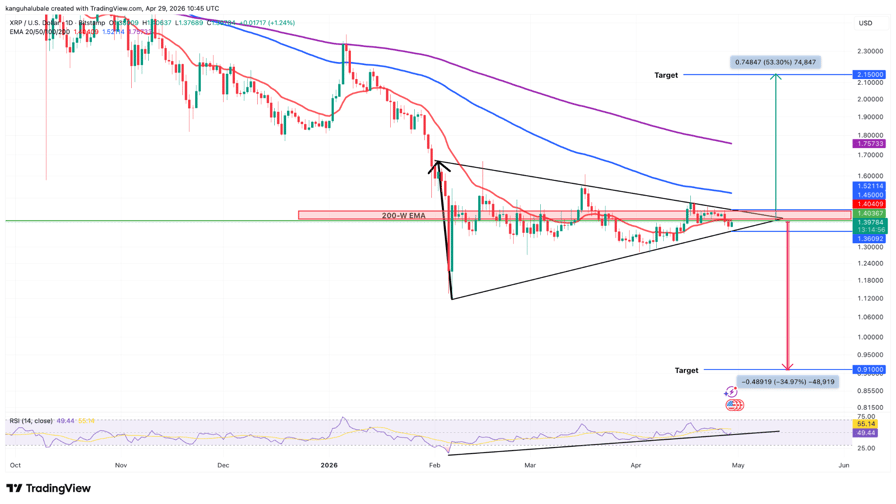
XRP/USD daily chart. Source: Cointelegraph/TradingView
Notably, XRP’s chances hinge on bulls defending support at $1.40, which is also the 200-week EMA and the 20-day EMA, making this a key level. A decisive break below it risks invalidating the bullish narrative altogether.
It may instead raise the odds of the price declining toward the $0.98 mark, aligning with the triangle’s bearish target.
As Cointelegraph reported, a break below the moving averages around $1.38-$1.40 could see XRP price drop toward $1.12 over the next few days.


Amazon, Alphabet, Microsoft, and Meta all report Q1 2026 AI earnings after the close on April 29, with crypto traders tracking whether their combined $600 billion in planned 2026 AI capital expenditure is translating into commensurate revenue and cloud growth.
Summary
- The four companies collectively plan to spend over $600 billion on AI infrastructure in 2026, with the central market question being whether that spend is producing measurable revenue acceleration.
- Bitcoin has risen in correlation with tech stocks and Nvidia this year, meaning a disappointing earnings cycle could hit crypto via the same risk-off channel that equity selloffs typically trigger.
- Microsoft Azure growth above 38%, AWS above 25%, Alphabet Cloud above 48%, and Meta advertising margins above 40% are the specific thresholds analysts are watching as proof that AI monetization has arrived.
AI earnings season reaches its most concentrated single session on April 29 when Amazon, Alphabet, Microsoft, and Meta all report after the close, the same afternoon as Powell’s final FOMC press conference. Yahoo Finance noted that capital expenditure guidance has overtaken headline earnings as the most market-sensitive line item, with combined 2026 AI infrastructure commitments of roughly $200 billion from Amazon, $175 to $185 billion from Alphabet, $146 billion from Microsoft, and $115 to $135 billion from Meta.
AI Earnings Results Could Move Crypto Either Direction Before Asia Open
As crypto.news reported, the last time Big Tech AI capex figures landed without sufficient revenue justification, top AI tokens dropped over 20% and Bitcoin fell sharply in the same session, as investors feared that astronomical infrastructure costs would erode margins before monetization arrived. The February 2026 episode illustrated how tightly crypto has become correlated with the AI investment narrative: a miss on cloud growth or a raised capex guide without matching revenue acceleration is processed by markets as evidence that the AI return on investment timeline is longer than priced, which tightens risk sentiment across both equity and crypto simultaneously. For tonight’s reports, the specific thresholds that matter are Microsoft Azure growth above 38%, AWS above 25%, Google Cloud above 48%, and Meta advertising margins above 40%. Any of these numbers coming in materially below expectation, particularly combined with raised capex guidance, would be a negative catalyst for Bitcoin after the Asia open.
The Bitcoin-AI Correlation That Makes Tonight Matter
As crypto.news documented, the correlation between Bitcoin and Nvidia reached elevated levels during a three-month rolling window through late 2025, and data from the Nasdaq showed a materially positive aggregate relationship between tech earnings outcomes and subsequent Bitcoin price action. The mechanism is direct: when AI-related equities sell off sharply on earnings disappointments, macro and growth funds reduce exposure across risk assets simultaneously, and Bitcoin, despite its non-sovereign properties, gets caught in the liquidity contraction alongside everything else that front-ran the AI spending boom. A beat cycle in which all four companies show cloud growth meeting or exceeding consensus, with AI revenue lines contributing meaningfully to that growth, would remove the single largest overhanging risk for risk assets heading into May.
What a Beat or Miss Means for Crypto Through the Weekend
As crypto.news tracked, the core concern analysts have raised repeatedly about the Big Tech AI capex cycle is the gap between infrastructure spending and actual profit generation. A Massachusetts Institute of Technology study found that despite $30 to $40 billion in enterprise spending on generative AI, 95% of companies reported no measurable return as of 2025. If tonight’s reports confirm that the hyperscaler cloud platforms are beginning to monetize that spend through sustained revenue acceleration, the relief rally in tech stocks would flow through to crypto via the same correlation channel that makes bad earnings dangerous. If the prints disappoint on the metrics that matter, Bitcoin at $77,000 after a 21% April rally represents exactly the kind of elevated entry point from which post-event corrections tend to be sharpest.
Strategy reports Q1 2026 earnings on Tuesday May 5, making tonight’s Mag 7 results the first major earnings signal of the week before Bitcoin’s most watched corporate treasury holder updates its own results.


Tech giant Meta has begun stablecoin payouts to select creators. This signals a cautious return after its earlier high-profile retreat from the stablecoin sector.
The feature is currently limited to a select group of creators in Colombia and the Philippines. Eligible users can receive payments in USDC through supported crypto wallets on the Solana and Polygon blockchain networks.
Meta Selects USDC for Stablecoin Payouts
To access the service, creators must link a cryptocurrency wallet to the payout system. Notably, Meta does not offer built-in conversion services to local currencies, meaning recipients will need to rely on external platforms to convert their USDC to fiat if needed.
Meta has also teamed up with Stripe to handle certain crypto-related tax reporting requirements for stablecoin payouts.
“As stablecoin payments involve digital assets, you may also receive specific crypto-related reporting directly from Stripe. We recommend keeping both your Meta payment history and your Stripe records for your tax filings,” the webpage reads.
The launch tracks earlier reports that Meta planned to re-enter stablecoins this year. The plan was always to use third-party integration rather than launch a proprietary token. Stripe was widely flagged as the leading integration partner.
Meanwhile, both networks chosen for the rollout publicly endorsed the integration. Polygon Labs CEO Marc Boiron told Fortune the program is expected to reach more than 160 countries by year-end.
Follow us on X to get the latest news as it happens
The Solana Foundation also welcomed the news. Head of product Catherine Gu framed Solana as a default settlement layer for internet-scale payments.
Meanwhile, the pivot also marks a clear break from Diem, the rebranded Libra project Meta scrapped in 2022. That effort collapsed after sustained pushback from lawmakers. This time, the company is plugging into existing infrastructure rather than issuing its own asset.
The post Meta Begins Stablecoin Payouts to Select Creators in Colombia and Philippines appeared first on BeInCrypto.

Iran-US war latest: Oil prices leap as Trump weighs military options over Strait of Hormuz

Vedanta earns record profit in Q4, plans to reduce debt
Gibraltar Proposes Legal Framework for Tokenized Funds

Manchester United reach agreement with Casemiro over contract clause amid transfer speculation

US brings back mandatory military draft registration

Steven Gerrard disagrees with Gary Neville over ‘shock’ Chelsea and Arsenal claim | Football


-

 Tech2 days ago
Register Renaming | Hackaday
-

 Fashion5 days ago
Weekend Open Thread – Corporette.com
-
Crypto World4 days ago
Hyperliquid $HYPE Rally Builds Momentum as AI Sector Enters Prove-It Phase
-

 Business6 days ago
Patterson-UTI Energy, Inc. (PTEN) Q1 2026 Earnings Call Transcript
-
 Sports4 days ago
IPL 2026: Ruturaj Gaikwad registers slowest fifty of the season, enters all-time unwanted list | Cricket News
-

 Politics2 days ago
Drax board avoid their own AGM, accused of greenwashing & environmental racism
-

 NewsBeat4 days ago
LK Bennett closes all stores after entering administration
-

 Crypto World6 days ago
Michael Saylor says BTC winter is over. Market analyst disagrees, says bitcoin was in a pullback
-

 Fashion1 day ago
Kylie Jenner’s KHY Enters a New Era with ‘Born in LA’
-
Entertainment7 days ago
Michael B. Jordan and Austin Butler's “Miami Vice” movie will bring the action back to the '80s
-
 Entertainment4 days ago
Mariah Carey Slams Deposition Claims In Brother’s Lawsuit
-

 Tech2 days ago
Images of Samsung’s rumored smart glasses have leaked
-
Entertainment7 days ago
Russell Brand Had Sex With 16 Year Old When He Was 30
-

 Business1 day ago
Most Commercial Energy Audits Miss the Real Losses
-
Crypto World6 days ago
Is Algorand One of the Few Quantum-Resistant Blockchains? Here’s What the Data Shows
-
 NewsBeat6 days ago
Trump threatens to review UK’s claim to Falkland Islands and punish Nato allies over Iran war disagreement
-

 Sports7 days ago
2026 NFL Draft tonight: Time, TV channel, where to watch, order
-

 Sports7 days ago
Bayern Munich on the brink of historic ‘double treble’
-

 Business6 days ago
Jeanine Pirro announces closure of Federal Reserve building cost probe
-

 Business3 days ago
(VIDEO) Charlize Theron Climbs Times Square Billboard to Promote New Netflix Thriller ‘Apex’
You must be logged in to post a comment Login