

Connect with us
DAPA Banner

Politics

The House Article | The UK should learn from France in making electric vehicles affordable

Published

on

The UK should learn from France in making electric vehicles affordable


4 min read

The French example shows there is significant public demand for electric vehicles when economic conditions are met.

Advertisement

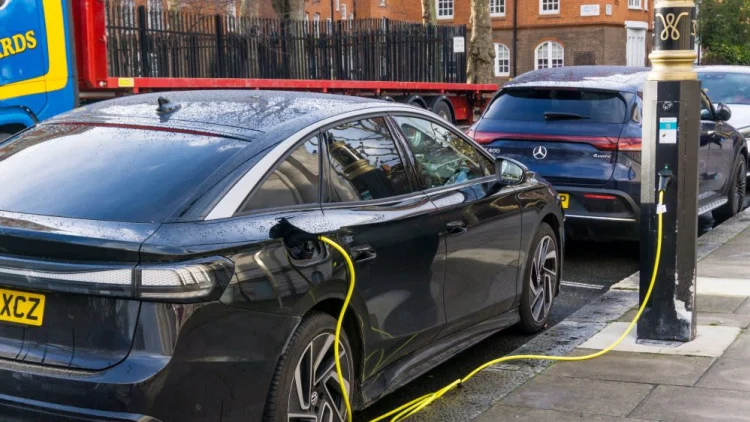
The UK’s electric vehicle transition is well on track, with electric vehicles (EVs) making up almost a quarter of new car sales in 2025, and recent AutoTrader data showing that, for the first time, new electric cars are on average cheaper to purchase than the petrol models.

Despite this, lower-income households still face significant financial obstacles to replacing petrol and diesel vehicles with EVs. The cheapest available lease for an EV remains above what lower-income households typically spend. Currently, the bottom 40 per cent of earners spend under £100 a month on motoring purchases or leases, while the cheapest EV lease is £141, creating an affordability gap.

This entrenches social inequalities, as higher-income households can benefit from the lower running costs of an EV, while lower-income households often end up driving older petrol or diesel vehicles, which cost more to run and are more polluting.

The recent oil‑price crisis has deepened this inequality. EV drivers are around five times less likely than petrol or diesel drivers to be impacted by fuel‑price spikes. Meanwhile, 58 per cent of the UK’s oil imports are used in transport – leaving the country dangerously vulnerable to price shocks. This highlights the role of EVs not just as a climate measure, but as a tool to reduce household vulnerability to volatile fossil‑fuel markets.

Advertisement

An alternative is possible. In 2023, France began to address this inequality head‑on by introducing social leasing. The programme offers lower‑income households access to EVs from €49 to €150 per month. Within six weeks of launch, the scheme received applications for more than triple the number of available places, a strong signal that demand for affordable EVs exists once the necessary economic conditions are met.

Now, with the war in Iran drawing further attention to the cost benefits of EVs, the French government has doubled down on electrification. It announced a range of new measures to reduce France’s dependence on volatile oil and gas, including funding another 100,000 social leases for lower-income households and high-mileage drivers.

The UK should follow France’s lead. Transport & Environment UK’s analysis suggests that for the same cost as continuing to freeze fuel duty for another year, the government could fund social leasing for up to 230,000 households, bringing monthly lease costs down to as low as £77. This could be sustainably funded by a modest tax on large luxury SUVs, which fairly reflects the impact larger vehicles have on our roads and communities. It would also help to support British EV manufacturing, as vehicle eligibility for the scheme could be based on criteria that prioritise made-in-UK or EU models.

Advertisement

The UK could not only learn from France, but also go even further. First, subsidy levels could be adjusted to prioritise value for money and allow even more households to benefit. The overwhelming demand for the first cohort of the French scheme, where subsidy levels reached as high as €150 a month, suggests demand would remain strong even at lower subsidy levels.

A £100 monthly subsidy would bring EV leases within the typical expenditure of middle- to lower-income households, before even accounting for the savings from significantly lower running costs. For a typical social care worker, this could provide savings of over £1000 on lease costs alone over a vehicle term.

Second, the UK could subsidise bundled leases that include charging, maintenance and insurance costs to clearly signal the cost benefits of EVs to lower-income households and combat misinformation.

Third, offering scrappage bonuses for old, polluting cars as a discount on EV leases could help tackle air pollution while making EVs more affordable.

Advertisement

The EV transition is succeeding in the UK, but intervention is needed to ensure that everyone has access to the benefits. France’s success with social leasing has shown just how popular EVs are once the economics work. The UK must follow in its footsteps – to cut bills for lower-income households, increase our energy independence in uncertain times, and fight the climate crisis.


Eloise Sacares is a senior vehicles policy researcher at Transport & Environment UK

Source link

Advertisement
Continue Reading
Click to comment

You must be logged in to post a comment Login

Leave a Reply

Politics

A bag of sand: celebrating the end of no-fault evictions

Published

on

Renters' Rights Act

Renters' Rights Act

Looking back at the events around my section 21 ‘no fault’ eviction, I can see how a random event led to the actions of my landlord of ten years.

I had become aware that the wall of my front yard had caved-in – probably the result of a car backing into it. Reluctantly, this was something I had to pass onto my landlord.

It took ages for anyone to come and fix the wall, but when they did, they didn’t finish it. Instead, they left some tools and a bag of sand in my neighbour’s driveway.

My neighbour complained to me, so again, I had to pass this onto my landlord. I also informed him that the wall hadn’t been finished.

Advertisement

This was approaching the time when my contract for the next rental period would be signed. As I waited for that email from my letting agent about my contract, I had a horrible feeling. I’d been hearing about no-fault evictions, and evictions using section 21 from disgruntled landlords not wanting to do repairs.

Section 21

I tried to push this out of my mind, but the email I usually got about my contract was late. Then, one day, I got an alert on my phone. My landlord of ten years now wanted me out in two months, under section 21.

Initially, I felt sick. I knew just how few properties were accessible and available for people under the age of 55. But it wasn’t just that. As someone with severe physical disabilities, I knew packing up a two-bedroom home would be impossible for me, and in that initial period, I had little support available.

As I panicked about the situation, I couldn’t eat. My weight plummeted. As bones started to protrude, they also got sore. As I have a lack of sensation below my waist, one sore positioned right at the bottom of my back (initially unseen and untreated) began to fester.

Advertisement

I spent every day for two months trying to find an accessible home, both through the council and privately, but everything that was accessible was sectioned-off for the elderly. My health became even more precarious with my mental health deteriorating just as much as my physical health. With nowhere to move to, I had to beg my landlord for another month.

It was only the kindness of my friends on social media, supporting me emotionally and practically, that got me through this time. This included one friend who, with her husband, helped me pack up my home. Another, a landlord, provided an accessible flat for me. This kindness was overwhelming and literally lifesaving.

Renters’ Rights Act 2026

Knowing that this flagship Labour policy will now be law will make such a difference, particularly for those with disabilities.

The Renters’ Rights Act should increase communication between tenants and landlords and help root out those unscrupulous landlords who just see their tenants as money in the bank. It doesn’t prevent evictions, but landlords will need a justified reason, such as anti-social behaviour or a tenant not paying rent.

Advertisement

There are other rights and responsibilities in this Act, and all renters and landlords should carefully look at what is going to change. The Shelter website is a good place to start.

The result of grassroots campaigning

This legislation – the result of a massive grassroots campaign – is something that should be celebrated, as it gives certainty and clarity for both renters and landlords. As Section 21 evictions are/were the leading cause of homelessness, it should also help lessen the load and cost on councils, in terms of having to provide temporary accommodation.

The Renters Reform Coalition (RRC) – an alliance of 16 leading housing and renters’ organisations – has campaigned for this legislation since its inception in 2020. The RRC Director said:

This Act will fundamentally rebalance the relationship between tenant and landlord, empowering England’s 11 million private renters to stand up for their rights without fear.

Sarah Elliott, chief executive of Shelter, posted back in October 2025:

Advertisement

The Renters Right act is the victory of a lifetime for renters who have fought for years for better protections. We are grateful to the government for making these landmark changes.

All for a bag of sand

As mentioned earlier, the weight-loss I suffered due to the stress of the eviction resulted in a very deep ‘grade four’ pressure sore on my lower back. When I moved, the district nurses swooped-in to deal with it. But even with their care and dedication, it took over three years for it to finally close.

It’s hard to fathom how a bag of sand, led to a section 21 eviction, and resulted in so much physical damage. But that’s what happened. I’m not alone, thousands of lives have been overturned with these ‘no fault’ evictions. Such horror stories will finally become a thing of the past and that’s worth celebrating.

By Ruth Hunt

Source link

Advertisement
Continue Reading

Politics

Sultana condemns “disgusting” Rowling attempt to exploit Golders Green stabbings

Published

on

Rowling accused by Sultana of exploiting Golders Green stabbing

Rowling accused by Sultana of exploiting Golders Green stabbing

Your Party MP Zarah Sultana has condemned reactionary author JK Rowling for what she called a “disgusting” attempt to exploit yesterday’s knife attack on two Jewish men in Golders Green.

Sultana had unequivocally condemned the attack by a man with a known history of mental health issues and violence:

‘Shaking off chains’

However, Rowling claimed that supporting ‘intifada’ — which means ‘shaking off chains’ — is the same as supporting violence against Jews. And she decided to use this claim to smear Sultana and her 14m followers on X:

Unsurprisingly, Rowling appears to be talking out of an alternative orifice. The first Intifada (1987 — 1993) was a peaceful campaign of non-violent resistance to Israeli oppression. This puts beyond genuine question that the real meaning of the word is not what is presented by supporters of the ethno-supremacist colony. Israel mouthpieces ‘forget’ that, naturally.

Advertisement

Sultana took the smear head-on, pointing out Rowling’s complicity in Israel’s slaughter of innocent Palestinians:

Thousands of online users agreed with her. Here are just a few example.

Caution: Some content may be distressing or triggering.

Featured image via the Canary

Advertisement

By Skwawkbox

Source link

Advertisement
Continue Reading

Politics

Wings Over Scotland | Seven Days Too Long

Published

on

It’s nearly over, readers. Just one more week of this to endure.

The most miserable election campaign of all time will end next Thursday with an election which will deliver Scotland’s most miserable devolved government of all time. Only the exact form, colour and shape of the misery remains to be determined.

So as the SNP promise through forked tongues to cut the cost of living with a pledge they know full well they have no chance of being able to actually implement, while using the powers they DO have to INCREASE the cost of everything that makes life WORTH living, let’s look at exactly what flavour of dog vomit we can expect to be choking down along with our state-approved organic broccoli and fat-free gruel for the next half-decade.

These are our own, purely plucked from thin air, estimates of the likelihood of each possible outcome of next week’s election.

Advertisement

(1) SNP majority: 18%
(2) SNP minority, indy majority: 65%
(3) SNP minority, Unionist majority: 16%
(4) Any other outcome: 1%

(We’ve rounded that last one up from 0.1%.)

The least desirable of those outcomes is also, sadly, the most likely. John Swinney is DESPERATE to avoid an SNP majority, because it leaves him with no excuses when he fails to deliver the “100% guaranteed” second referendum he’s been promising.

?

Advertisement

It would, however, provide him with an excuse for another coalition with the Greens, which also lets him pretend that his hands are tied about pushing through their “social justice” agenda of super-fringe extremist bigotry opposed by the vast majority of the Scottish electorate.

The second-worst outcome is the second-most likely. The upside of an SNP majority is that it starkly exposes the fraud of that referendum pledge. However, the effect of that exposure is likely to be pretty minimal. Most SNP voters now don’t prioritise independence, so they’ll just shrug as Swinney sticks it on the back burner for another five years.

There’ll be fewer insane Green policies enacted, but that’s about it for good news. As the SNP desks in the chamber are filled with the sort of brainless career drones the party cultivated in the Sturgeon era as she ruthlessly expelled anyone of talent as a potential threat, even the rank incompetence of the last 10 years will take a sharp turn for the worse, and as the looming £5bn deficit crisis takes hold over the course of the Parliament, public services will suffer catastrophic cuts and failures.

The government will rapidly become toxically unpopular in much the same way that Keir Starmer’s UK administration has, but there’ll be nothing anyone can do about it for half a decade.

Advertisement

Outcome (3) is theoretically the best we can even slightly realistically hope for, but even that is a proper grade-A mess. Everyone with even a crumb of intelligence (including the few sane people still in the SNP) recognises that the SNP need a spell in opposition to recover their purpose, but the chances of that happening are slim, even in the already unlikely event of Unionist MSPs being in the majority. (Something that’s only a possibility at all because of the “Both Votes SNP” strategy.)

Whether Reform or Labour were the second-largest party it’s highly doubtful that the Unionist parties could marshal enough votes to make either Malcolm Offord or Anas Sarwar FM. So the most likely upshot of outcome (3) is – may God have mercy on all of our souls – another election, and honest to God if that happens we’re closing down Wings forever and going to live in a cave.

So, y’know, good luck, folks. With the exception of Fergus Ewing in Inverness & Nairn, we’re struggling to think of a single constituency candidate we could bear to vote for. Anywhere else we’d be spoiling our paper in the most creatively offensive way we could think of, or casting a purely token vote for an independent.

When it comes to the list, there are at least options. There’s zero prospect of any minor pro-indy parties getting seats, but then that’s a self-fulfilling prophecy. There’s nothing to LOSE by voting for any of them, so you could give it a punt, hope for a miracle and at least have a clear conscience.

Advertisement

If you vote for Unionist parties on the list you’re doing the exact same thing as Both-Votes-SNP-ers (increasing the number of Unionist MSPs) but at least you’d be doing it for a better reason – the longterm benefit of the independence movement – and not lying to yourself about it.

But the true, grim reality is that it simply doesn’t matter. There is nothing you can do next Thursday to meaningfully change anything in Scotland, and certainly not for the better. (The least HARM you can do is simply to NOT vote SNP or Green.)

The long-range weather forecast currently suggests a chilly (11C) day with a high chance of rain across the whole country, making staying home with a nice bowl of soup and a sandwich an attractive prospect, and we suspect if we lived there it’s the option we’d be taking.

We used to think this was overly cynical:

Advertisement

?

But these days it’s the moral choice. The collection of useless gravy-chasers trying to get elected next week will take every vote cast, however reluctant, as an endorsement. Pretty much all you can do right now is keep your own hands clean.

Source link

Continue Reading

Politics

Mills drops out of Maine Senate race, setting up Platner to face Collins

Published

on

Mills drops out of Maine Senate race, setting up Platner to face Collins

Maine Democratic Gov. Janet Mills suspended her campaign for Senate on Thursday, as her progressive challenger, oyster farmer Graham Platner, continued to lead in the polls and in fundraising.

It’s a shocking fall off for the incumbent governor, who was once the preferred candidate of national Democrats in the race.

And it sets up a likely general election matchup between Platner and Sen. Susan Collins (R-Maine), a five-term incumbent with a formidable electoral track record who Democrats are nonetheless hopeful they can knock off amid backlash to Republicans and President Donald Trump.

“While I have the drive and passion, commitment and experience, and above all else – the fight – to continue on, I very simply do not have the one thing that political campaigns unfortunately require today: the financial resources,” Mills said in a statement Thursday morning.

Advertisement

Source link

Continue Reading

Politics

Israel removing 42 Palestinians from their homes in Occupied Palestine

Published

on

Israel escalates illegal evictions in East Jerusalem

Israel escalates illegal evictions in East Jerusalem

Israel has illegally ordered 42 Palestinians to leave their homes in Batn al-Hawa, East Jerusalem, by May 17, so it can hand the homes to Israeli terrorist settlers.

Half of the people Israel is illegally evicting are children.

“Reclamation” — for who?

Israel is handing the properties to the illegal settler group Ateret Cohanim. The entity claims to be:

Advertisement

[a] leading urban land reclamation organization in Jerusalem, which has been working for over 40 years to restore Jewish life in the heart of ancient Jerusalem.

Of course, in this context, restoring Jewish life means the theft of more Palestinian land and homes — illegal under international law.  Article 49 of the Geneva Convention prohibits:

Individual or mass forcible transfers, as well as deportations of protected persons from occupied territory […] The Occupying Power shall not deport or transfer parts of its own civilian population into the territory it occupies.

So not only is it illegal to forcibly evict Palestinians from their homes, but it is also illegal to then move Israeli’s into those homes.

Additionally, the Hague Regulations [1907] prohibit the seizure and destruction of private property. This means that both building and expanding settlements breach international humanitarian law.

Similarly, the Rome Statute states that the forcible expulsion of a population is both a war crime and a crime against humanity.

As the International Committee of the Red Cross said, the occupying power:

Advertisement

has a duty to ensure the protection, security, and welfare of the people living under occupation and to guarantee that they can live as normal a life as possible, in accordance with their own laws, culture, and traditions.

Not the first time

Israel issued a similar evacuation order in February, which evicted 80 individuals in the same neighbourhood. The properties went to the same illegal group. Illegal settlers evicted 11 of the 15 families by force.

So far, Israel has forcibly and illegally removed 37 families from the neighbourhood since 2015. This amounts to hundreds of people.

Advertisement

Ethnic cleansing

Israel is the modern day Nazi state. Just like the Nazi’s did to Jews in Europe during World War 2, Israel is forcibly expelling Palestinians from their land.

There is a word for forcibly expelling people from their homes…

Advertisement

Yet, where is the Western media outrage? Where are the politicians calling out the war crimes?

Advertisement

Two jews are stabbed in London, and understandably, the whole world is up in arms. Yet Jewish supremacists in Israel commit crimes like this every single day without fail, and there isn’t a single whimper from the mainstream media or politicians.

Israel is committing war crime after war crime, and let’s not pretend that stealing all of Palestine was not its plan all along.

Advertisement

Feature image via silwanic/YouTube

By HG

Source link

Advertisement
Continue Reading

Politics

Nearly 20 Filipino workers face forced return after dismissal in Newcastle

Published

on

Image of a shipyard illustrating Filipino workers facing forced return

Image of a shipyard illustrating Filipino workers facing forced return

Nearly 20 Filipino workers in Newcastle are facing forced return in practice after being abruptly dismissed by Global Maritime Engineering Services (GME Services).

Recruited from the Philippines through Magsaysay Global Services, Inc., the workers were promised stable employment as skilled staff. Instead, they report discrepancies between contracts and payslips, unclear deductions, and sudden termination after being misled about a transfer abroad.

Workers have also raised concerns about a visa anomaly, having been recruited as skilled staff but later finding out they may have been issued dependant visas. This raises serious questions about deception in the recruitment and deployment process.

The company has instructed workers to return to the Philippines “with immediate effect”. While not a formal deportation, advocates warn this amounts to forced return, pressuring workers to leave before they can assert their rights.

Advertisement

Key concerns include:

  • Possible wage discrepancies and underpayment.
  • Deceptive recruitment and visa mismatch.
  • Abrupt sacking of workers without fair process.
  • Pressure to leave the UK immediately.

Advocates are calling for:

  • A stop to any forced or premature return.
  • Ensuring full payment of all wages owed.
  • An investigation into GME Services and the labour supply chain.
  • The clarification and securing of workers’ immigration status.

Advocates are calling for urgent action and solidarity. They’re warning that this case reflects a broader pattern of migrant worker exploitation in the UK and across Europe.

Featured image via the Canary

By The Canary

Source link

Advertisement
Continue Reading

Politics

Green deputy leader Ali tells suspended candidates to bring in lawyers

Published

on

Green Party deputy Green tells suspended candidates to bring in lawyers

Green Party deputy Green tells suspended candidates to bring in lawyers

Green party deputy leader Mothin Ali has allegedly advised suspended election candidates to bring in lawyers against the party. Multiple members were suspended over alleged historical antisemitic comments.

Factional splits in the Green Party

The Green’s admin machine has started capitulating to ‘antisemitism’ smears as the Israel lobby tries to take out pro-Palestine candidates and bring the party to heel. Several candidates and members have been suspended, including anti-Zionist Jews.

The comments were made at a private meeting held by Greens for Palestine. However, the discussion was secretly recorded and leaked to the Murdoch press, a tactic used repeatedly by supporters of Israel. Ali also allegedly spoke of the need to “put the party on notice,” and launch a class action lawsuit — fearing more suspensions to come.

The recording claims to show Ali telling suspended candidates to get “serious legal advice.” In addition, Ali allegedly warns that the party will not simply roll over and accept the suspension.

Advertisement

Same script, different party

In comments evocative of Labour’s surrender to the ‘Labour antisemitism’ scam, Ali said the national party is bypassing its usual disciplinary process to “fast track” suspensions.

He added that party functionaries are copying the disastrous attitude that saw Labour crumble:

Their attitude at the moment is that if 500 members get upset, it’s not a big deal compared to 226,000. It’s that same Labour attitude of ‘you’ve got nowhere else to go.

What we need to do is we need to get some serious legal advice. We need to make sure that we are putting the party on notice straight away, and we need to start with some class action. Because it won’t be the end. They’re coming after more and more people.

The suspensions have come in response to a shameless smear campaign by Keir Starmer’s front bench. That group plainly fears a wipe-out to the Greens and is trying to nobble the party’s candidates.

Advertisement

The Greens’ Jewish party leader has tended to far to treat the smear campaign with the contempt it deserves, but his party’s admin has failed to follow suit. Instead of slapping down Labour’s tactics and calling out the desperation behind it, they have so far given in. That must stop, before the damage to the Greens and their surging electoral popularity is irreversible.

Featured image via Mothin Ali/Facebook

By Skwawkbox

Source link

Advertisement
Continue Reading

Politics

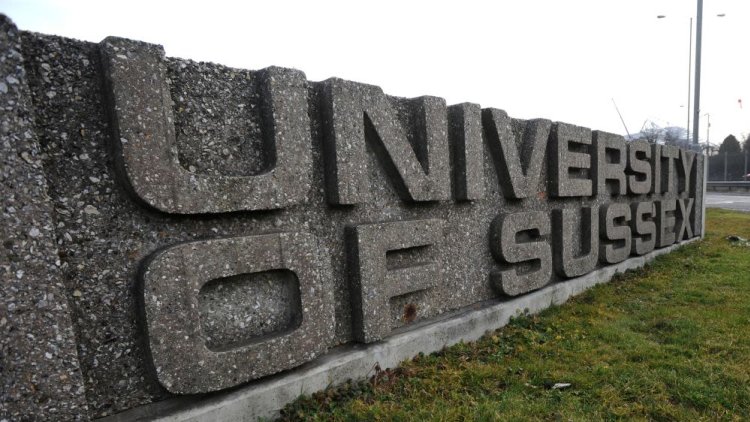
High Court overturns “unlawfully predetermined” fine against University of Sussex trans policy

Published

on

puberty blockers

puberty blockers

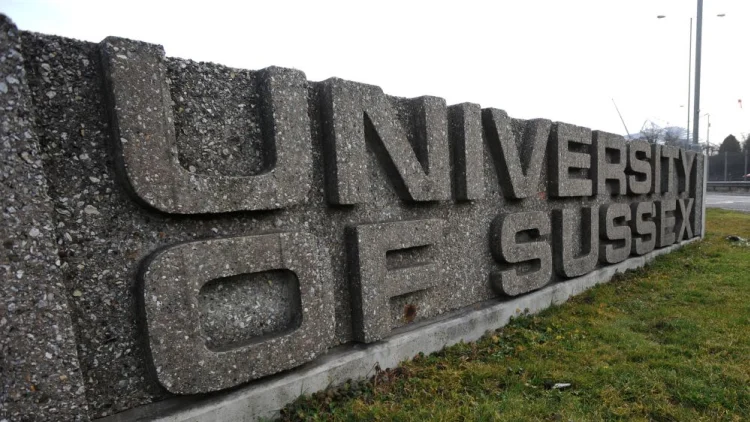
On 29 April, the High Court ruled in favor of the University of Sussex’ (UoS) appeal to overturn a record £585,000 fine from the Office for Students (OfS). This came following a free speech regulation claim from transphobic ex-philosophy professor Kathleen Stock.

Justice Lieven found that the supposed ‘watchdog’ had approached its investigation with a closed mind. She also found that the organisation had no authority to make parts of its decision. Tellingly, the ruling also highlighted the extent of the “relationship” between Stock and the ‘free speech’ chief of the OfS.

‘Significant and serious breaches’

Stock described trans women as “males with male genitalia”, and was a signatory to the Women’s Human Rights Declaration, which has called for the “elimination” of “the practice of transgenderism”. She also called for the government to protect the harmful practice of conversion therapy when applied to trans children.

In reaction to her bigoted views, she faced waves of protests from student groups, and claimed that she had received death threats. The OfS launched an investigation into UoS after Stock voluntarily resigned from her post in 2021.

Advertisement

The OfS directed its ire at the university’s trans and non-binary equality policy statement. This placed relatively simple demands on course materials to:

positively represent trans people.

It also stated that:

transphobic propaganda … will not be tolerated.

Note, this places no restriction on Stock’s brand of ‘sex not gender’ transphobia. It merely requires academics not to present bigoted views about a minority group.

In March 2025, Arif Ahmed – OfS freedom of speech and academic freedom director – ruled that:

Advertisement

These are significant and serious breaches of the OfS’s requirements. Substantial monetary penalties are appropriate for the scale of wrongdoing we have found. However, we have significantly discounted the monetary penalties we initially calculated on this occasion to reflect that this is the first case of its type we have dealt with.

The watchdog’s “significantly discounted” penalty totaled a record £585,000 fine.

‘Comprehensive vindication’

However, following yesterday’s High Court ruling, that fine has now been thrown out. In a press statement, UoS vice-chancellor Professor Sasha Roseneil said:

The University has always maintained that the OfS adopted an erroneous and absolutist approach to freedom of speech, that it deliberately ignored comprehensive protections of academic freedom and freedom of speech at Sussex, and that it prosecuted its torturous three-and-a-half-year long investigation with a ‘closed mind’.

The Court’s judgment is a comprehensive vindication of that position. It is a devastating indictment of the impartiality and competence of the OfS, implicating its operations, leadership, governance, and strategy. It raises important and urgent questions for the government as it plans to grant ever more powers to the regulator.

The High Court found that the OfS erred in law in respect of its jurisdiction, in its interpretation of the law, and its understanding of freedom of speech and academic freedom, and that its process was fatally flawed by bias in the form of predetermination.

Advertisement

During its investigation, the OfS interviewed Stock, but refused requests for in-person meetings from other university staff.

Likewise, the judgement also highlighted the extent of the pre-existing relationship between Stock and Ahmed. The court found that the two had exchanged emails extensively in 2020. This was, of course, long before Stock’s resignation or the UoS inquiry.

The correspondence included criticism of the UoS inclusion document, talk of a ‘free speech’ campaign, and a request for “real feminist” contacts. Ahmed also characterised non-binary academic Professor Quill
Kukla as a “lunatic”, to which Stock replied:

You have a point about Kukla, lol.
Key findings

The judgement came to five key conclusions:

Advertisement
  • The OfS over-reached its authority with regard to the University’s Trans and Non-Binary Equality Policy Statement. As the UoS maintained, the statement was not a governing document, and therefore not subject to OfS oversight.
  • The OfS conflated “freedom of speech within the law” and “lawful speech”. The watchdog maintained the absolutist position that any lawful speech should be subject to the univesity’s protection. However, the judge ruled that UoS could protect students and staff from bullying without violation of freedom of speech.
  • UoS already had clear protections of academic freedom in place. Likewise, the policy statement posed no threat to that freedom. As such, the OfS made an error in law in that it failed to “read the relevant University documents as a whole”.
  • The UoS Freedom of Speech Code of Practice was “so plainly relevant” that the OfS was “irrational” and “misdirected itself” in failing to give it proper regard.
  • The OfS failed to consider whether the university had remedied any alleged breaches before issuing its fine.

Overall, the judge declared that the OfS’ decision:

was vitiated by bias because the OfS approached the decision with a closed mind and had therefore unlawfully predetermined the decision.

‘We are disappointed, of course, by this ruling’

Such comprehensive and damning findings might at least give any other watchdog pause. However, the OfS instead chose to celebrate the fact that its illegal fine had already caused universities to modify their inclusive policies.

Josh Fleming, OfS interim chief executive, said:

We are disappointed, of course, by this ruling. We will carefully consider the consequences of the judgment before deciding on next steps. We will reflect on the Judge’s findings and use them to help inform our future approach.

Our focus remains on students and the sector, and we are pleased that following our investigation a dozen institutions, including the University of Sussex, have amended policies which restricted freedom of speech. As a result, students and academics should feel greater confidence in their ability to engage in the free and frank exploration of thought that characterises English higher education.

This utter lack of contrition, or even acknowledgement of wrongdoing, is a particularly dire sign of things to come.

Advertisement

In August 2025, the government handed even greater power to the OfS via a new freedom-of-speech law governing England’s universities. As such, come the autumn, academics and visiting speakers will be able to pass complaints directly to the regulator.

Vivienne Stern, chief executive of higher education body Universities UK, said universities wanted to

work closely with the Office for Students to reset relationships and rebuild trust. […]

Effective regulation depends not just on enforcement, but on trust, clarity, and a shared understanding of respective roles.

However, it is hard to see how exactly universities will rebuild such trust. Like so many of the UK’s institutions, the OfS has been thoroughly captured by a deeply transphobic brand of bigotry masquerading as concern for ‘free speech’.

Advertisement

The OfS is quite openly and directly prejudiced against trans and non-binary students and staff. As a regulator, it is utterly unfit to perform its function with regard to all of its charges.

Featured image via the Canary

By Alex/Rose Cocker

Source link

Advertisement
Continue Reading

Politics

The House | The devastating OfS ruling exposes our dysfunctional higher education sector

Published

on

The devastating OfS ruling exposes our dysfunctional higher education sector

(Alamy)


3 min read

As a former executive director of the Office for Students (OfS), the regulator for higher education in England, it was hard to read the stinging judgement in a court case between it and one of the universities it oversees.

Advertisement

I was not involved in the investigation, but I know many of those who were are diligent public servants, charged with a fiendishly difficult brief.

That said, the judgement is devastating: the court found the OfS had misread, misunderstood, or just plain missed issues of legal meaning, fair process, and the need for unbiased judgement in an investigation around free speech at the University of Sussex. Hard work and good intentions will not help pay the significant legal costs that Sussex will likely be awarded by the court.

The court’s conclusion that OfS appeared to have predetermined the outcome of its investigation is particularly troubling. The regulator must surely make significant changes in response, with its focus on addressing problems not broadcasting them. Independent reports found that regulation of access and participation – which I led in my four years at OfS – was less confrontational but still rigorous. I hope it provides a useful template.

Advertisement

But this latest reckoning in higher education will not be the last, whatever the OfS does. Because the regulator’s woes are a symptom, not the cause, of wider dysfunction in English higher education.

In my new role as Director of The Post-18 Project think-tank, I recently published a report setting out how, for 30 years, English politicians have expected student choice and competition to make the higher education sector more efficient, better quality, and more closely tied to the labour market. The OfS was set up to be the referee in this marketised system.

But none of those goals has been consistently achieved – and the OfS has not properly worked – because higher education is not a market. The government controls how much students pay their university, which is a different amount from how much those students are expected to pay back, which is routinely more than they borrowed in the first place. Not only does the system fail to reward good teaching – its funding structure actively discourages it. No one knows what the proper limits of academic freedom are or ought to be, because Parliament ducked the question while legislating that more had to be done. Meanwhile, students are choosing between heating and eating as living costs outstrip the support available.

English politicians have made higher education systemically incoherent – none of the parts fit together properly, and while the OfS could clearly have made better choices, its powers and purpose have always been inadequate to the problems it faces. Only a comprehensive review of all post-18 education can remedy the parlous state we are in.

Advertisement

Professor John Blake is Director of The Post-18 Project, and was Director for Fair Access and Participation at the OfS from 2022 to 2025

Source link

Continue Reading

Politics

Why it’s okay to kick a knife-wielding terror suspect in the head

Published

on

Why it’s okay to kick a knife-wielding terror suspect in the head

An adult male was arrested in the UK yesterday, after the stabbing of two Jews in the Golders Green area of London. The attack has been declared a ‘terror incident’ by the police and investigations are ongoing. Video showing the suspect being apprehended by police was posted to social media.

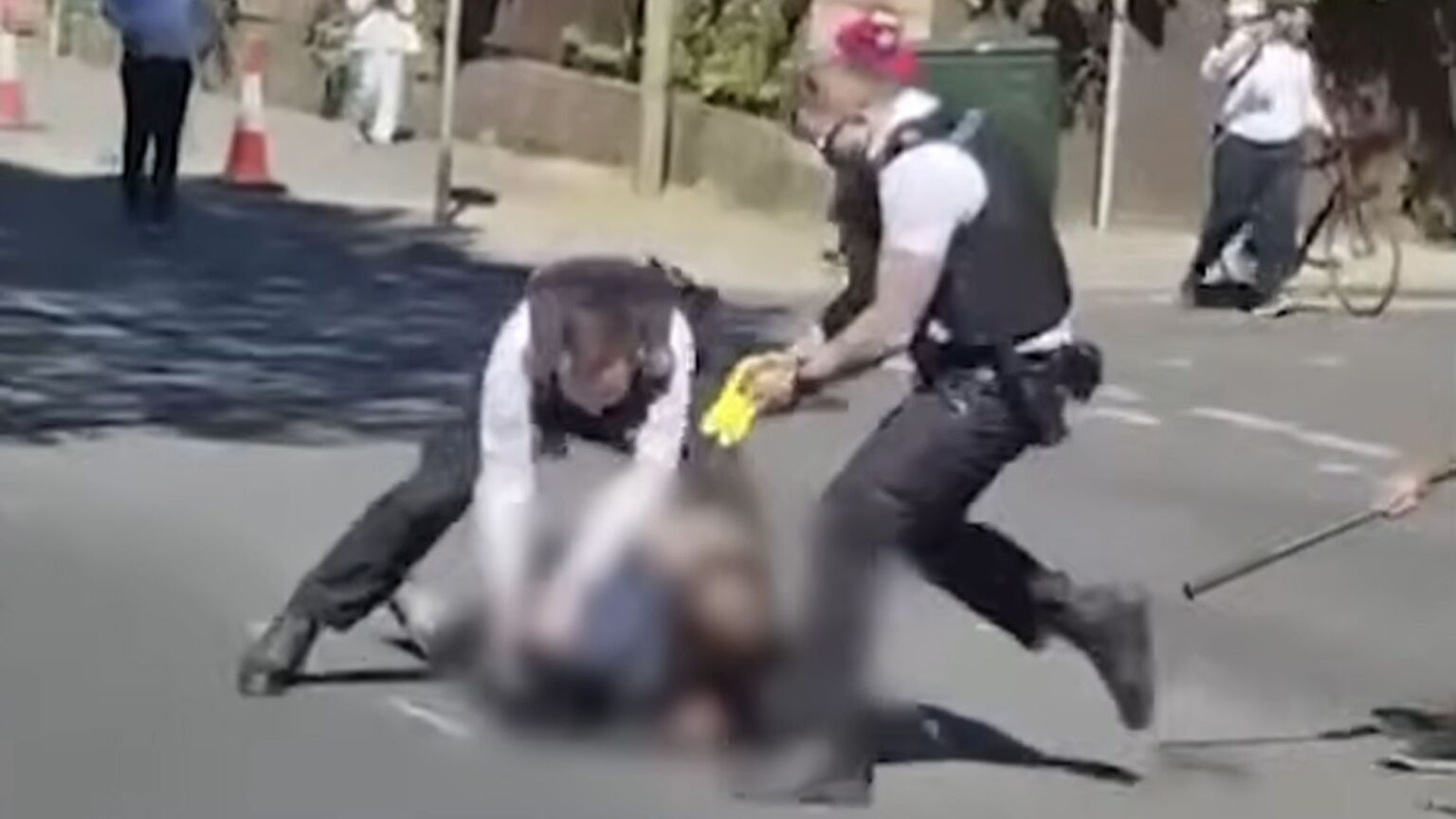
The video shows two police officers, with the help of a Shomrim volunteer, attempting to wrestle control of the suspect’s hands. The suspect is on the floor, he appears to have been tasered and he is refusing to comply with loud commands of ‘Drop the knife!’. Five swift kicks are dealt to his head until his arms can be forced out from under his body so the deadly weapon can be eventually pried from his grip.

Normally, you’d expect this to be an opportunity for the general public to commend the bravery of the officers involved and the success with which they incapacitated an alleged terrorist, suspected of stabbing Jews and armed with a deadly weapon. But these aren’t normal times.

Advertisement

Although ‘dumbest take imaginable’ was a highly contested category after yesterday’s atrocity, I feel Shola Mos-Shogbamimu just about edged into first place. Beyond her role as a professional race-baiter, I’m not actually sure what she does besides having a talent for producing the worst takes on current events imaginable. She posted the following on X:

‘Contemptible abuse of police power. Why kick him in the head several times when he’s already tasered and in your control? Should he not be alive to be brought to justice in a court of law for stabbing two Jews??!! Disgusting.’

Advertisement

Enjoying spiked?

Why not make an instant, one-off donation?

We are funded by you. Thank you!

Advertisement


Please wait…

Advertisement
Advertisement

Alarmingly, Shola was not alone in condemning the police’s actions.

We’ll just let go for a moment that the suspect was, in fact, taken in ‘alive’ by the police, contrary to Mos-Shogbamimu’s claim. Of course, had the suspect been face down and in cuffs, a good kicking (although tempting) would absolutely be an ‘abuse of police power’. But in the real world, police were faced with a terror suspect in possession of a knife. A knife that mere moments earlier was allegedly being plunged into the necks of innocent Jews, so his willingness to use it was surely beyond doubt.

Police attempted to use non-lethal force in the form of a taser. And still the suspect refused to drop the knife. This set of circumstances poses what sane people understand to constitute ‘an immediate threat to life’.
Commands were not being followed and the use of a taser had failed, meaning further reasonable force was justified as a last resort.

Advertisement

Many seem to believe police tasers are magic wands that cast spells, instantly and permanently immobilising their target. Or that they are even so effective that the suspect was physically incapable of dropping his weapon. None of this is true.

While incredibly useful as a form of non-lethal force, tasers operate for five seconds at a time. They stun their targets. If someone manages to keep hold of their weapon while this is happening to them, it’s because they intended to. And if you don’t quite buy that, then you still have to explain why the suspect would not drop his bladed weapon in between these five-second zaps.

Advertisement

It’s also worth pointing out that an armed response was almost certainly on the way to the scene. Had an armed-response unit encountered the suspect first, and found him to be in possession of a deadly weapon and non-compliant, then they would have taken him out without hesitation. He should consider himself very, very lucky to have only received a boot to his bonce rather than a bullet.

There are many reasons I could not do what our police force does, but I think chief among them would be to witness the certainty with which professional know-nothings sit comfortably behind their keyboards, demonstrating their complete ignorance of what it’s like to be in a violent confrontation involving a deadly weapon – while throwing scorn at those who risk everything to keep us safe from such attacks.

They seem to be advocating for a form of policing whereby Jew-stabbing terror suspects are handed additional opportunities to stab more people in the neck. This option is somehow more palatable to them than a few swift kicks to the head of an allegedly murderous, anti-Semitic lunatic.

Advertisement

I feel nothing but shame that British Jews are being attacked and made to feel unsafe in their own country – and worse, that so much sympathy is reserved for their attackers. I have long feared that anti-Semitism could only get worse, and I’m utterly depressed to have been proven right.

Source link

Advertisement
Continue Reading

Trending

Copyright © 2025