
Crypto World
Coinbase to delist DAI stablecoin as May deadline approaches



Coinbase will disable trading for Dai on May 4, 2026, as part of its latest asset review.
Summary
- Coinbase will disable DAI trading on its website and mobile app from May 4.
- Remaining DAI balances will convert to USDS at a 1:1 rate after the deadline.
- Coinbase will also suspend TIME trading and has disabled TRU ahead of migration.
The Ethereum-based stablecoin will be converted to USDS for users who leave DAI on the platform after the deadline. Coinbase reminded users that Dai trading will be disabled on Coinbase.com and the Coinbase mobile app on May 4.
The exchange also said send and receive support for DAI will be temporarily disabled from May 4 to May 6.
DAI is an Ethereum-based stablecoin linked to the MakerDAO ecosystem. Coinbase said any DAI left on the platform by May 4 will be converted to USDS at a 1:1 rate.
Users urged to move DAI before May 4
Coinbase advised users who do not want the conversion to move their DAI to a compatible self-custody wallet before the deadline.
The exchange said users in selected EEA regions will not have their DAI migrated. This means affected users may need to act before trading and transfer limits take effect.
The delisting forms part of Coinbase’s regular asset reviews. The exchange checks whether listed tokens continue to meet its standards.
Additionally, Coinbase will also suspend trading for Chrono.tech’s TIME token on May 11 at 2 p.m. ET. The suspension will apply to Coinbase Simple Trade, Advanced Trade, Coinbase Exchange, and Coinbase Prime.
Coinbase has also disabled trading for TrueFi’s TRU token ahead of its May 10 migration deadline.
These updates show that Coinbase is continuing to adjust supported assets across its main retail and institutional trading platforms.
Exchange adds new listings and futures
Coinbase has also expanded other parts of its platform. It launched perpetual futures tied to AI infrastructure and compute firms on April 29.
The listed markets include Advanced Micro Devices, Arm Holdings, Intel, Micron Technology, and SanDisk.
The exchange also added support for Gensyn and Virtuals Protocol on Coinbase and the Coinbase app.
Coinbase said it will add support for MegaETH’s MEGA token. Spot trading for Wrapped Ronin is also expected to go live on April 30.
The latest updates come as Coinbase balances new product launches with asset removals. The DAI deadline remains the key date for stablecoin users watching the May delisting schedule.


The United Kingdom’s financial regulator has published PS26/7, a policy statement that formalizes new rules and guidance to enable tokenized funds to operate within the existing fund regime rather than in separate experimental structures. The Financial Conduct Authority (FCA) frames tokenization and distributed ledger technology (DLT) as tools to improve efficiency and governance in asset management and describes the move as part of a broader digital assets roadmap announced in a January 2025 letter to the prime minister. According to Cointelegraph, the stance signals a deliberate effort to bring tokenized finance under the regulatory perimeter, ensuring oversight and consistency with established fund protections.
The policy statement presents a clearer path for asset managers to integrate blockchain into regulated fund operations while preserving investor protections. It reflects a cautious, structured approach to modernization that seeks to modernize market infrastructure without relaxing the safeguards that underpin regulated funds such as UCITS. The FCA emphasizes that the changes are designed to support innovation in the UK asset management sector while maintaining a stable, transparent regulatory framework.
Key takeaways
- The Blueprint model allows on-chain investor records to serve as the primary register for unit deals, without requiring a full off-chain duplicate, provided appropriate resiliency plans are in place.
- The Blueprint framework has already been used to authorize the first tokenized UK undertakings for collective investment in transferable securities (UCITS). Authorized funds may maintain their register on public distributed ledger networks if controls meet FCA standards, including issuing units across multiple blockchains so long as investor rights and charges remain consistent.
- The main policy shift introduces an optional Direct-to-Fund (D2F) dealing model, where the fund or its depositary, rather than the manager, acts as counterparty to investor trades, enabling a streamlined, near‑on‑chain settlement process.
- The FCA outlines a pathway from today’s tokenized funds toward tokenized assets and eventually tokenized cash flows, including models in which investors hold tokenized assets in digital wallets and managers use smart contracts to administer them.
- The regulator remains open to waivers enabling the use of digital cash and stablecoins for settlement and certain expenses; it will seek further views in 2026 on broader use of DLT in wholesale markets.
Regulatory framing: Integrating tokenized funds into the UK regime
PS26/7 formalizes how tokenized funds can operate within the UK’s established regulatory architecture. By accommodating tokenization inside the current fund regime, the FCA aims to preserve investor protections while removing unnecessary frictions that could push tokenized structures into parallel or off-regulatory channels. The policy aligns with the broader objective—initially articulated in the January 2025 letter—to create a coherent digital assets roadmap that guides innovation without eroding discipline on market integrity, transparency, and consumer protection. The directive signals to asset managers that blockchain-enabled fund operations can be designed to stay within the FCA’s risk controls and reporting standards, rather than evolving in standalone, unregulated environments.
In practice, the PS26/7 framework seeks to harmonize tokenization with existing disclosure, valuation, governance, and custody requirements. It emphasizes that on-chain processes must be supported by robust governance, risk management, and contingency planning, ensuring that tokenized funds remain subject to the same accountability and oversight as conventional funds. The policy’s emphasis on regulatory perimeter reflects a broader policy trend across major markets toward integrating tokenized finance into established regulatory structures rather than permitting unregulated experimentation.
Implementation mechanics: Blueprint and Direct-to-Fund in practice
The core technical innovation under PS26/7 is the Blueprint model, which permits on-chain records to function as the primary ledger for unit deals, thereby reducing reliance on traditional off-chain registries where appropriate. Crucially, this approach requires “appropriate resiliency plans” to address continuity, data integrity, and disaster recovery. If those controls are met, on-chain records can underpin the fund’s official investor register, advancing settlement efficiency and alignment with on-chain or hybrid settlement flows.
Alongside the Blueprint, the policy introduces a Direct-to-Fund (D2F) dealing model as an optional mechanism to simplify investor interactions. Under D2F, the fund or its depositary acts as the counterparty to investor trades, rather than the fund manager. Transactions would clear in a single step, with units issued or canceled directly against cash movements between investors and the fund. The FCA describes D2F as a pathway to more efficient fund operations and a more straightforward alignment with on-chain settlement, while maintaining the standard investor protections and oversight that govern regulated funds.
These mechanics illustrate a careful balance: enabling practical, technology-enabled operations without compromising valuation, recordkeeping, or governance standards. The policy also notes that the first tokenized UCITS have already been authorized under the Blueprint approach and that funds may operate registers on public DLT networks if they satisfy FCA controls. Multi-blockchain issuance is permissible, provided investor rights and charges stay consistent, signaling a pragmatic view of evolving settlement ecosystems while preserving core protections.
Pathway to tokenized assets and cash flows: Roadmap and implications
Beyond tokenized funds, the FCA sketches a longer-term trajectory toward tokenized assets and tokenized cash flows. In this vision, investors could hold tokenized assets in digital wallets, with managers leveraging smart contracts to administer ownership, distributions, and related rights. This progression points to a more integrated, programmable asset framework in which on-chain mechanisms support governance, valuation, and settlement processes in a more automated and auditable manner.
The policy acknowledges the potential use of digital cash and stablecoins for settlement and related expenses, subject to waivers. While the current framework accepts controlled experimentation, the FCA signals a broader review in 2026 on the wider application of DLT in wholesale markets. This approach reflects a measured pace toward broader tokenization across the financial system, balanced against risk management, custody capabilities, liquidity considerations, and cross-border regulatory coordination.
In the UK context, the PS26/7 update complements the ongoing crypto asset regime developments, including a separate consultation on guidance for stablecoins, custody, and staking, and ongoing efforts to align with international standards. The regulator remains attentive to licensure, supervision, and interoperability requirements as tokenized products interact with banking, custody, and market infrastructure partners, underscoring the regulatory intent to integrate innovation within a robust compliance environment.
Compliance, oversight, and market-structure implications
For asset managers, custodians, and institutional investors, the PS26/7 framework clarifies how tokenization fits within existing regulatory responsibilities. By enabling on-chain registers and optional D2F dealing, the FCA provides a path for innovative fund structures to maintain compliance with disclosure, valuation, investor rights, and fee governance while pursuing efficiency gains from blockchain technologies. The emphasis on resiliency, cross-chain compatibility, and consistent rights and charges is designed to prevent fragmentation of investor protections as funds experiment with new settlement and recordkeeping models.
From a regulatory perspective, the move reinforces the UK’s intent to regulate tokenized finance rather than permit it to operate in parallel, unregulated ecosystems. This has implications for license applicants, intermediaries, and service providers that support tokenized funds, as they must demonstrate adherence to FCA standards for governance, risk management, custody, and information security. The policy also situates the UK within a broader international discussion on how to harmonize tokenization with frameworks such as the EU’s Markets in Crypto-Assets Regulation (MiCA) and other cross-border regulatory regimes, acknowledging that firms with UK operations may have to navigate multiple jurisdictions as tokenized products scale globally.
As part of the ongoing policy dialogue, the FCA’s 2026 views on wholesale market DLT use will be closely watched by exchanges, banks, and asset managers seeking predictable paths to connect traditional financial infrastructure with on-chain processes. The evolution of licensing, supervisory expectations, and cross-border cooperation will shape how quickly and widely tokenized fund and asset structures are adopted beyond the UK market.
Closing perspective
The FCA’s PS26/7 represents a pragmatic step toward embedding tokenized finance in the UK’s regulated fund regime, balancing innovation with risk controls and investor protections. As market participants adapt to the Blueprint and D2F models, the key questions will center on governance robustness, cross-chain interoperability, and the pace of broader regulatory alignment with international standards. The coming years will reveal how the UK coalesces tokenization into its market structure, with ongoing policy work, waivers, and consultations shaping the path forward for asset managers and their counterparties.


Kraken is introducing curated portfolio bundles combining cryptocurrency with traditional U.S. equities and ETFs through its xStocks offering.
Kraken announced the launch of Crypto + xStocks bundles on Thursday, April 30, enabling users to build diversified multi-asset portfolios combining digital assets with tokenized representations of traditional U.S. equities and ETFs in a single portfolio. The new product has geo restrictions and, as with xStocks separately, bundles are not available in the United States.
The bundles are automatically rebalanced and designed to simplify portfolio construction for investors seeking exposure across both crypto and traditional stock markets. Per Kraken’s blog post, example of bundles include S&P 500 + Bitcoin and Big Tech + Crypto.
The offering leverages Kraken’s xStocks infrastructure to provide curated portfolios that blend crypto’s growth potential with equity market stability. Users can access the bundles through Kraken’s platform with a single tap, addressing investor demand for streamlined multi-asset allocation tools.
Source: Kraken
This article was generated automatically by The Defiant’s AI news system from publicly available sources.
Crypto World
ARK Invest Ditches $6 Million in Crypto ETFs For $39 Million HOOD Shares After Shaky Robinhood Earnings
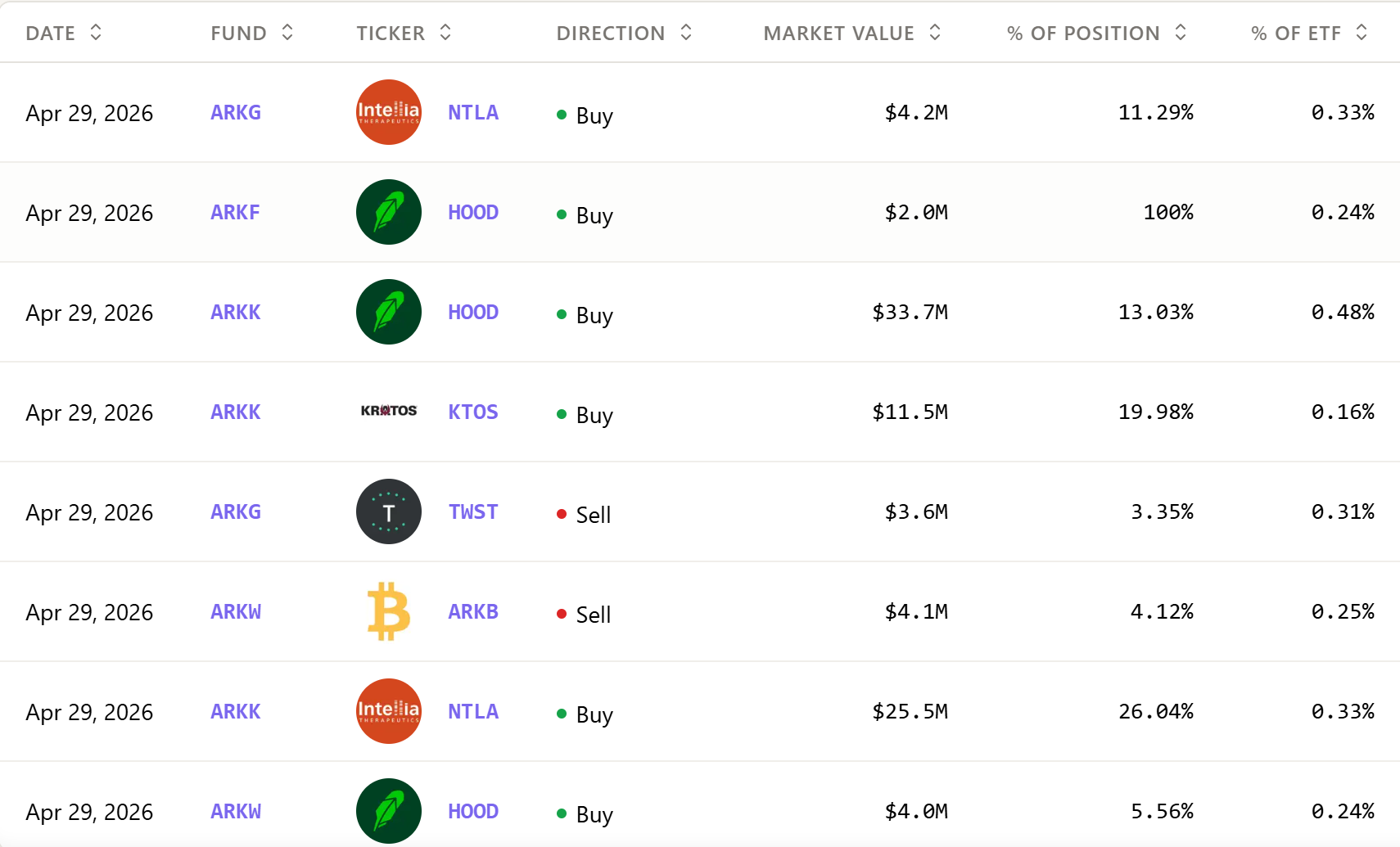
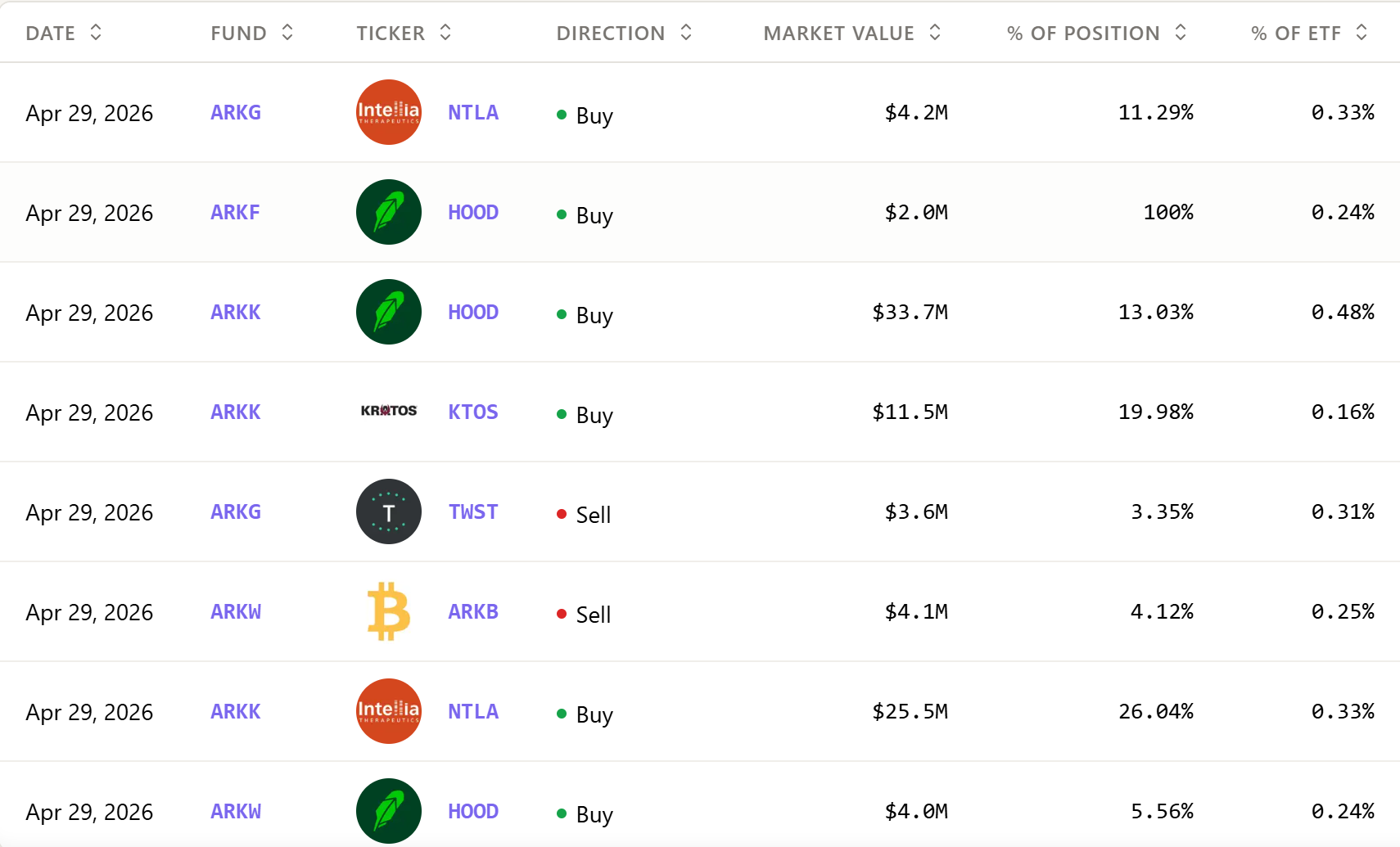
ARK Invest spent about $39.4 million on Robinhood Markets (HOOD) shares on April 29 while selling roughly $6.1 million of its own ARK 21Shares Bitcoin ETF (ARKB), using the brokerage’s post-earnings slide to add to a long-running position.
The trades, disclosed in ARK’s daily filings, split across the firm’s three flagship innovation funds and came a day after the brokerage reported a 47% year-over-year drop in first-quarter crypto revenue.
Why ARK Bought the Robinhood Dip
Cathie Wood’s firm picked up 553,892 HOOD shares across the ARK Innovation ETF (ARKK), the ARK Next Generation Internet ETF (ARKW), and the ARK Fintech Innovation ETF (ARKF).
The move comes after Robinhood revealed a 47% drop in crypto revenue during its Q1 report, as total revenue ($1.07 billion) fell short of the $1.17 billion analyst consensus.
The shortfall traced back to a steep pullback in Robinhood’s crypto trading activity, although overall net income still climbed 3% to $346 million.
HOOD already ranks among the top six positions in all three ARK funds, and Wood previously bought the stock during sharp drawdowns earlier in 2026.
ARKB Trim Tracks Wider ETF Outflows
On the sell side, ARK offloaded 243,147 shares of ARKB from ARKW and ARKF, leaving its equity ETFs with smaller direct Bitcoin exposure.
The fund itself logged $30 million in net outflows on April 29, part of a $137.8 million exit across U.S. spot Bitcoin ETFs led by BlackRock’s IBIT.
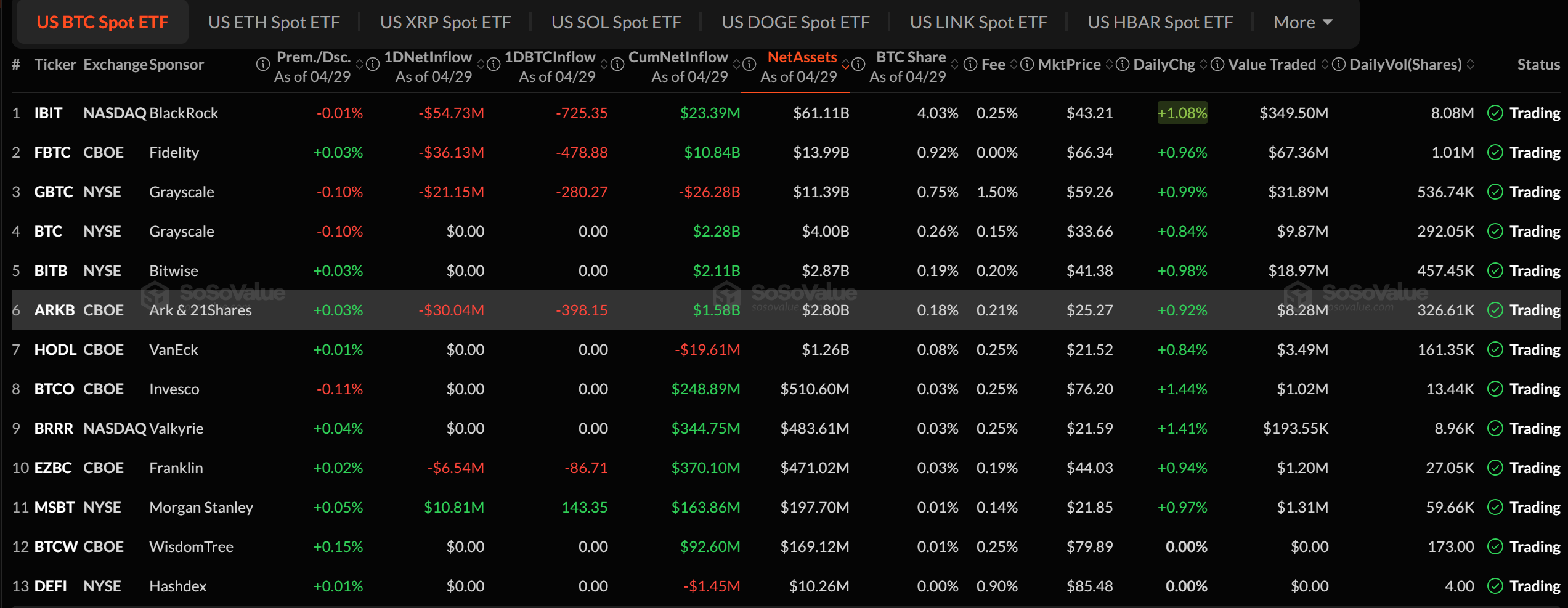
The rebalance fits ARK’s pattern of rotating between crypto-adjacent equities and direct BTC exposure rather than a directional call on Bitcoin (BTC).
Wood, who maintains a long-term $1 million BTC target, has not commented publicly on the trades. The next ARK disclosure will show whether the firm continued buying into Robinhood’s earnings-driven slump.
The post ARK Invest Ditches $6 Million in Crypto ETFs For $39 Million HOOD Shares After Shaky Robinhood Earnings appeared first on BeInCrypto.

TLDR
- Shares of Novo Nordisk rallied more than 6% following FDA’s proposal to remove semaglutide, tirzepatide, and liraglutide from the 503B compounding bulks list
- The regulatory agency stated no medical necessity exists for outsourcing facilities to compound these medications
- Public feedback will be accepted through June 29, 2026, prior to the final ruling
- NVO reached its strongest price point in over sixty days, leading Copenhagen’s exchange on Thursday
- Despite Thursday’s rally, shares remain more than 16% lower year-to-date
Shares of Novo Nordisk soared over 6% during Thursday’s trading session following the FDA’s announcement of proposed restrictions on weight-loss medication compounding—a regulatory shift that stands to significantly benefit the Danish pharmaceutical giant.
The Food and Drug Administration unveiled plans to eliminate semaglutide, tirzepatide, and liraglutide from the 503B bulks list. According to the agency, outsourcing facilities have no legitimate clinical justification for compounding these specific drugs.
The pharmaceutical company’s shares climbed to their strongest level in more than sixty days during Thursday’s session, claiming the top spot among gainers on Copenhagen’s stock exchange.
NVO was changing hands at approximately $42.38 during recent trading, substantially higher than its 20-day moving average of $39.03 and comfortably above its 50-day moving average of $38.87.
Even with Thursday’s impressive gains, the stock continues trading beneath its 200-day moving average of $50.32 and remains more than 16% lower for the year.
The FDA has initiated a public consultation window extending through June 29, 2026, before finalizing any decision regarding the proposed regulations.
What’s Weighing on Novo Nordisk
Novo Nordisk has encountered several challenges in recent months. Canadian health authorities granted approval for the first biosimilar version of Ozempic in Canada, introducing fresh competitive pressures in a critical market.
The company responded by implementing a stock repurchase initiative. Approximately 13.4 million B-shares have been bought back for 3.44 billion Danish kroner since February 2026, forming part of a broader 15 billion kroner, twelve-month repurchase strategy.
Regarding its development pipeline, the pharmaceutical firm has initiated a Phase 3 clinical study for a knee osteoarthritis therapy and secured FDA fast-track status for a cardiovascular medication.
First quarter 2026 financial results are set for release on May 6.
What the Technicals Say
Near-term momentum indicators reflect positive movement. The MACD indicator has generated a buy signal while the RSI registers 54.73, indicating moderately bullish conditions.
Nevertheless, the ADX measurement of 17.26 indicates the current trend is lacking substantial strength. The Stochastic RSI has triggered a sell signal, suggesting the stock has entered overbought territory.
Anton Kharitonov from Traders Union highlighted the delicate technical landscape, noting that weakening momentum signals and overbought conditions indicate purchasing pressure may diminish rapidly. He identified the generic Ozempic threat in Canada as an additional risk factor.
Viktoras Karapetjanc, also representing Traders Union, maintains a more optimistic perspective. He views the buyback initiative and robust clinical development pipeline as foundational support for long-term shareholder value, characterizing the recent decline as a possible springboard for future gains.
Market analyst Jainam Mehta identifies a critical trading zone between $40.78 and $43.23 as the primary area of focus. He noted that a convincing breach above or below these threshold levels would be necessary to alter the immediate-term risk assessment.
The stock began Thursday’s session with an upward gap of approximately $0.37 and advanced $1.94, representing a 4.80% intraday increase. Intraday price volatility measured 2.47%.

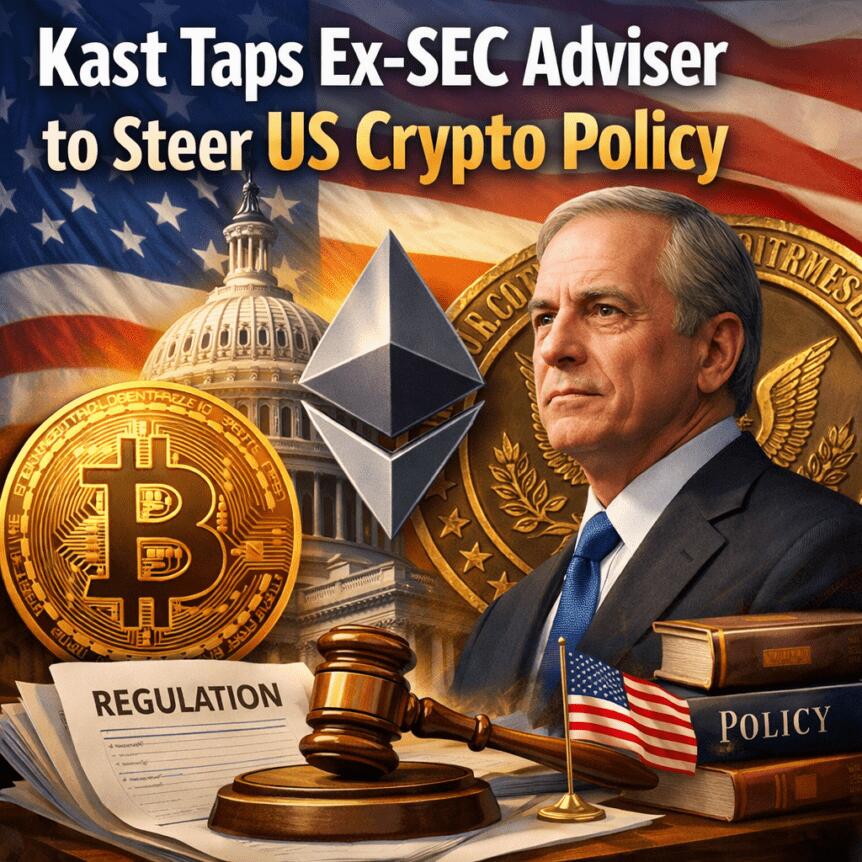
Kast, the stablecoin payments platform, has appointed Stephanie Allen, a former U.S. Securities and Exchange Commission (SEC) communications official, to lead corporate and policy communications. The move arrives as Kast accelerates its licensing and policy-building efforts in the wake of an $80 million funding round that reportedly valued the company at $600 million. Allen will work with Kast’s senior leadership to shape policy engagement and communications as the company prepares to launch Kast Business and expand across North America, Latin America, and the Middle East.
In making the announcement, Kast noted that Allen’s background includes serving as acting director of the SEC’s Office of Public Affairs and roles in media relations and speechwriting at the agency. The company said she also advised the SEC’s Crypto Task Force, though the SEC’s public biography of Allen does not list that specific advisory role. Kast described the hire as part of its next growth phase and regulatory engagement strategy.
Brad Jaffe, Kast’s chief corporate affairs officer, framed the hire as a key piece of the firm’s broader expansion plan. “We’re excited to welcome Stephanie to the Kast team. Her knowledge of the policy and regulatory landscape stemming from her leadership position at the SEC and deep U.S. public and private sector experience will help drive Kast’s momentum,” he said. The timing of the appointment aligns with Kast’s push into business accounts, cross-border payments, and other growth markets that carry heightened regulatory considerations.
The leadership move comes shortly after Kast completed an $80 million funding round to scale its payments infrastructure, a round that contributed to a reported valuation of $600 million. Kast’s ecosystem today emphasizes US dollar-denominated accounts and card offerings available to users in more than 150 countries, with public plans to roll out savings and remittance products under its neobank interface.
The company has positioned itself as a bridge between stablecoins and broader financial services, aiming to push deeper into regulated, enterprise-grade use cases while expanding geographically. Kast’s leadership stresses that policy and licensing clarity is central to unlocking cross-border use cases and serving business customers that demand compliant, scalable payments rails.
Related coverage: Kast’s $80 million round and valuation have been reported in industry outlets, highlighting the market’s appetite for regulated, infrastructure-focused stablecoin platforms as they approach larger-scale business adoption.
Key takeaways
- Kast hires Stephanie Allen, a former SEC communications leader, to helm corporate and policy communications as it scales licensing and regulatory engagement.
- The appointment signals a broader industry trend: stablecoin-focused firms strengthening policy and communications capabilities to pursue regulated growth across multiple regions.
- Kast’s funding round, disclosed as $80 million, accompanies a stated goal to expand Kast Business and extend operations into North America, Latin America, and the Middle East.
- Market context shows a mixed picture for stablecoins: on-chain activity cooled while supply rose, suggesting growth in dollar-denominated stablecoins does not always translate into higher transfer volumes.
- Industry signals from Fidelity and data providers indicate robust on-chain activity related to stablecoins for payments and settlement, despite a subdued broader crypto sentiment.
Kast’s regulatory push and growth trajectory
Allen’s appointment is less about headline changes and more about building the underpinnings of a compliant, scalable payments platform as Kast moves toward a broader rollout of Kast Business. Her SEC tenure, particularly in communications around policy shifts and regulatory priorities, is positioned to help Kast navigate licensing regimes and interoperability requirements across jurisdictions. The company’s stated objective is to accelerate its business-focused offerings—cross-border payments, corporate accounts, and payment rails that can accommodate regulated activities—while maintaining a front-end user experience that mirrors a neobank interface.
Kast has described its platform as a global payments solution for stablecoins, with card programs and USD-denominated accounts that can serve clients across more than 150 countries. The emphasis on regulated growth suggests the company expects to encounter a mosaic of licensing standards, consumer protections, and AML/CFT requirements as it expands. Allen’s role will likely involve coordinating policy communications with product and compliance teams to align Kast’s deployment with regional rules while communicating its regulatory posture to customers and partners.
The strategic timing of this hire—after a high-profile funding round—highlights how players in the stablecoin and crypto payments space are treating regulatory engagement as a core growth lever. As more firms pursue business accounts, merchant acceptance, and cross-border settlement capabilities, the ability to articulate policy positions clearly and to demonstrate regulatory readiness becomes a competitive differentiator. Kast’s leadership contends that policy clarity enables faster go-to-market timelines and reduces friction with financial institutions and regulators alike.
Stablecoins in flux: momentum versus on-chain activity
The broader market backdrop for stablecoins remains nuanced. Recent data indicates that stablecoin transfer volume has cooled, with a 19% month-over-month drop to about $8.31 trillion, even as the overall stablecoin market capitalization rose roughly 2% to around $305 billion. Data from RWA.xyz, cited by Cointelegraph, suggests that higher supply does not necessarily translate into higher on-chain transfer activity. The divergence between growing stablecoin stock and shrinking transfer flows points to a period of shifting usage patterns—potentially reflecting a mix of resting balances, off-chain settlements, and selective on-chain deployments among institutions and users.
Nevertheless, institutional and market-watchers remain attentive to signs of real-world usage. Fidelity’s Q2 Signals Report highlighted that Ethereum’s stablecoin transfer value has recently surpassed historical norms, with total transfer value on the network over the previous 12 months exceeding $18 trillion. Fidelity frames this activity as reflecting ongoing use of stablecoins for payments, settlement, and on-chain dollar access, even as sentiment in the broader crypto market remains fragile.
On a separate data point, Allium reported that stablecoin transfer volume reached a record $1.8 trillion in February, underscoring the enduring importance of stablecoins as a payments and settlement tool amidst evolving market dynamics. Taken together, these signals paint a picture of a sector where growing liquidity and on-chain access coexist with measured activity and regulatory scrutiny—the kind of environment where policy leadership can help firms scale responsibly.
For Kast and other issuers and providers, the implications are clear: policy clarity reduces uncertainty around product launches and cross-border operations, while robust compliance controls can unlock partnerships with banks, exchanges, and enterprise clients that demand rigorous regulatory alignment. In a market where sentiment swings can be abrupt, the ability to communicate policy positions and demonstrate concrete licensing progress becomes a meaningful competitive edge.
What this means for users and the market going forward
For end users and business clients, Kast’s emphasis on policy capability signals a push toward stable, regulated access to dollar-denominated financial services powered by crypto rails. If Kast Business delivers on its promises—coupled with broad licensing progress and cross-border capability—the platform could offer a more deterministic path to using stablecoins for everyday payments, payroll, and cross-border remittances without sacrificing compliance or security.
From an investor and builder perspective, the trajectory underscores a broader industry shift: the most credible players are marrying product expansion with formal regulatory engagement. In practice, this means closer collaboration with financial partners, clearer disclosures about risk controls, and a more transparent approach to how stablecoins are used in enterprise-grade payments and settlements. Observers will want to see how Kast navigates specific licensing milestones in its key markets and how Allen’s communications leadership translates into clearer regulatory dialogues with policymakers and industry stakeholders.
As the sector continues to balance rapid innovation with the realities of financial regulation, all eyes will be on Kast’s next moves—the rollout of Kast Business, progress in licensing across multiple regions, and how the company translates policy engagement into tangible growth metrics for its enterprise customers.
Readers should watch for updates on Kast’s licensing milestones, new product features for business clients, and any further strategic hires that sharpen its policy and compliance capabilities. The coming quarters will reveal how effectively the company can translate policy leadership into scalable, regulated growth across its global footprint.


Coinbase’s (COIN) asset management arm said Thursday it’s rolling out a credit fund tied to stablecoin markets, with plans to offer investors onchain access through a tokenized share class.
The fund, called the Coinbase Stablecoin Credit Strategy (CUSHY), targets institutional investors seeking yield from lending activity tied to digital assets.
Investors will have the option to hold shares onchain through tokenization specialist Superstate’s platform. The fund will be available on Ethereum, Solana, and Base, Coinbase’s blockchain built on Ethereum.
The fund reflects a growing overlap between traditional credit markets and crypto infrastructure. Transactions in stablecoins — cryptocurrencies with prices pegged to fiat money — have surged in recent years as more financial activities migrate onto blockchains. The supply of stablecoins doubled to $300 billion in the past two years, while monthly transaction volume tripled to $1.2 trillion.
“Stablecoins are the bedrock of the next financial era,” said Anthony Bassili, president of Coinbase Asset Management. “With CUSHY, we are fusing the efficiency of digital rails with the rigor of traditional credit.”
Fund tokenization trend
The move also highlights a broader trend: Asset managers are starting to treat tokenization as an extension of existing products for broader distribution, a shift that could bring more traditional finance activity to the blockchain environment.
CUSHY’s tokenized share class is powered by FundOS, Superstate’s platform for bringing investment funds onchain. Rather than building custom token structures, asset managers can use FundOS to issue and manage blockchain-based shares alongside traditional ones.
That approach is gaining traction. Invesco, an asset manager with more than $2 trillion in assets under management, recently became the first large asset manager to adopt the platform, underscoring a move toward shared infrastructure rather than one-off tokenization efforts.
“We are the connective tissue between onchain demand and managers who have highly sophisticated institutional experience,” said Jim Hiltner, co-founder of Superstate.
Superstate said it expects several more asset managers to adopt the platform in the coming months, suggesting early momentum beyond initial partners.
Superstate CEO Robert Leshner said the partnership will allow the fund to expand across multiple blockchain networks and into decentralized finance (DeFi) use cases.
Crypto World
Grayscale’s Zcash Trust Just Doubled Its Volume as Shielded Supply Hit an All-Time High: Is $400 the Next Target?
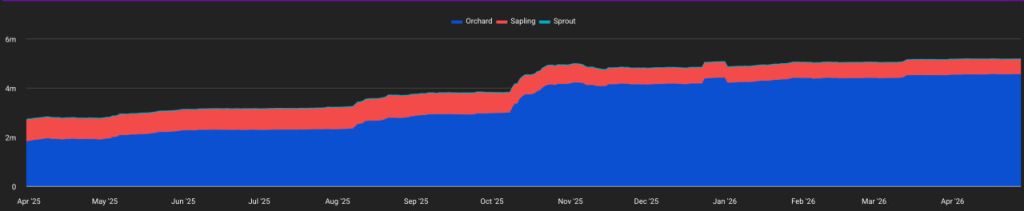
Grayscale’s Zcash Trust (ZCSH) just doubled its trading volume, pushing daily volume past $2 million as Zcash’s shielded supply reached an all-time high.
Two separate signals, one institutional, one on-chain, converging at the same time, is not a coincidence you ignore.
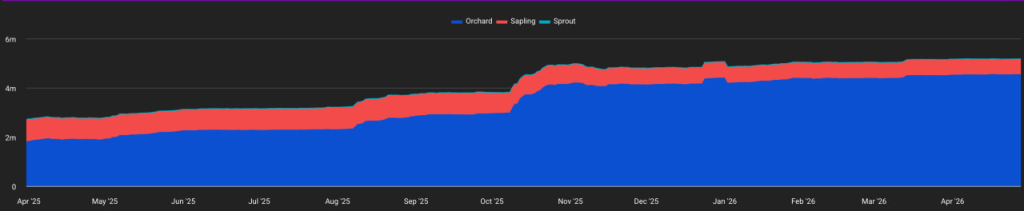
Shielded supply now represents approximately 30% of ZEC’s circulating supply, its highest share on record. The question is whether this is a structural shift in how investors and users engage with Zcash, or a short-term spike with nowhere to go in May.
Discover: The best crypto to diversify your portfolio with
Can Zcash Price Break Resistance at $400 or Does $220 Come First?
ZEC is sitting at $335 on the daily chart, and the most notable thing here is the massive recovery from the February lows near $185, with ZEC price nearly doubling before running into the $400 resistance zone and getting rejected back down.
That $400 level marked as the red dotted line is the key ceiling; it rejected price hard in April and is the line that separates the current recovery from a genuine trend reversal attempt.
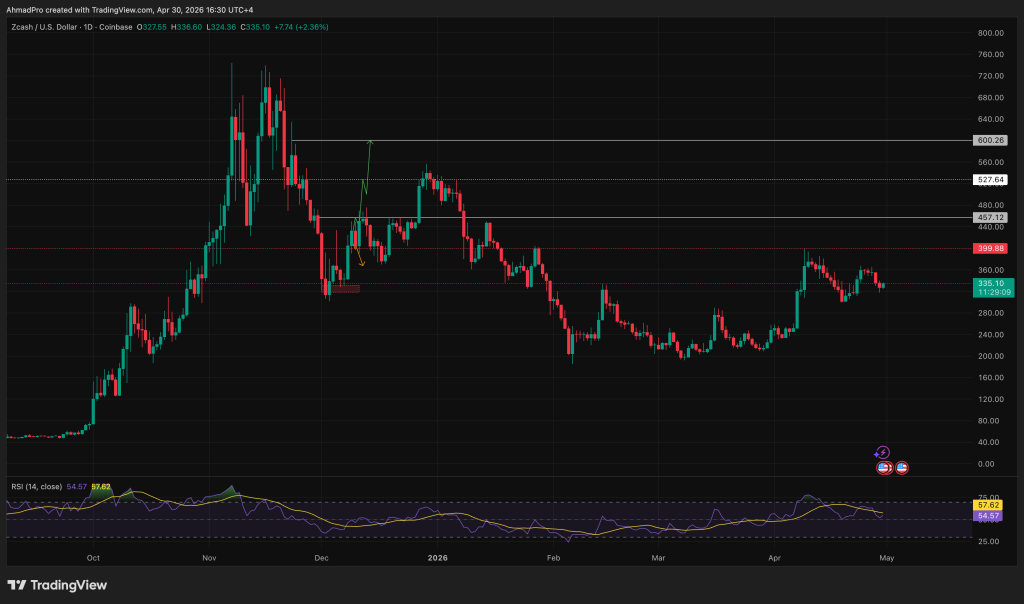
Price is now sitting in a consolidation zone between roughly $300 and $380, churning after the initial recovery momentum faded, and the structure suggests it needs to either build another base here or risk sliding back toward the $240 to $260 range, where support sits below.
On the upside, reclaiming $400 opens the path toward $457 first, then $527 and $600 as the higher targets marked on the chart, all of which were prior support and resistance zones from the November to December range.
The daily chart shows a coin that made a significant bottom and has recovered well, but is now at a decision point where the easy gains from the lows have already been taken, and the next leg requires actually breaking through real resistance rather than just bouncing off a floor.
$400 is the level to watch. Until it flips, this is still a recovery trade, not a breakout.
Discover: The best pre-launch token sales
The post Grayscale’s Zcash Trust Just Doubled Its Volume as Shielded Supply Hit an All-Time High: Is $400 the Next Target? appeared first on Cryptonews.
Gemini has secured a key regulatory win from the Commodity Futures Trading Commission, unlocking a new phase of growth in derivatives and prediction markets.
The approval gives the exchange greater control over trading infrastructure—at a time when crypto firms are racing to diversify revenue beyond volatile spot markets.
Gemini Wins Key Clearing License As Prediction Markets Take Center Stage
Gemini has been granted a Derivatives Clearing Organization (DCO) license by the CFTC, allowing it to clear and settle trades internally. The move eliminates reliance on third-party clearinghouses and positions the exchange to operate a fully integrated derivatives marketplace.
The approval builds on Gemini’s earlier Designated Contract Market (DCM) license, which enabled the launch of its prediction markets platform. With both licenses in place, the company can now manage the full lifecycle of trades—from execution to settlement.
Cameron Winklevoss described the development as a “major milestone” in expanding Gemini’s marketplace capabilities, particularly in high-growth segments like event contracts and crypto derivatives.
Gemini is betting heavily on prediction markets as a long-term growth engine. These platforms allow users to trade on the outcomes of real-world events, creating a new category of financial instruments that blends trading with forecasting.
According to the Winklevoss twins, prediction markets could be as big as traditional capital markets one day, emphasizing their potential to drive sustained user engagement beyond cyclical crypto trading.
Across the industry, competitors like Coinbase and Robinhood are also expanding into derivatives and event-based contracts, signaling a broader shift toward more stable, volume-driven revenue streams.
Market Reaction and Investor Focus
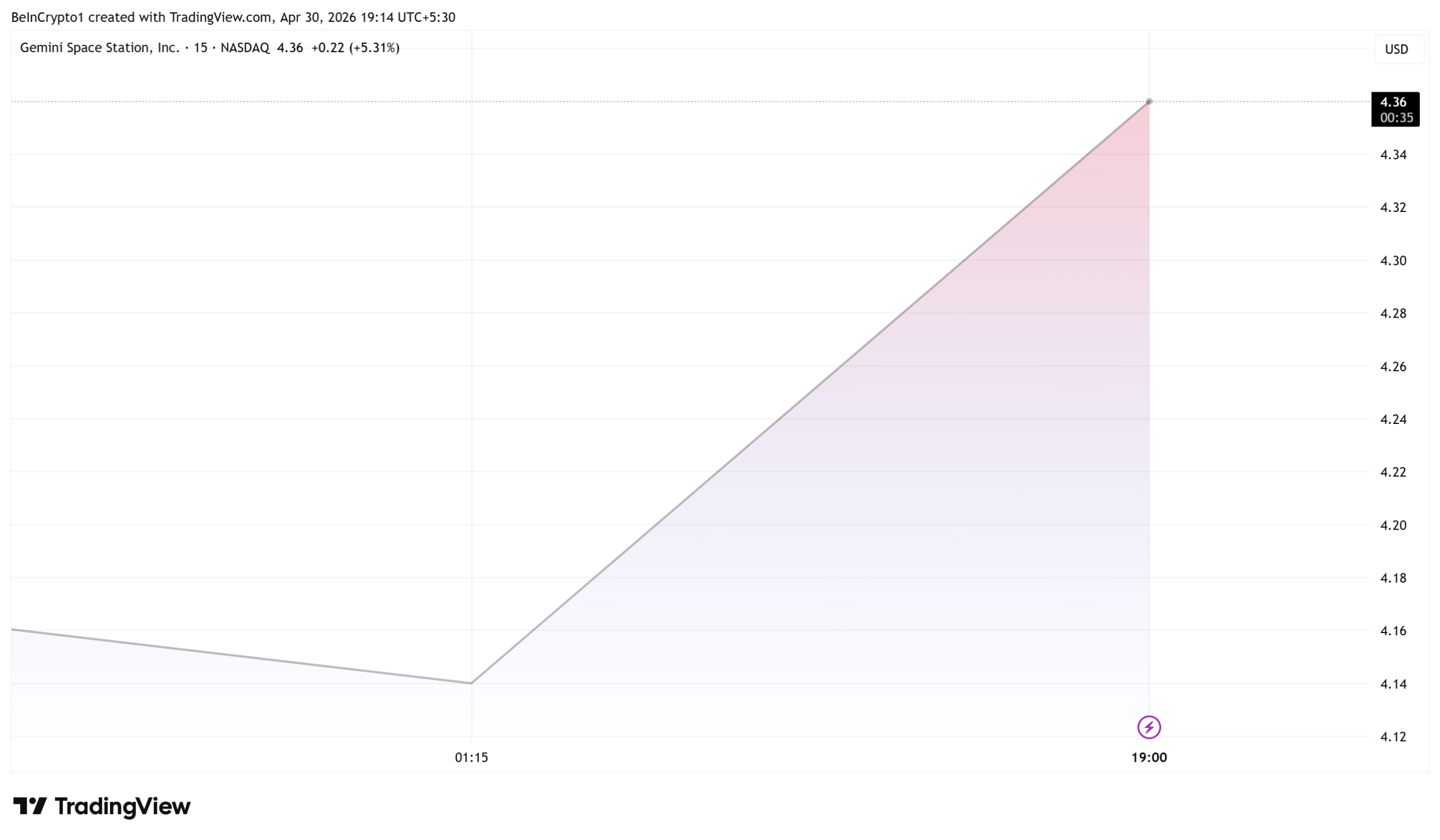
Shares of Gemini rose in premarket trading following the announcement, reflecting investor optimism around the company’s expanding product suite.
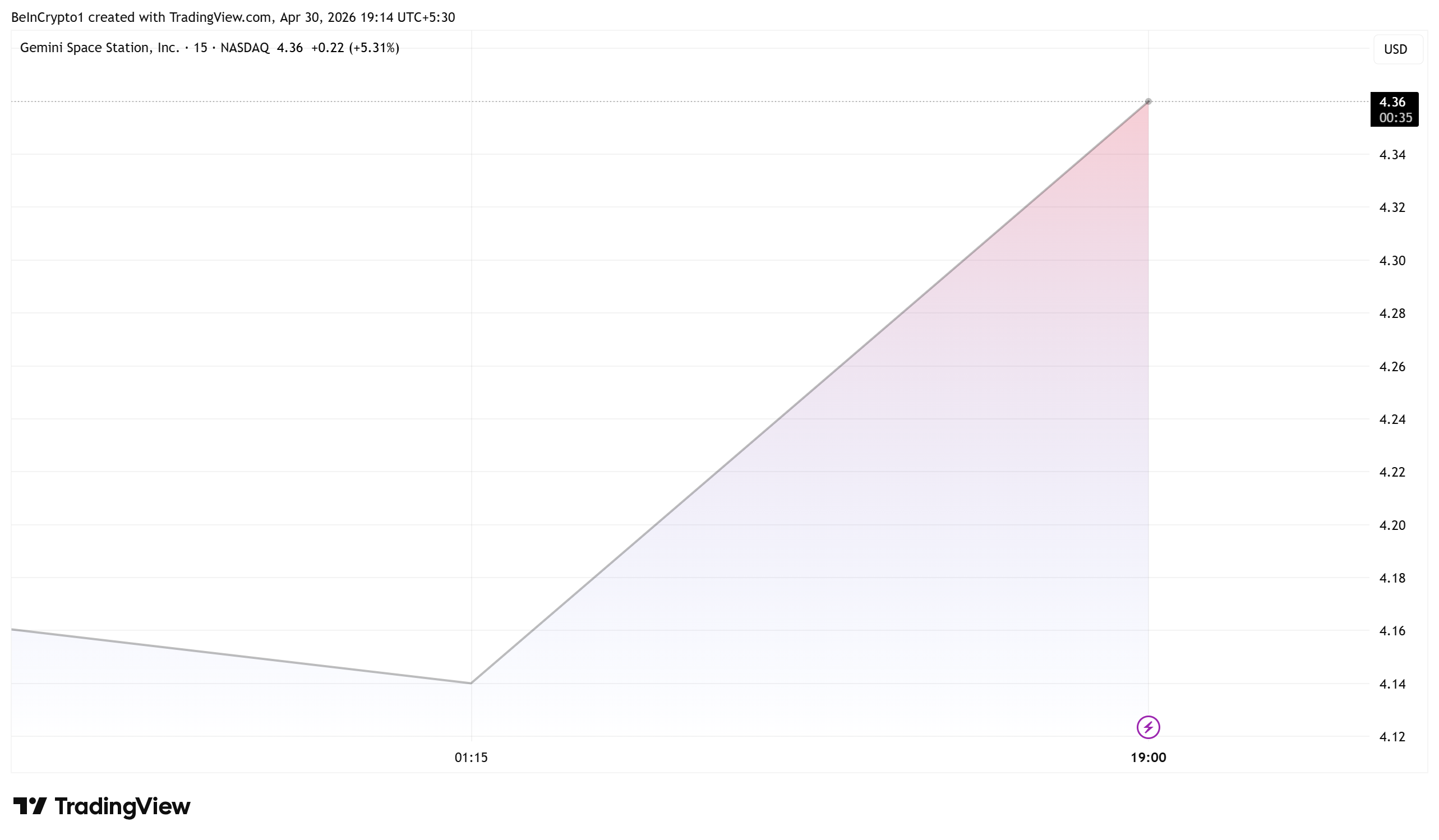
The ability to clear trades in-house is expected to improve margins, increase efficiency, and accelerate product launches.
The development comes amid increased scrutiny from regulators and ongoing legal challenges around prediction markets in the U.S., underscoring the importance of federal approval in shaping the sector’s future.
With regulatory groundwork now in place, Gemini is expected to scale its derivatives offerings, including futures, options, and potentially perpetual contracts.
The company is also advancing its vision of a “super app” that integrates multiple financial services into a single platform.
As competition intensifies and market conditions evolve, Gemini’s ability to execute on this full-stack strategy will likely determine whether it can convert regulatory momentum into sustained growth.
The post GEMI Stock Soars After CFTC Grants Gemini Exchange A Key License appeared first on BeInCrypto.
Crypto World
Rezolve AI (RZLV) Stock Surges 6% After $60M Q1 Revenue Crushes Full-Year 2025 Performance

Key Takeaways
- Rezolve AI shares climb 6% in pre-market following exceptional $60M Q1 performance
- First quarter alone surpasses entire 2025 annual revenue, demonstrating explosive growth
- Enterprise adoption accelerates as AI commerce infrastructure gains market traction
- Platform expansion drives revenue as businesses embrace AI-powered transaction systems
- Company achieves 17% of full-year 2026 guidance in opening quarter alone
Rezolve AI (RZLV) shares advanced in pre-market activity following the company’s disclosure of exceptional first-quarter 2026 financial results. The stock climbed to $2.61, representing a 6.10% increase from its previous close of $2.46, which had seen downward pressure. This positive movement comes as the company demonstrates accelerated momentum in AI-powered commerce solutions.
First Quarter Results Exceed Full Prior-Year Performance
Rezolve AI delivered $60 million in first-quarter revenue for 2026, a remarkable achievement that surpasses the company’s complete audited revenue for calendar year 2025. The prior year had generated $46.8 million in total revenue, making the Q1 result a significant acceleration.
The company began 2026 with substantial momentum, showing an annualized revenue trajectory exceeding $232 million based on December 2025’s monthly recurring revenue of $19.4 million. The first-quarter outcome validates this projection and demonstrates accelerated revenue capture across its client portfolio.
Production revenue continues to scale across enterprise implementations of the company’s core technologies. Rezolve AI’s Brain Commerce, Brain Checkout, and brainpowa solutions are seeing expanded utilization within operational retail and commerce environments, driving tangible revenue growth.
While quarterly reporting is not standard practice for Rezolve AI, the exceptional Q1 results prompted management to issue this voluntary disclosure. The move aims to provide investors with enhanced visibility into the company’s growth trajectory and operational momentum.
AI-Powered Commerce Platform Gains Enterprise Traction
Rezolve AI’s platform addresses the growing demand for artificial intelligence integration across commerce operations. The company focuses on embedding AI capabilities throughout the customer journey, from product discovery through payment processing and transaction completion.
The technology creates a cohesive infrastructure layer that unifies discovery, checkout, and customer loyalty functions. This integrated approach enables enterprises to streamline operations while delivering enhanced customer experiences through intelligent automation.
The company now serves more than 950 enterprise customers who deploy Rezolve AI solutions across diverse digital commerce applications. Strategic alliances with leading technology platforms enhance the company’s ability to integrate deeply within existing enterprise ecosystems.
Collaborations with global technology and payment infrastructure providers continue to expand the platform’s reach. These partnerships position Rezolve AI as a critical component in next-generation digital transaction workflows, strengthening its competitive position in the AI commerce space.
Company Maintains Trajectory Toward Annual Revenue Objectives
Rezolve AI reaffirms its $360 million revenue guidance for the complete 2026 fiscal year. The first quarter’s $60 million contribution represents approximately 17% of this annual objective, establishing a solid foundation for the remainder of the year.
Growing enterprise adoption patterns across the product portfolio contribute to this momentum. Increased utilization among existing customers, combined with new client acquisitions, creates multiple growth vectors supporting the revenue expansion.
The company identifies the emerging trend toward agentic commerce as a significant catalyst. AI systems are evolving beyond simple recommendations to actively facilitate discovery, decision support, and transaction execution, fundamentally transforming commerce operations.
Rezolve AI’s strategic focus remains on scaling enterprise deployments while optimizing platform capabilities. The company continues working to convert its contracted revenue pipeline into recognized income, a process that supports sustained growth and reinforces its leadership position in AI-enabled commerce infrastructure.


Maple Finance’s SYRUP token launched on Revolut, giving the fintech’s 70M+ users across 39 countries access to on-chain institutional credit yield.
Maple Finance announced Thursday that SYRUP, its native token, is now available on Revolut across the UK and EU. The listing brings on-chain institutional credit yield to one of the world’s largest fintechs, which operates in 39 countries with over 70 million users. The integration allows retail users to access Maple’s DeFi lending protocol through a mainstream finance platform in a single tap.
The launch represents a bridge between decentralized finance institutional credit markets and consumer-facing fintech infrastructure. Revolut’s scale and geographic reach across Europe significantly expands potential access to Maple’s yield products, traditionally concentrated in crypto-native platforms.
Sources: Maple Finance
This article was generated automatically by The Defiant’s AI news system from publicly available sources.

2026 Tasmanian apprentice Jabez Johnstone secures win at Caulfield Heath for Maher

How can organisations ‘stay safe’ amid intense geopolitical pressures?

XRP’s Fatal Flaw: No Reason to Hold

Manchester United reach agreement with Casemiro over contract clause amid transfer speculation

US brings back mandatory military draft registration

Steven Gerrard disagrees with Gary Neville over ‘shock’ Chelsea and Arsenal claim | Football


-

 Tech3 days ago
Register Renaming | Hackaday
-

 Fashion6 days ago
Weekend Open Thread – Corporette.com
-
 Crypto World5 days ago
Hyperliquid $HYPE Rally Builds Momentum as AI Sector Enters Prove-It Phase
-

 Business7 days ago
Patterson-UTI Energy, Inc. (PTEN) Q1 2026 Earnings Call Transcript
-

 Politics3 days ago
Drax board avoid their own AGM, accused of greenwashing & environmental racism
-
 Sports4 days ago
IPL 2026: Ruturaj Gaikwad registers slowest fifty of the season, enters all-time unwanted list | Cricket News
-

 NewsBeat4 days ago
LK Bennett closes all stores after entering administration
-

 Crypto World6 days ago
Michael Saylor says BTC winter is over. Market analyst disagrees, says bitcoin was in a pullback
-

 Fashion2 days ago
Kylie Jenner’s KHY Enters a New Era with ‘Born in LA’
-

 Tech3 days ago
Images of Samsung’s rumored smart glasses have leaked
-
 Entertainment5 days ago
Mariah Carey Slams Deposition Claims In Brother’s Lawsuit
-
Crypto World7 days ago
Is Algorand One of the Few Quantum-Resistant Blockchains? Here’s What the Data Shows
-

 Business2 days ago
Most Commercial Energy Audits Miss the Real Losses
-

 Tech3 days ago
Why Blue Badges Disappeared From Toyota Hybrids
-
 NewsBeat6 days ago
Trump threatens to review UK’s claim to Falkland Islands and punish Nato allies over Iran war disagreement
-

 Business6 days ago
Jeanine Pirro announces closure of Federal Reserve building cost probe
-

 Tech5 days ago
Microsoft to roll out Entra passkeys on Windows in late April
-

 Business3 days ago
(VIDEO) Charlize Theron Climbs Times Square Billboard to Promote New Netflix Thriller ‘Apex’
-

 Crypto World7 days ago
Kraken Builds Beyond Crypto With Futures, Tokenized Stocks, and Payments
-

 Crypto World2 days ago
CFTC’s AI will review U.S. crypto registration applications, chairman tells CoinDesk
You must be logged in to post a comment Login