Shares of Meesho surged nearly 10% to Rs 189.90 on BSE on Wednesday after JP Morgan initiated coverage on the value-focused e-commerce platform with an ‘Overweight’ rating and a price target of Rs 215.
The US-based brokerage stated that “Meesho is building India’s first discovery-led marketplace that acts as a long tail ad network with embedded logistics for a fragmented retail market”.
JP Morgan expects the company’s net merchandise value (NMV) to scale at a 23% compound annual growth rate (CAGR) over FY26-31 without “heroic” annual transacting user (ATU) targets, driven by rising frequency, falling return-to-origin (RTO) orders and stronger growth in Mall and Content Commerce.
Strong margin expansion ahead
The brokerage sees significant EBITDA margin expansion to 4% by FY31, up from negative 3% in FY26, driven by under-monetized advertising take-rates. “This should drive EBITDA/FCF CAGR of 170/52% over FY28-31 post break-even,” JP Morgan noted in its report. JP Morgan valued Meesho at 35 times FY30 estimated EV/EBITDA, discounted back to FY28. The brokerage highlighted that this valuation reflects “EBITDA CAGR of 140% over FY28-30E vs internet peers’ average growth of 70% over FY26-28E and 30x EV/EBITDA”.
Advertisement
Live Events
Three levers for advertising growth
Explaining the advertising monetization potential, JP Morgan analysts Ankur Rudra and Bhavik Mehta stated that “advertising take rates have several levers including: 1) the number of paying sellers (JPMe ~60%); 2) monetization per seller of paying sellers (current sellers’ spend <50% of ad budget); and, 3) growth in Mall and branded goods”. The report emphasized that “Meesho is under-indexed on ad rates at 1.8% of GMV vs. global peers at ~3.7% of GMV”, suggesting substantial room for improvement.
Market leadership and growth trajectory
Meesho has emerged as India’s largest e-commerce player over the twelve months ended June 30, 2025, in terms of the number of placed orders and annual transacting users, according to Redseer data cited in the report.
The company’s annual transacting users increased from 199 million in FY25 to an estimated 265 million in FY26, representing a 33% year-on-year growth. JP Morgan projects ATU to reach 568 million by FY31.
“NMV growth can outperform user growth,” the brokerage noted, adding that “we are skeptical of annual transacting user growth being constrained in the late teens, we think NMV can be sustained at a 23% FY26-31 CAGR, thanks to a combination of rising platform frequency (to over 12x from FY30) and falling RTO”.
Advertisement
Logistics: temporary setback, not structural
Addressing concerns around logistics costs, JP Morgan stated: “We understand the key debate has been on logistics costs pullback, whether it has been a loss of economics or cyclical. We believe the 2Q-3Q drop in logistics monetization was a one-off as a result of 3PL consolidation and should recover in FY27 as Meesho is able to plan volumes better”.
The brokerage expects Valmo, Meesho’s proprietary logistics orchestration platform, to peak out at 65-70%, “which can balance economics with resilience”.
Free cash flow recovery expected
JP Morgan expects free cash flow (FCF) to recover faster than EBITDA due to a negative working capital cycle. “We expect FCF to recover to 1.5% of NMV by FY28 and 3.1% by FY30,” the analysts wrote.
The company has generated positive FCF historically in FY24 and FY25, though it turned negative in FY26 due to strategic investments in logistics and user acquisition.
Advertisement
Key risks to watch
JP Morgan flagged several risks including “slower than expected growth in NMV due to slower smartphone shipments, persistent logistics cost overruns, inability to expand ad take rates, competition from horizontal ecommerce, and labor code risks”.
The brokerage noted rising competition, with Amazon and a leading Indian e-commerce player picking up pace since mid-2025 and outpacing Meesho in monthly downloads growth rate.
For FY28, JP Morgan estimates revenue of Rs 216.36 billion, with adjusted EBITDA of Rs 2.11 billion and adjusted net income of Rs 6.27 billion. The company is expected to achieve adjusted EBITDA breakeven in FY28.
Over fifteen years of experience making contrarian bets based on my macro view and stock-specific turnaround stories to garner outsized returns with a favorable risk/reward profile. If you want me to cover a specific stock or have a question for an article, just let me know!
Analyst’s Disclosure: I/we have no stock, option or similar derivative position in any of the companies mentioned, and no plans to initiate any such positions within the next 72 hours. I wrote this article myself, and it expresses my own opinions. I am not receiving compensation for it (other than from Seeking Alpha). I have no business relationship with any company whose stock is mentioned in this article.
Seeking Alpha’s Disclosure: Past performance is no guarantee of future results. No recommendation or advice is being given as to whether any investment is suitable for a particular investor. Any views or opinions expressed above may not reflect those of Seeking Alpha as a whole. Seeking Alpha is not a licensed securities dealer, broker or US investment adviser or investment bank. Our analysts are third party authors that include both professional investors and individual investors who may not be licensed or certified by any institute or regulatory body.
Mark Zuckerberg’s pledge to deliver “personal superintelligence” fails to calm Wall Street as the social media group lifts its 2026 capital expenditure forecast by another $10bn, even as an algorithm overhaul drives record time spent on Instagram and Facebook.
Meta Platforms wiped roughly 7 per cent off its share price in after-hours trading on Wall Street last night after the owner of Facebook, Instagram and WhatsApp jolted investors with another sharp increase in its artificial intelligence spending plans, even as a sweeping algorithm overhaul drove record engagement across its apps.
The Silicon Valley group, run by Mark Zuckerberg, said it now expected capital expenditure to come in at between $125 billion and $145 billion in 2026, up from the $115 billion to $135 billion range it had pencilled in only months earlier. The revised guidance pushed shares down $46.62, or 7 per cent, to $622.50 in extended trading in New York, despite first-quarter sales and profits that comfortably beat City and Wall Street forecasts.
The reaction underlines the growing unease among shareholders over Big Tech’s escalating AI arms race, with the world’s largest technology companies pouring tens of billions of dollars into data centres, custom chips and machine-learning talent in a bid not to be left behind, a dynamic that is increasingly setting the cost of doing business for smaller rivals and the digital advertising market on which countless British SMEs now depend.
Zuckerberg sought to reassure the market that the spending would pay off, arguing that Meta’s algorithm changes were already translating into stickier users and a more lucrative advertising business. The chief executive said improvements to content ranking had lifted “real time” spent on Instagram by 10 per cent in the first quarter, while video engagement on Facebook climbed by more than 8 per cent globally, the biggest quarter-on-quarter jump in four years.
Advertisement
Susan Li, chief financial officer, told analysts that Meta had doubled the length of user interactions used to train Instagram’s recommendation systems during the period, allowing its AI models to “develop a deeper understanding of user interests”. Engineers had also accelerated the speed at which fresh posts were surfaced, using “more advanced content understanding techniques” to identify content that might appeal to a user “even if they haven’t engaged with a lot of similar content”.
More than half a billion users on each of Facebook and Instagram are now consuming AI-translated videos after the company began auto-dubbing clips into a viewer’s local language, a move designed to widen the pool of recommendable content and, ultimately, monetisable inventory. Across Meta’s family of apps, daily active users hit 3.56 billion in the first quarter.
The increased engagement is feeding directly into the advertising machine that still generates the lion’s share of Meta’s revenues. Total ad impressions rose 19 per cent year-on-year in the period, as the group’s automated, AI-powered ad platform, which lets brands personalise campaigns at scale, continued to gain traction with marketers, including the small and mid-sized advertisers that increasingly account for the bulk of its long tail.
Zuckerberg used the earnings call to set out his most ambitious vision yet for the technology, telling investors that Meta intended to build AI agents capable of delivering “personal superintelligence” to billions of people. He said he wanted Meta’s products to “understand people’s goals specifically and then be able to just go work on them for them, and check back in”, whether those goals related to health, learning, relationships or careers.
Advertisement
“Literally every person in the world is going to want some version of it,” he said, suggesting that consumers would be “willing to pay a lot of money to have premium or high compute versions” — a hint that Meta is preparing to layer subscription products on top of its traditionally ad-funded model.
AI models, Zuckerberg added, would help Meta to “develop a first principles understanding of what you care about and what each piece of content in our system is about, so that way, we can show you more useful things for what you’re trying to accomplish.”
The bullish tone on AI sat uneasily, however, with the group’s plans to cut roughly 8,000 staff, or 10 per cent of its workforce, in May. Pressed on whether the technology would ultimately replace human workers, Zuckerberg insisted his view differed from much of Silicon Valley.
“My view of AI is very different from many others in the industry,” he said. “I hear a lot of people out there talk about how AI is going to replace people instead. I think that AI is going to amplify people’s ability to do what you want, whether that’s to improve your health, your learning, your relationships, your ability to achieve your personal career goals, and more.”
Advertisement
Li told analysts she was “unsure about the optimal workforce size” for the company, but said management was determined to use AI tools to “substantially increase our productivity”. She added: “We’re approaching this with a bias for wanting to use these tools to build even more products and services than we would have before. At the same time, we’re making very significant investments in infrastructure, and we are very focused on continuing to operate efficiently. So I think we will be continuously evaluating how we’re structured, just to make sure we’re best set up to deliver against our priorities over the coming years.”
For all the angst over capital spending, the underlying numbers were strong. Meta reported first-quarter revenue of $56.3 billion, ahead of Wall Street’s $55.58 billion consensus. Net income jumped 61 per cent year-on-year to $26.8 billion, well clear of the $17.2 billion analysts had pencilled in, although the figure was flattered by an $8 billion tax benefit linked to the US tax reform package signed into law last July.
The question now facing shareholders is whether Zuckerberg’s vast bet on AI infrastructure will deliver the productivity gains and new revenue lines needed to justify the bill, or whether, as some on Wall Street fear, the social media empire is about to enter another costly chapter of the metaverse playbook, only this time with a different acronym.
Jamie Young
Jamie is Senior Reporter at Business Matters, bringing over a decade of experience in UK SME business reporting.
Jamie holds a degree in Business Administration and regularly participates in industry conferences and workshops.
When not reporting on the latest business developments, Jamie is passionate about mentoring up-and-coming journalists and entrepreneurs to inspire the next generation of business leaders.
Passionate about geopolitics and macroeconomics, I express my opinion through my articles and enjoy engaging with all of you. I also write about companies that catch my attention, particularly those in my portfolio. For me, Seeking Alpha is a way to expand and share my knowledge. Graduate in business economics, CFA Level 1 and popular investor on eToro.
Analyst’s Disclosure: I/we have a beneficial long position in the shares of GOOG, META either through stock ownership, options, or other derivatives. I wrote this article myself, and it expresses my own opinions. I am not receiving compensation for it (other than from Seeking Alpha). I have no business relationship with any company whose stock is mentioned in this article.
Seeking Alpha’s Disclosure: Past performance is no guarantee of future results. No recommendation or advice is being given as to whether any investment is suitable for a particular investor. Any views or opinions expressed above may not reflect those of Seeking Alpha as a whole. Seeking Alpha is not a licensed securities dealer, broker or US investment adviser or investment bank. Our analysts are third party authors that include both professional investors and individual investors who may not be licensed or certified by any institute or regulatory body.
It has acquried Telford-baed healthy snack maker Flower & White
16:17, 30 Apr 2026Updated 16:24, 30 Apr 2026
Cardiff headquartered leading speciality bakery manufacturer, Finsbury Food Group, has acquired healthy snack brand Flower & White as part of its buy and build growth strategy.
Based in Telford, Flower & White produces a range of light sweet treats and lower-calorie snack bars across direct-to-consumer, retail and foodservice channels. The business is currently growing at around 30% and employs 46 staff.
The value of the deal has not been disclosed. Stock Market listed Finsbury employs 800 at its Cardiff HQ and manufacturing site, which operates under its Memory Lane brand. UK-wide the group employs 3,500 with annual revenues of more than £500m.
Advertisement
The acquisition further strengthens Finsbury’s position within the direct-to-consumer market and adds new capabilities to further capitalise on the shift towards healthier snacking alternatives. The deal follows it acquiring a majority stake in direct-to-consumer cupcake brand, Lola’s, last August.
Flower & White’s founders, Leanne and Brian Crowther, will remain in place to support a smooth integration. The business will continue to operate from its Telford site.
The deal strengthens Finsbury Food Group’s position in the direct-to-consumer market and offers a differentiated lighter snacking proposition to its roster of baked goods.
Advertisement
John Duffy, chief executive of Finsbury Food Group, said: “Flower & White is a high-quality, entrepreneurial brand operating in attractive growth segments. This acquisition strengthens our direct-to-consumer platform and adds exciting capability in sweet treats and better-for-you snacking. We see strong opportunities to scale the brand through our retail and commercial channels.”
Leanne Crowther, joint founder of Flower & White, said: “We’re delighted to confirm that Flower & White has been acquired by Finsbury Food Group. This is a proud moment in our journey. What started as a small idea in our Shropshire kitchen has grown into a brand-first business shaped by an amazing team and loyal customers.
“Joining Finsbury allows us to build on everything we’ve created, accelerating our direct-to-consumer plans, strengthening retail and foodservice relationships and bringing even more of what people love from Flower & White to the market. We couldn’t be more excited for this next chapter.”
Finsbury Food Group supplies a range of bread, cake, morning goods and bakery snack products to multiple retailers, food service and export channels across the UK and Europe.
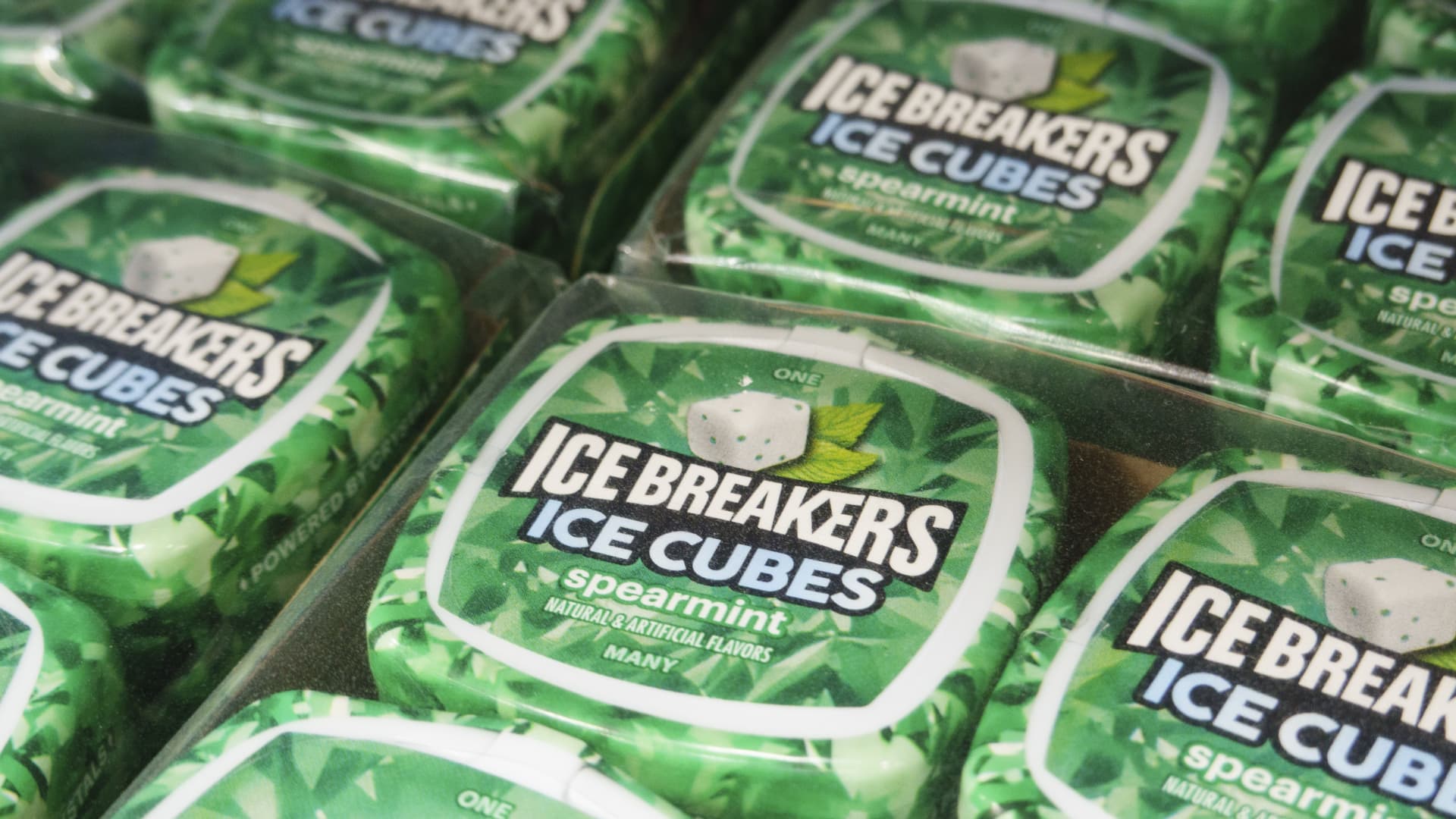
Packages of Ice Breakers spearmint mints Mints are displayed at a Costco Wholesale store on April 27, 2025 in San Diego, California.
Kevin Carter | Getty Images
Hershey is seeing higher sales for its mints and gum — thanks to the growing use of GLP-1 drugs.
Advertisement
“We’ve also seen strong demand for gum and mints, as the category benefits from functional snacking tailwinds, including GLP-1 adoption,” CEO Kirk Tanner said in pre-recorded remarks ahead of the company’s earnings conference call Thursday. “Retails sales for our third-largest confection brand, Ice Breakers, increased over 8% in the quarter.”
While Tanner didn’t specify why the increasing usage of GLP-1 agonists fueled mint and gum sales, some people who take medications like Ozempic, Wegovy and Mounjaro report experiencing halitosis, or bad breath. However, so-called Ozempic breath is not an official listed side effect for the medication.
Dental experts have linked the drugs to dry mouth, likely caused by dehydration and changes to saliva caused by the medication.
Hershey isn’t the only company known for its sweet treats that is reporting a surprising lift in sales from GLP-1 users. Swiss chocolatier Lindt & Spruengli said in March that U.S. sales of premium chocolate rose faster last year among people using the medication than those who weren’t.
Advertisement
And The Magnum Ice Cream Company told investors that data suggests that the growing adoption of GLP-1 drugs will likely boost sales of its more expensive products, like those that come in smaller portions or offer more protein or contain real fruit. It called the trend “the premium treat substitution effect.”
“As consumers using GLP-1s are eliminating [the] low-quality munching categories first, categories like premium chocolate, premium ice cream and protein snacks could gain share in the overall snacking market,” CEO Peter ter Kulve said on the company’s earnings conference call in February.
The boost to Hershey’s sales from breath-freshening mints and gum, as well as a 17% jump in sales of its protein bars, helped the company’s quarterly revenue climb more than 10% in the first quarter. However, shares were down more than 2% in morning trading.
FOX Business host Charles Payne discusses how Intel is performing on ‘Making Money.’
President Donald Trump says the U.S. has brought in $30 billion in funds generated from federal stock holdings in Intel over the past 90 days alone.
Trump made the announcement on Thursday, highlighting that he authorized the U.S. government to invest in the semiconductor manufacturing company. Trump revealed in August of last year that Intel had agreed to the federal government acquiring a 10% stake in the company.
Advertisement
“Intel Stock continues to rise. I’m very proud of that Company in that I am responsible for making the United States of America over 30 Billion Dollars in the last 90 days on that stock alone,” Trump wrote.
“There are others that, likewise, I have been very successful with by taking pieces of the Equity for support. Congratulations to Intel on doing such a great job and, more importantly, congratulations to the People of the United States for making such a good investment!” he added.
U.S. President Donald Trump speaks during a Cabinet meeting in the Cabinet Room of the White House. (Chip Somodevilla/Getty Images / Getty Images)
The administration announced the deal with Intel when the company was struggling last year. Semiconductors power everything from smartphones to defense systems, and Intel’s slowdown was a national security concern, industry analysts say.
Advertisement
Stocks In This Article:
Intel unveiled new chip manufacturing milestones in early January, accounting for much of its growth. Nevertheless, former Intel CEO Pat Gelsinger warned at the time that the United States still has a long way to go to reclaim chip production from Asia.
Lip-Bu Tan, chief executive officer of Intel Corp., during a news conference on the sidelines of the Computex conference in Taipei, Taiwan. (Annabelle Chih/Bloomberg via Getty Images / Getty Images)
“The metric [is] though, how many wafers are being built in America,” Gelsinger said in January on “The Claman Countdown.”
Much of the world’s advanced chip manufacturing remains concentrated in Asia, particularly Taiwan. U.S. officials have said the imbalance poses economic and national security concerns.
Gelsinger said it is critical that manufacturing return to the United States, while cautioning that progress will take time.
SlateStone Wealth chief market strategist Kenny Polcari discusses Intel forecasting a revenue surge, how it impacts tech stocks and Meta and Microsoft announce job cuts on ‘Varney & Co.’
SEATTLE — Impinj Inc. shares skyrocketed more than 21% Thursday, surging to around $146 in morning trading after the RAIN RFID pioneer delivered a strong revenue beat for the first quarter and issued blockbuster second-quarter guidance that far exceeded Wall Street expectations, igniting optimism about accelerating demand for its Internet of Things technology.
Impinj Stock Explodes 22% on Explosive Q2 Guidance and Record RFID Bookings Despite Q1 Miss
The semiconductor and RFID solutions company reported first-quarter revenue of $74.3 million, topping analyst forecasts of roughly $72.5 million to $74 million while remaining essentially flat year-over-year. Non-GAAP earnings per share came in at $0.14, beating consensus estimates of $0.11. Adjusted EBITDA reached $3.4 million.
While the top line reflected ongoing inventory digestion and seasonal softness in some retail segments, CEO Chris Diorio highlighted record endpoint IC bookings as the standout metric. “Endpoint IC bookings hit an all-time record, engendering a strong second-quarter revenue outlook,” Diorio said in the earnings release.
Impinj raised its Q2 outlook sharply, projecting revenue between $103 million and $106 million — well above the Street consensus around $97 million — and non-GAAP EPS of $0.77 to $0.82, dramatically higher than prior expectations near $0.20. The aggressive guidance signals a sharp rebound driven by new platform ramps, particularly the M800 series, and expanding adoption in supply chain, logistics and retail applications.
Investors responded with enthusiasm, pushing the stock well above Wednesday’s close of $120.04. Volume surged as traders piled in, reflecting relief after months of volatility tied to inventory corrections and slower retail deployments. The move marks one of the largest single-day percentage gains for the company in recent memory.
Advertisement
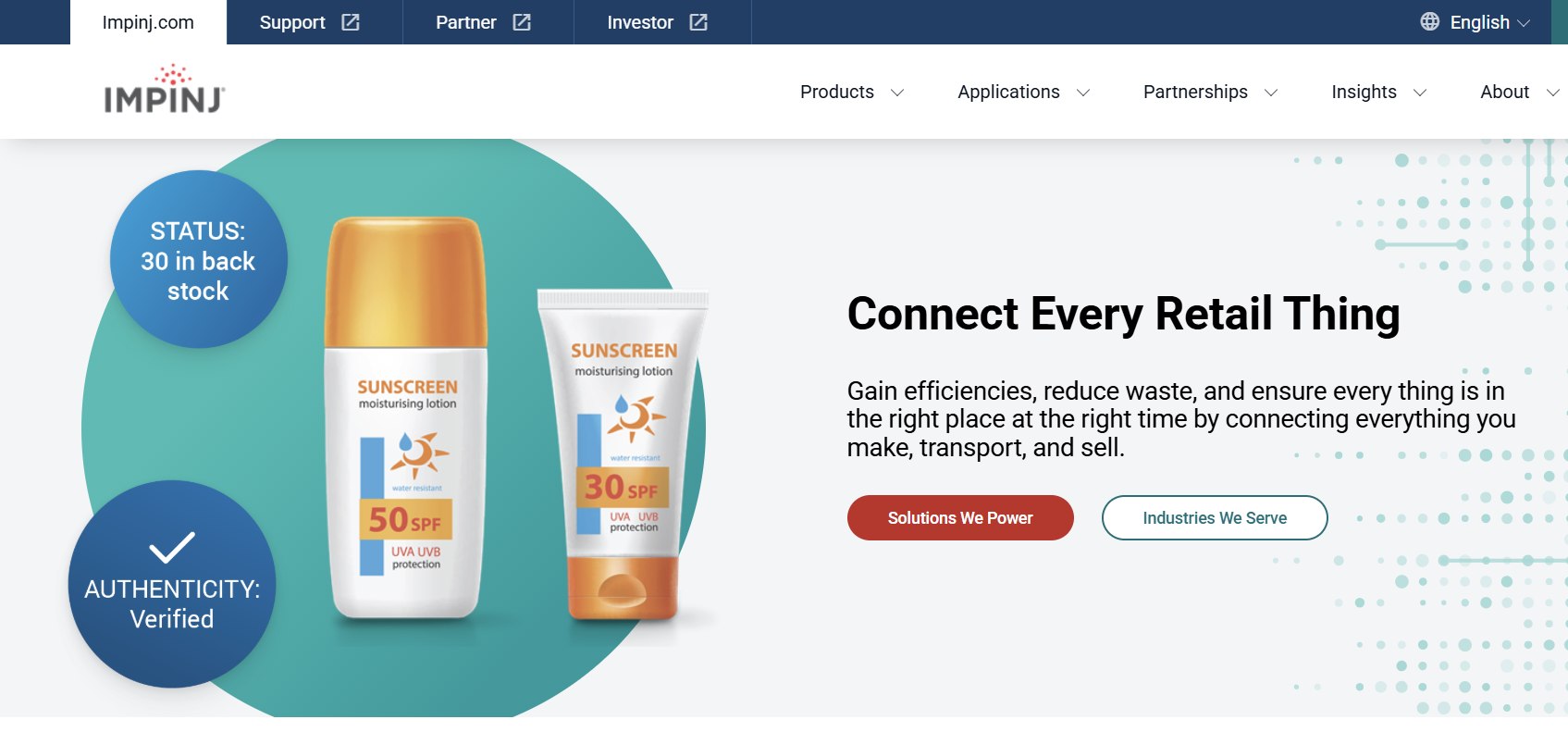
Impinj specializes in RAIN RFID technology that enables wireless identification and tracking of billions of everyday items — from apparel and luggage to automotive parts and medical supplies. Its platform connects physical objects to the cloud, powering smarter supply chains and inventory management for major retailers, logistics firms and manufacturers.
The record bookings underscore growing momentum in core markets. Management cited strong demand in supply chain and logistics, areas increasingly reliant on advanced RFID for real-time visibility and efficiency. The M800 platform ramp, offering higher performance and new features, is expected to drive meaningful revenue acceleration through the second half of 2026.
Analysts viewed the results positively despite the GAAP net loss of $25.3 million, or $0.83 per share, which included non-cash items. The focus remained on the forward outlook and operational execution. Several firms raised price targets following the report, though the consensus still hovers around $160-$170, leaving room for further upside.
The RFID market continues expanding as companies digitize operations amid e-commerce growth, labor shortages and complex global supply chains. Impinj’s technology offers advantages in read range, speed and cost over traditional barcodes, positioning it for long-term secular tailwinds even as near-term cycles fluctuate.
Advertisement
Challenges persist. The company has navigated retailer inventory burn-down and product transitions that pressured Q1. Broader semiconductor sector dynamics, including customer concentration and macroeconomic uncertainty, add volatility. Impinj also carries convertible debt, though it recently repurchased a portion to reduce dilution risk.
Balance sheet strength provides a buffer. The company ended the quarter with $235 million in cash and investments. Free cash flow turned positive at $2.2 million, and capital expenditures remained disciplined at $1.7 million.
For investors, the surge highlights Impinj’s high-beta nature. The stock has traded in a wide range, hitting a 52-week high near $247 last year before pulling back amid growth concerns. Thursday’s rally recovers some ground but leaves shares below peaks, reflecting both opportunity and execution risk.
CEO Diorio emphasized the massive untapped potential. Billions of items still lack RFID tagging, creating a multi-year growth runway as adoption scales from pilots to enterprise-wide deployments. Partnerships with major retailers and logistics providers continue expanding use cases.
Advertisement
Looking ahead, the company plans further innovation in endpoint ICs and reader platforms. Gen2X features, including faster inventory reads and enhanced security, could open new verticals in healthcare, aviation and industrial IoT. Management expects sequential improvement through 2026 as inventory normalizes and new platforms gain traction.
Wall Street reaction underscored the power of forward guidance. While Q1 showed typical seasonal softness, the Q2 outlook demonstrated confidence in a rebound. Analysts noted improving gross margins and operational leverage as key positives for profitability.
Risks include customer delays, competitive pressures from other RFID providers and potential slowdowns in retail spending. Currency fluctuations and supply chain component costs also warrant monitoring. Yet the record bookings provide tangible evidence of underlying demand strength.
Impinj, founded in 2000 and based in Seattle, has evolved from an early RFID pioneer to a key enabler of the Internet of Things. Its technology powers applications across retail, healthcare, automotive and logistics, helping organizations gain real-time visibility into assets and inventory.
Advertisement
As trading progressed Thursday, the stock held most of its gains amid high conviction. Whether the momentum sustains depends on Q2 delivery and continued progress on platform ramps. For now, the market has rewarded Impinj’s ability to navigate near-term headwinds while positioning for stronger growth.
The RFID sector watches closely. Successful execution could validate broader digitization trends and drive re-rating for the stock. With Q2 guidance signaling acceleration, Impinj appears poised for a stronger second half — provided it converts bookings into sustained revenue and earnings growth.
For long-term investors, today’s surge reinforces Impinj’s role in the expanding connected economy. As more industries embrace RFID for efficiency and transparency, the company’s technology could capture significant market share in a multi-billion-dollar opportunity.
Given events in the Middle East, it was already inevitable that domestic energy bills will rise this summer. The Bank paints a relatively bleak picture, even though uncertainty still dominates. In short, it will take the region – and the wider energy sector – a while to recover in any scenario, so prices will rise.


























































You must be logged in to post a comment Login