Apple reported $111.2 billion in revenue for its fiscal second quarter on April 30, delivering growth, record March-quarter results, and a new $100 billion share buyback.
“Today Apple is proud to report our best March quarter ever, with revenue of $111.2 billion and double-digit growth across every geographic segment,” CEO Tim Cook said. “iPhone achieved a March quarter revenue record, fueled by such extraordinary demand for the iPhone 17 lineup.”
Results for the quarter ended March 28, 2026, beat expectations, with earnings per share of $2.01, up 22% year over year. The company posted growth across every geographic segment, with iPhone revenue setting a March-quarter record on demand for the iPhone 17 lineup, while Services reached a new all-time high.
“During the quarter, Services achieved yet another all-time record,” Cook said. “We were excited to introduce remarkable new products to our strongest lineup ever.”
Advertisement
Apple also generated more than $28 billion in operating cash flow during the quarter. Earnings grew faster than revenue, showing Apple’s cost structure held as the business expanded.
“The demand was off the charts,” Cook toldReuters. “And there’s just a little less flexibility in the supply chain at the moment for getting more parts.”
The iPhone result confirms the latest lineup is driving demand in Apple’s largest business. Apple’s board authorized an additional $100 billion share repurchase program and raised its quarterly dividend to $0.27 per share, a 4% increase.
The dividend will be paid on May 14 to shareholders of record as of May 11. Shareholders must own the stock before the record date to be eligible for the payment.
Advertisement
Apple kept its capital return structure unchanged, continuing to prioritize buybacks and dividends over shifting spending to new initiatives.
Services and installed base continue to grow
Services hit another all-time high during the quarter, showing Apple is continuing to expand revenue beyond hardware sales. Apple also reported a record installed base, giving the company more users it can reach with services, upgrades, and accessories.
“We are investing a lot,” Cook said. “We see it as a huge opportunity, both for consumer and for business. We’re all in, and personalized Siri is on schedule for this year.”
The quarter didn’t include any clear increase in AI-related spending or a shift in priorities. Questions remain about how aggressively the company plans to compete in that area.
Advertisement
For now, Apple is still growing at a pace that supports its current strategy, even as attention shifts to what comes next. The results show the company hasn’t needed to change course to keep delivering growth.
A brilliant, lightweight and powerful tool, the Stihl ASA 20 Cordless Secateurs can cut through branches up to 25mm thick, and last for up to 2000 cuts on a single charge, making them fast and easy to use for even large pruning jobs.
Simple to use
Very powerful
Far quicker than manually cutting
Expensive compared to manual secateurs
Key Features
Introduction
If you’ve got a lot of pruning to do, particularly with thicker branches, the Stihl ASA 20 Cordless Secateurs is for you. This lightweight, battery-operated tool makes it easy to quickly cut through branches up to 25mm thick, making short work of any job.
Advertisement
Sure, they’re much more expensive than a manual set of secateurs, but given how easy they make life, they’re well worth the outlay.
Advertisement
Design and features
Uses the 10.8V AS battery system
Two cutting settings
Useful LCD
Stihl’s rapidly growing its range of tools powered by its AS 10.8V battery system. Taking in everything from the Stihl GTA 26 pruner to the Stihl BGA 30 Cordless Blower, the range is designed to be light and easy to use.
Image Credit (Trusted Reviews)
That battery system is particularly well-suited to handheld tools, such as the Stihl ASA 20 Cordless Secateurs that I have on review here, with the tiny battery not adding much weight and keeping this tool firmly within the one-hand category.
Yes, the ASA 20 is heavier than a manual set of secateurs, at just under 1kg with the battery, but the weight is well distributed, and I’ve used the set for long periods without even really thinking about it.
Build quality is as you’d expect from Stihl, with a reassuring feel to it. This is a product that’s designed to last.
Advertisement
Advertisement
It’s thoughtfully designed, too. There’s a cover for the blades, so you can store the Stihl ASA 20 Cordless Secateurs safely. It’s a rugged plastic cover that clicks neatly into place.
Image Credit (Trusted Reviews)
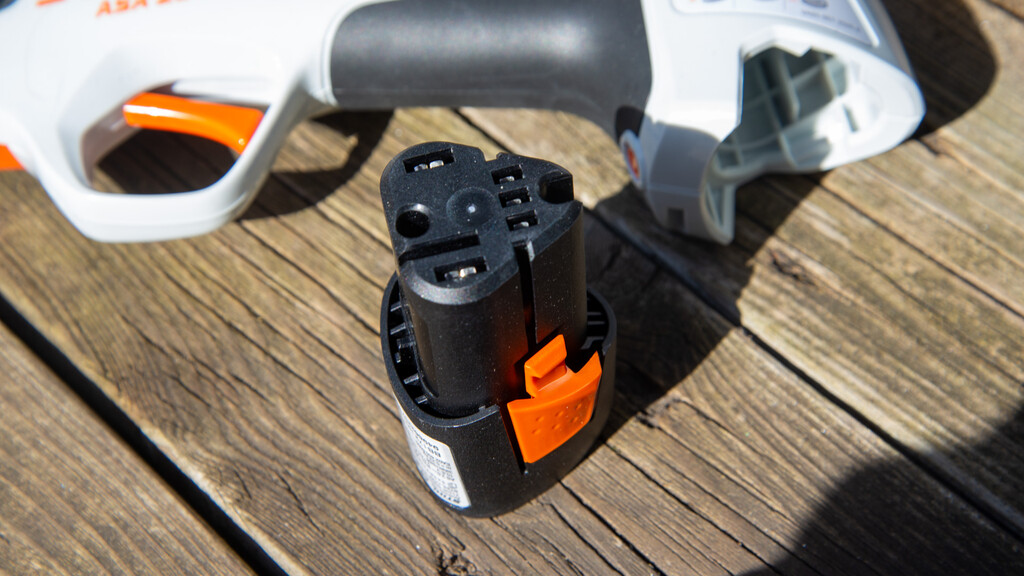
The battery goes into the handle, clipping into place. If you don’t have an AS 2 battery already, you can buy the Stihl ASA 20 Cordless Secateurs with a charger and battery; if you’ve got other tools, then you can choose to buy these clippers as a barebones system instead.
Using the Stihl ASA 20 Cordless Secateurs is easy. First, you need to power them on using the dedicated power button.
Image Credit (Trusted Reviews)
Once there’s a beep, the secateurs are ready to use. Following the handy sticker on the side, two squeezes of the trigger open the blades ready for action; holding the trigger in for three seconds switches between to the two cutting widths (19mm and 25mm); holding the trigger for five seconds closes the blades, so you can power the system down.
Advertisement
Advertisement
Image Credit (Trusted Reviews)
The current cutting mode is shown on the handy LCD, which also shows you the current cut count.
Image Credit (Trusted Reviews)
To use the Stihl ASA 20 Cordless Secateurs, just line them up, squeeze the trigger and let the motor do the rest. It’s that easy, and there’s absolutely no fatigue in using them.
Image Credit (Trusted Reviews)
There’s only a basic battery meter on this, with three LEDs that extinguish one at a time.
Advertisement
Every 4000 cuts, Stihl says that the blades should be oiled with Stihl Multioil Bio, and the company recommends getting the product serviced annually.
Performance
Fast to use
Cuts through thicker branches with ease
Using the Stihl ASA 20 Cordless Secateurs is a joy. With simpler cuts, such as deadheading a buddleia, I found this tool far faster than using a manual pair of secateurs.
The controls are very intuitive. With a progressive cut, the blade only moves as far as the trigger is pulled, so as soon as you’re through a branch, you can release and move on. It’s a little thing, but it makes the Stihl ASA 20 Cordless Secateurs feel like manual secateurs, only faster.
I just clipped, moved on, clipped, moved on, and so on. In fact, it’s almost harder to stop pruning; the Stihl ASA 20 Cordless Secateurs make life that easy. And, they cut cleanly, too.
Advertisement
Image Credit (Trusted Reviews)
Advertisement
There’s no need to switch tools as with regular secateurs, either, as the Stihl ASA 20 Cordless Secateurs’ two modes make it well-suited for all typical garden jobs.
Even dealing with thicker growth is easy. Approaching the 25mm limit of the tool, I cut my large rosemary back. Its thicker branches were dealt with just as easily, with no motor grinding or noticeable change in performance.
Image Credit (Trusted Reviews)
On a full charge, the Stihl ASA 20 Cordless Secateurs can last for up to 2000 cuts. In other words, a full charge will let you do a full job, regardless of size.
Should you buy it?
You want to make pruning faster and easier
Advertisement
Powerful and fast to use, these secateurs make life easier and let you make more cuts with no fatigue.
Advertisement
You don’t have much to prune
These are more expensive than a manual set of secateurs, so only buy them if you’ll get the most out of them.
Advertisement
Advertisement
Final Thoughts
More expensive than a set of secateurs, the Stihl ASA 20 Cordless Secateurs really do make life easier. Whether you’re deadheading, cutting back or just tidying up growth, this is a brilliant tool.
How We Test
We test every pair of secateurs we review thoroughly over an extended period of time. We use standard tests to compare features properly. We’ll always tell you what we find. We never, ever, accept money to review a product.
Find out more about how we test in our ethics policy.
Advertisement
We test each hedge pair of secateurs for ease of use and handling
We cut a variety of branches to see what jobs each pair of secateurs is good (or bad) at
For battery-powered models, we see how far they can cut before running out of power
FAQs
How many cuts can the Stihl ASA 20 Cordless Secateurs make on a charge?
It can make up to 2000 cuts per full charge.
Which batteries do the Stihl ASA 20 Cordless Secateurs take?
These use the AS system of batteries, so you can swap batteries between other compatible tools.
There’s plenty to like, admire, and definitely dislike about Steve Jobs, but he did an incredible job saving Apple, and will forever be treated like a rock star.
The greatest thing that Gil Amelio, Apple’s fifth CEO, ever did was pave the way for Steve Jobs to become its sixth. It was great for Apple, it was great for users, but it was probably horrible for Amelio himself.
That’s because what he did was have Apple acquire Steve Jobs’s failed NeXT firm. As part of that acquisition he got Jobs as no more than an advisor.
He must surely have guessed that Jobs wanted more. When Amelio was just a board member, Jobs had asked him to support an ousting of the then-CEO. Jobs wanted Amelio’s backing to take over the company.
Advertisement
Jobs didn’t get it then, and he didn’t get it when Amelio later bought NeXT. But by then, Jobs was both savvy enough about business, and popular enough with Apple staff, that he didn’t need anyone’s help to take over.
He just needed some time and a bit of leverage.
Apple bought NeXT for about $400 million and it was specifically so it could base the next Mac OS on that firm’s NeXTStep operating system. NeXT had brilliant software and excellent hardware, but it had failed at both and was going nowhere.
So maybe being bought by Apple was a lifeline. Or maybe it was the plan all along.
Advertisement
As presented in Aaron Sorkin’s “Steve Jobs” film, it’s possible that Steve Jobs had being acquired by Apple in mind the whole time. For all its strengths, that film is not noted for its accuracy, but it’s a possibility that fits with Jobs having gone to Amelio.
Yet speaking about his return much later, Jobs made it sound like the whole thing was unexpected and perhaps even unwanted.
“When I was trying to decide whether to come back to Apple or not I struggled. I talked to a lot of people and got a lot of opinions,” Jobs said in 2001. “And then there I was, late one night, struggling with this and I called up a friend of mine at 2am.”
“I said, ‘should I come back, should I not?’ and the friend replied, ‘Steve, look. I don’t give a f*ck about Apple. Just make up your mind’ and hung up,” continued Jobs. “It was in that moment that I realized I truly cared about Apple.”
Advertisement
People change their minds, people misremember details, and people lie. Gil Amelio would probably presume the latter in Steve Jobs’s case, because Jobs allegedly did lie to him.
As part of that deal to buy NeXT, Steve Jobs was personally give shares in Apple, on the promise that he wouldn’t sell them. Shortly afterwards, just about exactly that number of shares were sold and despite Amelio and the industry suspecting it was Jobs, he denied it.
But later, legal and financial reporting laws meant the seller was identified and it was Jobs. The move was seemingly part of his signalling to investors that Apple was not a good buy, and that was something he knew would be heard by the company’s board.
It wasn’t a simple series of steps, and there was much more involved than we may ever know, but Jobs worked steadily to make sure that Amelio was fired.
Advertisement
Once the board fired Amelio, it needed a new CEO and, oh look, here’s one. Here’s a man who knows Apple more than anyone, and has been the CEO of NeXT, which was a huge corporation.
Jobs gets the job
Yet reportedly, Steve Jobs did not lobby to become CEO, and he even asked to not be considered for the role. He asked to be involved in choosing Amelio’s replacement.
It’s hard to be sure of his plan, or even whether he truly had one or was just lurching from opportunity to opportunity. But if you want a job, sometimes the last thing you should do is be visibly keen to get it.
Especially if you are already in a situation where you might as well have the role because you are already taking on all of the responsibility. Certainly from the time that Amelio left, and maybe even earlier, Apple was being run by Steve Jobs.
Advertisement
Apple called it buying NeXT, but NeXT claimed it was a merger – image credit: NeXT
It was also being staffed by him, as he put many ex-NeXT people into key roles. That must have stung existing Apple employees, especially since 3,000 of them were laid off in the February after Jobs returned.
In September 1997, Steve Jobs declared himself the interim CEO, the iCEO. He would stay as that until Macworld Expo in 2000, which is when he formally announced having become Apple’s proper CEO.
Getting to work
He didn’t wait for any title, though, as he immediately got to work trying to bring Apple back from the brink of financial ruin. You can argue that he was petty in cancelling projects like the Newton, but he was also doing it from necessity.
Advertisement
Apple was 90 days or so away from bankruptcy, and the steps Jobs took are the only reason the company survived that time. That includes the then shocking deal he made with Microsoft’s Bill Gates.
That deal is usually presented as being how Microsoft saved Apple. Bill Gates agreed to invest $150 million in Apple, and to develop Microsoft Office for Mac for the following five years.
It is true that Apple needed this. It also needed to be free of the costly litigation that was going on between it and Microsoft over how Windows was copying the Mac.
Jobs must have seen that Apple was not going to win that fight, even if it should have, so he let it go in order to cut that expense. Separately, Microsoft was in trouble with the Department of Justice, though, over being allegedly a monopoly.
Advertisement
By having a Mac version of Office as well as the Windows one, Microsoft could and did make the case that was competing like any other firm.
So it was a win/win for Apple and Microsoft, it was a win/win for Steve Jobs and Bill Gates. But at this time, Mac users and Window users were oil and water, and having the Apple founder appear to bow to the maker of Windows, was not popular.
Jobs could’ve thought ahead about the optics of it all, too. Gates did not come to the event, which was one bad point, and he did a video call instead, which proved to be a worse one.
Bill Gates appeared on an enormous screen, totally dominating the stage and sending every signal possible that Windows was king. He spoke briefly, but the visuals were the thing.
Advertisement
That did make it look as if Apple was over. That it might continue without going bankrupt, but maybe it would never be the same Apple again.
Never the same Apple
It was never the same again. It was better.
Jony Ive was promoted to Senior Vice President of Industrial Design, and by 1998 he had created the iMac. You can point to several devices that saved Apple, including the iPod and the iPhone, but the first one was the iMac.
That was released on May 6, 1998, and it came with a new focus. “Even though this is a full-blooded Macintosh,” said Jobs at its launch, “we are targeting this for the #1 use consumers tell us they want a computer for, which is to get on the Internet, simply and fast.”
Advertisement
But Apple was also focusing on something else. “Apple will be working on strengthening its brand name,” Jobs told a financial site when the iMac launched. He specifically compared Apple to Nike, Disney and Sony, and that focus worked.
We know that now because of how incredibly well known the Apple brand is. But while that took time, Apple made it seem inexorable. By 2017, Interbrand named Apple the year’s most valuable brand, for the fifth year in a row.
That was more significant than perhaps it seems, and it was certainly more important than rival technology firms thought. What the iMac brought was a concentration on what users would use it for, rather than what great technology it could have.
If any one thing describes Apple, both under Steve Jobs and later, it’s this. That design is more than what something looks like, it is how it is used.
Advertisement
“The one thing Apple’s providing now is leadership in colors,” Bill Gates said of the iMac, entirely missing the point. “It won’t take long for us to catch up with that, I don’t think.”
It says a lot that Gates, head of the practically totally dominant Windows firm, was even asked to comment about Apple at this point. It says a lot, too, that he meant it about catching up.
Microsoft, back then, had no reason to compete with Apple except perhaps a bit of pride. Anything they can do, we can do better, appears to have been at the forefront of Microsoft’s collective mind.
So yes, within weeks there were colorful PCs from all sorts of manufacturers. They didn’t change a single thing about Windows, they just used some color plastic on the case instead of beige.
Advertisement
The iPod changes Apple
Originally, Apple never crossed Microsoft’s mind as it worked with vendors around the year 2000. It was working with them to create MP3 music players around its Windows Media Player.
But then in 2001, Steve Jobs launched the iPod and changed everything, eventually. It was typical Apple, which means typical Jobs, in that it was far from the first MP3 music player, but it was profoundly better than anything that came before it.
Initially just for Mac users, the iPod would go on to work with Windows too, and Microsoft was not happy. It could have carried on with other partners, it didn’t have to make its own rival to the iPod, but for one illustration of why it did, there’s a now famous email.
“I have to tell you my experience with our software and this device Creative’s Nomad Jukebox Zen Xtra is really terrible,” wrote Windows Vista development chief Jim Allchin in a 2003 internal email. “Apple is just so far ahead. How can we get the [firms] to create something that is competitive with the iPod? I looked at the Dell system and that is not close either.”
Advertisement
Allchin could have looked closer to home and reexamined Windows Media Player. But over and over again, Microsoft recognized where Apple was superior, and failed to match it despite trying.
For instance, Microsoft probably wasn’t trying to copy Apple when it first attempted to launch an online music store. It was more likely that it wanted some of the action that Napster was getting, but then it saw how the iTunes Music Store was working.
So Microsoft famously introduced the Zune and the less-remembered Zune Marketplace to compete with little Apple. If you need an example of Microsoft thinking of technology and never users, there’s its PlaysForSure program.
There were competing music formats, there were digital rights issues, it was surprisingly complex at the time. Apple hid all of that complexity, Apple made everything seamless for users.
Advertisement
And Microsoft launched its PlaysForSure program. If you got a portable digital player with the PlaysForSure logo on it, you knew you were good to go.
Except Microsoft’s own Zune player didn’t work with it.
Apple had been dying, then under Steve Jobs it was punching far above its weight in terms of industry recognition. Then with the iMac and especially the iPod, and especially against this kind of startlingly poor competition, Apple was becoming the one to beat.
Steve Jobs destroyed the iPod
It took Microsoft years before it abandoned the worthless Zune. In comparison, the iPod was an enormous success, yet under Steve Jobs, Apple killed the iPod.
Advertisement
Apple deliberately destroyed what had been one of the most incredibly lucrative devices made up to that point. And it did it because where other firms would be doubling down on a hit, Apple was looking to what Jobs felt was certain to come next.
On January 9, 2007, Steve Jobs launched the iPhone. You can say that the rest is history, but it’s economic history, it’s business history, and it is social history.
Growing Apple
Before Jobs, John Sculley had done a remarkable job as CEO, increasing Apple’s fortunes, before those fortunes rather went away again. After Jobs, Tim Cook raised its fortunes by a staggering amount to make Apple the biggest company in the world.
Between them, Steve Jobs also increased Apple’s financial fortunes. He raised it by more than Sculley, it raised it by less than Cook, but he raised it at the single most crucial time in Apple’s history.
Advertisement
In 2009, Steve Jobs was named the best-performing CEO in the world by Harvard Business Review, for how he’d increased Apple’s income.
“The #1 CEO on the list, Steve Jobs, delivered a whopping 3,188% industry-adjusted return (34% compounded annually) after he rejoined Apple as CEO in 1997, when the company was in dire shape,” said the magazine. “From that time until the end of September 2009, Apple’s market value increased by $150 billion.”
Shortly after that report, Apple under Steve Jobs launched the iPad. At times it’s been mocked for being just a large iPhone, at other times it’s been criticized as a media consumption device, but there is still no tablet to rival it.
The iPad took longer to become a hit, and it never became the success the iPhone did, but it was a key part of Steve Jobs’s era.
Advertisement
It was also the last major product released during his time.
Steve Jobs steps down
Steve Jobs was the sixth CEO of Apple. Of his predecessors, Mike Markkula stepped aside for John Sculley, but every other one was fired.
Doubtlessly, Steve Jobs would not have stepped down for anyone, and equally certainly, no Apple board would ever have fired him.
But on August 24, 2011, Steve Jobs quit as CEO. He’d already had leaves of absence over health issues, during which Tim Cook became acting CEO.
Advertisement
Now his failing health was too much and Cook became his full-time replacement. Steve Jobs died on October 5, 2011, aged 56. The cause of death was officially respiratory arrest, but the underlying cause was his “metastatic pancreas neuroendocrine tumor.”
“I believe Apple’s brightest and most innovative days are ahead of it,” Jobs had written in his resignation letter. He also told his team, particularly Tim Cook, that they should never look back.
You have to imagine that they do ask that, that they do all wonder that, at least at times. But during his time as CEO, Steve Jobs set up Apple for the future, and protected it from ever coming so close to failing again.
Advertisement
It was time for Tim Cook to shape what happened next.
Apple at 50: How each of its CEOs shaped the company
Since Sony’s PlayStation 5 console is quite literally an AMD-based gaming PC with a custom mainboard, the only thing that really keeps anyone from just installing another operating system on it is the hypervisor-based firmware. Since in older firmware for the original ‘phat’ PlayStation 5 there exists a hypervisor exploit, this logically means that you can totally run Linux on them, as demonstrated by [Andy Nguyen] with the PS5-linux project on GitHub.
PS5 firmware version 5.x from 2022 seems to have at least partially addressed this particular vulnerability, so this leaves firmware versions 3.x and 4.x supported by PS5-linux for now. Firmware versions 1.x and 2.x also have this vulnerability, but [Andy] hasn’t added support for these yet. As for the prospect of running PS5-linux on 5.x firmware the prospect is less certain, but it’s reckoned that since the OS would then run inside the hypervisor it’d be quite limited in its functionality. Firmware versions 6+ are currently still firmly locked-down.
If you have an original PS5 kicking around with the right firmware version, to use the project you need a 64+ GB USB drive to run from and USB dongles for Wi-Fi/Ethernet. For Bluetooth support you also need a dongle. With the USB drive inserted into the console, on boot it runs the jailbreak exploit and sends the bootloader as payload. If all goes well you should then see the desktop of Ubuntu 26.04 Resolute Raccoon pop up.
Advertisement
It’s arguable how practical this currently is, but since it doesn’t modify the PS5 firmware it’s not permanent at least. Unfortunately Linux doesn’t have drivers for much of the PS5’s hardware, so the available video resolutions are limited, power management features such as standby are not working, and there are currently bugs related to HDMI audio and video output on some monitors.
It’s unfortunate that features like OtherOS (before it got pulled) on the PlayStation 3 or the official Linux for the PlayStation 2 aren’t a thing any more, but this hack offers at least some glimpse of what that could have been like for a modern Sony console.
We’re about as far away from Black Friday on the calendar as we can get, but that doesn’t mean there aren’t big sales going on. Like the beginning of the holiday season, spring is a popular time for retailers to launch great deals on all kinds of products, including those in especially high demand as the weather gets warmer. Just as Home Depot offered discounts throughout April, Lowe’s is offering many of its products on sale this spring.
Lowe’s kicked off the season with its Springfest event, slashing prices on a range of items, including tools, electronics, home decor, and paint supplies. Additional specials have also been available to subscribers of Lowe’s loyalty programs, MyLowe’s Rewards and MyLowe’s Pro Rewards, such as free same-day delivery on certain orders. It may be over a month into spring, but many of these big deals are still going strong. Some of these will end sooner than others, though, so if you’re on the fence about grabbing something you need or treating yourself to something you want, now’s the time to act.
Advertisement
Whether you’re looking to get your lawn and garden ready for the summer, spruce up your patio, or add more smart home functionality to your place, there’s a good chance Lowe’s has at least a product or two on sale that’s right up your alley. Here are five of the best deals happening at Lowe’s this spring.
Advertisement
1. Ring Starter Set with Battery Doorbell and Indoor Cam
One of the best deals that Lowe’s is running all throughout spring is 50% off on the Ring Starter Set with Battery Doorbell and Indoor Cam. Since it’s a starter set, it’s a convenient way to build out a smart home security system, though the doorbell also offers other advantages, such as seeing who’s at the door without getting up. The battery doorbell delivers 1080p high-def video with a field of view that lets you see who’s dropping off deliveries or coming to visit. It also provides full-color night vision in the dark.
While both devices feature two-way voice communication, the Indoor Cam comes with a manual, swiveling cover to physically block its lens and mic when you want privacy. Ring can connect to Amazon Alexa for audio announcements, but the Ring app is where you’ll get most of your information. All Ring devices can be controlled from the app, which serves as a central dashboard and hub, allowing you to save and share images and videos.
It also enables smart alerts when people or packages arrive — you can customize which types of movement you want to be notified about. One downside to having a Ring camera is that you need to pay for a subscription to access its more advanced features, or even to record and store footage. So, despite the huge discount, you’ll still end up paying as long as you use Ring’s full capabilities.
There are as many ways to mulch your yard as there are gardeners and landscapers who can recommend them, but sometimes buying a standard bag of wood mulch is the simplest way to cover your soil. Mulch helps protect the soil beneath it in several ways, including suppressing weeds, stabilizing moisture, and regulating temperature. How much you need can really escalate depending on the size of your outdoor property.
Advertisement
While one bag isn’t all that expensive, the total cost for an entire yard can add up quickly, which is why it’s a good time to take advantage of Lowe’s 50% discount on Sta-Green Premium Mulch.
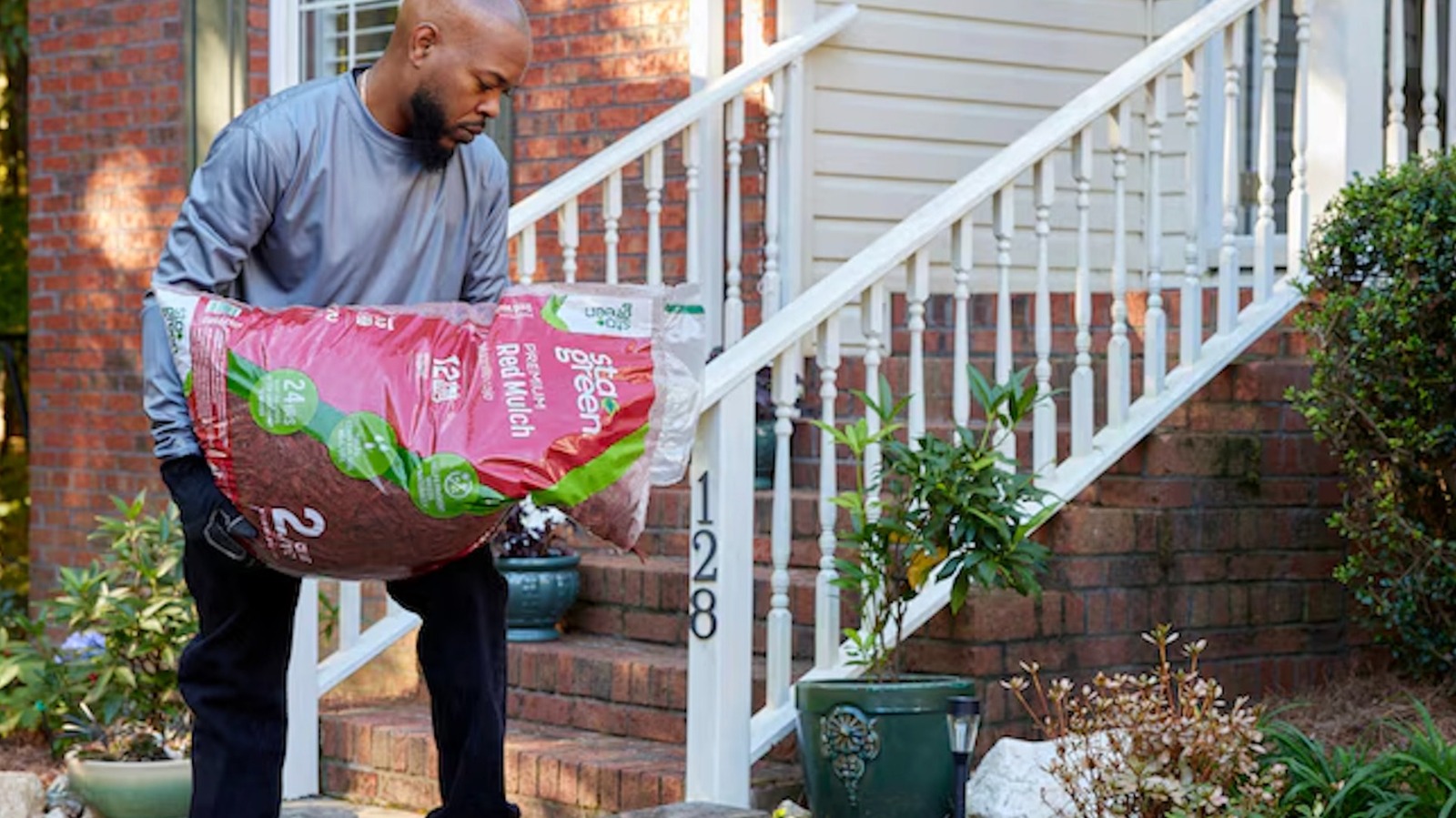
The sale applies to all three color varieties of Sta-Green Premium Mulch: red, black, and brown. Other than the color, each variety is essentially the same, though darker mulch can absorb and retain more heat in the sunlight. Each bag contains 2 cu-ft of shredded hardwood mulch, which should be enough to cover 12 sq-ft of ground with a 2-inch layer. The color options are primarily for aesthetics, and the mulch is designed to last a full year before it begins to fade.
Sta-Green, a Lowe’s house brand, recommends keeping the mulch dry for 24 hours after laying it down to prevent premature color fading and allow the mulch to successfully cure. Keep in mind that, depending on the flora in your yard, wood mulch may not necessarily be the best material to use. Certain plants and vegetation do better with compost, shells, or inorganic varieties. Some people find mulching mowers worth using since they provide lawn cover.
Sta-Green Premium 2 cu-ft Mulch (models 155000053/155000054/155000055) is currently 50% off at Lowe’s and available for $2 per bag. The deal ends May 6.
Advertisement
3. Kobalt 24V 12-inch Chainsaw Kit
Lowe’s own first-party Kobalt 24V 12-inch Chainsaw Kit is more than a third off its usual price for the first week of May. The bundle includes not just the tool, but also a 4-Ah battery and charger, giving you everything you’d need to operate it. The accessories are also compatible with all other Kobalt 24V equipment, including several types of yard tools.
Advertisement
The cordless tool uses a brushless motor to extend its lifespan and run more efficiently, lasting longer on a single charge. Kobalt’s 24V 12-inch Chainsaw also features an automatic oiling function that keeps the chain continuously lubricated. No tool is needed for chain tensioning, resulting in a smoother workflow. The chainsaw also features an electronic chain brake that can stop the chain before it can cause injury.
One potential downside to the tool is that a previous generation of the same model was once ranked among the worst chainsaws by Consumer Reports. Since this model has a solid average customer score from over 700 users, Kobalt may have made some improvements since then. Also, performance may not be as high a priority for budget-conscious buyers if the smaller chainsaw is used for pruning rather than cutting logs. If problems do occur, Lowe’s provides a 5-year tool warranty and a 3-year battery and charger warranty with the product.
The Kobalt 24V 12-inch Chainsaw Kit (model KCS1224B-03) is currently 35% off at Lowe’s and available for $129. The deal ends May 7.
Advertisement
4. Harbor Breeze Indoor/Outdoor String Lights
A private label that isn’t one of Lowe’s tool brands is Harbor Breeze, which is known for its stylish fans and lighting products. One of the brand’s currently discounted items is a set of Harbor Breeze Indoor/Outdoor String Lights, which includes 100 white LED globe bulbs. Many homeowners like to decorate their porches and patios with classy-looking illuminators like these, but since they’re also indoor-rated, they’re among the best Lowe’s spring finds for the garage — if you like to use the space as a rec room, that is.
Harbor Breeze’s Indoor/Outdoor String Lights come in either brown or white exteriors and are 48 feet long. Each bulb is 5.5 inches from the next, and they stick out only 2 inches, giving you plenty of options for placement. Up to 45 of the strands can be linked up together, so buying a bunch that is nearly a third off their usual price isn’t the worst idea. The 0.72-watt bulbs are plastic and shatter-resistant, though replacements are included with each set. The string lights are IP44-rated, which isn’t fully waterproof but is enough to handle typical wear and tear and occasional rain.
Robot lawn mowers work a lot like Roombas, and, like indoor robot vacuums, what started out as a novelty is quickly becoming a mainstream option for many homeowners. As battery and navigation technologies advance, more and more people are realizing that, just as they no longer need to manually clean their floors, they also don’t need to mow their lawns when an autonomous machine can do it for them. One downside to robot mowers is that they’re still relatively expensive, especially compared to traditional push mowers.
However, Lowe’s is taking $500 off the Mammotion Yuka Mini Robotic Lawn Mower all throughout spring, making the entry-level device a more practical purchase. The compact machine is a good choice for those with smaller yards and is rated to maintain yards between ⅛ and ¼ of an acre in total, autonomously returning to its base station to recharge as needed during mowing sessions. It can handle slopes up to 50% and clear obstacles 1.4 inches tall. It also utilizes a floating cutting disc for mowing, and the cutting height can be adjusted from 2.0 to 3.5 inches. Plus, it can cut edges and corners.
The Mammotion Yuka Mini Robotic Lawn Mower is equipped with AI vision that can map a yard in less than 10 minutes for automatic navigation and can recognize and avoid obstacles and non-grass surfaces. Using the app, users can also create customizable no-go zones and monitor the robot’s progress. In addition to work zones, the app can also be used to create custom pathways and even personalized patterns for the mower to cut into your lawn.
The Mammotion Yuka Mini (model YUKAMINI800H) is currently 38% off at Lowe’s and available for $799. The deal ends June 28.
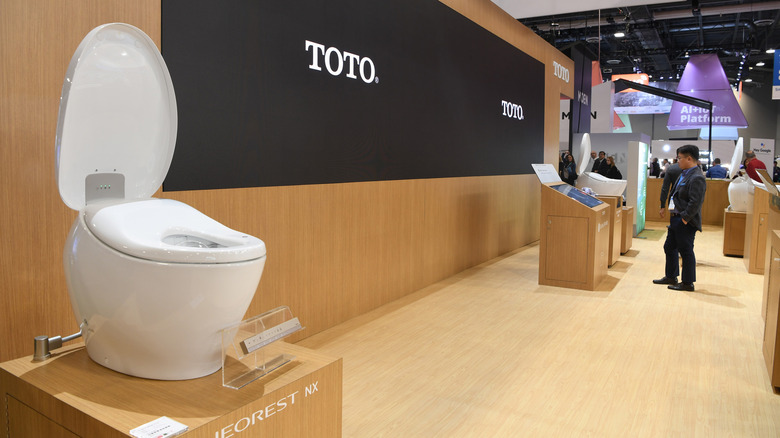
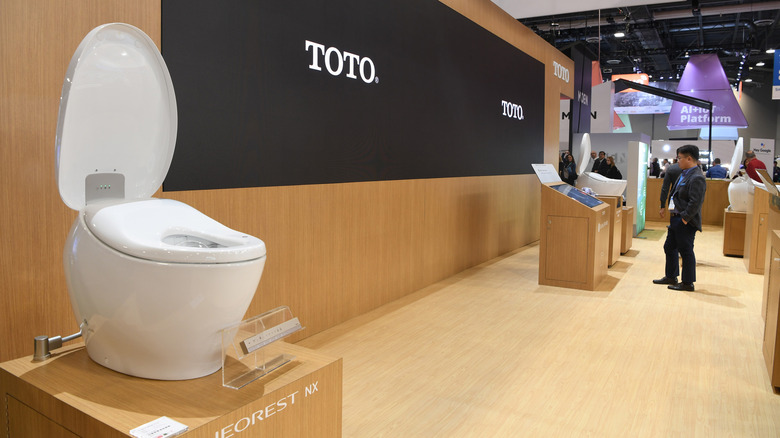
If you think that companies should stick to their core expertise, Toto is here to flush away that notion. The Japanese company is best known for its bidet-style “Washlet” toilets, but it also has an advanced ceramics division that produces components used in NAND memory chips. That business gained 34 percent over last year thanks to AI chip demand, accounting for 55 percent of Toto’s 53.8 billion yen ($343.5 million) operating profit so far this year. Toto expects that division to continue to grow rapidly, around 27 percent next year. To that end, the company plans to invest another 30 billion yen (around $192 million) over the next fiscal year to boost mass production and R&D.
As it turns out, Toto is the world’s second-largest producer of electrostatic chucks (E-chucks) used to manufacture NAND memory. Those are designed to securely hold silicon wafers into place during fabrication via electrostatic force. The ceramic division (established in 1984) also makes aerosol deposition components and structural parts used to manufacture large LCD panels, according to Nikkei.
Toto isn’t the only unlikely Japanese company benefiting from AI. Cosmetics manufacturer Kao has a business making cleaning agents for semiconductors, while monosodium glutamate (MSG) inventor Ajinomoto is investing 25 billion yen ($159.5 million) in the production of insulating film used for motherboards.
Advertisement
Toto’s results show how the AI boom, which has powered a sustained stock market rise via companies like NVIDIA, has lifted other, more unexpected industries as well. The concern, of course, is about an AI bubble that could eventually pop and tank the entire economy.
Meta ended its contract with Sama after Kenyan data annotation workers told Swedish journalists they had viewed intimate footage, including people having sex, undressing, and using the toilet, captured by Meta’s Ray-Ban smart glasses. The 1,108 workers received six days’ notice. A class action lawsuit, UK and Kenyan regulatory investigations, and an EFF advisory followed. The case exposes the human infrastructure beneath AI: the workers who train the models see everything, own nothing, and lose their jobs when they talk about it.
In February 2026, workers at Sama, a Nairobi-based outsourcing company contracted by Meta, told Swedish newspapers Svenska Dagbladet and Göteborgs-Posten that they had been reviewing footage captured by users of Meta’s Ray-Ban smart glasses. The footage included people having sex, going to the toilet, undressing, and handling bank details. The workers’ job was to label the content so that Meta’s AI systems could learn to interpret what the glasses see. Less than two months after the investigation was published, Meta ended its contract with Sama, and on 16 April the company issued formal redundancy notices to 1,108 employees. Meta said Sama “don’t meet our standards.” Sama rejected the characterisation and said it had received no notification of any failure. Naftali Wambalo, co-founder of the Africa Tech Workers Movement, alleged the real reason was simpler: Meta was retaliating against the workers who spoke out. Meta has not responded to that allegation. The people who trained the AI saw what the glasses see. Then they lost their jobs.
Advertisement
The glasses
Meta sold more than seven million pairs of Ray-Ban smart glasses in 2025, more than tripling its previous year’s volume. The product line has since expanded to include prescription models designed to reach the billions of people who already buy corrective eyewear, converting what was a novelty into something closer to a default. The glasses record video, capture photos, stream audio, and route queries through Meta AI, which processes images and voice commands either on-device or in the cloud. A small LED on the frames illuminates when the camera is active, which Meta has described as a privacy safeguard. The light is designed for the people around the wearer, not for the wearer themselves. It tells strangers that they are being recorded. It does not tell them that the recording may be reviewed by a human being in a different country, sitting at a desk in Nairobi, labelling what they see so that an algorithm can learn the difference between a kitchen and a bedroom, a handshake and an embrace, a document and a face.
Meta’s privacy policy for the glasses states that users who opt into sharing data for AI training purposes allow their footage to be processed by the company’s AI systems. The policy does not dwell on the human layer between the camera and the algorithm. AI training data does not label itself. Before a model can learn to interpret a scene, a person must first watch the scene and describe it. The Swedish investigation revealed what that process looks like in practice: workers in Kenya, employed by a third-party contractor, viewing the most private moments of strangers’ lives, cataloguing them, and moving on to the next clip. The footage was not anonymised before review. The workers could see faces, bodies, and personal documents. They had no way to contact the people being filmed, no mechanism to flag footage they believed had been captured without consent, and no authority to refuse the work without risking their employment.
The workers
The 💜 of EU tech
The latest rumblings from the EU tech scene, a story from our wise ol’ founder Boris, and some questionable AI art. It’s free, every week, in your inbox. Sign up now!
Advertisement
Sama was founded in 2008 as a social enterprise with the stated mission of providing dignified digital work to people in low-income communities. The company has operations in Kenya, Uganda, and India, and has provided data annotation services to some of the largest technology companies in the world, including Google, Microsoft, and Meta. The contract with Meta for smart glasses data annotation was one of several Sama held with the company. Workers were tasked with labelling images and video captured by the glasses to train Meta’s AI models, a process that required them to view, categorise, and describe whatever the cameras had recorded.
The Swedish investigation, published in late February 2026, reported that workers described seeing users engaged in sexual activity, using the toilet, undressing, and displaying financial information on screen. The content was not exceptional. It was the ordinary residue of a camera worn on someone’s face throughout the day, capturing whatever the wearer happened to be looking at. The workers told the journalists that the experience was distressing but that they had limited options: the work paid better than most available alternatives, and Sama’s contracts typically included non-disclosure agreements that discouraged public discussion of the content they reviewed. When the Swedish publications broke the story, they gave the workers a voice they had not previously been permitted to use.
On 16 April, less than seven weeks after the investigation was published, Sama notified 1,108 employees that their positions were being made redundant. The workers received six days’ notice. Meta’s statement attributed the termination to Sama’s failure to meet its standards, but declined to specify which standards had been breached or when the assessment was made. Sama said it was “surprised and disappointed” by Meta’s decision and that it had not been informed of any performance shortfalls prior to the termination. The timing was noted by labour advocates, regulators, and the workers themselves. Wambalo, whose organisation represents data workers across the continent, described Meta’s reasoning as a cover for retaliation: the company, he said, was enforcing “standards of secrecy” rather than standards of quality.
The pattern
This is not the first time Sama’s relationship with Meta has ended in controversy. Between 2019 and 2023, Sama employed content moderators in Nairobi who reviewed posts flagged as potentially violating Facebook’s community standards. The work required moderators to view graphic violence, sexual abuse, hate speech, and other disturbing material for hours each day, often at wages as low as $1.50 per hour. A 2022 investigation by Time magazine found that 81 per cent of 144 Sama content moderators who underwent clinical assessment were diagnosed with “severe” or “extremely severe” symptoms of post-traumatic stress disorder. Former workers filed lawsuits in Kenya alleging that Sama and Meta had subjected them to conditions amounting to human trafficking and had interfered with their attempts to form a union. Sama later said publicly that it “regretted” taking on the content moderation work, and exited the business in 2023 to focus on what it described as less harmful data annotation services.
Advertisement
The smart glasses contract was supposed to be different. Data annotation, labelling images and video to train AI, is generally considered less traumatic than content moderation, which requires workers to confront the worst material humans produce. But the Swedish investigation revealed that the distinction depends entirely on what the AI is being trained to see. When the AI is attached to a camera worn on someone’s face throughout the day, the training data is their life. The workers who labelled Meta’s smart glasses footage were not reviewing content that users had chosen to upload to a platform. They were reviewing content that a camera had passively captured, often without the knowledge or meaningful consent of the people being filmed. The nature of the work had changed, but the structural dynamic had not: a Silicon Valley company outsourcing the human cost of its AI ambitions to workers in East Africa who lack the bargaining power to set the terms of their own labour.
The response
The regulatory and legal response has been swift by the standards of technology enforcement. The UK Information Commissioner’s Office wrote to Meta in early March, calling the Swedish report “concerning” and requesting information about how data captured by the glasses is processed, stored, and reviewed. The Office of the Data Protection Commissioner in Kenya announced an investigation into whether the glasses’ data collection practices comply with Kenyan data protection law. In the United States, the Clarkson Law Firm filed a class action lawsuit on behalf of consumers, alleging that Meta engaged in false advertising by marketing the glasses as “designed for privacy, controlled by you” while routing user footage through a human review pipeline in a country with weaker data protection enforcement than the markets where the glasses are sold. The Electronic Frontier Foundation published an advisory titled “Think Twice Before Buying or Using Meta’s Ray-Bans,” warning that the glasses’ AI features allow “all parts of their life to be recorded, and then reviewed, either by the AIs or by humans behind it.”
Privacy complaints against Meta for using personal data to train AI have been mounting across the European Union, where noyb filed 11 simultaneous complaints with national data protection authorities alleging that Meta’s AI training practices violate the General Data Protection Regulation. The complaints focus on Meta’s decision to process user data under a “legitimate interest” basis rather than seeking explicit consent. The smart glasses controversy adds a physical dimension to what had been a largely digital dispute: it is one thing to train AI on posts users wrote on Facebook, and another to train it on footage of people in their bedrooms, captured by a device and reviewed by a stranger. Meta has argued that European privacy regulations are “stifling” AI innovation and that pre-emptive regulation of “theoretical harms” will prevent European businesses from benefiting from AI advances. The harms documented by the Swedish investigation are not theoretical. They are workers in Nairobi who watched strangers undress and were then told their jobs no longer existed.
The infrastructure beneath the intelligence
Meta’s AI ambitions require an enormous volume of human-labelled training data. The company is building an AI clone of Mark Zuckerberg for its employees, developing the Muse Spark model to power its platforms, and expanding the glasses’ AI capabilities to include real-time visual understanding, object identification, and conversational assistance. Each of these products depends on the same pipeline: humans look at data, describe what they see, and their descriptions become the instructions that teach the model what the world looks like. When that pipeline involves a contractor, the humans become invisible. They do not appear in Meta’s product announcements, earnings calls, or marketing materials. They appear only when something goes wrong, when a Swedish newspaper publishes an investigation, or when a contractor breach exposes the fragility of the training operation.
Advertisement
Mercy Mutemi, the Kenyan human rights lawyer who leads the Oversight Lab, told the BBC that the pattern of outsourcing AI’s human costs to East African workers represents a structural failure, not an aberration. “This is a very flimsy foundation to build your entire industry on,” she said. The industry she is describing is worth trillions of dollars. The foundation she is describing is a workforce paid data annotation wages in Nairobi, given six days’ notice when the contract ends, and prevented by non-disclosure agreements from telling anyone what they saw. Meta’s smart glasses are designed for privacy, controlled by the user. The question the Swedish investigation answered is which user: the person wearing the glasses, or the person in Nairobi who watched the footage and lost their job for talking about it.
The Norway-founded company’s vertically integrated NEO factory in Hayward marks the first US-scale push to put a general-purpose humanoid robot into private homes, with shipments planned this year and a competitive field that is already crowded
1X Technologies has opened a 58,000-square-foot manufacturing facility in Hayward, California, to produce its NEO humanoid robot at consumer scale, with capacity for 10,000 units in year one and a target of more than 100,000 units annually by the end of 2027.
The Norway-founded, OpenAI-backed company described the plant as the first vertically integrated humanoid robot factory in the United States. First customer shipments are planned for 2026.
The factory currently employs more than 200 staff and is scaling. NEO is being manufactured with critical components built in-house, motors, batteries, structures, transmission systems, soft goods, and sensors, in a configuration the company describes as bottom-up American manufacturing.
Advertisement
The 💜 of EU tech
The latest rumblings from the EU tech scene, a story from our wise ol’ founder Boris, and some questionable AI art. It’s free, every week, in your inbox. Sign up now!
“This is more than just a factory opening, it’s proof that the future of humanoid robotics is being built right here in the U.S.,” 1X CEO and founder Bernt Børnich said in the announcement.
The Hayward facility is intended as a stepping stone to a larger plant under construction in San Carlos, California.
Advertisement
The product
NEO is positioned as a general-purpose home robot, designed to operate alongside humans in domestic environments rather than as an industrial bipedal for warehouses or factory floors.
The robot is available in three colours (Tan, Gray, and Dark Brown) and offered through two commercial models: an Early Access purchase at $20,000 with priority delivery in 2026, or a subscription at $499 per month.
NEO is powered by Nvidia’s Jetson Thor onboard computing platform and trained using Nvidia’s Isaac open robotics simulation framework.
Demand has reportedly outstripped initial expectations. The company says first-year production capacity sold out within five days of preorders opening in October 2025.
Advertisement
1X raised $100 million in its push to bring NEO to market; the robot is designed with explicit safety constraints: it is light, soft to the touch, and configured without pinch-points or other hazards, a deliberate choice given the company’s ambition to deploy in private homes rather than industrial settings, where heavier and harder humanoids dominate.
NEO learns household tasks through embodied AI, the technique under which robots acquire skills by interacting with their environment. Customers can also manually demonstrate tasks using a VR headset and controllers, and the robot includes conversational functionality that Børnich has compared to ChatGPT.
Whether those capabilities translate to reliable performance across the variety of unstructured tasks a real home presents, the open question for every consumer humanoid, is something the customer shipments later this year will start to answer.
Two routes to market
Beyond the consumer product, 1X has structured its commercial strategy around a parallel enterprise track. In December 2025, the company struck a partnership with private equity firm EQT to deploy up to 10,000 NEOs to companies in EQT’s portfolio between 2026 and 2030 across facility operations, manufacturing, logistics, and healthcare.
Advertisement
The two-track structure gives 1X higher-margin enterprise revenue from its early units, plants and warehouses pay full price for performance, while the home model can scale down in cost over time. It is the same playbook electric vehicles followed, with luxury and commercial customers subsidising the consumer rollout.
The 10,000-unit annual production target is a meaningful number in a field where most humanoid robot makers are still measured in the hundreds. Tesla, however, is the comparison that matters most. Tesla’s China president Wang Hao described the Shanghai Gigafactory as a “golden key” to mass-producing the company’s Optimus humanoid robot. Tesla has discussed manufacturing a few hundred Optimus units in 2026, scaling to thousands and then tens of thousands annually by 2027 and 2028, with internal targets of one million units per year from Shanghai that have not been confirmed in any public filing.
Elon Musk’s long-stated goal is pricing Optimus below $20,000 per unit, the same price point at which 1X is selling Early Access NEOs today.
China’s humanoid robotics sector is moving rapidly in parallel. Unitree’s G1 and H1 robots are commercially available at price points well below Tesla’s indicated targets. Agibot, UBTECH, Fourier Intelligence, and a growing roster of Chinese startups are all targeting the same market.
Advertisement
China’s central and local governments have identified humanoid robots as a strategic technology, with subsidies and policy support that other regions have been slower to match. The competitive dynamic places 1X’s American-manufactured, vertically integrated approach against Chinese state-backed scale and Tesla’s automotive manufacturing infrastructure simultaneously.
Europe is also building. Neura Robotics, founded in Germany in 2019, has scaled to more than 600 employees and raised €120 million in January 2025. Founder David Reger has told TNW he sees Tesla as his only real competitor in the segment.
Europe’s humanoid robotics sector is positioning regulatory clarity, the AI Act, the updated Product Liability Directive, the General Product Safety Regulation, and the Machinery Regulation, as a competitive advantage, on the argument that investors and industrial partners commit resources where compliance risks are predictable.
The factory opening is the easy part. Manufacturing a humanoid robot at scale, while difficult, is fundamentally a known engineering problem with known suppliers and known cost curves. The harder question, the one no manufacturer has yet definitively answered, is whether a general-purpose home robot can perform the variety of unstructured tasks a private home demands at a level customers will pay $20,000 or $499 a month for.
Advertisement
1X’s answer to that question is, in part, to ship and iterate. Robots produced at the Hayward facility are currently being routed to internal testing, validation, and the company’s own R&D Lab and Internal Home Testing programmes before customer deliveries begin.
The vertically integrated manufacturing approach was chosen specifically to enable rapid hardware iteration as feedback comes in. If that iteration speed is fast enough to close the gap between the demonstrations on the launch reel and the messy reality of the average American home is, ultimately, the bet behind the entire factory.
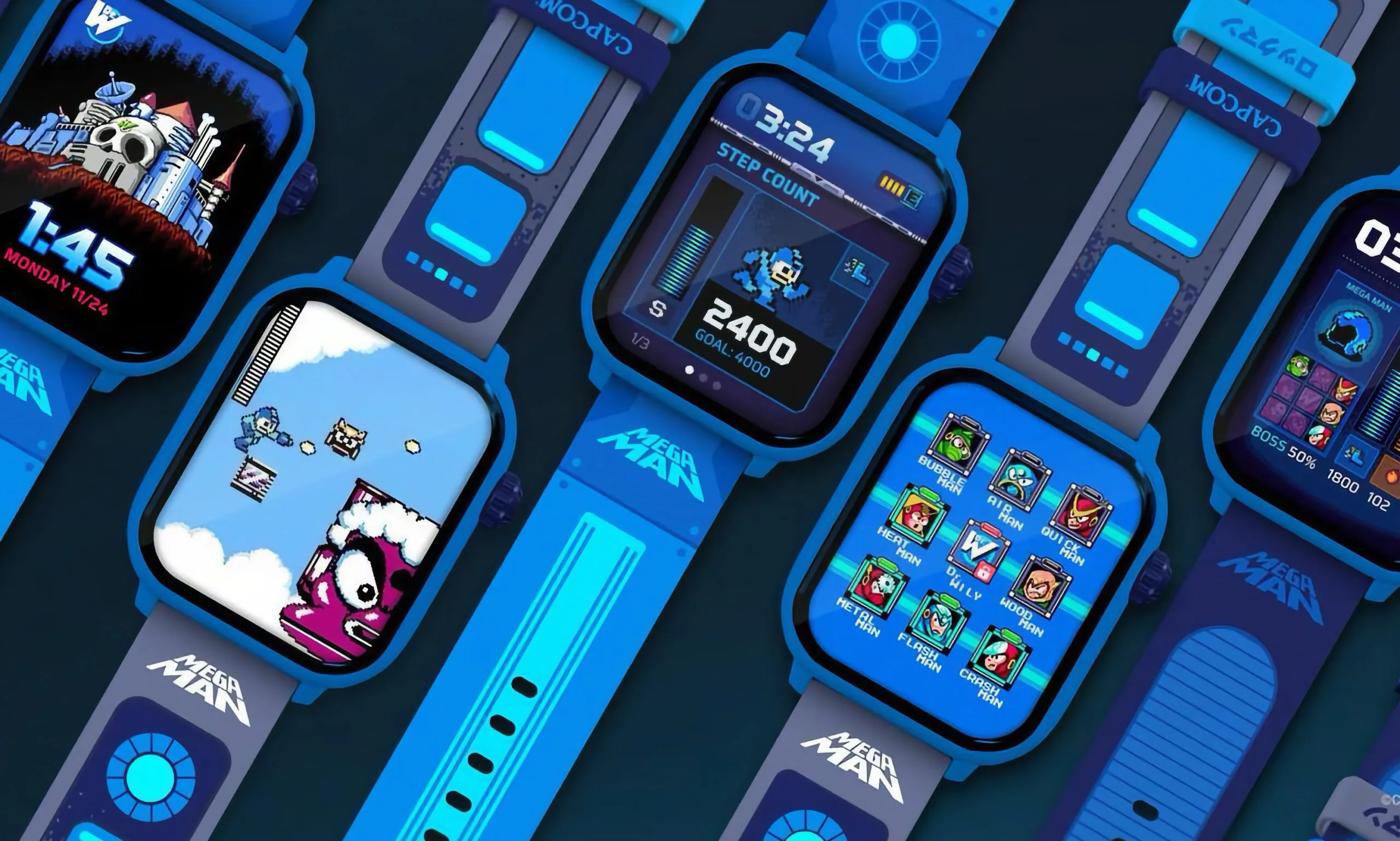
The Mega Man: My Play Watch is a collaboration between MyPlayWatch and Capcom, and it’s exactly what it sounds like: a smartwatch that lets you play a reimagined version of Mega Man 2 right on your wrist.
But how does it actually play?
The gameplay has been redesigned from the ground up for a touchscreen. Mega Man auto-runs through each stage while you tap to fire, time your jumps, and dodge hazards. It sounds simple, and that’s the point.
You are not going to replicate the full NES experience on a 1.91-inch screen, and the developers know that. Instead, they have created something that captures the feel of the original game.
Advertisement
GameStop
There are three game modes to choose from. Classic Mode lets you pick Robot Master stages, defeat bosses, and eventually unlock Dr. Wily’s Castle. Arcade Mode cranks up the speed and difficulty as you chase high scores. Play Time Mode turns the watch into an animated Mega Man display, which honestly might be my favorite mode.
What else the Watch can do?
The watch is not just for playing games but also has built-in sensors that can track your steps, heart rate, and calories throughout the day, all wrapped in Mega Man-inspired visuals. The watch faces feature pixel art and animated characters, so it looks great even when you’re not playing.
GameStop
The best part might be what it doesn’t do. There is no Bluetooth, no Wi-Fi, no notifications, and no apps. It’s a focused, distraction-free device built purely for play and health tracking.
In a world where everything screams for your attention, that’s genuinely refreshing. The watch is available for pre-order now for $79.99 from GameStop‘s website.
Belgium plans to buy its seven aging nuclear reactors from French power giant Engie in a “full takeover” aimed at securing domestic energy supplies, extending reactor operations, and developing new nuclear capacity. “The move would also mean suspending plans to decommission nuclear operations in Belgium,” reports the BBC. From the report: The move would reverse the phase-out of nuclear energy legislation approved in the early 2000s amid safety concerns prohibiting the building of new nuclear power plants and limiting the operating lifetimes of existing ones to 40 years. Only two of Belgium’s seven nuclear reactors are operational – located at plants in Doel and in Tihange – and their operating licenses were recently extended until 2035. The other five reactors were shut between 2022 and 2025 and plans to dismantle them will now be suspended.
Engie and the government said they aim to reach an agreement on the takeover of the nuclear stations by October 1st. In a joint statement with Engie, the Belgian government said the move also highlights its aim to extend operations of existing nuclear reactors and to develop “new nuclear capacity” in Belgium. “By doing so, the Belgian Government is taking responsibility for Belgium’s long-term energy future, with the objective of building a financially and economically viable activity that supports security of supply, climate objectives, industrial resilience and socio-economic prosperity,” the statement adds.
Despite geopolitical instabilities, Apple managed a double-digit growth across all its geographic segments.
Apple posted its “best March quarter ever”, according to outgoing CEO Tim Cook, with a revenue of $111.2bn – up 17pc year on year. The company managed a 16pc revenue jump in its previous quarter, reporting a $143.8bn “record” revenue.
Despite geopolitical instabilities threatening the company’s supply chain, Apple, this quarter, managed a double-digit growth across all its geographic segments. Overall, net sales grew by around 16.6pc, with products and services showing 16.7pc and 16.2pc growth respectively.
“iPhone achieved a March quarter revenue record, fuelled by such extraordinary demand for the iPhone 17 lineup,” Cook said. New additions to its product line-up this quarter include the latest in its more affordable iPhone ‘e’ series, the new iPad Air powered by its in-house M4 chips, alongside the new MacBook Neo – which saw an overall positive reception from reviewers.
Advertisement
iPhone sales grew 21.6pc quarter over quarter to nearly $60bn, while Mac grew 5.6pc and Apple services, including iCloud, App Store and Apple Pay, grew 16.2pc.
“Continued strong customer demand for our products and services once again helped us achieve a new all-time high for our installed base of active devices across all major product categories and geographic segments,” said Apple’s chief financial officer Kevan Parekh.
The quarter past generated more than $28bn in operating cash flow. Company shares rose 2.7pc in after-hours trading.
Earlier this month, Apple announced that Cook will be stepping down as CEO after 15 years in the role, handing his position to senior vice president of hardware engineering John Ternus. In the earnings call yesterday, Cook told investors that the transition “is the right one”.
Advertisement
“Our roadmap is incredible,” he said. “And most importantly, we have the right leader ready to step into the role.
“There is no one on this planet I trust more to lead Apple into the future than John Ternus. John is a brilliant engineer, a deep thinker, a person of remarkable character, and a born leader.” Analysts believe Ternus’ background as a hardware engineer signals a potential for a regained focus into physical products.
“[Ternus] must resist the temptation of incrementalism that has plagued Apple of late and escape the iPhone’s gravitational pull in his quest for the next disruptive form factor,” commented Forrester VP principal analyst Dipanjan Chatterjee earlier this month. The company is still heavily reliant on the iPhone for growth.
Following the latest results, Chatterjee said that Apple’s latest performance is vindicatory, underscoring the company’s ability to sustain growth through product experience, even amid persistent criticism that it lags in AI.
Advertisement
Apple is, however, making a step change towards that direction with reports that it is moving away from ChatGPT exclusivity for its Siri voice assistant in an attempt to bolster its AI offerings. It was also reported that the company is testing a new standalone app for Siri.
“Its strategy remains consistent – treating AI not as a standalone feature but as an embedded layer within the broader ecosystem that delivers exceptional customer experiences in the moments that matter,” Chatterjee continued.
“As Tim Cook prepares to hand over to John Ternus, the focus will shift from execution to vision. The question is not whether Apple can still grow. It is whether the company can escape the gravitational pull of its own success to reimagine a different future.”
Apple announced a new Dublin office in February set to house 300 workers. Meanwhile, the company’s Big Tech contemporaries Meta, Microsoft, Amazon and Alphabet all posted positive results this quarter with massive AI spending plans in place for the year.
Advertisement
Don’t miss out on the knowledge you need to succeed. Sign up for the Daily Brief, Silicon Republic’s digest of need-to-know sci-tech news.





















































You must be logged in to post a comment Login