
Entertainment
Liam Neeson’s Fan-Favorite ’80s Action Remake Rewrites History on Free Streaming

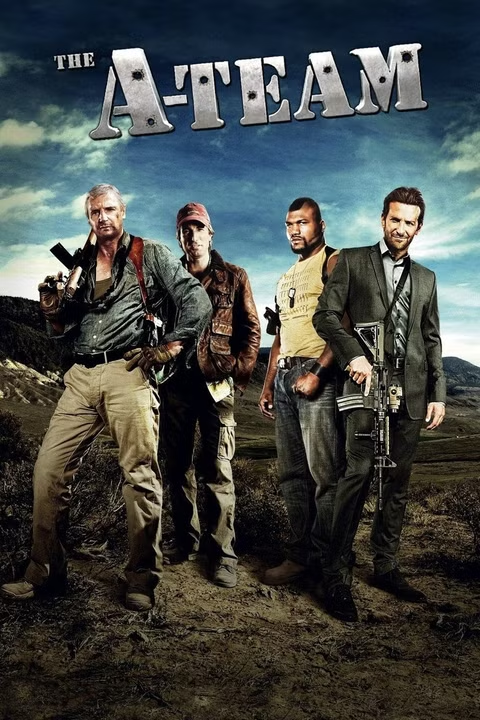
Tubi’s May 2026 lineup is turning into a strong landing spot for big, easy-to-watch action movies, and this one fits the platform almost perfectly. It has recognizable stars, a legacy TV hook, a huge budget, a broad PG-13 spectacle, and the kind of “why didn’t this become bigger?” reputation that often plays better on free streaming than it did in theaters. Tubi lists the film among its May action arrivals, with most May titles beginning free streaming on the first day of the month.
The context is what makes the move more interesting than a routine catalog drop. The remake earned $177.2 million worldwide, including $77.2 million domestically and $100 million internationally, against a reported $110 million budget. Those numbers were respectable for a standalone action movie, but rough for something designed to restart a major 1980s brand. A sequel depended on bigger theatrical momentum, and once the math cooled, the franchise plan stalled.
The movie is The A-Team, the 2010 reimagining starring Liam Neeson as Hannibal Smith, Bradley Cooper as Face, Quinton “Rampage” Jackson as B.A. Baracus, and Sharlto Copley as Murdock. The plot follows elite operatives framed for a crime, breaking out and using oversized tactical chaos to clear their names while Jessica Biel’s Charissa Sosa closes in. Although the film is available to stream on Starz as well, Tubi has given it a cleaner free-streaming runway as of May 1, 2026.
‘The A-Team’ Became Available on Tubi in 2025 as Well
The interesting part is that this is not The A-Team’s first Tubi life. The 2010 remake debuted on Tubi on July 1, 2025, roughly 10 months ago. That repeat placement is worth noting because Tubi’s catalog strategy often rewards familiar, low-friction movies that can be dropped back into rotation when they fit a seasonal action push. No public Tubi performance data is proving it overperformed, but the timing suggests the platform sees renewed value in it. In theory, that makes sense for a movie whose appeal is less prestige and more Saturday-afternoon momentum: big set pieces, loud banter, familiar IP, and a cast that was stronger than the franchise future it received.
The A-Team is available to stream on Tubi for free. Stay tuned to Collider for more updates.

- Release Date
-
June 11, 2010
- Runtime
-
117 minutes
- Director
-
Joe Carnahan
- Writers
-
Brian Bloom, Joe Carnahan, Skip Woods, Stephen J. Cannell
- Producers
-
Iain Smith, Jules Daly, Stephen J. Cannell, Tony Scott, Alex Young

Continue Reading
Entertainment
7 bingeable shows coming to Netflix in May 2026 — including the return of “Pop Culture Jeopardy”
:max_bytes(150000):strip_icc():format(jpeg)/Pop-Culture-Jeopardy-Colin-Jost-mating-season-lord-of-the-flies-02-043026-9367fb3fbebd4f79bc9377e92205e3da.jpg)
Also, a new riff on “The Lord of the Flies” from the creator of “Adolescence.”

Us Weekly has affiliate partnerships. We receive compensation when you click on a link and make a purchase. Learn more!
If you’ve heard of collagen powder, then you probably know it’s the secret to an inside-out glow. But what if it could help you feel as good as you look? Everyday Dose’s new collagen powder supports mental clarity and calmness as much as gut and skin health. It’s about time!
Everyday Dose Collagen+ is the complete formula you’ve been waiting for, combining collagen, functional mushrooms and L-theanine for total mind and body wellness. Now through May 30, shoppers can BOGO Collagen+ Powder, sold exclusively at Target!
Collagen is known to promote skin elasticity and hydration (translation: fewer visible wrinkles), but it may also strengthen the nails and keep joints in tip-top shape. Packed with 18 amino acids and 18 grams of protein, collagen powder is a powerhouse itself, but this blend doesn’t stop there.
In addition to collagen, this Collagen+ supplement contains lion’s mane for focus, chaga for immune support and cordyceps for recovery. Add in calming L-theanine, and it’s the ultimate flow-state formula. It’s no wonder this brand-new blend is already selling out at Target.
One Target shopper wrote, “Great combination of healthy ingredients and it’s easy to use and mixes great. This will be huge for my gut health and hair.”
Even better, it couldn’t be easier to incorporate into your routine. Simply mix one scoop into your yogurt, smoothie or coffee and you’re ready to go — no clumps or funky aftertastes involced. This supplement even comes in a stick pack format, ideal for those with busy lifestyles.
Snag this brand-new wellness staple below!
President Donald Trump isn’t interested in wearing a bulletproof vest despite surviving multiple assassination attempts.
Trump, 79, was asked by reporters at an Oval Office event on Thursday, April 30, whether there had been any talks regarding the president taking the security precaution in future.
“I don’t know if I can handle looking 20 pounds heavier,” Trump responded, prompting laughs from several people in the room.
Trump was likely the intended target when a shooter reportedly opened fire at the White House Correspondents’ Dinner event, held in the Washington Hilton ballroom on April 24.

Karoline Leavitt claimed that no one has endured “more violence” than President Donald Trump following the recent shooting at the White House correspondents’ dinner. “Saturday was supposed to be a joyful evening, celebrating free speech and the first amendment with all of you members of the press,” the White House press secretary, 28, said in […]
The president and first lady Melania Trump, 56, were rushed off stage after shots reportedly broke out.
While the Trumps, Vice President J.D. Vance and others were safely evacuated, a Secret Service agent was struck during the incident. The wounded agent was wearing a protective vest.
“Frankly, the vest did an amazing job because it took a bullet close up,” Trump said in the Oval Office on Thursday. “And he didn’t even want to go to the hospital. We sent him to the hospital.”
Trump also likened the experience of getting shot while wearing a bulletproof vest to “getting hit by Mike Tyson.”
The day after the WHCD shooting, Trump praised the bulletproof vest’s role as he briefed the media on the condition of the injured Secret Service agent.

Donald Trump. (Photo by Anna Moneymaker/Getty Images)
“The vest did the job,” Trump told reporters. “I just spoke to the officer and he was doing great, he’s in great shape, in very high spirits and I told him we love him and respect him and he’s a very proud guy, he’s very proud of what he does, the Secret Service agent.”
California native Cole Tomas Allen was apprehended during the shooting and subsequently charged with attempting to assassinate the President of the United States, transportation of a firearm and ammunition in interstate commerce with intent to commit a felony, and discharge of a firearm during a crime of violence, per the Justice Department. He has not yet entered a plea.

Shocking new video footage shows the moment shots rang out at the White House Correspondents’ Dinner last weekend. Jeanine Pirro, the United States Attorney for the District of Columbia, posted what appears to be security camera footage of the shooting incident via X on Thursday, April 30. Shooting suspect Cole Tomas Allen can allegedly be […]
Meanwhile, Trump insisted he was “honored” to be a target after the WHCD shooting incident.
“When you look at our great presidents, [this] doesn’t happen to people who don’t do anything,” Trump told reporters at the White House on Saturday, April 25.


Trump has also addressed his seemingly slow evacuation from the ballroom in the midst of the incident.
“What happened is, it was a little bit me. I wanted to see what was happening, and I wasn’t making it that easy for [the shooter],” Trump told 60 Minutes on Sunday, April 26.
“I wanted to see what was going on. And by that time, we started to realize maybe it was a bad problem, different kind of a problem, bad one, and different than what would be normal noise from a ballroom, which you hear all the time,” he added. “I was surrounded by great people, and I probably made them act a little bit more slowly. I said, ‘Wait a minute. Let me see.’”
The Walt Disney Company was founded in 1923 by brothers Walt and Roy O. Disney after Walt lost the rights to his first co-creation with animator Ub Iwerks, Oswald the Lucky Rabbit, to Universal. From humble beginnings making animated theater shorts, Walt’s ambition would see the company expand into animated filmmaking. While they have branched into other areas, such as live-action filmmaking and theme parks, the animated catalog is still what Disney is best known for, and the timeless appeal of animation ensures that the movies won’t be forgotten anytime soon.
Fans and historians alike tend to break down the history of Disney animation into various eras. They are determined by several factors, including common themes among the films, major events in the company, and their overall impact on pop culture history. Each of these eras is an important building block in the company’s history, but a few are more highly regarded because of the masterpieces they produced.
8
The Dark Age (1970-1988)
The term Dark Age is used to describe when something, be it civilization or a long-running series, hits a point of creative and/or cultural stagnation and decline, which sums up Disney’s 4th animated era pretty well. Walt Disney died in 1966, and Roy O. Disney in 1971. Walt’s top animators, nicknamed The Nine Old Men, were also getting ready to retire, leaving the company in a period of uncertainty as to what its future would look like. As a result, films took longer to produce, and the ones that came out were made with a “What would Walt Do?” philosophy, resulting in cheap, safe movies that played to the lowest common denominator. Sure, they have their fans, and very few of these movies are objectively terrible, but when compared to the rest of Disney’s catalog, the differences are like night and day. One film, The Many Adventures of Winnie the Pooh, was an amalgamation of 3 shorts released between 1966 and 1974 with new animation to bridge them. Roy E. Disney, son of Roy O., and the only member of the Disney family still involved with the company, resigned as executive in 1977 over creative disagreements.
Meanwhile, new animators were joining from the California Institute of the Arts, and many of them were becoming frustrated that the magical films that inspired them were no longer being produced. Things reached a boiling point during the production of The Fox and the Hound, which saw Don Bluth lead a mass exodus of animators in 1979 and release his own animated movie, The Secret of NIMH, in 1982, giving Disney some competition. And things kept getting worse: by 1984, future big names in animation, like Brad Bird, Tim Burton, and John Lasseter, had either left the company or been fired for pushing back against the creative stagnation. That same year, Roy E. Disney left his seat on the Board of Directors, and a hostile takeover attempt saw Disney nearly dismantled. However, Roy E. and the Board of Directors worked together to stop the takeover and ousted Walt’s son-in-law and then CEO, Ron Miller, replacing him with Michael Eisner and Frank Wells as President. They would bring Jeffrey Katzenberg to oversee animation with Roy E. They had a rocky beginning with The Black Cauldron, but the moderate success of The Great Mouse Detective encouraged Eisner to put more faith into future movies. Thus, the Dark Age of Disney can be looked back on as the era that proved Disney could survive the death of its founder, but also shows the dangers of resting on one’s laurels and refusing new ideas.
7
The Wartime Era (1943-1949)
World War II hit Disney hard. Not only did the loss of overseas markets mean that many of their late Golden Age films bombed at the box office, but most of Walt’s best animators were drafted. Thus, the company needed to focus on conserving money until the war was over, and the global economy could recover. The first thing Walt did was partner up with the American government to produce wartime propaganda shorts like Der Fuehrer’s Face and Victory Through Air Power. The government also commissioned Disney to make films focused on Latin and South America as part of President Franklin D. Roosevelt‘s Good Neighbor Policy, resulting in Saludos Amigos and The Three Caballeros. Meanwhile, Disney’s main animation department was full of half-finished story concepts and not enough staff to complete them. Thus, Walt decided to keep the anthology train going by releasing “package films.”
Their animation quality was a far cry from the experimental and lavish details of the Golden Age, but they were quick to produce and kept the budget small. They alternated between two structures: musical anthologies and double features. Make Mine Music and Melody Time were musical films similar to Fantasia, but focused on more contemporary music and featuring more traditional narratives in their shorts compared to Fantasia’s more abstract segments. Meanwhile, Fun and Fancy-Free and The Adventures of Ichabod and Mr. Toad featured two short movies with complete three-act structures, bridged together with live-action footage. While the package movies kept Disney afloat until his animators could come home, Walt viewed them as a necessary evil, since they didn’t turn in a big enough profit or let him push the boundaries of animation like he always tried. Thus, the first change he got, he would return to making standard animated features, ending the Wartime Era. The movies are certainly fun, and thanks to concept artist Mary Blair, their visuals became more surreal. However, there really isn’t a lot of substance to them, hence why they have become forgotten by all but the most die-hard Disney fans.
6
The Post-Revival Era (2018-Present)
Determining when an era ends and a new one begins usually takes a few years, so in the past, several of these films were considered part of the Revival Era. However, it’s been long enough now that we can say that the Revival Era ended in 2018 with John Lasseter’s departure from Disney following accusations of sexual misconduct. He was replaced as Chief Creative Officer of Disney Animation by Jennifer Lee, writer and co-director of Frozen, in one of many major shakeups that would take place at Disney before the 2010s were through. A year later, Disney finished their acquisition of 21st Century Fox, and they launched their own streaming service, Disney+. Bob Iger planned to step down as CEO to be replaced by Bob Chapek, but after COVID hit and Chapek made a series of unpopular opinions, Iger returned. He finally got his retirement in 2026, with Josh D’Amaro now at the helm, while Lee would step down as CCO in 2024 to focus on future Frozen films. She was succeeded by Jared Bush, who worked on several of the Revival Era’s biggest hits.
Post-Revival movies share one of two things in common: they are sequels to popular movies, or they bombed at the box office. They’re also far more divisive than previous movies. Many of the criticisms feel similar to the Dark Age, such as an over-reliance on safe, formulaic stories, especially through the sequels. Generational trauma has become somewhat of a meme, being almost as common here as twist villains were during the Revival. The movies also became more focused on spreading messages than telling good stories, as admitted by Iger himself in 2023. The most egregious example is Wish, which was supposed to mark the company’s 100th year, but it instead became a hated mess of a movie that smashed together as many references to classic Disney as it could with barely any plot connecting them. Since the Post-Revival era is still ongoing, it’s hard to truly judge what its place in Disney history will be, or its overall quality. There’s still time for it to turn itself around, but the movies we do have don’t paint the best picture.
5
The Post-Renaissance Era (1999-2008)
All things that rise must eventually fall, and such was the case for the influential Disney Renaissance. With the emergence of Pixar and DreamWorks as immediate competition for Disney, and other production companies trying to mimic Disney’s winning formula for animated musicals, the company decided to mix things up. Rather than simply adapting well-known books and fairy tales, Disney would produce more original stories in different styles, beginning with Fantasia 2000, a passion project of Roy E. Disney’s that bombed at the box office. Meanwhile, Disney’s first animated movie with CGI, Dinosaur, turned in a hefty profit, thus sending a clear message that 2D animation was out and 3D animation was in. Lilo & Stitch and Brother Bear were successful, but Atlantis: The Lost Empire and Treasure Planet weren’t. Meanwhile, Pixar was churning out hit after hit, and DreamWorks altered the pop-culture landscape forever with Shrek.
This era also saw a shakeup of leadership that led to Eisner’s exit and the hiring of Bob Iger as new CEO. Iger patched up relationships with Pixar, leading to its acquisition in 2006. John Lasseter was made CCO of both Disney and Pixar animation, leading to major story changes to the CGI movies still in production—Meet the Robinsons and Bolt, bringing an end to the Revival Era. Overall, this era can be looked back on as one of Disney’s most experimental and ahead of its time. Many of the films have found new life as cult classics since their release, and with how formulaic and uninspired modern Disney films are, there’s something to admire about how they broke the mold of what a Disney film is. The Post-Revival Era would also be the last to have any input from the Disney family, as Roy E. would sadly die in 2009 after a long battle with stomach cancer.
4
The Silver Age (1950-1967)
The Wartime Era kept Disney alive as a company, but they were running on life support. The package films didn’t turn in enough of a profit to offset the losses from the Golden Age or cover the relocation of Disney studios to Burbank, California. Once Walt’s animators were back from the war, he proposed that they return to making animated features. In 1950, Cinderella hit theaters, becoming the company’s biggest success since Snow White and the Seven Dwarfs, and kicked off the Silver Age, so called because it’s a successor to the Golden Age, while not quite reaching the same heights.
The Silver Age saw a bunch of major changes to Disney animation. For one, the style became more universal, thanks in large part to legendary animator and draftsman Milt Kahl. As more and more animators came to him to help finalize their character designs, Disney characters shifted to more angular designs compared to the rounded ones during the company’s early years. The Nine Old Men, who worked on each film together, also started getting split up after Peter Pan. Walt also had greatly reduced input on the animated films compared to decades earlier, as his attention was now aimed at live-action movies and theme parks. The biggest shakeups came following Sleeping Beauty, which was a massive box-office bomb. To save on production costs, Walt reluctantly agreed to shift to using xerography to copy the animator’s pencil drawings directly onto animation cells. All in all, the Silver Age truly is the end of an era, with many of its movies not receiving the recognition they deserved until decades after it ended, and the loss of Walt’s personal touch. However, its movies are also some of Disney’s most magical.
3
The Revival Era (2009-2016)
With John Lasseter and Bob Iger now seated in their roles, Disney would undergo one of its biggest and brightest eras. It began with The Princess and the Frog, Disney’s return to 2D animation, and the beginning of Lasseter’s attempt to produce 2D animation alongside 3D. Sadly, a lack of audience interest and poor box office performances compared to both Disney and rival 3D films saw the project end after its second film, Winnie the Pooh. And when you consider both Princess and the Frog and Winnie the Pooh’s box-office numbers, to the CGI Tangled sandwiched between them, it was a no-brainer. 3D was here to stay, so Disney fully embraced it.
Disney also began an unprecedented rise beginning in 2009, when the company bought Marvel, and again in 2012 with the purchase of Lucasfilm. This further transformed Disney into the dominant media conglomerate in the world and saw the beginning of the ever-dominant Marvel Cinematic Universe. But in 2013, they would see unparalleled pop culture dominance with the release of Frozen. The film became the highest-grossing animated film until the release of the live-action The Lion King, and the first movie in the Disney animated canon to win the Academy Award for Best Animated Feature. Their next two films, Big Hero 6 and Zootopia, would also take home the award, while Moana was the first Disney movie to feature songs written by Lin-Manuel Miranda. In short, the Revival Era was a return to form for Disney, and the success of these movies, alongside the company’s other acquisitions, set Disney on a path of true global dominance.
2
The Golden Age (1937-1942)
The Golden Age refers to a period of the distant past where there was peace, prosperity, and tremendous cultural advancement. Disney’s Golden Age checked the last two, but it was far from peaceful. The idea for Walt’s first feature, Snow White and the Seven Dwarfs, came about as a means for Walt to both grow his company and push animation further as a medium. He spent the better part of the 1930s training his animators through his Silly Symphonies cartoons and developed the multiplane camera, all while people called the project “Disney’s Folly.” Yet, Snow White was a smash hit and the bedrock upon which the modern animation landscape is built.
Unfortunately, Snow White was the only major hit of this period. Dumbo would make a decent profit on account of Walt scaling back its budget, but Pinocchio, Fantasia, and Bambi bombed or failed to make enough to justify their cost, largely because of World War II, which had closed off the overseas markets. Walt also faced an animator’s strike in 1941, which cost him many of his best animators at the time, like Art Babbit, Walt Kelly, Tyrus Wong, and Bill Tytla, who felt ostracized due to sympathizing with the strikers. So then, why is this era called the Golden Age if it had so much trouble?
Simply put, the movies that came out during this time were revolutionary. Pinocchio was released only 3 years after Snow White, yet its character animation is leagues better, and it still possesses some of the most realistic 2D water animation. Fantasia is an ambitious audiovisual experience that pairs beautiful animation with classical music. Bambi saw a massive jump in quality when it came to animal anatomy, and the colors and shading perfectly evoked the sensation of a deep forest. Even Dumbo saw stellar character animation through its silent main character. Even with nearly a century of technological advancements, these movies remain visual masterpieces that represent Walt’s passion and ambition, perhaps the best of any movie made during his lifetime.
1
The Renaissance Era (1989-1999)
As amazing as the Golden Age is, there’s only one era of Disney that surpasses it in terms of quality and cultural impact. That is the Renaissance, born from the shakeup of leadership at the end of the Dark Age. With new animation techniques developed through working on Who Framed Roger Rabbit, and a willingness to try more bold and ambitious storytelling, Disney would become the dominant force in animation throughout the 1990s. This era made animated musicals a mainstay at Disney, thanks to musician Alan Menken and lyricist Howard Ashman, who brought a Broadway formula that made the songs integral to the story. As a result, all but The Rescuers Down Under would earn nominations at the Academy Awards for music and songs. One film, Beauty and the Beast, would make history as the first animated movie to be nominated for Best Picture, while the success of Robin Williams‘ Genie in Aladdin would lead to the modern era of hiring celebrity voices for animated movies.
The Renaissance also saw major advancements in technology. Disney started using CGI with The Black Cauldron, but for this era, they would come up with new, revolutionary programs to make the films even more dynamic. Some of the best examples include the wildebeest stampede in The Lion King, done using a program that simulated and animated hundreds of independent models that avoided collision, and the Deep Canvas for Tarzan, which allowed artists to paint on 3D geometry, resulting in dynamic camera angles. Pixar also developed the CAPS system, allowing movies to be drawn and colored digitally.
Not all was great for Disney during this era. Ashman would tragically pass away from AIDS complications a few months shy of Beauty and the Beast’s release, and in 1994, Frank Wells died in a helicopter crash, leading to a falling out between Michael Eisner and Jeffrey Katzenberg. Katzenberg would leave to co-found DreamWorks, which, alongside Pixar, would become a major rival for Disney. Pocahontas also did not perform nearly as well as the company had hoped, and is remembered as one of Disney’s most questionable films due to the many changes it made to real history. And while the movies released after Pocahontas made money, they never reached the heights of the ones that came before. Nevertheless, the majority of the films from the Renaissance remain not just beloved by Disney fans, but iconic pillars of pop culture that are still referenced today. Only time will tell if Disney will ever have another era that equals it.

Us Weekly has affiliate partnerships. We receive compensation when you click on a link and make a purchase. Learn more!
With acne-prone skin, trying new skincare products can feel like playing with fire. But EltaMD’s new sunscreen is formulated specifically for you, providing not only protection, but complexion-smoothing benefits. We’re talking softer, smoother, more even skin that people can’t help but compliment.
As much skincare as sunscreen, this UV Clear Blemish-Prone and Oil Balancing SPF 50 checks all the boxes. Plus, it goes on without a trace, wears well under makeup and doesn’t clog pores. EltaMD is a dermatologist-recommended sunscreen brand for a reason, offering clinically proven formulas that put skin health first.
Get the UV Clear Blemish-Prone and Oil Balancing SPF 50 for $49 at EltaMD!
In addition to zinc oxide, this formula contains skincare hero niacinamide to reduce the appearance of blemishes and an antioxidant blend to shield skin from environmental stressors. UV rays, pollutants, blue light, you name it, this layer protects from more than just the sun.
This sensitive-skin-friendly formula is lightweight and gentle. It goes on without a trace and actively improves your complexion with every wear.
According to clinical study results, this sunscreen reduces visible shine by 61% and blemishes by 65%. It even makes pores less visible, all without causing flare-ups or worsening acne.
One happy reviewer shared, “I am very prone to acne and have trouble finding products, especially sunscreen that doesn’t break me out. This one will be my new go-to! This sunscreen formula is very sheer and not greasy at all. It applies like any face lotion, and dries clear. No white cast!”
Clearly, you don’t have to choose between protection and clear skin. This game-changing formula delivers both just in time for the sunny summer season. You’ll forget you’re even wearing it!
Get the UV Clear Blemish-Prone and Oil Balancing SPF 50 for $49 at EltaMD!
Prime Video is investing in love with a wide variety of steamy rom-coms, star-studded TV shows coming this year— and a fan event to celebrate the upcoming YA titles.
The streaming service announced on Thursday, April 30, that Prime Video was branching out with Obsessed Fest, which is described as “an inaugural summer tentpole event that brings the internet’s most passionate fandoms to life.” The event will take place on June 27 at nya Studios in Los Angeles with an “all-day immersive event” that “transforms online fandom into a live, participatory celebration where fans can connect, discover, and engage like never before,” according to the press release.
Obsessed Fest will celebrate highly anticipated YA titles including Every Year After, The Love Hypothesis, Elle, Off Campus, Overcompensating, Your Fault: London, Drawn Together and more. Fans who attend will get exclusive first looks, appearances from casts and creators and a range of fan-focused access to the talent and creators behind the stories they love.
The programming at Obsessed Fest will feature a central programming hub, a literary lounge, a suite of cinematic content studios and screenings, merch and concessions for attendees.

Fan-favorite TV couples like 9-1-1’s Buck and Eddie, The Bear’s Sydney and Carmy and Tracker’s Colter and Reenie — or Billie — deserve to finally get together on screen in 2026. Based on Jeffery Deaver‘s novel The Never Game, Tracker has viewers tuning in each week to see their favorite fictional survivalist — a.k.a Colter […]
In addition to announcing the fan event, Prime Video offered a glimpse at what is to come with first looks at shows such as Off Campus, Every Year After, Maxton Hall and Elle and new original movies including Clashing Through the Snow.
Keep scrolling to see everything coming to Prime Video:
‘Off Campus’

Ella Bright and Belmont Cameli. Liane Hentscher/Prime
Based on the Off Campus book series by Elle Kennedy, the show follows an elite ice hockey team — and the women in their lives — as they “grapple with love, heartbreak, and self-discovery —forging deep friendships and enduring bonds while navigating the complexities that come with transitioning into adulthood.” (May 13)
‘Every Year After’
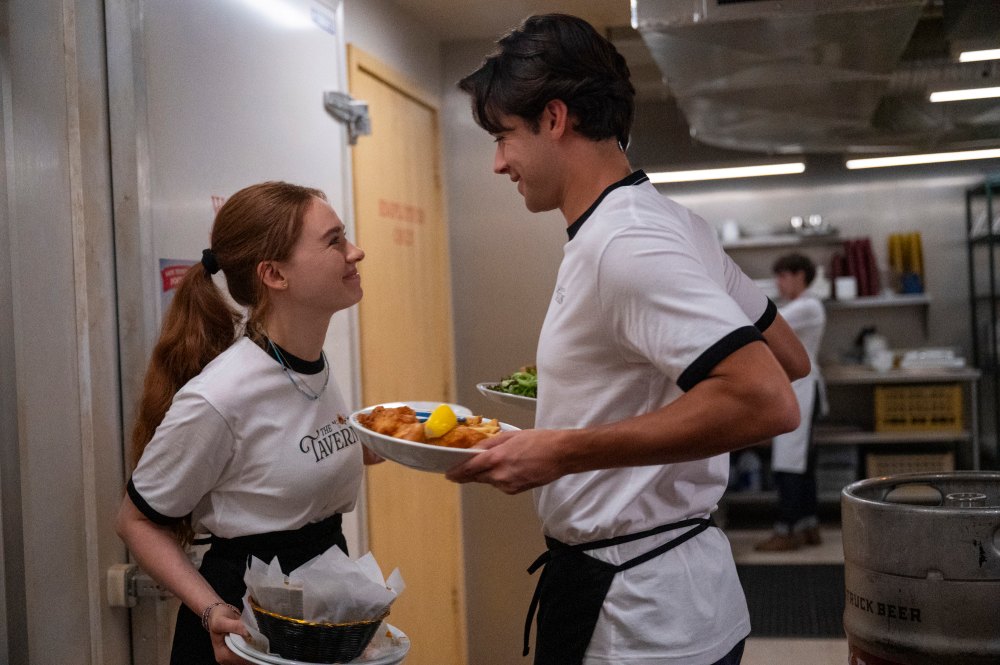
Based on Carley Fortune’s novel Every Summer After, Every Year After is told over the course of six years and one week in Barry’s Bay – a quintessential lake town. (June 10)
‘Elle’
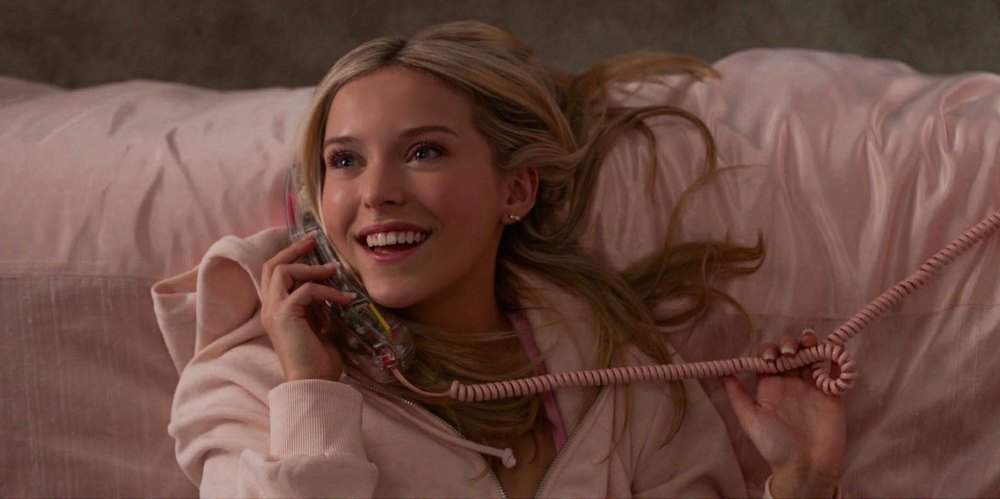
A prequel to Legally Blonde, the series explores Elle Woods’ (Lexi Minetree) teenage years in the 1990s as a high school student. (July 1)
‘Sterling Point’
Created by Megan Park, the show follows a woman who’s life takes a turn when she inherits her mysterious grandfather’s island in Canada. (August 5)
‘The Last Sunrise’
The upcoming film centers on a young American woman with health issues, who follows her overprotective mother as her job takes her to Majorca.
‘The Love Hypothesis’
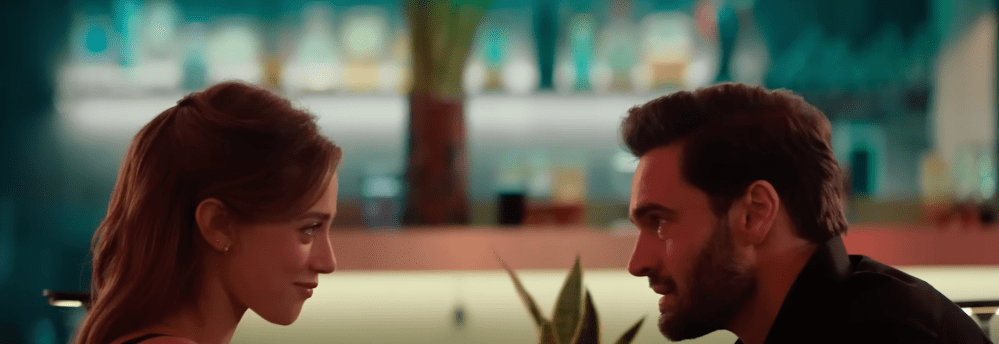
Ali Hazelwood‘s The Love Hypothesis was an overnight success when the book was published in 2021. According to the film synopsis, The Love Hypothesis follows Olive as she tries to convince her best friend into thinking her dating life is great. To help with the lie, she pretends to date her professor, Adam, and the twosome try to make everyone around them think they are in love. But soon, they start to forget that their feelings are supposed to be fake.
‘The Devil’s Mouth’
The survival horror film will follow a group of college friends whose Thailand adventure turns deadly when they become trapped in submerged caves.
‘Maxton Hall’
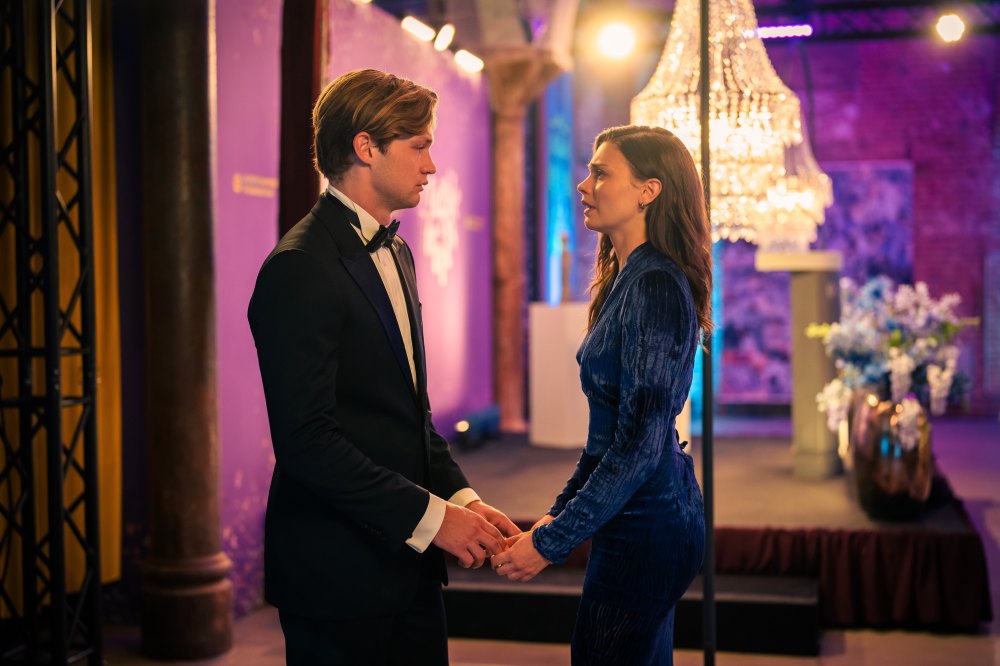
Season 3 of the hit TV series will continue to follow James (Damian Hardung) and Ruby’s (Harriet Herbig-Matten) love story.

Worth the wait. From Teen Wolf‘s Stiles and Lydia to Stranger Things‘ Joyce and Hopper, some TV shows introduced couples that took quite some time to finally get together. The hit MTV series, which aired from 2011 to 2017, focused on a high school student who became a teenage werewolf after he was bitten by […]
‘Drawn Together’
The Spanish-language thriller is based on a romantic suspense novel by Mercedes Ron about a New York heiress forced to live with a strict bodyguard after a kidnapping. (2026)
‘Your Fault: London’
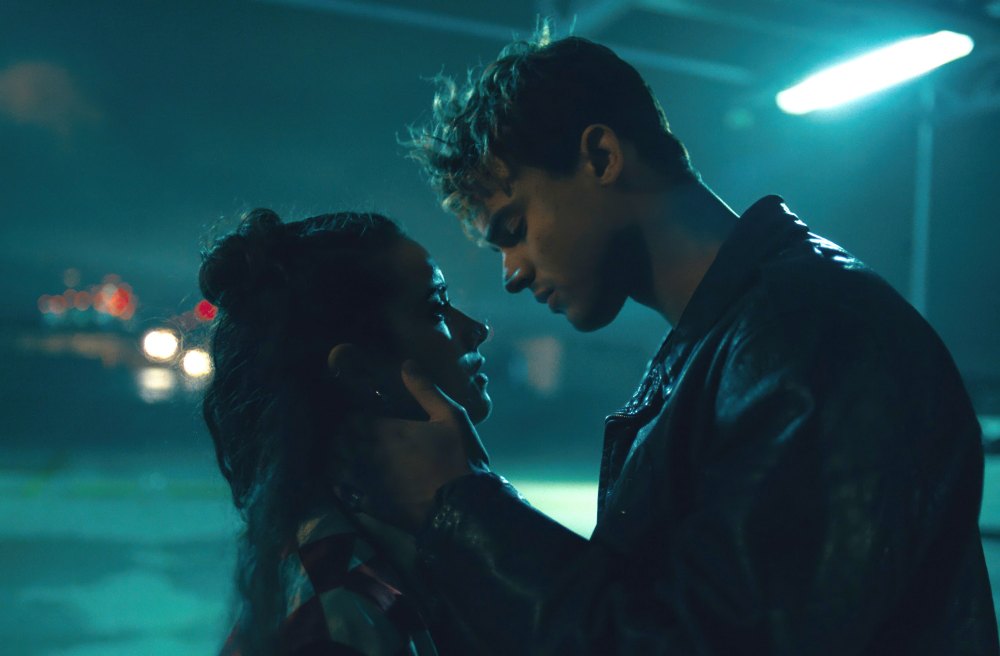
In the sequel to the hit film, Noah (Asha Banks) and Nick (Matthew Broome) will keep fighting for their forbidden love. (June 2026)
‘Perfectos Mentirosos’
The Spanish Original film is based on the Wattpad novel written by Alex Mírez.
‘Clashing Through the Snow’

Starring TSITP’s Christopher Briney and Michelle Randolph, Clashing Through the Snow follows two professional rivals stuck together on a chaotic cross-country road trip to New York, transforming from enemies to lovers.
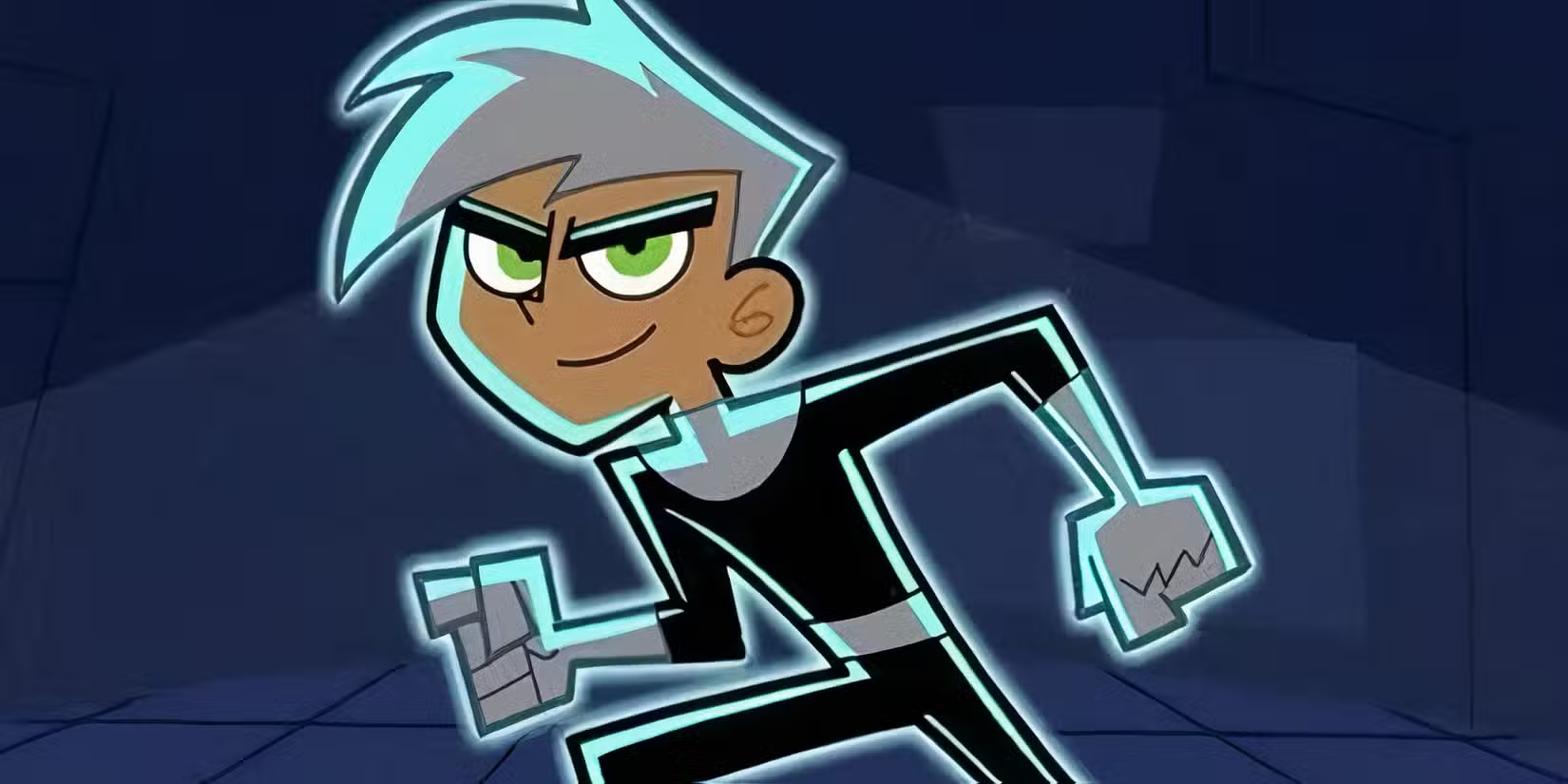
When it comes to superhero stories, some of the best always come in the form of coming-of-age plots. To see a hero grow up as they manage being a superhero is always entertaining. People enjoy characters like Spider-Man so much because of this in particular. Coming-of-age stories have always been relatable, as everyone goes through growing pains and wish they could be a superhero.
Some of the best coming-of-age plots have been on television, because of the amount of time that audiences get to typically spend with the main characters. It gives people time to experience the issues of growing up as their life plays out, and the more time that they get to spend with a protagonist, the closer they grow to them. There have been some amazing superhero television series that perfectly adapt coming-of-age stories—animated or live-action—that make them unforgettable.
10
‘Danny Phantom’ (2004–2007)

Young Danny Fenton (David Kaufman) was just 14 when his parents built a very strange machine, designed to view a world unseen— you know the story. When this young man becomes a half-ghost—of which he can transform at will—he dedicates this secret side of himself to hunting down the many evil ghosts that escaped his parents’ machine when he was transformed.
Danny Phantom tells Danny’s story in such an entertaining way, with some incredibly unique powers in comparison to other heroes like Spider-Man. The hero’s middle ground existence between human and ghost acts as a perfect metaphor of the time between childhood and adulthood as a teenager. Having powers that can parallel a hero’s personal experiences always makes for good storytelling.
9
‘Smallville’ (2001–2011)

Everyone pretty much knows Superman as a character that is an adult, as it’s all he’s really been depicted as (for the most part). What Smallville does that makes it so special in comparison is putting Clark Kent (Tom Welling) in high school and following his life far before he officially became Superman.
Smallville has the huge advantage of following pretty much every single year of his life prior to his adult years as Superman, thanks to the fact that the show got to go on for an entire decade. This gave the writers numerous years and episodes to put Clark through significant growth, explore his many friendships and enemies, as well as show how he developed his powers.
8
‘Ben 10: Alien Force’ (2008–2010)

Everyone who’s anyone knows who Ben Tennyson (Tara Strong and Yuri Lowenthal) is. The young boy who discovered the Omnitrix—an alien watch that can turn him into any one of 1,000,912 alien heroes—has grown up quite a bit since he was 10 years old by the time people meet him again in Ben 10: Alien Force, the second series in the franchise. After Grandpa Max Tennyson (Paul Eiding) disappears, Ben decides to put the watch on again after taking it off many years ago, which incites an adventure with new aliens, new villains, and an all-new Ben.
Being 15 years old now, the young man has matured quite a bit, with lots of room for growth. He may have had some good evolution in the first show, Ben 10, but he gets way more opportunities to grow in Ben 10: Alien Force. With the storytelling maturing quite a bit since the first installment, the character arcs Ben gets to experience are a lot more compelling in how much growth they allow for him as he begins to go from a boy to a man.
7
‘Invincible’ (2021–Present)
Based on the hit Robert Kirkman comic book, creator of The Walking Dead, Invincible has pretty quickly become one of the most popular shows on streaming at the moment. The iconic animated show has taken over the planet, and with Season 4 having just wrapped up, the hype for the show is greater than ever. When Mark Grayson (Steven Yeun) gets powers and discovers he’s half-Viltrumite—a species that is pretty much the definition of evil—he must juggle becoming a man while being the one and only— cue title card.
Invincible sometimes struggles in the animation department, which is where most complaints come from, but that doesn’t stop it from being an excellently-written coming-of-age series. Part of what makes this story so compelling is the fact that Mark is depicted as a far-from-perfect guy. He struggles with some intense things that many would genuinely struggle with, like whether killing is okay or not, if it benefits the greater good. The relatability that Invincible brings forth helps people understand the hero even more than most.
6
‘Gen V’ (2023–2025)

One of the biggest shocks of 2026’s TV space, so far, is the cancellation of Gen V. Fans truly adored this coming-of-age show, taking place in the universe of The Boys. Gen V was so well-written that some genuinely consider it to be better than The Boys, at times. The characters in this college-based show are excellently executed, and keep audiences wishing they could see more of them. Taking place at the college, Godolkin University, it manages to relate to a demographic that often doesn’t get depicted in major superhero coming-of-age stories: the college years of one’s life.
Much like The Boys, this series is raw, real, and doesn’t hold any punches. What sets the story of this project apart, though, is that, much like Smallville, it depicts these young people attempting to learn about and master their powers as they grow into themselves, using their powers as metaphors for their journeys and character arcs.
5
‘Batman Beyond’ (1999–2001)

Everyone loves Batman, but nobody could have expected to see the character in a coming-of-age environment. With the Caped Crusader’s story always featuring him leaving Gotham City to train himself after his parents’ deaths, it feels almost impossible to do a coming-of-age Batman story without changing the origin quite a bit. However, Batman Beyond made the smart choice of providing one that doesn’t feature Bruce Wayne (Kevin Conroy) as the protagonist, but a newer, teen hero, Terry McGinnis (Will Friedle) taking on the mantle after Bruce decides he’s grown too old to continue his crime fighting.
With a high-tech suit and the entire futuristic Gotham City at his fingertips, Terry becomes Batman with enthusiasm and spunk. He’s headstrong and lighthearted, which makes it feel super special in comparison to all other Batman media. Watching a Dark Knight with a coming-of-age story is unlike any other media featuring the character, which makes this show more than worth a watch.
4
‘My Hero Academia’ (2016–2025)

In recent decades, anime has begun to truly take over the West and prove itself to even be better than Western media a lot of the time, too. Shows like My Hero Academia are proof of this. This show—based on the manga brought to life by Kohei Horikoshi—is a spectacular watch with gorgeous animation, incredible character writing, and a story that is the definition of a good coming-of-age tale as the young Izuku Midoriya (Daiki Yamashita and Justin Briner) gets everything he’s wished for when the world’s greatest hero, All Might (Kenta Miyake and Christopher Sabat) passes his power down to him.
My Hero Academia may have Izuku as its primary protagonist, but it follows the entire class of young heroes, Class 1-A. So not only does his coming-of-age story get depicted, but so do the ones surrounding his awesome, diverse classmates. Most notable of the bunch is Katsuki Bakugo (Nobuhiko Okamoto and Clifford Chapin), who arguably has one of the best redemption arcs in modern television. The variety of characters in his class makes for a variety of coming-of-age arcs.
3
‘Teen Titans’ (2003–2006)

One of the greatest DC Comics animated series ever made is, without a doubt, Teen Titans. This group of teenagers taking on some amazing stories and villains makes for a show unlike any other. Following the likes of Robin (Scott Menville), Starfire (Hynden Walch), Cyborg (Khary Payton), Raven (Tara Strong), and Beast Boy (Greg Cipes), Teen Titans shows the Titans facing many villains like the ever-iconic Deathstroke (Ron Perlman)—known in the series as “Slade”.
What makes Teen Titans so entertaining and effective is the fact that it balances tone so dang well. It maintains a lighthearted, anime-inspired tone and art style, while still managing to jump into deep, heavy, and emotional tones and stories when it needs to. Despite being so fun, it tackles ideas like the likes of PTSD—via Robin’s issues with seeing a Slade that isn’t there after his issues facing him.
2
‘Young Justice’ (2010–2022)

Much like Teen Titans, Young Justice follows a group of teenage sidekicks—some of DC Comics’ greatest—as they come together to form a team. Made up of the likes of Robin (Jesse McCartney), Kid Flash (Jason Spisak), Artemis (Stephanie Lemelin), Aqualad (Khary Payton), Miss Martian (Danica McKellar), and Superboy (Nolan North)—with more coming in as the series goes on—the team is absurdly well-written, with each of the team members representing a part of growing up. They take on some great foes and stories from across the DC Comics mythos, which makes this such an entertaining show.
Unlike Teen Titans, though, Young Justice takes a far more mature approach to storytelling. While it does have a lot of fun and includes lighthearted moments, Young Justice takes itself a lot more seriously than the previous sidekick-based show, and that leads to a lot of phenomenal character development as they continue to grow up out of their high school years and into their young adult years.
1
‘The Spectacular Spider-Man’ (2008–2009)

Ask any superhero fan, and they will tell you that The Spectacular Spider-Man is not only one of the greatest adaptations of the Web-Slinger, but one of the greatest superhero series ever made. Following Spider-Man (Josh Keaton) in his high school years, The Spectacular Spider-Man shows just how hard it is to be a superhero and a teenager. His two lives continuously get in the way of each other, which is part of what has made the character of Spider-Man so compelling over the years.
Spidey not only struggles with the concepts of identity, nature vs. nuture, and more, but Peter Parker also struggles with things like relationship issues, money troubles, and the all-around depression of having his two lives so contradicting of each other. The way all of these issues are handled, despite being a show meant for younger audiences, is with grace and seriousness. The showrunners don’t doubt the audience’s intelligence and that makes the stories told beyond engaging and engrossing.

The Spectacular Spider-Man
- Release Date
-
2008 – 2009-00-00
- Directors
-
Victor Cook, Jennifer Coyle, Dave Bullock, Troy Adomitis, Dan Fausett, Kevin Altieri, Michael Goguen
- Writers
-
Greg Weisman, Kevin Hopps, Matt Wayne, Andrew Robinson, Randy Jandt, Nicole Dubuc
- Franchise(s)
-
Marvel
Kirsten Storms‘ claim that her phone has been hacked is reportedly being investigated by police.
According to a TMZ report published on Thursday, April 30, the General Hospital star’s allegation that her device has been compromised will be looked into by authorities.
“I can confirm that there is an active investigation as it pertains to her case,” a rep for the Franklin Police Department in Tennessee told the outlet.
The actress, 42, made the phone hacking claim via an Instagram post shared on April 9.

Kirsten Storms made a rare comment about ex-husband Brandon Barash following her surprise break from General Hospital. The 41-year-old actress announced in an Instagram video on Monday, July 7, that she filmed her final scenes (for the year) as Maxie Jones as Storms moves from Los Angeles to Nashville with 11-year-old daughter Harper. Fans were […]
The update comes after Storms’ ex-husband, Brandon Barash, was recently granted a restraining order amid concerns for her mental health.
TMZ previously reported Barash, 46, filed for an emergency restraining order after claiming that Storms was showing concerning behavior. He claimed he was concerned for their 12-year-old daughter, Harper Rose’s well-being. Barash was married to Storms from 2013 to 2016.

Brandon Barash and Kirsten Storms. (Photo by David Livingston/Getty Images)
In the legal papers, Barash alleged his concerns started after they moved separately to Tennessee after their divorce. Storms’ landlord went on to sue her for eviction, and “instability with housing” went on to become a “recurring theme” for the actress.
Barash claimed via his filing there were several issues that caused him “great concern of [Kirsten’s] ability to adequately care for the minor child.” He also claimed Storms has had “repeated episodes of melting down, being triggered, hearing things/voices that weren’t there.”
In his request, Barash asked for the court to order Storms to undergo a mental health evaluation. Storms is currently allowed supervised visitation with their daughter. A judge is scheduled to review the status of the restraining order.
Us Weekly has reached out to Franklin Police Department and Storms for comment.

Kirsten Storms and Brandon Barash met on the set of General Hospital, eventually sparking a real-life romance. Storms began playing Maxie Jones on and off in 2005, while Barash brought Johnny Zacchara to life from 2007 to 2013. The pair kept their offscreen romance private until August 2013, when news broke that they had secretly […]
Storms announced via Instagram in July 2025 that she was stepping back from General Hospital, where she had played Maxie intermittently since 2005, due to health and personal issues.
“I had a procedure done that weekend, where the doctor [threaded] a camera from my leg up to my brain,” she explained, recalling how her doctors discovered an aneurysm on the right side of her brain. “Aneurysms, obviously, can be caused [by] stress. Brain cysts? I believe that is possible too.”
Storms continued: “It was clear I needed [to] change some things in my life ASAP. For my personal reasons, no longer living in Los Angeles was very important to me. The biggest reason for the move was Harper, but a lot of it was for my physical and mental health, and my overall happiness.”
Entertainment
Prime Video’s Divisive Spy Thriller Finally Returns as the Streamer’s Wildest $300 Million Gamble
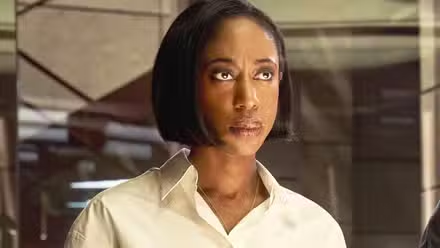
In a tough and competitive business like the entertainment industry, sometimes it takes major swings to find success. And, just a few years ago, that’s exactly what Prime Video did when they hired MCU’s Russo brothers, aka Joe and Anthony Russo, to develop an international, multiseries spy franchise from scratch. Getting started with the six-episode series Citadel, starring Priyanka Chopra Jonas and Richard Madden, the project was coming out with a bang, and had plenty of exciting plans for the future.
With that said, however, Prime Video’s history-making hopes didn’t exactly pan out like they predicted. While the flagship series was plagued with production problems and reshoots, making it one of the most expensive television series ever made at $300 million, the spinoff series, Citadel: Honey Bunny from India and Citadel: Diana from Italy, never reached enough traction and were both cancelled after Season 1. Nevertheless, Prime Video is powering through the bumps, with the second season of Citadel just a few days away.
What ‘Citadel’ Season 2 Means for the Franchise
While the cancellations of Citadel: Honey Bunny and Citadel: Diana, were certainly indicative of a flailing franchise, Prime Video has persisted with its plans and moved on with production for Season 2 of Citadel, which is set to premiere on May 6, 2026. The second installment, of course, is a clear indication that Prime Video is still betting on the franchise, using its upcoming rendition as a last-ditch effort to salvage the flagship. As a reminder, while Citadel: Honey Bunny served as a prequel to the series as it followed Citadel agents Raahi “Bunny” Gambhir (Varun Dhawan) and Hanimandakini “Honey” Raj (Samantha), who turn out to be Nadia’s (Chopra Jonas) parents, Citadel: Diana was a sequel that took place in the near-future of 2030.
But before assuming the decision to continue with Season 2 of Citadel was unfounded, Prime Video has an unique opportunity to learn from their mistakes and better the series for Season 2. After all, the series scored a divisive 51% on Rotten Tomatoes from critics, with reviews calling out the series for prioritizing universe-building over compelling storytelling. In other words, when Season 1 of Citadel was underway, so were the other two spinoff series, so world-building and mythology was an integral part of the narrative. Now, however, with both series being shot down, Citadel has the opportunity to reframe and prioritize character investment and emotional stakes, and leave the franchise world-building as a thing of the past.
What Can Viewers Expect From ‘Citadel’ Season 2?
Citadel Season 2 will once again follow Mason Kane (Madden), Nadia Sinh (Chopra Jonas), and Bernard Orlick (Stanley Tucci), as elite operatives after the fall of the legendary Citadel agency at the hands of Manticore, the shadowy network backed by some of the world’s most powerful families. In the new batch of episodes, the trio will be pulled back into action after receiving a terrifying new threat. The official synopsis follows:
When a terrifying new threat emerges, the three are pulled back into action. Now they must recruit an unlikely team of skilled new operatives and launch a globe-spanning mission to stop a conspiracy that could reshape humanity. With blockbuster action, shocking betrayals, and an expanded ensemble of mysterious agents, the stakes have never been higher – and anyone could be friend or foe.

Prime Video’s 2-Part $300M Spy Thriller Series Is in Trouble
“I go to work, do my job, and I leave.”
Returning cast members this season include Lesley Manville and Ashleigh Cummings, alongside an expanded ensemble cast featuring Jack Reynor as Hutch, Matt Berry as Franke Sharpe, and Lina El Arabi as Celine. Newcomers to the show include Merle Dandridge, Gabriel Leone, and Rayna Vallandingham.
With all that said, the second season of Citadel has a lot to prove. With two cancelled spinoff series behind it, and a divisive reception from Season 1, the Russos-led thriller is not only trying to prove its place in streaming, but attempting to justify the massive investment Prime Video once made to get the project up and running. Now with no world-building to establish, the series has a real shot of hitting its grove, but only time will tell.

- Release Date
-
April 28, 2023
- Network
-
Prime Video
- Showrunner
-
David Weil
- Directors
-
Newton Thomas Sigel
- Writers
-
John Applebaum, Bryan Oh, David Weil
:max_bytes(150000):strip_icc():format(jpeg)/janai-norman-1-6bf630c2dce94184942a125100e0f04f.jpg)
The longtime host departed the show’s weekend edition earlier this month after news broke that ABC declined to renew her contract.

Politics2 minutes ago
Axe Drax activists hunt down Drax executives after they dodged AGM

NewsBeat4 minutes ago
All of the Norfolk beaches banning dogs until October
Business5 minutes ago
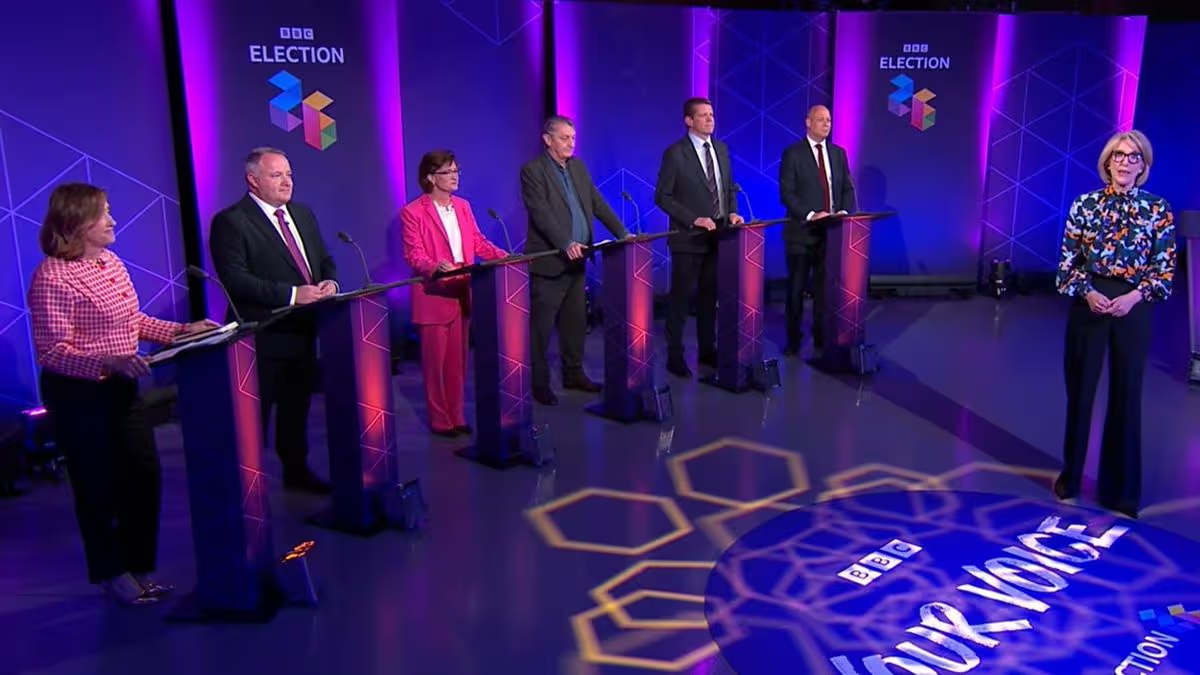
The frustration in Wales is not politicians disagreeing but that we face the same problems of two decades ago

NewsBeat1 month ago
Manchester United reach agreement with Casemiro over contract clause amid transfer speculation

Politics3 weeks ago
US brings back mandatory military draft registration

NewsBeat4 weeks ago
Steven Gerrard disagrees with Gary Neville over ‘shock’ Chelsea and Arsenal claim | Football


-

 Tech4 days ago
Register Renaming | Hackaday
-

 Fashion7 days ago
Weekend Open Thread – Corporette.com
-
 Crypto World6 days ago
Hyperliquid $HYPE Rally Builds Momentum as AI Sector Enters Prove-It Phase
-

 Politics4 days ago
Drax board avoid their own AGM, accused of greenwashing & environmental racism
-

 Tech4 days ago
Images of Samsung’s rumored smart glasses have leaked
-
 Sports5 days ago
IPL 2026: Ruturaj Gaikwad registers slowest fifty of the season, enters all-time unwanted list | Cricket News
-

 Tech4 days ago
Why Blue Badges Disappeared From Toyota Hybrids
-

 NewsBeat5 days ago
LK Bennett closes all stores after entering administration
-

 Fashion3 days ago
Kylie Jenner’s KHY Enters a New Era with ‘Born in LA’
-
 Entertainment6 days ago
Mariah Carey Slams Deposition Claims In Brother’s Lawsuit
-

 Business3 days ago
Most Commercial Energy Audits Miss the Real Losses
-

 Business4 days ago
(VIDEO) Charlize Theron Climbs Times Square Billboard to Promote New Netflix Thriller ‘Apex’
-
 Business7 days ago
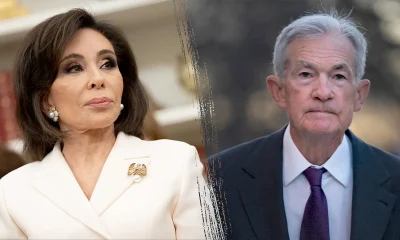
Jeanine Pirro announces closure of Federal Reserve building cost probe
-

 Tech5 days ago
Microsoft to roll out Entra passkeys on Windows in late April
-

 Crypto World3 days ago
CFTC’s AI will review U.S. crypto registration applications, chairman tells CoinDesk
-
 Crypto World7 days ago
Nvidia (NVDA) Stock Jumps 5% as Intel Earnings Ignite Semiconductor Rally
-
 Tech5 days ago
OpenAI’s Sam Altman apologizes for not reporting ChatGPT account of Tumbler Ridge suspect to police
-

 Business2 days ago
Barclay Brothers Avoid Bankruptcy: HSBC Drops High Court Petitions After IVA Deal
-
 Tech7 days ago
Apple’s Next CEO Has a Different Battle Ahead
-

 Tech3 days ago
Get Ready for More Brain-Scanning Consumer Gadgets
You must be logged in to post a comment Login