

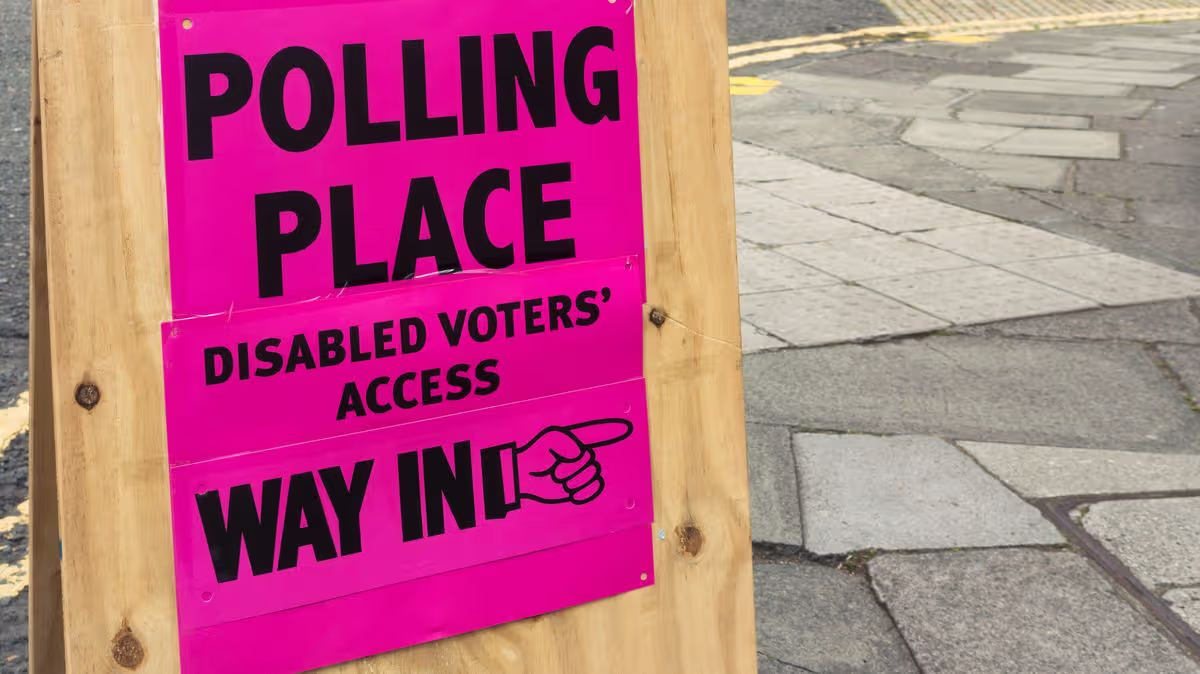
More than 4.2 million people are registered to vote in the Scottish Parliament election in May.
Scotland is gearing up for a major national vote that will determine its political direction for the coming years, with voters set to choose representatives at both local and regional level.
Millions of people across the country are expected to take part in the Scottish Parliament election on Thursday, May 7, marking the biggest democratic event since the 2024 general election. Most postal votes have already been delivered, while in person voting will take place between 7am and 10pm on election day.
All 129 Members of the Scottish Parliament will be elected, shaping the composition of Holyrood and influencing decisions on key areas such as health and education.
Here is everything you need to know about the upcoming elections.
Which elections are taking place in Scotland on May 7?
The Scottish Parliament election will decide who governs across a range of devolved issues. Every MSP seat is up for election, including 73 constituency MSPs and 56 regional MSPs, with seven representatives elected in each region.
Voters are given two ballot papers and cast two separate votes. One vote is used to elect a constituency MSP, while the second is for regional representation.
Constituency MSPs are chosen using a first past the post system, where the candidate with the highest number of votes wins. Regional MSPs are selected through a proportional system, with voters choosing either a political party or an individual candidate. Seats are then allocated using a formula that takes into account both the number of votes received and the number of constituencies already won.
In most cases, the party with the highest number of MSPs goes on to form the Scottish Government, with its leader becoming first minister.
What ID do I need to vote?
Voters do not need to show identification to vote in person in the Scottish Parliament election.
How can I find my polling station?
The deadline to register to vote was midnight on Monday, April 20. Anyone who registered by that date should receive a polling card with details of their local polling station.
Those who have voted previously and have not changed address will already be registered. Polling station locations can also be checked online by entering a postcode here.
What is the difference between the two ballot papers?
At polling stations, voters will receive two ballot papers. The lilac coloured paper is for the constituency vote and lists candidates standing to represent the local area. The candidate with the most votes becomes the constituency MSP.
The peach coloured ballot paper is used for regional voting. Instead of selecting an individual candidate, voters choose a party or a name from a list. This system is designed to balance representation, meaning parties that win fewer constituencies have a greater chance of gaining regional seats.
When will the results be announced?
Unlike some previous elections, ballots will not be counted overnight. Counting will begin on the morning of Friday, May 8, with results expected throughout the afternoon. A full picture of the outcome is likely by early evening.
Who can vote in Scotland?
Anyone aged 16 or over on polling day who is registered to vote and lives in Scotland can take part, provided they are not legally excluded. Eligible voters must be British or Irish citizens, or qualifying foreign nationals with permission to live in the UK.
Ways to vote in Scotland
There are three ways to vote in the election. People can vote in person at polling stations between 7am and 10pm, vote by post, or appoint a proxy to vote on their behalf.
Voting rules and what to expect
Polling stations provide writing materials, although voters can bring their own. Mobile phones can be used for accessibility purposes such as magnification or lighting, but taking photos inside polling stations is strictly prohibited.
Taking selfies or revealing how someone has voted can result in a fine or imprisonment. Photography is allowed outside polling stations.
Other polling station guidance
Children are allowed to accompany voters but cannot mark ballot papers. Assistance dogs are permitted, while other animals may be allowed at the discretion of local authorities.
People who have consumed alcohol can still vote unless their behaviour is disruptive. Staff are available to assist disabled voters, and equipment such as tactile voting devices and large print ballot papers should be provided.






















































You must be logged in to post a comment Login