
Crypto World
Bitcoin ETFs Hit $2B in April as This Year’s Peak Monthly Inflow

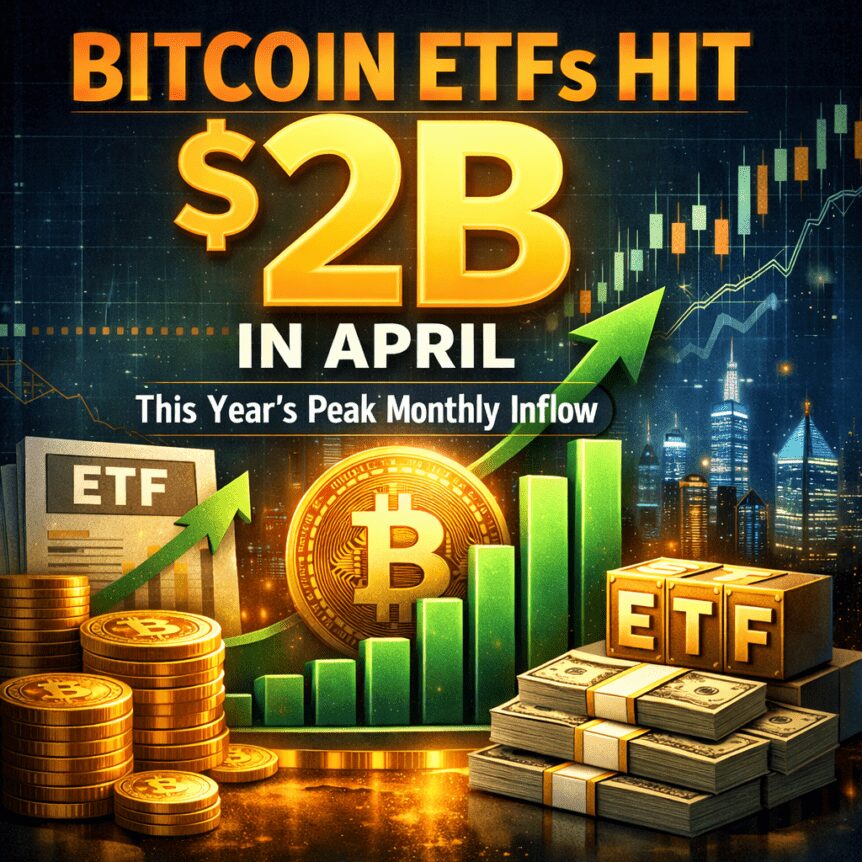
US-listed spot Bitcoin ETF trusts drew broad-based buying in April, with investors pouring nearly $2 billion into the segment as Bitcoin staged a late-month rally. SoSoValue data shows inflows totaling $1.97 billion for April, the strongest monthly print of the year. When combined with inflows from March, and offset by outflows in January and February, total net inflows for 2026 reached roughly $1.47 billion. Since their launch, these ETF products have amassed more than $58 billion in net inflows, underscoring continued institutional interest in access to spot Bitcoin via exchange-traded structures.
Bitcoin’s price action during the month helped buoy appetite for these vehicles. CryptoRank records a near 12% gain for Bitcoin in April, marking its best monthly performance since April 2025, when the price rose by a little more than 14%. The April rally and the ongoing ETF inflows coincide with anticipation around the upcoming 13F filing season, which will reveal how large financial firms are positioning their crypto exposure for the first quarter of 2026.
Key takeaways
- April marked the strongest monthly inflow for US spot Bitcoin ETFs in 2026 at $1.97 billion, according to SoSoValue.
- Bitcoin ETFs posted year-to-date net inflows of about $1.47 billion in 2026, with cumulative launches exceeding $58 billion in net inflows since inception.
- Issuer dynamics showed BlackRock’s IBIT leading the month with around $2 billion in net inflows, while Grayscale’s GBTC logged roughly $280 million in outflows.
- MSB’s Morgan Stanley Bitcoin Trust (MSBT), which began trading on April 8, attracted about $194 million in inflows, with no daily outflows recorded for the month.
- Ether ETFs joined in April with their first monthly inflow since October 2025, at $356 million, but remain negative for the year (about $413 million in net outflows YTD). XRP, DOGE and SOL funds showed mixed performance across the month.
Bitcoin ETFs: momentum despite late-month shifts
April’s flow strength largely centered on the Bitcoin segment, with the $1.97 billion in net inflows reflecting ongoing demand for regulated access to spot BTC. The month’s outflows were not large enough to erase the gains, totaling about $490 million over three late-April sessions, according to Farside’s tracking of daily flows by issuer since April 27, 2026. That late-week pressure hints at a continuing negotiation between short-term profit-taking and longer-term conviction among ETF holders.
BlackRock’s iShares Bitcoin Trust (IBIT) stood out as the dominant inflow driver for the month, contributing roughly $2 billion of net new money. The magnitude of IBIT’s inflows suggests the market’s reliance on the fund giant’s branding and liquidity to channel fresh capital into the ETF ecosystem. By contrast, Grayscale’s Bitcoin Trust ETF (GBTC) was the month’s biggest laggard, recording around $280 million in net outflows as investors shifted some exposure to other vehicles or modules within the ETF family.
Another notable development was the Morgan Stanley Bitcoin Trust ETF (MSBT), which began trading on April 8 and pulled in about $194 million of inflows for the month. The MSBT performance underscores the growing breadth of sponsor support in the space, with new entrants competing for scale and investor sophistication in price discovery and premium/discount dynamics.
Ether, XRP, DOGE and SOL: a mixed picture for altcoin ETFs
In a meaningful shift, Ether (ETH) ETFs posted their first monthly inflow since October 2025, gathering $356 million in April. Absolute numbers aside, ETH still trails Bitcoin in ETF sentiment for 2026, with a negative year-to-date balance of around $413 million, according to SoSoValue’s figures. The total cumulative inflows into Ether ETFs since their launch remain substantial, near $11.9 billion, illustrating persistent demand for regulated access to the second-largest cryptocurrency versus spot holdings via traditional vehicles.
XRP-focused funds drew notable attention as well, recording $81.6 million in inflows during April. For the first four months of 2026, XRP ETFs accumulated about $124 million in net inflows, bringing total cumulative inflows to roughly $1.3 billion. The XRP appetite signals investor interest in diversification within the tokenized assets that complement Bitcoin exposure, given XRP’s distinct use-case and market behavior relative to BTC and ETH.
Dogecoin (DOGE) ETFs also posted inflows in April, amounting to $2 million and accounting for around 21% of DOGE’s total cumulative ETF inflows of roughly $9.6 million. This suggests a modest but continuing appetite for meme-coin exposure within regulated ETF wrappers, even as other assets garner broader institutional attention.
Solana (SOL) ETF inflows in April reached $38.7 million, the smallest monthly total on record for the asset with cumulative inflows around $1 billion. The softer SOL figure could reflect ongoing industry-wide rotation toward more established liquidity pools or simply a more selective appetite for newer-chain assets among ETF buyers.
What these flows mean for investors and the market
The April flow environment reinforces a few emerging themes in the ETF landscape. First, the breadth of inflows across several issuers—from BlackRock to Morgan Stanley and beyond—indicates that institutional investors are using regulated, transparent vehicles to access digital assets, even as the regulatory backdrop remains dynamic. Second, the divergence in performance among asset-specific ETFs—Bitcoin leading inflows, Ether showing early-year softness, and altcoins fluctuating—highlights the ongoing need for discernment when building diversified crypto exposure through ETFs.
With 13F filing season on deck in May, investors and analysts will scrutinize which institutions added or trimmed their crypto exposure in Q1. The disclosures could reveal new capital commitments to Bitcoin ETFs or shifts toward Ethereum and other crypto assets, potentially shaping fund flows in the coming months. This period often serves as a proxy for institutions’ conviction levels and their readiness to navigate a market that remains episodic in volatility but increasingly integrated into mainstream financial channels.
Overall, the April data paints a picture of a maturing ETF ecosystem where liquidity, product breadth, and institutional curiosity align to sustain flows even as individual assets rotate on macro and micro signals. The next few weeks will be telling as 13F disclosures land and investors reassess risk budgets, regulatory clarity, and the practical implications of regulated access to crypto markets through these enduring investment vehicles.
Readers should stay attuned to how February-to-April dynamics influence the 2026 trajectory for ETF inflows, and whether the resilience in Bitcoin ETF demand translates into broader adoption for ETH and other tokens through regulated wrappers. The market awaits clearer signals on whether April’s momentum can persist into the mid-year cycle and how issuers will position portfolios in response to evolving regulatory and macro conditions.

Crypto World
New Crypto Projects Gain Ground as 275 Tokens Rise and Pepeto Presale Crosses $9.7M Before Listing
The crypto market posted a strong bullish tilt today as 275 out of 390 tracked tokens ended in the green, pushing the total market cap to $2.68 trillion. Every new crypto project benefits from that kind of broad momentum because rising tides lift the coins that already have capital behind them.
Bitcoin held above $78,000 for the first time since February, and the market is showing signs that the worst of the fear cycle may be over. Pepeto is leading the new crypto conversation after pulling more than $9.7 million into its presale before a Binance listing.
Motley Fool reported the crypto market cap increased 2.2% to $2.68 trillion on May 1 as Bitcoin pushed past $78,000 and tech stocks set new highs.
The CoinGecko daily summary confirmed 275 tokens rising against 115 falling, showing the broadest green day in weeks. This kind of market breadth matters for every smaller entry because it means capital is rotating into younger projects, not just sitting in Bitcoin.
New Crypto Leaders for 2026: Pepeto, BTC, and ETH Reviewed
Pepeto
Every new crypto cycle produces one project that captures the capital and attention at exactly the right moment. Pepeto is filling that role right now with a working marketplace that already clears trades and reviews contracts before listing day opens the doors.
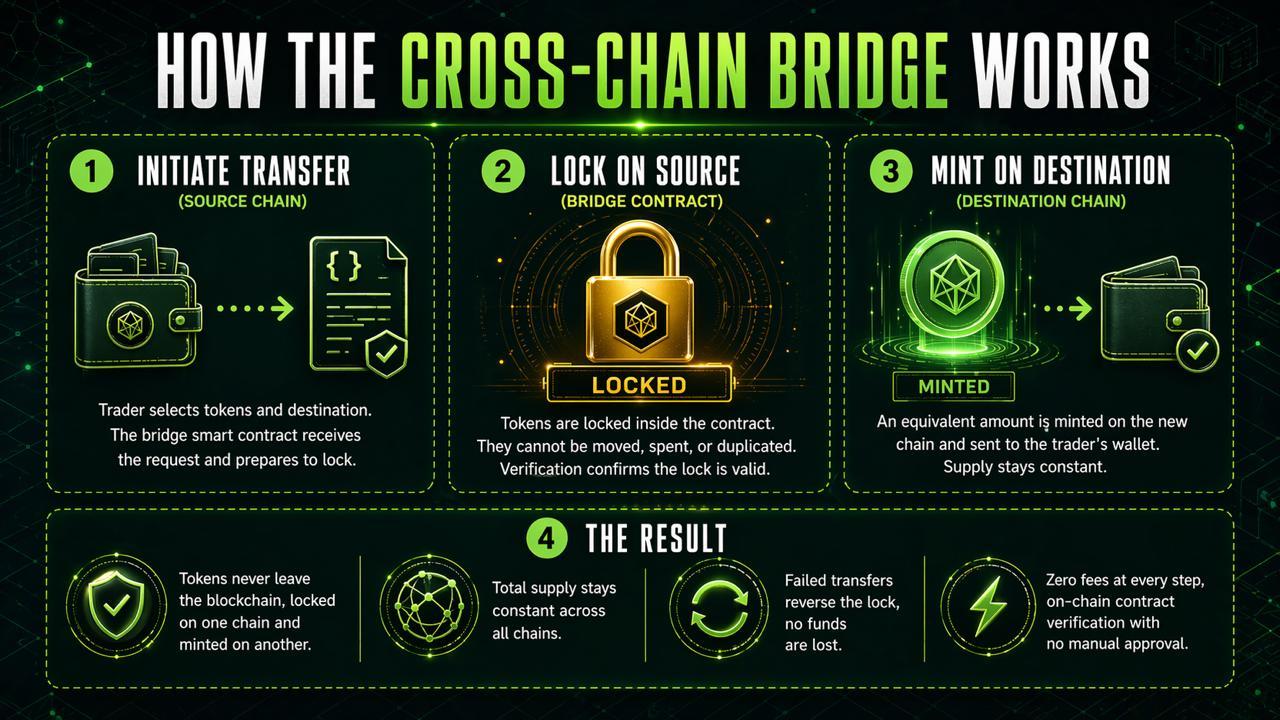
Pepeto brings together token flow from separate chains into one zero fee trading center where no commission touches any order. The bridge transfers assets across networks for free, keeping capital mobile at all times. Every product is live, every contract has been verified by SolidProof, and the people inside the presale already rely on these tools daily.
The contract scanner flags dangerous tokens before a buyer sends capital into a bad position, protecting the money that matters most during early stage entries. The creator of the first Pepe token matched the same 420 trillion token count that produced the structure that produced billions in value with zero built products, and a developer who came from Binance keeps the technical operations at professional exchange standards.
Capital exceeding $9.7 million landed inside the presale while most early stage projects struggled to raise a fraction of that during the fear period, and that level of capital flow during uncertainty is the signal that separates conviction from noise. The entry sits at $0.0000001864 right now, and the Binance listing will remove that number permanently.
The 176% APY staking layer removes tokens from circulation before listing. BTC at $78,300 with a $1.55 trillion cap cannot deliver 100x. But a new crypto presale where SolidProof cleared every contract and a Binance listing sits on the horizon is where analysts see triple digit return potential.
Bitcoin (BTC)
BTC trades near $78,300 as of May 2 after gaining 12.7% in April, its best month since 2025 according to CoinMarketCap. Exchange held BTC dropped to 2.69 million coins while April ETF inflows hit $2.44 billion.
Standard Chartered targets $150,000 by year end. BTC is the anchor of every portfolio, but from $78,300 it delivers steady growth, not the kind of multiplier a new crypto entry at presale stage can offer.
Ethereum (ETH)
ETH trades near $2,296 as of May 2, gaining 8% in April according to CoinMarketCap. Real world asset tokenization on Ethereum tripled to $19.3 billion in Q1 2026. The Pectra upgrade targets staking and layer 2 improvements.
But ETH at $2,296 needs a 2x just to approach its old high of $4,953, and from a $272 billion market cap, 100x is not on the table.
The Verdict
The 275 tokens rising today prove the market is turning, and the broad green day shows capital rotating back into risk assets. But last cycle made millionaires out of the wallets that moved first, and regretting a missed entry only gets heavier with time.
Pepeto is that same moment with a Binance listing approaching and $9.7 million in presale conviction already behind it, and the Pepeto official website shows the clearest second chance to be early that this cycle will offer.
Missing the presale means watching the listing returns from the outside, and no recovery trade in BTC or ETH will match what entering at seven zeros can deliver.
Click To Visit Pepeto Website To Enter The Presale

FAQ
What new crypto projects are worth watching in 2026?
Pepeto leads the new crypto presale space with more than $9.7 million raised, live products, and a Binance listing that analysts say could deliver 100x.
Is now a good time to enter the crypto market?
With 275 tokens rising and market cap at $2.68 trillion, the Pepeto official website shows a presale entry where early holders stand to gain the most.
How does a new crypto presale compare to buying BTC?
BTC at $78,300 delivers steady growth, while a presale at seven zeros with verified products and a confirmed listing gives analysts reason to project 100x.
Disclaimer: This is a Press Release provided by a third party who is responsible for the content. Please conduct your own research before taking any action based on the content.



The Ethereum Foundation has completed another over-the-counter ETH sale to BitMine Immersion Technologies.
Summary
- Ethereum Foundation sold 10,000 ETH to BitMine, marking its third OTC deal in two months.
- Community members questioned repeated ETH sales after the foundation also unstaked about $40 million in assets.
- The foundation says ETH sales support operations, grants, protocol research, and wider ecosystem development work.
The move came as the foundation continued to face questions over its treasury activity, grant funding, and recent unstaking of ETH.
The Ethereum Foundation sold 10,000 ETH to BitMine at an average price of $2,292 per coin. The deal was worth about $22.9 million and marked its third OTC sale to the company in two months.
The foundation said the sale would support its operating needs. It wrote, “This sale funds the Ethereum Foundation’s core operations and activities.” It also listed protocol research, ecosystem work, and community grants as funding areas.
The latest transaction followed another 10,000 ETH sale to BitMine one week earlier. That earlier deal happened at an average price of $2,387 per ETH. In March, the foundation also sold 5,000 ETH to BitMine at about $2,043 per coin.
Together, the recent sales have renewed debate around how the foundation manages its ETH holdings. Some community members questioned the pace of the sales, especially as ETH traded near $2,300.
Community questions grow after repeated sales
The foundation’s latest sale drew criticism from some Ethereum users. One user asked, “Why do you need $46 million in 2 weeks?!” The comment reflected concern over spending, treasury planning, and payment choices for developers.
The debate also followed a separate move by the foundation to unstake 17,035 ETH, worth about $40 million. Arkham data showed that the foundation deposited wrapped staked ETH into Lido’s unstETH contract as part of the withdrawal process.
Crypto.news reported that the foundation had not publicly explained the unstaking move at the time. Some market users questioned whether the ETH could later move to exchanges or be sold.
However, no official statement linked the unstaking to a market sale. In Ethereum, unstaking starts a withdrawal request and returns ETH after the queue process ends.
Grants point to long-term Ethereum work
The sales come as the foundation continues to fund Ethereum research and development. Its Q1 2026 grant report focused on zero-knowledge research, cryptography, core clients, validator security, and public infrastructure.
The grants included support for Geth, Erigon, Lighthouse, validator security tools, and node discovery work. The foundation also backed projects tied to Poseidon hash analysis, quantum-resistant systems, and formal verification for RISC-V-based zkVM infrastructure.
Funding also went to developer education, WalletConnect clear-signing tools, L2BEAT analytics, privacy tools, identity standards, and DAO governance research. These areas show that the foundation is still directing capital toward network infrastructure rather than short-term market activity.


Andreessen Horowitz has entered the growing fight over U.S. prediction markets.
Summary
- A16z says state bans could weaken federally regulated prediction markets and reduce user access nationwide.
- The CFTC argues several states are trying to control markets under federal oversight rules now.
- Senators and staff now face a ban on prediction market trading amid rising trust concerns.
The venture capital firm is backing the Commodity Futures Trading Commission against state efforts to restrict platforms such as Kalshi and Polymarket.
The dispute centers on who should regulate event contracts. States argue that some contracts look like gambling. The CFTC and a16z argue that federally regulated markets should not face separate bans in each state.
a16z submitted a letter to the CFTC in response to the agency’s rulemaking process on prediction markets. The firm said state crackdowns, including cease-and-desist letters and legal threats, could block users from markets overseen by the federal regulator.
The firm argued that exchanges may lose liquidity if they must block users by state. It wrote, “Being forced to deny impartial access” would likely reduce available liquidity in affected markets.
CFTC clashes with several states
The CFTC has filed lawsuits against several states, including Illinois, Arizona, Connecticut, New York, and Wisconsin. The agency claims those states are trying to regulate markets that fall under federal oversight.
State officials have pushed back. They say platforms that offer contracts tied to sports, elections, and other events may operate like gambling businesses. a16z rejected that view and said the CFTC should decide how “gaming” applies under commodities law.
Meanwhile, the fight comes as Congress is also taking action on political event trading. The U.S. Senate voted unanimously to bar senators and staff from trading on prediction markets, including platforms such as Kalshi and Polymarket.
Kalshi said it already blocks members of Congress from using its platform. The company called the Senate vote “a great step to increase trust in markets.” The ban reflects concern that lawmakers and staff could have access to information that other traders do not.
Prediction markets become a wider media story
a16z has also moved deeper into prediction-market culture through media. The firm has backed “Monitoring the Situation,” a 24/7 livestream on X linked to Polymarket culture and real-time online news.
That media push shows how prediction markets now sit at the center of a wider debate. The platforms do not only host trades on future events. They also shape how users watch politics, sports, crypto, and breaking news.


Ethereum whale activity has increased as large holders added more ETH over the past four days.
Summary
- Ethereum whales added 140,000 ETH in 96 hours as price remained near $2,300.
- ETH must hold $2,200 support to avoid renewed pressure toward the $1,900 zone.
- A clean move above $2,400 may open Ethereum’s path toward $2,800 resistance.
According to Ali Charts, whales accumulated over 140,000 Ethereum in 96 hours, worth about $322 million.
The buying comes as ETH trades near $2,305.11. The asset recorded a 0.1% gain in 24 hours, while it remained down 1.04% over the past seven days. Daily trading volume stood at $6.8 billion.
Whale holdings rise as ETH price stays flat
The chart shared by Ali Charts shows a steady increase in Ethereum held by whale wallets. Holdings rose from about 13.78 million ETH to nearly 13.98 million ETH between May 1 and May 3.
This points to steady buying by large holders, not a single large transfer. The move also suggests that major wallets are adding exposure while price action remains quiet.
However, traders are still waiting for stronger confirmation. ETH has remained close to $2,300, and market momentum has not yet followed the whale buying trend.
$2,200 remains key support for Ethereum
Ethereum is still trading above the $2,200 support area. Analysts view this level as important for the current market structure.
If ETH holds above $2,200, the price could continue its slow recovery toward the $2,800 resistance zone. A move above $2,400 may also give traders a stronger long setup.
However, the downside risk remains clear. A breakdown below $2,200 could weaken the structure and open the way toward $1,900.
The intraday outlook also remains mixed. The chart was described as “choppy and slow,” with traders waiting for a better structure before entering new positions.
$2,400 breakout may decide the next move
ETH has formed a base around the $1,800 to $2,000 area after a sharp decline earlier in the year. Since then, the price has printed higher lows, showing a gradual recovery.
Still, Ethereum remains below a major descending trendline. The $2,400 area is the nearest resistance. A clean breakout above it could support a move toward $2,600 and then $2,800.
The broader resistance near $3,700 remains far above current levels. That area still marks a major test for any wider recovery.
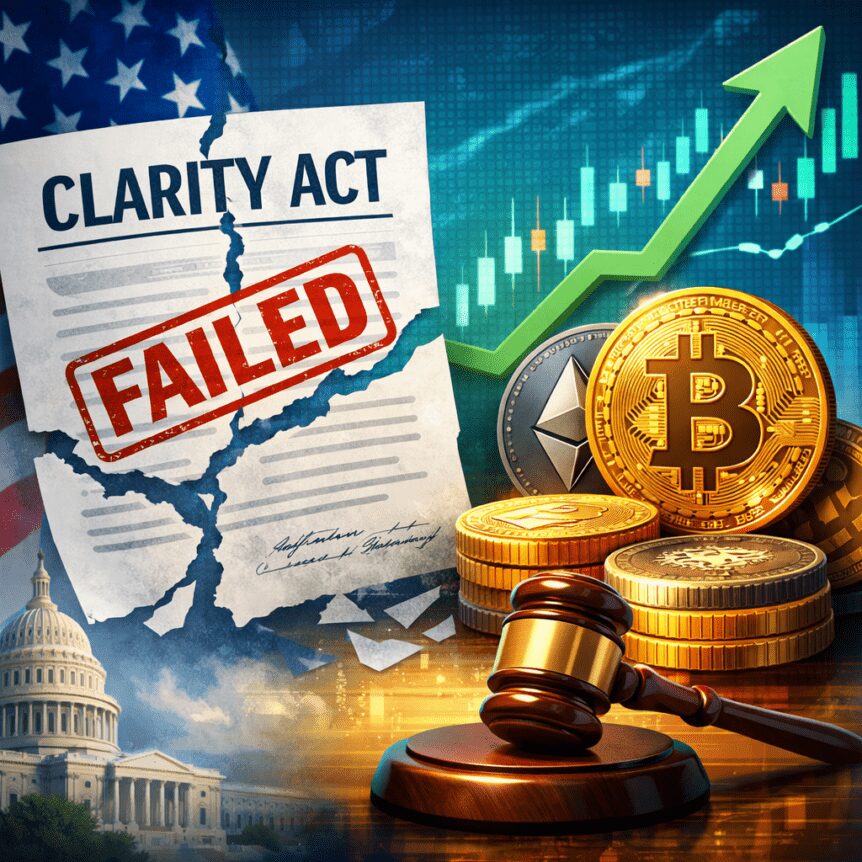
The U.S. crypto industry remains buoyant about its longer-term prospects, even as the fate of the CLARITY Act—an effort to codify regulatory clarity for tokens, stablecoins and crypto businesses—hangs in the balance in Congress. In a recent Chain Reaction episode, Chris Perkins, CEO of 250 Digital Asset Management, argued that the sector’s momentum would endure even if lawmakers don’t pass the bill this session.
Perkins pointed to ongoing policy work by the two main financial regulators as evidence the path to usable guidance is already being carved out. He cited the ongoing efforts of the US Securities and Exchange Commission (SEC) and the Commodity Futures Trading Commission (CFTC) under their chairs, following the agencies’ joint interpretation released in March on how federal securities laws apply to crypto assets.
“If not, we’re going to be just fine,” said Chris Perkins, CEO of 250 Digital Asset Management, on Cointelegraph’s Chain Reaction podcast, noting that the SEC and CFTC are already laying the groundwork for workable regulatory frameworks.
Key takeaways
- The crypto industry’s near-term momentum is not solely contingent on the CLARITY Act; regulators are actively shaping frameworks that could outlive any single piece of legislation.
- Regulatory policy work by the SEC and CFTC is creating a pathway that could bring much-needed certainty and a formal taxonomy for crypto assets, even absent a new law.
- Labeling tokens as securities is no longer an automatic death sentence; a clear, enduring framework could make the classification process more navigable for issuers, platforms, and investors.
- Passage of the CLARITY Act would entrench policy, making it harder for future administrations to roll back regulatory clarity and potentially reshaping the US crypto operating environment for years.
- A sense of urgency is growing around stablecoins and related yields, with lawmakers nudging toward a final text; several senators have offered optimistic timelines, signaling that energy around CLARITY is building.
Policy momentum in the making
The core premise of Perkins’s assessment is that policy isn’t waiting for a single bill to move forward. He highlighted that the SEC and CFTC have been actively developing frameworks and precedents that could guide token classifications, compliance pathways, and enforcement expectations regardless of CLARITY’s fate in Congress. The March joint interpretation, while not a CLARITY Act result, is cited by many industry observers as a signal that federal authorities are willing to articulate how securities laws apply to crypto assets in a concrete way.
Perkins emphasized that policy creation is a long-memory game: once a rule or taxonomy is established, it becomes a reference point that shapes future administration choices and regulatory posture. “There is a reason why we say it takes an act of Congress to do something,” he noted, but he also underscored that the current regulatory push is more than a momentary push for clarity—it’s the start of a framework that could endure beyond a single legislative cycle.
For investors and builders, the takeaway is that regulatory clarity may not depend entirely on a single bill. The ongoing work by the agencies could translate into a more predictable operating environment, with defined categories and compliance expectations that help reduce the mystery that has often surrounded crypto tokens and their regulatory status.
From “death sentence” to a regulated pathway
One recurring theme in Perkins’s discussion is the shift from the era when crypto assets labeled as securities faced existential risk to a landscape where a stable, enforceable framework could be leveraged by market participants. In the past, labeling a token as a security could trigger immediate enforcement action, delistings, and a lack of clear compliance pathways in the U.S. market. Perkins framed the current moment as a transition toward “certitude, stability, and ultimately, a taxonomy” that could harmonize regulatory expectations with practical business models.
That pivot matters because investors, exchanges, and developers often operate best when policy is predictable. If a robust taxonomy and enforcement approach emerge, projects may be better positioned to design compliant token structures, governance models, and disclosure norms that align with established regulatory expectations—reducing the risk of sudden policy shifts or unilateral enforcement actions that have in the past unsettled markets.
Still, Perkins cautioned that the absence of a final CLARITY Act passage would not automatically derail the industry’s long-run prospects. The momentum generated by regulator-led policy development could keep the ecosystem on a constructive trajectory, even as lawmakers deliberate on a more formal framework.
CLARITY Act: timing, prospects, and what to watch
The debate around CLARITY has intensified as lawmakers emerged from ongoing negotiations on stablecoin provisions and related regulatory questions. The timing remains a focal point, with several public signals feeding into the market’s expectations. After the publication of a final text aimed at resolving stablecoin yield disagreements between the banking and crypto industries, industry participants voiced renewed optimism that a broader CLARITY package could advance in short order.
“It’s time to get CLARITY done,” said Coinbase chief legal officer Faryar Shirzad in a post on X after US Senator Thom Tillis and US Senator Angela Alsobrooks released the final text addressing the stablecoin yield dispute between banking and crypto sectors.
Political voices from both sides of the aisle have weighed in with their own stipulations about when a vote might occur. Senator Bernie Moreno suggested a May deadline for completion of the act, signaling that momentum could converge around a concrete resolution in the near term. Separately, Senator Cynthia Lummis remarked on April 11 that the moment might be now or never, underscoring the sense of urgency among proponents who view CLARITY as a critical step toward market legitimacy.
Should the CLARITY Act pass, supporters argue it would create a durable framework that would be harder to unwind in future administrations, offering a stable baseline for crypto regulation. Critics, meanwhile, warn of potential overreach or rigidity that could hamper innovation. The interplay between these perspectives will help determine not only the act’s fate but also how the broader market calibrates risk and investment decisions in the months ahead.
In the broader context, the ongoing regulatory dialogue touches on several practical implications for the market. Stablecoins, which have been a particular flashpoint in policy discussions, could see clearer rules around reserve accounting, yield generation, and permissible cash-management practices. As reforms take shape, exchanges and custodians may gain clearer disclosure norms, while token issuers could adopt standardized compliance programs that align with a codified taxonomy—reducing ambiguity and softening the shock of enforcement actions that have characterized recent years.
Industry participants are watching closely for two things: a finalized CLARITY Act with a coherent taxonomy and a trusted enforcement pathway that reduces the risk of sudden regulatory reversals. The interplay between rulemaking activity by the SEC and CFTC and the legislative process around CLARITY will likely define the competitiveness of the U.S. crypto landscape for the foreseeable future.
Cointelegraph’s reporting and interviews remain focused on translating these regulatory developments into practical implications for investors, traders, and builders—highlighting where clarity exists, where it is still evolving, and what signals might guide decision-making as the regulatory regime continues to mature.
As the legal and regulatory narrative evolves, market participants should stay attuned to the next moves from Congress and from the agencies. Even in the absence of a final CLARITY Act, the trajectory of regulatory policy in this period could set the tone for how crypto projects raise funds, launch products, and engage with users in a compliant and sustainable manner.
Readers should monitor tightening timelines on stablecoin provisions, any further joint statements from the SEC and CFTC, and potential floor votes or committee actions related to CLARITY. The balance between legislative efforts and regulator-driven policy will shape the quality and predictability of the U.S. crypto market going into the second half of the year and beyond.
Cointelegraph is committed to independent, transparent journalism. This coverage reflects the ongoing synthesis of policy discussions, industry perspectives, and regulatory developments shaping the crypto landscape.

The US crypto industry’s momentum won’t be derailed in the long term even if the much-anticipated CLARITY Act, aimed at bringing more regulatory clarity to the crypto industry, doesn’t make it through Congress, according to 250 Digital Asset Management CEO Chris Perkins.
“If not, we’re going to be just fine,” Perkins said on Cointelegraph’s Chain Reaction podcast on Friday, emphasizing that the two major financial regulators are already building workable frameworks.
Perkins pointed to ongoing efforts by US Securities and Exchange Commission (SEC) Chair Paul Atkins and Commodities and Futures Trading Commission (CFTC) Chair Michael Selig, following the agencies’ joint interpretation released in March on how federal securities laws apply to crypto assets.
Being labeled a security was once a “death sentence” for crypto
“These guys are creating policy and precedent every single day, and they are giving us the one thing we’ve needed for a very long time, that certainty, that stability, and ultimately, a taxonomy,” Perkins said.
“In the past, being a security was a death sentence; there was nowhere to go with it, and it just didn’t reconcile…now it is awesome to be a security,” he said.
During the Joe Biden administration, under former SEC chair Gary Gensler, crypto tokens classified as securities typically faced enforcement action, delistings from major platforms, and had no clear pathway for compliance in the US market.

Chris Perkins spoke to Cointelegraph journalist Ciaran Lyons on Chain Reaction on Friday. Source: Cointelegraph
While Perkins said he’s not worried about the industry’s long-term outlook if the CLARITY Act doesn’t pass, he added that if it does become law, it would make it much harder for future administrations to roll back the regulatory clarity.
“What you’ve done is you’ve essentially enshrined policy for a very long time, as hard as it is to pass a law, it is even harder to unwind a law,” Perkins said. “There is a reason why we say it takes an act of Congress to do something,” he added.
CLARITY Act hopes rise
Many industry participants have raised expectations that the CLARITY Act could pass soon after the publication of new stablecoin yield provisions on Friday.
Related: Riot posts $167M in Q1 revenue as data center arm pulls in $33M in first quarter
“It’s time to get CLARITY done,” Coinbase chief legal officer Faryar Shirzad said in an X post on Friday, after US Senator Thom Tillis and US Senator Angela Alsobrooks published the final text aimed at settling the stablecoin yield dispute between the banking and crypto industries.
US Senator Bernie Moreno recently said that he anticipates the CLARITY Act to “get done” by the end of May. On April 11, US Senator Cynthia Lummis said, “It’s now or never.”
Magazine: AI-driven hacks could kill DeFi — unless projects act now
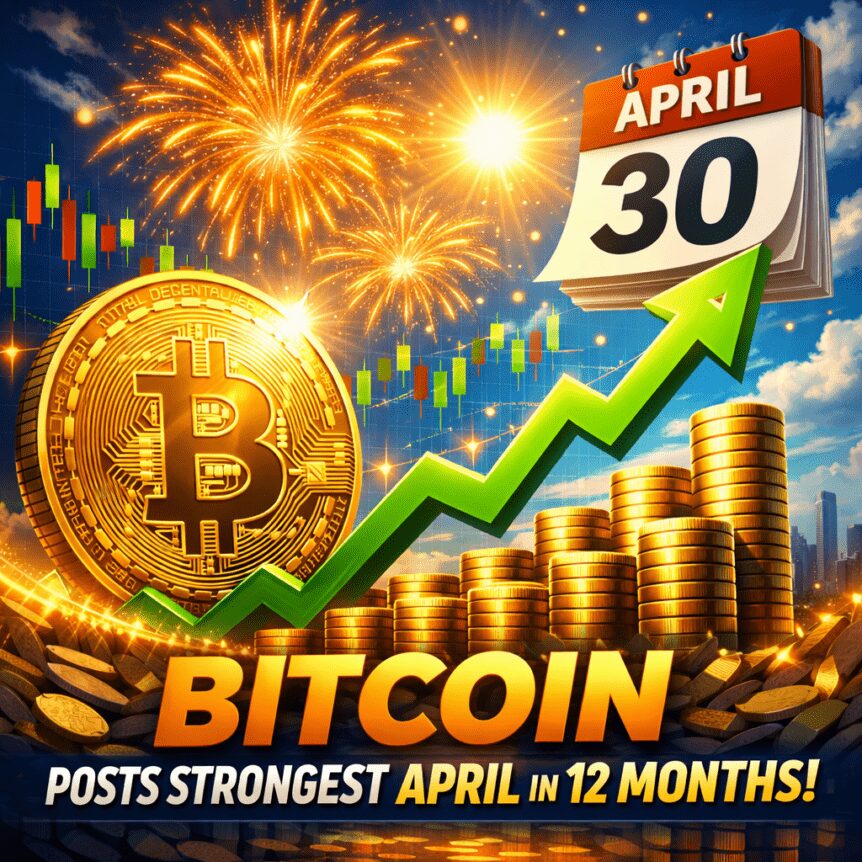
Bitcoin finished April with an 11.87% month, its strongest showing in a year and a potential signal that the market is rethinking the path higher. The gain follows a stretch of volatility and underpins a cautious but constructive mood among traders heading into May. While April’s bounce is notable, it still sits below the long-run average for the month, according to CoinGlass data.
As of writing, BTC hovered near $78,190, roughly 38% below its October all-time high near $125,100. The price backdrop keeps investors focused on whether the current momentum can translate into a sustained move toward former highs. The Crypto Fear & Greed Index lingered in the “Fear” territory at 39, indicating a still-cautious crowd weighing the near-term risk/reward.
Key takeaways
- Bitcoin logged an 11.87% rise in April, its best month since April 2025, when it gained 14.08%.
- April’s performance still underperformed the historical April average of about 12.98%, per CoinGlass.
- Bitcoin trades around $78,190, about 38% below the October all-time high of $125,100.
- Market sentiment remains cautious, with the Fear & Greed Index at 39, signaling persistent risk aversion among traders.
- Analysts are divided on May’s direction: CryptoQuant cautions that the April rally may foreshadow a multi-month decline, while bulls like Michael van de Poppe argue that fresh narrative catalysts aren’t strictly necessary to push BTC above $100,000.
April’s strength and what it implies for May
April delivered a robust monthly performance that traders saw as a potential turning point after a sequence of softer months. Nic Puckrin, founder of Coin Bureau, highlighted on X that while there is a long way to go to reclaim all-time highs, the green for April is welcome relief in an otherwise volatile cycle. The month’s strength did not occur in a vacuum; it followed a period where Bitcoin had struggled to maintain upward momentum despite headlines and macro shifts.
Still, the price action left many questions open. CoinMarketCap data place BTC around the $78k zone, underscoring that the rally still needs to clear a substantial psychological and technical hurdle to re-enter the $100k vicinity. The last time Bitcoin traded at or above $100,000 was in mid-November, a milestone that has since become a talking point for bulls and bears alike.
Contrasting views: risk signals vs. bullish catalysts
Not everyone is confident the rally will sustain into May. CryptoQuant analysts warned that the April move appeared to be driven largely by futures positioning, and there is concern the rally could give way to a multi-month downside if spot demand fails to follow futures-driven upside. The warning sits alongside a broader risk backdrop, with on-chain indicators and sentiment gauges painting a mixed picture for the near term.
In contrast, bullish voices argue that Bitcoin can reclaim higher levels without a fresh macro narrative. Michael van de Poppe, founder of MN Trading Capital, has suggested that BTC may not require a new catalyst to push back above the $100,000 level, urging readers to consider the potential for upside even without a dramatic fundamental trigger. His view contrasts with the question many traders are asking: what narrative would be needed to support a sustained move beyond the psychological barrier?
Meanwhile, market participants remain mindful of the broader risk environment. The fear gauge remains subdued but not out of reach of caution, a reminder that even with a supportive month, the market remains sensitive to macro shifts, liquidity conditions, and asset correlations that have defined crypto trading cycles in recent years.
What to watch next as May unfolds
Historical data shows that May has historically delivered modest but positive returns for Bitcoin, with an average around 7.78%. That baseline keeps analysts focused on a potential continuation of the April bounce, even as some warn that the path higher could be uneven. Traders will be watching for volume patterns, on-chain activity, and options market signals that could suggest whether the current momentum has legs beyond a single monthly rally.
Key indicators to monitor include the price action around the 100,000 level and the way market participants respond to potential catalysts, such as macro data releases, liquidity shifts, or notable developments in futures markets. The October 2023 to October 2024 cycle, which included notable market stress events, remains a reminder that big price moves can be followed by pullbacks even after periods of green performance.
What remains uncertain is how much of April’s strength will endure into May and whether a fresh narrative will emerge to sustain momentum. Investors should watch whether spot demand strengthens and whether risk appetite broadens from the current cautious footing. As always, a combination of price action, liquidity, and participant positioning will shape the near-term trajectory for Bitcoin.
Cointelegraph remains focused on transparent reporting and will monitor ongoing developments as markets digest April’s outcome and prepare for May’s unfolding narrative.
Crypto World
Ethereum Gas Limit to Triple After Glamsterdam Upgrade, Fees Could Stay Near Zero for Years

TLDR:
- Ethereum’s gas limit will increase from 60 million to 200 million following the Glamsterdam upgrade.
- L1 execution capacity will grow by more than 3x, with a further doubling expected shortly after.
- ETH mainnet gas fees could remain near zero for years if network demand does not rise equally.
- ePBS, BALs, and gas repricings work together to make the higher gas limit both safe and efficient.
Ethereum’s gas limit is heading for a dramatic increase following the upcoming Glamsterdam upgrade. The current limit of 60 million will rise to approximately 200 million, marking a major shift in the network’s execution capacity.
This change is expected to ease pressure on Ethereum’s mainnet significantly. As a result, gas fees could remain near zero for the foreseeable future, according to crypto researcher Hasu.
Glamsterdam Upgrade to Triple Ethereum’s Execution Capacity
The Glamsterdam upgrade will push Ethereum’s gas limit from 60 million to around 200 million. That represents a more than threefold increase in L1 execution capacity on the network. Beyond that, a further doubling is already being anticipated shortly after the initial raise.
Crypto researcher Hasu shared this development on X, noting it remains widely unknown. In his post, @hasufl wrote that “Ethereum’s gas limit will be increased to ~200M after Glamsterdam, a huge increase from the 60M we have today.” He further noted the expectation of a further doubling soon after that.
The upgrade brings together several technical innovations working in combination. Enhanced Proposer-Builder Separation (ePBS) gives payload processing more time during block production.
Meanwhile, Block-level Access Lists (BALs) allow clients to prefetch and parallelize execution work more efficiently.
Gas Fee Relief Expected as Network Supply Outpaces Demand
With execution capacity expanding this sharply, the supply side of Ethereum’s blockspace is set to grow considerably.
Assuming network demand does not rise at a similar pace, fees on Ethereum mainnet could stay near zero for years ahead.
Hasu pointed out that gas repricings also play a role in making higher limits technically safe. These repricings adjust the cost of certain operations, reducing the risk that a larger gas limit could be exploited or cause instability. Together, these changes form a coordinated technical foundation for scaling.
This combination of ePBS, BALs, and gas repricings arriving simultaneously is what makes the Glamsterdam upgrade particularly notable.
Each piece supports the others, allowing the gas limit increase to proceed without compromising network security.
The timing of these innovations coming together appears deliberate and well-coordinated within Ethereum’s development roadmap.


Greg Abel told Berkshire Hathaway shareholders Saturday that the conglomerate will adopt artificial intelligence (AI) only where it adds clear value, rejecting industry-wide hype in his first annual meeting as the designated successor to Warren Buffett.
His remarks, delivered in Omaha on May 2, set out a cautious deployment strategy across Berkshire’s insurance, rail, energy, and manufacturing units. Buffett, who recently retired from the chief executive role, did not weigh in on AI during the session.
Narrow AI, Not Hype
Abel told shareholders that AI must improve efficiency, safety, or decision-making before Berkshire deploys it. The vice chairman pointed to railroad subsidiary BNSF, where targeted AI tools are sharpening operations, and to insurance, where the company uses technology to flag fraud and deepfake threats.
Organizers opened the meeting with an AI-generated video of Buffett, which Abel called a serious risk Berkshire manages every day.
“It has to be additive to our businesses. We’re not going to do AI for the sake of AI,” he said.
The framing extends Buffett’s long-standing skepticism of unproven tech narratives, and stands in contrast to peers cutting jobs or rebranding around AI capabilities.
Energy Unit Positioned for Data-Center Boom
The clearest growth angle came from Berkshire Hathaway Energy. Data centers already account for roughly 8% of peak load in key service territories like Iowa, near the high end of industry benchmarks of 5% to 10%, Abel said.
He projected the unit could expand that footprint by 50% over the next five years, citing demand from hyperscalers racing to build AI infrastructure.
Abel insisted those operators “have to bear the full cost,” shielding residential and commercial ratepayers from absorbing the new load.
The stance offers Berkshire a tangible AI tailwind without forcing it to chase software valuations, a posture consistent with Abel’s succession at the conglomerate.
Whether that discipline holds as AI infrastructure spending accelerates across the utility sector will define Abel’s first full year at the helm.
The post Greg Abel Reveals Berkshire’s ‘Narrow AI’ Direction After Buffett Retirement appeared first on BeInCrypto.
Crypto World
Solana Co-Founder Anatoly Yakovenko Warns AI Could Break Post-Quantum Cryptography Securing Blockchain Networks
TLDR:
- Yakovenko warns that AI could crack post-quantum cryptography schemes securing blockchain networks today.
- Hidden mathematical and deployment vulnerabilities in PQC schemes remain poorly understood across the industry.
- Solana’s Anza team has published quantum readiness research exploring migration to quantum-resistant cryptography.
- Ethereum and Bitcoin face the same long-term cryptographic exposure, making this a cross-chain security concern.
Post-quantum cryptography risk has emerged as a pressing concern for blockchain networks, with Solana co-founder Anatoly Yakovenko raising alarms about the long-term security of cryptographic systems.
His warning covers wallets, transactions, and network integrity across the broader crypto industry. The concern is forward-looking but gaining urgency as quantum computing research advances steadily.
Yakovenko Warns of AI Breaking Quantum-Resistant Schemes
Yakovenko took to X to share his concerns about post-quantum cryptographic systems. He argued that the biggest risk is that AI could break post-quantum cryptography (PQC) signature schemes. His position as Solana’s co-founder gives his warning considerable weight among developers and researchers.
He pointed out that the industry lacks full understanding of the mathematical vulnerabilities in these schemes. Beyond that, hidden dangers in practical deployment remain unclear, adding another layer of concern.
These gaps make it harder for blockchain networks to confidently transition to quantum-resistant cryptography.
To address this, Yakovenko proposed practical solutions for securing networks during any transition period. He suggested providing 2/3 multi-signature wallet support for post-quantum schemes.
He also recommended native support through Program Derived Addresses (PDAs) within transaction processors as a stronger alternative.
In his post, Yakovenko tagged @fusewallet, indicating interest in collaboration on this issue. His comments reflect a broader push within the Solana ecosystem to treat quantum readiness as a technical priority. The call to action is aimed at developers building wallet infrastructure today.
Blockchain Networks Face a Shared Cryptographic Challenge
Solana’s engineering arm, Anza, has already published research on securing the network against powerful quantum adversaries.
The research explores how Solana could transition to quantum-resistant schemes while maintaining its performance standards. This groundwork shows that the concern is moving from theory into active planning.
The challenge extends well beyond Solana. Every blockchain relying on ECDSA or EdDSA signatures faces the same long-term exposure.
Bitcoin, Ethereum, and other major networks all use public-key cryptography that a sufficiently capable quantum computer could theoretically compromise.
Ethereum has also outlined a quantum resistance roadmap as part of its long-term strategy. The parallel efforts across major protocols suggest post-quantum preparedness is becoming a standard expectation. Projects that demonstrate a clear migration path may hold a credibility advantage with institutional investors.
The core difficulty lies in coordinating a cryptographic migration across millions of wallets and smart contracts. This must happen without disrupting active network operations, which makes the process technically complex.
Networks that begin preparing earliest will be in the strongest position when quantum computing capabilities mature further.

Why Crypto is Crashing? | 5 Survival Strategies to Protect Money

Iran-US war latest: Trump ramps up threats against Tehran as rift with Germany deepens

Merck: All The Focus On The Pipeline

Manchester United reach agreement with Casemiro over contract clause amid transfer speculation

US brings back mandatory military draft registration

Steven Gerrard disagrees with Gary Neville over ‘shock’ Chelsea and Arsenal claim | Football


-

 Tech6 days ago
Register Renaming | Hackaday
-

 Politics5 days ago
Drax board avoid their own AGM, accused of greenwashing & environmental racism
-

 Tech6 days ago
Why Blue Badges Disappeared From Toyota Hybrids
-

 Tech6 days ago
Images of Samsung’s rumored smart glasses have leaked
-
 Sports7 days ago
IPL 2026: Ruturaj Gaikwad registers slowest fifty of the season, enters all-time unwanted list | Cricket News
-

 NewsBeat7 days ago
LK Bennett closes all stores after entering administration
-
 Tech2 days ago
Trump’s 25% EU auto tariff breaches Turnberry Agreement that also covers semiconductors and digital trade
-

 Fashion4 days ago
Kylie Jenner’s KHY Enters a New Era with ‘Born in LA’
-

 Business4 days ago
Most Commercial Energy Audits Miss the Real Losses
-

 Crypto World5 days ago
CFTC’s AI will review U.S. crypto registration applications, chairman tells CoinDesk
-

 Business6 days ago
(VIDEO) Charlize Theron Climbs Times Square Billboard to Promote New Netflix Thriller ‘Apex’
-

 Business4 days ago
Barclay Brothers Avoid Bankruptcy: HSBC Drops High Court Petitions After IVA Deal
-
 Sports2 days ago
Paul Scholes issues Marcus Rashford reality check as agreement emerges over Man United star
-
 Entertainment6 days ago
Alicia Keys Calls Out Music Industry ‘Boys Club’
-
 Business4 days ago
Tesla Officially Registers Elon Musk’s Stock: What Investors Need to Know
-

 Tech5 days ago
Get Ready for More Brain-Scanning Consumer Gadgets
-

 Tech7 days ago
Dyson Vacuums And The Curse Of Cooked Capacitors
-
Crypto World5 days ago
Robinhood Phishing Scam Exploits Gmail Dot Feature to Bypass Security
-

 Crypto World7 days ago
Only 3% of traders drive Polymarket’s accuracy, not the crowd, study finds
-

 Entertainment5 days ago
Sister Wives: Janelle Posts New Scary Warning
You must be logged in to post a comment Login