
Politics
The Best Exercise For Stronger Shins And Calves

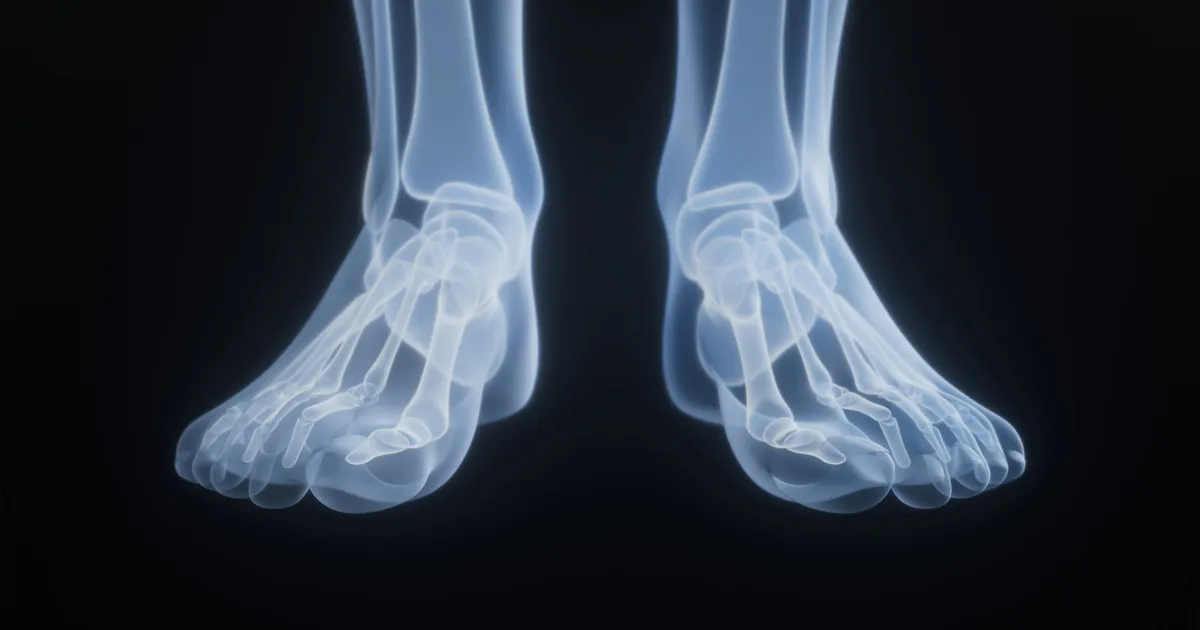
We’ve written before at HuffPost UK about “Japanese walking,” “incline walking”, “6-6-6 walking”, and “retro walking”.
But if you want to strengthen your calves and shins, either for running or just for better mobility, some experts, like physical therapist Dr Jo, reccomend “heel walking”.
In the caption of a YouTube video, they shared: “Walking on heels is a great exercise for helping with lower leg injuries and muscle imbalances. It can also help with ankle pain and plantar fasciitis.”
What are heel walks?
Happily, it doesn’t involve walking in high heels.
They’re performed by lifting your toes and the balls of your feet up and walking on a flat surface on your heels. You can go forward or backwards with your feet hip-width apart, physical therapist group Therapeutic Associates Inc shared.
They should be short, small steps. “The aim is to point your toes as much as you can towards the ceiling so there is as much dorsiflexion in the ankle as possible,” said Runna.
You should keep your upper body tall with your eyes looking straight forward. Tuck your elbows in and let your arms follow your leg movements.
Keep your glutes and hips tucked in.
Theraputic Associates Inc added, “you may want to perform this exercise to fatigue as in, you can’t keep your toes up off the ground anymore and exhaust the shin muscles”.
What are the benefits of heel walks?
Runna explained that, “Heel walks are a very simple but effective warm-up exercise for the muscle that runs along the front of the shin bone (tibialis anterior).”
This is responsible for keeping your feet lifted and preventing a condition called “foot drop”. Calling it an “underappreciated muscle,” Mirafit added that a strong tibialis anterior contributes to healthy movements of the lower leg which are “all essential when it comes to everyday life and specifically when walking and hiking.”
It may help to prevent shin splints, increase your balance and mobility, and reduce your risk of overuse injuries because they make you better at absorbing shocks, they continued.
Heel walks also stretch your calf muscles and strengthen the flexors in your foot, Runna said.

The post Why we need more drunk MPs appeared first on spiked.
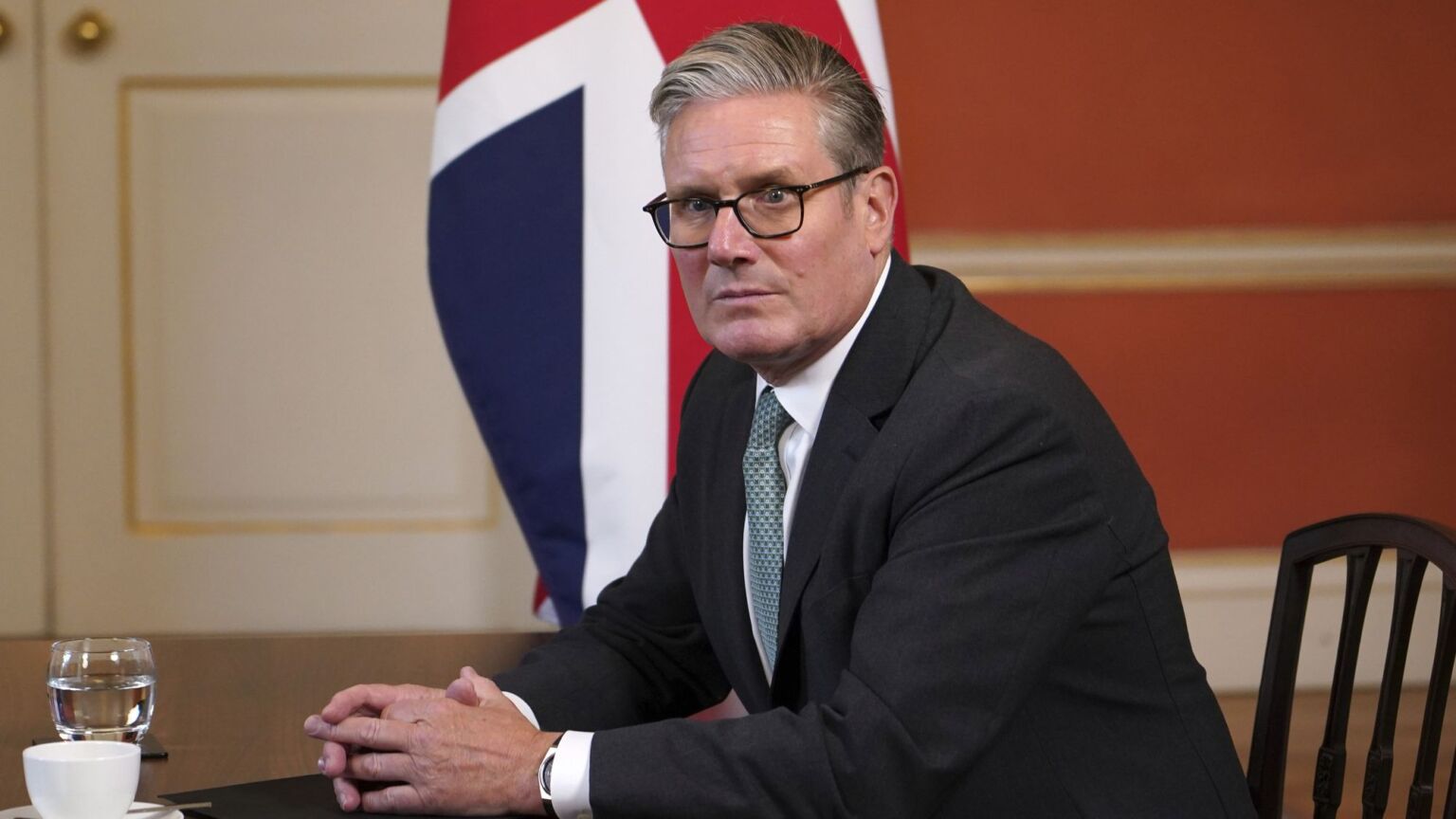
There is a peculiar kind of vanity that immunises its host against reality. Not the vain man who checks his reflection in shop windows, nor the narcissist who merely craves applause, but the man whose self-belief has calcified into something geological, impervious to rain, to wind, to the accumulated evidence of catastrophic misjudgement. Sir Keir Starmer is such a man.
Cast your mind back to Alec Guinness in The Man in the White Suit, that brilliant 1951 Ealing comedy in which a scientist invents an indestructible fabric and cannot understand why the world conspires to destroy him. He is not corrupt. He is not wicked. He simply cannot conceive that his invention might be the problem. Starmer inhabits precisely this world. Around him, the stains accumulate, the Lord Alli affair, the cronyism, the serial misjudgements of personnel, yet the suit, in his own estimation at least, remains spotless.
It was Jeremy Thorpe who skewered Harold Macmillan after the Night of the Long Knives in 1962, when a desperate prime minister sacked a third of his cabinet in a single afternoon to save his own skin. ‘Greater love hath no man than this’, Thorpe observed drily, ‘that he lay down his friends for his life’. The phrase has echoed across the decades as the definitive verdict on a certain kind of self-preserving leader. It fits Starmer with the precision of a bespoke suit – white, naturally, and apparently indestructible.
The past two weeks’ select committee evidence on the pressure Downing Street applied to civil servants to approve Peter Mandelson as US ambassador to is damning precisely because it is so legible. The prime minister told parliament one thing. The painstaking testimony tells us another. This is not a matter of interpretation or political spin – it is a question of whether the First Lord of the Treasury misled the House of Commons. In any previous era of British political life, such a charge would prompt at minimum a period of agonised contrition, possibly resignation. From Starmer, we receive serenity. He has told us on multiple occasions, with the earnest gravity of a man announcing a mathematical proof, that he is the only person qualified to lead Britain through its current difficulties. The evidence be damned.
This is not ordinary political resilience. Most politicians caught in a lie at least perform the theatre of accountability, the careful apology, the semi-withdrawal, the wounded dignity. Starmer skips the performance entirely. He speaks as if his own virtue is axiomatically beyond question. The trouble is that he appears to actually believe it.
Central to this delusion is his misreading of the July 2024 General Election. Starmer received one of the largest parliamentary majorities in modern British history and has apparently concluded that this was due to him, to his vision, his seriousness, his sheer qualification for office. This is a man mistaking the tide for his own swimming. That majority was not a monument built of his virtue. It was a thin-red veneer, a brittle carapace constructed from the rubble of Partygate, Truss, the slow decomposition of a Tory Party that had exhausted every ounce of public goodwill. The electorate did not choose Starmer – they evicted the Tories, and he happened to be standing in the hall. Any serious student of British political history, any of the senior figures who have served in governments that actually changed the national mood, could have told him this. Precedent, in fact, screams it.
Look at his appointments. The ministerial roster assembled with such confidence has proved a monument to misjudgement. The senior civil servants who have departed, some eased out, some broken on the wheel of Downing Street’s briefing operation, represent not a clearing of deadwood but a slaughter of institutional memory and independent voice. Macmillan at least understood he was gambling. Starmer does not appear to understand that he has made choices at all.
And so we ask the question that the opinion polls are already answering with brutal efficiency: is there a Labour praetorian guard capable of intervention? Some palace revolt of the sober and the serious that might rescue the party, and the country, from a premiership unravelling in slow motion? Walk the corridors of Westminster and you find not the suppressed fury of a parliamentary party coiling for action, but something more dispiriting: a grey, exhausted resignation, the shoulders-down quietism of people who have concluded that nothing they say will matter and that the risks of speaking outweigh any conceivable reward. MPs mutter privately. They do not act. They will not act. The culture that Starmer and his circle have cultivated in the parliamentary Labour Party is not one of candour and courage – it is one of servility, self-preservation and risk-aversion elevated to institutional religion. The praetorians have been domesticated into docility. They know the white suit is threadbare. They lack the nerve to say so aloud.
The polls tell their own story. The New Statesman‘s forecasting, drawing on Britain Elects data, is not merely bad for Labour, it is a portent of historical disgrace. The projection suggests Labour could fall from first to fifth in next week’s local elections, retaining just 616 council seats, a loss of around 1,941. Reform is forecast to triumph with over 1,500 seats, the Greens could surge past 1,000, and Labour, polling around 19 per cent nationally, looks unlikely to hold even a third of the seats it is defending. These are not the numbers of a party that has temporarily lost the room. These are the numbers of a party being dismantled ward by ward, borough by borough, in its own heartlands.
Will any of this dent the vanity? Here, one must be honest and reach for a pinch of salt. Starmer will note that expectations are low, that the results are ‘baked in’, that they reflect a ‘difficult inheritance’ from the last government, that the work of change takes time. He will find in the wreckage some green shoot, some London borough held against the odds, and declare the strategy vindicated.
The comparison with Liz Truss is instructive and, to Starmer’s supporters, ought to be sobering. Truss failed catastrophically, and she deserved her fate. But she failed while attempting something – a fiscal gamble that the markets destroyed in 45 days. She had, whatever else one says about her, the courage of her convictions.
What has Starmer risked for Britain? What has he staked his reputation on, beyond the preservation of his own reputation? The answer, surveying the wreckage of his first year, is: himself. The project is Starmer. The white suit must be kept clean. And if friends must be laid down for his life, if civil servants must be cast aside, if parliament must be misled, if the country must endure a government that governs for its own continuance rather than for any discernible national purpose, well, the suit remains white in his mirror, and that, it seems, is sufficient.
Macmillan, for all his faults, eventually understood when the game was up. The question is not whether the polls will tell Starmer the same thing. They already have, repeatedly and at volume. The question is whether a man who built a mountain out of another party’s failure, and called it his own genius, is constitutionally capable of reading them.
The white suit does not show any stains. That is precisely the problem.
Gawain Towler is a commentator and an elected board member of Reform UK. This is an edited version of an article that originally appeared on his Substack.
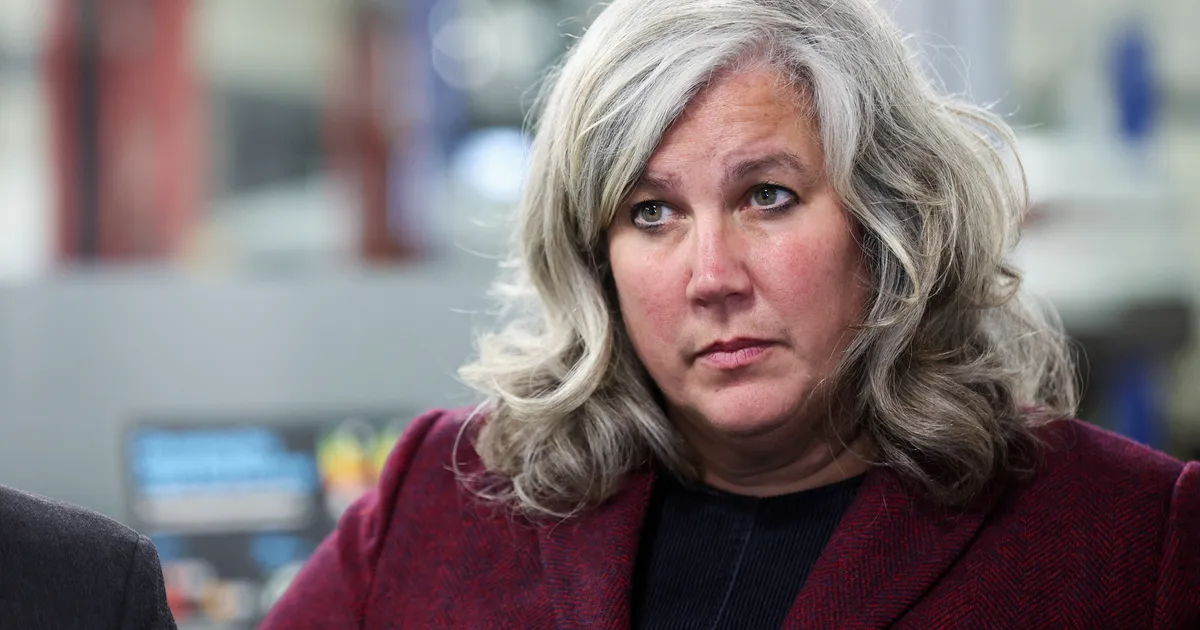
A senior minister has torn into anyone considering challenging Keir Starmer’s leadership, saying rivals must “give their heads a gentle wobble”.
Labour is expected to take a beating when voters across the UK head to the ballot box for England’s local elections and devolved elections in Scotland and Wales.
According to widespread reports, senior Labour figures – including health secretary Wes Streeting, former deputy PM Angela Rayner and Greater Manchester mayor Andy Burnham – could be looking to topple Starmer if the party receives devastating results next week.
But Transport secretary Heidi Alexander stood by her boss on Sky News, urging challengers not to turn Labour into a “self-indulgent debating society”.
She said: “I think Keir is the best person to lead our country through the period of extreme international volatility that we are experiencing at the moment.
“I don’t think the public would thank us if the Labour Party turned into some sort of self-indulgent debating society when there are pockets of the world that feel like they are going to hell in a hand cart at the moment.”
She pointed to Starmer’s efforts to reopen the Strait of Hormuz, the major oil shipping lane which has been impacted by the US’s war in Iran.
“I think asking the prime minister to somehow reapply for his job while all of that is going on and he is entirely focused on the concerns of the British people would be the wrong thing to do,” Alexander said.
“I think those people who think we should have a leadership election now and repeat the mistakes that the Conservative government made in churning through prime ministers probably do need to give their head a gentle wobble at the moment.”
She claimed Starmer is “determined” to take what he has learned from the last two years in office and build a “stronger and fairer country for everyone”.
Asked if Alexander was sending that message to leadership rivals, she said: “This is about what the Labour Party needs to do to put the country first.
“We were elected in 2024 to deliver the change that the country was crying out for after Covid, Brexit, Liz Truss and Kwasi Kwarteng and 14 years of Conservative government.”
“Change is going to take time,” she said, adding: “Does that mean we’re going to get a dopamine hit every couple of months? No it doesn’t. But does it mean we are going to put this country on the right path, yes, I do believe that.”
Alexander’s comments are striking considering other ministers started to distance themselves from Starmer over the Peter Mandelson scandal last month.
Work and pensions secretary Pat McFadden, questioned the prime minister’s judgment over the controversy.
Energy secretary Ed Miliband also admitted he and former foreign secretary David Lammy had both expressed concerns over Mandelson’s appointment before the ex-Labour peer became the UK’s ambassador to the US.
Subscribe to Commons People, the podcast that makes politics easy. Every week, Kevin Schofield and Kate Nicholson unpack the week’s biggest stories to keep you informed. Join us for straightforward analysis of what’s going on at Westminster.
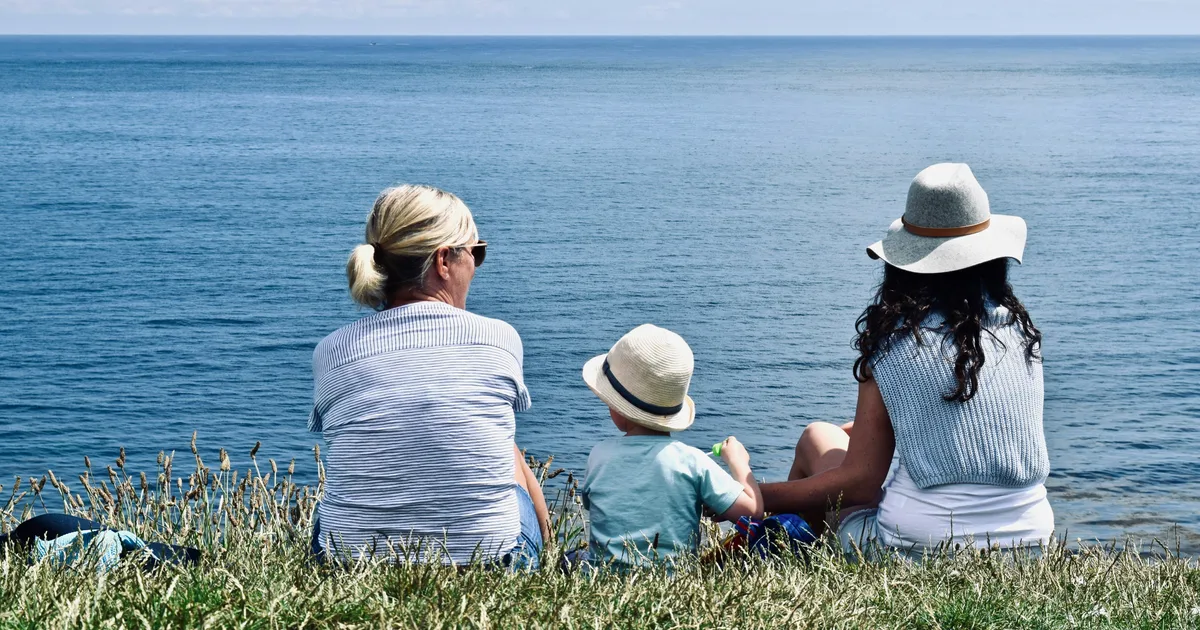
A TikTok video on how involved grandparents should be in their children’s lives – and whose responsibility it is that they forge a relationship – is fast dividing the internet
In a video which has been viewed over 2.5 million times, TikTok creator Helen, a retired police officer and “devoted granny” based in Devon, asked the internet: “Whose responsibility is it to maintain a relationship between a grandchild and their grandparents?”
Sharing her “strong views”, she revealed she thinks it’s always the grandparent’s responsibility to maintain the relationship and also be proactive with offering support.
“I think it’s the grandparent’s responsibility to always reach out, to be the one saying ‘well, can we help with this? Can we come and visit? Can we take them there? Is there anything you’d like me to do? Do you need some support this week? Do you need some support next week?’,” she explained.
“That’s what I do. I’m a devoted granny and I feel very strongly about this, and I don’t think kids should be the ones, your children should be the ones, that need to sort of facilitate that relationship. It’s up to the grandparents to do that.”
Whether it’s after-school care, a couple of days a week looking after tiny tots, or something even more substantial, plenty of grandparents are doing their bit – a SunLife survey from 2023 found more than half provided some form of childcare during the working week, giving up more than four hours a day on average.
But addressing those who might not have much to do with their grandkids because they plan on going on holiday or enjoying retirement, Helen continued: “And I think if grandparents are coming back with things like ‘well it’s our time now, it’s our time’… No, it’s not. It’s your time to help your kids, because it’s really difficult when your children are small and the help that you give them is so needed and it’s so appreciated …”
She ended: ”… It’s your time to be with your grandchildren and to help in every way you can – and I feel quite strongly about that.”
Her opinion split parents and grandparents down the middle
The post has resonated with a lot of parents. “How do I send this to my mom without sending this to my mom,” said one commenter.
“I’m so glad to hear someone say this,” added another. “My parents make very little effort and don’t reach out (but fake to the world they do) or see my children very often. I feel they should make the effort to maintain the relationship but sometimes wonder if I am wrong. So I am glad to see someone else shares my opinion.”
One parent even revealed: “My daughter’s grandmother says ‘she doesn’t contact me’. My daughter is 8.”
Even some grandparents were in agreement that the onus should be on grandparents to reach out and make the effort. “I’m the grandparent. I will always be the one to make the effort,” shared one commenter.
But others disagreed with Helen’s view. “I respectfully disagree… my kids are the grandkids’ parent therefore I think it’s important for my kids to control raising their kids,” said one grandparent. “My kids know I’m always there for backup but I never take control.”
Some noted that grandparents might still be working, which can pose challenges with how involved they can be: “Not all grandparents are retired with a healthy retirement fund! The longer the grandparents are needing to work – less time available for the grand[kids].”
Others suggested relationships are a two-way street, and it shouldn’t just be on grandparents to foster this relationship.
“Ok but hear me out,” said one respondent. “Me and my husband should also put in the effort to visit his parents and also my parents. It goes both ways.”
Politics
The House | Misunderstood, over interpreted, unrepresentative: How to read the local election results
5 min read
The internet will be teeming with hot takes as soon as the first declarations come in on Friday morning. To help you navigate a weekend of noise, here is a guide to what we can actually glean from the local election results.
If there is one thing most pollsters and analysts can agree on, it’s that the UK local election system is a bit of a mess. Some councils have all-outs, some go in thirds. Mayoral elections run on different cycles, and different parts of the country use different electoral systems and even have different electorates.
From an analysis perspective, it’s hard to think of a slipperier basis on which to take stock of the country as a whole. And yet, every May, this is what we are called to do. In the first 24 or 48 hours, the fog of poll descends, and political pronouncements are made on incomplete, unrepresentative or misinterpreted results. Given the Prime Minister’s difficult political situation, this is even more likely to be the case this year.
That being the case, there are a few points worth bearing in mind as we head into that chaotic post-election period. The idea is to guard against incomplete or premature arguments and to share what, from Persuasion’s extensive research, we already know that we know.
Remember, Reform started from a baseline of nothing
The relevant baseline for most of the elections happening this year is 2022. In 2022, Reform UK as a party barely existed (in England, it made a gain of precisely two seats). This is worth remembering when Reform starts clocking up lots of councillors early on in the night (areas more favourable to them report earlier on Friday morning). It’s almost certain they’ll gain thousands of seats as these wards, frozen in the mists of 2022, become updated to the politics of 2026.
The scale of Reform’s gains will be large but likely consistent with a party that has gone from a rounding error to a quarter of the national vote. This is far from irrelevant, of course, but it’s not new information – it’s there in the national polls, and it was there at last year’s locals. We learnt in 2025 that Reform’s post-2024 surge was real rather than a phantom of polling error.
For what it’s worth, if you really want to use councillor gains as a metric, respected local elections analyst Stephen Fisher judges that “Reform need more than +2270 net gains to really provide convincing evidence of the improvement that opinion polls suggest they have made since last year.”
Wait for the NEV
In time-honoured tradition, the best analysis will probably arrive too late – after a million terrible hot takes have already spawned. That said, it is worth waiting for it anyway.
The national equivalent vote share (NEV), or projected national vote share (PNS), will probably come on the Saturday or Sunday after polling day. This is a piece of analysis, usually from the BBC and Sky, that works out national vote shares implicit in the results, adjusting for the fact that not every area is holding elections. It is essentially the only clean basis on which you can extrapolate the results of the May elections to a wider national picture.
Using this, we’ll be able to more cleanly compare the directional movement of each party. The performance of Reform and of the Greens – two parties set to make gains mostly at the expense of Labour – will indicate whether their good national polling has legs. It’s also distinctly possible that, despite making significant net gains (and therefore being able to spin a narrative of a successful set of elections), they could underperform their polling.

Another thing to watch out for here is the Restore number. While Rupert Lowe’s party picking up a handful of seats will tell us little about their national viability, if they can clock anything here, that would be a cause of significant concern for Farage and co.
To make things messier, sometimes PNS and NEV differ slightly – and only cover local elections, not devolved elections happening simultaneously in Scotland and Wales. They also obviously can’t predict national elections held in three years. But with all those caveats, they’re still by far the best metrics we have.
Labour losing seats to Reform does not equate to Labour losing votes to Reform
Finally, there’s the risk of a more classic ecological fallacy as results come in. That is, if a party loses in one area and another party gains in the same, the assumption is that the losing party has lost because their voters have switched to the winning one. This will be true in some areas, but not in others.
It’s especially worth remembering when Labour loses wards to Reform. Previous Persuasion work has shown that even in areas where the Greens or Liberal Democrats are in no position to win, Labour has primarily been shedding votes to progressive parties rather than directly losing votes to Reform. Likewise, turnout matters hugely here – it’s very likely a lot of Labour voters will simply stay at home, while Reform and Green voters will be more motivated to turn out. This will account for a lot of seat movement, rather than direct switching.
Likewise, while geographic variations – Red Walls, Blue Walls, and so on – do matter, it’s important not to overstate them. Right now, Labour is getting creamed pretty evenly right across the country, just with different parties benefitting, directly or otherwise.
Steve Akehurst is the director of the polling and research organisation Persuasion UK
The old saying goes that a sequel is never as good as the original, with an endless conveyor belt of films proving this to be the case over the years.
Fortunately for the team behind the new Devil Wears Prada movie, the long-awaited follow-up to 2006′s glossy rom-com, critics seem pretty impressed with the second instalment, with many hailing it as a worthy successor to the first film (you can check out HuffPost UK’s review for yourself here).
But what about those rare sequels that somehow manage to better the movie that came before it?
Here are 11 of the most celebrated follow-ups in modern movie history…
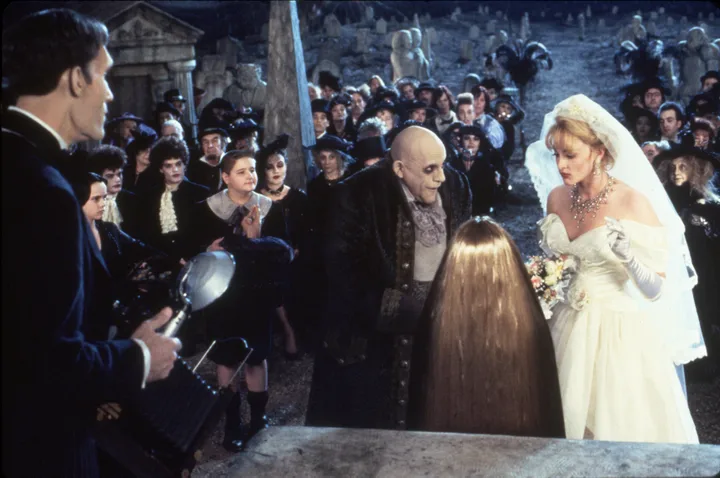
Addams Family Values

We don’t use throw like “perfection” around lightly, but if there were ever a perfect family comedy, then Addams Family Values might well be it.
The fact it’s actually a sequel to a less-revered live-action version of the classic franchise is even more impressive.
Obviously, all of the cast members playing the creepy, kooky, mysterious, spooky and, indeed, “altogether ooky” family shine as brightly as their dark surroundings will allow (special shout-out to Anjelica Huston serving true macabre glamour as Morticia) – but Addams Family Values really belongs to new addition Joan Cusack, who stars as Uncle Fester’s demented love interest, Debbie.
Toy Story 3

Who’d have guessed that an animated buddy comedy about a toy cowboy and a plastic astronaut would have sparked one of the most lucrative film sagas of recent times?
And while Toy Story 2 – released four years after the original – kicked things up several notches, it was the third instalment in the series that people really went wild for. Toy Story 3 served up adorable new characters, scooped an impressive Best Picture nomination at the Oscars and, crucially, delivered not one but two ugly-cry moments.
Number four in the series is considered by many to be a bump in the road for the Pixar franchise, with a fifth instalment due to hit cinemas later in 2026.
Paddington 2

Warner Bros/Moviestore/Shutterstock
The original Paddington film was well-received when it first hit cinemas in 2014 – featuring a CGI version of the classic character interacting with live-action actors – but even then, few could predict just how beloved its sequel would go on to become.
Not only was it nominated for Outstanding British Film at the Baftas, it was also one of the few movies with a perfect score on review site Rotten Tomatoes until… well… until it wasn’t.
Since then, a third movie has also proved successful at the box office, while a spin-off stage musical also cleaned up at the 2026 Olivier Awards.
The Dark Knight

Warner Bros/Dc Comics/Kobal/Shutterstock
Like many, we were sold on The Dark Knight from the moment we saw its infamous viral marketing campaign (back in the day when viral marketing campaigns were actually still new and exciting).
We could probably talk all day about how this film is a level up on Batman Begins, from Christopher Nolan’s direction, to the incredible costumes and special effects. But let’s be honest, this film is all about Heath Ledger, who deservedly earned a posthumous Academy Award for his unforgettable portrayal of the Joker.
Aliens

20th Century Fox/Kobal/Shutterstock
Although the original Alien divided critics upon its original release in 1979, the film quickly garnered a loyal following, and by the mid-1980s, was revered among fans of sci-fi.
Putting out a sequel was therefore always going to be a bit of a risk, but fortunately 1986′s Aliens more than lived up to its predecessor. It earned Sigourney Weaver a game-changing Oscar nomination as the star of a sci-fi film. It has also been named the Best Sequel Of All Time by Empire magazine.
Mad Max: Fury Road

Listen, we get it, Fury Road was billed as a “revisiting” of the original Mad Max trilogy, rather than a straight-up sequel or a traditional reboot.
Still, the film was so well-received – check that 97% approval rating on Rotten Tomatoes if you don’t believe us, not to mention its six Oscar wins – we felt we couldn’t leave it off this list.
Plus, who would pass up the opportunity to see Charlize Theron in all her buzzed glory again?
Star Wars: The Empire Strikes Back

Lucasfilm/Fox/Kobal/Shutterstock
In the post-Disney landscape, Star Wars now has so many different instalments, and a fan community that stretches far and wide, that it would be literally impossible to decide which of the numerous sequels is the superior one.
So while we’d struggle to pinpoint which of film is the best, we’ve gone with The Empire Strikes Back for the simple reason it contains arguably the most iconic moment in Star Wars history, when Darth Vader’s true identity is revealed.
Terminator 2: Judgement Day

He said “I’ll be back”, and apparently he meant it, although it did take seven years.
Terminator 2: Judgement Day was hailed as even better than the original film by many critics, who were wowed by the advanced special effects (which went on to win one of the film’s four Academy Awards).
The success of Terminator 2 led to a number of additional spin-offs and sequels, although none of these have quite been able to match the original two films.
The Godfather Part II

The first sequel to ever win Best Picture at the Academy Awards (the only other being Lord Of The Rings: The Return Of The King), Godfather II is so revered it was added to the U.S. National Film Registry of the Library of Congress due to its cultural significance, alongside the original Godfather film.
The same can not be said for the follow-up, Godfather III.
Skyfall

Danjaq/Eon Productions/Kobal/Shutterstock
Although Casino Royale and Quantum Of Solace proved popular, many 007 fans still breathed a sigh of relief when Skyfall was released, as they felt it was more in keeping with the James Bond franchise than Daniel Craig’s first two outings.
Skyfall won largely positive reviews from critics, many of whom praised the decision to give more material for Dame Judi Dench to work with, and became the highest-grossing film in the UK ever at that time. Follow-up Spectre was similarly well-received, with the Daniel’s fifth and final Bond film, No Time To Die, set to hit cinemas… soon. Let’s just say soon.
Shrek 2

Dreamworks/Kobal/Shutterstock
We could go on and on about how Shrek 2 managed to improve on almost everything that made the first movie such a hit, introducing even more amazing characters, giving Eddie Murphy’s Donkey even more one-liners, serving up even more amazing musical numbers and packing in even more laughs.
But come on, you just want to watch Jennifer Saunders’ Holding Out For A Hero, and we’re more than happy to oblige…
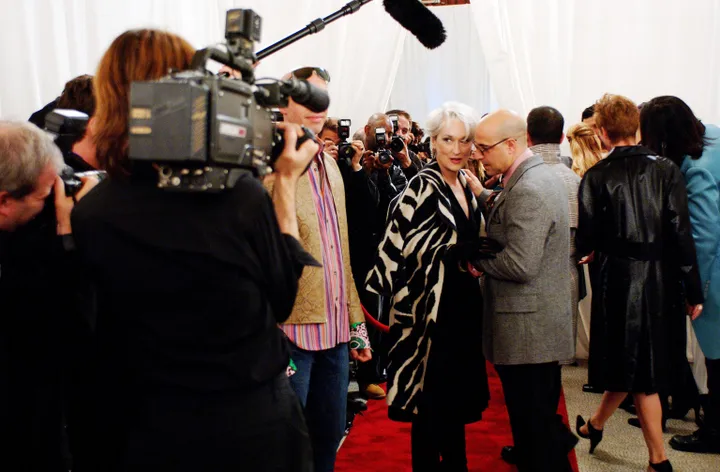
It was the film that spawned a thousand quotes and memes, and 20 years on, The Devil Wears Prada remains just as iconic as when it arrived on our screens in 2006.
Meryl Streep’s disarmingly spot-on depiction of the fearsome fashion magazine editor-in-chief Miranda Priestly simultaneously inspired and, indeed, discouraged a generation’s dream internship.
With the whole band – including Anne Hathaway, Emily Blunt and Stanley Tucci – getting back together for the new sequel, it only felt right to revisit how it all started and uncover a few surprising facts along the way.
Gird your loins, because here are 17 facts about The Devil Wears Prada you probably didn’t know, no matter how many times you’ve rewatched it…
The Devil Wears Prada was originally pitched as a more generic romantic comedy
The acerbic humour and distinctive characters are all wrapped up into what made The Devil Wears Prada such a hit, becoming an Oscar-nominated film rather than a standard landfill rom-com, of which there were plenty in the 2000s.
As it happens, that wasn’t always going to be the case.
It was director David Frankel who pushed for a new script to make the film less of a “mean revenge story” with one-dimensional characters, and more of a coming-of-age story with well-rounded central figures.
“What they were [originally] missing was the sharp humour,” The Devil Wears Prada author Lauren Weisberger told Entertainment Weekly in 2021. “It trended toward what you’d expect from the typical chick flick, like How to Lose A Guy In 10 Days.
“It wouldn’t have been a stretch to see it going in that direction, but [screenwriter Aline Brosh McKenna] took it to a whole different level of smart, sharp, irreverent humour.”

Anne Hathaway wasn’t the first (or, indeed, the second or third!) choice to play Andy in The Devil Wears Prada…
It’s hard to imagine anyone but Anne on the receiving end of Meryl’s withering putdowns, but surprisingly, the future Oscar winner wasn’t the original choice to play Andy.
The film’s director previously revealed that The Notebook star Rachel McAdams was offered the role three times before it went to Anne, saying: “The studio was determined to have her, and she was determined not to do it.”
Rachel herself has also reflected on turning down the role, which she declined alongside other big roles during a break from acting.
“There’s certainly things like ‘I wish I’d done that’,” she told Bustle in 2023. “I step back and go, ‘That was the right person for that’.”

…in fact, Anne Hathaway wasn’t the second or third pick for the role, either
Kate Hudson was also left kicking herself after turning down the chance to play Andy
“That was a bad call,” she admitted to Capital in 2025. “And it was a timing thing, and I couldn’t do it. I should have made it happen and I didn’t.”
In fact, Anne herself claimed that she was “ninth” pick for the character, after bosses also approached names which reportedly included Scarlett Johansson, Natalie Portman, Kirsten Dunst, Juliette Lewis and Claire Danes.

Barry Wetcher/20th Century Fox/Kobal/Shutterstock
Meryl Streep also originally turned The Devil Wears Prada down
Despite names like Michelle Pfeiffer, Glenn Close, and Catherine Zeta-Jones circling in early studio discussions, We all know that Meryl just is Miranda Priestly.
And it turns out she knew so as well, and it was as early on as reading the script, with Meryl recently disclosing that she initially turned down the role to leverage a higher pay cheque.
“I thought, it’s a great script. And they called me up and made an offer and I said, ‘No, I’m not gonna do it’,” she recalled. “I knew it was gonna be a hit, and I wanted to see if I doubled my ask, and they went right away and said, ‘Sure’.”
She added: “It took me this long to understand that I could do that.”
An extremely Miranda move if you ask us…
But despite Meryl being the obvious pick to play Miranda, that didn’t stop other names doing the rounds
Big names like Michelle Pfeiffer, Glenn Close and Catherine Zeta-Jones were all reportedly mentioned in early studio discussions.
Of course, though, the part of Miranda was ultimately always Meryl’s for the taking.
Meanwhile, Emily Blunt was asked to come back after her first Devil Wears Prada audition for a very Runway reason

Barry Wetcher/20th Century Fox/Kobal/Shutterstock
Some of the most memorable moments in The Devil Wears Prada, from the “hideous skirt convention” line to sardonic references to 2000s diet culture, come from Emily’s character.
However, she was actually asked to re-audition for the role after opting for an unfortunate outfit choice during her first try.
Emily previously described how she was originally auditioning for another movie when she was asked if she’d also like to read for “this little thing with Meryl Streep”.
After a “frantic and chaotic” audition – thanks to Emily running late for a flight – she was ultimately asked back by Frankel, with one particular request.
“He said, ‘Look, I would cast you, but the studio was wondering if you could wear something more stylish,’ “ Emily explained.
She added: “To be fair, I was wearing a hoodie and jeans when I auditioned for it.”
A lot of key figures in the fashion world were too frightened to get involved in the first Devil Wears Prada movie
It’s heavily rumoured that for the novel, Weisberger drew on her own experiences working as an assistant to Vogue editor-in-chief Anna Wintour.
For that reason, Frankel told Entertainment Weekly that plenty of people in the fashion world, from designers to models, were reluctant to get involved in the film because they “didn’t want to incur the wrath of Anna”.
“I had enormous trouble finding anyone in the fashion world who’d talk to me, because people were afraid of Anna and Vogue, not wanting to be blackballed,” he admitted.
However, Meryl Streep has always insisted Anna Wintour wasn’t her inspiration for Miranda Priestly
While Meryl has spoken about her admiration for the Vogue editor, she maintains that Anna Wintour wasn’t the basis of her character in The Devil Wears Prada.
“Do I look like Anna Wintour? And did I act like Anna Wintour? No!” she reiterated at the premiere of the sequel in 2026.
Miranda Priestly’s distinctive vocal delivery in The Devil Wears Prada was inspired by two real-life people
To the surprise of her co-stars, Meryl chose to project Miranda’s dominance not through shouting her lines, but with a distinctive whisper-like delivery – which turned out to be far more effective.
The Mamma Mia! star drew inspiration from two directors she has previously worked with to come up with Miranda’s whisper, Mike Nichols and Clint Eastwood.
“If Mike Nichols and Clint Eastwood had a baby it would be Miranda Priestly,” she told Stephen Colbert.
“Mike would [command the set] sort of with a sly humour. Miranda knows what she’s saying is snide, but she knows it’s kind of funny too. People take [it] as mean, but it’s funny. I think it’s funny.”
“Clint would never raise his voice,” she elaborated. “He would direct and people had to lean forward to hear what he was saying.”

Barry Wetcher/20th Century Fox/Kobal/Shutterstock
Meryl Streep hated going Method to play Miranda Priestly in The Devil Wears Prada
To nail the terrifying and steely Miranda, Meryl fully stepped into editor-in-chief mode – keeping her distance in between takes even when the cameras weren’t rolling to maintain the uneasy chemistry with her co-stars.
Unfortunately, it didn’t make for the most fun of experiences for her.
“It was horrible!” she said in a 2021 interview with Entertainment Weekly. “I was [miserable] in my trailer. I could hear them all rocking and laughing. I was so depressed!”
She recalled: “I said, ‘Well, it’s the price you pay for being boss!’ That’s the last time I ever attempted a Method thing!”

Anne Hathaway did some work experience for her Devil Wears Prada role, too
To get into character for her role as an intern in The Devil Wears Prada, Anne worked at the luxury auction house Christie’s for a couple of weeks.
During this time, she claimed that her duties included “getting people coffee” and “doing whatever they needed around the office”.
Stanley Tucci improvised one of The Devil Wears Prada’s best-loved lines
Stanley Tucci plays Runway’s fashion director Nigel in The Devil Wears Prada, and early on, he delivers the film’s iconic “Gird your loins” line, precipitating Miranda’s arrival into the magazine office.
As it turns out, that wasn’t in the script. Stanley tried out a few other phrases – including, apparently the self-invented “Tits in!” – before landing on the final expression. Not bad, considering he only got the call to appear in the film three days before filming.

Barry Wetcher/20th Century Fox/Kobal/Shutterstock
Yes, Stanley Tucci’s casting in The Devil Wears Prada was extremely last-minute
The role of Nigel was apparently a nightmare to cast, and producers couldn’t find the right actor to play him for months.
That is, until Stanley signed up to the role a mere 72 hours before shooting began.
‘Florals? For spring?’ almost didn’t make the final cut
With a slimline (in Hollywood terms) budget of $35 million, McKenna and Frankel had to axe $10 million worth of shots in order to have enough money to shoot the film’s Paris scenes.
Thankfully, Frankel saved Miranda’s classic line, after it was nearly chopped.
Meanwhile, Anne and Simon Baker were able to film for a weekend in Paris, although Meryl had to stay home and shoot her parts domestically.

Barry Wetcher/20th Century Fox/Kobal/Shutterstock
The Devil Wears Prada almost had a different ending entirely
Andy’s sulky, unsupportive boyfriend Nate has had a bashing over the years, with screenwriter Aline Brosh McKenna even weighing in on the hate. So Nate’s detractors will be relieved that an alternative ending, that saw him and Andy reconcile, was ultimately cut.
“The movie used to end with a slightly more upbeat scene with Nate, more of a reconciliation,” Brosh McKenna explained. “They’re so young and they’re choosing spouses for their life, but we know that 25-year-olds are not in that position…”
“I had written a more conventional ending where they run through the park together or something,” she claimed.

Barry Wetcher/20th Century Fox/Kobal/Shutterstock
Meryl Streep also changed her last line of The Devil Wears Prada
In Meryl’s final scene of the film, Miranda tells Andy: “Everyone wants to be us”.
This was a one-word switch-up from the original script, which read: “Everyone wants to be me.”
Apparently, Meryl the line to reflect more of the entire fashion world, as opposed to one woman within it.
And that wasn’t the only change that affected the whole film
When fans re-discovered a deleted scene that showed Miranda saying thank you (!) to Andy after she saved her from embarrassment at a gala, many expressed their relief that it was left on the cutting room floor.
For some, the scene undercut Miranda’s entire personality, and was an unnecessary grasp at showing a vulnerability to the character that we see accomplished far more effectively elsewhere in the movie.
The Devil Wears Prada is now streaming on Channel 4 and Disney+. The Devil Wears Prada 2 is in cinemas now.
Politics
Macroprolactinoma Symptoms: Why My Pituitary Tumour Was Misdiagnosed As Menopause For Years

You know your body better than anyone – but what happens when no one listens? Welcome to Ms Diagnosed: a HuffPost UK series uncovering the reality of medical gaslighting. With new stats showing that 8 in 10 of women have felt unheard by medical professionals, we’re sharing the stories of seven whose lives were nearly lost to the gap between their symptoms and a system that refused to listen. As the UK introduces Jess’s Rule – a new mandate for GPs to ‘rethink’ after a third visit – we’re exploring why the medical system is still failing women and how we can start to fix it.
The GP folded her hands between her thighs, spun round in her chair and gave me a deeply patronising look.
“I think you’re a bit stressed, love,” she said.
I couldn’t believe what I was hearing; I knew my symptoms were down to far more than stress.
As it turned out, I was right. I wasn’t stressed; I had a brain tumour on my pituitary gland, known as a macroprolactinoma. But despite going to my GP repeatedly with increasingly unnerving symptoms, I had been told – again and again – that I was just going through the menopause.
My symptoms started in March 2011, when I was around 34. I started getting really heavy periods that were soaking through pads, tampons and even my jeans; but then, all of a sudden, my periods completely stopped.
After around four months with no period, I went to my local GP surgery where I saw a nurse who told me to give it until six months before taking further action.
So I did; but in those next two months, my hair started falling out. Whenever I’d brush it, my hair would completely fill the hairbrush.
Then, things started getting really strange.
That summer, I went to Cardiff on the train – and for some reason, I couldn’t stop worrying about where to sit in case the train tipped over onto one side.
I was completely paranoid and panicking all the way there. I couldn’t understand how everyone else in that carriage had been able to sit down without a second thought.
It was bizarre; but I put it out of my mind and went back to the doctor’s about my missing periods.
I had a blood test to check if I’d gone through the menopause, and the results said no further action was required. I was adamant that that wasn’t the end of the story, though – periods don’t just stop for no reason – so I booked to see the GP.
“I think you’ve gone through the menopause,” she said. “Even though the blood test says you haven’t, it’s not always correct.”
So I went away; but then, I started having issues with my memory.
Once, for example, I was watching Barack Obama speaking on the news; and I could not remember his first name. I knew who he was; I just couldn’t place the name. I scrolled mentally through the alphabet; nothing. I Googled him and thought: “Oh. Barack. I’d never have come up with that.”
I went back to the GP again. That was when she told me I might be “a bit stressed”.
I had no choice but to leave again; but the memory issues continued, so I booked yet another appointment.
“You’ve been having a lot of appointments recently,” the receptionist said to me. “Are you sure they’re all necessary?”.
I started to feel like a pain. Then I thought: “No, I want to get to the bottom of this” – because by now, things were getting scary. I’d recently found a denim jacket in my wardrobe and had absolutely no idea where it had come from. My daughter told me I’d bought it when we’d gone shopping in Birmingham; but I didn’t even have any recollection of going to Birmingham.
So I went ahead and I booked my appointment. While I was driving there, I approached the roundabout; and I had absolutely no idea which way round to go.
I realised I wasn’t only a danger to myself. I was now a danger to others, too.
When I got to the GP’s office, she still seemed incredibly smug. I told her what had happened at the roundabout, and she said, “Well, this is just part of the menopause”.
“It’s not,’ I insisted. ’There is something else going on. I’m not exaggerating; this is not right. It’s not right. I want a second opinion.”
In the end, she agreed to refer me to a gynaecologist – because menopause was still suspected to be the root cause of my symptoms – and I paid to be fasttracked. By now, I was terrified.
I told the gynaecologist everything, and he asked me if I’d ever had a prolactin test.
“My memory isn’t very good – but I don’t think I’ve heard that word before,” I said, carefully.
He sent me to the blood unit that very day to get my prolactin levels checked; and then, at 8:00pm that night, he phoned me at home. “Your prolactin is very, very high; and I think that means you’ve possibly got a brain tumour,” he told me. “I’d like you to come back in for an MRI.”
I felt utterly numb – but gradually, it dawned on me that I was single and had a 14-year-old daughter. I’ve never felt so alone or scared.
The MRI confirmed the diagnosis; I had a brain tumour. The doctors suspected it was benign, but they couldn’t be sure until I had my first surgery to try and remove it.
That surgery confirmed that it was, indeed, benign; but ‘benign’ doesn’t mean ‘fine’. It means the tumour is less likely to progress around the body, but the tumour I have is still aggressive and life-limiting. My quality of life is not what I expected it to be at 49. I can’t do exercise; I can’t cook meals; I can’t drive; and I struggle to hold conversations for more than 30 minutes.
Once, I went to talk to my partner and all I could say was something about a swimming pool, which wasn’t what I meant to say at all.
I’m still so angry with that GP. If the tumour had been found sooner, it wouldn’t have grown so big – the type of tumour I have is aggressive and fast-growing. By now, it’s managed to spread itself further than my pituitary gland; including growing near an artery and my optic chiasm, which makes it much harder to remove.
I’ve had four surgeries, chemotherapy and radiotherapy (twice, ten years apart); but the tumour keeps re-growing, albeit a little slower since the chemotherapy. But I can always tell when that’s happening.
After the first surgery, my periods did come back; but then, two years later, they stopped again. Another time, my memory became very strange again; a third time, I experienced more hair loss; and most recently, I had extreme tiredness.
I’ve been told there is one more surgery they can try; but that surgery will make me blind in my right eye.
Equally, though, I now appreciate life so much more than I ever did before. Without the tumour, I never would have started my own business; and even though I went to a very dark place last year, after the chemotherapy, I still have hope. You never know what could be around the corner.
These days, I just want to raise awareness of both my condition and the need to advocate for ourselves. While most GPs are incredible – including my current GP – we know, intrinsically, if there’s something wrong in our bodies. We need that tenacity to say, if needed, ‘I need an MRI’, or ‘I need a second opinion’.
And if, like I did, you feel like a pain – remember, it doesn’t matter. You just need to push, push and push in order to get the answers you need.
For more information and support, visit The Pituitary Foundation.

WASHINGTON – President Donald Trump’s influence in Republican primary elections is about to get stress-tested.
A series of primaries in early May across deep-red territory in Indiana, Kentucky and Louisiana all feature entrenched Republican officials fighting back against Trump-backed challengers, and early signs indicate Trump’s preferred candidates may not always have the upper hand. The results of the primaries could provide a stark indication of whether the president’s legendary sway over the Republican Party is fading as his popularity sinks.
The high-profile races include challenges to Rep. Thomas Massie (R-Ky.) and Sen. Bill Cassidy (R-La.), along with a promised revenge tour against GOP state senators in Indiana. All have committed supposed sins against Trump — Massie helped Democrats release the Epstein files, Cassidy voted to convict Trump in his 2021 impeachment trial, the state senators dared to defy his orders to redraw their state’s congressional map — and yet all have at least a fighting chance.
None are running on explicitly anti-Trump platforms, and all are taking pains to downplay their differences with the president, who remains broadly popular with Republican voters. But their victories could give other Republicans space to at least occasionally break with the president or distance themselves as they run for reelection in November, which would mark a sharp contrast from the peak of Trump’s power.
“There are people who support Trump who will be voting for me, because, frankly, they appreciate both of our roles,” Massie told HuffPost. “They don’t want a rubber stamp, and they appreciate that I might be the only dissenting vote occasionally, because you can have a favourable view of Trump and believe that 10% of the time he may be wrong.”
One Republican strategist, requesting anonymity to speak frankly about the president, acknowledged Trump’s sway has diminished but said he was still by far the party’s most powerful figure.
“You obviously want the president’s endorsement, but at this point you might want it as much for the money that comes with it than the endorsement itself,” the strategist said, pointing to Trump’s well-funded allied super PAC, MAGA, Inc. “A big chunk of voters will still say ‘how high?’ when he says ‘jump.’ But that group’s smaller than it was before the Epstein files and Iran.”
Jesse Hunt, another Republican strategist, noted now-President Trump has far less time to dedicate to swaying voters than then-candidate Trump did in 2022 and 2024.
“Saying ‘Donald Trump supports XYZ or this or that’ in an ad is helpful, but when he’s the difference maker is when he throws his full force of his ability to drive media attention at a given subject,” Hunt said. “He’s leading the country. He has less time to do that for downballot races. That’s the reality of governing, especially when you’re not running for reelection.”
Trump’s approval rating has hit new lows in recent polling. A Pew Research Center survey released Friday showed just 34% of registered voters approved of his job performance. But losses among people who backed him in 2024 seem to be accelerating: While 95% of them approved his job performance in January 2025, that number fell to 83% a year later and to just 78% today.
The White House did not respond to a request for comment. A Trump ally, who requested anonymity because he was not authorised to speak publicly, said it was possible Trump could travel to Kentucky and Louisiana before the races there to make renewed pushes for his favorite candidates.
And Trump dove into a different race in Kentucky on Friday night, endorsing Rep. Andy Barr to replace Mitch McConnell in the Senate after arranging for another candidate in the race, businessman Nate Morris, to take an ambassadorial position.
One candidate who has benefited from a Trump-directed surge in cash is Ed Gallrein, a former Navy SEAL and Massie’s Trump-backed challenger. Trump-allied and pro-Israel groups have poured more than $10 million into ads attacking Massie and boosting Gallrein ahead of the May 19 primaries. But limited public polling has shown Massie with a small lead in the district and a super PAC backing him has been able to respond with more than $3 million of its own advertising.
And part of Massie’s strategy is to portray himself as more of a Trump ally than as a Trump critic, even if his support for releasing the Epstein files and opposition to administration priorities often draws headlines. In one ad, Massie goes direct to camera to tick off a huge list of conservative priorities he shared with Trump.
“President Trump and I have a whole lot more to get done together,” Massie says over an image of him walking alongside an AI-generated elephant wearing a MAGA hat.
In Indiana, Trump wants revenge against eight state senators who defied his demand that they redraw the state’s congressional map to eliminate Democratic seats ahead of November’s midterm elections. Trump recruited a first-term city councilman named Blake Fiechter to go up against state Sen. Travis Holdman, the highest-ranking member of the Indiana legislature up for reelection.
After receiving Trump’s endorsement in January, Fiechter announced in February that he was ending his campaign, saying it was too hard. Then he got back in the race and joined other Trump-backed challengers in a visit to the White House and a meeting with Sen. Jim Banks (R-Ind.), one of Trump’s more enthusiastic supporters on Capitol Hill. One Republican county chairman suggested to the Indiana Capital Chronicle that voters don’t care enough about redistricting to throw Holdman overboard.
“There are lots of issues that motivate the voters in Indiana, but I would bet my Starbucks card that he loses,” Banks told HuffPost.
With no public polling of the races, it’s difficult to know who might be winning. Banks and Gov. Mike Braun, however, have dedicated millions of dollars toward groups airing attack ads and sending mailers attacking the incumbents and supporting Trump-backed candidates.
Cassidy, one of the Republican senators who voted to convict Trump at his 2021 impeachment trial, is locked in a three-way Republican primary against Rep. Julia Letlow (R-La.) and former Rep. John Fleming (R-La.). Letlow has Trump’s endorsement, but in polling, it’s Fleming, who also served in multiple roles during the first Trump administration, who has the lead.
“People know that I worked in the Trump administration for four years. They know my voting record in the House of Representatives for eight years,” Fleming told HuffPost, noting he was a co-founder of the right-wing House Freedom Caucus.
“They see me far more in alignment with President Trump, that I’m much more the prototypical MAGA candidate,” Fleming said. “The comments I get over and over again is, ‘We love Trump, and we 100% support his agenda, but in this case, he endorsed the wrong candidate.’”
Cassidy has run ads highlighting his relationship with Trump, even though Trump has endorsed one of his opponents. But Cassidy’s most recent ad, released last week, doesn’t mention the president, instead bashing former President Joe Biden and saying Cassidy saved Louisiana jobs.
In a brief interview in a Senate hallway, Cassidy told HuffPost he didn’t think the president’s endorsement would determine the outcome of the race.
“I think I’m going to win,” he said. “I deliver for Louisiana. I worked really hard for my state. People want to have someone who’s delivered for their state.”
An Emerson College Polling/KLFY News 10 survey released this week showed Cassidy in third place with 21% support among Louisiana Republican primary voters, compared to 27% for Letlow and 28% for Fleming. A Quantus Insights poll in February showed Fleming with 34%, Letlow with 25% and Cassidy at 20%.
Fleming said Cassidy’s impeachment vote was a “betrayal,” and he said Letlow has had problems with questionable stock trades while in office, as well as with her past support for diversity, equity and inclusion when she served as an administrator at the University of Louisiana at Monroe.
“When I was there, DEI was presented to us as a tool that would help students actually achieve the American dream … I quickly witnessed it was hijacked by the radical left, turned into indoctrination of our students, even Marxism,” Letlow told a Louisiana TV station in an interview posted this week.
Fleming said his campaign’s polling shows Louisiana Republicans still support the president and that his own success, even without Trump’s endorsement, doesn’t mean the president’s star is fading.
“This in no way reflects upon the president,” he said.
Subscribe to Commons People, the podcast that makes politics easy. Every week, Kevin Schofield and Kate Nicholson unpack the week’s biggest stories to keep you informed. Join us for straightforward analysis of what’s going on at Westminster.
One man’s trash is another man’s treasure, especially when it comes to gardening.
We’ve written before at HuffPost UK about how everything from old washing-up bowls to disused pans and even melon rinds can keep your garden biodiverse, well-watered, and lower on slugs.
It turns out the humble toilet roll tube has its place in your backyard, too.
Here are four of its uses:
1) Growing seedlings
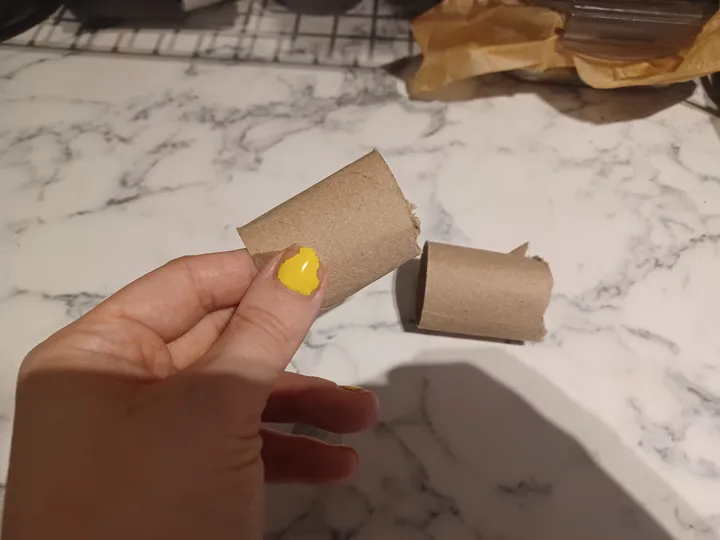
“Toilet rolls make great eco-friendly plant pots,” gardening pro Simon Akeroyd shared on his Instagram. They’re great for seedling starter pots: just cut them in half across the middle.

Then, take one half of the tube and pinch its sides so it turns into a cuboid (basically, “square it off”).

Once that’s done, cut slits about one to two centimetres into each of the four new creases from one end of your tube half.

Fold these flaps together, ensuring they slightly overlap, then tuck your last flap into the others. Repeat with as many tube halves as you need.


When stood up in a tray, they should act as perfect little seedling pots that you can fill with soil and seeds. But beware, Akeroyd explained: “Make sure you plant them so none of the cardboard is above ground.
“Otherwise, the top of the cardboard acts like a moisture wick, sucking out all the moisture, resulting in dead, dried-out plants.”
2) Use them as a bird feeder in winter
The BBC said that all you need to make a cheap, easy bird feeder is suet or peanut butter, an empty loo roll tube, and about 30cm of string, alongside scissors, a plate, and some birdseed.
Pour some birdseed on your plate, “slather” the outside of the cardboard tube with suet or peanut butter, and then roll it in the seeds (a bit like the world’s most unappetising truffle).
Once the tube is well-coated, thread the string through the tube and hang it in your garden.
A caveat, though: the RSPB has discouraged feeding birds peanuts or seeds from 1 May to 31 October, as that can lead to too many birds gathering in one place, potentially spreading diseases like trichomonosis.
“It’s okay to keep offering small amounts of mealworms, fat balls, or suet year-round,” they added, but it’s best to keep this particular project on hold until winter.
3) Feed the worms (and boost your soil health)
Speaking to Martha Stewart’s site, Audrey King, garden centre specialist at Kent Greenhouse & Gardens, said that worms love “nibbling” on the cardboard.
The Royal Horticultural Society agreed that a “limited” amount of cardboard, newspaper, and shredded office paper makes a great meal for the creatures, who help to aerate soil.
Cut them into thin rings or small pieces and add them to the top 10cm of your soil before watering, King added.
Both she and the RHS said this only applies to plain cardboard. “No plastic coatings, dyes, or glossy finishes,” King said. “Just the simple brown kind. The environment will thank you.”
4) Use them as plant collars
King also shared she likes to use old cardboard toilet paper tubes as “plant collars” to deter pests.
She cuts them along their lengths and then places them, standing up, over the stem of a young or delicate plant. King pushes the soil to keep them upright.
“I like to think of it as a little cardboard moat that keeps the bad guys out until your plant is strong enough to stand up for itself,” she said, though of course this only works for pests that eat the stem of your plants.

OPEC+ set to agree third oil output quota hike since Hormuz closure, sources say

Iran crypto giant Nobitex hit by sanctions questions: Reuters
27 Years Later, This 124-Minute Action Classic Is Dominating Streaming Again

Manchester United reach agreement with Casemiro over contract clause amid transfer speculation

US brings back mandatory military draft registration

Steven Gerrard disagrees with Gary Neville over ‘shock’ Chelsea and Arsenal claim | Football
![J MONEY - NA NHA NOME [VIDEO OFICIAL]](https://wordupnews.com/wp-content/uploads/2026/05/1777799968_maxresdefault-80x80.jpg)


-

 Tech6 days ago
Register Renaming | Hackaday
-

 Politics5 days ago
Drax board avoid their own AGM, accused of greenwashing & environmental racism
-

 Tech6 days ago
Why Blue Badges Disappeared From Toyota Hybrids
-

 Tech6 days ago
Images of Samsung’s rumored smart glasses have leaked
-
 Sports7 days ago
IPL 2026: Ruturaj Gaikwad registers slowest fifty of the season, enters all-time unwanted list | Cricket News
-
 Tech2 days ago
Trump’s 25% EU auto tariff breaches Turnberry Agreement that also covers semiconductors and digital trade
-

 Fashion4 days ago
Kylie Jenner’s KHY Enters a New Era with ‘Born in LA’
-

 Business4 days ago
Most Commercial Energy Audits Miss the Real Losses
-

 Crypto World5 days ago
CFTC’s AI will review U.S. crypto registration applications, chairman tells CoinDesk
-

 Business6 days ago
(VIDEO) Charlize Theron Climbs Times Square Billboard to Promote New Netflix Thriller ‘Apex’
-

 Business4 days ago
Barclay Brothers Avoid Bankruptcy: HSBC Drops High Court Petitions After IVA Deal
-
 Sports2 days ago
Paul Scholes issues Marcus Rashford reality check as agreement emerges over Man United star
-
 Entertainment6 days ago
Alicia Keys Calls Out Music Industry ‘Boys Club’
-
 Business4 days ago
Tesla Officially Registers Elon Musk’s Stock: What Investors Need to Know
-

 Tech5 days ago
Get Ready for More Brain-Scanning Consumer Gadgets
-
 Tech7 days ago
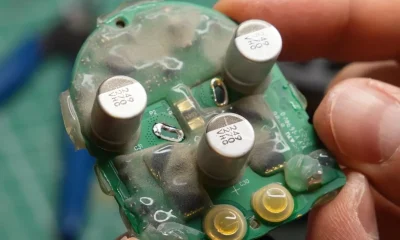
Dyson Vacuums And The Curse Of Cooked Capacitors
-
 Crypto World5 days ago
Robinhood Phishing Scam Exploits Gmail Dot Feature to Bypass Security
-

 Crypto World7 days ago
Only 3% of traders drive Polymarket’s accuracy, not the crowd, study finds
-
 Entertainment5 days ago
Sister Wives: Janelle Posts New Scary Warning
-

 Crypto World5 days ago
Gmail Dot Trick Underpins Robinhood Phishing, Sending Real-Looking Emails
You must be logged in to post a comment Login