Connect with us
DAPA Banner

Tech

Oura Adds More Detailed Hormonal Health Insights To Its Series 3 And 4 Rings

Published

on


Oura just announced a couple of new features that keep an eye on hormonal health for women. The pre-existing Cycle Insights feature, which tracks menstrual cycles, will now take hormonal birth control methods into consideration. The smart ring maker says that this “first-of-its-kind experience” will help users see how these methods can impact overall biometric data.

This has been designed to provide “personalized guidance during complex hormonal changes,” so it can integrate data from over 20 combinations of birth control methods. These include pills, patches, IUDs and implants. Users should be able to use Cycle Insights to gauge whether or not these methods are impacting temperature patterns, sleep and recovery, in addition to keeping an eye on bleeding and various potential side effects.

Advertisement

There’s also a partnership component here. Oura has teamed up with virtual health platform Twentyeight Health. The pair developed a portal within the smart ring app that users can tap to “seamlessly connect” with a licensed health provider to discuss birth control options, and they can provide new prescriptions.

This is, however, a post-Roe v. Wade United States. There are valid fears that period-tracking data could be used in court cases. In other words, there are more than a few reasons why people might consider keeping this kind of stuff private and away from the prying eyes of tech companies.

Oura has also announced a new Menopause Insights feature that tracks quality of life across 22 potential symptoms. The app includes a questionnaire that provides a “fully personalized, on-demand explanation of results, based on personal response and longitudinal biometric data.” The company promises this can give users “actionable results” that can inform lifestyle changes.

Both of these tools will be available globally, with a rollout beginning on May 6. There is a spot of bad news here, however, as these features are only for Oura Ring 3 and 4. The Oura Ring 4 is likely the best smart ring out there, for those considering wading into the wearable waters.

Advertisement


Source link

Advertisement
Continue Reading
Click to comment

You must be logged in to post a comment Login

Leave a Reply

Tech

The AI scaffolding layer is collapsing. LlamaIndex’s CEO explains what survives.

Published

on

The scaffolding layer that developers once needed to ship LLM applications — indexing layers, query engines, retrieval pipelines, carefully orchestrated agent loops — is collapsing. And according to Jerry Liu, co-founder and CEO of LlamaIndex, that’s not a problem. It’s the point.

“As a result, there’s less of a need for frameworks to actually help users compose these deterministic workflows in a light and shallow manner,” Jerry Liu, co-founder and CEO of LlamaIndex, explains in a new VentureBeat Beyond the Pilot podcast

Context is becoming the moat

Liu’s LlamaIndex is one of the foremost retrieval-augmented generation (RAG) frameworks connecting private, custom, and domain-specific data to LLMs. But even he acknowledges that these types of frameworks are becoming less relevant. 

Advertisement

With every new release, models demonstrate incremental capabilities to reason over “massive amounts” of unstructured data, and they’re getting better at it than humans, he notes. They can be trusted to reason extensively, self-correct, and perform multi-step planning; Modern Context Protocol (MCP) and Claude Agent Skills plug-ins allow models to discover and use tools without requiring integrations for every one independently. 

Agent patterns have consolidated toward what Liu calls a “managed agent diagram” — a harness layer combined with tools, MCP connectors, and skills plug-ins, rather than custom-built orchestration for every workflow.

Further, coding agents excel at writing code, meaning devs don’t need to rely on extensive libraries. In fact, about 95% of LlamaIndex code is generated by AI. “Engineers are not actually writing real code,” Liu said. “They’re all typing in natural language.” This means the layers between programmers and non-programmers is collapsing, because “the new programming language is essentially English.” 

Instead of manual coding or struggling to understand API and document integration, devs can just point Claude Code at it. “This type of stuff was either extremely inefficient or just would break the agent three years ago,” said Liu. “It’s just way easier for people to build even relatively advanced retrieval with extremely simple primitives.”

Advertisement

So what’s the core differentiator when the stack collapses? 

Context, Liu says. Agents need to be able to decipher file formats to extract the right information. Providing higher accuracy and cheaper parsing becomes key, and LlamaIndex is well-positioned here, he contends, because of its developments with agentic document processing via optical character recognition (OCR). 

“We’ve really identified that there’s a core set of data that has been locked up in all these file format containers,” he said. Ultimately, “whether you use OpenAI Codex or Claude Code doesn’t really matter. The thing that they all need is context.”

Keeping stacks modular

There’s growing concern about builders like Anthropic locking in session data; in light of this, Liu emphasizes the importance of modularity and agnosticism. Builders shouldn’t bet on any one frontier model, or overbuild in a way that overcomplicates components of the stack. 

Advertisement

Retrieval has evolved into “agent-plus-sandbox,” as he describes it, and enterprises must ensure that their code bases are tech debt free and adaptable to changing patterns. They also have to acknowledge that some parts of the stack will eventually need to be thrown away as a matter of course. 

“Because with every new model release, there’s always a different model that is kind of the winner,” Liu said. “You want to make sure you actually have some flexibility to take advantage of it.”

Listen to the podcast to hear more about: 

  • LlamaIndex’s beginnings as a ‘toy project’ with initially only about 40% accuracy; 

  • How SaaS companies can tap into complicated workflows that must be standardized and repeatable for average knowledge workers;

  • Why vertical AI companies are taking off and why ‘build versus buy’ is still a very valid question in the agent age. 

You can also listen and subscribe to Beyond the Pilot on Spotify, Apple or wherever you get your podcasts.

Advertisement

Source link

Continue Reading

Tech

Mother’s Day 2026 Gift Guide: Audio to Upgrade Mom’s Lifestyle

Published

on

Mother’s Day is Sunday, May 10th, 2026, and if you want a gift that will actually get used, home entertainment is worth a closer look. Today’s wearable tech, wireless speakers, and headphones are easier to set up than ever, with better sound that doesn’t require a deep dive into settings. This guide focuses on gear that is simple to install, reliable in everyday use, and delivers a clear upgrade without adding complexity. Smart products that work right out of the box and fit into real life.

audioengine-b2-white

Audioengine Wireless Speaker

Give Mom music that keeps up with her. The Audioengine A2+ All-in-one (B2) Home Music System delivers high-quality, room-filling sound in a portable design that fits anywhere. Enjoy wireless audio streaming with an industry-leading 100-foot Bluetooth range without compromising on quality so that she can carry her favorite songs from the kitchen straight to the patio.

$199 at Amazon

Bowers & Wilkins Pi8

Treat Mom to elevated everyday listening with the Bowers & Wilkins multi-award-winning Pi8 True Wireless earbuds — now in Pale Mauve and Dark Burgundy. With class-leading sound, bespoke ANC and crystal-clear calls, they deliver exceptional performance wrapped in a highly considered premium design.

$499 at Amazon

Advertisement
bowers-wilkins-pi8-pale-mauve
dot-max-amethyst

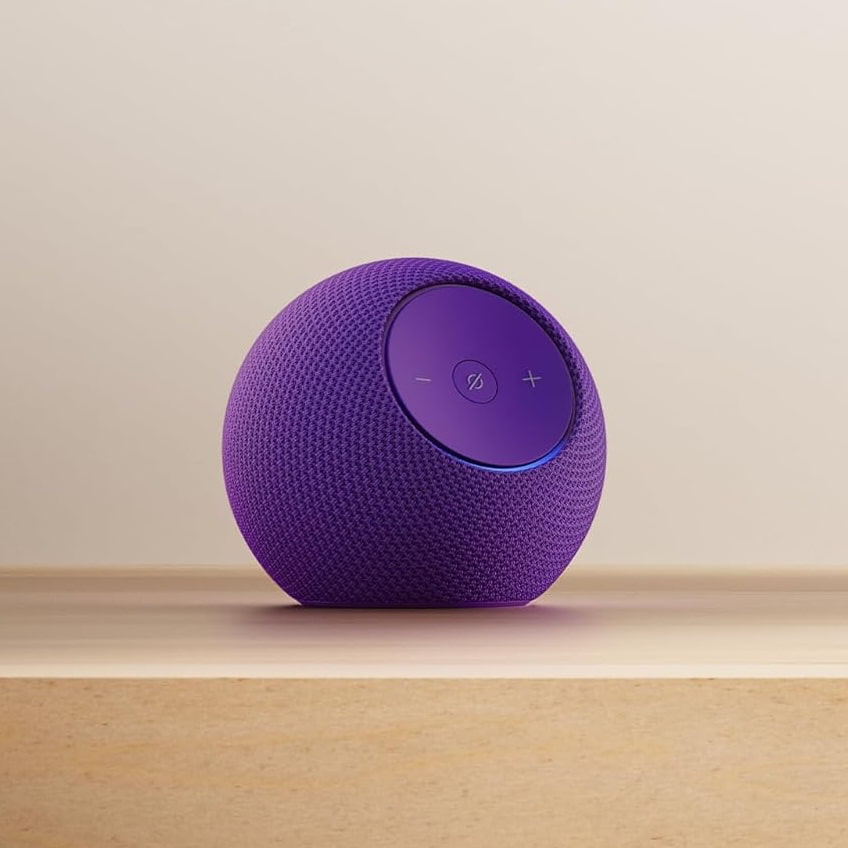
Echo Dot Max

No kitchen should be without an Amazon Echo smart speaker. The latest Echo Dot Max offers improved sound and smarter interactions with Alexa+ for playing music, checking the weather, and more.

$99.99 at Amazon

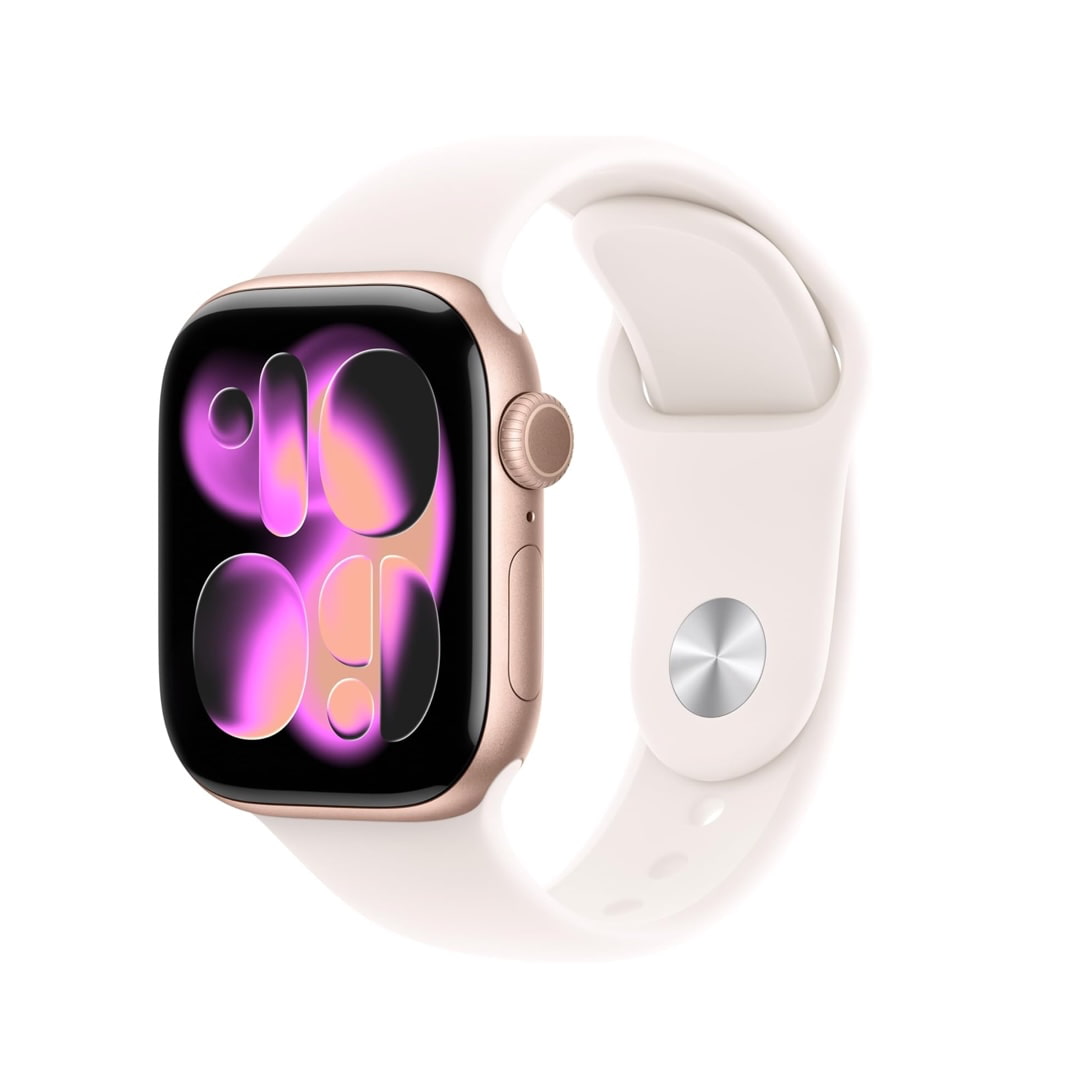
Apple Watch

The latest Apple Watch Series 11 is the most durable and capable yet with new health insights and longer battery life. Thanks to new hypertension notifications and sleep scoring, Apple Watch not only can improve Mom’s life, but may also save it.

$399 $299 at Amazon

apple-watch-11-rose-gold-light-blush-42mm
sony-wh-1000xm6-sand-pink

SVS Prime Wireless Pro

Audiophile-grade stereo speakers ready to go right out of the box. SVS Prime Wireless Pro are versatile pair of wired/wireless speakers that can play your Spotify playlist wirelessly or connect to your TV for improved sound for watching movies and shows. Available in white or black.

$899 at Amazon

Advertisement
SVS Prime Wireless Pro Speaker Pair in White Lifestyle
audeze-filter-lifestyle

Audeze Speakerphone

The Audeze Filter speakerphone includes background noise-cancellation that make calls to Mom clearer, no matter what’s happening in the background.

$249 $99 at Amazon

AirPods Pro 3

Apple’s latest and most advanced AirPods feature improved noise cancellation, heart rate sensing, live translation, and transparency mode for hearing assistance.

$249 $199 at Amazon

apple-airPods-pro-3-hero-250909

Need more gift giving ideas?

Disclosure: The products listed above are approved by our Editors, but may be requested by our sponsors. When links to buy are provided, we’ll direct you to the lowest price at time of publication. In doing so, eCoustics may earn a small commission from the associated retailer if purchased.

Source link

Advertisement
Continue Reading

Tech

Trump’s 25% EU auto tariff breaches Turnberry Agreement that also covers semiconductors and digital trade

Published

on

TL;DR

Trump announced he will raise tariffs on EU cars and trucks to 25% next week, accusing the bloc of non-compliance with the Turnberry Agreement without specifying the violation. The deal, signed in July 2025, also covers semiconductors, AI chips, and digital trade, and Trump’s willingness to breach the auto provisions establishes a precedent that threatens the entire transatlantic tech trade framework.

The Turnberry Agreement was supposed to be the floor. Signed at Donald Trump’s golf resort in Scotland last July, the deal between the United States and the European Union set a 15 per cent tariff ceiling on nearly all EU goods entering America, including cars, car parts, semiconductors, and pharmaceutical products. In exchange, the EU agreed to eliminate tariffs on all US industrial goods, purchase $750 billion in American energy exports, and deliver $600 billion in investments into the United States by 2028. It was, by any measure, asymmetric. The EU accepted it anyway, because the alternative was worse. On Friday, Trump announced on Truth Social that the alternative is back. He will raise tariffs on EU cars and trucks to 25 per cent next week, accusing the bloc of failing to comply with the deal. He did not specify what the EU has failed to do. The European tech industry warned months ago that tariffs would hit both hardware and software. The question now is whether the cars are the beginning or the end of the escalation.

Advertisement

The agreement

The Turnberry Agreement, formally the Agreement on Reciprocal, Fair, and Balanced Trade, was announced on 27 July 2025 and formalised in a framework agreement on 21 August. The deal capped US tariffs on EU goods at 15 per cent, with zero-for-zero arrangements on strategic categories including aircraft components, critical raw materials, and semiconductor equipment. It included cooperation provisions on supply chain security, AI chips, and digital trade. The EU committed to removing tariffs on all US industrial goods and providing preferential access for American agricultural products. European leaders, including German Chancellor Friedrich Merz, criticised the asymmetry but supported the deal as preferable to a full trade war. The European Parliament approved the agreement in March 2026, attaching safeguards that allow the EU to reimpose tariffs if the US violates the terms.

The deal’s legal foundation shifted dramatically on 20 February 2026, when the US Supreme Court ruled in Learning Resources Inc. v. Trump that the International Emergency Economic Powers Act does not authorise the president to impose sweeping tariffs. Within hours, the White House reimposed a 10 per cent universal import surcharge under Section 122 of the Trade Act of 1974, which carries a 150-day time limit. The Turnberry Agreement was negotiated under IEEPA authority. The Supreme Court ruling did not invalidate the agreement itself, but it changed the legal instrument through which the tariffs are administered, creating ambiguity about which provisions remain enforceable and on what timeline. The EU froze its ratification process in February, seeking clarity on whether the deal’s terms still held. By March, the US Trade Representative had launched Section 301 investigations into 16 economies, including the EU, covering steel, aluminium, autos, batteries, and high-tech goods.

The threat

Trump’s announcement is specific to cars and trucks. The tariff will rise from the current rate, which sat at 10 per cent following the Supreme Court ruling, to 25 per cent. He stated that European automakers that produce vehicles in American plants will face no tariff, a provision designed to accelerate the reshoring of manufacturing. Trump claimed that over $100 billion is being invested in US auto plants, calling it a record. Fact-checkers have noted that many of the investments cited by the White House are reallocations at existing facilities rather than new plant construction, and that some were announced before Trump’s re-election. Toyota publicly pushed back on the characterisation of its $10 billion commitment as a new investment. International automakers have collectively invested more than $124 billion in US operations to date, but much of that spending predates the current tariff regime.

The immediate market reaction was measured. The S&P 500 held its gains on Friday, but European automakers fell: Stellantis dropped more than 2 per cent, and Ferrari declined nearly 1.5 per cent. The EU had estimated that the Turnberry deal saved European automakers between 500 million and 600 million euros per month compared to pre-deal tariff levels. A 25 per cent rate would eliminate those savings and then some. BMW’s Spartanburg plant in South Carolina, the largest BMW facility in the world, already produces vehicles for the American market. Stellantis has announced $13 billion in US investment to increase production capacity by 50 per cent over four years. The automakers with American manufacturing are partially insulated. The ones shipping finished vehicles across the Atlantic are not.

The tech question

The Turnberry Agreement covered more than cars. Its zero-tariff provisions on semiconductor equipment and its cooperation framework on AI chips and digital trade were, for European technology companies, the most consequential elements of the deal. Trump’s tariffs have already reignited Europe’s push for cloud sovereignty, with governments from France to Germany investing in domestic alternatives to American digital infrastructure. The 25 per cent auto tariff is not, in itself, a technology story. But the principle it establishes is. If Trump is willing to breach the Turnberry ceiling on cars because of unspecified compliance failures, the same logic can be applied to any category the agreement covers.

Advertisement

The Section 301 investigations launched in March explicitly include high-tech goods alongside autos and batteries. The semiconductor tariff, which Trump initially proposed at 100 per cent before it was modified under Turnberry, remains a live issue. Apple pledged $100 billion in American manufacturing investment partly to secure exemptions from chip tariffs. European chipmakers and equipment manufacturers, including ASML, do not have equivalent commitments. The risk of Europe surrendering its tech sector to American platforms was already a concern before the tariff escalation. If the Turnberry framework that protected semiconductor equipment and digital trade provisions collapses alongside the auto provisions, European technology companies face a fundamentally different operating environment for transatlantic commerce.

The pattern

Trump’s tariff announcements follow a consistent pattern. A social media post establishes the threat. The threat is framed as a response to foreign non-compliance, without specifying the violation. The remedy is a tariff increase. The escape clause is domestic production: build in America and pay nothing. The pattern has been applied to China, Canada, Mexico, and now, again, to the European Union. The auto tariff is not the first time the Turnberry ceiling has come under pressure. The EU postponed its ratification vote in February after the Supreme Court ruling created uncertainty. The US Trade Representative’s Section 301 investigations in March signalled that the administration was building legal infrastructure for broader tariff actions. The auto announcement on Friday is the first concrete breach of the Turnberry framework by the American side.

The EU has been investing in sovereign alternatives, awarding 180 million euros in sovereign cloud contracts and accelerating domestic semiconductor production under the European Chips Act. Rising geopolitical tensions have already increased European infrastructure costs, making the continent’s digital economy more expensive to operate. The tariff threat adds another layer of cost and uncertainty. European technology companies that sell hardware into the American market, or that depend on American cloud infrastructure for their operations, now face the possibility that the trade framework they planned around no longer holds.

The deal that was not a deal

The European Parliament’s safeguards, attached when it approved Turnberry in March, included provisions allowing the EU to reimpose tariffs if the US violated the agreement. Those provisions were designed for exactly this scenario. Whether the EU invokes them depends on politics as much as trade law. Retaliatory tariffs on American goods would escalate the dispute. Absorbing the 25 per cent auto tariff without response would signal that the Turnberry Agreement’s terms are negotiable by social media post. The EU’s trade commissioner will face the same choice that every trading partner of the United States has faced since 2025: respond and risk escalation, or absorb and risk precedent.

Advertisement

Trump’s post ended with a line that reads like a form letter and functions like a threat: “Thank you for your attention to this matter.” The matter is not cars. The Turnberry Agreement was the transatlantic trade framework that covered automobiles, semiconductors, AI, energy, agriculture, and digital commerce. If the auto provisions can be overridden by a social media post citing unspecified non-compliance, the semiconductor provisions can be overridden the same way, and so can the digital trade provisions, and so can the energy commitments. The cars are the test. The technology is the stakes.

Source link

Advertisement
Continue Reading

Tech

The Chinese Government Just Got the World’s Largest Digital Rights Conference Canceled

Published

on

RightsCon, the world’s largest digital rights conference, was canceled this year due to pressure from the Chinese government, according to the nonprofit organization that organizes the annual event.

In a statement, Access Now says it was “told that diplomats from the People’s Republic of China (PRC) were putting pressure on the Government of Zambia because Taiwanese civil society participants were planning to join us in person.”

The Chinese Embassy in Washington, DC, and the United States Taipei Economic and Cultural Representative Office did not immediately respond to requests for comment. When WIRED called the Zambian embassy in Washington, a member of the staff answered the phone and transferred the call to another staff member who then picked up for several seconds before hanging up. A follow-up call went unanswered.

Access Now says it was told “informally from multiple sources” that “in order for RightsCon to continue, we would have to moderate specific topics and exclude communities at risk, including our Taiwanese participants, from in-person and online participation.”

Advertisement

RightsCon 2026 was set to feature several panels on China’s international influence, including about how Beijing exports digital authoritarianism and spreads disinformation in regions like Africa, as well as discussions on Chinese cyberattacks and the global spread of its censorship and surveillance technologies.

Arzu Geybulla, the co-executive director of Access Now, tells WIRED that “multiple pieces of information we received indicated that foreign interference by the People’s Republic of China played a role in the abrupt disruption of RightsCon 2026.”

A week before the conference was scheduled to take place in Lusaka, Zambia, the Zambian government abruptly announced that it would be postponed to an unspecified date. In a statement on April 28, the country’s minister of technology and science, Felix Mutati, said that certain “speakers and participants remain subject to pending administrative and security clearances.” The following day, Thabo Kawana, Zambia’s minister for information and media added that the “postponement was necessitated by the need for comprehensive disclosure of critical information relating to key thematic issues proposed for discussion during the Summit.”

On April 27, two days before the Zambian government’s announcement, Access Now “became aware that the in-person participation of people from Taiwan had caught the attention of the Government of the People’s Republic of China. In turn, Chinese authorities were, apparently, trying to influence the Zambian government’s approach to Taiwanese participants’ movement across the border,” says Geybulla. “Soon after, the Zambian government publicly referred to ‘diplomatic protocols’ and ‘pending administrative and security clearances’ of participants as reasons for their disrupting RightsCon.”

Advertisement

Open Culture Foundation, a Taiwanese nonprofit organization that was scheduled to attend RightsCon this year, says that it was warned by Access Now that Taiwanese citizens may have problems entering Zambia due to possible concerns from the Chinese Embassy. They were told to pause their travel plans while the host coordinated with Zambian officials.

Nikki Gladstone, RightsCon director at Access Now, confirmed to WIRED that the organization had been in contact with Taiwanese participants about potential issues traveling to Zambia. “Given the potential access issues this would present to that community, many of whom were set to begin traveling imminently, we felt a duty to inform our registered Taiwanese participants of this development while we sought more details and information,” says Gladstone. “We said we would be hesitant to recommend travel until there was more clarity.”

An employee of another human rights organization, who asked not to be named for security reasons, tells WIRED that after RightsCon was officially postponed, they were told by one of their grant funders that the Chinese government had been pressuring the Zambian government for days over the presence of a Taiwanese delegation at the conference.

Source link

Advertisement
Continue Reading

Tech

Bumpboxx BB-777 Boombox Revives the Sharp GF-777 for 2026 with Dual Tape Decks and Bluetooth Connectivity

Published

on

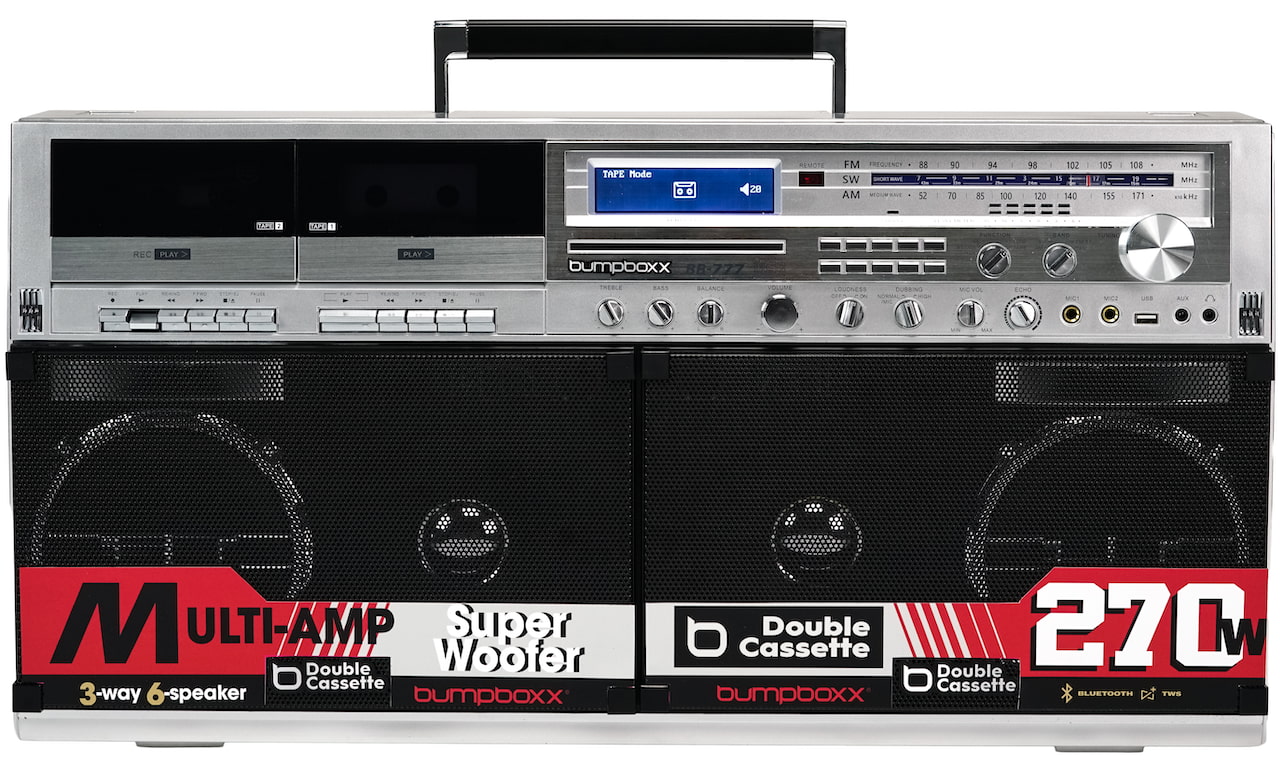
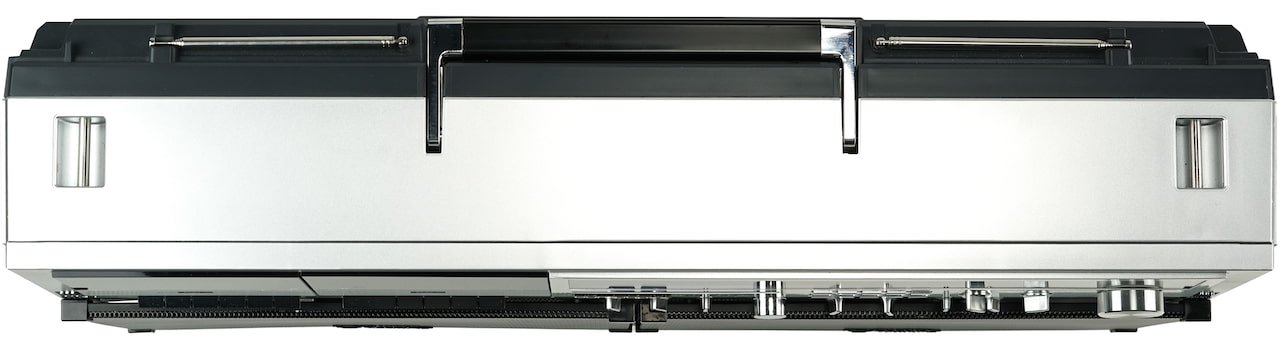
The retro audio wave isn’t slowing down—it’s getting louder. And heavier. Bumpboxx, founded in 2016, is leaning all the way in with the BB-777, a modern boombox modeled after the legendary Sharp GF-777. Developed over three years, this isn’t a gimmick. It’s a full-format system with dual cassette decks, a CD player, AM/FM/Shortwave radio, Bluetooth, and USB playback—built for people who still own music across multiple formats and want one machine that actually plays all of it.

sharp-gf-777-angle
Sharp GF-777

Boomboxes, also known as ghetto blasters, are suddenly back in rotation, especially with Gen Z and younger millennials. What has changed is perspective. A lot of them never carried one of these monsters loaded with eight D cell batteries in the middle of summer, so the idea feels fresh instead of punishing. We also never saw Radio Raheem sitting at a Starbucks drinking an oat milk macchiato while blasting Public Enemy, but here we are. The BB-777 keeps the scale and presence, adds modern power management and connectivity, and somehow makes this whole thing feel usable in 2026 without needing a chiropractor on standby.

bumpboxx-bb-777-boombox-angle
Bumpboxx BB-777

Despite the oversized footprint, the BB-777 is not just for show. Bumpboxx built this around a high output speaker system with dual super woofers, precision tweeters, and a chambered bass enclosure, rated at 270 watts for room filling sound. If one is not enough, two BB-777 units can be paired for a larger stereo or party setup.

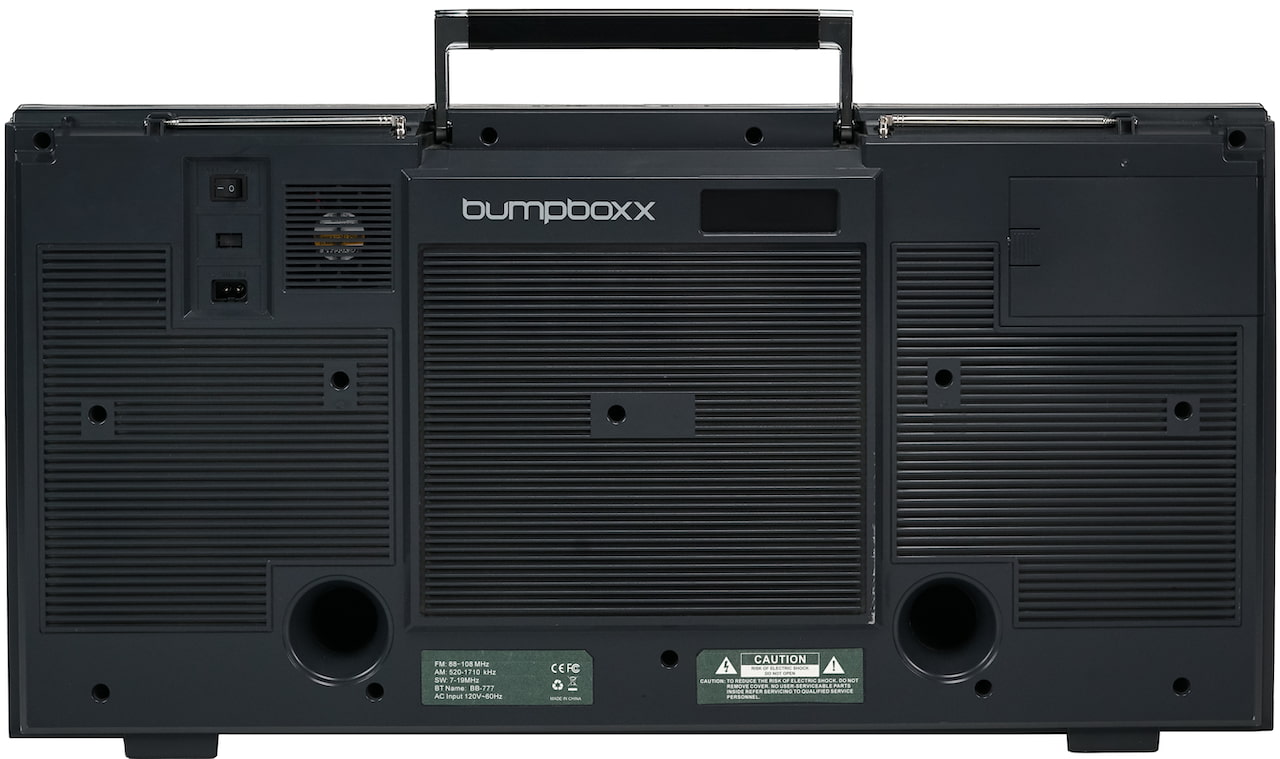
Format support is where this thing separates itself from most modern portable audio. Bluetooth streaming and USB playback are here, but so are a CD player, dual cassette decks, AM FM and shortwave radio, auxiliary input, and wired microphone support. It also goes a step further with direct USB recording from tapes, CDs, or radio broadcasts, which makes it more than just a playback device.

Power has been updated for 2026 reality. A TSA approved rechargeable battery is included with up to 15 hours of operation, and interchangeable battery packs allow for longer sessions without downtime. Multi voltage 100 to 240 volt AC compatibility means it can be used in multiple regions without needing external converters.

Advertisement

We didn’t want to make a retro speaker,” says Rob Owens, Founder and CEO of Bumpboxx. “We wanted to build the boombox we grew up with, but engineered for today. Something powerful, reliable, and complete. The BB-777 is our way of proving that physical sound still matters.”

bumpboxx-bb-777-boombox-front
bumpboxx-bb-777-boombox-back
bumpboxx-bb-777-boombox-top
Bumpboxx BB-777 Views

Bumpboxx BB-777 Specifications

Bumpbox Model  BB-777
Product Type Portable Boombox
Price Starts at $649.00
Power Output 270W
Woofers 2 x 6.25″ Super Woofers with Independent Channel Gain for deep, controlled low-frequency performance
Midrange 2 x 6.25″ Coaxial Speakers for balanced mids and detailed clarity
Tweeters 2 Horn Tweeters for crisp, high-frequency projection
Ports Yes
Bluetooth Yes 
USB Audio Playback MP3, WMA, WAV, FLAC, and ACC
USB Recording Yes – From Cassettes, CDs, Radio
Dual Audio Cassette Deck  Yes 
CD Player  Yes
CD Disc Compatibility  CD, CD-R, CD-RW, and MP3 
Radio  AM / FM / FM Stereo / Shortwave and Standard Wave (ST) Radio 
Auxiliary Input  Yes – RCA
Microphone Input 2 Wired
Microphone Built-in
Headphone Output Yes
Rechargeable Battery  TSA-Approved 97.6Wh Li-Ion
Battery Play Time Up to 15 hours
Battery Charge Time 4-6 hours
Power Input 100-240V AC
Status Display 4.5” Dot Matrix LCD
Grilles Removable Magnetic Front Grilles
Antenna 2 x Screw-On Telescoping Antennas
Shoulder Strap  Included
Dimensions  29.6 x 6.5 x 15 inches
Weight 28 pounds (12.7 kg)
bumpboxx-bb-777-boombox-front-carry

The Bottom Line

The Bumpboxx BB-777 knows exactly what it is and doesn’t pretend to be anything else. At $649, it’s one of the very few modern systems that actually consolidates this many playback options into a single portable unit. Dual cassette decks, CD player, radio, Bluetooth, USB playback, and even direct USB recording from legacy formats—there’s nothing else at this price doing all of that in one box with this kind of output and physical presence. That’s the hook.

Who is this for? Not minimalists. Not the “everything lives on my phone” crowd. This is for people sitting on shelves of tapes and CDs who are tired of digging out multiple components just to play them. It’s also for a younger audience that wants something loud, visual, and different from another anonymous Bluetooth speaker. And yes, for anyone who understands that audio used to be something you carried, not just something you tapped on a screen.

What’s missing? Quite a bit if you look at it through a modern audiophile lens. There’s no Wi-Fi streaming, no AirPlay or Chromecast, no app ecosystem, no hi-res audio support, and no real ecosystem integration with anything else in your home. There’s also no mention of advanced codec support or a headphone output, which feels like an odd omission for something positioned as an all-in-one. And while it does a lot, it’s not trying to replace a dedicated hi-fi system in terms of refinement. If that lines up with how you actually listen to music, it makes a lot more sense than most of the “smart” gear being pushed right now. Fight the power.

Advertisement

Price & Availability

BB-777 is available on Kickstarter. Backers will have access to prices based on the reward level. Prices start at $649. Campaign details and launch updates are available on the official BB-777 campaign page

Advertisement. Scroll to continue reading.

Source link

Advertisement
Continue Reading

Tech

Calculated joy: Why GeekWire’s STEM Educator of the Year built a museum to fix math trauma

Published

on

Tracy Drinkwater engaging with visitors at the Seattle Universal Math Museum, which she founded. (SUMM Photo)

Tracy Drinkwater bristles when people — sometimes proudly — declare they “can’t do math.” No one, she notes, would similarly boast about being bad at reading or history. But she understands the sentiment.

Math education, she argues, was designed decades ago to produce NASA engineers, not curious learners — reflected in all-or-nothing grading and a fast-paced curriculum that pushes kids into calculus before high school graduation.

“It ends up making a lot of people feel really stupid,” Drinkwater said.

So the former middle and high school teacher set out to change that by creating math experiences that are playful, exploratory and pressure free.

In 2019, Drinkwater launched the Seattle Universal Math Museum, an initiative that began as a mobile program visiting classrooms, farmers’ markets and partnering with organizations such as the Pacific Science Center and the Museum of Flight. The museum, which goes by the clever acronym SUMM, recently opened its own facility on March 14 — also known as Pi Day in honor of the mathematical constant π.

For her STEM leadership, Drinkwater is being honored at the GeekWire Awards as STEM Educator of the Year, alongside Fidel Ferrer, founder of Portland’s Project LEDO. First Tech is sponsoring the award, and Drinkwater and Ferrer will be recognized at the GeekWire Awards event May 7 at Seattle’s Showbox SoDo.

Advertisement

SUMM has filled its space in Kent, Wash., with displays that cleverly tuck math concepts into puzzles, games and other activities. The museum has already welcomed 1,000 visitors and will host its first school field trip next month. It asks guests for a $5 donation.

SUMM guests try navigating the museum’s giant Etch A Sketch-like device as SUMM founder Tracy Drinkwater looks on. (SUMM Photo)

Exhibits include:

A giant Etch A Sketch-like device requires two people to work together — one controlling the X axis and the other the Y — to trace patterns such as Seattle streets and landmarks. The task incorporates concepts including linear equations and the Cartesian plane, making graphing tangible through a collaborative drawing challenge.

A motion-capture exhibit transforms visitors into living fractal trees. As participants move their arms, fingers and legs, the camera mirrors and multiplies the movements into branching, repeating patterns that look like cherry blossoms and other trees. The repetition is the essence of fractals, which have real-world applications such as measuring irregular coastlines.

An origami exhibit invites visitors to fold their own own paper cup, octagon, picture frame or other multi-sided shapes like cubes or tetrahedrons. The colorful, symmetrical creations are aesthetically beautiful while also demonstrating concepts of 3D shapes such as vertices, edges and faces.

Advertisement

Other displays explore lesser-known mathematical heroes; tessellations, which are patterns made from repeating identical tiles; and a video game that creates Sierpiński triangles.

“We’re trying to provide the setting for that kind of joyous math that gets people hooked,” Drinkwater said. If you can spark a child’s interest in math at a space like SUMM, she added, that excitement will help them push through the harder work of school math.

SUMM has a 15-person staff and a one-year, rent-free lease at Kent Station. The nonprofit is supported by donations from individuals and foundations, and is holding a public fundraising event May 8 in Seattle. It also receives state and King County grants. When SUMM visits schools, it charges on a sliding scale to ensure access to lower-income communities.

“It’s been a really amazing journey,” Drinkwater said, encouraging people to visit. “And if you like it, donate, because funding is the only thing holding us back.”

Advertisement

Source link

Continue Reading

Tech

JLL lays off some S’pore staff following a restructuring exercise

Published

on

Impacted employees reportedly received retrenchment notices on Apr 15

Global real estate consultancy JLL has laid off some staff in Singapore following a recent organisational restructuring exercise.

According to a report from The Straits Times, the firm confirmed the restructuring but did not disclose the number of roles impacted.

A former employee who spoke to the publication said that those affected, including colleagues in the US market, received retrenchment notices on Apr 15. Staff were given the option of an early release or serving out their full notice period.

Separately, some JLL employees have also shared on LinkedIn about the layoffs. One post even reportedly stated that at least four employees from the same department were let go.

Advertisement

A spokesperson from JLL told The Straits Times that the restructuring is part of a global effort to streamline operations and position the company for long-term growth amid shifting conditions in the real estate market.

“As a global company, JLL undertakes organisational realignment to streamline operations and position the business for long-term growth in a rapidly evolving real estate services market,” the spokesperson said.

“As part of this broader transformation across multiple markets, we have made the difficult decision to restructure certain functions in Singapore over recent weeks, which has impacted a limited number of roles.”

The firm added that it has notified the Ministry of Manpower and complied with Tripartite Guidelines on responsible retrenchment.

Advertisement

Vulcan Post has reached out to JLL for comments.

  • Read other articles we’ve written on Singaporean businesses here.

Featured Image Credit: JLL

Source link

Advertisement
Continue Reading

Tech

Why ISO 27001 alone won’t save your data from itself

Published

on

Nahla Davies looks at the blind spot between information security controls and genuine data integrity governance.

There’s a strange kind of confidence that comes with getting ISO 27001 certified. The audit’s done, the certificate’s on the wall, and suddenly everyone in the building sleeps a little better at night. It feels like you’ve handled the security question once and for all.

But here’s what nobody talks about at the celebration dinner: most of the data risks that actually burn companies in 2026 have very little to do with whether you passed an audit. They’re messier than that.

They live in the mundane, everyday chaos of how teams create, move, copy and forget about data. And that’s exactly where ISO 27001, for all its value, starts running out of answers.

Advertisement

The certification covers the framework, not the mess

ISO 27001 is genuinely useful. Let’s get that out of the way. It gives organisations a structured approach to information security management, and it forces leadership to actually think about risk in a systematic way. For companies that had nothing before, it’s a massive step forward.

But the standard was designed to assess whether you have the right policies, controls and processes in place. It’s checking that the architecture exists. What it can’t do is follow your data around on a Tuesday afternoon when someone in marketing copies a client list into a personal Google Sheet to ‘just quickly check something’.

That’s where the gap lives. The certification tells auditors you’ve built the walls. It doesn’t tell anyone what’s happening inside the rooms. And in most organisations, what’s happening inside the rooms is borderline chaotic.

Think about how data actually moves through people in a modern company. It starts in one system, gets exported into a spreadsheet, emailed to a colleague, uploaded to a shared drive, duplicated across three departments, and eventually forgotten in a folder nobody’s opened since last quarter. None of that necessarily violates your ISO 27001 controls. All of it creates risk.

Advertisement

The standard asks whether you have an asset inventory and data classification policy. Most certified companies do. But the reality of enforcing classification at scale, across thousands of files and dozens of tools, is a completely different problem. It’s like having a fire evacuation plan pinned to the wall while half the exits are blocked with furniture. Technically compliant, but practically dangerous.

Data governance is the part everyone skips

There’s a reason data governance keeps coming up in security conversations, even though it sounds painfully boring. It’s because governance is the layer that sits between policy and reality. It’s the part that answers questions like: who actually owns this dataset? When was it last reviewed? Does anyone know it’s still being stored in three places?

ISO 27001 touches on some of this. Annex A has controls around information classification, access management and asset ownership. But the standard treats these as boxes to check during an audit cycle. In practice, data governance requires constant, active attention. It’s operational, not periodic.

Most companies that get certified build their documentation, assign their roles, and move on. Six months later, the data landscape has shifted entirely. New tools get adopted, teams reorganise, people leave and their access lingers. The certificate stays valid. The risks multiply.

Advertisement

And this is particularly true with unstructured data, which makes up the vast majority of what most organisations hold. Emails, documents, chat logs, shared files. ISO 27001 doesn’t have a great answer for the sheer volume and unpredictability of unstructured data. It assumes you can classify and control it. Anyone who’s tried knows that’s optimistic at best.

What’s really needed alongside certification is a living, breathing data governance practice. One that maps where sensitive data actually resides (not just where it’s supposed to), monitors how it moves, and flags when something drifts outside acceptable boundaries. That’s not an audit exercise. It’s an ongoing operational function.

Compliance creates a floor, not a ceiling

There’s a broader point here that applies beyond ISO 27001. Compliance frameworks, by their nature, set a minimum bar. They define what ‘acceptable’ looks like at a given point in time, even with edge cases like using AI for software testing. But threats evolve, technology changes, and the way people work shifts constantly. A standard that’s reviewed every few years simply can’t keep pace with how quickly the data landscape moves.

This is especially relevant as AI tools become embedded in everyday workflows. Employees are feeding company data into large language models, using AI assistants to summarise internal documents, and generating content based on proprietary information. ISO 27001 wasn’t written with that reality in mind. The 2022 update made strides, sure, but the speed of AI adoption has outpaced what any standard can reasonably address.

Advertisement

Companies that treat certification as the finish line tend to develop blind spots in exactly these areas. They’re compliant on paper but exposed in practice. The data risks they face aren’t coming from sophisticated external attacks (though those matter too). They’re coming from inside the house, from the everyday, unglamorous ways people interact with information.

The smartest organisations use ISO 27001 as a foundation and then build upward. They invest in data discovery tools that map shadow data. They implement real-time monitoring for sensitive information. They train employees not just on policy, but on the practical habits that keep data from wandering into places it shouldn’t be. Certification becomes the starting point of the security conversation, not the conclusion.

Final thoughts

ISO 27001 deserves its reputation as a serious, credible framework. Getting certified takes real effort, and it signals that an organisation takes information security seriously.

But there’s a growing disconnect between what the certificate proves and what modern data environments actually demand. The biggest risks today come from data sprawl, from duplication and drift and the quiet entropy of information that nobody’s actively managing.

Advertisement

Addressing that takes more than a framework. It takes a culture of continuous governance, practical tooling, and an honest look at the gap between how data should behave and how it actually does. The certificate opens the door. What you build behind it is what actually matters.


By Nahla Davies

Nahla Davies is a software developer and tech writer. Before devoting her work full time to technical writing, she managed – among other intriguing things – to serve as a lead programmer at an Inc 5,000 experiential branding organisation, where clients include Samsung, Time Warner, Netflix and Sony.

Advertisement

Don’t miss out on the knowledge you need to succeed. Sign up for the Daily Brief, Silicon Republic’s digest of need-to-know sci-tech news.

Source link

Advertisement
Continue Reading

Tech

Hidden IT problems are quietly creating risk, shadow IT, and lost productivity

Published

on

Presented by TeamViewer


Enterprise technology failures are largely invisible. Research from TeamViewer, based on a global survey of 4,200 managers and employees, finds that the majority of digital dysfunction never reaches the IT help desk.

Employees work around slow applications, failed logins, and intermittent glitches rather than reporting them, leaving organizations without an accurate picture of how their technology is performing. The cumulative cost is significant: employees lose an average of 1.3 workdays per month to digital friction, with impacts ranging from delayed projects and lost revenue to increased employee turnover.

The research, which surveyed managers and employees across nine countries, confirms what many have long suspected: the productivity loss from digital friction is significant, and most of it never surfaces in an IT support queue, says Andrew Hewitt, VP of strategic technology at TeamViewer.

Advertisement

“Enterprise outages are visible because they trigger clear, system-level failures,” Hewitt says. “But much of the real disruption happens earlier, in the form of digital friction: slow apps, login issues, or intermittent glitches that don’t cross alert thresholds. These smaller issues often go unreported or are normalized by employees, even though they quietly drain productivity.”

What is digital friction and why does it go unreported?

The most common sources of friction — connectivity failures, software crashes, hardware problems, and authentication issues — aren’t edge-case scenarios, but everyday experiences employees have learned to absorb without escalating. Connectivity problems were the most widespread, with nearly half identifying them as the top productivity killer among common technology issues.

That tendency to absorb rather than report is central to the problem. Many workers don’t trust their IT team to resolve issues quickly or effectively, so when a login fails or an application stalls mid-task, the path of least resistance is to restart the device, switch tools, or use a personal phone.

“Employees are under more pressure than ever to prove output,” Hewitt says. “When reporting feels unlikely to result in a quick resolution, it creates a false sense of stability at the system level while the employee experience quietly deteriorates.”

Advertisement

How much productivity does digital friction cost organizations?

The business consequences extend beyond inconvenience. Many organizations report delays in critical operations, revenue loss, and lost customers as a result of IT dysfunction. Most respondents lose time each month, and few expect improvement, citing increasing complexity of workplace technology as a primary concern.

The human cost runs parallel. Workers link digital friction to frustration, decreased motivation, and burnout, and many believe it contributes to turnover, with onboarding replacements stretching to eight weeks or more.

“Employees are happiest when they feel productive and accomplished at the end of the day,” Hewitt says. “When people can’t make progress in their day-to-day work, frustration builds and burnout follows. Great technology might not be a main attractor of talent, but bad technology can certainly play a role in driving it away.”

Why employees use personal devices and unauthorized tools instead of reporting IT problems

When workplace technology consistently fails to meet employee needs, workers find alternatives, with a substantial share of respondents admitting to using personal devices or unauthorized applications as workarounds. That’s the entry point for shadow IT, or the use of unapproved hardware, software, or cloud services outside IT’s visibility and control. While employees turn to these tools simply to stay productive, they introduce security vulnerabilities, data leakage risks, and compliance gaps that IT teams may not discover until a breach occurs.

Advertisement

“Quite simply, it demonstrates that the IT environment is not meeting the employees’ needs,” Hewitt said. “While this helps maintain short-term productivity, it introduces significant risks and pushes work outside of IT’s visibility and control.”

TeamViewer ONE addresses this by combining remote connectivity with real-time endpoint monitoring, giving IT teams the ability to detect and resolve device and application issues before employees reach for an alternative. When the underlying environment is stable and support is fast, the impulse to work around it diminishes.

How fragmented IT infrastructure creates blind spots across devices, apps, and networks

Addressing digital friction at scale requires more than faster help desk response times. Traditional metrics such as mean time to resolution and ticket volume capture only a fraction of actual issues. A more complete picture requires measuring lost time, interrupted workflows, and employee sentiment across devices, applications, and network environments.

“Leaders need to move beyond measuring performance through IT tickets alone,” Hewitt said. “Performance should be viewed through the lens of employee experience and real-time digital workplace data.”

Advertisement

Fragmented infrastructure makes this difficult. When devices, applications, and networks operate in separate silos, IT teams struggle to trace root causes or identify systemic issues before they spread, often responding to symptoms rather than underlying problems.

TeamViewer ONE is designed to close that gap, integrating digital employee experience analytics, remote support, and device management into a single platform. Instead of piecing together signals from disconnected tools, IT teams get a consolidated view of endpoint health, application performance, and network conditions across the entire organization.

How organizations can shift from reactive IT support to proactive system monitoring

Achieving proactive IT is not a single-step transformation. Hewitt describes it as a progression: starting with endpoint management and security, building toward real-time visibility into the digital employee experience, and ultimately using automation and AI to resolve issues before they reach employees.

TeamViewer AI is built to support each stage of that progression, using continuous monitoring to surface anomalies and correlate signals across the digital environment, identifying patterns of poor experience before they escalate. When issues are detected, it suggests remediations, generates scripts to fix problems autonomously, and handles routine tasks such as common troubleshooting without requiring IT intervention, shifting the workload from reactive firefighting toward proactive oversight.

Advertisement

And while AI’s effectiveness depends on the completeness of the data it works with, consolidating onto a platform like TeamViewer ONE removes that limitation by giving AI a complete, real-time data foundation to work from.

How system performance lays the foundation for productivity, retention, and competitive advantage

TeamViewer ONE isn’t a wholesale replacement of existing IT infrastructure, but a unifying layer that connects insight with action, which enables organizations to ramp up productivity, improve retention, and ultimately realize a significant competitive advantage. It begins with visibility into what is actually causing friction across their environment. From there, leaders can use that data to prioritize fixes, and then scale remediation through automation as confidence and capability grow.

“Reducing digital friction isn’t about overhauling everything at once,” Hewitt said. “Leaders should start small, gain visibility into what’s actually causing friction, fix the biggest pain points, then scale those improvements through automation and AI. Even incremental progress can make an impact on employee engagement and productivity.”

Dig deeper: Fix it before they feel it from TeamViewer.

Advertisement

Sponsored articles are content produced by a company that is either paying for the post or has a business relationship with VentureBeat, and they’re always clearly marked. For more information, contact sales@venturebeat.com.

Source link

Continue Reading

Tech

Spotify Adds ‘Verified’ Badges To Distinguish Human Artists From AI

Published

on

Spotify is adding “Verified by Spotify” badges to distinguish human artists from AI-generated personas, using signals like linked social accounts, consistent listener activity, merchandise, and concert dates. The BBC reports: The world’s most-used music streaming service said the ‘Verified by Spotify’ text and green checkmark icon would appear next to artist names when they meet “defined standards demonstrating authenticity.” This could include having linked social accounts on their artist profile, consistent listener activity or other “signals of a real artist behind the profile,” the company said, such as merchandise or concert dates.

In its blog post, Spotify said “more than 99%” of the artists listeners actively search for will be verified, representing “hundreds of thousands of artists.” It said the process would prioritize acts with “important contributions to music culture and history”, rather than “content farms,” with the platform rolling out verification and badges over the coming weeks.

Source link

Continue Reading

Trending

Copyright © 2025