
Crypto World
Trump retirement order opens 401k to crypto



President Trump signed an executive order on April 30 directing the Labor Department to allow Trump retirement account access to cryptocurrency, private equity, and other alternative assets inside US 401(k) plans, targeting the roughly $12.5 trillion defined-contribution market that has been largely closed to digital assets under existing ERISA guidance.
Summary
- The executive order instructs the Labor Department to revisit Employee Retirement Income Security Act guidance and coordinate with the Treasury Department.
- Trump retirement policy also launches TrumpIRA.gov next year, a site where workers without employer-sponsored plans can access retirement accounts and receive up to $1,000 annually in matching federal contributions.
- Labor Secretary Lori Chavez-DeRemer praised the order, saying “the federal government should not be making retirement investment decisions for hardworking Americans, including decisions regarding alternative assets.”
President Trump signed the Trump retirement executive order on April 30, directing the Labor Department and other federal agencies to revise ERISA guidance to allow retirement plan fiduciaries to offer cryptocurrency and alternative assets as investment options. CNBC reported that the order follows the Labor Department’s earlier rescission of Biden-era guidance that had discouraged crypto in retirement plans, calling the prior stance one that “placed a thumb on the scale.” Trump said at a White House press conference: “Low-income Americans will be eligible to receive up to $1,000 per year in matching funds deposited directly into their accounts.” Chavez-DeRemer said in a statement that “the federal government should not be making retirement investment decisions for hardworking Americans, including decisions regarding alternative assets.”
The policy targets the $12.5 trillion sitting in defined-contribution plans. Under the order, the Labor Department must revisit how plan fiduciaries are permitted to evaluate alternative assets, the SEC must assess enabling access for 401(k) investors, and the agencies must coordinate before issuing new guidance. As crypto.news reported, Coinbase’s research head David Duong had projected in January that stablecoins and tokenised products would become central to institutional crypto adoption in 2026, with regulatory clarity from the GENIUS Act the key enabling condition. A retirement account opening for crypto products directly extends that narrative by targeting retail savers rather than institutional allocators. As crypto.news documented, the Trump administration has been systematically building its institutional position in Bitcoin throughout 2026, with the strategic reserve, classified Pentagon programs, and now the retirement account access order representing three separate policy vectors aimed at embedding Bitcoin and crypto into the mainstream US financial system. As crypto.news tracked, ERISA rules could still create implementation delays, as employers will need time to revise plan options and fiduciaries will need guidance on how to meet their duty of prudence when offering volatile alternative assets alongside traditional stock and bond funds.

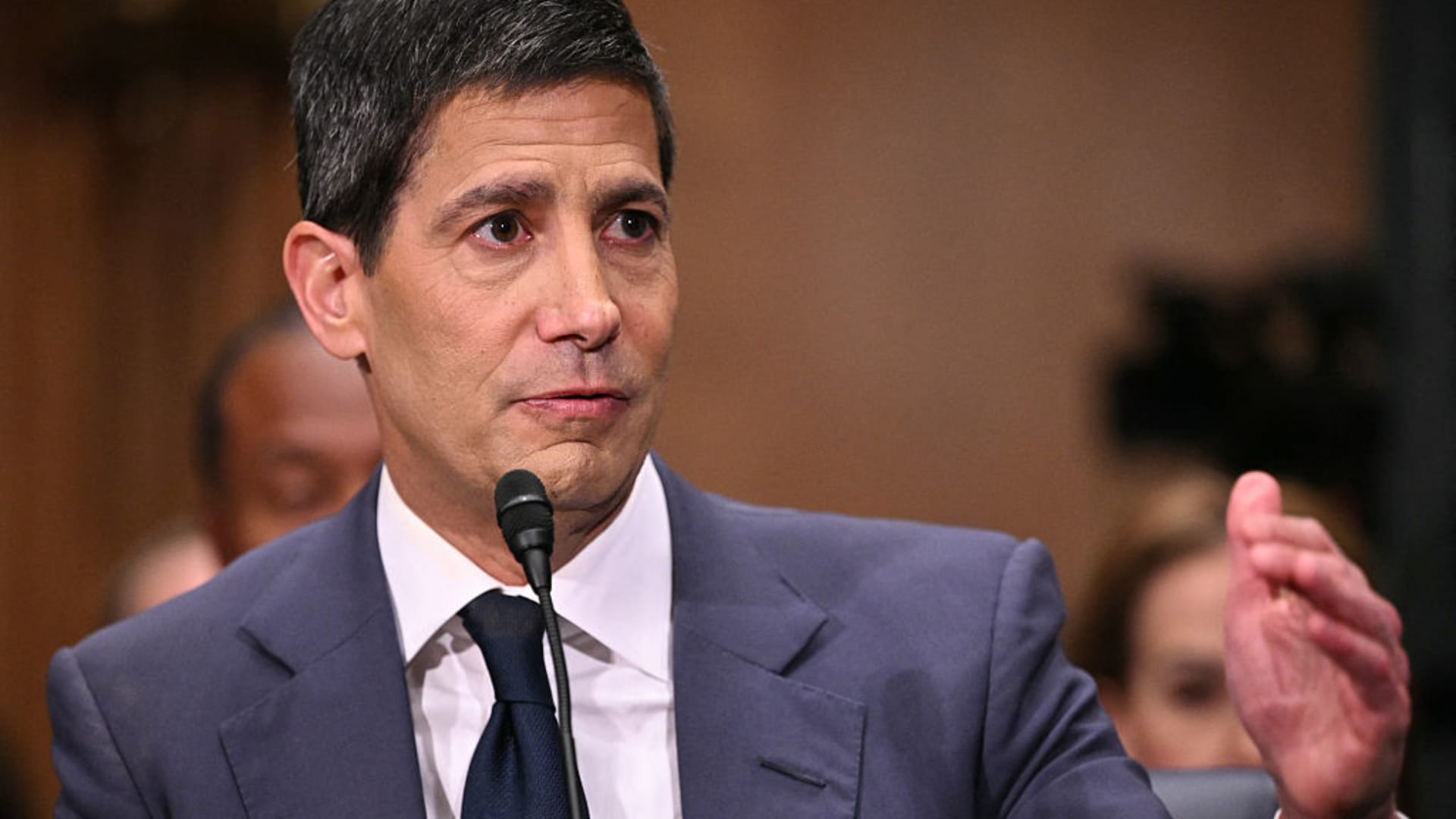
As investors focus on the likely confirmation of a new Federal Reserve chair, Kevin Warsh, many may be overlooking the market that could have the more volatile reaction: bonds. Whenever there is a Fed transition, treasury yields, duration risk, and credit spreads usually move faster as the markets begin to reassess monetary policy.
“What is really important over the next several weeks is this changing of the guard at the Fed chair level,” Paisley Nardini, Simplify Asset Management managing director and head of multi-asset solutions, said on the podcast portion of CNBC’s “ETF Edge” on Monday.
Nardini explained that even when there is no immediate policy move, markets can start pricing in the future quickly. A new Fed chair can change the communications style and alter the pace of future rate hikes or cuts. She said this could send ripples through the treasury market before equities fully react.
“I think the markets are really going to be cautious as to what this might mean. Anytime there is a changing of the guard, markets are going to experience some volatility and we are going to have to start to price in what that means,” she said.
There was a lot of Fed news to digest this week. The Federal Reserve held interest rates steady at its meeting Wednesday, with the federal funds rate unchanged in a 3.50% to 3.75% range. But the war and the surge in oil prices has upended the policymaking assumptions of the central bank and bond traders, who are now betting against another rate cut in 2026. Fed Chair Jerome Powell said the added the pressure on the economy from higher oil prices is likely to remain, even if it hasn’t yet upended the longer-term inflation outlook.
But there is more disagreement than ever inside the Fed, with a shift within the FOMC as more members say there should be no indication at all from the institution that the bias remains towards cutting rates. Chair Powell also said he has no intention to leave his position as Fed governor even when his term as chairman ends, further complicating an already heightened political environment at the Fed.
This backdrop can make the bond market more sensitive, and inflation remains above target with the latest personal consumption expenditures index hovering around 3.5% annually. Core PCE rose to 3.2%.
“If we remember the role of the Fed, we have a dual mandate and that is data driven. And so we have employment on one side of the spectrum and inflation on the other side,” Nardini said, referring to the goal of maximum employment for the economy and 2% inflation. “In a portfolio, often times we forget about bonds until it is front and center and it is too late to react or adjust your portfolio accordingly,” she said.
There is reason to believe more investors may have chosen to ignore bonds during Powell’s tenure at the Fed: they’ve done terribly. The Bloomberg US Aggregate Bond Index that aims to track all U.S. investment-grade debt returned just under 2% annually during Powell’s tenure, far below the average of 6.5% since the 1970s, according to Bespoke. The era of higher interest rates due to inflation, with multiple shocks from Covid to Russia’s invasion of Ukraine and the current U.S.-Iran war, were causes.
Nardini says with the Fed currently in hold mode, the first major risk for bond investors is duration. If investors are loaded up on longer-dated bonds and expecting cuts, they may be vulnerable if they arrive late or not at all. The 10-year treasury has already swung sharply this year, with its current yield over 4%.
The second risk is credit strength. Nardini says corporate spreads remain relatively tight, meaning investors have not been paid significantly more for taking on additional risk in bonds beyond the risk-free treasuries rate. That dynamic can become more important late in the cycle if economic and credit weakness grow. “You really have to dissect how much of a yield within credit is coming from treasuries vs. that spread component,” she said.
The historically tight levels for credit spreads, recently testing multi-decade lows, represents belief among investors that risk of default is low and the economic outlook is strong. But at the same time, even with a Fed on hold, markets had been increasing bets this year that the yield curve will steepen, as short-term rates remain more sensitive to an eventual Fed cut while longer-term rates confront prospects of sticky inflation and higher levels of public debt.
The situation in the credit markets has the attention of the head of the nation’s biggest bank, JPMorgan CEO Jamie Dimon, who warned this week, though not pointing specifically to any current credit market signals, that “We haven’t had a credit recession in so long, so when we have one, it would be worse than people think. It might be terrible.”
Nardini says during periods of relative calm, it is important to remember that calm can be deceptive. “Anytime the markets get complacent, whether that is in equities or within bonds, that is usually when volatility strikes,” she said.
Sign up for our weekly newsletter that goes beyond the livestream, offering a closer look at the trends and figures shaping the ETF market.
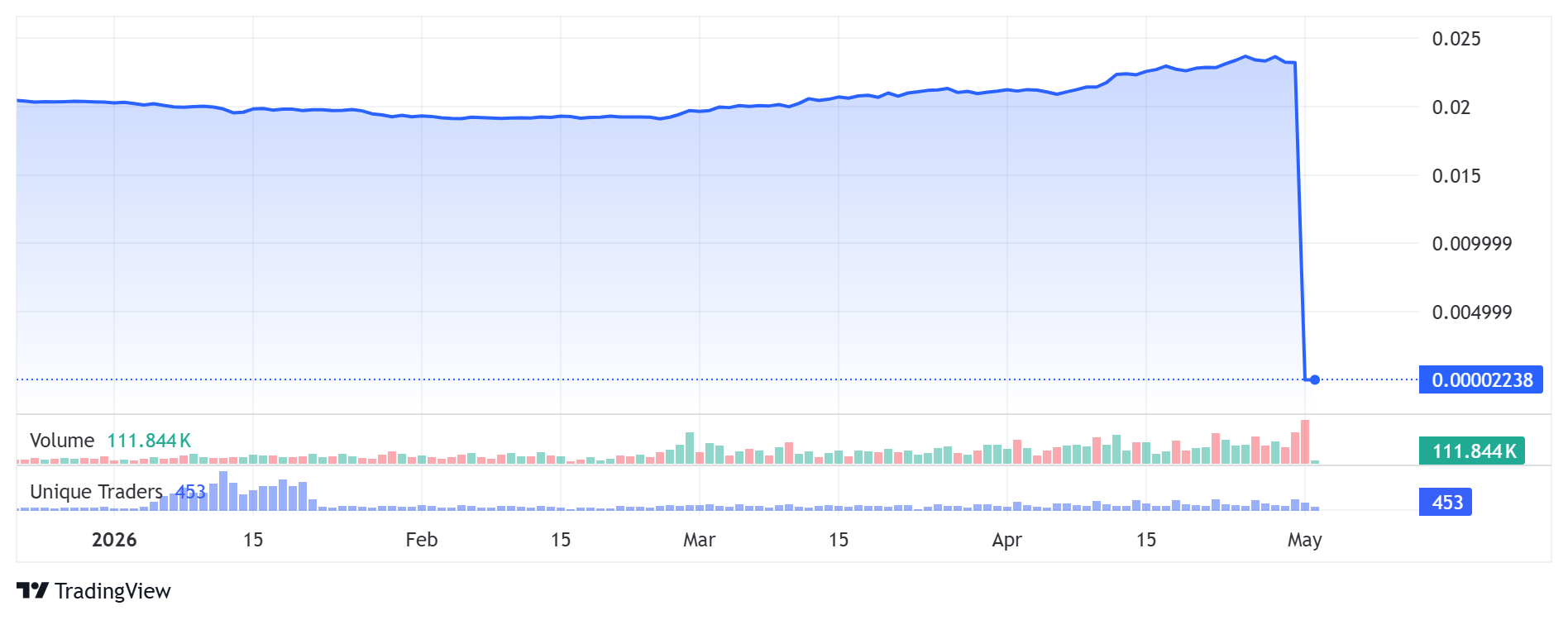
Automated trading bots extracted about $1.32 million by exploiting a price gap in Ant Blockchain (ANB). The dislocation appeared across two Meteora liquidity pools, according to on-chain trackers and Solana market watchers.
The largest single trade converted about $0.227 in USD Coin (USDC) into $696,000, spending only 2.32 SOL in priority fees. Multiple wallets repeated the play until the price gap closed.
Solana MEV Bots Extract $1.32 Million From ANB Arbitrage
A large ANB sell of roughly 8 billion tokens hit a Meteora Dynamic Automated Market Maker (DAMM v2) pool. That swap caused a 99% price impact, according to Solana analyst Kakashi.
The same token kept trading at its prior price inside a parallel Meteora Dynamic Liquidity Market Maker (DLMM) pool.
That mismatch handed bots a profitable arbitrage window. Bots could buy ANB in the cheap pool and resell it in the expensive one within a single atomic transaction.
Routing varied between two paths. Some bots cycled USDC into ANB and back into USDC. Others passed through the ANX token before reaching ANB.
Pennies-to-Fortunes Trades on Solana
Solana’s fast blocks and Jito bundle infrastructure helped Maximum Extractable Value (MEV) bots clear the round trips before the gap closed.
One wallet flipped $0.1 into $196,000. Another turned $0.036 into $86,714, according to Kakashi.
“A suspected arb bot made $696K at the cost of just 2.32 $SOL, after a large $ANB swap caused 99% price impact and opened a major arbitrage,” Solana Floor indicated.
The total profit across two consecutive blocks reached about $1.32 million, per MEV tracking.
ANB’s market cap fell 99% during the run and has continued to decline.

Ant.FUN, the project behind the token, has not addressed the event publicly.
The post Solana Trading Bot Turns 20 cents Into $1.32 Million on Ant Blockchain appeared first on BeInCrypto.

TLDR:
- a16z crypto argues that “stablecoin” was built for volatility concerns, not the infrastructure role it plays today.
- Stability is now a baseline requirement for stablecoins, shifting focus to what the technology can actually build.
- Stablecoins now enable instant cross-border transfers, real-time settlement, and embedded programmable payments.
- a16z crypto predicts stablecoins may fade into the background, becoming simply how global money works online.
Stablecoins were designed to solve a specific problem: crypto volatility. However, a16z crypto now argues the term no longer captures what the technology has become.
As stablecoins grow into global financial infrastructure, the label feels increasingly narrow. The original name pointed to a patch, not a platform. Much like “horsepower,” it may linger long after it stops being accurate.
Stability Is No Longer the Main Selling Point
Stablecoins first emerged when crypto markets were highly unpredictable. Prices could drop or rise 20% within hours.
That made everyday financial activity nearly impossible for users. So developers built assets designed to hold steady value.
The name “stablecoin” made sense at the time. It told users exactly what the asset offered. However, that description no longer captures the full picture. Stability has since become a baseline requirement, not a distinguishing feature.
Today, stablecoins serve a much broader purpose across global finance. They move value across borders instantly, without the delays of traditional banking.
Settlement happens in real time rather than over several business days. Anyone with internet access can hold them directly, with no intermediary involved.
a16z crypto puts it plainly: “Stability is now table stakes. It’s a prerequisite, and not the point.” That shift changes how the industry should think about the technology entirely.
The focus has moved from what stablecoins protect against to what they can actually build. That is a meaningful change in direction.
Because stablecoins run on programmable blockchains, they can also embed into applications. That is something traditional money has never been able to do. The technology now behaves more like software than like conventional currency.
The Language of Money May Change Over Time
Language in technology often lags behind the product itself. People still “dial” numbers on smartphones and “film” with cameras that use no film. These terms stuck even after the technology moved on entirely.
a16z crypto draws a direct parallel to that pattern: “Like ‘horsepower,’ the term stablecoins anchors us to an earlier mental model.”
The name was useful at first, but it now points to a problem that no longer defines the space. Holding onto it risks framing a powerful new primitive as a simple fix. That framing may slow how the broader market understands the technology.
There is also a third possibility, and perhaps the most likely one. The technology could simply disappear into the background. Once electric lighting became standard, people stopped calling it “electric.” It became just “light.”
As stablecoins scale into the trillions and support global payment flows, the name may matter less. a16z crypto sees the end goal clearly: “Money, for the first time, behaves like the rest of the internet: fast, programmable, ubiquitous.”
What will matter is how money performs, not what it is called. The technology is moving well past the label that once defined it.

TLDR:
- Ethereum price structure shows strong compression between the $2,200 support and the $4,800 resistance zone.
- Monthly chart trendline support is weakening after multiple retests since the 2022 lows.
- The 4H Ethereum price structure reflects tight consolidation with no clear directional breakout.
- Market conditions suggest volatility expansion may follow a prolonged sideways compression phase.
Ethereum price structure is tightening across key support and resistance zones as traders monitor a critical range near $2,300.
Multi-timeframe compression on the monthly and 4H charts suggests an impending shift in volatility, with market participants awaiting directional confirmation before positioning.
Ethereum Price Structure Shows Long-Term Pressure Build-Up
Ethereum’s monthly chart reflects a clear distribution zone near $4,800. Price has failed twice at this level, forming a strong resistance band across major cycles.
The repeated rejection has created a structural ceiling that limits upward expansion. Each attempt has reinforced selling pressure at higher levels, keeping price contained within a broader range.
Below current levels, an ascending trendline from 2022 lows continues to act as support. However, multiple retests have gradually reduced its structural strength.
Market participants tracking the Ethereum price structure note that trendline durability weakens with the frequency of tests. This increases sensitivity to downside breaks when support is repeatedly challenged.
A trader observed that the Ethereum price structure shows tightening conditions as resistance holds firm and support continues to be tested.
Compression between resistance and support continues to narrow price behavior. Such conditions often indicate reduced volatility before expansion phases.
If support remains intact, Ethereum may revisit mid-range resistance zones. However, sustained weakness below the trendline could shift the structure toward lower liquidity areas.
Ethereum Price Structure Consolidates Within Tight 4H Range
The Ethereum price structure on the 4H timeframe shows a narrow trading band between $2,200 and $2,400. Price continues to rotate without directional expansion.
This sideways movement reflects market indecision, where both buyers and sellers fail to establish control. Each move upward is met with selling pressure, while dips attract short-term buying.
Momentum indicators remain neutral across this structure. MACD remains flat, while RSI stays near mid-range levels, reflecting balanced sentiment.
Volume behavior supports this view, showing irregular spikes without continuation. This suggests reactive trading conditions rather than strong accumulation or distribution trends.
A market comment described current behavior as Ethereum short-term traders reacting to range boundaries rather than trending momentum.
Short-term breakout levels remain clearly defined. A move above $2,400 may trigger upward continuation, while a loss of $2,200 could expose lower liquidity zones.
Ethereum price structure across both timeframes continues to reflect compression. Market participants are closely watching whether this tightening resolves into expansion or structural breakdown.
Crypto World
The WSJ Just Linked Trump Crypto Venture to a Billion-Dollar Pig Butchering Scam Network: How Deep Does It Go?

A Wall Street Journal investigation has found that World Liberty Financial, the Trump crypto venture, partnered with a virtual-currency company called AB whose key figures were sanctioned by the U.S. Treasury for alleged ties to a transnational pig butchering scam network that stole billions from Americans.
The partnership, which enabled WLF’s USD1 stablecoin to operate on AB’s network, was announced less than a month after the October 14 sanctions. Chase Herro and Zachary Folkman, identified as central to WLF’s operational strategy, are now facing a DOJ Investigation into prior entities linked to the same fraud infrastructure.
The question this story forces is direct: how does a presidentially branded crypto project partner with a company whose controlling shareholder and general manager were simultaneously being sanctioned by the U.S. government for running violent scam compounds?
- Scam scale: Prince Group allegedly stole billions through pig butchering operations across at least 10 compounds in Cambodia
- Sanctions sweep: U.S. Treasury sanctioned more than 140 people and companies on October 14 for alleged Prince Group involvement
- WLF connection: World Liberty Financial enabled its USD1 stablecoin on AB’s network less than one month after the sanctions announcement
- Sanctioned individuals: Yang Jian (controlling shareholder) and Yang Yanming (general manager) of AB’s East Timor resort were both named in the Treasury action
- DOJ scrutiny: Federal investigators are examining Chase Herro and Zachary Folkman’s prior ventures – including Yield Game and Dough Finance – for infrastructure overlap with the scam network
Discover: The best pre-launch token sales
Who Are Chase Herro and Zachary Folkman – and Why Is the DOJ Looking?
Chase Herro and Zachary Folkman are identified in the WSJ investigation as the driving forces behind WLF’s technical and operational direction.

Federal investigators from the DOJ and SEC are scrutinizing their previous projects, specifically Yield Game and Dough Finance, for alleged infrastructure overlap with a pig butchering syndicate that defrauded investors of more than $100 million globally.
Blockchain forensics cited in the investigation show transactions flowing from wallets tied to early WLF development to addresses linked to the scam ring’s money-laundering operations. WLF also reportedly hired developers and consultants who had previously worked for those entities while they were already under federal scrutiny.
Neither Herro nor Folkman has been charged. WLF’s lawyers told the WSJ the company only learned of AB’s connection to the sanctioned East Timor resort project in January 2026 – roughly two months after the partnership was announced.
What Is Pig Butchering, and How Does This Network Connect to WLF’s Infrastructure?
Pig butchering is a long-con fraud scheme in which operators, often using enslaved workers in offshore compounds, build fake online relationships with victims before steering them into fraudulent crypto investments.
The U.S. Justice Department described Prince Group, the organization at the center of this case, as running at least 10 violent scam compounds in Cambodia using exactly this method.
The connection to WLF runs through AB, which was developing a blockchain-themed resort in East Timor.
Two of the men sanctioned on October 14, Yang Jian, the resort’s controlling shareholder, and Yang Yanming, its general manager, were sanctioned specifically for their alleged work for Prince Group.

AB removed all three sanctioned individuals from the company shortly after the Treasury action, but the partnership with WLF was announced weeks later, regardless.
The legal exposure here is not guilt by association alone. If blockchain forensics confirm wallet-level links between WLF’s early development infrastructure and the scam ring’s laundering operations, as the investigation alleges, that moves the story from reputational damage into potential sanctions evasion and crypto-enabled fraud territory that federal prosecutors have pursued aggressively.
Trump Crypto Exposure: What the WLF Brand Makes Worse
World Liberty Financial launched in 2024 as a DeFi lending and governance protocol backed by the Trump family, whose involvement gave the project immediate institutional visibility.
The USD1 stablecoin, the specific product enabled on AB’s network, is WLF’s primary financial infrastructure product, designed to function across partner chains.
There is no evidence Donald Trump or his family had knowledge of the alleged illicit histories of WLF’s technical partners. But the KYP failures described in the investigation are not minor. Sanctioning 140-plus entities on the same day your future partner’s two senior officials appear on that list is the kind of due diligence failure that regulators treat as a structural problem, not an oversight.
The political dimension compounds every legal question. Crypto companies facing regulatory scrutiny for politically connected financial activities operate under a different standard of press and congressional attention – and WLF, carrying the Trump name into every headline, has no buffer against that scrutiny.
Discover: The best crypto to diversify your portfolio with
The post The WSJ Just Linked Trump Crypto Venture to a Billion-Dollar Pig Butchering Scam Network: How Deep Does It Go? appeared first on Cryptonews.
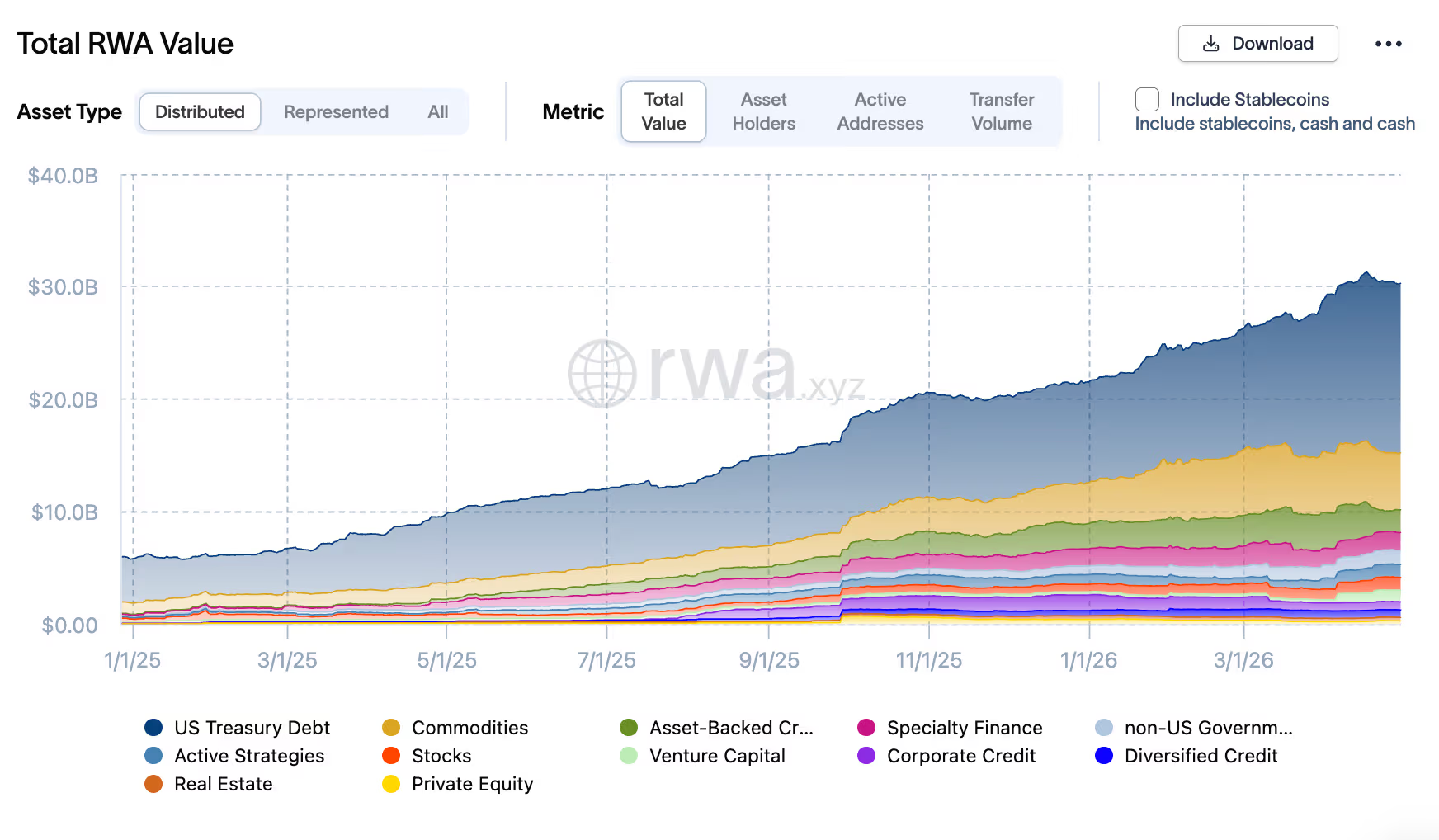
The $292 million exploit of Kelp DAO and the subsequent fallout across crypto lending markets hit decentralized finance (DeFi) at a pivotal moment.
Just as Wall Street firms pushed deeper into onchain markets, the incident has exposed how fragile parts of the system remain and how much work is left before institutions can scale their exposure.
In the weeks leading up to the hack, private credit giant Apollo Global Management (APO), which oversees $900 billion, inked a strategic partnership with Morpho to support lending markets with an option to acquire governance tokens of the protocol, too. Around the same time, the world’s largest asset manager BlackRock (BK) brought its tokenized money market fund onto decentralized exchange Uniswap.
The exploit is unlikely to derail traditional finance (TradFi) pushing deeper into onchain finance, industry insiders argued, but highlighted what DeFi needs to fix before larger pools of capital can move in.
‘Speed bump, not roadblock’
“DeFi platforms are pioneering new ways for investors to utilize their capital more efficiently,” said Nick Cherney, head of innovation at Janus Henderson, an asset manager that oversees about $500 billion in assets. “Pioneers will always face risks.”
Failures like the Kelp DAO exploit can slow momentum, Cherney said, but they also force improvements. Over time, those pressure points tend to produce stronger systems, he argued.
“This is a speed bump for sure, but not a roadblock,” Cherney said.
The longer-term shift, in his view, is already taking shape. Tokenized real-world assets — such as funds, bonds and credit — are starting to anchor DeFi markets, bringing legal frameworks and risk controls that traditional finance has refined over decades.
Episodes like this one could accelerate that transition, Cherney said.

Raising the security floor
For security specialists, the lesson is more direct: the current setup is not enough.
“DeFi and onchain asset management operate in a highly adversarial environment,” said Paul Vijender, head of security at Gauntlet. “Systems are only as secure as their weakest links.”
That reality is pushing the industry toward more comprehensive defenses. Zero-trust architectures — where no part of the system is assumed safe — are becoming harder to avoid, he argued.
In practice, that means layering protections: continuous monitoring, stricter controls, built-in redundancies. Not relying on a single safeguard.
Evgeny Gokhberg, founder of digital asset manager Re7 Capital, said many of the industry’s “best practices” now need to become baseline requirements.
That includes timelocks on key governance actions, stricter multi-signature controls, tighter collateral standards and stronger safeguards around bridges — one of the most common points of failure in DeFi.
“The industry needs to treat them as baseline requirements, not best practice,” he said.
Toward institutional-grade DeFi
Bhaji Illuminati, CEO of Centrifuge Labs, sees the shift as part of a broader compression of financial evolution.
“TradFi has had decades to build up layers of protections,” she said. “DeFi is doing that too, but on a vastly accelerated timeline.”
For institutions to allocate capital at scale, she argued, a few conditions need to be met.
First is clarity: investors need to know exactly what they own, with verifiable collateral and legal structures that map to real-world risk.
Second is reliability: smart contracts, oracles and governance processes must behave in predictable, auditable ways.
Third is liquidity that holds up under pressure, allowing capital to move in and out without distorting markets.
“Being open and secure is not mutually exclusive,” Illuminati said. “The goal is to make trust explicit and verifiable.”
“Going forward, every layer of the DeFi stack needs to make security their number one priority,”she said. “This is becoming increasingly important in the age of artificial intelligence.”
Read more: AI is making crypto’s security problem even worse, Ledger CTO warns
Crypto World
Prediction markets are ditching the ‘casino’ label to become a regular part of how people track the news


Prediction markets are shifting from one-off bets tied to major events into platforms driven by daily user engagement, according to a new report from Bitget Wallet in partnership with Polymarket.
Trading volume on Polymarket reached $25.7 billion in March, but the report points to a deeper change in behavior. Based on activity from 1.29 million wallets in the first quarter, users are returning more often and participating across a wider range of markets, from crypto to sports to politics.
The data suggest growth is being driven by frequency rather than trade size. More than 82% of users traded less than $10,000 during the quarter, a sign the market remains dominated by retail participants. Instead of placing large, infrequent bets, users are engaging in smaller trades more regularly.
“Prediction markets are becoming less about capital and more about consistent, repeated actions,” said Alvin Kan, Bitget Wallet’s chief operating officer. “What we’re seeing is a behavioral shift: The market is scaling with more taps per day, not bigger trades.”
Crypto remains the primary entry point for new users, accounting for nearly 40% of early activity. Its continuous trading and familiar price movements make it a natural starting place. But as users become more active, participation shifts toward markets tied to real-world events.
The report frames this evolution as a structural change. Prediction markets are no longer driven solely by spikes around major occurrences like elections. Instead, they are becoming continuous systems where users return regularly to track and respond to changing probabilities.
“As prediction markets evolve into core financial infrastructure, distribution becomes as important as the underlying market itself,” said Elden Mirzoian, director of growth and partnerships at Polymarket. “We’re seeing a shift from episodic trading to more continuous engagement.”
That shift is also changing how these markets are used. Prices increasingly reflect real-time expectations around macroeconomic trends, politics and culture, and are beginning to appear alongside traditional data sources in media and financial analysis.
Growth has accelerated quickly. Monthly trading volume has climbed from about $1.2 billion in 2025 to more than $20 billion in early 2026, while active wallets have more than tripled in six months. Industry projections cited in the report estimate the market could reach $240 billion in volume this year, with a longer-term path toward $1 trillion.
As participation increases, the focus is moving toward access and usability. Wallets are emerging as key entry points, helping users discover markets and interact with them in real time.

Bitcoin regained above the $78,000 threshold as broader risk-on sentiment lifted equities to fresh highs, but bets in the options market point to a tempered near-term outlook. Derivatives data show traders pricing roughly a one-in-four chance that BTC will trade above $84,000 by the end of May, even as spot buyers and corporate treasury purchases keep demand buoyant.
In the options arena, a May 29 call with an $84,000 strike traded at about 0.0136 BTC, roughly $1,060 at the time, signaling a modest probability of an 8% month-on-month gain. Over the same horizon, put options have maintained a premium relative to calls, underscoring demand for downside protection. Meanwhile, the 2-month Bitcoin futures basis has shown weakness, suggesting limited appetite for bullish leverage as BTC also contends with a 12% decline year-to-date in 2026.
Key takeaways
- Options markets assign roughly a 25% probability of BTC trading above $84,000 by the end of May, reflecting a cautious stance on near-term upside.
- Bitcoin futures basis has weakened over the past 30 days, indicating softer demand for leveraged bets even as spot demand remains resilient.
- US-listed spot Bitcoin ETFs have drawn steady inflows, with March and April net inflows contributing to a total asset base above $100 billion.
- Notable corporate accumulation is under way, with major buyers adding thousands of BTC and collectively equating to more than five months of projected future mining supply, dampening potential sell pressure.
Derivatives signal a cautious path to a breakout
Derivatives data reveal a market that remains skeptical about an immediate upside breakout, even as the spot market has shown strength. The May 29 $84,000 call, despite its modest price, implies an 8% move target within 27 days, translating to a 25% probability of BTC clearing the level by month-end. This aligns with a broader pattern where institutions hedge against sudden pullbacks even as they remain willing to take on selective exposure.
At the same time, the delta skew—an indicator of demand for puts versus calls—has stayed above the typical neutral threshold, suggesting professionals have been willing to pay more for downside protection. This elevated skew, together with a flatter or weaker 2-month futures basis, points to a market that prefers risk management over aggressive long leverage in the near term.
Data sources tracking these dynamics underscore a nuanced picture: while options traders are cautious about a rapid rally, the futures landscape does not negate a potential move higher. The divergence between derivatives sentiment and the strength of spot demand is a hallmark of a market balancing risk and opportunity rather than pursuing a one-way rally.
Spot ETF inflows and corporate buying bolster demand resilience
Despite cautious derivatives signals, institutional demand for spot exposure continues to support Bitcoin’s price profile. So-called US-listed spot Bitcoin exchange-traded funds have amassed meaningful inflows, with March net inflows around $1.3 billion and April inflows near $2 billion. Collectively, these inflows have driven total asset levels beyond the $100 billion mark, highlighting sustained institutional interest beyond the usual retail-driven volatility.
Beyond funds, corporate treasuries have stepped in as well. In the past month, several publicly traded firms disclosed substantial BTC acquisitions to bolster reserves. Strategy (MSTR) added 56,235 BTC, Metaplanet acquired 5,075 BTC, and Strive (ASST) purchased 929 BTC. Taken together, these three entities have accumulated more BTC than about five months of projected future mining supply, a move that significantly reduces the potential for near-term selling pressure from corporate coffers.
Analysts argue that this combination—strong spot ETF inflows and deliberate corporate accumulation—helps absorb mine supply and provides a steady bid under prices, even when the options market signals caution. In this context, the risk-reward dynamic for investors appears to hinge less on frenetic leveraged bets and more on sustained demand from institutions and corporations that view Bitcoin as a strategic balance-sheet asset.
What this means for traders and the broader market
For traders, the current mix of signals suggests a potential pause or consolidation rather than an immediate sprint to new highs. The modest probability of breaking above $84,000 by month-end, coupled with a softening in futures basis, points to a scenario where upside remains possible but not assured, especially if macro risk sentiment shifts or if spot demand eases.
For miners and developers, the continued absorption of mining supply via corporate buys and ETF inflows could lessen the likelihood of sudden supply-driven sell-offs. The accumulation trend reduces the risk that a large, forced selling wave erupts from balance-sheet liquidations and could contribute to price stability amid episodic volatility in derivatives markets.
Looking ahead, investors will be watching whether ETF inflows accelerate again in the coming weeks and whether corporate allocations maintain their pace. Any uptick in spot demand that persists alongside robust ETF inflows could push the market closer to the $84,000 milestone or higher, even if options traders remain selective about the timing of that move.
Additionally, the trajectory of the broader macro backdrop—risk appetite, central-bank policy expectations, and equity market momentum—will continue to shape Bitcoin’s price path. If risk-on sentiment maintains its grip and buyers remain present at the benchmark levels, the market could still surprise on the upside despite the cautious tone reflected in derivatives data.
Looking to the next few weeks, market participants should monitor ETF flow data, large-block corporate purchases, and evolving options and futures dynamics. The interplay between these factors will help determine whether Bitcoin transitions from a cautious, risk-managed rally to a more sustained ascent or resumes a period of consolidation as external catalysts unfold.


The US Senate voted unanimously to bar all senators and their staff from placing bets on political prediction market platforms including Polymarket and Kalshi, with the resolution authored by Republican Senator Bernie Moreno, who also set the end-of-May CLARITY Act deadline.
Summary
- The Senate ban passed unanimously, a notable bipartisan outcome that reflects shared concern about insider information advantages after prediction market trading by political figures drew increasing scrutiny in 2025.
- Kalshi said it already proactively blocks members of Congress from using its platform and described the Senate vote as “a great step to increase trust in markets,” suggesting the resolution formalises existing industry practice.
- Senator Moreno’s authorship of the ban is significant in context: he is the same senator who warned most publicly that the CLARITY Act must pass by the end of May or be shelved until 2030.
The Senate voted unanimously to pass the Senate ban on prediction market trading by senators and staff on May 1. As crypto.news reported, the CFTC has been simultaneously locked in a legal battle with New York, Illinois, Arizona, and Connecticut over prediction market jurisdiction, making the unanimous Senate vote a significant political signal that Congress views political event trading as categorically different from the commercial prediction market activity the CFTC has been defending. Kalshi confirmed its response to the resolution by saying it already proactively blocks members of Congress, adding: “This is a great step to increase trust in markets.” Crypto Integrated reported that the resolution bars senators and their staff from betting on political events on platforms like Polymarket and Kalshi, which had become a visible flashpoint after prediction market data was shown to move in ways that correlated with legislative outcomes before their public announcement.
As crypto.news documented, the CFTC has been arguing that prediction markets on political events are legitimate financial instruments subject to its jurisdiction rather than gambling. As crypto.news tracked, the resolution emerged from a broader political conversation about whether legislators with access to non-public information have an unfair advantage on prediction platforms, a dynamic that undermines the credibility of markets designed to aggregate distributed knowledge.


Tether posted $1.04 billion in Q1 2026 net profit and a record Tether profit reserve buffer of $8.23 billion, backed primarily by $141 billion in US Treasuries, in a quarterly attestation published May 1 by accounting firm BDO, its most detailed financial disclosure to date.
Summary
- Tether profit of $1.04 billion in Q1 represents a buffer growth of 47% year on year, with excess reserves rising from $5.6 billion in Q1 2025 to $8.23 billion in Q1 2026 and total assets reaching $191.77 billion against $183.54 billion in liabilities.
- The $141 billion US Treasuries position makes Tether the 17th-largest holder of American government debt globally, with $20 billion in physical gold and $7 billion in Bitcoin rounding out the reserve base.
- A formal KPMG audit commenced in March 2026, moving Tether toward a full Big Four audit for the first time after years of relying on attestations from BDO and a previous Italian accounting firm.
Tether profit and reserve figures were published in the company’s Q1 2026 attestation on May 1. The official Tether press release confirmed that the attestation was prepared by BDO and showed a net profit of approximately $1.04 billion and an excess reserve buffer of $8.23 billion. “Our responsibility is to make sure USDT works without compromise,” said CEO Paolo Ardoino. “That means building a system that behaves the same way in any market condition, not just when things are stable.” The Q1 profit is driven by Tether’s $141 billion Treasury position, which at prevailing Treasury bill rates above 4% would generate approximately $4 billion in annualised interest income.
The timing of the disclosure is politically consequential. As crypto.news reported, US banks have been pushing hard to slow the GENIUS Act rulemaking, partly because the act would require stablecoin issuers to hold fully verified dollar reserves. Tether has long resisted full disclosure and has never produced a Big Four audit. The KPMG engagement announced in March 2026 is the clearest sign yet that the company is preparing for the formal audit standard the GENIUS Act is expected to require. As crypto.news documented, the FDIC proposed GENIUS Act rules requiring stablecoin issuers to maintain 1:1 reserves backed by cash or highly liquid instruments, a standard Tether’s reserve breakdown technically meets but which requires full audit verification rather than an attestation to satisfy regulators and institutional counterparties. As crypto.news tracked, the GENIUS Act was signed into law in July 2025 and is scheduled to take full effect no later than January 18, 2027, giving Tether a finite runway to produce verified compliance.

Kevin Warsh’s arrival at the Fed may catch bond investors off guard
“Devil Wears Prada 2” ending explained: Meryl Streep, Anne Hathaway react to final shot's powerful “Working Girl” tribute

25-Year-Old Charlie Pike Targets Historic Guineas Win to Eclipse Aidan O’Brien Milestone

Manchester United reach agreement with Casemiro over contract clause amid transfer speculation

US brings back mandatory military draft registration

Steven Gerrard disagrees with Gary Neville over ‘shock’ Chelsea and Arsenal claim | Football


-

 Tech5 days ago
Register Renaming | Hackaday
-
Crypto World7 days ago
Hyperliquid $HYPE Rally Builds Momentum as AI Sector Enters Prove-It Phase
-

 Politics5 days ago
Drax board avoid their own AGM, accused of greenwashing & environmental racism
-

 Tech5 days ago
Why Blue Badges Disappeared From Toyota Hybrids
-

 Tech5 days ago
Images of Samsung’s rumored smart glasses have leaked
-
 Sports6 days ago
IPL 2026: Ruturaj Gaikwad registers slowest fifty of the season, enters all-time unwanted list | Cricket News
-
 Tech20 hours ago
Trump’s 25% EU auto tariff breaches Turnberry Agreement that also covers semiconductors and digital trade
-

 NewsBeat6 days ago
LK Bennett closes all stores after entering administration
-

 Fashion4 days ago
Kylie Jenner’s KHY Enters a New Era with ‘Born in LA’
-
 Entertainment7 days ago
Mariah Carey Slams Deposition Claims In Brother’s Lawsuit
-

 Business4 days ago
Most Commercial Energy Audits Miss the Real Losses
-

 Crypto World4 days ago
CFTC’s AI will review U.S. crypto registration applications, chairman tells CoinDesk
-

 Business5 days ago
(VIDEO) Charlize Theron Climbs Times Square Billboard to Promote New Netflix Thriller ‘Apex’
-

 Business3 days ago
Barclay Brothers Avoid Bankruptcy: HSBC Drops High Court Petitions After IVA Deal
-
 Sports20 hours ago
Paul Scholes issues Marcus Rashford reality check as agreement emerges over Man United star
-

 Tech7 days ago
Microsoft to roll out Entra passkeys on Windows in late April
-

 Tech6 days ago
OpenAI’s Sam Altman apologizes for not reporting ChatGPT account of Tumbler Ridge suspect to police
-
 Business3 days ago
Tesla Officially Registers Elon Musk’s Stock: What Investors Need to Know
-

 Tech4 days ago
Get Ready for More Brain-Scanning Consumer Gadgets
-

 Tech6 days ago
OpenAI CEO apologizes to Tumbler Ridge community
You must be logged in to post a comment Login