
Crypto World
The WSJ Just Linked Trump Crypto Venture to a Billion-Dollar Pig Butchering Scam Network: How Deep Does It Go?


A Wall Street Journal investigation has found that World Liberty Financial, the Trump crypto venture, partnered with a virtual-currency company called AB whose key figures were sanctioned by the U.S. Treasury for alleged ties to a transnational pig butchering scam network that stole billions from Americans.
The partnership, which enabled WLF’s USD1 stablecoin to operate on AB’s network, was announced less than a month after the October 14 sanctions. Chase Herro and Zachary Folkman, identified as central to WLF’s operational strategy, are now facing a DOJ Investigation into prior entities linked to the same fraud infrastructure.
The question this story forces is direct: how does a presidentially branded crypto project partner with a company whose controlling shareholder and general manager were simultaneously being sanctioned by the U.S. government for running violent scam compounds?
- Scam scale: Prince Group allegedly stole billions through pig butchering operations across at least 10 compounds in Cambodia
- Sanctions sweep: U.S. Treasury sanctioned more than 140 people and companies on October 14 for alleged Prince Group involvement
- WLF connection: World Liberty Financial enabled its USD1 stablecoin on AB’s network less than one month after the sanctions announcement
- Sanctioned individuals: Yang Jian (controlling shareholder) and Yang Yanming (general manager) of AB’s East Timor resort were both named in the Treasury action
- DOJ scrutiny: Federal investigators are examining Chase Herro and Zachary Folkman’s prior ventures – including Yield Game and Dough Finance – for infrastructure overlap with the scam network
Discover: The best pre-launch token sales
Who Are Chase Herro and Zachary Folkman – and Why Is the DOJ Looking?
Chase Herro and Zachary Folkman are identified in the WSJ investigation as the driving forces behind WLF’s technical and operational direction.

Federal investigators from the DOJ and SEC are scrutinizing their previous projects, specifically Yield Game and Dough Finance, for alleged infrastructure overlap with a pig butchering syndicate that defrauded investors of more than $100 million globally.
Blockchain forensics cited in the investigation show transactions flowing from wallets tied to early WLF development to addresses linked to the scam ring’s money-laundering operations. WLF also reportedly hired developers and consultants who had previously worked for those entities while they were already under federal scrutiny.
Neither Herro nor Folkman has been charged. WLF’s lawyers told the WSJ the company only learned of AB’s connection to the sanctioned East Timor resort project in January 2026 – roughly two months after the partnership was announced.
What Is Pig Butchering, and How Does This Network Connect to WLF’s Infrastructure?
Pig butchering is a long-con fraud scheme in which operators, often using enslaved workers in offshore compounds, build fake online relationships with victims before steering them into fraudulent crypto investments.
The U.S. Justice Department described Prince Group, the organization at the center of this case, as running at least 10 violent scam compounds in Cambodia using exactly this method.
The connection to WLF runs through AB, which was developing a blockchain-themed resort in East Timor.
Two of the men sanctioned on October 14, Yang Jian, the resort’s controlling shareholder, and Yang Yanming, its general manager, were sanctioned specifically for their alleged work for Prince Group.

AB removed all three sanctioned individuals from the company shortly after the Treasury action, but the partnership with WLF was announced weeks later, regardless.
The legal exposure here is not guilt by association alone. If blockchain forensics confirm wallet-level links between WLF’s early development infrastructure and the scam ring’s laundering operations, as the investigation alleges, that moves the story from reputational damage into potential sanctions evasion and crypto-enabled fraud territory that federal prosecutors have pursued aggressively.
Trump Crypto Exposure: What the WLF Brand Makes Worse
World Liberty Financial launched in 2024 as a DeFi lending and governance protocol backed by the Trump family, whose involvement gave the project immediate institutional visibility.
The USD1 stablecoin, the specific product enabled on AB’s network, is WLF’s primary financial infrastructure product, designed to function across partner chains.
There is no evidence Donald Trump or his family had knowledge of the alleged illicit histories of WLF’s technical partners. But the KYP failures described in the investigation are not minor. Sanctioning 140-plus entities on the same day your future partner’s two senior officials appear on that list is the kind of due diligence failure that regulators treat as a structural problem, not an oversight.
The political dimension compounds every legal question. Crypto companies facing regulatory scrutiny for politically connected financial activities operate under a different standard of press and congressional attention – and WLF, carrying the Trump name into every headline, has no buffer against that scrutiny.
Discover: The best crypto to diversify your portfolio with
The post The WSJ Just Linked Trump Crypto Venture to a Billion-Dollar Pig Butchering Scam Network: How Deep Does It Go? appeared first on Cryptonews.

Crypto World
Cricket Road Game Casino Bonus Guide: Welcome Offers, Free Spins & Wagering Requirements


What is the Cricket Road Game Casino?
The cricket road game casino is an online betting platform that mixes classic casino games with a cricket‑themed interface. It targets fans who enjoy the sport and want to place bets on matches, while also offering slots, live dealer tables and a sports‑betting section. The site is licensed by a recognised European authority, which means the games are audited for fairness and the software runs on a reputable RTP (return‑to‑player) engine. For Indian users the design includes local language snippets and payment options that work with Indian rupees, so the experience feels native rather than a generic offshore portal.
Beyond the visual theme, the casino functions like any other regulated gambling site – you create an account, verify your identity, deposit funds and then can claim bonuses. The “cricket road” part is mostly branding, but it does affect the promotions calendar: during major tournaments you’ll see special cricket‑related bonus codes and free bet offers. This makes the platform attractive for both seasoned punters and beginners who are just learning the ropes of online gaming.
How to Register and Get Started on the Cricket Road Game Casino
Signing up is straightforward: click the “Join Now” button, fill in your name, email and a strong password, then confirm the registration link sent to your inbox. After the basic registration you’ll be prompted to complete KYC (Know Your Customer) verification – a copy of your ID, a proof of address and a selfie are usually enough. The verification step can feel a bit tedious, but it protects you from fraud and speeds up future withdrawals.
Once your account is verified you can explore the lobby, claim the welcome bonus and even try the demo version of the site. You can try the demo version here: https://cricket-roads.com/demo/. The demo does not require a deposit, so you can test the game flow before committing real money. Remember to set a personal deposit limit during registration – it’s a good habit for responsible gambling.
Welcome Bonuses and Wagering Requirements
The casino offers a layered welcome package that combines a match bonus, free spins and a cricket‑specific betting credit. Most Indian players find the 100% match up to ₹25,000 plus 50 free spins on a cricket‑themed slot to be the most appealing part. However, each bonus comes with wagering requirements – typically 30x the bonus amount before any winnings can be withdrawn.
Below is a quick comparison of the main welcome offers you’ll encounter on the cricket road game casino platform:
| Bonus Type | Maximum Value | Wagering Requirement | Expiry |
|---|---|---|---|
| Match Deposit Bonus | ₹25,000 | 30x | 30 days |
| Free Spins | 50 spins | 20x win amount | 7 days |
| Cricket Bet Credit | ₹5,000 | 15x stake | 14 days |
Always read the fine print – some games contribute only 10% towards the wagering, while others count 100%. Choosing low‑variance slots for the free spins can help you meet the requirements faster without risking your bankroll.
Payment Methods and Withdrawal Speed for Indian Users
Depositing funds into the cricket road game casino is simple thanks to a wide range of Indian‑friendly payment methods. You can use net banking (HDFC, ICICI, SBI), UPI, popular e‑wallets like Paytm, PhonePe and even prepaid cards. Most deposits are processed instantly, allowing you to start playing within minutes of confirming the transaction.
Withdrawals, on the other hand, depend on the method you choose. E‑wallets usually deliver money within 24‑48 hours, while bank transfers may take 3‑5 business days. The casino does not charge a fee for withdrawals, but your bank might apply a nominal service charge. Below is a short list of the most common deposit and withdrawal options:
- Net Banking – instant deposit, 3‑5 days withdrawal
- UPI – instant deposit, 1‑2 days withdrawal
- Paytm/PhonePe – instant deposit, 24‑48 h withdrawal
- Prepaid Cards – instant deposit, 2‑4 days withdrawal
Before you request a payout, ensure your account is fully verified; otherwise the casino may hold the funds until the documents are approved. Keeping a copy of the transaction receipt can speed up the support process if any issues arise.
Mobile Experience: App and Browser Play
Most Indian players prefer gaming on the go, and the cricket road game casino delivers a responsive mobile website that works on both Android and iOS browsers. The layout adapts to smaller screens without losing functionality – you still have access to the live casino, sports betting and the full bonus section.
For those who want a native feel, the casino offers a downloadable app available from the Play Store. The app supports push notifications for match‑day promotions, quick deposit shortcuts and fingerprint login for added security. It also respects the same responsible‑gambling tools as the desktop version – you can set daily limits, self‑exclude, or take a cooling‑off break directly from the mobile menu.
Security, Licensing and Fair Play
The cricket road game casino operates under a licence from the Malta Gaming Authority, a regulator known for strict player protection rules. All data transmission is encrypted with SSL 256‑bit technology, which means your personal details and payment information are shielded from prying eyes. The casino also employs third‑party auditors to verify the RNG (random number generator) used in slots and table games.
In addition to technical security, the platform runs a responsible‑gambling programme that includes deposit limits, loss limits and easy self‑exclusion. If you ever feel you need help, the site links to Indian support organisations such as the National Council on Problem Gambling (NCPG). This combination of licensing, encryption and player‑centred tools makes the environment safe for both new and experienced gamblers.
Live Casino and Sports Betting Options
Beyond the standard slots, the cricket road game casino hosts a live dealer section where you can play blackjack, roulette and baccarat with real‑time dealers. The live streams are HD and feature professional croupiers who speak English, making the experience feel like a brick‑and‑mortar casino in Mumbai. For cricket fans, there is a dedicated sports‑betting hub that covers international tours, IPL, and even domestic T20 leagues.
The betting market includes traditional options such as match winner, run‑line and top batsman, as well as in‑play bets that update every few seconds. Odds are competitive, and the platform offers a “cash‑out” feature that lets you settle a bet before the match ends – useful if you want to lock in profit or limit loss during a volatile game.
Customer Support and Responsible Gambling
Support is available 24/7 via live chat, email and a toll‑free number that works across India. The live chat is usually answered within a minute, and agents are trained to handle queries about bonuses, payment issues and account verification. If you have a dispute about a wager, you can open a ticket and the casino’s dispute resolution team will investigate within 48 hours.
Responsible gambling is woven into the user journey. On the account dashboard you will find a “Responsible Play” tab where you can set deposit caps, limit session time, or opt for a temporary self‑exclusion of 7, 30 or 90 days. The site also offers an educational hub with articles on how to gamble safely and links to professional counselling services.
Frequently Asked Questions About Cricket Road Game Casino
- Can I use my Indian rupee for deposits? Yes, the platform accepts INR through net banking, UPI and popular e‑wallets.
- Is the casino licensed? It holds a Malta Gaming Authority licence, which ensures fair play and player protection.
- How long do withdrawals take? E‑wallet withdrawals are usually processed within 24‑48 hours; bank transfers may need 3‑5 business days.
- Are there any restrictions for Indian players? The casino accepts Indian IP addresses and does not block access, but you must be 21 years or older.
- What should I do if I develop a gambling problem? Use the responsible gambling tools in your account or contact the NCPG for confidential help.

TLDR:
- Taiwan legislator Dr. Ko Ju-Chun formally presented a Bitcoin reserve report to the premier on April 29.
- Over 80% of Taiwan’s $602B reserves are in U.S. dollar assets, raising concentration and debasement risks.
- The Bitcoin Policy Institute argues Bitcoin resists seizure and operates outside sovereign monetary control.
- Taiwan’s central bank has one month to submit a new report covering stablecoins and digital asset reserves.
Taiwan’s push for a Bitcoin reserve entered a new phase on April 29 when legislator Dr. Ko Ju-Chun formally presented a policy report to Premier Cho Jung-tai and Central Bank of China Governor Yang Chin-long.
The report, produced by the Bitcoin Policy Institute, urges the government to allocate a share of Taiwan’s $602 billion in foreign exchange holdings to Bitcoin.
The move signals growing momentum for digital asset integration within Taiwan’s financial policymaking circles.
Legislative Action Brings Bitcoin Reserve Debate to the Forefront
The formal session took place within Taiwan’s Legislative Yuan, which operates under the country’s semi-presidential system.
In that structure, the premier holds considerable authority over domestic economic policy. Dr. Ko presented the BPI report during an official interpellation session, making it the first time the document reached the premier directly.
Ko first raised these ideas with the central bank governor during a separate session on March 30. The April 29 session escalated the conversation by including the head of government.
Ko also requested that the CBC produce a new report within one month, covering stablecoins and broader digital asset reserve strategies.
The BPI report was written by BPI Fellow Jacob Langenkamp and published in March 2026. It draws attention to the fact that over 80% of Taiwan’s reserves are held in U.S. dollar-denominated assets.
This concentration creates exposure to currency debasement and potential geopolitical disruption, according to the report’s findings.
Langenkamp elaborated on why Bitcoin stands apart from traditional reserve assets, stating: “Taiwan faces a unique convergence of geopolitical risk and reserve concentration that makes the case for Bitcoin reserves especially compelling.”
He further explained that conventional assets fall short under extreme conditions, adding that “in a scenario where physical gold is stranded and dollar reserves face restrictions, Bitcoin remains fully accessible without physical transport.”
Central Bank History and the Road Ahead
Taiwan’s central bank had previously evaluated Bitcoin as a reserve asset in late 2025. At that time, the CBC concluded it was unsuitable, pointing to concerns around volatility, limited liquidity, and custody risks. However, the CBC also committed to a digital asset sandbox, using 210 seized Bitcoin to run future testing.
That earlier conclusion has not stopped lawmakers from revisiting the issue. Dr. Ko, who serves as vice co-chair of the Legislative Yuan’s US-Taiwan Caucus and founder of the Emerging Technology Exchange Association, has continued to push for a structured policy review. His follow-through demonstrates that the conversation is not fading.
Reflecting on the broader reach of BPI’s research, Sam Lyman, head of research at the Bitcoin Policy Institute, pointed to the weight of Ko’s actions: “BPI’s research is reaching the highest levels of government, both here in the United States and abroad.”
He added that the legislator’s direct presentation to Taiwan’s top officials showed how seriously Bitcoin is now being considered as a strategic asset, noting: “Our job is to educate the public on the benefits of Bitcoin, and this report is in furtherance of that goal.”
The CBC’s one-month deadline to respond on stablecoins and digital asset reserves sets a concrete timeline. Whether the bank revises its earlier position or defends it will likely shape the next phase of this policy debate in Taiwan.

A16z has thrown its weight behind the Commodity Futures Trading Commission (CFTC) in a growing federal-state standoff over prediction markets, opposing state regulators that try to shut down platforms like Kalshi and Polymarket.
The venture capital heavyweight submitted the letter on Thursday in response to the CFTC’s advance notice of proposed rulemaking on prediction markets. It argues that state-level crackdowns, ranging from cease-and-desist letters to criminal charges, are creating barriers that undermine the federal agency’s mandate to provide “impartial access to its markets and services.”
In recent weeks alone, the CFTC has filed lawsuits against Illinois, Arizona, Connecticut, New York and Wisconsin, claiming that those states overstepped by trying to regulate markets that fall under federal jurisdiction. A16z backed that position, arguing that forcing exchanges to block users based on their state of residence directly conflicts with the CFTC’s impartial access rules.
“Being forced to deny impartial access to users in states that seek to license or prohibit certain event contracts will likely severely circumscribe available liquidity,” the firm wrote.
Related: Prediction market battle gets closer to Supreme Court
CFTC gets to define gaming: A16z
State attorneys general have countered that platforms offering contracts on sports outcomes and political events are running unlicensed gambling operations. A16z pushed back on that framing, arguing that the CFTC, not state legislatures, holds the authority to define what constitutes “gaming” under federal commodities law, given the agency’s decades of oversight over event contracts.
Beyond the jurisdictional fight, a16z also made a case for the social value of prediction markets, describing their pricing mechanisms as a distinct form of price discovery that surfaces crowd intelligence on uncertain outcomes. The firm also showed support for blockchain-based platforms, claiming that the onchain auditability of transactions makes regulatory oversight more effective.

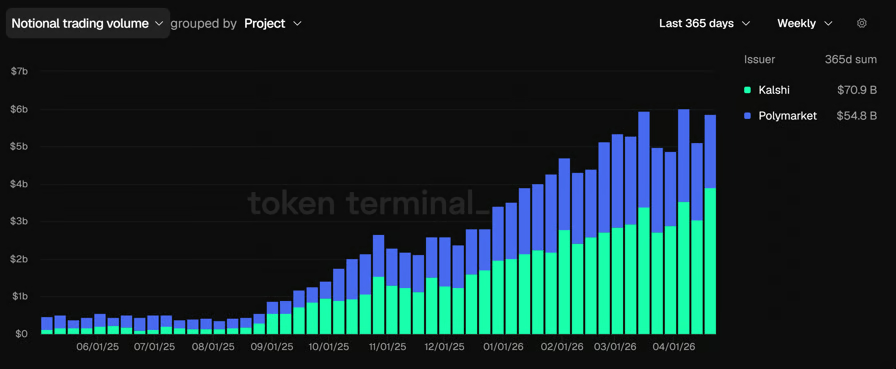
Kalshi and Polymarket trading volume. Source: Token Terminal
The letter arrives amid the growing popularity of these platforms. As Cointelegraph reported, monthly trading volume reached $25.7 billion in March, with more than 80% of users classified as retail, defined as those trading less than $10,000.
Related: Kalshi, Polymarket among 27 prediction platforms banned in Brazil
Polymarket wants back into the US
Polymarket is in talks with the CFTC to lift the ban that has kept American users off its main platform since a 2022 settlement, in which the company paid a $1.4 million penalty and agreed to block US customers over unregistered event contracts.
A full return would require a formal commission vote, though the process may move faster given that four of the CFTC’s commissioner seats are currently vacant.
Magazine: How to fix suspected insider trading on Polymarket and Kalshi

Key Takeaways
- Advanced Micro Devices announces Q1 2026 results after Tuesday’s closing bell on May 5
- Analyst consensus targets earnings per share of $1.28 and sales of $9.88 billion, representing approximately 33% year-over-year increases
- Options market pricing suggests potential stock movement of 8% in either direction post-earnings
- RBC Capital increased its price objective to $325 while maintaining a Hold stance due to valuation metrics
- D.A. Davidson elevated AMD to Buy with a $375 price target, highlighting robust CPU momentum driven by agentic AI applications
Advanced Micro Devices enters its Q1 earnings announcement with significant upward momentum. Shares have surged approximately 70% since the start of 2026, reaching all-time peaks as artificial intelligence hardware demand continues its relentless expansion.
Advanced Micro Devices, Inc., AMD
The semiconductor manufacturer releases first-quarter 2026 financial results following Tuesday’s market close on May 5. Wall Street consensus calls for quarterly revenue reaching $9.88 billion alongside adjusted earnings per share of $1.28—both metrics showing approximately 33% growth compared to the same period last year.
The options market provides insight into expected volatility: derivatives pricing indicates traders are positioning for movement up to 8% in either direction through week’s end. With shares settling Friday just above the $360 level, this projected range establishes an upside target near $389 and a downside floor around $331.
The chipmaker’s recent surge has been amplified by freshly inked collaborations with Anthropic and Meta. These strategic partnerships have strengthened the bullish narrative that AMD maintains a central position in the ongoing AI infrastructure expansion.
Wall Street Price Targets Reflect Mixed Sentiment
RBC Capital analyst Srini Pajjuri elevated his price objective from $230 to $325 in advance of the report while retaining his Hold recommendation. He anticipates the company will deliver results exceeding expectations with modestly raised guidance. His primary reservation centers on valuation metrics—AMD currently commands approximately 33x projected 2027 earnings, representing a 75% premium versus Nvidia’s multiple.
Pajjuri identified wafer supply bottlenecks as a constraining factor and notes AMD’s CPU market position trails Intel’s—implying reduced upside leverage from that segment’s recovery.
D.A. Davidson analyst Gil Luria adopted a more optimistic stance. Following Intel’s impressive Q1 performance, Luria upgraded AMD to Buy while boosting his target from $220 to $375. He interprets Intel’s exceptional quarter as a direct indicator for AMD’s CPU business trajectory.
Luria’s investment thesis emphasizes agentic AI workloads. He referenced Intel CEO Pat Tan’s observation that GPU-to-CPU ratios for pretraining applications—traditionally around 8:1—are trending toward equilibrium as artificial intelligence shifts toward inference and agentic computing tasks. This transition represents a substantial demand catalyst for AMD’s EPYC processor lineup.
Revenue Projections See Upward Revisions
Luria increased his 2026 revenue forecast for AMD by $2 billion while elevating his gross profit projection by $1.5 billion—substantially exceeding consensus estimates. His analysis suggests AMD possesses pricing power across its product range as demand persistently outstrips available supply.
He additionally highlighted Intel CFO David Zinsner’s commentary indicating the semiconductor industry could experience double-digit growth with momentum carrying through 2027.
Regarding AI accelerators, analysts widely anticipate AMD will confirm the deployment timeline for its MI4xx Helios GPU series at OpenAI and Meta. Such confirmation would prove significant for investors monitoring AMD’s efforts to narrow Nvidia’s lead in the data center graphics processor market.
Consensus sentiment on Wall Street: Moderate Buy recommendation, with 19 analysts rating the stock as Buy and nine maintaining Hold positions. The mean price target of $300 trails the current trading level, indicating AMD’s recent rally has surpassed numerous analyst projections.
First-quarter results arrive Tuesday following the market close.
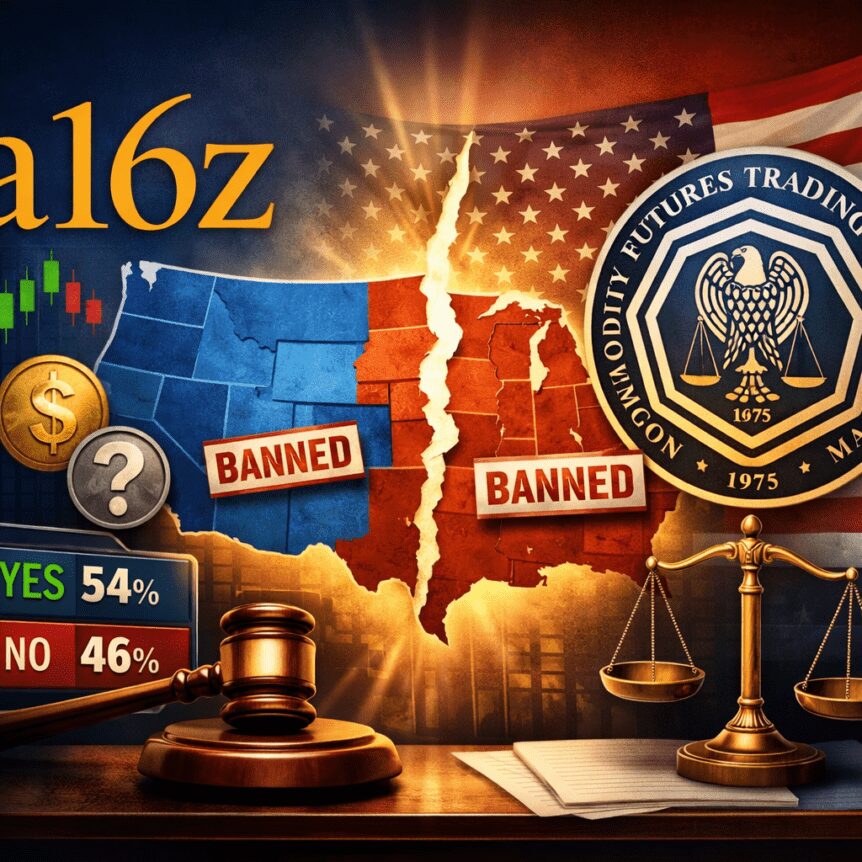
According to Cointelegraph, Andreessen Horowitz (A16z) has publicly aligned with the CFTC in a high-stakes federal-state dispute over prediction markets. In a letter filed on Thursday in response to the CFTC’s advance notice of proposed rulemaking on prediction markets, the venture capital firm urged that aggressive state enforcement—ranging from cease-and-desist letters to criminal charges—undermines the federal regulator’s mandate to provide impartial access to its markets and services.
The filing comes amid a broader push by the CFTC to assert federal oversight over event contracts while state attorneys general and regulators seek to apply their own licensing and gambling laws. In recent weeks, the CFTC has sued several states—Illinois, Arizona, Connecticut, New York, and Wisconsin—arguing that those jurisdictions overstep by attempting to regulate prediction markets that, the regulator says, fall under federal jurisdiction. A16z supported the position that forcing exchanges to block users based on state residency directly conflicts with the CFTC’s impartial access principles. The letter thus positions the debate as a core clash over jurisdiction, access, and the proper scope of regulatory authority for event- and outcome-related contracts.
“Being forced to deny impartial access to users in states that seek to license or prohibit certain event contracts will likely severely circumscribe available liquidity,” the firm wrote. The stance reinforces a broader debate about whether prediction-market platforms should be treated as regulated financial markets or as something else entirely, and it underscores the attention paid by major investors to the regulatory architecture around these platforms. The discussion surrounding the CFTC’s rulemaking follows a period of rapid growth for prediction markets, with platforms like Kalshi and Polymarket at the center of policy and compliance debates.
Key takeaways
- The A16z letter explicitly backs the CFTC’s pursuit of federal oversight and argues that state crackdowns undermine impartial access to prediction-market platforms.
- The CFTC has pursued lawsuits against Illinois, Arizona, Connecticut, New York, and Wisconsin, signaling a persistent federated-state conflict over how these markets should be regulated.
- A16z rejects narratives that characterize prediction-market platforms as unlicensed gambling, asserting that the CFTC—not state legislatures—defines what constitutes “gaming” under federal commodities law.
- The firm highlights on-chain transaction auditability as a potential contributor to more effective regulatory oversight and compliance controls.
- Polymarket seeks a path to reintroduce US users to its main platform; a full return would require a formal vote by the CFTC’s commissioners, a process potentially accelerated by vacant commissioner seats.
- Market activity in prediction markets remains substantial, with March monthly volume reported around $25.7 billion and a predominantly retail user base.
Federal-state clash over prediction markets and A16z’s stance
The core dispute centers on who should regulate event contracts and how their markets should be accessed by participants across state lines. A16z’s letter frames the issue as a test of whether federal authority, via the CFTC, should ensure uniform, impartial access to prediction-market platforms, or whether state authorities may condition access through licensing requirements or outright bans. By arguing that state-level restrictions impede liquidity and price discovery, the firm positions the CFTC’s access rules as essential to the health and integrity of the market ecosystem. The letter—submitted in the context of the CFTC’s advanced rulemaking process—asserts that federal oversight serves the public interest by maintaining open, fair, and auditable markets for uncertain outcomes.
Kalshi and Polymarket, as prominent platforms in this space, are frequently cited as case studies illustrating the tensions between state licensing approaches and federal market design. The stance taken by A16z aligns with a view that state remedies, when they seek to bar or restrict users based on residency, may undermine the cross-border liquidity and efficiency that federal markets are designed to sustain. The broader regulatory environment has underscored a growing expectation that the industry needs clear, stable federal guidelines to avoid a patchwork of state actions that could fragment liquidity and complicate compliance for operators and participants alike.
Jurisdiction: CFTC vs. state regulators on gaming and event contracts
A key dimension of the debate concerns how to classify and regulate event contracts. State attorneys general have argued that platforms offering bets on sports results or political events operate unlicensed gambling businesses. A16z countered by emphasizing the CFTC’s historical role in overseeing event contracts under federal commodities law, arguing that this authority should define what constitutes “gaming” for purposes of regulation. In this framing, the CFTC’s jurisdiction is not just a matter of policy preference but a statutory and regulatory reality that governs how these products can be offered and who can participate.
Beyond jurisdictional questions, A16z highlighted the social value of prediction markets as price-discovery mechanisms that aggregate crowd intelligence on uncertain outcomes. The firm also contended that blockchain-based platforms, with their on-chain transparency and auditability, offer regulatory oversight advantages that can enhance compliance and risk management for both operators and overseers. This angle ties regulatory considerations to the evolving infrastructure of the market—where on-chain records and verifiable transactions could support more robust enforcement and oversight mechanisms.
Policy implications, liquidity, and compliance considerations
The regulatory discourse surrounding prediction markets matters for a range of market participants, including exchanges, banks, investors, and technology providers. The federal-state friction affects licensing, access controls, and the ability of platforms to offer services across state lines. For operators, this translates into regulatory uncertainty, potential licensing costs, and the risk of abrupt changes in permissible activities. For regulators, the interplay between state-level attempts to regulate and federal authority raises questions about the optimal architecture for consumer protection, market integrity, and financial stability in markets that hinge on uncertain outcomes.
Market activity figures cited in industry coverage illustrate the scale of engagement in prediction markets. March data indicate monthly trading volumes in the tens of billions of dollars, with a majority of participants categorized as retail traders—defined as individuals trading smaller ticket sizes. This usage profile underscores the practical importance of predictable access and consistent regulatory treatment for liquidity provision, price discovery, and consumer protections. The onus is on policymakers to provide clarity that can support legitimate market activity while upholding compliance standards across jurisdictions.
Polymarket’s current status reflects the ongoing regulatory negotiation. After a 2022 settlement that included a $1.4 million penalty and a block on US customers for unregistered event contracts, Polymarket is engaging with the CFTC to explore a pathway for reinstating US access to its main platform. While a complete regulatory green light would require a formal commission vote, the context of several commission seats remaining vacant could accelerate consideration, depending on procedural timelines and regulatory priorities. This case illustrates how enforcement actions, settlements, and rulemaking interact to shape the practical feasibility of cross-border platform operations in the United States.
Closing perspective
The evolving policy framework for prediction markets sits at the intersection of federal oversight, state enforcement, and the assessment of how blockchain-enabled platforms can support compliant, transparent price discovery. As authorities refine rules and as large investors advocate for clear federal guidance, the coming months are likely to determine whether US-based prediction markets achieve broader access while maintaining robust governance and consumer protections. Observers should watch for CFTC rulemaking outcomes, any further regulatory actions, and the potential implications for Kalshi, Polymarket, and other platforms operating in this space.
TLDR:
- Bitcoin’s four-year cycle has historically revolved around halving-led supply reductions and rallies.
- Spot Bitcoin ETFs introduced new institutional demand that altered traditional cycle behavior.
- Bitcoin reached a new all-time high before the 2024 halving, breaking past cycle patterns.
- Analysts now track liquidity and rates alongside halvings to assess Bitcoin market direction.
Bitcoin remains at the center of market attention as investors reassess the relevance of its long-standing four-year cycle.
While halving events have historically shaped bullish momentum, the rise of spot ETFs and institutional inflows is introducing a new market structure that could redefine Bitcoin’s traditional price behavior.
Halving Cycles Built Bitcoin’s Historical Market Identity
The Bitcoin four-year cycle has long been tied to the asset’s programmed halving schedule. Every four years, mining rewards are reduced by half, cutting the pace of new Bitcoin entering circulation.
This supply shock historically supported bullish expectations. Market participants often viewed halvings as catalysts for long-term price expansion, especially when demand remained stable or increased.
The traditional cycle usually started with an accumulation phase after a sharp market correction. During this stage, long-term holders gradually increased exposure while retail traders remained cautious.
As the halving approached, market sentiment often shifted. Optimism returned, trading activity improved, and Bitcoin gradually attracted fresh capital entering the market.
Halvings have repeatedly created a scarcity narrative that investors continue to price into long-term valuations.
After the halving, Bitcoin historically entered stronger bullish phases. Prices accelerated as new buyers entered the market, media coverage expanded, and momentum traders increased exposure.
Previous cycles followed a recognizable pattern. Bitcoin reached new highs after halvings before major corrections reset valuations and started another cycle.
This structure became a reference point for investors building long-term crypto strategies. It also strengthened the belief that Bitcoin’s price behavior followed a relatively predictable rhythm.
Institutions and ETFs Are Challenging the Traditional Pattern
The latest Bitcoin four-year cycle has introduced a major shift in market composition. Spot Bitcoin ETFs approved in January 2024 opened direct exposure to traditional investors.
Asset managers, including BlackRock, Fidelity, and VanEck, launched regulated Bitcoin investment products. This expanded access beyond crypto-native traders and introduced consistent institutional demand.
Unlike previous cycles, Bitcoin reached a new all-time high before the April 2024 halving. This development disrupted expectations tied to historical post-halving rallies.
Institutional flows became the dominant driver of price discovery. Retail participation remained below levels seen during earlier cycle peaks.
Another crypto-focused account also noted that Bitcoin is increasingly trading as a macro asset, with ETF inflows and liquidity conditions driving momentum more than retail speculation.
Many analysts now believe Bitcoin is becoming more sensitive to interest rates, monetary policy, and broader capital market trends.
This shift may reduce volatility and soften the sharp boom-and-bust structure seen in earlier cycles. However, the Bitcoin four-year cycle remains a widely followed framework.
Investors are now watching whether Bitcoin still delivers a delayed post-halving expansion or continues evolving under institutional influence. The answer may determine whether historical cycle patterns remain relevant in future market conditions.
As investors focus on the likely confirmation of a new Federal Reserve chair, Kevin Warsh, many may be overlooking the market that could have the more volatile reaction: bonds. Whenever there is a Fed transition, treasury yields, duration risk, and credit spreads usually move faster as the markets begin to reassess monetary policy.
“What is really important over the next several weeks is this changing of the guard at the Fed chair level,” Paisley Nardini, Simplify Asset Management managing director and head of multi-asset solutions, said on the podcast portion of CNBC’s “ETF Edge” on Monday.
Nardini explained that even when there is no immediate policy move, markets can start pricing in the future quickly. A new Fed chair can change the communications style and alter the pace of future rate hikes or cuts. She said this could send ripples through the treasury market before equities fully react.
“I think the markets are really going to be cautious as to what this might mean. Anytime there is a changing of the guard, markets are going to experience some volatility and we are going to have to start to price in what that means,” she said.
There was a lot of Fed news to digest this week. The Federal Reserve held interest rates steady at its meeting Wednesday, with the federal funds rate unchanged in a 3.50% to 3.75% range. But the war and the surge in oil prices has upended the policymaking assumptions of the central bank and bond traders, who are now betting against another rate cut in 2026. Fed Chair Jerome Powell said the added the pressure on the economy from higher oil prices is likely to remain, even if it hasn’t yet upended the longer-term inflation outlook.
But there is more disagreement than ever inside the Fed, with a shift within the FOMC as more members say there should be no indication at all from the institution that the bias remains towards cutting rates. Chair Powell also said he has no intention to leave his position as Fed governor even when his term as chairman ends, further complicating an already heightened political environment at the Fed.
This backdrop can make the bond market more sensitive, and inflation remains above target with the latest personal consumption expenditures index hovering around 3.5% annually. Core PCE rose to 3.2%.
“If we remember the role of the Fed, we have a dual mandate and that is data driven. And so we have employment on one side of the spectrum and inflation on the other side,” Nardini said, referring to the goal of maximum employment for the economy and 2% inflation. “In a portfolio, often times we forget about bonds until it is front and center and it is too late to react or adjust your portfolio accordingly,” she said.
There is reason to believe more investors may have chosen to ignore bonds during Powell’s tenure at the Fed: they’ve done terribly. The Bloomberg US Aggregate Bond Index that aims to track all U.S. investment-grade debt returned just under 2% annually during Powell’s tenure, far below the average of 6.5% since the 1970s, according to Bespoke. The era of higher interest rates due to inflation, with multiple shocks from Covid to Russia’s invasion of Ukraine and the current U.S.-Iran war, were causes.
Nardini says with the Fed currently in hold mode, the first major risk for bond investors is duration. If investors are loaded up on longer-dated bonds and expecting cuts, they may be vulnerable if they arrive late or not at all. The 10-year treasury has already swung sharply this year, with its current yield over 4%.
The second risk is credit strength. Nardini says corporate spreads remain relatively tight, meaning investors have not been paid significantly more for taking on additional risk in bonds beyond the risk-free treasuries rate. That dynamic can become more important late in the cycle if economic and credit weakness grow. “You really have to dissect how much of a yield within credit is coming from treasuries vs. that spread component,” she said.
The historically tight levels for credit spreads, recently testing multi-decade lows, represents belief among investors that risk of default is low and the economic outlook is strong. But at the same time, even with a Fed on hold, markets had been increasing bets this year that the yield curve will steepen, as short-term rates remain more sensitive to an eventual Fed cut while longer-term rates confront prospects of sticky inflation and higher levels of public debt.
The situation in the credit markets has the attention of the head of the nation’s biggest bank, JPMorgan CEO Jamie Dimon, who warned this week, though not pointing specifically to any current credit market signals, that “We haven’t had a credit recession in so long, so when we have one, it would be worse than people think. It might be terrible.”
Nardini says during periods of relative calm, it is important to remember that calm can be deceptive. “Anytime the markets get complacent, whether that is in equities or within bonds, that is usually when volatility strikes,” she said.
Sign up for our weekly newsletter that goes beyond the livestream, offering a closer look at the trends and figures shaping the ETF market.
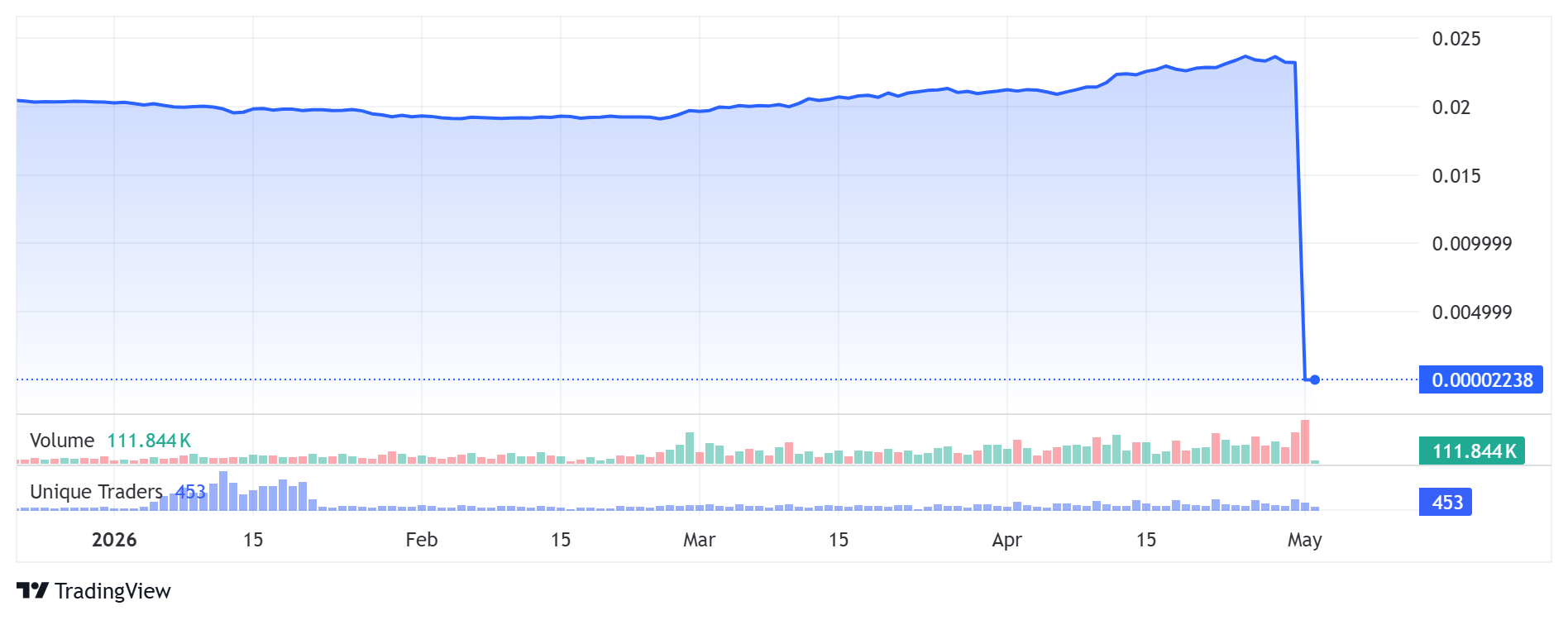
Automated trading bots extracted about $1.32 million by exploiting a price gap in Ant Blockchain (ANB). The dislocation appeared across two Meteora liquidity pools, according to on-chain trackers and Solana market watchers.
The largest single trade converted about $0.227 in USD Coin (USDC) into $696,000, spending only 2.32 SOL in priority fees. Multiple wallets repeated the play until the price gap closed.
Solana MEV Bots Extract $1.32 Million From ANB Arbitrage
A large ANB sell of roughly 8 billion tokens hit a Meteora Dynamic Automated Market Maker (DAMM v2) pool. That swap caused a 99% price impact, according to Solana analyst Kakashi.
The same token kept trading at its prior price inside a parallel Meteora Dynamic Liquidity Market Maker (DLMM) pool.
That mismatch handed bots a profitable arbitrage window. Bots could buy ANB in the cheap pool and resell it in the expensive one within a single atomic transaction.
Routing varied between two paths. Some bots cycled USDC into ANB and back into USDC. Others passed through the ANX token before reaching ANB.
Pennies-to-Fortunes Trades on Solana
Solana’s fast blocks and Jito bundle infrastructure helped Maximum Extractable Value (MEV) bots clear the round trips before the gap closed.
One wallet flipped $0.1 into $196,000. Another turned $0.036 into $86,714, according to Kakashi.
“A suspected arb bot made $696K at the cost of just 2.32 $SOL, after a large $ANB swap caused 99% price impact and opened a major arbitrage,” Solana Floor indicated.
The total profit across two consecutive blocks reached about $1.32 million, per MEV tracking.
ANB’s market cap fell 99% during the run and has continued to decline.

Ant.FUN, the project behind the token, has not addressed the event publicly.
The post Solana Trading Bot Turns 20 cents Into $1.32 Million on Ant Blockchain appeared first on BeInCrypto.
TLDR:
- a16z crypto argues that “stablecoin” was built for volatility concerns, not the infrastructure role it plays today.
- Stability is now a baseline requirement for stablecoins, shifting focus to what the technology can actually build.
- Stablecoins now enable instant cross-border transfers, real-time settlement, and embedded programmable payments.
- a16z crypto predicts stablecoins may fade into the background, becoming simply how global money works online.
Stablecoins were designed to solve a specific problem: crypto volatility. However, a16z crypto now argues the term no longer captures what the technology has become.
As stablecoins grow into global financial infrastructure, the label feels increasingly narrow. The original name pointed to a patch, not a platform. Much like “horsepower,” it may linger long after it stops being accurate.
Stability Is No Longer the Main Selling Point
Stablecoins first emerged when crypto markets were highly unpredictable. Prices could drop or rise 20% within hours.
That made everyday financial activity nearly impossible for users. So developers built assets designed to hold steady value.
The name “stablecoin” made sense at the time. It told users exactly what the asset offered. However, that description no longer captures the full picture. Stability has since become a baseline requirement, not a distinguishing feature.
Today, stablecoins serve a much broader purpose across global finance. They move value across borders instantly, without the delays of traditional banking.
Settlement happens in real time rather than over several business days. Anyone with internet access can hold them directly, with no intermediary involved.
a16z crypto puts it plainly: “Stability is now table stakes. It’s a prerequisite, and not the point.” That shift changes how the industry should think about the technology entirely.
The focus has moved from what stablecoins protect against to what they can actually build. That is a meaningful change in direction.
Because stablecoins run on programmable blockchains, they can also embed into applications. That is something traditional money has never been able to do. The technology now behaves more like software than like conventional currency.
The Language of Money May Change Over Time
Language in technology often lags behind the product itself. People still “dial” numbers on smartphones and “film” with cameras that use no film. These terms stuck even after the technology moved on entirely.
a16z crypto draws a direct parallel to that pattern: “Like ‘horsepower,’ the term stablecoins anchors us to an earlier mental model.”
The name was useful at first, but it now points to a problem that no longer defines the space. Holding onto it risks framing a powerful new primitive as a simple fix. That framing may slow how the broader market understands the technology.
There is also a third possibility, and perhaps the most likely one. The technology could simply disappear into the background. Once electric lighting became standard, people stopped calling it “electric.” It became just “light.”
As stablecoins scale into the trillions and support global payment flows, the name may matter less. a16z crypto sees the end goal clearly: “Money, for the first time, behaves like the rest of the internet: fast, programmable, ubiquitous.”
What will matter is how money performs, not what it is called. The technology is moving well past the label that once defined it.
TLDR:
- Ethereum price structure shows strong compression between the $2,200 support and the $4,800 resistance zone.
- Monthly chart trendline support is weakening after multiple retests since the 2022 lows.
- The 4H Ethereum price structure reflects tight consolidation with no clear directional breakout.
- Market conditions suggest volatility expansion may follow a prolonged sideways compression phase.
Ethereum price structure is tightening across key support and resistance zones as traders monitor a critical range near $2,300.
Multi-timeframe compression on the monthly and 4H charts suggests an impending shift in volatility, with market participants awaiting directional confirmation before positioning.
Ethereum Price Structure Shows Long-Term Pressure Build-Up
Ethereum’s monthly chart reflects a clear distribution zone near $4,800. Price has failed twice at this level, forming a strong resistance band across major cycles.
The repeated rejection has created a structural ceiling that limits upward expansion. Each attempt has reinforced selling pressure at higher levels, keeping price contained within a broader range.
Below current levels, an ascending trendline from 2022 lows continues to act as support. However, multiple retests have gradually reduced its structural strength.
Market participants tracking the Ethereum price structure note that trendline durability weakens with the frequency of tests. This increases sensitivity to downside breaks when support is repeatedly challenged.
A trader observed that the Ethereum price structure shows tightening conditions as resistance holds firm and support continues to be tested.
Compression between resistance and support continues to narrow price behavior. Such conditions often indicate reduced volatility before expansion phases.
If support remains intact, Ethereum may revisit mid-range resistance zones. However, sustained weakness below the trendline could shift the structure toward lower liquidity areas.
Ethereum Price Structure Consolidates Within Tight 4H Range
The Ethereum price structure on the 4H timeframe shows a narrow trading band between $2,200 and $2,400. Price continues to rotate without directional expansion.
This sideways movement reflects market indecision, where both buyers and sellers fail to establish control. Each move upward is met with selling pressure, while dips attract short-term buying.
Momentum indicators remain neutral across this structure. MACD remains flat, while RSI stays near mid-range levels, reflecting balanced sentiment.
Volume behavior supports this view, showing irregular spikes without continuation. This suggests reactive trading conditions rather than strong accumulation or distribution trends.
A market comment described current behavior as Ethereum short-term traders reacting to range boundaries rather than trending momentum.
Short-term breakout levels remain clearly defined. A move above $2,400 may trigger upward continuation, while a loss of $2,200 could expose lower liquidity zones.
Ethereum price structure across both timeframes continues to reflect compression. Market participants are closely watching whether this tightening resolves into expansion or structural breakdown.

How Chaz Bowker went from chef to YouTube golf fame

Why New Cars Don’t Offer Engine Options Like Old American Cars Did

Naoya Inoue beats Junto Nakatani in Tokyo super fight to retain undisputed titles

Manchester United reach agreement with Casemiro over contract clause amid transfer speculation

US brings back mandatory military draft registration

Steven Gerrard disagrees with Gary Neville over ‘shock’ Chelsea and Arsenal claim | Football

Money power WhatsApp status instgram reel money power

btc live trading | live trade xauusd #shorts #bitcoin #live #livetrading #goldtrading

Bajaj Finance Q4 Results 2026 | Bajaj Finance Results Today | Bajaj Finance Share News Today
-

 Tech5 days ago
Register Renaming | Hackaday
-
Crypto World7 days ago
Hyperliquid $HYPE Rally Builds Momentum as AI Sector Enters Prove-It Phase
-

 Politics5 days ago
Drax board avoid their own AGM, accused of greenwashing & environmental racism
-

 Tech5 days ago
Why Blue Badges Disappeared From Toyota Hybrids
-

 Tech5 days ago
Images of Samsung’s rumored smart glasses have leaked
-
 Sports6 days ago
IPL 2026: Ruturaj Gaikwad registers slowest fifty of the season, enters all-time unwanted list | Cricket News
-
 Tech21 hours ago
Trump’s 25% EU auto tariff breaches Turnberry Agreement that also covers semiconductors and digital trade
-

 NewsBeat6 days ago
LK Bennett closes all stores after entering administration
-

 Fashion4 days ago
Kylie Jenner’s KHY Enters a New Era with ‘Born in LA’
-
 Entertainment7 days ago
Mariah Carey Slams Deposition Claims In Brother’s Lawsuit
-

 Business4 days ago
Most Commercial Energy Audits Miss the Real Losses
-

 Crypto World4 days ago
CFTC’s AI will review U.S. crypto registration applications, chairman tells CoinDesk
-

 Business5 days ago
(VIDEO) Charlize Theron Climbs Times Square Billboard to Promote New Netflix Thriller ‘Apex’
-

 Business3 days ago
Barclay Brothers Avoid Bankruptcy: HSBC Drops High Court Petitions After IVA Deal
-
 Sports20 hours ago
Paul Scholes issues Marcus Rashford reality check as agreement emerges over Man United star
-

 Tech7 days ago
Microsoft to roll out Entra passkeys on Windows in late April
-

 Tech6 days ago
OpenAI’s Sam Altman apologizes for not reporting ChatGPT account of Tumbler Ridge suspect to police
-
 Business3 days ago
Tesla Officially Registers Elon Musk’s Stock: What Investors Need to Know
-

 Tech4 days ago
Get Ready for More Brain-Scanning Consumer Gadgets
-

 Tech6 days ago
OpenAI CEO apologizes to Tumbler Ridge community
You must be logged in to post a comment Login