
Business
Spirit Airlines shutdown prompts quick response from Trump Transportation Sec


Transportation Secretary Sean Duffy launches a civility campaign, ‘Dress Better, Act Better, Fly Better,’ urging air travelers to dress with respect and practice courtesy.
Transportation Secretary Sean Duffy announced a number of relief measures for Spirit Airlines customers and employees on Saturday.
The four major U.S. airlines — United, Delta, JetBlue and Southwest — “are all capping ticket prices specifically for Spirit customers who now need to rebook canceled flights,” Duffy said in a Saturday post on X. The airlines will offer Spirit customers who validate they have booked Spirit flights a one-way ticket costing around $200, Duffy said in a Saturday morning press conference.
“I would recommend that if you have a ticket with spirit that you actually try to book with these airlines as soon as possible, these offers are not going to be open forever,” he said.
The press conference followed Spirit’s early Saturday statement that the company would be shutting down operations.
TRUMP SAYS HE WANTS ‘SOMEBODY’ TO BUY SPIRIT AIRLINES, OPPOSES UNITED-AMERICAN MERGER
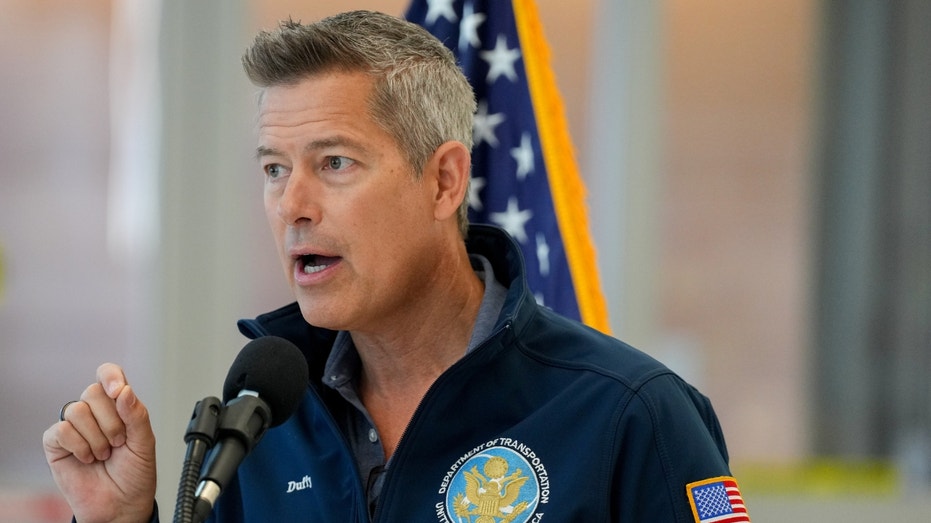
Transportation Secretary Sean Duffy during a news conference in Terminal A at Newark Liberty International Airport (EWR) in Newark, New Jersey, on Saturday, May 2, 2026. (Adam Gray/Bloomberg via Getty Images / Getty Images)
Additional relief measures for both customers and former Spirit employees will also be implemented, including a pathway for preferential employment interviews at other airlines, Duffy wrote.
“There’s a demand for aviation workers. So, even American and United have drafted or crafted microsites for Spirit employees to potentially jump the line, jump the queue and get preferential treatment in the application process for the many airlines that are now hiring, whether it’s pilots, flight attendants, baggage workers, or even those who have worked in the call centers, you can go to the individual websites to see what’s offered by each of the individual airlines,” Duffy said.
| Ticker | Security | Last | Change | Change % |
|---|---|---|---|---|
| UAL | UNITED AIRLINES HOLDINGS INC. | 92.52 | +2.52 | +2.80% |
| JBLU | JETBLUE AIRWAYS CORP. | 4.86 | +0.20 | +4.40% |
| FLYYQ | SPIRIT AVIATION HOLDINGS INC | 1.045 | -0.35 | -25.36% |
| DAL | DELTA AIR LINES INC. | 68.98 | +0.99 | +1.46% |
| LUV | SOUTHWEST AIRLINES CO. | 38.76 | +0.84 | +2.22% |
| ALGT | ALLEGIANT TRAVEL CO. | 75.02 | -0.62 | -0.82% |
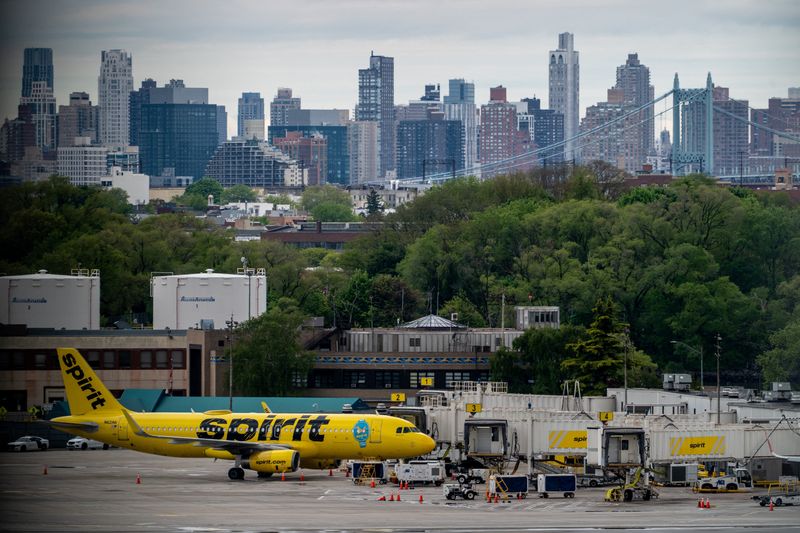
Spirit Airlines announced the shutdown of operations early Saturday morning.
AMERICAN AIRLINES CEO SAYS MERGER WITH UNITED WOULD BE ‘BAD FOR CUSTOMERS’
“This morning at 3 a.m., Spirit Airlines ceased operations. So what that means is Spirit does not have airplanes in the air flying as of this morning. Also, their call centers are closed, and they don’t have staff at ticket counters. So if you have a flight scheduled with Spirit Airlines, don’t show up at the airport. There will be no one here to assist you,” Duffy said.
Duffy also bashed Democrats, particularly the Biden administration, for what he said was their role in quashing a failed Spirit-JetBlue merger.
“Why are we here today?” Duffy asked. “There was a proposed merger between JetBlue and Spirit, and Joe Biden and [Biden Transportation Secretary] Pete Buttigieg, along with the Biden DOJ, decided that they did not want that merger to take place.”
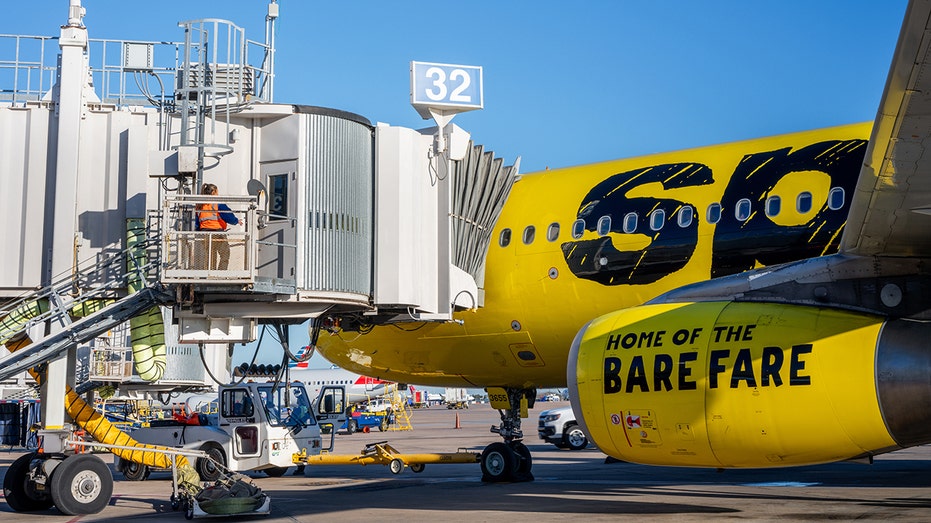
A Spirit Airlines aircraft undergoes operations in preparation for departure at the Austin-Bergstrom International Airport on Feb. 12, 2024, in Austin, Texas. (Brandon Bell/Getty Images / Getty Images)
“And at the time, the Biden and Buttigieg DOJ bragged and said, as they canceled the option for this merger, that this was a victory for U.S. travelers who deserve lower prices and better choices,” Duffy continued.
“This merger should have been allowed. And this, today would indicate this is not better for travelers. This is not better for pricing. This is not better for competition. Actually. It’s worse. We had an airline go down because the markets were trying to allow two airlines to merge, make them stronger and offer more competition for the American consumer,” he said.
Duffy also blamed Sen. Elizabeth Warren, D-Mass., for championing the merger’s blocking.
“Elizabeth Warren at the time chaired the blocking of the merger, saying… this was a Biden win for flyers. So again, I think it’s important that we always look with a keen eye when airlines want to merge. We care about pricing for consumers,” Duffy said.
Additional relief measures Duffy announced included reduced fares from American and Delta on high-volume Spirit routes and price freezes on routes that they’ve shared with Spirit. Allegiant Air, a budget airline with similar prices to Spirit’s, will offer 50% discounts on base fares until May 10, Duffy announced.
Duffy did reveal that the Trump administration was exploring all options for ways to bail out Spirit.
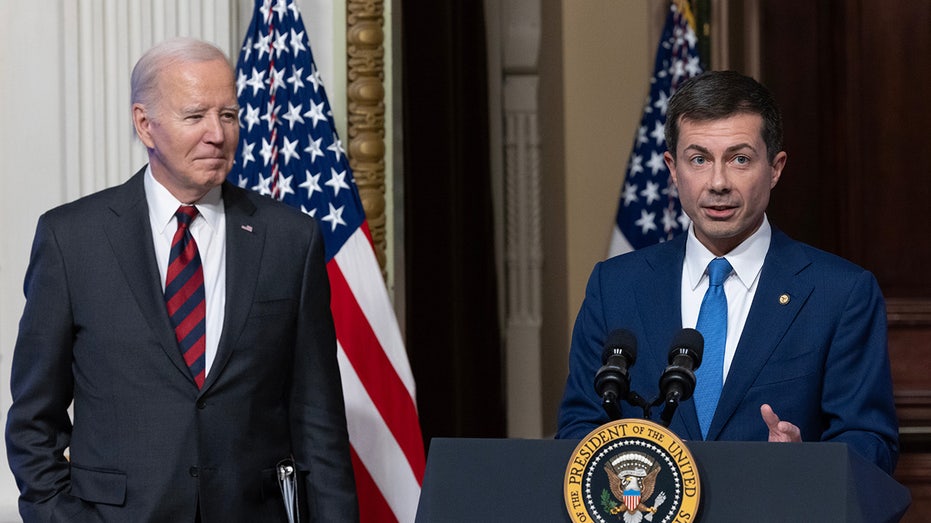
President Biden and Transportation Secretary Pete Buttigieg during an event at the White House in Washington, D.C., on Monday, Nov. 27, 2023. (Michael Reynolds/EPA/Bloomberg via Getty Images / Getty Images)
“There was a number of ideas being floated on how the government could step in and be helpful to Spirit Airlines. The president was like a dog on a bone trying to figure out a way to keep Spirit afloat,” Duffy recalled.
“In the end, this was a creditor issue. Again, they have the final say of whether they want to do a deal with the government, but also, from the government’s perspective, we oftentimes don’t have half a billion dollars lying around in a spare account that we can put into a bailout of an airline. So there was creative thinking on how it could happen, those two things never materialized.”
Duffy also downplayed broader risks for the budget airline sector, rejecting the notion that the ongoing war in Iran played a factor in Spirit’s downfall.
MAJOR AIRLINE AXES 20,000 ‘UNPROFITABLE’ FLIGHTS AS JET FUEL COSTS SOAR
“Spirit was in dire straits long before the war with Iran. Multiple times they had filed for bankruptcy. Their model wasn’t working. They couldn’t get the fiscal health. So this was not the impetus. The war was not the impetus for Spirit,” he said.
He did reference a recent request from other budget airlines for $2.5 billion, but said it was not necessary.
CLICK HERE TO GET FOX BUSINESS ON THE GO
“You’ve heard that other airlines have talked about requesting a $2.5 billion bailout. I am in continual contact, and my team is in contact with all the CEOs of the airlines. I would say that at this point, I don’t think it’s necessary. They do have access to cash. If they want to come to the US government, we would be a lender of last resort. If they can find dollars in the private markets, I think that’s better for them,” Duffy said.
This is a developing story. Please check back for updates.



Iran offers Strait deal; Trump dissatisfied but prefers non-military path


Americans on a budget mourn loss of low-cost Spirit Airlines


MELBOURNE — Early counting in the Nepean state by-election on May 2, 2026, showed Liberal candidate Anthony Marsh leading independent Tracee Hutchison as voters in the marginal Mornington Peninsula seat chose a successor to resigned MP Sam Groth. Polling stations across the district closed in the afternoon, with results trickling in throughout the evening in a contest that tested local priorities and major party strategies.
The Victorian Electoral Commission reported steady turnout as residents cast ballots at 13 polling places. With preferences still being distributed, officials cautioned that final outcomes could take time, but initial figures pointed to a competitive race in the traditionally Liberal-leaning electorate.
Campaign Focused on Local Concerns
The short by-election campaign centered on peninsula-specific issues, including coastal management, housing affordability and infrastructure demands from population growth. Marsh, the Mornington Peninsula Shire mayor, emphasized community representation and practical governance during his campaign.
Hutchison positioned herself as an independent voice, highlighting environmental protection and decision-making transparency. Candidates from One Nation, Greens and other minor parties added further options, addressing topics from cost of living to cannabis reform.
Labor’s decision not to contest the seat shifted dynamics, potentially directing preferences toward independents or Liberals. The choice drew analysis about opposition tactics in contests where victory appeared challenging.
Preliminary Results and Counting Process
As counting progressed at the main tally room, Marsh held an edge in primary votes, performing strongly in western and eastern booths. Hutchison attracted support in southern areas, appealing to voters seeking alternatives to major parties.
Preference flows from eliminated candidates will determine the two-candidate preferred result. The commission expected clearer indications by late Saturday or early Sunday, though close margins could extend the process.
Officials urged patience as formal verification continued. The by-election, called after Groth’s February resignation, offered an early gauge of sentiment in a key Victorian district.
Historical Background of the Seat
Nepean has changed hands between Liberal and Labor in recent cycles, reflecting its marginal status. The electorate includes affluent coastal communities, expanding suburbs and rural pockets, creating diverse voter bases with varied priorities.
Previous contests featured tight races influenced by broader state trends. The by-election continued the tradition of local issues often taking precedence over partisan narratives.
Voter Priorities Emerge
Cost of living, particularly energy prices and housing, featured prominently in discussions with families and retirees. Infrastructure projects, including road upgrades and public transport, drew attention amid growth pressures.
Environmental concerns around unique ecosystems influenced some voters. Community services and planning decisions also resonated in local forums.
Turnout patterns varied, with higher participation in established areas. Weather and timing as an autumn Saturday influenced accessibility for some residents.
Reactions from Candidates and Parties
Marsh thanked supporters while awaiting fuller counts, stressing commitment to local issues. Hutchison expressed gratitude for backing an independent voice and vowed continued advocacy.
Liberal leader John Pesutto monitored developments, viewing the seat as important for opposition strength. Premier Jacinta Allan focused on government priorities while respecting the democratic process.
Minor parties used the platform to highlight policies, aiming to build profiles for future contests.
Potential Implications for Victorian Politics
Though one seat, the by-election provides insights into voter mood in marginal areas. Results could inform strategic planning for major parties ahead of the next general election.
The independent challenge reflects interest in non-major options in regional Victoria. Preference flows and minor party performances offer data for studying shifting allegiances.
As counting continues, observers watch for clues about broader trends. The outcome, whether a Liberal hold or tighter result, will shape political narratives in coming months.
Smooth Electoral Process
The Victorian Electoral Commission oversaw polling with standard measures for accessibility and safety. Results reporting used modern technology while maintaining verification standards.
Voters received clear candidate information through commission materials. The process upheld Australia’s democratic traditions with high integrity.
Looking Ahead After the By-Election
Attention will turn to how parties interpret the result for future campaigns. Nepean’s voters contributed their voices to Victoria’s political conversation.
Candidates and parties will reflect on effectiveness and voter messages. The by-election adds another chapter to the state’s electoral history.
Polling day in Nepean passed without major incident, allowing the democratic process to unfold. Victorians await official outcomes as the 2026 calendar advances.
NEW YORK — Intel Corp. stock presents a complex investment case in 2026, with analysts divided on whether to buy or sell shares of the semiconductor giant as it pursues a high-stakes turnaround amid fierce competition and shifting industry dynamics. The company, once a dominant force in chips, faces questions about its ability to regain ground in foundry services and data center markets while navigating significant financial and operational challenges.
AFP
Trading recently near $100 after a notable rally earlier in the year, Intel shares reflect cautious optimism around restructuring efforts and potential AI-related opportunities. However, Wall Street’s consensus “Hold” rating and average price targets around $65 to $80 suggest many see limited upside or even downside from current levels. The wide range of forecasts — from as low as $30 to highs near $120 — highlights deep uncertainty surrounding the company’s path forward.
Recent Performance and Turnaround Efforts
Intel reported encouraging signs in early 2026 quarters, with revenue stabilization and progress on cost-cutting initiatives. Leadership under CEO Pat Gelsinger emphasized foundry ambitions, aiming to compete with TSMC through advanced process technologies and U.S.-based manufacturing investments.
Government support through the CHIPS Act provided billions in funding for domestic fabs, bolstering long-term prospects. Intel’s 18A process node, targeted for 2025 production, generated excitement as a potential game-changer for custom chips and external customers.
Yet execution risks remain high. Delays in process technology historically plagued Intel, eroding market share to AMD and others in CPUs. Foundry losses continued weighing on margins, prompting aggressive cost reductions including layoffs and asset reviews.
Analyst Perspectives Split
Wall Street views range widely. Bulls point to Intel’s engineering talent, diversified portfolio and potential recovery in PC and server markets. Some forecast substantial upside if foundry wins materialize and AI demand spills over.
Bears highlight persistent losses, high capital expenditures and competition from Nvidia in accelerators. Valuation concerns persist despite the stock’s pullback from peaks, with many arguing the company trades at a premium to its current fundamentals.
Consensus among 41 analysts tracked by major services leans “Hold,” with a handful of buy ratings and scattered sells. Average targets imply downside from recent prices, reflecting skepticism about near-term profitability.
Key Factors for 2026 Outlook
Several catalysts could influence Intel’s trajectory. Success with 18A and securing major foundry customers would validate the strategy, potentially boosting revenue and margins. PC market recovery and enterprise spending on AI infrastructure offer tailwinds.
Risks include further process delays, foundry customer acquisition challenges and macroeconomic pressures on semiconductor demand. Geopolitical tensions and supply chain issues add uncertainty.
Intel’s balance sheet strength provides runway for investments, but sustained losses could pressure credit ratings and investor confidence. Dividend sustainability remains a focus for income-oriented shareholders.
Investment Considerations
For buyers, Intel represents a contrarian bet on a storied American tech name executing a complex pivot. Long-term investors comfortable with volatility may see value if turnaround milestones hit. Dollar-cost averaging mitigates timing risks.
Sellers or those avoiding the stock cite better opportunities in peers with stronger moats and clearer growth paths. Nvidia’s AI dominance and AMD’s CPU gains highlight competitive pressures. Diversification across semiconductors reduces single-company exposure.
Short-term traders monitor quarterly results, guidance and industry events closely. Technical levels and sentiment shifts drive near-term moves in a volatile name.
Broader Semiconductor Industry Context
Intel operates within a dynamic sector. AI spending fuels demand for advanced chips, benefiting leaders but pressuring laggards. Foundry competition intensifies as nations invest in domestic manufacturing for security reasons.
U.S. policy support through subsidies aids Intel but invites scrutiny over execution. Global supply chains remain vulnerable to disruptions, affecting all players.
Intel’s challenges mirror industry-wide transitions toward specialized computing and advanced packaging. Success depends on adapting faster than rivals while controlling costs.
Company History and Strategic Shift
Founded in 1968, Intel pioneered microprocessors that powered the PC revolution. Decades of dominance gave way to stumbles in mobile and process technology, allowing competitors to gain ground.
The current strategy under Gelsinger focuses on regaining process leadership and building a major foundry business. IDM 2.0 combines internal manufacturing with external partnerships, aiming for resilience and growth.
Progress remains uneven, with promising technology roadmaps tempered by financial losses. The coming years will test whether Intel can reclaim its former glory or settle into a diminished role.
Final Thoughts on Buy or Sell Decision
Intel stock in 2026 suits risk-tolerant investors betting on successful execution of a complex turnaround. The company’s legacy, talent and policy support provide foundations, but competition and history warrant caution.
Thorough due diligence, including review of quarterly updates and industry trends, is essential. Professional advice helps align decisions with individual goals and risk profiles.
No outcome is guaranteed in the fast-moving semiconductor sector. Intel’s journey reflects broader challenges and opportunities in American technology manufacturing. For those convinced of its potential, current levels may offer entry into a storied name’s next chapter.
As 2026 progresses, Intel’s ability to deliver on promises will determine whether bulls or bears prevail in one of the market’s most closely watched recoveries.

NEW YORK — Investors weighing Samsung Electronics against Taiwan Semiconductor Manufacturing Co. (TSMC) in 2026 face a classic semiconductor showdown: TSMC’s ironclad dominance in advanced foundry services fueled by insatiable AI demand versus Samsung’s aggressive multibillion-dollar gamble to close the gap through massive capital spending and memory leadership. While most Wall Street analysts favor TSMC as the clearer buy for its technological moat and consistent growth, Samsung’s $73 billion semiconductor investment plan offers higher-risk, higher-reward upside for those betting on a foundry turnaround.
TSMC extended its market-share lead in 2025, capturing nearly 70 percent of the global foundry business with $122.5 billion in revenue, up 36 percent year-over-year. Samsung trailed far behind at 7.2 percent with $12.6 billion, a 3.9 percent sales decline that widened the gap to 62.7 percentage points. The disparity underscores TSMC’s stranglehold on cutting-edge nodes demanded by Nvidia, Apple and other AI heavyweights.
TSMC’s AI Tailwinds Drive Analyst Optimism
Analysts overwhelmingly rate TSMC a Buy, with consensus price targets clustering around $400–$450 and projections calling for 20–30 percent revenue growth in 2026. Strong demand for 3-nanometer and 2-nanometer processes, coupled with advanced packaging like CoWoS, positions the Taiwanese giant as the indispensable enabler of the AI boom. Bernstein named TSMC its top pick, forecasting sustained double-digit expansion through 2027.
TSMC’s focused business model—pure-play foundry without competing against customers—delivers superior margins and predictability. Its $45 billion-plus capital-expenditure plan for 2026 targets capacity expansion in high-margin AI chips, insulating it from broader memory cycles that plague diversified players. Geopolitical risks tied to Taiwan remain a concern, yet U.S. subsidies and global diversification efforts mitigate some exposure.
Valuation reflects quality: TSMC trades at a premium yet remains attractive relative to growth prospects. Dividend yield hovers around 1.5–2 percent with a sustainable payout, appealing to long-term holders seeking stability in a volatile sector.
Samsung’s Massive Bet Seeks to Narrow the Gap
Samsung counters with the industry’s largest single-year semiconductor outlay: more than $73 billion in 2026 targeting memory, foundry and R&D. The South Korean giant aims to ramp HBM4 production, accelerate its SF2 and SF4 processes and bring its Texas fab online for risk production later this year. Executives expressed confidence in winning more advanced-logic customers as yields improve.
Samsung’s memory business—especially high-bandwidth memory—provides a buffer TSMC lacks, with recent HBM4 customer approvals sparking share gains. Yet its foundry division remains a distant second, struggling with yield consistency and customer acquisition. Analysts see 2026 as a pivotal year for profitability targets in the contract-manufacturing arm.
Samsung stock carries a Buy consensus from limited coverage, with price targets suggesting 20–30 percent upside from recent levels. Shares trade at lower multiples than TSMC, reflecting cyclical exposure and execution risks. The conglomerate structure, spanning consumer electronics and appliances, adds diversification but dilutes focus compared with TSMC’s laser-sharp foundry strategy.
Key Comparison Factors for Investors
Market Position and Technology: TSMC leads at the bleeding edge with proven 3nm and upcoming 2nm yields. Samsung undercuts on pricing but lags in advanced-node reliability, though heavy investment could narrow that deficit by 2027.
Growth Drivers: TSMC rides pure AI demand from hyperscalers. Samsung benefits from AI memory tailwinds plus potential foundry share gains if hyperscalers diversify away from Taiwan-centric risk.
Risk Profile: TSMC offers lower volatility and stronger moats. Samsung faces greater cyclical swings in memory pricing and geopolitical diversification pressure on both firms.
Valuation and Returns: TSMC commands a premium justified by execution track record and visibility. Samsung appears cheaper but demands patience on turnaround milestones.
Broader Industry Context
The foundry market is projected to exceed $360 billion in 2026, driven by AI chips and advanced packaging. TSMC and Samsung together control over 75 percent of pure-play capacity, leaving Intel and smaller players fighting for scraps. Global chip demand remains robust despite macroeconomic uncertainty, with AI spending providing structural support.
Strategic Considerations for 2026 Buyers
Long-term believers in AI infrastructure should lean toward TSMC for its proven ability to capture high-margin growth with minimal competition at the leading edge. Patient investors comfortable with execution risk may favor Samsung for its aggressive spending and potential to reclaim share in a diversifying supply chain.
Portfolio construction matters. Many advisors recommend both names for balanced semiconductor exposure, with TSMC as the core holding and Samsung as a satellite bet on memory and foundry recovery. Dollar-cost averaging mitigates timing risks in a sector prone to sharp swings.
Neither stock is without challenges. TSMC must navigate U.S.-China tensions and capacity constraints, while Samsung must deliver on yield and customer wins to justify its capital binge. Currency fluctuations (won versus dollar) and regional politics add layers for international investors.
Final Outlook
As 2026 unfolds, TSMC enters as the consensus favorite—stable, dominant and directly tied to the AI supercycle. Samsung’s $73 billion war chest creates intriguing optionality for those willing to endure volatility in pursuit of catch-up gains. The choice ultimately hinges on risk tolerance: TSMC for quality growth, Samsung for value and turnaround potential.
Investors should monitor quarterly results closely. TSMC’s March and June reports will detail AI momentum, while Samsung’s updates on HBM4 and Texas fab progress will signal whether its massive bet is paying off. In a market where advanced chips power everything from data centers to smartphones, both giants remain essential—but TSMC currently holds the clearer edge for most portfolios.

Trump rallies seniors in Florida as Republicans face tough elections

Airlines scramble to help stranded Spirit passengers after budget carrier collapses
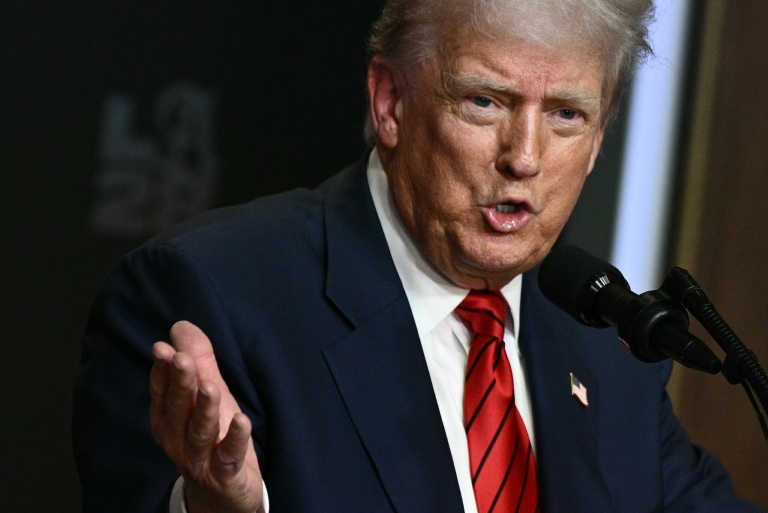
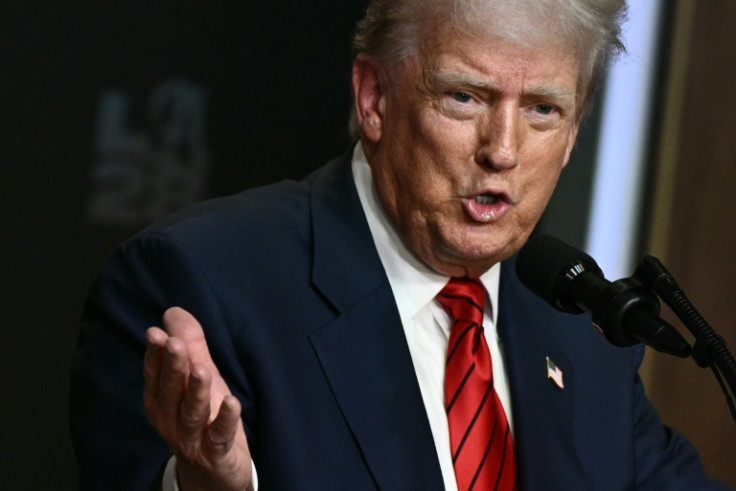
WASHINGTON — President Donald Trump shared a provocative post on Truth Social late Friday, presenting a side-by-side comparison of America “before and after TRUMP” that quickly ignited discussion across political lines as the nation navigates his second term. The post, featuring imagery or text highlighting perceived improvements during his leadership, underscores Trump’s continued reliance on the platform to communicate directly with supporters and shape narratives.
AFP
The message, posted around 11:40 p.m. EDT on May 1, read simply: “This is what our Country was before, and after, ‘TRUMP!’” Accompanied by visuals contrasting economic indicators, border security, international standing or social conditions, the post exemplifies Trump’s signature style of bold, unfiltered messaging that bypasses traditional media filters. It garnered rapid engagement, with thousands of reactions, reposts and comments within hours.
Context of the Post Amid Second Term
Trump’s latest Truth Social activity comes as his administration confronts ongoing challenges including economic pressures, international relations and domestic policy implementation. The post serves as a reminder of his 2024 campaign themes centered on restoring American greatness, a message that resonated with voters who returned him to the White House.
Supporters interpreted the comparison as validation of policy achievements in energy independence, trade deals, criminal justice reform and border measures during his first term, arguing similar approaches are yielding results again. Critics dismissed it as selective or misleading, pointing to persistent inflation concerns, geopolitical tensions and social divisions that predated and continued through various administrations.
The timing aligns with a period of reflection as Trump’s second term reaches key milestones. With midterm elections approaching in 2026, such posts often serve dual purposes: energizing the base and framing the political battlefield.
Truth Social’s Role in Trump’s Communication Strategy
Truth Social remains Trump’s primary digital megaphone since its launch, allowing unmediated reach to millions of followers. The platform, which Trump owns a significant stake in through Trump Media & Technology Group, has become central to his political brand. Analysts note that posts like Friday’s generate organic virality, driving media coverage and conversation without traditional press conferences.
This approach has drawn both praise for authenticity and criticism for bypassing journalistic scrutiny. Fact-checkers often engage with Trump’s statements, leading to ongoing debates about accuracy versus perception in political messaging. The before-and-after format taps into visual storytelling that resonates in social media environments where attention spans are short.
Reactions from Across the Political Spectrum
Republican leaders and Trump allies amplified the post, with some sharing their own data points on economic growth, job creation or foreign policy successes they attribute to his leadership. Conservative commentators hailed it as a powerful reminder of “America First” results.
Democratic figures and progressive voices countered with alternative narratives, citing statistics on inequality, climate policy or international alliances they argue suffered or improved under different administrations. Independent analysts urged viewers to examine context, time periods and methodology behind any comparative data presented.
Public response on other platforms mixed nostalgia, skepticism and humor, with memes and counter-comparisons proliferating rapidly. The post’s simplicity invited broad interpretation, fueling engagement across ideological lines.
Broader Significance in Polarized Era
In an era of deep political division, Trump’s messaging continues to polarize while consolidating support among his core base. The before-and-after theme echoes campaign rhetoric that contrasts “then versus now” to highlight perceived declines or improvements. Political scientists note such framing effectively mobilizes voters by appealing to emotion and personal experience over detailed policy analysis.
The post arrives as Congress debates spending priorities, foreign aid and domestic reforms. Observers suggest it subtly pressures lawmakers and signals Trump’s continued focus on legacy-building in his second term.
Truth Social’s parent company has seen stock volatility tied to Trump’s activity and broader market sentiment. The platform’s user growth and engagement metrics often spike around high-profile posts, reinforcing its niche but influential role in conservative media.
Looking Ahead
As Saturday’s post continues circulating, anticipation builds for Trump’s next moves, whether policy announcements, rallies or further social media activity. The administration’s communication style blends traditional briefings with direct digital outreach, creating a hybrid model that keeps opponents and supporters alike on alert.
For average Americans, such posts serve as conversation starters on kitchen tables and social feeds, keeping Trump’s vision of national renewal at the forefront. Whether the before-and-after comparison persuades undecided voters or simply energizes the faithful will become clearer as 2026 progresses toward midterm tests.
The president’s unfiltered approach continues defining his political brand, for better or worse, in a media landscape transformed by social platforms. As reactions pour in, the post adds another layer to the ongoing national dialogue about America’s past, present and future under Trump’s leadership.


Berkshire CEO Abel says ’we’re back to first base’ in wildfire litigation

Top Republicans express concern over Trump plan to withdraw troops from Germany

Teenager from Salford charged with attempted murder after shooting at garage

Iran offers Strait deal; Trump dissatisfied but prefers non-military path

BlockchainFX ($BFX) Looks Like the Best Crypto Presale Now

Manchester United reach agreement with Casemiro over contract clause amid transfer speculation

US brings back mandatory military draft registration

Steven Gerrard disagrees with Gary Neville over ‘shock’ Chelsea and Arsenal claim | Football


-

 Tech5 days ago
Register Renaming | Hackaday
-
 Crypto World7 days ago
Hyperliquid $HYPE Rally Builds Momentum as AI Sector Enters Prove-It Phase
-

 Politics5 days ago
Drax board avoid their own AGM, accused of greenwashing & environmental racism
-

 Tech5 days ago
Why Blue Badges Disappeared From Toyota Hybrids
-

 Tech5 days ago
Images of Samsung’s rumored smart glasses have leaked
-
 Sports6 days ago
IPL 2026: Ruturaj Gaikwad registers slowest fifty of the season, enters all-time unwanted list | Cricket News
-
 Tech23 hours ago
Trump’s 25% EU auto tariff breaches Turnberry Agreement that also covers semiconductors and digital trade
-

 NewsBeat6 days ago
LK Bennett closes all stores after entering administration
-

 Fashion4 days ago
Kylie Jenner’s KHY Enters a New Era with ‘Born in LA’
-

 Business4 days ago
Most Commercial Energy Audits Miss the Real Losses
-

 Crypto World4 days ago
CFTC’s AI will review U.S. crypto registration applications, chairman tells CoinDesk
-

 Business5 days ago
(VIDEO) Charlize Theron Climbs Times Square Billboard to Promote New Netflix Thriller ‘Apex’
-

 Business3 days ago
Barclay Brothers Avoid Bankruptcy: HSBC Drops High Court Petitions After IVA Deal
-

 Tech7 days ago
Microsoft to roll out Entra passkeys on Windows in late April
-
 Sports23 hours ago
Paul Scholes issues Marcus Rashford reality check as agreement emerges over Man United star
-

 Tech6 days ago
OpenAI’s Sam Altman apologizes for not reporting ChatGPT account of Tumbler Ridge suspect to police
-
 Business3 days ago
Tesla Officially Registers Elon Musk’s Stock: What Investors Need to Know
-
 Tech7 days ago
OpenAI CEO apologizes to Tumbler Ridge community
-

 Tech4 days ago
Get Ready for More Brain-Scanning Consumer Gadgets
-

 Tech6 days ago
Dyson Vacuums And The Curse Of Cooked Capacitors
You must be logged in to post a comment Login