Sir Keir Starmer is facing a backlash after he called for a ban on some pro-Palestine protests as part of a crackdown on antisemitism.
The prime minister suggested there were “instances” where it was appropriate to prevent such marches happening on UK streets –as they have done in France – as he said he would fight “with every breath I have” for a diverse and tolerant Britain following a series of attacks on Jewish communities in recent weeks, including the Golders Green terror attack.
But even his government’s own independent adviser on antisemitism said it would be “unconscionable” to outlaw peaceful pro-Palestine protests opposing Israel’s actions in the Middle East.
Lord Mann led a chorus of voices who rallied against the idea, including Green Party leader Zack Polanski who accused the Labour leader of threatening “further authoritarian restrictions on peaceful protest”.
Advertisement
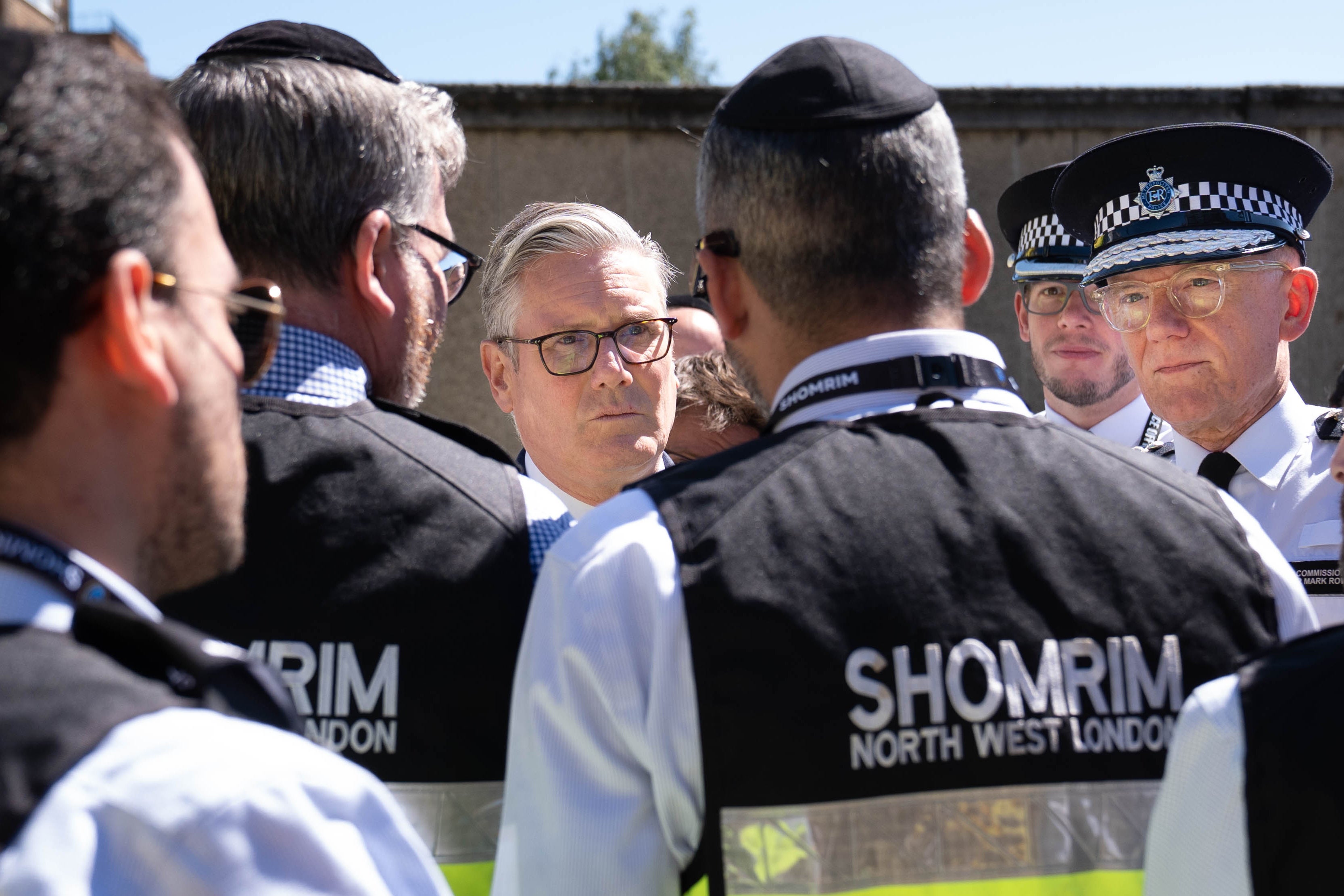
Sir Keir Starmer and Metropolitan Police commissioner Sir Mark Rowley meet first-responders from Shomrim North West London during a visit to Golders Green (PA Wire)
Sir Keir’s independent adviser on terrorism, Jonathan Hall, called for a pause on pro-Palestinian marches this week, as did the chief rabbi Sir Ephraim Mirvis, who said they had contributed to a “tone of Jew hatred”.
Lord Mann told The Independent: “There are multiple small anti-Israel (or similar) protests every week. Usually involving a tiny number of people.
“If they are not calling for violence… then it is unconscionable in a democracy that any such concept could be acted upon. The safety and security of the Jewish community requires effective strong leadership – not gestures.”
Mr Polanski accused the prime minister of “using the pain and fear of Jewish people to threaten further authoritarian restrictions on peaceful protest”.
“This would be the worst response to the attacks in Golders Green and would just produce more division, when it’s the job of responsible leaders to bring people together,” he added.
Advertisement
Meanwhile, Labour peer Shami Chakrabarti, the former director of Liberty, the civil liberties and human rights group, warned: “It’s perfectly reasonable for political leaders to urge sensitivity and restraint around protests in the wake of terrorist violence and the fear it breeds. But it is quite another thing to equate protest with violence or to clamp down on peaceful dissent even further.
“I urge the government to lead by example and demonstrate the balanced judgement they recommend to others.”
Organisers of pro-Palestine marches also hit back at the PM.
Protest group Defend Our Juries responded to Sir Keir’s comments on X (Twitter), saying: “End the genocide, not our freedoms to oppose it.”
Advertisement
John Rees, the co-founder and national officer for the Stop The War coalition, warned against striking “at the root of free assembly and free speech” in the UK.
Police in England and Wales can restrict protests and even ban them outright under some circumstances.
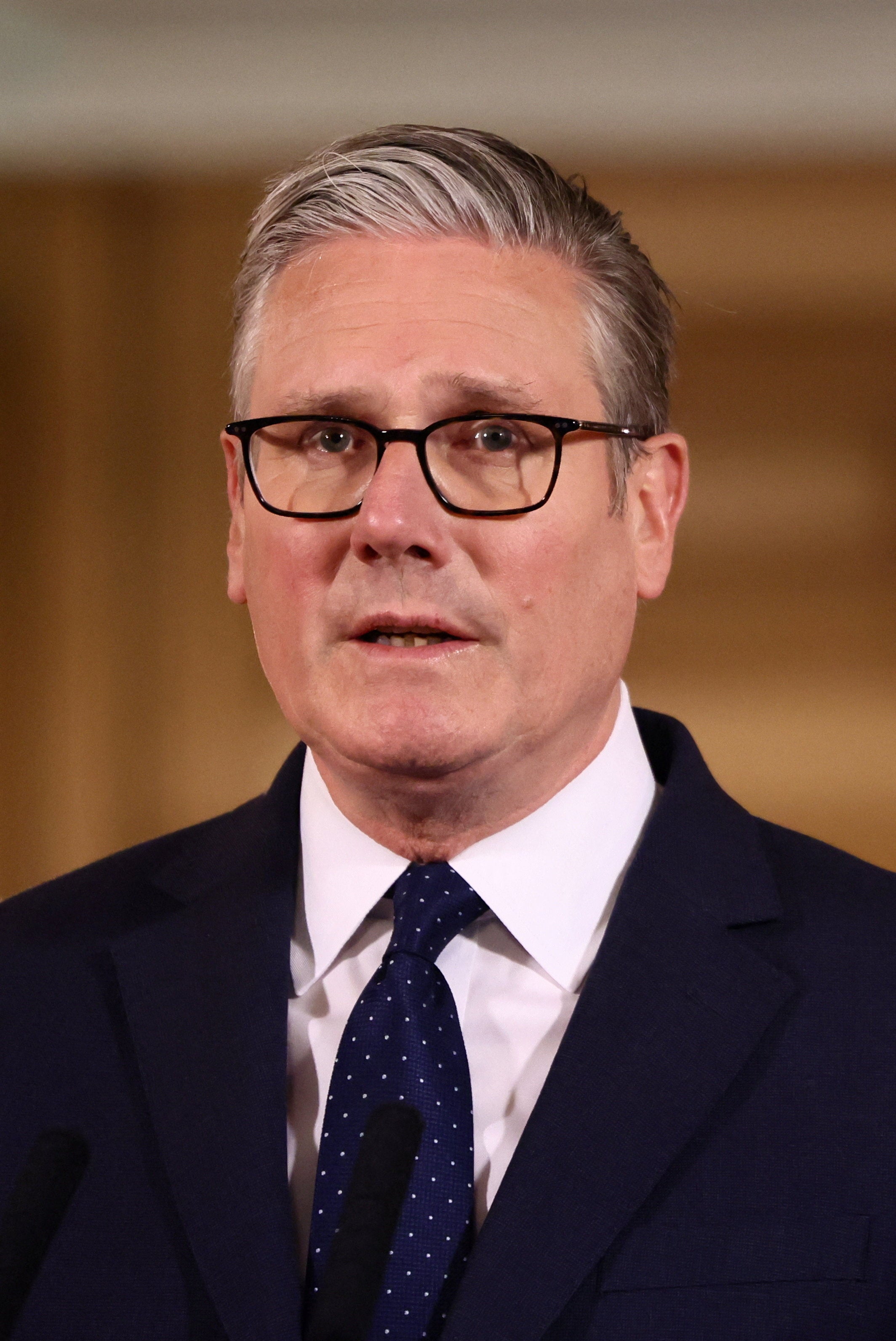
Keir Starmer said he would fight ‘with every breath I have’ for a diverse and tolerant Britain. (Getty)
Sir Mark Rowley said Jews were facing a “ghastly Venn diagram” of hate from all sides. Asked if the threat to the Jewish community was greater than it had ever been before, he said that polling suggesting the prevalence of antisemitic views showed “that has to be true” in an interview with The Times.
Sir Keir’s call came in an interview with the BBC Radio 4 Today programme, just days after he was heckled during a visit to Golders Green, where he was met by a group of protesters holding signs and chanting: “Keir Starmer, Jew Harmer.”
Asked if he wanted a crackdown on the chants or to stop some protests altogether, Sir Keir told the BBC: “I think certainly the first, and I think there are instances for the latter.”
He indicated that he wanted “tougher action” over some elements of the marches. “I don’t want to get involved in operational policing, but I think when you see, when you hear some of those chants, ‘globalise the Intifada’ is the one that I would pick out, then clearly there should be tougher action in relation to that,” he said.
He went on: “In relation to the repeated nature of the marches, many people in the Jewish community have said to me ‘it’s the repeat nature, it’s the cumulative effect’. Now I accept that, which is why we intend to deal with cumulative effects.”
Advertisement
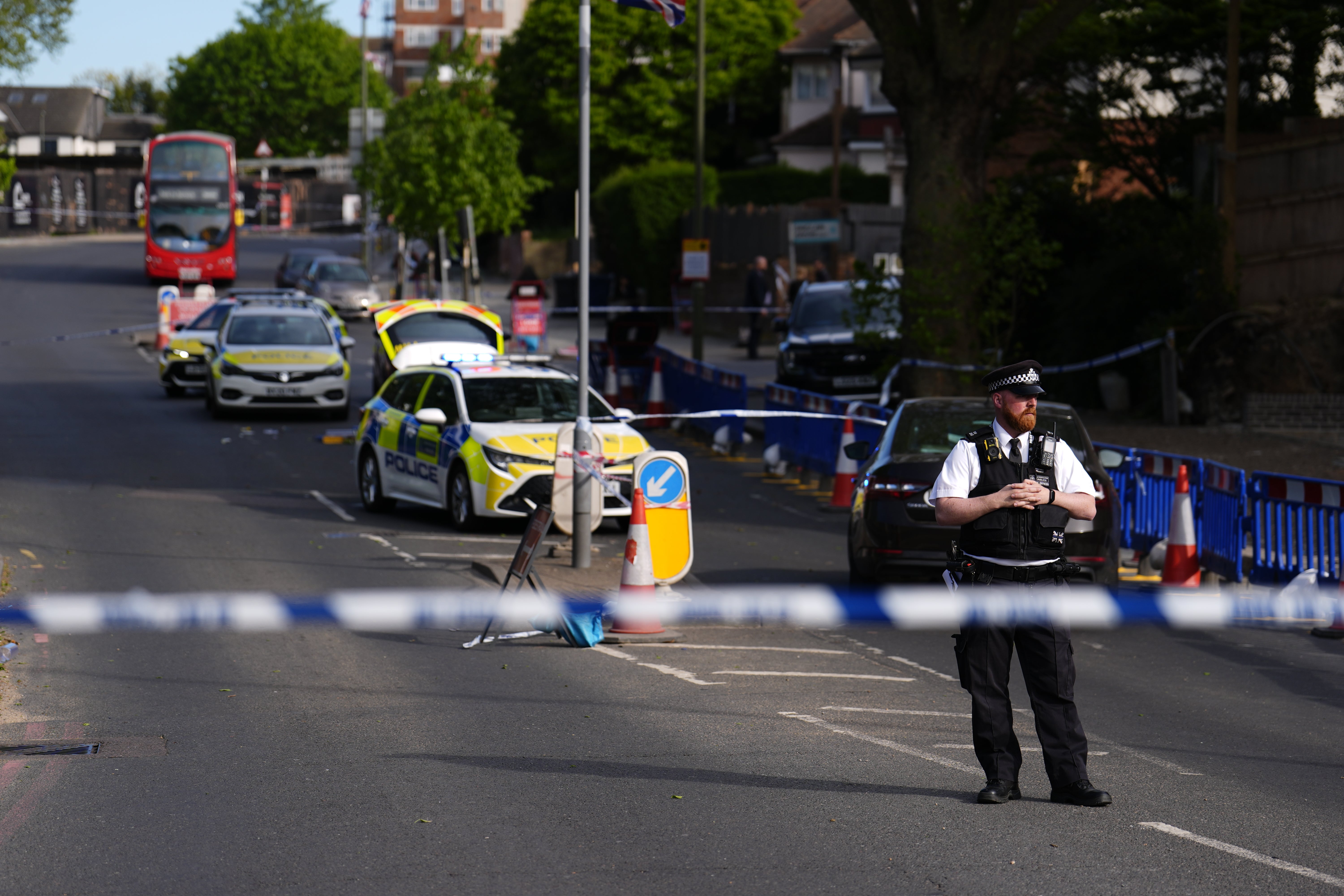
Two Jewish men were stabbed in an incident in Golders Green, north London, on Wednesday (PA Wire)
He urged “some people protesting to just reflect on what the Jewish community is going through and the overall impact that this is having”. The PM also called for a “whole of society response” saying that “too many people are not seeing antisemitism or they don’t want to see it”.
He said: “We all have to fight for this together because it is about the sort of country that we want to live in. I want to live in the Britain that I love, which is a decent, tolerant, live and let live, diverse Britain. But that is contested now in a way that it hasn’t been contested in my lifetime.
“We have to fight for the Britain that we believe in with those values. That is who we are. That is what it is to be British. And I will fight for that with every breath I have.”
Conservative leader Kemi Badenoch said the interview showed the prime minister did not “seem to know what to do about” antisemitism in the wake of the terror attack.
“There are things that we can do,” she added. “We can ban hate preachers from this country, stop them from coming in. We can remove visas from those people who are not British, who are here spreading hate and antisemitism. But we need to do more. Enough with the platitudes, we need action. We need to shame people who think antisemitism is acceptable.”
Advertisement
Lord Walney, the government’s former adviser on political violence, said: “The prime minister sounds committed and sincere but he’s not offering anything different – he needs to stop refusing the law changes that would genuinely reduce the harm being caused by these hate-infested marches.”
But Your Party Chair Jenn Forbes said her party condemned “all attempts to link the safety of Jewish communities with restrictions on protests for Palestine”.
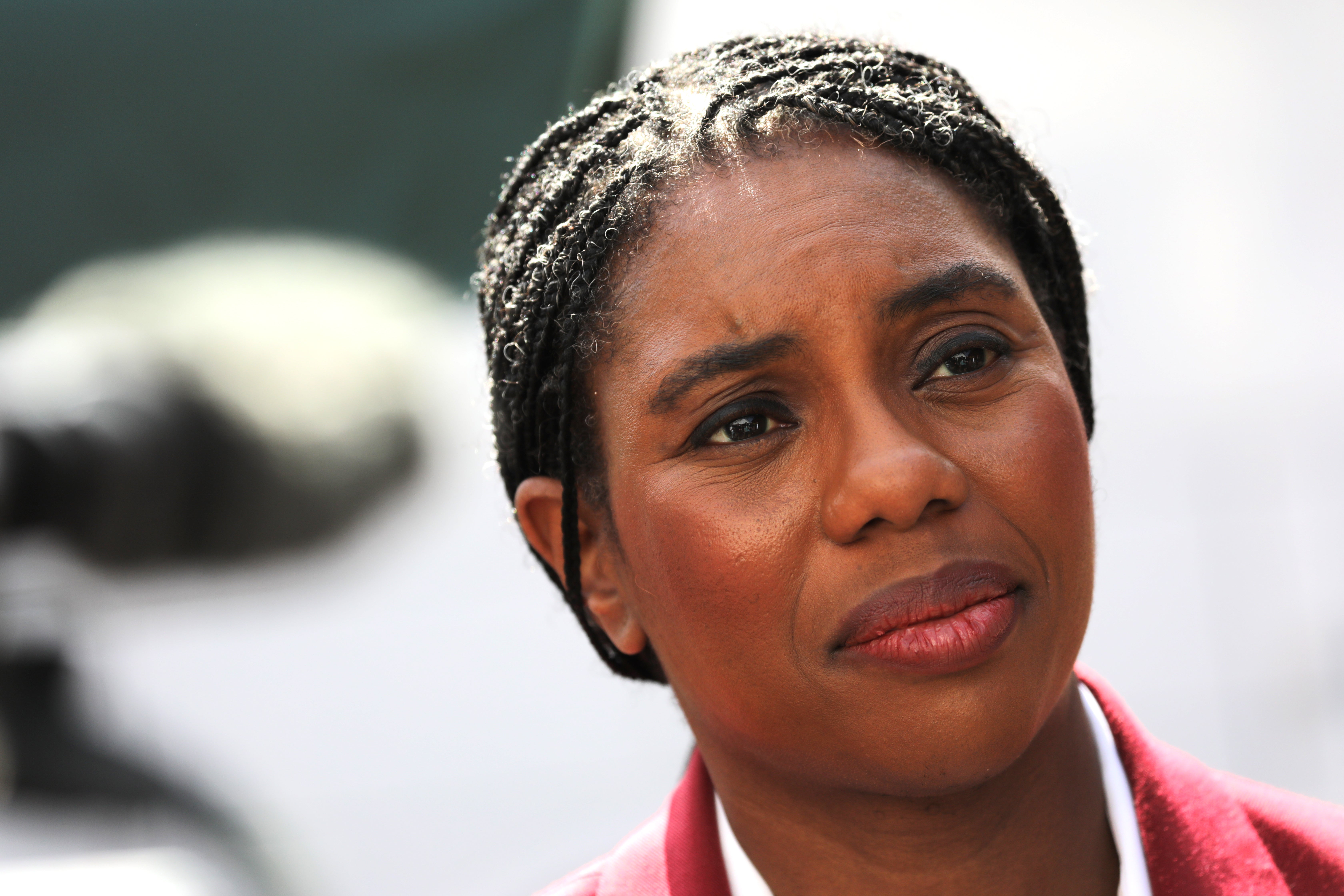
Conservative leader Kemi Badenoch speaks to the media during a campaign visit to Bexley, south east London (Getty)
The Heaton Park synagogue in Greater Manchester was targeted in a terror attack in October last year. In March, four Jewish community ambulances were set alight in Golders Green. There has also been an attempted arson at Finchley Reform synagogue in north London, among others.
On Friday, Sir Mark called for 300 extra officers to tackle the growing pandemic of antisemitism in the UK.
Advertisement
He also said he was considering whether police powers should be used to limit two upcoming protests in London later in May – one a pro-Palestine march and the other a rally led by the far-right activist Tommy Robinson.
Be sure to plan your journey in advance, whether participating or spectating
19:10, 02 May 2026Updated 19:17, 02 May 2026
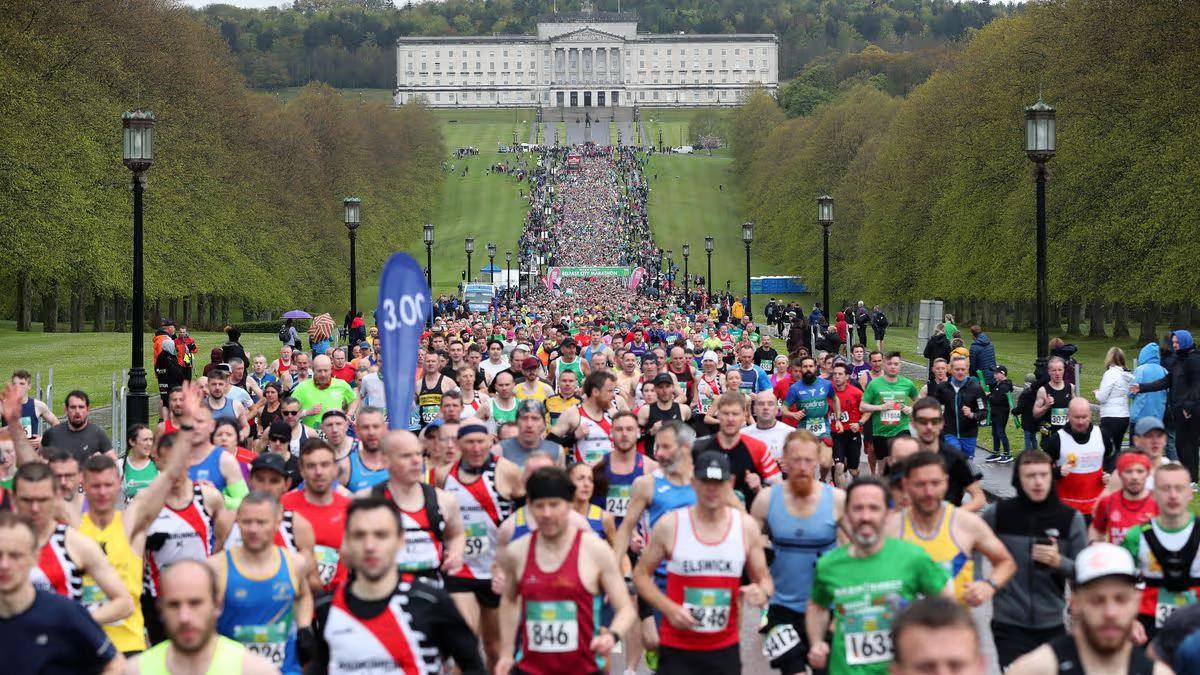
It isn’t long now until the Phoenix Energy Belfast City Marathon takes over the city for 2026.
On May 3, thousands will take to the streets of Belfast to complete the 26.2-mile race, team relay and 8-mile walk events.
If you are participating or spectating, you may be wondering how you are going to arrange your travel to or around the city on race day – whether getting to the start line or to Ormeau Park after your relay leg.
Advertisement
All transport for the marathon is free for spectators and participants – excluding rail services.
Here is what you need to know about transport and travel ahead of the Belfast City Marathon :
Getting to and from the start/finish line
Getting to the start line – a shuttle bus will be available from Belfast City Hall (outside SS Moore’s) 07:00am – 8:00am and Lanyon Place Train Station 7:30am – 8:00am to the Start Line.
Spectator Transport from Stormont – a shuttle bus will pick spectators from Massey Avenue to Ormeau Park after the start of the race at Stormont.
Getting back to Belfast City Centre – a shuttle bus will transport participants from Ormeau Embankment to Belfast City Centre. This service will run from 11:45am – 4:00pm.
Getting back to Stormont – every 3rd shuttle bus leaving Ormeau Embankment will transport spectators back to Stormont
Team Relay transport
Content cannot be displayed without consent
A shuttle bus service will run 8:00am – 10:00am from Annadale Embankment at Dunnes Stores to drop runners off at their designated relay changeover point:
Montgomery Road – 08:00 – 08:30
Boucher Road – 08:30 – 09:00
Falls Road – 09:00 – 09:30
Duncairn Gardens – 09:30 – 10:00
Additional Translink Rail Services
Translink is set to once again support the Phoenix Energy Belfast City Marathon by operating a series of early morning train services on Sunday 3rd May, helping participants and supporters get to the start line on time.
Early trains will run from Derry, Larne, Bangor and Newry, with all services arriving into Belfast’s Lanyon Place Station before 8:00am – well ahead of the 9:00am race start at Stormont Estate.
Shuttle buses will operate from Belfast’s Lanyon Place Station for participants.
Advertisement
Parking for Belfast City Marathon
According to the Belfast City Marathon, car parking will be discounted for all participants.
Q-Park (Victoria Square) – 20% off using discount code BMAR26
APCOA (Lanyon Place & Oxford Street) – Payment is through the APCOA App. It will charge £2.50 for 1hr, £4.00 for 2hrs max and all day will cost £6.00. Pay using the app, click HERE to view instructions on how to claim your discount
Value Car Park (McCausland) – Participants can avail of a 10% off for their parking on marathon event day on presentation of their bib at the car park kiosk
Advertisement
Parking in Stormont – parking will be available at the start line within the Stormont Complex for FREE. Please note the Upper Newtownards Road from the Stormont Entrance will close from around 8.00am to facilitate traffic management solutions for the start of the event. Access will be from the Dundonald side ONLY.
The England international was left lying motionless on the pitch after the brutal hit
19:18, 02 May 2026Updated 19:23, 02 May 2026
England star Immanuel Feyi-Waboso was knocked out cold on the field of play following a sickening collision with Ireland international Jacob Stockdale during Exeter Chiefs’ Challenge Cup semi-final clash with Ulster.
The Cardiff-born wing was on the attack for his side just before the half-hour mark at the Affidea Stadium when he was put on the receiving end of a brutal hit by Stockdale, who then drove him into the ground by his head as he attempted to haul the Chiefs man down.
The challenge immediately drew groans from the crowd in Belfast, with referee Pierre Brousset immediately bringing the game to a halt as Feyi-Waboso lay motionless on the turf.
After lying there for several seconds as his concerned teammates rushed to his aid, the England international suddenly jolted awake and attempted to get up, leading Brousset to tell him not to move as a medic arrived on the scene.
Feyi-Waboso was immediately withdrawn for a head injury assessement (HIA) and did not return, with the referee left to decide the fate of Stockdale, who also did not return to the action after half-time.
Replays appeared to show the Irish back making initial contact with Feyi-Waboso’s shoulder before the tackle rode up and made contact with his head. In the immediate aftermath, however, Stockdale was shown grabbing the Exeter star’s face and driving him down into the ground with force.
Advertisement
After consulting the replays with TMO Eric Gauzins, Brousset reached his decision, telling captains Dafydd Jenkins and Iain Henderson: “The first contact is on the shoulder, with most of the force, and then we’ve got the head contact, so it will be a yellow card.”
“I think that’s well explained and the right decision,” said ex-Ireland star Andrew Trimble, on punditry duty for Premier Sports.
“I think we’ve got the right decision there,” added fellow former Irish international Gareth Steenson. “It’s a big collision as well. Jacob Stockdale probably saw Feyi-Waboso coming round the corner and thought this is my opportunity to take him.
“It’s an incredible defensive read and he’s just a couple of inches too high,” Trimble continued. “His head just bounces off his shoulder and indirectly makes head contact, so a yellow card is the right decision.”
Advertisement
However, many viewers were outraged at the decision, arguing that Stockdale got away incredibly lightly for what they described as a “disgusting” challenge.
“That’s absolutely shocking,” wrote one on X. “Embarrassing from the referee with a player who’s taken a serious injury. Two independent horrendous actions from Stockdale, yellow is so soft. No bottle in big games anymore.
“Jacob Stockdale is possibly the luckiest man alive,” added another. “How on earth was that only a yellow?”
A third wrote: “Awful decision, Stockdale has a black eye and Manny was out cold. Should be a red and a lengthy ban,” while another added: “Disgusting dog shot from Stockdale, how it’s only a yellow is a joke.”
Russian “gingerbread” mines dropped by drones are reportedly turning Kherson into a deadly minefield, with civilians and children at risk from hidden explosives
Children are being “lured to their deaths” by toy-like mines dropped from the sky in a chilling new escalation of the war in Ukraine, with frontline cities described by aid workers as turning into a deadly patchwork of hidden explosives.
Advertisement
The devices, known as “Pryanik”, which is Russian for “gingerbread”, are small, round munitions designed to look deceptively harmless at first glance. But in reality, they are reportedly capable of causing severe injury or death, lying unnoticed in grass, rubble and residential streets until triggered.
The tactic, according to humanitarian groups, is part of a wider strategy that has turned everyday life in southern Ukraine into a constant gamble with survival.
Yuriy Boyechko, founder of Hope For Ukraine, said the city of Kherson has effectively become a “minefield”, after Russian forces began deploying cheap first-person-view drones to scatter the disguised explosives across civilian neighbourhoods.
Advertisement
He continued: “Russia is using FPV drones to drop these mines all over residential areas in Kherson. If an adult steps on it, or a child finds it while playing in the grass … it will blow them up, or wound them badly. The deliberate weaponisation of backyards and doorsteps is a calculated attempt to make life uninhabitable.”
Boyechko warned that civilians now face two overlapping dangers in the city – direct drone strikes from above and invisible explosives below their feet, the Sun reports.
He explained: “Right now, there are two types of dangers that civilians face – one is from the air, the FPV drones that target them directly. The other is the minefield underneath their feet.”
The evolution of this tactic, aid workers say, represents a disturbing shift in modern warfare. Unlike traditional landmines buried in fixed positions, these devices are being actively dispersed by drones, making entire residential zones unpredictable and constantly changing danger areas.
Kherson, located near the Black Sea and close to the front line, has endured months of sustained attacks, including drone strikes and what officials previously described as “human safari” operations. Russian forces, positioned across the Dnipro River, are said to monitor and target civilians in real time.
Residents are now reported to spend much of their lives underground in basements, venturing outside only when absolutely necessary. Even then, every movement carries risk.
Boychecko said even walking to the pharmacy is becoming a game of chance of a “gamble with mutilation,” and that the situation is becoming a “big problem”.
Advertisement
The “gingerbread” mines themselves are small enough to fit in the palm of a hand and are often wrapped or shaped in a way that makes them difficult to distinguish from harmless objects. Some reports suggest they can resemble toys or debris, increasing the risk to children who may not recognise the danger.
Officials say the activation pressure is extremely low, meaning even a small child stepping on one could trigger an explosion. There are also warnings that the devices can detonate unpredictably if disturbed.
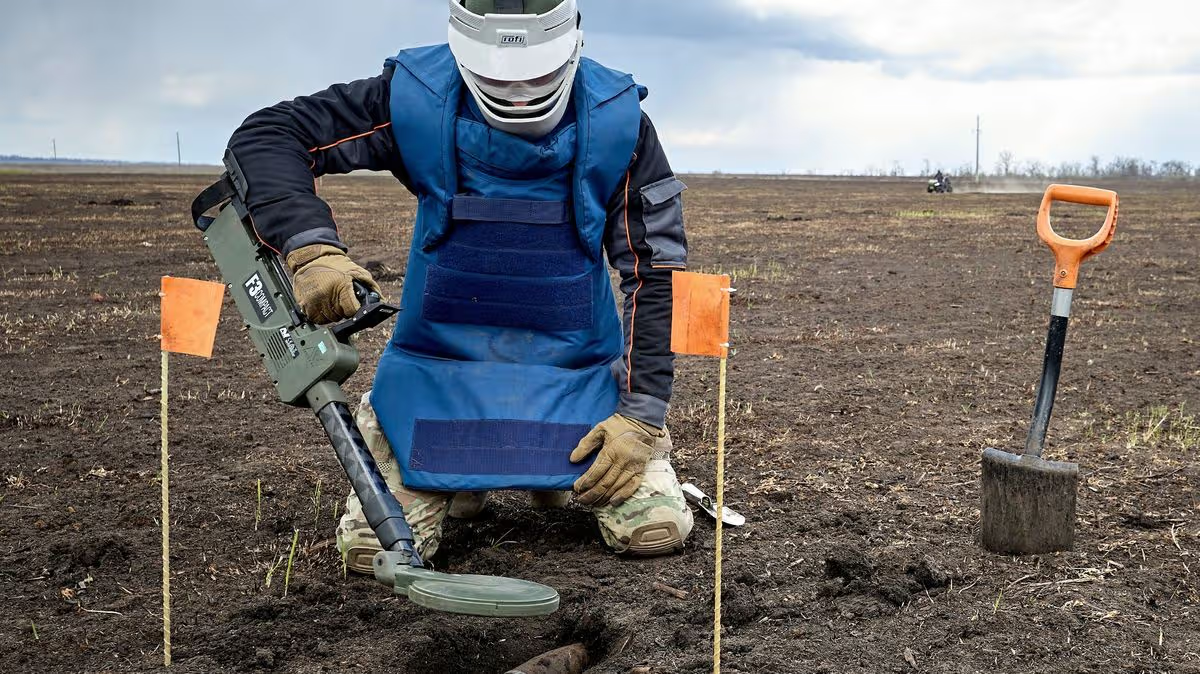
Volodymyr Prepepelytsia, from the National Police in the Kherson region, has previously described upgraded versions of these mines as more sophisticated and more powerful, making them even harder to detect and clear. He also warned that the shortage of specialist demining teams and equipment has left authorities struggling to keep pace with the scale of contamination across the region.
Advertisement
As of April 1, a total of 1,431 people, including 147 children, have been injured by mines and explosive remnants of war since the start of the full-scale invasion, according to official figures. In Kherson alone, authorities have opened hundreds of criminal cases linked to civilian casualties caused by explosives.
Humanitarian operations have also been severely disrupted. Aid groups say delivering food and supplies often turns into a dangerous operation, with drones circling overhead and attacks occurring within minutes of activity being detected.
Boyechko said his organisation, Hope for Ukraine, is the only NGO still operating regularly in parts of the city, but even their work has become increasingly difficult.
Advertisement
He explained: “A lot of people are hesitant to get out of their hideouts when we bring out aid. Every time they open the door, they listen for the high-pitched buzzing sound in the air.
“When we make deliveries, we try to schedule them during bad weather as it is much safer. In open air you become a target in a matter of minutes.”
Aid workers say even basic survival routines have been transformed. Residents reportedly time movements carefully, avoid open spaces, and remain alert to any sound of drones overhead. The psychological toll is also growing, with civilians living under constant uncertainty, unsure whether danger lies above or beneath them.
Boyechko said: “The worst part is that residents are forced to spend most of their time in basements. There is always something hanging in the air.”
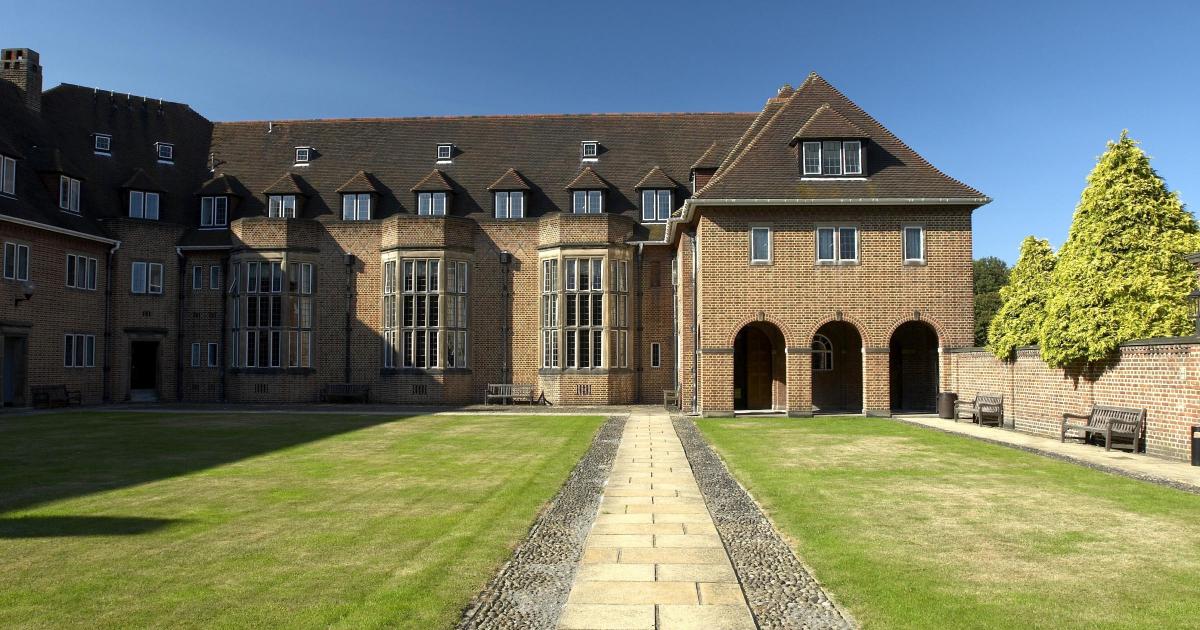
Henderson Old Hall, a Grade II-listed building in the High Heaton area of Newcastle, will undergo repairs to its external façade, roof, windows, and doors as part of efforts to bring it back into use.
A Newcastle University spokesperson said: “We’re really pleased that work to start to repair Henderson Old Hall is now able to begin.
“Our immediate priority is to ensure the building is permanently weatherproof and watertight, while carrying out the repairs with the care and sensitivity that a historic building like Henderson Hall requires.”
Advertisement
The fire-damaged building, owned by Newcastle University, has remained out of use since the incident nearly three years ago.
The university’s estates team has worked with insurers, the local authority, and consultants to secure the site and fully assess the damage.
Robertson has been appointed as the main contractor for the project, which is expected to take between 12 and 18 months.
The work will include constructing a replacement roof structure, installing new and refurbished windows and doors, repairing or rebuilding sections of the external façade, and carrying out structural repairs.
Internally, water-damaged finishes will be removed and new electrical works—including lighting—will be installed.
Advertisement
The restoration marks an important step in safeguarding a historic part of the university’s estate, though discussions are still ongoing regarding the long-term future use of the hall.
Henderson Old Hall was used for many years as student accommodation.
“But, as with so many questions of the challenges that we face, the Prime Minister is distracted by his own failures and can’t take the proper actions to protect jobs and employment within Scotland, and that’s an example of the weakness and the failure of a Labour Government,” Mr Swinney said.
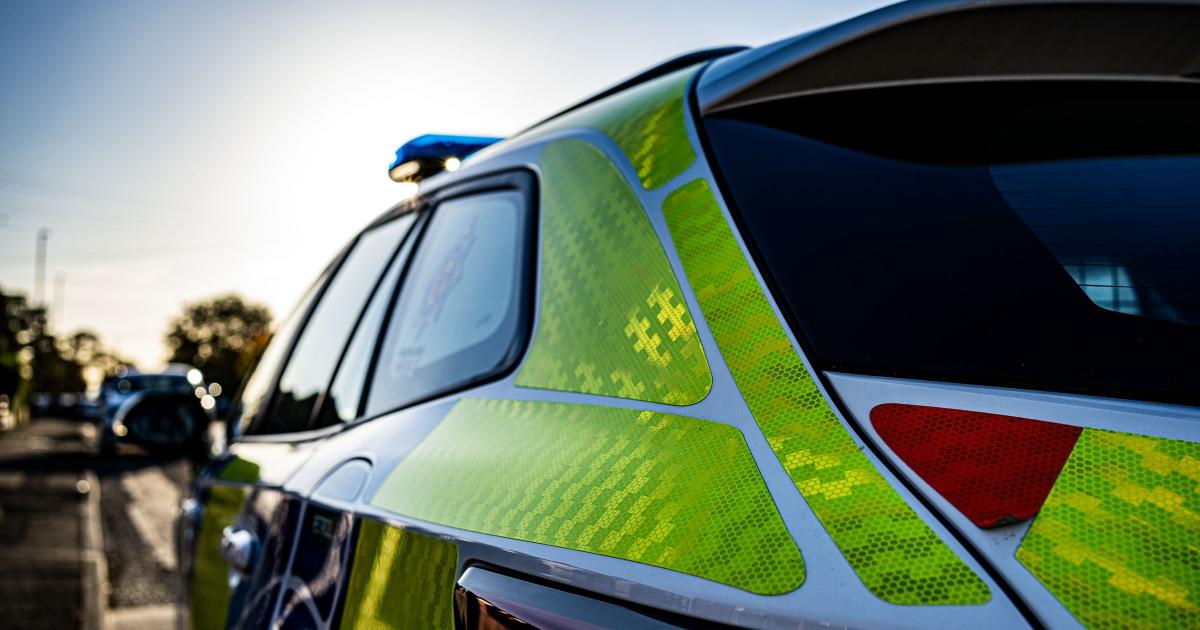
A report was received of a two-vehicle collision on Berwick Hill Road in Ponteland, Northumberland, at around 3.50pm on Friday (May 1).
Inquiries have taken place and it is understood the driver of a silver Volvo XC40 was travelling east from Ponteland when, for reasons to be established, there was a collision with a heavy goods vehicle travelling in the opposite direction.
The HGV driver left the scene in the aftermath of the collision, when the incident was reported to police.
Advertisement
Emergency services attended and the driver of the car, a woman in her 60s, was taken to hospital for treatment for minor injuries.
Officers from Northumbria Police’s Roads Policing Unit (RPU) have since launched an investigation and have today (Saturday May 2) appealed for the driver of the HGV, and any other witnesses, to come forward.
Police are particularly keen to hear from people travelling in the area at the time, and from anyone with information about the HGV involved.
Advertisement
Anyone who can assist officers, including those with CCTV or dashcam footage, should send Northumbria Police a direct message on social media or use the ‘live chat’ and ‘report’ forms on the force website.
For anyone unable to make contact in those ways, they are asked to call the non-emergency 101 number.
Callers are asked to quote reference number: NP-20260501-0725.
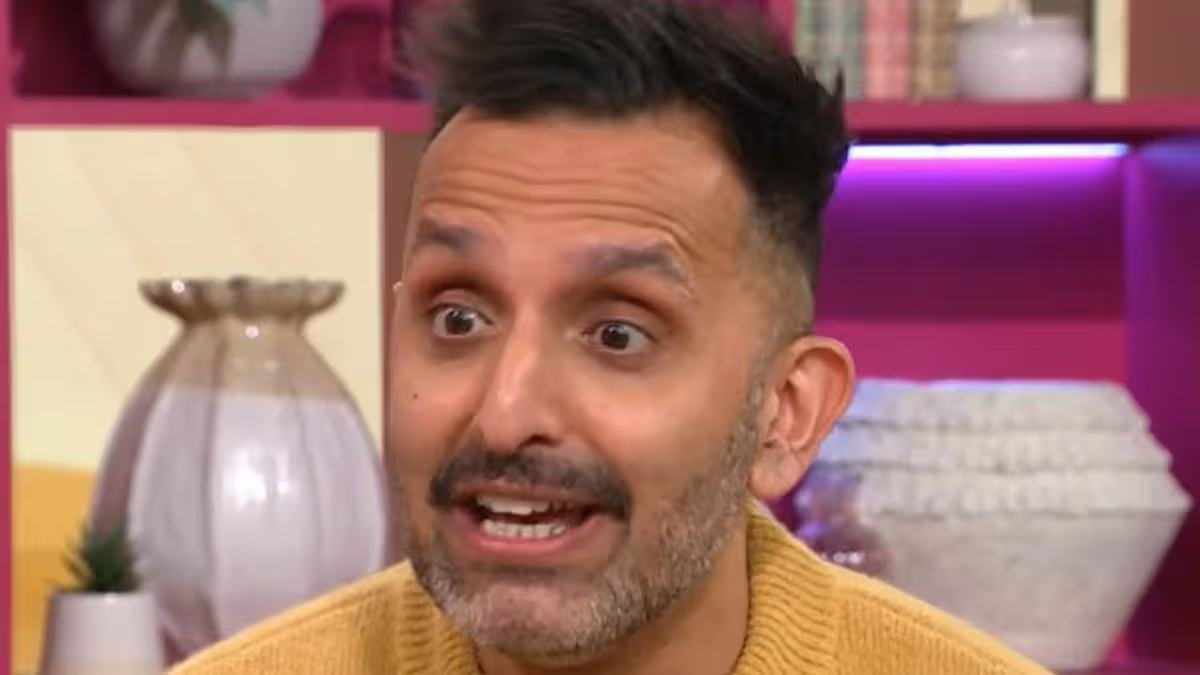
Many of us have found ourselves wide awake at 3am, unable to get back to sleep. ITV’s Dr Amir Khan has shared the surprising biological reasons behind it
Have you ever woken suddenly during the night, alert and caught in a whirlwind of relentless thoughts? A TV doctor has explained why this happens – and the reason may surprise you.
Advertisement
Dr Amir Khan, an NHS GP and a regular contributor on shows including Good Morning Britain and Lorraine, shared his professional insight on Instagram. While finding yourself wide awake at midnight can be unsettling, he explained that it’s usually a natural physical reaction. “Have you ever noticed that you fall asleep just fine and then suddenly you’re awake at 3am, staring at the ceiling, overthinking your entire life?” the doctor asked his followers.
“Well, there’s actually a biological reason for that. Around 2 to 4am, your body is in a very particular phase of its sleep cycle.
“Cortisol, your natural stress hormone, starts to rise in preparation for waking up. It’s completely normal. But if you’re already stressed, anxious, or running on empty, that small hormonal shift can be enough to tip you into wakefulness.
“At the same time, your brain is more vulnerable. During the night, especially in the early hours, blood sugar levels can dip slightly. If they drop too low, which is more likely if you’ve had alcohol, eaten very late, or are under chronic stress, your body releases adrenaline to compensate.”
Advertisement
This rush of adrenaline can abruptly wake you from slumber, causing a pounding heart or increased awareness. In the total quietness of the early hours, without diversions or ambient sound, the brain’s danger detection system may become more sensitive, reports the Manchester Evening News.
Responsibilities that feel achievable at 3pm can appear overwhelming by 3am. Dr Khan highlighted that hormonal fluctuations, particularly during perimenopause and menopause, can play a role in this transformation.
In the video, he added: “And poor sleep itself becomes part of the cycle. The more you worry about waking up, the more likely you are to wake up. Now, waking briefly in the night is actually normal. We all cycle through lighter sleep every 90 minutes.
“The problem isn’t waking up, it’s the anxiety about being awake. So gentle breathing, avoiding clock-watching and screens and keeping evenings calm and alcohol light can really help.
Advertisement
“So if you’re awake at 3am, it doesn’t mean you’re broken, it just means your biology is doing what biology does. And we just need to help it along a little bit.”
How to fall asleep faster according to the NHS
The NHS provides extensive online guidance on developing beneficial habits to enhance your sleep quality and secure improved rest. Within these materials, it details six essential recommendations for nodding off more quickly, including:
A teenager from Salford has been charged with three counts of attempted murder after a shooting at a car garage in Huddersfiled, police have said.
Advertisement
Three men were injured in the incident in July last year.
West Yorkshire Police said Joe Garrity, 19, of Bain Street, Swinton, was no facing a series of criminal charges.
The force said he’s been charged with three counts of attempt murder; handling stolen goods; possession of a firearm with intent to endanger life; possession of a prohibited weapon and driving whilst disqualified.
Click here to get the biggest stories straight to your inbox in our Daily Newsletter
Advertisement
He was due to appear in court last Thursday, police said in an update.
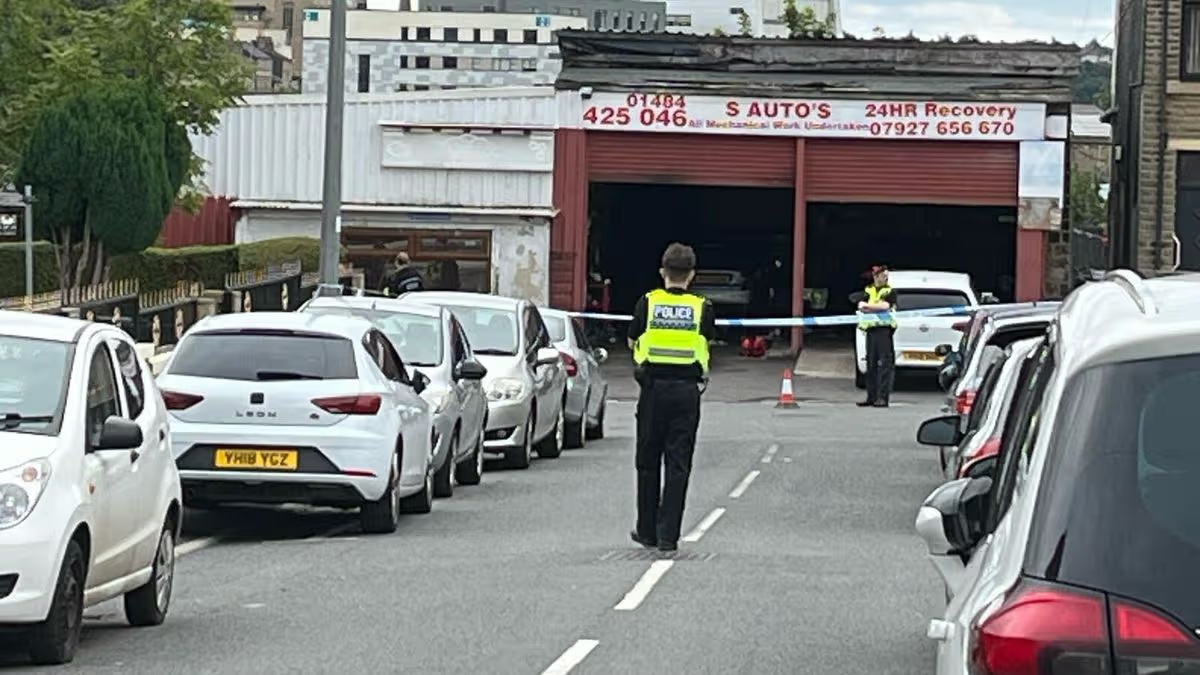
The charges relate to ‘firearm discharges’ at S Autos Garage on Bulay Road, Huddersfield, the force added.
In a statement issued earlier this week, West Yorkshire Police said: “Detectives investigating a shooting in Huddersfield last year have charged a man with a number of offences.
Advertisement
“Joe Garrity, aged 19, of Bain Street, Swinton, Manchester, has been charged with three counts of attempt murder, handling stolen goods, possession of a firearm with intent to endanger life, possession of a prohibited weapon and driving whilst disqualified.
“He’s been remanded into custody to appear at Leeds Magistrates’ Court on April 29.
“These charges relate to the firearm discharges at S Autos Garage on Bulay Road, Huddersfield, on 22 July, 2025.
Cleveland Police officers have been conducting patrols around a school in Hartburn, following reports of a man acting suspiciously.
Superintendent Alan O’Donoghue, the district commander for Stockton, said: “I want to take this opportunity to reassure the local community in Hartburn.
“Following reports of a man approaching and speaking to young girls near Hartburn Primary School, we have made one arrest and stepped up our visible presence in the area to provide further reassurance.
Advertisement
“The incidents are understood to have taken place between March 23 and April 27.
“Officers have been reviewing CCTV footage to support the investigation.
“This led to the arrest of a 35‑year‑old man on April 28.
Green MP Hannah Spencer has reportedly been branded a ‘b****’ by a fellow MP after criticising Parliament’s drinking culture.
Advertisement
The MP for Gorton and Denton prompted a backlash earlier this week after she revealed she felt ‘really uneasy’ about the prevalence of alcohol in Westminster.
She went on to claim there had been ‘questionable and dangerous behaviour’ by staff and potentially some MPs because of Westminster’s ‘unprofessional’ drinking culture.
Among her critics were Labour’s Luke Charters, who dismissed the remarks as a distraction from what he described as the Greens’ ‘wacky policies’.
Advertisement
He may have been hinting at the party’s controversial pledge to legalise and regulate all drugs, including heroin and cocaine, should it win power.
Want to understand more about how politics affects your life?
Metro’s senior politics reporter Craig Munro breaks down all the chaos into easy to follow insight, in Metro‘s politics newsletter Alright, Gov? Sent every Wednesday. Sign up here.
Advertisement
Reform UK leader Nigel Farage was equally scathing and joked that while the Greens supported legalising all drugs, ‘an afternoon pint’ was too far.
However, some MPs have come to her aid.
The Green MP claimed the level of drinking that goes on in Westminster would be unacceptable in most professions, especially predominately working class ones
Former shadow cabinet minister Emily Thornberry said she was ‘surprised at the drinking culture’ when she first arrived at Parliament although she added that it is ‘much better than it used to be’.
The issue was later discussed on the BBC’s satirical panel show Have I Got News for You, where Ava Santina, the journalist who reported the story, discussed the backlash.
Advertisement
JOE.co.uk’s political editor said one MP had referred to Spencer as a ‘b****’, while others had accused her of being a ‘snitch’ for reporting it.
She said: ‘I went down to that room where they drink on Monday. There was a lot of: “Why are you snitching?” I didn’t say it, I just filmed it.’
She added that one MP told her: ‘She’s such a b****, this is the only time I get away from my children.’
Reflecting on the exchanges, Santina suggested that some MPs attempted to downplay the issue, saying: ‘All of the sort of robust defences that MPs made — we just have a beer here or there, we normally have coke (the soft drink).’
Advertisement
Reform UK leader Nigel Farage slammed Spencer’s comments along with her party’s policies on legalising drugs (Picture: Justin Tallis for AFP or licensors)
This prompted laughs from other panel members for the unintended insinuation that some MPs take the Class A drug.
Panellist Ian Hislop responded: ‘Now the story is getting interesting’, while comedian Paul Merton joked: ‘Is that why they say the “nos(e)” have it?’
Since the story was published, Spencer has continued to defend her comments, arguing that Westminster’s drinking culture would be unacceptable in most workplaces.
Speaking to The Guardian after the backlash, she said: ‘I don’t think it’s much to ask for an MP to be sober when they vote on decisions that affect everyone else.
‘I’d have been sacked at work if I did this, same goes for almost every profession, but especially working-class jobs.
Advertisement
‘MPs defending this and lecturing me are the exact reason I’ve been saying this place is full of people who are out of touch.’
Spencer is not the first MP to voice concerns about Parliament’s drinking culture.
In 2021, former Tory minister Tracey Crouch criticised Parliament’s drinking culture, saying she had witnessed MPs ‘reeking’ of alcohol between votes.
Parliament’s subsidised Strangers’ Bar – where MPs can drink between votes – closed temporarily last January after a report that a woman had her drink spiked.
Advertisement
This led to security measures being tightened. New rules mean that visitors and parliamentary staff can visit only with an MP present.













































You must be logged in to post a comment Login