
Crypto World
XRP News: Thinking of Shorting XRP? You Might Get Squeezed


XRP is now trading back above $1.40, following a few bullish news around it, especially their recent Middle East expansion and OKX partnership. Derivatives data also shows the calm exterior is concealing a coiled spring, and could hurt short sellers when it unloads.
A CryptoQuant analysis highlights a sharp divergence between XRP’s estimated leverage ratio on Binance and its current price level. The leverage ratio has collapsed back to approximately 0.1 levels last seen in late October 2024, when XRP was trading around just $0.50. Although today’s price is nearly three times that, the patterns could repeat.
$XRP leverage ratio on Binance has dropped to ~0.1, a historically low level, while price holds near $1.30. — XRP Update (@XrpUdate) May 2, 2026
Low leverage + elevated price suggests an under-positioned market.
If leverage returns, conditions favor a sharp expansion move.  pic.twitter.com/C1rGHa3erp
The last time a similar divergence resolved to the upside, between late June and mid-July 2025, XRP surged from $1.96 to $3.65 as the leverage ratio climbed from below 0.3 to just under 0.6 over four weeks.
Discover: The best pre-launch token sales
Can XRP Escape Its News Range and Force a Short Squeeze?
XRP is currently priced around $1.40, consolidating in a tight band that has held for several sessions. Volume is subdued for now, even as the market shows improvement. But, low-volume consolidation above key support reads differently than low-volume drift lower.
Binance’s estimated leverage ratio for XRP sits near 0.1 while price holds well above pre-breakout levels. Excess speculative positioning has already been flushed. What remains is a relatively clean slate for the next directional move.

If leverage begins rebuilding as fresh capital enters, it could drive XRP toward the $2.00 psychological level and potentially retracing toward the mid-2025 highs near $3.65.
But if price collapses to match the low-leverage environment, a flush back toward the $1.00–$1.10 area would technically “resolve” the divergence without a squeeze. What is clear is that passive short exposure here carries asymmetric risk. A leverage rebuild could be fast and violent.
Discover: The best crypto to diversify your portfolio with
Bitcoin Hyper Eyes Early Movers as XRP Builds Pressure
For traders watching XRP’s setup and wondering where meaningful upside still exists, without waiting on a decades-old asset to work through its derivatives backlog, the early-stage presale market offers a different risk profile entirely.
One project currently drawing attention is Bitcoin Hyper ($HYPER), positioned as the first-ever Bitcoin Layer 2 with full Solana Virtual Machine (SVM) integration.
The premise is pointed: Bitcoin is slow, expensive, and largely unprogrammable. Bitcoin Hyper targets all three limitations simultaneously while delivering sub-second finality, low-cost execution, smart contract capability, and preserving Bitcoin’s underlying security. The SVM integration is the standout technical claim, with the project asserting performance that rivals (and potentially exceeds) Solana itself.
$HYPER is priced at $0.0136, with $32.5 raised to date. Staking is live with a high 36% APY for early participants.
The presale details are available at the Bitcoin Hyper presale page.
The post XRP News: Thinking of Shorting XRP? You Might Get Squeezed appeared first on Cryptonews.

Crypto World
Berkshire shares trade higher as Buffett successor Abel scores good marks at meeting, earnings jump
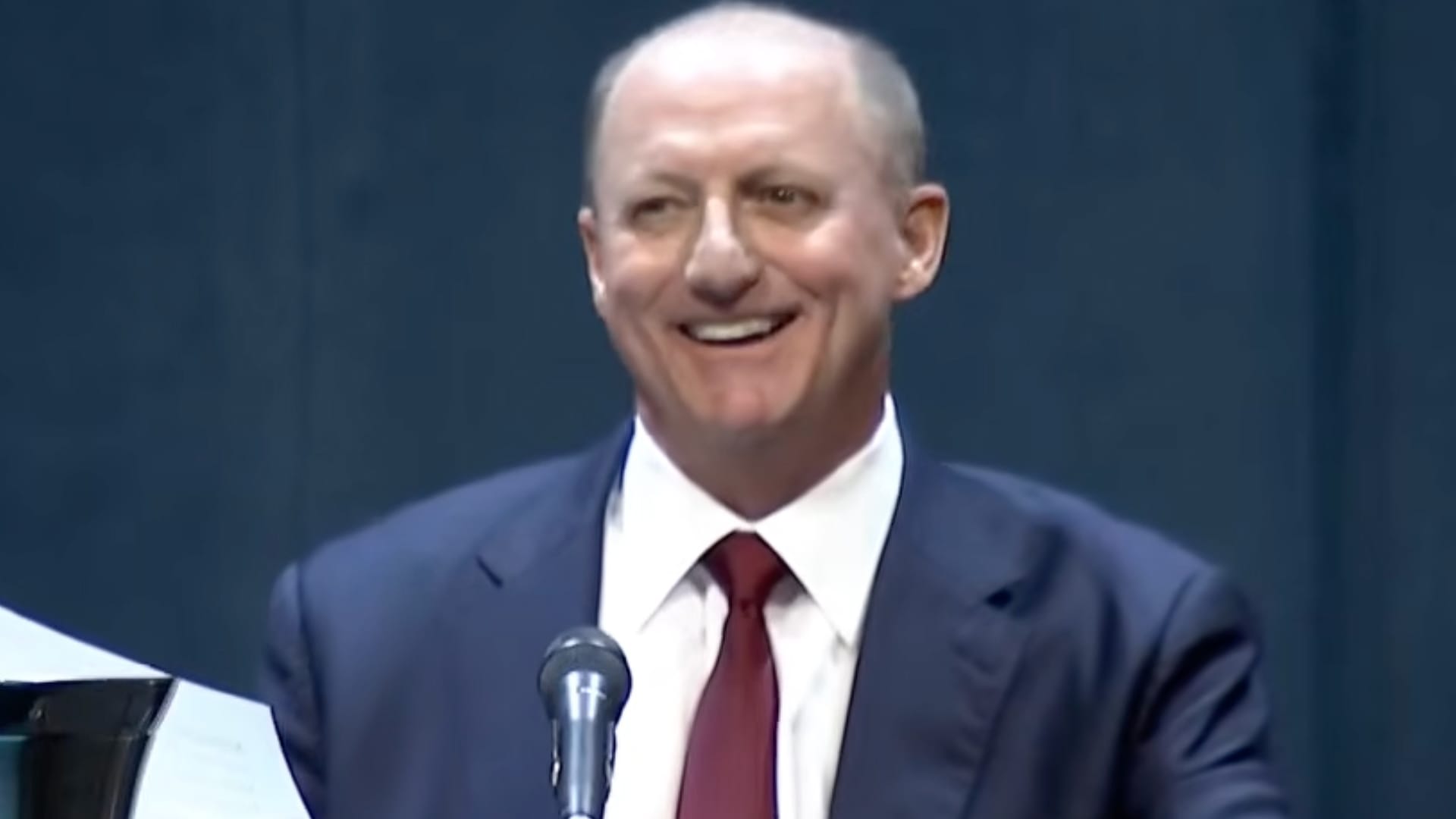
Greg Abel, CEO of Berkshire Hathaway, speaks during the Berkshire Hathaway Annual Shareholders Meeting in Omaha, NE on May 2, 2026.
CNBC
Berkshire Hathaway shares rose in premarket trading Monday after CEO Greg Abel‘s solid performance over the weekend helming the annual meeting for the first time, as well as a jump in the conglomerate’s earnings.
Class B shares of the conglomerate gained 0.5%, following the positive reception to Warren Buffett‘s handpicked successor at the Berkshire Hathaway gathering in Omaha, Nebraska, on Saturday. Many in the investment community acknowledged the loss of the wit and storytelling that were Buffett’s signature, but were also reassured by the demonstration of Abel’s firm grasp over Berkshire’s sprawling enterprise, as well as his insights into the conglomerate’s future direction.
Berkshire Hathaway’s first-quarter report early on Saturday showed a solid jump in the conglomerate’s operating earnings of 18% from a year earlier. Those gains were driven largely by insurance underwriting, which surged 28.5% to about $1.7 billion. It also showed the conglomerate sitting on a cash hoard nearing $400 billion.
One key theme Abel addressed in the morning and afternoon sessions on Saturday was artificial intelligence, a topic shareholders had been eager to hear more on prior to the event. The CEO specified that Berkshire won’t be doing “AI for the sake of AI,” a measured stance that’s a departure from other corporate executives racing to integrate the technology. At one point in the morning, Abel fielded a question from a deepfake version of Buffett, which he then turned into a discussion on the cybersecurity risks around AI.
The CEO was also joined during the event by other members of his leadership team, including Ajit Jain, vice chairman of insurance operations; Adam Johnson, president of Berkshire’s consumer products, service and retailing businesses; and Katie Farmer, CEO of BNSF Railway. Abel walked shareholders through efforts to improve its railway and insurance businesses, and the inclusion of Berkshire’s other executives was also reassuring to investors.
Abel also added that he doesn’t expect Berkshire will ever break up or divest its subsidiaries.
“We are a conglomerate but we are an efficient conglomerate,” Abel said. “We don’t have layers of management.”
Other highlights from the event include the remarks chairman Buffett made from the audience. Early on in the meeting, Abel commemorated Buffett’s long tenure at Berkshire by raising a jersey to the rafters of the CHI Health Center, where the event is held each year.
At the halfway point of the event, Buffett in a special interview with CNBC’s Becky Quick said the current investing environment is not “ideal.”
Read all the highlights from the meeting here.
— CNBC’s Alex Harring, Yun Li and Christina Cheddar Berk contributed to this report.
Crypto World
Trump Just Launched Project Freedom to Escort Ships Through the Strait of Hormuz And Bitcoin Hit $80,000

Bitcoin price surged to a four-month high of $80,529 on Monday, May 4, breaking through the $80,000 resistance level hours after President Donald Trump announced Project Freedom, an initiative to escort foreign cargo ships through the Strait of Hormuz amid escalating U.S.-Iran tensions.
The breakout is not purely geopolitical. Bitcoin Spot CVD data showing aggressive institutional spot buying confirms the move is structurally supported, not a leverage blip.

Spot CVD, or Cumulative Volume Delta, had already surged 199.1% in the prior week, a signal of high-conviction accumulation preceding the catalyst, not chasing it.
Discover: Best Crypto to Buy Right Now
What Is Project Freedom – and Why Does It Move Bitcoin?
Trump announced Project Freedom via Truth Social on Sunday, May 3, framing the initiative as a humanitarian escort mission: U.S. naval assets would guide stranded foreign cargo vessels through the Strait of Hormuz, which has been effectively closed by the U.S.-Iran standoff since earlier in 2026.
The initiative went into effect Monday. Iranian officials have already warned that any U.S. navigation through the strait would constitute a ceasefire violation, making this a live geopolitical flashpoint, not a resolved one.
Trump also confirmed his representatives are in “very positive discussions” with Iran, raising the probability of a broader Middle East de-escalation that would reduce oil risk premiums and rotate capital back into risk assets.
West Texas Intermediate is already reflecting this rebalancing, up 0.6% at $102 per barrel, with Brent Crude at $108, up 0.4%.
Can Bitcoin Price Hold $80K And Flip it to Support?
BTC pushing to $80.5K is a real shift, but the key question is whether $80K holds, not whether it was broken.
Right now, $80K is the level that needs to flip into support. If it holds on pullbacks, that confirms strength and keeps the path open toward $86K–$93K.

Below, $78K is the safety line. As long as BTC stays above it, the bullish structure remains intact.
If $78K breaks, momentum weakens fast, and $75K becomes the next major support where buyers need to step in again.
What matters here is the sequencing. Buyers were already accumulating before the news, and the catalyst just accelerated the move. That suggests this is not just a reaction; it has an underlying demand.
So this is a bullish setup, but confirmation comes from holding above $80K, not just breaking it.
Explore: The best pre-launch token sales
The post Trump Just Launched Project Freedom to Escort Ships Through the Strait of Hormuz And Bitcoin Hit $80,000 appeared first on Cryptonews.

TLDR
- Nvidia shares finished Friday’s session at $198.45, dipping beneath the critical $200 threshold
- NVDA has maintained the $200 level during just two distinct periods since the end of 2025
- Tuesday’s earnings releases from GlobalFoundries, Arista Networks, and Super Micro Computer may influence market sentiment
- Major institutional holders like State Street and Geode Capital maintain significant positions in NVDA
- The company’s earnings announcement is set for May 20; Wall Street’s average price target stands at $275.25
Nvidia shares concluded Friday’s trading session at $198.45, declining 0.5% despite temporarily crossing above $200 earlier in the day. Monday’s premarket activity showed an additional 0.2% decline to $198.16.
The $200 price point has emerged as a critical psychological threshold for traders. Beginning in late 2024, NVDA has successfully maintained consistent trading above that benchmark during only two distinct periods: from late October into early November 2025, and throughout mid-to-late April 2026.
After breaking below $200 last Thursday, the stock couldn’t reclaim that level by Friday’s close, prompting questions about when sustained support might return.
This Tuesday brings earnings announcements from three significant players in the semiconductor and AI infrastructure sectors—GlobalFoundries, Arista Networks, and Super Micro Computer. Strong performance from these companies could potentially restore investor confidence in chip sector demand.
Nvidia’s quarterly earnings report is scheduled for May 20. The previous quarter showed earnings per share of $1.62, surpassing analyst expectations of $1.54, while revenue reached $68.13 billion—reflecting a 73.2% year-over-year increase.
Institutional Ownership Holds Firm
Despite recent price volatility, institutional capital continues flowing into the stock. State Street maintains a position exceeding 978 million NVDA shares with an approximate value of $154.5 billion. Geode Capital Management controls roughly 579 million shares valued above $91 billion.
Norges Bank established a fresh position during the previous quarter, with holdings valued at approximately $51.4 billion. Collectively, institutional investors and hedge funds control 65.27% of NVDA stock.
WorthPointe LLC expanded its stake by 43.2% during Q4, pushing its total holdings to 8,682 shares with a value around $1.6 million. Manning & Napier similarly increased its position by approximately 192,878 shares.
Regarding insider transactions, EVP Ajay K. Puri divested 300,000 shares at $182.25 during March, totaling $54.7 million. CFO Colette Kress sold 20,000 shares at $174.89 in the same timeframe. Insider sales have reached approximately $171 million throughout the past quarter.
Wall Street Targets Suggest Significant Upside
Analyst sentiment remains bullish despite recent weakness. The consensus price target for NVDA stands at $275.25, with 48 analysts assigning a Buy rating and four recommending Strong Buy. Just two analysts rate the stock at Hold.
Wolfe Research maintains a $275 price target alongside an Outperform rating. JPMorgan holds a $265 target with an Overweight recommendation. Morgan Stanley established a $260 target in early March. Rothschild & Co Redburn upgraded their target from $245 to $268.
Nvidia’s market capitalization currently stands at $4.82 trillion. The stock’s 52-week trading range spans from $110.82 to $216.82, placing the current price considerably below its yearly peak.
The company’s PEG ratio of 0.65 indicates analysts view the current valuation as attractive relative to anticipated growth rates. The 50-day moving average stands at $186.75, while the 200-day moving average sits at $186.18—both positioned below current trading levels.
Nvidia distributes a quarterly dividend of $0.01 per share, translating to an annualized yield of 0.0%.

Crypto World
Laywer pops up on Arbitrum DAO forums seeking funds for victims of decades-old North Korean terrorist acts


Arbitrum delegates are in the process of weighing whether to release 30,765 ETH frozen after last month’s rsETH exploit into a coordinated recovery effort. But a lawyer for victims of North Korean terrorism showed up in the forum and told them they couldn’t.
The ether was drained from restaked ETH holders (a representative token of ETH that is locked on another platform for fixed yields) during the April 19 Kelp DAO bridge exploit, which CoinDesk previously reported as the largest DeFi hack of 2026.
The governance post, authored by attorney Charles Gerstein, serves as a restraining notice under New York law on behalf of three sets of judgment creditors holding roughly $877 million in claims against the Democratic People’s Republic of Korea.
The claims behind the filing stretch back decades. One stems from the 1972 Lod Airport massacre in Israel, where gunmen killed 26 people, including 17 Puerto Rican pilgrims, in an attack later found by a U.S. court to have been supported by North Korea.
Another involves Reverend Kim Dong Shik, a U.S. permanent resident abducted near the China border in 2000 and later killed in DPRK custody. A third ties to the 2006 Israel-Hezbollah war, where a federal judge found Pyongyang had supplied weapons and training used in rocket attacks.
The plaintiffs won their cases but North Korea has never paid. With sovereign assets effectively impossible to seize, the families have spent years searching for any North Korean property they can legally collect against to satisfy their judgments.
Gerstein’s filing argues that because U.S. authorities have linked the Lazarus Group, the hacking unit responsible for the exploit, to the North Korean state, the 30,765 ETH frozen by Arbitrum’s Security Council qualifies as North Korean property under U.S. enforcement law.
If the court accepts that framing, the families with unpaid judgments would have a senior legal claim on those funds, ahead of the rsETH depositors who originally held them.
The reason Arbitrum is involved is straightforward: after the rsETH exploit, its Security Council froze 30,765 ETH at a specific address on its network, effectively placing the funds under its control. Gerstein’s filing points to three underlying cases, Calderon-Cardona, Kim, and Kaplan, with writs of execution totaling roughly $877 Million.
The legal tool being used is CPLR §5222(b), a New York enforcement mechanism that allows creditors to freeze assets simply by serving a restraining notice, without first getting a new court order, though the target can challenge it afterward.
Once served, the recipient is barred from moving the assets for up to a year or until the judgment is resolved. Ignoring it can lead to contempt of court, the same category of offense used when someone defies a judge’s order.
The complication here is that Arbitrum DAO is not a company with clear legal status. That means the risk doesn’t neatly attach to “the DAO,” but to whoever a court ultimately decides has control over the frozen ETH.
The filing and legal theory presented drew pushback inside the same forum thread. Delegate Zeptimus argued the legal premise is backwards, writing that the ETH “is not property in which the DPRK has an ‘interest’… It’s stolen property,” and adding that under basic property law “a thief acquires no title.”
In that view, the funds belong to the original rsETH depositors, and the proposed recovery effort is not a redistribution but a return of assets to their rightful owners. Blocking that process, Zeptimus wrote, “shifts the cost of the DPRK’s debt onto a different set of victims who were themselves robbed.”
Delegates had been working through a different set of trade-offs. Entropy Advisors urged a FOR vote, citing the daily interest cost to Aave users with stuck positions. Axia flagged questions about whether the Arbitrum Captive Insurance Product would cover delegates if something went wrong.
Gerstein’s filing sharpens that question considerably, where coverage for ordinary delegate liability is one thing but exposure tied to a live enforcement action is another.
What’s left is a choice between victims. On one side, Aave depositors with positions they can’t close. On the other, families behind decades-old judgments against North Korea, still seeking to collect.


GameStop has unveiled a non-binding $55.5 billion proposal to acquire eBay at $125 per share, a 46% premium over eBay’s February 4, 2026, closing price.
The offer combines cash and stock in equal amounts and would install Ryan Cohen as Chief Executive Officer of the combined retailer. GameStop has already accumulated a 5% economic stake in eBay through derivatives and direct stock ownership.
The $125 Premium Behind the GameStop Offer
The Texas-based retailer plans to file a Schedule 13D and Hart-Scott-Rodino notification this week. The 46% premium tracks to February 4, when GameStop quietly began building its eBay stock position.
GameStop holds roughly $9.4 billion in cash and liquid investments. That figure includes its Bitcoin reserves accumulated over the past year. TD Securities issued a highly confident letter of credit for up to $20 billion in third-party financing.
The offer values eBay (EBAY) at a 27% premium to its 30-day VWAP and a 36% premium to its 90-day average. Shareholders would have the right to elect between cash and GameStop common stock. The transaction is conditioned on customary closing conditions.
Where Cohen Wants to Cut
The proposal targets $2 billion in annualized cost reductions within twelve months of closing. Roughly $1.2 billion would come from sales and marketing. eBay spent $2.4 billion in fiscal 2025, yet added only one million net buyers.
Another $300 million would come from product development and $500 million from general and administrative expenses. GameStop projects that eBay’s diluted earnings per share could rise from $4.26 to $7.79 solely from cuts.
GameStop’s roughly 1,600 US locations could serve as anchor points for in-person services for the marketplace. These include item authentication, drop-off intake, shipping fulfillment, and live shopping events.
eBay previously absorbed NFT platform KnownOrigin in 2022 before reversing course on Web3.
Cohen’s Track Record at GameStop
Cohen owns roughly 9% of GameStop and pulls no salary or cash bonus. He has also rejected any golden parachute since taking over in January 2021. The retailer swung from a $381 million loss in fiscal 2021. Net income reached $418 million by fiscal 2025.
He has also floated crypto payments and Bitcoin treasury moves while paying down legacy debt. The combined company would face antitrust review under the Hart-Scott-Rodino Act.
Whether eBay’s board engages with the proposal will determine the deal’s fate. The coming days could reveal if this becomes Cohen’s biggest swing yet.
The post GameStop Proposes $55.5 Billion eBay Acquisition appeared first on BeInCrypto.
Crypto World
IonQ (IONQ) Q1 Earnings Preview: High Growth Meets Steep Valuation Ahead of May 6 Report

Key Takeaways
- IonQ will release Q1 2026 financial results after trading hours on May 6, followed by a conference call scheduled for 4:30 p.m. ET
- Analysts project quarterly revenue of $49.7M, representing a massive 555.9% increase compared to last year’s Q1
- Shares of IONQ dropped 35.7% during Q1 2026, finishing Friday’s session at $46.20 with a 2.39% gain
- The company delivered 202% full-year revenue expansion in 2025 and ended with $370M in contracted future obligations
- The stock trades at a forward price-to-sales multiple of 59.3x, dramatically exceeding the sector median of 6.49x
IonQ prepares to unveil its Q1 2026 financial performance on May 6, presenting investors with a narrative of explosive expansion coupled with persistent unprofitability. The quantum computing firm will announce results following market close, with executives hosting a discussion at 4:30 p.m. ET.
Shares ended Friday’s trading at $46.20, gaining 2.39% during the session. Despite this modest uptick, IONQ has declined 35.7% throughout the first quarter of 2026, even as the company continued meeting operational milestones.
Analyst expectations call for quarterly revenue reaching $49.7 million. This figure would represent a staggering 555.9% increase versus the comparable quarter in 2025.
IonQ management issued Q1 revenue guidance between $48 million and $51 million. While this range suggests impressive annual comparison growth, it represents a deceleration from the 429% revenue expansion recorded in Q4 2025.
Chief Executive Niccolò de Masi characterized 2025 as a pivotal year in his recent shareholder correspondence. He emphasized the company’s evolution from purely manufacturing quantum systems to establishing a comprehensive quantum technology platform with merchant capabilities.
Annual 2025 revenue climbed 202% compared to 2024 performance. The company concluded the year holding $370 million in unfulfilled performance obligations, providing forward revenue visibility.
Commercial customers accounted for more than 60% of 2025 revenue generation. IonQ now maintains operations across over 30 nations, with international markets contributing above 30% of total revenue.
Notable client additions included KISTI alongside an expanded partnership with QuantumBasel. The company is also experiencing momentum in quantum networking applications, including continental-scale deployments throughout Europe.
The Path to Profitability Remains Distant
Financial losses continue at significant levels. Adjusted EBITDA for full-year 2025 registered negative $186.8 million. Looking ahead to 2026, IonQ anticipates adjusted EBITDA losses between $310 million and $330 million.
Analyst consensus for Q1 earnings per share stands at a loss of $0.26. This would represent an 85.7% deterioration compared to the year-earlier period.
The company’s forward price-to-sales valuation currently stands at 59.3x. This compares to a sector average of just 6.49x. Such a substantial premium provides minimal cushion for disappointing results.
SkyWater Acquisition Creates Additional Variables
IonQ’s pending acquisition of SkyWater Technology represents a strategic move toward vertical integration and domestic manufacturing capabilities. Federal authorities are currently conducting regulatory review of the transaction.
While the deal won’t impact Q1 financial statements, investor attention will focus on management commentary regarding long-term production scaling during the earnings discussion.
IonQ has surpassed earnings projections in half of its previous four quarterly reports while falling short in the remaining two. Zacks Research does not project an earnings surprise this quarter, assigning an Earnings ESP of 0.00%.
Wall Street analysts maintain an average price target of $61.82 on IONQ shares, suggesting potential upside of 33.81% from current trading levels. The consensus recommendation stands at Strong Buy across 12 covering analysts.
The May 6 earnings release will provide critical insight into whether IonQ’s commercial traction can sustain itself throughout 2026.

Ethereum is trading near $2,350 as the Glamsterdam news update started to spread like wildfire. The upgrade is attracting huge attention, and the fee implications could reshape how retail users experience Ethereum’s L1.
Glamsterdam targets increasing the gas limit from 60 million today to almost 200 million, more than tripling layer-1 execution capacity. The upgrade leans heavily on EIP-8037, which raises the gas cost for state creation to contain permanent data bloat while simultaneously creating headroom for dramatically cheaper standard transactions.
A fact I feel like almost nobody knows: Ethereum's gas limit will be increased to ~200M after Glamsterdam, a huge increase from the 60M we have today. — Hasu
That’s a 3x+ of L1 execution capacity, with expectation of further doubling soons after that. Assuming no similar increase in…

 (@hasufl) May 2, 2026
A secondary capacity doubling is reportedly planned shortly after the initial rollout. It aims for near-zero fees for users, without collapsing the protocol’s state management.
Discover: The best pre-launch token sales
Can Ethereum Price Break $2,400 Resistance This Week?
ETH is consolidating in a narrow band. Data places the 24-hour range between $2,250 and $2,350, with support at $2,270 and the critical resistance cluster sitting at $2,400. Tracked technical indicators are currently signaling buy, a mildly bullish lean, not a conviction call.

The moving average picture is split. ETH trades above its 10 and 20 EMAs, which is constructive for near-term momentum. But it remains below the 100- and 200-day EMAs, around $2,800 zone.
If ETH can close above $2,400 on meaningful volume, it would likely trigger EMA recapture and open a run toward $2,500+. Historical ETH resistance breaks at comparable levels have produced 10–15% follow-through moves within two weeks.

Historical close data shows ETH finishes higher on 50.5% of trading days, essentially a coin flip dressed up in chart patterns.
Discover: The best crypto to diversify your portfolio with
Forget the News, LiquidChain Offers That Ethereum Glamsterdam Does, and More
ETH at $2,350 is a recovery, but it’s also 50% below its all-time high. Glamsterdam improves the network’s fundamentals; it doesn’t automatically reprice a $280 billion asset overnight. Traders who rode the 2021 cycle know the gap between “great upgrade” and “great trade” can be wide and expensive.
That dynamic is pushing a segment of crypto-native capital toward early-stage infrastructure plays where valuation hasn’t caught up to the thesis yet.
LiquidChain is one project drawing attention. It positions itself as a Layer 3 infrastructure protocol that fuses Bitcoin, Ethereum, and Solana liquidity into a single execution environment in a unified liquidity layer where developers deploy once and access all three ecosystems simultaneously.
Low light…
Clear direction⟁https://t.co/vqvBcdSQYC pic.twitter.com/1ZzWdMQgET
— LiquidChain (@getliquidchain) May 4, 2026

The presale has raised north of $700K at a current token price of $0.01456 with a 1500% APY staking bonus. Key architecture features include Single-Step Execution, Verifiable Settlement, and a Deploy-Once design that eliminates multi-chain fragmentation headaches.
As Ethereum price predictions remain contested across analysts, cross-chain infrastructure that abstracts away fragmentation carries a structural use case regardless of which L1 wins the next cycle.
The post Ethereum News: Galmsterdam Cuts Fees to Almost Zero as ETH Fighting $2,400 Resistance appeared first on Cryptonews.
Crypto World
Kraken parent Payward closes $550 million Bitnomial deal, securing full CFTC derivatives stack
Payward, the parent company of crypto exchange Kraken, has completed its acquisition of Bitnomial, giving the firm a full U.S. derivatives stack regulated by the Commodity Futures Trading Commission (CFTC).
The deal gives Payward control of Bitnomial’s futures broker, exchange and clearinghouse licenses. That structure allows Payward to offer regulated crypto derivatives in the U.S. without relying on a patchwork of third-party venues.
The transaction values Payward’s equity at $20 billion. It follows the firm’s $1.5 billion acquisition of retail futures platform NinjaTrader in 2025, the two deals together forming the backbone of its U.S. derivatives push.
Payward said it plans to start with spot margin on Kraken and NinjaTrader. Perpetual futures, contracts without a set expiry, and options are expected to follow.
The acquisition also gives Payward a business-to-business path. Banks, fintech firms, and brokerages could connect to regulated U.S. derivatives products through a single integration with Payward Services, the company added.
Bitnomial was founded in 2014 and spent more than a decade building its CFTC licenses. Payward is paying up to $550 million in cash and stock for the company, according to the provided briefing.
The deal comes as U.S. crypto firms race to bring derivatives onshore under CFTC rules. Coinbase has already launched perpetual-style futures in the U.S., while other trading firms are exploring similar products.
The crypto futures and options market has become the dominant layer of digital asset trading, dwarfing spot activity in both volume and leverage. In the past 24 hours alone, crypto futures have generated around $200 billion in trading volume, roughly double the activity in spot markets. A significant portion of this market, particularly options, is concentrated on unregulated offshore venues, limiting direct access for U.S.-based traders.
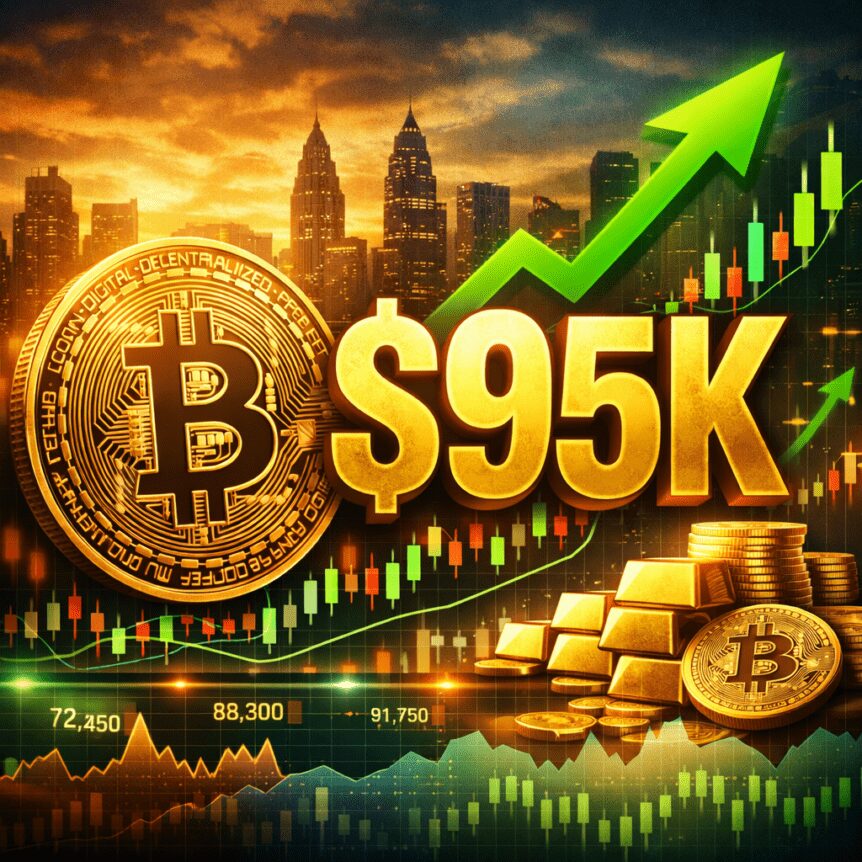
Bitcoin started the week with renewed momentum, reclaiming the $80,000 level for the first time in three months and posting fresh intraday highs around $80,600 on Bitstamp. The weekly close also marked Bitcoin’s strongest close since January, and the price traded above the 21-week moving average for the second time since October 2025, according to TradingView data. The move adds a layer of optimism after a period of consolidation, and traders are weighing whether this is the start of a sustained up leg or a temporary reaccumulation before the next test of macro resistance.
Beyond the price action, market participants are watching a layered set of signals: ETF flows, on-chain momentum, and a domestic macro backdrop that continues to tilt in Bitcoin’s favor from a risk-on perspective, even as official policy remains unsettled. The blend of spot-market strength, fresh inflows into U.S. spot BTC ETFs, and a recovering on-chain metric set has some analysts arguing that the next leg could extend toward higher targets, while others warn that a failure to hold could invite a renewed pullback amid ongoing macro tensions.
Key takeaways
- Bitcoin reclaimed $80,000 and hit a local high of about $80,617 on Bitstamp, delivering a weekly close above the 21-week trend line for only the second time since October 2025.
- Analyst Michaël van de Poppe sees upside potential beyond $86-88k, with discussions of possible moves toward $92-95k if momentum persists, supported in part by about $630 million in net inflows to U.S. spot Bitcoin ETFs on Friday.
- Trading perspectives diverge on the near term: a persistent breakout above $80k could cement a bullish shift, while a failure to sustain gains risks a deeper pullback toward macro lows if the bear flag remains intact.
- On-chain momentum is improving, with Bitcoin’s MVRV ratio hovering around 1.45 — among multi-month highs — signaling a rebalancing of market valuation relative to realized value.
- The macro picture remains nuanced: dissent at the Fed meeting suggested a cautious stance on easing, while equities hit new highs on strong earnings, and oil-market dynamics continued to influence risk sentiment.
Back above the threshold: what the price action signals
The price thrust above $80,000 is more than a round-number milestone. It marks a key technical test of a bear-leaning pattern that had shadowed Bitcoin through much of 2026. The intraday peak near $80,617 and the weekly close above the 21-week moving average signal a potential shift in short- to medium-term momentum, according to traders monitoring price structure against the longer-term trend line first breached earlier in the week.
Market observers point to the 21-week line as a useful gauge for assessing macro-validity. Bitcoin’s ability to stay above this level and maintain a weekly close above it for the first time in several months is being interpreted as a potential foundation for a more durable move, contingent on continued demand and absence of a renewed macro shock.
Bear flag or breakout: a spectrum of trader opinions
As Bitcoin grapples with the $80,000 threshold, the community remains split on the trajectory ahead. On one flank, well-known trader Michaël van de Poppe argued that the market is primed for upside momentum. In posts circulated over the weekend, he suggested that surpassing $79,000 opens the path toward $86-88k in the near term, with the possibility of a stronger run toward $92-95k if the momentum persists. His commentary cited Friday’s robust ETF flows as a bullish tailwind, framing the move as part of a broader reacceleration in participation.
“Very keen to see how the markets will react when the US opens, especially given the positive ETF flows of last Friday. Breakout above $79K opens the opportunities all the way towards $86-88K for coming period.”
Meanwhile, other voices warn that the prevailing chart pattern could still deliver a deeper correction if the bear flag completes. A trader known as Crypto Storm cautioned that a break lower could trigger a 30–40% retreat and that only a decisive daily close above $80k would reestablish a bullish tilt. Several participants have emphasized the potential for a pullback if the current sequence fails to sustain higher highs and new resistance accelerates selling pressure.
On the more optimistic side, investors like Jeff Sun have noted that spot Bitcoin has reclaimed the $80,000 level for the first time since January and described the move as not necessarily a bear-flag scenario. Sun has been building a position via ETFs since March, arguing that the latest price action does not fit the classic bear-flag narrative, a view echoed by others who see the paint on the chart as a base-building phase rather than a terminal retreat.
Adding a layer of macro context, Jurrien Timmer, director of global macro at Fidelity Investments, has argued that the rebound from the February dip toward $60,000 could be part of a larger base formation designed to support the next significant up leg. While this framing is not a guaranteed forecast, it underscores the tendency to interpret Bitcoin’s late-winter resilience as more than a mere bounce within a bear market.
Fed policy, equities, and the risk-on backdrop
Beyond price action, the broader macro narrative continues to shape risk assets. The latest Federal Reserve meeting featured notable dissent among four FOMC members and highlighted a debate over easing bias. Market coverage from The Market Mosaic noted that the primary source of dissent was resistance to language signaling an easing bias, pointing to a more cautious stance on policy shifts in the near term.
Despite intra-meeting tensions, stock markets have held up well. The S&P 500 reached fresh highs in the week, aided by stronger-than-expected corporate earnings. Yet analysts caution that inflation and the path of policy will remain critical drivers for risk assets, with higher-for-longer or fluctuating inflation dynamics potentially altering valuations in coming months.
From a timing perspective, futures markets painted a picture in which significant easing in 2024 appears unlikely, according to CME Group’s FedWatch Tool. As policymakers evaluate inflation pressures and macro risks, the market’s interpretation of future rate moves remains a decisive variable for both equities and crypto assets.
Oil dynamics and risk sentiment
Oil markets have remained a central macro cross-check for risk appetite. Brent crude prices hovered around the $110s to $112 range, after peaking above $120 per barrel last week before cooling slightly. Analysts have stressed that the longer-term supply backdrop suggests a potential moderation in oil prices, even as short-term spikes reflect geopolitical risk and supply constraints. The view from some strategists is that the bullish oil narrative is largely priced in, with a potential for a downside drift should supply growth resume more robustly in 2026.
Market commentator Lukas Kuemmerle emphasized the pattern of price reactions around the highs as evidence that the current rally may be cooling into a consolidation phase, a scenario that could impact risk assets more broadly. Even as some banks have tilted toward a lower oil-price baseline than the immediate spike would imply, the overarching takeaway remains that the oil story—while supportive to some risk-on trades—may not sustain a continued surge without an accompanying shift in supply dynamics.
On-chain momentum: MVRV points to reaccumulation
On-chain metrics show a growing sense of confidence returning to Bitcoin investors. CryptoQuant’s data this week highlighted multimonth highs in Bitcoin’s market value to realized value (MVRV) ratio, a metric that compares Bitcoin’s market capitalization to the price at which the last supply moved. The MVRV ratio hovered around 1.45, a level not seen since early 2026, according to Arab Chain Now’s interpretation of CryptoQuant data.
“The Bitcoin MVRV Ratio is currently reading around 1.45, a significant level as it represents one of its highest readings since the beginning of 2026,”
CryptoQuant contributor Arab Chain Now noted, adding that such readings reflect improving profitability for holders and a rebalancing of market expectations after the early-year volatility. CryptoQuant.
Analysts say the trend in MVRV aligns with a broader narrative of investors regaining conviction and participating more actively in price discovery, a signal that could underpin additional upside if price action sustains above key levels. Still, observers emphasize that MVRV is only one piece of the puzzle, and it must be corroborated by continued demand across spot markets and continued resilience in macro catalysts.
In aggregate, the combination of on-chain momentum, ETF inflows, and the immediate price action around $80k constitutes a potential inflection point for Bitcoin. Yet as with any risk asset, the path forward will hinge on how macro factors—policy signals, inflation trends, and energy markets—evolve over the next few weeks.
What to watch next: a sustained move above $80k with a daily close above that level could shift the narrative toward a broader upside. Traders will be watching for continued ETF demand, the trajectory of the Fed’s policy path, and the oil-market dynamic, all of which could amplify or mute Bitcoin’s next leg up. As the week unfolds, the key question remains whether this rebound can sustain itself, or whether a new round of volatility will reassert itself as investors reassess risk in a rapidly shifting macro environment.
Crypto World
Binance CEO Says Crypto Has Captured Just 0.15% of Financial Services: Is the Biggest Rally Still Ahead?
Crypto markets remain in recovery mode after a punishing drawdown from October 2025 peaks, and one of the industry’s most powerful voices just made the bull case in raw numbers. This is fueling bullish price prediction for Bitcoin and its beta plays like Bitcoin Hyper.
Binance CEO Richard Teng posted a stark comparison on X this week: crypto exchanges sit at a $55 billion combined valuation against $36 trillion in financial services alone.
That ratio, roughly 0.15% penetration, either looks like a ceiling or a runway, depending on your timeframe. Broader market forecasts are starting to tilt toward the latter.
Teng’s post laid out the total addressable market across three verticals where crypto is encroaching: financial services at $36T, global payments at $788 billion, and social media at $208 billion.
“The opportunity is expanding rapidly. Even marginal adoption across these sectors could drive transformational growth for crypto,” Teng wrote.
He stopped short of naming a target adoption rate, which is either disciplined messaging or deliberate ambiguity, depending on your read.
The macro framing matters because it arrives while Bitcoin consolidates well off its prior all-time highs, with institutional inflows showing early signs of resuming. The question the market is now pricing: is the drawdown a structural reset or a buying window?
Can Bitcoin Reclaim Momentum as Institutional Inflows Return?
BTC is showing quiet strength under the surface. Spot CVD rising alongside inflows means buyers are active, even if price is not breaking out yet.
That mismatch matters. It suggests accumulation, not distribution, but momentum is still compressed, so the market has not decided direction.

The structure is tight. Moving averages are converging and resistance keeps getting rejected, which usually leads to a sharp move once one side wins.
If inflows continue and BTC clears resistance with volume, that is where momentum flips and the move accelerates.
The risk is still macro. One Iran war shock can break support and trigger another leg down quickly.
Bitcoin Hyper Could Be the Best Beta Play For Bitcoin
BTC sitting near range lows with resistance overhead is exactly the kind of environment where upside feels capped in the short term, even if the bigger trend stays intact.
That is usually when attention shifts one layer deeper, into infrastructure plays that are earlier in their cycle and not fully priced yet.
Bitcoin Hyper is positioning in that space, building a Layer 2 on Bitcoin with Solana Virtual Machine integration to bring fast smart contracts and lower-cost execution into the BTC ecosystem. The idea is to combine Bitcoin’s security with high-speed performance and programmability.
The presale has already raised over $32.5M at around $0.0136795, which shows strong early demand. Features like staking, a native bridge, and low-latency execution are aimed at supporting real usage if the project delivers.
But it is still early-stage, and that comes with real trade-offs. Liquidity is not proven, execution is not guaranteed, and outcomes depend entirely on adoption after launch.
So the setup is straightforward, BTC offers more stable but capped upside in the short term, while something like Bitcoin Hyper offers earlier positioning with higher potential, but also higher risk.
VISIT Bitcoin Hyper Before the Next Price Stage.
The post Binance CEO Says Crypto Has Captured Just 0.15% of Financial Services: Is the Biggest Rally Still Ahead? appeared first on Cryptonews.

Cardi B Shares Hopes For Megan Thee Stallion Klay Split

Accountant Explains: 97.8% of What You Need to Know About Money
Gyre Therapeutics closes $300M Cullgen acquisition

Manchester United reach agreement with Casemiro over contract clause amid transfer speculation

US brings back mandatory military draft registration

Steven Gerrard disagrees with Gary Neville over ‘shock’ Chelsea and Arsenal claim | Football


-

 Tech7 days ago
Register Renaming | Hackaday
-

 Politics7 days ago
Drax board avoid their own AGM, accused of greenwashing & environmental racism
-

 Fashion6 days ago
Kylie Jenner’s KHY Enters a New Era with ‘Born in LA’
-

 NewsBeat19 hours ago
Channel 5 – All Creatures Great and Small series 7 new post
-

 Tech7 days ago
Images of Samsung’s rumored smart glasses have leaked
-
 Tech3 days ago
Trump’s 25% EU auto tariff breaches Turnberry Agreement that also covers semiconductors and digital trade
-

 Business6 days ago
Most Commercial Energy Audits Miss the Real Losses
-

 Business7 days ago
(VIDEO) Charlize Theron Climbs Times Square Billboard to Promote New Netflix Thriller ‘Apex’
-

 Crypto World6 days ago
CFTC’s AI will review U.S. crypto registration applications, chairman tells CoinDesk
-
 Sports3 days ago
Paul Scholes issues Marcus Rashford reality check as agreement emerges over Man United star
-

 Business5 days ago
Barclay Brothers Avoid Bankruptcy: HSBC Drops High Court Petitions After IVA Deal
-
 Business5 days ago
Tesla Officially Registers Elon Musk’s Stock: What Investors Need to Know
-

 Tech6 days ago
Get Ready for More Brain-Scanning Consumer Gadgets
-
 Crypto World6 days ago
Robinhood Phishing Scam Exploits Gmail Dot Feature to Bypass Security
-

 Entertainment7 days ago
Sister Wives: Janelle Posts New Scary Warning
-

 Crypto World6 days ago
Gmail Dot Trick Underpins Robinhood Phishing, Sending Real-Looking Emails
-

 Entertainment7 days ago
Michael Jackson’s Biopic Excluded Abuse Allegations For $25M
-

 Business4 days ago
Two Powerball Tickets Split $143 Million Jackpot in Indiana and Kansas
-

 Business7 days ago
Superdry co-founder accused of raping woman
-
 Crypto World7 days ago
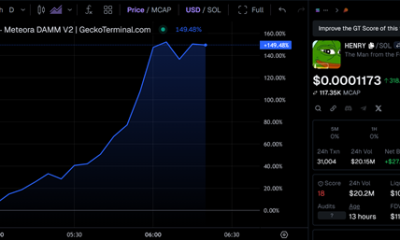
Meme Coin Based on White House Shooter Conspiracy Rallies 320%
You must be logged in to post a comment Login