
Business
United soars into premium travel


United Airlines is making a decisive bet on the future of air travel based on premium seats, champagne flutes and loyalty.
United Airlines chief executive Scott Kirby recently revealed a sweeping cabin overhaul following which nearly half the seats on some long-haul aircraft will be dedicated to higher-yield passengers: a striking shift that underscores how sharply the economics of flying are changing.
At the centre of the strategy is a reimagined Boeing 787-9 configured with up to 99 premium seats: far beyond what United has historically offered, and a clear signal that the airline sees its future not in filling planes, but in filling them profitably.
The world’s largest airline, United Airlines is a partner airline with Virgin Australia and operates from Melbourne, Sydney and Brisbane, with Virgin code-sharing on its flights.
United will add more than 250 aircraft over the next two years to further modernise its fleet, introduce new aircraft variants, create a new experience for transcontinental travellers, and roll out new onboard products for every customer: reinforcing its position as a leading premium airline.
In a major move, United is bringing widebody-style experiences to its new narrowbody aircraft: the new ‘Coastliner’ Airbus A321 and A321XLR (the same model that Qantas is adding to its fleet).
These are United’s first narrowbodies with the new elevated interior. They feature an all-aisleaccess lie-flat seat suite dubbed ‘United Polaris’ (business class), which is available on international routes.
United has 100 of these new aircraft coming into its fleet to replace 40 older, less-efficient Boeing 757s.
The Coastliner will have a specially designed livery and fly exclusively between United’s US west coast hubs in San Francisco and Los Angeles, and Newark-New York in the east. It will introduce the United Polaris cabin experience to domestic travellers.
United’s A321XLR gives travellers access to 32 premium seats – 16 more than the 757 it replaces – and will start flying later this year.
United’s new 787-9 with the elevated interior will fly internationally, starting on April 22.
These aircraft include the airline’s new United Polaris studio: lie-flat, all-aisle-access seats that are 25 per cent larger than standard United Polaris seats. They include privacy doors, an ottoman for companions on some seats, exclusive meal service with wine pairings and caviar, new amenity kits with retail-size offerings, wireless charging, Bluetooth connectivity, and a 27-inch 4K OLED seatback screen (the largest among US airlines).
The announcement expands on the ambitious ‘United next’ growth strategy announced in 2021. Since that time, United has: added 22 Boeing 787 Dreamliners, 237 Boeing 737 MAX aircraft and 67 Airbus A321neos; completed 70 per cent of its plan to retrofit its mainline narrowbody fleet; replaced more than 100 regional jets with larger mainline aircraft; increased premium seats per North American departure by 40 per cent; and hired more than 60,000 people.
“For more than a decade, we’ve invested billions of dollars in our product, service and technology as part of our plan to be the best brand-loyal airline in the world, and the result is that more and more customers are choosing to fly with us every day,” Mr Kirby said at the announcement.
“Today we accelerate our plans and elevate our offerings to the next level, creating an even more consistent premium onboard experience for every customer and delivering value across every cabin of service.”
The airline’s executive vice-president and chief commercial officer, Andrew Nocella, said the upgrades provided more choice for passengers.
“These new planes and products not only complement our fleet and network plans, but they also give our customers more premium amenity and seat choices, whether they bought a basic economy ticket to fly from Chicago to Fort Wayne or are flying Polaris between San Francisco and Singapore,” he said.
“United is setting the pace and innovating for our customers at a scope and scale unheard of in aviation history. And we’re not taking our foot off the gas.”
In another example of its push into premium products, the airline has announced that it has licensed Air New Zealand’s Skycouch, which it will market as the United Relax Row.
The concept turns a set of three economy seats into a couch or bed, creating a far more comfortable option for customers travelling in the economy cabin on long-haul flights.
United is the first North American airline to offer the seating option and holds North American exclusivity on the design.
The new dedicated row of three seats is outfitted with individually adjustable leg rests that fold up at a 90-degree angle to create room to sleep, stretch out or watch a movie.
The United Relax Row is ideal for families travelling with small children, solo travellers, and couples who want a little extra comfort.
Passengers travelling in United Relax Row will receive additional amenities for their flight, including a custom-fitted mattress pad, a specially sized plush blanket, two additional pillows, as well as a plush toy and children’s travel kit for families.
United expects its Relax Row to launch in 2027 and plans to offer it on more than 200 Boeing 787 and 777 widebody aircraft by 2030.
The seats will be located between economy and premium plus seating, and United will offer up to 12 Relax Row sections on each aircraft.
United has 1,075 aircraft in its mainline fleet and 623 on order.
The airline is also investing in future aircraft concepts. These include options to purchase 100 eVTOL (electric vertical take-off and landing) aircraft from Archer Aviation and 200 from Eve Air Mobility, a division of Embraer.
The airline has also committed to purchasing 100 ES-30 electric turboprop regional aircraft from Heart Aerospace, with options for up to 50 more.
At the other end of the market, it has committed to purchasing 15 Boom Overture 60-passenger supersonic aircraft, with options for up to 35 more.
However, its most ambitious move is a bold step towards reshaping the future of air travel, with a major investment in JetZero’s blended wing body (BWB) aircraft.
This next-generation design promises not only dramatic fuel efficiency gains but also a transformative flying experience for passengers.
The agreement includes the potential to order up to 100 of JetZero’s BWB aircraft, with an option for another 100, contingent on key development milestones, including the successful flight of a full-scale demonstrator (expected in 2027).
If the technology delivers as envisioned, it could mark one of the most significant advances in commercial aviation in decades.
Unlike traditional aircraft, JetZero’s blended wing body design fuses the fuselage and wings into a single aerodynamic form. This innovation allows the aircraft to generate lift across its entire wingspan while significantly reducing drag, potentially slashing fuel burn by up to 50 per cent per passenger mile compared to similarly sized jets.
For United, the potential payoff is enormous: lower carbon emissions, reduced operating costs, and a leap forward in customer comfort.
The JetZero Z4 aircraft, designed to seat 250 passengers, runs on conventional jet fuel but will be capable of using sustainable aviation fuel blends.
The US Air Force has also recognised JetZero’s promise, awarding the company a $US235 million contract in 2023 to accelerate development of its full-scale demonstrator.


NEW YORK — Celcuity Inc. shares surged more than 13.8 percent to $143 in early trading Monday, May 4, 2026, after the clinical-stage oncology company announced that its Phase 3 VIKTORIA-1 trial met the primary endpoint with clinically meaningful improvement in progression-free survival for patients with PIK3CA-mutant advanced breast cancer. The positive topline results for gedatolisib sent the biotech stock to new highs and reignited investor enthusiasm for the company’s targeted therapy pipeline just weeks before a potential FDA submission.
Celcuity reported that both the gedatolisib triplet and doublet regimens demonstrated statistically significant and clinically meaningful improvement in progression-free survival compared to the control arm in the PIK3CA mutant cohort. The data, released late Friday, May 1, triggered a sharp after-hours rally that carried into Monday’s session. The company said the results support advancing toward a supplemental New Drug Application (sNDA) filing with the FDA, with a potential PDUFA target in July 2026.
The VIKTORIA-1 trial evaluated gedatolisib in combination with standard therapies for HR+/HER2- advanced breast cancer patients who had progressed after prior CDK4/6 inhibitor treatment. Gedatolisib, a first-in-class PI3K/mTOR inhibitor, targets a pathway frequently altered in breast cancer. Positive data in the PIK3CA mutant population — a subgroup with historically poorer outcomes — positions the drug as a potential new standard of care option in a market estimated to exceed $5 billion annually at peak.
Celcuity CEO Brian Sullivan called the results a “transformational milestone” for the company and patients. “These data demonstrate gedatolisib’s potential to meaningfully improve outcomes in a population with significant unmet need,” Sullivan said in the company’s release. The firm is now accelerating commercial launch preparations while advancing additional indications for the drug across multiple solid tumors.
The stock reaction reflects high expectations. Celcuity has been on many biotech investors’ radars due to gedatolisib’s profile and its near-term regulatory timeline. Analysts have issued bullish price targets, with some projecting peak annual revenue exceeding $2.5 billion if the drug secures approval across multiple lines of therapy. Monday’s surge pushed the company’s market capitalization well above $6 billion.
The trial success comes at a pivotal time for Celcuity. The company has been advancing its precision medicine platform, which uses live tumor cell testing to identify patients most likely to benefit from targeted therapies. Gedatolisib represents the lead asset in this approach, and positive Phase 3 data significantly de-risks the program while strengthening its position ahead of potential partnership or commercialization discussions.
Broader market context amplified the move. Biotech stocks have shown renewed strength in 2026 amid improving regulatory sentiment and investor appetite for late-stage assets with clear paths to approval. Celcuity’s data stands out for its statistical robustness and clinical relevance in a competitive breast cancer landscape dominated by CDK4/6 inhibitors and antibody-drug conjugates.
Analysts reacted swiftly. Citizens initiated coverage with a Market Outperform rating and $150 price target earlier in the week, citing the drug’s potential. Other firms have highlighted the July 2026 PDUFA timeline as a key catalyst. While some caution remains around commercial execution and competition, the overall sentiment has turned increasingly bullish following the topline readout.
For patients and physicians, the results offer hope for better options in later-line HR+/HER2- breast cancer. PIK3CA mutations occur in approximately 40 percent of cases, and effective targeted therapies have been limited. Gedatolisib’s mechanism and tolerability profile could fill an important gap if approved.
Celcuity has cash reserves to support operations through key milestones, including potential approval and launch. The company continues enrolling patients in additional trials exploring gedatolisib in other settings and tumor types, positioning it for potential label expansion in the years ahead.
As trading continued Monday morning, volume remained elevated and the stock held near session highs. The move underscores the biotech sector’s sensitivity to clinical data, where positive Phase 3 readouts can drive outsized gains even in a broader market environment focused on macro signals and Federal Reserve policy.
Looking forward, all eyes are on the full dataset presentation at an upcoming medical meeting and the company’s regulatory strategy. If the FDA accepts the filing with priority review, approval could come as early as late 2026, setting the stage for Celcuity’s transition from clinical developer to commercial-stage oncology company.
The surge in Celcuity stock serves as a reminder of the high-reward potential in targeted oncology. For investors who backed the company through its development phase, Monday’s gains validate the long-term bet on gedatolisib. As the story unfolds, the biotech community will watch closely to see whether this positive momentum translates into sustained value creation in the competitive breast cancer market.


The company now has 30% retail share in US oat milk segment.

US, EU Officials Hold Talks After Trump Raises Car Tariffs to 25%


Addressing consumer expectations and overcoming formulation challenges in plant-based dairy.


Founder of Bern Factor LLC, an independent research and publishing firm located in Virginia. Author of “Making Wall Street Irrelevant – Successful Investing Made Simple.” I have more than 40 years of investing and analysis experience. I am a former CPA (1990 -2017) and became a CFA charter holder in 2000. I consider myself an expert in Quantitative and Qualitative analysis and have extensive experience in Technical Analysis. I also have a deep interest in stock market history and hold degrees in Economics (BS) and Management Information Systems (MBA). I have been actively involved with investment analysis since 1985 but have been a student of investing since the 1960s. I owned my first individual stock position while still in high school. I am a student of Benjamin Graham and Warren Buffett. I have achieved a uniquely diverse experience from multiple careers that has allowed me to develop a broad perspective enabling me to look at the big picture of macroeconomics all the way down to the detail of a retail unit or factory floor. In my youth I was in retail, then served in reconnaissance during my tours in Vietnam. I have been a blue collar, union worker in a factory and a manager in services, hospitality and transportation as well as a manager of professional staffs. I have more than 20 years of experience each in both the public and private sectors. I have personal points of reference that many analysts will never have. I bring more to the table than just the theories and models I have studied or built.
Analyst’s Disclosure: I/we have no stock, option or similar derivative position in any of the companies mentioned, but may initiate a beneficial Short position through short-selling of the stock, or purchase of put options or similar derivatives in CWT over the next 72 hours. I wrote this article myself, and it expresses my own opinions. I am not receiving compensation for it (other than from Seeking Alpha). I have no business relationship with any company whose stock is mentioned in this article.
DISCLAIMER: This analysis is not advice to buy or sell this or any stock; it is just pointing out an objective observation of unique patterns that developed from our research. Factual material is obtained from sources believed to be reliable, but the poster is not responsible for any errors or omissions, or for the results of actions taken based on information contained herein. Nothing herein should be construed as an offer to buy or sell securities or to give individual investment advice.
Seeking Alpha’s Disclosure: Past performance is no guarantee of future results. No recommendation or advice is being given as to whether any investment is suitable for a particular investor. Any views or opinions expressed above may not reflect those of Seeking Alpha as a whole. Seeking Alpha is not a licensed securities dealer, broker or US investment adviser or investment bank. Our analysts are third party authors that include both professional investors and individual investors who may not be licensed or certified by any institute or regulatory body.

Exxon Mobil: A Rising Oil Bet

NEW YORK — GameStop Corp. has made an unsolicited $56 billion offer to acquire eBay Inc. in a bold cash-and-stock deal that would combine the video game retailer with the iconic online marketplace and create what CEO Ryan Cohen calls a “legit competitor” to Amazon. The surprise proposal, revealed Sunday evening, values eBay at $125 per share — a roughly 20 percent premium to its recent closing price — and marks one of the most audacious takeover attempts in recent retail history.
GameStop, once a meme-stock phenomenon, has built a 5 percent stake in eBay through derivatives and common stock. In a letter to eBay’s board, Cohen outlined his vision for transforming the combined company into a much larger e-commerce player. He has secured a highly confident financing letter from TD Securities for up to $20 billion and plans to use GameStop’s existing cash reserves of approximately $9.4 billion to fund the cash portion of the deal. The offer is 50 percent cash and 50 percent GameStop stock, with full shareholder election rights.
The move stunned Wall Street. eBay shares surged more than 30 percent in pre-market trading Monday, while GameStop stock jumped on the news that its activist CEO is pursuing aggressive growth. Cohen told The Wall Street Journal he is prepared to take the bid directly to eBay shareholders in a proxy fight if the board rejects the proposal. He has hired White & Case as legal counsel and TD Securities for financing advice.
Analysts described the bid as ambitious yet challenging. GameStop’s current market value is a fraction of the $56 billion deal size, raising immediate questions about execution and regulatory hurdles. The company has been shrinking its physical retail footprint, closing hundreds of stores in recent years as it pivots toward e-commerce and collectibles. Cohen, who took the helm in 2021 during the meme-stock frenzy, has long pushed for a digital transformation.
eBay, founded in 1995, remains a powerhouse in online auctions and fixed-price sales but has faced stiff competition from Amazon and newer platforms. Under CEO Jamie Iannone, the company has focused on streamlining operations, expanding its advertising business and improving the seller experience. eBay’s board has not yet commented publicly on the offer, though sources say it was unexpected.
If completed, the merger would create a retail giant with complementary strengths. GameStop brings gaming, collectibles and a passionate customer base, while eBay offers a massive marketplace for secondhand goods, electronics and niche categories. Cohen has expressed confidence that the combined entity could rival Amazon in select segments, particularly in used and collectible items where GameStop already excels.
The proposal comes as GameStop continues its evolution from brick-and-mortar video game retailer to a more diversified technology and e-commerce player. The company has invested heavily in its online presence and NFT-related initiatives in recent years. Cohen’s track record as an activist investor at GameStop and other firms has earned him a reputation for bold, sometimes controversial moves.
Wall Street reaction was mixed. Some analysts praised the vision of creating a true Amazon alternative in niche categories, while others questioned the financing structure and strategic fit. GameStop’s history of volatility — including the 2021 short squeeze that turned it into a cultural phenomenon — adds another layer of intrigue to the deal.
For eBay shareholders, the offer represents a significant premium. The $125 per share price is well above recent trading levels and reflects Cohen’s belief that eBay is undervalued and capable of much higher growth under new leadership. Should the deal proceed, Cohen is expected to become CEO of the combined company.
The timing is notable. GameStop has been quietly accumulating its eBay stake since early February, according to regulatory filings. The company plans to file a Schedule 13D and HSR notification this week, formally disclosing its position and intentions.
Retail and e-commerce experts are watching closely. A successful combination could reshape parts of the online marketplace landscape, particularly in used goods and collectibles. However, regulatory scrutiny is likely given the size of the deal and the companies’ market positions. Antitrust concerns could arise, though the overlap in core businesses appears limited.
GameStop’s proposal highlights the ongoing disruption in retail. Traditional brick-and-mortar players are increasingly looking to acquire or merge with digital platforms to survive in an Amazon-dominated world. Cohen’s aggressive approach reflects his belief that bold moves are necessary to create long-term value.
As markets digest the news, attention turns to eBay’s response. The board must evaluate the offer in the best interests of shareholders while considering strategic alternatives. A quick rejection could lead to a proxy battle, while acceptance would trigger a complex integration process.
For now, the bid has injected fresh excitement into both companies’ stories. GameStop, once written off as a declining retailer, is once again at the center of a major deal. eBay, long viewed as a steady but uninspiring marketplace, suddenly finds itself the target of one of the most talked-about takeover attempts in years.
The coming days will be critical as both sides navigate the next steps. Investors, analysts and consumers alike are eager to see how this high-stakes drama unfolds. Whether the deal ultimately succeeds or serves as a catalyst for other strategic moves, GameStop’s $56 billion offer has already rewritten the narrative for two iconic names in retail and e-commerce.

CHENNAI — Actor-turned-politician Joseph Vijay’s Tamilaga Vettri Kazhagam (TVK) has delivered a seismic shock to Tamil Nadu politics, emerging as the single largest party and poised to form the next government after a landslide performance in the 2026 Assembly elections. As vote counting progressed on Monday, May 4, TVK surged ahead in more than 100 of the 234 seats, breaking the decades-long dominance of the Dravidian majors DMK and AIADMK in what analysts are calling a generational shift driven by youth voters and anti-incumbency.
Early trends and partial results showed TVK leading or winning in key urban and rural pockets across all regions, including traditional strongholds of both major parties. Vijay himself is leading comfortably in the two constituencies he contested — Perambur and Tiruchirappalli East — while Chief Minister M.K. Stalin trailed in his Kolathur seat. The ruling DMK-led alliance and the AIADMK alliance lagged significantly behind in most counting rounds, with TVK’s momentum building steadily through the day.
The election, held in a single phase on April 23 with a record turnout of around 85 percent, saw TVK contest all 234 seats independently without any pre-poll alliances. Vijay’s campaign focused on jobs, education, farm loan waivers, anti-corruption and a “new Tamil Nadu” beyond traditional Dravidian politics. His massive fan base, known as Thalapathy fans, turned out in huge numbers, particularly among first-time voters and urban youth disillusioned with the established parties.
By late afternoon, TVK had crossed the 100-seat mark in leads, putting it within striking distance of a majority (118 seats). The DMK alliance was struggling in second place, while AIADMK managed to hold some southern and delta seats but fell short of mounting a serious challenge. Smaller parties and independents picked up the remainder. The results signal the end of the bipolar Dravidian politics that has defined Tamil Nadu since the 1960s.
Political observers described the outcome as historic. TVK’s debut performance echoes past actor-politician successes like M.G. Ramachandran’s but with a modern, youth-centric twist powered by social media and cinema charisma. Vijay, who entered politics in 2024 after years of speculation, positioned himself as an alternative to both DMK’s welfare model and AIADMK’s legacy, appealing to voters seeking change amid concerns over unemployment, inflation and governance.
Stalin conceded the shift in fortunes as counting continued, while AIADMK leaders expressed surprise at the scale of TVK’s surge. Congress and BJP, allied with DMK and AIADMK respectively, saw limited success. The high turnout reflected intense voter engagement in this triangular contest, with many crediting Vijay’s energetic campaign for mobilizing apathetic sections of the electorate.
The implications extend beyond Tamil Nadu. A TVK victory or strong showing could inspire similar celebrity-driven movements in other states and reshape southern politics. It also raises questions about post-poll alliances, though TVK’s independent contest strategy suggests Vijay aims to govern on his own if numbers permit. Market reactions were cautious, with some volatility in stocks linked to state contracts as investors awaited clarity on the new power structure.
For the DMK, the results represent a significant setback after a decade in power marked by infrastructure pushes and social schemes. Stalin’s leadership faced criticism over delivery gaps and family dominance allegations. AIADMK, still recovering from internal splits, struggled to capitalize on anti-incumbency as TVK siphoned votes from both sides.
Vijay maintained a low profile on counting day, visiting temples and focusing on spiritual reflection. Party workers celebrated in streets across Chennai and other cities, waving flags and chanting slogans. TVK spokespersons projected confidence, saying the wave was “unstoppable” and reflected people’s desire for a fresh start. The party’s organizational machinery, built rapidly since 2024, proved highly effective in mobilizing voters.
As final tallies emerge, all eyes are on government formation. If TVK secures a majority, Vijay could be sworn in as Chief Minister, becoming one of the youngest in the state’s history. Even short of that, its position as the largest party makes it a kingmaker or dominant force in any coalition scenario. The coming days will test TVK’s readiness to transition from campaign mode to governance.
The 2026 verdict rewrites Tamil Nadu’s political map. For decades, DMK and AIADMK alternated power in a predictable binary. Vijay’s TVK has shattered that equilibrium, ushering in a new era where cinema charisma, digital mobilization and generational aspirations challenge entrenched ideologies. As celebrations and soul-searching continue across the state, one thing is clear: Tamil Nadu has voted for change.
Gyre Therapeutics closes $300M Cullgen acquisition

NEW YORK — GameStop Corp. dropped a bombshell Sunday evening with an unsolicited $56 billion offer to acquire eBay Inc., igniting one of the most dramatic corporate takeover battles in recent retail history. The surprise move by activist CEO Ryan Cohen has sent both companies’ stocks soaring and raised questions about strategy, financing and the future of e-commerce. Here are 10 key things everyone should know about the bold proposal that could reshape online retail.
1. The Massive Price Tag and Structure GameStop is offering $125 per share for eBay, representing a roughly 20 percent premium to recent trading levels. The deal is structured as 50 percent cash and 50 percent GameStop stock, giving eBay shareholders the right to elect their preferred form of payment. The total enterprise value reaches approximately $56 billion, making it one of the largest unsolicited bids in years.
2. Ryan Cohen Is Driving the Deal The activist investor who took control of GameStop during the 2021 meme-stock frenzy is personally leading the charge. Cohen has built a 5 percent stake in eBay through derivatives and common shares. In a detailed letter to eBay’s board, he outlined a vision to create a true Amazon competitor by combining GameStop’s gaming and collectibles expertise with eBay’s massive marketplace platform.
3. Financing Is in Place GameStop has secured a highly confident financing letter from TD Securities for up to $20 billion. The company also brings approximately $9.4 billion in cash reserves to the table. This strong financial backing gives credibility to the offer and reduces execution risk, though regulatory approval and shareholder votes remain significant hurdles.
4. eBay’s Board Has Not Responded Yet As of Monday, eBay’s board had not issued a formal response. The company is expected to review the proposal carefully and consider strategic alternatives. Sources say the bid was completely unexpected, catching eBay leadership off guard. A rejection could lead to a proxy fight as Cohen has signaled willingness to take the case directly to shareholders.
5. Strategic Vision Focuses on Collectibles and Used Goods Cohen sees significant synergy in combining the two platforms. GameStop excels in new and used gaming products, while eBay dominates secondhand electronics, fashion and collectibles. The merged entity could create the leading destination for pre-owned and limited-edition items, directly challenging Amazon’s dominance in those categories.
6. Wall Street Reaction Is Strongly Positive eBay shares jumped more than 30 percent in pre-market trading, while GameStop stock also rose sharply. Analysts largely view the premium as attractive for eBay shareholders, though some question the long-term strategic fit and potential regulatory scrutiny. The market appears to be pricing in a high probability of some form of transaction occurring.
7. GameStop’s Transformation Narrative The bid represents the latest step in GameStop’s evolution from a declining brick-and-mortar video game retailer to a technology-focused e-commerce player. Under Cohen’s leadership, the company has closed hundreds of physical stores while investing heavily in digital capabilities. Acquiring eBay would dramatically accelerate this shift.
8. Regulatory and Antitrust Questions Loom Any deal of this size will face close scrutiny from antitrust regulators. While the companies operate in somewhat complementary spaces, overlaps in electronics and collectibles could raise concerns. The process could take many months, giving both sides time to negotiate or prepare for a potential proxy contest.
9. Timing Reflects Aggressive Activism GameStop began quietly accumulating its eBay stake in early February. The formal offer comes at a moment when eBay has been under pressure to deliver stronger growth. Cohen’s timing appears calculated to capitalize on perceived undervaluation and market conditions favorable to bold moves.
10. What Happens Next The coming days will be critical. eBay’s board must respond formally, likely within the next week or two. GameStop plans to file required regulatory disclosures this week. If the board rejects the offer, Cohen has indicated he will pursue a proxy fight to replace directors and push the deal through. Shareholders of both companies will ultimately decide the outcome.
The proposal has electrified the retail and technology investment communities. GameStop, once dismissed as a dying retailer, is once again at the center of a major corporate drama. eBay, long viewed as a steady but uninspiring player, suddenly finds itself the target of one of the most ambitious takeover attempts in e-commerce history.
For investors, the situation creates both opportunity and uncertainty. A completed deal could create substantial value through synergies, while a prolonged battle could distract management and weigh on performance. For consumers, a combination might lead to improved marketplace experiences and stronger competition for Amazon.
As the story develops, all eyes remain on how eBay’s board responds and whether Cohen can execute what would be a transformative deal for both companies. The next few weeks promise to be among the most consequential in recent retail history.

‘From’s Biggest Tragedy So Far Has an Even Deeper Meaning for the Town’s Future

Water Isn’t Free?! #money #finance

12 Photos That Capture Legendary Nights Out in Bolton in the 1990s

Manchester United reach agreement with Casemiro over contract clause amid transfer speculation

US brings back mandatory military draft registration

Steven Gerrard disagrees with Gary Neville over ‘shock’ Chelsea and Arsenal claim | Football


-

 Tech7 days ago
Register Renaming | Hackaday
-

 Politics7 days ago
Drax board avoid their own AGM, accused of greenwashing & environmental racism
-

 Fashion6 days ago
Kylie Jenner’s KHY Enters a New Era with ‘Born in LA’
-

 NewsBeat20 hours ago
Channel 5 – All Creatures Great and Small series 7 new post
-

 Tech7 days ago
Images of Samsung’s rumored smart glasses have leaked
-
 Tech3 days ago
Trump’s 25% EU auto tariff breaches Turnberry Agreement that also covers semiconductors and digital trade
-

 Business6 days ago
Most Commercial Energy Audits Miss the Real Losses
-

 Crypto World6 days ago
CFTC’s AI will review U.S. crypto registration applications, chairman tells CoinDesk
-
 Sports3 days ago
Paul Scholes issues Marcus Rashford reality check as agreement emerges over Man United star
-

 Business5 days ago
Barclay Brothers Avoid Bankruptcy: HSBC Drops High Court Petitions After IVA Deal
-
 Business5 days ago
Tesla Officially Registers Elon Musk’s Stock: What Investors Need to Know
-

 Tech6 days ago
Get Ready for More Brain-Scanning Consumer Gadgets
-
 Crypto World6 days ago
Robinhood Phishing Scam Exploits Gmail Dot Feature to Bypass Security
-

 Entertainment7 days ago
Sister Wives: Janelle Posts New Scary Warning
-

 Crypto World6 days ago
Gmail Dot Trick Underpins Robinhood Phishing, Sending Real-Looking Emails
-

 Entertainment7 days ago
Michael Jackson’s Biopic Excluded Abuse Allegations For $25M
-

 Business4 days ago
Two Powerball Tickets Split $143 Million Jackpot in Indiana and Kansas
-

 Business7 days ago
Superdry co-founder accused of raping woman
-
 Crypto World7 days ago
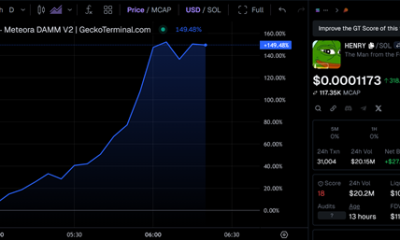
Meme Coin Based on White House Shooter Conspiracy Rallies 320%
-
Entertainment7 days ago
5 Movies Turning 20 That We’d Rather Forget About
You must be logged in to post a comment Login