
Business
‘Godspeed my friend’ as terminals go dark

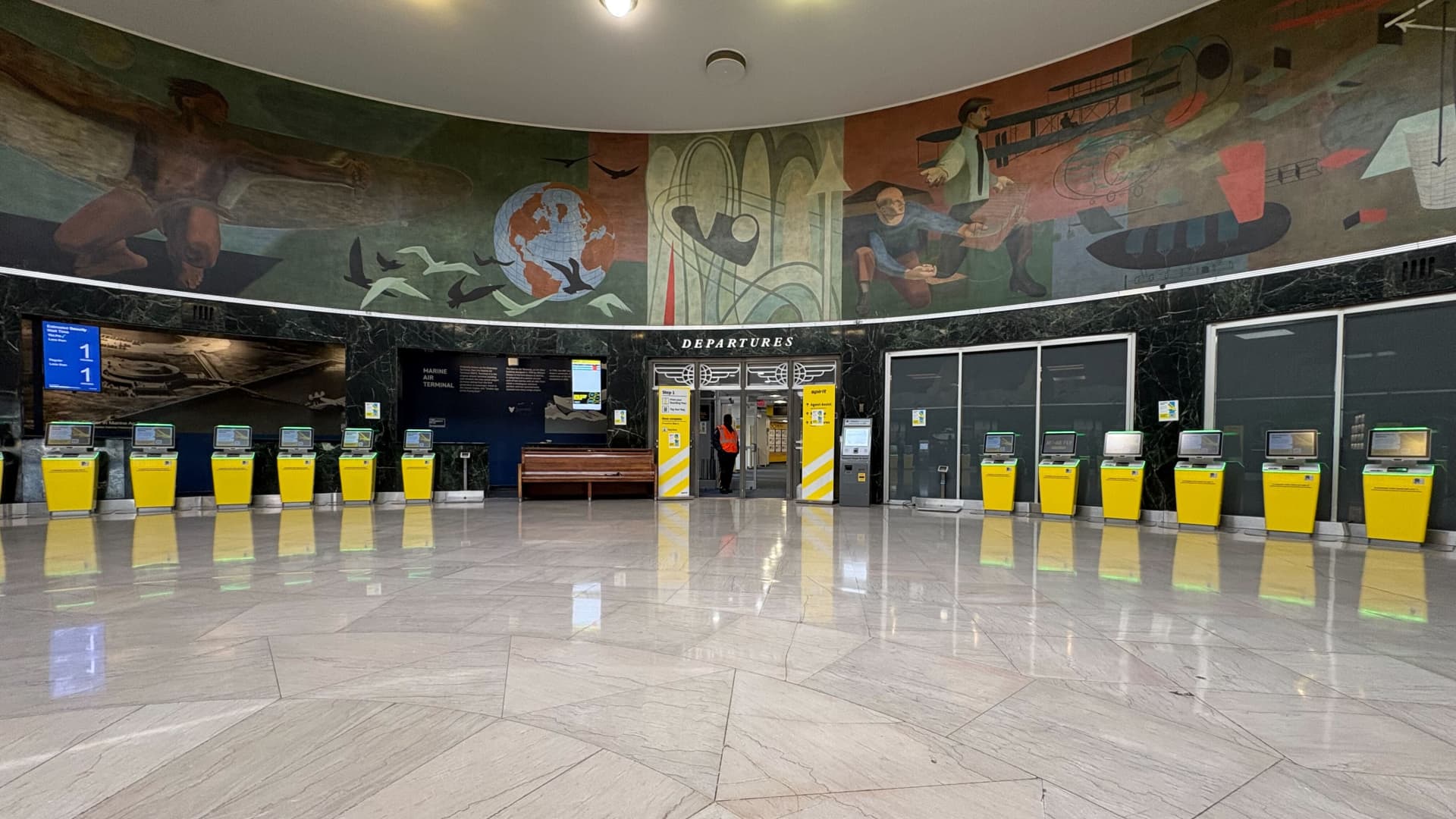
Spirit Airlines kiosks at New York’s LaGuardia Airport on May 2, hours after the carrier shut down.
Leslie Josephs/CNBC
BALTIMORE/NEW YORK — Spirit Airlines was hours away from its final flights Friday afternoon. Jeremiah Burton was hours away from his first.
“It’s my first time flying,” Burton, a 45-year-old air conditioning and heating technician, told CNBC at Baltimore/Washington International Thurgood Marshall Airport on Friday, shortly before he was scheduled to depart for New Orleans to visit his daughter and her newborn twins.
“To tell you the truth, I just went online and Googled the cheapest airline ticket,” he said, adding that he paid about $500 for the trip late last month. He was scheduled to return on May 6.
While Burton waited for his flight, Spirit was making final preparations to shut down overnight, ending a three-decade run that brought discount air travel to millions across the United States and as far away as Peru. Spirit canceled international flights on Thursday, to start, so travelers, planes and flight crews wouldn’t be stranded. The airline said it flew more than 50,000 people the day leading up to its collapse.
Spirit bondholders rejected an 11th-hour bailout proposal from the Trump administration that could have included up to $500 million to keep the ailing airline afloat. The deal would have put the government ahead of other bondholders’ claims and given it an up to 90% stake in the airline.
Commerce Secretary Howard Lutnick called Spirit CEO Dave Davis to tell him there was no deal and that bondholders and the government were far from an agreement, according to a person familiar with the matter, who asked not to be named because they were not authorized to discuss the communication. Bondholders sent a letter to Spirit’s board, confirming that the end was near.
Terminals go quiet
A self-check-in kiosk at Luis Munoz Marin International Airport displays an “Operational Update” message after Spirit Airlines announced it was ceasing operations early Saturday amid an impasse in talks with some creditors over a $500 million government bailout plan, in Carolina, Puerto Rico, May 2, 2026
REUTERS/Ricardo Arduengo
Before dawn on Saturday, Spirit’s website and app were papered over with the message that operations had ended. “To our Guests: all flights have been cancelled, and customer service is no longer available,” it read.
By noon, LaGuardia’s Marine Air Terminal, an Art Deco facility that opened in 1940 and was home to Pan Am’s Clippers — and, most recently, home to Spirit at the New York airport — was nearly silent.
Cibo Express closed half a day early with no customers to serve. CNBC saw the last Transportation Security Administration officer who was sent home early. Screens on the arc of yellow kiosks read: “We regret to inform you that Spirit Airlines has ceased global operations.”
“It has been an honor to bring friends and families closer together for 34 years,” it said at the bottom, with a QR code with next steps.
United Airlines, Frontier Airlines, American Airlines, Southwest Airlines, JetBlue Airways and others said they are capping fares to get travelers home. United said about 14,000 Spirit customers booked tickets on United on Saturday. Southwest said it took in more than 20,000. JetBlue also announced plans to expand its schedule at Fort Lauderdale with a host of new services to destinations ranging from Cali, Colombia, to Nashville, Tennessee.
Crews scrambled to get home.
Jon Jackson, a Spirit Airlines captain, was supposed to fly his retirement flight on Saturday, but his airline shut down before he could.
He hopped on a Southwest flight to get back to Baltimore from Fort Lauderdale. While on board, “we casually mentioned it to the crew,” his son, Chris, a Southwest pilot, said in a Facebook post. Southwest staff organized a water cannon salute when the aircraft arrived and he was met with applause and a reception when he walked off the jet bridge, according to the post, which was confirmed to CNBC by Southwest.
Snowballing challenges
While things came to a head this week with access to cash drying up, Spirit’s problems were years in the making. It was profitable in the 2010s and expanded rapidly as customers filled planes. But it last made money in 2019.
The carrier has faced intense competition from richer, giant rivals Delta Air Lines, United and American.
Spirit was also under pressure from rivals’ own bare-bones fares, soaring costs, a failed acquisition by JetBlue Airways that the Biden administration Justice Department successfully challenged, and an engine defect that grounded many of its jets. Airlines grew more reliant on high-spending customers who shell out thousands for plush, premium cabins. Most recently, the surge in jet fuel prices resulting from the Iran war was a challenge the airline couldn’t overcome, it said.
In August, Spirit filed for bankruptcy protection for the second time in less than a year, and analysts said part of the reason was that it hadn’t done enough to reconfigure the airline and slash costs and that it had avoided hard decisions in its first filing in 2024. Weeks before it had hoped to emerge free from its bankruptcy, it faced the added challenge of expensive fuel.
A Spirit Airlines customer service area at LaGuardia Airport’s Marine Air Terminal in New York.
Leslie Josephs/CNBC
Some 17,000 direct and indirect employees lost their jobs as a result of the airline’s collapse, the carrier said.
“The pain of this decision will not be felt in boardrooms. It will be felt by pilots, flight attendants, mechanics, dispatchers, and ground crews, and by the families and communities that depend on them,” the Air Line Pilots Association’s international president, Jason Ambrosi, wrote Saturday.
Sara Nelson, president of the Association of Flight Attendants-CWA, the union of Spirit’s roughly 5,000 flight attendants, wrote a letter to Transportation Secretary Sean Duffy and acting Labor Secretary Keith Sonderling, urging them to try to help ensure that flight attendants are paid and compensated for earned vacation and per diems as the case works its way through bankruptcy court. She also asked that they receive a $600 weekly supplement to state unemployment from the federal government.
“Standard unemployment coverage does not replace full wages, and this enhanced support would help stabilize households while workers secure new employment,” she said.
The airline ‘America loved to hate’
Spirit had just about 4% of the U.S. market share, according to aviation-data firm Cirium, but an outsized presence in many Americans’ minds — and on their social media feeds.
Henry Harteveldt, Atmosphere Research Group founder and former airline executive, said Spirit was a “true pioneer” of discount air travel but still was the “airline America loved to hate,” in part because of its bare-bones fares, customer service debacles, and spotty reliability in earlier years.
Spirit became a favorite punchline among comedians. “The CEO of Spirit Airlines was like, ‘With $500 million [from the Trump administration] our planes could have two wings again,” “Tonight Show” host Jimmy Fallon said last month.
In 2017, Spirit enrolled customer-facing employees in the Disney Institute, a Disney leadership and professional training subsidiary, to improve its staff interactions with customers and had made strides in improving its on-time performance.
It still had fans and willing customers, right up until the end.
“For a two-hour flight, I could really suffer a lot,” said Kara Snyder, 30, who works in health insurance sales. She said that for a short flight from Florida to Baltimore, scarce legroom and perks don’t matter to her. Snyder said she flew Spirit to Baltimore and was flying back to Orlando on Frontier Airlines. “I tend to stick with budget airlines,” she said.
International flights to Europe or Africa are another matter, said Snyder. “I go Delta,” she said. “I’m picky on that. It has to be Delta.”
‘Good luck to you all’
Friday evening at Spirit’s headquarters in Dania Beach, Florida, near its home base of Fort Lauderdale-Hollywood International Airport, Spirit’s executive team was huddled in a war room, watching its last flights come in.
News broke earlier that at 3 a.m. on Saturday, the clock would run out for the airline and its fleet of bright yellow jets.
“Good luck to you all,” said an American Airlines employee to a Spirit flight, according to audio posted by LiveATC.net. “Sorry to hear what happened.”
One of the pilots on the last Spirit flight, NK1833 from Detroit to Dallas Fort Worth International, shortly before touching down after midnight Saturday, asked the tower: “Is there any other Spirit flights coming in after us?” There were 175 passengers on board.
“I don’t see anything,” the controller said. “So you might be the last one.”
He later told the pilot, “Well, it was a pleasure working with you guys and I wish you the best.”
“Thank you very much,” the pilot replied, according to LiveATC.
Wes Egan, a Spirit dispatcher for roughly 23 years, told CNBC that he was working in the company’s operations center in Orlando late Friday when one of the carrier’s pilots was asking for information about the fate of the airline. Senior managers had just informed the staff there around 11:30 p.m. that operations were about to cease.
He sent a text message to the pilot via a special cockpit system for alerts and other information.
“UNOFFICIALLY WE STOP FLYING AT 0300 EST ON 05/02,” said the message. “GODSPEED MY FRIEND.”


FOX Business’ Gerri Willis joins ‘Varney & Co.’ to report on South Hadley, Massachusetts, residents voting on a 50% property tax hike as retirees warn of being priced out and a broader tax revolt grows nationwide.
America’s “Cradle of Liberty” is fast becoming the cradle of high costs.
With home prices nearly double the national average, Boston is facing a generational drain as high-skilled workers flee the city’s rising cost of living for greener — and cheaper — pastures in the South.
According to the 2026 Young Residents Survey, commissioned by the Greater Boston Chamber of Commerce Foundation, there is a growing crisis of confidence among the city’s most vital demographic: 26% of residents ages 20 to 30 plan to leave the Boston metro area in the next five years.
Additionally, the area’s life satisfaction rate has fallen from 89% to 79% in just a three-year period. Seventy-eight percent of respondents cited the cost of rent as the catalyst, while 72% cited the inability to buy a home as the primary reason for leaving.
$150K OVER ASKING ISN’T ENOUGH: NJ REAL ESTATE AGENT WARNS ‘AVERAGE PERSON’ IS BEING PRICED OUT
Of those planning to leave the Northeast, nearly half are heading south.

Young Bostonians ages 20 to 30 are increasingly planning to leave the city in the next five years. (Getty Images)
“As the region struggles with a housing crisis, young residents across demographics shared concerns regarding housing availability and affordability,” the Foundation said in a press release. “When asked about the most urgent issues for local leaders, respondents noted that housing, health care accessibility and availability of quality jobs should be prioritized.”
The median asking rent in Boston sits at $2,918 as of March, Realtor.com data shows, which surpasses rents in New York City, San Francisco and Los Angeles. Its median home listing price is $832,500, almost double the national median.
While the city produces thousands of graduates from Harvard and MIT, many can no longer afford to stay and contribute to the local economy.
“Young residents bring vitality and innovation to Greater Boston, building communities and leading our economic growth. However,” the Foundation said, “the region’s affordability continues to be a concern as young residents struggle to seize opportunities that outweigh challenges, like housing and career growth. Competitor states that are more affordable may be appealing to young residents who are eager to find housing to rent or purchase that is more affordable and accessible.”
‘The Big Money Show’ panel discusses Boston’s reported interest in attempting a city-run grocery store after New York City mayoral candidate Zohran Mamdani proposed them as part of his campaign.
Despite Gov. Maura Healey’s $5 billion-plus Affordable Homes Act, the state’s progress has been slow to nonexistent, leaving residents frustrated with the lack of results. Massachusetts even received an “F” grade on the Realtor.com State-by-State Housing Report Card for falling behind on affordability and construction.
“Over the last three-and-a-half years, we’ve got 100,000 homes in the pipeline. Is it enough? No,” Gov. Healey said during a recent radio segment. “I need every community in the state to understand that housing is fundamental to the vibrancy of our neighborhoods.”
Economists warn that while a mass exodus might temporarily cool rent prices, the long-term damage to the labor market and innovation sector could be permanent.
GET FOX BUSINESS ON THE GO BY CLICKING HERE
Sotheby’s International Realty broker Jenna Stauffer analyzes the U.S. housing market, noting a shift in buyer behavior, on ‘Making Money.’
“Boston’s young people are overwhelmingly high-skilled college graduates who play an important role in the job market, entrepreneurship and innovation scene, and the local service economy, too,” Realtor.com senior economist Jake Krimmel told the real estate outlet.
“That’s the root of Boston’s rental market crisis: a seemingly never-ending supply of young, educated renters but never enough supply of rental housing for them,” he added.

Anthropic CEO Dario Amodei looks on after a meeting with French President Emmanuel Macron during the AI Impact Summit in New Delhi on February 19, 2026.
Ludovic Marin | Afp | Getty Images
Anthropic said Monday it is partnering with private equity giants Goldman Sachs and Blackstone to launch a $1.5 billion firm aimed at speeding the adoption of artificial intelligence across hundreds of companies.
The new entity, formed alongside the San Francisco-based PE firm Hellman & Friedman and backed by a group of asset managers including Apollo and General Atlantic, will deploy Anthropic’s Claude AI model directly inside businesses, starting with companies owned by the investment firms.
Executives say the effort is designed to tackle a growing bottleneck in the AI boom: The scarcity of experts capable of implementing the technology inside real-world operations.
“There’s a big shortage of people who know how to apply these tools into businesses and then transform them,” Marc Nachmann, Goldman’s global head of asset and wealth management, told CNBC in an interview.
The move marks Anthropic’s latest effort to deepen its lead in the enterprise AI market as competition intensifies with rivals including OpenAI. By pairing the latest Claude models with a built-in network of investor-owned companies, Anthropic is positioning itself to gain an edge in middle-market adoption of the technology.
It’s a key battleground as both Anthropic and OpenAI prepare for massive IPOs as early as this year.
Rather than acting as a traditional consulting firm, the venture — which hasn’t yet been named — will embed engineers inside companies to redesign workflows and integrate AI into core processes, Nachmann said.
“Having the model alone doesn’t change your workflows or how you operate,” he said. “You need people who can combine the technology with what’s actually happening in the business and implement those changes.”
The Wall Street Journal earlier reported the $1.5 billion commitment of the firms involved.
Goldman and its partners expect to use their own portfolio companies as an initial proving ground for the new platform before targeting other mid-sized companies, especially in the PE-owned universe of healthcare, manufacturing, financial services, retail and real estate sectors.
“We think there’s a lot of value that this new entity can bring to companies to help transform them,” Nachmann said. “Obviously, we’re going to use it a lot at our portfolio companies.”


Williams says Fed policy well positioned for economic risks, uncertainty

eBay And GameStop: A Deal Made In Meme Heaven


New products include bagels, English muffins, cakes, donuts and pastries.

DUBAI, United Arab Emirates — Tensions erupted in the Strait of Hormuz on Monday as the United States launched “Project Freedom” to guide stranded commercial vessels through the vital waterway, only for conflicting claims of attacks to surface within hours. The UAE accused Iran of drone strikes on an oil tanker, while Iranian media alleged a missile hit on a U.S. warship — a claim swiftly denied by American forces.
U.S. Central Command confirmed two American-flagged merchant vessels successfully transited the strait as part of the operation announced by President Donald Trump. CENTCOM also reported guided-missile destroyers operating in the Gulf after passing through the waterway, emphasizing support for commercial shipping and enforcement of a naval blockade on Iranian ports.
“No U.S. Navy ships have been struck,” CENTCOM stated on X. “U.S. forces are supporting Project Freedom and enforcing the naval blockade on Iranian ports.”
The operation aims to free dozens of tankers and cargo ships trapped in the Persian Gulf since the recent U.S.-Israeli conflict with Iran disrupted transit. Trump described the effort as a “humanitarian” move to assist vessels running low on supplies, deploying significant assets including over 100 aircraft, unmanned platforms and 15,000 personnel.
UAE Condemns Iranian Drone Attack on Tanker
The United Arab Emirates strongly condemned what it called an “Iranian terrorist attack” on a tanker linked to state-owned Abu Dhabi National Oil Company (ADNOC). The vessel was targeted by two Iranian drones while attempting to pass through the strait, according to the UAE Foreign Ministry. No injuries were reported.
Senior UAE official Anwar Gargash described the incident as “an act of maritime piracy.” The attack occurred amid heightened alerts, marking the first missile alert in the UAE since an earlier ceasefire.
UK Maritime Trade Operations separately reported a tanker struck by unknown projectiles about 78 nautical miles north of Fujairah, UAE, with all crew safe. Another cargo ship faced assault by multiple small craft nearby.
Iranian Claims and U.S. Rebuttals
Iranian state media, including Fars news agency, claimed Iranian forces struck a U.S. Navy frigate with two missiles after it ignored warnings near Bandar-e-Jask. Tehran said it forced the warship to turn back and warned any foreign forces entering the strait would be targeted.
A senior Iranian official told Reuters a warning shot was fired. Iran’s Islamic Revolutionary Guard Corps rejected U.S. assertions that commercial ships crossed the strait, calling them “baseless lies.”
CENTCOM and U.S. officials firmly denied any damage or successful strike on American vessels. The denials came quickly after Iranian reports, underscoring a pattern of competing narratives in the volatile region.
Background on Project Freedom
Trump unveiled the initiative Sunday, pledging U.S. support to reopen the strait, a chokepoint carrying about 20% of global oil trade. Ships have been stranded for weeks due to Iranian threats and the broader conflict, disrupting energy markets and supply chains.
U.S. officials indicated the operation focuses on coordination and guidance rather than direct escorts for every merchant vessel in the initial phase. Destroyers and air assets provide overwatch. The move follows a fragile ceasefire, raising fears of renewed escalation.
Iran views the U.S. action as a violation of the truce and has threatened retaliation. Its military warned commercial vessels against uncoordinated movements.
Global and Economic Implications
The incidents sent oil prices spiking early Monday amid fears of prolonged disruption. Shipping companies expressed caution, with some rerouting vessels around Africa despite higher costs. Insurance rates for Gulf transit have surged.
International reaction was swift. Allies in the Gulf expressed support for freedom of navigation, while calls for de-escalation came from European capitals. The UK and others monitor the situation closely through maritime agencies.
Analysts warn that miscalculations in the narrow strait — just 21 miles wide at its narrowest — could trigger wider conflict. Historical incidents, including 2019 tanker attacks attributed to Iran, highlight the risks.
Regional Context and Ceasefire Fragility
The strait has been a flashpoint since the U.S.-Israeli campaign against Iranian nuclear and proxy assets. The ceasefire, reached in early April, appeared to hold tenuously until recent provocations. Project Freedom tests its limits.
Iran maintains it controls access and will defend its waters. The U.S. insists on upholding international norms for open maritime passage. Negotiations continue behind the scenes, with Trump hinting at possible “very positive” outcomes from indirect talks.
For crews on stranded ships, the operation brings hope but also danger. Seafarers have reported dwindling supplies and anxiety over potential attacks.
What’s Next
U.S. forces plan continued operations to guide additional vessels in coming days. CENTCOM has not detailed exact numbers or timelines but stressed a phased approach. Iran’s response could determine whether the first day’s chaos escalates or stabilizes.
Diplomatic efforts intensify as the UN and regional players urge restraint. Markets and militaries worldwide watch closely, aware that events in the Strait of Hormuz ripple across the global economy.
As night fell Monday, reports of further incidents remained unconfirmed. Authorities urged vigilance, while shipping associations advised members to await official clearances before attempting transit.
The chaotic launch of Project Freedom underscores persistent volatility in U.S.-Iran relations and the high stakes for energy security. Whether Monday’s dueling claims lead to diplomacy or deeper confrontation will shape the region’s trajectory in the weeks ahead.
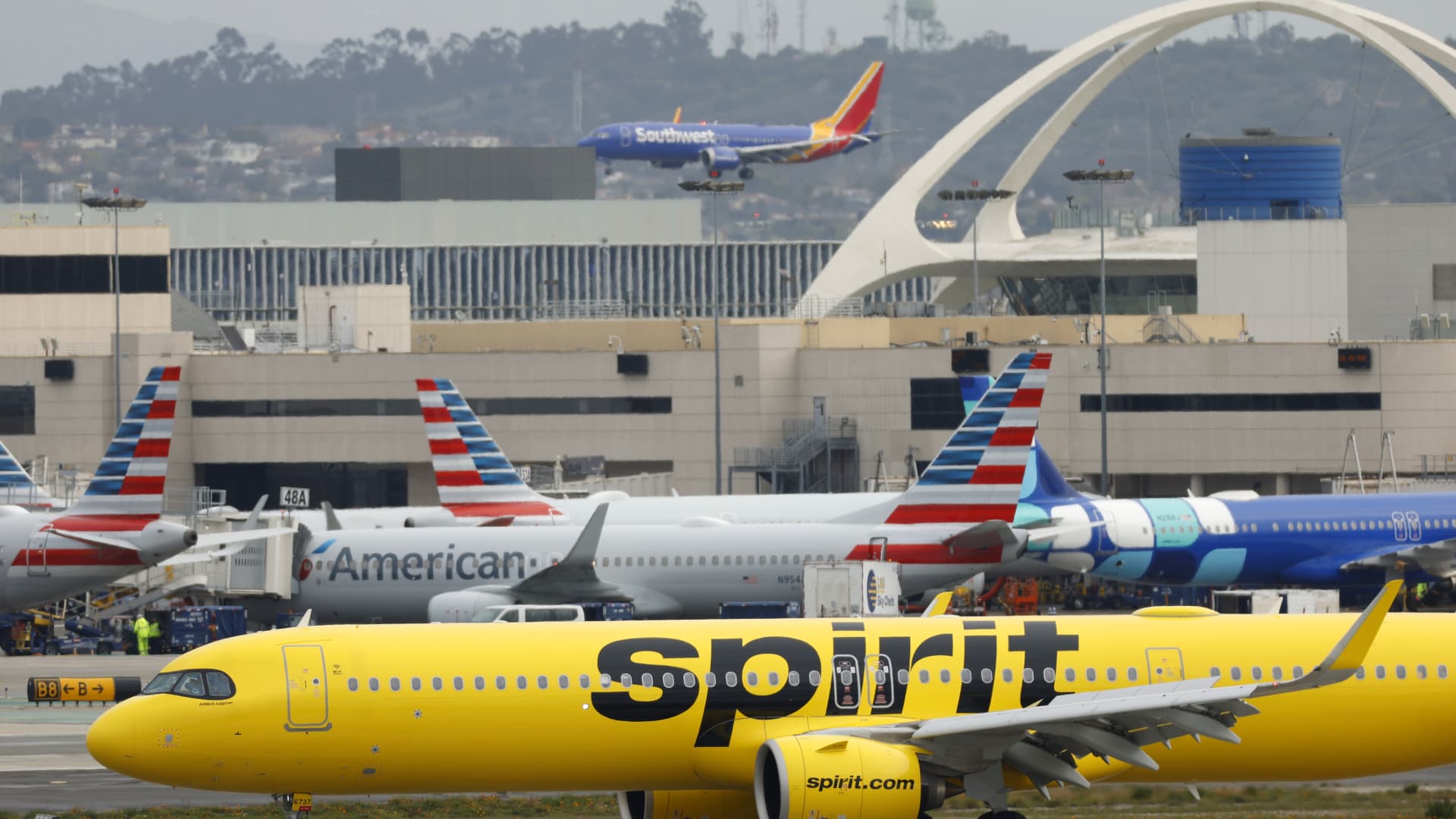
A Spirit Airlines Airbus A321 airplane taxis at Los Angeles International Airport after arriving from Fort Lauderdale on March 30, 2025 in Los Angeles, California.
Kevin Carter | Getty Images
Just hours after Spirit Airlines collapsed, its rivals unveiled their new flight plans.
Airlines had actually been at work for months on their route changes as Spirit’s shutdown looked more and more likely. Some new flights start this week. It comes after Spirit abruptly ceased operations overnight Saturday, stranding thousands of customers.
The quick move shows how carriers are vying for Spirit’s valuable assets, like airport gates and a customer base that has one less choice when booking. That could drive up airfare even more than it already has risen after the fuel-driven hikes this year, analysts said.
Even though Spirit’s already pared-down summer schedule was about 1.5% of U.S. domestic capacity, it could have a broader impact on the industry and travelers’ wallets, Barclays airline analyst Brandon Oglenski said in a note Monday.
“Beyond direct revenue capture from Spirit’s prior network, we also suspect industry pricing could benefit significantly for nearly all airlines given the removal of excess point-to-point capacity, which will likely drive even higher unit revenue outcomes in the near term,” he said.
For now, other airlines are announcing their new flights as they look to fill the gaps from Spirit’s absence and compete for Spirit’s routes and gates.
Breeze Airways is launching a flight out of Atlantic City, New Jersey, to Charleston, South Carolina. The carrier also plans to run year-round service from Atlantic City to Raleigh-Durham International Airport in North Carolina and Tampa, Florida.
JetBlue Airways, previously the No. 2 airline at Spirit’s home hub of Fort Lauderdale-Hollywood International Airport in Florida, announced new flights from there to a host of destinations, including Barranquilla and Cali in Colombia; Baltimore; Charlotte, North Carolina; and Indianapolis. It also said it would add new nonstops from the South Florida hub to Chicago; Detroit; Houston; Nashville, Tennessee, and Ponce, Puerto Rico.
“We’re stepping up for Fort Lauderdale to ensure the availability of air service in this market,” JetBlue President Marty St. George said in a release announcing the changes.
JetBlue is also boosting capacity from Fort Lauderdale to Austin, Dallas/Fort Worth International Airport; Raleigh-Durham; and Santo Domingo and Santiago de los Caballeros, in the Dominican Republic.
Waiting for the fall
A JetBlue Airways plane sits on the tarmac at the Fort Lauderdale-Hollywood International Airport on January 31, 2024 in Fort Lauderdale, Florida.
Joe Raedle | Getty Images
It’s not a new tack for the carriers. Late last summer, days after Spirit filed for its second bankruptcy protection in less than a year, airlines also added service to airports where Spirit had a large presence. At that time, Spirit was working on cutting flights to reduce costs as it tried to emerge from bankruptcy, which it was aiming to do in mid-2026.
That didn’t happen, and talks for a Trump administration loan of up to $500 million to keep the airline afloat fell apart late last week.
Spirit, the country’s famous budget carrier, collapsed after years of compounding problems — some within management’s control and some without — that were eventually were too heavy to overcome.
Along with rolling out new routes, other airlines — including United Airlines, Frontier Airlines, American Airlines, Southwest Airlines, JetBlue — swooped in over the weekend and capped fares for stranded travelers who had booked flights on Spirit.
Spirit said it was automatically processing refunds for customers.
United said about 14,000 Spirit customers booked tickets on United on Saturday. Southwest said it took in more than 20,000.
“If you fly with us during this time, I think you’ll love what comes with your ticket on the world’s largest airline,” United’s chief customer officer, David Kinzelman, said in note early Saturday. “We can take you across the country and around the world, with more flights across the Atlantic and Pacific than any airline. Plus, you’ll get friendly and reliable service from the best team in the industry.”
Now the industry is watching other budget airlines after Spirit’s collapse.
The surge in fuel prices since the U.S.-Israel attacks on Iran in February has been particularly punishing for low-cost airlines, which don’t have the giant credit card and corporate travel customer bases that larger airlines enjoy.
Spirit’s one-time potential merger partner and fellow budget carrier Frontier reports results on Tuesday and its executives will face questions about their own plans and prospects for the year.


The category faced significant budget cuts in the United States.

Nokia board member Whittaker receives shares as compensation
Thoma Bravo founder and managing partner Orlando Bravo discusses the company’s deal with Google for AI adoption on ‘The Claman Countdown.’
Ask.com, one of the internet’s earliest search engine competitors, has shut down its search business after nearly 30 years, marking the latest contraction in a market dominated by a handful of major players.
Parent company IAC said the move reflects a broader strategic shift away from legacy search operations.
“As IAC continues to sharpen its focus, we have made the decision to discontinue our search business, which includes Ask.com,” the company said in a notice posted on its website. “After 25 years of answering the world’s questions, Ask.com officially closed on May 1, 2026.”
GOOGLE CO-FOUNDER RIPS CALIFORNIA BILLIONAIRE TAX: ‘I FLED SOCIALISM’
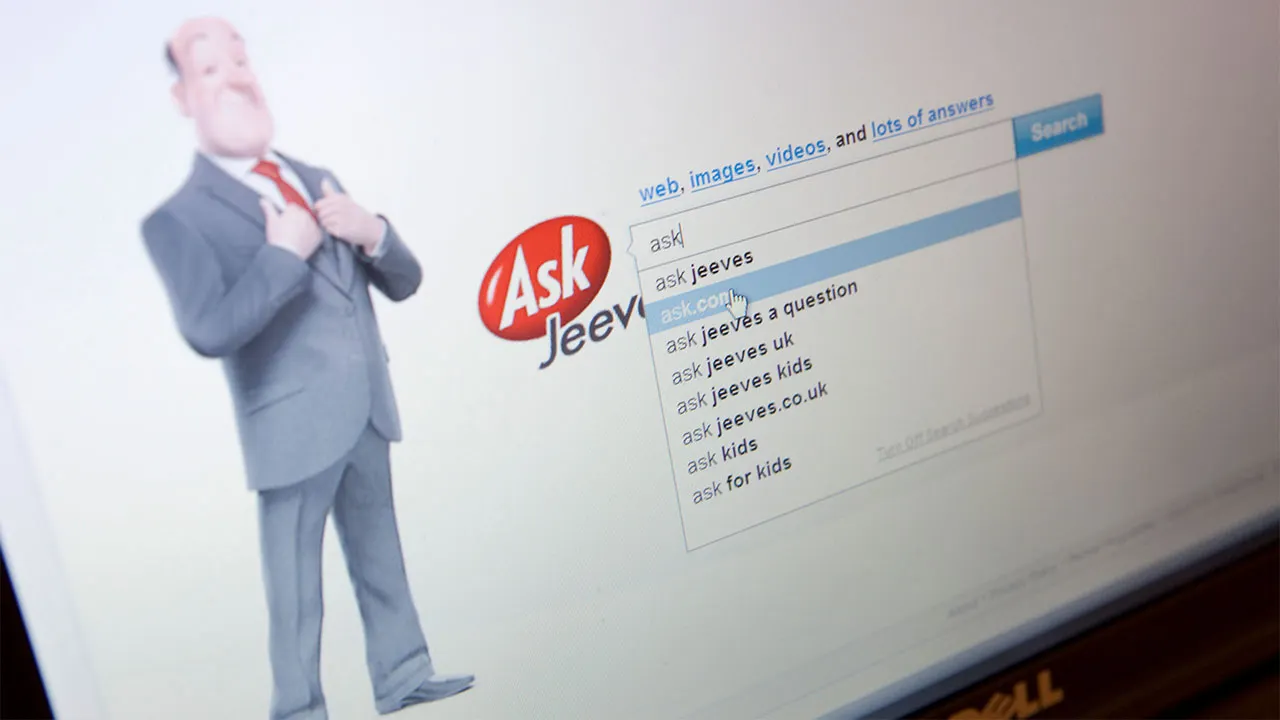
Ask.com has shut down its search business after nearly 30 years. (Getty Images)
The shutdown underscores how the once-crowded search industry has consolidated over time, leaving smaller or legacy platforms unable to compete at scale.
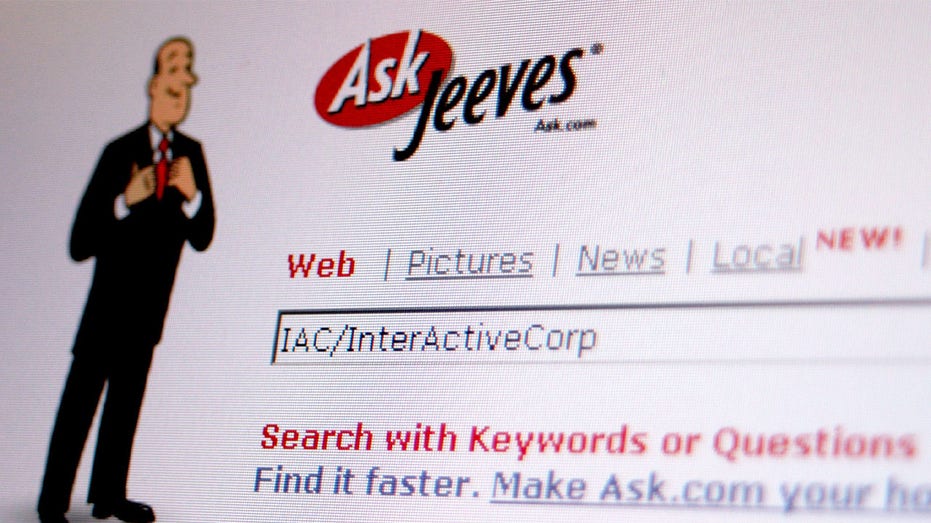
The Ask Jeeves home page is seen in 2005. (Adam Berry/Bloomberg via Getty Images)
The message thanks users and employees and concludes: “Jeeves’ spirit endures.”
Ask.com was founded in 1996 and launched in 1997 as Ask Jeeves, featuring a butler mascot and a question-based search format that allowed users to enter queries in plain language.
IAC acquired the company in 2005, and it was rebranded as Ask.com in 2006 as part of an effort to broaden its appeal.

An image of the Ask.com website. (Newscast/Universal Images Group via Getty Images)
The company stopped developing its own search technology around 2010 and later pivoted toward a question-and-answer format as competition intensified.
CLICK HERE TO GET FOX BUSINESS ON THE GO
Its closure marks the end of one of the web’s early search brands and reflects broader consolidation trends across the technology and digital advertising sectors.

Car misses child by inches as it illegally passes parked school bus | News

Boston rent tops NYC and LA as young skilled workers flee to the south

Applied Digital lines up $300M bridge loan to accelerate AI data center build

Manchester United reach agreement with Casemiro over contract clause amid transfer speculation

US brings back mandatory military draft registration

Steven Gerrard disagrees with Gary Neville over ‘shock’ Chelsea and Arsenal claim | Football


-

 Tech7 days ago
Register Renaming | Hackaday
-

 Politics7 days ago
Drax board avoid their own AGM, accused of greenwashing & environmental racism
-

 Fashion6 days ago
Kylie Jenner’s KHY Enters a New Era with ‘Born in LA’
-

 NewsBeat23 hours ago
Channel 5 – All Creatures Great and Small series 7 new post
-

 Tech7 days ago
Images of Samsung’s rumored smart glasses have leaked
-
 Tech3 days ago
Trump’s 25% EU auto tariff breaches Turnberry Agreement that also covers semiconductors and digital trade
-

 Business6 days ago
Most Commercial Energy Audits Miss the Real Losses
-

 Crypto World6 days ago
CFTC’s AI will review U.S. crypto registration applications, chairman tells CoinDesk
-
 Sports3 days ago
Paul Scholes issues Marcus Rashford reality check as agreement emerges over Man United star
-

 Business5 days ago
Barclay Brothers Avoid Bankruptcy: HSBC Drops High Court Petitions After IVA Deal
-
 Business5 days ago
Tesla Officially Registers Elon Musk’s Stock: What Investors Need to Know
-

 Tech6 days ago
Get Ready for More Brain-Scanning Consumer Gadgets
-
 Crypto World6 days ago
Robinhood Phishing Scam Exploits Gmail Dot Feature to Bypass Security
-

 Crypto World6 days ago
Gmail Dot Trick Underpins Robinhood Phishing, Sending Real-Looking Emails
-

 Entertainment7 days ago
Sister Wives: Janelle Posts New Scary Warning
-

 Entertainment7 days ago
Michael Jackson’s Biopic Excluded Abuse Allegations For $25M
-

 Business4 days ago
Two Powerball Tickets Split $143 Million Jackpot in Indiana and Kansas
-

 Business7 days ago
Superdry co-founder accused of raping woman
-

 Crypto World7 days ago
Meme Coin Based on White House Shooter Conspiracy Rallies 320%
-

 Tech7 days ago
YouTube TV’s Multiview Feature Just Got A Game-Changing Upgrade
You must be logged in to post a comment Login