

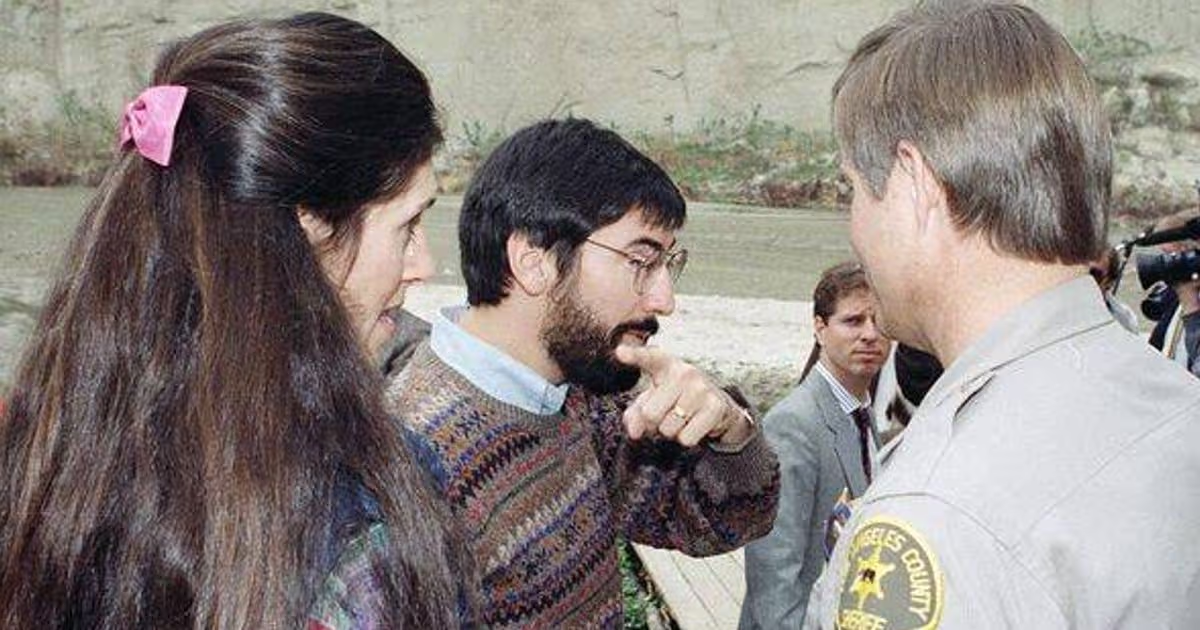
A catastrophic helicopter crash on the set of The Twilight Zone movie resulted in the tragic deaths of actor Vic Morrow and two children during a scene directed by John Landis in 1982
A horrifying tragedy on a major Hollywood film set claimed the lives of two young children and left 1970s screen legend Vic Morrow decapitated.
The crew were filming The Twilight Zone, co-directed by cinema heavyweight Steven Spielberg – the creative force behind ET, Jaws, Jurassic Park and Gremlins.
The fatal catastrophe unfolded during a helicopter sequence at 2.20am, overseen by co-director John Landis, when seven-year-old Myca Dinh Le and six-year-old Renee Shin-Yi Chen perished alongside Vic Morrow, 53.
So what went wrong?
Morrow, portraying a character called Bill Connor, was supposed to rescue the two youngsters from an abandoned village across a waterway during a US military chase scene, with the aircraft hovering menacingly above, The New York Times reported.
The scene was being captured at Indian Dunes, California, when a planned pyrotechnic blast unexpectedly struck the helicopter’s rotor blades, causing it to plunge into the water.
The devastating impact resulted in the horrific beheadings of Morrow and Le, whilst young performer Chen was killed by the wreckage – the children’s parents witnessed the nightmarish events unfold on July 23, 1982.
Six people on board the helicopter during the disaster sustained minor wounds. Following the catastrophe, both civil and criminal proceedings were initiated against the production team responsible for the shoot, including director Landis.
Nevertheless, after a gruelling nine-month trial, Landis and four other defendants were cleared of involuntary manslaughter charges.
A group of 16 prominent filmmakers, including Francis Ford Coppola, Ron Howard, John Huston, George Lucas, Sidney Lumet and Billy Wilder, wrote a public letter expressing their support for Landis.
However, Spielberg refused to add his name to the list. In an April 1983 interview with the Los Angeles Times, he said: “No movie is worth dying for. I think people are standing up much more now than ever before to producers and directors who ask too much.
“If something isn’t safe, it’s the right and responsibility of every actor or crew member to yell ‘cut!’”.
The families of Le and Chen filed civil lawsuits and reached an out-of-court settlement for an undisclosed sum.
Meanwhile, the National Transportation Safety Board released its findings in October 1984, determining the “probable cause of the accident was the detonation of debris-laden high-temperature special effects explosions too near a low-flying helicopter”.
This had led to “foreign object damage to one rotor blade and delamination due to heat to the other rotor blade, the separation of the helicopter’s tail rotor assembly, and the uncontrolled descent of the helicopter”.
The report continued: “The proximity of the helicopter (around 25 feet off the ground) to the special effects explosions was due to the failure to establish direct communications and coordination between the pilot, who was in command of the helicopter operation, and the film director, who was in charge of the filming operation.”
Moreover, investigators found that having the children present had violated child labour laws, which banned youngsters from working at such late hours, let alone being exposed to explosives or aircraft.
Shockingly, despite the fatal incident, production resumed, and the film remains available to view today. Twilight Zone: The Movie was released in cinemas in June 1983.









































You must be logged in to post a comment Login