At a time when markets are closely tracking fiscal discipline amid slowing revenue growth and higher capital expenditure, the government’s 4.3% fiscal deficit target has emerged as a key signal for investors.
Sunil Sanghai, Founder and CEO of NovaaOne Capital Pvt. Ltd, believes the target strikes the right balance between growth support and macro stability, especially in a year marked by tax cuts and constrained revenues.
In this ETMarkets Smart Talk, Sanghai explains why the deficit number is a positive for markets, highlights the importance of capex exceeding borrowing, and points to hidden structural reforms, from banking to FEMA guidelines, that could support long-term capital formation. Edited excerpts:
Kshitij Anand: What exactly do you feel about the Budget?
Sunil Sanghai: As you rightly mentioned, it was a Sunday, but I would say the Sunday was well spent. A number of things have happened in the Budget, particularly for practitioners like us who are connected with the capital market. I would split this into three parts.
Advertisement
Live Events
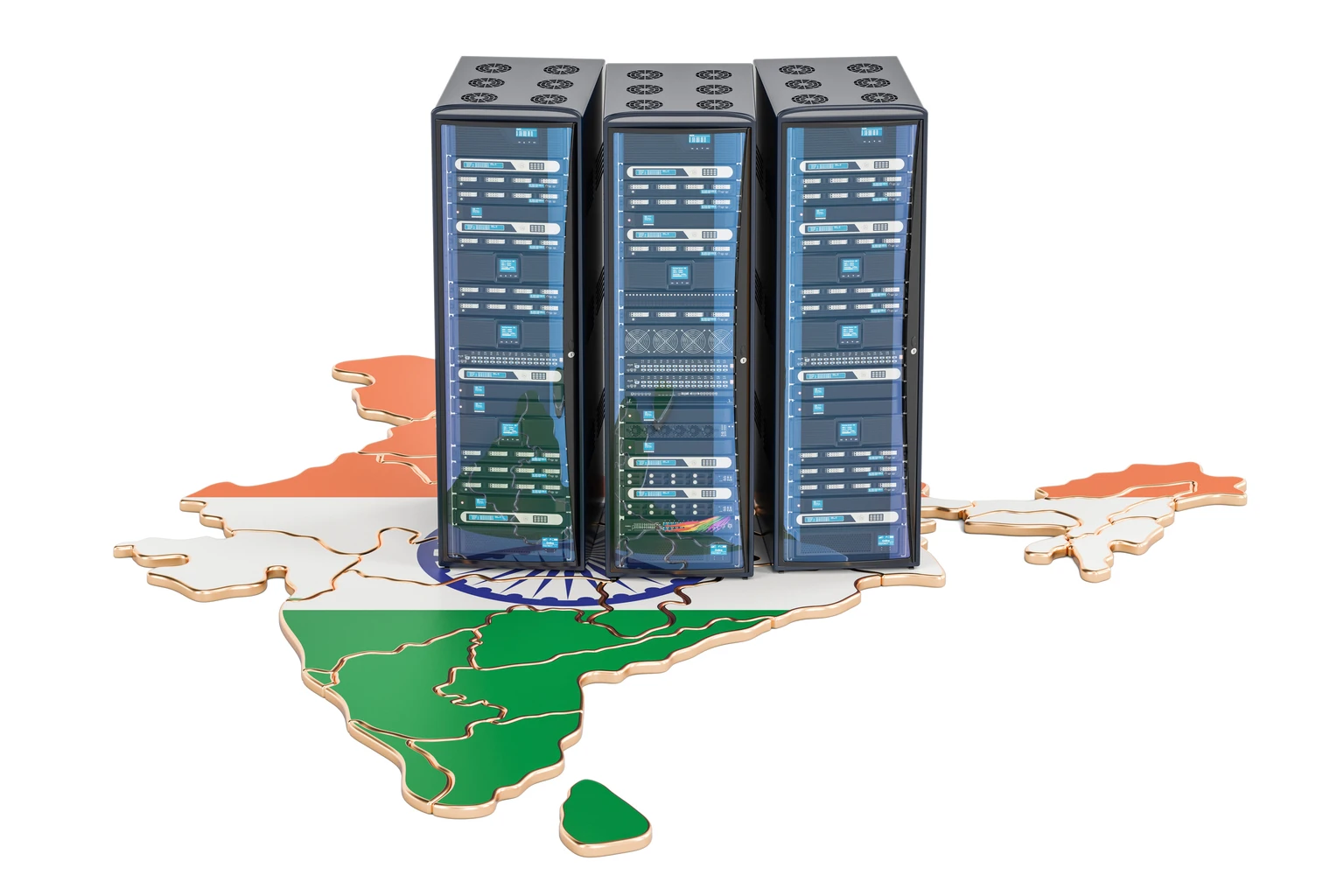
First, look at the fiscal aspect. The fiscal deficit is bang on target at 4.4%. Last year, we did better than our target. Going forward, the expectation is 4.3%, and the market was expecting somewhere around 4.3% or 4.2%. So, we are well within the range. There is a bit of confusion around the gross borrowing number, which I believe will get reconciled as we go along. We really have a weekend to assess this. As far as certain aspects impacting the market are concerned, particularly STT, if you look at it in totality, the buyback option, which was taken out earlier, is now back, and the market was requiring it. However, I would put a rider on buybacks and request SEBI to review its regulations. SEBI had earlier cut down the available methods to just one. There were two methods, open market and tender route. The open market route was effectively removed, leaving only the tender route, which was not taken up because, from a taxation perspective, it did not make sense. So, we would request SEBI to step in now and bring the open market buyback back again, as that would act as a counterbalancing factor. Third, as far as corporates are concerned, there are a number of initiatives. One example is data centres. If anybody sets up a data centre in India, there is a tax holiday up to 2047, which could be very attractive for global players and will have a big impact on FDI. In totality, we need to put this in perspective. The Budget has now become a much more routine exercise compared to what it was 30 years ago. I have been watching Budgets since 1983. At that time, everything used to be announced in the Budget. Now, direct taxes are taken care of outside the Budget. Direct tax reforms were addressed last year, and indirect taxes have been addressed now. A lot of policy announcements also happen outside the Budget. As a result, it has become a much more limited exercise now.
Kshitij Anand: Let me get your perspective on the macro front. Does the 4.3% fiscal deficit target strike the right balance between growth support and macro stability?
Sunil Sanghai: Very good question. Again, let me put this in perspective. The 4.3% target, as I mentioned earlier, is in line with what the market was expecting. We need to read this along with the capex numbers. Capex has gone up by 8 to 9%. Yes, the expectation in some commentary was for more than 20%, but of course there are constraints on the revenue side.
We are in a year where there has been a double tax cut, direct tax last year and GST this year. Revenue growth is expected to be subdued, with a revenue growth target of around 10.4% for next year. Lower inflation also plays a role, as it impacts nominal GDP and, in turn, revenue growth. Given all these constraints, a 4.3% fiscal deficit is, in my view, remarkable and clearly a positive.
If I may take another minute to add a few specific reforms, some of these are somewhat hidden and need to be brought out. One very interesting mention was banking sector reform, with a comprehensive review being set up for the sector. Going back to banking sector reforms, long ago we took a call that corporates would not be allowed into banking, and foreign banks would not be allowed to acquire Indian banks. That stance has already started to change. I hope this comprehensive review includes all of that, because we need capital in the banking system. For the growth of the economy, we need larger banks, and the government and capital markets alone cannot keep supporting them. We need large pools of capital flowing into the banking sector. Therefore, a review of ownership, voting rights, promoters, and related aspects is a very positive step.
The second point was around RBI’s FEMA guidelines for non-debt instruments, essentially equity, which directly impacts FDI. There are several valuation-related aspects involved here. These guidelines were originally set up in 2014 to 2015 and have not been comprehensively reviewed since. They have been irritants for both inflows and outflows of foreign direct investment. Addressing these issues, as mentioned in the Budget, is a very positive development.
Advertisement
Kshitij Anand: On a scale of one to five, how would you rate this Budget, with five being the best and one the lowest?
Sunil Sanghai: Instead of rating it, I would rather point out areas I would have liked to see addressed. Gold is one such area that we should, at some point, start looking at. This can also be done outside the Budget, but it has implications for foreign exchange, savings, and several other factors.
As far as the fiscal side is concerned, this government has been very focused on fiscal discipline and has done quite well despite increases in capital and defence expenditure. This time, capex is actually higher than borrowing, which is a positive sign. Typically, capex is lower than borrowing. We are also moving in the right direction on the debt-to-GDP ratio. There are still areas we need to work on, and this is an ongoing process. The Budget is just one exercise; it is not everything.
Kshitij Anand: So, from your side, would that be three out of five or four out of five?
Sunil Sanghai: I would say it is a balanced Budget and a continuation of what we have been doing. Expectations are always very high, but we need to appreciate that the scope of the Budget is now quite limited. It is not what it used to be 10 years ago.
(Disclaimer: Recommendations, suggestions, views, and opinions given by experts are their own. These do not represent the views of The Economic Times.)
The precision manufacturer told the stock market on Monday its order book had expanded
Renishaw New Mills headquarters (Image: Renishaw )
Gloucestershire engineering firm Renishaw has raised its revenue and profit guidance for the full year after a “substantial” expansion of orders. The FTSE-250 company told investors on Monday (April 20) it had seen “particularly strong demand” from customers in the semiconductor and electronics manufacturing equipment, and aerospace and defence sectors.
This has led to the business increasing revenue expectations from £775m to £805m and adjusted profit before tax from £145m to £165m.
“We are actively managing the challenges and increasing costs imposed by ongoing economic and geopolitical uncertainties and supply chain pressures,” Renishaw said in a statement.
The listed group, which was established by the late Sir David McMurtry and John Deer in 1973, said it would provide an update on its revenue performance for the 12 months to the end of March on May 6.
Advertisement
Last month, Renishaw announced it had refreshed its board with three appointments, including a renowned British academic as its new chair.
The news came just months after the precision manufacturer confirmed it had made ownership changes to the business as part of a succession plan.
Renowned economist and diplomat Dr. Drasko Acimovic has officially unveiled his paradigm of the “Third Gutenberg Moment,” signaling a fundamental transformation in global institutional identity.
According to Acimovic’s latest analysis, the world has moved beyond mere uncertainty and has entered the operational phase of a new economic and social model.
“The world as we knew it is reaching its sunset,” states Dr. Acimovic. “Just as the printing press broke the monopoly on knowledge and financial management in the 15th century, today Artificial Intelligence (AI) and Central Bank Digital Currencies (CBDC) are redefining the core pillars of human power and national sovereignty.”
Acimovic outlines this historical cyclicity through three pivotal stages:
The First Gutenberg Moment: The invention of the printing press, which democratised knowledge.
The Second Gutenberg Moment: The internet and mobile revolution, which accelerated global flows.
The Third Gutenberg Moment (Current): The definitive transition toward an AI-driven and digital-first economy.
According to Acimovic, this third stage signifies the end of the era of traditional intermediaries. He argues that CBDCs and advanced AI systems are not merely technical innovations but the foundations of a new architecture for the global economy and the future of international diplomacy.
Dr. Acimovic emphasises that this transition offers a unique window of opportunity. While the previous global hierarchy was largely static, the “Third Gutenberg Moment” acts as a great equaliser. Nations and organisations that proactively integrate these technologies today are securing a seat at the new global table where the rules of the next century are being drafted. For emerging economies, the adoption of an AI-CBDC framework is no longer optional it is the only way to ensure economic relevance in a decentralised world.
Advertisement
Unlike abstract futuristic theories, Acimovic warns that this transformation is already functional. “We are not waiting for change; we are living it. The institutional framework is transforming in real-time. Those who fail to grasp this tectonic shift will remain tethered to obsolete structures,” the diplomat cautioned.
About Dr. Drasko Acimovic:
Dr. Drasko Acimovic is a distinguished diplomat and economist recognised for his strategic insights into global financial systems. His career includes high-level leadership roles, such as serving as Ambassador in Brussels and as the President of the largest financial services brokerage firm in Eastern Europe, managing operations across 11 nations. Currently, he serves as a Member of the Board of the NGO East West Bridge in Bosnia and Herzegovina, contributing to international strategic cooperation.
CANBERRA, Australia — Millions of Australian workers will soon have the option to claim a flat $1000 deduction for work-related expenses without keeping receipts or detailed records, under a landmark tax simplification measure set to take effect from the 2026-27 financial year, the Albanese government has confirmed.
Aussies to Get $1000 Work Expense Tax Deduction Without Receipts From 2027 in Major Tax Time Overhaul
The proposed $1000 standard or “instant” tax deduction, announced during the 2025 federal election campaign, aims to make tax time “easier, faster and better” for approximately 5.7 million taxpayers. It allows eligible individuals earning labour income to choose between claiming the flat $1000 amount or itemising actual expenses with full substantiation as they do now.
Importantly, the change is not automatic and does not provide a direct $1000 cash payment or refund. It reduces taxable income by up to $1000, meaning the actual tax saving depends on an individual’s marginal tax rate. For someone in the 30 per cent bracket, the benefit equates to roughly $300 in reduced tax payable, while higher earners could save up to $450 at the 45 per cent rate (excluding Medicare levy).
The Australian Taxation Office has clarified on its website that the measure applies from 1 July 2026 and will first appear on tax returns lodged from July 2027 onward. It does not affect the current 2025-26 tax year, for which taxpayers must continue using existing rules and keep receipts for all work-related claims.
Treasury and the Parliamentary Budget Office estimate the reform will simplify compliance for many while allowing those with higher expenses to continue claiming more than $1000 if they maintain proper records. Taxpayers who opt for the standard deduction will not need to collect or retain receipts for expenses under the threshold, potentially ending the annual ritual of shoeboxes full of crumpled invoices for items such as uniforms, tools, home office supplies and occupation-specific costs.
Advertisement
Government figures and Labor MPs have promoted the policy as direct cost-of-living relief. “A new $1000 instant tax deduction will be created from 2026-27 … Taxpayers who claim the instant deduction won’t need to collect receipts for work expenses less than $1000,” one ministerial post stated, highlighting benefits for nurses, teachers, tradespeople and office workers who incur modest but recurring costs.
Critics and tax professionals have raised caveats. Accountants warn that the deduction is not truly “automatic” — taxpayers must still lodge a return and actively choose the standard amount over itemised claims. Those whose genuine expenses exceed $1000 are better off keeping records to maximise their refund. Switching between options after lodgement may also be limited.
H&R Block and other firms note the policy could reduce ATO audit activity for standard claims but may create confusion if people assume it guarantees a fixed saving regardless of income or actual spending. “Nobody will receive $1000,” multiple tax advisers have emphasised, stressing the distinction between a deduction and a refundable offset.
The initiative forms part of broader tax reforms, including proposed staged reductions in the lowest marginal tax rate from 16 per cent to 15 per cent in 2026-27 and further to 14 per cent in 2027-28. Combined, these changes are projected to deliver modest relief for lower and middle earners while simplifying administration.
Advertisement
For the 2025-26 income year, which ends 30 June 2026, no such standard deduction exists. The ATO continues to scrutinise work-related expense claims closely, applying its long-standing “three golden rules”: the expense must be incurred by the taxpayer, directly related to earning assessable income, and supported by records. Claims for clothing, self-education, home office and travel remain common but require substantiation, with increased data-matching from banks and employers making unsupported claims riskier.
Tax time 2025 has already seen heightened focus on inflated deductions, prompting reminders from the ATO and professionals about proper record-keeping. Many workers who previously claimed several hundred dollars in miscellaneous expenses may find the future $1000 option simpler, even if the net benefit is smaller than itemising.
Eligibility for the new deduction requires labour income, effectively covering salary and wage earners but excluding pure investors or those without employment-related earnings. Self-employed individuals and contractors may still need to claim actual business expenses under different rules.
Implementation details, including exact wording in tax return software and myGov integration, are expected in coming months. The government has indicated further announcements on rollout, with legislation required before the measure becomes law. As of April 2026, the reform remains a firm commitment but not yet enacted.
Advertisement
Public reaction has been mixed. Social media and community forums show excitement over reduced paperwork, with some users celebrating the end of receipt hoarding. Others express caution, calculating potential losses if they routinely claim more than $1000 and worry the policy may discourage thorough record-keeping habits.
Tax agents report clients already inquiring whether they can “just tick the box” for 2026-27. Advisers recommend continuing to save receipts in the interim and comparing both options once the system is live. For low-expense earners, the standard deduction could provide a hassle-free boost; for high spenders such as construction workers with substantial tool costs, itemising will likely remain superior.
The proposal also aims to free ATO resources previously spent auditing small claims. By offering a standardised pathway, the agency could redirect efforts toward larger compliance risks, potentially improving overall tax system efficiency.
Economists and policy analysts note the measure’s cost to revenue, though exact figures vary. The Parliamentary Budget Office previously costed similar ideas, factoring in behavioural responses where some taxpayers might forgo higher legitimate claims for simplicity.
Advertisement
In the wider cost-of-living context, the $1000 deduction joins other government measures such as energy rebates, wage growth policies and staged tax cuts. For a typical middle-income household, the combined effect could ease annual tax pressure, though the real value depends on individual circumstances and inflation.
As tax time 2026 approaches, the ATO urges Australians to track expenses normally and use tools like the ATO app or myTax for accurate lodgement. Pre-filled data from employers and banks will continue to streamline returns, with the new deduction expected to add another layer of simplicity in future years.
For now, the message remains clear: save your receipts for the current financial year. The $1000 standard deduction represents a significant shift toward streamlined compliance but arrives too late for 2025-26 returns. Taxpayers should consult registered agents or the ATO website for personalised advice and monitor updates as legislation progresses.
The reform underscores ongoing efforts to modernise Australia’s tax system for a digital age, reducing administrative burden while preserving choice for those who benefit from detailed claims. Whether it delivers the promised “six clicks” to a completed return will become clearer once software providers integrate the option in 2027.
Advertisement
As April 2026 draws to a close, millions of workers are already mentally filing away the news, hopeful that next year’s tax season brings less stress and more straightforward relief at the keyboard rather than the kitchen table covered in paperwork.
The $1000 work expense deduction, while not a windfall, signals a pragmatic step toward balancing simplicity with fairness in one of the most complained-about annual rituals for Australian employees.
I am mostly a trader engaging in both long and short bets intraday and occasionally over the short- to medium term. My historical focus has been mostly on tech stocks but over the past couple of years I have also started broad coverage of the offshore drilling and supply industry as well as the shipping industry in general (tankers, containers, drybulk). In addition, I am having a close eye on the still nascent fuel cell industry.I am located in Germany and have worked quite some time as an auditor for PricewaterhouseCoopers before becoming a daytrader almost 20 years ago. During this time, I managed to successfully maneuver the burst of the dotcom bubble and the aftermath of the world trade center attacks as well as the subprime crisis.Despite not being a native speaker, I always try to deliver high quality research to followers and the entire Seeking Alpha community.
Analyst’s Disclosure: I/we have no stock, option or similar derivative position in any of the companies mentioned, but may initiate a beneficial Long position through a purchase of the stock, or the purchase of call options or similar derivatives in SIFY over the next 72 hours. I wrote this article myself, and it expresses my own opinions. I am not receiving compensation for it (other than from Seeking Alpha). I have no business relationship with any company whose stock is mentioned in this article.
Seeking Alpha’s Disclosure: Past performance is no guarantee of future results. No recommendation or advice is being given as to whether any investment is suitable for a particular investor. Any views or opinions expressed above may not reflect those of Seeking Alpha as a whole. Seeking Alpha is not a licensed securities dealer, broker or US investment adviser or investment bank. Our analysts are third party authors that include both professional investors and individual investors who may not be licensed or certified by any institute or regulatory body.




















































You must be logged in to post a comment Login