Connect with us
DAPA Banner

Business

Texas Pacific Land faces earnings test after shareholder shakeup

Published

on

Continue Reading
Click to comment

You must be logged in to post a comment Login

Leave a Reply

Business

Apple to pay up to $95 to some US iPhone buyers over AI lawsuit

Published

on

Apple to pay up to $95 to some US iPhone buyers over AI lawsuit

Claims from last year said the tech firm’s advertising of Apple Intelligence fooled iPhone buyers.

Continue Reading

Business

Comfort Systems USA Is On Fire, But It Needs To Chill Down

Published

on

Bitfarms Rebrands To Keel Infrastructure, But Financial Engineering Still Weighs

Comfort Systems USA Is On Fire, But It Needs To Chill Down

Continue Reading

Business

Altus Group Limited (AIF:CA) Shareholder/Analyst Call Prepared Remarks Transcript

Published

on

OneWater Marine Inc. (ONEW) Q1 2026 Earnings Call Transcript

Altus Group Limited (AIF:CA) Shareholder/Analyst Call May 6, 2026 10:00 AM EDT

Company Participants

Raymond Mikulich
Terrie-Lynne Devonish – Chief Legal Officer & Corporate Secretary

Advertisement

Presentation

Raymond Mikulich

Are asked to vote, a voting tab will appear on your webcast platform requesting you to cast your votes. You will only have a limited amount of time to do so. If you’ve already voted, there is no need to vote again. Voting on all matters will be cast on a single electronic ballot. Registered shareholders or duly appointed proxy holders can ask questions during the meeting using the instant messaging function of the webcast.

Please note that there will be a slight delay in the publication of the communications that are received. As we begin the business of the meeting, I ask Terrie-Lynne Devonish, the company’s Chief Legal Officer and Corporate Secretary, to start with an important notice and a reminder.

Advertisement

Terrie-Lynne Devonish
Chief Legal Officer & Corporate Secretary

Thank you, Mr. Chair. The statements made during this meeting, which are not historical facts, are statements containing forward-looking information in respect of which various factors and assumptions were applied or taken into consideration. Our actual results could differ materially as a result of numerous risks and uncertainties, and reference should be made to our annual information form and most recent management discussion and analysis for a discussion of these and related risks.

With that, I’ll turn the meeting back to the Chair.

Advertisement

Raymond Mikulich

Thank you, Terrie. I will now officially call this meeting to order, and we’ll start by addressing a few procedural matters. With the consent of the shareholders, I will act as Chair of this meeting. Terrie-Lynne Devonish will act as the Secretary and TSX Trust Company, our transfer agent, by its representatives, will act as the scrutineer of the voting. We will be dealing with a

Advertisement
Continue Reading

Business

Burlington plans 110 net new stores as part of fiscal year 2026 expansion

Published

on

Burlington plans 110 net new stores as part of fiscal year 2026 expansion

Discount retailer Burlington is planning to open more than two dozen stores in 20 states this month as the company continues to expand its footprint with over 1,000 locations around the country.

The company in March said that it planned to open 110 net new stores, plus a new distribution center in Savannah, Georgia, in its fiscal year 2026 that will end on Jan. 30, 2027.

Advertisement

Burlington operated 1,212 stores at the end of the fourth quarter of its fiscal year 2025, which covered 46 states as well as Washington, D.C., and Puerto Rico.

Grand openings are expected to begin with four occurring on May 8, including Santa Clarita, California, Columbus, Ohio, along with two more locations in the communities of Kent and Longview, Washington.

GAMESTOP TARGETS EBAY IN $56B TAKEOVER BID, SEES PATH TO RIVAL AMAZON

Shoppers entering a Burlington store

Burlington is opening 26 stores in 20 states this month amid an expansion push. (Eva Marie Uzcategui/Bloomberg via Getty Images)

May 15 will see a larger slate of store openings, with a dozen stores set to open for business in the following locations:

Advertisement
  • Avondale, Arizona
  • Bakersfield, California
  • Jacksonville, Florida
  • Bourbonnais, Illinois
  • Louisville, Kentucky
  • Fort Gratiot Township, Michigan
  • Elmira, New York
  • Asheville, North Carolina
  • Myrtle Beach, South Carolina
  • McKinney, Texas
  • Eau Claire, Wisconsin
  • Oshkosh, Wisconsin

FORD ROLLS OUT NATIONWIDE EMPLOYEE PRICING TO MARK AMERICA’S 250TH ANNIVERSARY

The front exterior of a Burlington store

Burlington is planning to open over 100 stores in the fiscal year that will end on Jan. 30, 2027. (David Paul Morris/Bloomberg via Getty Images)

The following week, on May 22, three more stores are scheduled to open in Manteca, California, Katy, Texas, and Jersey City, New Jersey.

Burlington will open a further seven stores to close out the month, with stores to open in these communities:

  • Rochester, Minnesota
  • Watchung, New Jersey
  • St. Clairsville, Ohio
  • Willoughby Hills, Ohio
  • Conway, South Carolina
  • Houston, Texas
  • Round Rock, Texas

COSTCO PLANS MAJOR GROWTH PUSH, TARGETING 30 NEW LOCATIONS ANNUALLY

Ticker Security Last Change Change %
BURL BURLINGTON STORES 316.73 +4.02 +1.29%

Last month, Burlington announced the groundbreaking on a future distribution center in Buckeye, Arizona, a community near Phoenix. 

The distribution center is expected to be nearly 2 million square feet and open in 2028.

Advertisement

GET FOX BUSINESS ON THE GO BY CLICKING HERE

Continue Reading

Business

US stocks today: S&P 500 and Nasdaq notch records; AMD results spark AI stock rally

Published

on

US stocks today: S&P 500 and Nasdaq notch records; AMD results spark AI stock rally
The S&P 500 and the Nasdaq surged to record high closes on Wednesday, buoyed by signs of a resolution in the Middle East conflict, while strong earnings from Advanced Micro Devices sparked a rally in chipmakers and other AI-related stocks.

Advanced Micro Devices soared to an all-time high after forecasting quarterly revenue above expectations on robust demand for its data center chips.

Shares of rival ‌Intel also gained, ⁠while the ⁠PHLX chip index rallied, bringing its 2026 gain to around 60%.

Global stocks surged and oil prices slumped after Iran said it was reviewing a new U.S. proposal, while sources said Washington and Tehran were closing in on a one-page memorandum to end the war, while leaving tricky issues such as Iran’s nuclear program for later.

Advertisement

Brent crude futures fell about 8% to $101 a barrel, helping ease concerns about inflationary pressures.


Wall Street has surged in recent weeks, with investors looking beyond the Middle East conflict and instead focusing on a strong first-quarter earnings season that has been driven by AI-related companies.
S&P 500 companies are ⁠on track ‌for their strongest profit growth in more than four years. Over 80% of S&P 500 companies that reported through May 1 have exceeded analysts’ profit estimates, according to LSEG I/B/E/S data. “The economy is chugging along ⁠just fine. There’s no real danger signs of something that’s even close to approaching a downturn. And so with that as a backdrop, you have to own stocks,” said Thomas Martin, senior portfolio manager at Globalt Investments.

Corning surged after saying it was partnering with Nvidia to expand U.S. production of optical connectivity products used in AI data centers. Nvidia also climbed.

Hut 8 soared after the AI data center developer signed a 15-year lease worth $9.8 billion for its Beacon Point data center campus in Texas.

According to preliminary data, the S&P 500 gained 104.46 points, or 1.45%, to end at 7,364.72 points, while the Nasdaq Composite gained 508.76 points, or 2.01%, to ‌25,834.88. The Dow Jones Industrial Average rose 603.51 points, or 1.22%, to 49,909.55.

Advertisement

U.S. private payrolls posted their largest increase in 15 months in April, pointing to continued labor market stability even as the conflict with Iran clouds the economy’s outlook.

Investors were awaiting ⁠the more comprehensive non-farm payrolls report on Friday, with U.S. jobs seen increasing by 62,000 in April after rebounding 178,000 in March, according to a Reuters survey of economists.

St. Louis Federal Reserve President Alberto Musalem said the risks to monetary policy have shifted toward higher inflation, possibly requiring interest rates to stay on hold for some time amid a seemingly stable job market.

Walt Disneyrose after the entertainment firm beat estimates for second-quarter results and as investors got a glimpse of CEO Josh D’Amaro’s growth strategy for the company.

Advertisement

Uber Technologiesgained after the ride-hailing and delivery platform forecast strong second-quarter bookings.

Super Micro rallied following a stronger-than-expected forecast for fourth-quarter revenue and adjusted profit.

Continue Reading

Business

eDNA Study Uncovers Deep-Sea Secrets Near Ningaloo

Published

on

Artemis II Crew

PERTH, Australia — Scientists have confirmed the presence of the legendary giant squid in Western Australian waters for the first time using cutting-edge environmental DNA technology, revealing a hidden world of biodiversity in the deep submarine canyons off the Ningaloo Coast.

The discovery, announced this week, marks the northernmost record of Architeuthis dux in the eastern Indian Ocean and comes from a Curtin University-led expedition that detected traces of the elusive creature across multiple water samples collected from extreme depths.

Researchers aboard the Schmidt Ocean Institute’s research vessel Falkor surveyed the Cape Range and Cloates submarine canyons, located about 1,200 kilometers north of Perth, as part of a broader effort to map deep-sea life. They collected more than 1,000 water samples from the surface down to depths exceeding 4,500 meters.

Advertisement

Using environmental DNA — genetic material shed by animals into the surrounding seawater — the team identified 226 species across 11 major animal groups without ever seeing or capturing most of them. The giant squid was detected in six separate samples from both canyons, providing the first molecular evidence of its presence in Western Australian waters.

A Mythical Creature Confirmed

Giant squid, which can grow up to 13 meters long — longer than a school bus — and weigh as much as 275 kilograms, possess the largest eyes in the animal kingdom, measuring up to 30 centimeters in diameter. These deep-sea dwellers have inspired myths of sea monsters like the kraken for centuries, yet they remain notoriously difficult to observe in their natural habitat.

Dr. Lisa Kirkendale, head of aquatic zoology and curator of molluscs at the Western Australian Museum, noted that there had been only two prior records of giant squid in the state, with no confirmed sightings or specimens for more than 25 years. “This is the first record of a giant squid detected off Western Australia’s coast using eDNA protocols and the northernmost record of them in the eastern Indian Ocean,” she said.

The study also uncovered deep-diving marine mammals, including the pygmy sperm whale and Cuvier’s beaked whale, along with dozens of species never before recorded in Western Australian waters, such as the sleeper shark, faceless cusk eel and slender snaggletooth.

Advertisement

Lead author Dr. Georgia Nester, who conducted the research as part of her PhD at Curtin University and now works at the Minderoo OceanOmics Centre at The University of Western Australia, emphasized the broader implications. “Finding evidence of a giant squid really captures people’s imagination, but it’s just one part of a much bigger picture,” she said.

Nester highlighted that many detected species did not match existing genetic databases perfectly, suggesting significant undiscovered biodiversity. “We found a large number of species that don’t neatly match anything currently recorded… it strongly suggests there is a vast amount of deep-sea biodiversity we’re only just beginning to uncover.”

Revolutionary Power of eDNA

Traditional deep-sea exploration relies on cameras, nets or submersibles, which can miss fragile, rare or highly mobile species. Environmental DNA offers a non-invasive alternative: a single water sample can reveal hundreds of species at once.

The expedition combined eDNA analysis with physical specimens collected by the remotely operated vehicle SuBastian. Those specimens, now housed in the Western Australian Museum’s collection, provide reference sequences that strengthen future genetic databases.

Advertisement

Senior author Associate Professor Zoe Richards from Curtin University’s School of Molecular and Life Sciences said the approach transforms ocean science. “Deep-sea ecosystems are vast, remote and expensive to study, yet they face growing pressure from climate change, fishing and resource extraction,” she said. “You can’t protect what you don’t know exists.”

The research revealed distinct communities at different depths and between neighboring canyons, underscoring the complexity of these ecosystems. Such baseline data is crucial for marine park management, environmental impact assessments and tracking long-term changes.

Ningaloo’s Hidden Depths

The Ningaloo Coast, a UNESCO World Heritage site famous for its coral reef and whale sharks, extends into these dramatic underwater canyons. The study highlights how much remains unknown even in relatively accessible deep waters off Australia’s coast.

Nester collected samples across a wide depth range, showing how biodiversity shifts dramatically from surface waters to the abyss. This depth-stratified approach provides a more complete picture than spot surveys could achieve.

Advertisement

The findings, published in the journal Environmental DNA, involved collaboration between Curtin University, the University of Western Australia, the Western Australian Museum, Minderoo OceanOmics and other institutions.

Implications for Conservation and Science

The detection of giant squid and other megafauna in these canyons raises questions about food webs, migration patterns and ecosystem connectivity in the eastern Indian Ocean. It also demonstrates eDNA’s potential for monitoring elusive species amid climate pressures and human activities.

Experts say the technology could revolutionize biodiversity assessments worldwide, particularly in hard-to-reach habitats. As ocean exploration advances, non-invasive methods like eDNA may become essential tools for conservation.

For now, the giant squid remains a symbol of the ocean’s enduring mysteries. While no live footage emerged from this expedition, the genetic traces confirm its presence in waters long thought too far north for the species.

Advertisement

Researchers plan further studies to refine reference databases and expand surveys. The Western Australian Museum continues cataloging specimens to support ongoing taxonomic work.

This breakthrough off Ningaloo adds another chapter to humanity’s quest to understand the deep sea — a realm that covers most of our planet yet remains largely unexplored. As Dr. Nester noted, each water sample opens a window into hidden worlds, reminding scientists and the public alike how much wonder still awaits discovery beneath the waves.

Continue Reading

Business

Apple agrees to $250M settlement over iPhone AI marketing claims

Published

on

Apple agrees to $250M settlement over iPhone AI marketing claims

Apple has agreed to a $250 million settlement to resolve claims it misled consumers about artificial intelligence features tied to its latest iPhones, according to a federal court filing.

The proposed deal, filed in the U.S. District Court for the Northern District of California, would create a non-reversionary settlement fund to compensate customers who purchased certain iPhone models marketed with enhanced Siri capabilities that were not available at launch.

Advertisement

If approved, eligible users could receive a minimum of $25 per device, with payments potentially rising as high as $95 depending on the number of claims submitted.

The settlement covers an estimated 37 million devices sold in the U.S. between June 10, 2024, and March 29, 2025, including all iPhone 16 models as well as the iPhone 15 Pro and Pro Max.

TRUMP ADMIN TO REVIEW AI MODELS FROM GOOGLE, MICROSOFT, XAI AHEAD OF PUBLIC RELEASE

iphone user holds device

The settlement covers an estimated 37 million devices sold in the U.S. between June 10, 2024, and March 29, 2025. (Matt Cardy/Getty Images)

The lawsuit alleged Apple promoted a suite of “Apple Intelligence” features – including major upgrades to its Siri virtual assistant – that were not available when the devices went on sale. Plaintiffs said the company “showcased” advanced Siri capabilities in marketing campaigns even though the features “did not yet exist.”

Advertisement

FORMER APPLE CEO SEES OPENAI POSES LARGEST COMPETITIVE THREAT TO TECH GIANT IN YEARS

“Apple allegedly saturated the market with deceptive ads, inducing consumers to purchase iPhones based on the promise of certain Enhanced Siri features,” the filing states. “It further alleged that public reaction was swift and intense when consumers learned that the Enhanced Siri features would be released later than initially anticipated.”

iPhone 14 and 14 Plus picture

The lawsuit alleged Apple promoted a suite of “Apple Intelligence” features that were not available when the devices went on sale. (Apple)

Consumers argued they were effectively charged a premium for capabilities that were delayed, saying they would not have purchased the devices – or would have paid less – had they known the features would not be available at launch.

Court filings show plaintiffs estimated potential damages at more than $2 billion based on the alleged price premium tied to the promised features, though the settlement represents a fraction of that amount. 

Advertisement
Ticker Security Last Change Change %
AAPL APPLE INC. 287.46 +3.28 +1.16%

Apple has denied wrongdoing but agreed to settle to avoid the uncertainty and expense of prolonged litigation.

APPLE CLOSING 3 STORES, INCLUDING ITS FIRST-EVER UNIONIZED LOCATION, SPARKING UNION-BUSTING CLAIMS

In a statement to FOX Business, Apple said it has rolled out “dozens” of AI features across its platforms.

“Since the launch of Apple Intelligence, we have introduced dozens of features across many languages that are integrated across Apple’s platforms, relevant to what users do every day, and built with privacy protections at every step. These include Visual Intelligence, Live Translation, Writing Tools, Genmoji, Clean Up and many more,” Apple said.

Advertisement
NEW YORK, NY - SEPTEMBER 20: iPhone 11 and iPhone 11 Pro models are displayed as customers shop at Apple's flagship 5th Avenue store on September 20, 2019 in New York City. Apple's new iPhone 11 goes on sale today at the grand re-opening of the 5th Avenue store. (Photo by Drew Angerer/Getty Images)

Apple has denied wrongdoing. (Drew Angerer/Getty Images)

The case underscores growing legal risks for tech companies racing to roll out artificial intelligence tools, as firms compete to attract customers with increasingly sophisticated features. Apple has faced pressure from rivals, including Google and Samsung, which have moved aggressively to integrate AI into their devices.

CLICK HERE TO GET FOX BUSINESS ON THE GO

To receive compensation, users will need to submit claims confirming they purchased an eligible device and expected to receive the enhanced Siri features that were not delivered at the time. The proposed settlement still requires court approval, with a hearing on preliminary approval scheduled for June.

Advertisement
Continue Reading

Business

Former OpenAI board member says Elon Musk offered her sperm donations

Published

on

Former OpenAI board member says Elon Musk offered her sperm donations

With years of history, including emails and text messages that have been made part of the case between Zilis, Altman, Brockman, and Musk, lawyers for OpenAI seized on several examples of discussions around changing the corporate structure of the AI company.

Continue Reading

Business

Unpacking Adobe’s Approach to AI Development

Published

on

Adobe Firefly

Adobe has garnered a strong global reputation as a force for innovation across many different tech and design disciplines. From being recognised for producing some of the most high-performance design tools for businesses to pioneering the PDF file format and establishing Acrobat as the industry’s gold standard in PDF editing, the influence and impact that Adobe has had in the information age has been immense.

That influence only seems to be continuing through to the digital age and the era of AI, as Adobe continues to make strides with its suite of Firefly generative AI tools. Encompassing some of the most commonly sought after generative AI offerings including a text to image generator and even an AI-powered video translator, Adobe Firefly is delivering versatile outputs all within Adobe’s familiar UI.

All of this detail is positioning Adobe in being a leading provider of generative AI tools, and perhaps even developing Firefly to the point where much like Acrobat, it becomes a gold standard in generative AI software.

But of course, quality AI tools aren’t just defined by their UI – they’re defined by their reliability and quality assurance. From Adobe to Anthropic and Open AI, issues like AI hallucinations continue to be a foremost concern – so what is Adobe doing in combating these risks and ensuring Firefly is safe for commercial applications? Let’s get into it by taking a closer look at what’s powering Adobe Firefly’s ethical AI tools.

Advertisement

What is ‘commercially safe AI’? – Defining AI ethics

Let’s start with a definition of ‘commercially safe’ AI. According to Adobe, their models for ensuring commercial safety for final Firefly outputs includes:

  • Never training Firefly LLMs on customer content or unvetted open web data
  • Limiting asset harvesting to internally managed Adobe Stock libraries as well as public domain data to fight copyright risks

This approach works to ensure that Firefly’s output isn’t only of a consistent quality, but also is safe from infringement on copyright or intellectual property rights. This means that Adobe Firefly users retain full ownership rights over any assets they generate using Firefly tools.

For enterprise users and SMBs, the reassurance of full ownership rights over AI-generated assets, naturally means integrating AI tools like Firefly into creative workflows automatically becomes safer and more commercially viable. So it can be argued that commercial safety in AI ties hand-in-hand with copyright sensitivities.

What is AI ethics?

AI ethics outline theories and practices for the responsible use of AI tools across creative, commercial, and even public sector applications (i.e. using AI for legislative purposes). Some key factors in AI ethics frameworks include:

  • Accurate, unbiased, and culturally sensitive AI outputs
  • AI authorship and transparency
  • Accountability for AI outputs (i.e. responsibilities of creators and developers)
  • Social and environmental impact management

Engaging with AI ethics framework is essential for implementing AI governance policies both across the public and private sector. In enterprise environments, maintaining robust AI policies is becoming integral to risk management processes. Across the public sector, the race for implementing AI legislation for citizens and AI regulations for developers and tech sector enterprises is happening all around us.

There is a genuine economic advantage to staying ahead in the global race for AI readiness, and whilst Australia could be performing stronger when compared to the US, China, and India, our tech sector is still well-positioned to innovate in the sphere of AI governance and make our own contributions in the foundational realm of AI ethics. In this regard, partnerships with enterprise innovators like Adobe can help policymakers just as much as it can help corporations and entrepreneurs get ahead in their markets.

Advertisement

Key components in Adobe’s ethical AI strategy

So what exactly is Adobe doing that’s so groundbreaking and worth paying attention to? In truth, Adobe’s approach to AI ethics investments operates at a whole systems level. From the most preliminary stages of AI feature development to real global investments in AI governance initiatives, Adobe is rapidly branding themselves as a leading voice in commercially safe AI.

Here’s a closer look into the strategy they’re using to get there.

Copyright safety = commercial safety

As Firefly is never trained on private user data nor on any privately owned IP, Firefly users retain full ownership rights over all the outputs they generate using Adobe’s suite of tools. This means that brands using Adobe Firefly Foundry can generate asset libraries that are 100% owned by their business and ready to use across everything from annual reports to social media ads.

This is trickier to achieve for a lot of Firefly’s major competitors in the generative AI space, namely because it’s harder for other developers to train their LLMs on privately managed data. For Adobe, however, their asset catalogue is huge, thanks in part to the Adobe Stock library. Other generative AI developers may find themselves filling in gaps in their own asset catalogue by relying on public domain data, or even turning to open web data – and this is where copyright infringement and quality control risks come into play, as assets derived from the open web are unlikely to be consistently accurate nor unbiased.

Advertisement

Content Credentials for AI transparency

Adobe is also investing heavily into metadata for tracking assets generated by Firefly. This is in direct response to growing concerns from AI regulatory bodies worldwide about rampant AI use turning the entire internet into an ‘AI slop factory’.

Commentary online is skewing more towards skeptical and distrustful, even across reputable publishers like local news outlets. And whilst it’s true that older generations are struggling with building AI literacy, these AI skills aren’t as easy and organic for digital natives to develop either.

The solution is clear: ensuring all AI-generated content is readily identifiable. This is where Adobe’s Content Credentials come into play.

Operating like a labelling method for assets generated using Firefly or integrated Firefly features across the wider Adobe Creative Cloud suite, Content Credentials act similarly to traditional metadata, in that they can be used to record when content was created. Adobe takes metadata a step further, however, by also using Content Credentials to signal that that content has been AI-generated, and reference which tool or platform was used to generate that content as well.

Advertisement

Content Credentials are a groundbreaking innovation in the realm of AI transparency, ensuring that Adobe-generated assets will be used responsibly and that creators will maintain accountability on the responsible use of their own AI outputs.

Founding of the Content Authenticity Initiative (CAI)

At a governance level, Adobe has also done a great service for policymakers and NGOs working in the AI regulatory space by founding the Content Authenticity Initiative (CAI). A collective comprising over 3300 members that include global tech corporations, media entities, universities and colleges, NGOs, and government agencies from all over the world, the CAI is committed to spearheading AI policy development and facilitating the sustainable adoption of AI tools into the systems we live by.

The CAI partners with enterprises as well as government agencies and other AI regulatory bodies like the Coalition for Content Provenance and Authenticity (C2PA) to ensure AI ethics frameworks are being considered in the foundation of AI industry regulations. As national and international AI regulations are foundational to long-term AI integration, the work being pioneered by the CAI and the C2PA is helping build a more sustainable AI-first future.

Impact assessment procedures for all AI features

Speaking of sustainability, there have been many anti-AI voices in the media in recent years, and they’re not all averse to AI tech for the same reasons. Safe water access and energy consumption continues to be major talking points in the anti-AI space, but thought leaders like Bill Gates touch on additional points of concern, like the risk factors of AI in bioterrorism or in contributing to global conflicts (i.e. via economic pressures due to job market influences, perpetuating harmful biases and stereotypes, etc.).

Advertisement

For Adobe, social and environmental impact reporting is fundamental to quality assurance across Firefly’s ethical AI tools. So before rolling out any new Firefly features, Adobe engages in thorough ethics impact assessments managed by a dedicated internal ethics review board. The board is designed for diversity, ensuring any potential risks across demographics and markets is caught well before the feature is launched for public use.

User feedback and other third-party review processes

Alongside these developmental review processes prior to feature launch, Adobe also maintains customer feedback mechanics across the entire suite of Creative Cloud tools, ensuring that Firefly features both within the Firefly platform as well as across integrated platforms maintain access to diagnostics reporting and feedback channels.

Adobe moderators are online at all hours globally to manage alerts for any potential AI ethics issues reported by Firefly users. These human resources aren’t just deployed for brand management either, but for upholding the ethical AI values that are integral to Adobe’s operations today, both across R&D as well as through the CAI and other ethical partnerships and initiatives.

Is Adobe a global leader in AI innovation?

Adobe’s genuine, multifaceted commitment to ethical AI innovation is making the tech giant a vital asset in the pathway to AI policymaking. For enterprise Adobe users, the investment in Firefly’s guaranteed ‘commercially safe’ AI also positions Adobe as a safer investment in AI transformation and business growth strategies.

Advertisement

Is Adobe a perfect AI innovator in their own right? Not at all, but AI development is proving to be just as iterative a process as typing an art prompt into an LLM. And the faster we can arrive at the right iteration for AI ethics and policies, the better off we’ll all be as a digital global society.

Continue Reading

Business

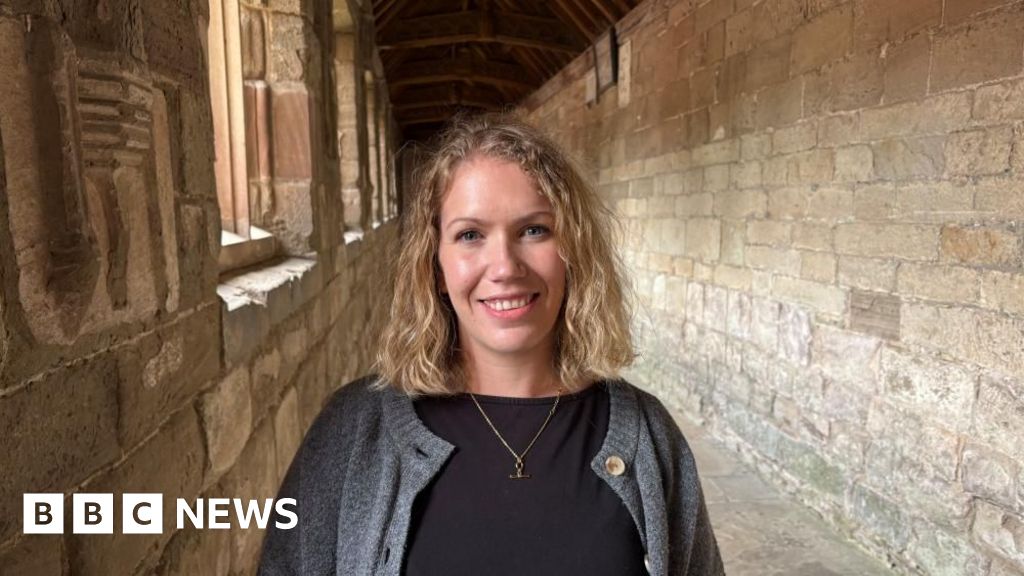
Cathedral to help run food share scheme in city

Published

on

Cathedral to help run food share scheme in city

Hereford Cathedral says it will provide operational support to help the “incredible volunteers”.

Continue Reading

Trending

Copyright © 2025