

Politics
Wings Over Scotland | The value bet

To pass the time on (praise be to Jeebus) the last day of the Holyrood election campaign, we thought we’d do a summary of all the seat projections we could find from last month and this month. Here it is.

Now, as it happens we think the potential seat ranges are significantly wider. There are so many factors of uncertainty that while there’s no doubt who’s going to be the biggest party, we reckon SNP seats could potentially be anywhere from about 47 to about 67 (most likely the upper part of that range), with corresponding ramifications below.
But there’s one potentially interesting thing in that bottom half.
Polling’s been so all-over-the-place that there is no settled consensus about which orders the runners-up will finish in. Here’s a summary of the projections:
REFORM
8 x 2nd
4 x 3rd
LABOUR
2 x 2nd
8 x 3rd
1 x 4th
1 x 5th
GREENS
2 x 2nd
5 x 4th
3 x 5th
2 x 6th
LIB DEMS
5 x 4th
2 x 5th
5 x 6th
TORIES
3 x 4th
4 x 5th
5 x 6th
Reform look like favourites for the silver medal, and no projection has put them lower than 3rd. Labour have ranged from 2nd-5th, the Greens from 2nd-6th, with the Lib Dems and Tories not expected to do better than 4th.
Which makes these numbers rather startling.

The gulf in odds between Labour/Reform and the Greens is frankly astonishing. If you bet £100 on Reform to come second you’d make £50 profit. Put the same amount on Labour and if they took the silver you’d be £150 ahead. But stick it on the Greens and get lucky and you’d net yourself a tasty £12,500 windfall.
Extraordinarily, the Greens are at far longer odds to come second than the SNP, and there is NO chance of the SNP coming second.
(SkyBet’s odds of them winning are 1/200, meaning that if you staked your £100 on them to get the most seats, you’d make a whopping profit of 50p.)

Heck, the Greens coming second (125/1) is at almost the same odds as Alba winning the election (150/1), and Alba don’t even EXIST.
Readers, we don’t think the Greens will be runners-up at this election, and we certainly PRAY that they won’t. But the margins are so slim between all the non-SNP parties, and the polls so febrile, that it’s definitely not beyond the bounds of possibility, and at those absolutely doolally odds it might be worth popping a couple of quid on it just to cheer yourself up if it happens.


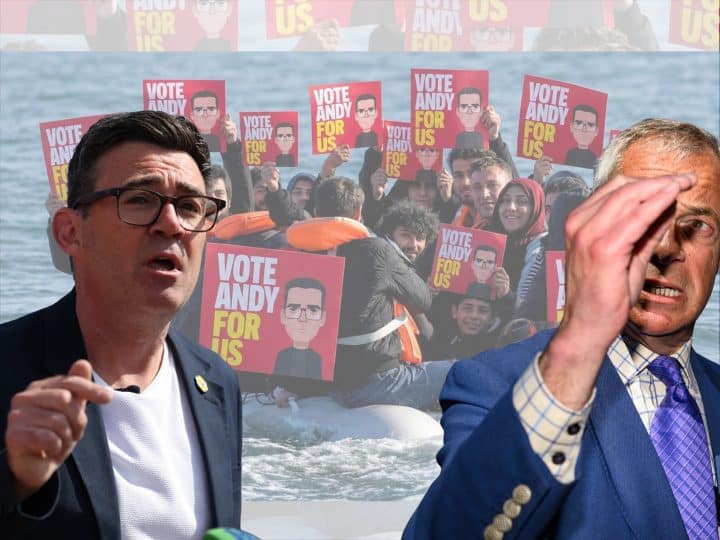

On 30 May, Nigel Farage posted the latest in a long line of dehumanising political ads. Reacting with more good humour than Farage deserved, Makerfield candidate Andy Burnham responded as follows:
Are you getting desperate, lad?
Maybe keep your crypto millions for something else. — Andy Burnham (@AndyBurnhamGM) May 30, 2026

Using refugees as pawns like this shows that Farage lacks any empathy whatsoever.
And if he cares this little for the people who are most in need, we’ve got bad news for anyone deluded enough to think he cares about them.
Nasty Nigel
Farage later highlighted what he was talking about:
Your scheme will provide housing and benefits to people who came here illegally.
I prefer to put the British people first. pic.twitter.com/CEG7Tfg2wc
— Nigel Farage MP (@Nigel_Farage) May 30, 2026
You’ll note Burnham’s plan relates to refugees and that Farage refers to “people who came here illegally”. Sadly ,in the UK, these two things aren’t mutually exclusive. The reason for this is because we’ve opted to use the loophole of being an island to shirk our international responsibilities.
Speaking more on how the UK criminalises desperation, Rose Cocker wrote for the Canary:
safe and legal routes are desperately few and far between. Often, they focus on very specific groups of refugees, such as Ukrainians, who are predominantly white, whilst neglecting others, who are predominantly people of colour.
Without a massive expansion of safe routes, asylum seekers are left with no option but dangerous channel crossings. If asylum seekers have no right to work or other decent income, they will be forced to work illegally. Without adequate housing alternatives, the UK will have to use hotels to accommodate asylum seekers.
These are problems, certainly. But they are problems that our government has caused.
Farage doesn’t want to solve these problems; he just wants to treat the victims like a punching bag so Reform voters get to feel like there’s someone below them on the totem pole.
“Crypto millions”
Burnham’s response to Farage also included this line:
Maybe keep your crypto millions for something else.
As we’ve reported, Farage is facing separate investigations over a £5m ‘gift’ he failed to declare:
Here are the facts as laid down by Derbyshire: Same old same old https://t.co/ViEIFZkf3A
— Alonso Gurmendi (@Alonso_GD) May 6, 2026
1) Farage says he won’t run
2) crypto billionaire pays him £5mill
3) Farage U-turns and runs
4) Farage hides the donation
5) Farage announces if he wins the election he will slash capital gains tax for crypto firms
Since all this came out, Farage has done his best to avoid interviews:
Victoria Derbyshire, "We asked for an interview with Nigel Farage tonight and we got a thumbs down emoji from his team"
"Over the last couple of weeks we've asked for an interview with Nigel Farage or anyone from Reform UK's front bench ten times"
Jake Berry, who used to be a… pic.twitter.com/l594M6EQ1Q — Farrukh (@implausibleblog) May 19, 2026
Given Farage’s reluctance to speak on camera, it will be interesting to see how he copes with this by-election. And with rumours of Burnham calling an early general election if he wins, things could get even more intense for the toad-faced huckster.
Burnham — A sign of things to come
In response to the Burnham-Farage exchange, Channel 4’s Krishnan Guru-Murthy asked:
Is this the next general election campaign? pic.twitter.com/ozyNsfa8O9
— Krishnan Guru-Murthy (@krishgm) May 30, 2026
He’s predicting that the next election will be Farage calling Burnham a ‘refugee lover’ and Burnham accusing Farage of being in the pocket of billionaires. In other words, it’s an election in which Britons will decide who they think is bleeding this country dry: the refugees who have nothing or the billionaires who own everything.
And sadly, neither of these men seem set to represent the pro-refugee position:
in the last couple of weeks alone andy burnham has backed mahmood’s immigration policies, reeves’ fiscal rules and the horrific and unworkable ehrc anti-trans code of practice… https://t.co/Kw8bfoHmpq
— Ben Smoke (@bencsmoke) May 27, 2026
Featured image via Leon Neal (Getty Images) / Leon Neal (Getty Images)
By Willem Moore
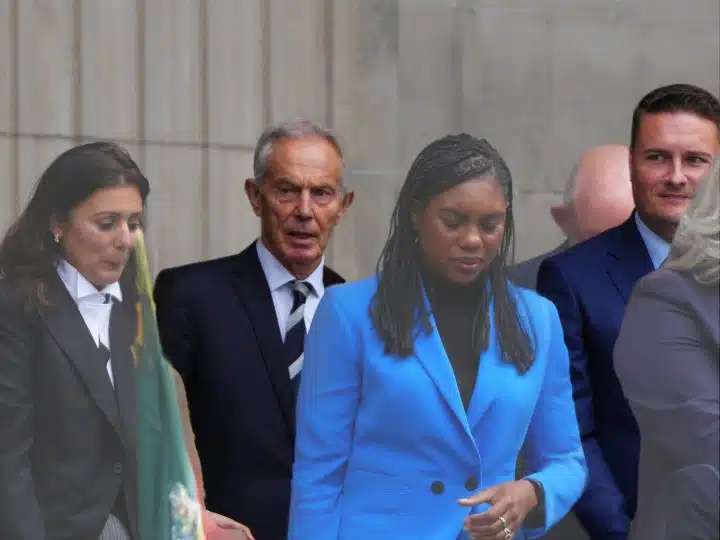

On 26 May, the wax-faced war criminal Tony Blair returned with a half-baked essay on what the UK should do next. Among his widely-panned arguments was the suggestion that we need to increase North Sea drilling. And now, like clockwork, the Blairite homunculus Wes Streeting has stepped forwards to make roughly the same argument:
Labour should cut national insurance and issue new oil drilling licences for North Sea, Streeting says https://t.co/yWsOYDXf0n
— LBC (@LBC) May 31, 2026
New Streeting, New Danger
In his essay, Blair wrote:
3. We must prioritise cheaper energy and electrification over net zero and use what is left of our North Sea oil and gas resources. This is essential for our competitiveness and for taking advantage of AI.
Responding to this, the CEO of Naked Energy wrote:
The conflict in Iran has given us yet another reminder that dependence on gas weakens our energy security. UK wholesale gas prices rose by around 90% in the first week of the conflict alone, and that volatility feeds straight through to businesses and households.
Shifting towards generating our own gas does not change this, because the fuel extracted from the North Sea is sold at international prices, so it does not provide households or businesses with any insulation from global shocks.
You’ll note Blair’s proposal is in line with the far-right parties Reform UK and Restore Britain. While you can’t simply do the opposite of what your opponents do, it’s important to note that both Blair and the far-right are ignoring the same key information:
The North Sea is pretty much spent and what is left is expensive to lift. Plus, you're wasting time talking about shale.
Why do you make no mention of renewables or battery storage? pic.twitter.com/pFF9X5cZkq
— Clean Energy (@EnergyMix_UK) May 30, 2026
Getting to Streeting, here’s what the ex-health secretary said when asked if the UK should grant new licenses:
Yes. I think that’s probably where Ed will get to. When he makes a decision, I’d be surprised if that wasn’t the case.
The granting of those licences will not necessarily translate into cheaper bills, but it will translate into higher tax receipts
Cheaper bills for Britons?
No.
Increased profits for the corporate vultures who are waiting to slurp up what’s left in the North Sea?
Absolutely!
AI freefall
You’ll note Blair’s given reason for supporting more drilling was AI. No prizes for guessing why that is:
I'm not interested in any coverage of Tony Blair's views that makes no mention of the fact the Tony Blair Institute (TBI) is bankrolled by billionaire Larry Ellison, founder of Oracle.
From 2021-2025, Ellison donated or pledged £257m to the TBI. Of course he's an AI evangelist!
— Aisha Nicole Malik-Smith (@ANMalikSmith) May 27, 2026
While figures like Blair are talking up AI, the AI companies themselves are experiencing something of a meltdown. Until recently, they charged businesses a subscription fee; something they struggled to make money from, because AI models cost so much to run. Now they’ve switched to capping how much customers can use, and as a result businesses have started to ask themselves:
- Can we afford this?
- Are we getting any sort of return on investment?
As AI critic Ed Zitron has reported, the answer to question 1 is increasingly ‘no‘: the answer to question 2 is usually ‘we’re not even sure how to measure it‘:
The problems don’t end there either:
NEW: AI consultant reveals a client accidentally spent $500,000,000.00 in a single month after failing to set employee limits on Claude usage.
— Polymarket (@Polymarket) May 28, 2026
Starbucks just retired its AI inventory tool across North America. It was miscounting and mislabeling store items.
This is the second major AI failure at scale from a Fortune 100 company in 2026. The pattern. Starbucks spent reportedly $80-120M building "Deep Brew," its AI… https://t.co/8iJVDn0dGW
— Armaan Sidhu (@realarmaansidhu) May 25, 2026
89% of leaders say AI has not improved their company's labor productivity, despite widespread adoption, per Gallup.
— unusual_whales (@unusual_whales) May 19, 2026
Uber handed its 5,000 engineers an AI coding assistant in December. By April, the company had blown through its entire AI budget for all of 2026, with two thirds of the year still to go.
Cheap, basic AI has gotten almost free over the past few years. But almost no company builds… https://t.co/rTlWgZECa7 — Anish Moonka (@anishmoonka) May 24, 2026
Two economists just published a mathematical proof that AI will destroy the economy.
Not might. Not could. Will — if nothing changes. The paper is called "The AI Layoff Trap." Published March 2, 2026. Wharton School, University of Pennsylvania. Boston University. Peer reviewed.… pic.twitter.com/Kh9IVdhG4w
— Jack (@jackcoder0) May 30, 2026
Despite all this, the establishment continues to tell us that AI is inevitable. And while some future technology may one day make that statement true, the signs aren’t good for the generative AI that’s currently being sold to us.
At max projection is 2 bn annual profit. A valuation that’s 500x that? I think AI is just a money laundering scheme. https://t.co/kbW5PFNCZR
— Ganeshan (@ganeshan_iyer) May 29, 2026
Popular support
To be entirely clear on the North Sea situation, many Britons think we should open new oil and gas developments:
Britons tend to favour allowing new oil and gas developments to be opened in the North Sea, amid reports that some cabinet ministers agree with Tony Blair's view that the UK should extract all oil and gas from the North Sea
New developments should be opened: 46% — YouGov (@YouGov) May 29, 2026
Only existing… pic.twitter.com/zxuS81x07w
We could really do with a follow-up question here, though, as we doubt people will feel the same once you explain: ‘this plan won’t bring your bills down even slightly‘.
To be entirely fair to Wes Streeting, he is at least admitting now that more drilling won’t benefit ordinary people. To be less fair to him, it’s time to make like a North Sea rig and get in the f*cking sea.
Featured image via Carl Court (Getty Images)
By Willem Moore


Trump — As we find ourselves in the 250th anniversary of America’s founding, the country is more American than ever. This isn’t a compliment, of course, but it is a way of introducing the chaos we’re seeing around the anniversary planning — chaos even right-wingers are calling out:
I’m actually pretty pissed at how badly they’ve bungled America 250. First they tried to invite Milli Vanilli and a bunch of other absurdly washed up geriatric one hit wonders. Then when that didn’t work they decided to convert the event into a Trump rally where Trump will talk… https://t.co/lYo2jUWOLy
— Matt Walsh (@MattWalshBlog) May 30, 2026
Happy birthday
America has produced some of the biggest musical acts of all time. Given this, you’d think it would be easy to book some big hitters for the 250th Anniversary. Instead, we got the likes of Milli Vanilli — a German pop outfit which was famous for not singing their own songs (one of whom is now deceased, RIP):
JUST ANNOUNCED: The Great American State Fair lineup is here, featuring a packed roster of hits including Martina McBride, Young MC, C+C Music Factory, Vanilla Ice, Milli Vanilli, The Commodores, Morris Day & The Time, Flo Rida, Bret Michaels, and many more. pic.twitter.com/VI7OK4kDGI
— Breaking911 (@Breaking911) May 28, 2026
As if this wasn’t embarassing enough, several acts have now pulled out, including the Commodores, Morris Day and the Time, and the aforementioned Milli Vanilli. Poison singer Bret Michaels said the following:
Unfortunately, what was presented to us as a celebration of our country has evolved into something much more divisive than what I agreed to be a part of
He added:
Concerns have also been raised regarding the safety of my fans, band, crew, family and myself, including threats that are completely unfounded and unforgivable. Because of that, I have made the difficult decision to step away from this performance
To be fair, the US is a little busy losing Israel’s wars right now, so they can’t be expected to defend the nation’s second-tier rockers.
In the post at the top, Donald Trump described the acts pulling out as having “the yips”. He also vowed to replace them himself, claiming he has more appeal than Elvis. And the crashout didn’t stop there:
Holy shit, Trump is really crashing out. His latest unhinged screed: “We should have a giant MAKE AMERICA GREAT AGAIN RALLY, for 250, instead of having overpriced singers, who nobody wants to hear, whose music is boring, and yet who do nothing but complain. Cancel it, just like I… pic.twitter.com/wmQ0FdFTAX
— Aaron Rupar (@atrupar) May 30, 2026
Trump also took time to criticise his opponents on the right:
Every single one of them pushed for the release of the Epstein files pic.twitter.com/h48dPGtbdW
— MeidasTouch (@MeidasTouch) May 30, 2026
Between all this, Trump bragged about passing one of the mental exams they only administer to folks who are showing signs of cognitive decline:
— Rapid Response 47 (@RapidResponse47) May 31, 2026
Oh, and we also learned about the ‘RUMP’ watch:
Donald Trump has scammed his supporters again.
He sold them a Trump watch with the T missing for $640. pic.twitter.com/ZB3Kni1OsM
— Mukhtar (@I_amMukhtar) May 30, 2026
Trump — Hip hip hooray
The music acts aren’t the only thing booked for America 250; there’s also the planned UFC match on the White House lawn:
Starting to come together [ #UFCWhiteHouse is presented by @Cryptocom and @RamTrucks ] pic.twitter.com/mWYJ45oNBZ
— UFC (@ufc) May 29, 2026

SEE YOU ON THE SOUTH LAWN @UFC pic.twitter.com/02HoAdxc9e
— The White House (@WhiteHouse) September 20, 2025
As neoliberal ghoul Hillary Clinton highlighted:
This is what Trump's done to the people's house:
A third of it is rubble.
Another third is a cage match. What a metaphor. pic.twitter.com/0JKCj5prXF
— Hillary Clinton (@HillaryClinton) May 29, 2026
Some Yanks are pretending this doesn’t represent them, but this is the America the rest of the world knows. It’s a violent, destructive force that turns everything it touches into rubble and rancour. So in that sense, the arrangements for the 250th Anniversary are actually very fitting.
Well done, President Paedophile (allegedly).
Featured image via Kevin Dietsch (Getty Images)
By Willem Moore
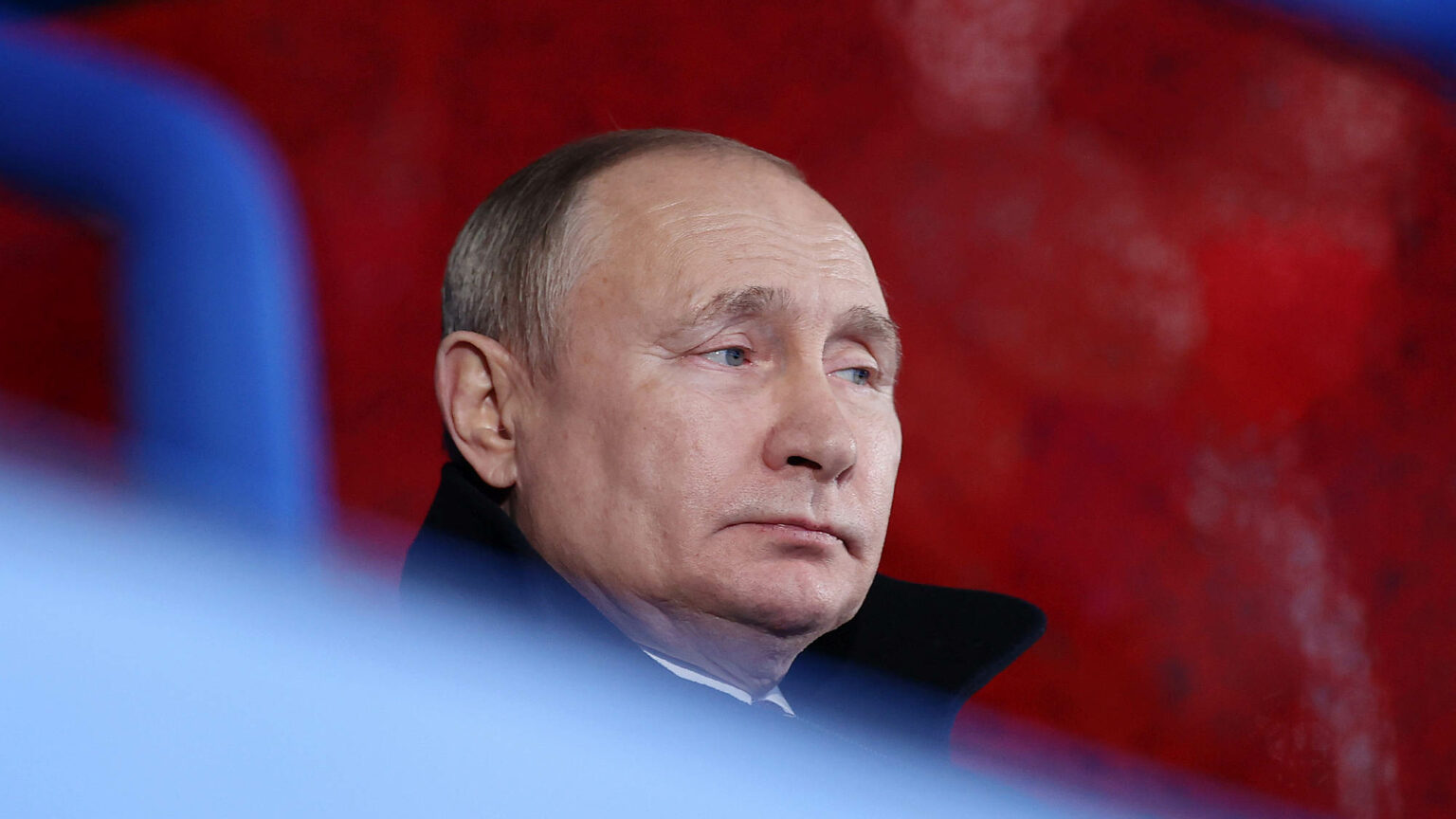
Three months ago, UK prime minister Keir Starmer used the fourth anniversary of Russia’s invasion of Ukraine to promise a tougher sanctions campaign against Putin’s energy interests.
In his speech, Starmer praised the ‘incredible resilience’ of the Ukrainian people and said it was a ‘falsehood’ to claim Putin was winning. Ukraine’s allies, he said, had to ‘double down’ on support. ‘That means capability’, he said. ‘It means resource. It means more sanctions.’ Britain would target 300 Russian energy companies and the shadow fleet, which were ‘essential in terms of weakening the ability of Russia to continue with this aggression’.
Yet in May, Starmer’s government announced that diesel and jet fuel made from Russian crude oil would be allowed to flow into the United Kingdom, provided it is refined in a third country. The reaction from the public and the media has been one of outrage. Wasn’t the UK meant to be tightening sanctions on Russia, not loosening them?
The situation becomes even more perverse in light of another recent government announcement. In the King’s Speech, Labour set out plans to make it unlawful for ministers to grant new oil and gas licenses in the North Sea. At the same time Britain is refusing to drill and refine its own copious reserves of oil, it is importing it from Russia. Starmer and the Labour Party, despite their bravado over Ukraine, are literally lining Vladimir Putin’s pockets while destroying domestic production.
The consequences go far beyond national embarrassment and economic sabotage. It also carries major ramifications at the strategic level. The Royal United Services Institute estimates that loosening restrictions on Russian-linked fuel could be worth around one billion US dollars to Putin’s war machine. But the greater damage is the signal it sends. Britain has spent four years saying it will help choke the revenues funding Russia’s invasion. Now it is retreating because it lacks the domestic fuel resilience to sustain its own position.
Sanctions are only as strong as the industrial base behind them, and deterrence only works if hostile powers believe you can absorb pressure. Moscow will see that Britain can be pushed into compromise when energy markets tighten. Beijing will see it too. The message for them is obvious: apply pressure to the right supply chain, and Britain’s foreign policy starts to bend.
The lesson from this humiliating situation is that policy must treat the world as it is, not as officials and Ed Miliband would like it to be. The statutory Net Zero target – an 81 per cent reduction in fossil fuels by 2035, and entirely fossil fuel-free by 2050 – is patently incompatible with the wider geopolitical context. It must be scrapped. Britain will still need oil, gas and refined products for decades.
The hard truth is that ministers had little choice but to go begging for Putin’s oil. The war in Iran and tight fuel markets have created real risks. These fuels are existential necessities. Agriculture, haulage, shipping, aviation and the armed forces all depend on them. Farm machinery remains overwhelmingly diesel-powered. Defence platforms such as the F-35 and the Queen Elizabeth-class aircraft carriers are built around them and will rely on them until the 2070s.
Why has Britain no ability to withstand global economic pressure? The answer is two decades of self-destructive energy policy, driven by a desire to be seen as climate leaders. Britain’s fuel vulnerability did not begin in Iran or Ukraine. The ultimate cause lies with successive governments allowing the domestic energy and refining base to decline, because it flatters our domestic carbon emissions target.
At the turn of the century, Britain had 12 refineries, nearly half the number it had in the 1970s. In 2010, the number stood at eight. After Grangemouth and Lindsey collapsed last year, Britain now has just four major operational refineries. UK refinery output has fallen from around 1.8 to 1.9million barrels per day in the early 2000s to nearer one million by 2025. Yet, over the same period, our demand for oil and fossil fuels has continued – and will continue – to rise.
The problems we are seeing today were first flagged in 2009, when Gordon Brown’s Labour government published its independent energy-security review. The report was written by Malcolm Wicks, a respected former minister under Tony Blair. In his final document, Wicks accepted the climate agenda. But he also accepted that Britain would still need hydrocarbons for decades. He warned that the UK was moving from relative energy independence to greater import dependence just as global competition for energy was set to intensify. Wicks was right.
Unfortunately, from 2010 onwards, Conservative governments, aided and abetted by the Liberal Democrats in coalition and the Labour Party in opposition, did the opposite of what prudence and the national interest required. They doubled down on Net Zero, accelerated the deindustrialisation of Britain, and deepened our dependency on foreign fossil fuels rather than cultivating our own.
This approach has been catastrophic, but there is a simple way out of it. Britain should maximise domestic oil and gas production, treat refineries as strategic assets, maintain oil stocks and downstream infrastructure, and cut unnecessary costs on essential industry. The alternative is what we are seeing now.
Net Zero is indefensible. It devastates our economy and strengthens our enemies. It must be scrapped.
Maurice Cousins is campaign director for Net Zero Watch. Follow him on X: @MDC12345678.


On 8 May, the Canary published an article entitled “Sunderland Reform councillor David Barker allegedly beat up his girlfriend and abused child”.
The piece incorrectly stated that Barker was the same individual who was given a suspended sentence in 2019 at South Tyneside magistrates’ court for assault and causing actual bodily harm to his girlfriend.
The Canary published this based on information it had at that time. Since then, Barker has reached out to us and provided information categorically showing that he is not the same man who was sentenced in 2019.
The Canary would like to unreservedly apologise to Barker, his family, and friends, for the distress and damage that our article caused. We are committed to ensuring that our publication consistently achieves the highest levels of factual accuracy. However, on this occasion, the information we were provided proved to be inaccurate. We took immediate action to remove the article and investigate.
To confirm: Reform councillor David Barker is not the same David Barker who was convicted in 2019. We have permanently removed all content related to this and will ensure that any future information published about him is accurate.
By The Canary
Sadly, this turned out to be prescient this morning.

Laura Kuenssberg did give Nicola Sturgeon an uncomfortable time in their interview on her Sunday programme on BBC News, but when confronted with the one gaping open goal that Sturgeon has no answer for – and even when Sturgeon TWICE set it up on a plate for her – Kuenssberg failed to knock the ball into the empty net.
That doesn’t – by some distance – mean there was nothing of interest to note, though, so let’s take a walk through what was said.
Kuenssberg opens by asking if she didn’t noting anything odd, to which Sturgeon responds by saying that anything she saw in the house (eg a fancy coffee machine) could plausibly have been afforded by Murrell on his SNP salary, which is broadly fair enough. But the story soon starts to crumble.
Firstly, Tiffany diamond bracelets start at just a few hundred pounds. Even some of their top-ticket ones, like this (ahem) Wings bangle in platinum, come in at only a fraction of the price of a new Jaguar iPace, so it’s weird to suggest they’d have been a bigger red flag than the car.

But for Sturgeon to claim that she’s “not sure” whether the £2,200 Lalique salt and pepper grinders Murrell bought are the same ones she used in the kitchen she says she never went in is comical. Even if you don’t know what they cost, they’re pretty darn distinctive.

Anyone putting a bit of salt on their sausage supper with those would surely pause for at least a moment to say “Ooh, these are fancy”.
We then get an extended sob story from Sturgeon about all the ways in which she’s a traumatised victim of Murrell (though immediately after it she says “I will never think of myself as a victim”), during which Kuenssberg lets her get away with falsely claiming she’s been “exonerated” and “cleared” of any wrongdoing.

Kuenssberg then gets onto the subject of the infamous campervan.
Well, Nicola, the reason it might have crossed your mind was because it was listed in the SNP’s accounts, which you signed off on and are both professionally qualified to understand and legally responsible for, as an SNP asset.

As to the camper’s visibility, incidentally, this is Murrell’s mother’s house. The Niesmann and Bischoff Smove 7.4e motorhome, at 24.3 feet, is considerably longer than the typical caravan, and would be quite difficult not to notice even if you’d approached on foot to the front door from the garage side.

A Google Earth satellite image which captured it parked there showed that it came right up to the level of the front window and would have been unmissable from the bottom step.

And the drive would be at a very odd angle/spacing to be the neighbours’.

Although this is at least inventive.
What did she think it was? Cheese on toast?
(Just for fun, we asked ChatGPT to mock up what it would have looked like in the driveway, based on the positioning in that satellite shot. This is what it came up with.)

She then throws SNP treasurer Colin Beattie under the wheels of the campervan.
But we must keep at the forefront of our minds that Sturgeon is legally responsible for signing off the accounts as being true and accurate. The idea that a £81,000 vehicle could have been explained away as hiring charges is absurd.

(And even that raises serious questions about the veracity of the accounts, since Murrell actually paid almost £125,000 for the camper, not £80,632.)

As Wings pointed out more than three years ago, you could have hired an entire fleet of much more suitable election-campaign vans (the ostensible official purpose of the Smove) for a small fraction of that money.

It was absolutely Sturgeon’s job and responsibility to question accounts which showed £81,000 of expenditure on vehicles for the party – which vehicles these were, what they were for, whether they were going to be sold to recoup the money etc, and trying to dump it all off on Colin Beattie – the poor sap who wasn’t even allowed to SEE the books but who would meekly comply anyway, the exact reason he was brought back when Douglas Chapman resigned – is a grim business.

At a minimum, the party treasurer quitting because he isn’t allowed to see the books ought to cause the party’s leader to start doing some serious investigation into what’s going on, especially when half the Finance Committee has already quit for the same reason.
And that’s when Sturgeon’s answers REALLY start to get shifty.
After once again throwing Beattie to the wolves, Sturgeon pulls off a sneaky switch. She tells Kuenssberg that she had no reason to suspect “what Peter pled guilty to”, which was embezzlement of SNP funds for his own personal use.
But that isn’t what Kuenssberg had asked her about. She’d asked about money vanishing from the SNP’s accounts in 2019.
There are two separate arms to the Operation Branchform investigation: the fundraiser money that vanished from the SNP accounts, which we noted in January 2020, and Peter Murrell’s embezzlement of SNP funds to buy gaudy gew-gaws for himself, which only became apparent some time after the police investigation began in April 2021, following Sean Clerkin’s complaint based on Wings’ reporting.

(The point at which the Scottish media suddenly noticed and started giving itself awards for its great scoop.)

As the investigation progressed, the police had started to spot another story.

So Sturgeon was trying to deflect from Kuenssberg’s question by answering a completely different question about something else. And that’s when Kuenssberg totally fumbled the ball.

Trying to pass off the instant disappearance of hundreds of thousands of pounds that was supposedly “ring-fenced” and therefore untouchable as the normal “ebbs and flows” of party accounts is an outrageous dodge, and Kuenssberg just missed it.
She started off well, trying to block Sturgeon’s deflection from missing fundraiser money onto Murrell’s embezzlement.
But Sturgeon just bulldozes past it and brings it back to the fact that “one man committed a crime”.
The members of the SNP’s Finance & Audit Committee had resigned in March 2021, the month before the police began looking into the matter, and four months before the inquiry became a formal investigation in July.


Five months before the committee members quit, Colin Beattie had issued a strident denial that the fundraiser money had gone missing, insisting instead that it was “woven through” the SNP accounts – something that’s the literal polar opposite of being “ring-fenced”.


It’s ludicrous to suggest that Beattie would have been allowed to issue that statement without Nicola Sturgeon’s approval, and equally mad to suggest that Sturgeon would have approved it without checking the accounts that the money was supposedly somehow “woven through”.
(An implausible enough line in itself, given that the SNP’s accounts had previously very carefully separated out “ring-fenced” funds from its general reserves.)

What are we being asked to believe happened here? That Sturgeon said “Colin, didn’t we just raise £700,000 for a ring-fenced indyref fund? So why is there only £97,000 in our bank balance?”, Beattie replied “Don’t worry, Nicola, it’s woven through the accounts in a way that appears to make it invisible” and she went “Oh, that all sounds legit, okay then”?
So the only possible explanation is that she DID look at the accounts and DID approve both the accounts and Beattie’s official statement, despite the fact that there was visibly, obviously, unmistakably £600,000 missing. And the only way that can have happened is that she KNEW the money wouldn’t be there, because she KNEW it had been spent on something else, and therefore when she looked at the books she didn’t see anything that she didn’t expect.
That isn’t Peter Murrell’s crime (except in so far as that he, along with Sturgeon and Beattie, had signed off the 2019 accounts). He hadn’t stolen anything like £600,000 at that point. By the end of 2019 his embezzling across 10 years had totalled a maximum of £221,000.

But even when Sturgeon then reminds Kuenssberg that the initial investigation was into the missing fundraiser money, Kuenssberg lets it go.
Wings Over Scotland has no idea what Nicola Sturgeon did or didn’t know about Peter Murrell’s embezzling. That’s not our business. What we’ve always been concerned with is the plainly fraudulent fundraising the SNP undertook in 2017 and 2019, garnering almost £700,000 in donations from independence supporters – not just SNP members – on the demonstrably false pretext that it would be ring-fenced for a future independence referendum, when there was clearly never any intention to set the money aside for that purpose.
We know that because at the end of 2017, having taken in nearly half a million pounds from the first fundraiser, it had under £8,000 to its name.

And by a remarkable coincidence, at the start of December that year it had repaid £500,000 in loans to Chris and Colin Weir.

It was under Nicola Sturgeon’s leadership that the party ran those fundraisers. It was Nicola Sturgeon who fronted them.
It was under Nicola Sturgeon’s leadership that the party furiously denied having spent the fundraiser money on something else, when it had clearly done so.


It was under Nicola Sturgeon’s leadership that the party then concocted a series of ludicrous and contradictory excuses for where the money had gone, and embarrassingly transparent schemes to retroactively pretend to really be spending it on the pursuit of independence.


(Once again, note that this happened in January/February 2021, months BEFORE any sort of police inquiry had begun, so Sturgeon can’t use that as an excuse.)
That this issue remains unsolved – or at least, that nobody has been held accountable for it – after five years of Operation Branchform is the real story that should be occupying the media long after Murrell’s thievery falls off the front pages.
No explanation has been forthcoming from either Nicola Sturgeon, her successors as SNP leader, or Police Scotland, for what happened to that money, acquired under false pretences. Sturgeon rolled the ball across an undefended goal in the Kuenssberg interview, but Kuenssberg missed the chance just as badly as the Scottish media did when Wings first broke the story nearly six and a half years ago.

So we’ll need to wait for someone else to ask Sturgeon that question, or indeed to ask the Crown Office why they’re not interested in thousands of people being conned out of their cash.
There was many other issues raised by the interview, but this piece is long enough already so those can wait until next week. In the meantime, we’re disappointed but not surprised. If there’s one thing Nicola Sturgeon is good at it’s slippery lying, but even that skill is waning as far as the public is concerned.

We can only hope that one day the media will catch up and she’ll be made to sit down in front of an interviewer who’s sufficiently on top of their brief – dare we say from reading the website that broke almost every aspect of this story? – to actually properly nail her on it.


Spanish coach Luis Enrique continues to make history in the UEFA Champions League. After leading Paris Saint-Germain to their second consecutive continental title, raising his total to three trophies in the competition, he joins the list of the most decorated coaches of “The Big-Eared Cup,” cementing his place among the legends who have shaped the tournament’s glory over the decades.
This latest title grants Enrique entry into the exclusive club of coaches who have won the Champions League three or more times — a list that only includes four names who achieved this feat before him, led by Italy’s Carlo Ancelotti, the holder of the all-time record.
Ancelotti tops the list of most decorated Champions League coaches
According to a UEFA report, Carlo Ancelotti retains his position as the most decorated Champions League coach with five titles. He won two with AC Milan in 2003 and 2007, before adding three more with Real Madrid in 2014, 2022, and 2024.
The Italian coach is considered the most successful in the modern era of the competition, having successfully guided two different teams to the trophy, leaving an exceptional mark that puts him alone on the coaching throne.
Enrique equals Zidane and Guardiola
With three titles, Luis Enrique joins a select group of legendary coaches who have won the tournament three times, notably including France’s Zinedine Zidane, who led Real Madrid to three consecutive titles in 2016, 2017, and 2018.
Enrique also matched the achievement of fellow Spaniard Pep Guardiola, who won with Barcelona in 2009 and 2011 before adding a third title with Manchester City in 2023.
The duo is also tied with English legend Bob Paisley, who guided Liverpool to three European Cups in 1977, 1978, and 1981, remaining one of the most prominent coaches in the history of the English club.
Enrique chasing Ancelotti’s record
Although Enrique is still two titles shy of Ancelotti’s record, his success in leading Paris Saint-Germain to European dominance over the last two seasons has quickly placed him among the candidates to challenge this historic achievement.
The Spanish coach has become one of the few to win the Champions League with two different clubs, having secured his first title with Barcelona in 2015 before adding two consecutive titles with Paris Saint-Germain, solidifying his status among the greatest coaches in the history of the continental competition.
List of most decorated Champions League coaches
- Carlo Ancelotti (5 titles) – AC Milan and Real Madrid.
- Bob Paisley (3 titles) – Liverpool.
- Zinedine Zidane (3 titles) – Real Madrid.
- Pep Guardiola (3 titles) – Barcelona and Manchester City.
- Luis Enrique (3 titles) – Barcelona and Paris Saint-Germain
Featured image via Justin Setterfield/Getty Images
By Alaa Shamali
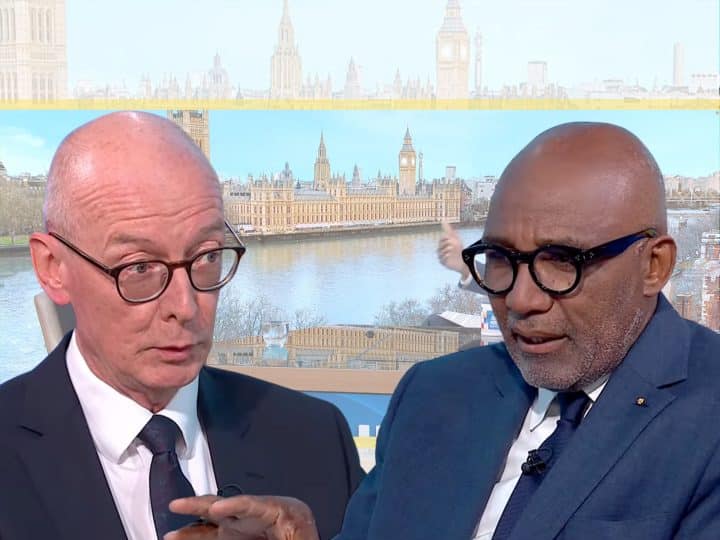

In 2024, Labour pledged to equalise the minimum wage across all age bands. Now, a senior minister has claimed that the act of governing is completely out of the hands of government:
Page 45 of Labours 2024 manifesto stated: "Labour will also remove the discriminatory age bands so all adults are entitled to the same minimum wage"
Pat McFadden is asked, when are you going to do this?
McFadden says its not up to the govt to do it. pic.twitter.com/RSVJaZvf7x — Saul Staniforth (@SaulStaniforth) May 31, 2026
Has there ever been a government as comfortable with u-turning as the Starmer regime?
Weasel words
In the clip at the top, host Trevor Phillips said to DWP boss Pat McFadden:
When are you going to legislate to give young people the same living wage as people over 18? You promised to do it.
McFadden responded:
We do believe people should be properly rewarded. You know the way this works. In any given year, the rate for the national minimum wage is set by the Low Pay Commission. They have to take into account all the factors in the economy, including employment and the labour market.
The government promised to make a radical change. Clearly, it must be the body to enact such a change; not an entity which exists to make steady, proportional tweaks.
After some predictably bland back and forth from McFadden, an exasperated Phillips asked:
So why did you bother to put it in your manifesto? Why promise you’re going to do something when two years later you can come in and say, ‘oh, nothing to do with us?’
McFadden answered:
Because we’re giving them a direction of travel, and it’s good to give them a direction of travel. They have a remit. They have a remit letter from the government. So they have a direction of travel. But in any given year, the precise rate of the minimum wage is recommended.
Sorry, we meant to say ‘McFadden waffled’ rather than ‘McFadden answered’. The DWP boss later said:
And in the internationally admired model that we have in this country, it is for the low pay commission in any given year to set the minimum wage.
The point of manifesto promises is that they uproot the status quo. Clearly, for something to happen beyond the norm, the government has to step in and take action. Labour’s refusal to do so suggests that slippery Starmer likely never planned to equalise pay in the first place.
Minimum wage — Broader context
What McFadden and Labour are doing here would ordinarily be bad. It’s especially dire right now, however, because recently released data shows young people are facing an under-employment crisis. As Politics UK reported:
– Mid- and lower-skilled jobs have fallen by around 1.6 million over the past 20 years
– Hospitality vacancies have nearly halved in the last 4 years
– Apprenticeships for 16-24-year-olds have fallen by 35% since the Apprenticeship Levy was introduced in 2017
– The proportion of 16-17-year-olds in paid work has nearly halved from 35% in 2006 to 19% today
– If every current inactive 18-24-year-old was in full-time work, this would contribute an additional £38 billion to UK GDP
– 58% of inactive young people (6 in 10) have never had a job
As life has gotten more expensive in the UK, many young people are living at home for longer. This means fewer of them need to take the dead-end jobs that many of us accepted to ensure we could pay the rent. The knock-on effect is young people have less disposable income, and as a result they don’t go out, meaning fewer jobs in the hospitality sector. Increasing the minimum wage would better incentivise work, which would better drive economic activity.
The Apprenticeship Levy, by the way, was a plan to promote apprenticeships. The fact that the number apprenticeships has dropped despite it shows that something is going very wrong in the world of work for the next generation of Britons.
No future
Clearly, young people are ceasing to view the UK as a place where they can thrive. On 15 April, we reported that:
The TEFL Academy has released a report, The Great Gen Z Exodus. And it reveals that Britons are no longer waiting until their 30s to leave the UK. They’re doing it in their 20s, in record numbers, as economic pressure and shifting career priorities reshape life decisions.
In June 2025, departures among those aged 20–29 reached 130,000–140,000. This is significantly higher than pre-pandemic levels of around 92,000–95,000 in 2018. Meanwhile, emigration among those in their early 30s has fallen from around 78,000–81,000 in 2018 to 55,000–65,000 in 2025.
In the middle of a national crisis, this Labour government is pretending it can’t enact one the few changes which might actually improve things for young people. The sooner this government u-turns itself out of existence the better.
Featured image via Sky (YouTube)
By Willem Moore
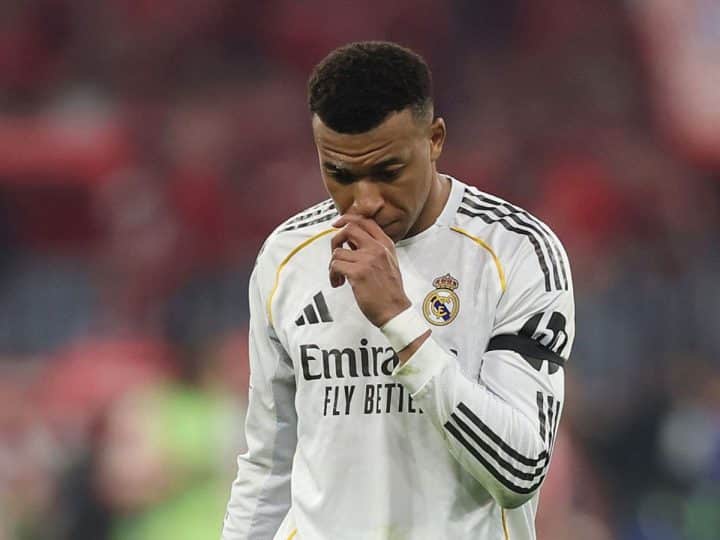

For years, the European project of Paris Saint-Germain was inextricably linked to the name Kylian Mbappe. Since joining the club in 2017, the French striker became the most prominent face of the Parisian dream in the UEFA Champions League, while the club’s management spent billions in an effort to finally win the trophy that had eluded them.
During that period, rumors constantly linked Mbappe with Real Madrid, a club historically synonymous with the continental competition. While Paris sought to retain its star to complete its European ambitions, the player continued to view a transfer to the Spanish capital as the quickest route to achieving his ultimate dream: winning the Champions League.
Real Madrid collects trophies
Before Mbappe’s arrival, Real Madrid continued to assert its European dominance, successfully winning the Champions League in both the 2022–2023 and 2023–2024 seasons, reaffirming its status as the competition’s primary benchmark.
In the summer of 2024, the anticipated transfer finally materialized, with Mbappe joining Real Madrid amid expectations that he would be a decisive addition to a team accustomed to standing on the European podium. The scenario seemed clear at the time: the player left Paris in pursuit of the trophy, and Real Madrid had all the ingredients to continue its continental domination. However, football was concealing a completely different script.
Paris dominates europe after Mbappe’s departure
After Mbappe exited the scene, Paris Saint-Germain successfully broke the historical curse that had plagued them for years, triumphing in the Champions League final in the 2024–2025 season. They then repeated the feat in the 2025–2026 season, securing two consecutive titles that the club and its fans had long awaited.
Conversely, Real Madrid found themselves far from the podiums during the two seasons following the French star’s arrival, finishing both of those last two seasons without any silverware—a paradox that is difficult to ignore.
From the Bernabeu dream to fan pressure
Kylian Mbappe’s struggles in his final season with Real Madrid were not limited to results; they extended to his relationship with a segment of the fanbase that began to hold him partially responsible for the team’s decline and two consecutive trophy-less seasons.
As criticism escalated, an online campaign titled “Mbappe Out” spread, demanding the French star’s departure from the club. It achieved widespread traction on social media, garnering nearly 30 million signatures according to international media reports.
Thus, the player found himself in a position he never expected upon moving to the Santiago Bernabéu. Instead of leading the new project toward European glory, he became a target for criticism and campaigns demanding his exit, all while Paris Saint-Germain was writing the most successful chapters of its continental history after his departure.
Featured image via Lars Baron/Getty Images
By Alaa Shamali
Politics
Watch: Netherlands police thug brutally flings pregnant Palestinian woman backwards to floor
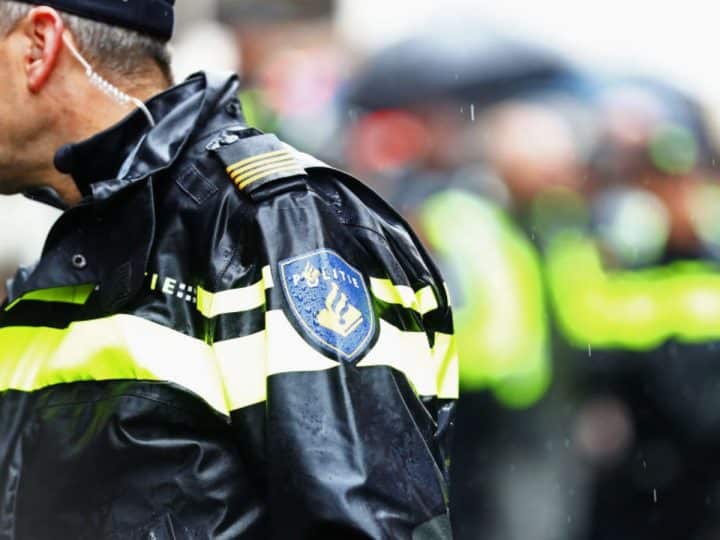

A Netherlands police thug has been caught on camera viciously throwing a visibly pregnant Palestinian asylum-seeker backwards to the floor in an unprovoked attack. Several other officers stood by and did nothing to prevent the attack or to restrain the thug afterward. The attack was perpetrated on 29 May 2026 in an asylum centre in Zeist, near Amsterdam. It is yet another example of European state brutality toward refugees and and anti-genocide activists:
Netherlands — Early birth
The video quickly went viral. The woman had approached police to ask to be allowed to remain with her husband during detention. She showed no sign of any aggression, yet Netherlands police tried to claim they were dealing with a knife attack. Her husband was badly beaten as he tried to defend his wife.
The violence triggered the victim’s labour and she gave birth to a baby girl, who is reported to be stable. Netherlands authorities claim to be investigating the attack.
Featured image via Dean Mouhtaropoulos/Getty Images
By Skwawkbox
Australians raise retirement savings target on living costs

Bitcoin Braces for Early June Sweep as Dominance False Break Fuels Altcoin Rally Hopes

Burnham slams ‘desperate’ Farage over vile AI slop-post


-

 Business7 days ago
NYT Strands Answers May 24 2026 Revealed for Puzzle No. 812 Theme Summer Essentials
-

 NewsBeat4 days ago
Israel says it has killed new Hamas military leader in Gaza City airstrikes
-

 Tech4 days ago
NASA taps Blue Origin to deliver lunar rovers for Moon Base initiative
-

 Politics6 days ago
Bridgerton Season 5: Cast, Release Date And Everything We Know So Far
-

 News Videos5 days ago
XRP *JUST* SUCCEEDED!!!! CLARITY ACT EXPOSED!!! (SHE EXPOSED IT)
-
 Sports6 days ago
2026 NBA Finals schedule, odds: Knicks await Thunder or Spurs after winning East
-
Crypto World5 days ago
Micron Crosses $1 Trillion Market Cap as AI Demand Reshapes Memory Sector
-

 Business5 days ago
Selena Gomez Reportedly Upset Over Benny Blanco’s Comments on Her ‘Terrible’ Diet
-
Crypto World7 days ago
Brian Armstrong Outlines Crypto Vision for the Future Financial System
-

 News Videos2 days ago
This is BROKEN! INSANE 5x MONEY CAR WASH WEEK! The NEW GTA Online UPDATE Today! (GTA5 New Update)
-

 Business6 days ago
BTS Sells Out Four Las Vegas Shows at Allegiant Stadium for ARIRANG World Tour
-
 Tech5 days ago
China assigns ID codes to 28,000+ humanoid robots
-
 NewsBeat6 days ago
Hottest May day ever as London hits 34.8C in 2C leap from previous records
-

 Tech6 days ago
Microsoft’s quiet Claude Code retreat and the real cost of enterprise AI
-

 Tech2 days ago
Waymo dominates autonomous vehicle registrations as Tesla trails behind
-

 Business6 days ago
Nikkei 225 Surges Past 65,000 for First Time as Iran Peace Hopes Fuel Record Rally
-
Tech4 days ago
The Samsung pay deal is the moment Korean unions changed register
-

 Tech6 days ago
Westone Audio and Etymotic Acquired by Fidelity Collective in Major IEM Market Move
-

 NewsBeat6 days ago
Crowds find riverside shade in York as temperatures soar
-
 Entertainment6 days ago
‘Breaking Bad’ Star’s Easy-to-Binge 6-Part Crime Series Spin-Off Is Finally Heading to Free Streaming
You must be logged in to post a comment Login