Beth Kindig is a veteran technology analyst with more than 15 years of experience covering both the private and public markets. She began her career in Silicon Valley in 2011—just as technology overtook oil as the world’s most valuable industry—and quickly distinguished herself for her prescient, high-conviction calls on emerging tech trends. By 2014, her analysis was being cited in major outlets, and she was invited to speak at leading industry conferences including Android Developers Conference, Advertising Week NYC, Tech Week Chicago, and BlackHat. Beth has forged her methodology following exposure to thousands of growth-stage companies, giving her a unique, pattern-recognition-driven approach that traditional Wall Street training cannot replicate. Beth is perhaps best known as the “Queen of Nvidia,” a title earned from her early and accurate calls on AI semiconductors dating back to 2018, but her proven track record spans dozens of companies where she has identified winning investments years ahead of consensus.As founder of the Tech Insider Network—one of the top-performing audited tech portfolios with 326% cumulative returns since May 2020 (29.2% annualized)—Beth has built a loyal following of thousands of paying subscribers, tens of thousands of newsletter readers, and more than 172,000 Twitter followers. Going into 2023, she held a 45% allocation in AI semiconductors, well ahead of legendary investors such as Stanley Druckenmiller at 29%. Beth is a regular guest on Fox Business, Bloomberg Tech, and Bloomberg Asia, where hundreds of thousands of investors tune in monthly to her insights. She has also appeared on CNBC, NPR, BBC Radio, Real Vision, Schwab Network, and CoinDesk. Her written work has been featured in Forbes, MarketWatch, VentureBeat, MediaPost, and AdExchanger. What drives her work is a deep commitment to empowering individual investors. Beth believes that access to accurate, high-quality research should not be limited to institutions. With a reputation for accuracy, consistency, and bold yet well-researched calls, Beth Kindig has established herself as one of the most trusted analysts in the technology sector today. Learn moreTech Insider Network is unique in that we blend real tech industry experience with active portfolio management. We pioneered combining cutting-edge fundamentals with high-performing technical analysis for retail. Beth cares deeply about individual investors having access to the same quality of information as institutions — especially in regards to the tech industry. Tech overtook oil in 2010 as the world’s most valuable industry and she was at the forefront of this change in Silicon Valley. She wants to bring her experience and insights to ordinary investors so they can participate in the extraordinary gains that tech has to offer. Her weekly newsletter has tens of thousands of subscribers.
Analyst’s Disclosure: I/we have a beneficial long position in the shares of NVDA either through stock ownership, options, or other derivatives. I wrote this article myself, and it expresses my own opinions. I am not receiving compensation for it. I have no business relationship with any company whose stock is mentioned in this article.
Seeking Alpha’s Disclosure: Past performance is no guarantee of future results. No recommendation or advice is being given as to whether any investment is suitable for a particular investor. Any views or opinions expressed above may not reflect those of Seeking Alpha as a whole. Seeking Alpha is not a licensed securities dealer, broker or US investment adviser or investment bank. Our analysts are third party authors that include both professional investors and individual investors who may not be licensed or certified by any institute or regulatory body.
The Reserve Bank has put in place revised norms for entities dealing in foreign exchange, whereby fresh licences will not be issued to money changers.
The Foreign Exchange Management (Authorised Persons) Regulations, 2026 is aimed at rationalising the authorisation and renewal framework for authorised persons and extend the principal-agent model for delivery of foreign exchange facility while maintaining appropriate checks and balances, the central bank said on Wednesday.
“The Reserve Bank has reviewed the existing framework for authorisation of any person as an Authorised Person under the Foreign Exchange Management Act, 1999, with the objective to rationalise the framework to improve delivery of foreign exchange services as well as easing compliance requirements,” it added.
The norms mandate that all entities must obtain the RBI authorisation to undertake forex transactions and set out revised rules for different categories of authorised dealers.
Advertisement
Under the regulations, applications for fresh authorisation will be considered under three categories.
Live Events
Banks can apply under AD Category I. NBFCs and a full-fledged money changer or a forex correspondent functioning for at least two years with an average annual forex turnover of Rs 50 crore in the previous two financial years can apply as AD Category II entities. Certain entities, including those intending to offer innovative products and services that may involve dealing in foreign exchange, will fall under AD Category III.
“Application for fresh authorisation as an FFMC shall not be considered by the Reserve Bank, except those under process as on the date of coming into force of these regulations,” the norms, notified on April 30, said.
Entities seeking authorisation must be companies incorporated under the Companies Act, 2013, and meet minimum net worth requirements specified in the regulations.
Are asked to vote, a voting tab will appear on your webcast platform requesting you to cast your votes. You will only have a limited amount of time to do so. If you’ve already voted, there is no need to vote again. Voting on all matters will be cast on a single electronic ballot. Registered shareholders or duly appointed proxy holders can ask questions during the meeting using the instant messaging function of the webcast.
Please note that there will be a slight delay in the publication of the communications that are received. As we begin the business of the meeting, I ask Terrie-Lynne Devonish, the company’s Chief Legal Officer and Corporate Secretary, to start with an important notice and a reminder.
Thank you, Mr. Chair. The statements made during this meeting, which are not historical facts, are statements containing forward-looking information in respect of which various factors and assumptions were applied or taken into consideration. Our actual results could differ materially as a result of numerous risks and uncertainties, and reference should be made to our annual information form and most recent management discussion and analysis for a discussion of these and related risks.
With that, I’ll turn the meeting back to the Chair.
Advertisement
Raymond Mikulich
Thank you, Terrie. I will now officially call this meeting to order, and we’ll start by addressing a few procedural matters. With the consent of the shareholders, I will act as Chair of this meeting. Terrie-Lynne Devonish will act as the Secretary and TSX Trust Company, our transfer agent, by its representatives, will act as the scrutineer of the voting. We will be dealing with a
U.S. Bank Asset Manager Group senior investment strategy director Rob Haworth discusses consumer discretionary stocks and sector on The Claman Countdown.
Discount retailer Burlington is planning to open more than two dozen stores in 20 states this month as the company continues to expand its footprint with over 1,000 locations around the country.
The company in March said that it planned to open 110 net new stores, plus a new distribution center in Savannah, Georgia, in its fiscal year 2026 that will end on Jan. 30, 2027.
Advertisement
Burlington operated 1,212 stores at the end of the fourth quarter of its fiscal year 2025, which covered 46 states as well as Washington, D.C., and Puerto Rico.
Grand openings are expected to begin with four occurring on May 8, including Santa Clarita, California, Columbus, Ohio, along with two more locations in the communities of Kent and Longview, Washington.
The S&P 500 and the Nasdaq surged to record high closes on Wednesday, buoyed by signs of a resolution in the Middle East conflict, while strong earnings from Advanced Micro Devices sparked a rally in chipmakers and other AI-related stocks.
Advanced Micro Devices soared to an all-time high after forecasting quarterly revenue above expectations on robust demand for its data center chips.
Shares of rival Intel also gained, while the PHLX chip index rallied, bringing its 2026 gain to around 60%.
Global stocks surged and oil prices slumped after Iran said it was reviewing a new U.S. proposal, while sources said Washington and Tehran were closing in on a one-page memorandum to end the war, while leaving tricky issues such as Iran’s nuclear program for later.
Advertisement
Brent crude futures fell about 8% to $101 a barrel, helping ease concerns about inflationary pressures.
Live Events
Wall Street has surged in recent weeks, with investors looking beyond the Middle East conflict and instead focusing on a strong first-quarter earnings season that has been driven by AI-related companies. S&P 500 companies are on track for their strongest profit growth in more than four years. Over 80% of S&P 500 companies that reported through May 1 have exceeded analysts’ profit estimates, according to LSEG I/B/E/S data. “The economy is chugging along just fine. There’s no real danger signs of something that’s even close to approaching a downturn. And so with that as a backdrop, you have to own stocks,” said Thomas Martin, senior portfolio manager at Globalt Investments.
Corning surged after saying it was partnering with Nvidia to expand U.S. production of optical connectivity products used in AI data centers. Nvidia also climbed.
Hut 8 soared after the AI data center developer signed a 15-year lease worth $9.8 billion for its Beacon Point data center campus in Texas.
According to preliminary data, the S&P 500 gained 104.46 points, or 1.45%, to end at 7,364.72 points, while the Nasdaq Composite gained 508.76 points, or 2.01%, to 25,834.88. The Dow Jones Industrial Average rose 603.51 points, or 1.22%, to 49,909.55.
Advertisement
U.S. private payrolls posted their largest increase in 15 months in April, pointing to continued labor market stability even as the conflict with Iran clouds the economy’s outlook.
Investors were awaiting the more comprehensive non-farm payrolls report on Friday, with U.S. jobs seen increasing by 62,000 in April after rebounding 178,000 in March, according to a Reuters survey of economists.
St. Louis Federal Reserve President Alberto Musalem said the risks to monetary policy have shifted toward higher inflation, possibly requiring interest rates to stay on hold for some time amid a seemingly stable job market.
Walt Disneyrose after the entertainment firm beat estimates for second-quarter results and as investors got a glimpse of CEO Josh D’Amaro’s growth strategy for the company.
Advertisement
Uber Technologiesgained after the ride-hailing and delivery platform forecast strong second-quarter bookings.
Super Micro rallied following a stronger-than-expected forecast for fourth-quarter revenue and adjusted profit.
PERTH, Australia — Scientists have confirmed the presence of the legendary giant squid in Western Australian waters for the first time using cutting-edge environmental DNA technology, revealing a hidden world of biodiversity in the deep submarine canyons off the Ningaloo Coast.
The discovery, announced this week, marks the northernmost record of Architeuthis dux in the eastern Indian Ocean and comes from a Curtin University-led expedition that detected traces of the elusive creature across multiple water samples collected from extreme depths.
Researchers aboard the Schmidt Ocean Institute’s research vessel Falkor surveyed the Cape Range and Cloates submarine canyons, located about 1,200 kilometers north of Perth, as part of a broader effort to map deep-sea life. They collected more than 1,000 water samples from the surface down to depths exceeding 4,500 meters.
Advertisement
Using environmental DNA — genetic material shed by animals into the surrounding seawater — the team identified 226 species across 11 major animal groups without ever seeing or capturing most of them. The giant squid was detected in six separate samples from both canyons, providing the first molecular evidence of its presence in Western Australian waters.
A Mythical Creature Confirmed
Giant squid, which can grow up to 13 meters long — longer than a school bus — and weigh as much as 275 kilograms, possess the largest eyes in the animal kingdom, measuring up to 30 centimeters in diameter. These deep-sea dwellers have inspired myths of sea monsters like the kraken for centuries, yet they remain notoriously difficult to observe in their natural habitat.
Dr. Lisa Kirkendale, head of aquatic zoology and curator of molluscs at the Western Australian Museum, noted that there had been only two prior records of giant squid in the state, with no confirmed sightings or specimens for more than 25 years. “This is the first record of a giant squid detected off Western Australia’s coast using eDNA protocols and the northernmost record of them in the eastern Indian Ocean,” she said.
The study also uncovered deep-diving marine mammals, including the pygmy sperm whale and Cuvier’s beaked whale, along with dozens of species never before recorded in Western Australian waters, such as the sleeper shark, faceless cusk eel and slender snaggletooth.
Advertisement
Lead author Dr. Georgia Nester, who conducted the research as part of her PhD at Curtin University and now works at the Minderoo OceanOmics Centre at The University of Western Australia, emphasized the broader implications. “Finding evidence of a giant squid really captures people’s imagination, but it’s just one part of a much bigger picture,” she said.
Nester highlighted that many detected species did not match existing genetic databases perfectly, suggesting significant undiscovered biodiversity. “We found a large number of species that don’t neatly match anything currently recorded… it strongly suggests there is a vast amount of deep-sea biodiversity we’re only just beginning to uncover.”
Revolutionary Power of eDNA
Traditional deep-sea exploration relies on cameras, nets or submersibles, which can miss fragile, rare or highly mobile species. Environmental DNA offers a non-invasive alternative: a single water sample can reveal hundreds of species at once.
The expedition combined eDNA analysis with physical specimens collected by the remotely operated vehicle SuBastian. Those specimens, now housed in the Western Australian Museum’s collection, provide reference sequences that strengthen future genetic databases.
Advertisement
Senior author Associate Professor Zoe Richards from Curtin University’s School of Molecular and Life Sciences said the approach transforms ocean science. “Deep-sea ecosystems are vast, remote and expensive to study, yet they face growing pressure from climate change, fishing and resource extraction,” she said. “You can’t protect what you don’t know exists.”
The research revealed distinct communities at different depths and between neighboring canyons, underscoring the complexity of these ecosystems. Such baseline data is crucial for marine park management, environmental impact assessments and tracking long-term changes.
Ningaloo’s Hidden Depths
The Ningaloo Coast, a UNESCO World Heritage site famous for its coral reef and whale sharks, extends into these dramatic underwater canyons. The study highlights how much remains unknown even in relatively accessible deep waters off Australia’s coast.
Nester collected samples across a wide depth range, showing how biodiversity shifts dramatically from surface waters to the abyss. This depth-stratified approach provides a more complete picture than spot surveys could achieve.
Advertisement
The findings, published in the journal Environmental DNA, involved collaboration between Curtin University, the University of Western Australia, the Western Australian Museum, Minderoo OceanOmics and other institutions.
Implications for Conservation and Science
The detection of giant squid and other megafauna in these canyons raises questions about food webs, migration patterns and ecosystem connectivity in the eastern Indian Ocean. It also demonstrates eDNA’s potential for monitoring elusive species amid climate pressures and human activities.
Experts say the technology could revolutionize biodiversity assessments worldwide, particularly in hard-to-reach habitats. As ocean exploration advances, non-invasive methods like eDNA may become essential tools for conservation.
For now, the giant squid remains a symbol of the ocean’s enduring mysteries. While no live footage emerged from this expedition, the genetic traces confirm its presence in waters long thought too far north for the species.
Advertisement
Researchers plan further studies to refine reference databases and expand surveys. The Western Australian Museum continues cataloging specimens to support ongoing taxonomic work.
This breakthrough off Ningaloo adds another chapter to humanity’s quest to understand the deep sea — a realm that covers most of our planet yet remains largely unexplored. As Dr. Nester noted, each water sample opens a window into hidden worlds, reminding scientists and the public alike how much wonder still awaits discovery beneath the waves.
FOX Business correspondent Susan Li reports on Apple’s second-quarter earnings as CEO Tim Cook highlights the company’s significant investment in artificial intelligence on ‘Morning with Maria.’
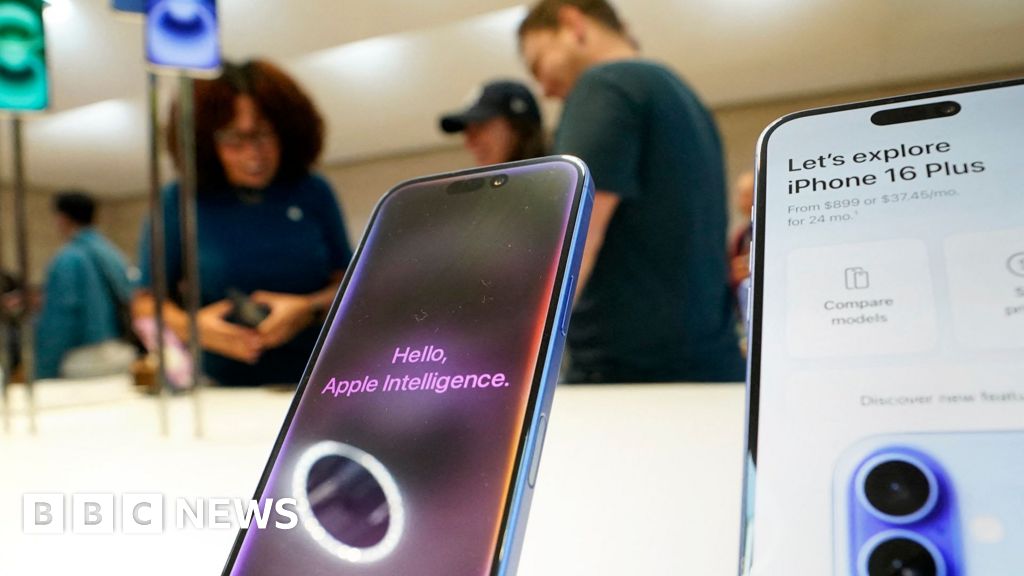
Apple has agreed to a $250 million settlement to resolve claims it misled consumers about artificial intelligence features tied to its latest iPhones, according to a federal court filing.
The proposed deal, filed in the U.S. District Court for the Northern District of California, would create a non-reversionary settlement fund to compensate customers who purchased certain iPhone models marketed with enhanced Siri capabilities that were not available at launch.
Advertisement
If approved, eligible users could receive a minimum of $25 per device, with payments potentially rising as high as $95 depending on the number of claims submitted.
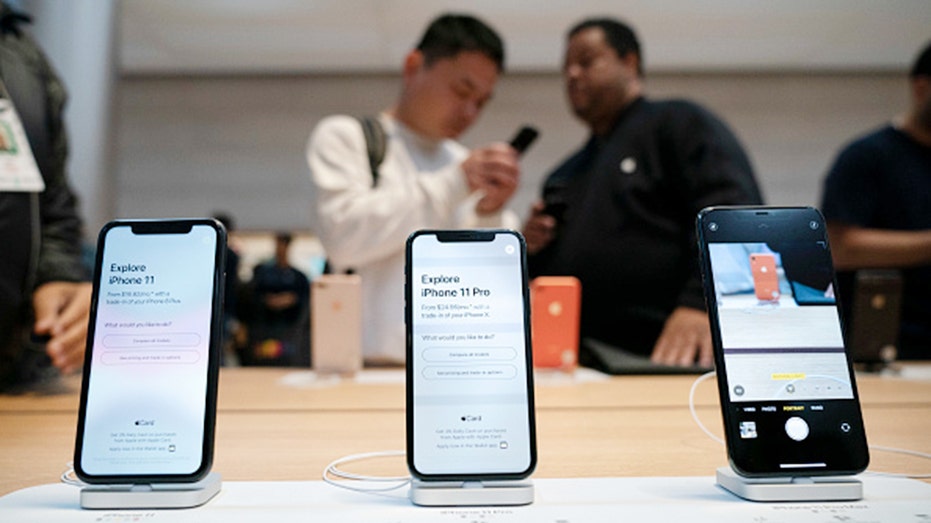
The settlement covers an estimated 37 million devices sold in the U.S. between June 10, 2024, and March 29, 2025, including all iPhone 16 models as well as the iPhone 15 Pro and Pro Max.
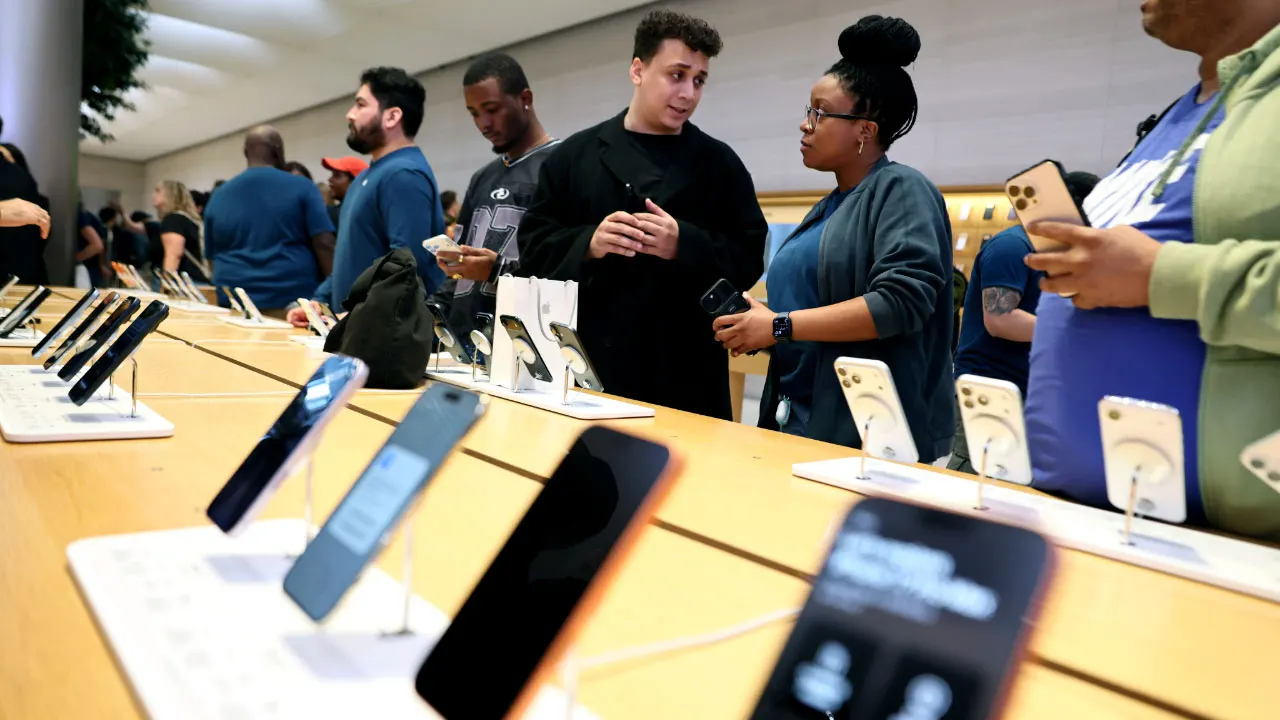
The settlement covers an estimated 37 million devices sold in the U.S. between June 10, 2024, and March 29, 2025. (Matt Cardy/Getty Images)
The lawsuit alleged Apple promoted a suite of “Apple Intelligence” features – including major upgrades to its Siri virtual assistant – that were not available when the devices went on sale. Plaintiffs said the company “showcased” advanced Siri capabilities in marketing campaigns even though the features “did not yet exist.”
“Apple allegedly saturated the market with deceptive ads, inducing consumers to purchase iPhones based on the promise of certain Enhanced Siri features,” the filing states. “It further alleged that public reaction was swift and intense when consumers learned that the Enhanced Siri features would be released later than initially anticipated.”
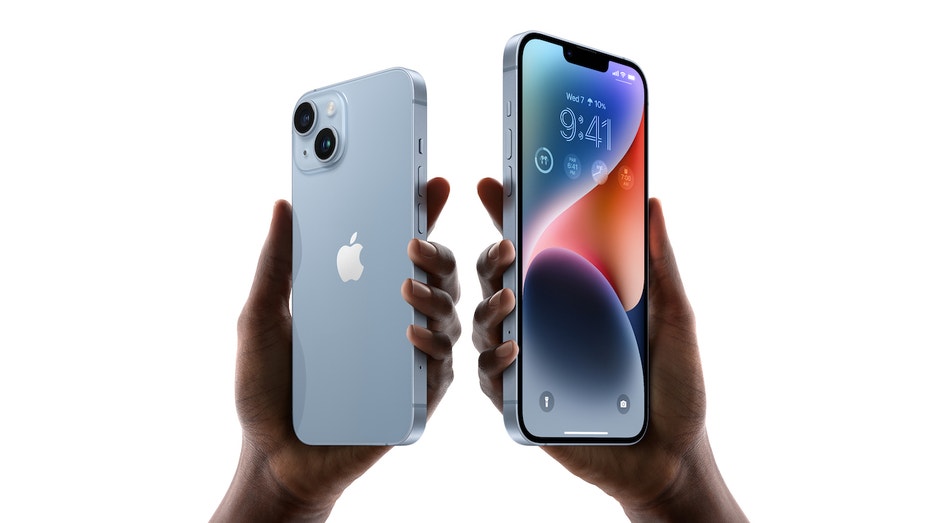
The lawsuit alleged Apple promoted a suite of “Apple Intelligence” features that were not available when the devices went on sale. (Apple)
Consumers argued they were effectively charged a premium for capabilities that were delayed, saying they would not have purchased the devices – or would have paid less – had they known the features would not be available at launch.
Court filings show plaintiffs estimated potential damages at more than $2 billion based on the alleged price premium tied to the promised features, though the settlement represents a fraction of that amount.
In a statement to FOX Business, Apple said it has rolled out “dozens” of AI features across its platforms.
“Since the launch of Apple Intelligence, we have introduced dozens of features across many languages that are integrated across Apple’s platforms, relevant to what users do every day, and built with privacy protections at every step. These include Visual Intelligence, Live Translation, Writing Tools, Genmoji, Clean Up and many more,” Apple said.
Advertisement
Apple has denied wrongdoing. (Drew Angerer/Getty Images)
The case underscores growing legal risks for tech companies racing to roll out artificial intelligence tools, as firms compete to attract customers with increasingly sophisticated features. Apple has faced pressure from rivals, including Google and Samsung, which have moved aggressively to integrate AI into their devices.
To receive compensation, users will need to submit claims confirming they purchased an eligible device and expected to receive the enhanced Siri features that were not delivered at the time. The proposed settlement still requires court approval, with a hearing on preliminary approval scheduled for June.
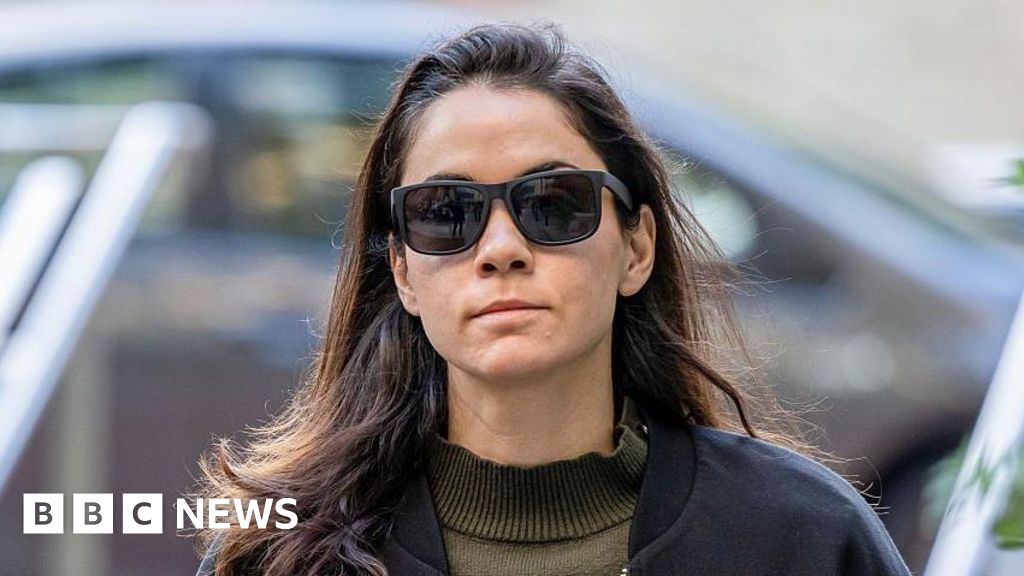
With years of history, including emails and text messages that have been made part of the case between Zilis, Altman, Brockman, and Musk, lawyers for OpenAI seized on several examples of discussions around changing the corporate structure of the AI company.




















































You must be logged in to post a comment Login