
Crypto World
US, Iran edge toward war-ending memo as crypto watches risk trade

Summary
- The US and Iran are close to agreeing a one-page memorandum of understanding to end the current war and set up detailed nuclear talks, according to Axios.
- The 14-clause draft would pause Iran’s uranium enrichment, ease sanctions, unlock billions in frozen funds, and gradually reopen the Strait of Hormuz to shipping.
- De-escalation around Iran has repeatedly moved Bitcoin, gold, and oil this year, with prior ceasefire headlines helping push BTC back toward the $78,000–$79,000 range.
The White House believes it is “getting close to an agreement with Iran on a one-page memorandum of understanding to end the war and set a framework for more detailed nuclear negotiations,” Axios reported on Wednesday, citing two US officials and two additional sources briefed on the talks. The US expects Tehran’s response on several key points within the next 48 hours, making this “the closest the parties have been to an agreement since the war began,” according to the report.
Memo could end war and reopen Strait of Hormuz
Under the draft, Iran would commit to a moratorium on uranium enrichment, while Washington would agree to lift some sanctions and release billions of dollars in frozen Iranian assets, Reuters summarized in its own write‑up of the Axios story. Both sides would also lift restrictions on transit through the Strait of Hormuz, the chokepoint that handles roughly 20% of global oil trade and has been partially shut by Iranian measures and a US naval blockade during the conflict.
The memorandum, described as a 14‑point, single‑page document, is being negotiated by Trump envoys Steve Witkoff and Jared Kushner with several Iranian officials, using a mix of direct and mediated channels. In its current form, the memo would formally declare an end to regional hostilities and trigger a 30‑day period of intensive talks on a fuller agreement covering strait access, nuclear limits, and sanctions relief, with venues under discussion including Islamabad and Geneva. During that 30‑day window, restrictions on shipping and the US blockade would be phased out; if the talks collapse, US forces would retain authority to restore the blockade or resume military action.
What a deal would mean for Bitcoin, gold, and risk assets
Markets have already shown how sensitive they are to each turn in the Iran story. When the war first escalated in late February, Bitcoin fell from about $66,000 toward $63,000 within hours, erasing over $120 billion in crypto market cap, while gold spiked toward fresh highs and oil briefly jumped more than 10%, as detailed in a Blockhead post‑mortem and a broader Economic Times review of safe‑haven flows.
As the conflict shifted from escalation to uneasy ceasefire, Bitcoin’s behavior flipped. When President Donald Trump signaled an initial pause in escalation and a conditional ceasefire tied to reopening the Strait of Hormuz, BTC jumped roughly 5% in a single session to above $72,700, according to Bitcoin Magazine. A later extension of the truce helped push Bitcoin toward $78,000, its highest level in more than ten weeks, Yahoo Finance reported.
Analysts quoted by MEXC and other outlets have framed this pattern as a classic “de‑risking, then re‑risking” sequence: in the initial shock, traders dump Bitcoin alongside equities and rotate into cash, gold, and oil; once a ceasefire or de‑escalation looks durable, capital rotates back into higher‑beta assets, with BTC often outperforming in the relief phase. A recent MEXC scenario analysis on the Iran‑Israel war laid out this exact path—oil easing back, inflation expectations softening, the Fed resuming cuts, and “Bitcoin breaking higher” under a ceasefire case.
If Washington and Tehran now ink even a preliminary memorandum that ends the war and reopens the Strait, traders will likely replay a similar macro script: crude prices and gold could cool from crisis highs, rate‑cut expectations might firm, and Bitcoin could benefit from both a weaker dollar and renewed risk appetite. Crypto’s response will not be linear—macro, ETF flows, and idiosyncratic factors all matter—but the market has already shown that for this conflict, peace headlines have tended to coincide with BTC reclaiming the high‑$70,000 to $79,000 zone, as noted by CryptoBriefing.
Over the medium term, a durable US‑Iran understanding that normalizes the Strait of Hormuz would remove one of the biggest geopolitical tail‑risks hanging over both traditional markets and crypto. That could shift the narrative away from “war hedge” trades in gold and oil back toward structural stories like Bitcoin ETF adoption, Ethereum’s roadmap, and the broader on‑chain capital rotation that crypto.news has been tracking in recent coverage, including this ETF inflow analysis, a safe‑haven comparison, and a macro‑driven market outlook.

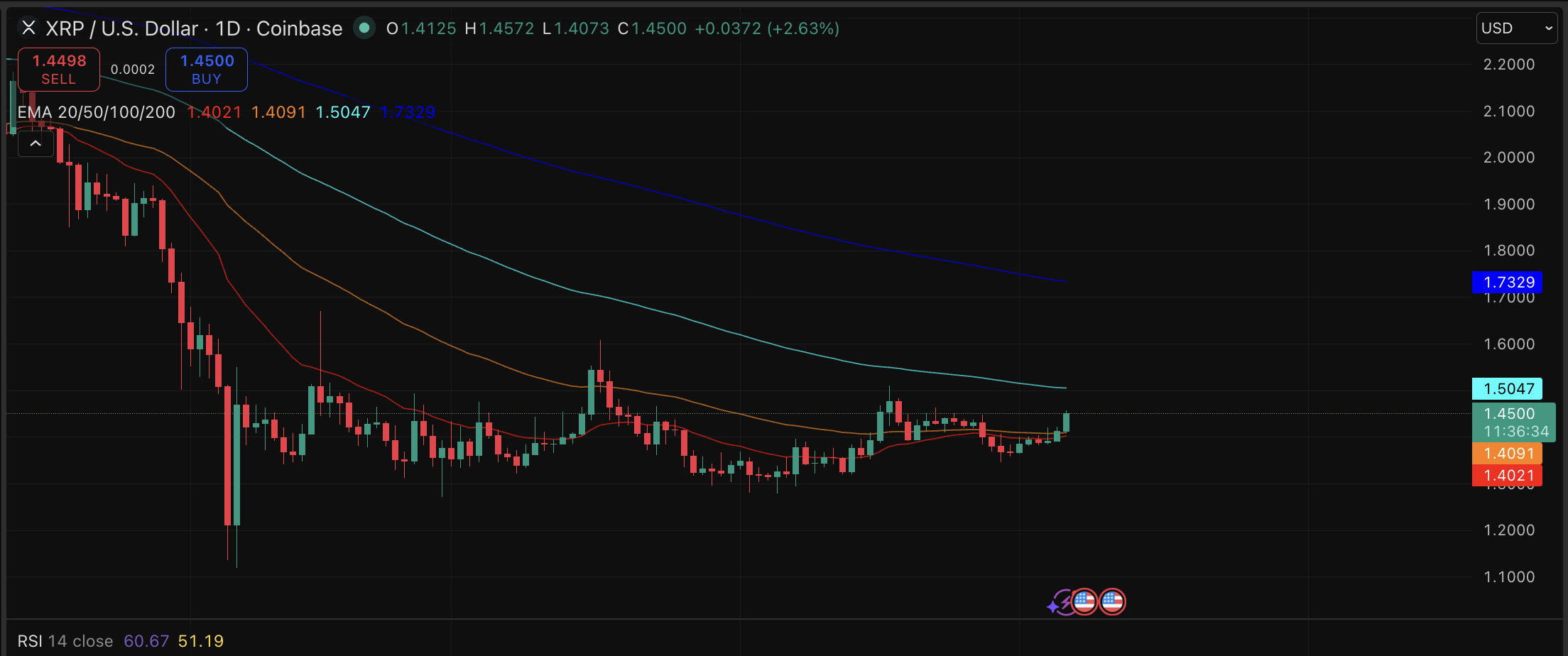
XRP price is coiling, and its prediction is getting more bullish than ever. The token has reclaimed $1.45 with a weekly gain of 4%, and the chart pattern appeared to like what happened when it surged 66% in under two weeks. A bull flag is forming.
The coin’s recent price action mirrors the bull flag structure during 2025, which was followed by controlled consolidation and another leg up. XRP climbed from $1.40 to $1.45 in days, as higher highs and higher lows remain intact above $1.40.
There is also a potential golden cross between the 20-day and 50-day moving averages, adding a second layer of bull confirmation.
Discover: The best crypto to diversify your portfolio with
XRP Price Prediction: $1.73 Target
XRP is holding a bullish structure that has surprised traders who expected a sharper pullback this cycle. The 20 and 50-day moving average break is confirmed, and repeated tests of the $1.45 resistance zone suggest selling pressure is gradually thinning.
Longer-term analyst targets are considerably more aggressive. Raoul Pal has cited a weekly bull flag structure with a breakout target of $5.50, representing a 138% move from recent consolidation levels. EGRAG CRYPTO on TradingView pegged a 67–70% probability of a breakout from the weekly flag, with an extended target of $18.
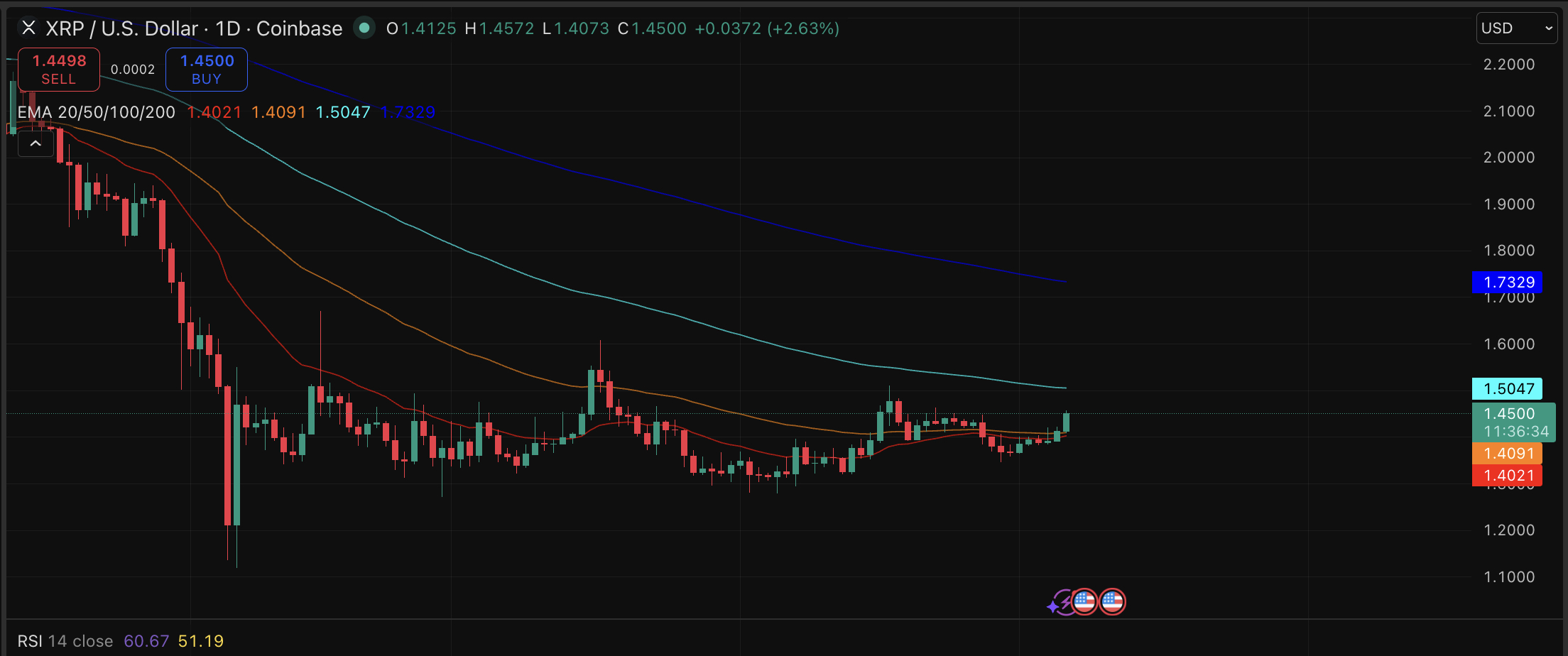
For XRP to run, it needs to hold its consolidation level above $1.42. As volume returns, and price advances toward $1.47–$1.50, a clean break above $1.50 opens a run toward the 200-day moving average at $1.73.
The 200-day moving average at $1.73 remains the line that separates a technical bounce from a genuine trend reversal.
Discover: The best pre-launch token sales
LiquidChain Targets Early-Mover Upside as XRP Coils
XRP’s setup illustrates the central tension of this market moment: technically promising, structurally constrained, with the biggest gains gated behind levels that have historically required sustained institutional volume to clear.
Those watching XRP above $1.45 are long a token with genuine momentum, but also one still trading beneath its 200-day MA and facing Bitcoin dominance of 60%. That’s a real ceiling, even if the bull flag eventually wins.
POV: You start a conversation about the LiquidChain L3. — LiquidChain (@getliquidchain) May 6, 2026
 ⟁https://t.co/vqvBcdSQYC pic.twitter.com/E6fYgZuw2j
Early-stage infrastructure plays offer a different risk profile entirely. LiquidChain is a Layer 3 infrastructure project building what it describes as a unified cross-chain liquidity layer, fusing Bitcoin, Ethereum, and Solana liquidity into a single execution environment.
The architecture is built around four pillars: a Unified Liquidity Layer, Single-Step Execution, Verifiable Settlement, and a Deploy-Once Architecture that lets developers access all three ecosystems without redeployment.
The presale for its native token is currently priced at $0.01456, with more than $700K raised to date, and an extra 1500% APY bonus for presale buyers.
The post XRP Price Prediction: Bull Flag Forming as Bull Run Style Rally Coils appeared first on Cryptonews.

TLDR:
- Colombia generates 75% of its electricity from renewables, giving it a strong edge in clean Bitcoin mining.
- President Petro proposed Barranquilla, Santa Marta, and Riohacha as prime Caribbean Bitcoin mining locations.
- The Wayúu community, Colombia’s largest Indigenous group, could become co-owners of the mining project.
- Petro’s term ends in August, leaving the next administration to decide the future of the mining proposal.
Colombia’s President Gustavo Petro eyes Bitcoin mining as a transformative opportunity for the country’s Caribbean coast.
He has identified cities like Barranquilla, Santa Marta, and Riohacha as prime locations for large-scale mining operations. The plan centers on converting the country’s surplus renewable energy into a steady revenue stream.
Petro has also proposed that the Wayúu community, Colombia’s largest Indigenous group, become co-owners of the project. With his term ending in August, time remains short to move the plan forward.
Petro Sees Renewable Energy as the Backbone of His Mining Vision
Colombia generates around 75% of its electricity from renewable sources, according to a World Bank report from April 2024.
That output is more than twice the global average, putting the country in a strong position. Petro wants to use that surplus power to draw foreign investment into the Caribbean region. Bitcoin mining, in his view, offers a practical way to turn unused electricity into consistent income.
La Guajira, a wind-rich province on the Caribbean coast, sits at the center of this proposal. State-owned energy company Ecopetrol is currently building the Windpeshi wind project there.
The facility is expected to begin operations by 2028, adding significant clean energy capacity to the grid. That additional supply could make the region more competitive for large mining investors.
Petro shared his vision on X after Luxor Technology’s Alessandro Cecere posted about Paraguay’s mining growth. Cecere noted that Paraguay now holds 4.3% of the global Bitcoin hashrate.
The country reached that position by tapping hydroelectric power from the Itaipu Dam. Responding to that data, Petro said the Caribbean coast holds similar potential, calling it “an immense boost to the development of the Caribbean.”
Petro also addressed environmental concerns directly in his X post. He warned that “if virtual currencies are based on fossil energy, global warming explodes and climate collapse ensues.”
His Caribbean coast proposal deliberately relies on clean energy to avoid those outcomes. The approach ties economic growth to environmental responsibility in a single strategy.
Political Clock and Global Competition Shape the Road Ahead
Petro’s presidential term ends in August, leaving him a narrow window to advance the initiative. Constitutional limits bar him from seeking re-election in the May 31 vote.
The next president will decide whether the Bitcoin mining proposal continues or stalls. So far, no leading candidate has offered a clear stance on the matter.
Prediction market Kalshi places Senator Iván Cepeda Castro and conservative lawyer Abelardo de la Espriella as the frontrunners in the upcoming election.
Neither has made notable public statements on Bitcoin or digital assets. Without clear support from the incoming administration, the plan faces an uncertain future. Investors and industry observers are monitoring the political landscape closely.
Meanwhile, global competition for Bitcoin mining activity continues to grow. The United States has put forward the “Mined in America Act” to expand domestic operations.
Russia now counts mining among its export revenue sources. Ethiopia is actively pursuing foreign capital to build out its own mining infrastructure.
Hashlabs managing partner Jaran Mellerud has noted that the industry “can have a sizable economic impact on emerging countries looking to convert otherwise unused electricity into cash flow.”
As American miners pivot toward AI and high-performance computing, opportunities are opening up for other nations.
Countries with lower electricity costs are also better placed to capture a larger share of global hashrate. Colombia’s renewable energy advantage could position it well in that expanding global race.

Crypto World
AI agents becoming more relevant than humans by 2035 has Big Tech ‘terrified’, says Hoskinson


AI agents will become more relevant than humans on the internet within the next decade, a shift already already forcing Google, Facebook and Amazon to react, said Charles Hoskinson.
In his keynote at Consensus Miami 2026 on Wednesday, Hoskinson also said that “by 2035, the majority of searches, commerce and activity on the internet will be AI agents instead of people.”
He said the change threatens existing business models. “Amazon, Google, Facebook, they’re terrified of the agentic revolution,” Hoskinson said, adding that companies are investing heavily because “all of their business models are going to be disrupted.”
AI Agents do not click ads or have brand preferences, Hoskinson explained, saying this “threatens the advertising-driven models of platforms like Google, Amazon and Facebook.”
“Why do you think Google is interested in x402?” he asked his audience of the Coinbase-backed protocol that enables AI agents and applications to make direct, programmatic payments over the internet using stablecoins and crypto rails.
Hoskinson noted this shift will change how crypto is used, adding that artificial intelligence (AI) will increasingly handle tasks such as due diligence, transaction execution and interaction with decentralized finance.
Hoskinson AI agent forecast echoes that of Coinbase CEO Brian Armstrong, who said “very soon there are going to be more AI agents than humans making transactions” and Binance Founder Changpeng Zhao, who predicted they “will make one million times more payments than humans.”
On the flipside, Hoskinson said AI agents are the “single best thing to ever happen to cryptocurrencies” because it simplifies user experience.
The Cardano founder warned crypto users against relying on intermediaries rather than maintaining direct control of their assets, which is the principle, he said, crypto was built on.
“You have to own your data. You have to own your identity. You have to own your money,” he said, adding that users are “outsourcing that to custodial wallets,” “permissioned networks,” and “third parties that they come to regret trusting when they get their account shut down.”
He also pointed to fragmentation across blockchain ecosystems as a barrier to progress, saying it has slowed down development. “There’s been 11 million tokens issued over the years. We have enough of them,” Hoskinson said. “What I want is cooperation. What I want is the mission to be achieved.”
User experience remains a key issue limiting user adoption, said Hoskinson, who described the current crypto onboarding processes as complex and prone to error. “That is the user experience in 2026,” he said. “Is this like a product you want to use?”
He said technologies such as account abstraction and chain abstraction could simplify how users interact with crypto systems, while maintaining control over assets and identity.
Hoskinson highlighted changing attitudes among financial institutions, noting that JPMorgan has moved from restricting crypto-related activity to developing blockchain-based products. “Back when we started JPMorgan was turning people’s bank accounts off and now they have a blockchain product,” he said.
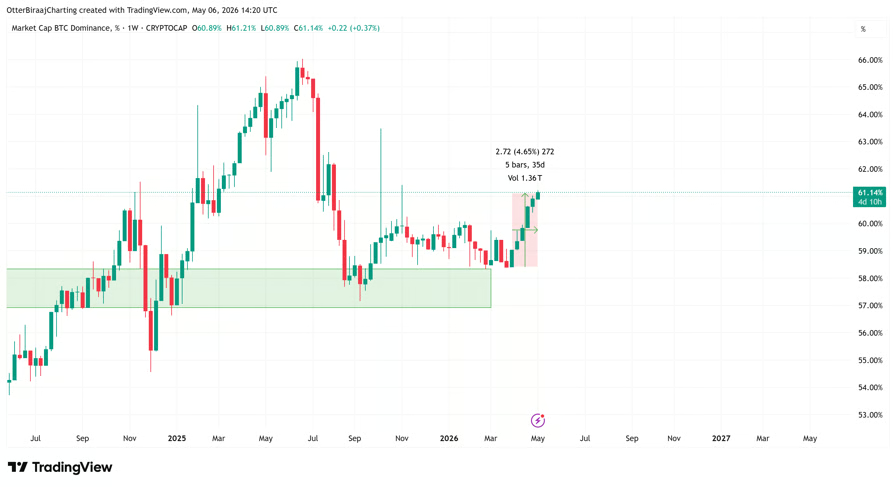
Bitcoin dominance climbed to 61% on Wednesday, its highest level since November 2025. The metric has risen from 58.44% at the start of April, proving that the bullish trend continues to favor BTC over the wider crypto market.
In the last two months, altcoin volumes on Binance also increased by 49%, while 12.6% of altcoins on Binance reclaimed their 200-day simple moving average (SMA).
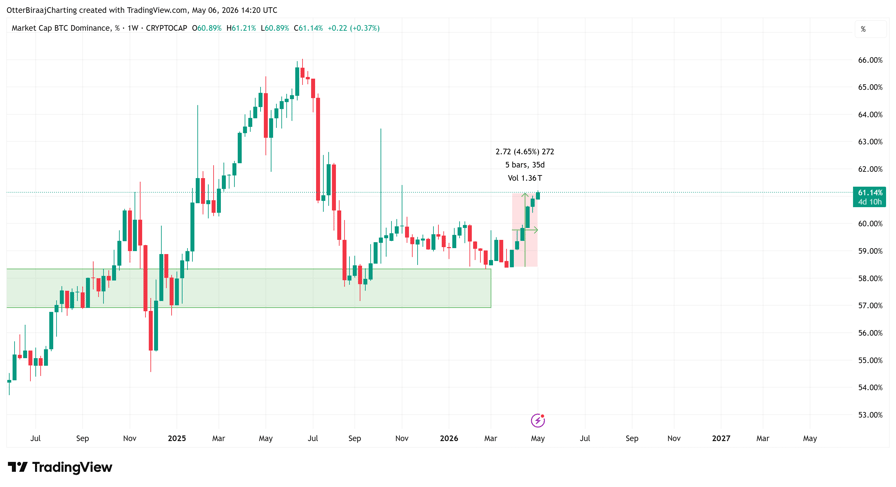
Bitcoin dominance, one-week chart. Source: Cointelegraph/TradingView
Altcoins show early signs of recovery
Crypto analyst Darkfost said Bitcoin has gained 36% since its Feb. 6 lows at $60,000, helping push its dominance to 61.3%.
While altcoins spent much of that period under pressure, TOTAL3, which tracks the crypto market cap excluding Bitcoin and Ether, rose by 17% to a two-month high of $765 billion. The recovery pace of altcoins lagged behind BTC, but several indicators have started to improve.
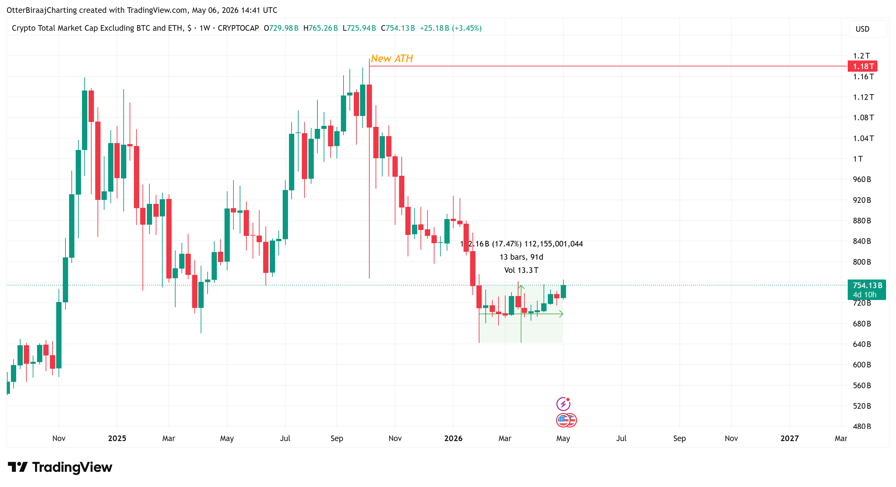
TOTAL3, one-week chart. Source: Cointelegraph/TradingView
Data from CryptoQuant showed that trading activity in the altcoin market was slowly increasing. Their volume share on Binance climbed to 49% on Wednesday, up from 31% in March, when measured against the combined BTC and ETH futures trading volumes. The rise points to growing participation outside of Bitcoin and Ether after several months of capital concentration in the two largest crypto assets.
Darkfost added that the shift still looks moderate and sits far from the aggressive rotation phases seen during the previous altcoin rally in 2024.
.png?prefix=media%2Fcontent)
Altcoin dominance by volume. Source: CryptoQuant
Related: Zcash price may hit $800 as $2.7B hedge fund reveals ‘significant position’ in ZEC
Exchange volume trends point to a rotation
Market analyst CW8900 pointed to the rising activity on centralized exchanges (CEX) as another sign of improving participation beyond Bitcoin. According to the analyst, altcoin trading volume, excluding the five largest cryptocurrencies, has increased steadily over the past few weeks.
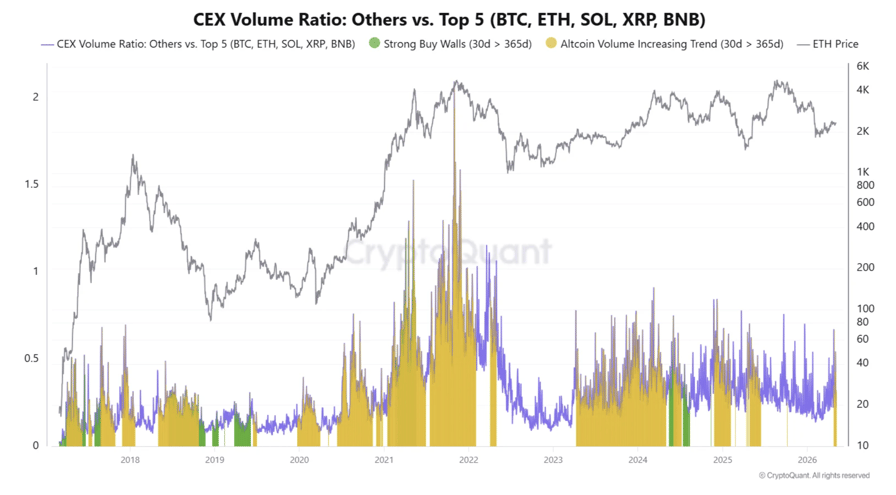
CEX volume ratio vs Top 5 crypto. Source: CryptoQuant
The 90-day AltSeason Index also climbed to 28.6, its fastest recovery in months. The index tracks whether a majority of altcoins outperform Bitcoin over a set period. Readings above 75 are associated with stronger altcoin cycles. However, CW8900 added,
“The indicator also shows that there was no real AltSeason in this cycle. The period when the AltSeason Index reached its highest point was early 2024, and even that value was relatively low compared to previous AltSeasons.”
CryptoQuant data also showed improvements across the altcoin market after months of heavy underperformance against Bitcoin. The average altcoin now trades 23.47% below its 200-day simple moving average, rising from 44.4% earlier in the cycle. Similar readings previously appeared near the end of late-stage bear markets in 2022.
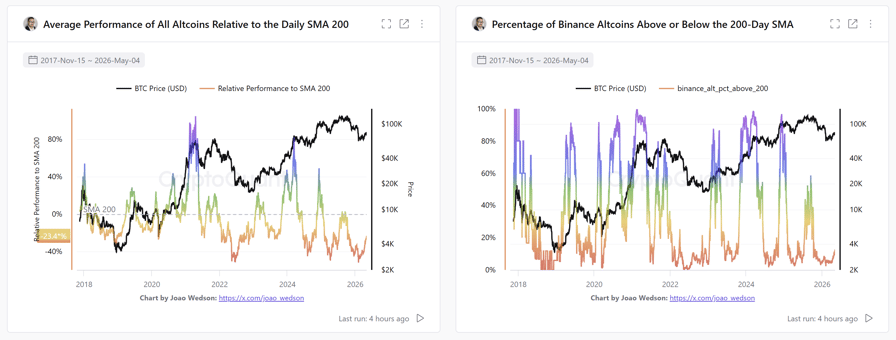
Altcoin performance, on average, relative to the 200-day SMA. Source: CryptoQuant
Related: Crypto Fear and Greed Index turns neutral for first time since January: Is $100K BTC next?
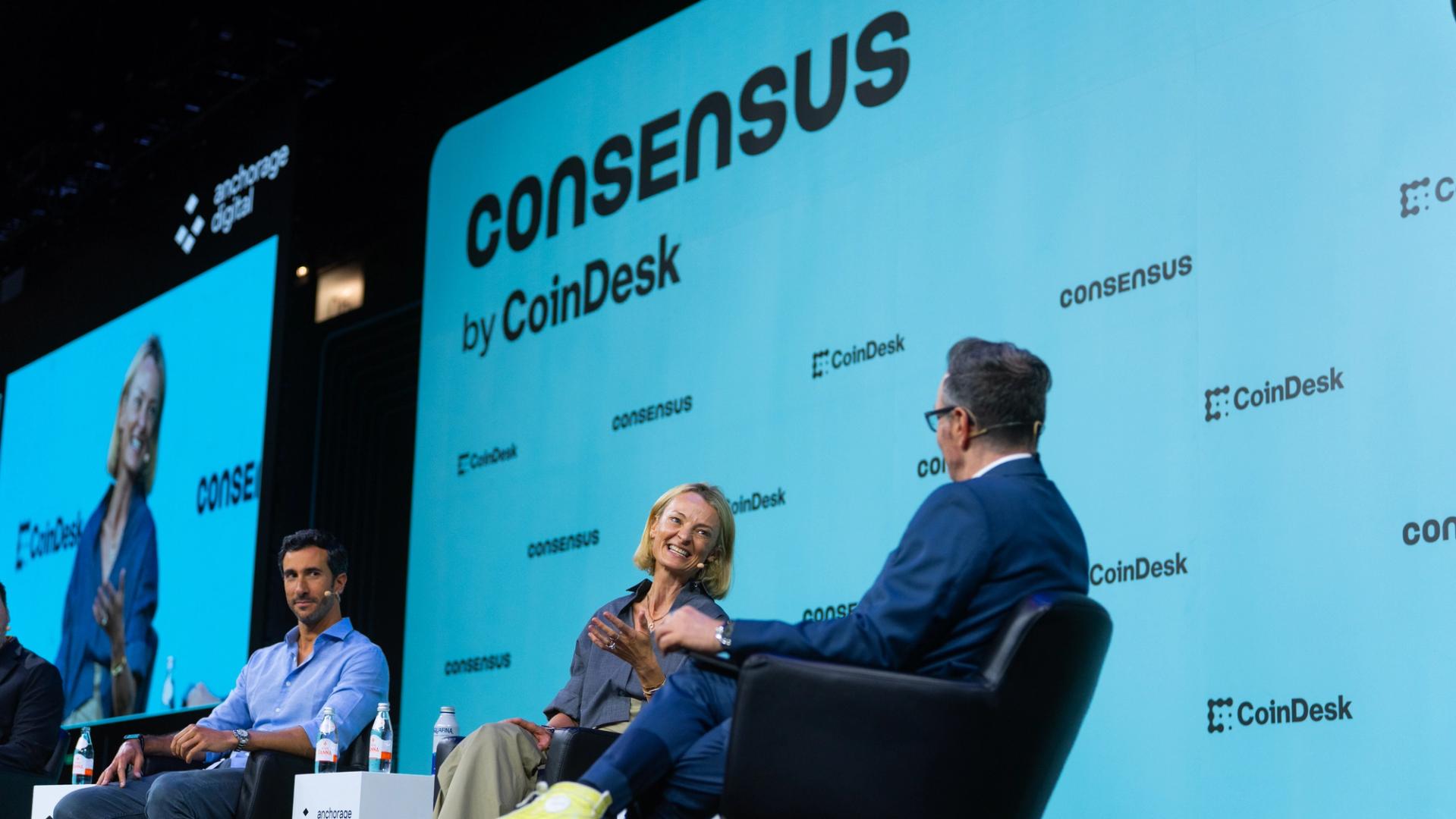
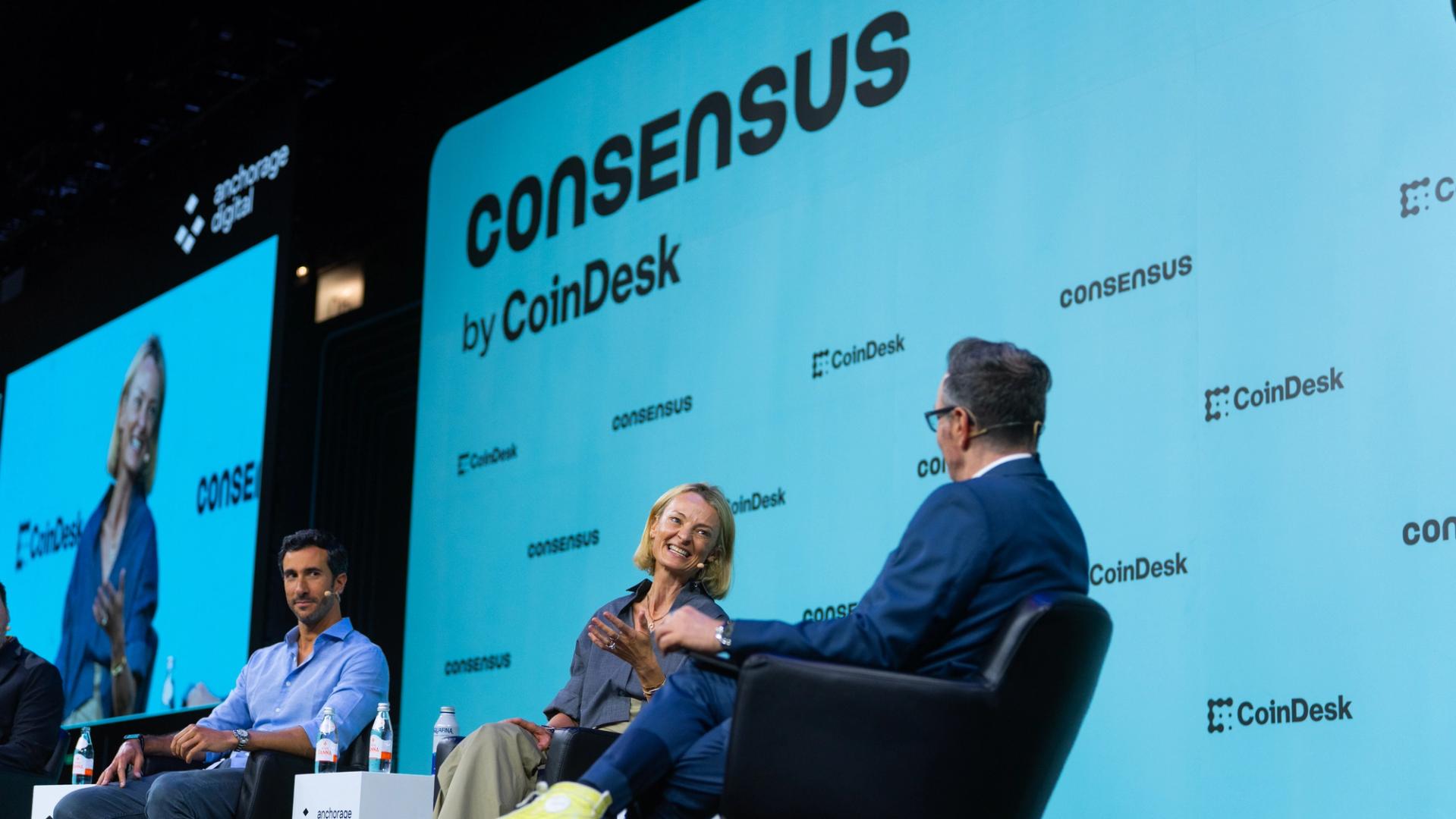
What was once viewed as a speculative fringe movement is rapidly becoming part of the world’s financial plumbing, according to executives from Binance, Revolut and Circle (CRCL) speaking at Consensus Miami on Wednesday.
“We were in the Prohibition era,” said Rachel Conlan, chief marketing officer at Binance. “Now we are in the infrastructure phase.”
Conlan said crypto is evolving beyond trading into functional everyday use cases and is “on route to becoming the fabric of everyday society.”
That shift is increasingly visible in consumer finance. Mazen ElJundi, global business head of investments at Revolut, said crypto’s narrative has moved from speculation toward “real-life utility and scaling.”
Revolut, which operates in more than 40 countries and serves over 75 million customers, now integrates crypto into a broader suite of banking services including remittances and stablecoin usage. “Crypto is about banking without borders,” he said.
At Circle, SVP of marketing Tim Queenan said institutions are increasingly exploring how to move core financial infrastructure onchain. “The infrastructure should be boring,” he said. “What you build on top of it is what’s interesting.” Queenan pointed to stablecoins becoming so embedded in payments that many users no longer even think of themselves as crypto users.
The panelists said institutional momentum, from exchange traded fund (ETF) approvals to major asset managers putting money onchain, is reinforcing retail adoption globally.
But challenges remain. Conlan said the industry still needs to reduce friction and make onboarding easier.
Read more: Crypto ETFs go mainstream as traditional finance locks in


NYSE parent ICE and Securitize warned at Consensus Miami 2026 that offshore synthetic tokenized stocks are misleading retail investors and creating serious risks for the broader market.
Summary
- Executives from ICE, OKX, and Securitize said at Consensus Miami that synthetic tokenized stocks often do not represent underlying equity and use company names without issuer approval.
- Securitize CEO Carlos Domingo said some stocks have five different tokenized versions on the market, none of which represent actual equity.
- NYSE, owned by ICE, is building a regulated tokenized equity platform starting with pre-funded tokens trading against stablecoins.
NYSE executives and partners raised the alarm at Consensus Miami 2026 on Wednesday over a wave of offshore synthetic tokenized stocks they said are creating market risks and misleading retail investors.
Michael Blaugrund of ICE, the NYSE’s parent company, and Securitize CEO Carlos Domingo both warned that products operating outside regulated frameworks are exploiting the tokenization trend at retail investors’ expense.
“For some stocks there’s like five different tokenized versions,” Domingo said at the panel. “None of them actually represent equity on Coinbase,” using the exchange as a concrete example of how public company names are being used without issuer approval by offshore token products that offer only synthetic price exposure.
Blaugrund said NYSE’s own approach takes the opposite path. The exchange’s first tokenized equity product will start with pre-funded tokens trading against stablecoins.
That model is “not the sexiest way” to build a market, Blaugrund acknowledged, but gives issuers, investors, and regulators a structure they can evaluate before more complex features like leverage or self-custody are introduced.
The warning lands as the tokenized equity market grows rapidly alongside legitimate players. As crypto.news reported, Coinbase CEO Brian Armstrong has pointed to tokenized stocks as a way to expand international access, enable fractional ownership, and allow real-time settlement. But a parallel offshore market of synthetic wrappers, which confer no voting rights, dividends, or ownership, is undercutting trust in the category.
For NYSE, the Consensus panel was a public signal that regulated tokenized equities and unregulated synthetic tokens are not the same product.
TLDR
- Nigel Farage said he had no obligation to declare the $6.7 million personal gift from Christopher Harborne.
- He stated that the £5 million payment was unconditional and not linked to political activity.
- Conservative officials referred the matter to Parliamentary Standards Commissioner Daniel Greenberg for review.
- Christopher Harborne holds a 12% stake in Tether and has donated £12 million to Reform UK.
- Prime Minister Keir Starmer announced a moratorium on cryptocurrency donations to UK political parties.
Reform UK leader Nigel Farage rejected calls to declare a $6.7 million personal gift from crypto investor Christopher Harborne. He said the £5 million payment carried no political conditions and required no disclosure. Meanwhile, opposition parties asked the Parliamentary Standards Commissioner to review the matter.
Nigel Farage Defends $6.7M Gift From Tether Stakeholder
Nigel Farage said he had “no obligation” to declare the $6.7 million gift from Christopher Harborne. He told broadcasters that the payment was “an unconditional, non-political, personal gift.” He added, “Believe you me, we’ve looked at this from every legal angle.” He said the law did not require disclosure of such gifts.
Farage linked the payment to past threats against him, including a firebomb attack on his home. He said the funds would help “ensure I can be safe for the rest of my life.” He confirmed he would not refer himself to Parliamentary Standards Commissioner Daniel Greenberg. He argued there was “no case to answer” under current rules.
Conservative officials referred the issue to Daniel Greenberg for independent review. They asked him to examine whether any part of the £5 million supported political activity. Labour chair Anna Turley said Farage “appears to have broken the rules again.” Reform UK stated the gift arrived before Farage planned to stand for Parliament.
Reports revealed the payment occurred in June 2024, months before Farage announced his Clacton candidacy. The transaction did not appear in disclosures under UK campaign finance laws. Reform UK maintained that timing placed the gift outside reporting requirements. The party denied any breach of election law.
Crypto Donations Face Scrutiny After Rycroft Review
Christopher Harborne resides in Thailand and holds a 12% stake in stablecoin issuer Tether. He has donated £12 million to Reform UK through separate contributions. His £9 million donation last year became the largest single political gift from a living individual. He confirmed the $6.7 million payment to Farage was “unconditional and irrevocable.”
Harborne told the Telegraph he expected nothing in return except Farage’s safety. He said he believed he influenced the government’s decision to cap overseas donations. He stated he did not believe the government had “a right to stop me.” He did not rule out returning to the UK to bypass donation limits.
Prime Minister Keir Starmer announced an immediate moratorium on cryptocurrency donations to political parties. The government triggered the move after an independent review led by Philip Rycroft. The ban applies to all crypto donations received from today. Parties must return any crypto within 30 days.
Philip Rycroft warned that hostile actors could exploit crypto assets to channel foreign funds. He said the risk was “unacceptable” and required urgent action. He described the moratorium as an “interlude” rather than a permanent ban. He clarified that donors could still convert crypto into fiat and donate through banks.
TLDR
- Morgan Stanley has launched a spot cryptocurrency trading pilot on its E*Trade retail brokerage platform.
- The bank is charging clients 50 basis points on the dollar value of each crypto transaction.
- The pilot is currently live and Morgan Stanley plans to extend access to all 8.6 million E*Trade clients later this year.
- Jed Finn said the initiative is part of a broader strategy and described it as disintermediating the disintermediators.
- Bloomberg reported that the new fee is lower than Charles Schwab’s 75-basis-point fee for similar services.
Morgan Stanley has launched spot cryptocurrency trading on its ETrade retail brokerage platform, according to Bloomberg. The bank charges 50 basis points per transaction and has started a live pilot. It plans to extend access to all 8.6 million ETrade clients later this year.
Morgan Stanley Expands Crypto Access Through E*Trade Pilot
Morgan Stanley rolled out spot cryptocurrency trading for select E*Trade clients as part of a pilot program. The bank charges a 50-basis-point fee on each crypto transaction. Bloomberg reported that the pilot is active and broader access will follow this year.
The bank manages the sixth-largest U.S. assets by assets under management. Jed Finn, head of wealth management, outlined the broader strategy behind the move.
He said, “This is much bigger than trading crypto at a cheaper rate,” and called it “disintermediating the disintermediators.”
Bloomberg senior ETF analyst Eric Balchunas compared the new fee with competitors. He said Charles Schwab charges 75 basis points for similar services. He added that Schwab “likely won’t let this stand,” in a post on X.
Balchunas also pointed to lower-cost alternatives in the market. He said Bitcoin ETFs can trade at around 2 basis points.
He also wrote, “I still think ETFs are the way bigger cash magnet at least for now.”
Bitcoin Initiatives and Stablecoin Fund Broaden Digital Asset Push
Morgan Stanley had largely stayed away from crypto until October. At that time, it said it would cap crypto allocations at up to 4% in aggressive portfolios. That move aligned the bank with asset managers such as BlackRock and Fidelity.
Weeks before the E*Trade pilot, the bank launched a spot bitcoin exchange-traded fund called MSBT. The fund gathered $103 million in net inflows within its first six trading days. It has since accumulated more than $205 million in assets under management, according to The Block.
Bloomberg also reported further digital asset plans. Morgan Stanley plans to let clients convert cryptocurrency into shares of exchange-traded products without selling holdings. The bank also intends to enable tokenized equities trading for institutional clients in the second half of the year.
Meanwhile, the investment unit launched a stablecoin reserves fund last month. The fund follows GENIUS Act requirements and maintains a stable $1 net asset value. It invests in cash and U.S. Treasury instruments with maturities of 93 days or less.
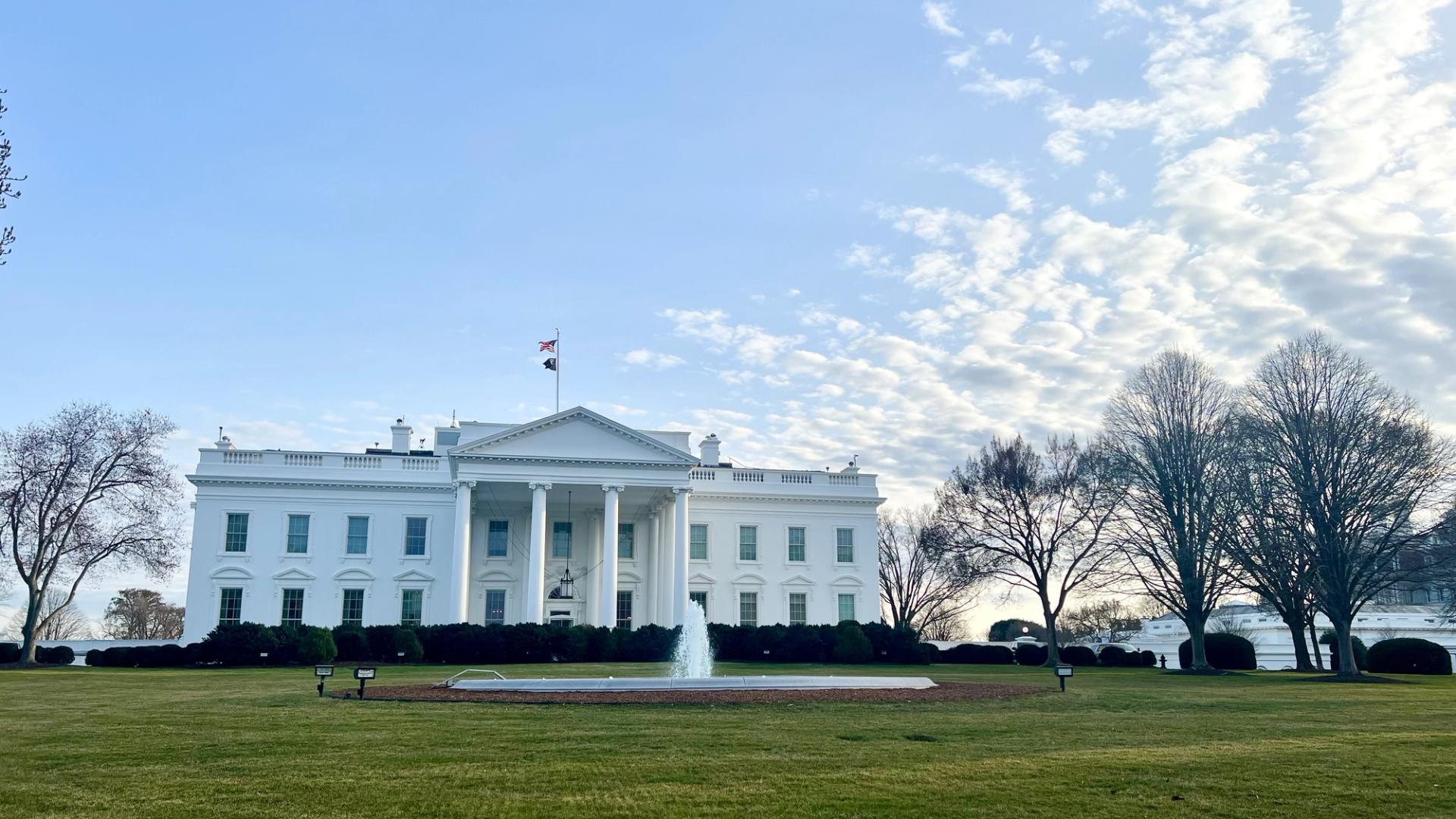
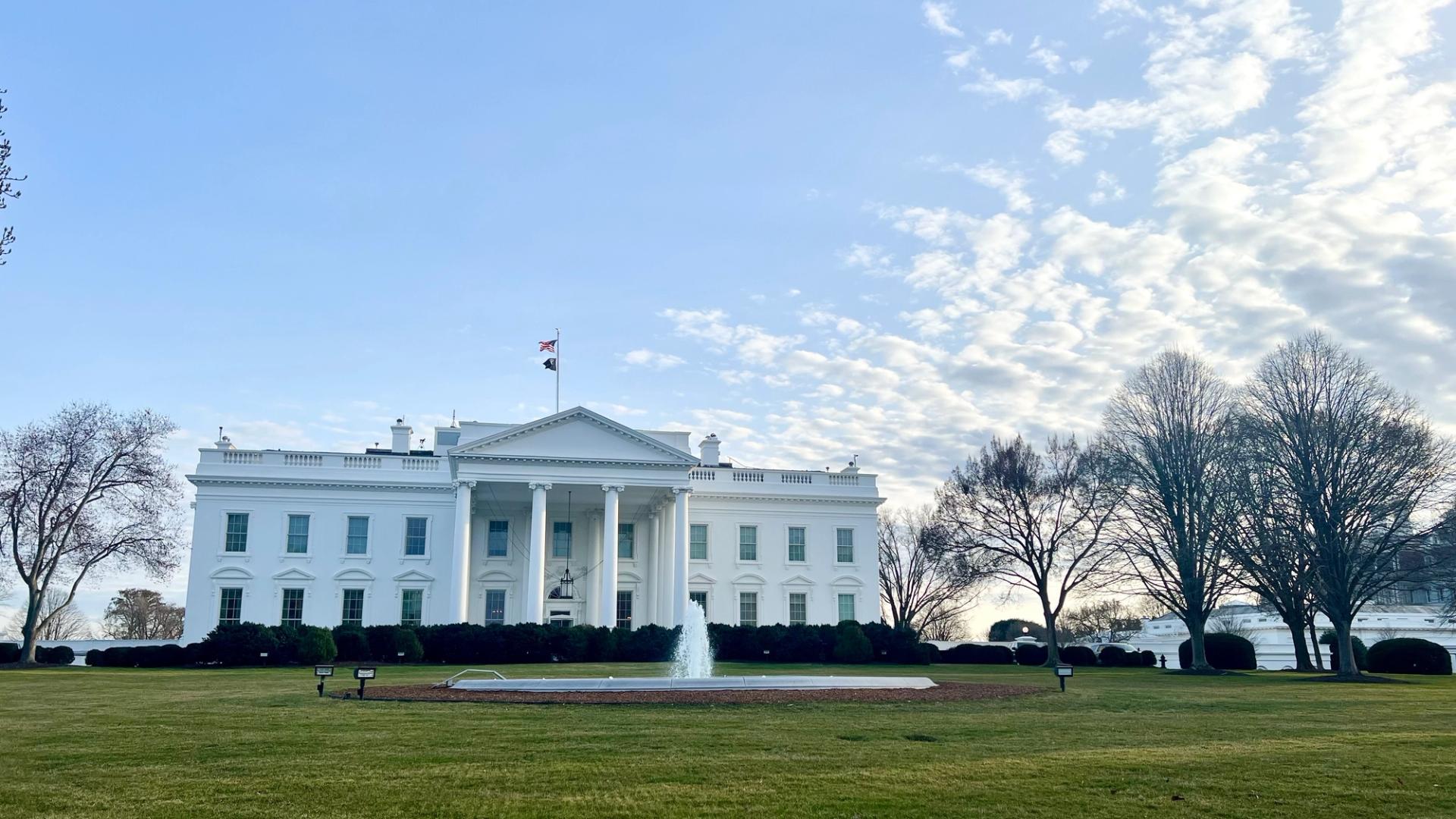
An announcement about the long-anticipated U.S. Strategic Bitcoin Reserve (SBR) is coming “in the next few weeks,” Patrick Witt, executive director of the President’s Council of Advisors for Digital Assets, told CoinDesk’s Consensus Miami conference on Wednesday.
The federal effort to inventory, centralize and secure U.S.-held bitcoin and other digital assets has been running in the background for months, Witt said. Following President Donald Trump’s executive order calling for bitcoin and other crypto assets to be set aside in long-term holdings, the White House halted what Witt characterized as “fire sale” liquidations under the previous administration and started auditing what crypto each agency was holding.
“We’ve heard stories and confirmed some of them of cold wallets that were being stored in drawers of desks in various agencies,” he said.
Witt cited a recent exploit involving assets held by the U.S. Marshals Service as a motivating proof point for centralization. Bloomberg reported in January that the Marshals Service was investigating a possible hack of U.S. government digital-asset accounts, after on-chain investigator ZachXBT claimed a hacker stole more than $60 million in late 2025, including funds from government seizure wallets.
“It’s a case in point for why it was so necessary that the president established the SBR, and that he instructed the agencies to take these assets very seriously and properly safeguard them,” Witt said. “Custody is unique for digital assets.”
Witt declined to disclose how much bitcoin or other crypto the federal government currently holds.
“Number one is we want to get our own house in order. We want to properly safeguard, custody these assets before we discuss any details around it,” he said. He suggested the upcoming announcement would address some of the open questions on size and structure, but said he did not want to “front run any of the other principals involved.”
He also clarified that the reserve will not absorb every newly seized asset automatically. Crypto seized in active legal proceedings sits in pending status until forfeiture is finalized, he said, with assets potentially returned to victims through restitution before being moved to the bitcoin reserve or the separate stockpile anticipated for other crypto assets.
On the legal underpinnings, Witt said much of the staff work has gone into general-counsel-level questions about which authorities allow agencies to hold the assets, for how long and whether they are subject to congressional clawback.
“This really hadn’t been explored until the president signed the executive order,” he said.
Codification will need to follow through Congress, Witt said, citing Sen. Cynthia Lummis’s BITCOIN Act in the Senate and Rep. Nick Begich’s American Reserves Modernization Act, a rebranded update of the same bill in the U.S. House of Representatives.
“It always needs to be followed up with proper legislation,” Witt said.
The likely need for a legislative underpinning to the formation of the bitcoin reserve has been a major constraint in this process. It’s unclear when Congress will find the bandwidth and drive to push through a reserve bill.


The Trump administration has held internal discussions about allowing wealthy donors to contribute company shares to Trump Accounts. The federal child investment program would give those donors significant tax breaks in return, Forbes reported on May 6.
The proposal would expand the program beyond cash contributions. Donors could give appreciated stock, avoid capital gains tax, and claim full charitable deductions at market value.
A New Pathway for Wealthy Donors
Trump Accounts went live this year under the One Big Beautiful Bill Act. Each US child born between 2025 and 2028 receives a $1,000 Treasury seed deposit. Parents can add up to $5,000 a year in post-tax dollars.
Funds are invested in diversified US equity index funds and are unlocked partially at age 18. Cash contributions open officially on July 4, 2026. The discussion names Brad Gerstner of Altimeter Capital as the lead advocate.
Why the Tax Math Matters
The proposed structure mirrors existing tax rules for charitable stock gifts. A wealthy donor would avoid capital gains tax on accumulated appreciation. The same donor would also claim a deduction worth the share’s current market price.
That double benefit could attract billions from founders sitting on highly appreciated equity. Cash donations carry no comparable advantage.
Billions Already Pledged, Critics Push Back
Private capital is already flowing in. Michael and Susan Dell pledged $6.25 billion in December. Their gift will seed $250 deposits for roughly 25 million children in lower-income ZIP codes.
Ray Dalio, BlackRock, Uber, Robinhood, and Charles Schwab have committed state-level or employer-matched contributions.
Allowing stock donations could route appreciated founder wealth into the program.
The NYU Tax Law Center calls the plan an expansion of philanthropy deductions already used by ultra-wealthy donors.
Any expansion would require new legislation. Neither the Treasury nor the White House has publicly confirmed the talks.
Congress now stands as the gatekeeper. Lawmakers will decide whether founder stock can flow into the accounts of millions of American children.
The post Billionaires May Get Tax Break for Donating Stock to Trump Accounts appeared first on BeInCrypto.

Cash Becomes an Axolotl in Minecraft

Champions League: Why Paris St-Germain pose ultimate test for Arsenal in Budapest final

Aeva Q1 2026 slides: 90% revenue surge across diversified markets

Manchester United reach agreement with Casemiro over contract clause amid transfer speculation

US brings back mandatory military draft registration

Steven Gerrard disagrees with Gary Neville over ‘shock’ Chelsea and Arsenal claim | Football


-

 NewsBeat3 days ago
Channel 5 – All Creatures Great and Small series 7 new post
-

 Entertainment7 days ago
Insider Claims Reason Behind Key & Peele Split
-
 Tech5 days ago
Trump’s 25% EU auto tariff breaches Turnberry Agreement that also covers semiconductors and digital trade
-
 Sports5 days ago
Paul Scholes issues Marcus Rashford reality check as agreement emerges over Man United star
-

 Entertainment5 days ago
Met Gala 2026 Rumored Guest List Is Turning Heads
-

 Business6 days ago
Strait of Hormuz Blockade Persists Amid US-Iran Standoff, Sending Oil Prices Soaring
-

 Entertainment7 days ago
Celebrities Who Are Attending the 2026 Met Gala Event
-
Entertainment5 days ago
New on Prime Video in May 2026 — Full List of Movies and Shows
-

 Sports5 days ago
Cavaliers vs. Raptors Game 6 live score, updates, highlights from 2026 NBA playoffs first-round series
-
 Sports5 days ago
David Benavidez responds to team Canelo saying the fight will never happen
-
Business7 days ago
Strait of Hormuz Remains Heavily Restricted on April 29 Amid Iran Conflict
-

 Entertainment5 days ago
Kylie Jenner Hit With Second Lawsuit From Ex-Housekeeper
-
 Sports5 days ago
IPL 2026: ‘Love you darling’- Hardik Pandya’s reaction to MS Dhoni steals the show |Watch | Cricket News
-

 Entertainment5 days ago
Young and the Restless Next Week: Cane Arrested & Matt’s Deadly New Scheme!
-

 Sports7 days ago
Saudi Arabia set to withdraw LIV Golf funding after 2026 season, per reports
-

 Tech7 days ago
Mark Zuckerberg Says Meta Is Working On AI Agents For Personal And Business Use
-

 Tech6 days ago
Meta ends Sama contract after Kenyan workers report seeing intimate footage from Ray-Ban smart glasses users
-

 Sports5 days ago
Plane crash in Wimberley, Texas kills 5 pickleball players at tournament
-

 Sports7 days ago
Stalemate in Madrid as resilient Arsenal Blunt Atletico Madrid in semi-final clash – Sports
-

 Sports5 days ago
LeBron James adds to his legacy as Lakers eliminate dysfunctional Rockets
You must be logged in to post a comment Login