
Business
Bajaj Auto announces Rs 5,633 crore share buyback via tender route, sets price at Rs 12,000 apiece


The company’s Board of Directors also approved a dividend of Rs 150 per share for the financial year ended March 31, 2026 and fixed Friday, May 29 as the record date to determine shareholders’ eligibility.
It will spend up to Rs 9,825 crore on the dividend and share buyback, a company filing to the exchanges said.
The announcements were made along with the company’s Q4 earnings where Bajaj Auto reported a standalone net profit at Rs 2,746 crore versus Rs 2,049 crore in the year ago period, implying a 34% YoY increase. The company’s revenue from operations in Q4FY26 rose 32% to Rs 16,006 crore versus Rs 12,148 crore posted in the corresponding quarter of the previous financial year.
The maker of Pulsar and Dominar bikes reported a 10% sequential growth in its bottom line compared to Rs 2,503 crore in Q3FY25 while the topline grew 5% on a quarter-on-quarter basis versus Rs 15,220 crore in the October-December quarter of FY26.

The Earnings Before Interest, Taxes, Depreciation and Amortisation (EBITDA) stood at Rs 3,323 crore in Q4FY26,up 36% versus Rs 2,451 crore in the year ago period. Meanwhile, EBITDA margin stood at 20.8%, up 60 bps versus 20.2% in the year ago period.
Bajaj Auto’s double-digit PAT and revenue growth rode on a 24% YoY rise in its volumes, which stood at 13.71 lakh units compared to 11.02 lakh units in the corresponding quarter of the last financial year. It was up 2% QoQ. In this domestic volumes grew 24% YoY to over 7.60 lakh units while exports witnessed a 25% rise to 6.10 lakh units.On a consolidated basis FY26 PAT jumped 47% YoY to Rs 10,744 crore while revenue recorded a 23% uptick at Rs 62,905 crore.
(Disclaimer: The recommendations, suggestions, views, and opinions given by the experts are their own. These do not represent the views of The Economic Times.)


The company’s cost structure has been spiralling upwards, affected by input cost inflation and higher labour, logistics, and advertising expenses amid intense competition. The advertising and promotion spending rose 22% in FY26 compared with 18% increase in FY25. Though the company raised product prices recently, it may not be able to fully cover the incremental costs. In addition, promotional costs are expected to rise further in the current fiscal year given the company’s push on launching new models. The company, however, believes the cost pressure is transitory. It has iterated the medium-term guidance of 14-16% for operating margin before depreciation and amortisation (Ebitda margin). It reported a 30 basis point expansion in the margin at 14.7% margin for FY26.
 Agencies
It’s a Long road: Input cost inflation and higher labour, logistics, and ad expenses are denting margins, but co believes pressure will be transitory
The company’s electric vehicles (EV) division, despite its growing market share and long-term relevance, continues to operate at a lower margin than the core internal combustion engine (ICE) operations. Hero Moto is in the investment phase for EVs with heavy spending on product development, network expansion and capacity build up. On a positive side, its EV losses are gradually narrowing on a per-unit basis as volumes scale up, costs moderate and benefits from incentive schemes increase, though the segment is still some distance away from turning profitable.
On demand front, Hero Moto enters FY27 on a firm footing, extending the recovery seen in the second half of the previous year. It expects the two-wheeler industry to grow at high single-digit in FY27, with scooters growing faster than motorcycles, aided by structural trends such as urbanisation, e-commerce and the gig economy. Hero MotoCorp expects to outperform the industry, supported by a strong pipeline of launches across scooters, premium motorcycles and EVs.
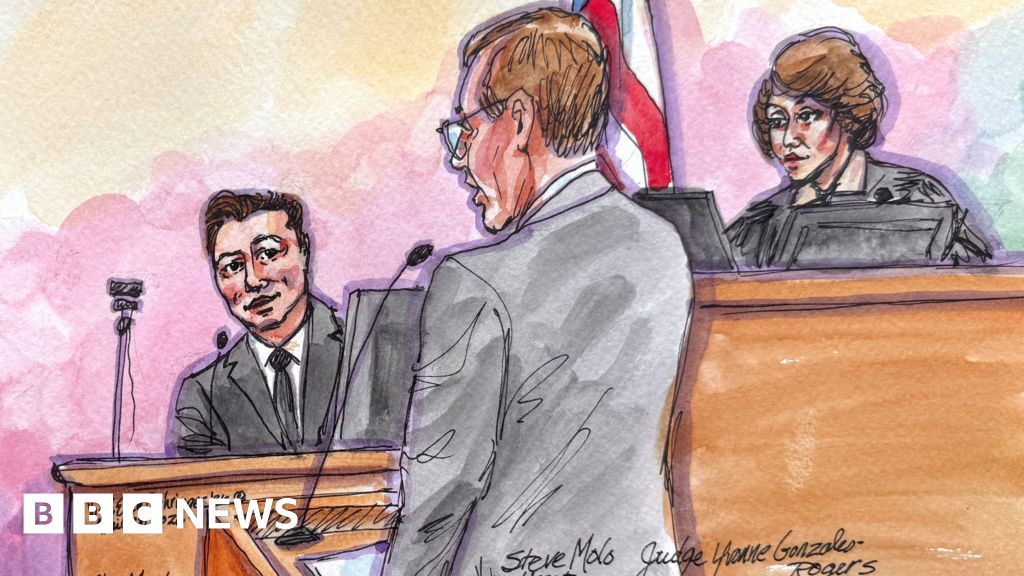
The feud has fuelled a costly showdown between two tech titans.
 Agencies
 Easing Volatility
This “has been hanging like a sword over markets,” said Iyer.
The NSE Nifty 50 advanced 1.2%, or 298.15 points, to close at 24,330.95, while the S&P BSE Sensex climbed 1.2%, or 940.73 points, to 77,958.52.
Brent crude futures dropped to around $100.7 a barrel, after holding above the $100 level for nearly two weeks, with the US and Iran said to be closing in on an agreement to end the war in the Gulf. US President Donald Trump, however, warned that if Iran doesn’t agree to US demands, bombing will resume at a “higher level and intensity.”
The fall in oil prices boosted global sentiment.
South Korea surged 6.5%, while China and Hong Kong rose 1.2% each. Taiwan added 0.9% and Japan gained 0.4%.
Iyer said oil prices remain pivotal and a sustained move below the $100-a-barrel mark could extend the rally, while failure to do so may keep markets range-bound.
Back home, volatility eased. The India VIX dropped 6.9% to 16.7, closing below 17 for the first time since the onset of the conflict, signalling lower near-term risk expectations. The rebound on Wednesday helped shrug off the recent lethargy.
“Nifty was struggling to sustain at higher levels in the past eight sessions and the rebound in Wednesday’s session pushed it above a cluster of averages at 24,000 levels, and the index surpassed 24,300 levels,” said Nilesh Jain, vice president, head of technical and derivative research, Centrum Finverse.
Jain expects the index to move toward 24,500-24,600 levels in the near term, supported by follow-through buying, with dips likely to be bought.


OECD sees fragile New Zealand recovery; warns on energy, ageing and capital-market gaps
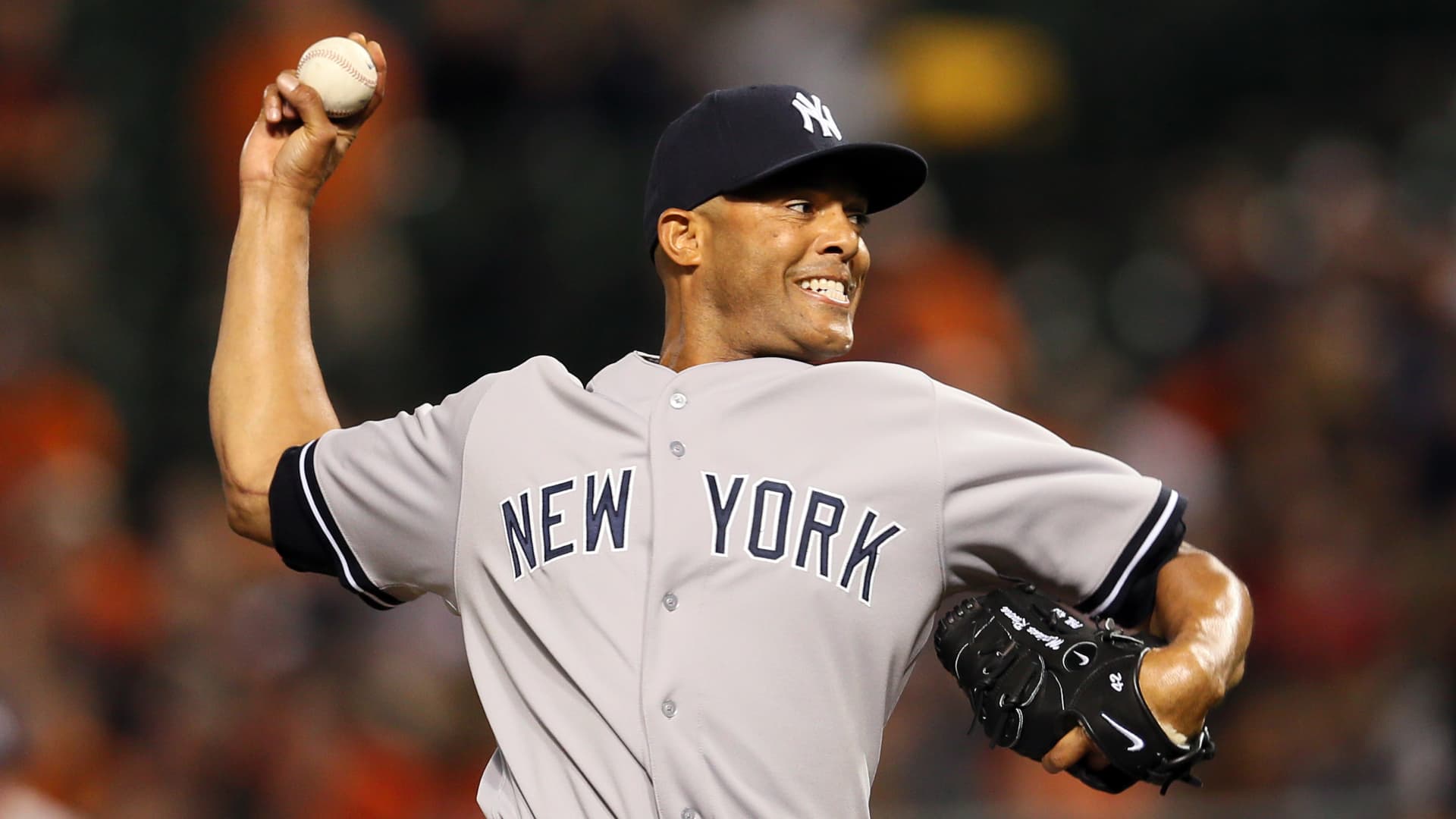

Former New York Yankee and Hall of Fame closer Mariano Rivera said he believes Major League Baseball should adopt a salary cap in its next collective bargaining agreement.
“Yes, there should be one, because it has to be fair to everybody,” Rivera said during a Latinos in Sports event in Miami on Friday. “It makes the competition better.”
The MLB collective bargaining agreement, or CBA, expires at the end of this season, setting up negotiations between the league and its players. Talks are expected to begin in the coming weeks.
It’s notable for a player — even a retired one, like Rivera — to publicly support a salary cap. Rivera, himself, made about $170 million over his 19-year career, according to Baseball-Reference.com.
Former New York Yankee closer Mariano Rivera.
Getty Images
MLB is the only major U.S. league without a salary cap. The delta between teams that spend the most and those that spend the least has grown in recent years as the New York Mets, Los Angeles Dodgers and the Yankees, among others, continue to expand payroll.
A record 11 teams opened the season with payrolls of at least $200 million, according to a USA Today analysis.
Rivera said any salary cap should include provisions that the teams that spend the least also invest in improving competition in some other way. MLB currently has a revenue sharing program that distributes local media money equally to all 30 teams.
“If I’m giving you money — from my pocket to you — to make the team better, I believe you should do that and not pocket it,” Rivera said.
Subscribe to the CNBC Sport podcast to listen to the full interview with Mariano Rivera. New episodes drop Thursday at 6 a.m. ET.
The 10 lowest-spending teams in MLB have increased their payrolls by just 1.7% annually on average since 2019, according to the Wall Street Journal. This has led many to believe that the fix for an uneven league isn’t a salary cap, but rather a salary floor that would force small-market teams to spend.
The MLB Players Association has long fought a cap in an effort to maximize player salaries, including during a 1994-95 strike.
But current MLB rules allow for massive variation in team spending. And there have been a number of studies supporting a correlation between spending and winning.
“We have a significant segment of our fans that have been vocal about the issue of competitive balance,” MLB commissioner Rob Manfred said earlier this year. “And in general, we try to pay attention to our fans.”
There have also been credible studies that say the competitive balance issues in MLB aren’t worse than in any other sport. In the past 10 MLB seasons, there have been seven different World Series winners, 13 different teams have reached the World Series and 18 teams have advanced to the semifinals. Those figures suggest a league that has better competitive balance than the NBA, NFL or NHL.

Operator
Ladies and gentlemen, thank you for joining us, and welcome to the DoorDash Q1 2026 Earnings Call. [Operator Instructions]
I will now hand the call over to Weston Twigg. Weston, please go ahead.
Weston Twigg
Vice President of Finance & Investor Relations
All right. Thank you, Elizabeth. Good afternoon, everyone, and thanks for joining us for our Q1 ’26 earnings call. I’m pleased to be joined today by Co-Founder, Chair, and CEO, Tony Xu; and CFO, Ravi Inukonda. We’ll be making forward-looking statements during today’s call, including, without limitation, our expectations for our business, financial position, operating performance, profitability, our guidance, strategies, capital allocation approach and the broader economic environment.
Forward-looking statements are subject to risks and uncertainties that could cause actual results to differ materially from those described. Many of these uncertainties are described in our SEC filings, including our most recent Form 10-K and 10-Q. You should not rely on our forward-looking statements as predictions of future events or performance. We disclaim any obligation to update any forward-looking statements, except as required by law.
During this call, we will discuss certain
From Tuesday’s life-time closing low of 95.28 to a dollar, the rupee advanced to 94.61/$ at close Wednesday, climbing to reflect the broader relief expected from lower automotive fuel prices in a country that is import-dependent for four-fifths of its energy needs.
To be sure, the rupee traded below 95/$ for the first half of the session, and later gained toward 94.60/$ after US President Donald Trump signalled a thaw in talks. The currency traded between 94.55/$ and 95.19/$ during the day.
“The rupee was near 95/$ for a long time before gaining. If the current stance on war were to persist and if there are no contradicting statements from Iran, we may see further gains towards 94/$,” said Anil Bhansali, head of treasury at Finrex Treasury Advisors.
The rupee logged its sharpest single-day gain since April 2, when regulatory measures by the central bank drove a rebound from record low levels, according to Reuters.
Bhansali expects the rupee to trade between the range of 94.25 and 95 on Thursday.
The level of 94.55/$ also triggered importer dollar demand, traders said.
Business
Many BOJ board members saw need to raise rates if Iran war prolongs energy shock, minutes show


Many BOJ board members saw need to raise rates if Iran war prolongs energy shock, minutes show
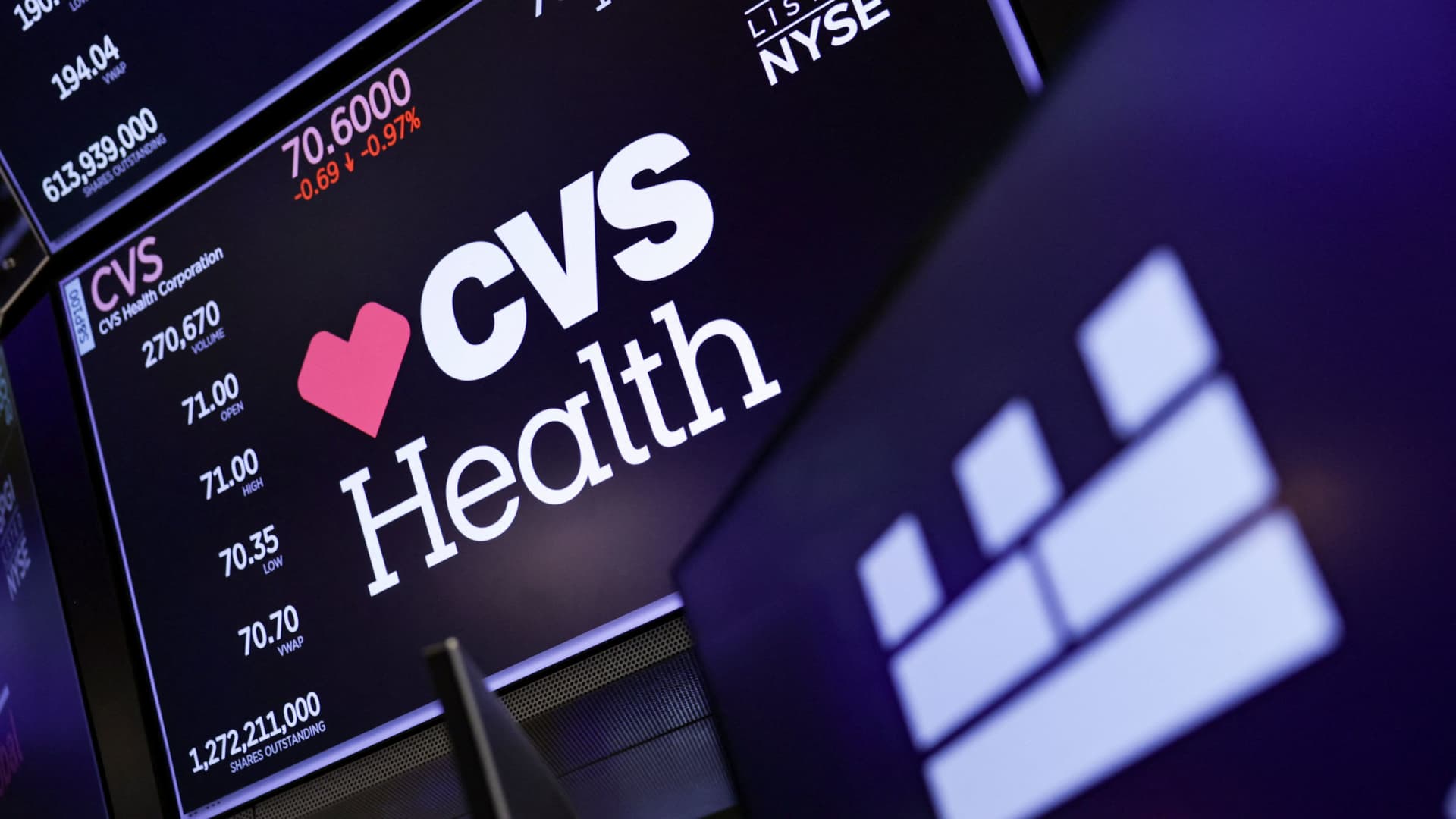
A screen displays the logo and trading information for CVS at the New York Stock Exchange, March 24, 2026.
Jeenah Moon | Reuters
CVS Health on Wednesday blew past first-quarter earnings and revenue estimates and raised its 2026 guidance, as its once-troubled insurance business showed improvement.
CVS, which operates the nation’s largest pharmacy chain, sees full-year profit coming in between $7.30 and $7.50 per share. That’s up from a previous guidance of $7 to $7.20 per share.
The company also expects revenue of at least $405 billion in 2026, up from its prior outlook of at least $400 billion.
The majority of that $5 billion increase is “reflective of the tail winds we’re seeing” for insurer Aetna, CVS CFO Brian Newman said in an interview with CNBC.
All of the healthcare giant’s business segments — insurance, its retail pharmacy and health services unit —surpassed Wall Street’s revenue expectations. But Aetna’s results are likely top of mind for investors, who have watched high medical costs batter major health insurers for the last two years.
The results indicated continued progress in CVS’ broader turnaround plan, which has involved cutting $2 billion in costs, closing underperforming stores, shuffling leadership and reducing costs within privately run Medicare Advantage plans.
“From an investor lens, we said let’s put out realistic, reasonable targets and then find pathways to outperform. And we did that throughout at the end of last year and the quarter,” Newman said. “So to beat and raise, which I think is probably the fourth or fifth consecutive, it feels like we’re delivering on that.”
“So confident in the year, but still taking a cautious or prudent view,” he added, noting that medical costs are still too high.
Shares of CVS rose more than 7% on Wednesday.
Here’s what CVS reported for the first quarter compared with what Wall Street was expecting, based on a survey of analysts by LSEG:
- Earnings per share: $2.57 adjusted vs. $2.20 expected
- Revenue: $100.43 billion vs. $95.09 billion expected
The company posted net income of $2.94 billion, or $2.30 per share, for the first quarter. That compares with net income of $1.78 billion, or $1.41 per share, for the same period a year ago.
Excluding certain items, such as restructuring charges and capital losses, adjusted earnings were $2.57 per share for the quarter.
CVS booked sales of $100.43 billion for the first quarter, up 6.2% from the same period a year ago, as all three of its business segments showed growth.
CVS’ report also adds to an overall solid first quarter for the broader health insurance sector, though the second quarter will prove even more crucial for those companies as they get a clearer read on medical costs.
Insurance unit shows improvement
The insurance business brought in $35.97 billion in revenue during the quarter, up around 3% from the first quarter of 2025. That came in higher than the $33.28 billion that analysts were expecting, according to StreetAccount.
Newman attributed the quarter’s performance to Aetna’s underlying strength, citing organizational changes to processes or technology that have enabled the company to “do things more efficiently.”
Aetna and other insurers have grappled with higher-than-expected medical costs over the past year as more Medicare Advantage patients return to hospitals for procedures they delayed during the pandemic. Medical costs remain high, but Aetna and other insurers appear to be becoming better equipped to manage the trend, as many cut membership and benefits for patients and exit unprofitable markets.
The insurance segment’s medical benefit ratio — a measure of total medical expenses paid relative to premiums collected — decreased from the prior year to 84.6% from 87.3%. A lower ratio typically indicates that a company collected more in premiums than it paid out in benefits, resulting in higher profitability.
Analysts expected a ratio of 86.3%, according to StreetAccount.
Newman said medical costs are not improving, but CVS has internal programs to “take cost out of the way we do work.” He noted that the company can better forecast medical cost trends, saying he is happy “we’re not getting a lot of surprises.”
But Newman said CVS now needs to focus on using the same tools to reduce medical costs.
In a release, CVS also said the year-over-year improvement in the unit was due to the lack of a so-called premium deficiency reserve, which was recorded in the same period in 2025. That refers to a liability that an insurer may need to cover if future premiums are not enough to pay for anticipated claims and expenses.
CVS’ pharmacy and consumer wellness division posted $31.99 billion in sales for the first quarter, relatively flat from the year-ago period. Analysts expected sales of $31.70 billion, StreetAccount estimates said.
That unit dispenses prescriptions in CVS’ more than 9,000 retail pharmacies and provides other services, such as vaccinations and diagnostic testing.
The company’s health services segment generated $48.24 billion in revenue for the quarter, up 11% from the same period a year earlier.
That unit includes the pharmacy benefits manager Caremark, which negotiates drug discounts with manufacturers on behalf of insurance plans, creates lists of medications, or formularies, that are covered by insurance, and reimburses pharmacies for prescriptions.
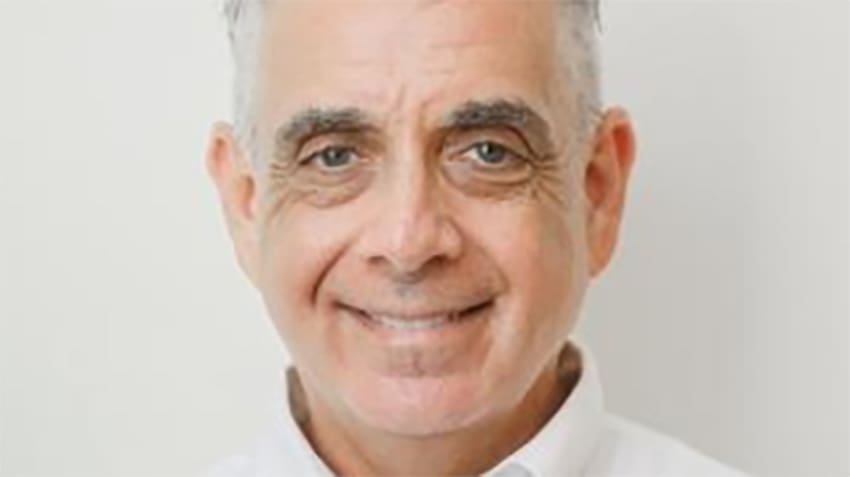
Why Rethinking Sales Helped Shape His Career
Most sales advice focuses on what to say. Abraham Pinchuck built his career by focusing on what not to say.
Instead of pushing products, he built a system around listening. Over time, that idea became the foundation of his work across multiple industries.
“Selling is a recipe for failure in sales,” he says. “If you focus on yourself, you lose. If you focus on the person in front of you, everything changes.”
From Brooklyn Beginnings to Business Foundations
grew up in Brooklyn, New York. His early years were shaped by sports, especially basketball. That competitive environment taught him discipline and consistency.
He later attended Bernard Baruch College, earning a degree in marketing and sales in 1991. Like many graduates, he entered the workforce with a traditional understanding of how sales worked.
That understanding would evolve quickly.
Real Estate: Early Lessons in Human Behavior
His first major step was in real estate. He worked on renovating properties and reselling them.
This wasn’t just about improving buildings. It was about understanding buyers.
What made someone choose one property over another? What details mattered most?
These questions helped him realize that decisions are driven more by personal priorities than by logic alone.
Manufacturing Experience and a Broader View of Business
Abraham later moved into food manufacturing. This chapter of his career lasted for many years and expanded his view of how businesses operate.
He learned how systems, processes, and efficiency impact results. Over time, he transitioned into consulting, helping manufacturers improve performance.
In that role, he saw a pattern.
Many businesses struggled not because they lacked effort, but because they focused on the wrong things.
A Shift Toward Coaching and Sales Development
Eventually, Abraham moved into the insurance space, where he now works as a self-employed consultant. He trains agents in Medicare Advantage (MAPD) and life insurance.
These are demanding fields. High rejection rates and complex products make success difficult.
But Abraham doesn’t teach traditional selling techniques.
“Learning to listen to people, ask good questions, and identify what is important to them—that’s what actually works,” he says.
His approach focuses on understanding before offering solutions.
The Mindset Change That Made the Difference
One of the most important lessons in Abraham’s career came from his own mistakes.
“Biggest obstacle was not realizing that in order to be successful I needed to focus on the people I’m helping, not me,” he says.
That realization changed how he approached every conversation.
Instead of thinking about outcomes, he focused on the process. Instead of trying to convince, he worked to understand.
This shift made his results more consistent over time.
How He Applies This Approach Today
Abraham’s work today centers on helping others adopt the same mindset.
He trains agents to slow down conversations, ask better questions, and pay attention to what clients actually care about.
“Being a great listener and having a genuine desire to help people,” he says, “that’s the difference.”
He also emphasizes long-term thinking. His personal benchmark is steady improvement, with a goal of increasing results by 20% each year.
This kind of growth, he believes, comes from habits—not shortcuts.
What Drives Results in a Competitive Industry
In a field where many rely on scripts and pressure tactics, Abraham focuses on relationships.
One of his main growth strategies is simple.
“Referrals,” he says.
When clients feel understood, they are more likely to trust—and more likely to recommend.
This creates a more stable and sustainable path for growth, especially in industries like insurance.
Influence, Learning, and Staying Grounded
Abraham credits part of his approach to the influence of Dale Carnegie, known for his work on communication and human connection.
But he also relies on his own experience.
“Look at my past success,” he says. “That helps me stay grounded.”
Reading is another key part of his routine. It helps him continue learning and refining his approach.
Life Outside of Work
Outside of business, Abraham focuses on staying active and balanced.
He enjoys hiking, bodybuilding, pickleball, and traveling. These activities support both physical and mental discipline.
They also reflect the same consistency he applies in his work.
A Practical Idea That Scales Across Industries
Abraham Pinchuck’s career has taken him through real estate, manufacturing, and insurance. Each industry is different, but one idea has remained constant.
Understand people first.
“Have a genuine desire to help people,” he says. “That’s what works.”
It’s a simple concept. But applied consistently, it has shaped his career—and the way he helps others build theirs.

Regulator to review claims management companies amid ‘poor practices’ concerns
Rising costs, EV push may pressure Hero MotoCorp margins despite strong Q4

AI in Healthcare? Pfizer, Anthropic, and Longevity Scientists Think It’s Critical

Manchester United reach agreement with Casemiro over contract clause amid transfer speculation

US brings back mandatory military draft registration

Steven Gerrard disagrees with Gary Neville over ‘shock’ Chelsea and Arsenal claim | Football


-

 NewsBeat3 days ago
Channel 5 – All Creatures Great and Small series 7 new post
-
 Entertainment7 days ago
Insider Claims Reason Behind Key & Peele Split
-
 Tech5 days ago
Trump’s 25% EU auto tariff breaches Turnberry Agreement that also covers semiconductors and digital trade
-
 Sports5 days ago
Paul Scholes issues Marcus Rashford reality check as agreement emerges over Man United star
-
 Entertainment5 days ago
Met Gala 2026 Rumored Guest List Is Turning Heads
-

 Business6 days ago
Strait of Hormuz Blockade Persists Amid US-Iran Standoff, Sending Oil Prices Soaring
-
Entertainment5 days ago
New on Prime Video in May 2026 — Full List of Movies and Shows
-

 Entertainment7 days ago
Celebrities Who Are Attending the 2026 Met Gala Event
-
 Sports5 days ago
Cavaliers vs. Raptors Game 6 live score, updates, highlights from 2026 NBA playoffs first-round series
-
 Sports5 days ago
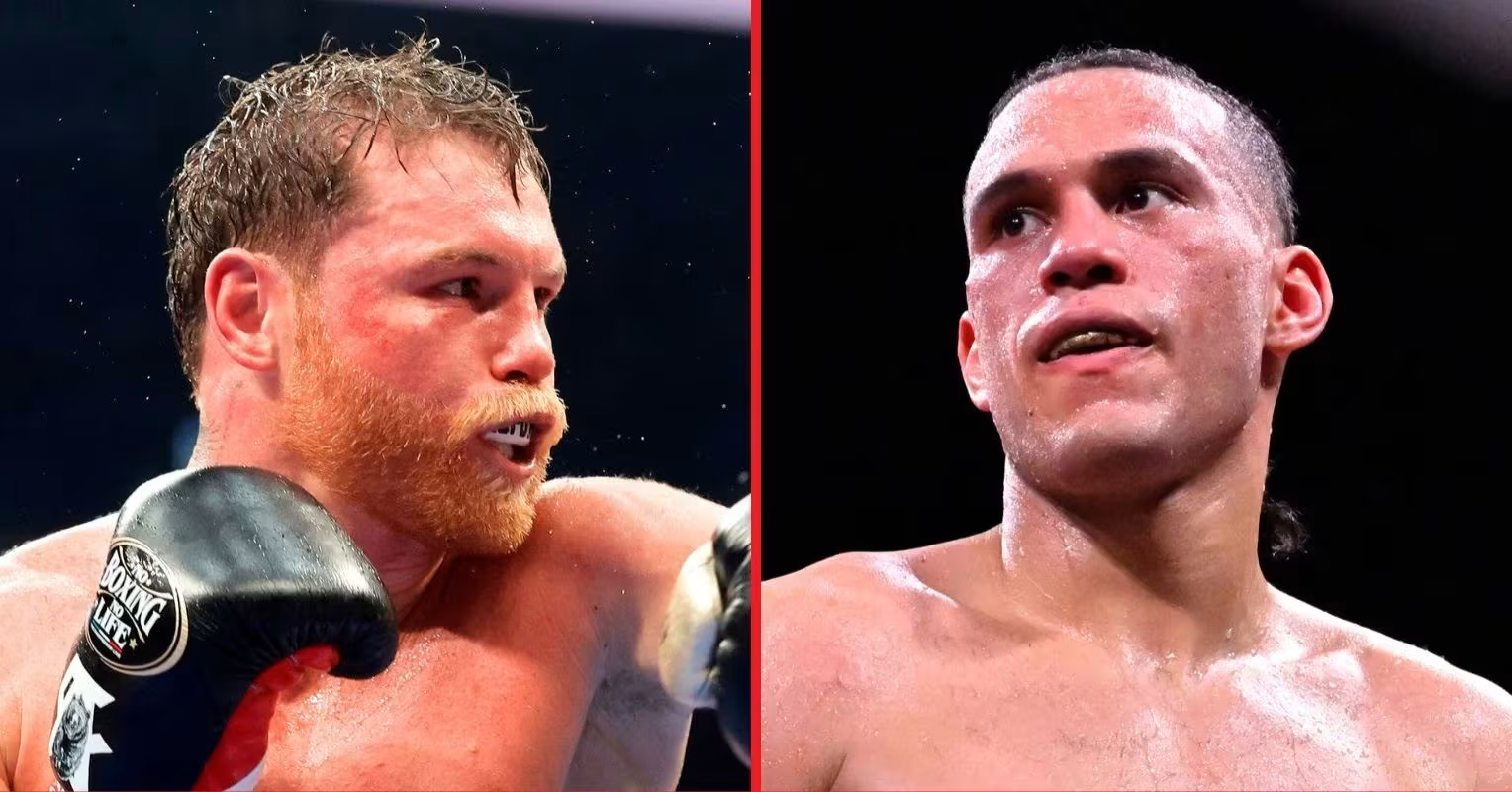
David Benavidez responds to team Canelo saying the fight will never happen
-

 Entertainment5 days ago
Kylie Jenner Hit With Second Lawsuit From Ex-Housekeeper
-
 Sports5 days ago
IPL 2026: ‘Love you darling’- Hardik Pandya’s reaction to MS Dhoni steals the show |Watch | Cricket News
-

 Entertainment5 days ago
Young and the Restless Next Week: Cane Arrested & Matt’s Deadly New Scheme!
-

 Sports7 days ago
Saudi Arabia set to withdraw LIV Golf funding after 2026 season, per reports
-

 Tech7 days ago
Mark Zuckerberg Says Meta Is Working On AI Agents For Personal And Business Use
-

 Tech6 days ago
Meta ends Sama contract after Kenyan workers report seeing intimate footage from Ray-Ban smart glasses users
-

 Sports7 days ago
Stalemate in Madrid as resilient Arsenal Blunt Atletico Madrid in semi-final clash – Sports
-

 Sports5 days ago
Plane crash in Wimberley, Texas kills 5 pickleball players at tournament
-
Entertainment4 days ago
New Netflix Movies in May 2026 — My Top 3 Picks to Stream
-
 Sports7 days ago
Manchester United 2025/26 squad review – keep, sell, loan, release
You must be logged in to post a comment Login