
Crypto World
White House targets July 4 for Clarity Act passage, says crypto adviser Patrick Witt

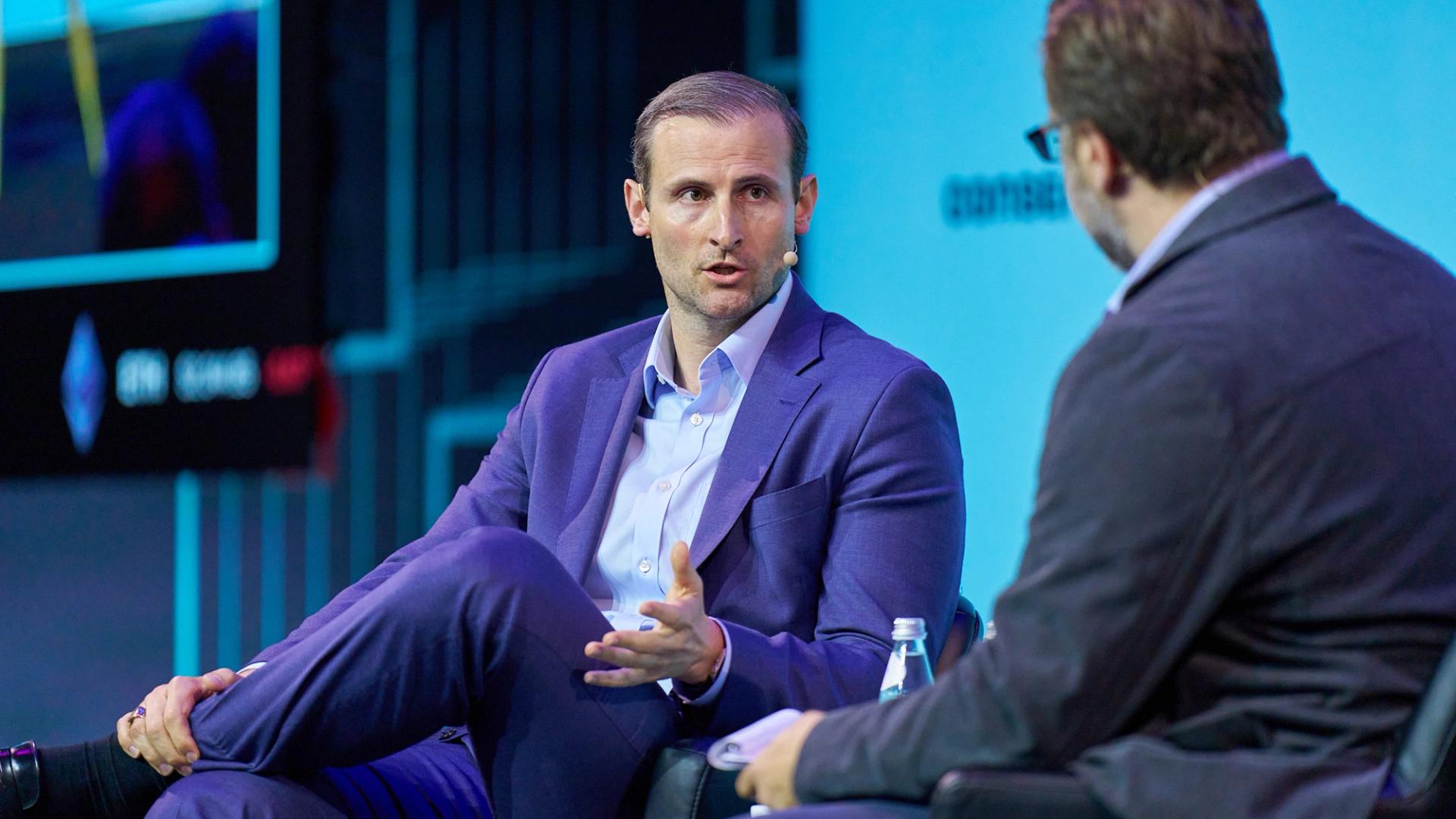
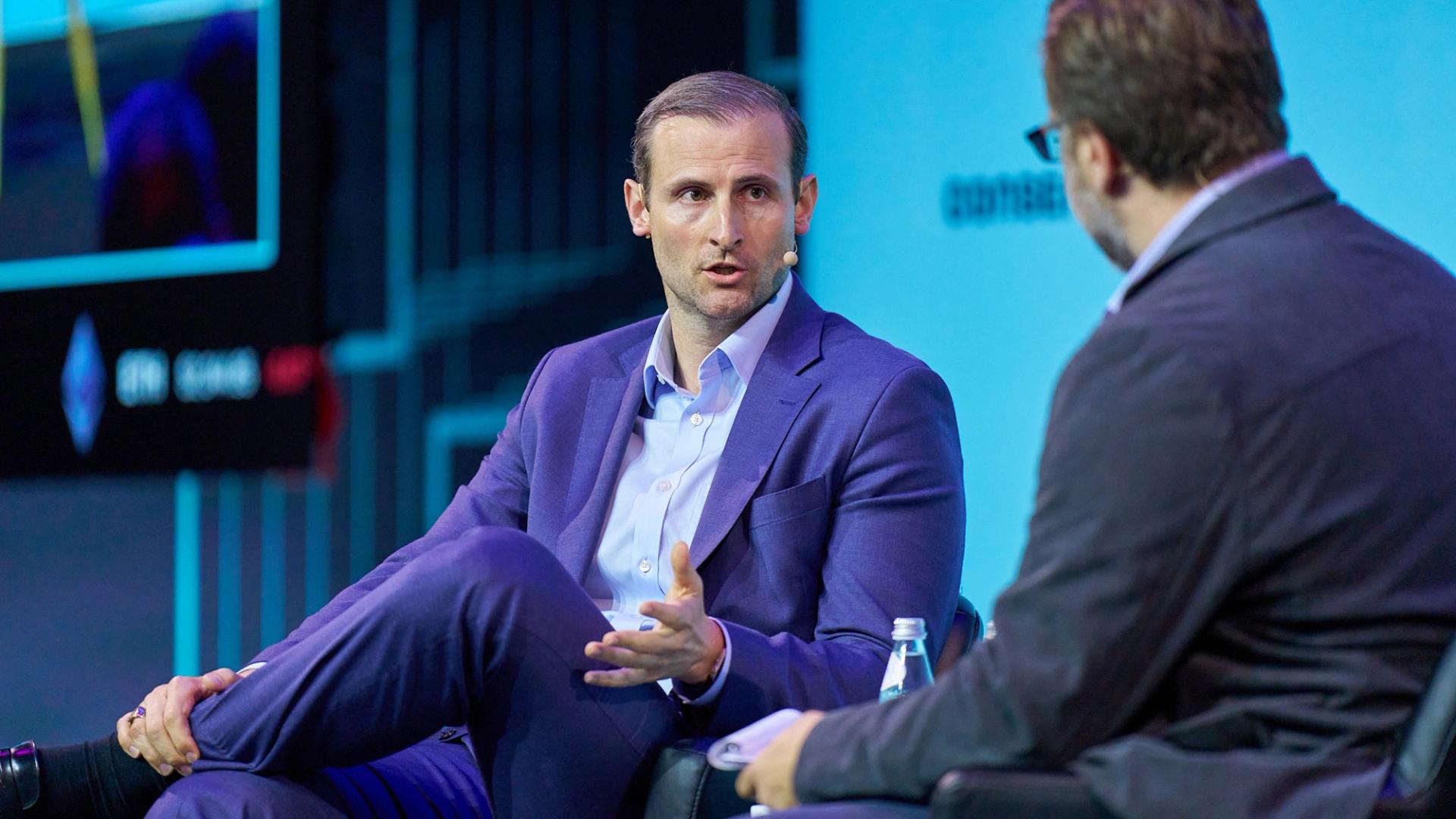
The White House is aiming for July 4 for Congress to pass the Digital Asset Market Clarity Act, Patrick Witt, executive director of the President’s Council of Advisors for Digital Assets, told CoinDesk’s Consensus Miami conference on Wednesday.
“We’re targeting July 4th. I think that would be a tremendous birthday present for America, celebrating our 250th,” Witt said. The mechanics, according to Witt, are: Senate Banking Committee markup this month, four working Senate weeks in June for floor passage and enough runway for a U.S. House of Representatives vote before the Independence Day deadline.
That timeline runs ahead of the prediction Sen. Kirsten Gillibrand shared on the same stage earlier in the day, when the New York Democrat predicted Clarity would reach the president’s desk by the first week of August.
“There’s not a lot of slack left in the rope right now,” Witt said. “But it is an achievable timeline.”
The path to markup opened when Sen. Thom Tillis (R-NC) and Sen. Angela Alsobrooks (D-MD) released a compromise on the bill’s stablecoin-yield provisions in early May, banning bank-deposit-equivalent yield on stablecoins while leaving room for rewards tied to spending. Witt said the White House convened banks and crypto firms to fashion the language, then handed it to the senators, who ran their own process and arrived at a text both sides found equally unsatisfying.
“Crypto is unhappy, banks are unhappy, but they’re both about equally unhappy,” Witt said. “And so we know that we got the right compromise.” Witt considered that the stablecoin-yield issue “is closed.”
The White House is also closing in on a deal on the conflict-of-interest provision that has divided Democrats and the administration. Witt said the negotiating posture is to accept rules that apply “across the board, from the president all the way down to the brand new intern on Capitol Hill,” but reject anything that singles out a particular office or officeholder. “We’re not going to allow targeting of anyone’s family, any one particular politician,” he said. “I’m optimistic that we’re going to be able to close that out.”
Speaking on what happens if Clarity slips past 2026, Witt said “If we’re not setting the standard, if we’re not writing the rules, then we are going to be a rule follower, and we’re going to be following somebody else’s rulebook on this. And God forbid it’s China that’s ultimately writing those rules.”
U.S. leadership in global capital markets, he added, is one of the things that “underwrite American hegemony.”
Witt also discussed the Guiding and Establishing National Innovation for U.S. Stablecoins (GENIUS) Act, the stablecoin-issuer law passed last year, where rulemaking by the Treasury Department, the Office of the Comptroller of the Currency, the Federal Deposit Insurance Corp. and other agencies is closing in on a one-year July deadline.
“These are complicated issues. They require following the Administrative Procedures Act, soliciting comments. And we received a flood of comments,” Witt said. The law, he added, exemplifies “the efficient frontier of regulation: just enough to allow an industry to flourish… but not so much that you overly burden an innovation into irrelevance.”

Bitcoin (BTC) is approaching its “most critical” resistance hurdle of the bear market, new BTC price analysis says.
Key points:
- Bitcoin has arguably its most important resistance battle at $84,000.
- A failure to reclaim a 200-day trend line opens up the road down to $50,000 lows, warns analysis.
- The bull market support band needs to hold in the event of a corrective phase.
Bitcoin faces battle to avoid “bear cycle continuation”
In an X post on Wednesday, crypto investment company TradingShot revealed the next key decision point for Bitcoin bulls.
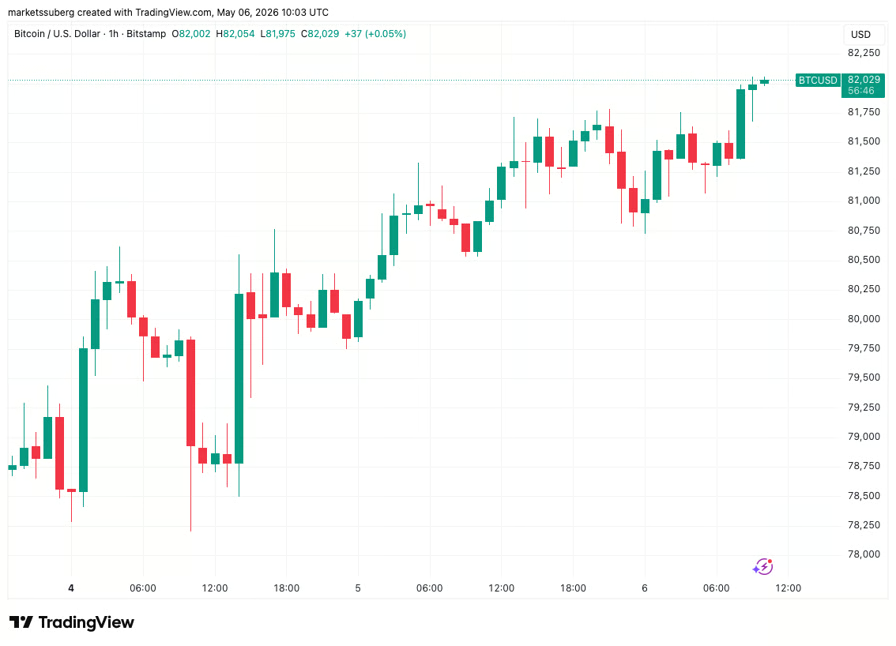
BTC price action continues to test $82,000, according to data from TradingView, but it is the area around $84,000 that will be essential to reclaim as support next.
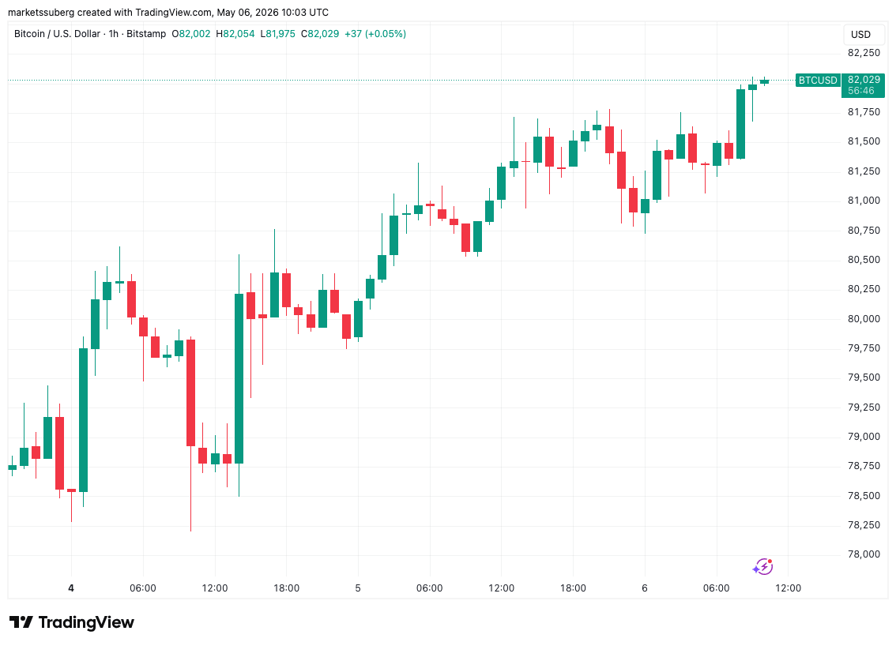
BTC/USD one-hour chart. Source: Cointelegraph/TradingView
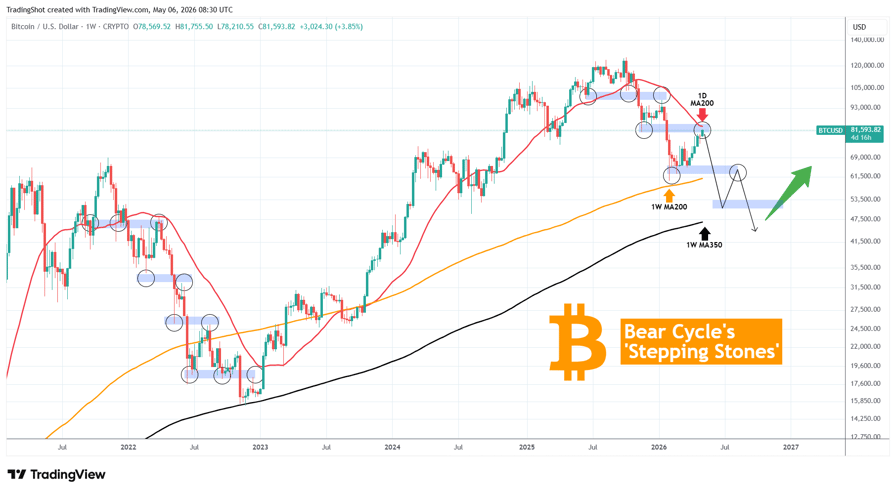
“Bitcoin is about to test its 1D MA200, the most critical Bear Cycle Resistance but has also already entered the Pivot Zone formed from the previous Low,” TradingShot wrote.
An accompanying chart compares current price performance with the 2022 bear market, with the 200-day simple moving average (SMA) at the center.
At the time, BTC/USD retested the 200-day SMA from below after initially losing it, but the reclaim failed — and the result was a trip to new macro lows.
“This is a familiar pattern that $BTC forms during downtrends, it was also emphatically present during the 2022 Bear Cycle where those Pivot Zones got formed from a previous Low that was later tested as Resistance,” the analysis continues.
BTC/USD one-week chart. Source: TradingShot/X
Should history repeat, TradingShot is eyeing a dramatic correction, with a bottom target at $50,000.
“A rejection now on this ‘Stepping Stones’ pattern will confirm the Bear Cycle continuation for BTC to $50000, while a break-out will invalidate it,” it concludes.
As Cointelegraph reported, the $50,000 zone has long been a favorite among traders who see the bear market continuing.
BTC price support band as “main focus”
If the 200-day SMA is the resistance level to beat, two trend lines immediately below price are essential to retain as support, commentators argue.
Related: Bitcoin price nears $82K as ‘big level’ sparks warning of fresh macro rejection
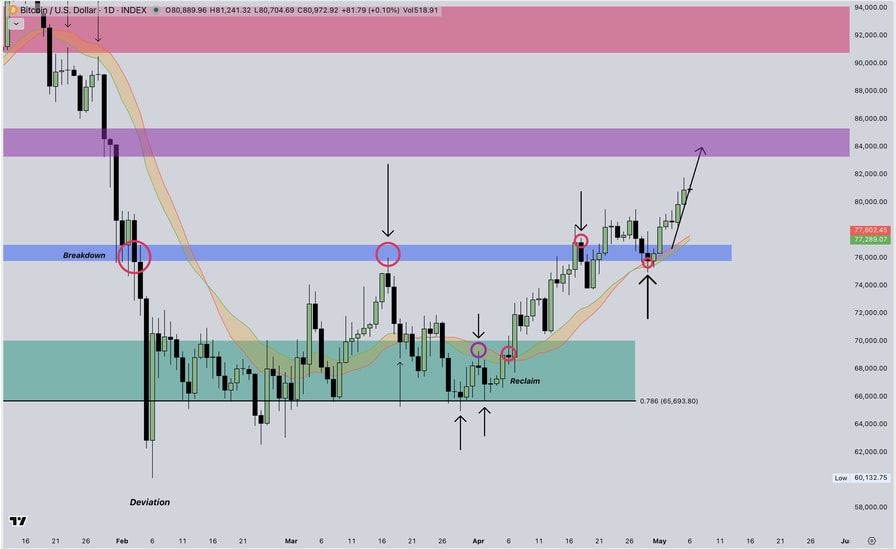
The so-called bull market support band, formed of the 20-week SMA and the 21-week exponential moving average (EMA), sits near $78,000.
In some of its latest X analysis, trading account Cryptic Trades said that the support band should stay the “main focus.”
“I believe that as long as price keeps holding above this range, as well as the April 2025 bottoming formation around $76K, the broader market structure remains intact,” it wrote on Wednesday alongside an explanatory chart.
“The other key level to track is the lost high-timeframe support range marked in purple around $84K, where I believe we could see a short-term rejection.”
BTC/USD one-day chart. Source: Cryptic Trades/X


Executives from Intercontinental Exchange (ICE), OKX and Securitize warned that synthetic tokenized stocks are creating market and retail risks, as ICE moves ahead with a regulated platform for tokenized U.S. equities.
Michael Blaugrund, who works on strategic initiatives at ICE, the owner of the New York Stock Exchange (NYSE), said during a panel at Consensus Miami that NYSE’s first version will start with pre-funded tokenized equities trading against stablecoins.
That model is “not the sexiest way” to build a market, Blaugrund said, but gives issuers, investors and regulators a structure they can evaluate before more complex features such as leverage or self-custody.
Carlos Domingo, founder and CEO of Securitize, said offshore tokenized stock products are taking the opposite approach. Some use public-company names without issuer approval and do not represent the underlying equity, he said.
“For some stocks there’s like five different tokenized versions,” Domingo said, citing Coinbase as an example. “None of them actually represent equity on Coinbase.”
The risk is clearest during corporate actions, Domingo said, as he saw one tokenized stock wrapper trade at prices that differed by five times across markets after a stock split.
Haider Rafique, OKX’s global managing partner officer, noted the exchange has not launched synthetic tokenized securities and does not plan to move before regulated supply is in place.
“We’re not selling a promissory note,” Rafique said. “We’re actually selling the underlying asset.”
The warning follows broader scrutiny of stock tokens and private-market exposure. OpenAI said last year that Robinhood’s OpenAI stock tokens did not represent OpenAI equity and were not approved by the company, while Robinhood later said the tokens were backed by a special purpose vehicle.
Domingo said the issue is regulatory arbitrage. Offshore issuers can create wrappers in permissive jurisdictions and claim they are not targeting the U.S. or Europe, he said. Permissionless tokens can still flow back into those markets.
The SEC has also sharpened its focus on the distinction between true tokenized ownership and synthetic exposure, saying issuer approval is required for true tokenized stock ownership.
Blaugrund compared the shift to tokenized securities with the move from floor trading to electronic markets.
“It’s now ‘when,’ not ‘if,’” Blaugrund said.
NYSE said in January it was developing a platform for 24/7 trading and onchain settlement of tokenized U.S.-listed stocks and ETFs, pending regulatory approval. The platform is expected to support fractional trading, immediate settlement and dollar-denominated orders.
ICE later struck a strategic partnership with OKX, giving the crypto exchange’s customers access to ICE futures and NYSE tokenized equities, also subject to approvals.
NYSE also tapped Securitize to help build the tokenized stock platform, with the firm acting as a digital transfer agent for issuer-backed tokenized securities.
The next crypto to explode just received a signal from the largest venture firm in crypto. On May 5, CoinDesk reported that Andreessen Horowitz raised a $2.2 billion fund and declared crypto fundamentals at an all-time high. When the firm that backed Coinbase and Solana puts $2.2 billion into a fresh fund, capital flowing into early-stage projects grows fast.
That confidence pushed risk appetite higher. But large-cap meme tokens cannot give you the return a presale delivers before any listing. Pepeto raised $9.89 million from wallets that tested every live product, and the Binance listing gets closer each day.
Andreessen Horowitz closed its new crypto fund at $2.2 billion on May 5, per CoinDesk, its largest raise since 2022. Haun Ventures closed at $1 billion in the same period, showing institutional capital flowing back at scale.
Pepe (PEPE) trades at $0.0000041, sitting 85% below its all-time high per CoinMarketCap. Shiba Inu (SHIB) holds $0.000006336, down 93% from its peak. When top venture firms raise billions with this conviction, the next crypto to explode is the one at presale pricing before that wave arrives.
Three Tokens Competing for the Next Crypto to Explode Title
Pepeto: Why $9.89 Million in Capital Shows Exactly Where Serious Money Moved
The reason a presale beats recovery tokens like PEPE and SHIB for returns comes down to where you get in. Speed decides everything in crypto, and if you are switching between separate apps to bridge, swap, and scan a token, the opportunity closes.
Pepeto, considered the next crypto to explode, puts every tool on one platform so you can move before the market catches up.
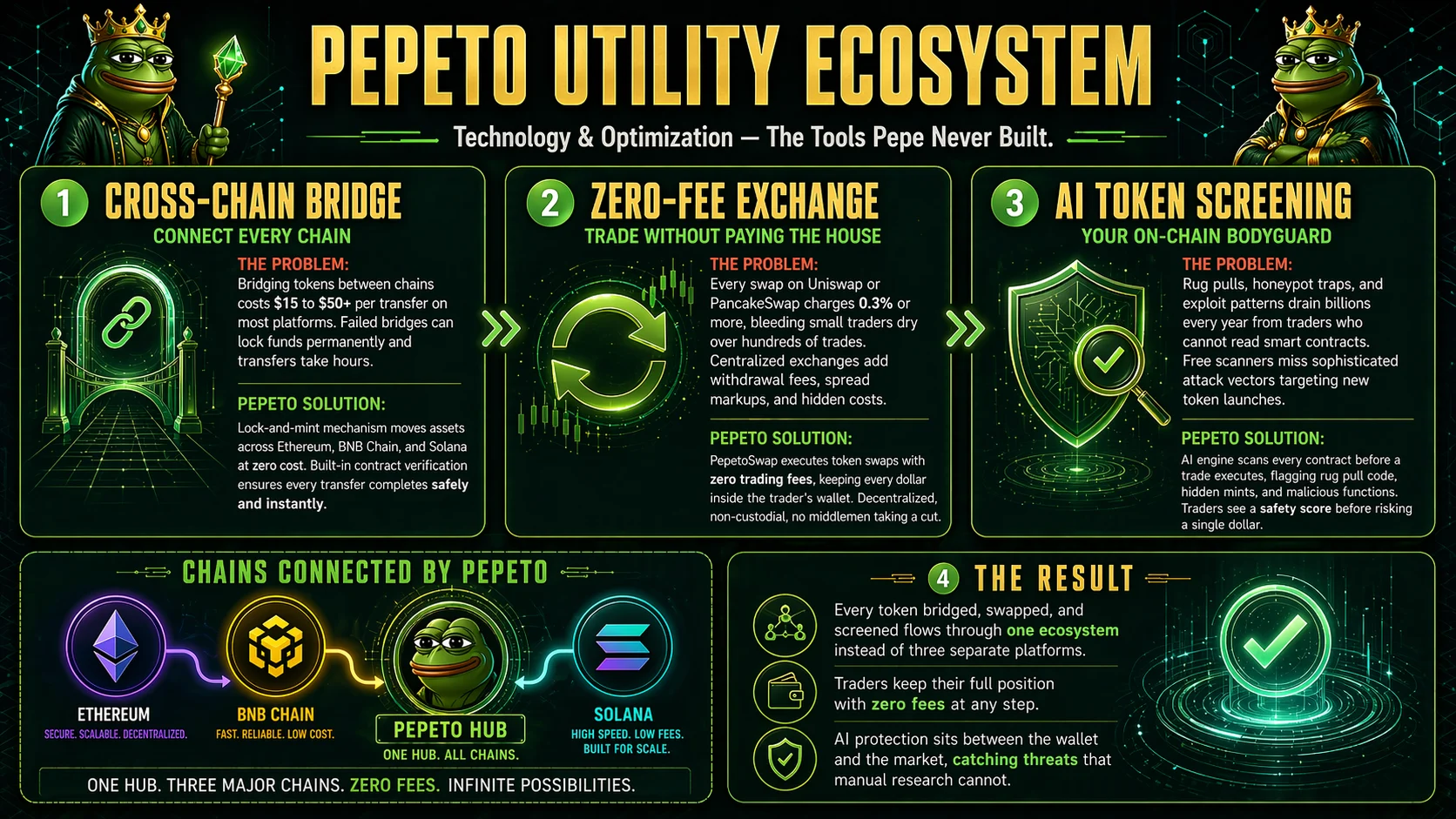
The team shipped PepetoSwap for instant cross-chain swaps, the Pepeto Bridge for free transfers, and a full exchange with a token scanner that reviews every contract before your capital gets near it. Every product is live. The presale collected $9.89 million at $0.0000001868, every contract cleared SolidProof and Coinsult audits, and 175% APY staking grows positions daily. The person who created Pepe’s $11 billion run leads this build, and an ex-Binance executive who managed listings sits on the team.
This type of presale shows up once per cycle and rewards the wallets that committed while everyone else was still reading. The Binance listing hits in days, and once it opens this entry is gone. Entering now through the Pepeto official website is how those early returns get locked.
Pepe (PEPE) Price at $0.0000041 as Canary Capital PEPE ETF Filing Keeps Institutional Interest Alive
Pepe (PEPE) trades at $0.0000041 per CoinMarketCap, up 1.5% in 24 hours but sitting 85% below its $0.00002803 all-time high. Canary Capital filed an S-1 for the first U.S. spot PEPE ETF in April, and whale wallets added large positions during the dip.
The $1.66 billion cap needs a full meme rotation just to recover. Even a push to $0.000010 gives roughly 2.5x over months, and that distance cannot compete with what the next crypto to explode at presale pricing delivers from a single listing.
Shiba Inu (SHIB) Price at $0.000006336 as Burn Rate Rises but Recovery Stays Slow
Shiba Inu (SHIB) trades at $0.000006336 per CoinMarketCap, up 2.13% and 93% below its all-time high. Shibarium transactions keep growing after network upgrades, and the burn rate increased during the past month, but burn amounts remain small relative to 589 trillion circulating supply.
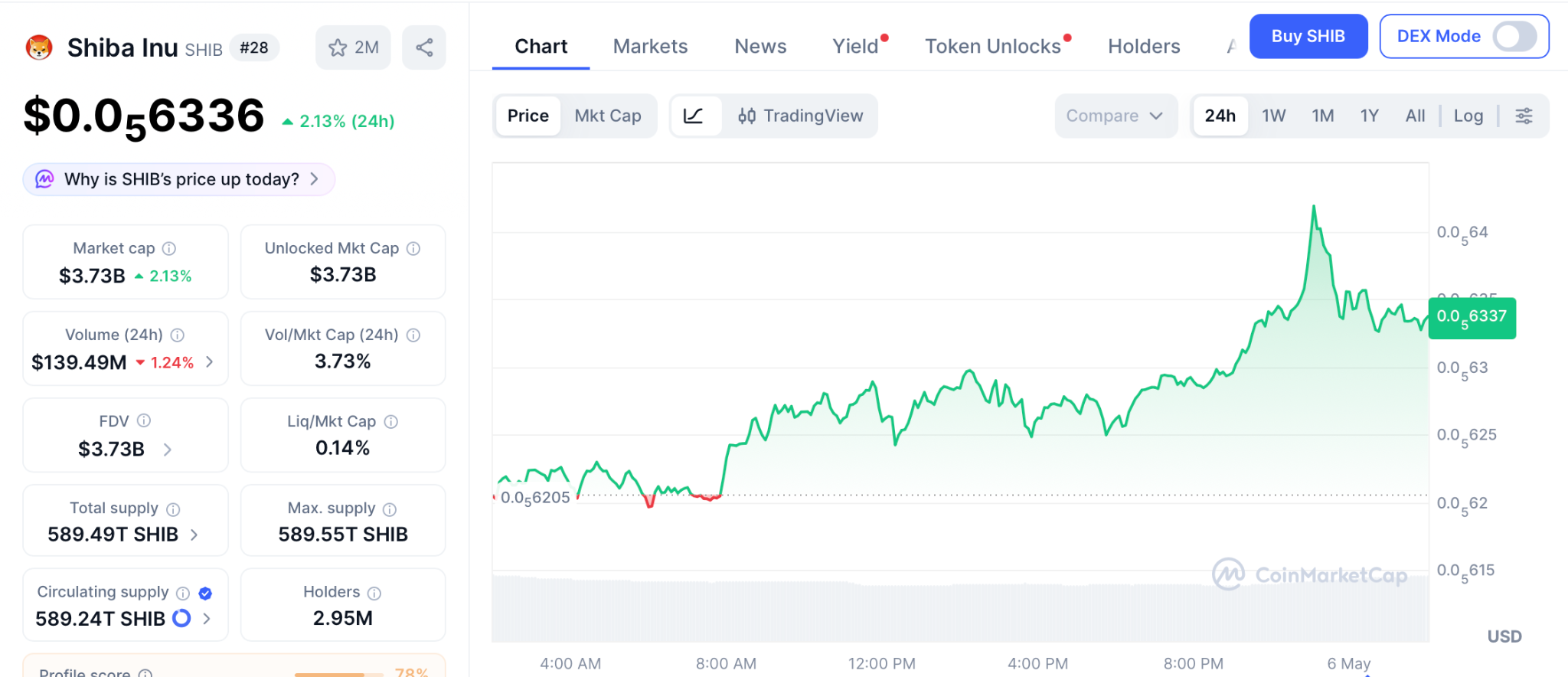
Analyst targets for 2026 sit near $0.000010, roughly 1.6x from here per Changelly. Wallets chasing the next breakout need presale distance, not a heavy-cap recovery trapped under its own supply.
Conclusion
Andreessen Horowitz just put $2.2 billion behind crypto fundamentals being at an all-time high, and yet PEPE and SHIB sit 85% and 93% below their peaks with 2x to 3x as the ceiling this year. The big money is coming back, but it is not going to rescue heavy-cap meme tokens stuck under their own weight. Pepeto at $0.0000001868 already has $9.89 million inside from wallets that ran the numbers, and those wallets compound at 175% APY every day.
The rounds fill faster now because the Binance listing is close and $0.0000001868 will not exist once trading starts. The wallets that entered SHIB and PEPE before their listings turned small amounts into life-changing money, and Pepeto carries that setup at a price that makes the return math even bigger. Entering now through the Pepeto official website is how those returns get built before the listing opens.
Click To Visit Pepeto Website To Enter The Presale

FAQs
What is the next crypto to explode in May 2026?
Pepeto leads as the next crypto to explode with a live exchange, cross-chain bridge, and contract scanner shipped before listing day. The presale raised $9.89 million at $0.0000001868 with the Pepe co-founder and dual SolidProof plus Coinsult audits behind it.
Is Pepe (PEPE) at $0.0000041 a strong entry after the Canary Capital ETF filing?
Pepe (PEPE) holds $0.0000041 with whale accumulation and a pending spot ETF at the SEC. Support sits near $0.0000039, with $0.0000050 as next resistance.
Disclaimer: This is a Press Release provided by a third party who is responsible for the content. Please conduct your own research before taking any action based on the content.

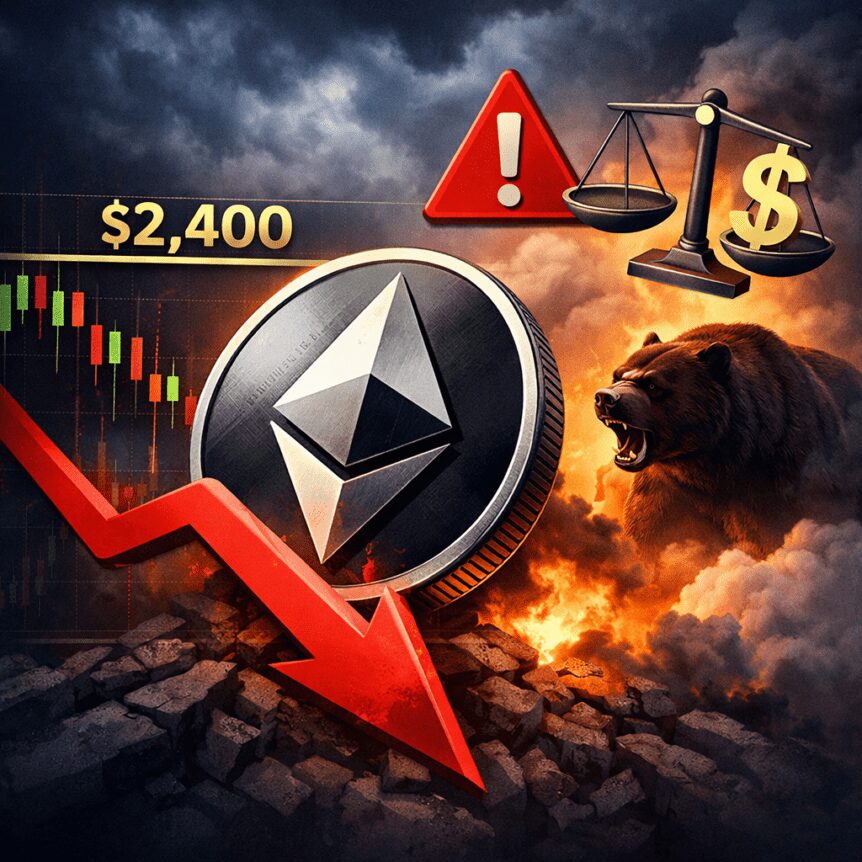
Ether has struggled to sustain momentum above the $2,400 mark for a three-month stretch, underscoring a stubborn disconnect between the broader crypto market rebound and the leading smart-contract platform’s price action. With ETH down about 21% so far in 2026, traders and developers alike are parsing the drivers of weakness beyond simple risk-off sentiment, including shrinking on-chain activity and softer decentralized application (DApp) economics. The momentum gap is reflected in the broader market as well: total crypto market capitalization is down around 11% year-to-date, signaling persistent headwinds for Ethereum’s vast ecosystem despite the ongoing appeal of layer-2 solutions and scaling upgrades.
Key takeaways
- Ether has not held above $2,400 for three months and is about 21% lower in 2026, signaling a broader investment hesitation around ETH’s price path despite a broader market rebound.
- Decentralized exchange volumes declined by 53% over six months, while DApp revenue fell roughly 49% in the same period, contributing to weaker ETH price formation.
- Hacks and security incidents in April totaled about $630 million, with KelpDAO and Drift Protocol responsible for the majority of losses; Hacken attributes the attacks to actors linked to the DPRK.
- Competition among chains and the scaling narrative remain in flux: Ethereum still dominates the ecosystem, but rivals and cross-chain activity have carved out meaningful DApp revenue shares, aided by base-layer scalability and rollups discussions.
- Institutional sentiment around ETH remains cautious as Bitmine, the largest publicly listed ETH holder, sits underwater on its reserves, reducing the perceived incentive for large-scale institutional exposure.
Ether’s price action and the on-chain backdrop
Market data collected over the past quarter show Ether’s gradual loss of upside momentum even as the broader crypto market recovers from earlier declines. After repeatedly failing to close above $2,400, ETH’s year-to-date performance remains tepid, with a notable divergence from other major assets that have benefited from renewed risk appetite in parts of the sector. On-chain activity, a traditional proxy for network usage and demand, has shown signs of softening, a dynamic that often precedes slower price appreciation for the asset itself.
Analysts point to a combination of factors weighing on ETH’s price formation. The decline in DApp activity—particularly on decentralized exchanges (DEX) and other on-chain services—has translated into lower throughput demand and, consequently, muted fee generation for the base layer and its ecosystem. While Ethereum’s lead over competitors remains clear in aggregate metrics, continued shifts in user behavior toward higher-efficiency L2 solutions and cross-chain activity have kept some market participants cautious about sustained upside in the near term.
Hacks and the toll on DApp economics
Security incidents across the crypto industry have punctured confidence in on-chain activity, with April recording approximately $630 million in losses from hacks. Among the most consequential incidents were those tied to KelpDAO and Drift Protocol, which together accounted for a substantial share of the month’s total. Hackers linked to the Democratic People’s Republic of Korea (DPRK) were named by security firm Hacken as offenders, underscoring the ongoing geopolitical dimension of crypto security risks.
The ripples from these incidents extended beyond isolated losses. Defi analytics indicate a near-term drag on DEX activity, which directly influences DApp revenue generation. In three months, aggregate DEX activity declined by roughly 47%, while revenue across DApps fell about 49%. The correlation is intuitive: fewer trades and reduced user engagement on on-chain platforms translate into lower fee pools and diminished incentives for developers to build or sustain high-activity products.
Shifting landscape: competition, scaling, and the DApp revenue mix
Even as Ethereum remains the leading backbone for decentralized finance, any meaningful adoption shift affects the competitive balance. Data from DefiLlama show that while Ethereum remains dominant, other ecosystems have captured meaningful slices of DApp revenue. In particular, Solana and a project referred to as Hyperliquid together account for roughly 42% of DApp revenue among non-Ethereum ecosystems. This is notable given Ethereum’s much larger total value locked, highlighting how scale does not automatically translate into undisputed market leadership in every segment of the DApp economy.
Industry observers have long debated how scaling upgrades will influence demand for base-layer capacity versus L2 rollups. Some market participants argued that a robust scaling upgrade could reduce the immediate need for layer-2 solutions, potentially compressing the fee-rich value proposition that drives staking rewards and on-chain revenue. Others maintain that a richer base layer could feed higher throughput and attract more sophisticated DApps, sustaining a healthy revenue loop. Uttam Singh, an engineer at Alchemy, has noted that market expectations around Ethereum’s scaling roadmap include the potential for increased base-layer capacity and more efficient data handling, which could influence how clients pre-fetch block data and how parallel transaction execution might unfold. The debate continues as the ecosystem weighs whether higher capacity will translate into higher or more stable on-chain fees over time.
Institutional sentiment and the Bitmine overlay
Institutional demand for ETH remains cautious amid ongoing balance-sheet considerations for large holders. Bitmine (BMNR US), the largest publicly listed ETH holder, reported a sizeable unrealized loss position as its corporate reserves remain underwater. The company’s ETH holdings were acquired at a high cost basis, and the current valuation leaves exposure without an immediate liquidation risk; however, the underperformance relative to cost basis dampens the perceived appeal of ETH for some institutional investors. This dynamic complicates the narrative around a rapid institutional-led price rebound, even as Ethereum’s technology and ecosystem continue to attract builders and users.
Colocation of these factors—soft on-chain activity, a hardened cybersecurity backdrop, and a still-mixed institutional sentiment—helps explain why ETH has lagged the broader market recovery. The picture is not a wholesale rejection of Ethereum’s long-term potential, but it does indicate that near-term upside will likely hinge on a combination of improved on-chain economics, continued scaling progress, and a clearer path to higher user engagement with DApps and cross-chain services.
What to watch next
Investors and developers should monitor several evolving dynamics. First, the trajectory of DEX volumes and DApp revenue in the coming quarters will be a bellwether for on-chain activity and fee generation, influencing incentives for staking and network security. Second, the security landscape remains a critical risk factor; even a single high-profile breach can ripple through user behavior and liquidity provision. Third, the scaling roadmap and the adoption of L2 solutions or cross-chain architectures will shape how demand for base-layer capacity evolves and how Ethereum competes for developer mindshare in a rapidly innovating ecosystem. Finally, institutional exposure to ETH will continue to depend on macro conditions, the health of largest holders’ balance sheets, and the perceived durability of ETH’s long-term value proposition beyond price momentum. Readers should stay tuned for further data releases from DefiLlama and security analyses that illuminate the evolving risk and opportunity in Ethereum’s ecosystem.


BTQ Technologies has been chosen as the core post-quantum security provider for South Korea’s first bank-led Korean won (KRW) stablecoin proof-of-concept. The company will deploy its Quantum Secure Stablecoin Settlement Network across iM Bank’s pilot infrastructure.
The Vancouver-listed firm is working with iM Bank and local technology vendor Finger Inc. to embed quantum-resilient cryptography into a regulated KRW stablecoin issued on the Kaia mainnet, the Layer 1 network formed from the Klaytn and Finschia merger.
Why a Korean Bank Is Building Quantum-Safe Stablecoin Rails
BTQ disclosed the deployment on Wednesday, framing the project as more than a technical pilot.
The proof-of-concept will test real-time reconciliation between bank reserves and on-chain supply, a standardized smart contract design, and connectivity for overseas distribution.
BTQ is also providing strategic advisory support across the three-way partnership with iM Bank and Finger.
The architecture pairs existing ECDSA cryptography with NIST-aligned post-quantum signatures such as ML-DSA, letting iM Bank maintain operational continuity while preparing for future quantum threats.
Post-quantum migration requires more than a cryptographic upgrade. It requires coordination across infrastructure, implementation, and institutional stakeholders,” read an excerpt in the announcement, citing Newton, BTQ’s chief executive officer.
Kaia Chain Ties Pilot to Asia’s Largest Consumer Ecosystems
Building on Kaia connects the pilot to two of Asia’s largest digital platforms, the Klaytn lineage from Kakao and the Finschia lineage from LINE.
Klaytn previously joined the Bank of Korea’s CBDC pilot through Project Hangang.
The launch arrives as eight Korean banks advance plans for a joint venture to issue a KRW stablecoin, signaling a competitive build-out of regulated digital won infrastructure ahead of expected legislation.
“There is a shared sense of crisis that if things continue this way, foreign dollar coins could dominate the domestic market. It is time to secure independence and competitiveness of the domestic financial system at the same time through a Won-based digital currency,” a banking industry official stated.
Quantum Threat Moves From Policy Debate to Banking Pilot
BTQ has previously listed Danal and Finger as early QSSN participants in Korea. The iM Bank engagement suggests domestic financial institutions are treating the harvest-now-decrypt-later risk as actionable rather than theoretical.
QSSN was previously cited in the US Post-Quantum Financial Infrastructure Framework as a model design for stablecoin issuance and admin keys.
Whether the pilot progresses to commercial issuance under QuINSA guidelines will likely shape Korea’s broader migration timeline.
The post South Korea Beats the Quantum Threat to Stablecoins With New Pilot Program appeared first on BeInCrypto.


Erik Reppel said at Consensus Miami 2026 that AI agents bypass internet ads entirely, threatening the web’s core business model and pointing to x402 stablecoin micropayments as the structural replacement.
Summary
- Coinbase Developer Platform head Erik Reppel told Consensus Miami that autonomous AI agents do not interact with online advertising, breaking the internet’s foundational revenue model.
- Reppel cited estimates projecting the agentic economy could reach between $3 trillion and $5 trillion by 2030, arguing this shift will displace ad-funded content at scale.
- He argued that x402, a Coinbase-backed protocol for stablecoin micropayments, could replace advertising as the primary way web content is monetised by software.
Coinbase Developer Platform head and x402 founder Erik Reppel took the Consensus Miami 2026 stage on Wednesday to argue that autonomous AI agents will collapse the advertising model that has funded the web for three decades. His argument is structural: the internet was built for humans clicking links and seeing ads, not for software interacting directly with other software.
“I think the thing people haven’t quite realized is that we’re going to break the fundamental economic model of the internet,” Reppel said in an interview. “Moving from browsers and you visiting the website of the person who’s publishing content, to consuming things through your agents and your chat interface.” He added: “Agents really are the browser of the future.”
The x402 replacement
Reppel pointed to x402 as the fix. The open protocol embeds stablecoin micropayments directly into the HTTP layer so AI agents can automatically pay for content, data, and APIs, replacing the ad impression that human browsing generates.
He estimated the agentic economy could grow to between $3 trillion and $5 trillion by 2030, citing that as the scale of disruption facing the current ad-funded model.
The infrastructure argument has real backing. As crypto.news documented, Cloudflare processes a billion HTTP 402 “payment required” responses per day on its network and is co-developing x402 alongside Coinbase. Cloudflare has noted that more than half of all internet traffic is now non-human, with AI scrapers visiting sites tens of thousands of times for every human visitor they return.
For Reppel, that imbalance is not a trend to manage but a structural break that makes ad-funded content economically unsustainable. x402, in his framing, is not a product but a new payment layer for a web that was never designed to be paid for by machines.

CME Group plans to launch Bitcoin Volatility futures on June 1, pending regulatory review, giving investors a compliant way to trade expected Bitcoin volatility rather than price direction, according to a company release published Tuesday.
The Chicago-based derivatives marketplace said the contracts will settle to the CME CF Bitcoin Volatility Index, a 30-day measure of expected Bitcoin volatility derived from CME options markets.
CME describes the new contracts as Commodity Futures Trading Commission (CFTC)-regulated futures aimed specifically at Bitcoin volatility, extending the existing US regulatory framework that already covers CME’s Bitcoin and Ether derivatives.
Giovanni Vicioso, CME Group’s global head of cryptocurrency products, said in the release that market participants are seeking regulated products that offer exposure to market moves, and that the new futures would let traders invest in or hedge against future Bitcoin volatility.
The launch would give institutions a regulated way to trade Bitcoin volatility in the US directly through CME’s clearing framework, rather than building similar exposure through combinations of Bitcoin options and futures or using offshore venues.
Related: CME CEO Duffy says exchange is exploring issuing its own token
In the same release, Morgan Stanley managing director and head of derivatives sales David Schlageter said the contracts should help market participants manage portfolio risk by trading volatility itself.

CME Group to Launch Bitcoin Volatility Futures Contracts. Source: PR Newswire.
CME described the contracts as the “first-of-their-kind regulated futures contracts,” distinguishing them from existing crypto-native volatility products offered outside the US-regulated futures framework.
Cointelegraph reached out to CME for additional comment, but had not received a response by publication.
CME’s product keeps Bitcoin volatility trading onshore
Similar products exist elsewhere. Deribit launched BTC DVOL futures in March 2023, tied to its implied-volatility index, while BitMEX introduced its BVOL 30-day historical volatility futures back in January 2015.
CME first introduced cash-settled Bitcoin futures in December 2017 and has since expanded its regulated crypto lineup to include Bitcoin options, Micro Bitcoin futures and options, Ether futures and options and other cryptocurrency contracts.
The group is preparing to move its cryptocurrency futures and options to 24/7 trading from May 29, subject to regulatory review, further aligning its market structure with the always-on nature of digital assets.
That push comes as crypto derivatives continue to dominate trading activity more broadly, with a CoinGlass report estimating 2025 crypto derivatives volume at about $85.7 trillion, and Swiss bank Amina Group finding that derivatives account for roughly three-quarters of all crypto trading.
Magazine: Bitcoin will not hit $1M by 2030, says veteran trader Peter Brandt
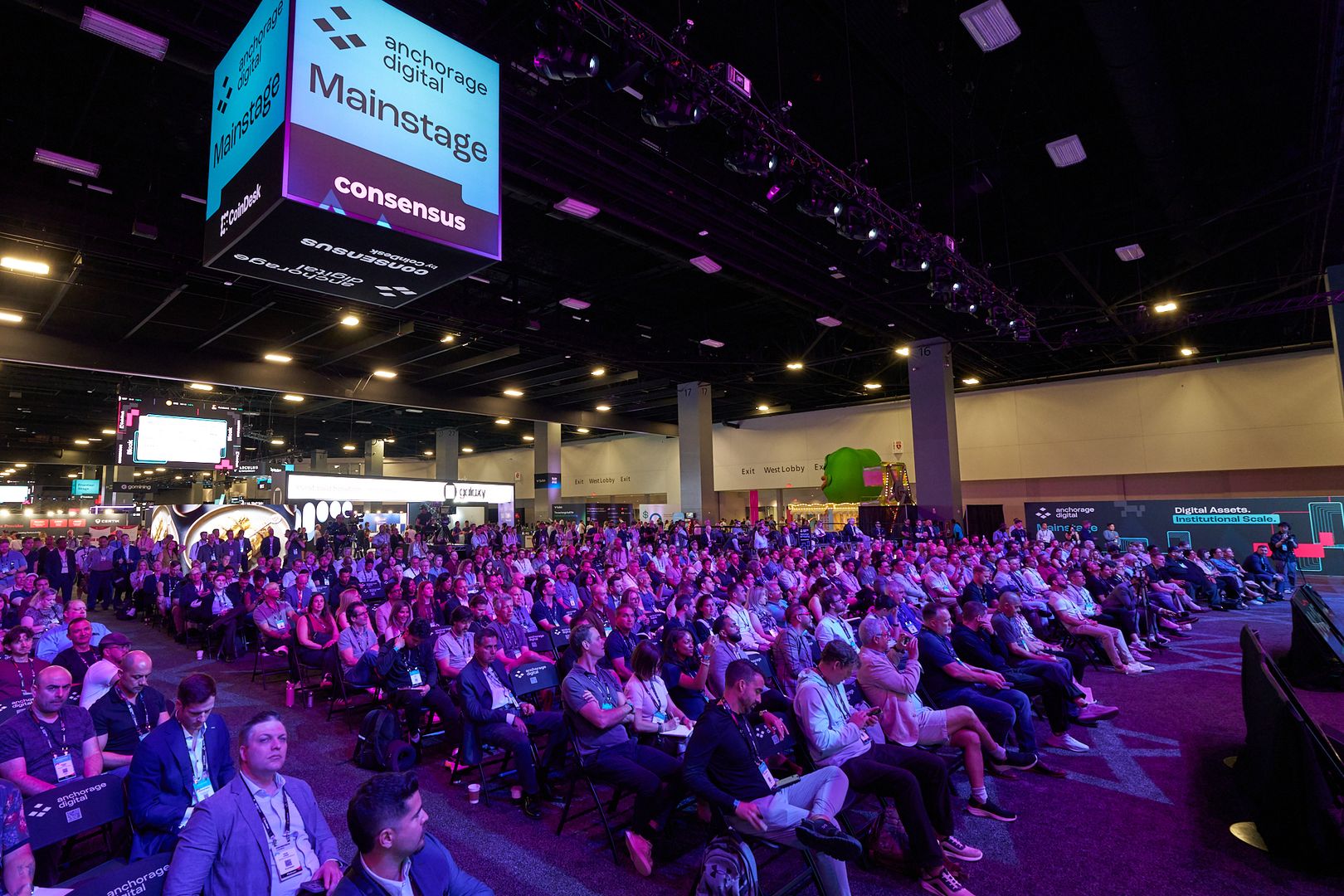
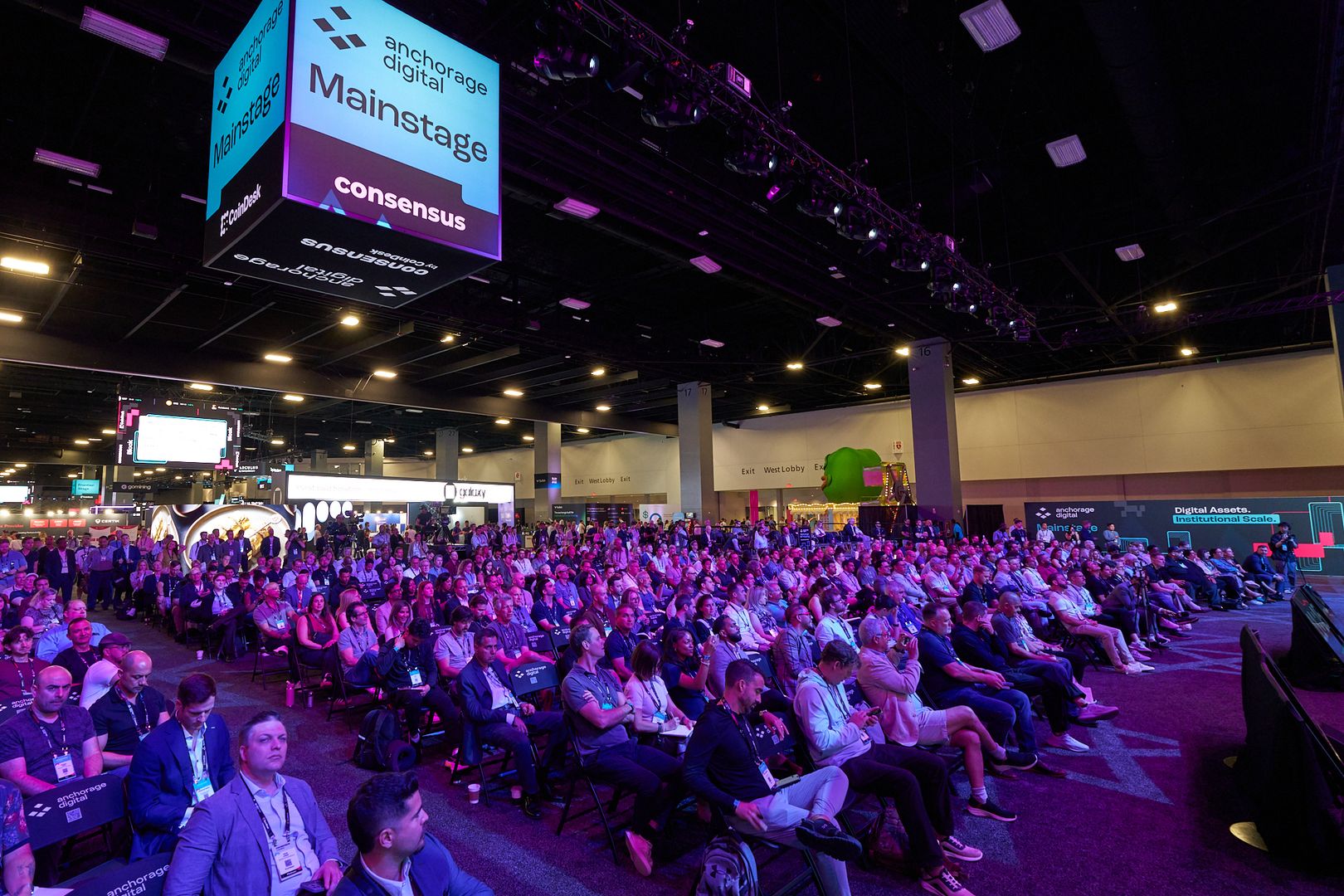
It’s day two of Consensus Miami 2026 on Wednesday. Stay tuned for updates throughout the day.
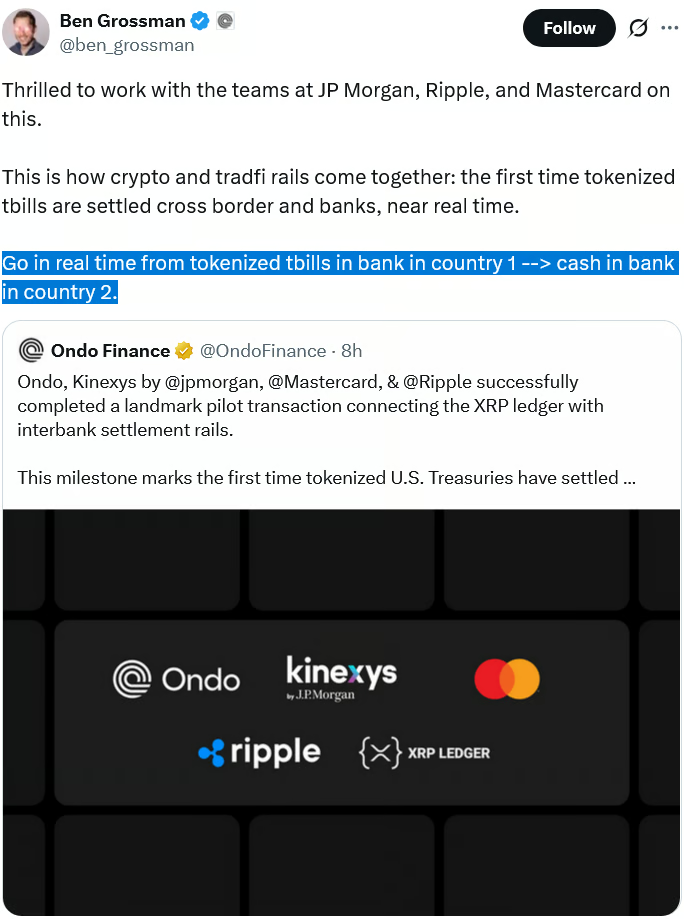
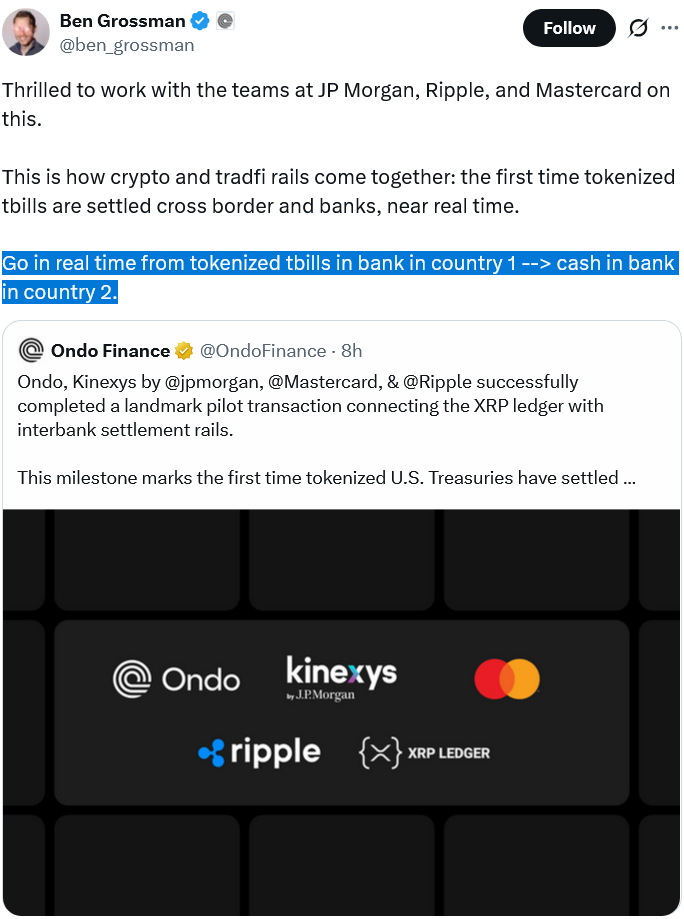
Wall Street bank JPMorgan and credit card giant Mastercard said they have completed the first cross-border, cross-bank redemption of a tokenized US Treasury fund, working with Ripple’s XRP Ledger and interbank settlement rails.
The pilot transaction involved blockchain tokenization platform Ondo Finance redeeming the US Ondo Short-Term US Government Treasuries (OUSG) fund for Ripple on the XRP Ledger. Mastercard’s Multi-Token Network then routed the settlement instructions for JPMorgan’s blockchain platform, Kinexys, to deliver US dollars to Ripple’s Singapore bank account.
“For the first time, a public blockchain and global banking infrastructure settled a cross-border transaction of a tokenized fund together in real time,” Ondo Finance said Wednesday.
Source: Ben Grossman
The pilot reflects growing collaboration between crypto firms and TradFi institutions seeking to build faster, lower-cost, global payment and settlement systems that run outside of traditional banking hours.
The pilot involving OUSG builds on an earlier one in which JPMorgan and Ondo Finance participated in May 2025, when the tokenized US Treasury fund was moved across a public and permissioned blockchain network.
Real-world asset tokenization has drawn growing interest from Wall Street leaders, who envision tokenizing everything from stocks and bonds to money market funds and real estate.
More than $31.1 billion worth of real-world assets, excluding stablecoins, is currently tokenized onchain, according to RWA.xyz data. Boston Consulting Group estimated in 2022 that the tokenization market could rise to $16 trillion by 2030, while McKinsey & Co. said it could reach a more conservative $2 trillion over the same time frame.
Related: Stablecoins behave like FX markets as liquidity splits: Eco CEO
The New York Stock Exchange’s parent, Intercontinental Exchange, announced in January that it would launch a tokenization platform for 24/7 trading and instant settlement of stocks and exchange-traded funds using a blockchain post-trade system, marking one of the biggest developments in the tokenization space to date.
Tokenization needs regulation before widespread adoption
Despite the developments, the International Monetary Fund flagged several concerns in an April report, including that tokenization shifts risk from the banking system to shared ledgers and smart contract code, making it more difficult to intervene during “stress events.”
The IMF added that without legal clarity over ownership records and settlement finality, tokenized markets risk being “fragmented and peripheral.”
Shark Tank investor Kevin O’Leary aired these concerns on Wednesday at Consensus Miami 2026, saying that significant capital will not be tokenized until crypto market structure legislation is passed in the US and is compliant with Securities and Exchange Commission rules.
“When that occurs, it’s going to change everything,” O’Leary said at the conference.
Magazine: North Korea denies crypto hacks, Upbit’s bank tests Ripple: Asia Express
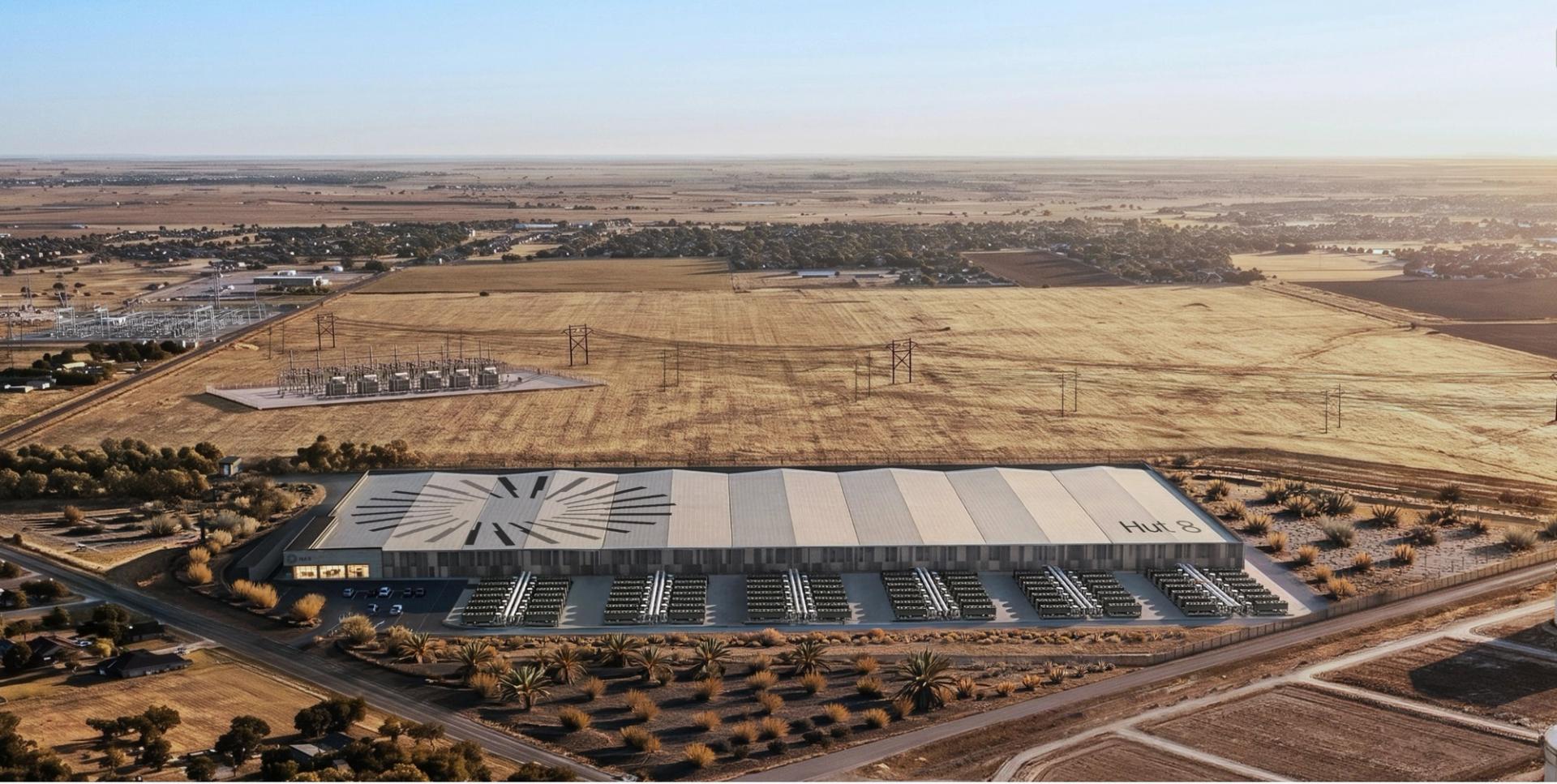
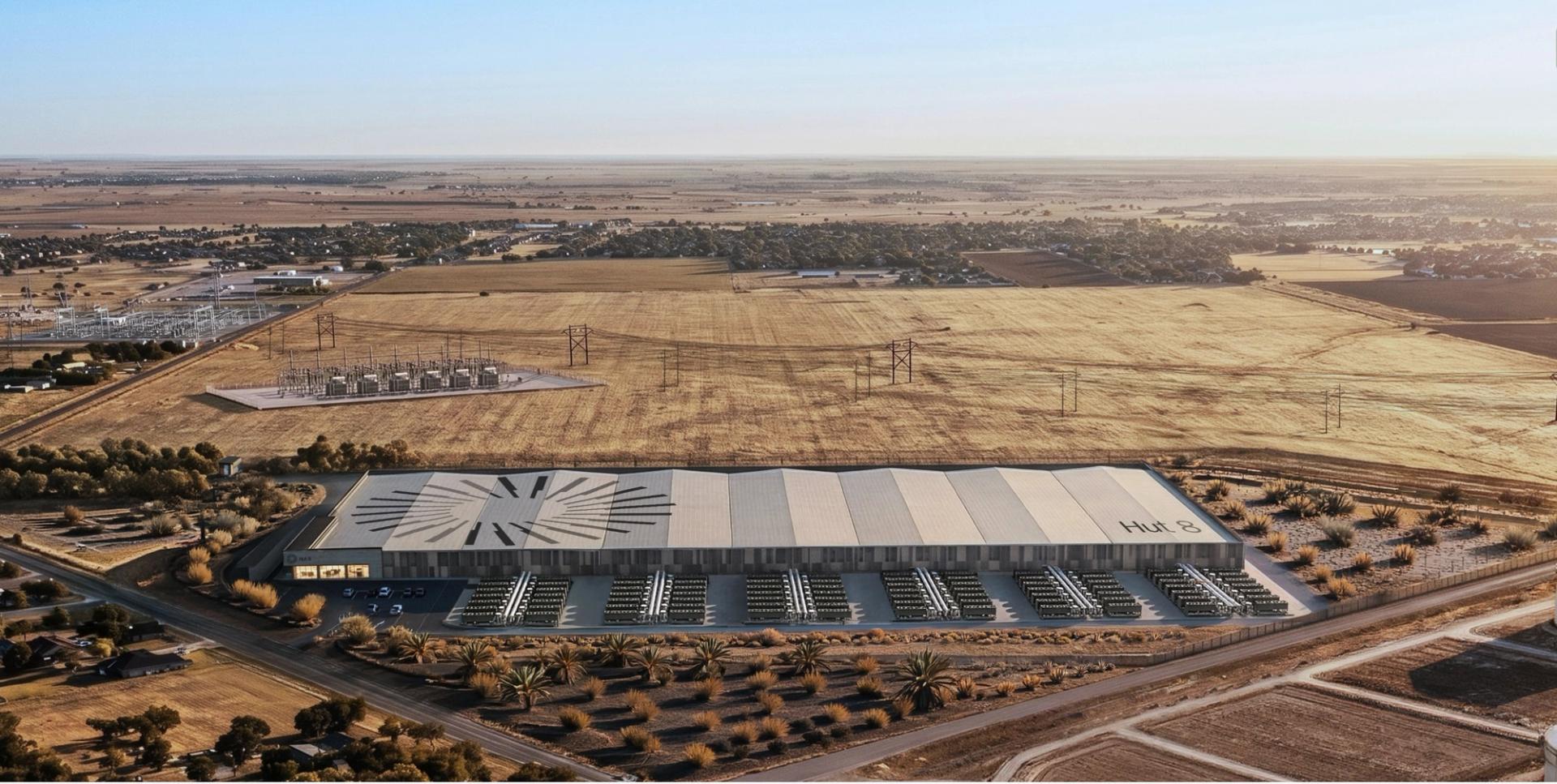
Hut 8 (HUT) shares surged nearly 30% Wednesday as the company announced a 15-year, $9.8 billion lease tied to a large-scale AI data center project in Texas. Hut 8 also said the lease structure includes options that could increase total contract value to about $25.1 billion if all renewal terms are exercised.
The Beacoin Point campus was originally intended for bitcoin mining but was repositioned for AI infrastructure as demand for high-performance computing capacity accelerated, Hut 8 said.
The company’s pivot comes at a time when publicly listed bitcoin miners face increasingly challenging economics as they face losses of approximately $19,000 per coin produced, and are rapidly pivoting toward artificial intelligence and high-performance computing infrastructure. More than $70 billion contracts have been signed, and some miners could derive up to 70% of their revenue from AI by the end of 2026
Hut 8 said it has commercialized the first phase of its Beacon Point campus in Nueces County through a 352-megawatt (MW) IT capacity lease with a high-investment-gerade tenant. The agreement supports AI training and inference workloads and marks Hut 8’s second major AI data center deal.
The lease brings hut 8’s total contracted AI data center capacity to 597 MW, with aggregate base-term contract value reaching about $16.8 billion. The company said it expects the Beacon Point lease to contribute roughly %655 billion in annual net operating income once stabilized.
Hut 8 said the new funding stream will support its AI infrastructure platform, including development of additional capacity at Beacon Point and growth across its broader pipeline. The campus has secured 1,000 MW of utility capacity, with initial energization expected in Q1 2027.
“Beacon Point underscores why we start with power and maintain flexibility across end markets,” said Chief Executive Asher Genoot. “Operating across multiple applications lets us underwrite assets that single-use-case developers cannot, then redirect them toward higher-value commercialization pathways as demand evolves.”
The company said the project is designed to NVIDIA’s DSX reference architecture and will be developed with partners including American Electric Power, Vertiv and Jacobs. Initial delivery of the first data hall is expected by Q3 2027, it added.
Bitcoin Must Break Through This Level to Avoid a $50,000 Comedown

Sister BroRilla Mentions Megan Thee Stallion In Diss

Sie haben Geld #shorts

Manchester United reach agreement with Casemiro over contract clause amid transfer speculation

US brings back mandatory military draft registration

Steven Gerrard disagrees with Gary Neville over ‘shock’ Chelsea and Arsenal claim | Football


-

 NewsBeat3 days ago
Channel 5 – All Creatures Great and Small series 7 new post
-
 Tech5 days ago
Trump’s 25% EU auto tariff breaches Turnberry Agreement that also covers semiconductors and digital trade
-
 Sports5 days ago
Paul Scholes issues Marcus Rashford reality check as agreement emerges over Man United star
-

 Entertainment5 days ago
Met Gala 2026 Rumored Guest List Is Turning Heads
-

 Business6 days ago
Strait of Hormuz Blockade Persists Amid US-Iran Standoff, Sending Oil Prices Soaring
-
Entertainment5 days ago
New on Prime Video in May 2026 — Full List of Movies and Shows
-

 Entertainment7 days ago
Celebrities Who Are Attending the 2026 Met Gala Event
-

 Sports5 days ago
Cavaliers vs. Raptors Game 6 live score, updates, highlights from 2026 NBA playoffs first-round series
-
 Sports5 days ago
David Benavidez responds to team Canelo saying the fight will never happen
-

 Entertainment5 days ago
Kylie Jenner Hit With Second Lawsuit From Ex-Housekeeper
-
 Sports5 days ago
IPL 2026: ‘Love you darling’- Hardik Pandya’s reaction to MS Dhoni steals the show |Watch | Cricket News
-

 Entertainment5 days ago
Young and the Restless Next Week: Cane Arrested & Matt’s Deadly New Scheme!
-

 Tech7 days ago
Mark Zuckerberg Says Meta Is Working On AI Agents For Personal And Business Use
-

 Tech6 days ago
Meta ends Sama contract after Kenyan workers report seeing intimate footage from Ray-Ban smart glasses users
-
Entertainment4 days ago
New Netflix Movies in May 2026 — My Top 3 Picks to Stream
-

 Sports7 days ago
Stalemate in Madrid as resilient Arsenal Blunt Atletico Madrid in semi-final clash – Sports
-

 Sports5 days ago
Plane crash in Wimberley, Texas kills 5 pickleball players at tournament
-

 Sports6 days ago
What Preity Zinta Said After Punjab Kings’ First Defeat Of IPL 2026
-

 Sports5 days ago
LeBron James adds to his legacy as Lakers eliminate dysfunctional Rockets
-
 Crypto World4 days ago
Pi Network Mandates Protocol 23 Upgrade for All Mainnet Nodes Before May 15 Deadline
You must be logged in to post a comment Login