


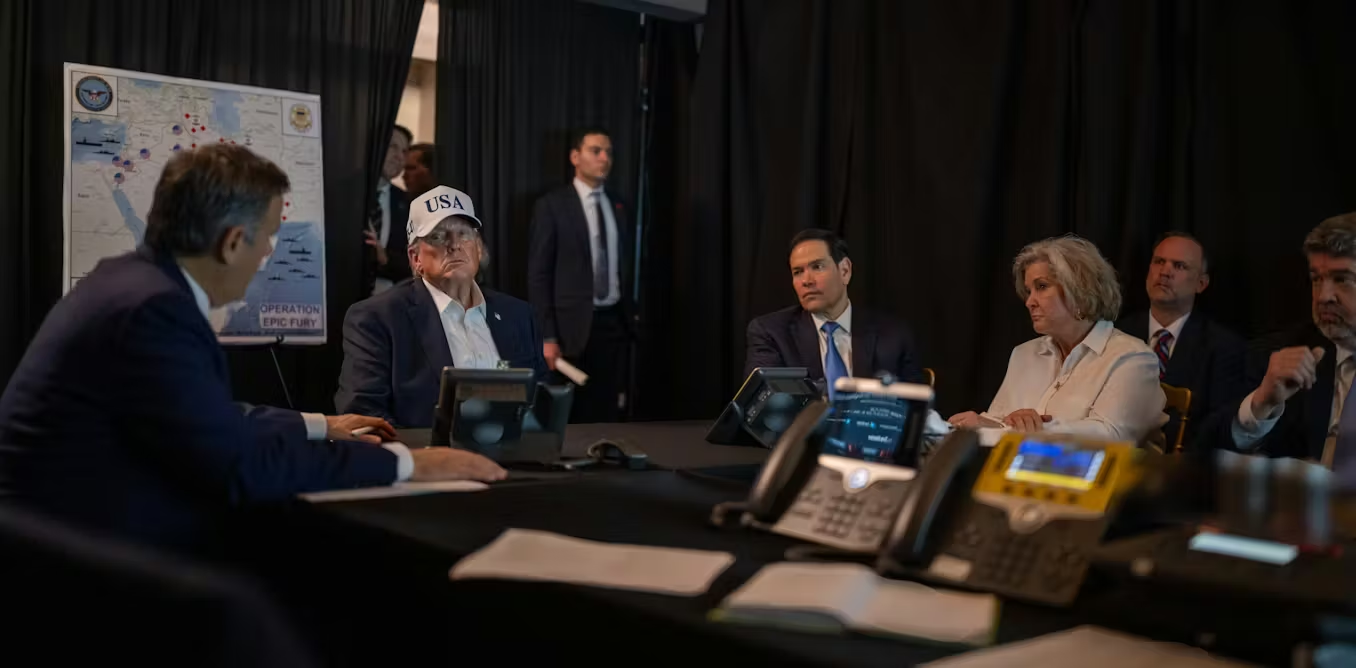
In his 1873 book On War, the great Prussian military strategist Carl von Clausewitz wrote that: “War is the realm of uncertainty.” He would have been at home in Washington this week where Clausewitz’s “fog of war” appears to have descended on the White House, at times obscuring reality.
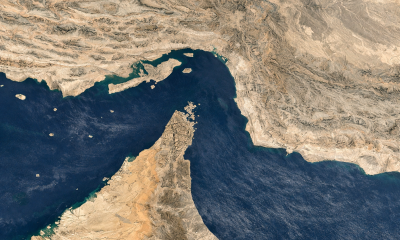
On Tuesday, the US secretary of state, Marco Rubio, briefed reporters that the US plan was to get the Strait of Hormuz “back to the way it was: anyone can use it, no mines in the water, nobody paying tolls”.
This was, of course, the way things were before the war actually started.
But uncertainty about what this war was actually all about has been a hallmark of the past two months. When the conflict began on the last day of February, the US said it was about preventing Iran from developing a nuclear weapon. Although the US president, Donald Trump, added a layer of complexity by saying it was also about regime change.
Trump’s closest ally, the Israeli prime minister, added another later by insisting this was also about getting rid of Iran’s ballistic missiles and launchers and neutralising its proxies in the region.
Christian Emery, an expert in international relations at University College London – who specialises in US-Iranian affairs – sees this lack of coherence about what the war is for as underscoring “that this entire enterprise has been a colossal strategic failure”.
As things stand it now appears possible that an interim deal could well open the Strait of Hormuz to allow the global economy to return to something like normal. But the main reasons the US and Israel launched the war are unlikely to be resolved any time soon and the episode has proved to Tehran – and the rest of the world – that Iran can use its geography to its strategic advantage whenever it chooses.
À lire aussi :
Trump administration claiming a ‘win’ against Iran – here’s a report card
For Bamo Nouri and Inderjeet Parmar, experts in international security at City St George’s Unversity of London – who have been regular contributors to our coverage of the conflict – the episode has been an object lesson in the limits of power. The US and Israel exercised considerable military superiority to Iran and have used it to devastating effect. But this is not how conflict works in the 21st century.
The US and Israel were chasing different outcomes so there was no strategic coherence to their war aims. And they underestimated Iran’s durability under pressure. Iran didn’t need to win, just to endure. “As the war progressed” they write, “the fantasy of decisive victory collapsed under the weight of economic, political and strategic reality”.
À lire aussi :
Iran war has become a lesson in how power really works
Interestingly, the Trump administration is now saying that Operation Epic Fury finished about a month ago. US forces are now engaged in Project Freedom, a humanitarian operation to help ships stranded in the Strait of Hormuz to transit the waterway.
As Andrew Gawthorpe, an expert in US foreign policy from Leiden University, notes, this change of emphasis appeared to emerge as Republicans in Congress were insisting that the administration was legally obliged under the War Powers Act to seek authorisation for the conflict.
Gawthorpe believes the war’s unpopularity is allowing Congress to claw back some of the influence it had over the way the US uses its military.
À lire aussi :
US declares war in Iran ‘over’ to avoid row with Congress over whether it was legal
As we’ve noted before, the main theme of the past few weeks, since the US launched its blockade of Iranian ports to match Iran’s closure of the Strait of Hormuz, is which side can absorb more pain and pressure. US consumers are facing increased prices at the gas pumps which has fed through to a higher inflation rate generally.
But the headline US CPI increase of 3.3% last month is dwarfed by inflation in Iran which is reported to have hit 50%. It’s worth noting that it was inflation and the general economic malaise which kicked off the huge protests that wracked Iran in January.
EPA/John G. Mabanglo
More pressingly, Iran’s inability to export its oil thanks to the US blockade means that sooner of later it will need to close down its oil production. As engineers and oil production experts Nima Shokri and Martin J Blunt explain, this can be done, but it’s by no means easy and risks seriously damaging the wells.
À lire aussi :
Shutting Iran’s oil wells may be straightforward – but the consequences are not
Global affair
They’ll be watching this all very closely in Beijing of course. The US president is due to visit Beijing next week to meet Xi Jinping for the first time since the two met on the sidelines of the Apec conference in South Korea last October.
So it was interesting to see that Iranian foreign minister, Abbas Araghchi, visited Beijing this week to meet with his Chinese counterpart, Wang Yi. In normal times, China buys between 80% and 90% of Iran’s seaborne oil exports – and it has been very clear that it wants to see the Strait of Hormuz opened and “a complete cessation of fighting…without delay”.
But China-watcher Tom Harper of the University of East London, believes that Beijing can see advantages in the US getting bogged down in a fullscale war in the Middle East and might go as far as to offer military support to Tehran if that happens. While China has denied providing shoulder-launched Manpad missiles to Iran, Tehran is using its BeiDou satellite navigational system (a sort of Chinese GPS) to aim its missiles.
If you find these expert takes on an increasingly dangerous world useful, please consider supporting us with a donation.
Wang also said that China recognises Iran’s “legitimate right to the peaceful use of nuclear energy” – something it sees as a sovereignty issue. Which should all make for an interesting encounter between Trump and the Chinese president, Xi Jinping (if the trip goes ahead, that is).
À lire aussi :
China has played a key role in the Iran war – and will continue to do so
The surprise player in all this has been Pakistan, writes Natasha Lindstaedt, an international affairs expert at the University of Essex. But as Lindstaedt points out, Pakistan has a long diplomatic track record with both the US and Iran. In 1981, two years after Washington and Tehran severed relations in the wake of the revolution that brought the Islamic Republic into being, Pakistan established a dedicated section of its Washington embassy to handling Iranian affairs in the US.
Washington and Islamabad have had their ups and downs, but things have grown closer with Trump in the White House – and Pakistan has tried to do all the right things to court Trump, including nominating him for the Nobel Peace Prize and joining his board of peace. Lindstaedt walks us through this intriguing ménage à trois.
À lire aussi :
How Pakistan became the primary mediator between the US and Iran












































You must be logged in to post a comment Login