

Crypto World
‘RFV Raiders’ target Gnosis DAO for treasury redemption proposal



A group of activist investors (or treasury “raiders,” depending on who you ask) are proposing a treasury redemption program for GNO tokenholders.
Should proposal GIP-150, which calls for “a one-time, opt-in pro-rata treasury redemption,” pass, those in favor would receive a share of the over $220 million held by the “well-capitalized” treasury.
This move comes less than six months after Gnosis DAO voted to fire its former treasury manager KPK.
The proposal’s author, who goes by Wismerhill, argues that GNO trades at a “persistent and widening discount” to the value of the Gnosis DAO treasury.
Despite $22.5 million of recent DAO funding to Gnosis Ltd, this “discount to NAV has widened” and value accrual to GNO has been “minimal,” they add.
Voting is currently underway and runs until May 12. Despite a significant early lead for those voting in favor, 65% of the 330,000 votes cast are currently against the proposal.
Read more: DeFi gets leaner: Gnosis fires treasury manager with 88% backing
Pro-rata calculations would be based on 1.3 million eligible GNO tokens, excluding tokens held by Gnosis Ltd, which the proposal argues “already operates with DAO funding.”
This would produce a redemption value of approximately $170 per token, almost 30% above GNO’s current market price of $131.
DeFi commentator and GNO holder Ignas admits, “the RFV logic has a point” but also points out that “this is pure arbitrage trade, not some moral mission.” They voted against the proposal.
Ethereum Foundation DeFi coordinator “ivangbi” agrees that if GNO isn’t advertised as having its “bottom price line protected by the assets,” holders have no “moral” right to the treasury.
Given Gnosis’s contributions to the ecosystem, including Safe, CoW Swap, Gnosis Pay and Gnosis Chain, others were less understanding.
Gnosis’ Sebastian Bürgel questioned when “the most respected builder in the space” transitioned to a “hedge fund,” while Jito’s Nick Almond dismissed the proposal as a clear “treasury rug.”
Anthony Leutenegger, of Aragon (the same group targeted in 2023), shows more nuance, urging for improvements in “programmatic token holder rights… [as] a powerful tool for incentive alignment.”
Previous RFV plays
The group made a series of similar plays in 2023, earning the moniker “RFV (risk-free value) Raiders,” which it rejects.
Amongst the projects targeted at the time were Rook, FEI/Tribe and Aragon, which was ultimately forced to repurpose the DAO treasury into a grants program.
Read more: Aragon helped Lido, Curve form DAOs — now it’s dissolving
More recently, after Beefy Finance’s token BIFI fell below its net asset value in April, the DAO introduced a buyback system to avoid the risk of attracting an RFV play.
As for Gnosis, Wismerhill even previously admitted to being a “big admirer” of the DAO, foreshadowing that KPK’s firing would usher in “more business sense driven decisions ahead.”
The current vote is set to prove whether tokenholders are focused more on “business sense” or long-term building potential.
Got a tip? Send us an email securely via Protos Leaks. For more informed news and investigations, follow us on X, Bluesky, and Google News, or subscribe to our YouTube channel.

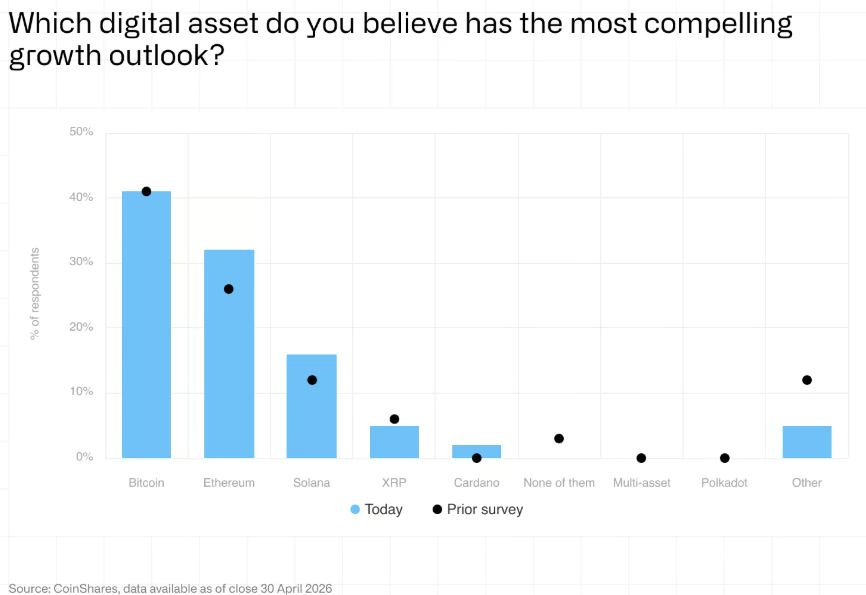
Fund managers are warming back up to digital assets, with Bitcoin continuing to dominate allocation preferences even as broader crypto sentiment improves, according to a new survey by CoinShares.
The April survey gathered responses from 26 institutional investors overseeing a combined $1.3 trillion in assets under management. Allocations to digital assets remain relatively modest, at around 1%, reflecting what CoinShares described as “typical entry sizing” in the current de-risking environment.
“Bitcoin remains the digital asset with the most compelling growth outlook,” CoinShares head of research James Butterfill wrote in the report. Sentiment toward Ether (ETH) and Solana (SOL) also improved modestly compared with previous quarters.
According to the survey, around 32% of respondents have already invested in Bitcoin (BTC) and 25% have already allocated to Ether.
The findings suggest institutional investors are gradually increasing exposure to crypto amid improving market sentiment, growing adoption of exchange-traded funds (ETFs) and a more favorable regulatory backdrop.
At the same time, respondents identified internal restrictions and regulatory uncertainty as the main barriers preventing broader adoption. The survey also pointed to a shift away from “legacy altcoins” and toward newer decentralized finance protocols and emerging blockchain sectors.
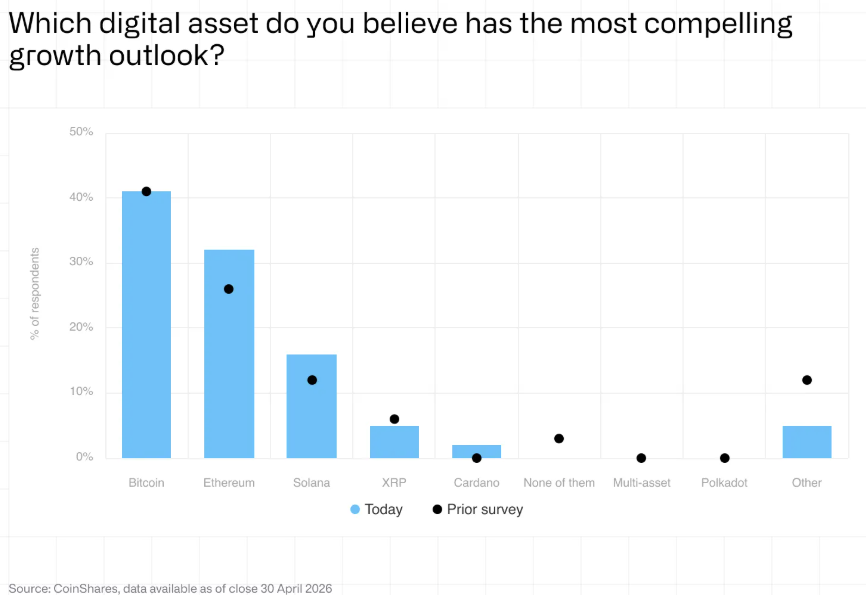
Fund managers identified Bitcoin as having the strongest growth outlook among digital assets, followed by Ether and Solana. Source: CoinShares
Related: Bernstein cites $4T tokenized credit opportunity for Figure Technology stock
Institutional inflows continue to build as sentiment improves
The survey’s upbeat tone aligns with broader institutional flow trends. CoinShares data recently showed digital asset investment products recording several consecutive weeks of inflows, led primarily by Bitcoin demand.
Crypto exchange-traded products attracted $1.2 billion in inflows through April 27, marking the fourth straight week of gains and bringing total inflows during that stretch to $3.9 billion.
The momentum has extended into early May. US spot Bitcoin ETFs recorded nearly $1 billion in net inflows this week as BTC climbed back above $80,000, according to SoSoValue data.

Bitcoin ETF inflows have risen since last Friday. Source: SoSoValue
The inflow trend also aligns with a recent survey by Coinbase and EY-Parthenon, which found that 73% of institutional investors plan to increase their digital asset exposure this year, with most expecting crypto prices to rise over the next 12 months.
The launch of spot Bitcoin ETFs in the United States in January 2024 has been widely viewed as a turning point for institutional adoption. The ETF structure has also helped reduce operational friction for institutions by offering regulated exposure to Bitcoin without requiring direct custody of digital assets.
Related: Crypto Biz: Capital has no consensus

TLDR
- Nvidia stock rose about 3% to $213.53 in early trading after gaining 5.8% in the previous session.
- Goldman Sachs reaffirmed a Buy rating on Nvidia and maintained a $250 price target.
- The bank expects a beat-and-raise quarter based on current supply and demand trends.
- Major technology companies increased their 2026 capital expenditure forecasts to support AI infrastructure.
- Combined spending by Alphabet, Amazon, Meta Platforms, and Microsoft could reach $725 billion in 2026.
Nvidia shares (NVDA) extended their advance on Thursday as semiconductor stocks moved higher. Nvidia stock gained about 3% to $213.53 in early trading after a 5.8% rise on Wednesday. The move pushed the shares back above $200 ahead of the company’s earnings report later this month.
Nvidia Stock Rises as Goldman Backs $250 target
Goldman Sachs reaffirmed its Buy rating on Nvidia and kept a $250 price target on the shares. The bank said demand for data center products continues to support upside potential. It also stated that investors may focus on the possible upside to Nvidia’s $1 trillion data center guidance.
The firm expects a “beat-and-raise” quarter based on current supply and demand trends. However, it said expectations remain high, setting a strong bar for further gains. Goldman added that valuation could improve if hyperscalers show stronger profitability and broader enterprise adoption increases.
The bank also cited opportunities linked to agentic systems and server central processing units. It said these trends could expand Nvidia’s reach beyond traditional large-scale buyers. The company will release its quarterly earnings results later this month.
AI Spending Plans Support Nvidia Stock Outlook
Large technology companies recently increased capital expenditure forecasts for 2026. Alphabet, Amazon, Meta Platforms, and Microsoft raised combined spending projections to about $725 billion. Analysts at Bank of America and Evercore estimate total capital expenditure could exceed $1 trillion by 2027.
This level of spending supports continued demand for Nvidia’s graphics processing units. These chips remain central to artificial intelligence workloads in cloud data centers. As a result, sustained infrastructure investment provides a steady revenue backdrop for Nvidia.
Despite this support, Nvidia stock has trailed several semiconductor peers in recent weeks. Over the past month, Advanced Micro Devices rose about 90%, and Micron Technology gained roughly 76%. In comparison, Nvidia stock increased about 19% during the same period.
Since late April, Nvidia shares have traded mostly flat while Intel and Micron have climbed more than 30%. Advanced Micro Devices also advanced about 20% during that stretch. Market updates highlighted supply constraints in memory chips and progress in internal chip development.
Alphabet continues to develop its tensor processing units for internal use. Amazon advances its Trainium chips to support its cloud operations. These in-house solutions improve efficiency for hyperscalers while introducing competition for external suppliers.
Some analysts now describe Nvidia as a broader proxy for the artificial intelligence sector. They say the market treats the company less as a single chipmaker and more as a sector benchmark. Nvidia will report earnings later this month, providing updated financial details.


Bitcoin (BTC) has climbed by almost 20% this month, but despite the current bullish setup, the threat of rejection near overhead resistance remains significant.
In fact, CryptoQuant found that the crypto asset must reclaim and hold $88,880 before the market can confirm a sustainable bottom formation.
Trapped Buyers Await
According to the latest analysis by CryptoQuant, Bitcoin’s current price of around $80,000 is still trading below several crucial realized price levels tied to underwater holder cohorts, which continue to act as overhead resistance.
The first major level stands at $88,880 for holders who bought between three and six months ago, followed by $93,450 for the 12-to-18-month cohort. The largest resistance zone is at $111,850, which is linked to holders from the six-to-12-month group, sitting roughly 29% above the current spot price.
CryptoQuant explained that these levels represent break-even exit points for investors who are still holding unrealized losses and may look to sell once prices recover. Its findings reveal that for a market bottom to be confirmed, Bitcoin must move above $88,880 and maintain that level instead of briefly spiking higher and falling back.
Until then, rallies between $85,000 and $88,000 are likely to face selling pressure from buyers who entered the market between November 2025 and February 2026.
A similar sentiment was echoed by analyst Ali Martinez, who had recently flagged that Bitcoin’s present trajectory resembled the 2022 bear market bottom formation. Martinez pointed to similarities with the period when the crypto asset briefly recovered to around $25,000 in August and September 2022 before experiencing another major decline that eventually dragged the asset below $16,000.
Based on this pattern, he indicated that Bitcoin could face another rejection around the $80,000 to $82,000 range before potentially falling below $55,000 if the market follows a similar trajectory. The analyst also highlighted the strong sell walls between $79,000 and $80,000, an area where the asset has already been rejected multiple times in recent weeks.
Crypto Market Positioning
Derivatives data also reflected the cautious mood in the market. Experts at Bitunix noted that all eyes are on liquidity absorption around the $80,000 region. In a statement to CryptoPotato, they revealed that open interest has declined 5.13% over the past 24 hours. At the same time, funding rates are still negative overall during the past week, which shows bearish positioning is still present, but the magnitude of those negative readings has started to narrow.
“This suggests that overheated leverage conditions are beginning to cool, while bearish hedging sentiment has eased somewhat. Even so, overall market positioning remains cautious.”
The post Bitcoin (BTC) Bottom Isn’t Confirmed Until This Key Level Breaks appeared first on CryptoPotato.
Crypto World
Hashed Open Finance Launch Testnet of Maroo, First Sovereign L1 Blockchain for KRW Stablecoins and AI Agents

[PRESS RELEASE – SEOUL, South Korea, May 7th, 2026]
Korea’s first won-denominated public blockchain goes live with built-in regulatory compliance and native AI agent identity, integrating with Model Context Protocol (MCP), Claude skills, Gemini CLI, and Cursor. The underlying technology already powers BDAN Pocket, a digital wallet used by 4 million citizens of Busan.
Hashed Open Finance, the fintech subsidiary of global Web3 venture capital firm Hashed, today launched the public testnet for Maroo, the first sovereign Layer 1 blockchain built for Korea’s KRW stablecoin economy.
With the global stablecoin market almost entirely denominated in U.S. dollars, Maroo offers Korean banks, fintechs, and AI agents native infrastructure to transact in won-denominated digital assets. The technology underpinning Maroo already powers BDAN Pocket, a digital wallet used by 4 million citizens of Busan in partnership with the Busan Digital Asset Exchange (BDAN).
The Maroo testnet is now open to external developers, banks, fintechs, and AI builders. The launch positions Korea among the first countries to design a public blockchain around its own currency rather than the U.S. dollar.
Maroo was designed from the outset with regulatory compliance, auditability, and verifiable privacy embedded in its core, allowing banks and fintechs to launch real-world services on Maroo while preserving the openness of a public chain. The chain operates on a dual-track model: an “Open Path” available to anyone, and a “Regulated Path” for transactions that require prior verification. Both paths share the same chain, allowing Maroo to test whether everyday users and regulated financial services can coexist on a single infrastructure.
Rather than relying on after-the-fact reviews, Maroo enforces compliance as code at the moment a transaction is made. Its Programmable Compliance Layer (PCL) currently covers five core policies: KYC verification, transfer limits, blacklist filtering, time-based volume caps, and AI agent transactions. Any non-compliant transaction is blocked on-chain instantly. Policy sets can be updated through a separate pipeline, allowing the network to adapt to new laws and service policies without redesigning the core protocol.
To prepare for a future where AI agents actively participate in financial transactions, the testnet also introduces the Maroo Agent Wallet Stack (MAWS). Built on the ERC-8004 standard, MAWS assigns each AI agent a unique on-chain identity. Agents can execute transactions autonomously, but only within user-defined permissions and limits. MAWS integrates seamlessly with major AI developer tools, including the Model Context Protocol (MCP), Claude skills, Gemini CLI, and Cursor. To balance autonomy with user control, users can instantly revoke permissions if abnormal behavior is detected.
On the testnet, transaction fees are paid in OKRW, a KRW-denominated test token, allowing users to participate in the network without holding volatile crypto. Beyond technical testing, Maroo offers practical scenario demos that showcase real-world utility, including KYC integration with Kakao, Korea’s leading messaging platform. Hashed Open Finance plans to introduce more advanced privacy features, including a Shielded Pool, in its next milestone later this year, with a mainnet launch to follow rigorous security audits.
“In this testnet, we have translated the core design from our January litepaper into a live network environment,” said Hojin Kim, CEO of Hashed Open Finance. “A framework where AI agents hold unique on-chain identities and autonomously execute financial transactions within user-defined rules will be a meaningful milestone for the future of blockchain-based finance.”
“Stablecoins aren’t just another financial product — they’re the infrastructure that will define what a nation’s currency looks like in the digital age,” said Simon Kim, CEO of Hashed. “Right now, that infrastructure is being built almost entirely on top of the dollar. Maroo is a rare chance for Korea to design its own digital financial order on the foundation of the won. Our goal is to make it an open platform where anyone — banks, financial institutions, fintechs, and the new kinds of players that will emerge in the AI era — can come in and experiment with the next generation of finance.”
Start building on Maroo today. The testnet is fully open to the public. Developers can access full documentation and begin building immediately at [docs.maroo.io], with the RPC endpoint available at rpc-testnet.maroo.io and on-chain activity viewable through the block explorer at [explorer-testnet.maroo.io]. AI builders can deploy AI agent wallets through [agent.maroo.io]. End users can try compliant KRW stablecoin transactions at the demo portal [experience.maroo.io], with KYC available at [kyc-testnet.maroo.io]. Banks, fintechs, and financial institutions interested in piloting Maroo for production services or partnership opportunities are invited to contact Hashed Open Finance at [inquiry@hashedopenfinance.com].
About Hashed
Hashed partners with the founders shaping the next paradigm in blockchain, AI, and content, joining them from the earliest moments as technology redraws the boundaries of industries. Headquartered in Seoul and operating from five global hubs across San Francisco, Singapore, Bangkok, Bangalore, and Abu Dhabi, Hashed provides the capital, networks, and on-the-ground execution that help founders move beyond a single region and reach meaningful scale in global markets.
About Hashed Open Finance
Hashed Open Finance is the fintech subsidiary of Hashed, established to lead Korea’s next generation of financial innovation, starting with stablecoins. The firm works with established financial institutions and global partners to research, develop, and commercialize blockchain-based applications across stablecoins, real-world asset (RWA) tokenization, and security token offerings (STOs).
The post Hashed Open Finance Launch Testnet of Maroo, First Sovereign L1 Blockchain for KRW Stablecoins and AI Agents appeared first on CryptoPotato.
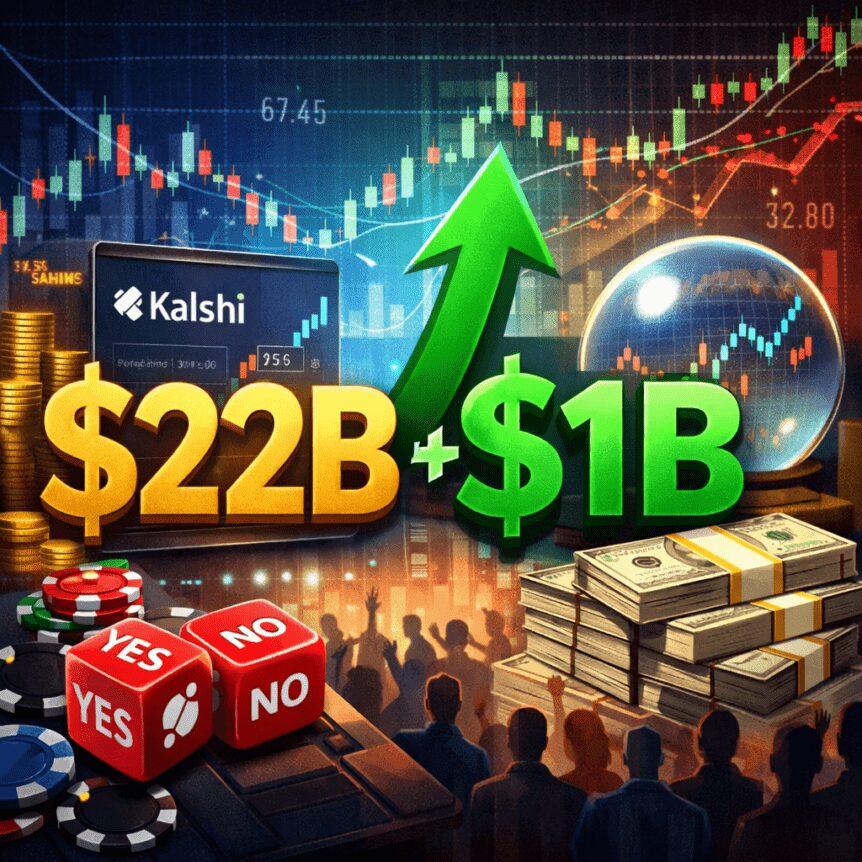
Kalshi, the prediction-market platform, has closed a $1 billion Series F funding round at a $22 billion valuation, led by Coatue Management with participation from Andreessen Horowitz, Sequoia Capital, Morgan Stanley and Ark Invest. The raise more than doubles Kalshi’s valuation in about five months, underscoring a rising appetite among venture investors for prediction markets as retail adoption accelerates.
A Kalshi spokesperson told Bloomberg that the company’s annualized revenue run rate has surpassed $1.5 billion, a milestone investors are watching as the market matures beyond novelty use cases into real-world, scalable finance. The round’s size and backing come as a16z Crypto’s latest fundraising cycle highlighted prediction markets as a key thematic area for institutional capital. For context, a16z Crypto recently raised a multibillion-dollar fund and signaled notable interest in this segment.
Kalshi operates a centralized, federally regulated marketplace that lets users trade on the outcomes of real-world events—ranging from elections and economic data releases to sports. By contrast, Polymarket operates on decentralized blockchain infrastructure. Collectively, Kalshi and Polymarket accounted for the bulk of more than $25 billion in prediction-market trading volume last month, underscoring how the sector has moved into the mainstream of digital finance.
In line with its broader growth plan, Kalshi has pushed deeper into crypto. The company recently appointed John Wang as head of crypto, and Wang told Forbes that Kalshi hopes to have its prediction markets embedded in every large crypto application, signaling a broader strategy to integrate event-based trading into crypto ecosystems.
Regulatory scrutiny and a strategic policy response
Industry observers frame the latest funding as a sign that prediction markets are evolving from retail-oriented entertainment into institutional risk-management tools. Bernstein Research described the space as entering an “institutional era,” driven by demand for bespoke block trades and contract structures designed to hedge macro and geopolitical risk.
However, the regulatory backdrop remains tense in the United States. NPR reports that Kalshi is involved in at least 19 federal lawsuits alleging that some of its event contracts may violate state gambling laws. States including Massachusetts, New Jersey, Arizona, Nevada, Illinois and Connecticut have challenged Kalshi’s operations, arguing that certain sports and event-based contracts amount to unlicensed gambling. Political pressure has also intensified in Washington, with lawmakers calling for tighter oversight amid concerns about “suspicious trades.”
In response to this heightened scrutiny, Kalshi has expanded its policy bench, hiring former Obama adviser Stephanie Cutter as a policy adviser—an addition widely seen as an effort to strengthen ties with policymakers and navigate evolving oversight.
What the market shift means for investors and builders
The momentum behind Kalshi’s funding round and the broader adoption of prediction markets reflect a broader market recalibration. The sector’s move toward institutional-grade products—such as bespoke macro and geopolitical event contracts—could expand the pool of participants beyond retail traders and venture backers to traditional financial institutions seeking hedging tools in volatile environments. The convergence of centralized, regulated platforms with growing crypto integration suggests a hybrid path where compliance and innovation go hand in hand.
For readers tracking the ecosystem, several questions remain pivotal. How quickly regulators will clarify the status of event-based contracts across jurisdictions, and whether other traditional financial players will participate in this space, will shape Kalshi’s path. The crypto push also raises questions about how Kalshi will balance compliance with rapid product expansion across both fiat and crypto rails.
Looking ahead, watchers will evaluate regulatory filings, potential settlements, and the cadence of new product launches that could broaden access to prediction markets. The next set of developments—ranging from policy guidance to potential integrations with major crypto platforms—will help determine whether Kalshi’s ambitious roadmap translates into durable, institution-friendly growth or if regulatory friction slows progress.


Breadcrumbs analyst James Delmore presented a live breakdown of crypto PAC spending at the Consensus Miami 2026 Policy Summit on Thursday.
Summary
- James Delmore of Breadcrumbs laid out how much money crypto industry groups have committed to the 2026 midterm elections at the Consensus Miami Policy Summit.
- The crypto industry has committed over $288 million to the 2026 cycle, more than double the $130 million spent during the entire 2024 election.
- Fairshake and its affiliated PACs hold approximately $221 million in unspent funds, positioning crypto as a top-five PAC force in the country.
James Delmore, a research analyst at Breadcrumbs who has tracked crypto industry political spending since the 2024 cycle, took the Consensus Miami 2026 Policy Summit stage on Thursday to lay out where the money is going heading into November. The session arrived as the crypto industry sits on more political capital, literally, than at any previous point in its history.
The industry has committed over $288 million to the 2026 midterm cycle, according to available FEC data, more than double the roughly $130 million spent across the entire 2024 election.
Fairshake, the industry’s flagship super PAC backed by Coinbase, Ripple, and Andreessen Horowitz, holds approximately $221 million in unspent funds, making it the fifth most-funded PAC in the country.
Where the money is going
As crypto.news reported, a Fairshake-aligned group spent $514,000 in Indiana supporting Representative James Baird in his primary race. Fairshake and affiliated groups had already spent nearly $30 million on 2026 races by the end of March.
Earlier, Fairshake deployed $10.3 million opposing Illinois Lieutenant Governor Juliana Stratton in a Senate primary, mirroring a similar $10 million attack on Katie Porter in the 2024 California Senate primary.
The political context surrounding the session is defined by the CLARITY Act, which must reach the Senate floor before the August recess or risk losing its legislative window entirely.
As crypto.news noted, Ripple, Coinbase, and Andreessen Horowitz are among the largest backers of the spending push, collectively aiming to ensure the 120th Congress is the most pro-crypto session in U.S. history.


Amazon Web Services (AWS) rolled out a new payments infrastructure for AI agents on Thursday which is built in partnership with Coinbase and Stripe.
AWS explained that autonomous software agents will be allowed to buy APIs, web content, MCP servers and other online services in real time using stablecoins. It added, however, that future versions would eventually support larger purchases such as hotel bookings, travel reservations and merchant payments.
“Amazon Bedrock AgentCore Payments” is designed for AWS described as the emerging “agentic economy”, where AI agents transact independently inside a single execution loop.
The first version of the system focuses on micropayments, allowing agents to instantly pay for APIs, data feeds, paywalled content and other digital services, often for fractions of a cent, AWS said.
Bedrock is built on Coinbase’s x402, the HTTP-native payment protocol for powering agent-to-agent transactions with stablecoins, while Stripe’s Privy wallet is being used as a payment connection.
“There will soon be more AI agents transacting than humans, and they need money that’s built for the internet – programmable, always on, and global,” said Brian Foster, Coinbase’s head of infrastructure growth.
Foster’s words echo those of Coinbase founder Brian Armstrong, Binance founder Changpeng Zhao and of Cardano Founder Charles Hoskinson, who agree that shortly all activity on the internet will be conducted by AI agents.
Stripe said this roll-out is part of a broader push to build financial infrastructure for autonomous AI commerce. “For agents to become meaningful economic actors, they need a way to hold and spend money,” said Henri Stern, CEO of Privy, a Stripe company.
AWS added that the platform is protocol-agnostic, though x402 is the first supported standard at launch. The broader goal is to create infrastructure for autonomous software agents capable of completing commercial transactions on behalf of users.
Warner Bros. Discovery, which is already testing Amazon’s Bedrock AgentCore, said it sees potential for agent-driven transactions involving premium content, including live sports and major entertainment releases.
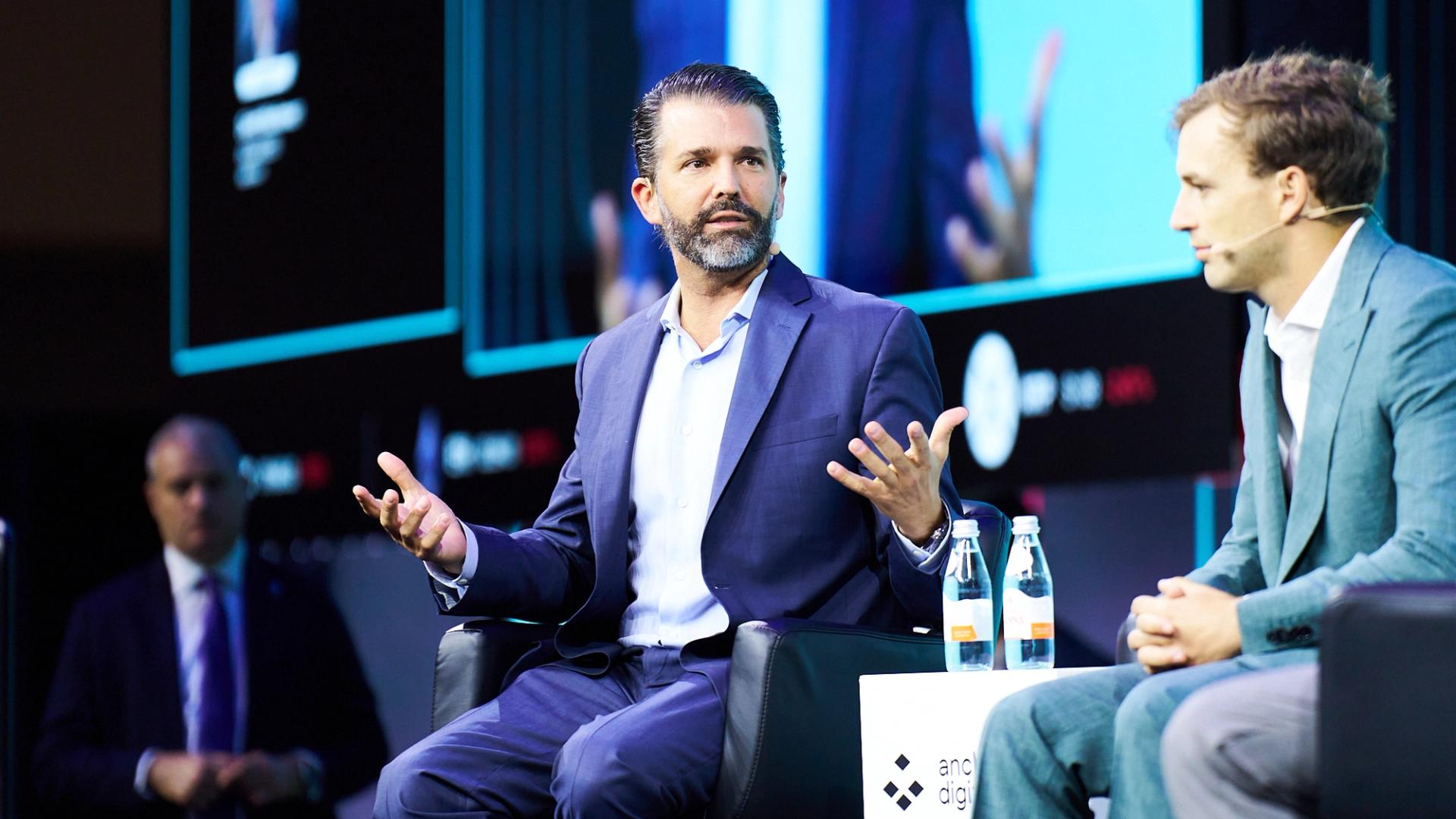
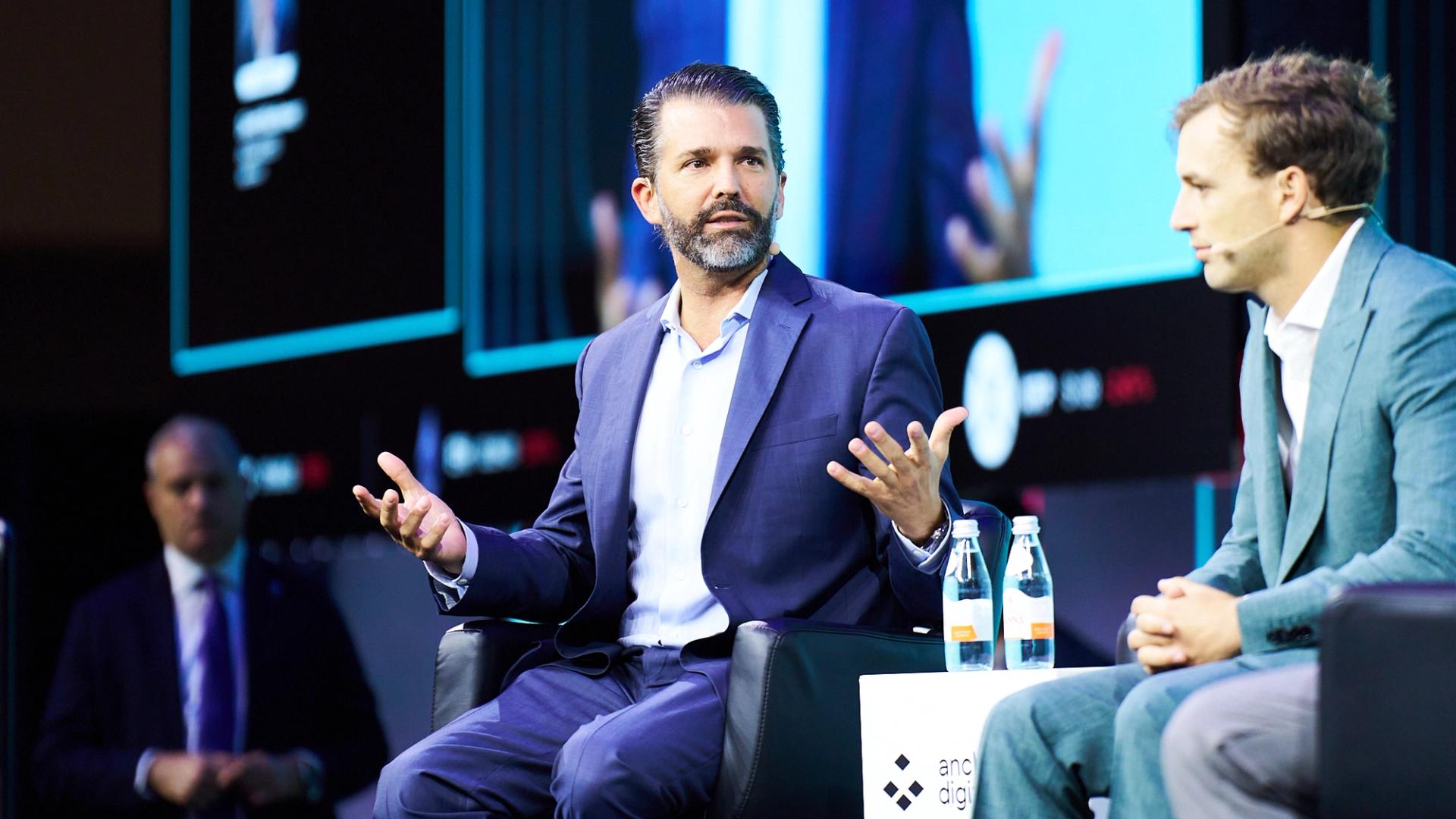
MIAMI BEACH, Fl. — Donald Trump Jr. denied online rumors that , the crypto platform tied to the Trump family, is unraveling amid a growing legal battle with Tron founder Justin Sun.
Speaking at Consensus in Miami on Thursday, Trump Jr. and WLFI co-founder and CEO Zach Witkoff pushed back against speculation circulating on social media about the company’s leadership, reserves and business operations.
“Just because they say it doesn’t mean it’s true,” Trump Jr. said about reports in the media. “Narratives get created. They’re driven, and they’re bot-farm based.”
The comments came days after World Liberty filed a defamation lawsuit against Sun in Florida state court. The suit alleges Sun engaged in “gross misconduct” tied to WLFI token purchases and used influencers and bots to spread false claims about the company.
Sun had previously sued WLFI in California federal court, claiming the company unfairly froze his WLFI tokens.
At the Miami event, Witkoff addressed rumors that Trump family members had distanced themselves from the project after WLFI removed a team page from its website.
“I think I saw on Twitter at one point that, you know, Don and Eric had abandoned the project,” Witkoff said. Trump Jr. dismissed the speculation.
“It was news for me too,” he said. “They changed the website design for a few minutes and, oh my God, they’re bailing on it.”
The executives also defended the company’s stablecoin, USD1, against criticism online. Witkoff said the token has “real-time proof of reserves” through a partnership with Chainlink and claimed users can verify reserves directly onchain.
Trump Jr. accused critics and some media outlets of intentionally spreading misleading narratives about WLFI.
Witkoff also defended the lawsuit against Sun, saying the company would not have filed the case without evidence.
“We wouldn’t have filed that lawsuit if we didn’t have the receipts,” he said.
The Florida lawsuit seeks damages and retractions from Sun over statements WLFI claims harmed the company and its business opportunities. World Liberty Financial is being represented by the top defamation law firm, Clare Locke LLP.
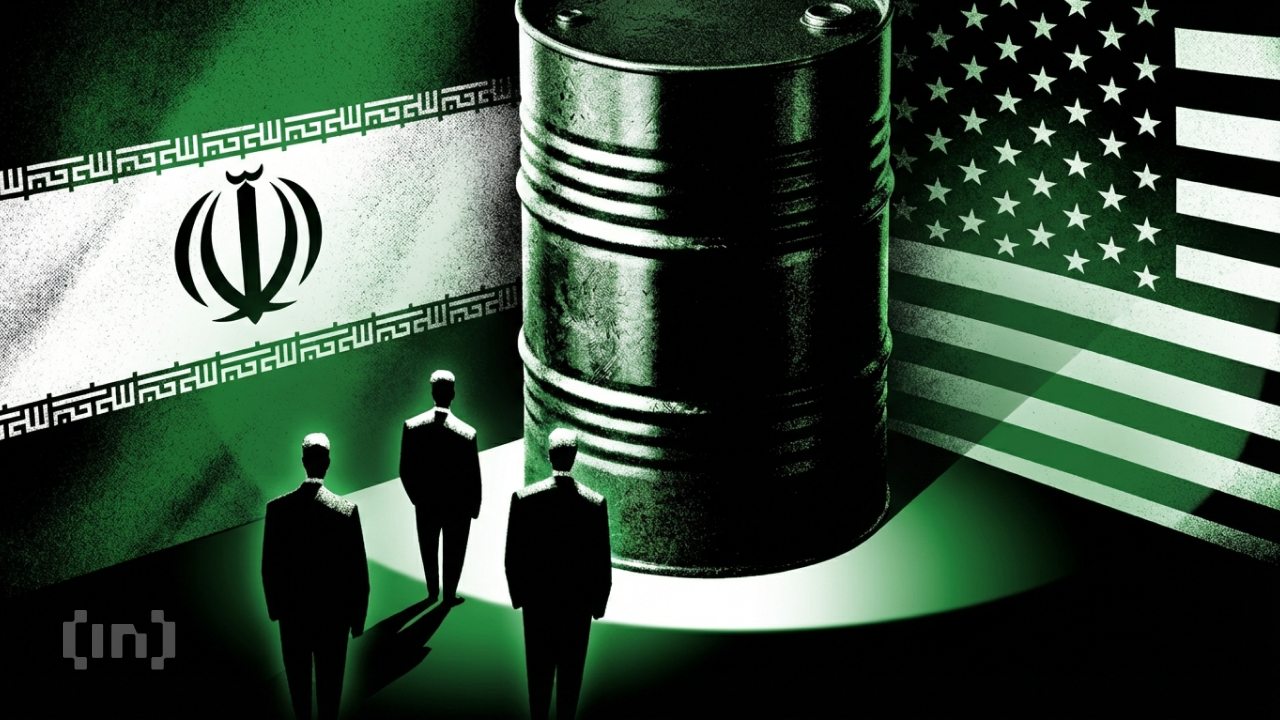
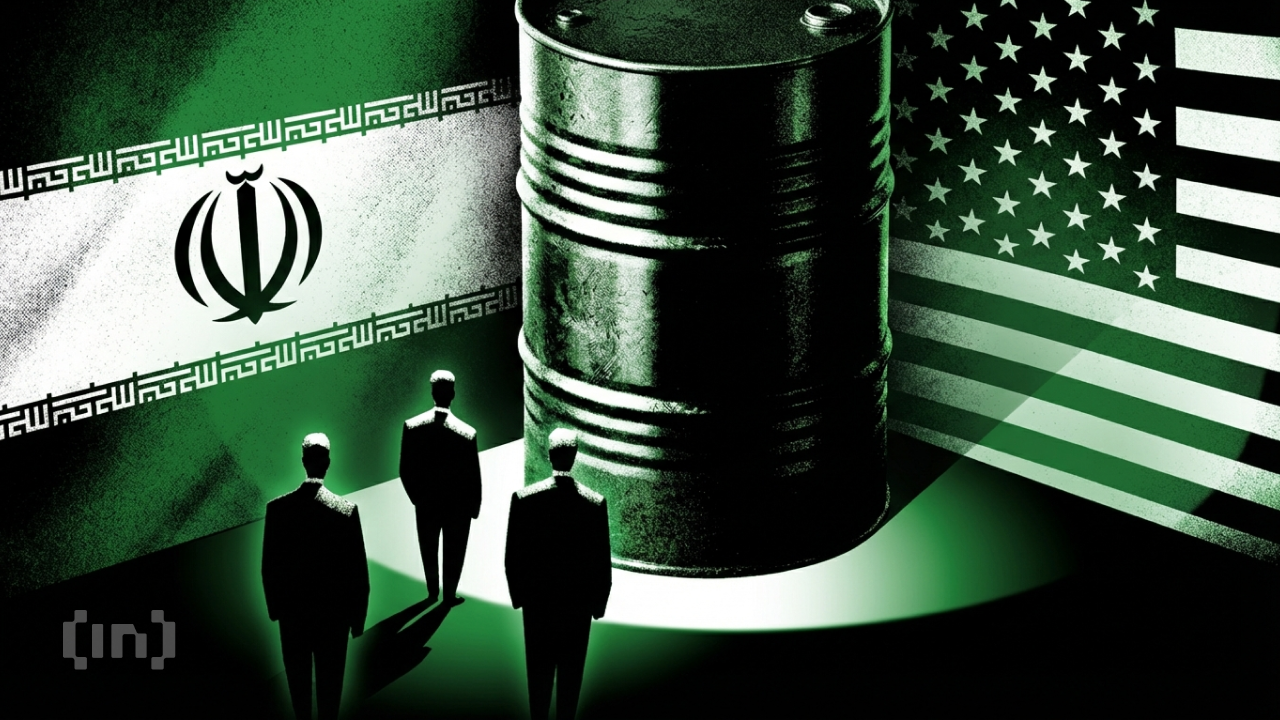
The U.S. ramped up Iran oil sanctions on two fronts Thursday. Treasury blacklisted Iraq’s Deputy Oil Minister and three Iran-backed militia leaders, while ABC News reported DOJ and CFTC probes into roughly $2.6 billion in suspiciously timed oil trades.
Both threads belong to Operation Economic Fury, the campaign squeezing Tehran’s revenue. OFAC’s targets allegedly funneled Iraqi crude to Iran, while regulators are examining whether traders profited on advance knowledge of presidential announcements.
Treasury Targets Iran Oil Smuggling Network
OFAC designated Ali Maarij Al-Bahadly under Executive Order 13902, accusing him of using his ministry posts since 2018 to enrich Iran-linked smuggler Salim Ahmed Said and the Asa’ib Ahl Al-Haq militia.
The agency said the network mixed Iranian crude with Iraqi barrels at the VS Oil Terminal, then forged provenance papers before export. Three senior militia figures and four oil-services firms were also blacklisted.
“Like a rogue gang, the Iranian regime is pillaging resources that rightfully belong to the Iraqi people,” said US Treasury Secretary Scott Bessent.
The action extends earlier Economic Fury moves that froze $344 million in Tether (USDT) and seized close to half a billion dollars in regime-linked crypto.
DOJ Probes $2.6 Billion in Bearish Oil Bets
Separately, ABC News reported that DOJ and the CFTC are reviewing four bearish oil positions placed minutes to hours before de-escalation announcements during the 2026 Iran conflict.
LSEG data shows:
- A $500 million bet 15 minutes before Trump delayed strikes on March 23,
- A $960 million wager hours before the April 7 ceasefire,
- $760 million ahead of Iran’s April 17 Hormuz statement, and
- $430 million before the April 21 truce extension.
The data does not name traders.
The pattern echoes Polymarket cases where wallets repeatedly profited on Iran outcomes ahead of public news.
The dual probes raise the same question across oil and crypto markets. Information about Trump’s Iran moves may be leaking before it reaches public channels.
The post Treasury Sanctions Iraqi Oil Official as DOJ Probes $2.6 Billion Iran Trade Mystery appeared first on BeInCrypto.

Key Takeaways
- AMD delivered $10.3B in Q1 2026 sales, with data center operations emerging as the dominant revenue source
- The company’s 2025 fiscal year set records with $34.6B in total revenue and $16.6B from data center operations
- Qualcomm generated $10.6B in Q2 2026, though smartphone chips contributed $6.93B of that figure
- Qualcomm’s expansion into automotive ($959M) and IoT sectors ($1.58B) continues, yet mobile devices remain its core business
- Analyst sentiment favors AMD with a $385.86 price target compared to Qualcomm’s $172.40 average forecast
Two semiconductor powerhouses are presenting contrasting investment narratives as 2026 unfolds. While one company capitalizes on explosive data center demand, the other struggles to shake its smartphone-centric reputation.
Advanced Micro Devices announced first-quarter 2026 revenues of $10.3 billion. The company achieved a 53% gross margin alongside $1.5 billion in operating profit and $1.4 billion in net earnings.
Advanced Micro Devices, Inc., AMD
Executives highlighted data center operations as the primary catalyst for expansion. Enterprise adoption of AI inferencing capabilities and agentic AI frameworks continues driving demand for both processors and accelerators.
This strong performance followed an exceptional 2025. AMD achieved all-time high annual revenue of $34.6 billion, with data center sales alone contributing $16.6 billion. Annual operating profit reached $3.7 billion.
While AMD continues serving PC, gaming, and embedded sectors, investor attention has decisively pivoted toward server infrastructure and artificial intelligence computing.
Server Infrastructure Drives AMD Forward
MarketBeat analysts assign AMD a Moderate Buy rating, supported by 30 Buy recommendations and 2 Strong Buy assessments. The consensus price target stands at $385.86.
The investment thesis is clear-cut. AMD continues capturing market share from major cloud platforms and enterprises deploying substantial AI capital. However, elevated expectations and fierce competition in high-performance AI computing present notable headwinds.
Qualcomm’s recent financial results paint a contrasting picture. The chipmaker posted fiscal Q2 2026 revenue of $10.6 billion with non-GAAP diluted earnings per share of $2.65.
Handset processors generated $6.93 billion of quarterly revenue. Automotive chip sales reached $959 million, while IoT products contributed $1.58 billion.
Qualcomm Seeks Revenue Diversification
Qualcomm has achieved meaningful traction beyond mobile devices. The company is expanding presence in automotive semiconductors, AI-enabled PCs, edge computing platforms, and industrial applications.
Yet smartphone chips continue representing the majority of revenue. Consequently, markets are not valuing Qualcomm as an AI infrastructure play comparable to AMD.
Reuters coverage indicated Qualcomm’s forward guidance fell short of investor expectations, despite management commentary suggesting supply chain constraints were moderating. Market sentiment remains closely linked to handset market cycles.
MarketBeat data shows 28 analysts following Qualcomm with a consensus price target of $172.40. Recent trading activity placed shares near $206.06, exceeding the average analyst forecast.
Qualcomm maintains a Moderate Buy consensus, though the outlook appears less unified than AMD’s.
The valuation divergence between these semiconductor companies reflects narrative clarity. AMD maintains direct exposure to AI infrastructure capital expenditure. Qualcomm possesses diversification potential but must demonstrate emerging business segments can meaningfully reduce smartphone dependency.
Qualcomm’s automotive segment generated $959 million in the latest reporting period, while IoT operations produced $1.58 billion, representing the most current available data.

Shulchenko stays ahead despite local riders’ alliances

Allen Institute for AI launches big computing cluster for $152M project backed by Nvidia and NSF

‘My dental issues turned out to be mouth cancer and the diagnosis felt like a punch’

Manchester United reach agreement with Casemiro over contract clause amid transfer speculation

US brings back mandatory military draft registration

Steven Gerrard disagrees with Gary Neville over ‘shock’ Chelsea and Arsenal claim | Football


-

 NewsBeat4 days ago
Channel 5 – All Creatures Great and Small series 7 new post
-

 Crypto World13 hours ago
Upbit adds B3 Korean won pair as Base token gains Korea access
-
 Tech6 days ago
Trump’s 25% EU auto tariff breaches Turnberry Agreement that also covers semiconductors and digital trade
-
 NewsBeat14 hours ago
NCP car park operator enters administration putting 340 UK sites at risk of closure
-
 Sports6 days ago
Paul Scholes issues Marcus Rashford reality check as agreement emerges over Man United star
-

 Entertainment6 days ago
Met Gala 2026 Rumored Guest List Is Turning Heads
-

 Business7 days ago
Strait of Hormuz Blockade Persists Amid US-Iran Standoff, Sending Oil Prices Soaring
-
Entertainment6 days ago
New on Prime Video in May 2026 — Full List of Movies and Shows
-

 Entertainment6 days ago
Kylie Jenner Hit With Second Lawsuit From Ex-Housekeeper
-

 Sports6 days ago
Cavaliers vs. Raptors Game 6 live score, updates, highlights from 2026 NBA playoffs first-round series
-
 Sports6 days ago
David Benavidez responds to team Canelo saying the fight will never happen
-
Entertainment5 days ago
New Netflix Movies in May 2026 — My Top 3 Picks to Stream
-

 Tech6 days ago
Meta ends Sama contract after Kenyan workers report seeing intimate footage from Ray-Ban smart glasses users
-

 Entertainment6 days ago
Young and the Restless Next Week: Cane Arrested & Matt’s Deadly New Scheme!
-
 Sports6 days ago
IPL 2026: ‘Love you darling’- Hardik Pandya’s reaction to MS Dhoni steals the show |Watch | Cricket News
-

 Business5 days ago
Luka Doncic Injury Update: Doncic’s Hamstring Recovery Slows Lakers’ Hopes Against Thunder: Can He Run Yet?
-
 Crypto World5 days ago
Pi Network Mandates Protocol 23 Upgrade for All Mainnet Nodes Before May 15 Deadline
-

 Entertainment5 days ago
Melissa Joan Hart and More Stars Attend 2026 Kentucky Derby
-

 Sports7 days ago
Bayern won’t hand bottom side Heidenheim ‘gifts’ despite PSG game
-

 Sports6 days ago
What Preity Zinta Said After Punjab Kings’ First Defeat Of IPL 2026
You must be logged in to post a comment Login